Art Center information literacy and curriculum development 
Day Two
Content we will cover Day two 
Recap of Day one 
Curriclum mapping 
The Teacher in you 
Significant learning 
Student engagement 
Course activity toolkit 
Lesson planning 
Assessment 101
Recap of day one 
Mission Statement 
4 pillars- refine and finalize 
Clarifying questions thus far?
http://www.flickr.com/photos/markandrewwebber/ 
Curriculum Mapping 
Helps focus your efforts 
Alleviates seeing the same students 
Lets you graphically see common courses across departments or majors 
Evidence for inclusion in certain courses
http://www.flickr.com/photos/markandrewwebber/ 
1. look at your departments and classes you regularly teach or think you should teach 2. mark which standards are addressed/ideal for the course and what level they are being addressed 3. based upon this map you have a blueprint of which classes you should teach and which skills are being covered in the curriculum 
How to conduct a curriculum map by department
Appl ying 
what you learned 
Download the curriculum map grid and look at your assigned departments. Fill out the map for all of your departments – look for common courses!
Understanding your learners
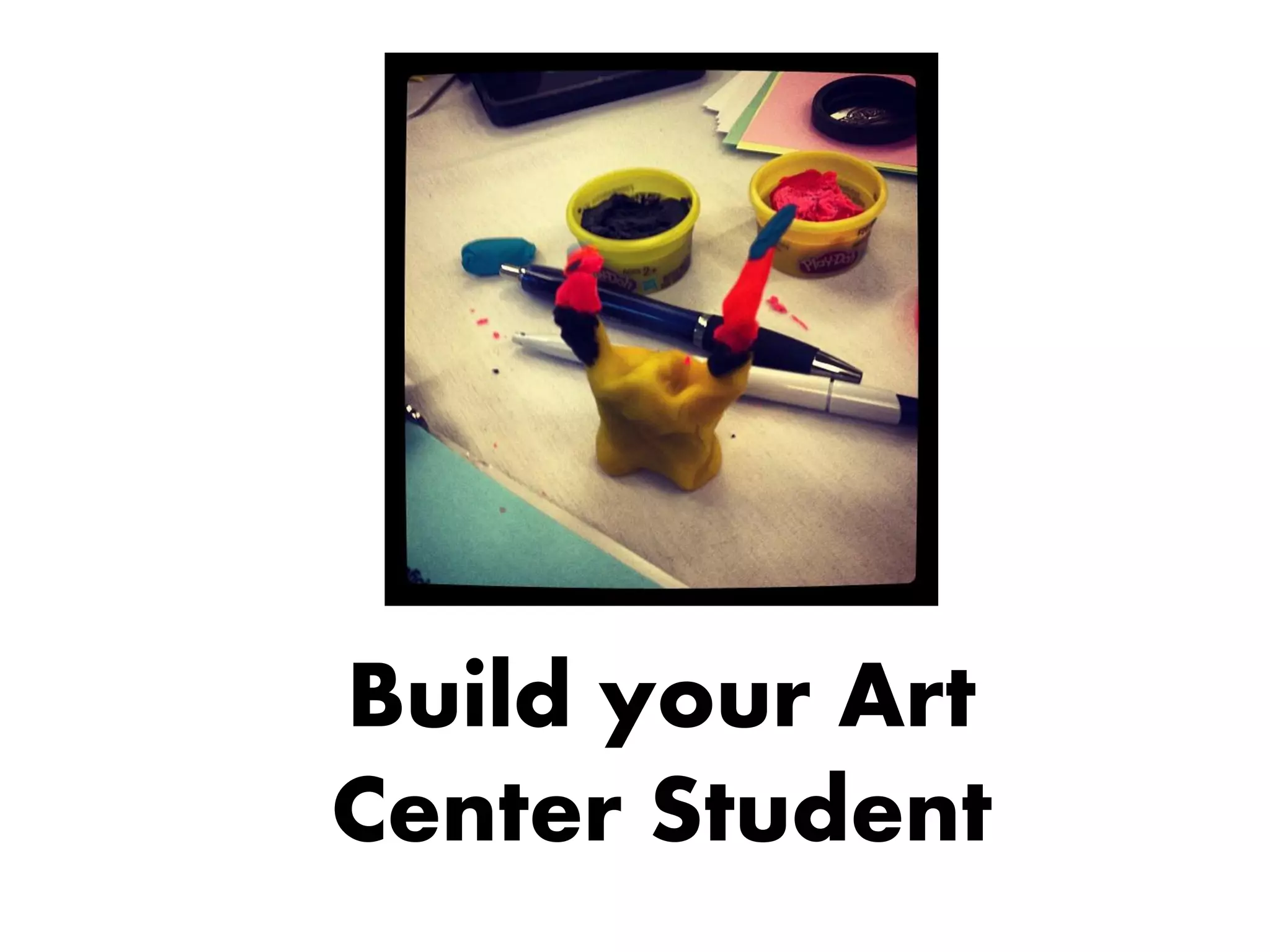
Build your Art Center Student
Learners Like 
To be challenged 
To be respected 
A variety of techniques 
Real-life experiences 
Receiving prompt feedback
Student Comments 
“She is amazing... very talented and great at what she teaches. Intimidating though, because she is brilliant. Her papers are hard, but they really allow you to grow, and you feel accomplished when you are done. She made me want to go to grad school.” 
“Great course, well taught, excellent lectures, precise and accurate testing” 
“He is interesting to listen to in class because he is so involved in biology, and he tries to make jokes that aren't funny. He takes your picture, so within a few weeks, he knows everyone in the class, which is amazing since there are so many students.” 
“loved this guy! He is clear about what he expects and a fair grader.”
To be bored 
To be talked down to 
Inconsistency in expectations, grading, or treatment 
Learning without context 
Learners don’t Like
Student comments 
“even though i got an A in the class, i wouldn't recommend it. really boring and tests are kind hard. but she has really easy assignments that help make up for the test scores. she's really nice, but boring. i sat there and listened to my ipod the entire time.” 
“she is so unorganized and has absolutely no clue what the plan is most of the time (changes her mind after we have already competed assignments).. ssoooo frustrating!” 
“He tells us not to contact him during his office hours. He gets paid to be available during those office hours, yet he neglects his duty AND he disappears during class.” 
“he's probably the best looking horrible teacher i ever had.”
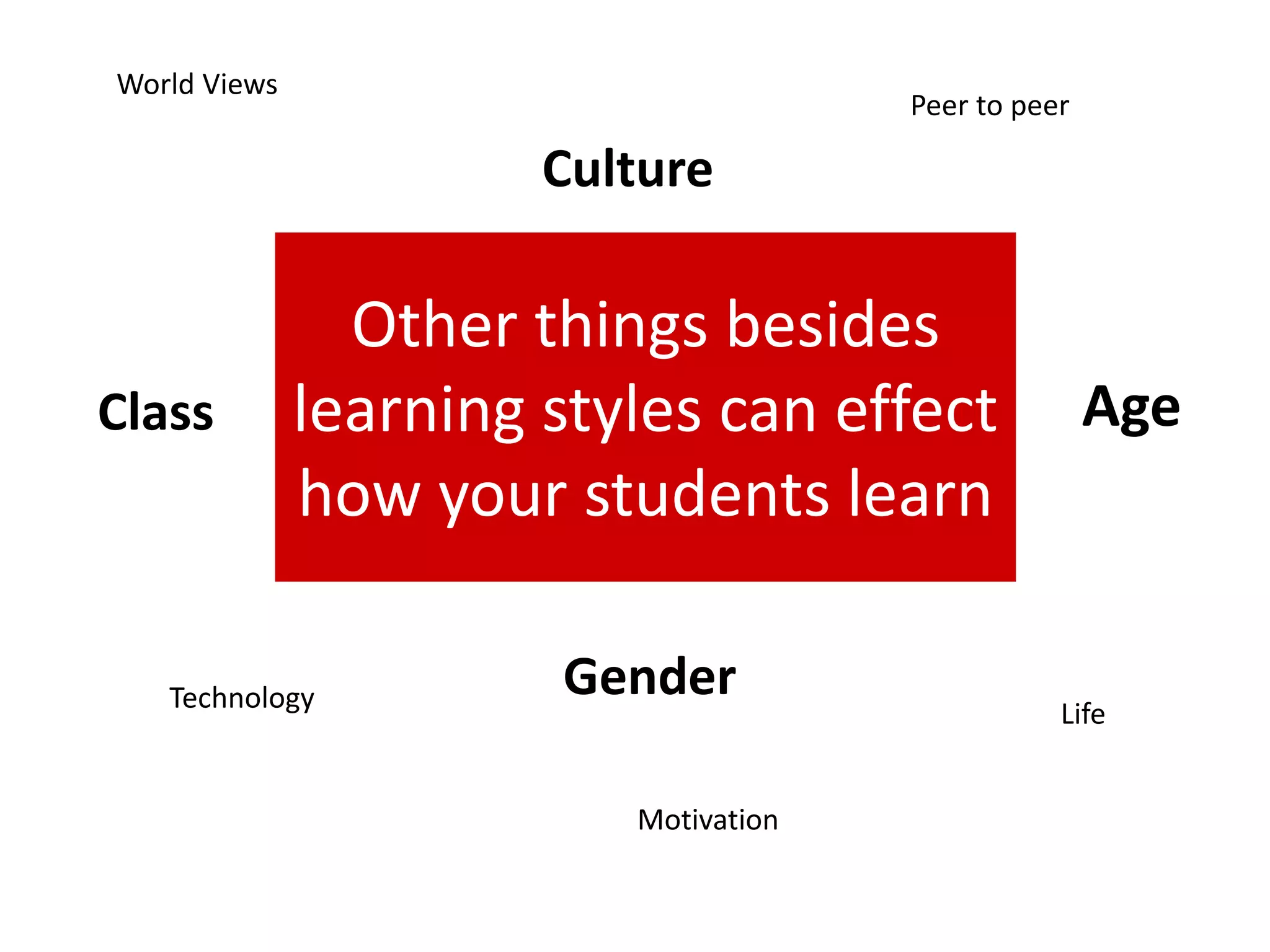
Other things besides learning styles can effect how your students learn 
Gender 
Culture 
Class 
Technology 
Peer to peer 
World Views 
Motivation 
Life 
Age
Significant Learning 
Thinking back over your whole life, what were the two or three most significant learning experiences you ever had? That is, list the moments (or events) in which you discovered something of lasting significance in your life.
Questions to ask yourself 
Did it take place in a school? 
Was a professional teacher instrumental in making the learning experience happen? 
Was a teacher-like figure (e.g., coach, minister, school counselor, theater director) instrumental in making the learning experience happen? 
If the answer to 3 or 4 is “yes,” then what did the teacher (or other person) actually do to help you learn? 
In general, what factors were instrumental in bringing about the learning?
What’s Your Teaching Style?
Learning Theory
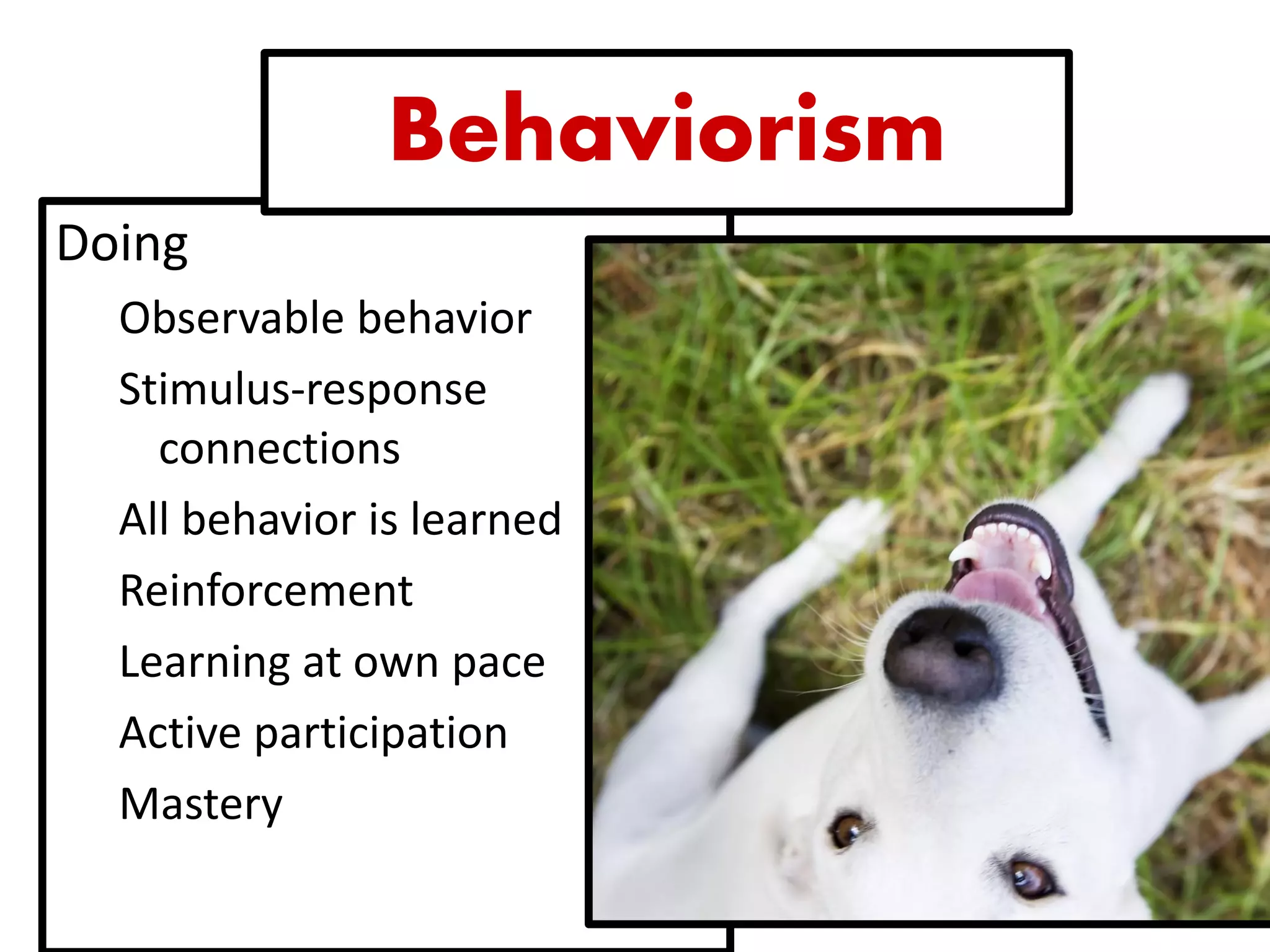
Doing 
Observable behavior 
Stimulus-response connections 
All behavior is learned 
Reinforcement 
Learning at own pace 
Active participation 
Mastery 
Behaviorism
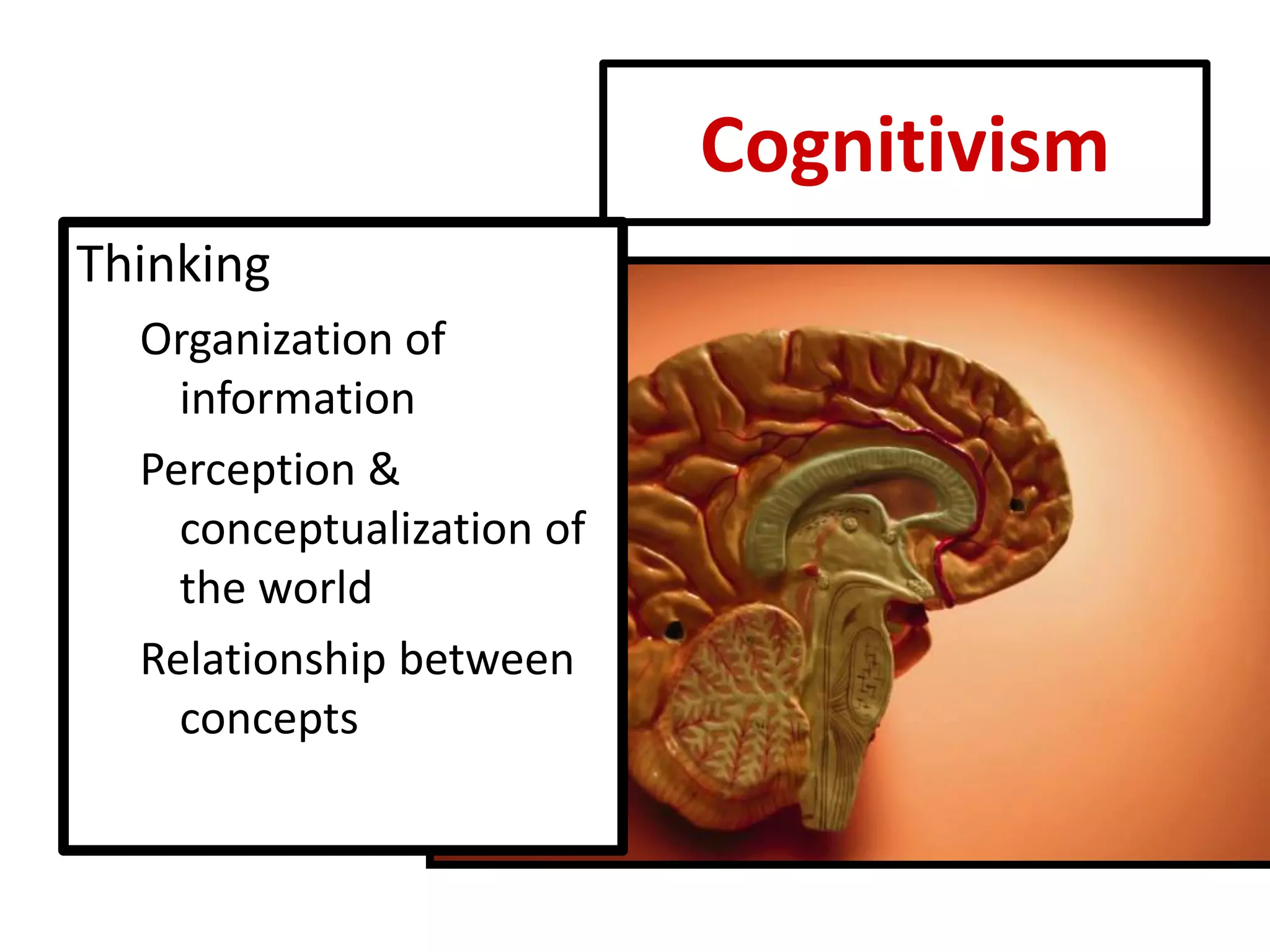
Cognitivism 
Thinking 
Organization of information 
Perception & conceptualization of the world 
Relationship between concepts
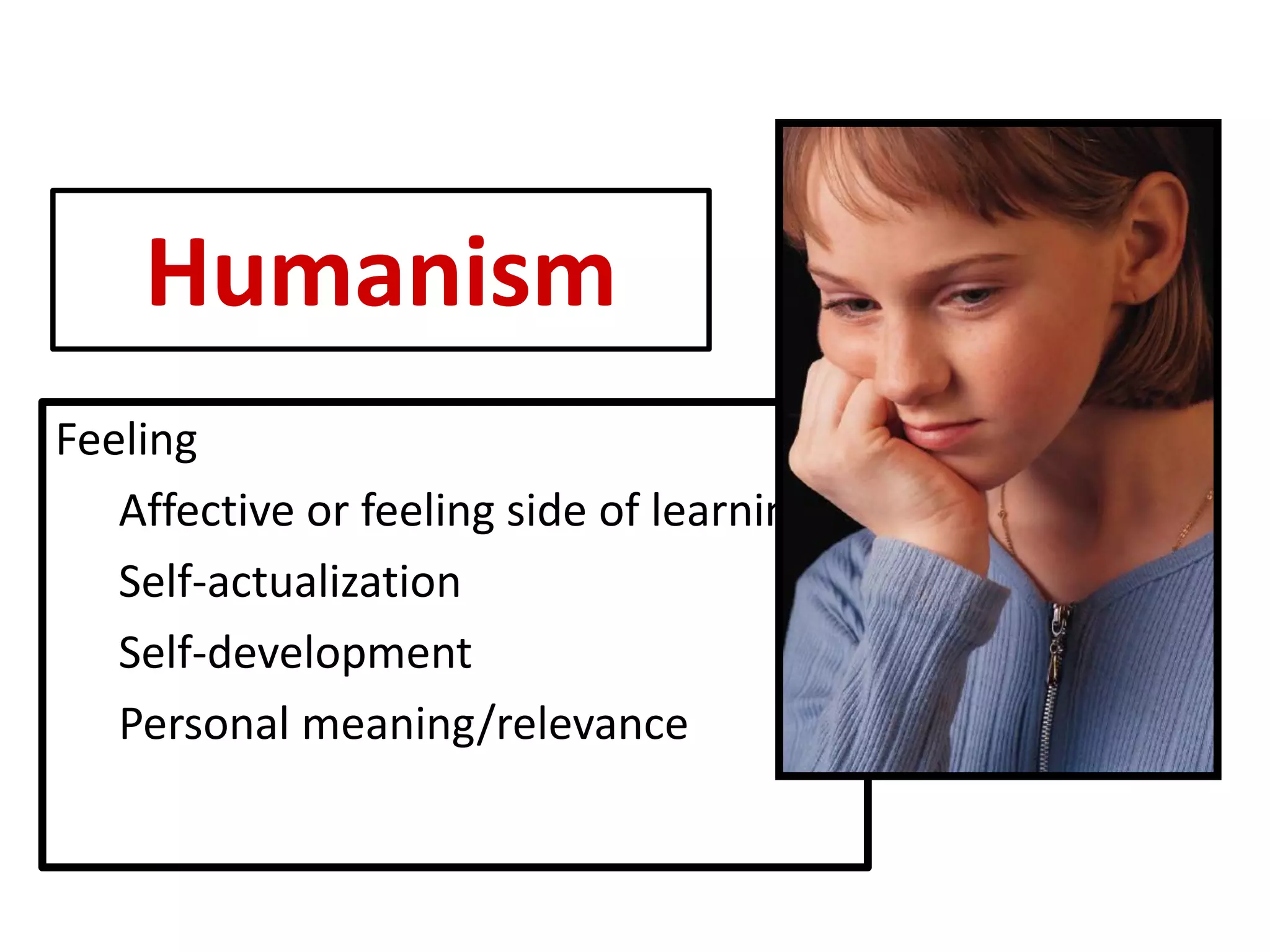
Humanism 
Feeling 
Affective or feeling side of learning 
Self-actualization 
Self-development 
Personal meaning/relevance
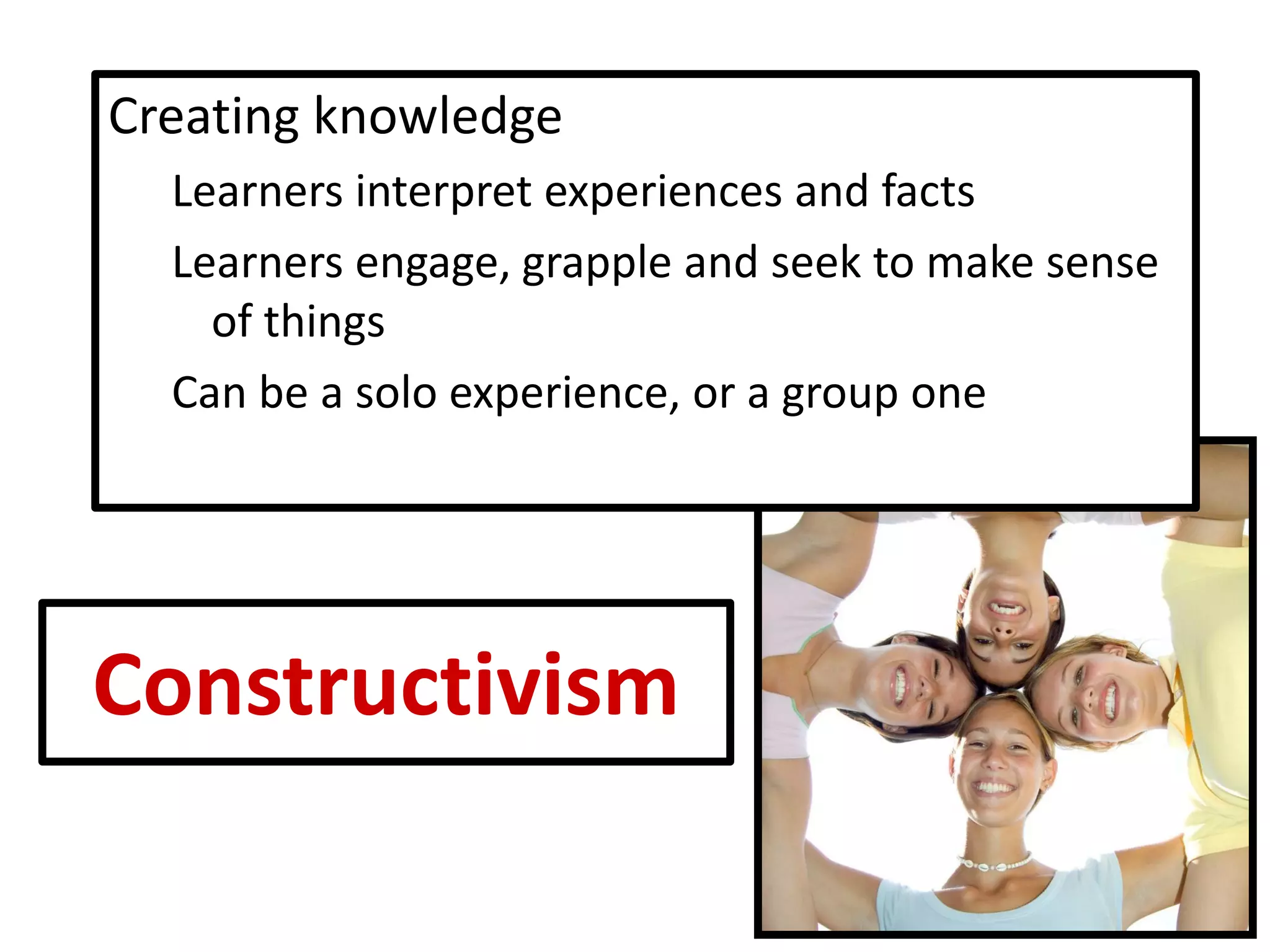
Constructivism 
Creating knowledge 
Learners interpret experiences and facts 
Learners engage, grapple and seek to make sense of things 
Can be a solo experience, or a group one
Social Cognition 
Group 
Social context to learning 
Transfer of learning 
Authentic learning environments
4 principles of constructivist assignments 
learners construct their own meaning 
new learning builds on prior knowledge 
learning is enhanced by social interaction 
learning develops through “authentic” tasks
Constructivist Assignments 
Three types of research assignments that utilize constructivist theory for teaching research skills 
–Problem based learning 
–Real world scenarios 
–Peer to peer learning
Research- re -Imagined 
Replicating tasks students might use in the workplace 
Evaluating real world information sources and writing an essay or giving a speech about it 
Using Fantasy sports as a statistical and data analysis tool 
Scenario based annotated bibliographies 
Calibrated Peer Review Assignments 
Creation of discussion boards or wikis to compile and compare information collected by other students 
Portfolios
How does this translate into your lesson plans? 
Start with your learning outcomes 
Develop assignments that will demonstrate student attainment of learning outcomes 
Assess the end product student learning
Questions to ask yourself before you plan to teach 
Which learning styles do I meet/not meet? 
Which learning theories do I subscribe to? 
What tools can I employ ensure that I am an authentic teacher? 
What methods can I use to ensure my students are learning?
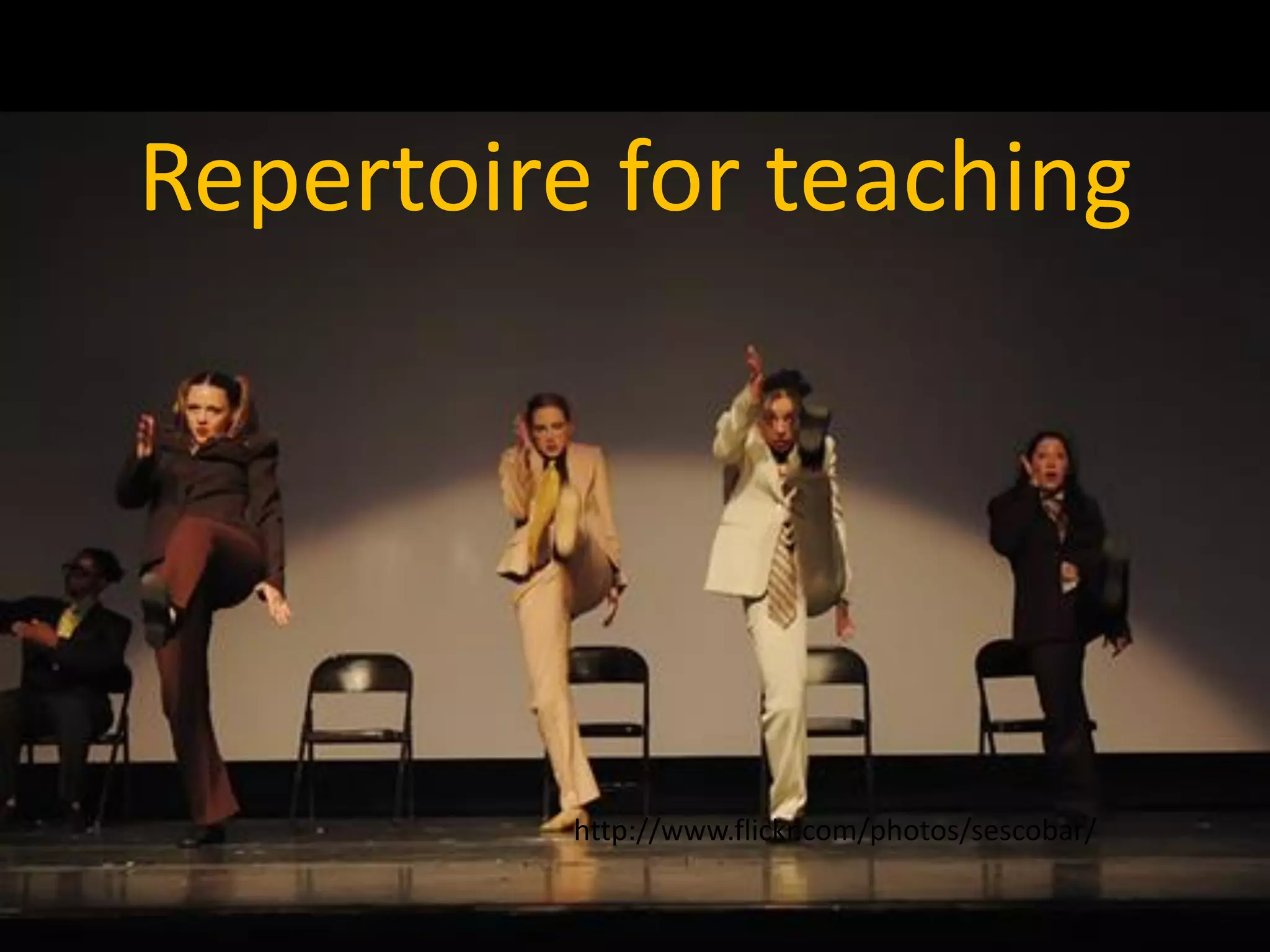
http://www.flickr.com/photos/sescobar/ 
Repertoire for teaching
New Technologies
Less is more! 
Lesson Planning
The Big Picture 
Why We Do What We do? 
Overview of Assessment
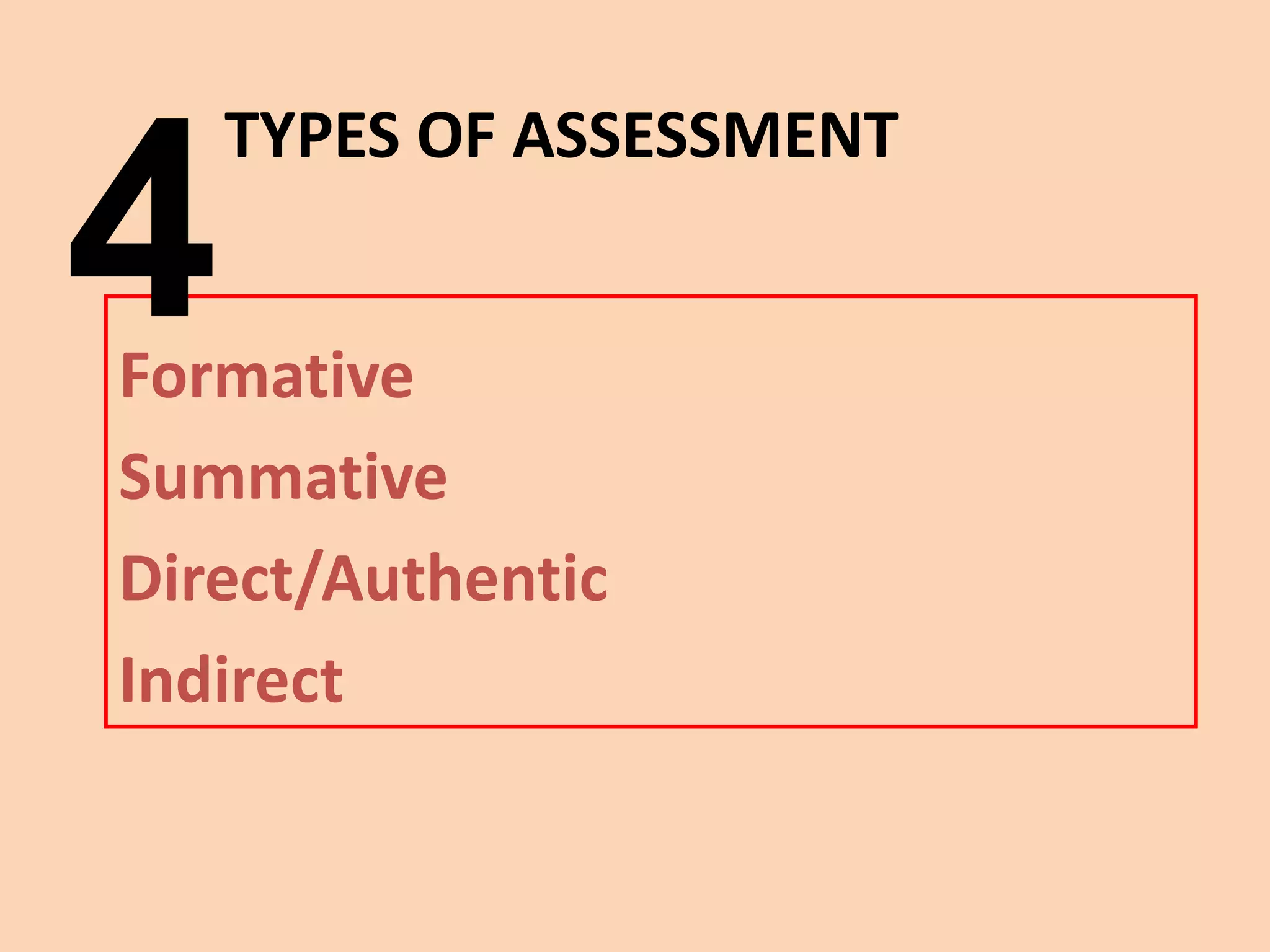
TYPES OF ASSESSMENT 
Formative 
Summative 
Direct/Authentic 
Indirect 
4
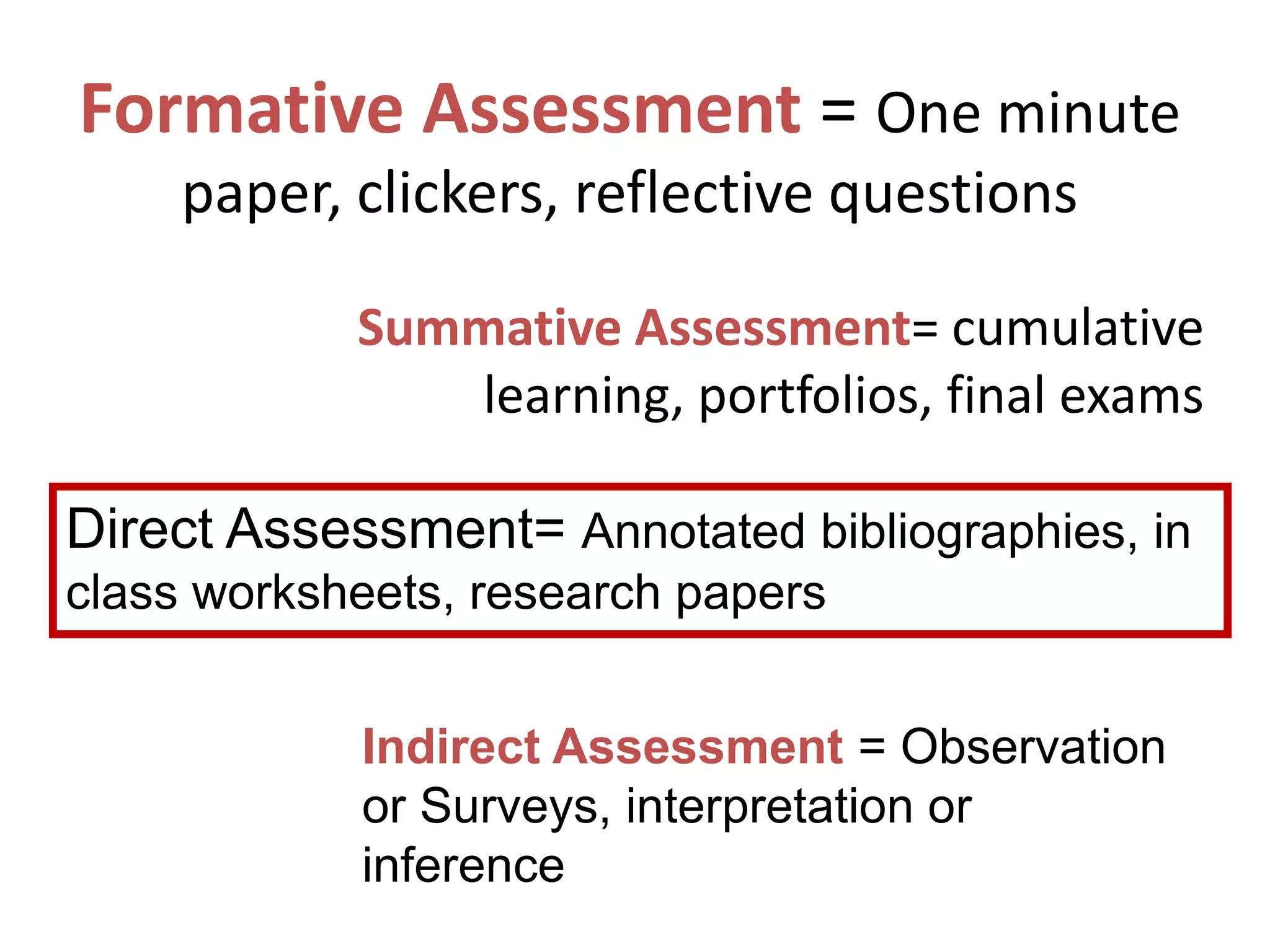
Formative Assessment = One minute paper, clickers, reflective questions 
Summative Assessment= cumulative learning, portfolios, final exams 
Direct Assessment= Annotated bibliographies, in class worksheets, research papers 
Indirect Assessment = Observation or Surveys, interpretation or inference
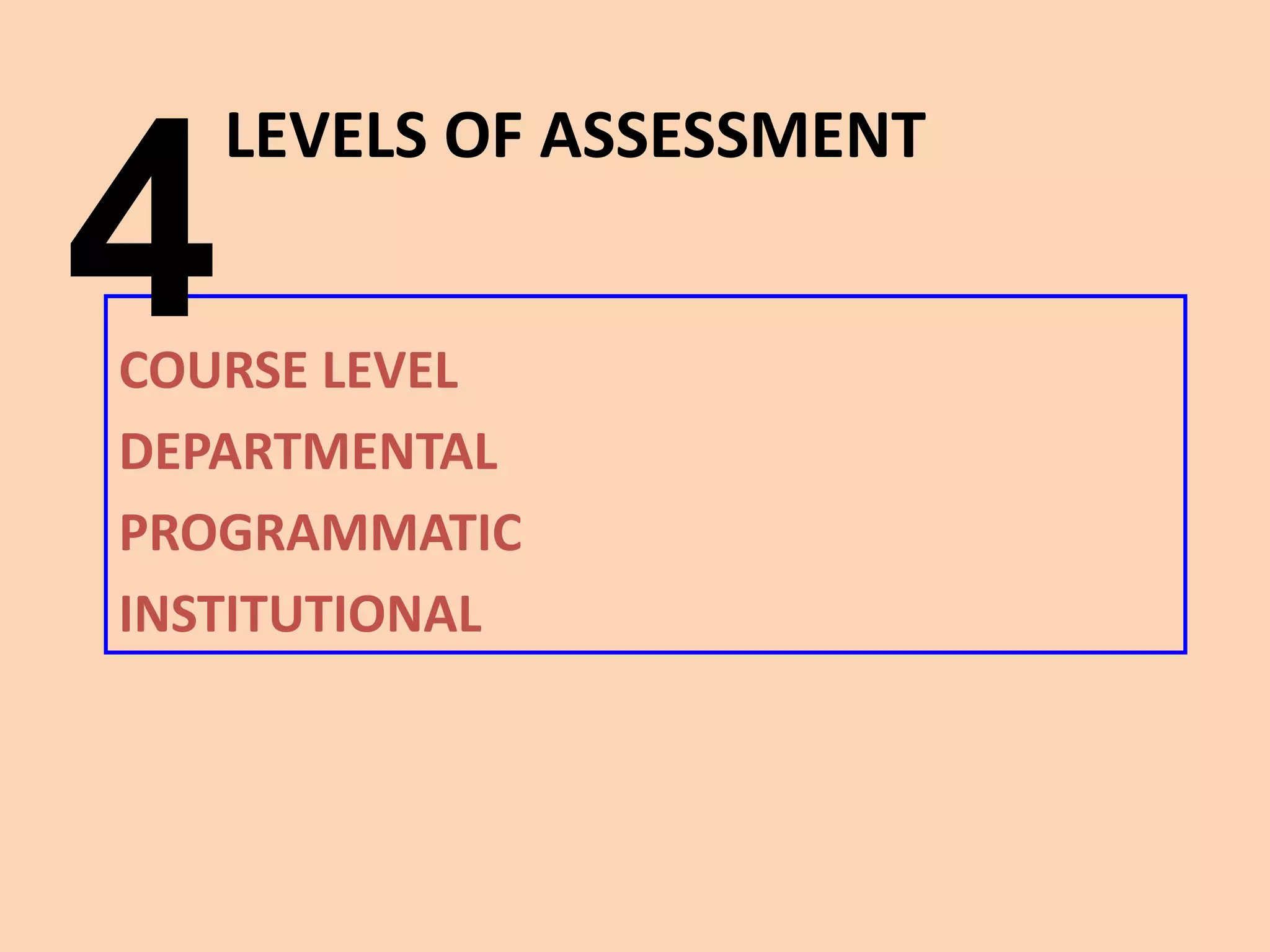
LEVELS OF ASSESSMENT 
COURSE LEVEL 
DEPARTMENTAL 
PROGRAMMATIC 
INSTITUTIONAL 
4
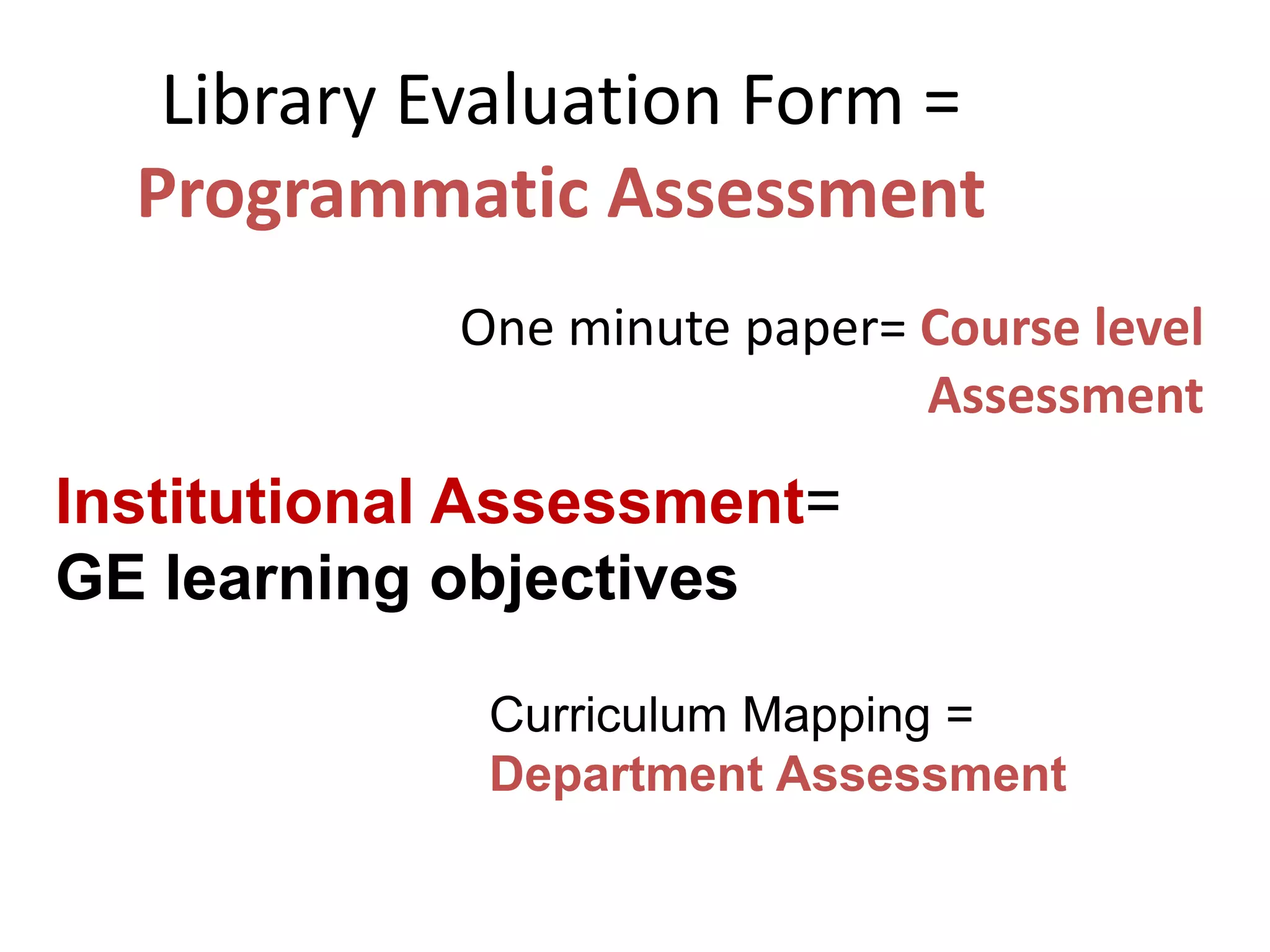
Library Evaluation Form = Programmatic Assessment 
One minute paper= Course level Assessment 
Institutional Assessment= GE learning objectives 
Curriculum Mapping = Department Assessment
What does assessment look like?
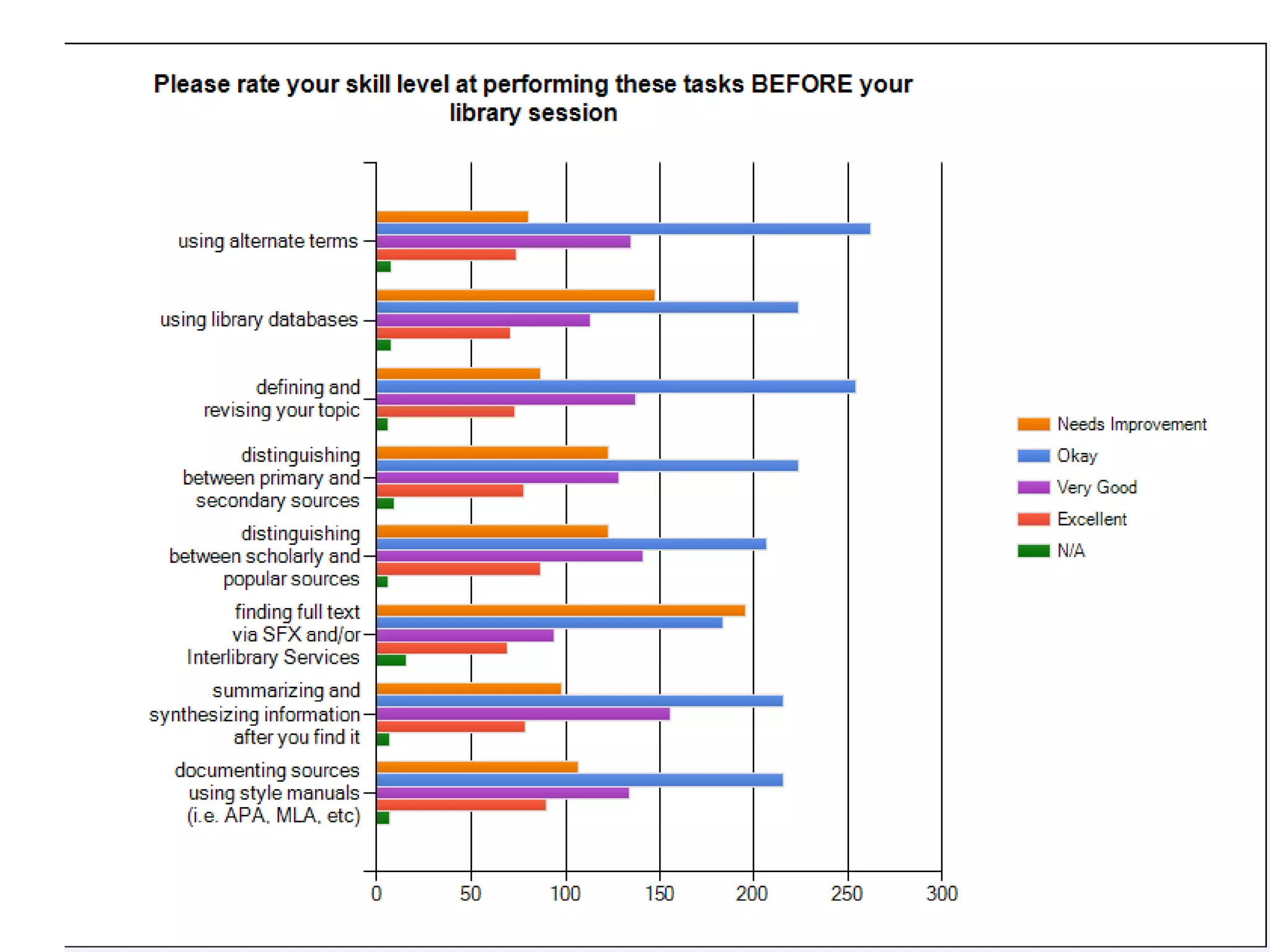
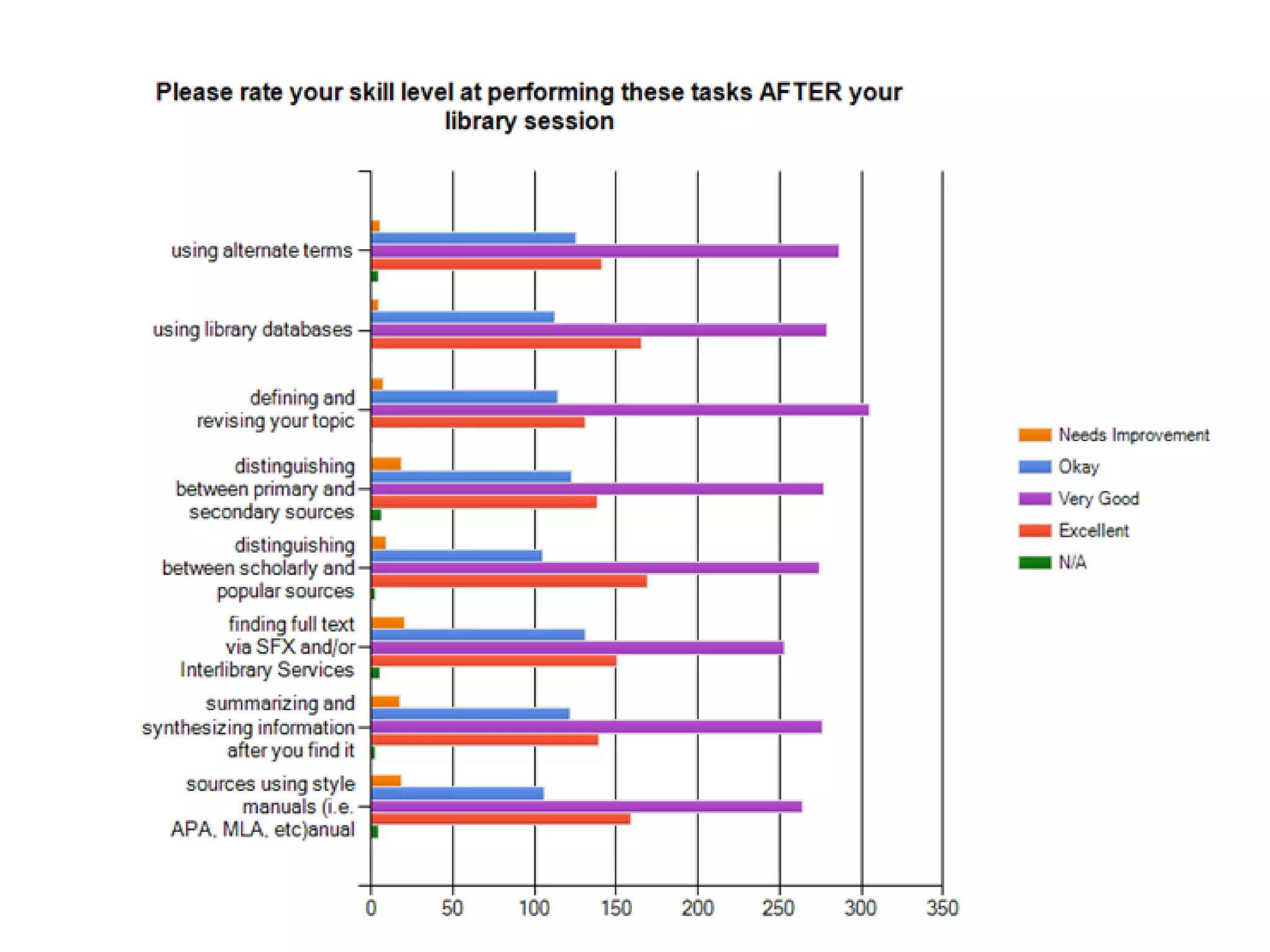
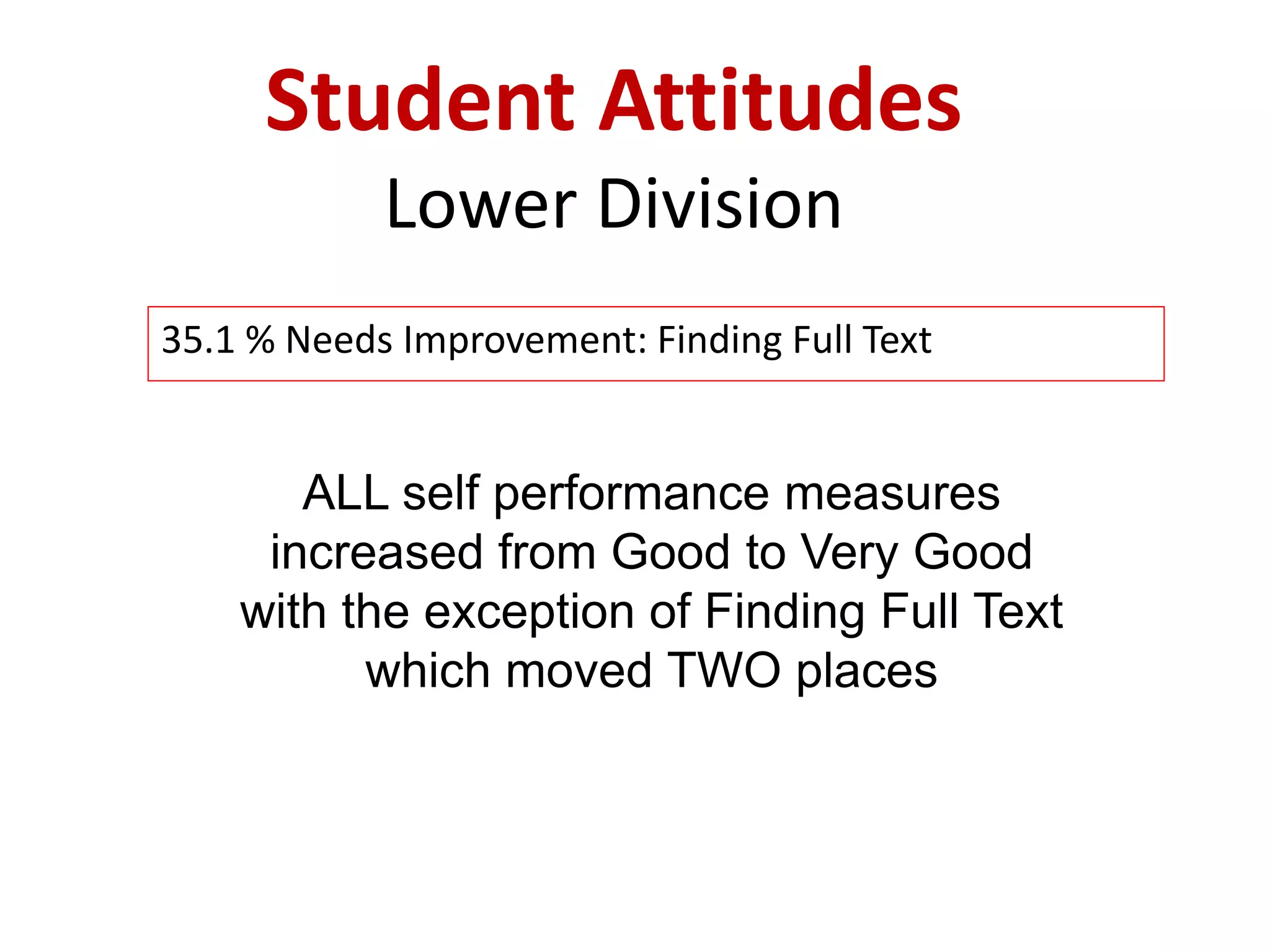
Student Attitudes Lower Division 
35.1 % Needs Improvement: Finding Full Text 
ALL self performance measures increased from Good to Very Good with the exception of Finding Full Text which moved TWO places
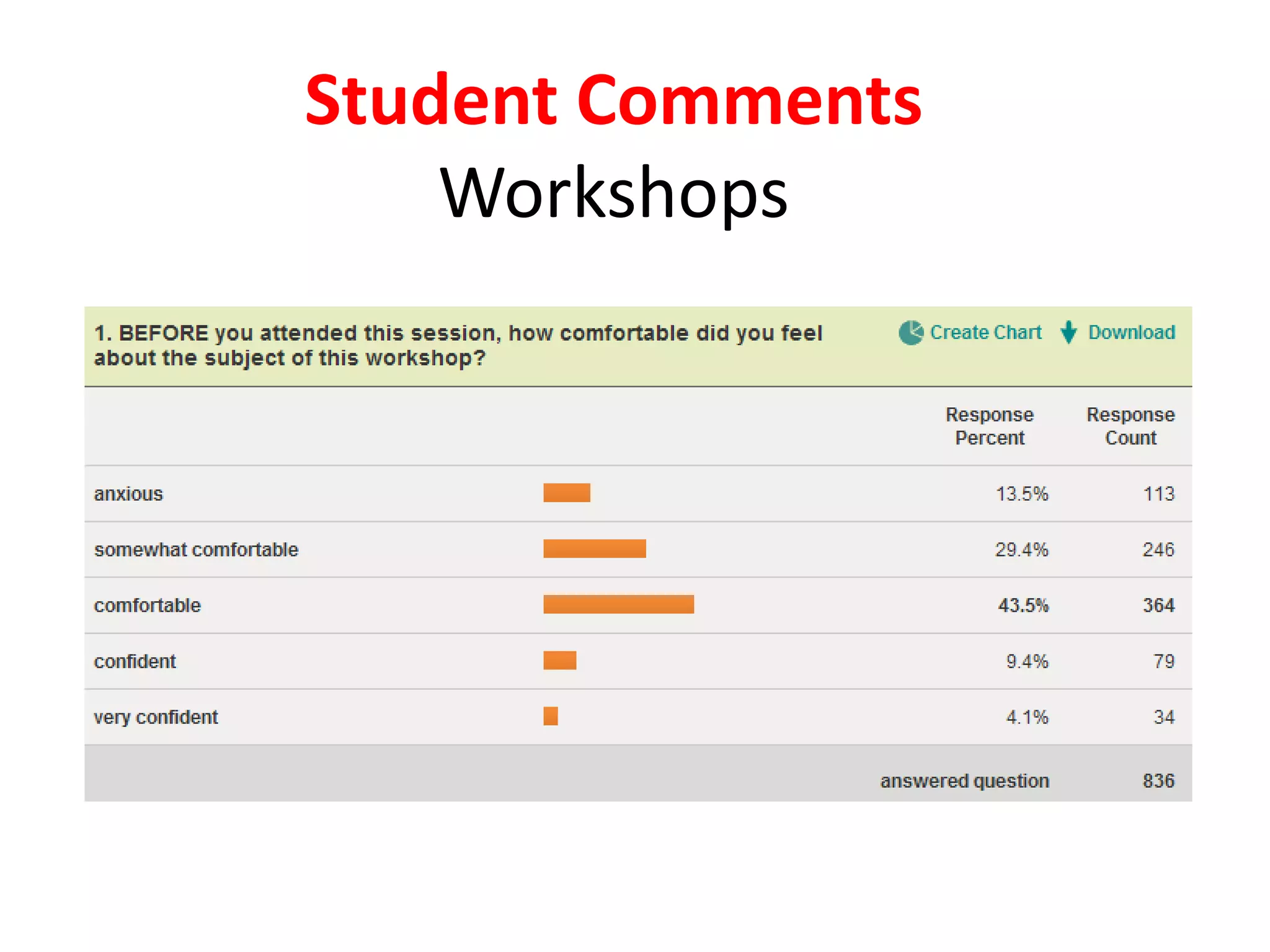
Student Comments Workshops
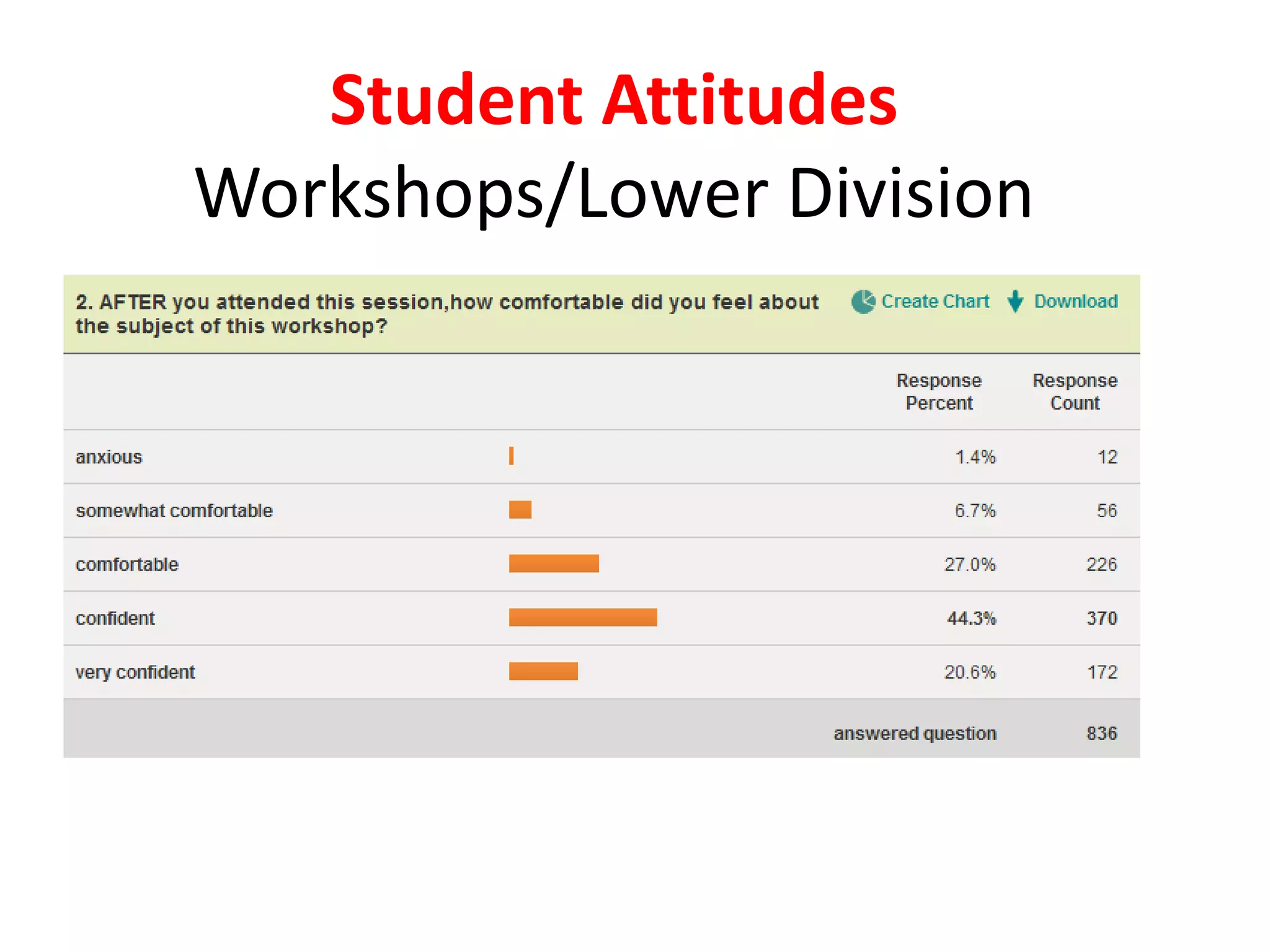
Student Attitudes Workshops/Lower Division
What does assessment of learning look like?
What’s Next? Send me your lesson plans, develop and Information Literacy Plan, practice what you have learned!

Pasadena daytwo

  • 1.
    Art Center informationliteracy and curriculum development Day Two
  • 2.
    Content we willcover Day two Recap of Day one Curriclum mapping The Teacher in you Significant learning Student engagement Course activity toolkit Lesson planning Assessment 101
  • 3.
    Recap of dayone Mission Statement 4 pillars- refine and finalize Clarifying questions thus far?
  • 4.
    http://www.flickr.com/photos/markandrewwebber/ Curriculum Mapping Helps focus your efforts Alleviates seeing the same students Lets you graphically see common courses across departments or majors Evidence for inclusion in certain courses
  • 5.
    http://www.flickr.com/photos/markandrewwebber/ 1. lookat your departments and classes you regularly teach or think you should teach 2. mark which standards are addressed/ideal for the course and what level they are being addressed 3. based upon this map you have a blueprint of which classes you should teach and which skills are being covered in the curriculum How to conduct a curriculum map by department
  • 6.
    Appl ying whatyou learned Download the curriculum map grid and look at your assigned departments. Fill out the map for all of your departments – look for common courses!
  • 7.
  • 8.
    Build your ArtCenter Student
  • 9.
    Learners Like Tobe challenged To be respected A variety of techniques Real-life experiences Receiving prompt feedback
  • 10.
    Student Comments “Sheis amazing... very talented and great at what she teaches. Intimidating though, because she is brilliant. Her papers are hard, but they really allow you to grow, and you feel accomplished when you are done. She made me want to go to grad school.” “Great course, well taught, excellent lectures, precise and accurate testing” “He is interesting to listen to in class because he is so involved in biology, and he tries to make jokes that aren't funny. He takes your picture, so within a few weeks, he knows everyone in the class, which is amazing since there are so many students.” “loved this guy! He is clear about what he expects and a fair grader.”
  • 11.
    To be bored To be talked down to Inconsistency in expectations, grading, or treatment Learning without context Learners don’t Like
  • 12.
    Student comments “eventhough i got an A in the class, i wouldn't recommend it. really boring and tests are kind hard. but she has really easy assignments that help make up for the test scores. she's really nice, but boring. i sat there and listened to my ipod the entire time.” “she is so unorganized and has absolutely no clue what the plan is most of the time (changes her mind after we have already competed assignments).. ssoooo frustrating!” “He tells us not to contact him during his office hours. He gets paid to be available during those office hours, yet he neglects his duty AND he disappears during class.” “he's probably the best looking horrible teacher i ever had.”
  • 13.
    Other things besideslearning styles can effect how your students learn Gender Culture Class Technology Peer to peer World Views Motivation Life Age
  • 14.
    Significant Learning Thinkingback over your whole life, what were the two or three most significant learning experiences you ever had? That is, list the moments (or events) in which you discovered something of lasting significance in your life.
  • 15.
    Questions to askyourself Did it take place in a school? Was a professional teacher instrumental in making the learning experience happen? Was a teacher-like figure (e.g., coach, minister, school counselor, theater director) instrumental in making the learning experience happen? If the answer to 3 or 4 is “yes,” then what did the teacher (or other person) actually do to help you learn? In general, what factors were instrumental in bringing about the learning?
  • 16.
  • 17.
  • 18.
    Doing Observable behavior Stimulus-response connections All behavior is learned Reinforcement Learning at own pace Active participation Mastery Behaviorism
  • 19.
    Cognitivism Thinking Organizationof information Perception & conceptualization of the world Relationship between concepts
  • 20.
    Humanism Feeling Affectiveor feeling side of learning Self-actualization Self-development Personal meaning/relevance
  • 21.
    Constructivism Creating knowledge Learners interpret experiences and facts Learners engage, grapple and seek to make sense of things Can be a solo experience, or a group one
  • 22.
    Social Cognition Group Social context to learning Transfer of learning Authentic learning environments
  • 23.
    4 principles ofconstructivist assignments learners construct their own meaning new learning builds on prior knowledge learning is enhanced by social interaction learning develops through “authentic” tasks
  • 24.
    Constructivist Assignments Threetypes of research assignments that utilize constructivist theory for teaching research skills –Problem based learning –Real world scenarios –Peer to peer learning
  • 25.
    Research- re -Imagined Replicating tasks students might use in the workplace Evaluating real world information sources and writing an essay or giving a speech about it Using Fantasy sports as a statistical and data analysis tool Scenario based annotated bibliographies Calibrated Peer Review Assignments Creation of discussion boards or wikis to compile and compare information collected by other students Portfolios
  • 26.
    How does thistranslate into your lesson plans? Start with your learning outcomes Develop assignments that will demonstrate student attainment of learning outcomes Assess the end product student learning
  • 27.
    Questions to askyourself before you plan to teach Which learning styles do I meet/not meet? Which learning theories do I subscribe to? What tools can I employ ensure that I am an authentic teacher? What methods can I use to ensure my students are learning?
  • 28.
  • 29.
  • 30.
    Less is more! Lesson Planning
  • 31.
    The Big Picture Why We Do What We do? Overview of Assessment
  • 32.
    TYPES OF ASSESSMENT Formative Summative Direct/Authentic Indirect 4
  • 33.
    Formative Assessment =One minute paper, clickers, reflective questions Summative Assessment= cumulative learning, portfolios, final exams Direct Assessment= Annotated bibliographies, in class worksheets, research papers Indirect Assessment = Observation or Surveys, interpretation or inference
  • 34.
    LEVELS OF ASSESSMENT COURSE LEVEL DEPARTMENTAL PROGRAMMATIC INSTITUTIONAL 4
  • 35.
    Library Evaluation Form= Programmatic Assessment One minute paper= Course level Assessment Institutional Assessment= GE learning objectives Curriculum Mapping = Department Assessment
  • 36.
  • 39.
    Student Attitudes LowerDivision 35.1 % Needs Improvement: Finding Full Text ALL self performance measures increased from Good to Very Good with the exception of Finding Full Text which moved TWO places
  • 40.
  • 41.
  • 42.
    What does assessmentof learning look like?
  • 43.
    What’s Next? Sendme your lesson plans, develop and Information Literacy Plan, practice what you have learned!