By: Kia Mae Encinares
Curriculum needs of physical
handicapped children
Some principle to consider when devising
the curriculum framework and selecting
the curriculum content
Structure of the curriculum
Curriculum content
what are their needs?
 what are the things to be
considered in implementing a
curriculum for children with physical
disability?
• some pupils of schools for physically
handicapped, though with physical
disabilities, can learn the mainstream
curriculum without special problems as
their learning abilities are not affected.
However, over half of the pupils are
affected by various degrees of mental
or perceptual- motor limitations besides
difficulties in movements.
• planning curriculum and
implementation strategies we should
take into consideration their individual
differences in abilities in movement,
communication, daily living skills,
social competency, studies and career
development after leaving school.
• At the same time, with the goal of
integration, the curriculum for these
special schools cannot depart
completely from the mainstream
curriculum.
 what are the principles to consider?
• Be pupil oriented.
the learning content should
match with the characteristics of
individual. (age, mental and physical
abilities)
• Emphasis is placed on the total and balanced
development of pupils.
the curriculum should be made up of academic,
cultural and practical subjects. Elements related to
basic skills, daily living skills and preparation for
school leaving should be stressed. Moreover,
learning areas should be inter- related rather than
compartmentalized.
• Every segment of school life is part of the
curriculum
school routine should be carefully
planned so that pupils can learn and
practise any time in school.
• the curriculum should prepare pupils to
integrate in ordinary environment
regarding
daily living
schooling
future employment
Since every special school has its unique
background, mission, admission criteria,
environment, equipment, etc.,
So curriculum development, beside following a
general direction, should be schooled- based.
• since curriculum should concern the
development of all aspects of the pupils,
consorted effort of teachers, therapists
and other disciplines is needed in
designing the curriculum content.
what are the structures to be consider or
implementation in designing a curriculum?
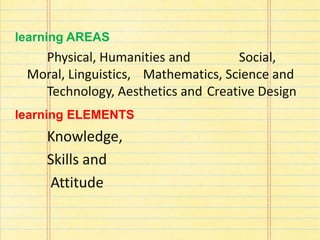
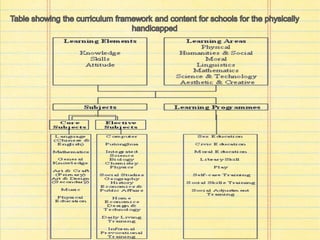
learning AREAS
Physical, Humanities and Social,
Moral, Linguistics, Mathematics, Science and
Technology, Aesthetics and Creative Design
learning ELEMENTS
Knowledge,
Skills and
Attitude
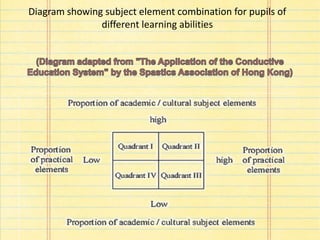
Diagram showing subject element combination for pupils of
different learning abilities
 what are the contents in designing a
curriculum for children with physical
disabilities?
 what are the appropriate learning elements
and areas for school for physical
handicapped?
To enhance the effect of learning and personal
development of pupils, schools should add in or
strengthen the teaching of the following basic
skills :
–perceptual motor,
–basic language,
–cognitive and personal and
social adjustment skills.
Core subjects for schools for the physically
handicapped include :
(1) Language (Chinese and English)
(2) Mathematics
(3) General Knowledge
(4) Art and Craft (Primary)
Art and Design (Secondary)
(5) Music
(6) Physical Education
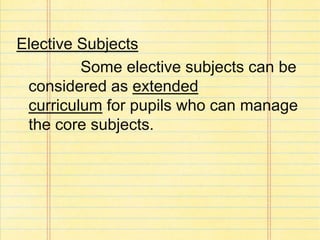
Elective Subjects
Some elective subjects can be
considered as extended
curriculum for pupils who can manage
the core subjects.
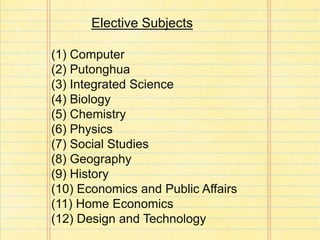
Elective Subjects
(1) Computer
(2) Putonghua
(3) Integrated Science
(4) Biology
(5) Chemistry
(6) Physics
(7) Social Studies
(8) Geography
(9) History
(10) Economics and Public Affairs
(11) Home Economics
(12) Design and Technology
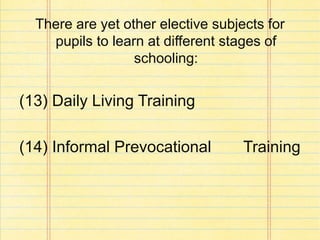
There are yet other elective subjects for
pupils to learn at different stages of
schooling:
(13) Daily Living Training
(14) Informal Prevocational Training
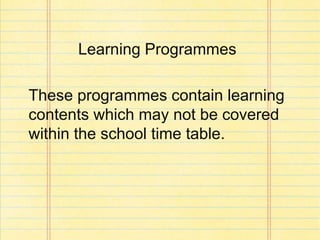
Learning Programmes
These programmes contain learning
contents which may not be covered
within the school time table.
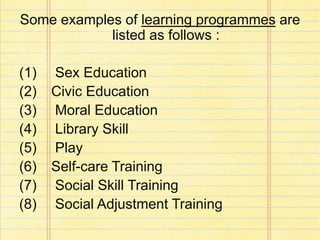
Some examples of learning programmes are
listed as follows :
(1) Sex Education
(2) Civic Education
(3) Moral Education
(4) Library Skill
(5) Play
(6) Self-care Training
(7) Social Skill Training
(8) Social Adjustment Training
Curriculum for children with physical disabilities

Curriculum for children with physical disabilities

  • 1.
    By: Kia MaeEncinares
  • 2.
    Curriculum needs ofphysical handicapped children Some principle to consider when devising the curriculum framework and selecting the curriculum content Structure of the curriculum Curriculum content
  • 3.
    what are theirneeds?  what are the things to be considered in implementing a curriculum for children with physical disability?
  • 4.
    • some pupilsof schools for physically handicapped, though with physical disabilities, can learn the mainstream curriculum without special problems as their learning abilities are not affected. However, over half of the pupils are affected by various degrees of mental or perceptual- motor limitations besides difficulties in movements.
  • 5.
    • planning curriculumand implementation strategies we should take into consideration their individual differences in abilities in movement, communication, daily living skills, social competency, studies and career development after leaving school.
  • 6.
    • At thesame time, with the goal of integration, the curriculum for these special schools cannot depart completely from the mainstream curriculum.
  • 7.
     what arethe principles to consider?
  • 8.
    • Be pupiloriented. the learning content should match with the characteristics of individual. (age, mental and physical abilities)
  • 9.
    • Emphasis isplaced on the total and balanced development of pupils. the curriculum should be made up of academic, cultural and practical subjects. Elements related to basic skills, daily living skills and preparation for school leaving should be stressed. Moreover, learning areas should be inter- related rather than compartmentalized.
  • 10.
    • Every segmentof school life is part of the curriculum school routine should be carefully planned so that pupils can learn and practise any time in school.
  • 11.
    • the curriculumshould prepare pupils to integrate in ordinary environment regarding daily living schooling future employment
  • 12.
    Since every specialschool has its unique background, mission, admission criteria, environment, equipment, etc., So curriculum development, beside following a general direction, should be schooled- based.
  • 13.
    • since curriculumshould concern the development of all aspects of the pupils, consorted effort of teachers, therapists and other disciplines is needed in designing the curriculum content.
  • 14.
    what are thestructures to be consider or implementation in designing a curriculum?
  • 15.
    learning AREAS Physical, Humanitiesand Social, Moral, Linguistics, Mathematics, Science and Technology, Aesthetics and Creative Design learning ELEMENTS Knowledge, Skills and Attitude
  • 16.
    Diagram showing subjectelement combination for pupils of different learning abilities
  • 17.
     what arethe contents in designing a curriculum for children with physical disabilities?  what are the appropriate learning elements and areas for school for physical handicapped?
  • 18.
    To enhance theeffect of learning and personal development of pupils, schools should add in or strengthen the teaching of the following basic skills : –perceptual motor, –basic language, –cognitive and personal and social adjustment skills.
  • 20.
    Core subjects forschools for the physically handicapped include : (1) Language (Chinese and English) (2) Mathematics (3) General Knowledge (4) Art and Craft (Primary) Art and Design (Secondary) (5) Music (6) Physical Education
  • 21.
    Elective Subjects Some electivesubjects can be considered as extended curriculum for pupils who can manage the core subjects.
  • 22.
    Elective Subjects (1) Computer (2)Putonghua (3) Integrated Science (4) Biology (5) Chemistry (6) Physics (7) Social Studies (8) Geography (9) History (10) Economics and Public Affairs (11) Home Economics (12) Design and Technology
  • 23.
    There are yetother elective subjects for pupils to learn at different stages of schooling: (13) Daily Living Training (14) Informal Prevocational Training
  • 24.
    Learning Programmes These programmescontain learning contents which may not be covered within the school time table.
  • 25.
    Some examples oflearning programmes are listed as follows : (1) Sex Education (2) Civic Education (3) Moral Education (4) Library Skill (5) Play (6) Self-care Training (7) Social Skill Training (8) Social Adjustment Training