Trends and Issues in Nursing


                      Ram Sharan Mehta
     Medical-Surgical Nursing Department
What do you mean by trends?
What do you mean by Issues ?
What are the Areas of
Trends and Issues, Nurses
     Need to study ?
Why study of Trends and
 Issues is Important?
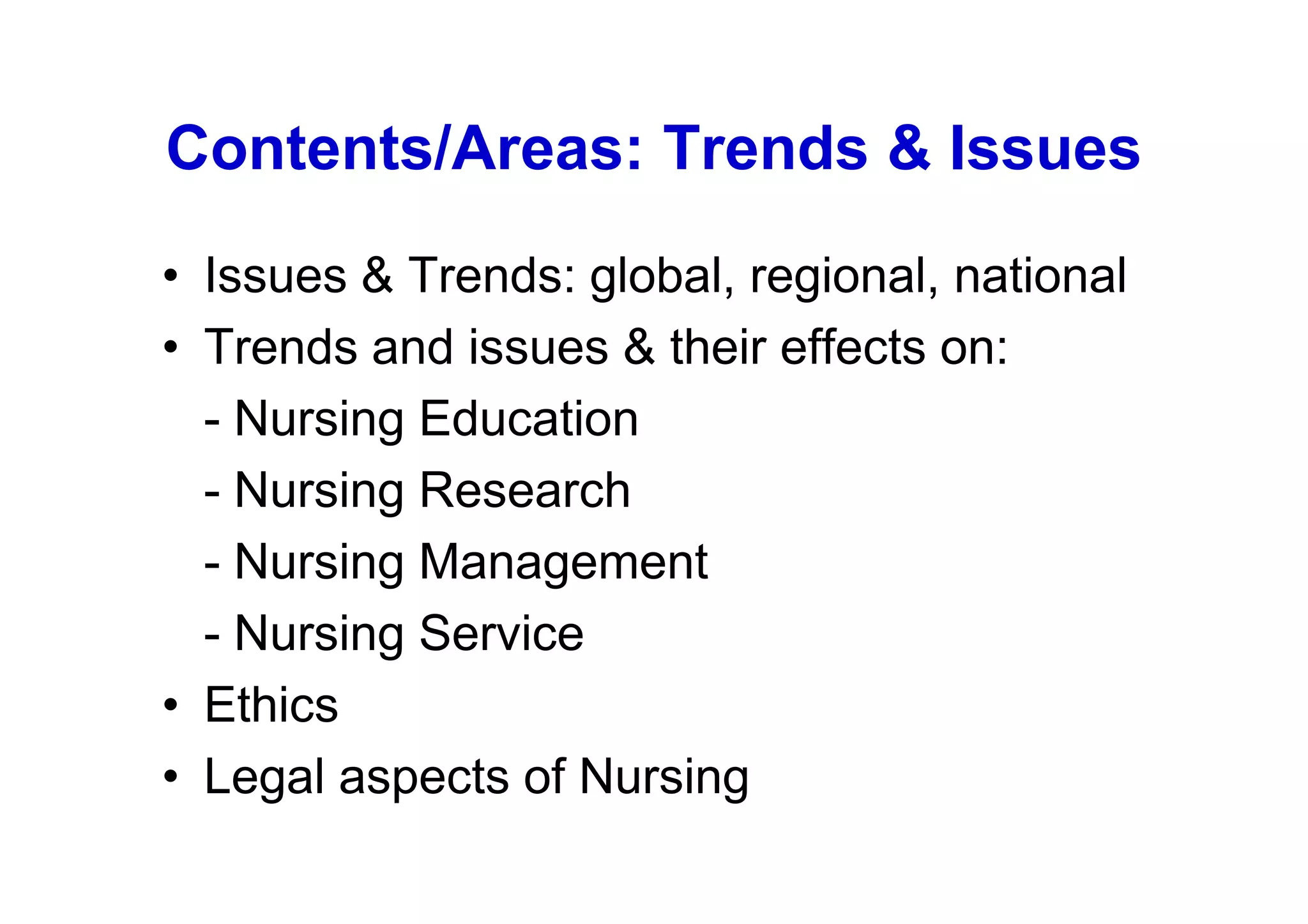
Contents/Areas: Trends & Issues
• Issues & Trends: global, regional, national
• Trends and issues & their effects on:
  - Nursing Education
  - Nursing Research
  - Nursing Management
  - Nursing Service
• Ethics
• Legal aspects of Nursing
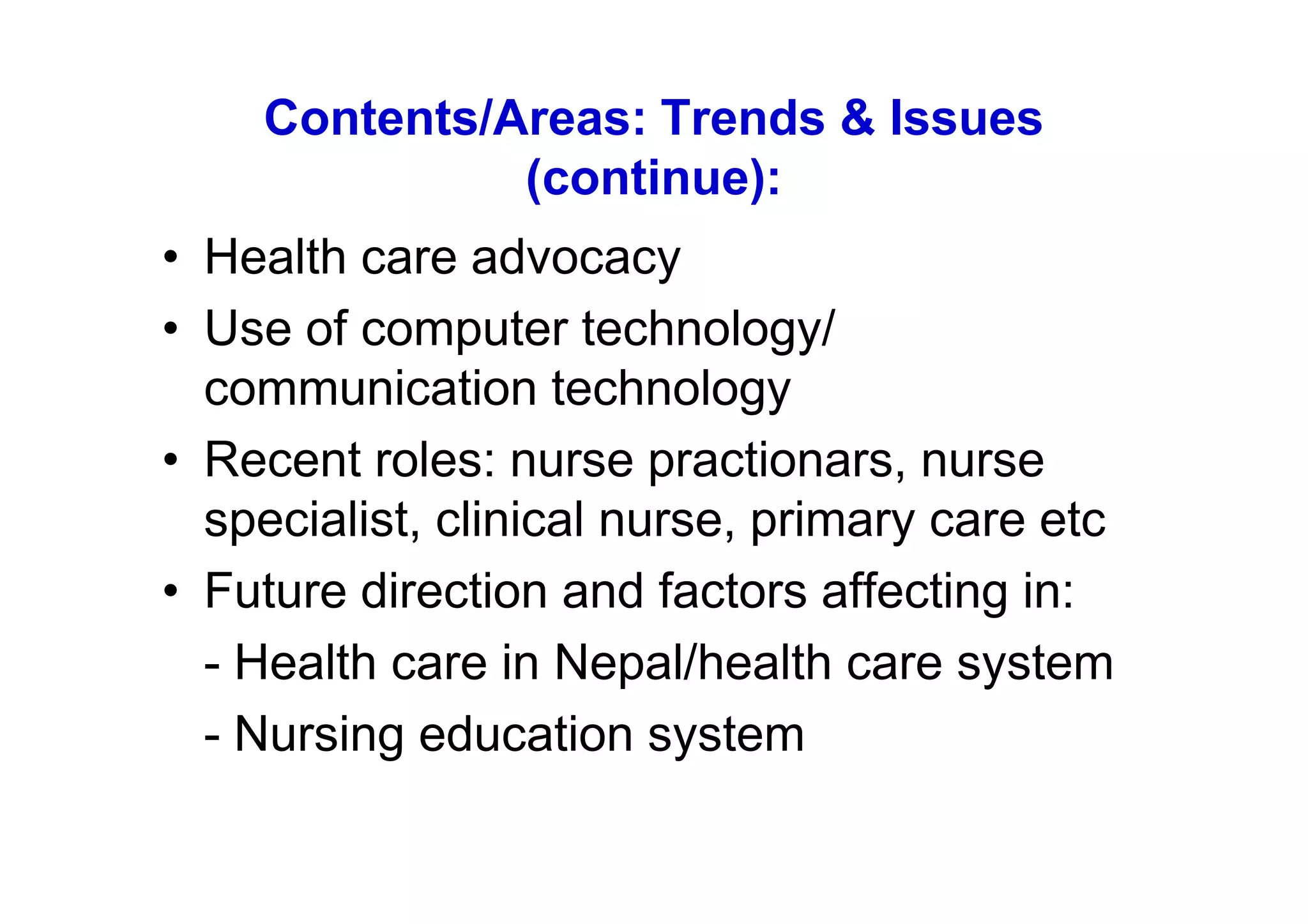
Contents/Areas: Trends & Issues
              (continue):
• Health care advocacy
• Use of computer technology/
  communication technology
• Recent roles: nurse practionars, nurse
  specialist, clinical nurse, primary care etc
• Future direction and factors affecting in:
  - Health care in Nepal/health care system
  - Nursing education system
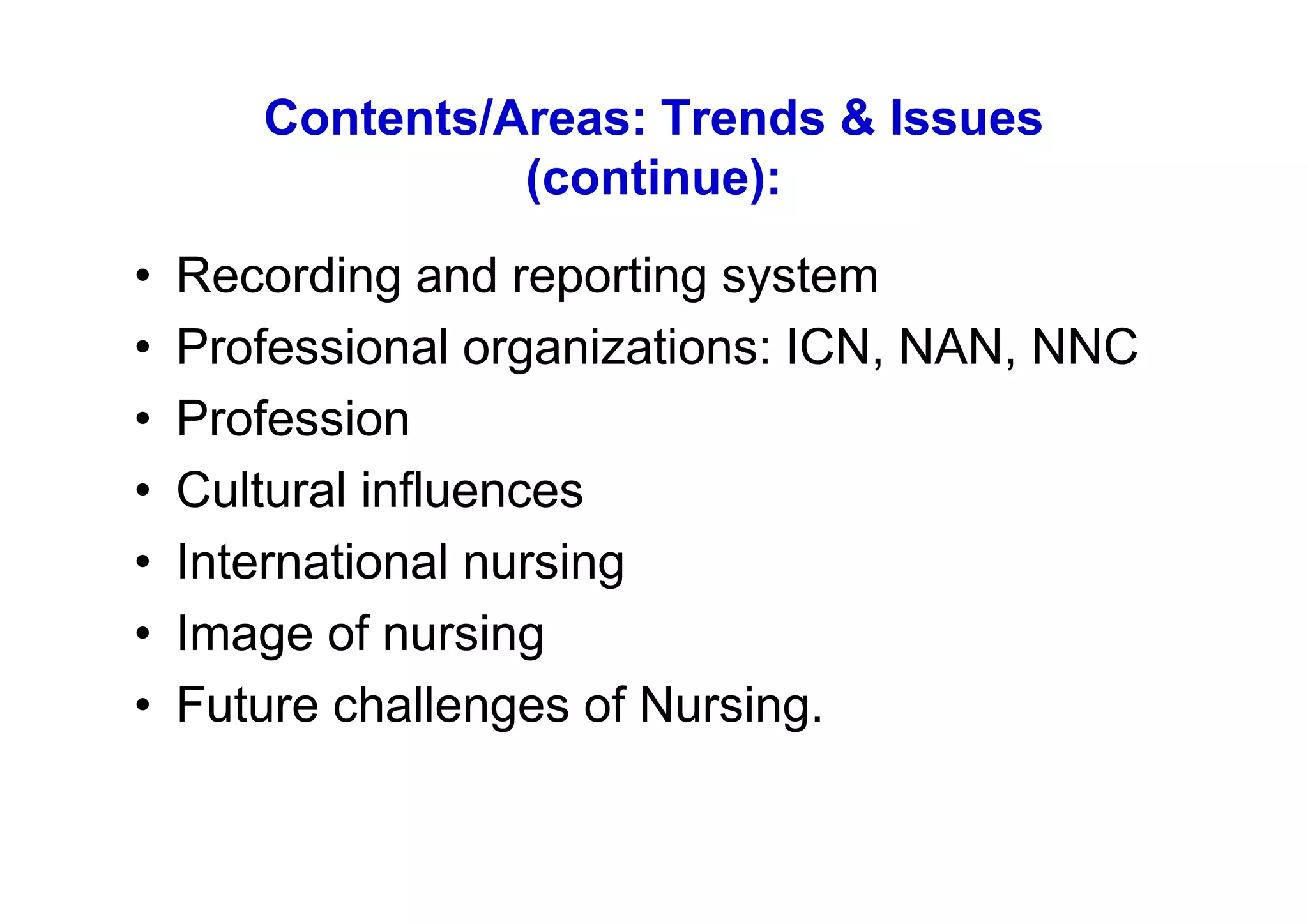
Contents/Areas: Trends & Issues
                 (continue):
•   Recording and reporting system
•   Professional organizations: ICN, NAN, NNC
•   Profession
•   Cultural influences
•   International nursing
•   Image of nursing
•   Future challenges of Nursing.
ISSUES AND TRENDS IN NURSING
•    Historical Overview
•    Evolution of nursing science and practice
•    Economics of health care
•    Social policy and health care delivery
•    Cultural influence on nursing
•    Legal aspects of nursing
•    Ethical aspects on nursing
•    Nursing education
•    Licensure and related issues in nursing
ISSUES AND TRENDS IN NURSING (Continue):


•   Continuing education for relicensure
•   Rural nursing
•   Urban nursing
•   International nursing
•   Image of nursing
•   The future challenges for nurses and
    nursing
Introduction:
Nursing has been called the oldest of the art,
and the youngest of the profession. As such, it
has gone through many stages and has been an
integral part of social movements. Nursing has
been involved in the existing culture, shaped by
it and yet beeping to develop it. The trend
analysis and future scenarios provide a basis for
sound decision making through mapping of
possible futures and aiming to create preferred
futures.
The Future: A challenge for Nurses and Nursing
•   Expanding Technology
•   Computer assistance
•   New threats to health
•   Nurses enter private practice
•   Collegiality among health profession
    (Multidisciplinary Team Approach)
•   Educational preparation: building toward unity
•   Changing in Role Image
•   Unification of practice and education
•   Self-governance
•   Recruitment of the best candidates in to nursing
•   Lateral mobility for nurses
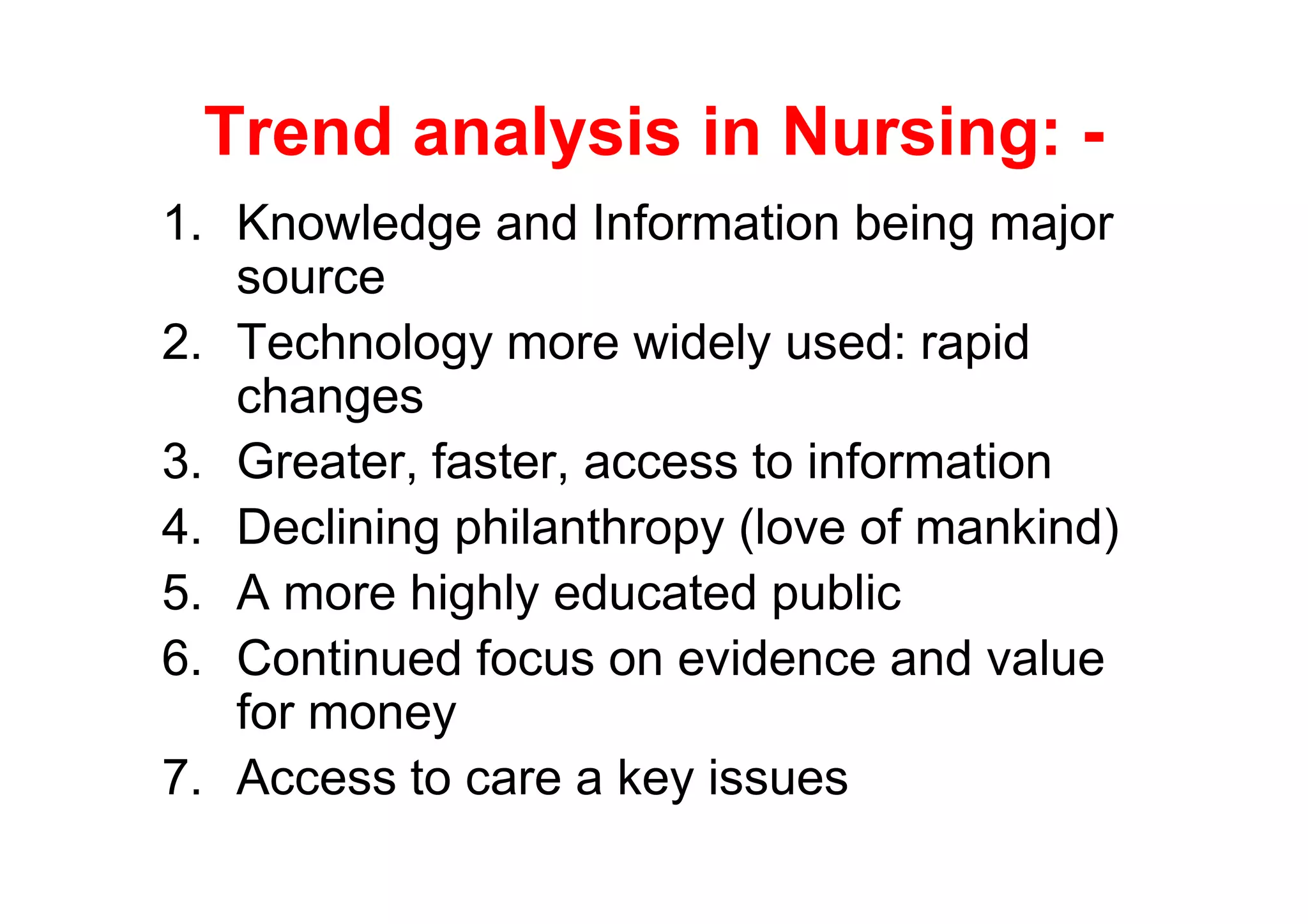
Trend analysis in Nursing: -
1. Knowledge and Information being major
   source
2. Technology more widely used: rapid
   changes
3. Greater, faster, access to information
4. Declining philanthropy (love of mankind)
5. A more highly educated public
6. Continued focus on evidence and value
   for money
7. Access to care a key issues
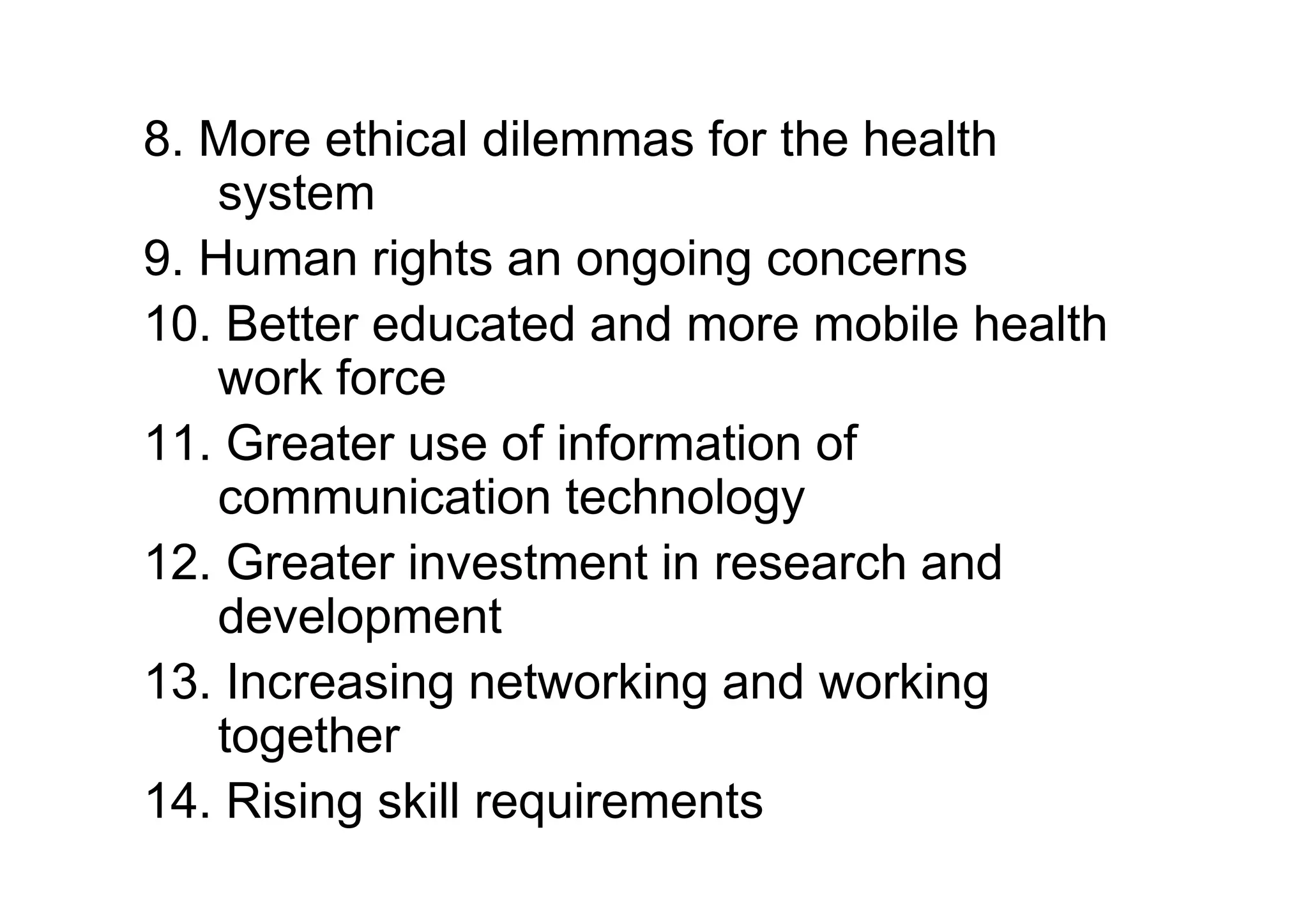
8. More ethical dilemmas for the health
    system
9. Human rights an ongoing concerns
10. Better educated and more mobile health
    work force
11. Greater use of information of
    communication technology
12. Greater investment in research and
    development
13. Increasing networking and working
    together
14. Rising skill requirements
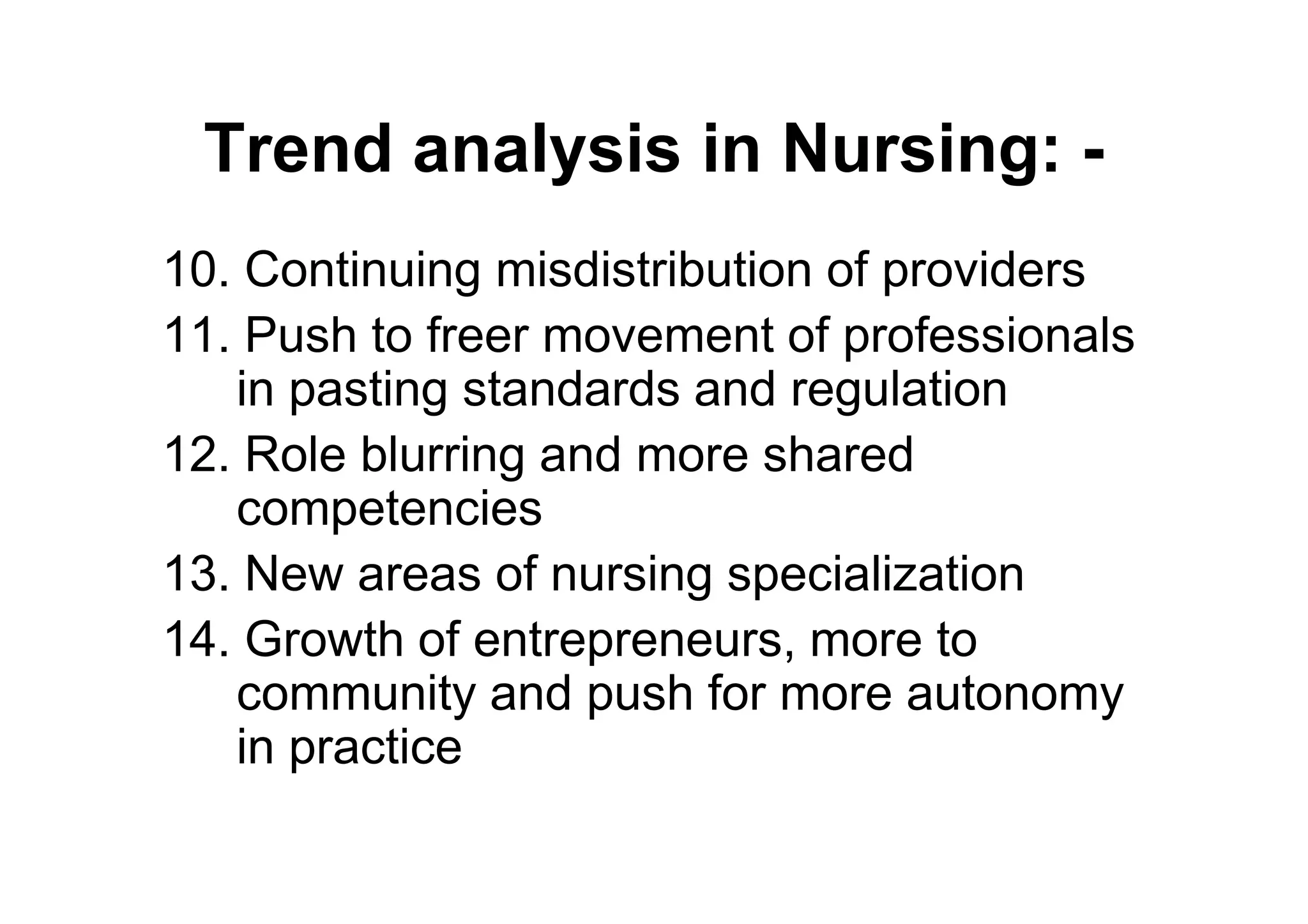
Trend analysis in Nursing: -
10. Continuing misdistribution of providers
11. Push to freer movement of professionals
   in pasting standards and regulation
12. Role blurring and more shared
   competencies
13. New areas of nursing specialization
14. Growth of entrepreneurs, more to
   community and push for more autonomy
   in practice
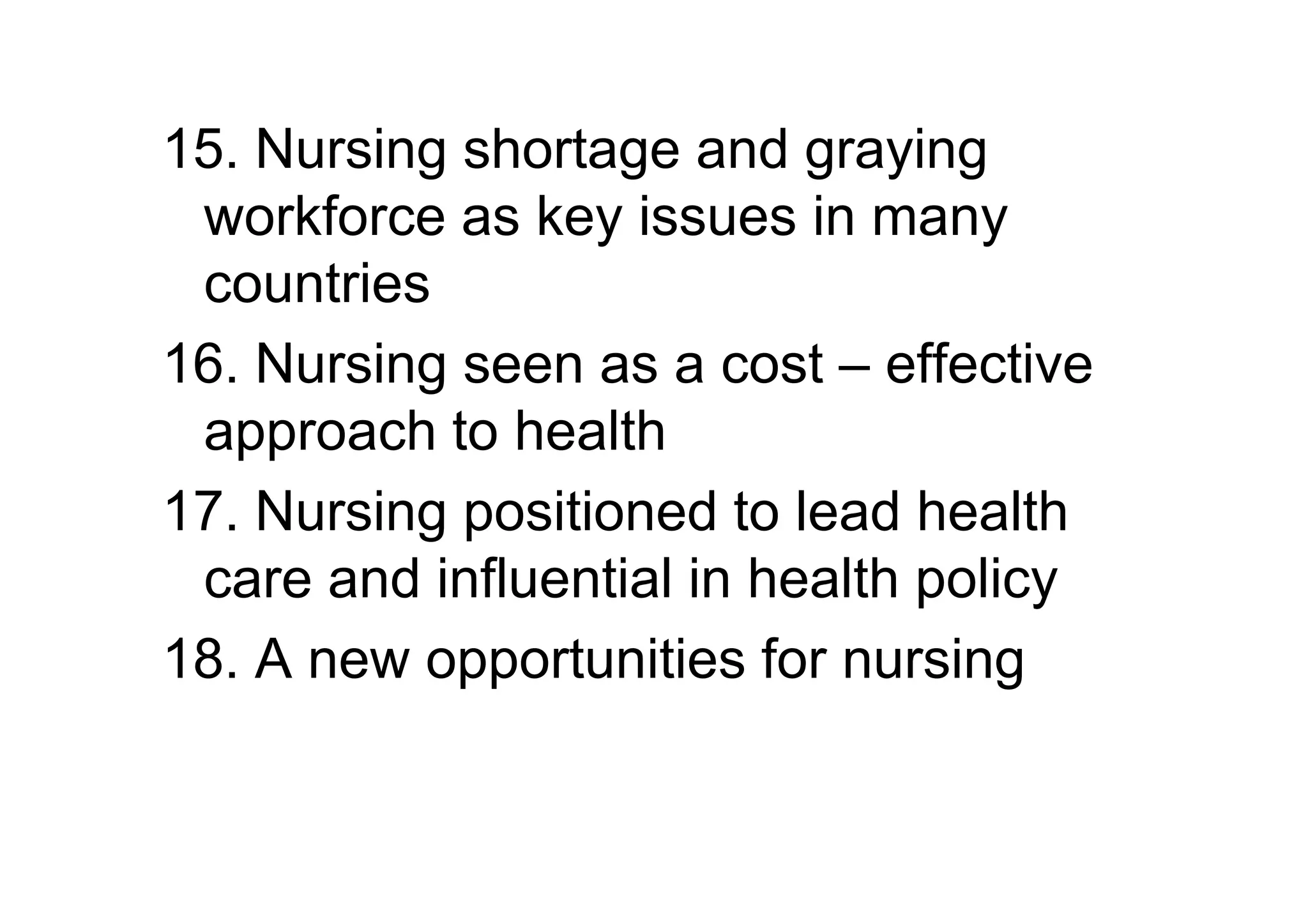
15. Nursing shortage and graying
 workforce as key issues in many
 countries
16. Nursing seen as a cost – effective
 approach to health
17. Nursing positioned to lead health
 care and influential in health policy
18. A new opportunities for nursing
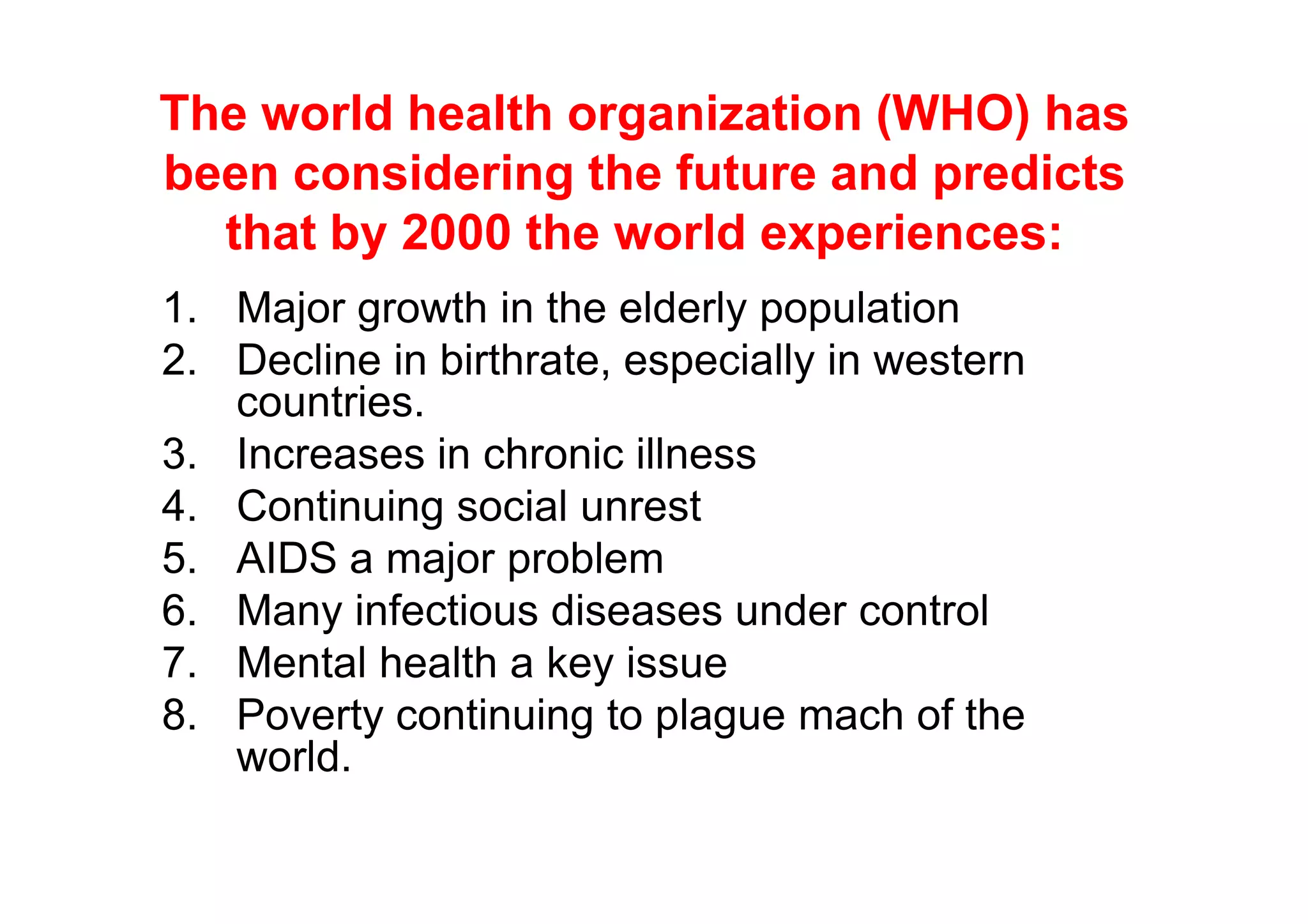
The world health organization (WHO) has
been considering the future and predicts
  that by 2000 the world experiences:
1. Major growth in the elderly population
2. Decline in birthrate, especially in western
   countries.
3. Increases in chronic illness
4. Continuing social unrest
5. AIDS a major problem
6. Many infectious diseases under control
7. Mental health a key issue
8. Poverty continuing to plague mach of the
   world.
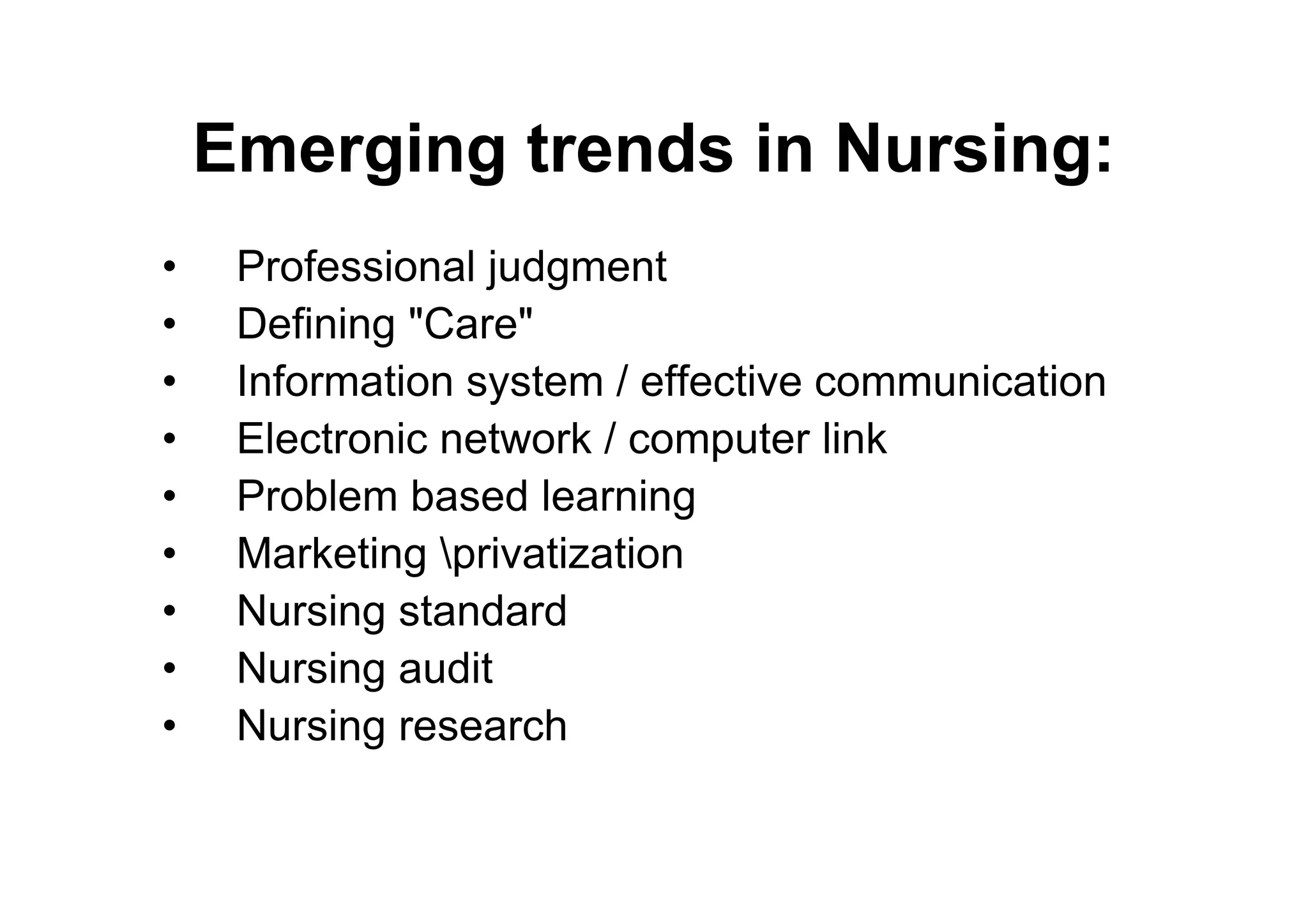
Emerging trends in Nursing:
•    Professional judgment
•    Defining "Care"
•    Information system / effective communication
•    Electronic network / computer link
•    Problem based learning
•    Marketing privatization
•    Nursing standard
•    Nursing audit
•    Nursing research
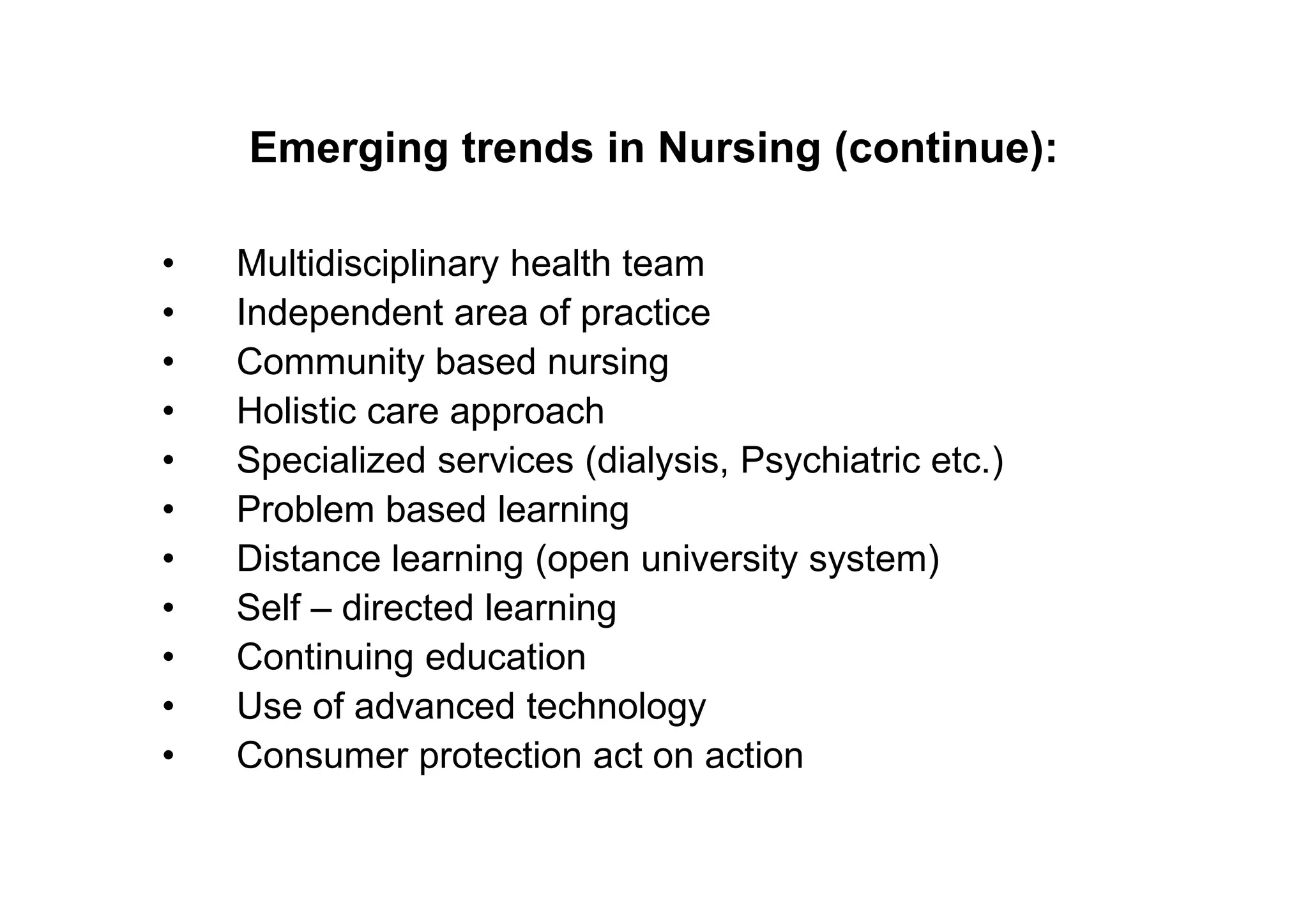
Emerging trends in Nursing (continue):

•   Multidisciplinary health team
•   Independent area of practice
•   Community based nursing
•   Holistic care approach
•   Specialized services (dialysis, Psychiatric etc.)
•   Problem based learning
•   Distance learning (open university system)
•   Self – directed learning
•   Continuing education
•   Use of advanced technology
•   Consumer protection act on action
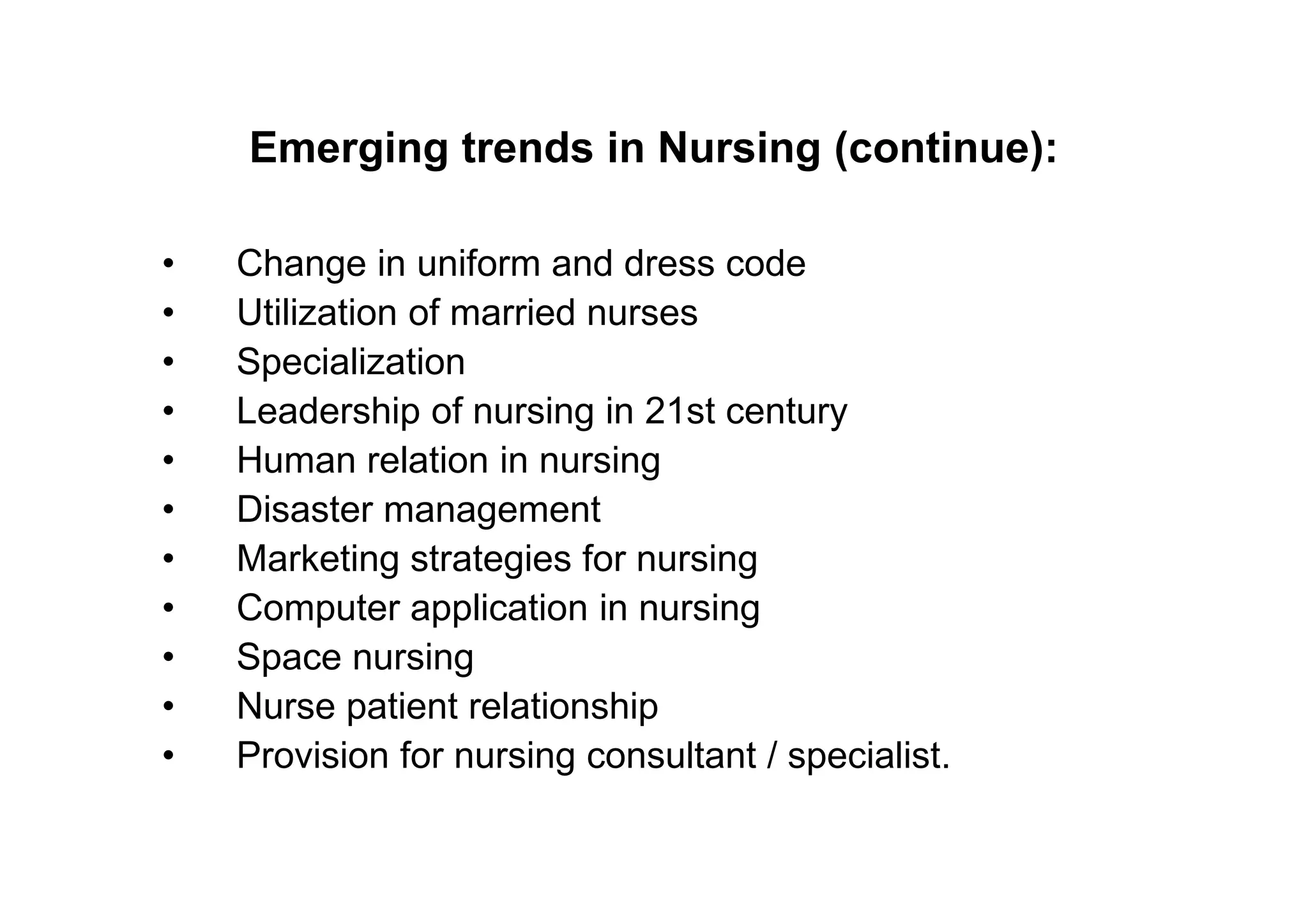
Emerging trends in Nursing (continue):

•   Change in uniform and dress code
•   Utilization of married nurses
•   Specialization
•   Leadership of nursing in 21st century
•   Human relation in nursing
•   Disaster management
•   Marketing strategies for nursing
•   Computer application in nursing
•   Space nursing
•   Nurse patient relationship
•   Provision for nursing consultant / specialist.
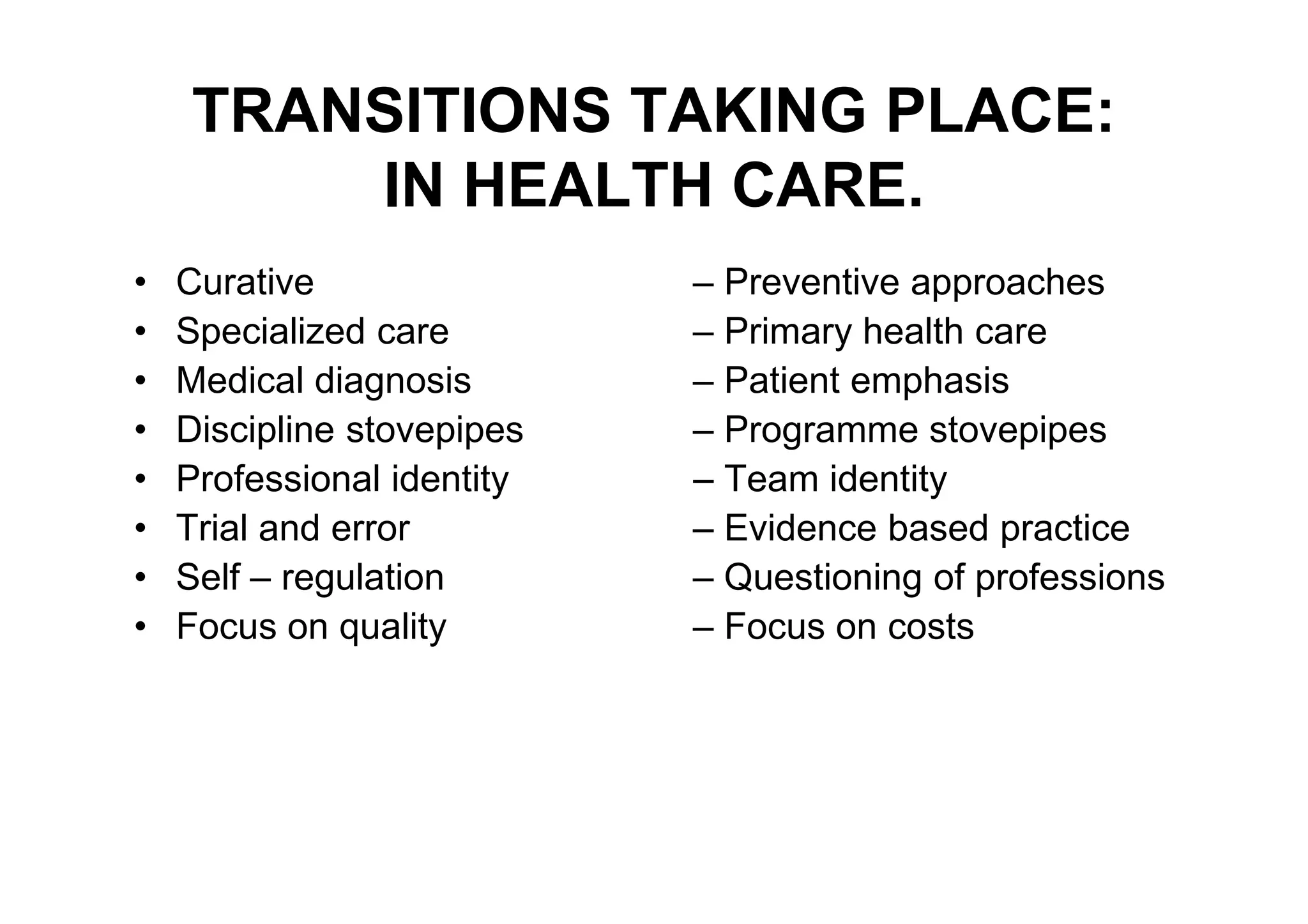
TRANSITIONS TAKING PLACE:
        IN HEALTH CARE.
•   Curative                – Preventive approaches
•   Specialized care        – Primary health care
•   Medical diagnosis       – Patient emphasis
•   Discipline stovepipes   – Programme stovepipes
•   Professional identity   – Team identity
•   Trial and error         – Evidence based practice
•   Self – regulation       – Questioning of professions
•   Focus on quality        – Focus on costs
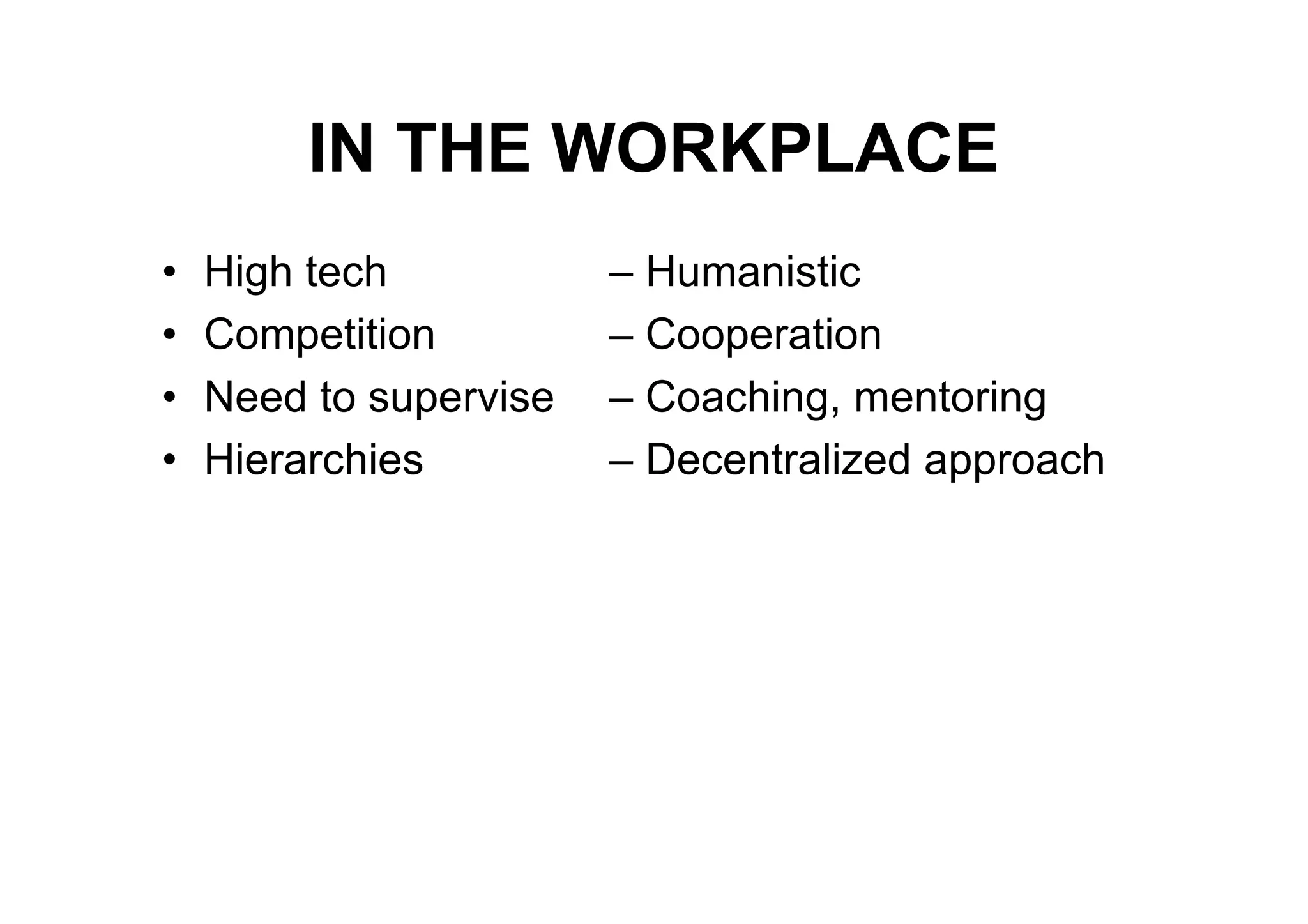
IN THE WORKPLACE
•   High tech           – Humanistic
•   Competition         – Cooperation
•   Need to supervise   – Coaching, mentoring
•   Hierarchies         – Decentralized approach
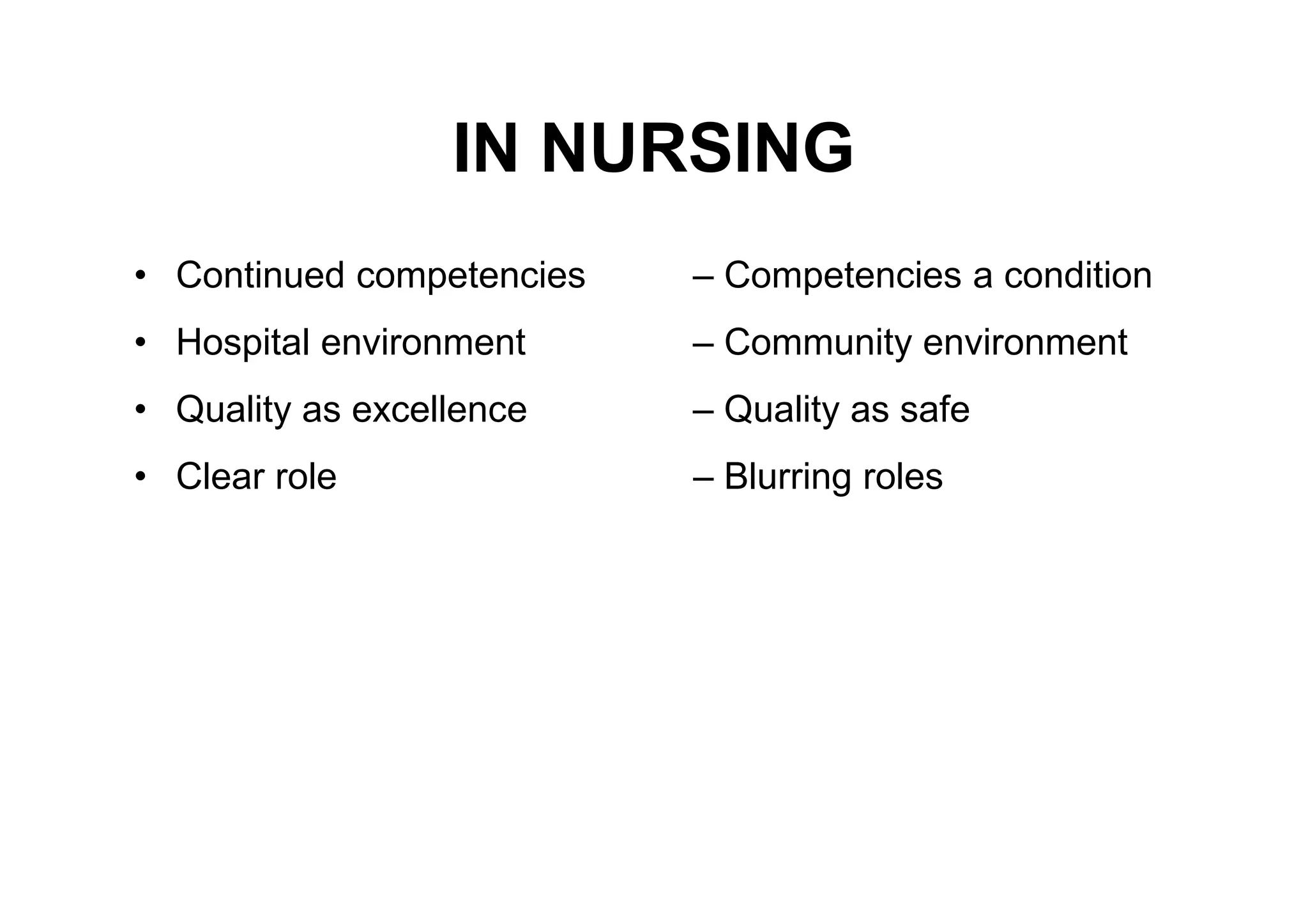
IN NURSING
• Continued competencies   – Competencies a condition
• Hospital environment     – Community environment
• Quality as excellence    – Quality as safe
• Clear role               – Blurring roles
Thank You

Trends and issues in nursing [compatibility mode]

  • 1.
    Trends and Issuesin Nursing Ram Sharan Mehta Medical-Surgical Nursing Department
  • 2.
    What do youmean by trends?
  • 3.
    What do youmean by Issues ?
  • 4.
    What are theAreas of Trends and Issues, Nurses Need to study ?
  • 5.
    Why study ofTrends and Issues is Important?
  • 6.
    Contents/Areas: Trends &Issues • Issues & Trends: global, regional, national • Trends and issues & their effects on: - Nursing Education - Nursing Research - Nursing Management - Nursing Service • Ethics • Legal aspects of Nursing
  • 7.
    Contents/Areas: Trends &Issues (continue): • Health care advocacy • Use of computer technology/ communication technology • Recent roles: nurse practionars, nurse specialist, clinical nurse, primary care etc • Future direction and factors affecting in: - Health care in Nepal/health care system - Nursing education system
  • 8.
    Contents/Areas: Trends &Issues (continue): • Recording and reporting system • Professional organizations: ICN, NAN, NNC • Profession • Cultural influences • International nursing • Image of nursing • Future challenges of Nursing.
  • 9.
    ISSUES AND TRENDSIN NURSING • Historical Overview • Evolution of nursing science and practice • Economics of health care • Social policy and health care delivery • Cultural influence on nursing • Legal aspects of nursing • Ethical aspects on nursing • Nursing education • Licensure and related issues in nursing
  • 10.
    ISSUES AND TRENDSIN NURSING (Continue): • Continuing education for relicensure • Rural nursing • Urban nursing • International nursing • Image of nursing • The future challenges for nurses and nursing
  • 11.
    Introduction: Nursing has beencalled the oldest of the art, and the youngest of the profession. As such, it has gone through many stages and has been an integral part of social movements. Nursing has been involved in the existing culture, shaped by it and yet beeping to develop it. The trend analysis and future scenarios provide a basis for sound decision making through mapping of possible futures and aiming to create preferred futures.
  • 12.
    The Future: Achallenge for Nurses and Nursing • Expanding Technology • Computer assistance • New threats to health • Nurses enter private practice • Collegiality among health profession (Multidisciplinary Team Approach) • Educational preparation: building toward unity • Changing in Role Image • Unification of practice and education • Self-governance • Recruitment of the best candidates in to nursing • Lateral mobility for nurses
  • 13.
    Trend analysis inNursing: - 1. Knowledge and Information being major source 2. Technology more widely used: rapid changes 3. Greater, faster, access to information 4. Declining philanthropy (love of mankind) 5. A more highly educated public 6. Continued focus on evidence and value for money 7. Access to care a key issues
  • 14.
    8. More ethicaldilemmas for the health system 9. Human rights an ongoing concerns 10. Better educated and more mobile health work force 11. Greater use of information of communication technology 12. Greater investment in research and development 13. Increasing networking and working together 14. Rising skill requirements
  • 15.
    Trend analysis inNursing: - 10. Continuing misdistribution of providers 11. Push to freer movement of professionals in pasting standards and regulation 12. Role blurring and more shared competencies 13. New areas of nursing specialization 14. Growth of entrepreneurs, more to community and push for more autonomy in practice
  • 16.
    15. Nursing shortageand graying workforce as key issues in many countries 16. Nursing seen as a cost – effective approach to health 17. Nursing positioned to lead health care and influential in health policy 18. A new opportunities for nursing
  • 17.
    The world healthorganization (WHO) has been considering the future and predicts that by 2000 the world experiences: 1. Major growth in the elderly population 2. Decline in birthrate, especially in western countries. 3. Increases in chronic illness 4. Continuing social unrest 5. AIDS a major problem 6. Many infectious diseases under control 7. Mental health a key issue 8. Poverty continuing to plague mach of the world.
  • 18.
    Emerging trends inNursing: • Professional judgment • Defining "Care" • Information system / effective communication • Electronic network / computer link • Problem based learning • Marketing privatization • Nursing standard • Nursing audit • Nursing research
  • 19.
    Emerging trends inNursing (continue): • Multidisciplinary health team • Independent area of practice • Community based nursing • Holistic care approach • Specialized services (dialysis, Psychiatric etc.) • Problem based learning • Distance learning (open university system) • Self – directed learning • Continuing education • Use of advanced technology • Consumer protection act on action
  • 20.
    Emerging trends inNursing (continue): • Change in uniform and dress code • Utilization of married nurses • Specialization • Leadership of nursing in 21st century • Human relation in nursing • Disaster management • Marketing strategies for nursing • Computer application in nursing • Space nursing • Nurse patient relationship • Provision for nursing consultant / specialist.
  • 21.
    TRANSITIONS TAKING PLACE: IN HEALTH CARE. • Curative – Preventive approaches • Specialized care – Primary health care • Medical diagnosis – Patient emphasis • Discipline stovepipes – Programme stovepipes • Professional identity – Team identity • Trial and error – Evidence based practice • Self – regulation – Questioning of professions • Focus on quality – Focus on costs
  • 22.
    IN THE WORKPLACE • High tech – Humanistic • Competition – Cooperation • Need to supervise – Coaching, mentoring • Hierarchies – Decentralized approach
  • 23.
    IN NURSING • Continuedcompetencies – Competencies a condition • Hospital environment – Community environment • Quality as excellence – Quality as safe • Clear role – Blurring roles
  • 24.