Dealing with Cultural Differences


                  Russell Frank, ESL
                            College 1
QUESTION

What is one unexpected cultural situation
you have experienced since you came
here? How did you respond?

When you encounter a cultural situation
that is very new or different for you, how
does that make you feel?
Influence #1: Expectations


• The ideas, attitudes, and knowledge you
  have about a new culture greatly affects
  the experience you will have.
• The expectations we have come from a
  variety of sources—media, friends, and
  family, etc.
• Unrealistic expectations can lead to
  unhappiness for newcomers in the U.S.
Influence #2: Personality
                            Characteristics

Characteristics that can help you adapt:
• Patience
• Sense of humor
• Tolerance for ambiguity
  – ―Well, I don’t know what’s going on here. I’ll
    just have to wait and see, or try to figure out.‖
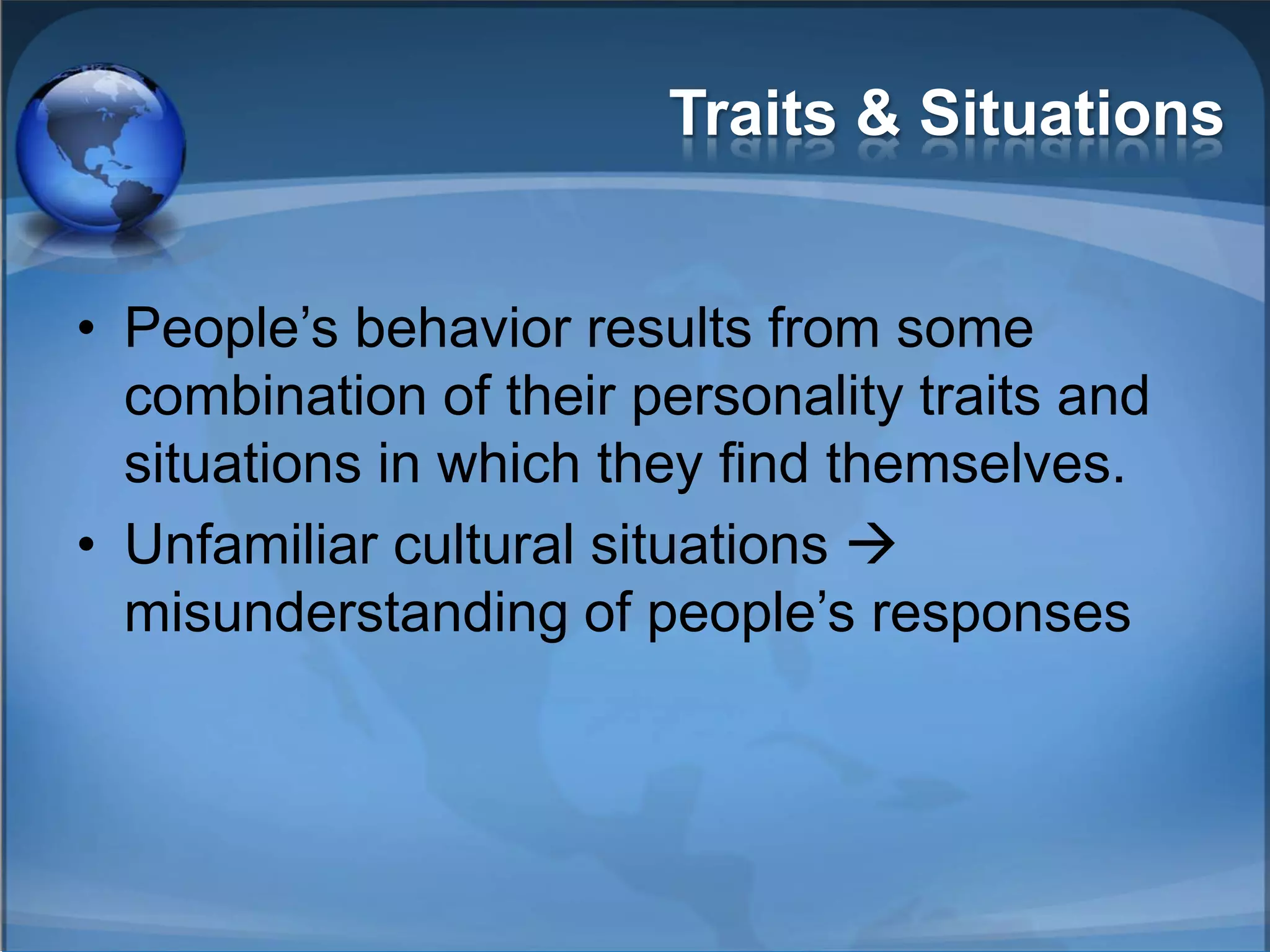
Traits & Situations


• People’s behavior results from some
  combination of their personality traits and
  situations in which they find themselves.
• Unfamiliar cultural situations 
  misunderstanding of people’s responses
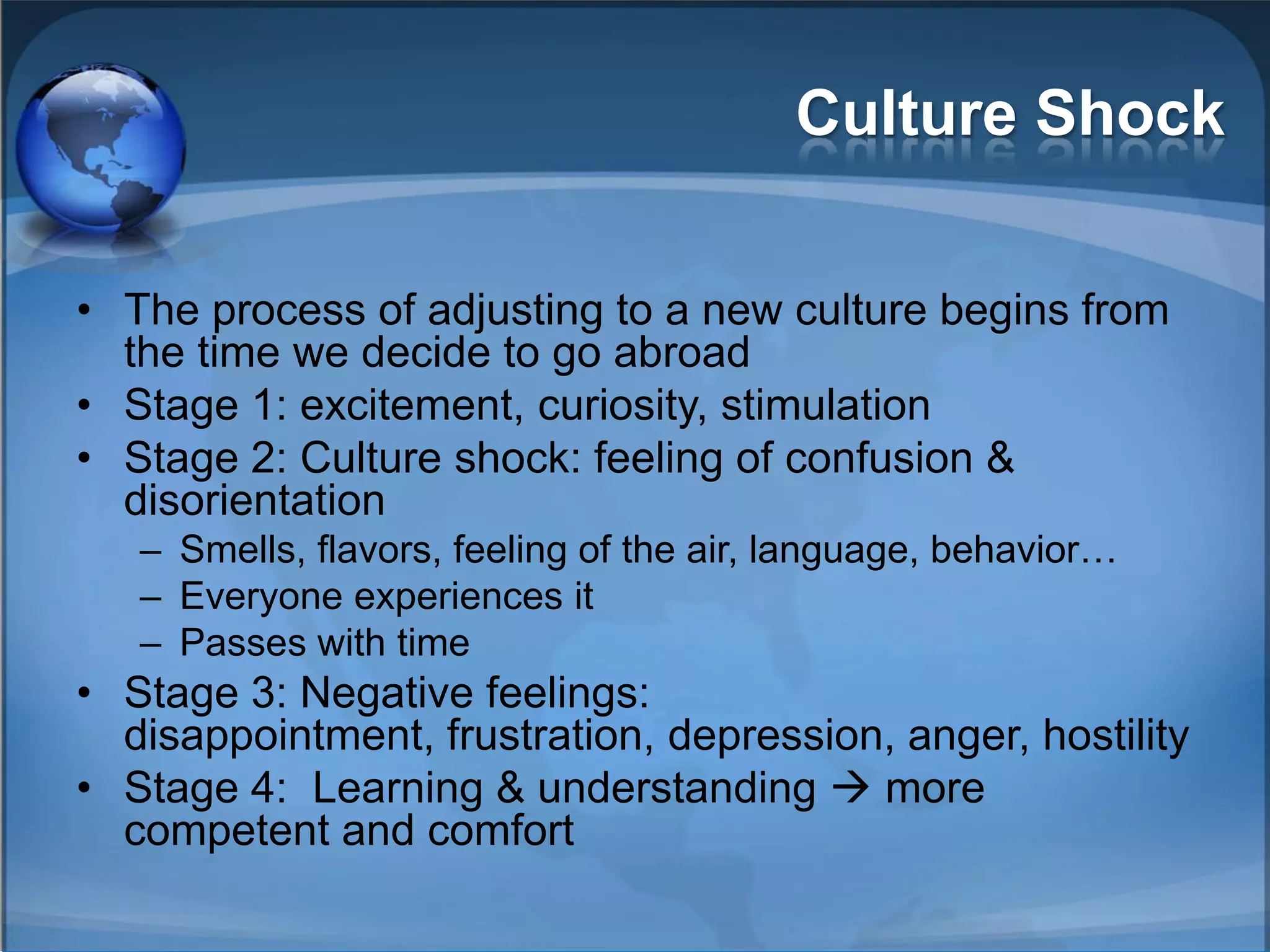
Culture Shock

• The process of adjusting to a new culture begins from
  the time we decide to go abroad
• Stage 1: excitement, curiosity, stimulation
• Stage 2: Culture shock: feeling of confusion &
  disorientation
   – Smells, flavors, feeling of the air, language, behavior…
   – Everyone experiences it
   – Passes with time
• Stage 3: Negative feelings:
  disappointment, frustration, depression, anger, hostility
• Stage 4: Learning & understanding  more
  competent and comfort
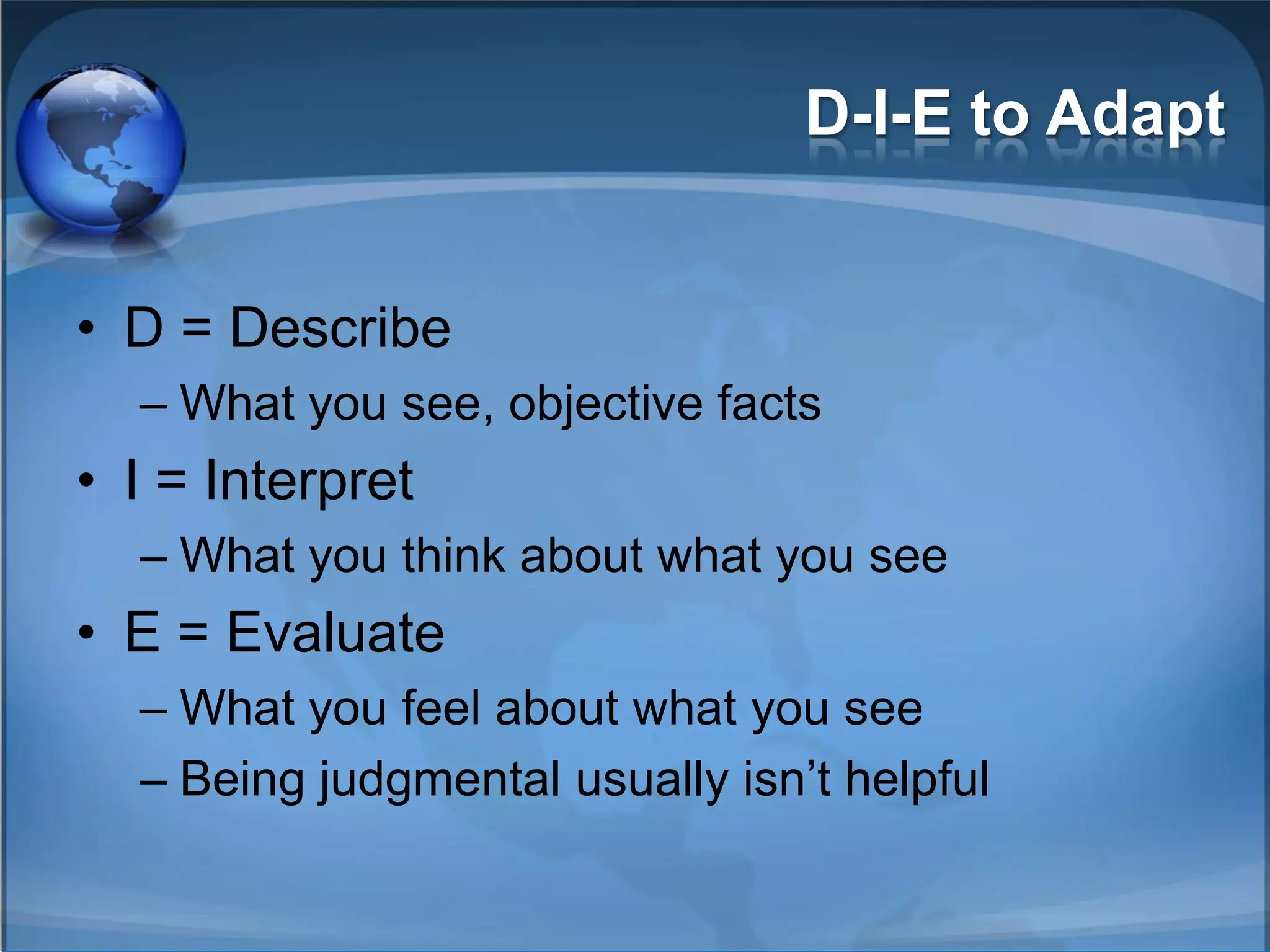
D-I-E to Adapt


• D = Describe
  – What you see, objective facts
• I = Interpret
  – What you think about what you see
• E = Evaluate
  – What you feel about what you see
  – Being judgmental usually isn’t helpful
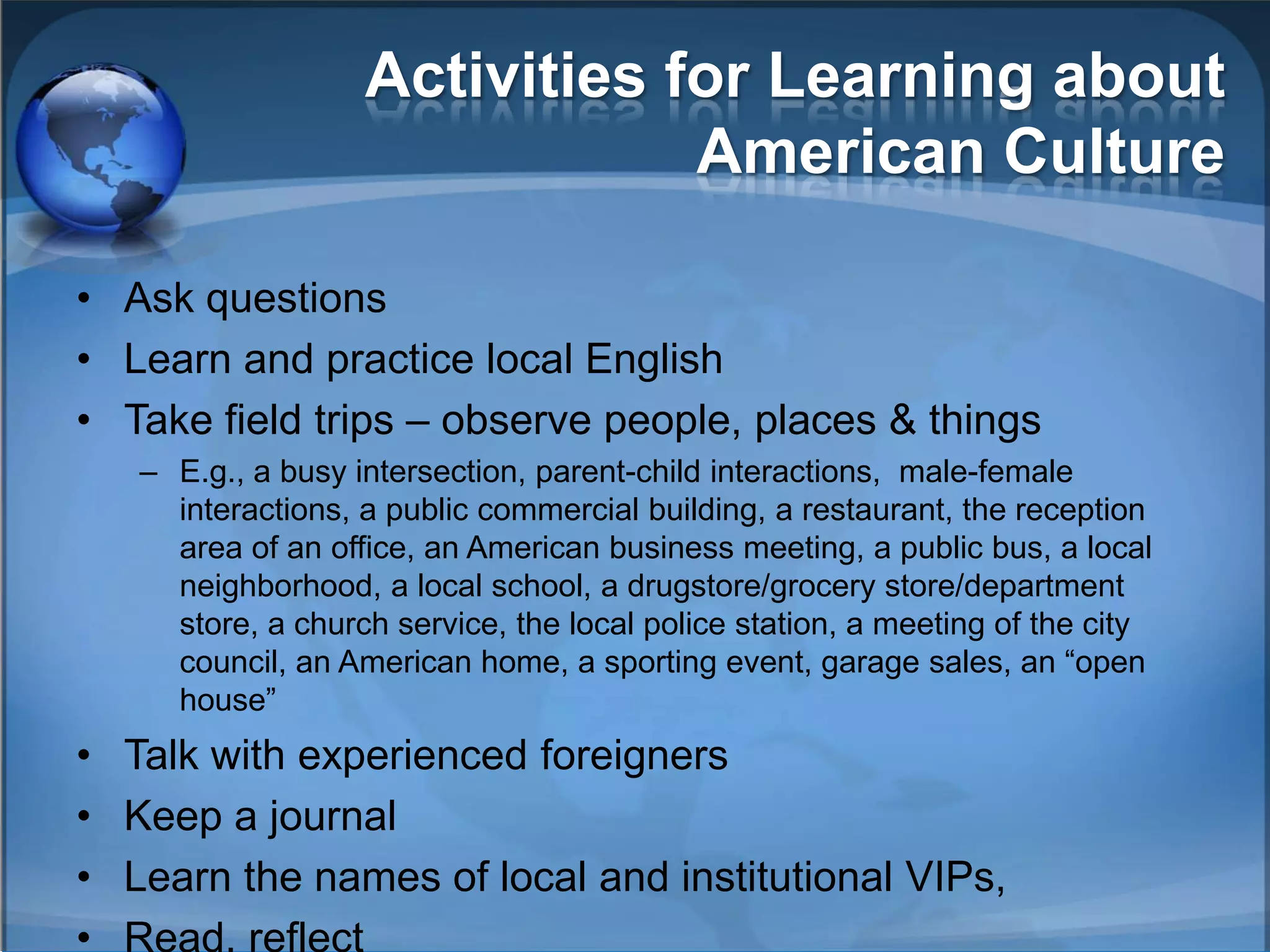
Activities for Learning about
                                American Culture

• Ask questions
• Learn and practice local English
• Take field trips – observe people, places & things
    – E.g., a busy intersection, parent-child interactions, male-female
      interactions, a public commercial building, a restaurant, the reception
      area of an office, an American business meeting, a public bus, a local
      neighborhood, a local school, a drugstore/grocery store/department
      store, a church service, the local police station, a meeting of the city
      council, an American home, a sporting event, garage sales, an ―open
      house‖
•   Talk with experienced foreigners
•   Keep a journal
•   Learn the names of local and institutional VIPs,
•   Read, reflect
Resource (on Canvas)


• Althen, Gary. ―Part 3: Coping with Cultural
  Differences.‖ American Ways, 2nd Ed.
  Boston: Intercultural Press, 2003: 259-
  284.

Coll1 ppt1 cultural.differences

  • 1.
    Dealing with CulturalDifferences Russell Frank, ESL College 1
  • 2.
    QUESTION What is oneunexpected cultural situation you have experienced since you came here? How did you respond? When you encounter a cultural situation that is very new or different for you, how does that make you feel?
  • 3.
    Influence #1: Expectations •The ideas, attitudes, and knowledge you have about a new culture greatly affects the experience you will have. • The expectations we have come from a variety of sources—media, friends, and family, etc. • Unrealistic expectations can lead to unhappiness for newcomers in the U.S.
  • 4.
    Influence #2: Personality Characteristics Characteristics that can help you adapt: • Patience • Sense of humor • Tolerance for ambiguity – ―Well, I don’t know what’s going on here. I’ll just have to wait and see, or try to figure out.‖
  • 5.
    Traits & Situations •People’s behavior results from some combination of their personality traits and situations in which they find themselves. • Unfamiliar cultural situations  misunderstanding of people’s responses
  • 6.
    Culture Shock • Theprocess of adjusting to a new culture begins from the time we decide to go abroad • Stage 1: excitement, curiosity, stimulation • Stage 2: Culture shock: feeling of confusion & disorientation – Smells, flavors, feeling of the air, language, behavior… – Everyone experiences it – Passes with time • Stage 3: Negative feelings: disappointment, frustration, depression, anger, hostility • Stage 4: Learning & understanding  more competent and comfort
  • 7.
    D-I-E to Adapt •D = Describe – What you see, objective facts • I = Interpret – What you think about what you see • E = Evaluate – What you feel about what you see – Being judgmental usually isn’t helpful
  • 8.
    Activities for Learningabout American Culture • Ask questions • Learn and practice local English • Take field trips – observe people, places & things – E.g., a busy intersection, parent-child interactions, male-female interactions, a public commercial building, a restaurant, the reception area of an office, an American business meeting, a public bus, a local neighborhood, a local school, a drugstore/grocery store/department store, a church service, the local police station, a meeting of the city council, an American home, a sporting event, garage sales, an ―open house‖ • Talk with experienced foreigners • Keep a journal • Learn the names of local and institutional VIPs, • Read, reflect
  • 9.
    Resource (on Canvas) •Althen, Gary. ―Part 3: Coping with Cultural Differences.‖ American Ways, 2nd Ed. Boston: Intercultural Press, 2003: 259- 284.