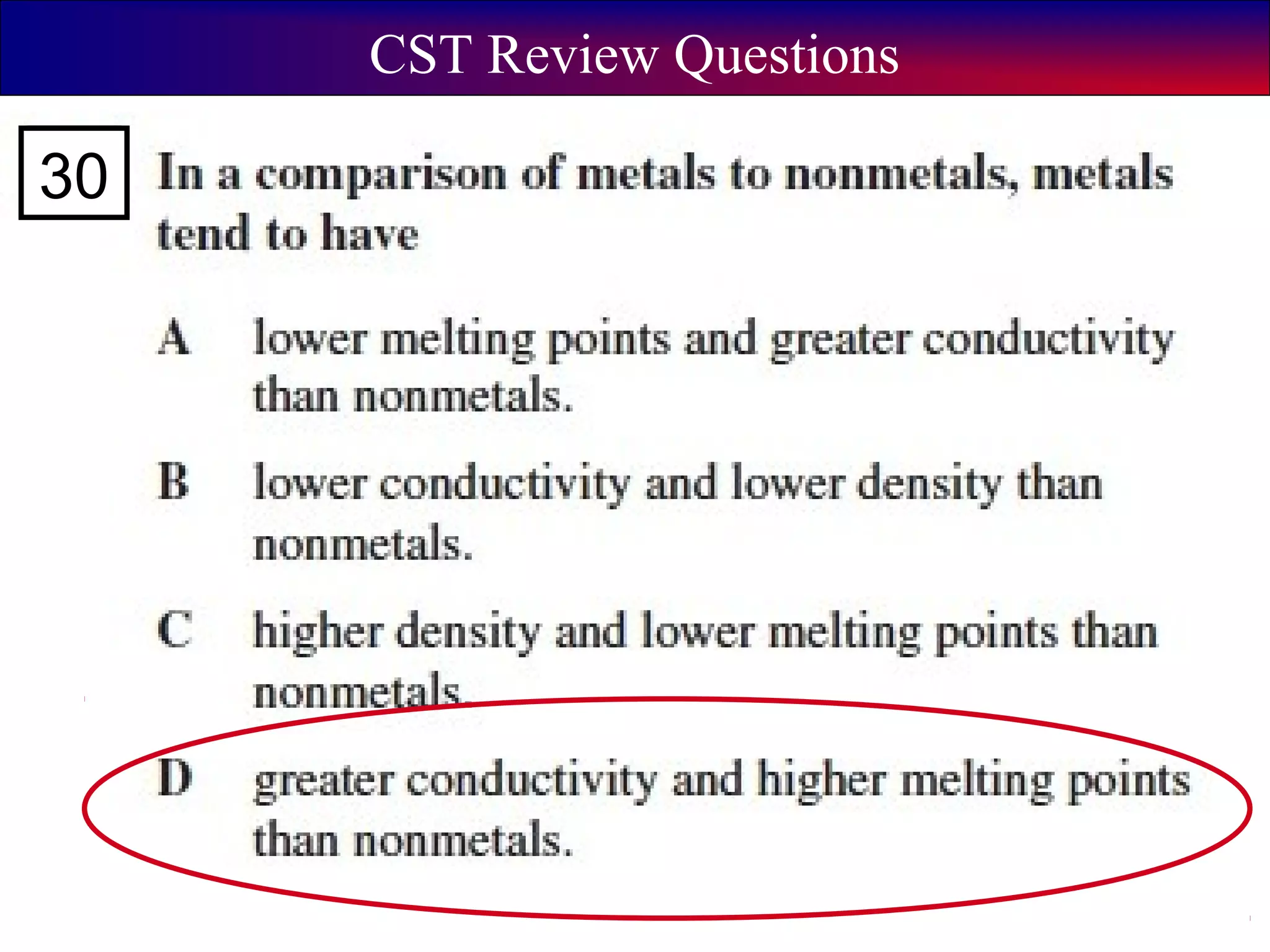
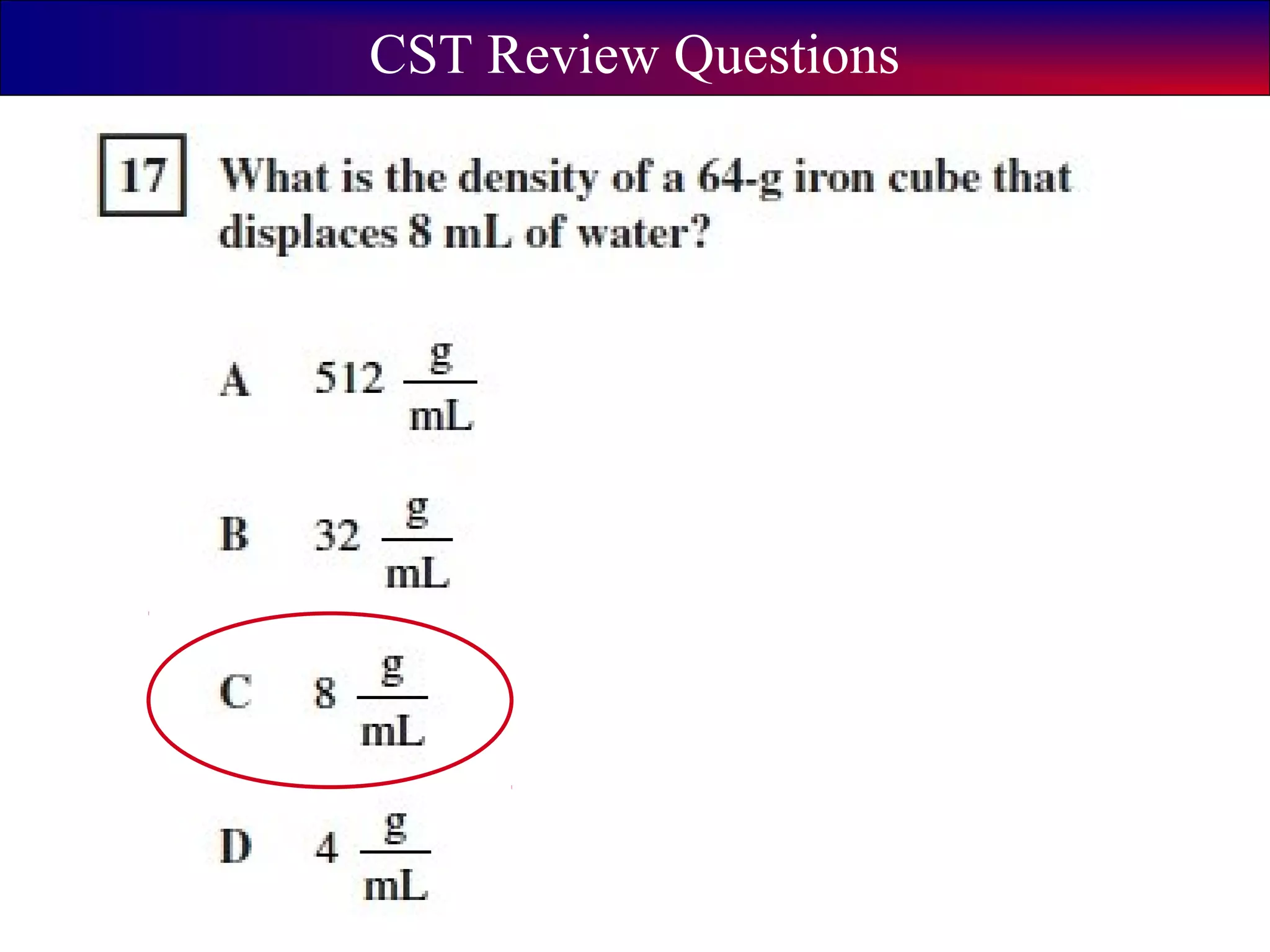
CST Answer
Board Review
Part 2
CST Review
Acids & Bases
and pH
BrainPop
Acids and Bases
Brain Pop
Copyright Richards 2009
Class Work
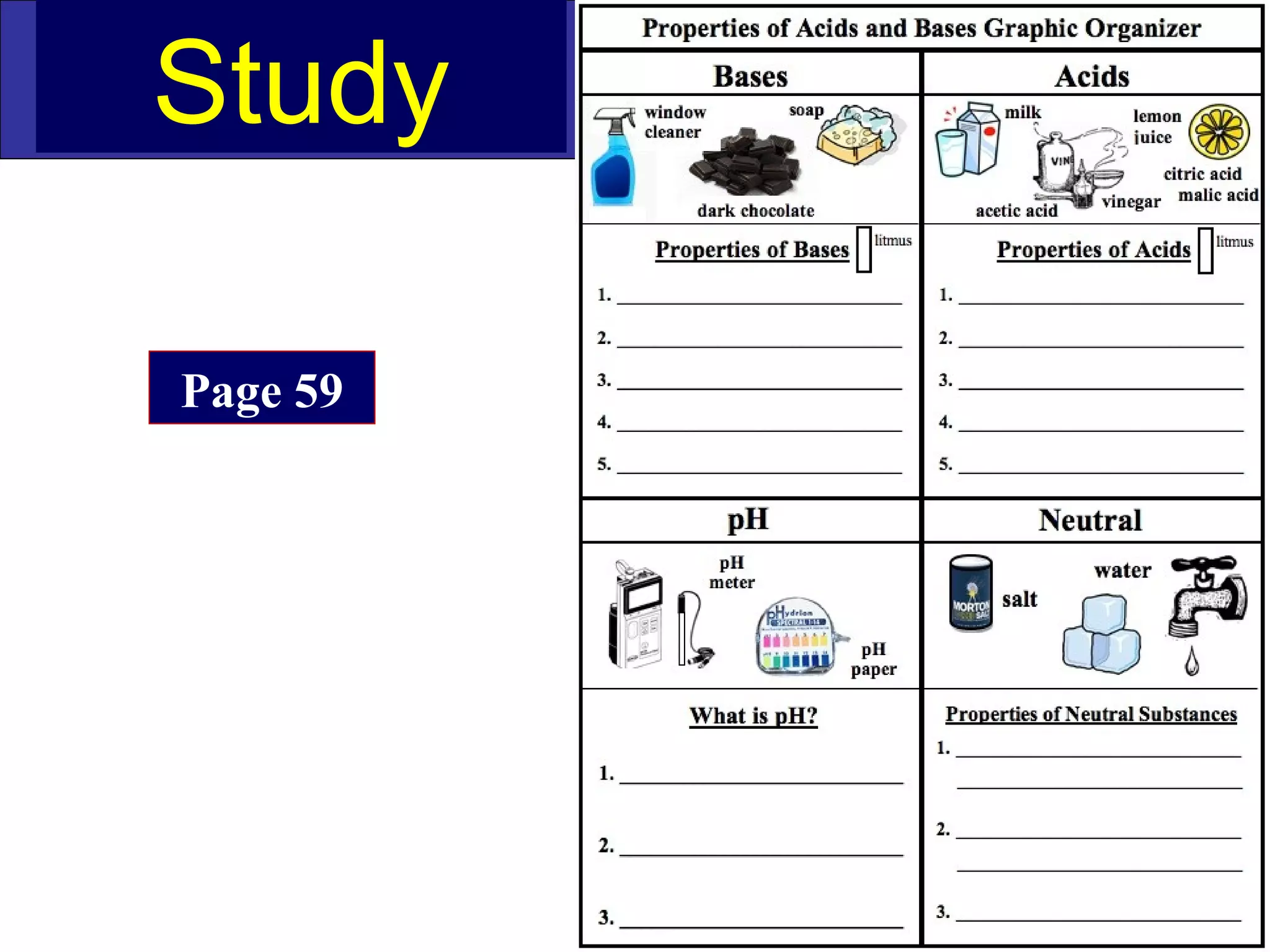
Page 59
Study
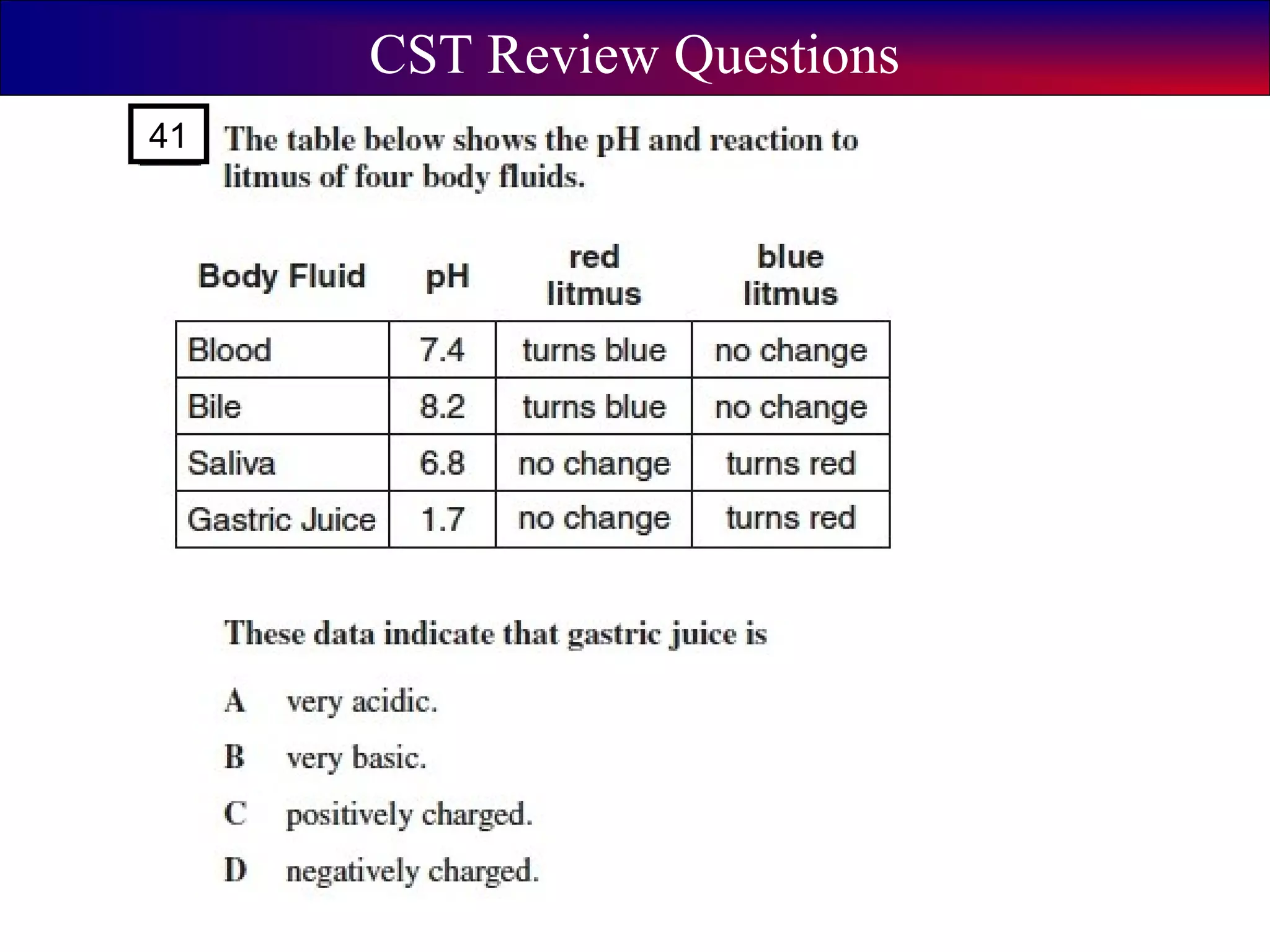
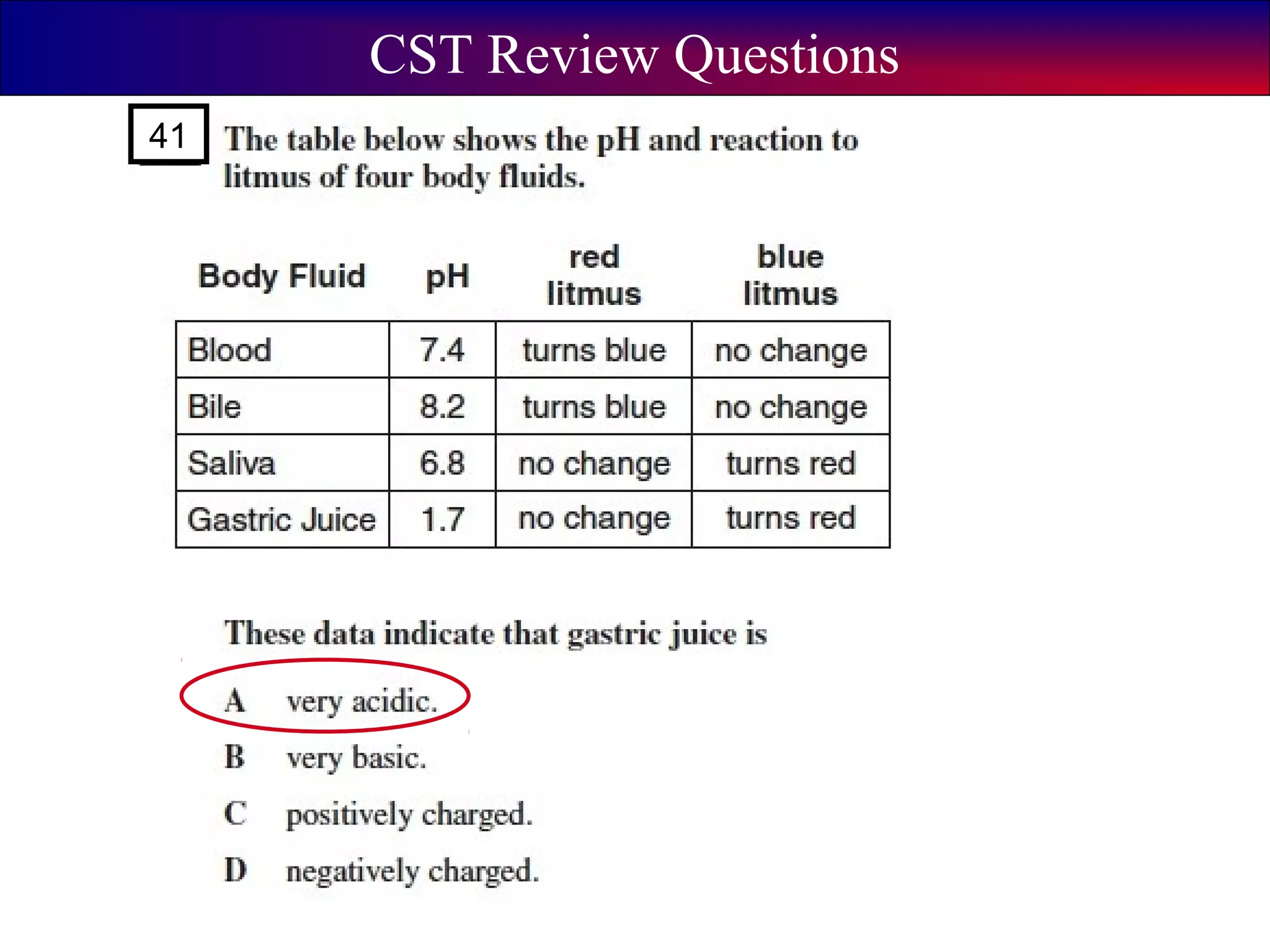
41
CST Review Questions
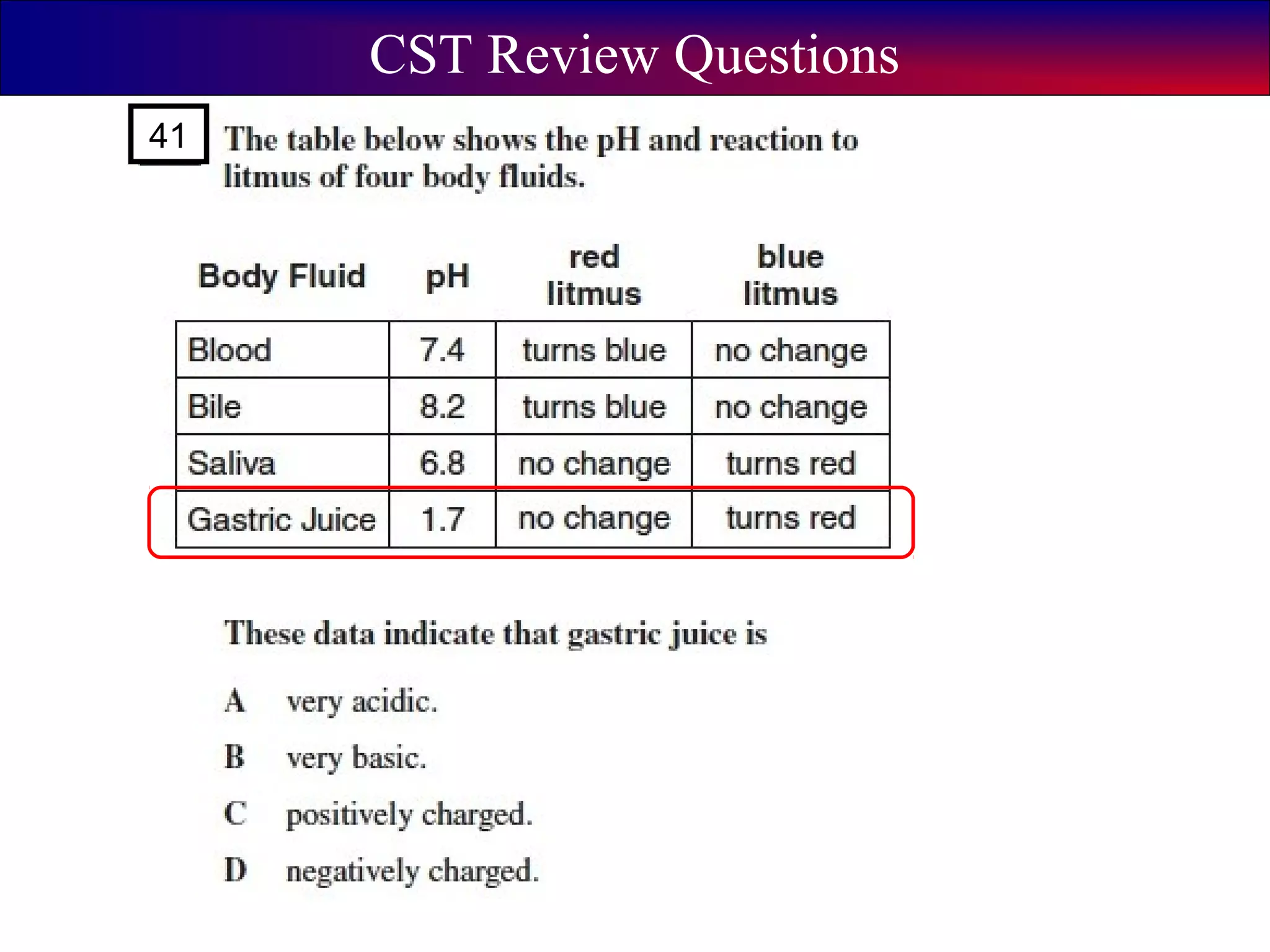
41
CST Review Questions
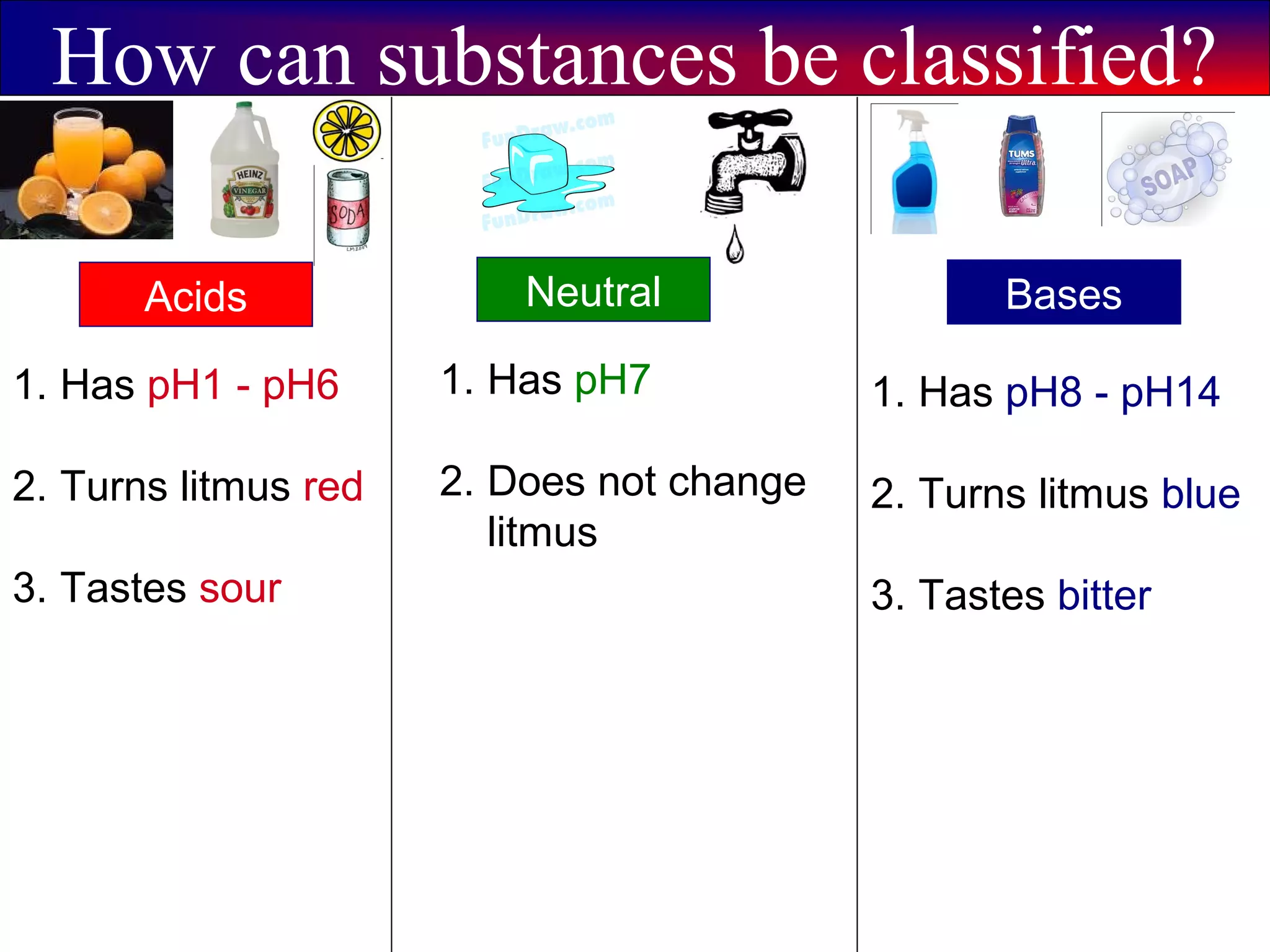
How can substances be classified?
BasesAcids Neutral
1. Has pH1 - pH6
2. Turns litmus red
3. Tastes sour
1. Has pH7
2. Does not change
litmus
1. Has pH8 - pH14
2. Turns litmus blue
3. Tastes bitter
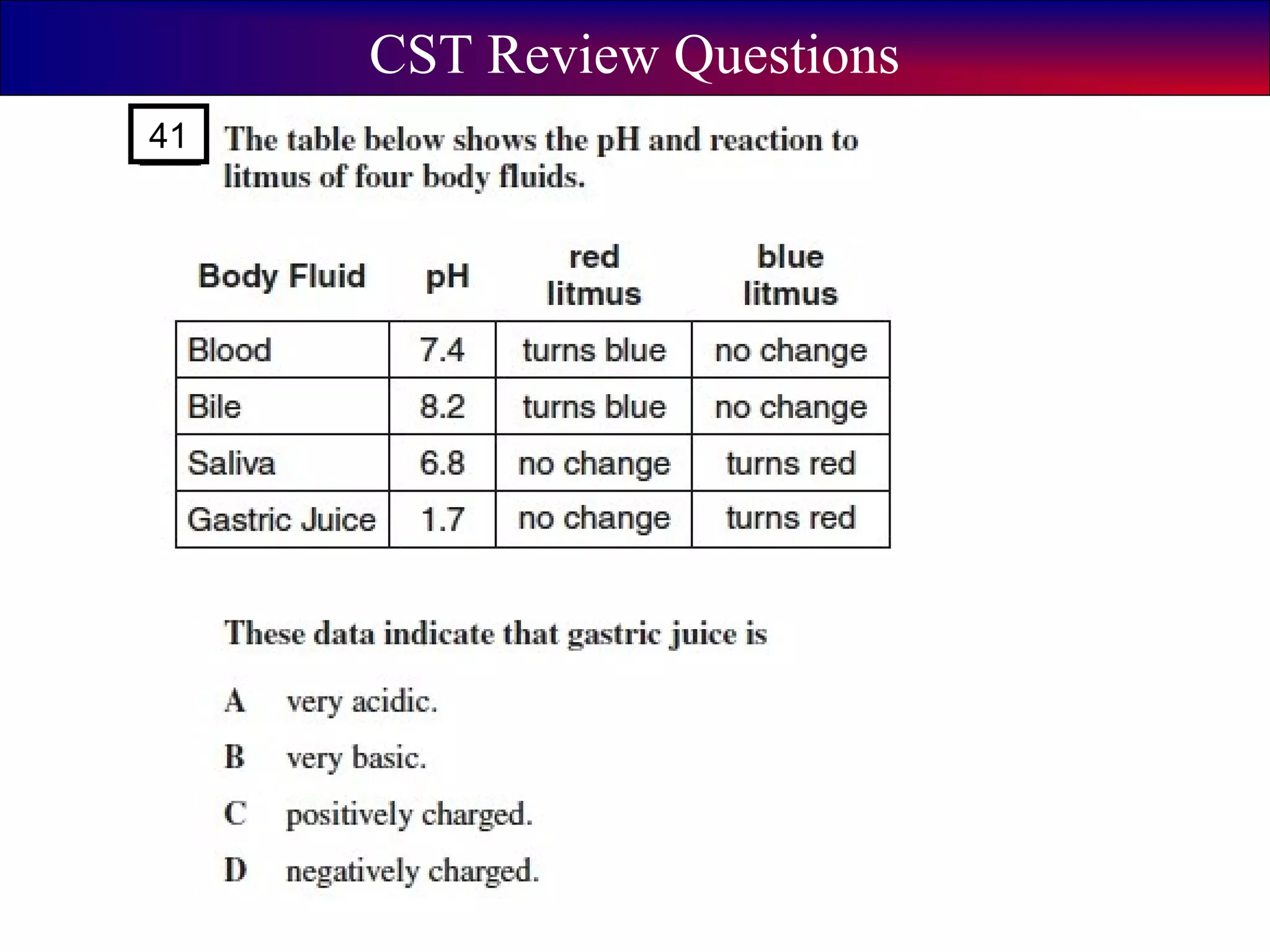
41
CST Review Questions
41
CST Review
Elements
and the
Periodic Table
BrainPop
Metals
Brain Pop
Metals
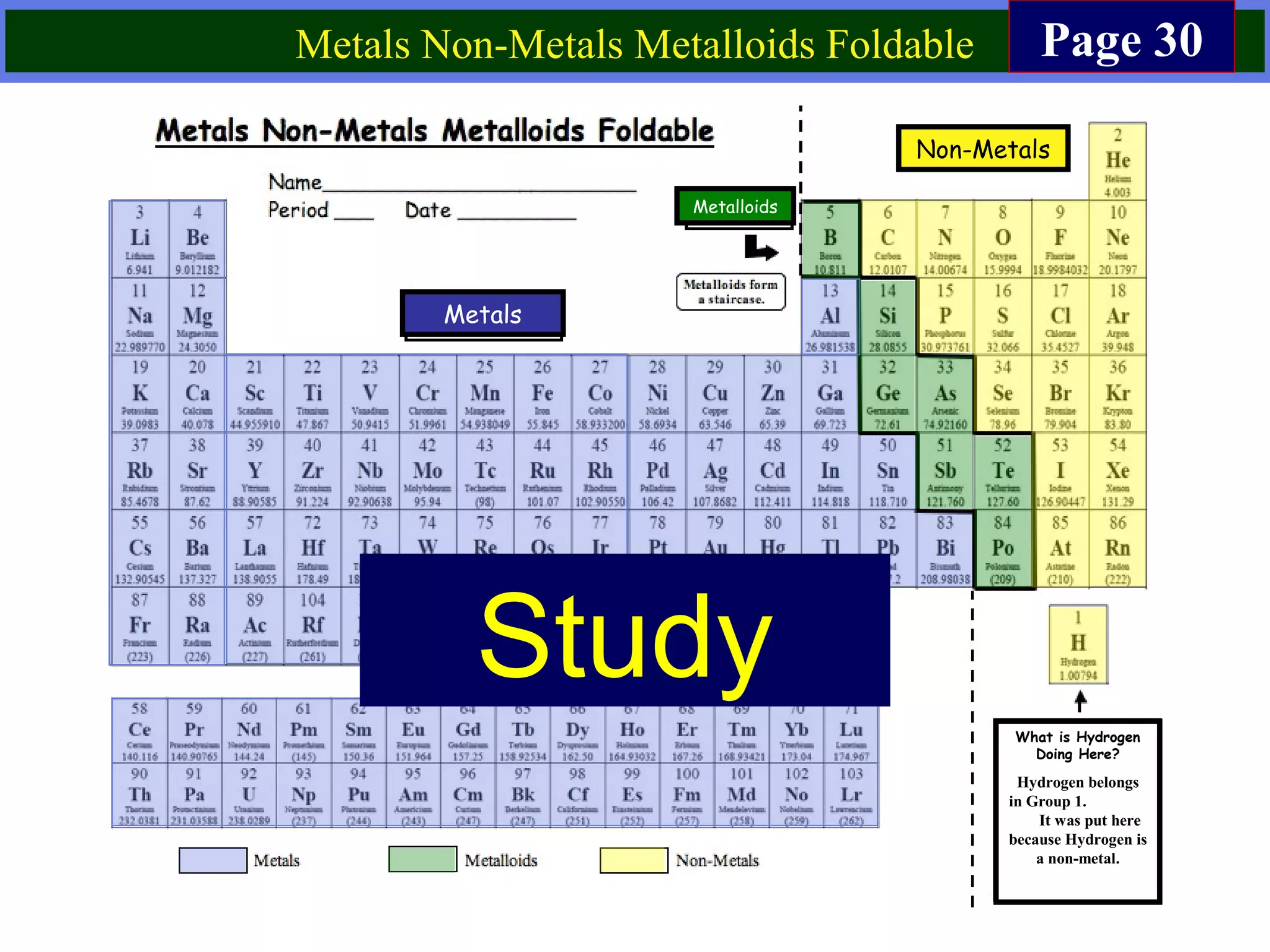
Non-Metals
Metalloids
What is Hydrogen
Doing Here?
Hydrogen belongs
in Group 1.
It was put here
because Hydrogen is
a non-metal.
Metals Non-Metals Metalloids Foldable Page 30
Study
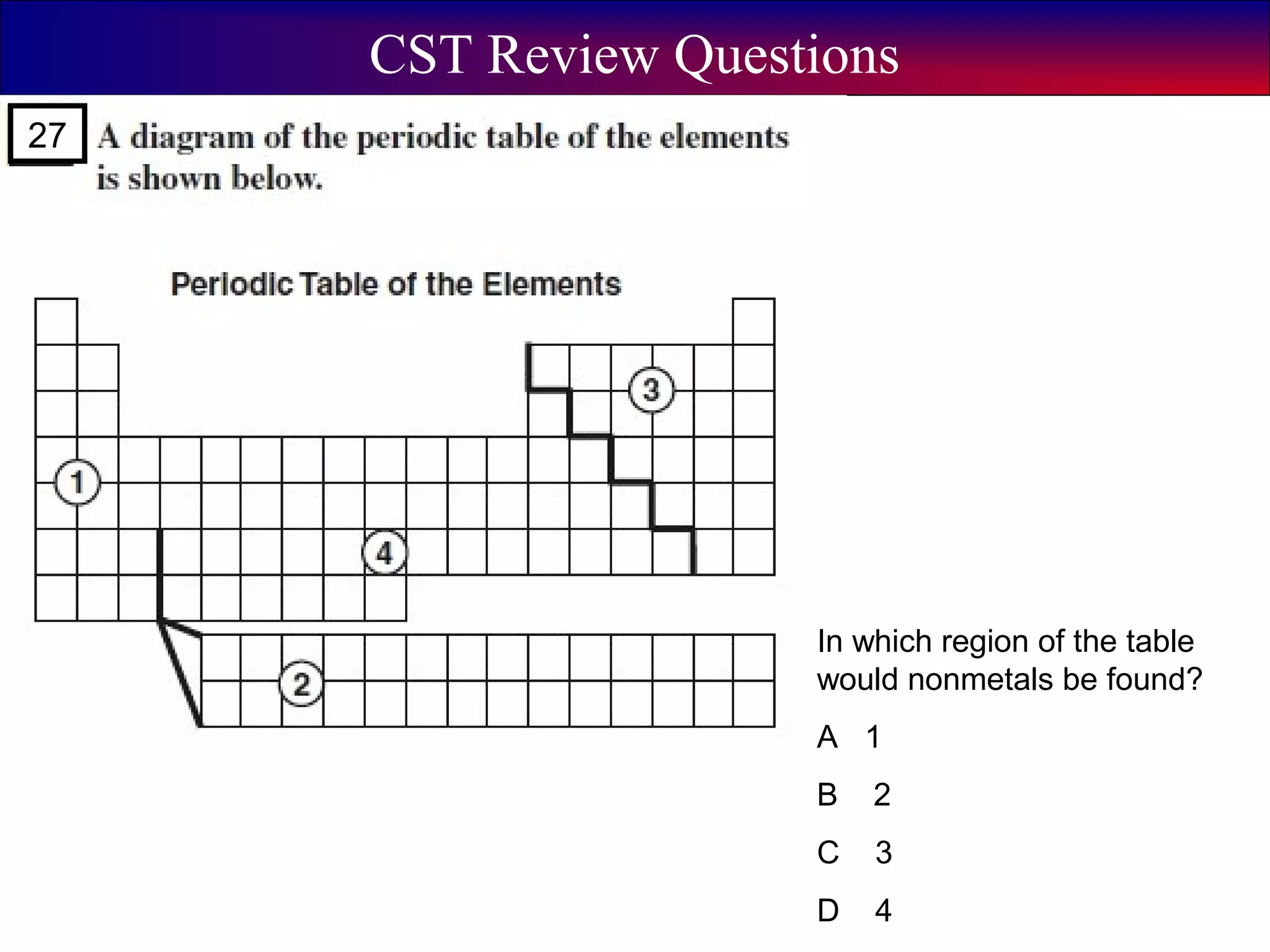
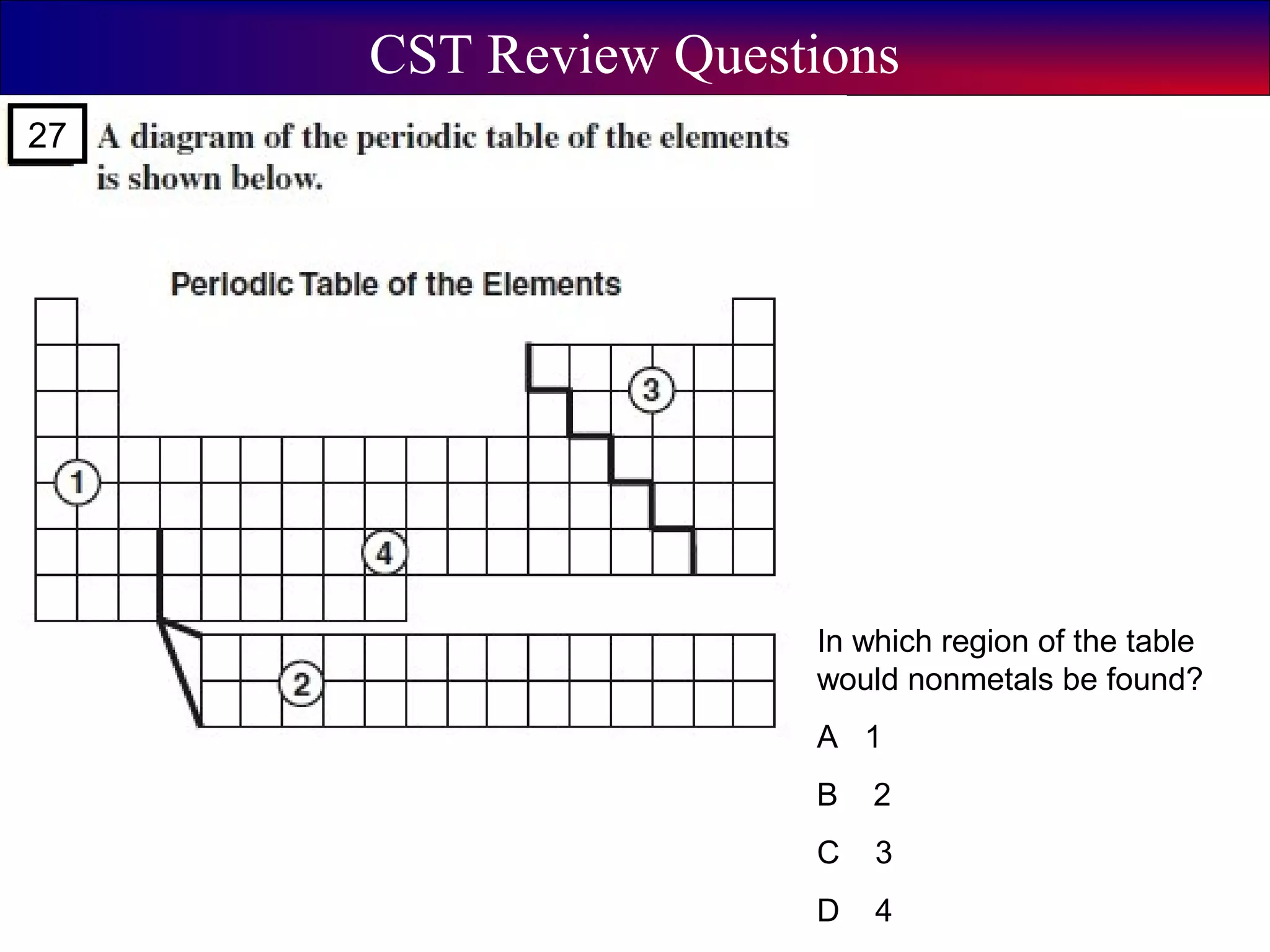
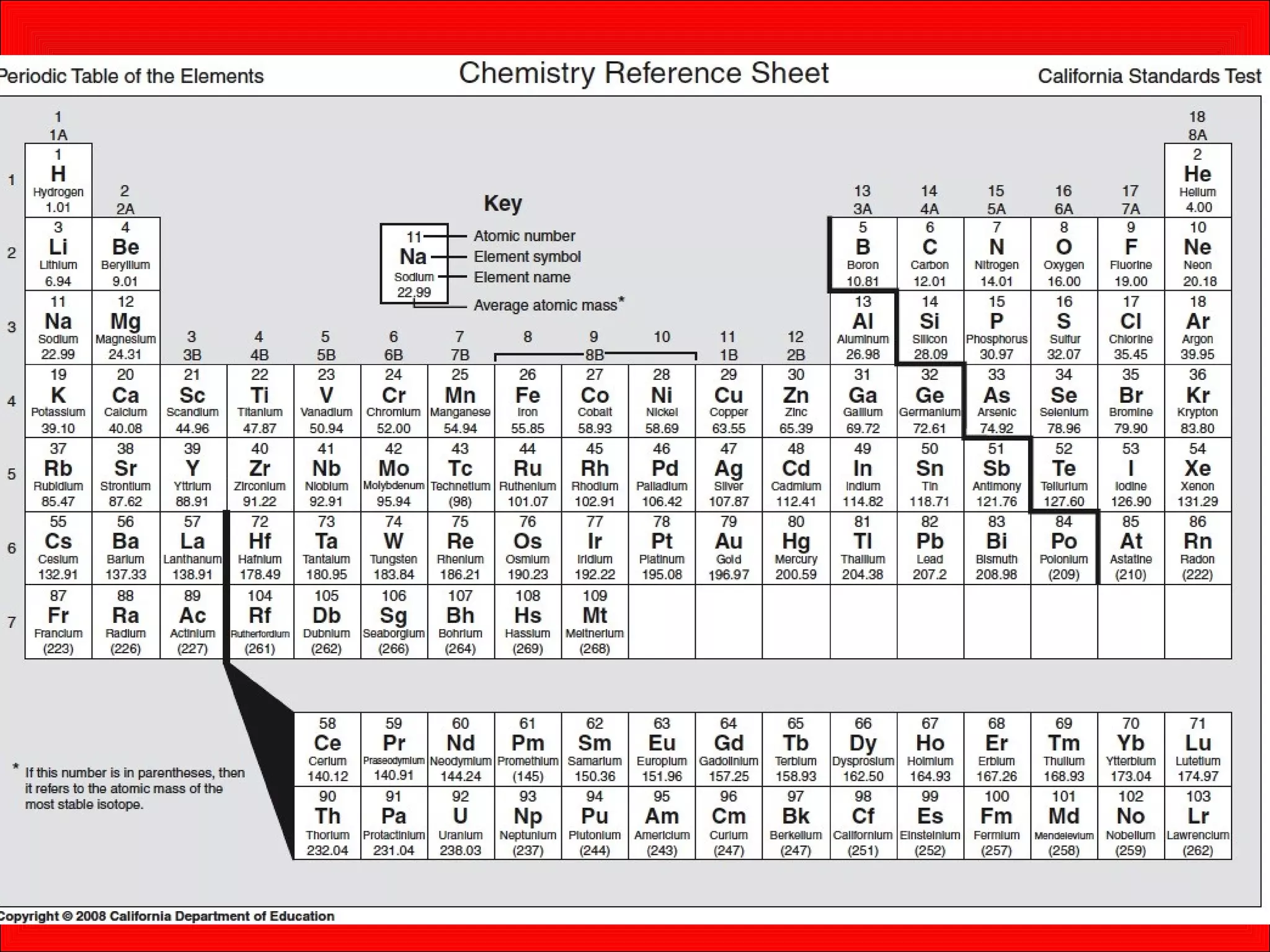
In which region of the table
would nonmetals be found?
A 1
B 2
C 3
D 4
CST Review Questions
27
How are electrons, protons and neutrons arranged in the atom?
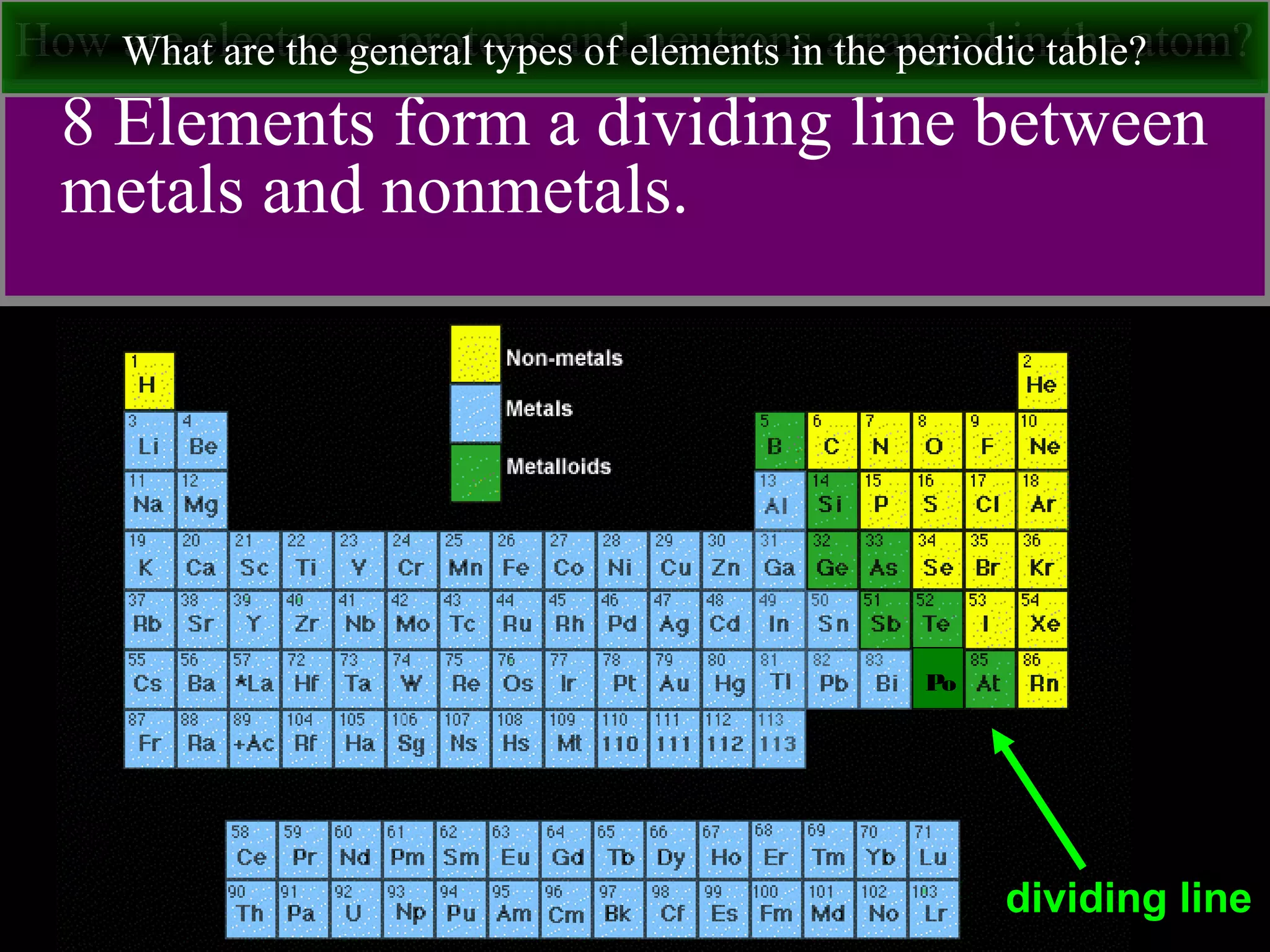
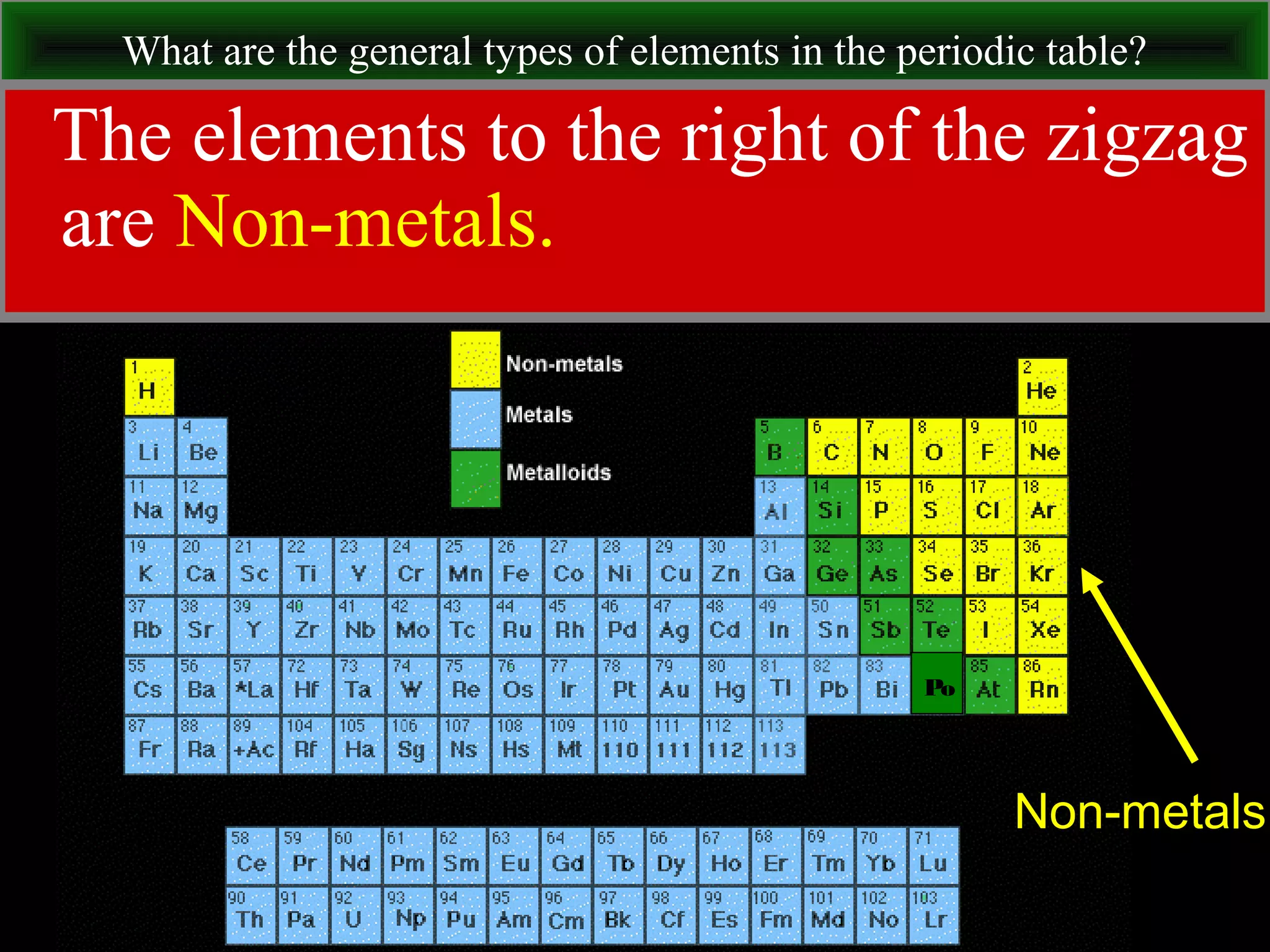
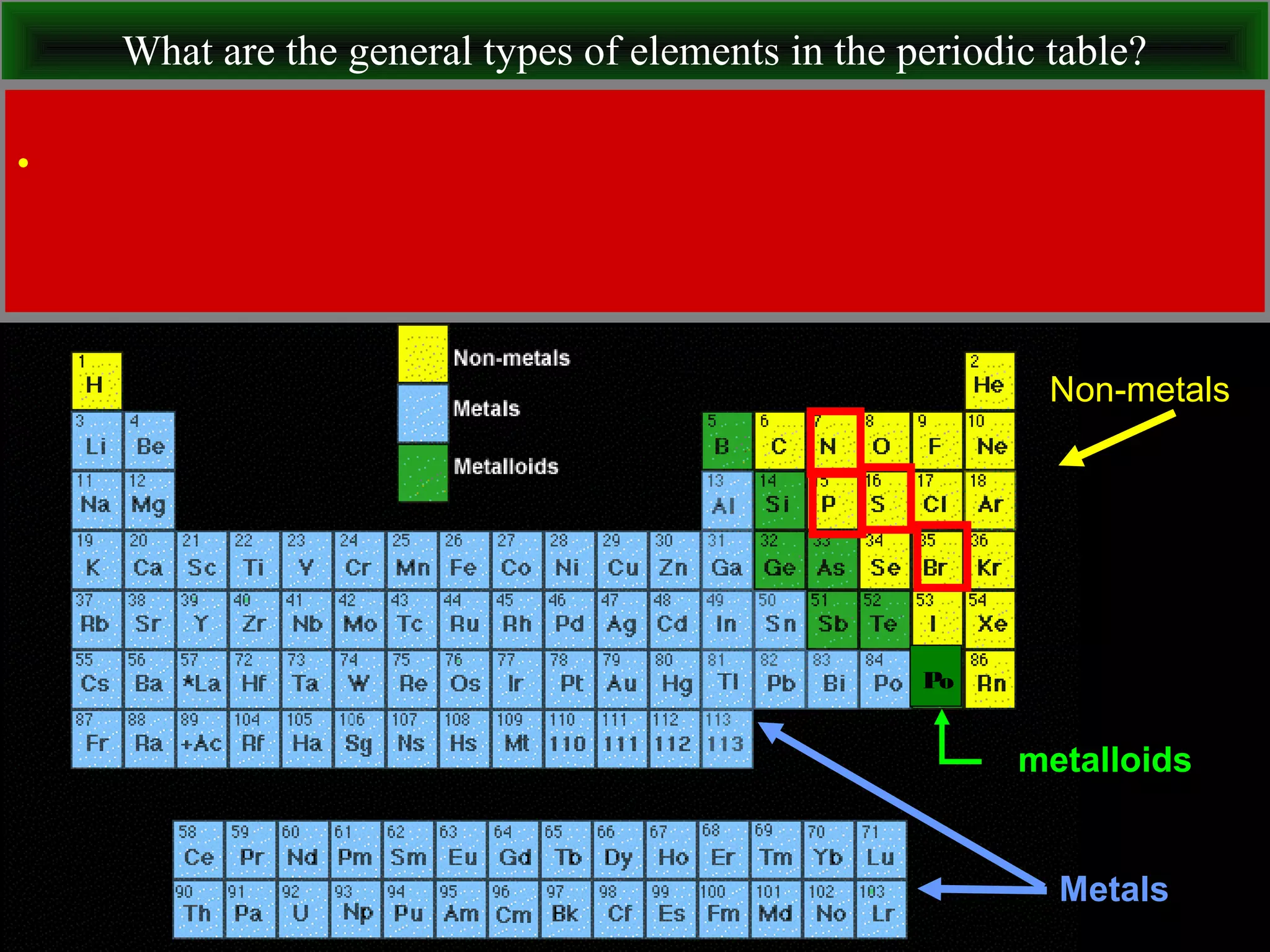
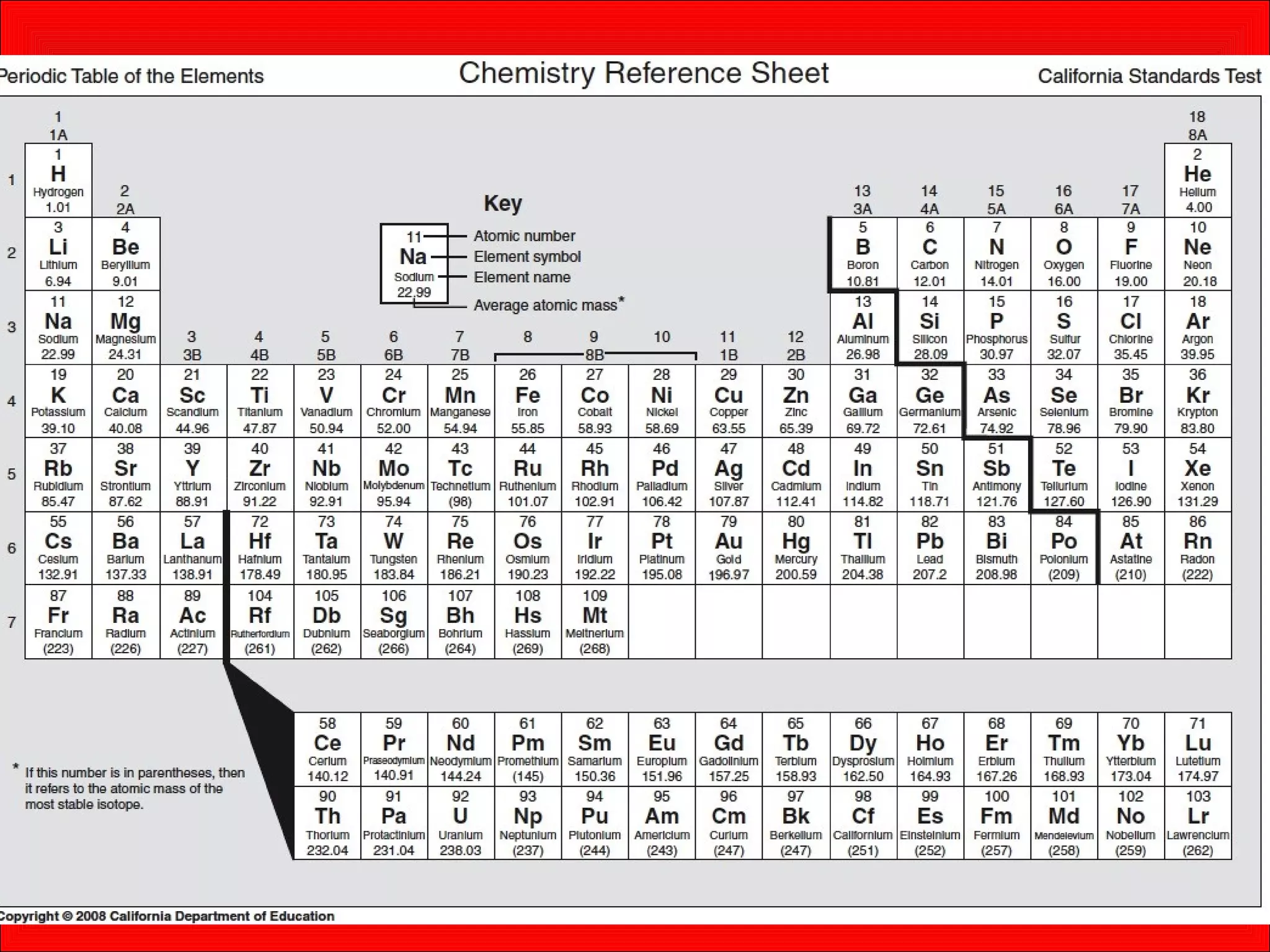
8 Elements form a dividing line between
metals and nonmetals.
What are the general types of elements in the periodic table?
dividing line
Po
How are electrons, protons and neutrons arranged in the atom?
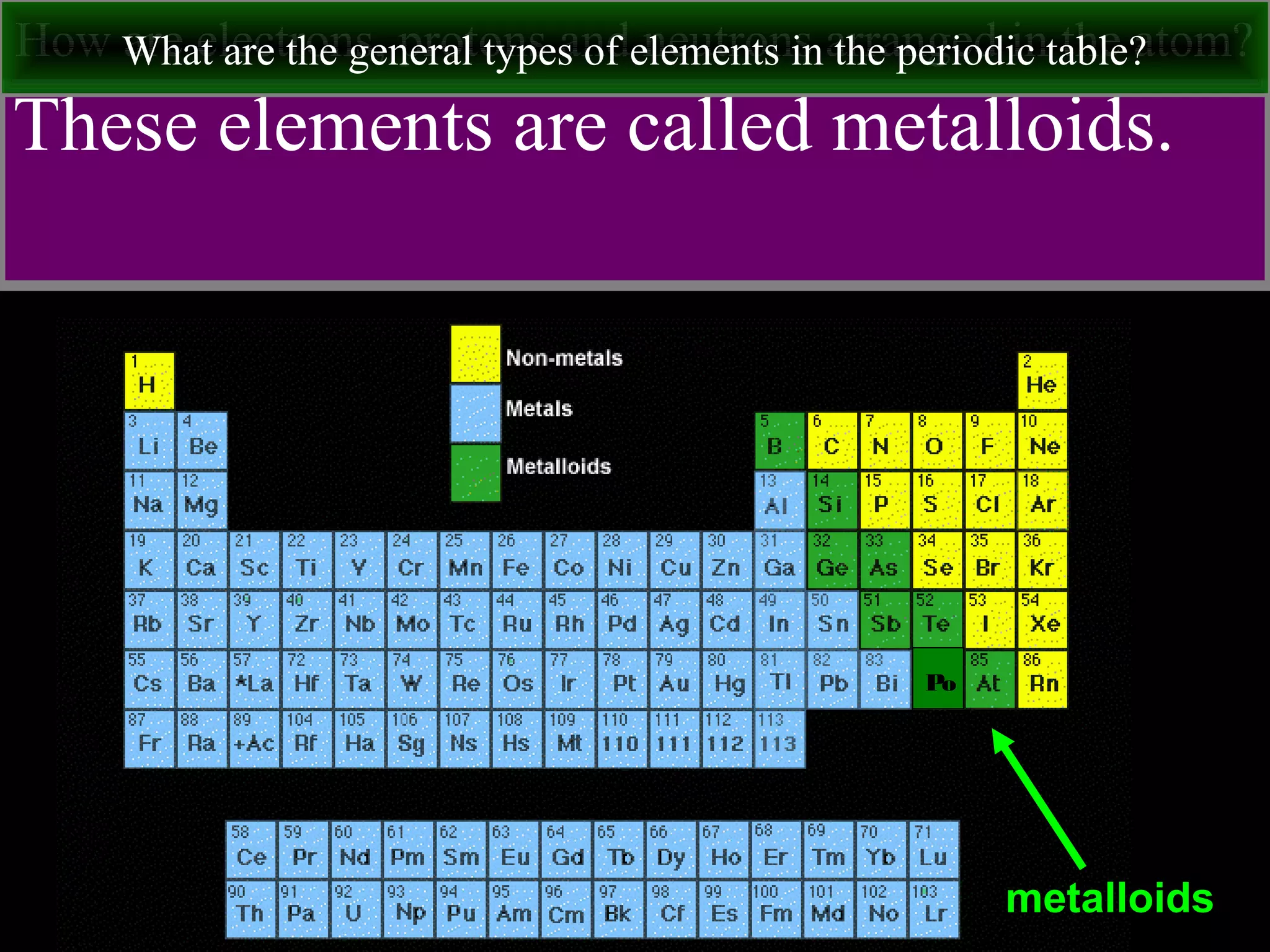
These elements are called metalloids.
What are the general types of elements in the periodic table?
metalloids
Po
What are the general types of elements in the periodic table?
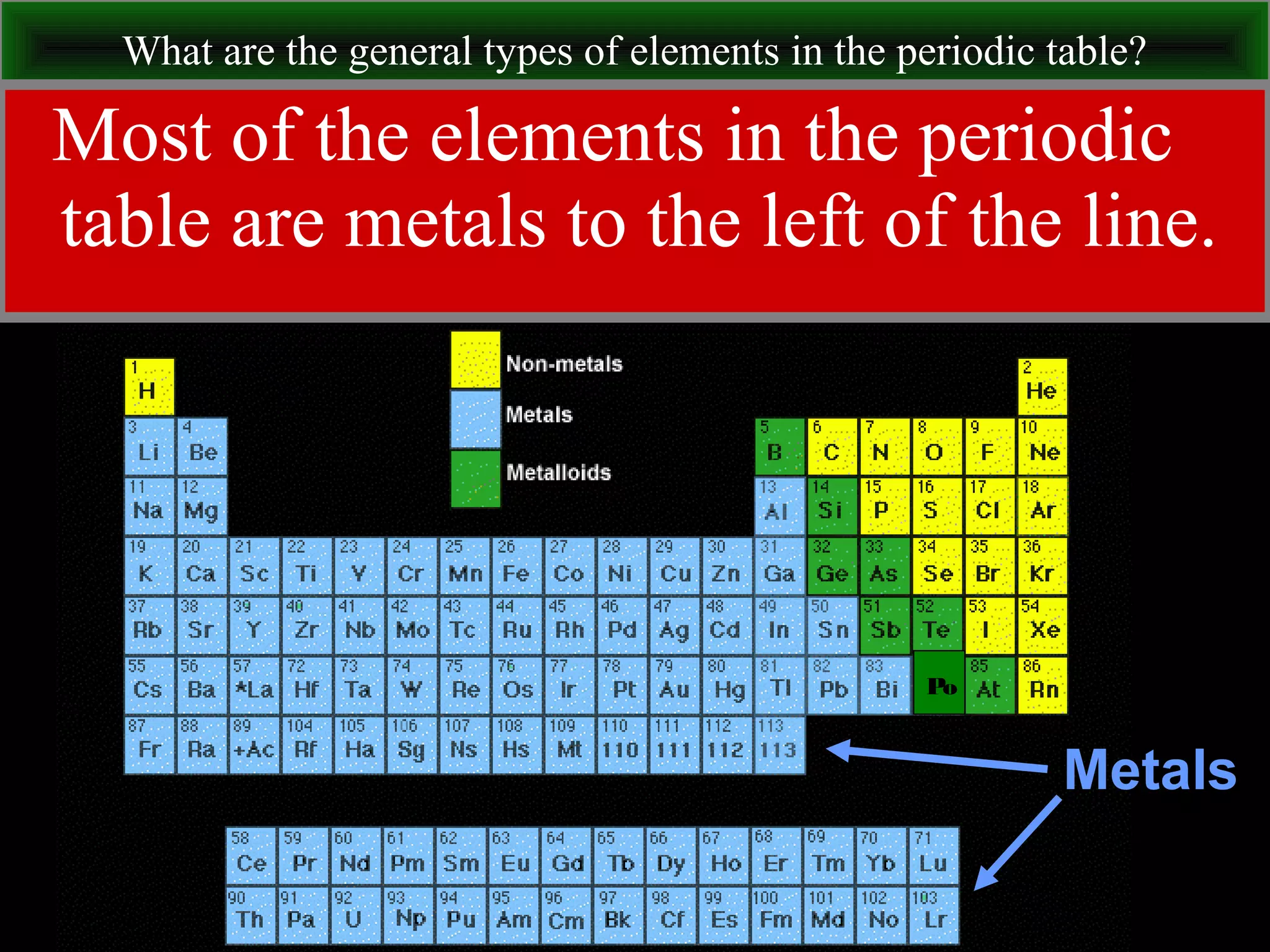
Most of the elements in the periodic
table are metals to the left of the line.
Metals
Po
What are the general types of elements in the periodic table?
The elements to the right of the zigzag
are Non-metals.
Non-metals
Po
CST Review Questions
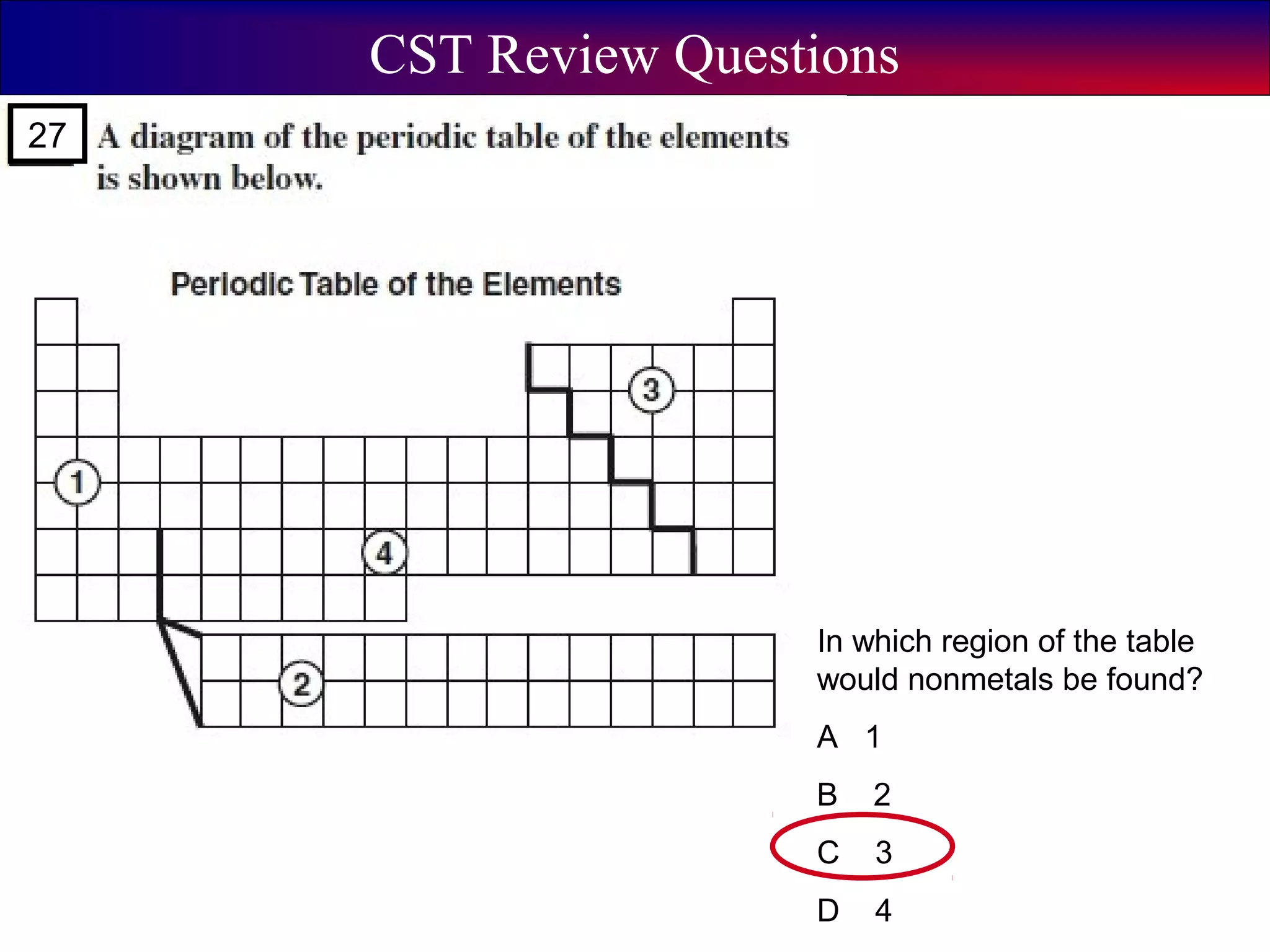
In which region of the table
would nonmetals be found?
A 1
B 2
C 3
D 4
27
CST Review Questions
In which region of the table
would nonmetals be found?
A 1
B 2
C 3
D 4
27
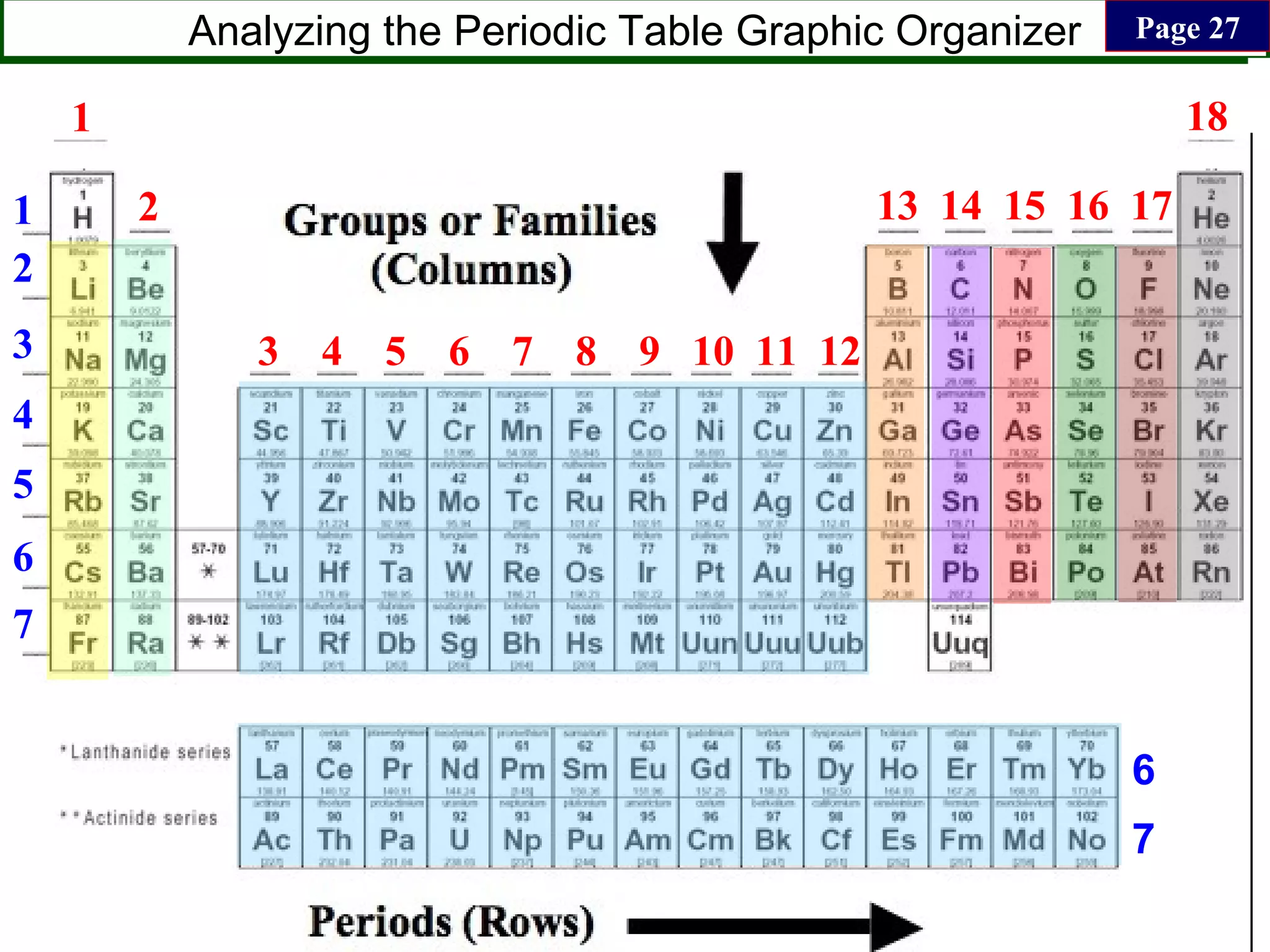
Analyzing the Periodic Table Graphic Organizer Page 27
6
7
1
2
3
4
5
6
7
1
2
3 4 5 6 7 8 9 10 11 12
13 14 15 16 17
18
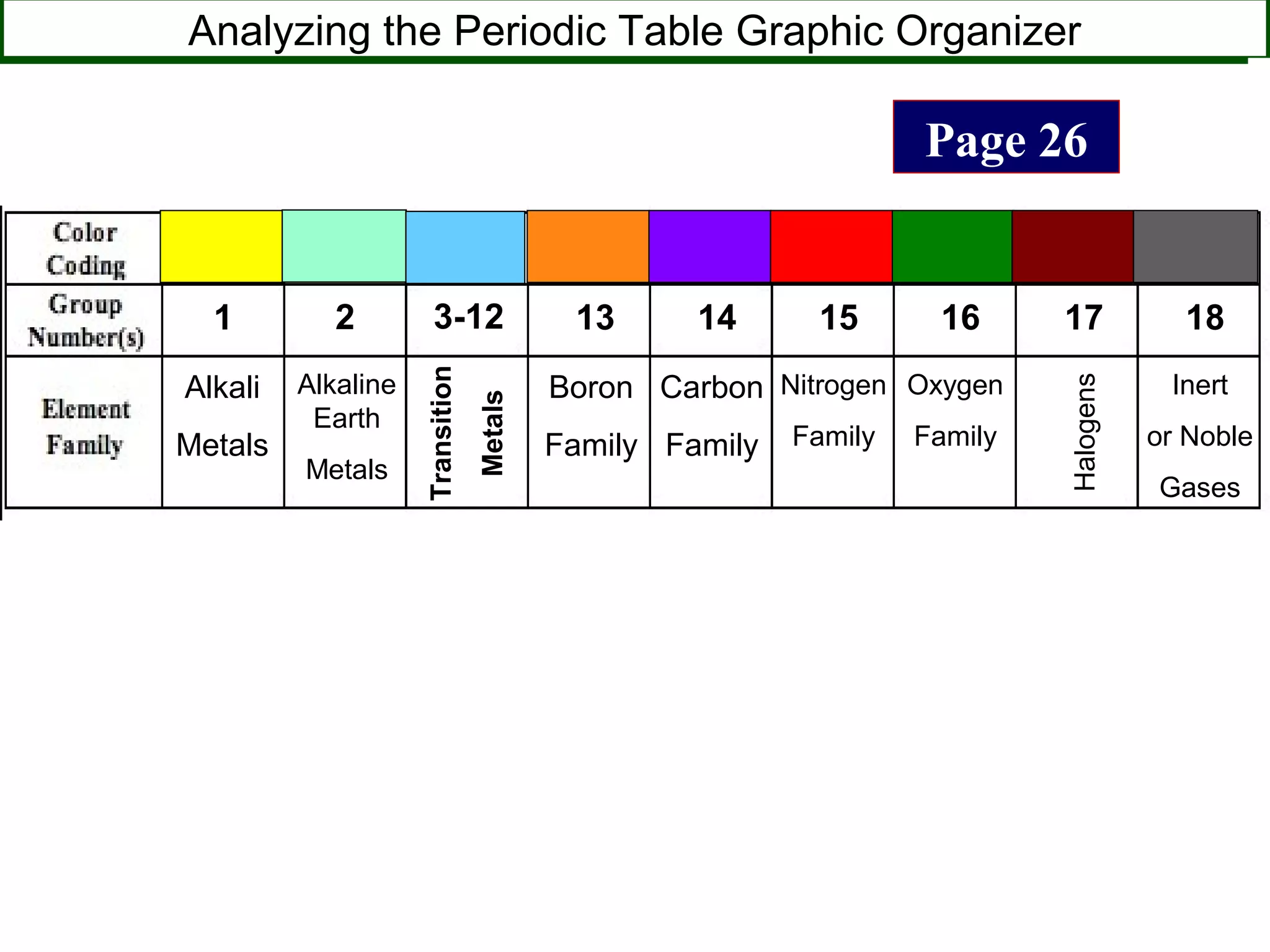
Analyzing the Periodic Table Graphic Organizer
Page 26
1
Alkali
Metals
2
Alkaline
Earth
Metals
3-12
Transition
Metals
13
Boron
Family
14
Carbon
Family
15
Nitrogen
Family
16
Oxygen
Family
17
Halogens
18
Inert
or Noble
Gases
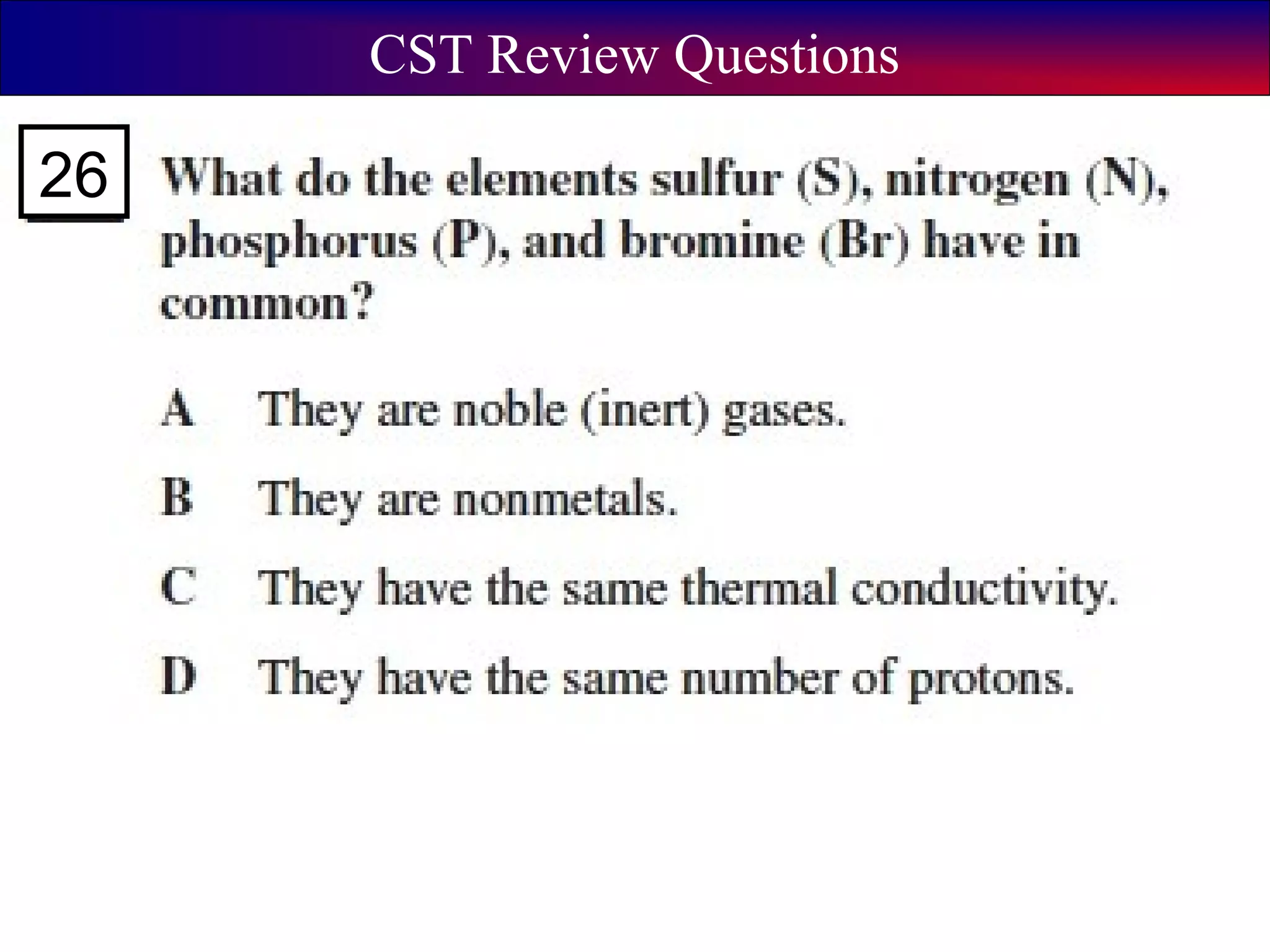
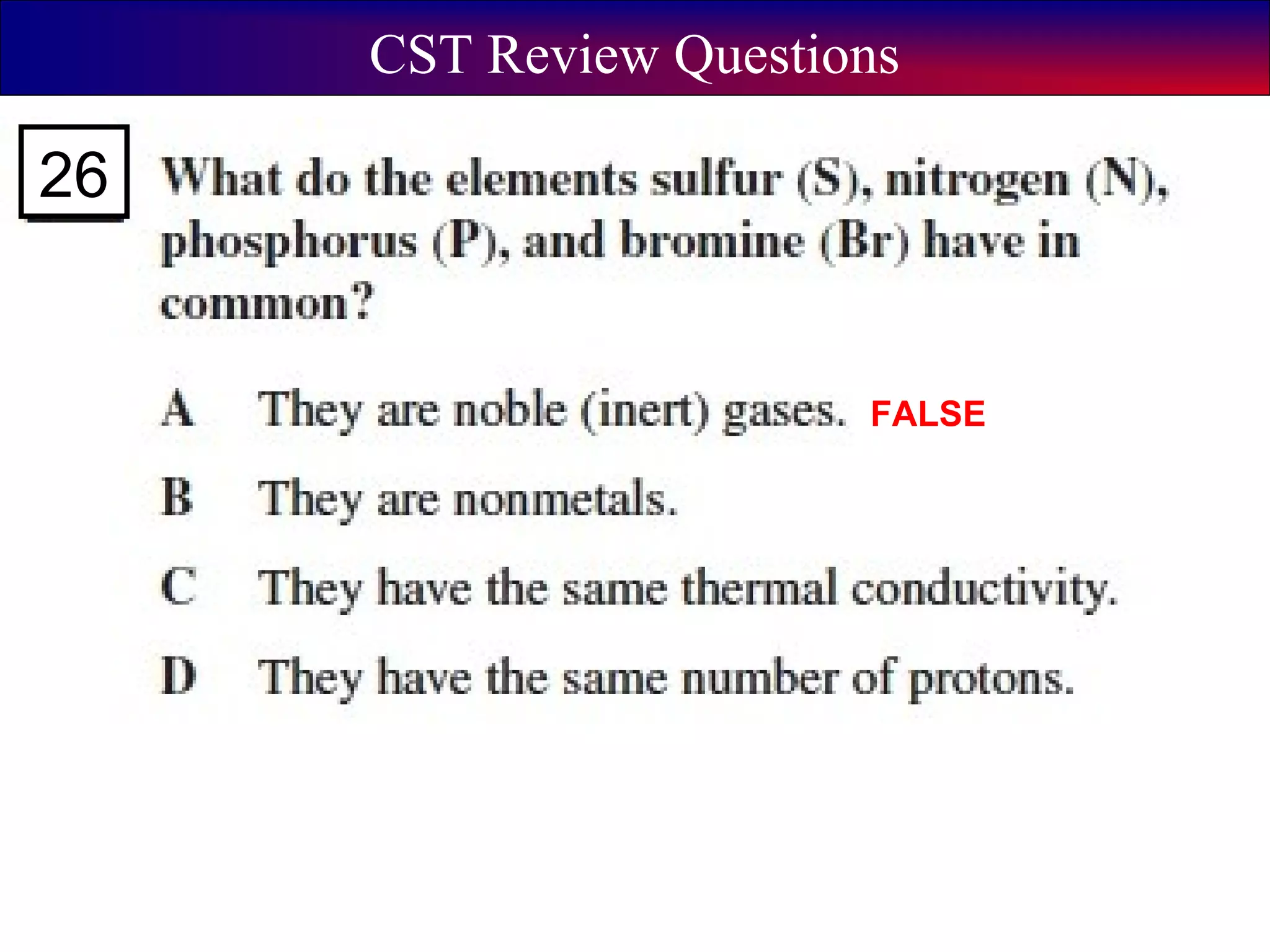
CST Review Questions
26
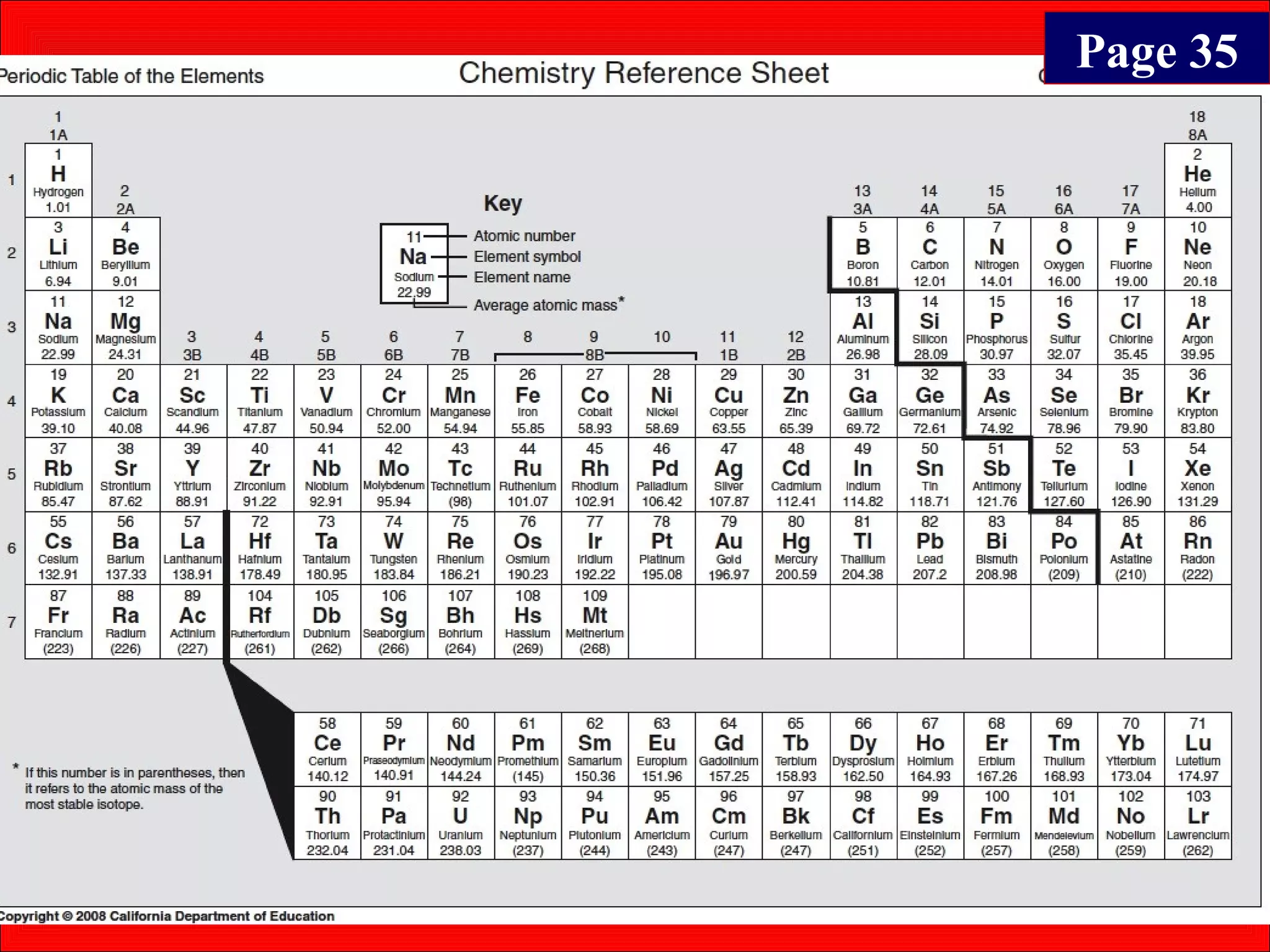
Page 35
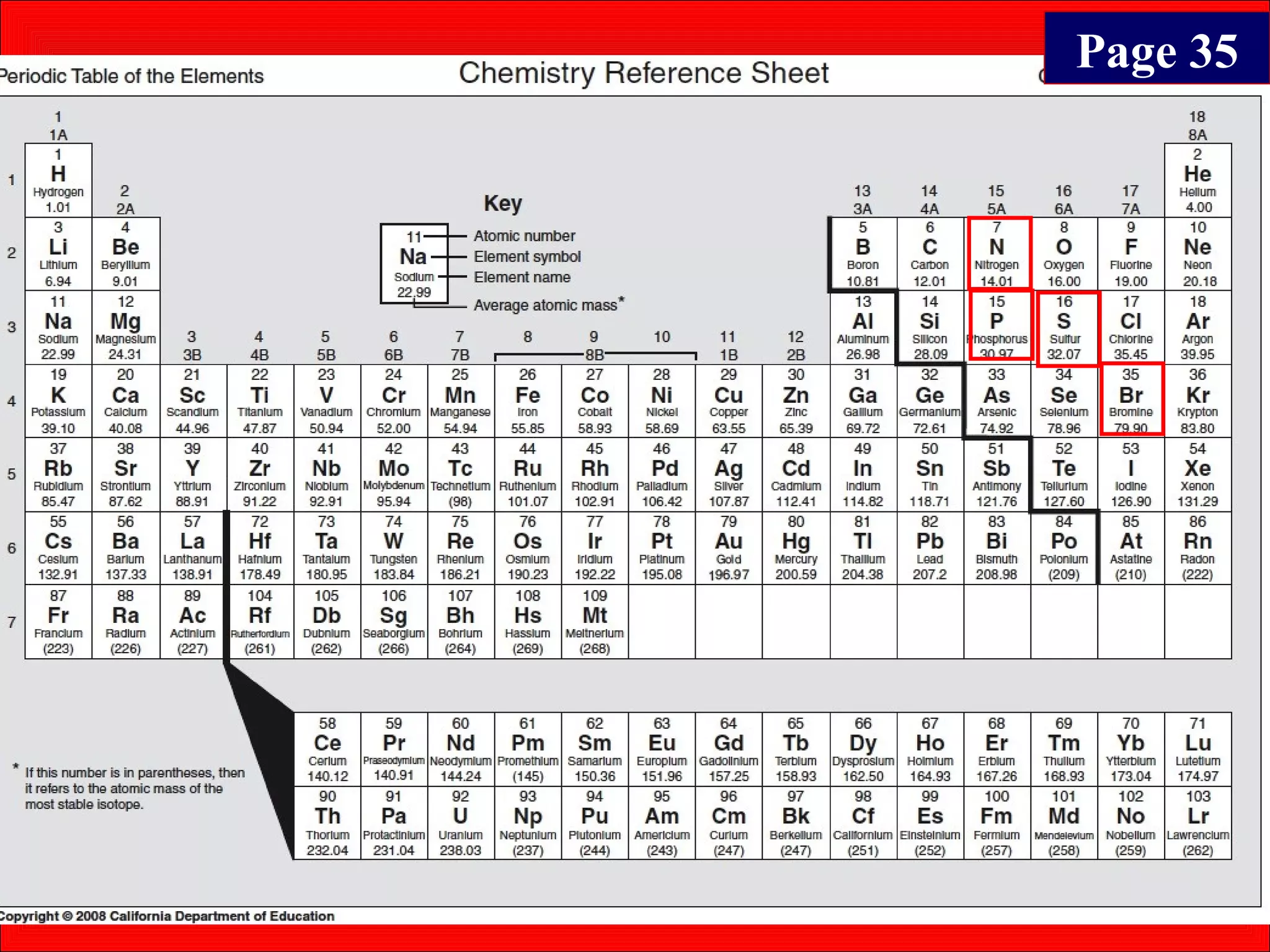
Page 35
How are electrons, protons and neutrons arranged in the atom?
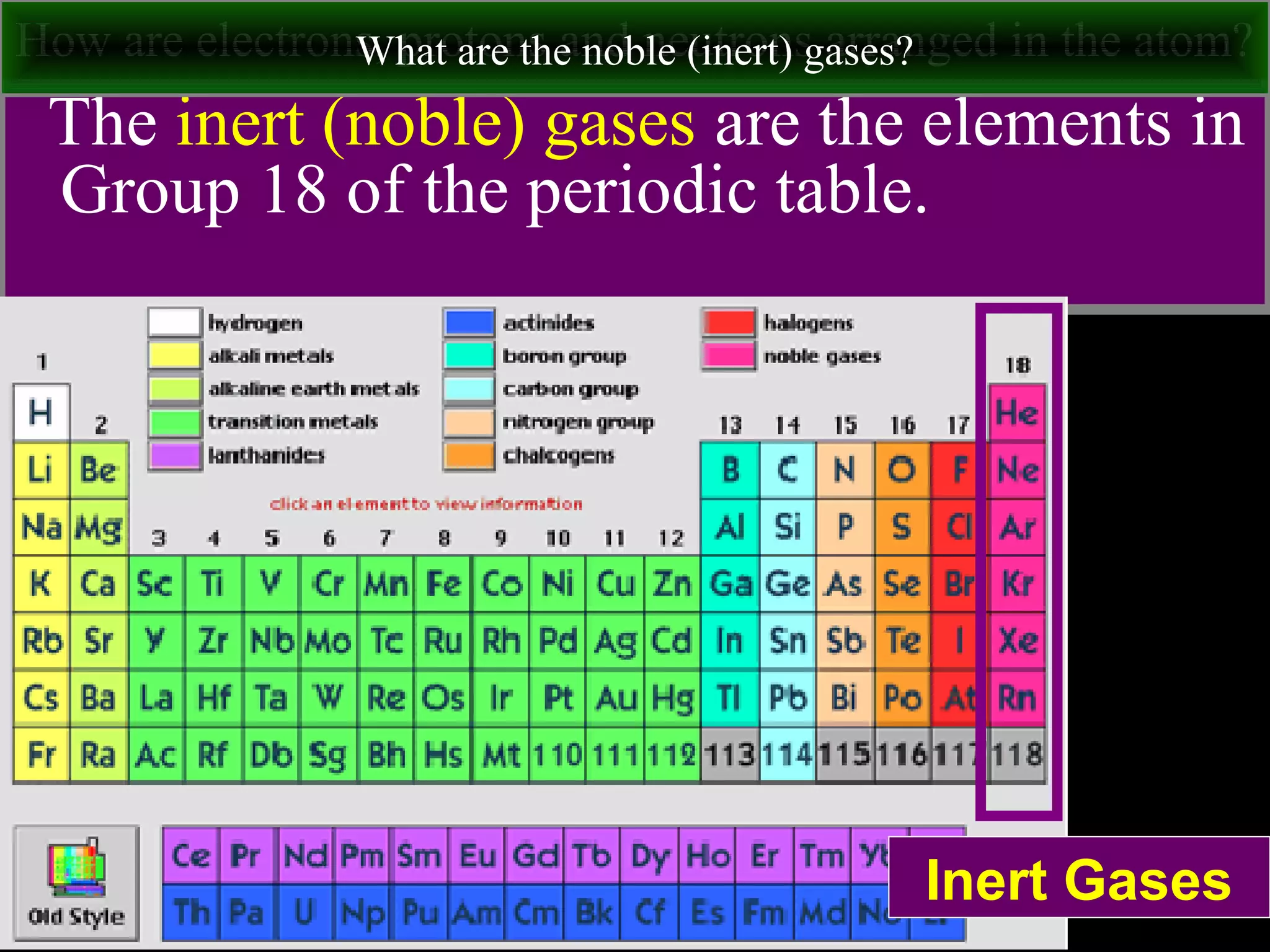
The inert (noble) gases are the elements in
Group 18 of the periodic table.
What are the noble (inert) gases?
Silicon
Inert Gases
CST Review Questions
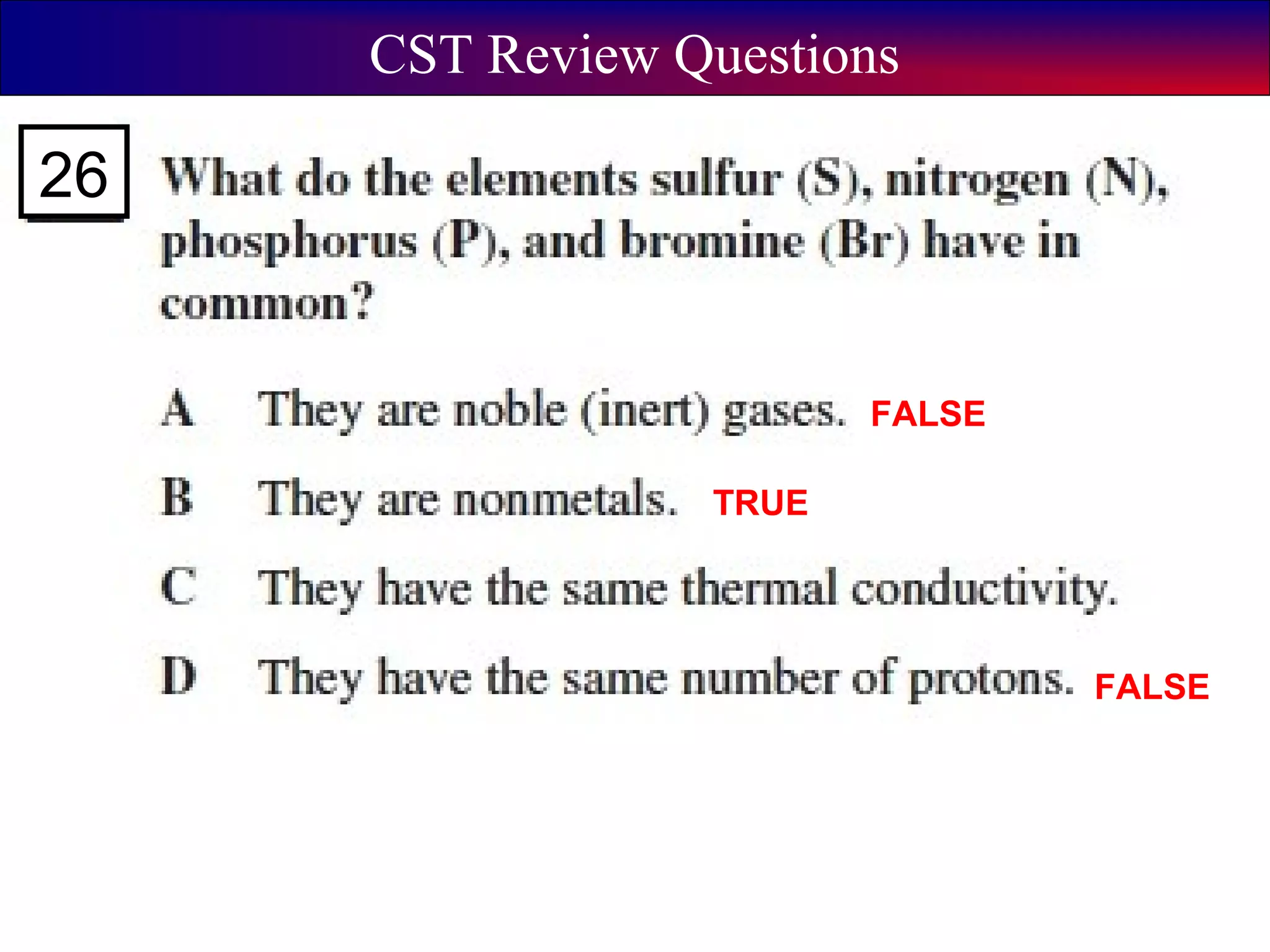
FALSE
26
What are the general types of elements in the periodic table?
.
Non-metals
Po
metalloids
Metals
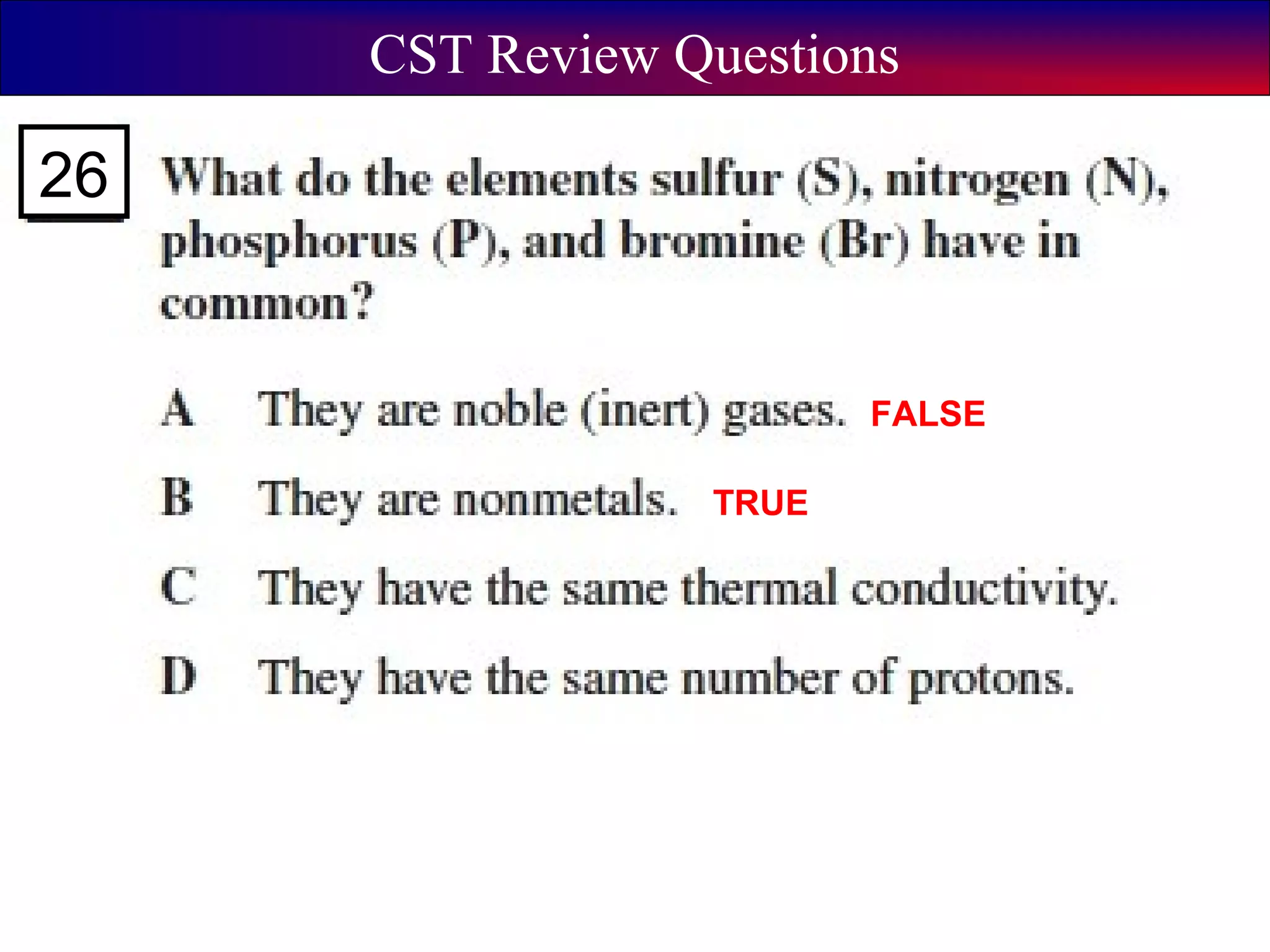
CST Review Questions
FALSE
TRUE
26
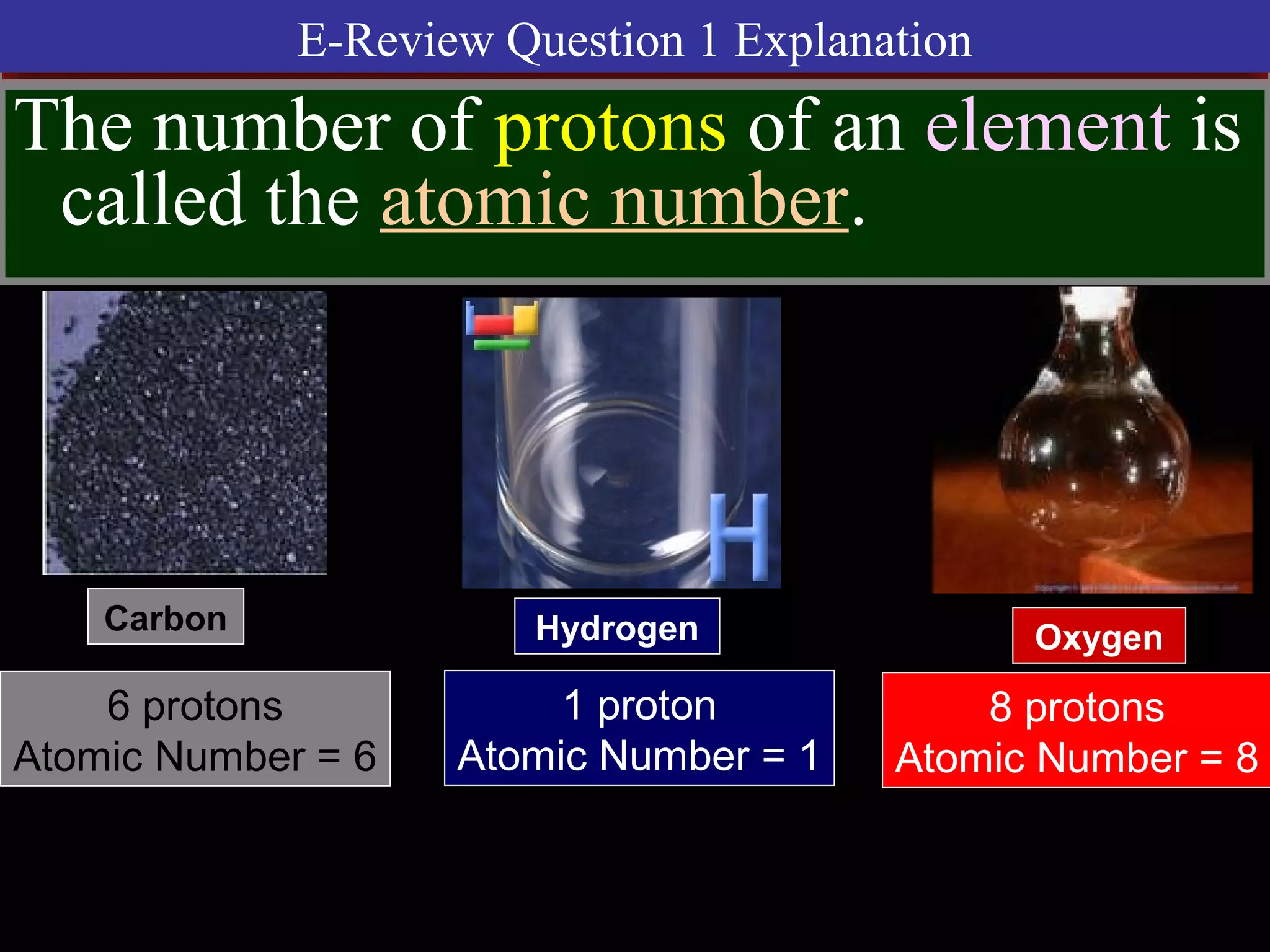
E-Review Question 1 Explanation
The number of protons of an element is
called the atomic number.
Carbon
Oxygen
6 protons
Atomic Number = 6
8 protons
Atomic Number = 8
Hydrogen
1 proton
Atomic Number = 1
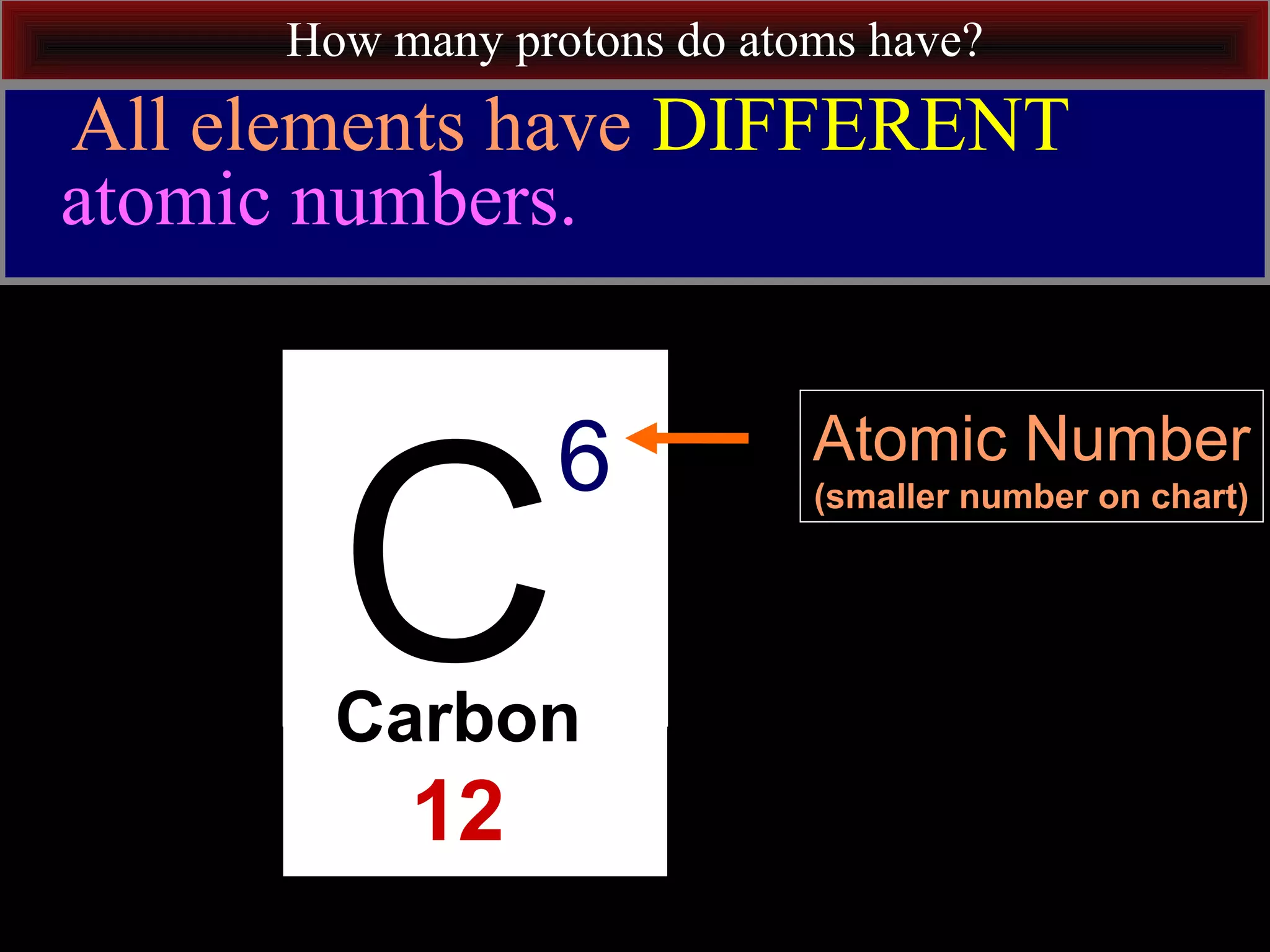
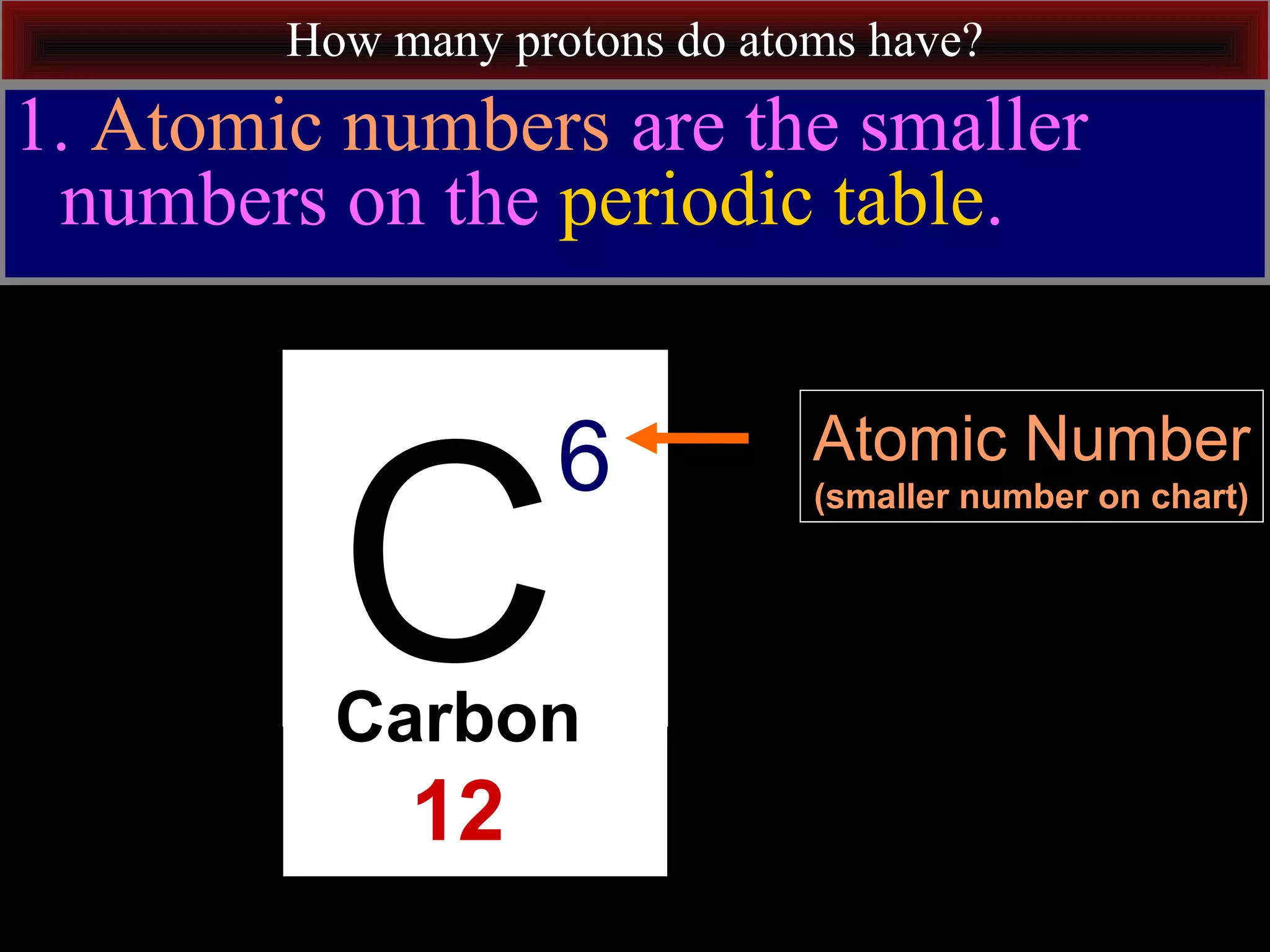
How many protons do atoms have?
1. Atomic numbers are the smaller
numbers on the periodic table.
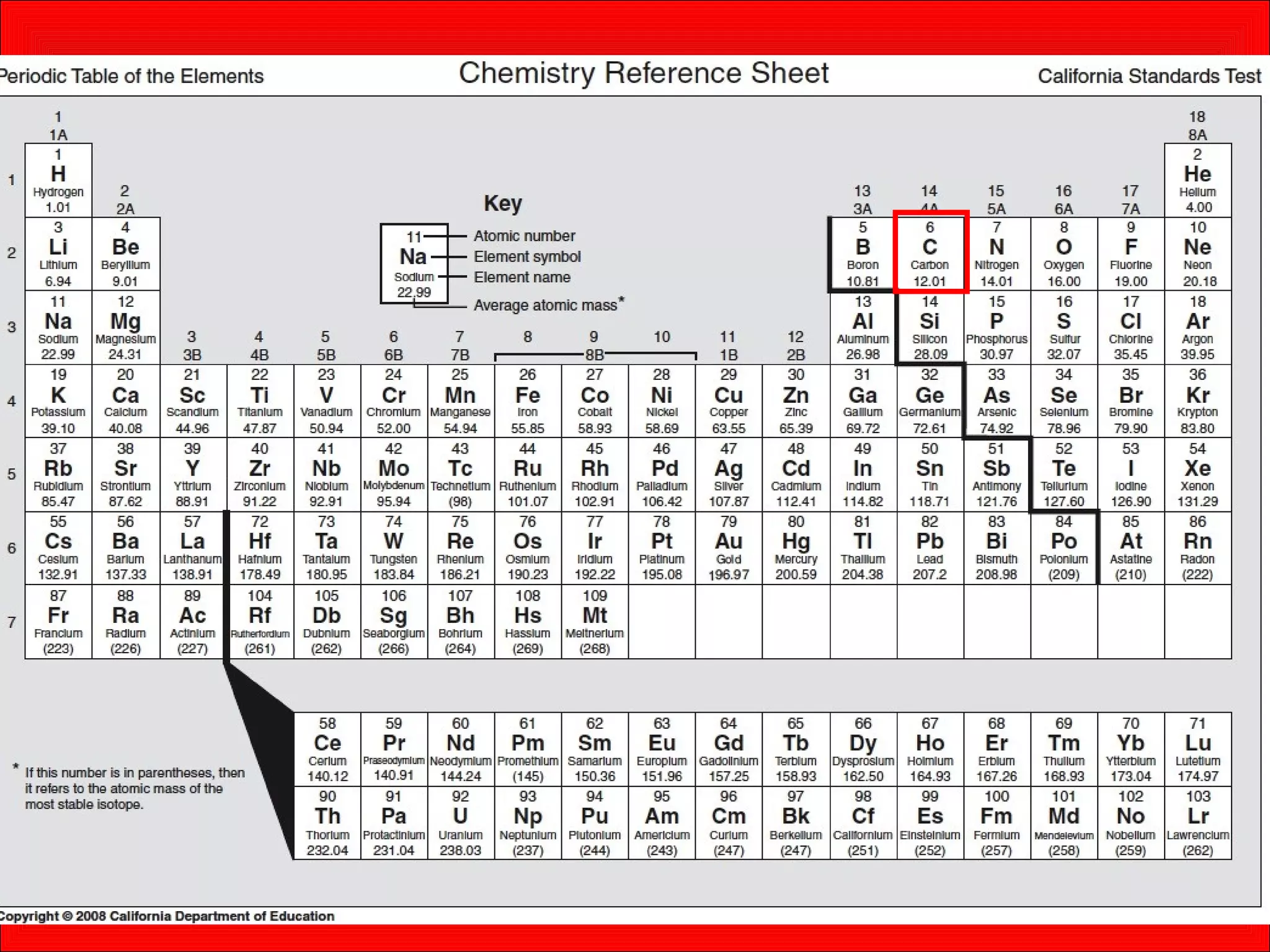
C
6
Carbon
12
Atomic Number
(smaller number on chart)
How many protons do atoms have?
All elements have DIFFERENT
atomic numbers.
C
6
Carbon
12
Atomic Number
(smaller number on chart)
CST Review Questions
FALSE
TRUE
FALSE
26
CST Review Questions
26
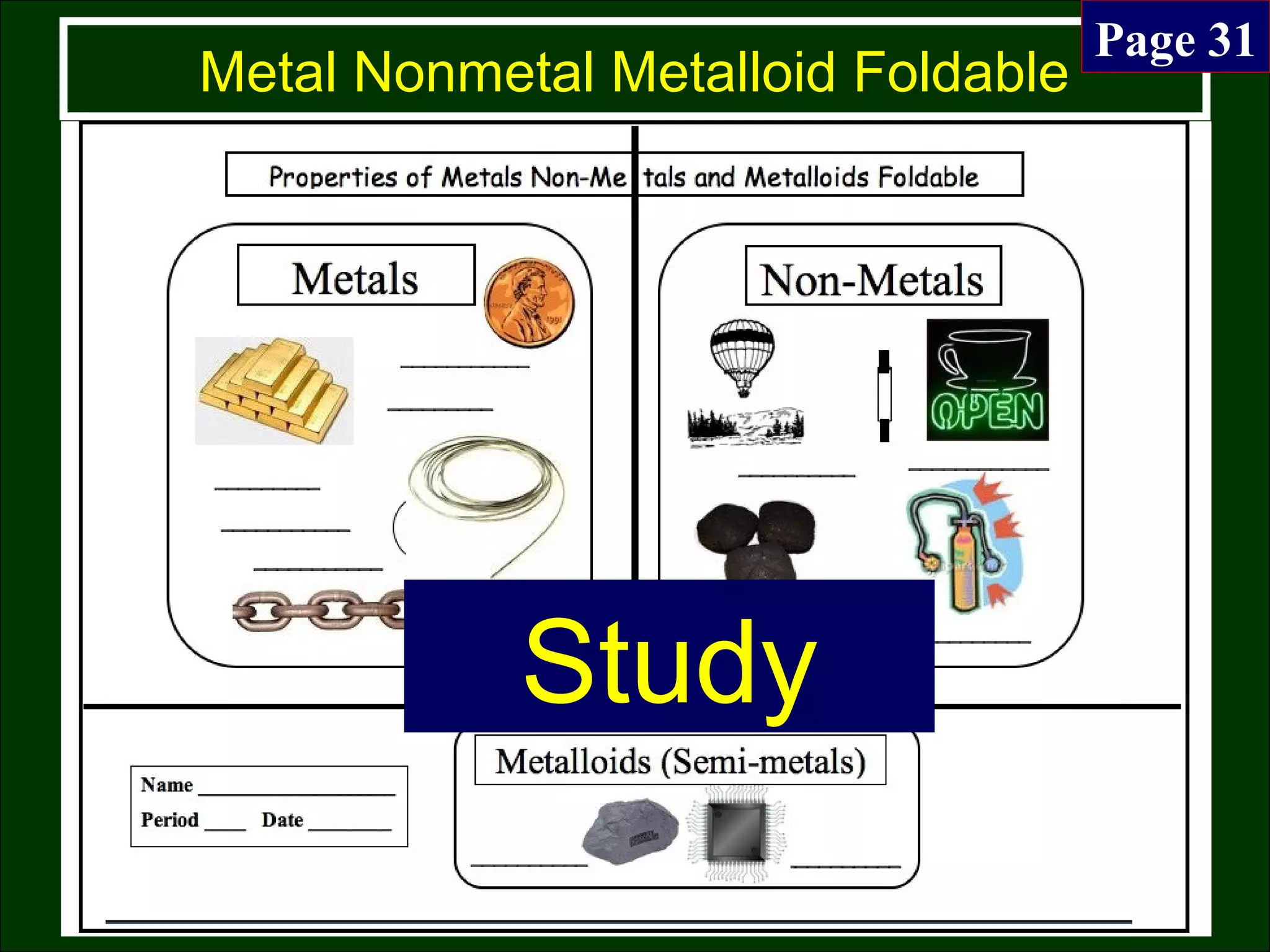
Metal Nonmetal Metalloid Foldable
Study
Page 31
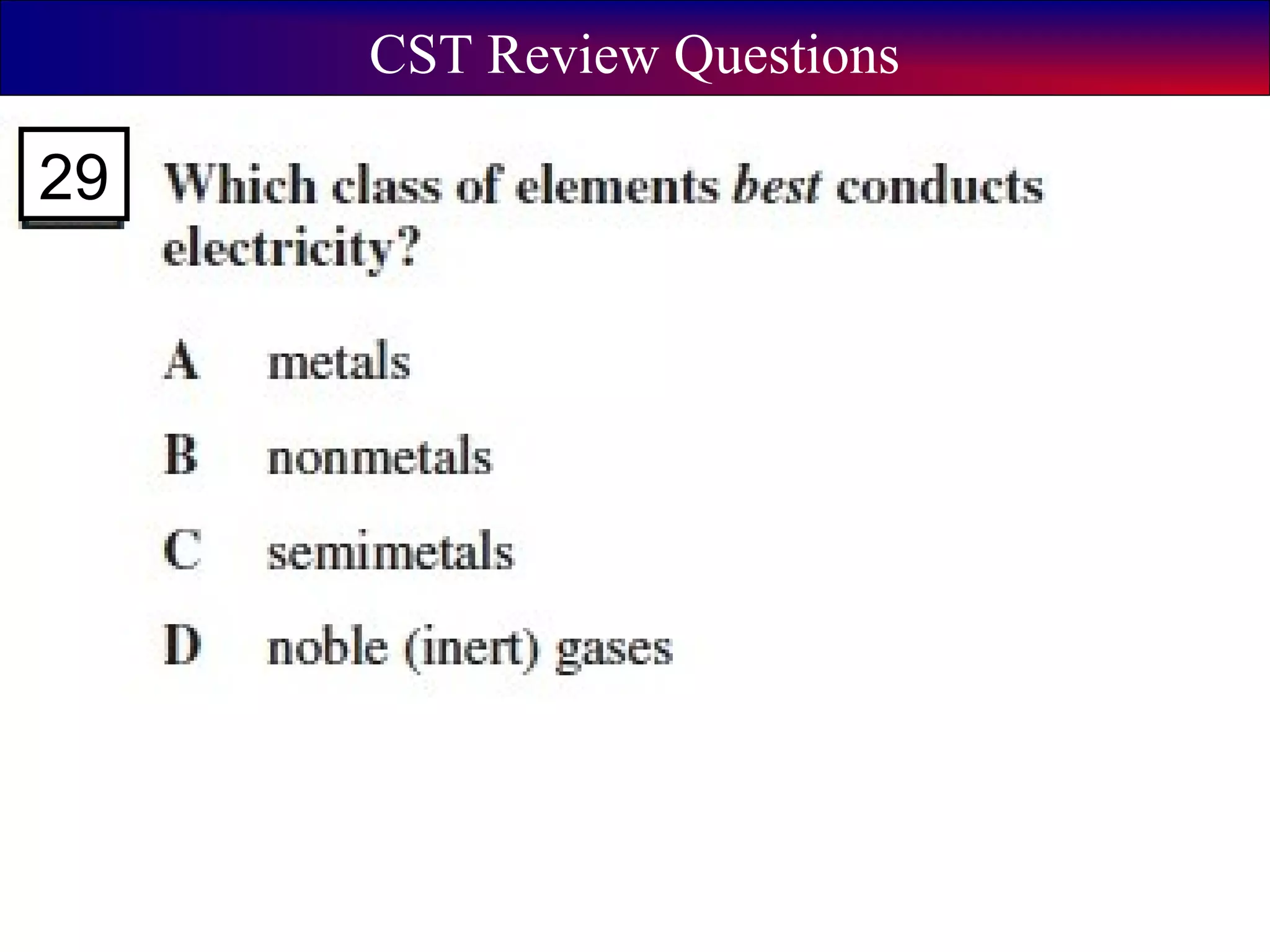
CST Review Questions
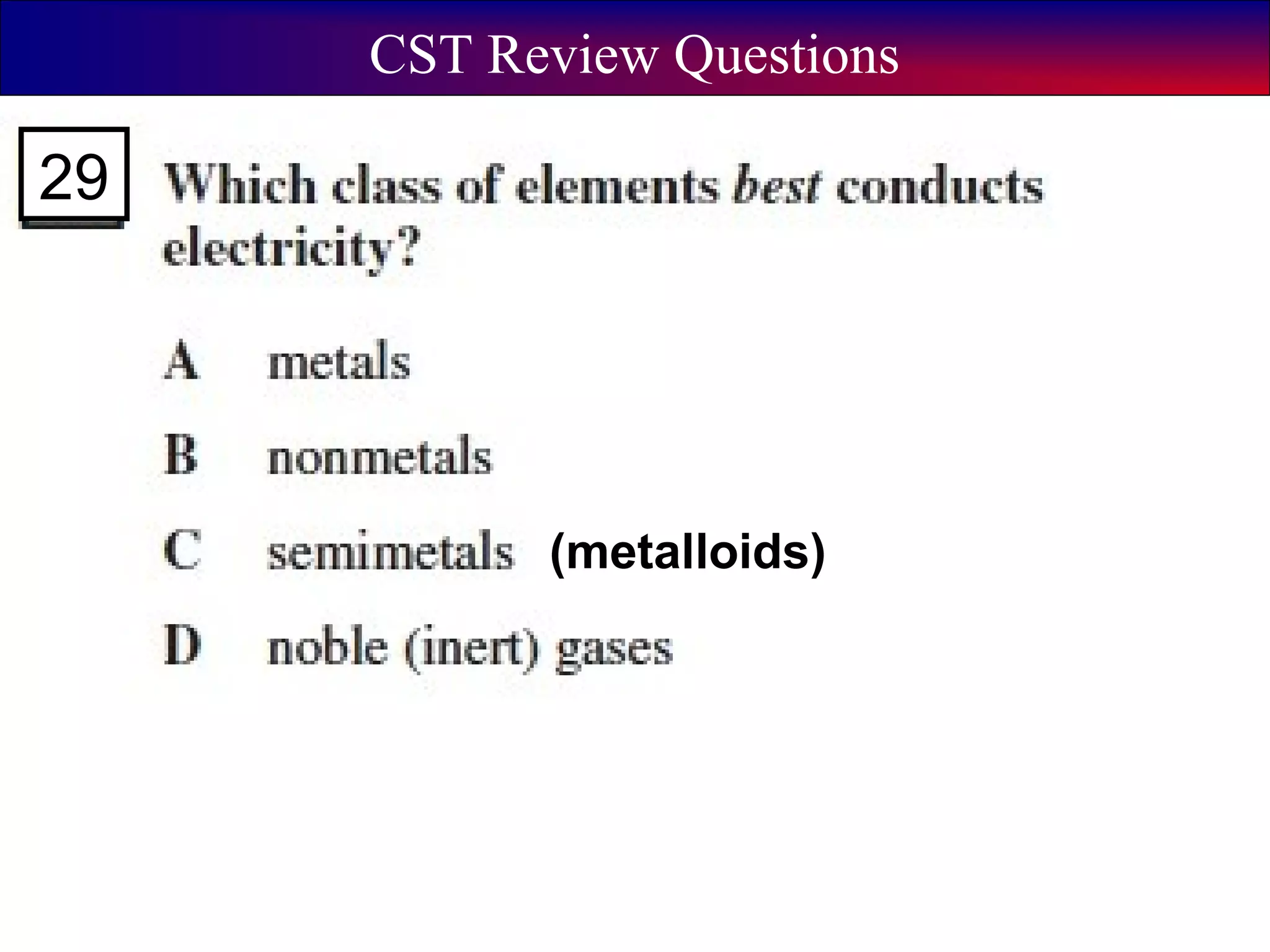
29
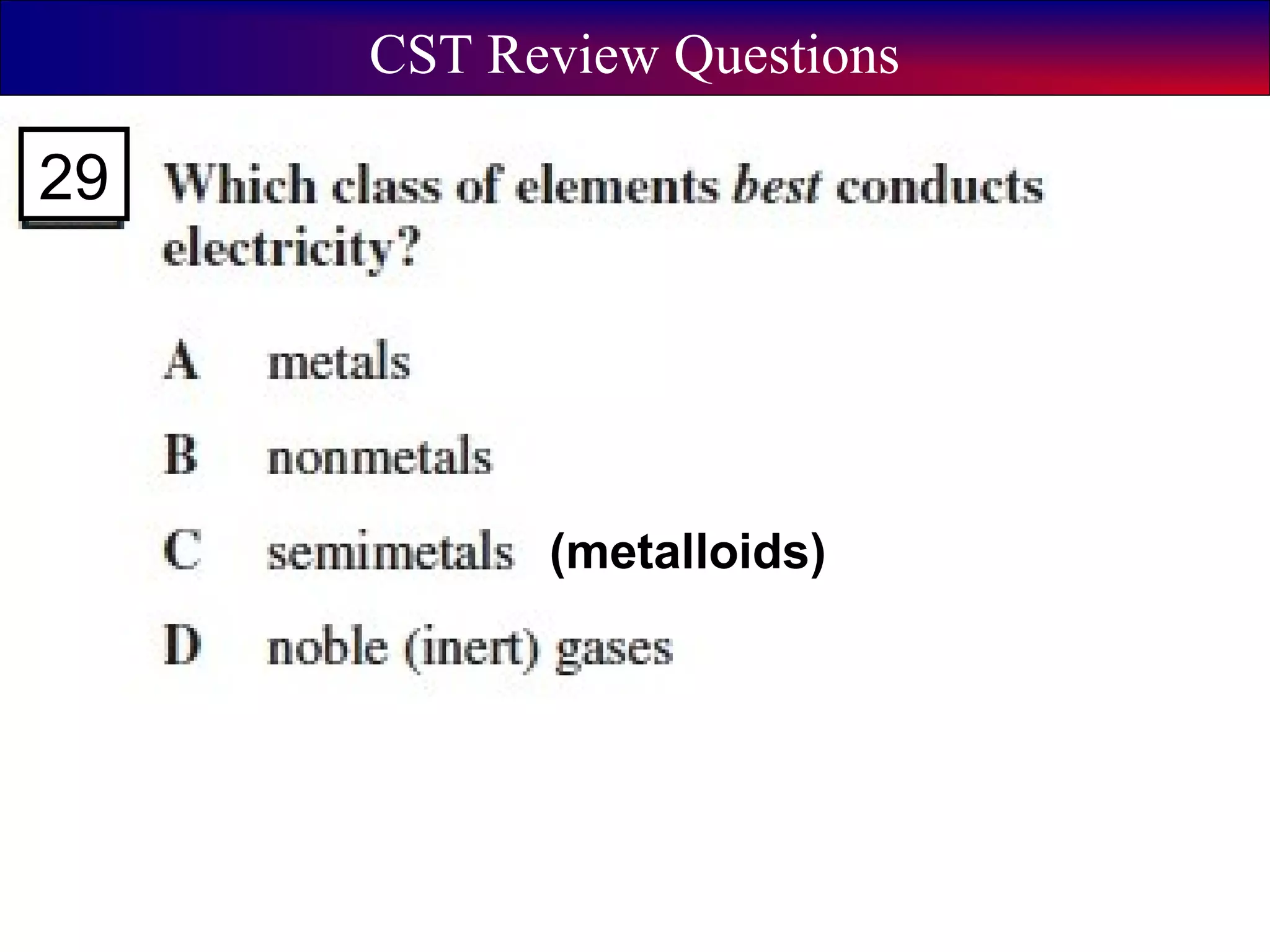
CST Review Questions
(metalloids)
29
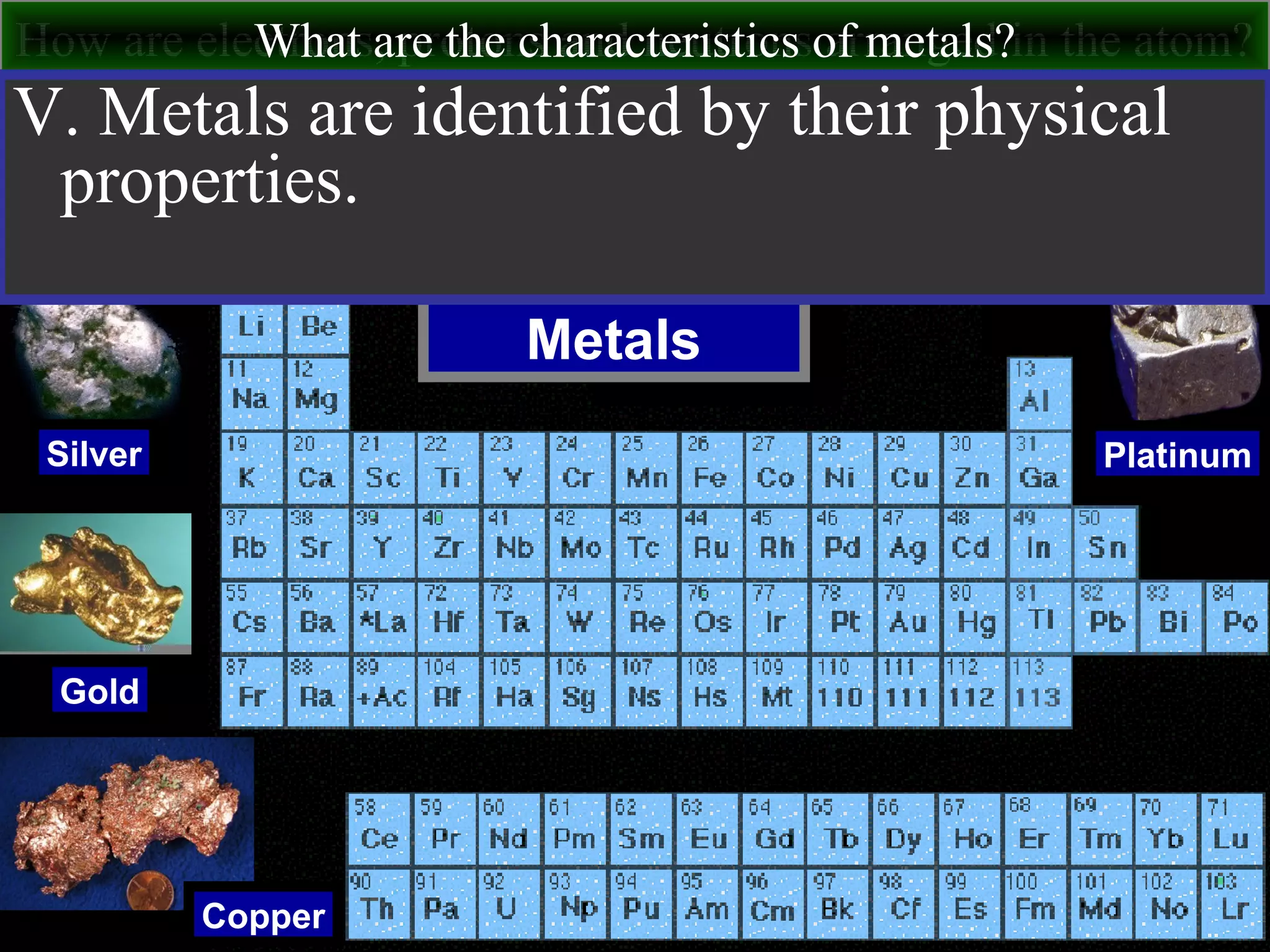
How are electrons, protons and neutrons arranged in the atom?What are the characteristics of metals?
Metals
Silver
Gold
Copper
Platinum
V. Metals are identified by their physical
properties.
How are electrons, protons and neutrons arranged in the atom?What are the characteristics of metals?
Metals
Silver
Gold
Copper
Platinum
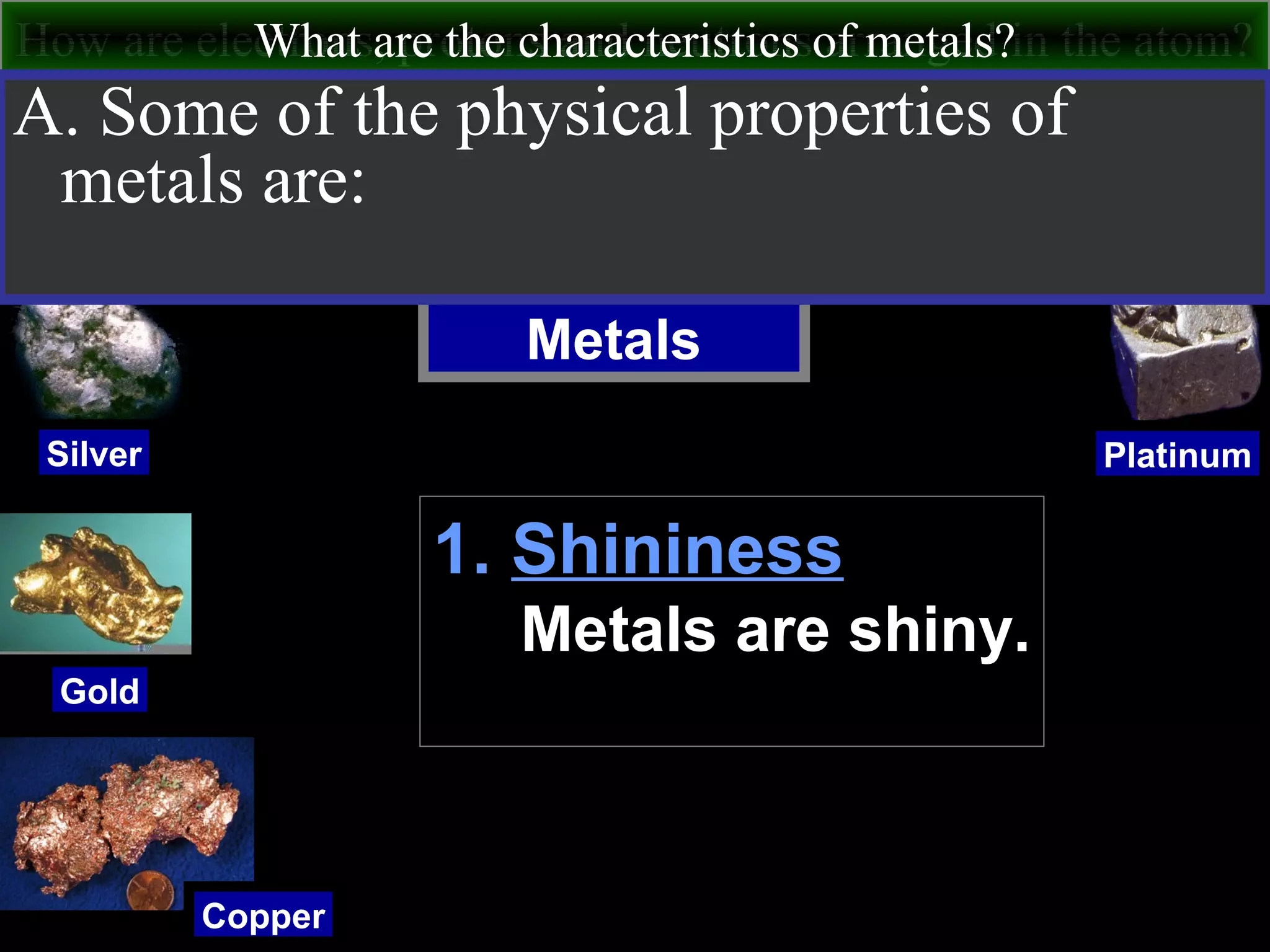
A. Some of the physical properties of
metals are:
1. Shininess
Metals are shiny.
How are electrons, protons and neutrons arranged in the atom?What are the characteristics of metals?
Metals
Silver
Gold
Copper
Platinum
A. Some of the physical properties of
metals are:
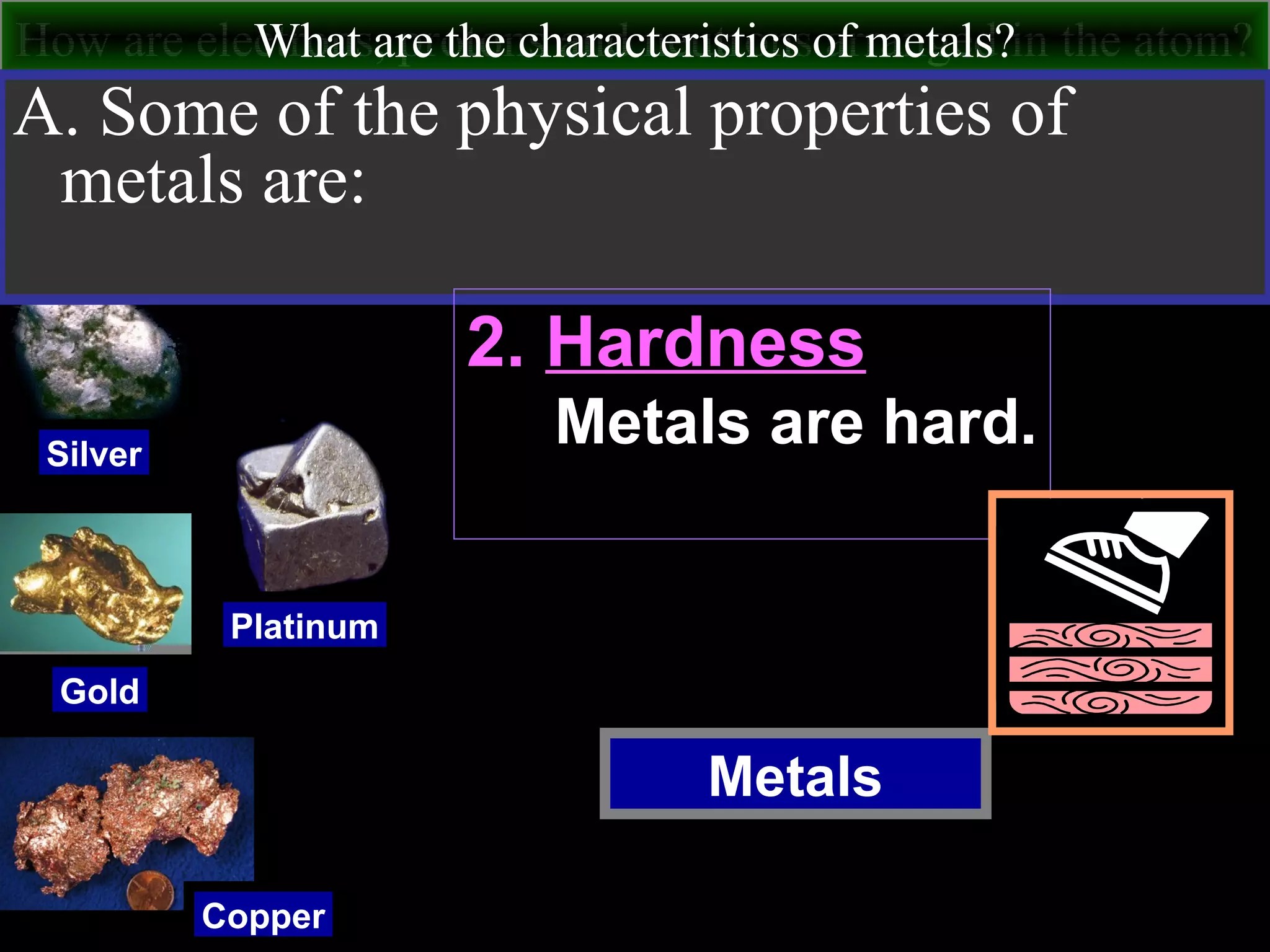
2. Hardness
Metals are hard.
How are electrons, protons and neutrons arranged in the atom?What are the characteristics of metals?
Metals
Silver
Gold
Copper
Platinum
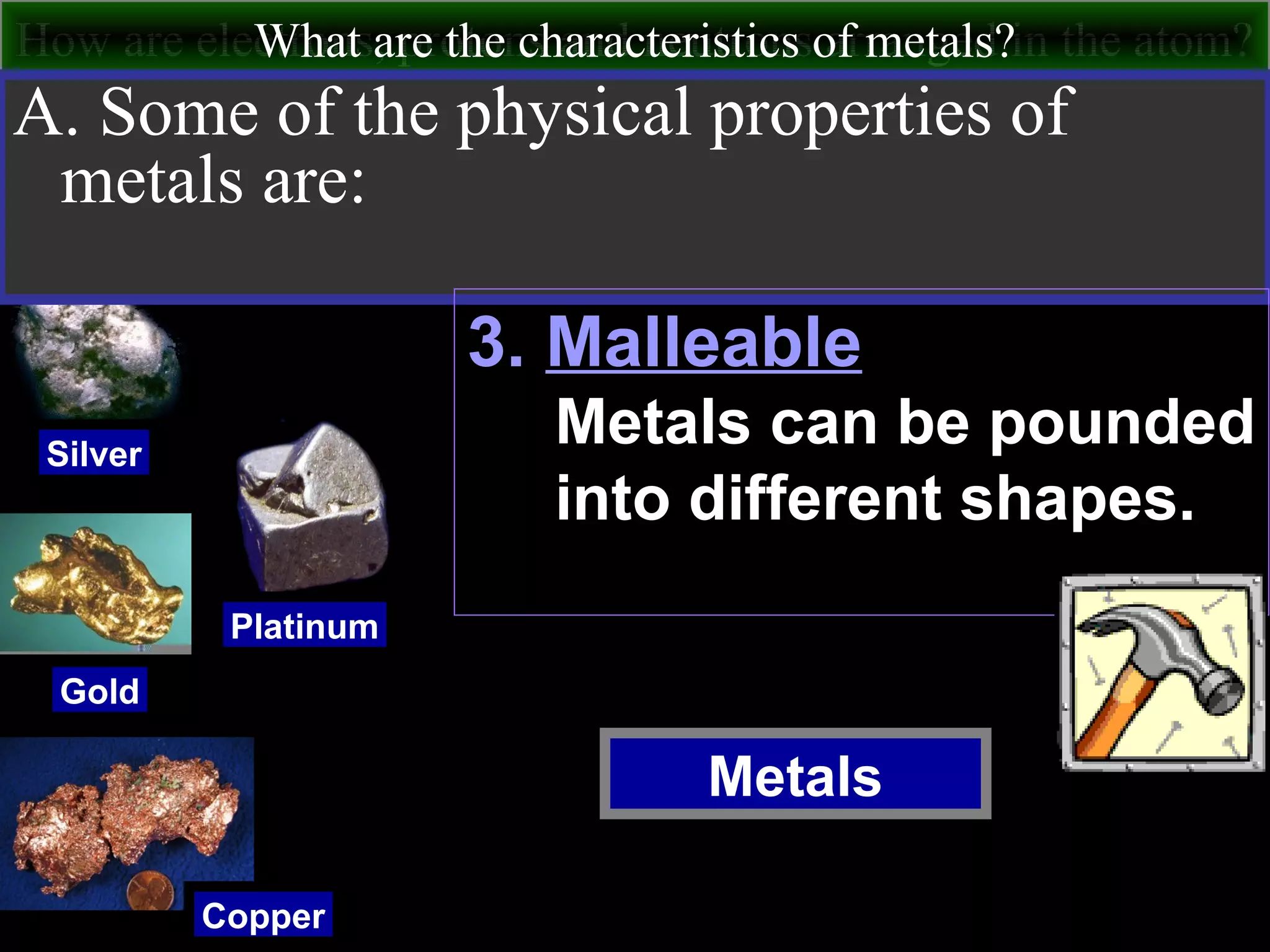
A. Some of the physical properties of
metals are:
3. Malleable
Metals can be pounded
into different shapes.
How are electrons, protons and neutrons arranged in the atom?What are the characteristics of metals?
Metals
Silver
Gold
Copper
Platinum
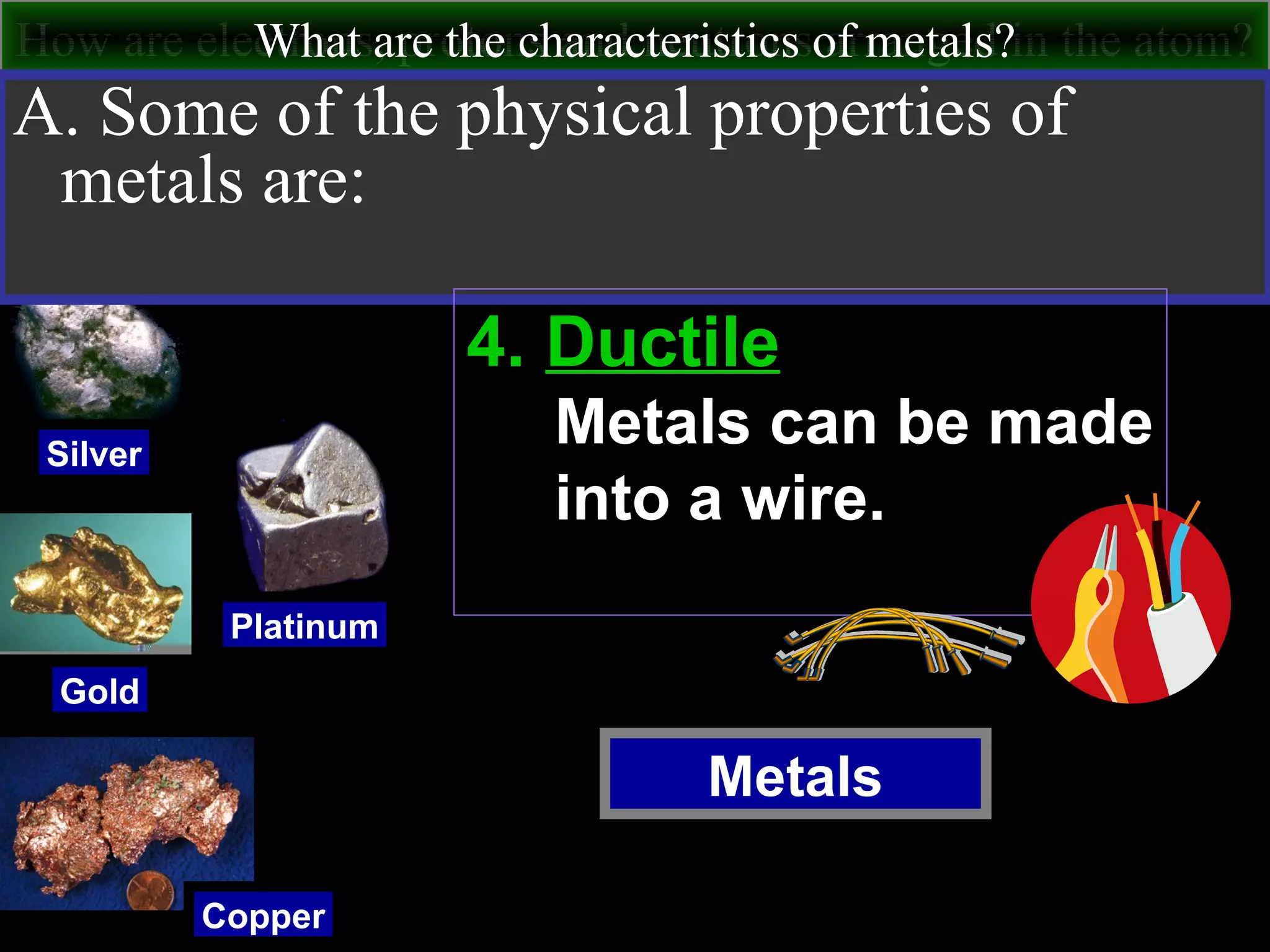
A. Some of the physical properties of
metals are:
4. Ductile
Metals can be made
into a wire.
How are electrons, protons and neutrons arranged in the atom?What are the characteristics of metals?
Metals
Silver
Gold
Copper
Platinum
A. Some of the physical properties of
metals are:
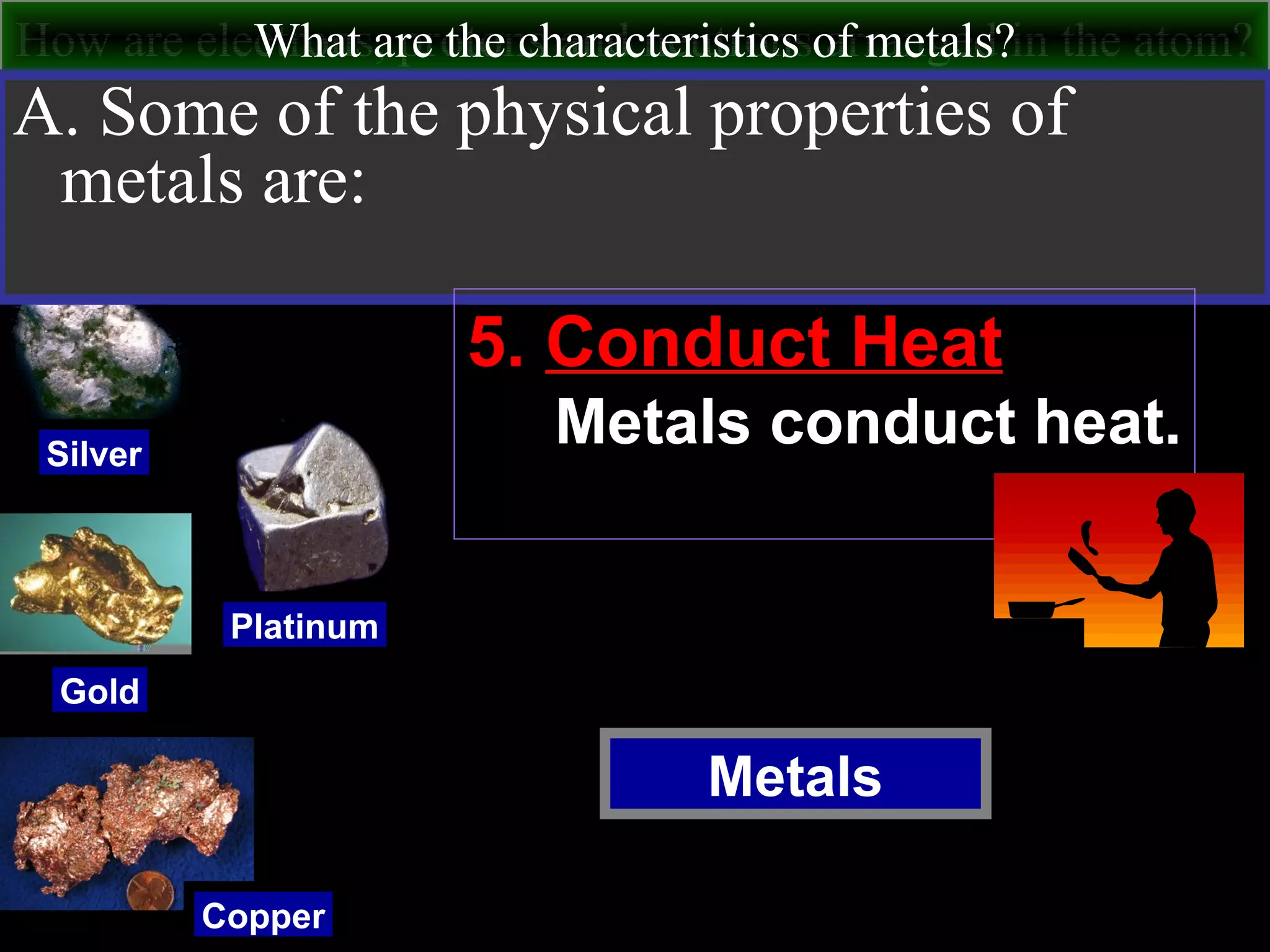
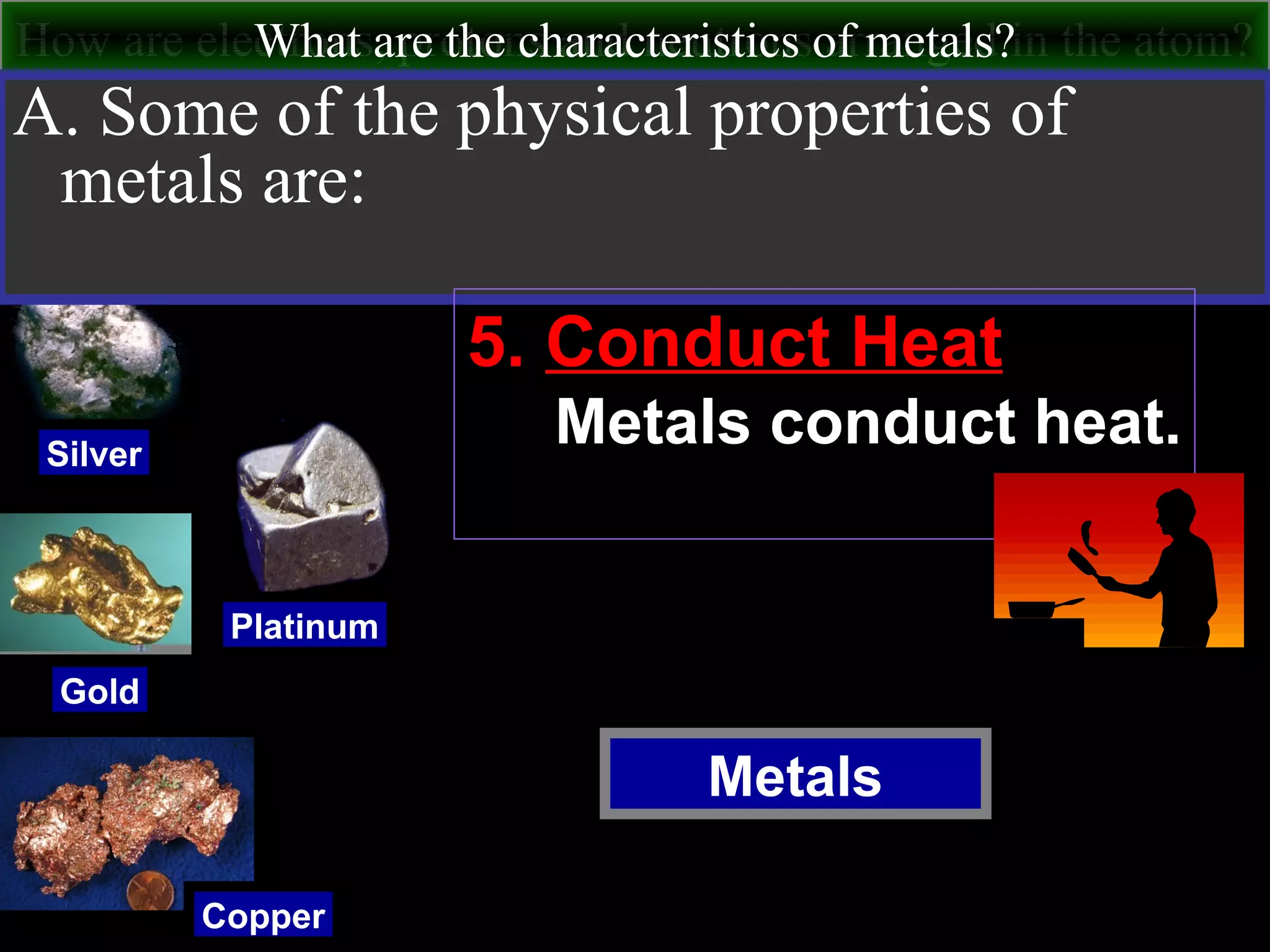
5. Conduct Heat
Metals conduct heat.
How are electrons, protons and neutrons arranged in the atom?What are the characteristics of metals?
Metals
Silver
Gold
Copper
Platinum
A. Some of the physical properties of
metals are:
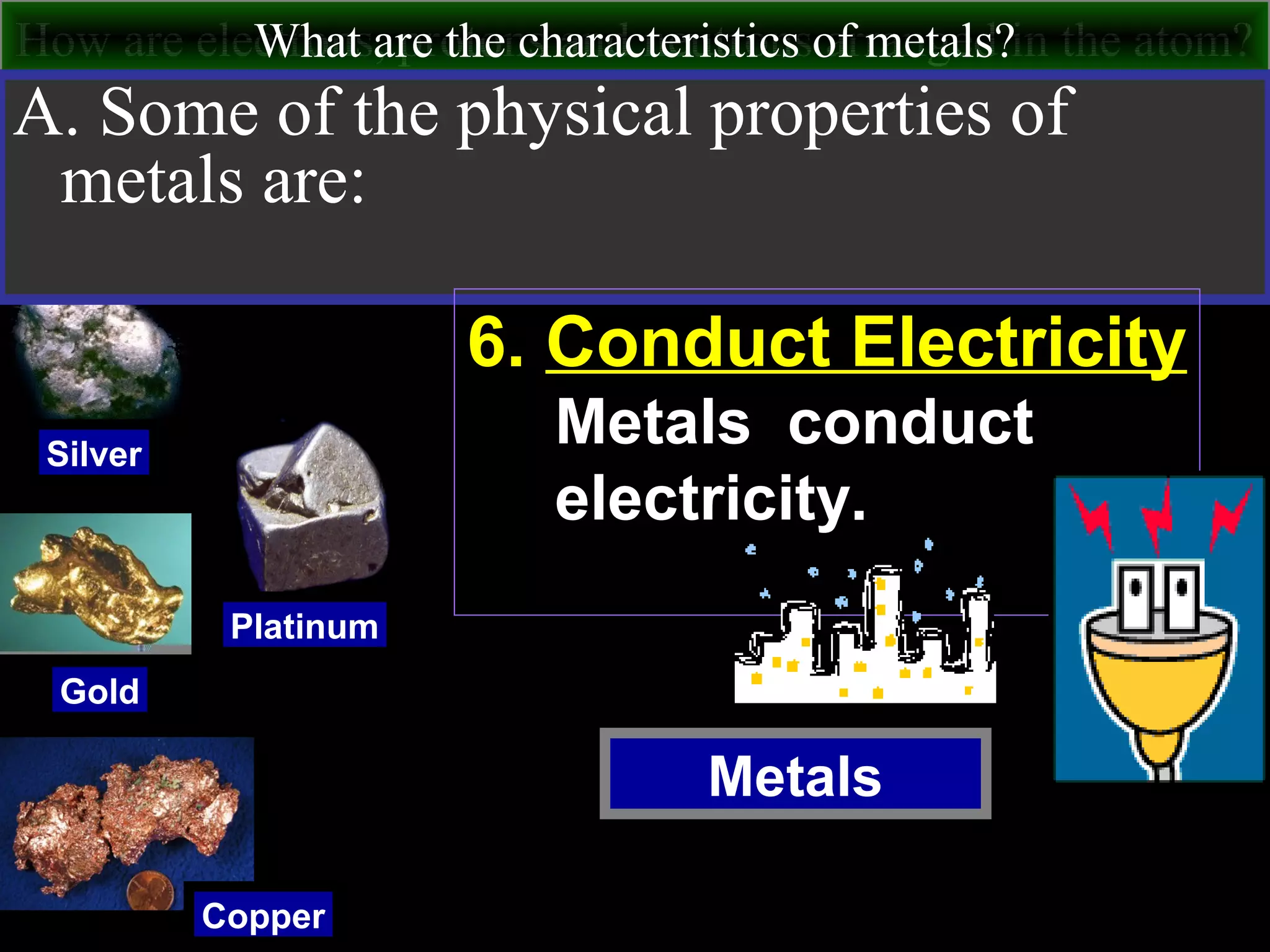
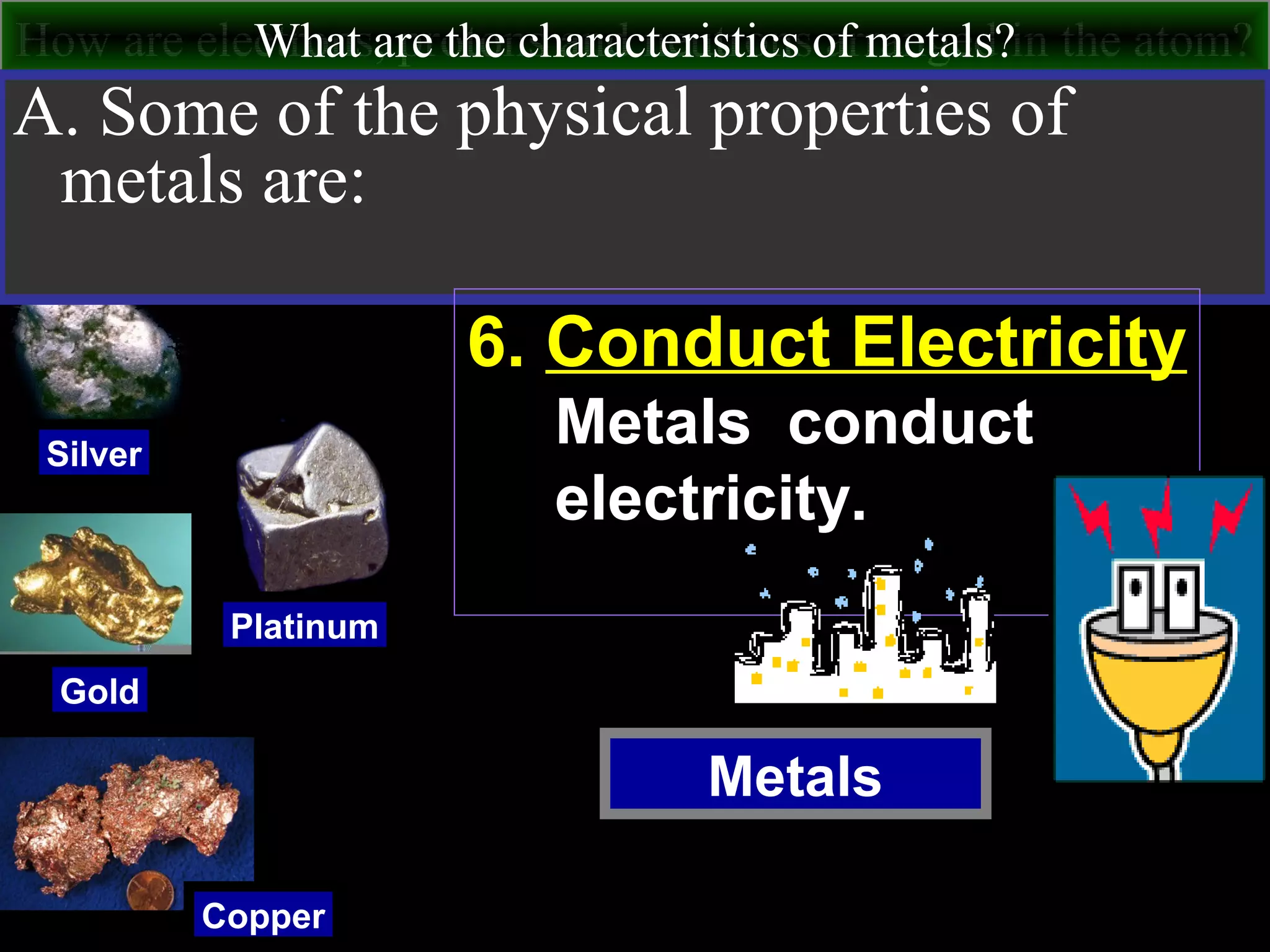
6. Conduct Electricity
Metals conduct
electricity.
How are electrons, protons and neutrons arranged in the atom?What are the characteristics of metals?
Metals
Silver
Gold
Copper
Platinum
A. Some of the physical properties of
metals are:
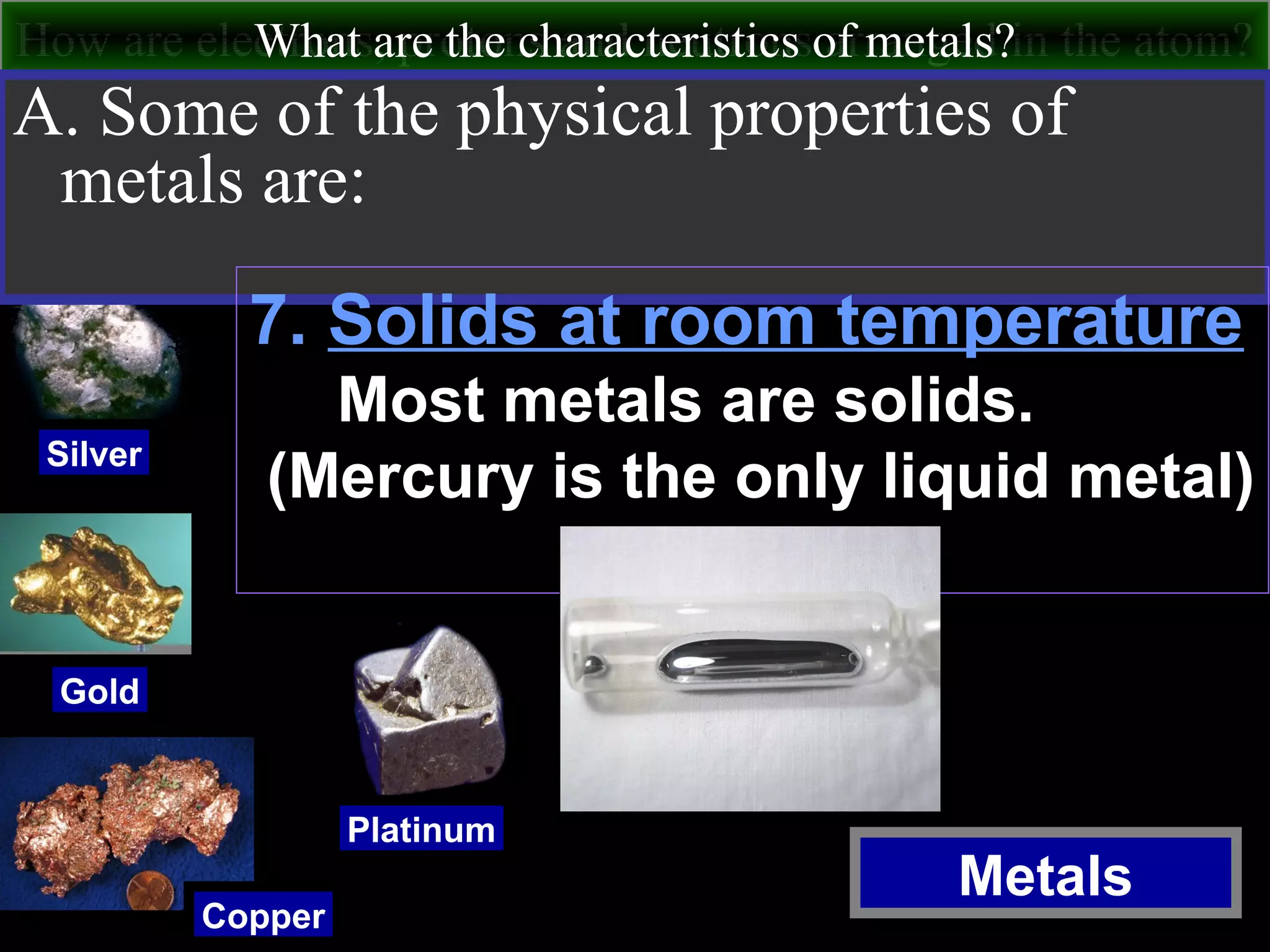
7. Solids at room temperature
Most metals are solids.
(Mercury is the only liquid metal)
How are electrons, protons and neutrons arranged in the atom?What are the characteristics of metals?
Metals
Silver
Gold
Copper
Platinum
A. Some of the physical properties of metals are:
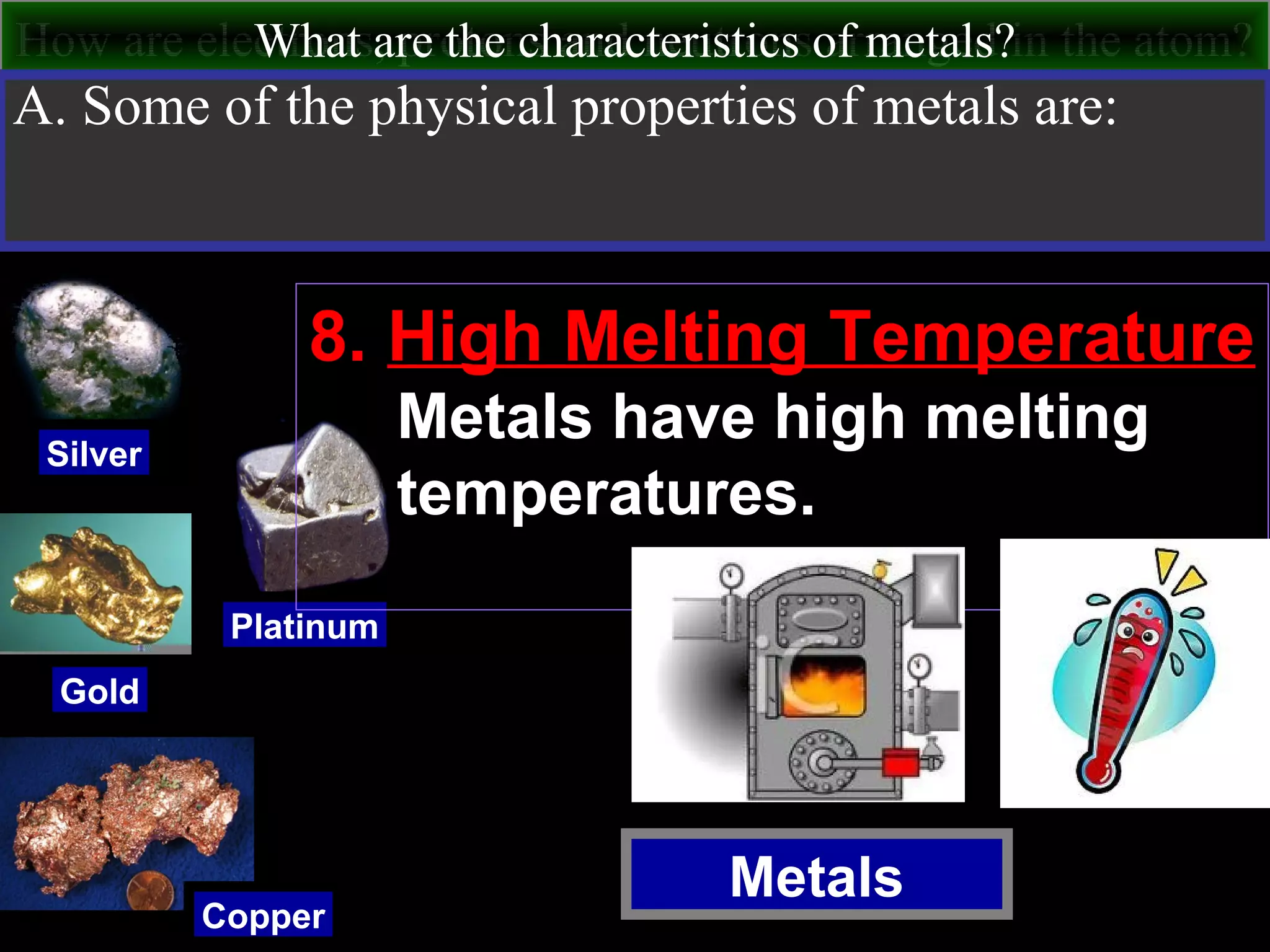
8. High Melting Temperature
Metals have high melting
temperatures.
How are electrons, protons and neutrons arranged in the atom?What are the characteristics of Non-metals?
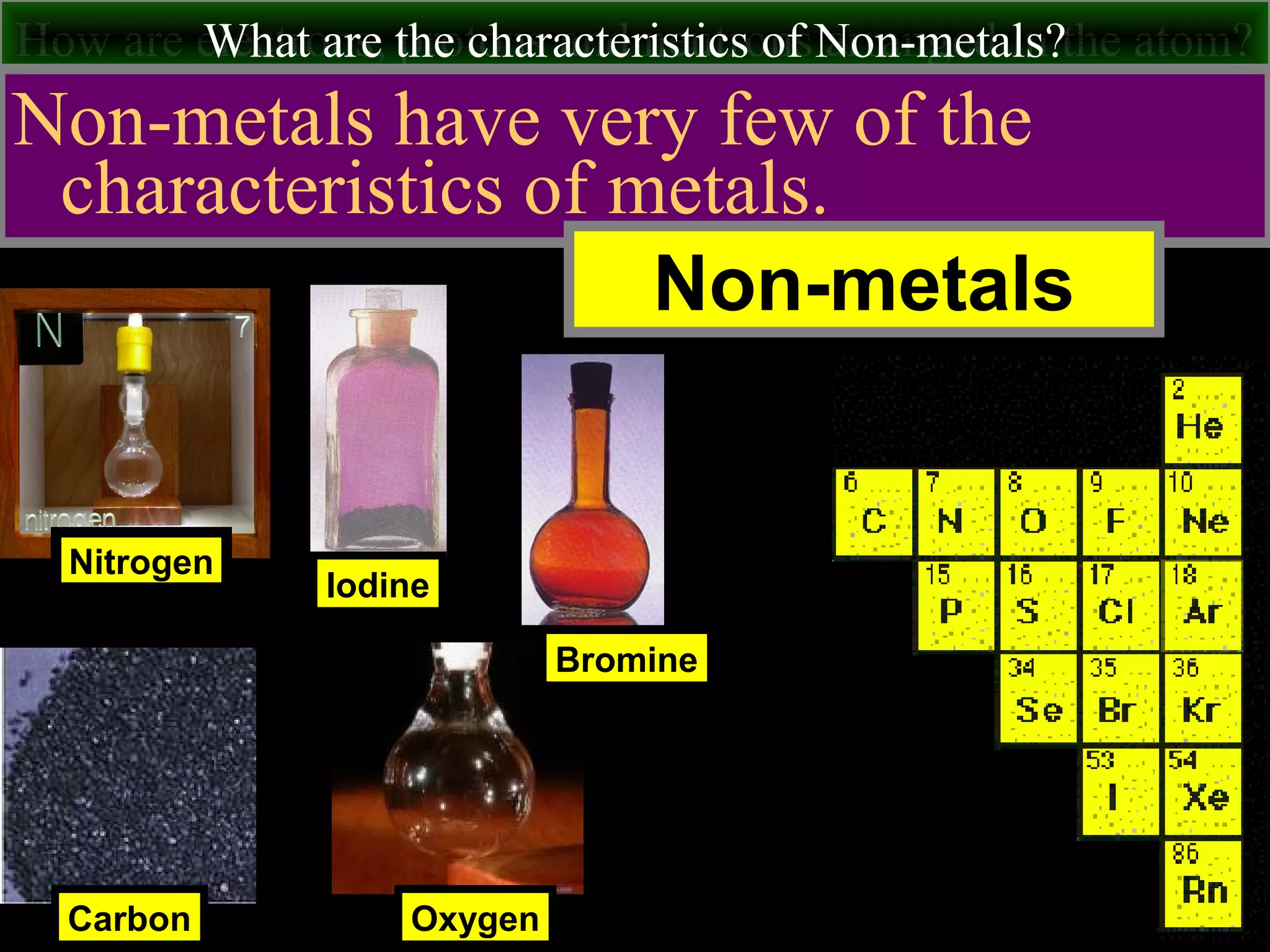
Non-metals have very few of the
characteristics of metals.
Nitrogen
Carbon
Iodine
Non-metals
Oxygen
Bromine
How are electrons, protons and neutrons arranged in the atom?What are the characteristics of Non-metals?
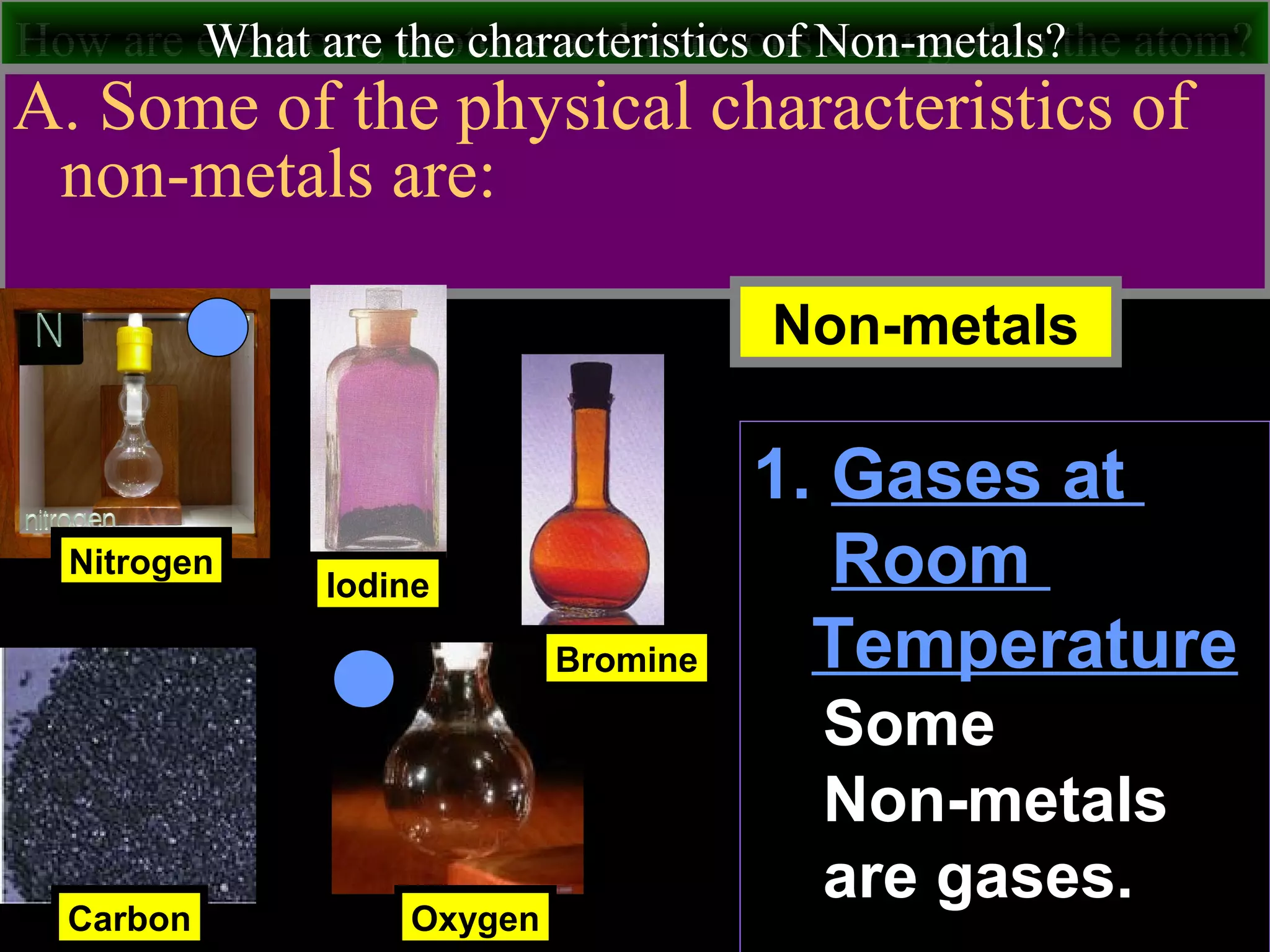
A. Some of the physical characteristics of
non-metals are:
Nitrogen
Carbon
Iodine
Non-metals
Oxygen
Bromine
1. Gases at
Room
Temperature
Some
Non-metals
are gases.
How are electrons, protons and neutrons arranged in the atom?What are the characteristics of Non-metals?
A. Some of the physical characteristics of
non-metals are:
Nitrogen
Carbon
Iodine
Non-metals
Oxygen
Bromine
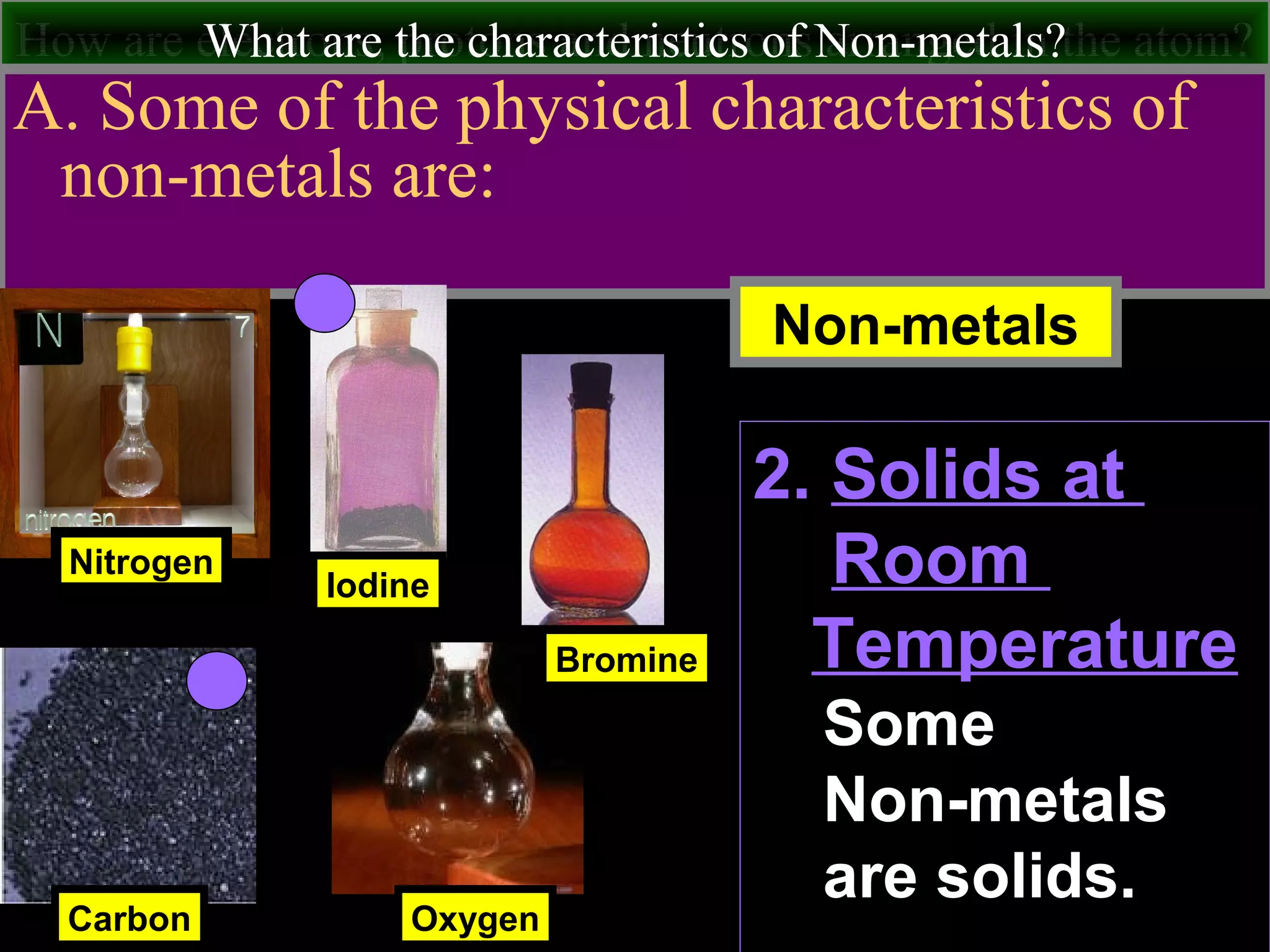
2. Solids at
Room
Temperature
Some
Non-metals
are solids.
How are electrons, protons and neutrons arranged in the atom?What are the characteristics of Non-metals?
A. Some of the physical characteristics of
non-metals are:
Nitrogen
Carbon
Iodine
Non-metals
Oxygen
Bromine
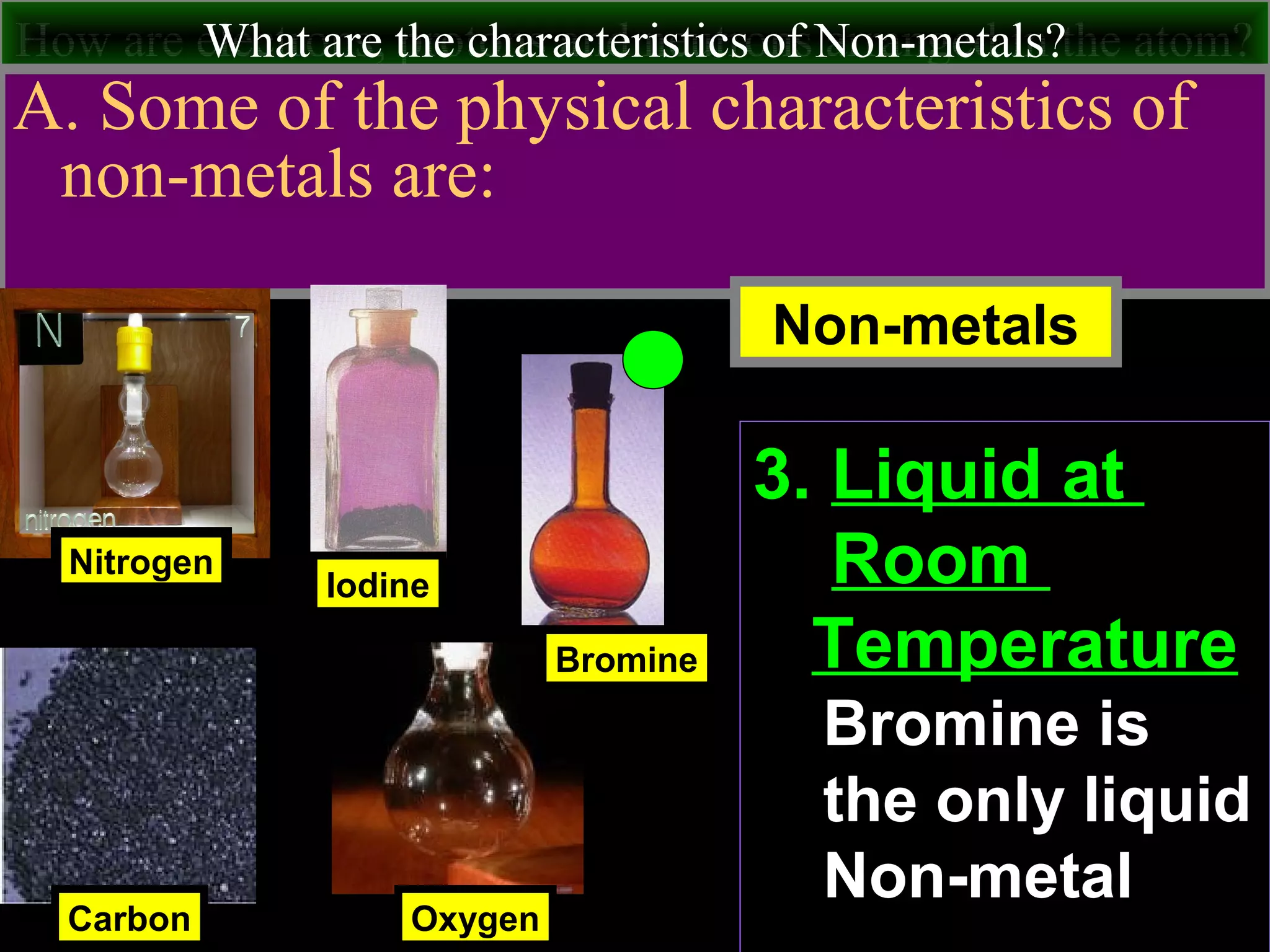
3. Liquid at
Room
Temperature
Bromine is
the only liquid
Non-metal
How are electrons, protons and neutrons arranged in the atom?What are the characteristics of Non-metals?
A. Some of the physical characteristics of
non-metals are:
Nitrogen
Carbon
Iodine
Non-metals
Oxygen
Bromine
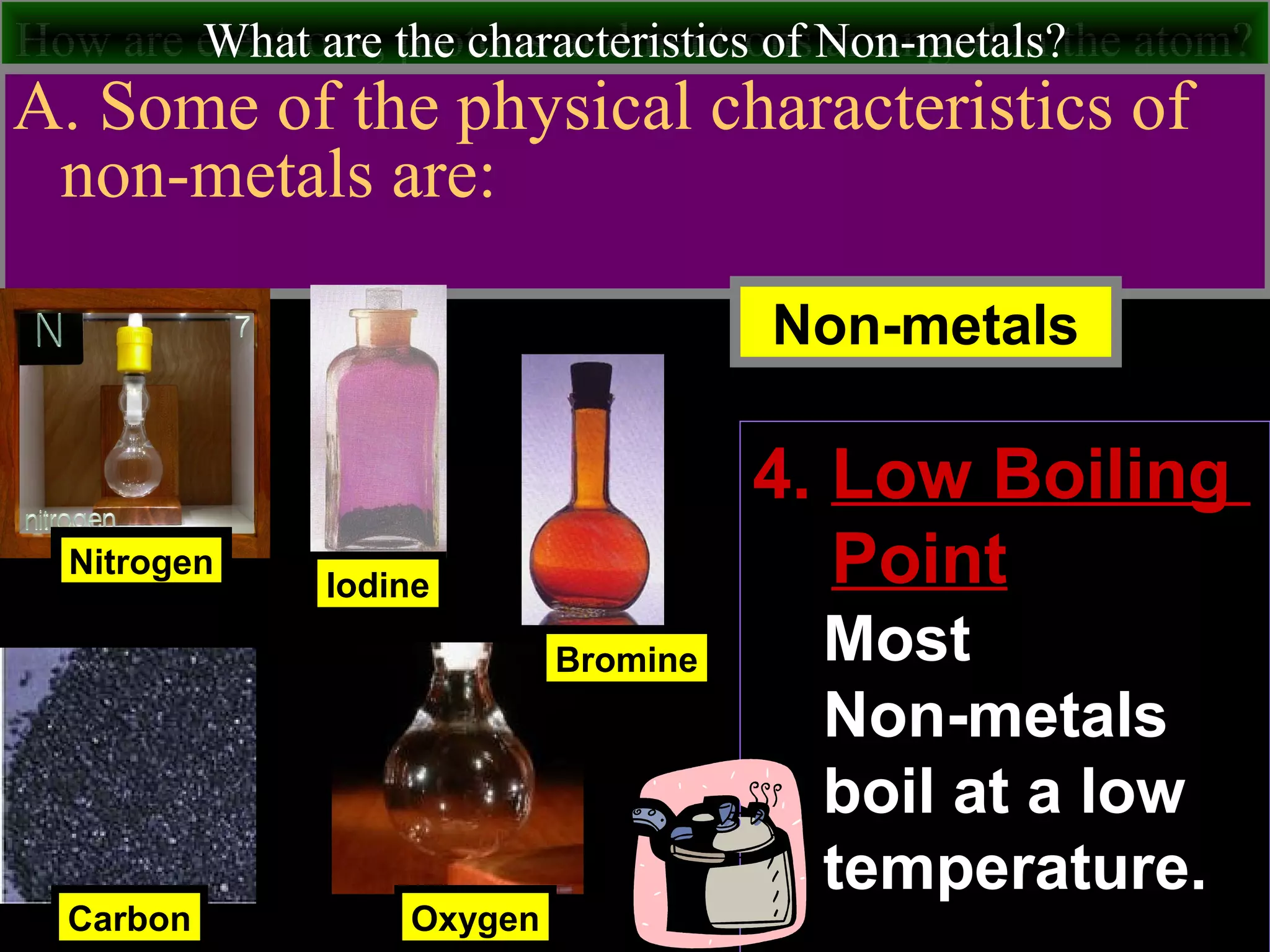
4. Low Boiling
Point
Most
Non-metals
boil at a low
temperature.
How are electrons, protons and neutrons arranged in the atom?What are the characteristics of Non-metals?
A. Some of the physical characteristics of
non-metals are:
Nitrogen
Carbon
Iodine
Non-metals
Oxygen
Bromine
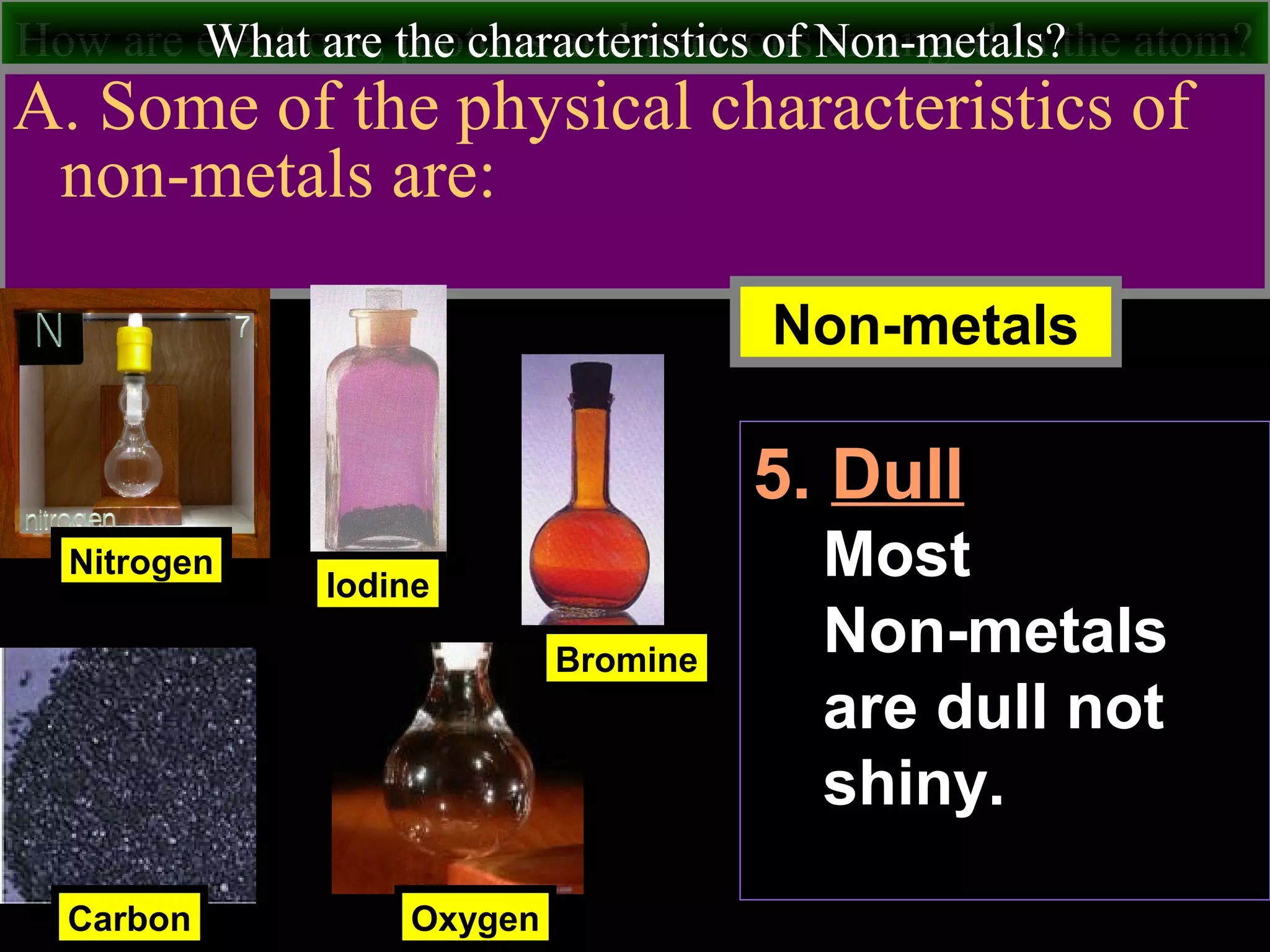
5. Dull
Most
Non-metals
are dull not
shiny.
How are electrons, protons and neutrons arranged in the atom?What are the characteristics of Non-metals?
A. Some of the physical characteristics of
non-metals are:
Nitrogen
Carbon
Iodine
Non-metals
Oxygen
Bromine
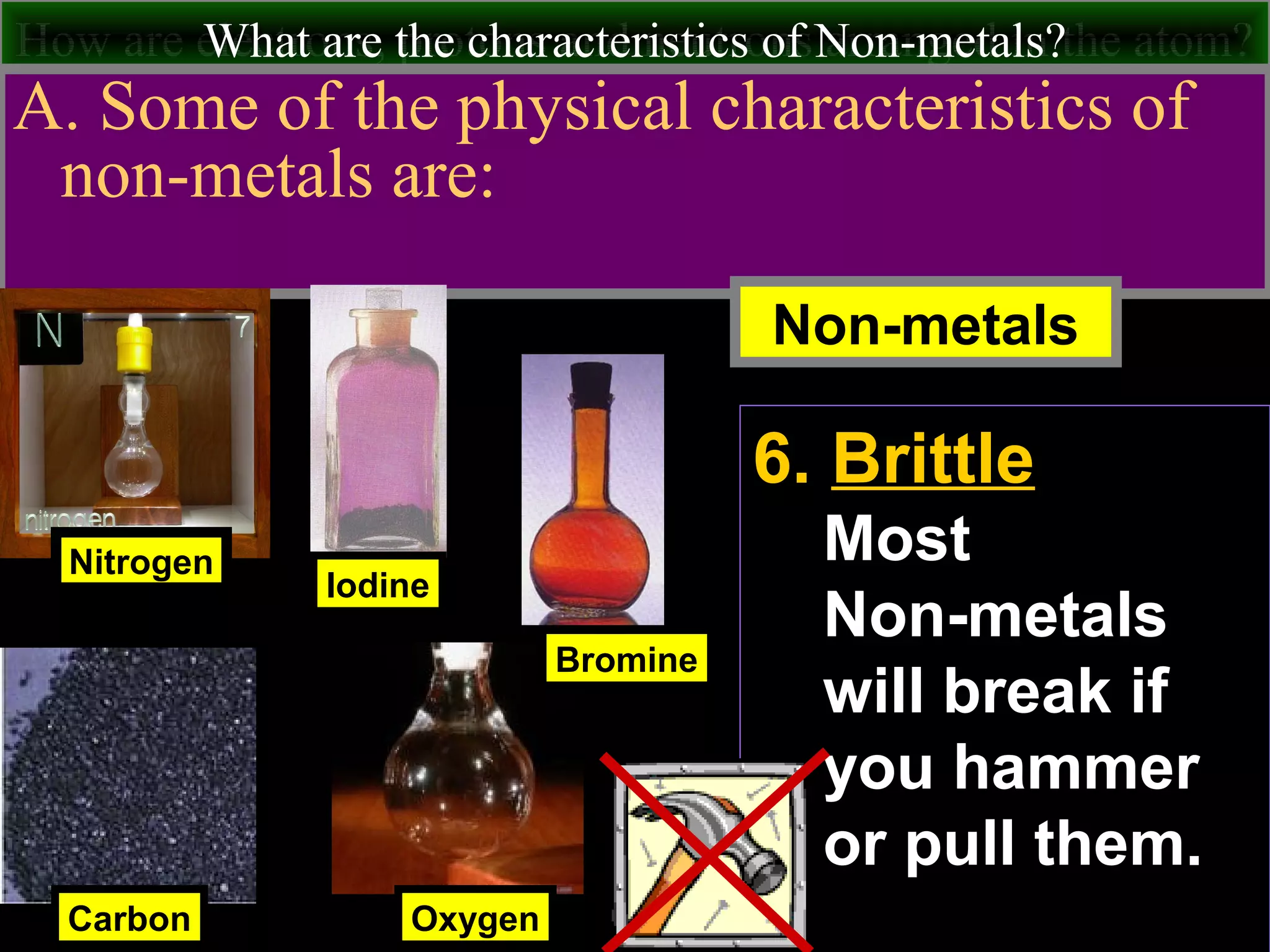
6. Brittle
Most
Non-metals
will break if
you hammer
or pull them.
How are electrons, protons and neutrons arranged in the atom?What are the characteristics of Non-metals?
A. Some of the physical characteristics of
non-metals are:
Nitrogen
Carbon
Iodine
Non-metals
Oxygen
Bromine
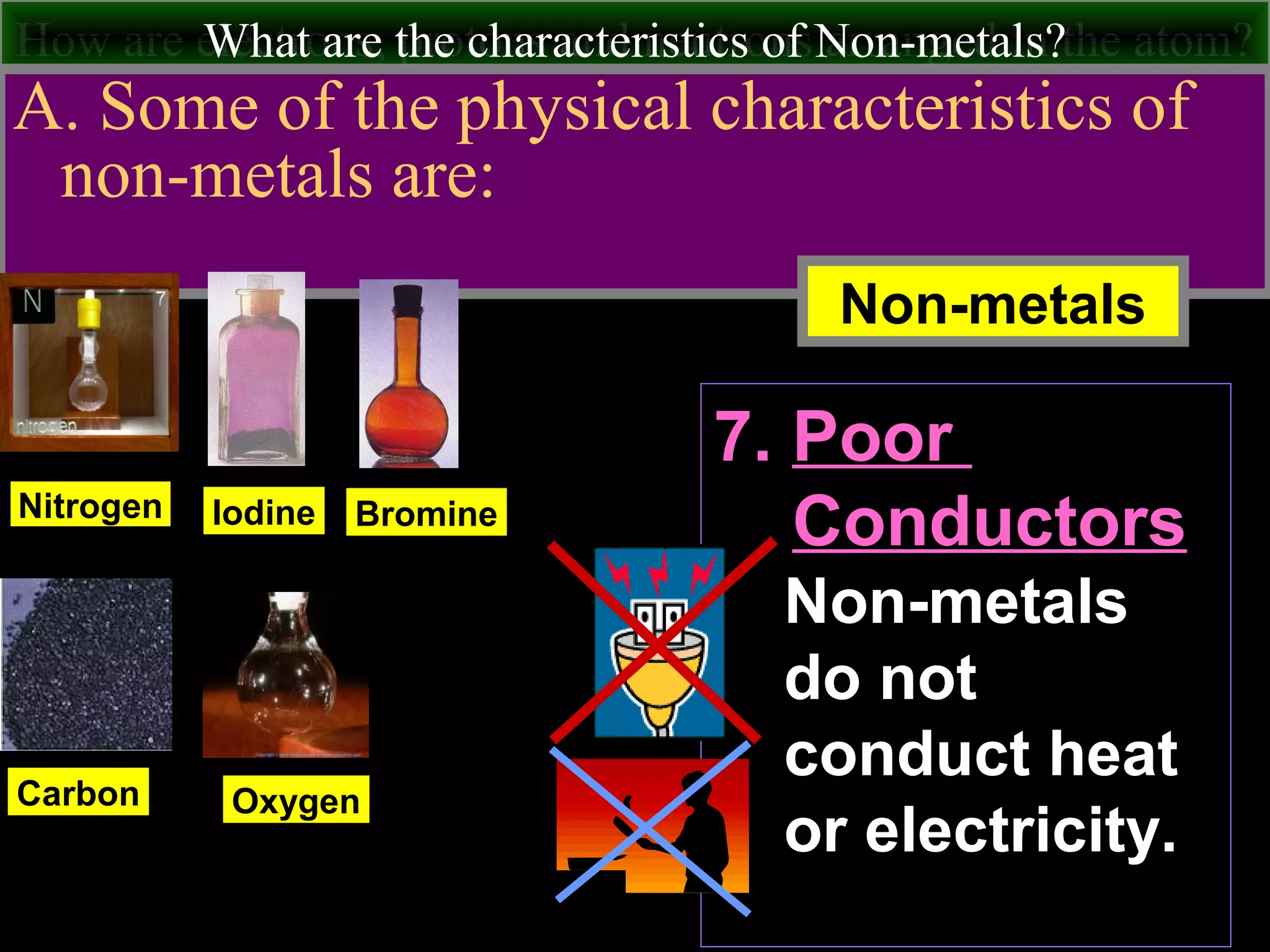
7. Poor
Conductors
Non-metals
do not
conduct heat
or electricity.
How are electrons, protons and neutrons arranged in the atom?What are the general types of elements in the periodic table?
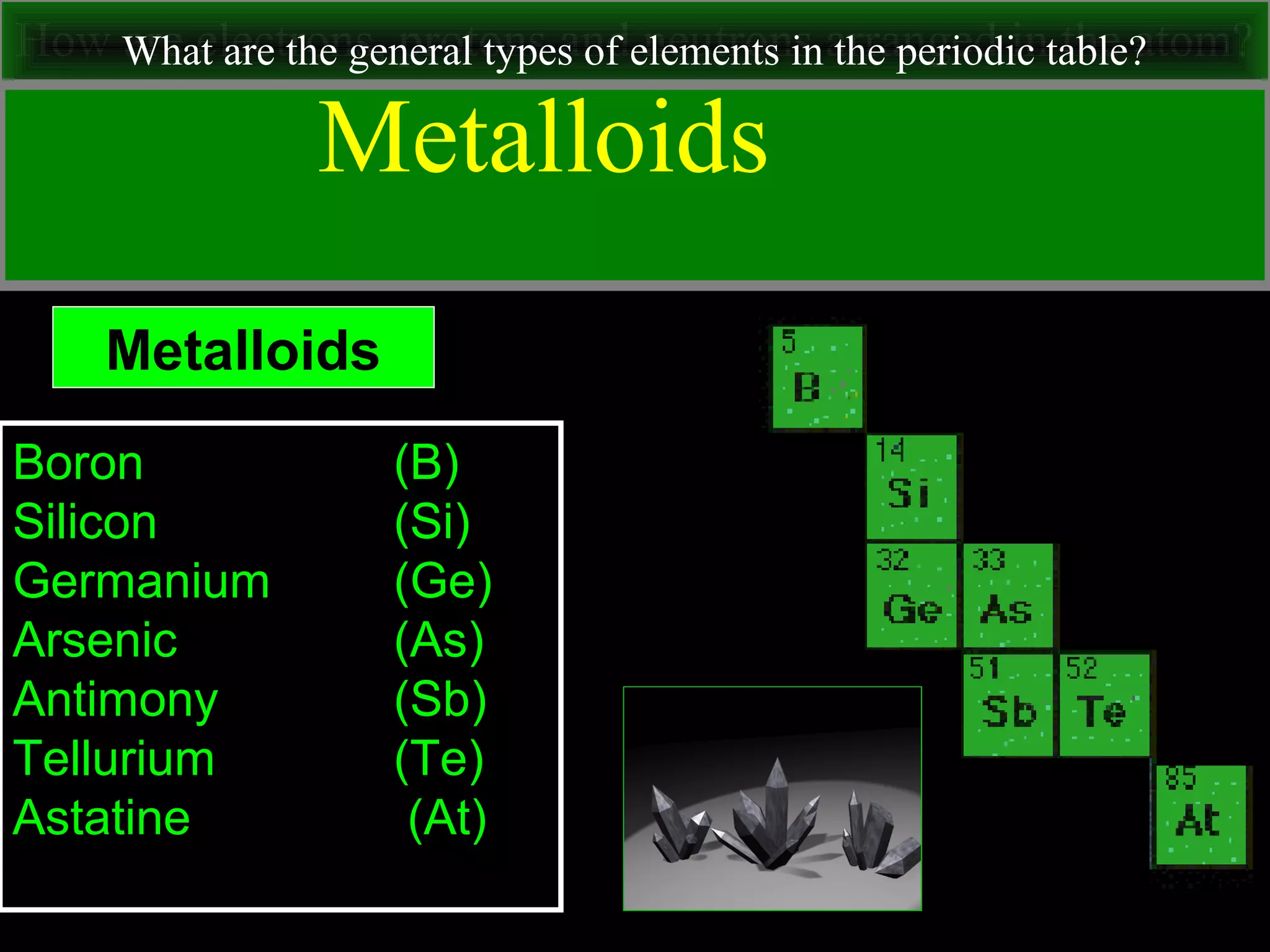
Boron (B)
Silicon (Si)
Germanium (Ge)
Arsenic (As)
Antimony (Sb)
Tellurium (Te)
Astatine (At)
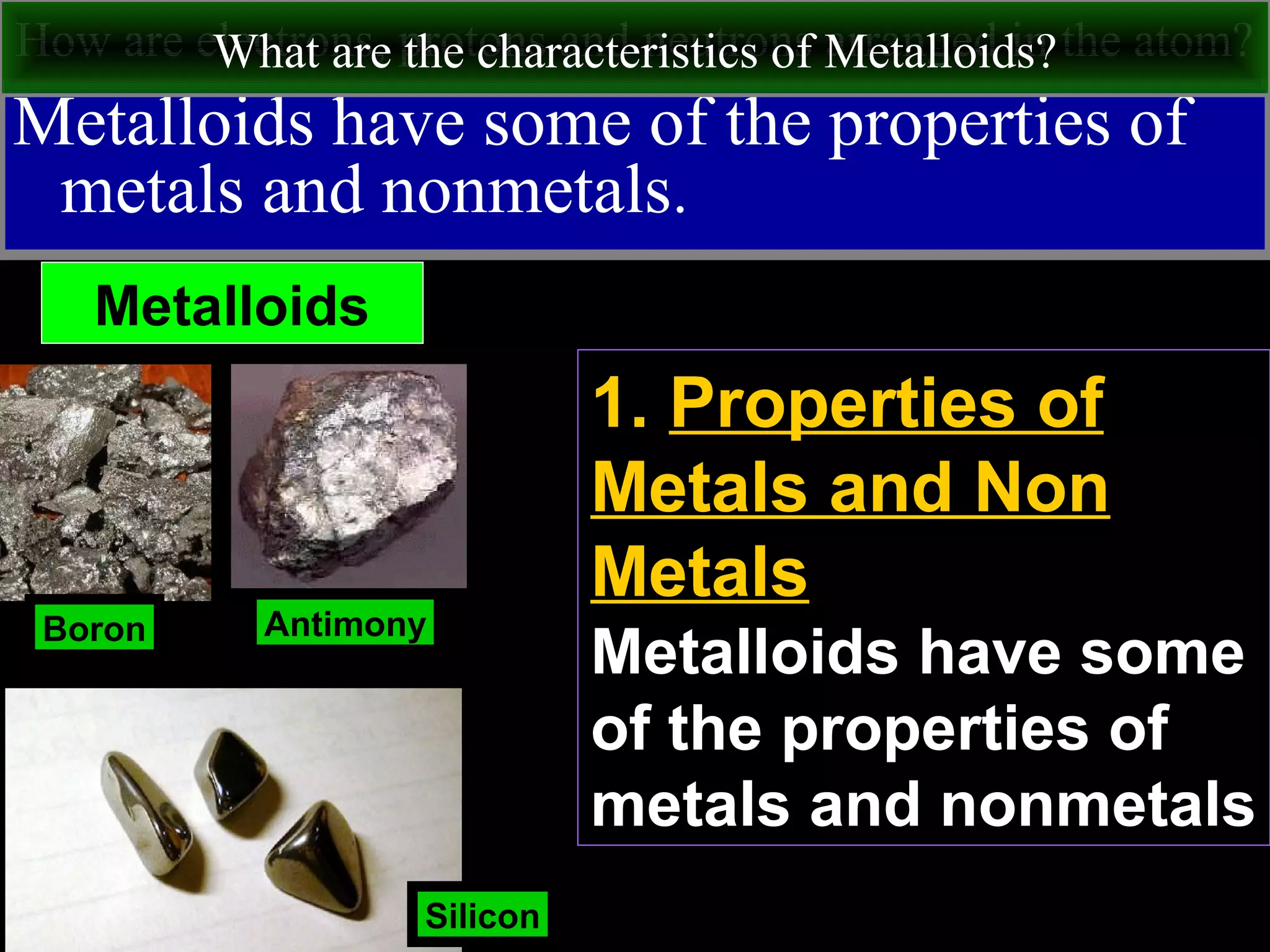
Metalloids
Metalloids
1. Properties of
Metals and Non
Metals
Metalloids have some
of the properties of
metals and nonmetals
How are electrons, protons and neutrons arranged in the atom?
Metalloids have some of the properties of
metals and nonmetals.
What are the characteristics of Metalloids?
Metalloids
Boron Antimony
Silicon
How are electrons, protons and neutrons arranged in the atom?
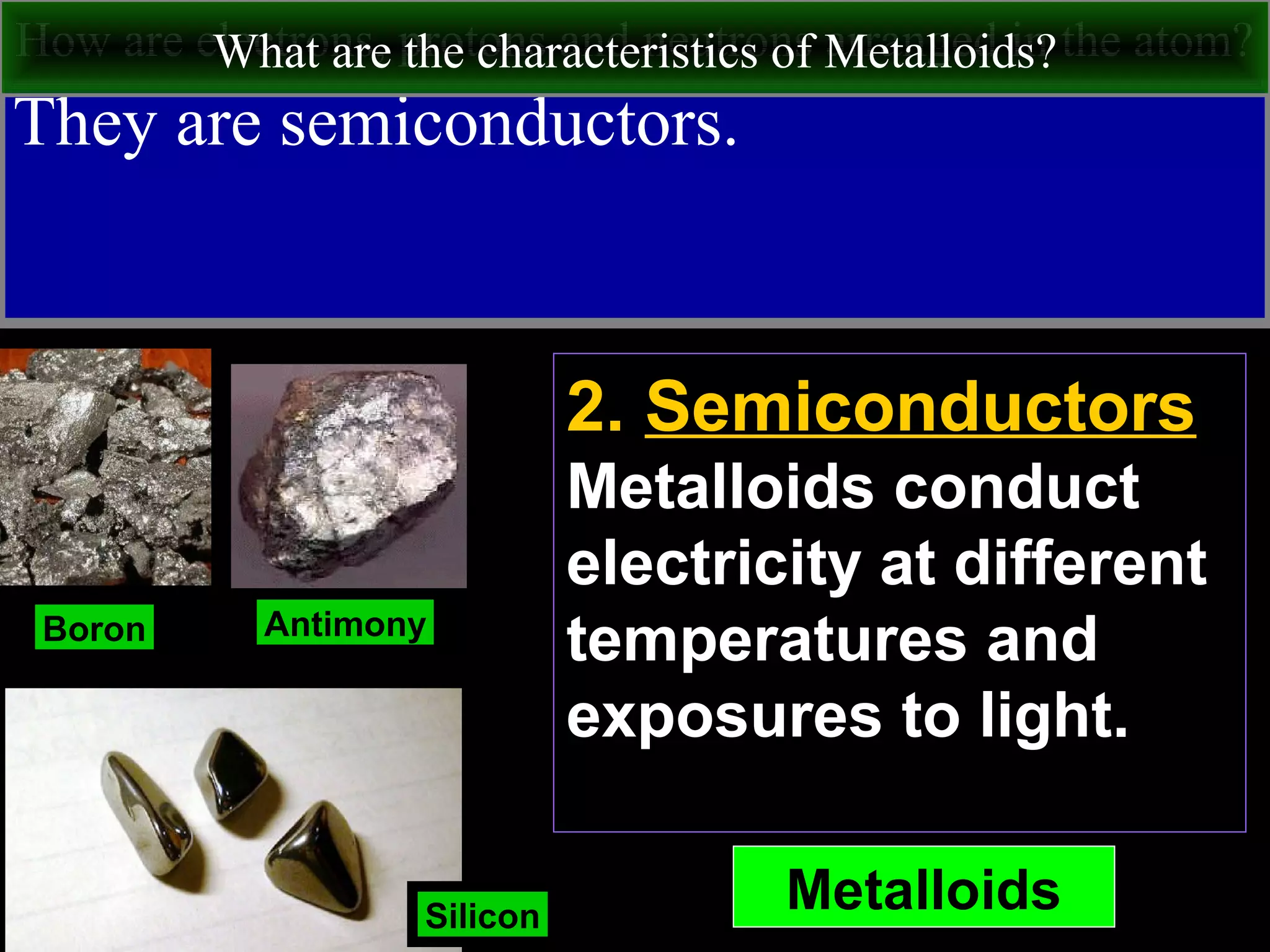
They are semiconductors.
What are the characteristics of Metalloids?
Metalloids
Boron Antimony
Silicon
2. Semiconductors
Metalloids conduct
electricity at different
temperatures and
exposures to light.
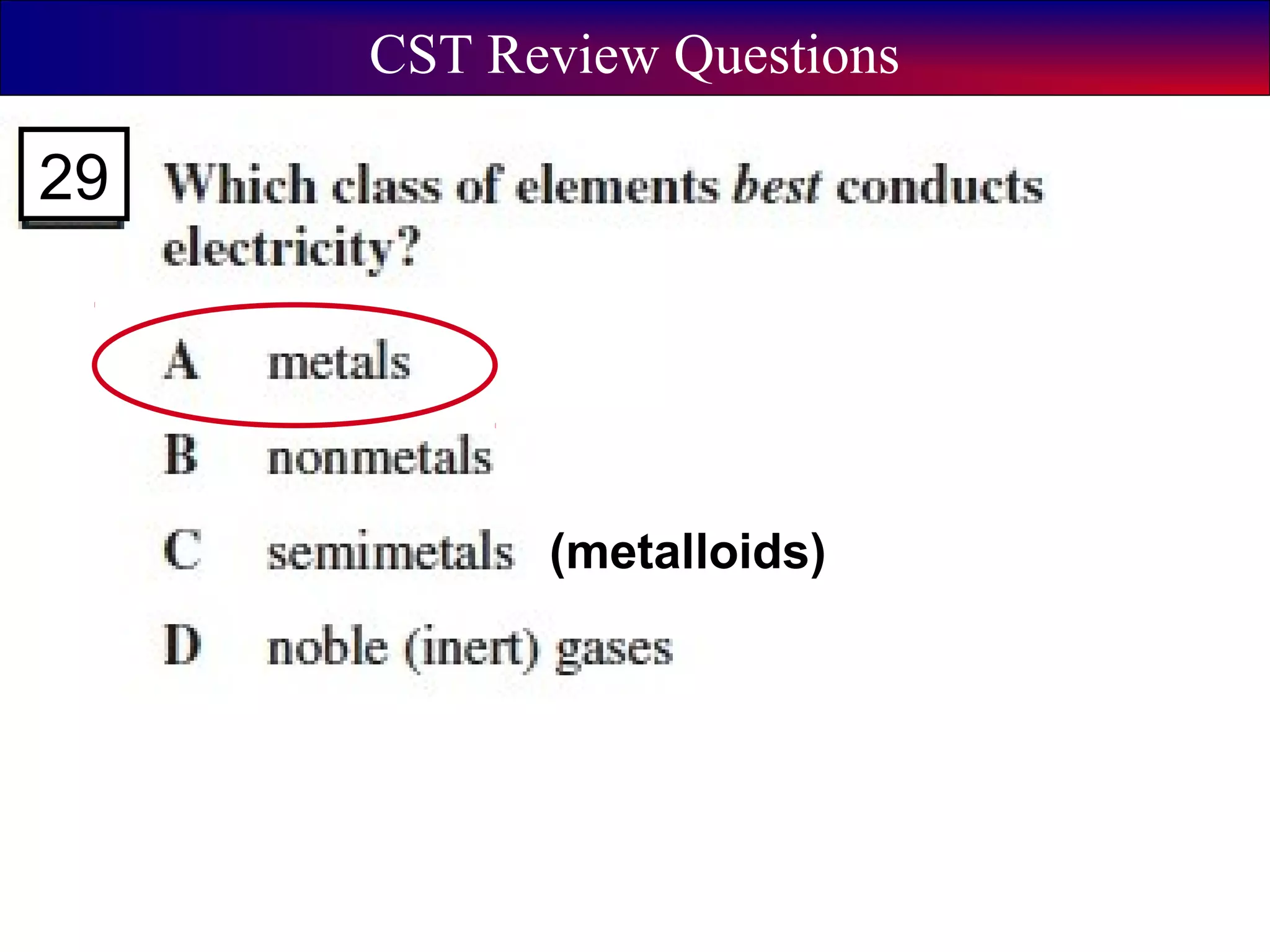
CST Review Questions
(metalloids)
29
CST Review Questions
(metalloids)
29
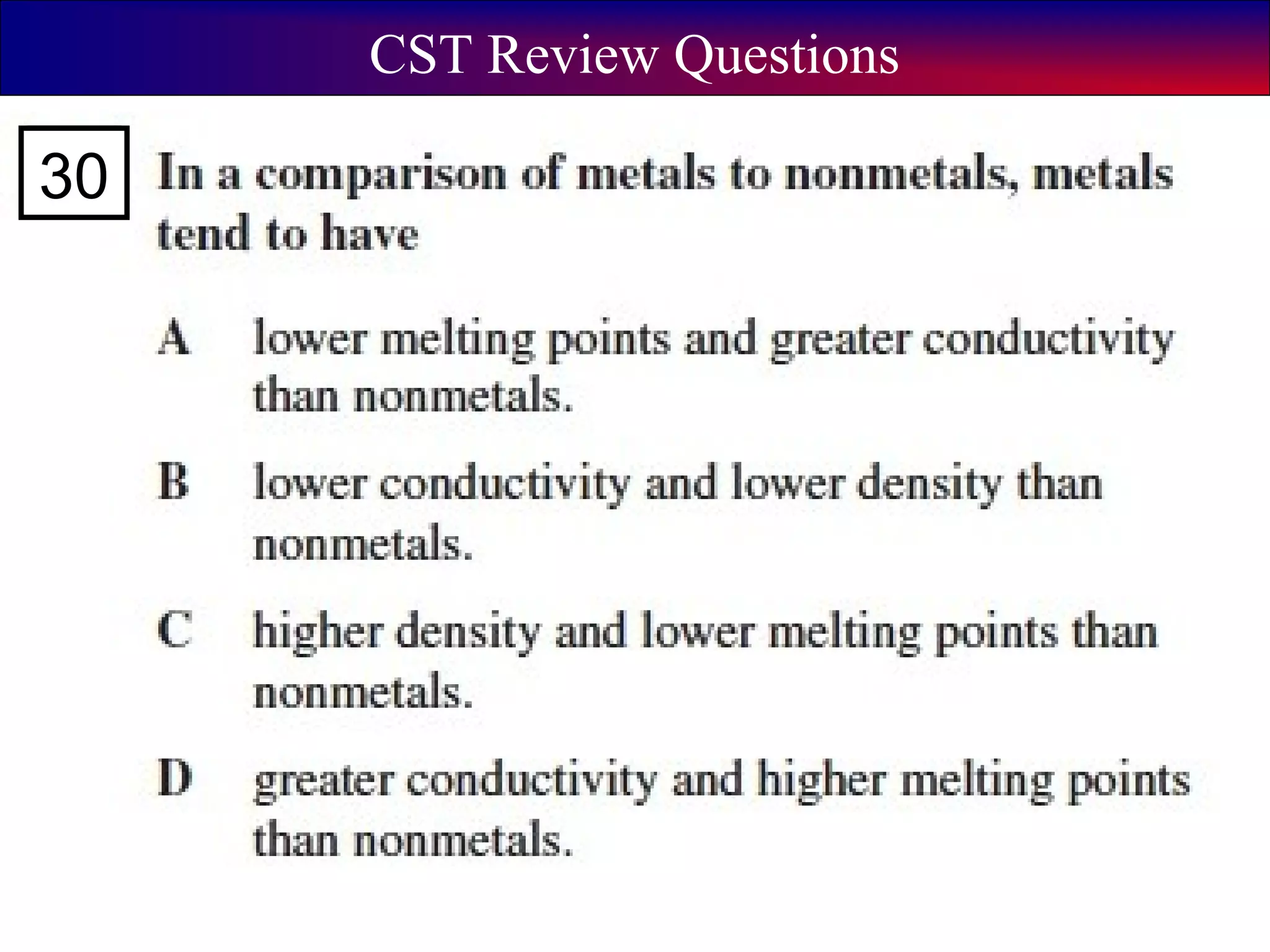
CST Review Questions
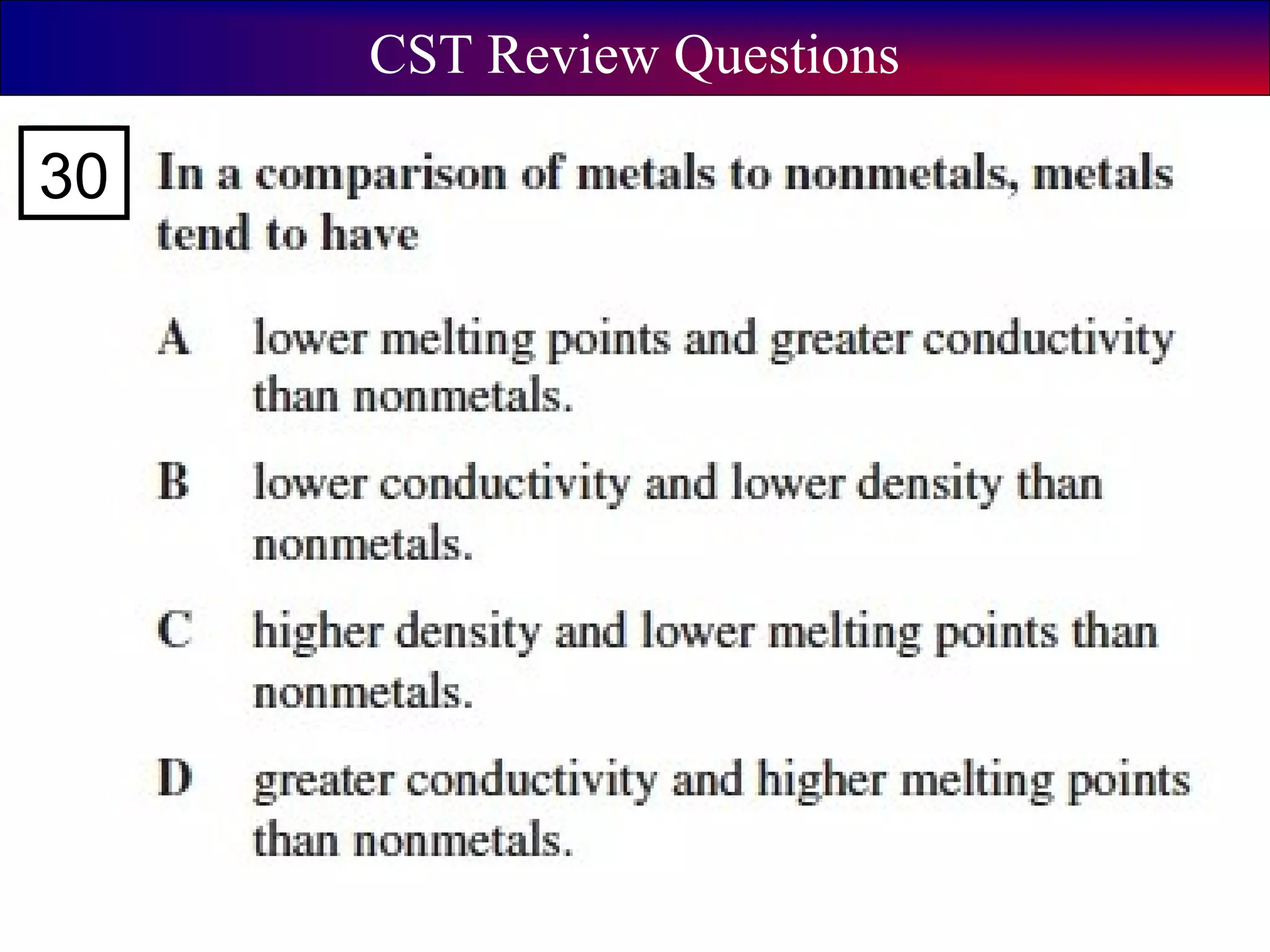
30
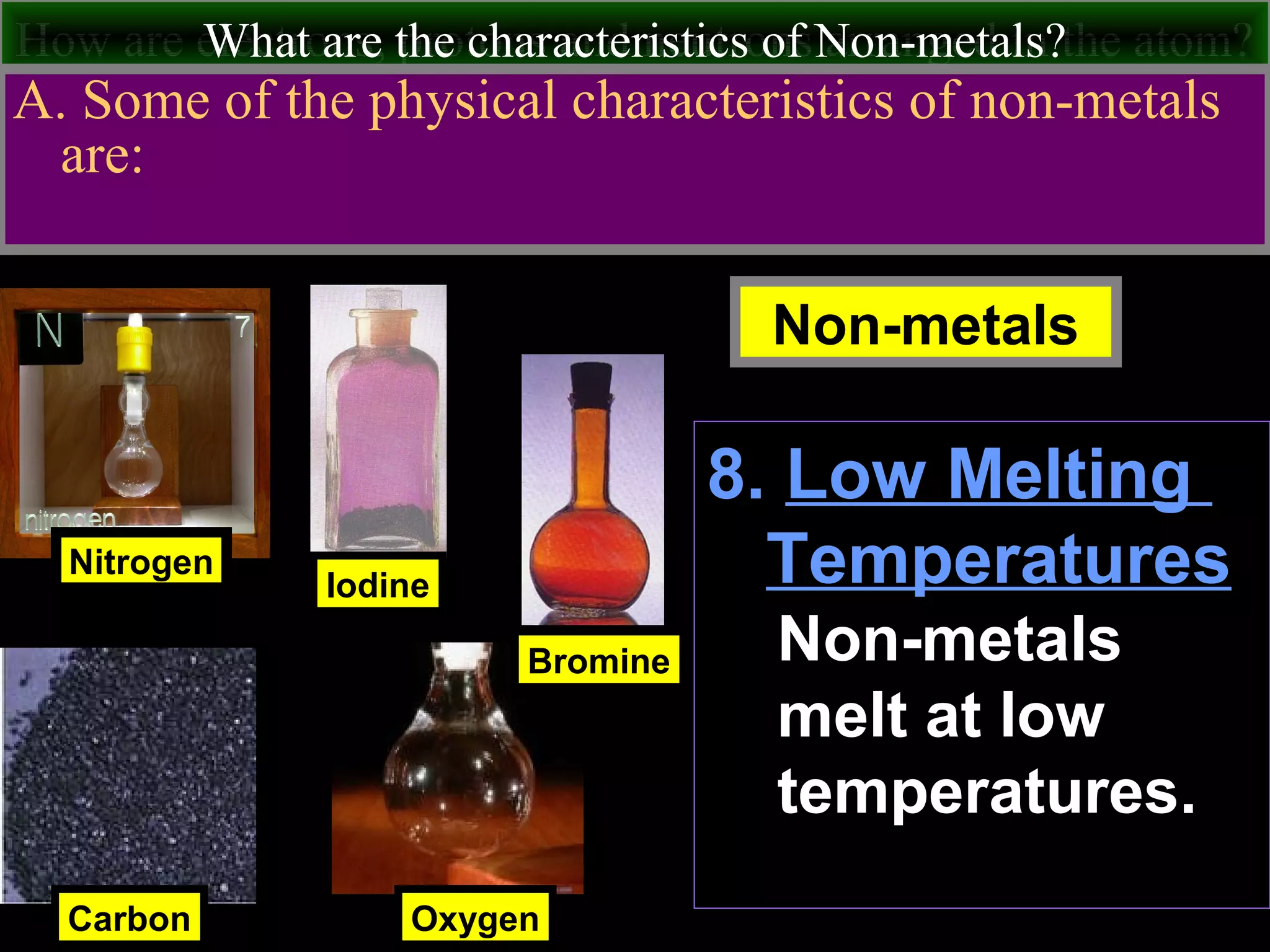
How are electrons, protons and neutrons arranged in the atom?What are the characteristics of Non-metals?
A. Some of the physical characteristics of non-metals
are:
Nitrogen
Carbon
Iodine
Non-metals
Oxygen
Bromine
8. Low Melting
Temperatures
Non-metals
melt at low
temperatures.
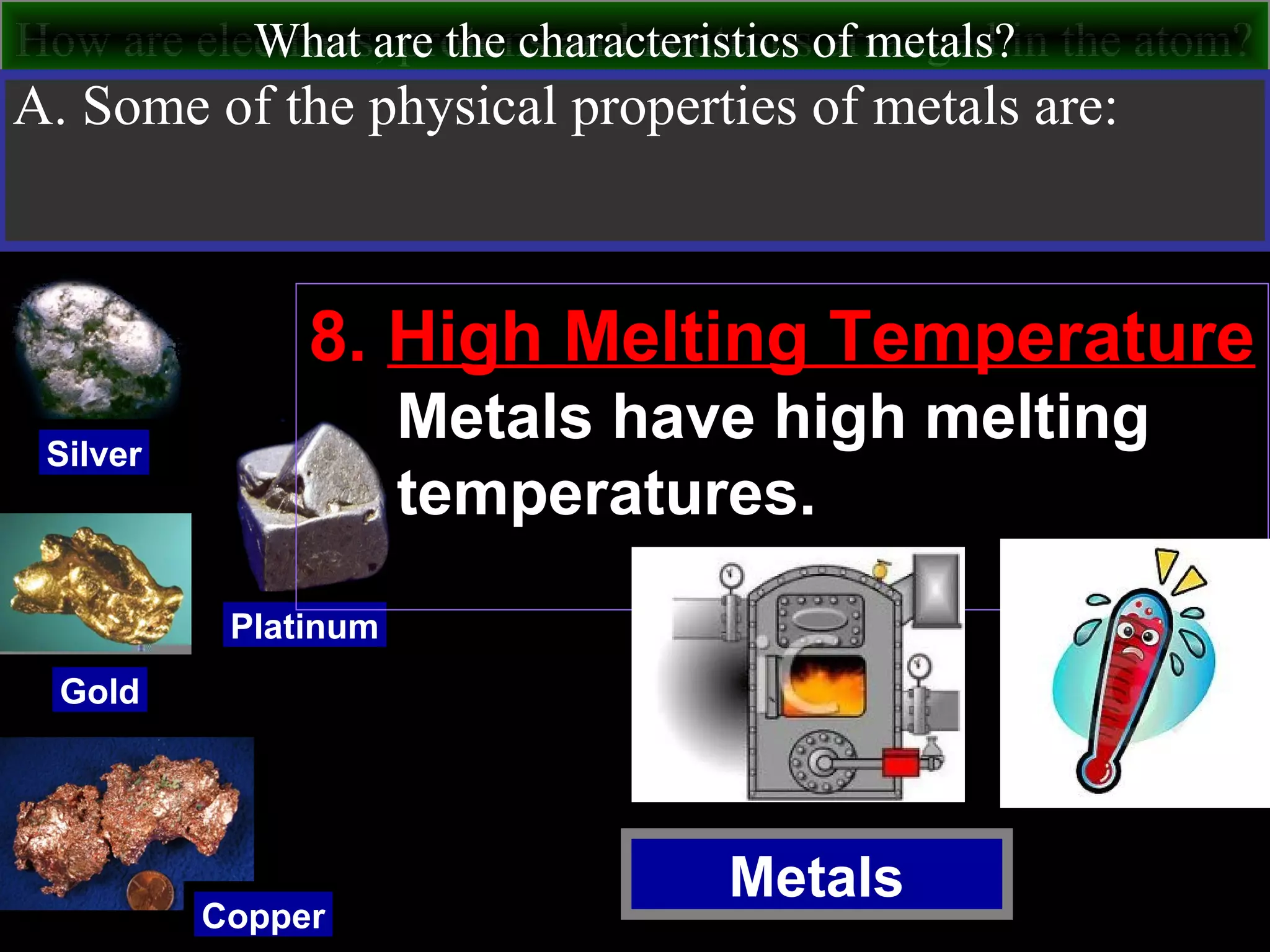
How are electrons, protons and neutrons arranged in the atom?What are the characteristics of metals?
Metals
Silver
Gold
Copper
Platinum
A. Some of the physical properties of metals are:
8. High Melting Temperature
Metals have high melting
temperatures.
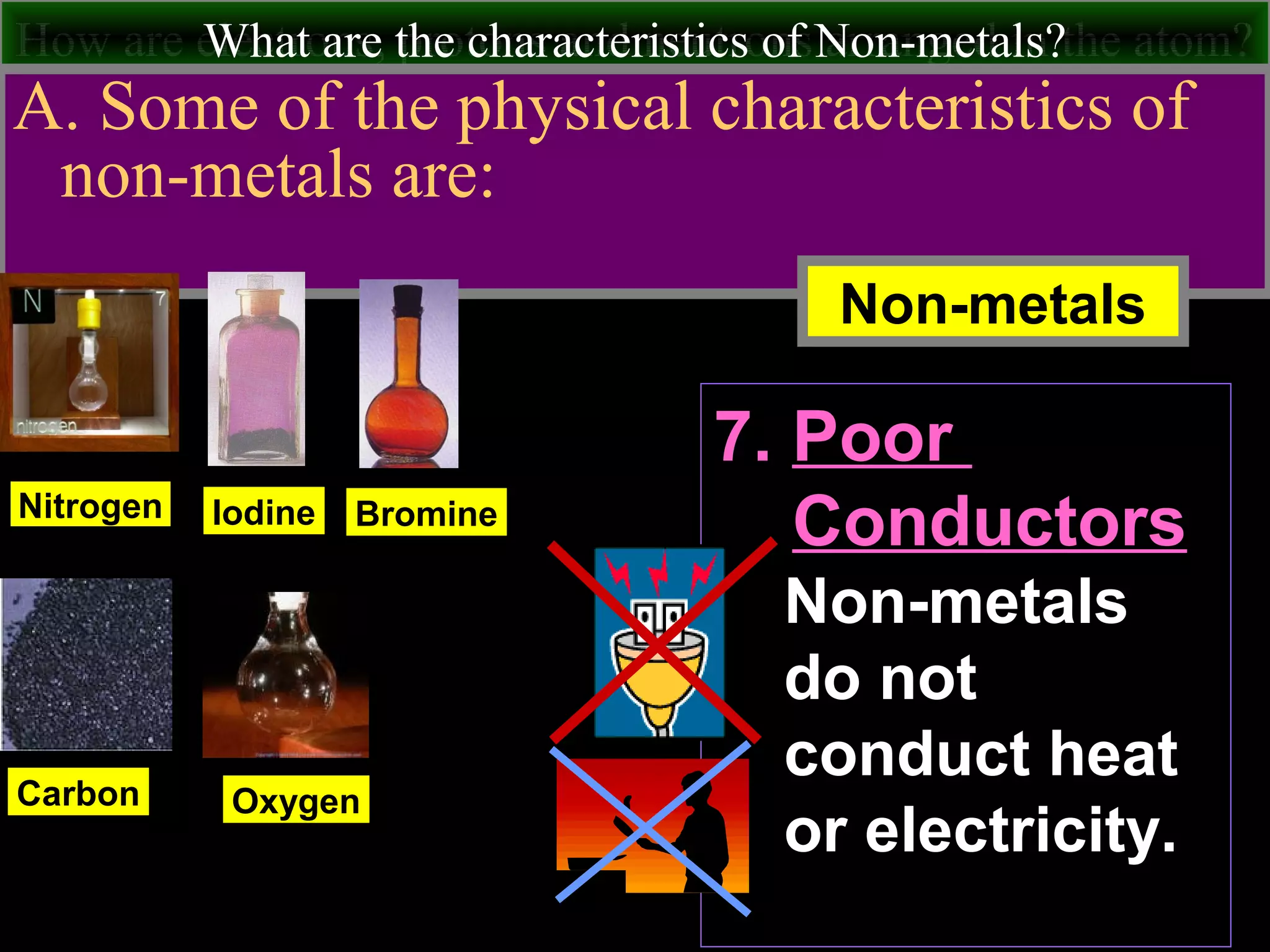
How are electrons, protons and neutrons arranged in the atom?What are the characteristics of Non-metals?
A. Some of the physical characteristics of
non-metals are:
Nitrogen
Carbon
Iodine
Non-metals
Oxygen
Bromine
7. Poor
Conductors
Non-metals
do not
conduct heat
or electricity.
How are electrons, protons and neutrons arranged in the atom?What are the characteristics of metals?
Metals
Silver
Gold
Copper
Platinum
A. Some of the physical properties of
metals are:
5. Conduct Heat
Metals conduct heat.
How are electrons, protons and neutrons arranged in the atom?What are the characteristics of metals?
Metals
Silver
Gold
Copper
Platinum
A. Some of the physical properties of
metals are:
6. Conduct Electricity
Metals conduct
electricity.
CST Review Questions
30
CST Review Questions
30
CST Review
Atoms and
Atomic
Structure
BrainPop
Atoms
Brain Pop
BrainPop
Atomic Model
Brain Pop
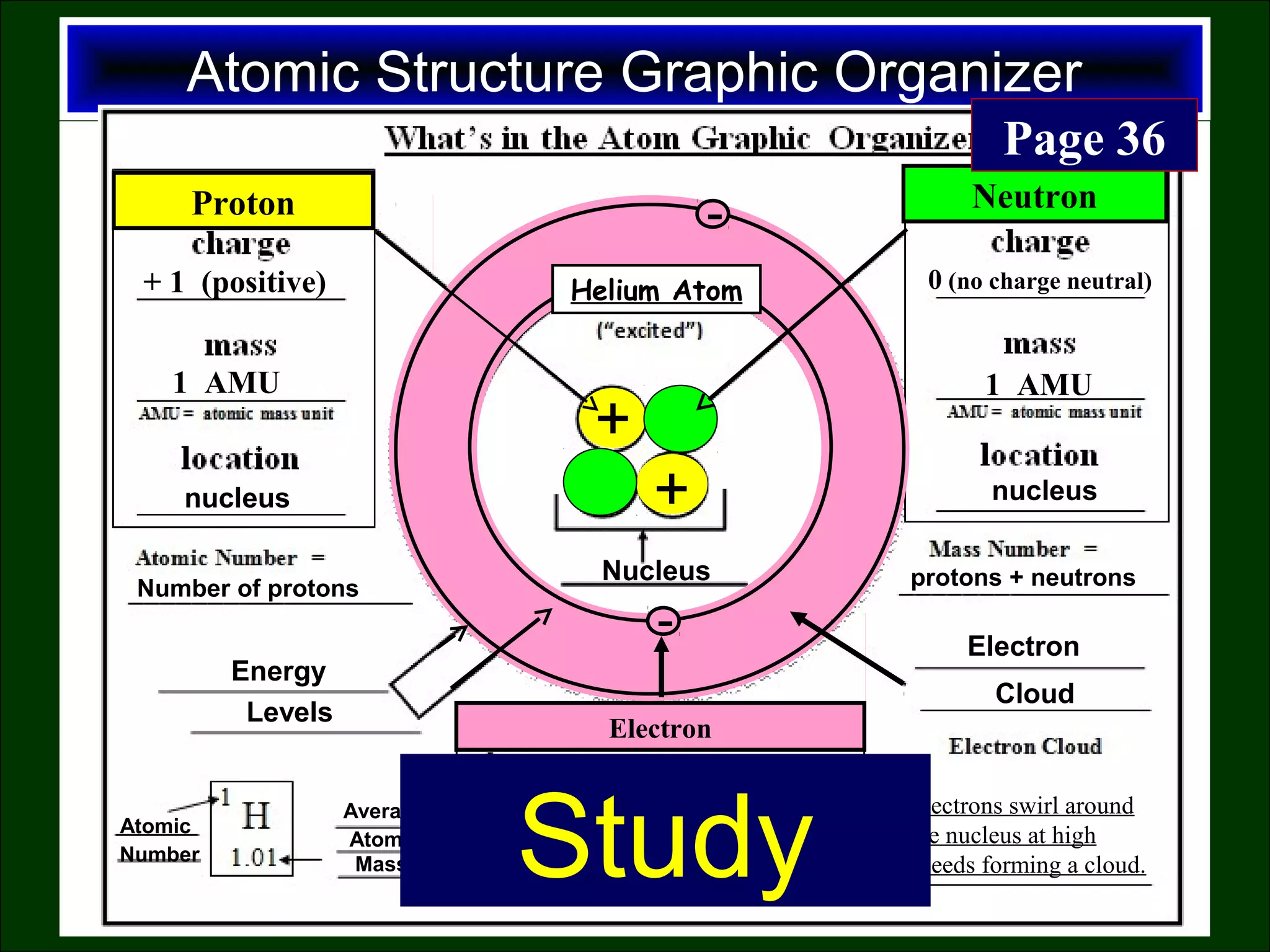
Atomic Structure Graphic Organizer
+
+
Proton
Electron
Nucleus
-
-
Energy
Levels
Neutron
-
-
Helium Atom
Electron
Cloud
+ 1 (positive) 0 (no charge neutral)
- 1 (negative)
1 AMU 1 AMU
0 AMU Electrons swirl around
the nucleus at high
speeds forming a cloud.
Far from the nucleus
Number of protons
nucleus nucleus
Number
Atomic
Average
Mass
Atomic
protons + neutrons
Study
Page 36
10. What is the reference point?
CST Review Questions
21
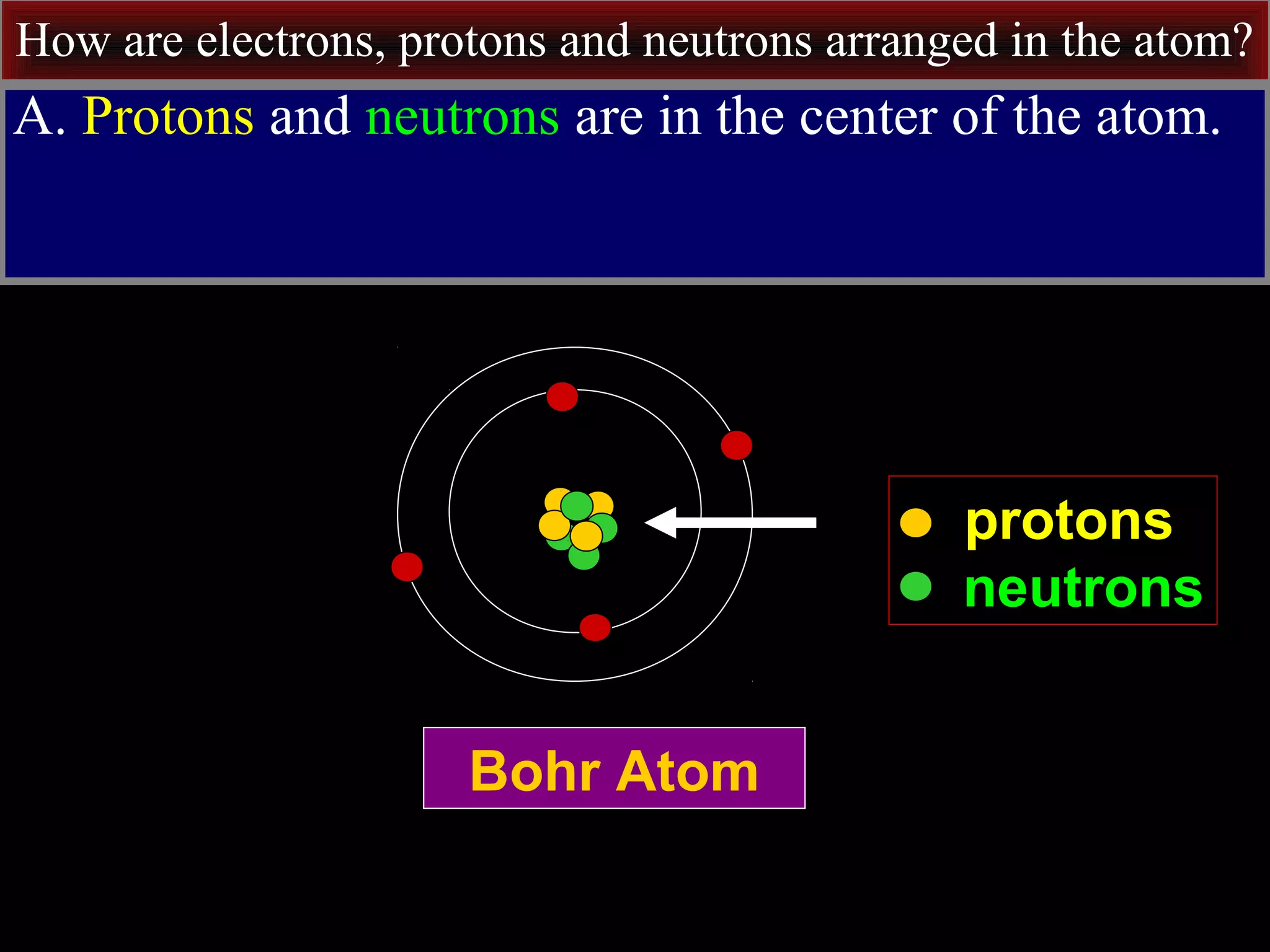
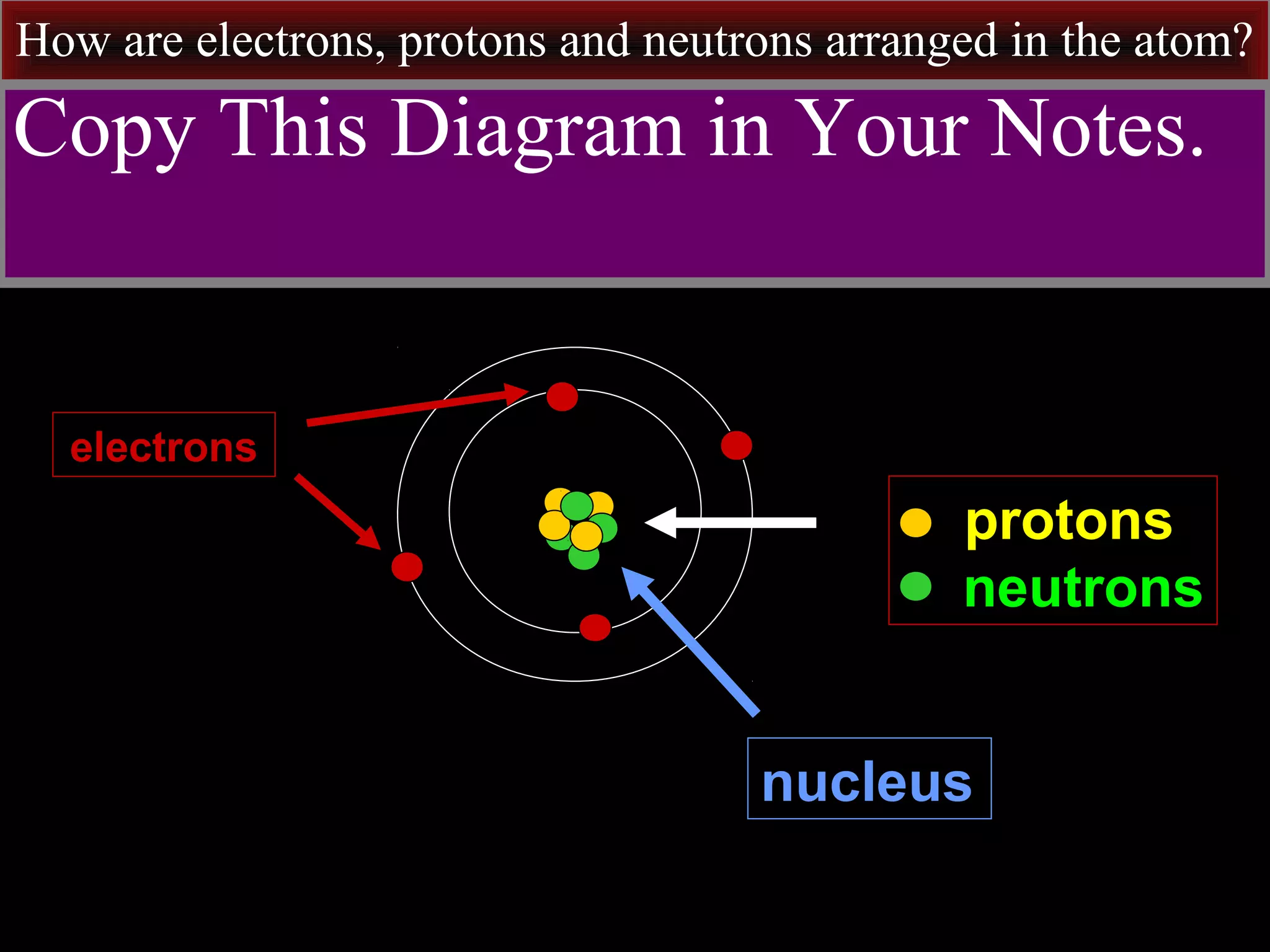
How are electrons, protons and neutrons arranged in the atom?
A. Protons and neutrons are in the center of the atom.
Bohr Atom
protons
neutrons
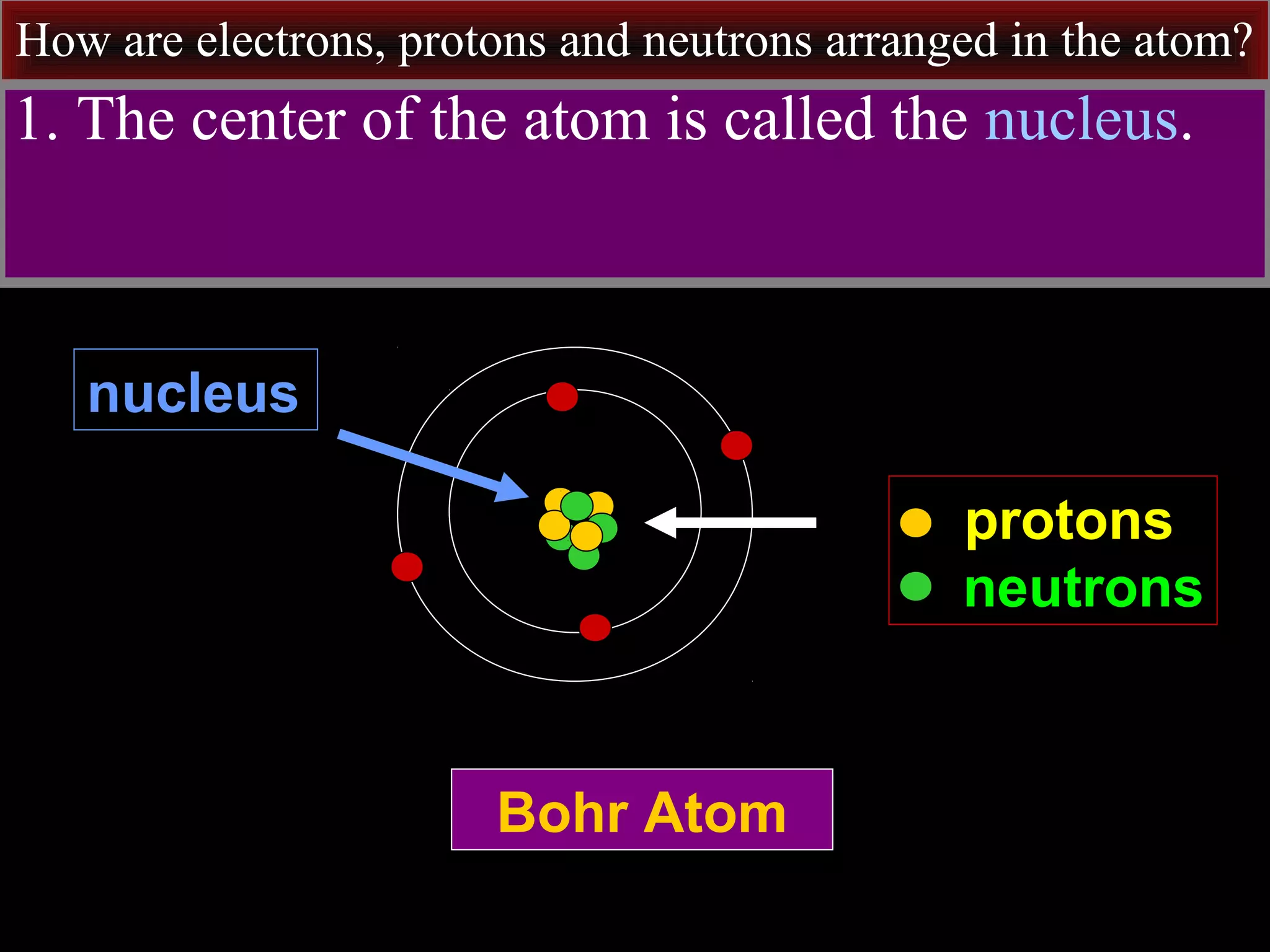
How are electrons, protons and neutrons arranged in the atom?
Bohr Atom
protons
neutrons
nucleus
1. The center of the atom is called the nucleus.
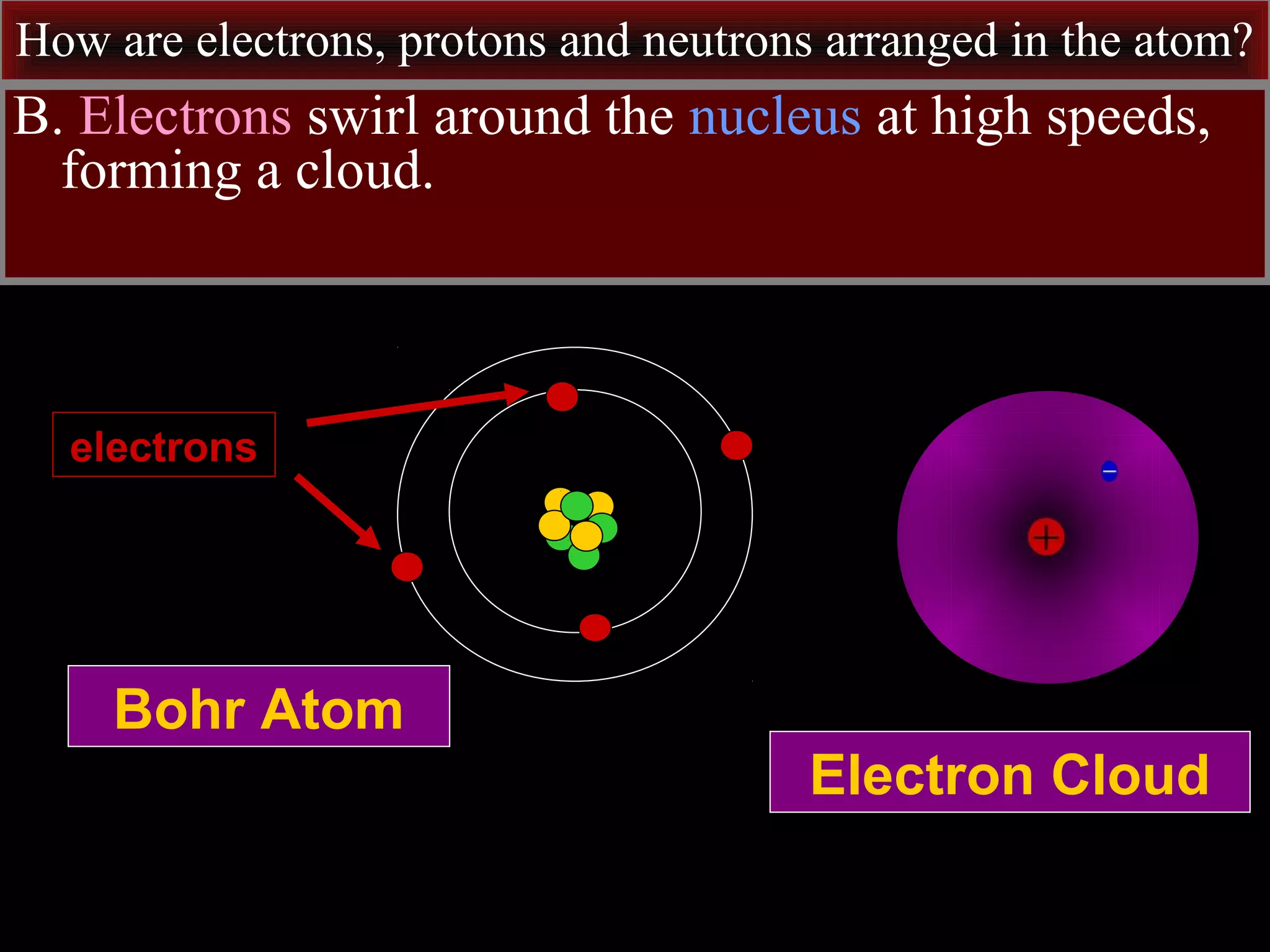
How are electrons, protons and neutrons arranged in the atom?
B. Electrons swirl around the nucleus at high speeds,
forming a cloud.
Bohr Atom
electrons
Electron Cloud
How are electrons, protons and neutrons arranged in the atom?
protons
neutrons
nucleus
Copy This Diagram in Your Notes.
electrons
10. What is the reference point?
CST Review Questions
21
10. What is the reference point?
CST Review Questions
21
CST Review Questions
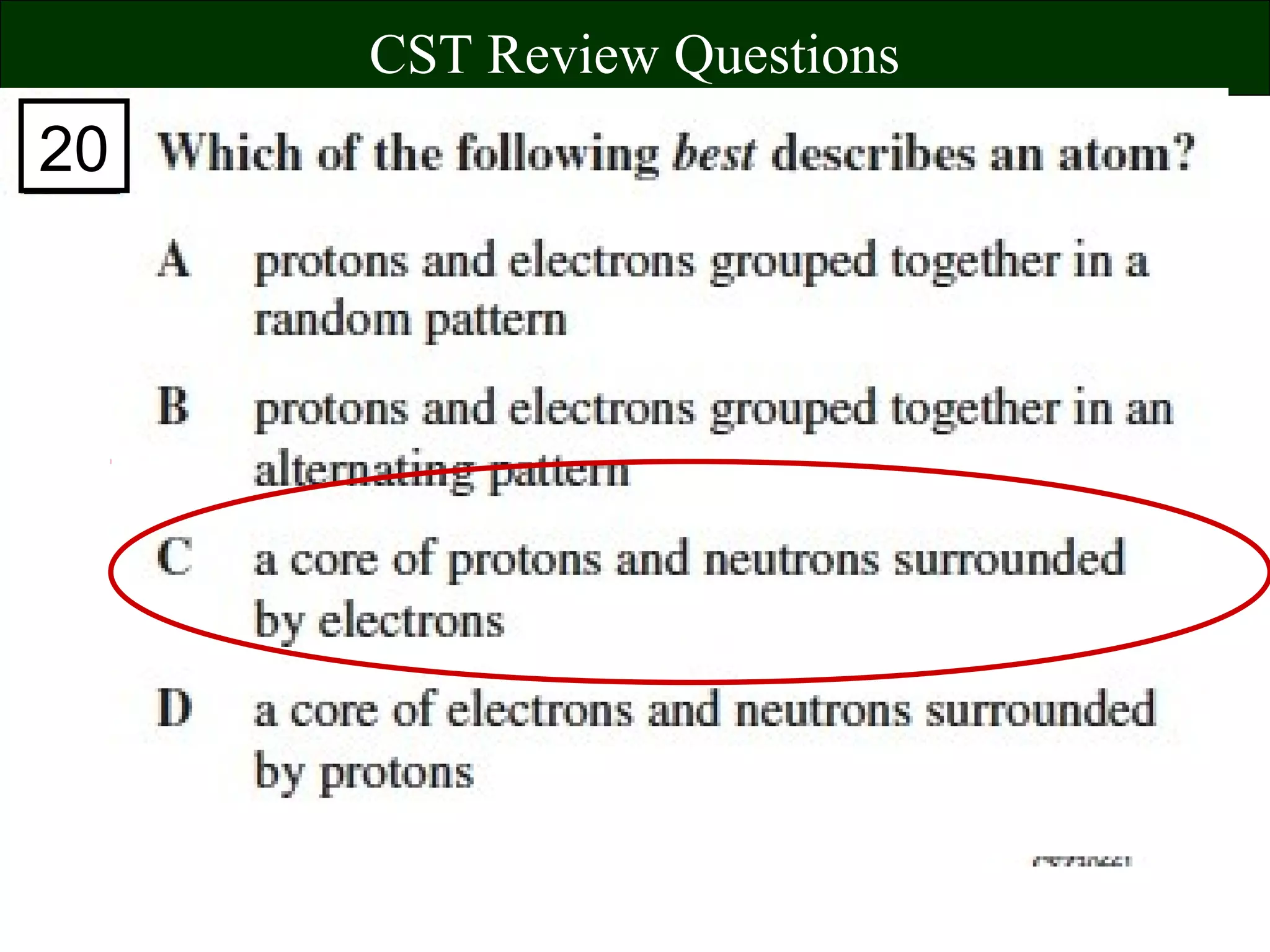
20
CST Review Questions
20
CST Review Questions
20
CST Review
Isotopes
BrainPop
Isotopes
Brain Pop
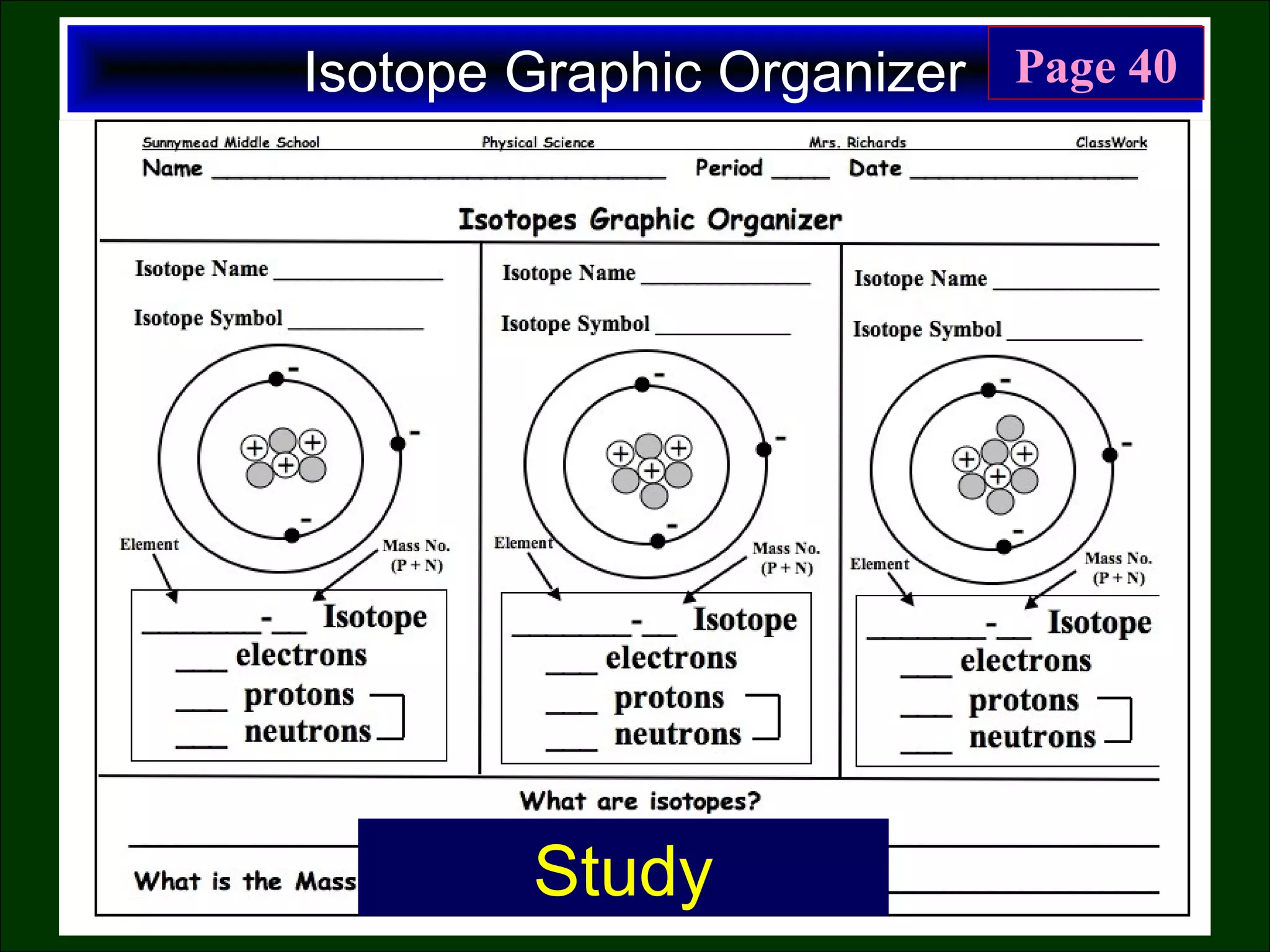
Isotope Graphic Organizer Page 40
Study
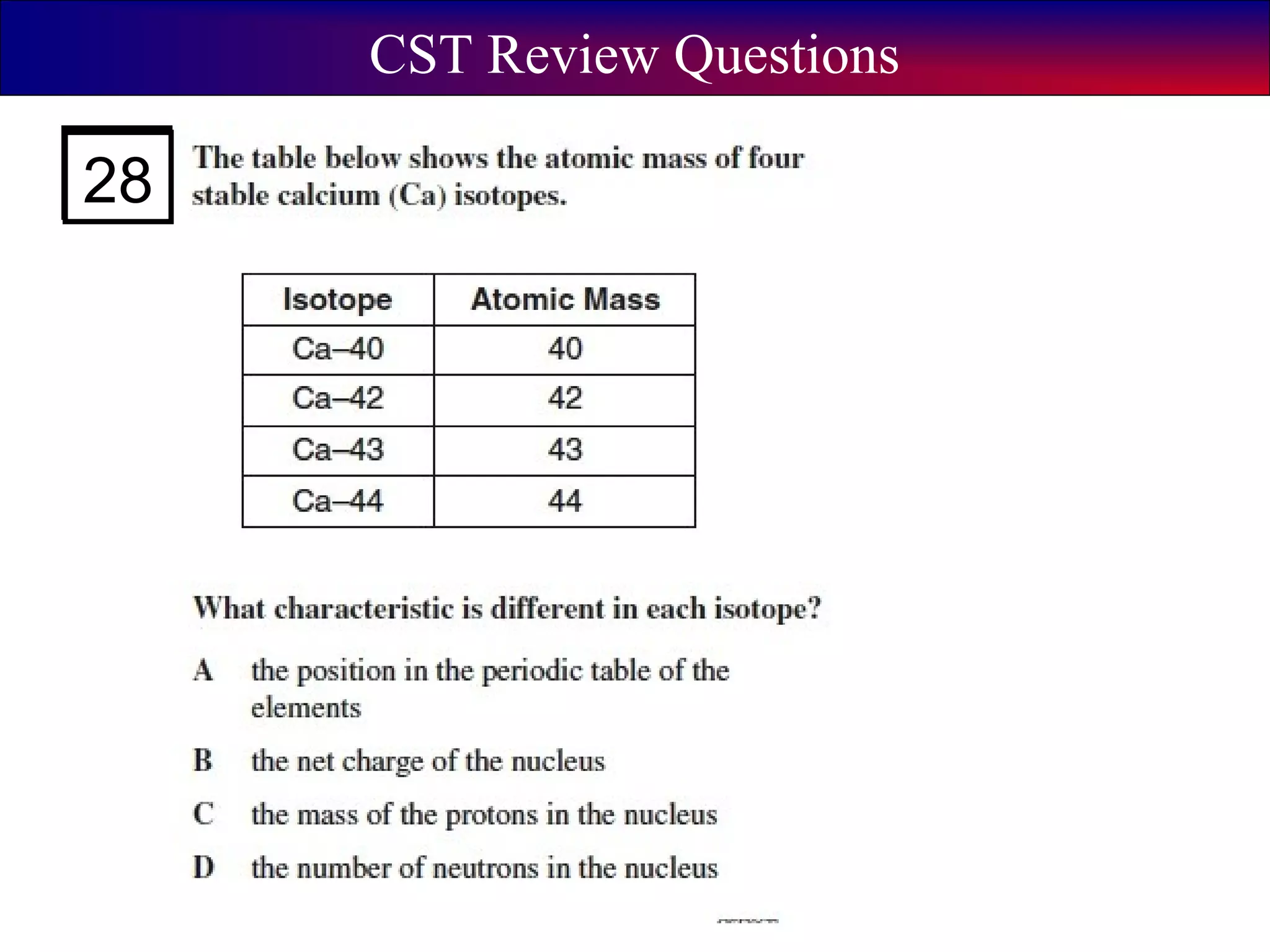
CST Review Questions
1728
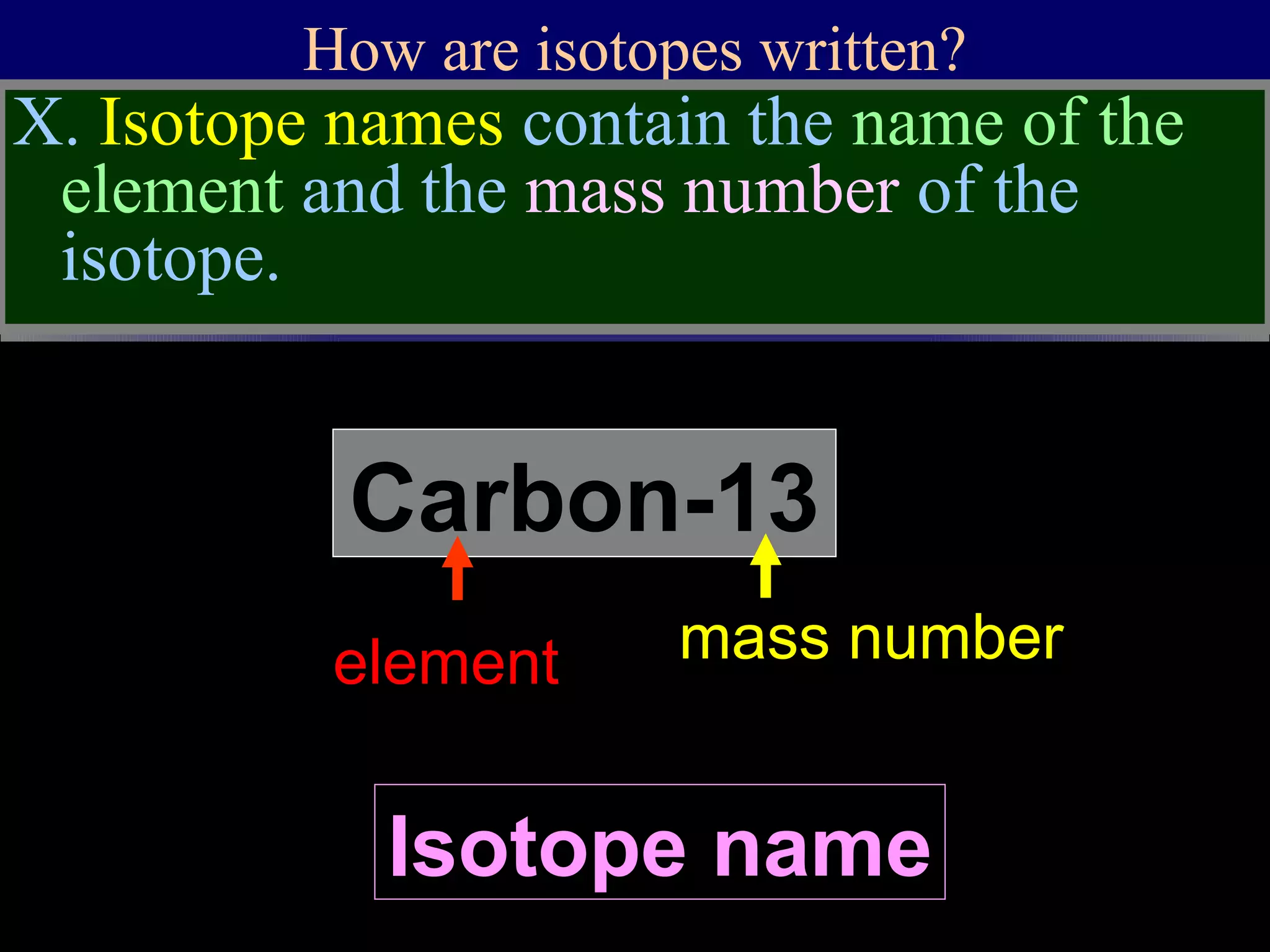
How are isotopes written?
Carbon-13
X. Isotope names contain the name of the
element and the mass number of the
isotope.
Isotope name
element mass number
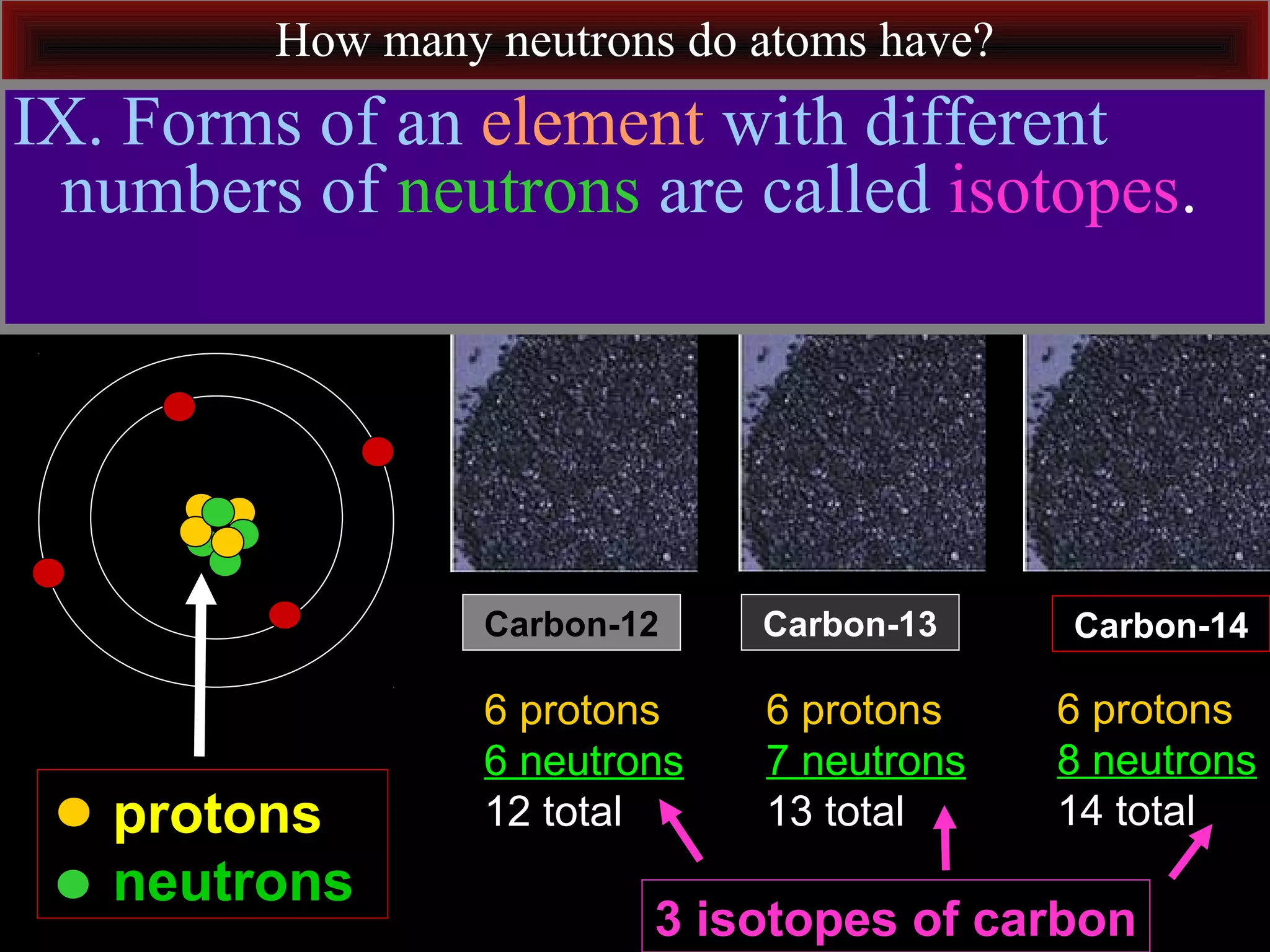
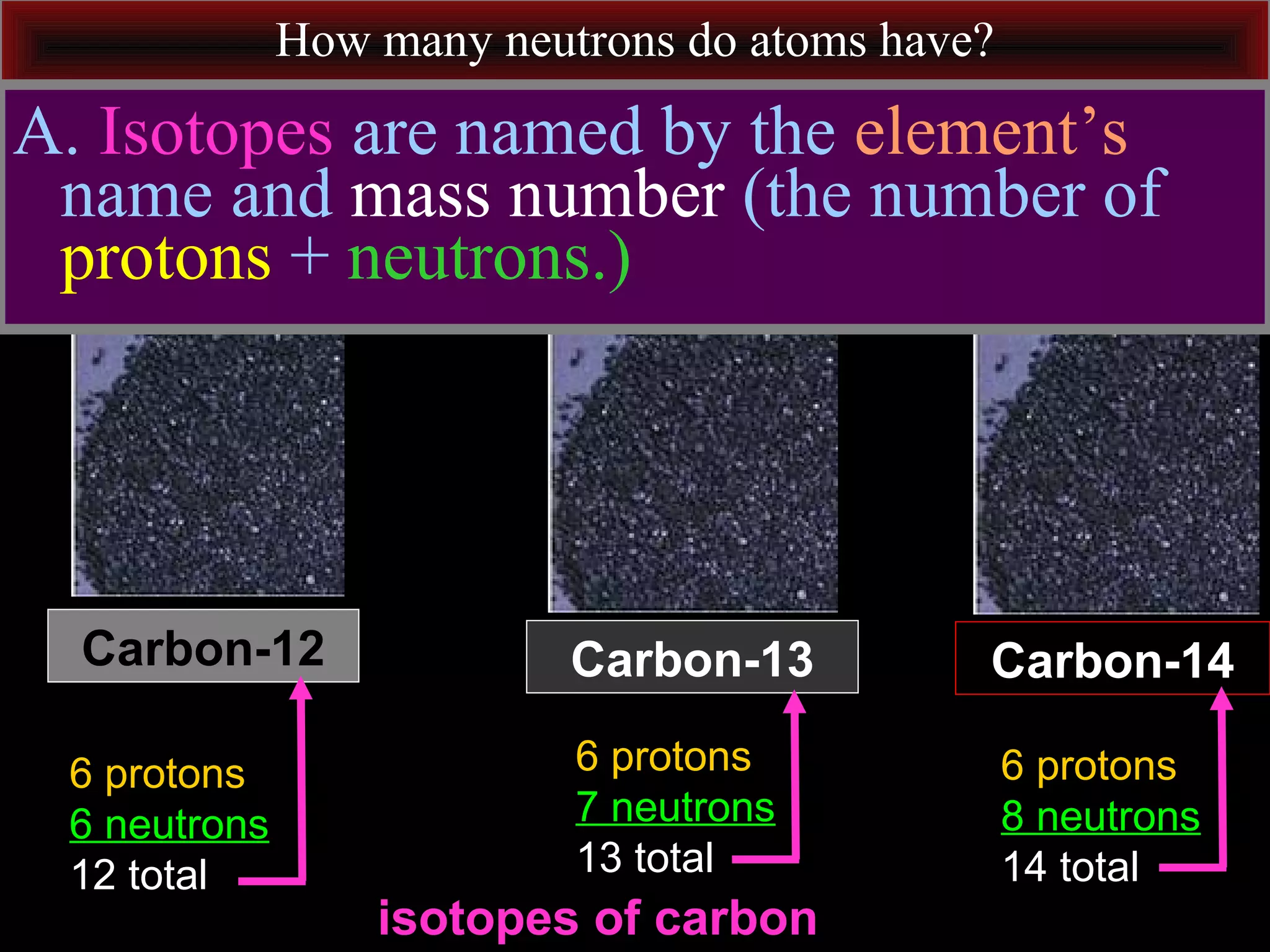
How many neutrons do atoms have?
protons
neutrons
Carbon-14
6 protons
8 neutrons
14 total
Carbon-13
6 protons
7 neutrons
13 total
Carbon-12
6 protons
6 neutrons
12 total
IX. Forms of an element with different
numbers of neutrons are called isotopes.
3 isotopes of carbon
How many neutrons do atoms have?
Carbon-14
6 protons
8 neutrons
14 total
Carbon-13
6 protons
7 neutrons
13 total
Carbon-12
6 protons
6 neutrons
12 total
A. Isotopes are named by the element’s
name and mass number (the number of
protons + neutrons.)
isotopes of carbon
CST Review Questions
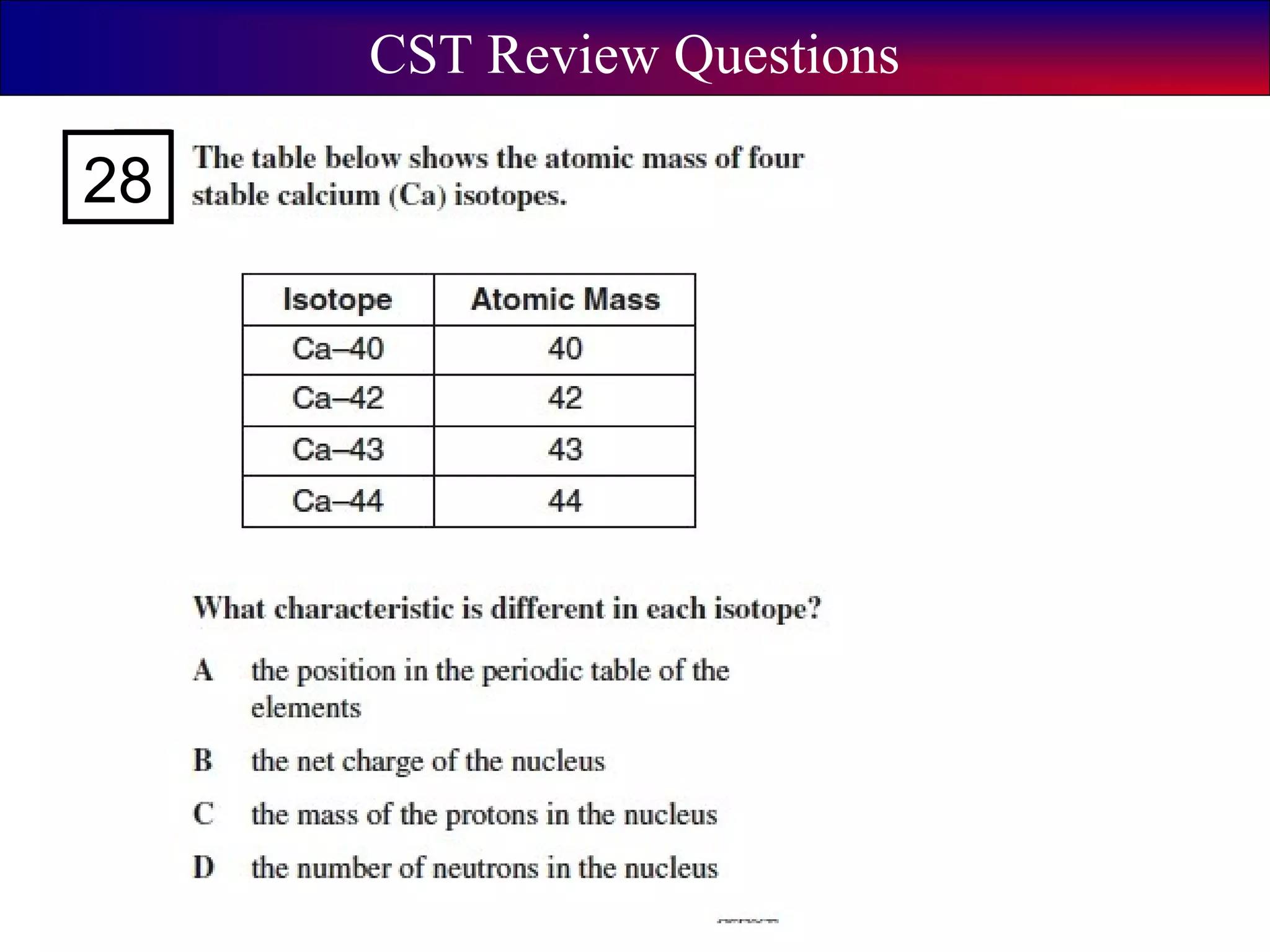
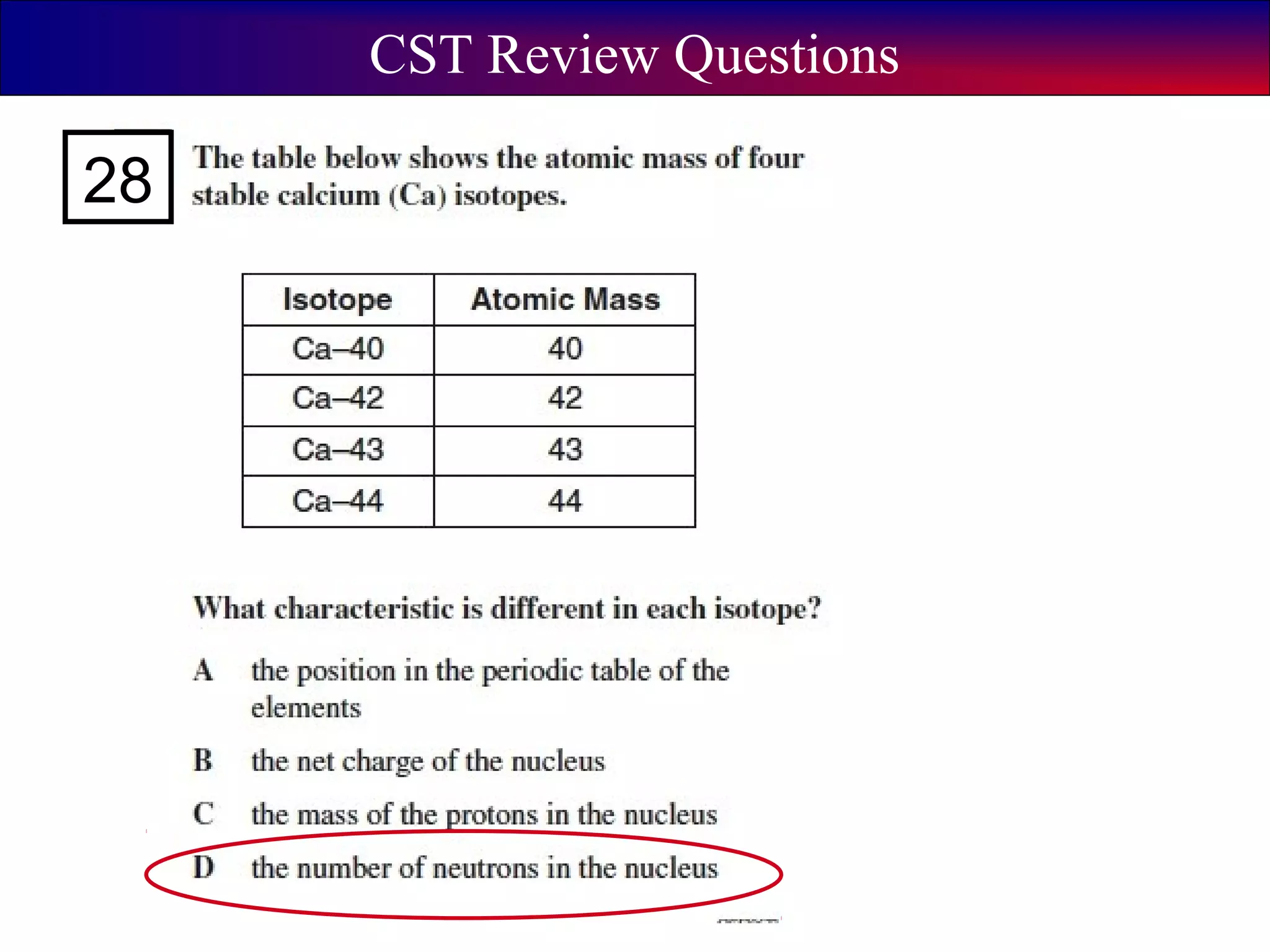
28
CST Review Questions
28
CST Review
Compounds
and Chemical
Reactions
BrainPop
Chemical
Equations
Brain Pop
BrainPop
Compounds and
Mixtures
Brain Pop
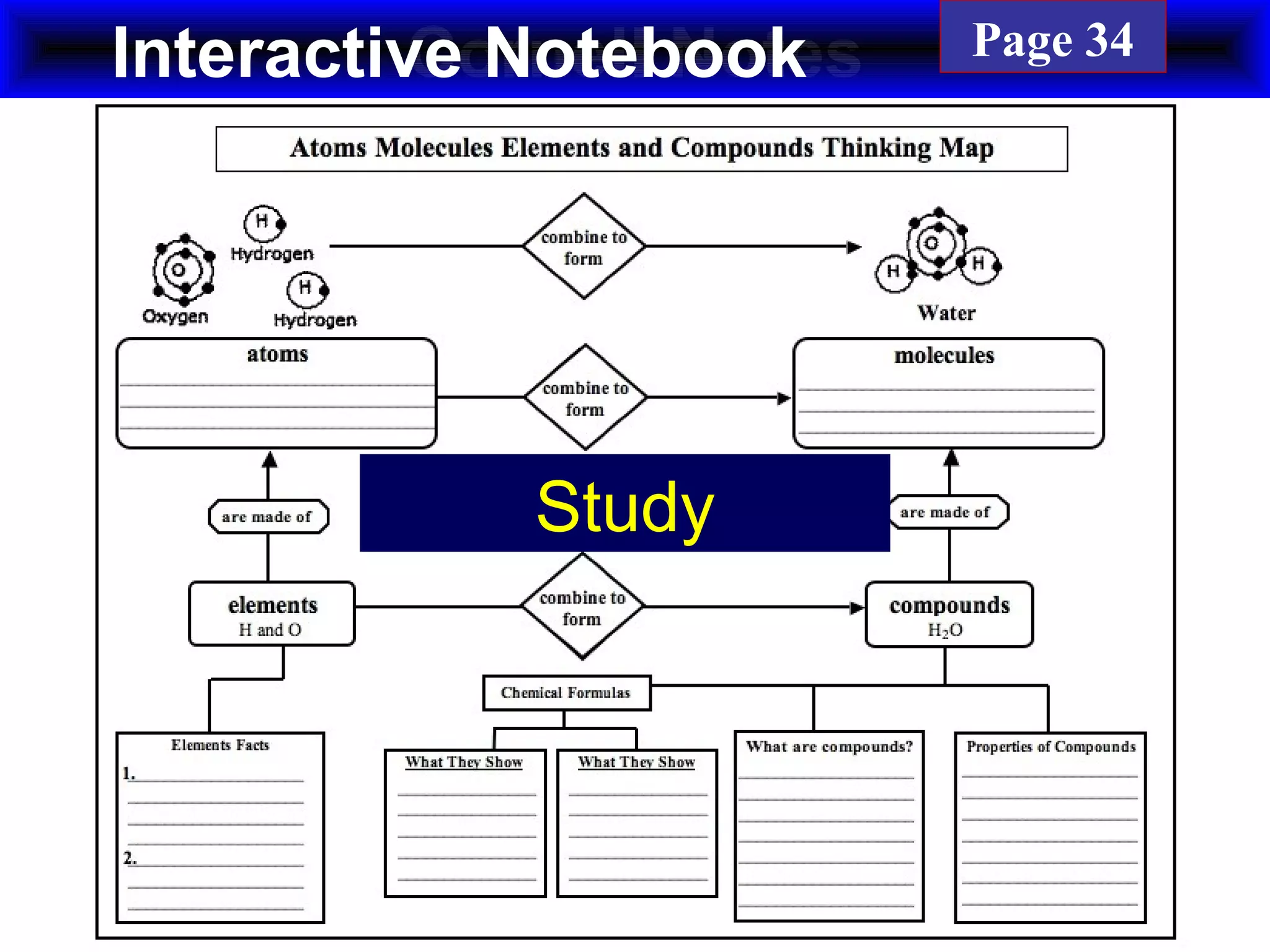
Cornell NotesInteractive Notebook Page 34
Study
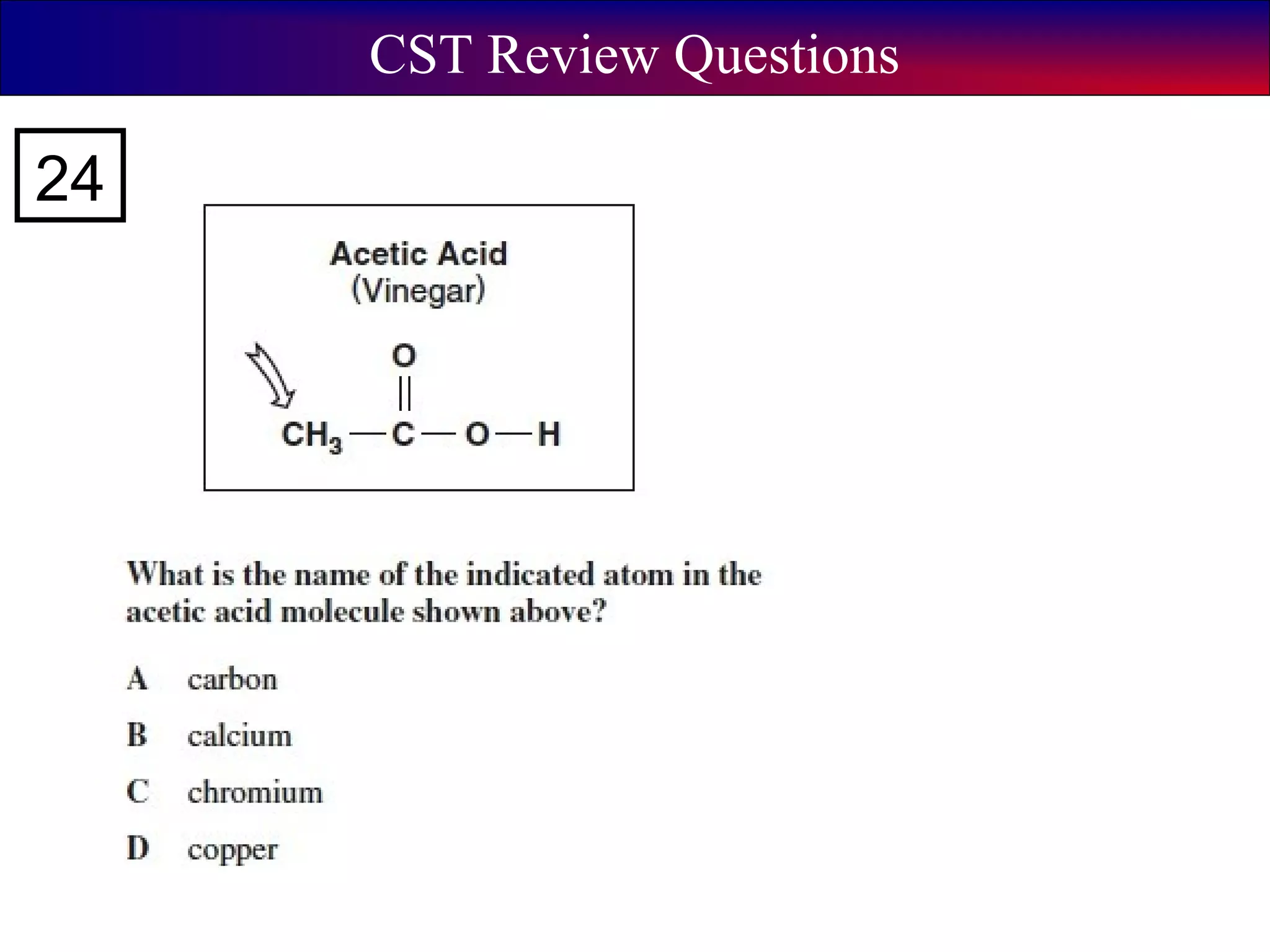
CST Review Questions
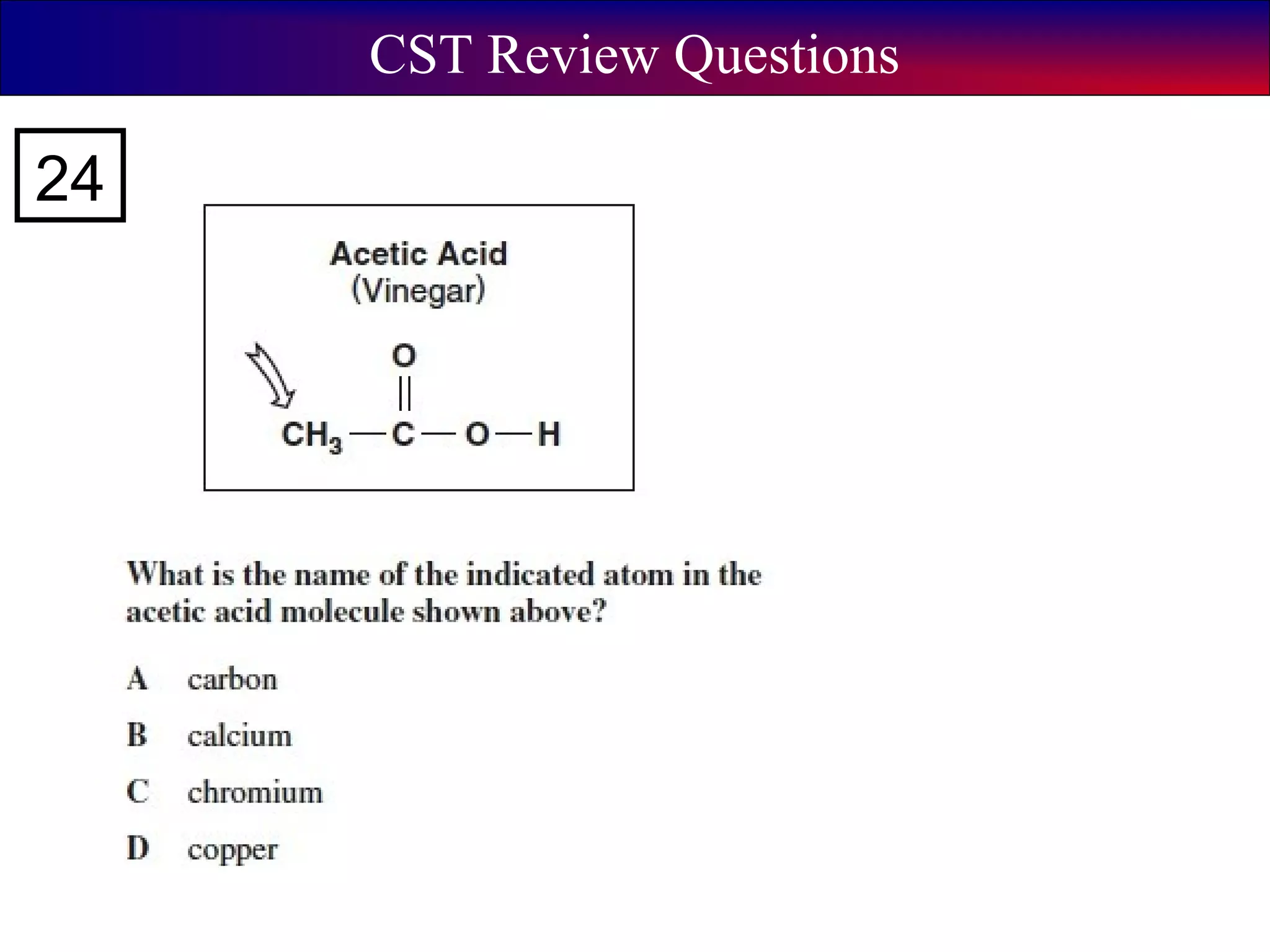
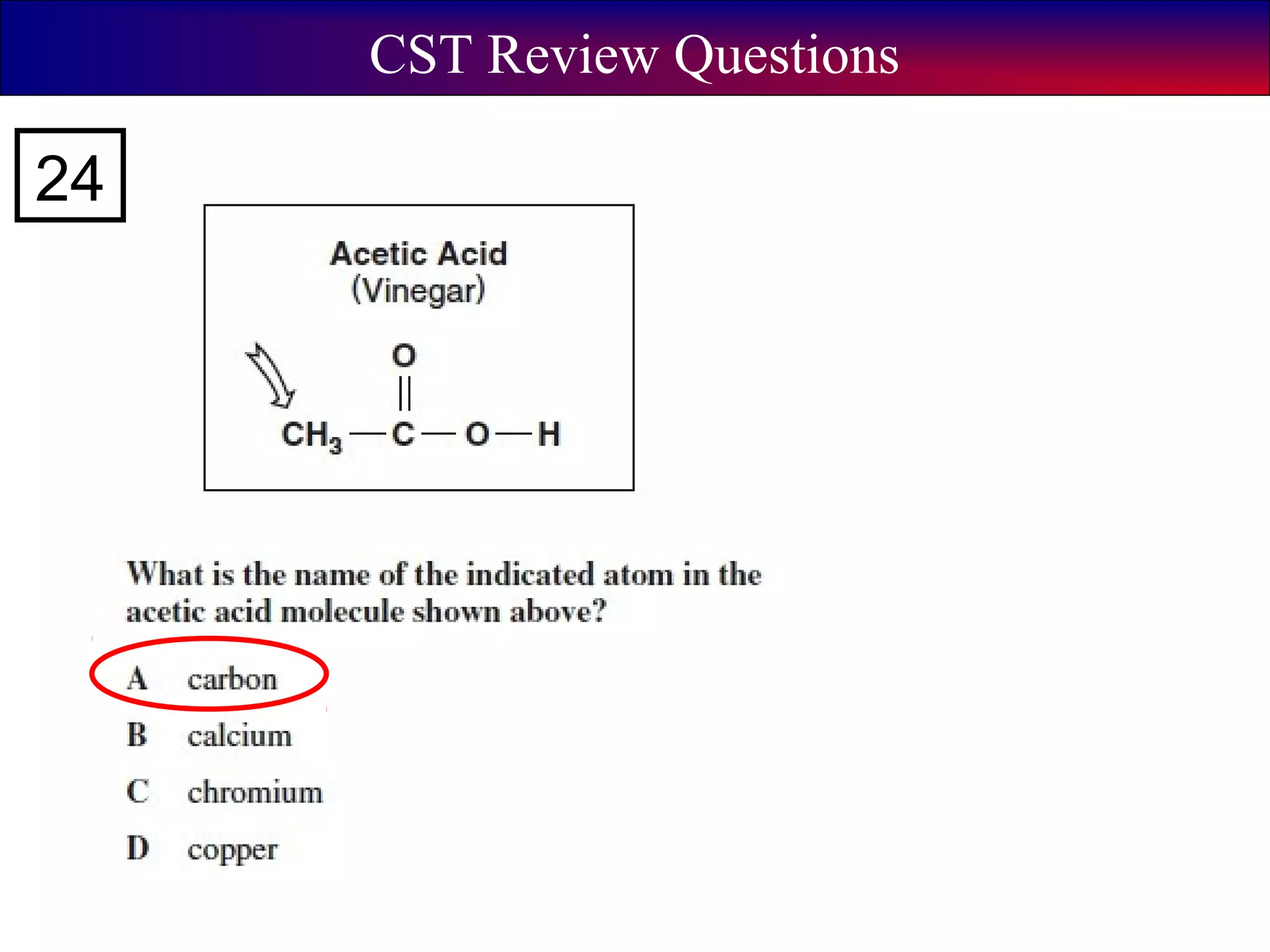
24
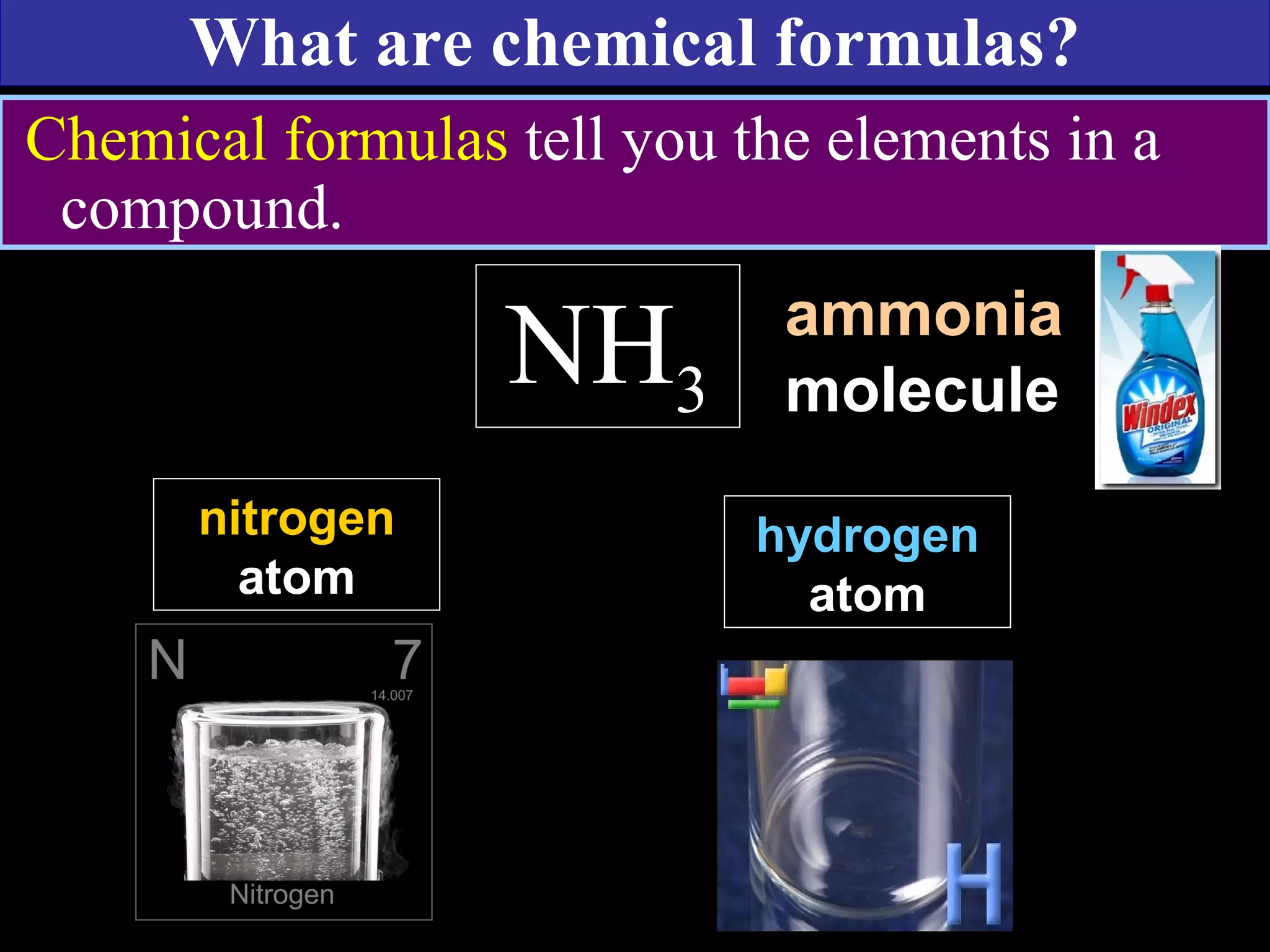
What are chemical formulas?
nitrogen
atom
Chemical formulas tell you the elements in a
compound.
ammonia
molecule
hydrogen
atom
NH3
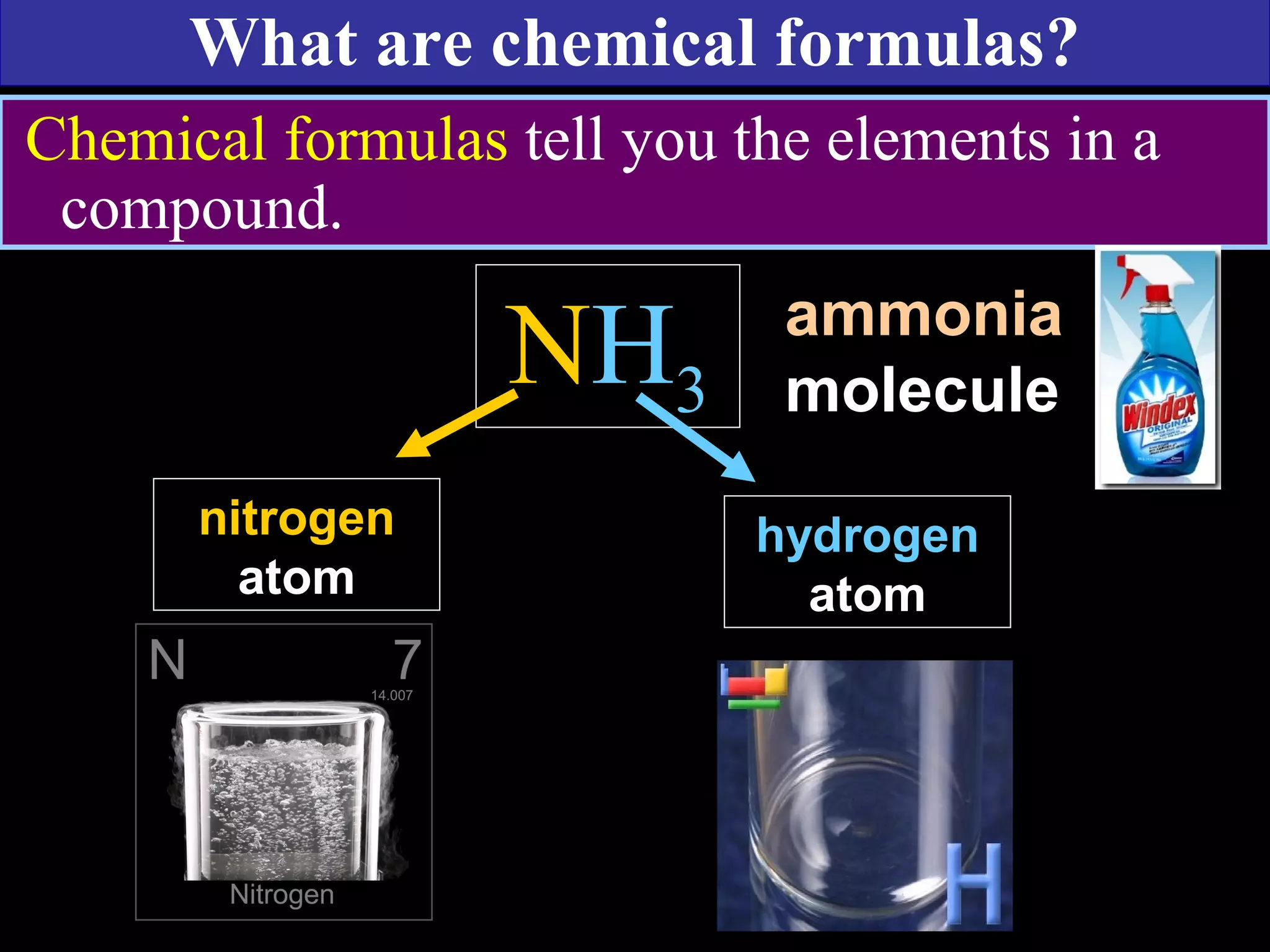
What are chemical formulas?
nitrogen
atom
Chemical formulas tell you the elements in a
compound.
ammonia
molecule
hydrogen
atom
NH3
CST Review Questions
24
CST Review Questions
24
CST Review Questions
24
CST Review Questions
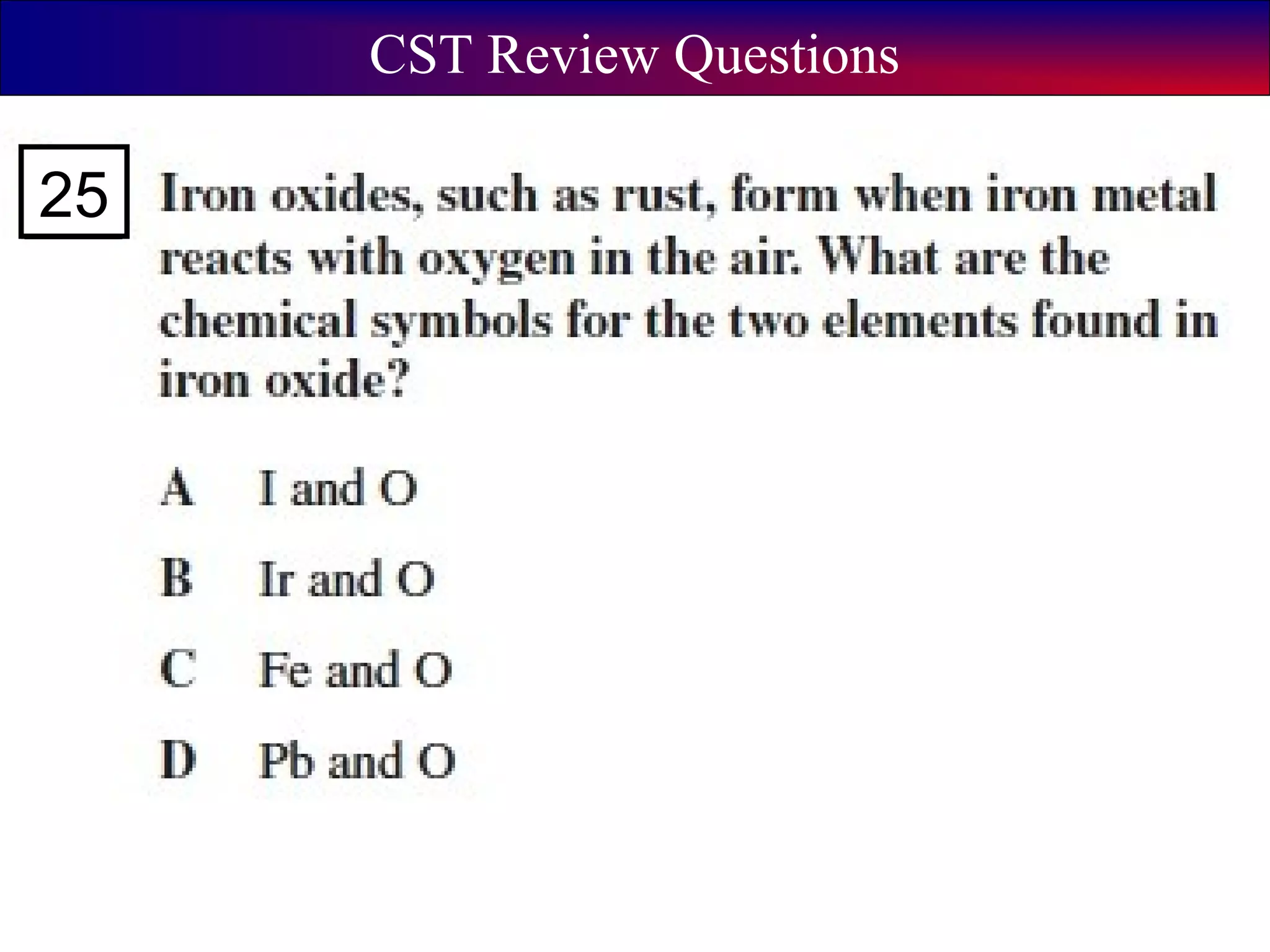
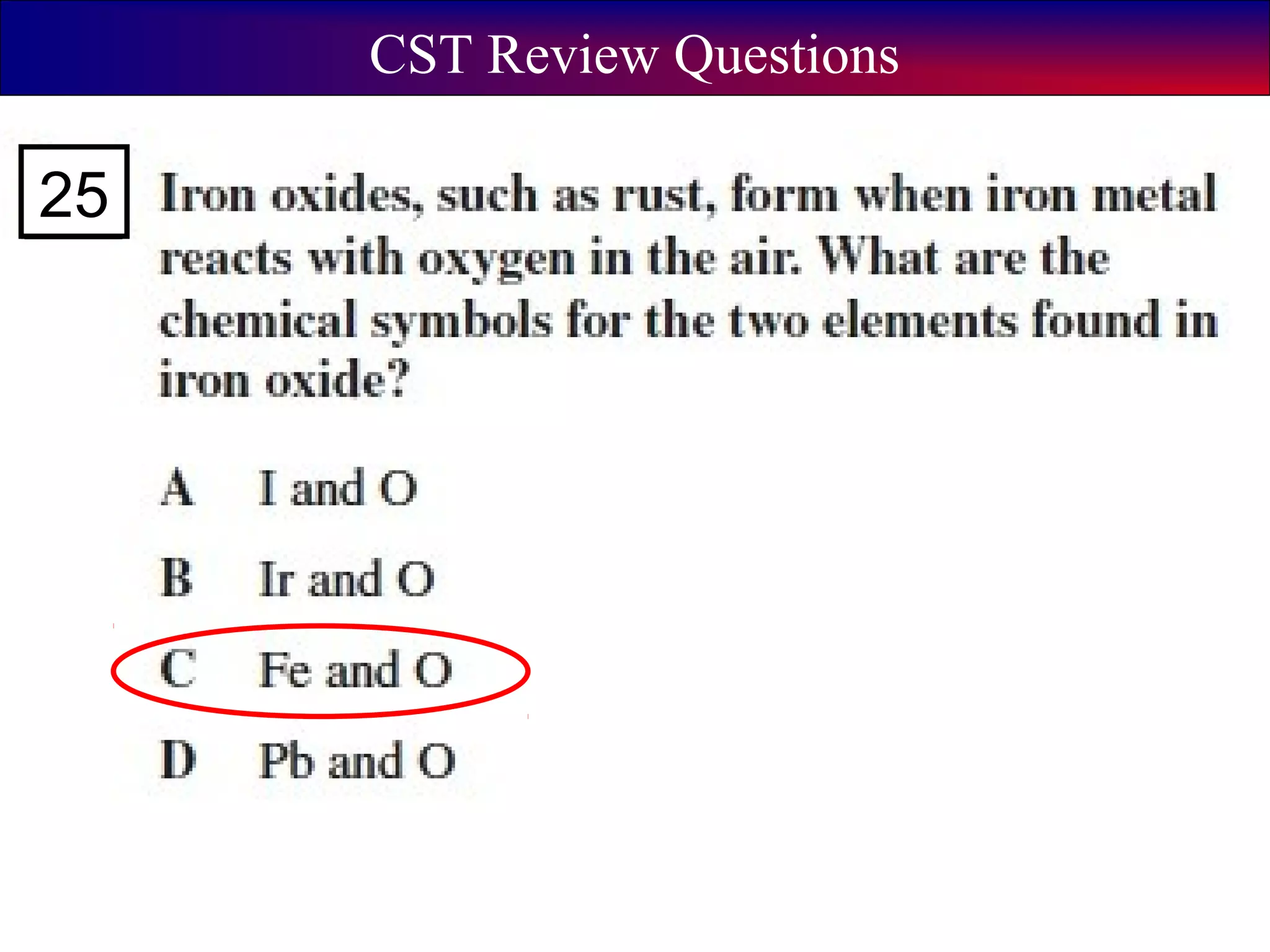
25
CST Review Questions
25
CST Review Questions
25
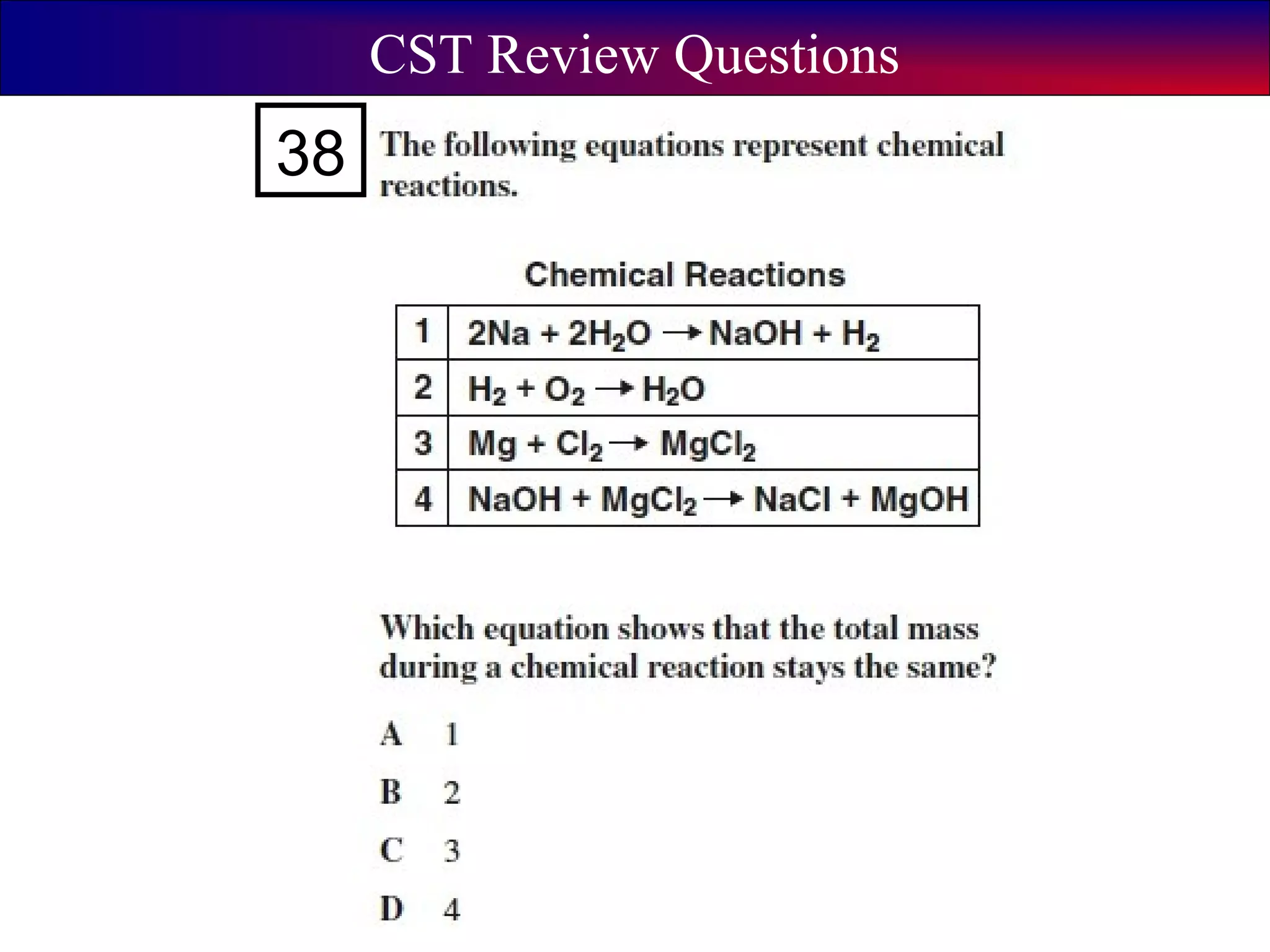
CST Review Questions
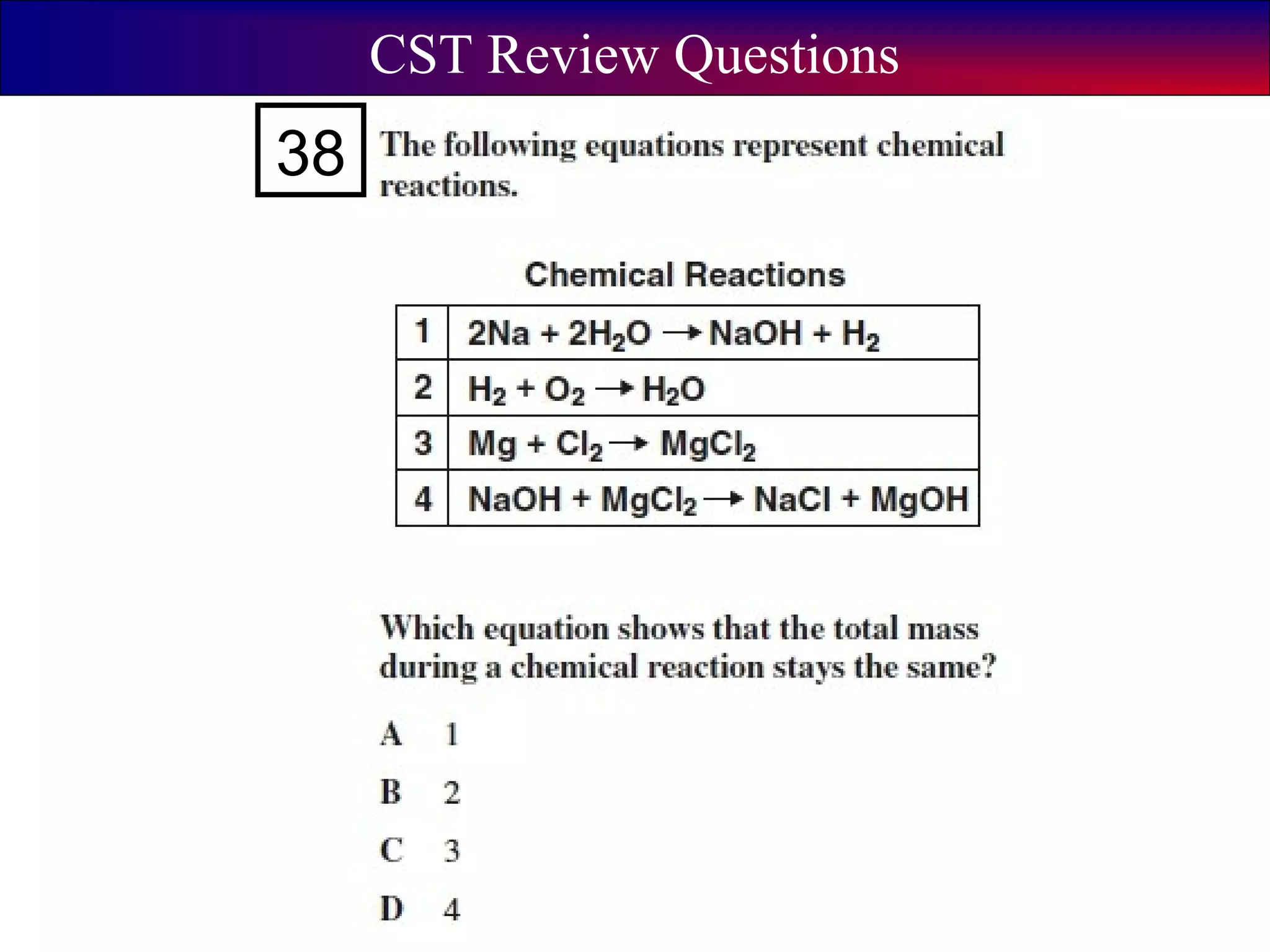
38
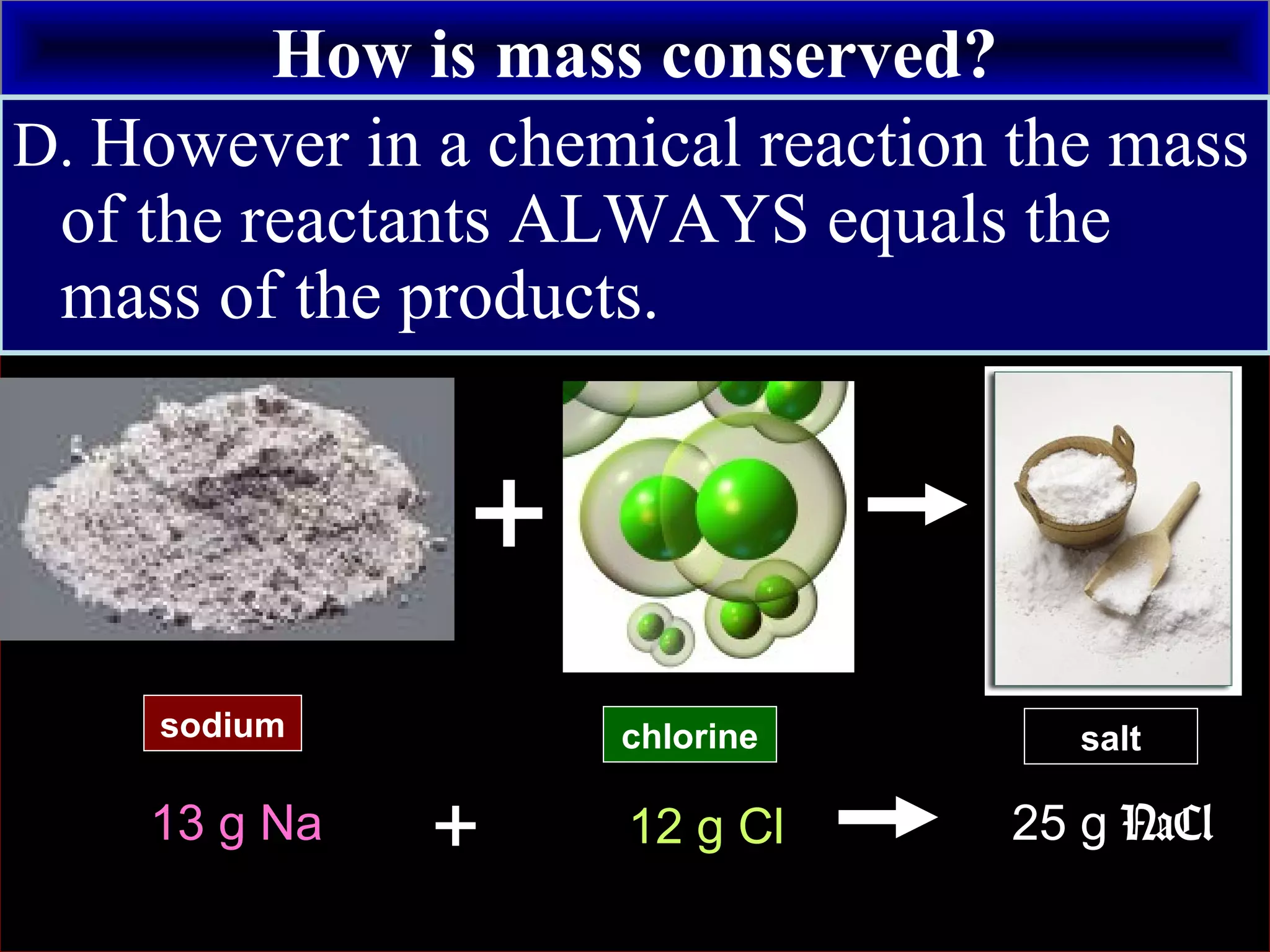
How is mass conserved?
D. However in a chemical reaction the mass
of the reactants ALWAYS equals the
mass of the products.
sodium
+
chlorine salt
13 g Na + 12 g Cl 25 g NaCl
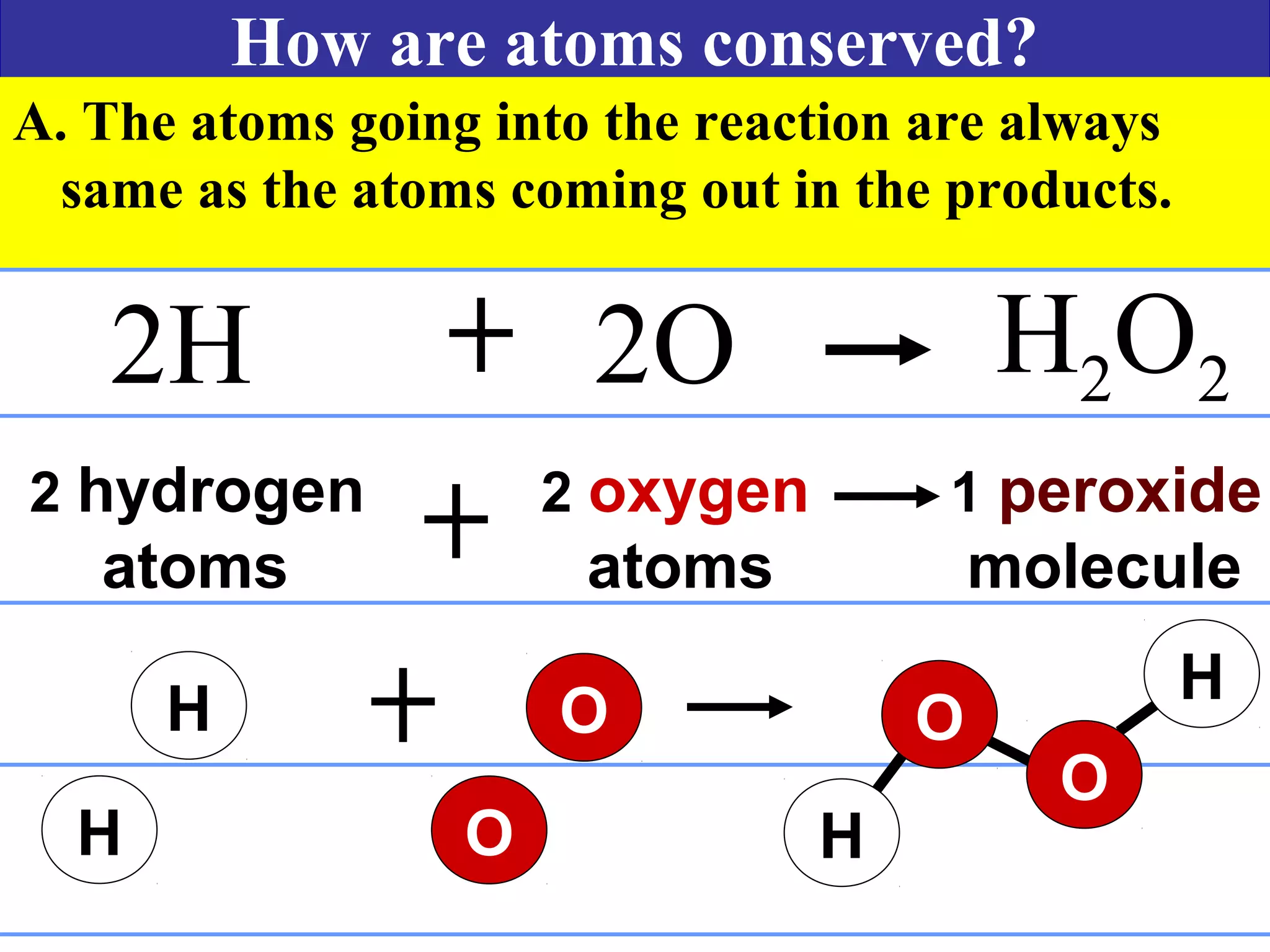
How are atoms conserved?
A. The atoms going into the reaction are always
same as the atoms coming out in the products.
2H 2O H2O2
2 hydrogen 2 oxygen 1 peroxide
atoms atoms molecule
O
H
H
O
H
H O
O
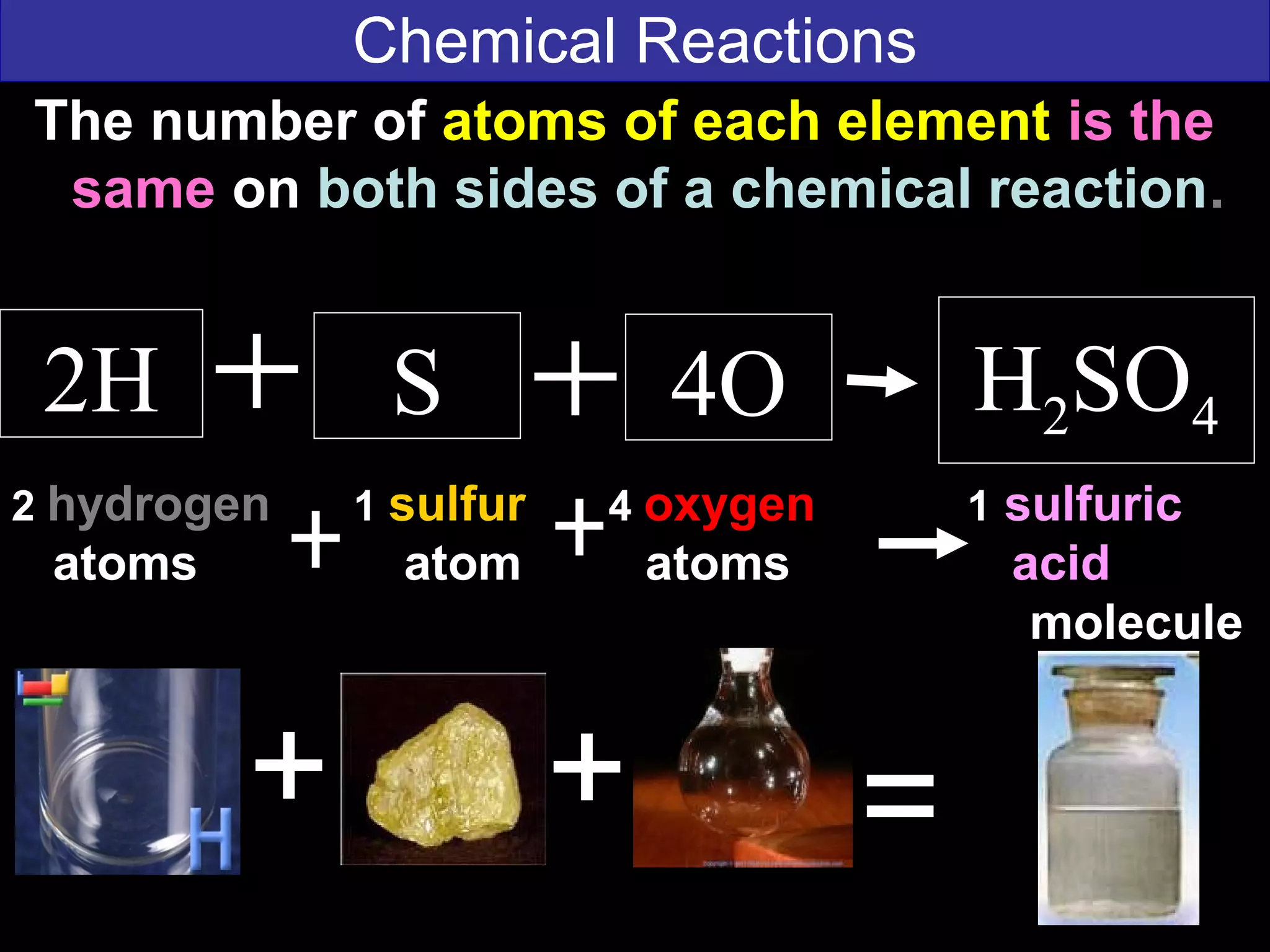
Chemical Reactions
2H S H2SO4
2 hydrogen 1 sulfur 4 oxygen 1 sulfuric
atoms atom atoms acid
molecule
The number of atoms of each element is the
same on both sides of a chemical reaction.
4O
=+ +
CST Review Questions
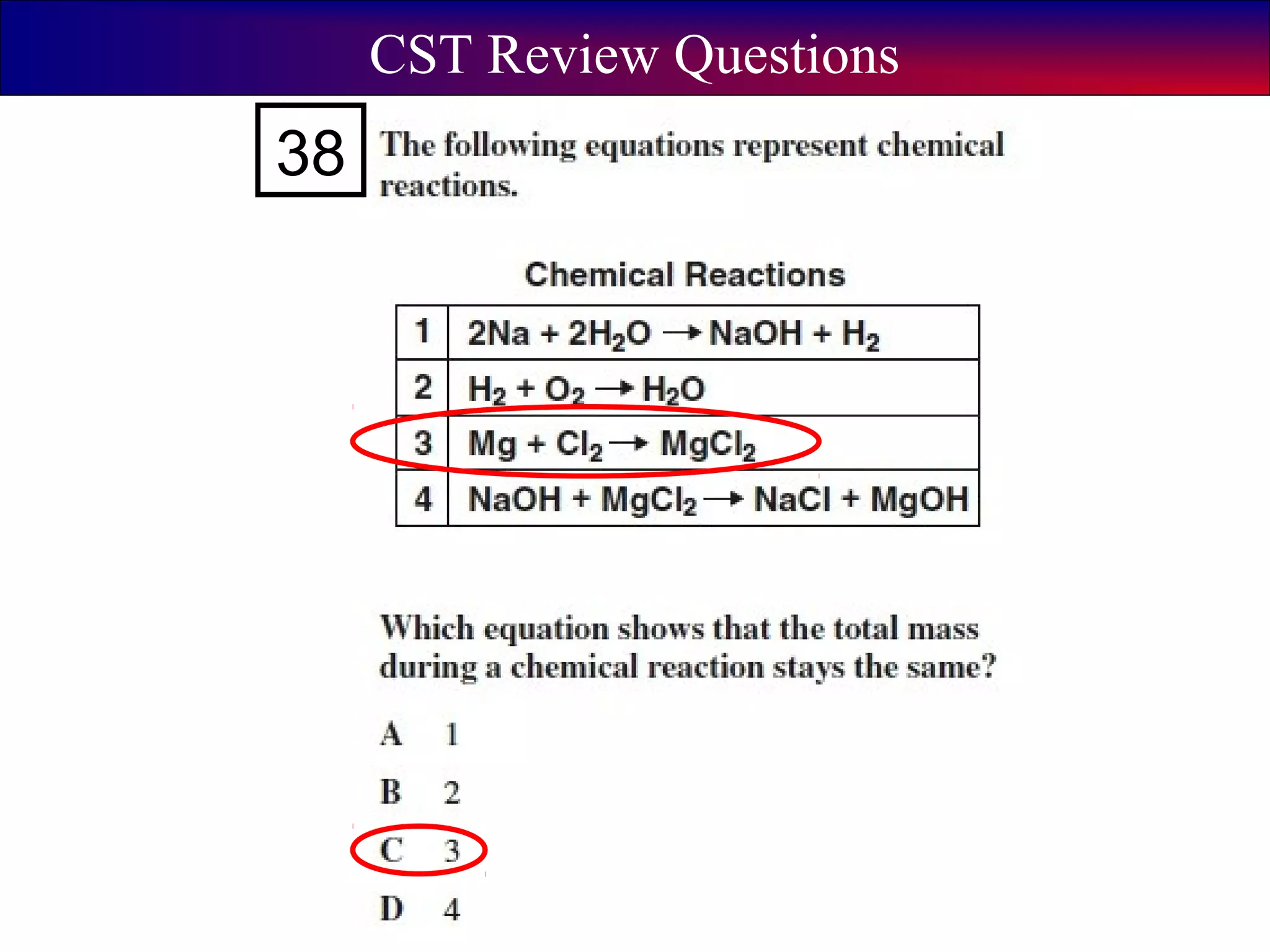
38
CST Review Questions
38
CST Review Questions
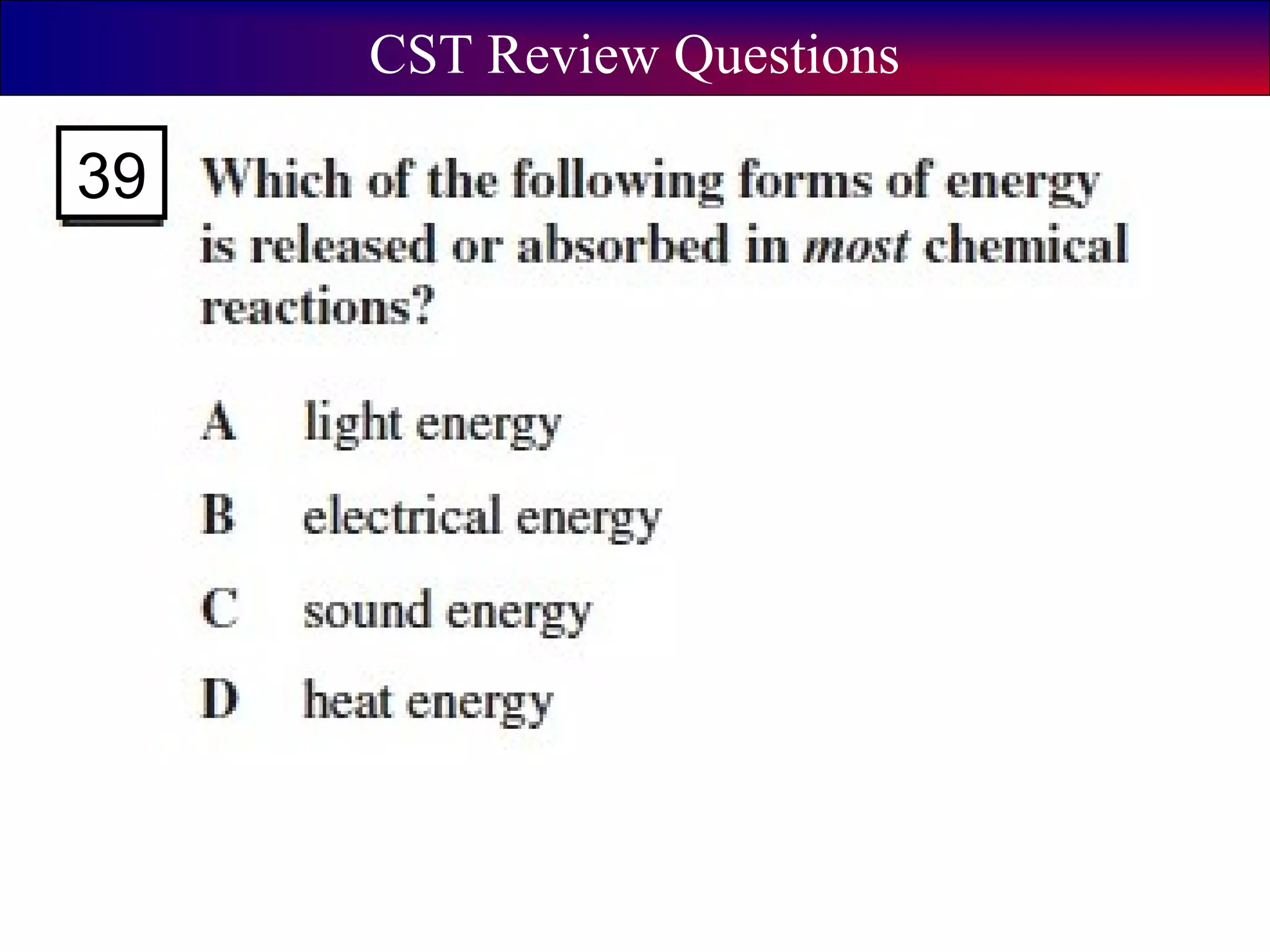
39
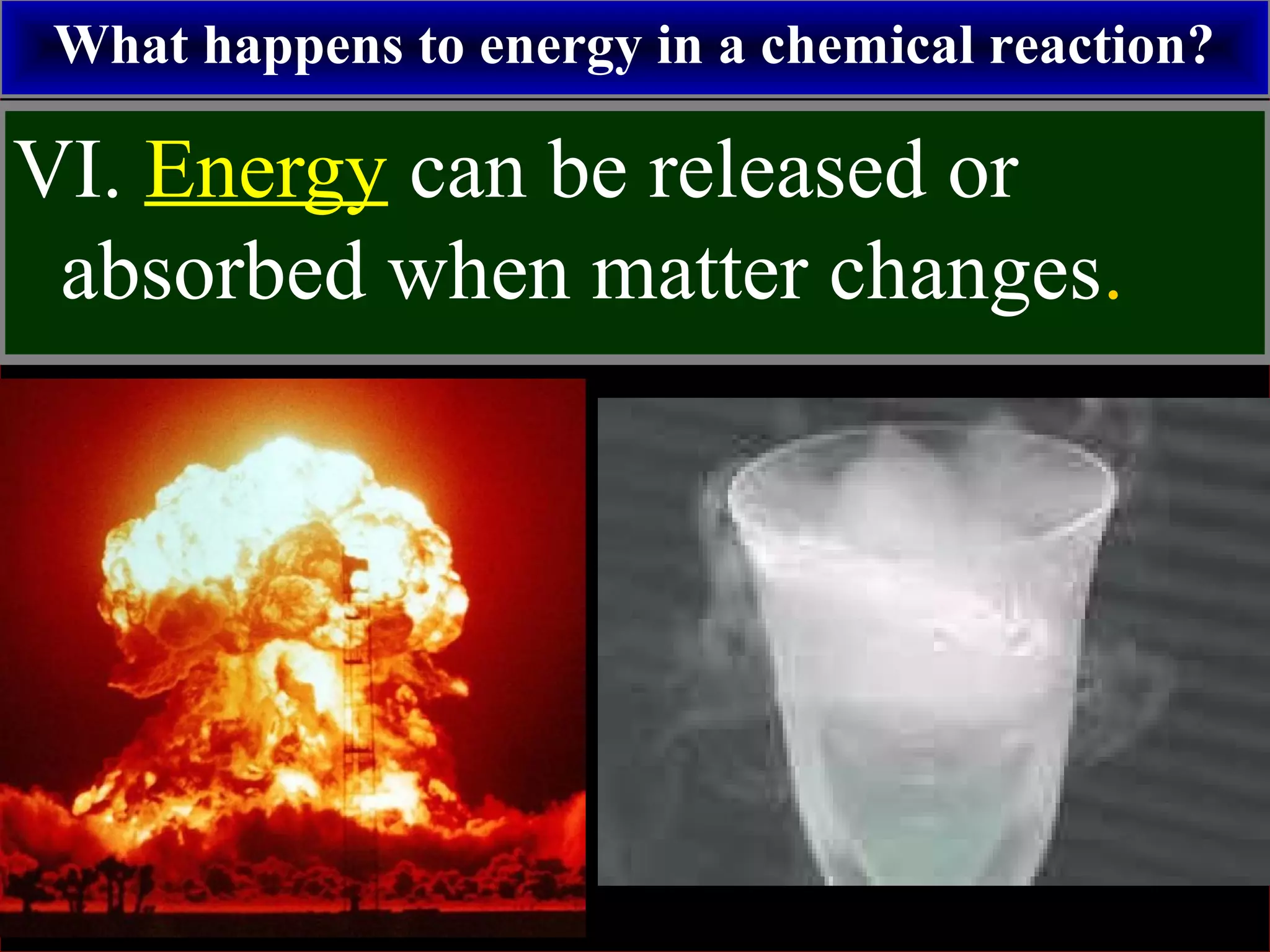
What happens to energy in a chemical reaction?
VI. Energy can be released or
absorbed when matter changes.
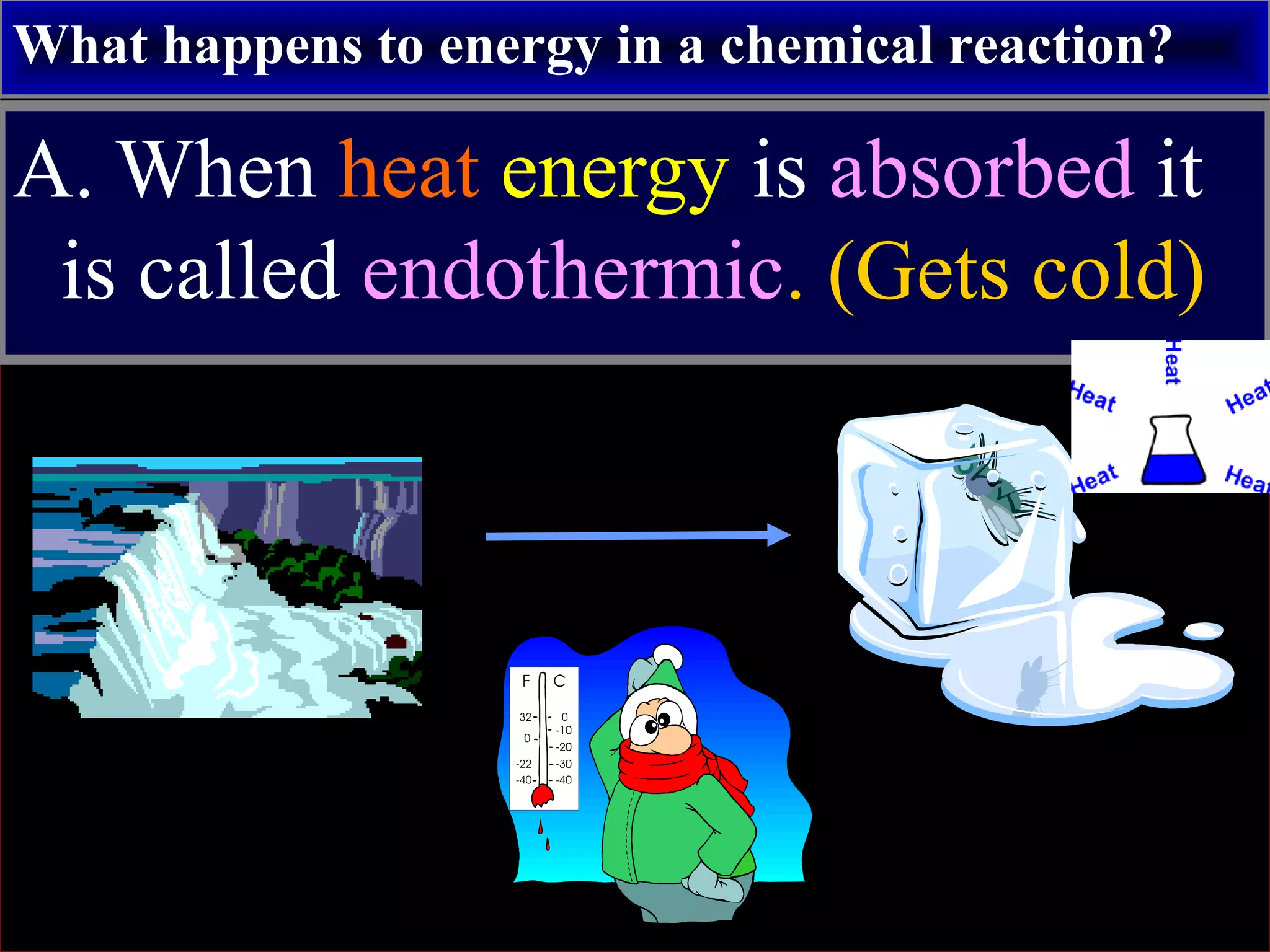
What happens to energy in a chemical reaction?
A. When heat energy is absorbed it
is called endothermic. (Gets cold)
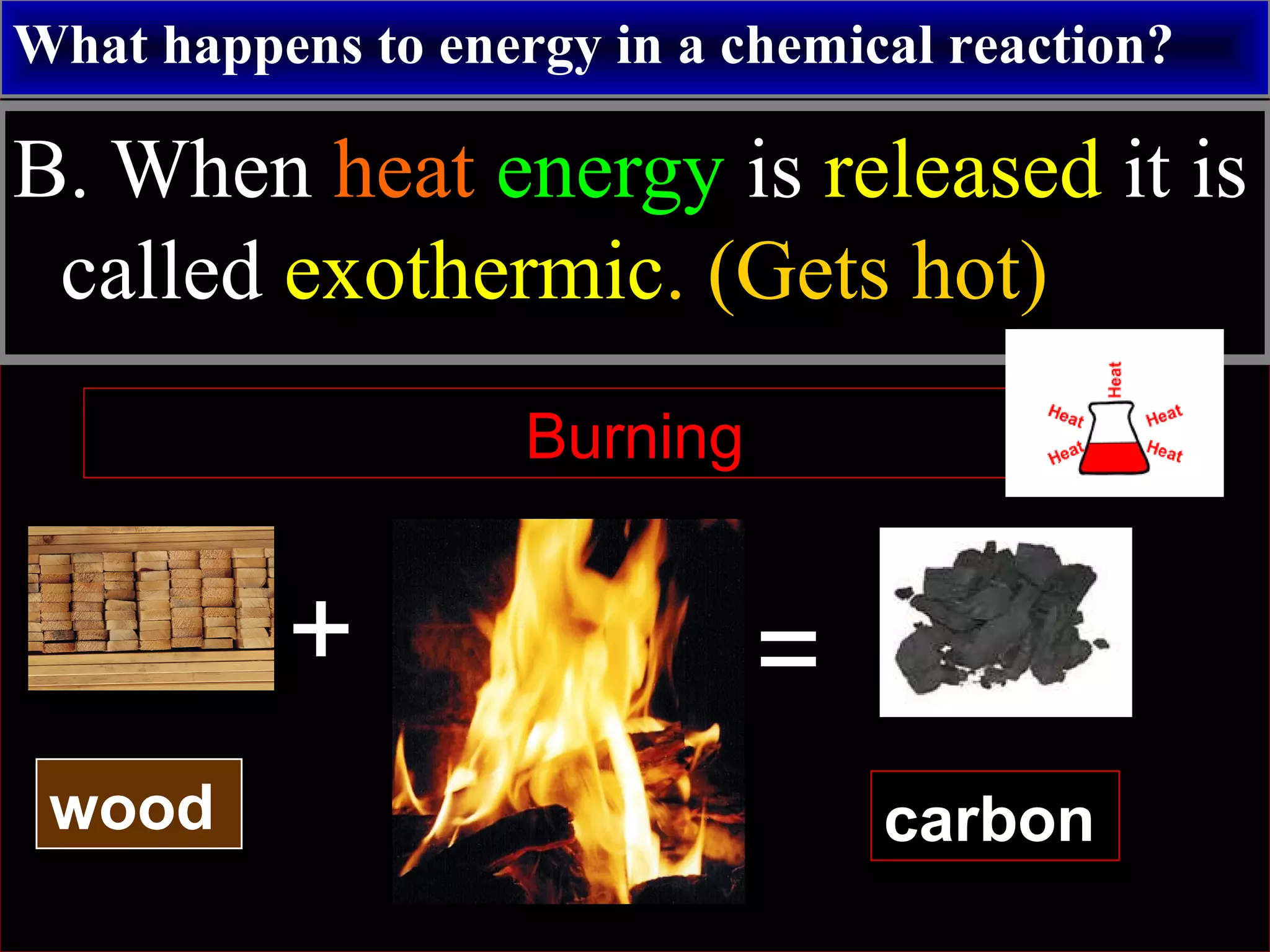
What happens to energy in a chemical reaction?
B. When heat energy is released it is
called exothermic. (Gets hot)
wood
=+
carbon
Burning
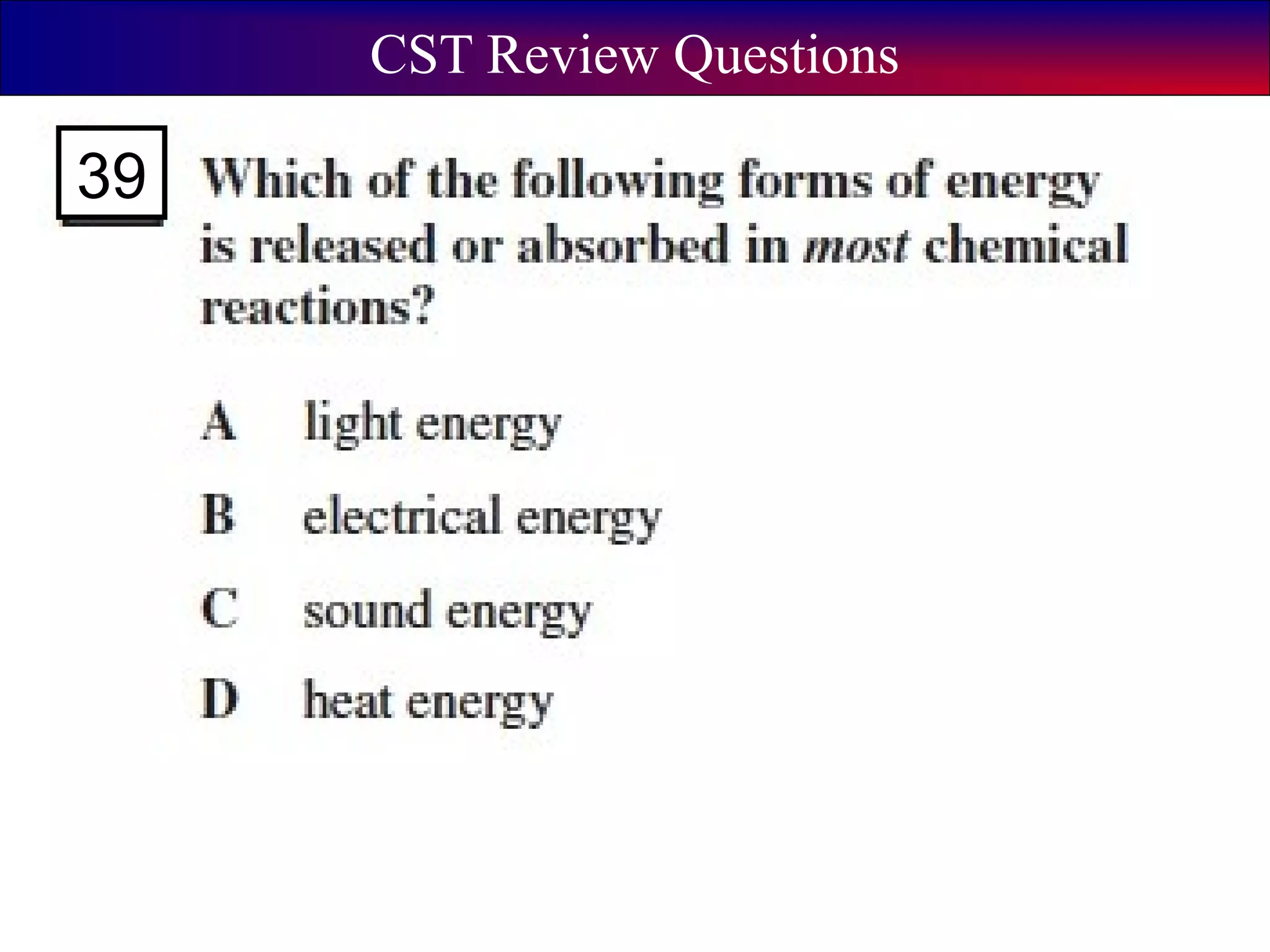
CST Review Questions
39
CST Review Questions
39
CST Review Questions
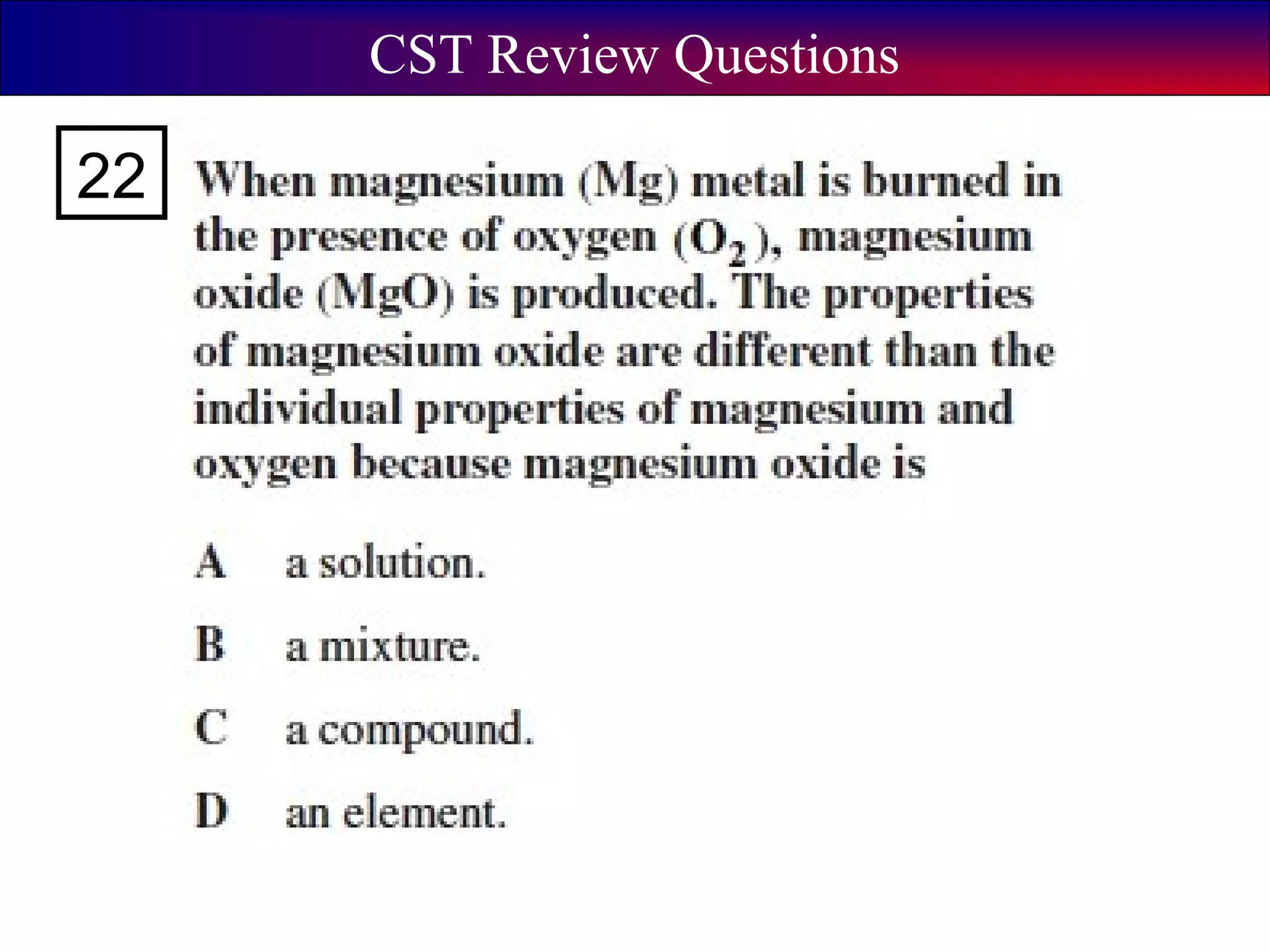
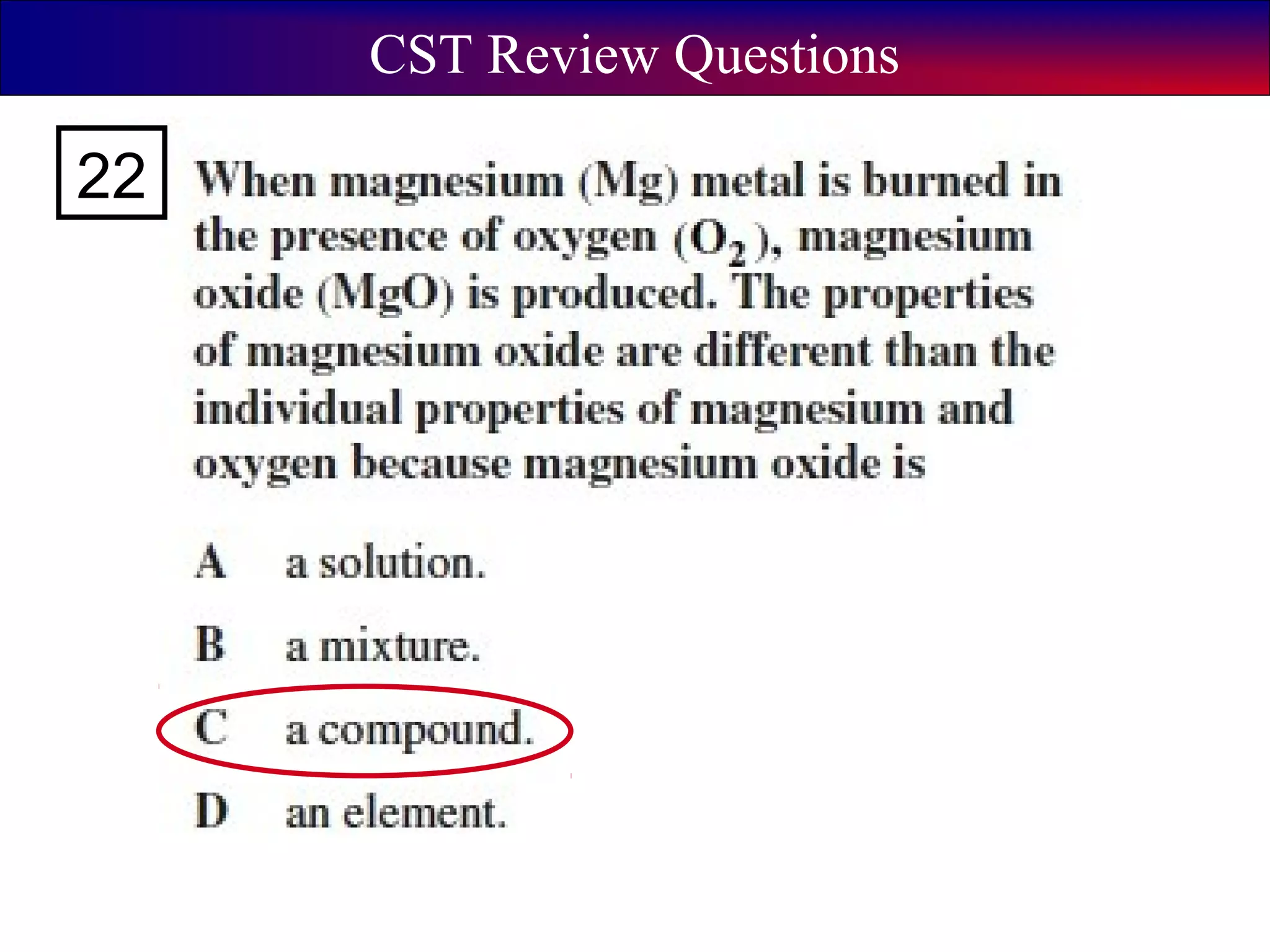
22
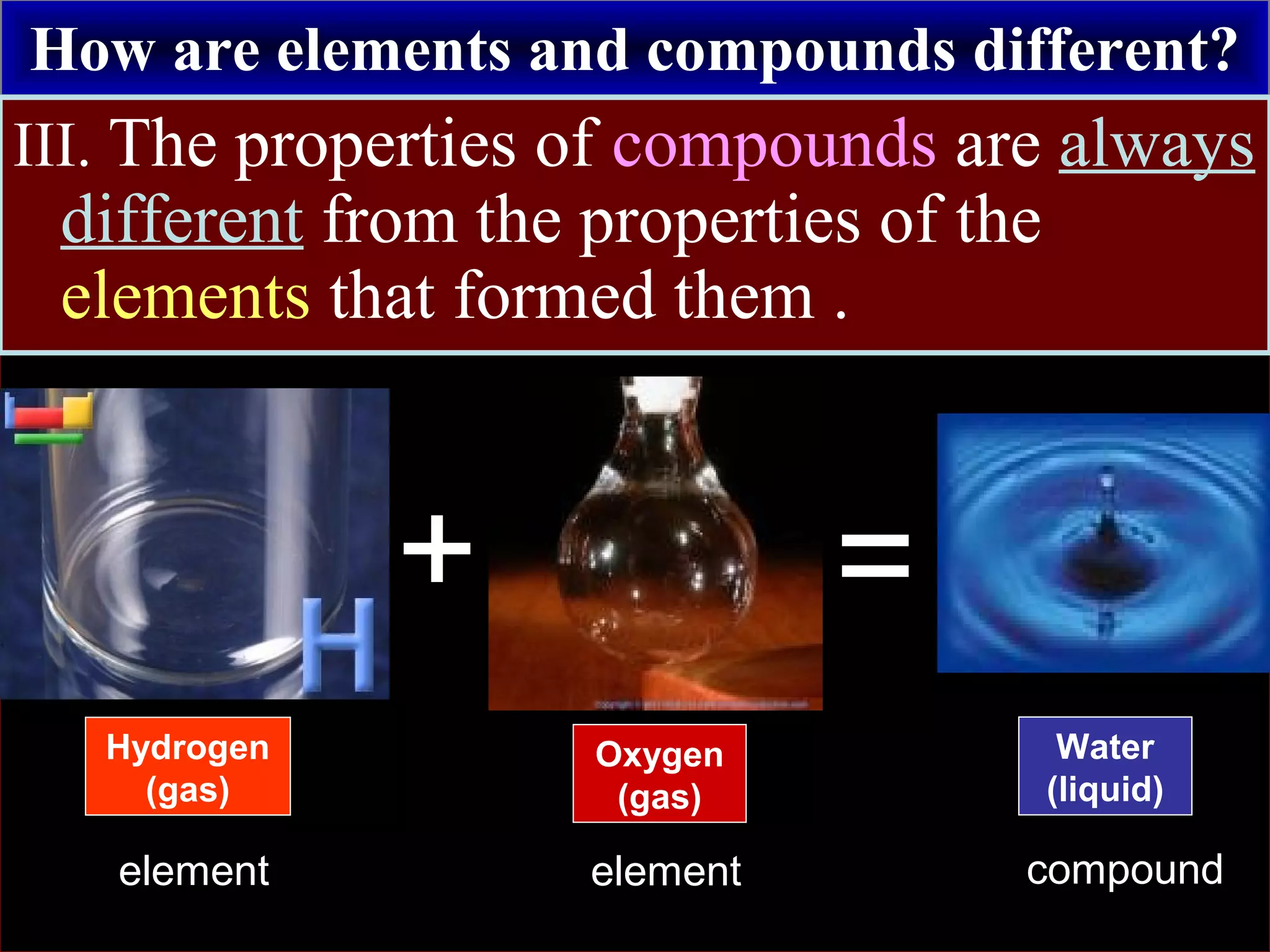
How are elements and compounds different?
III. The properties of compounds are always
different from the properties of the
elements that formed them .
Hydrogen
(gas)
Oxygen
(gas)
=
Water
(liquid)
element element compound
+
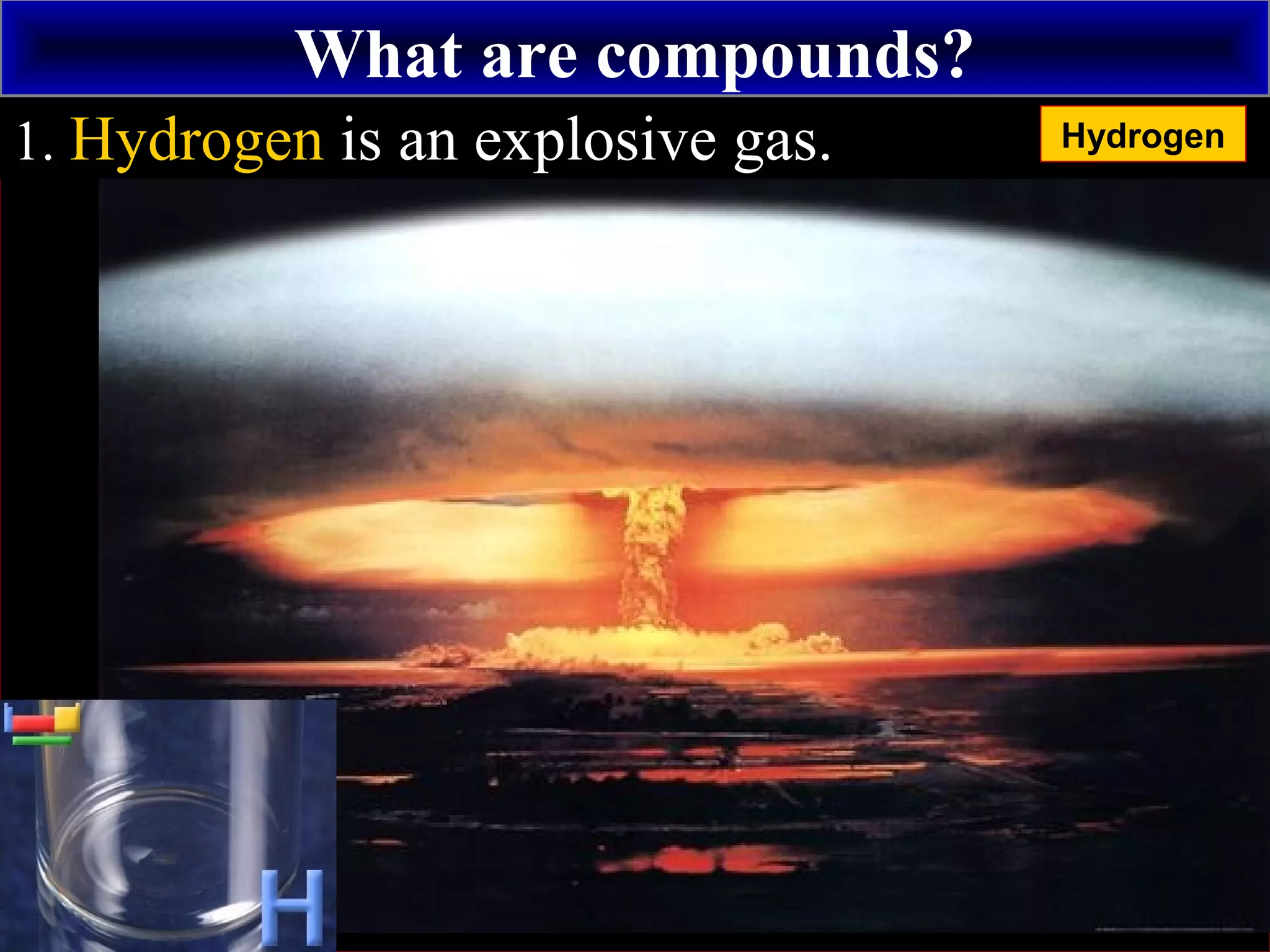
What are compounds?
+
1. Hydrogen is an explosive gas. Hydrogen
What are compounds?
+
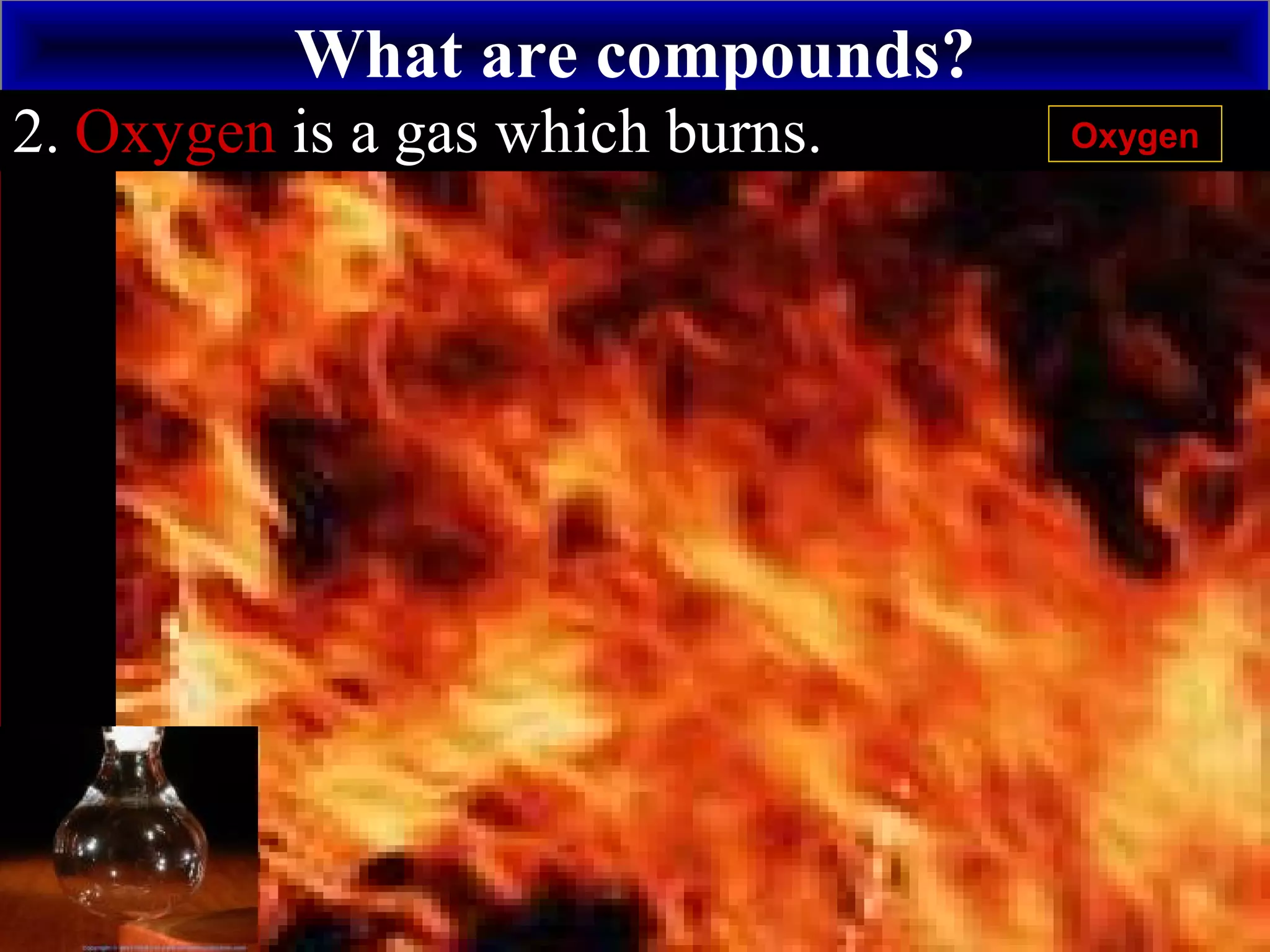
Hydrogen2. Oxygen is a gas which burns. Oxygen
What are compounds?
+
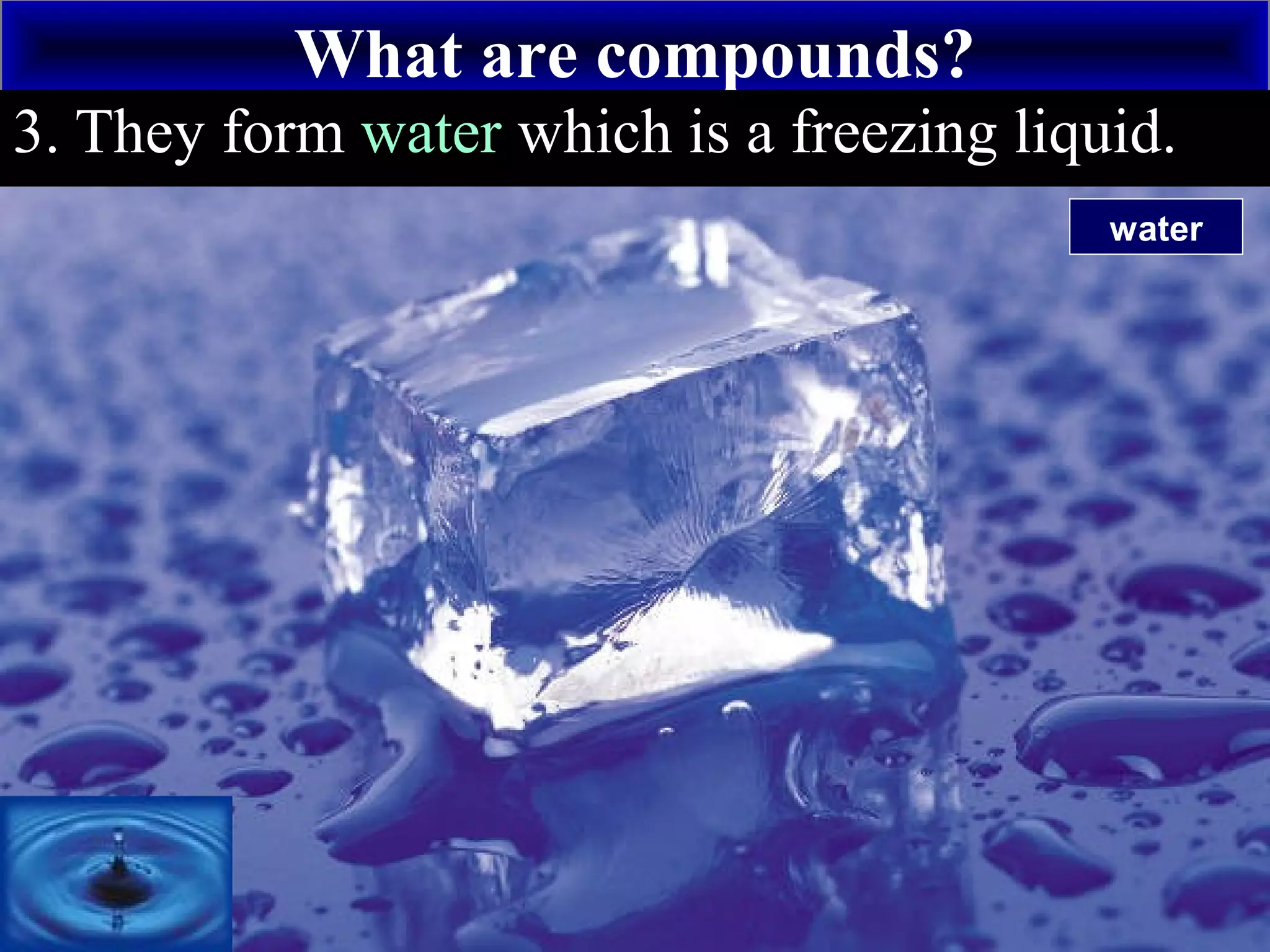
Hydrogen3. They form water which is a freezing liquid.
water
What are compounds?
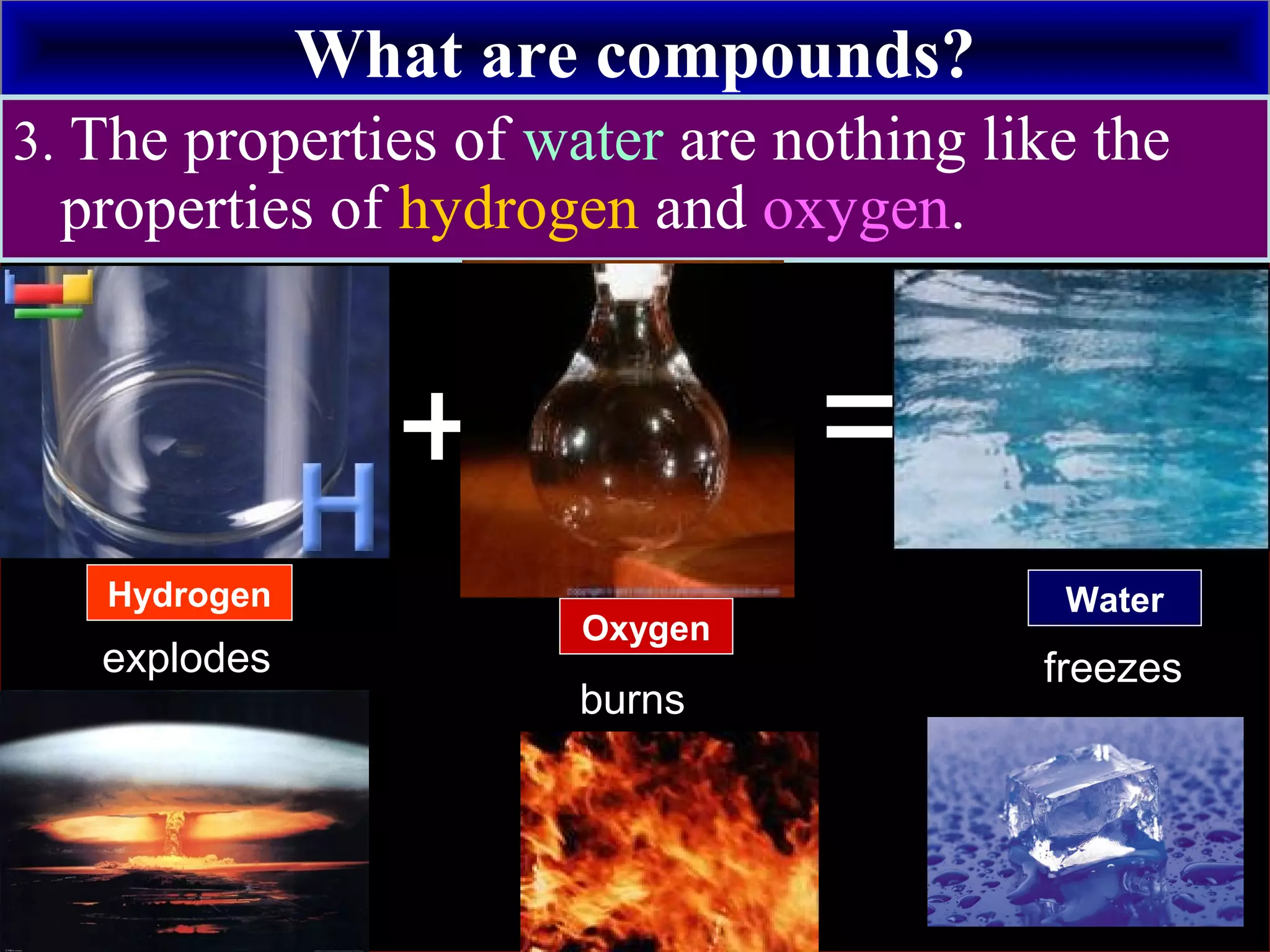
3. The properties of water are nothing like the
properties of hydrogen and oxygen.
Hydrogen
+
Oxygen
=
Water
explodes
burns
freezes
CST Review Questions
22
CST Review Questions
22
CST Review Questions
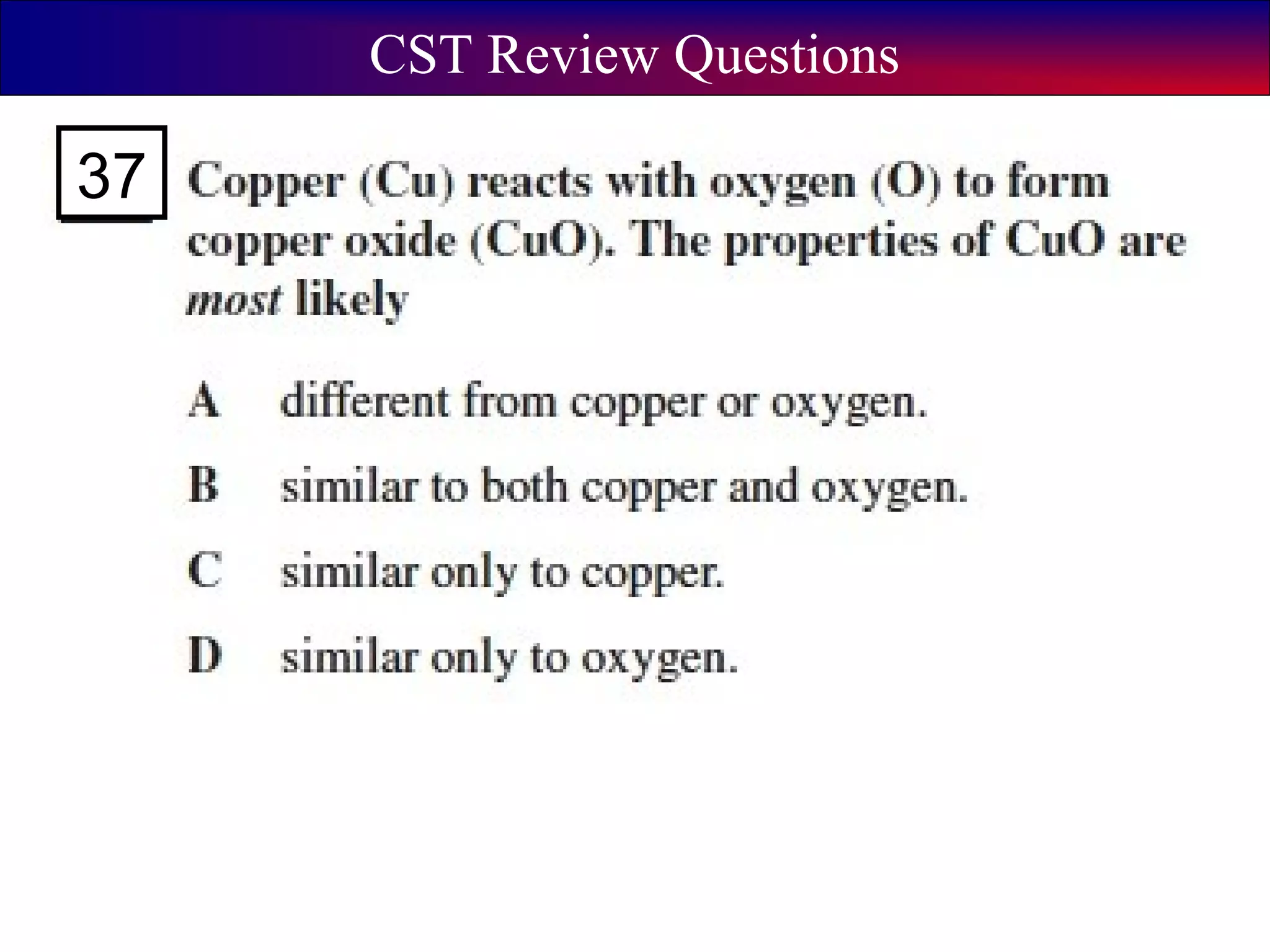
37
CST Review Questions
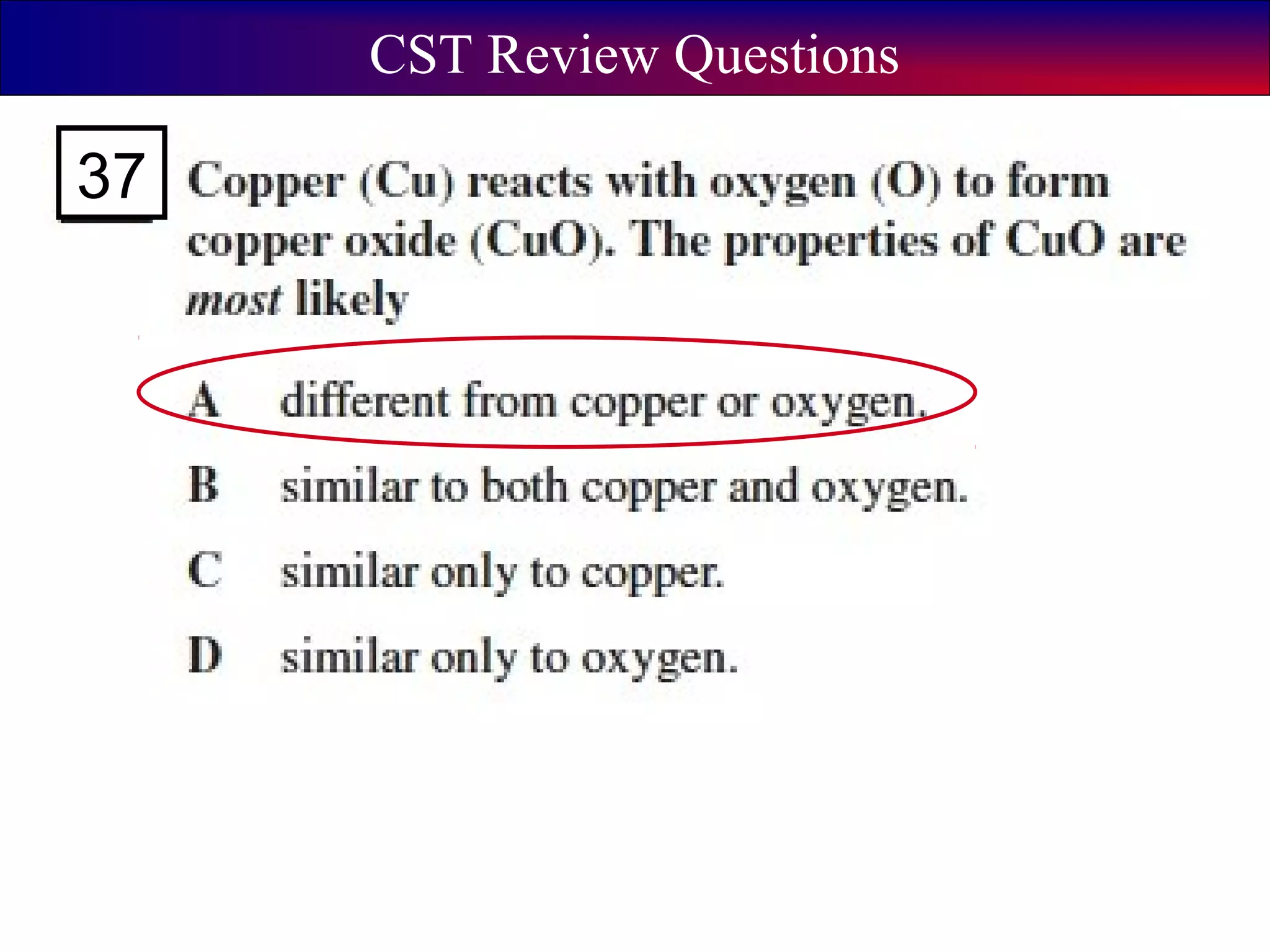
37
CST Review
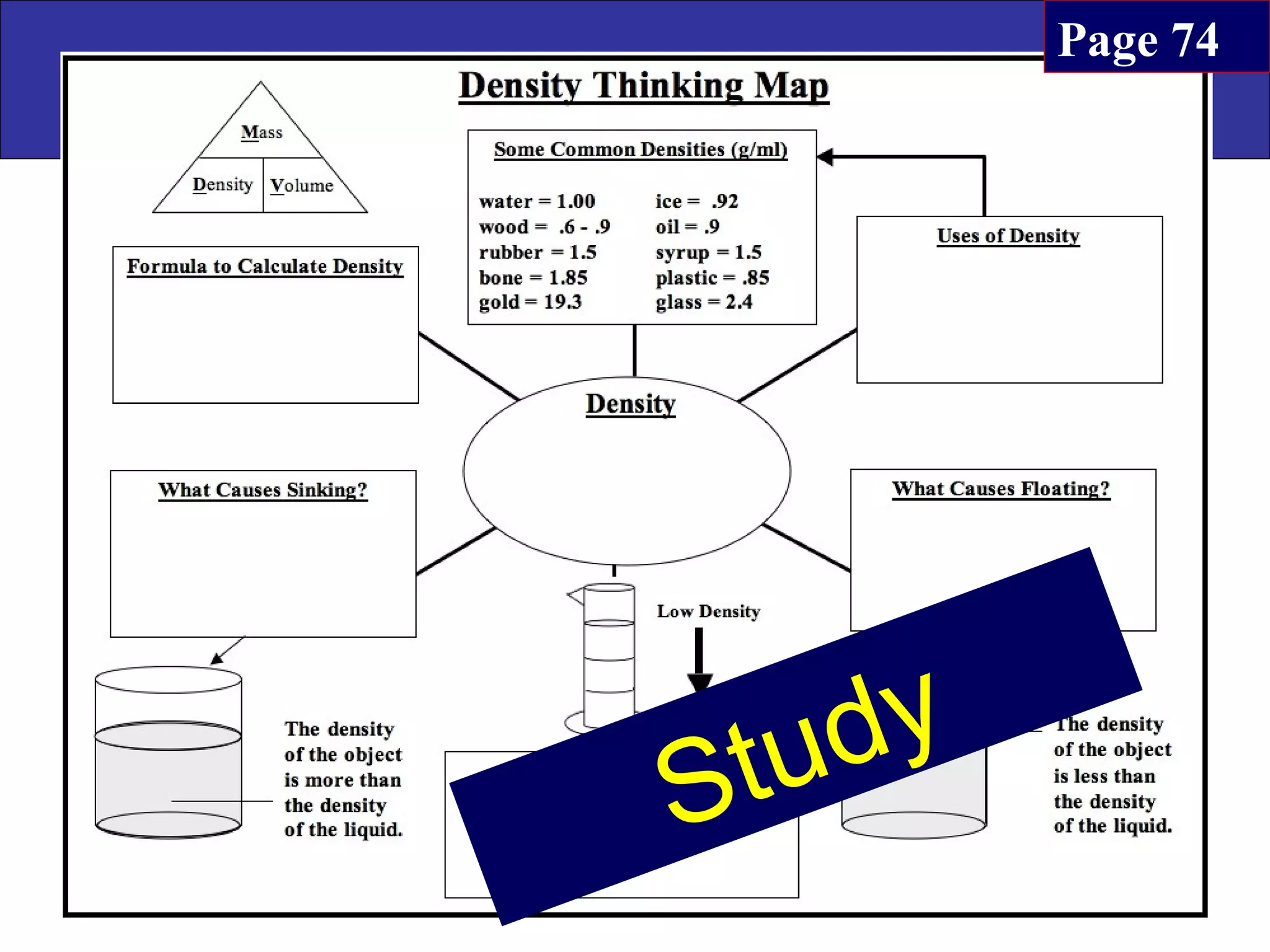
Density
Page 74
Study
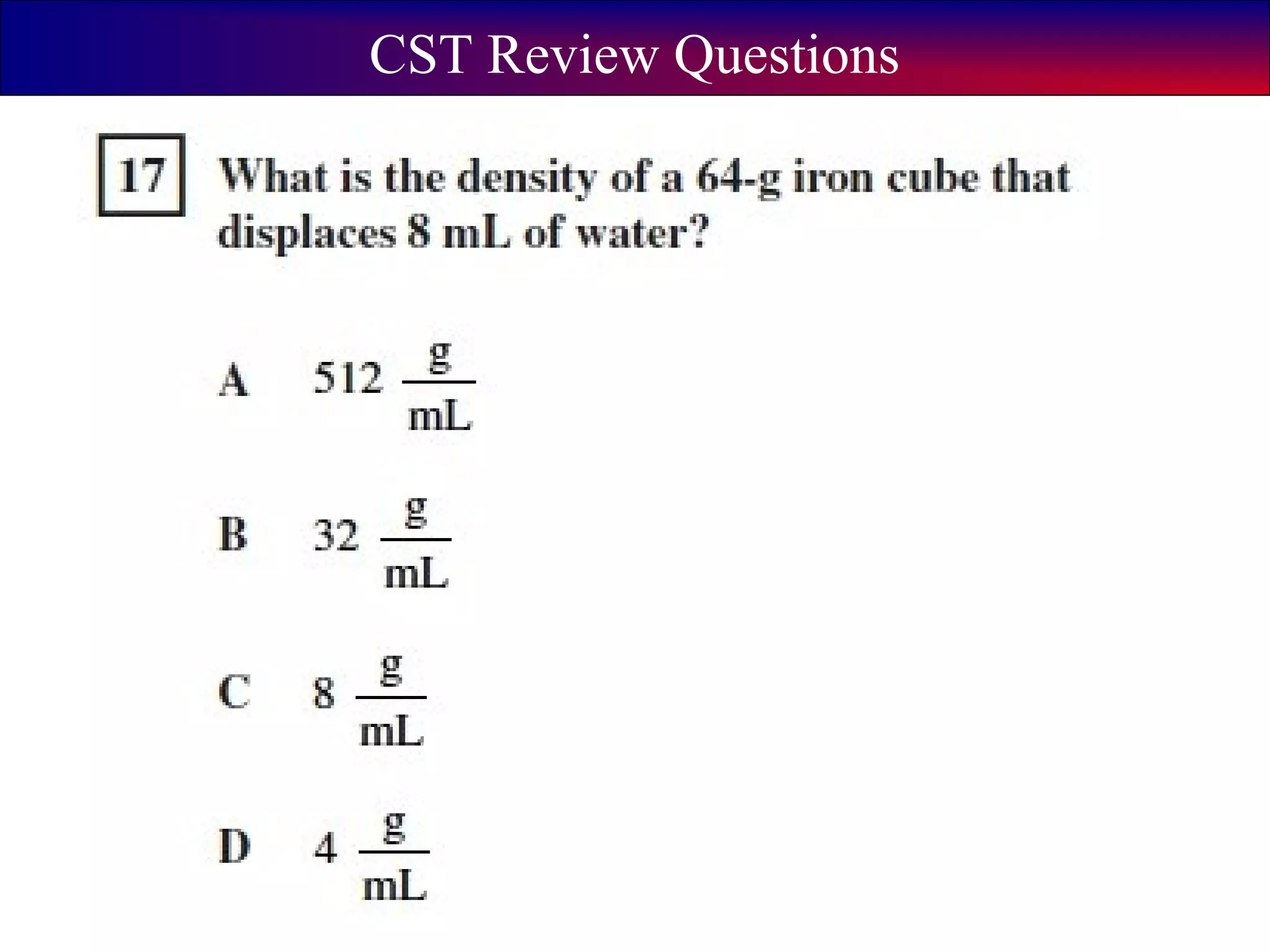
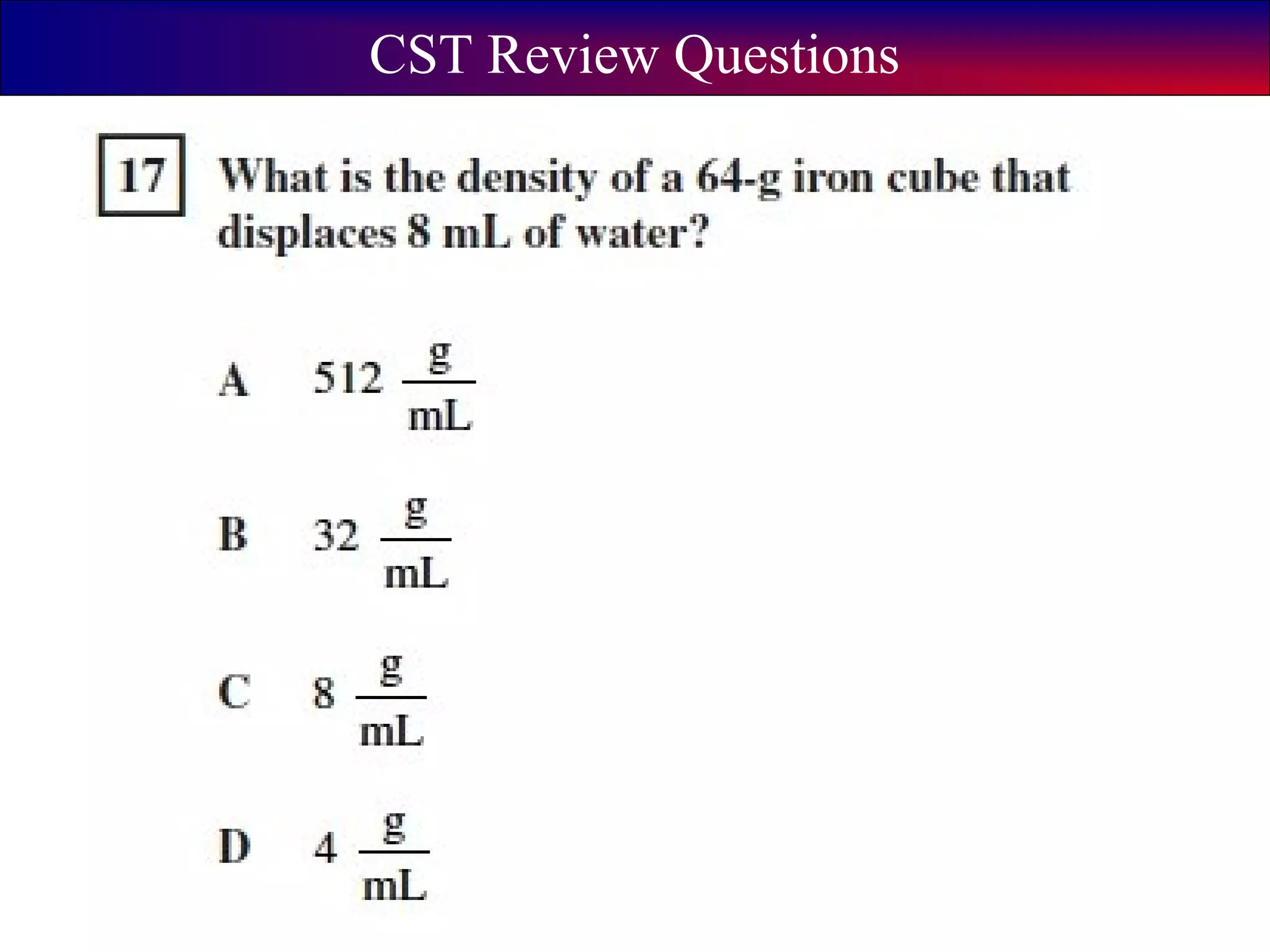
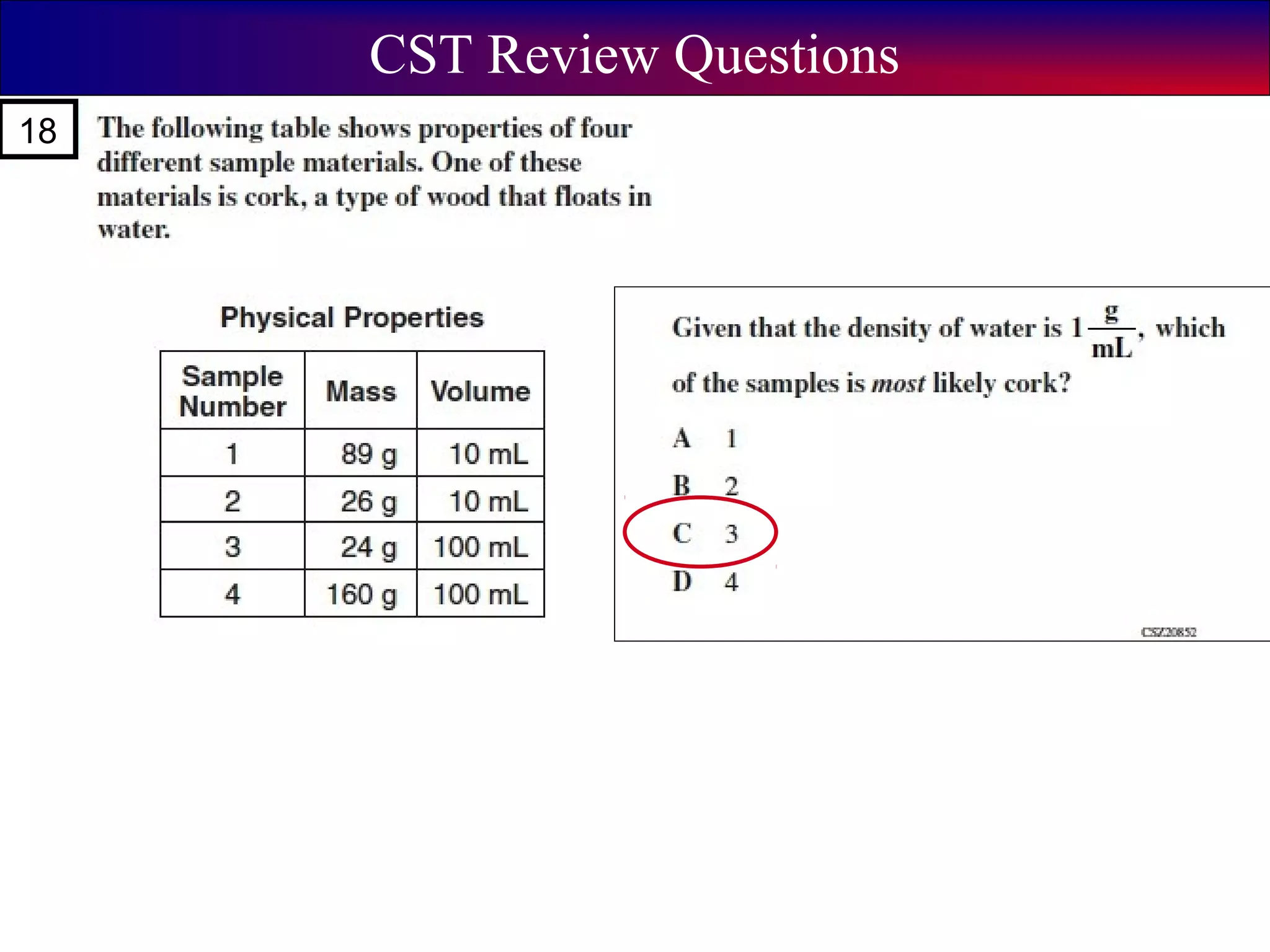
CST Review Questions
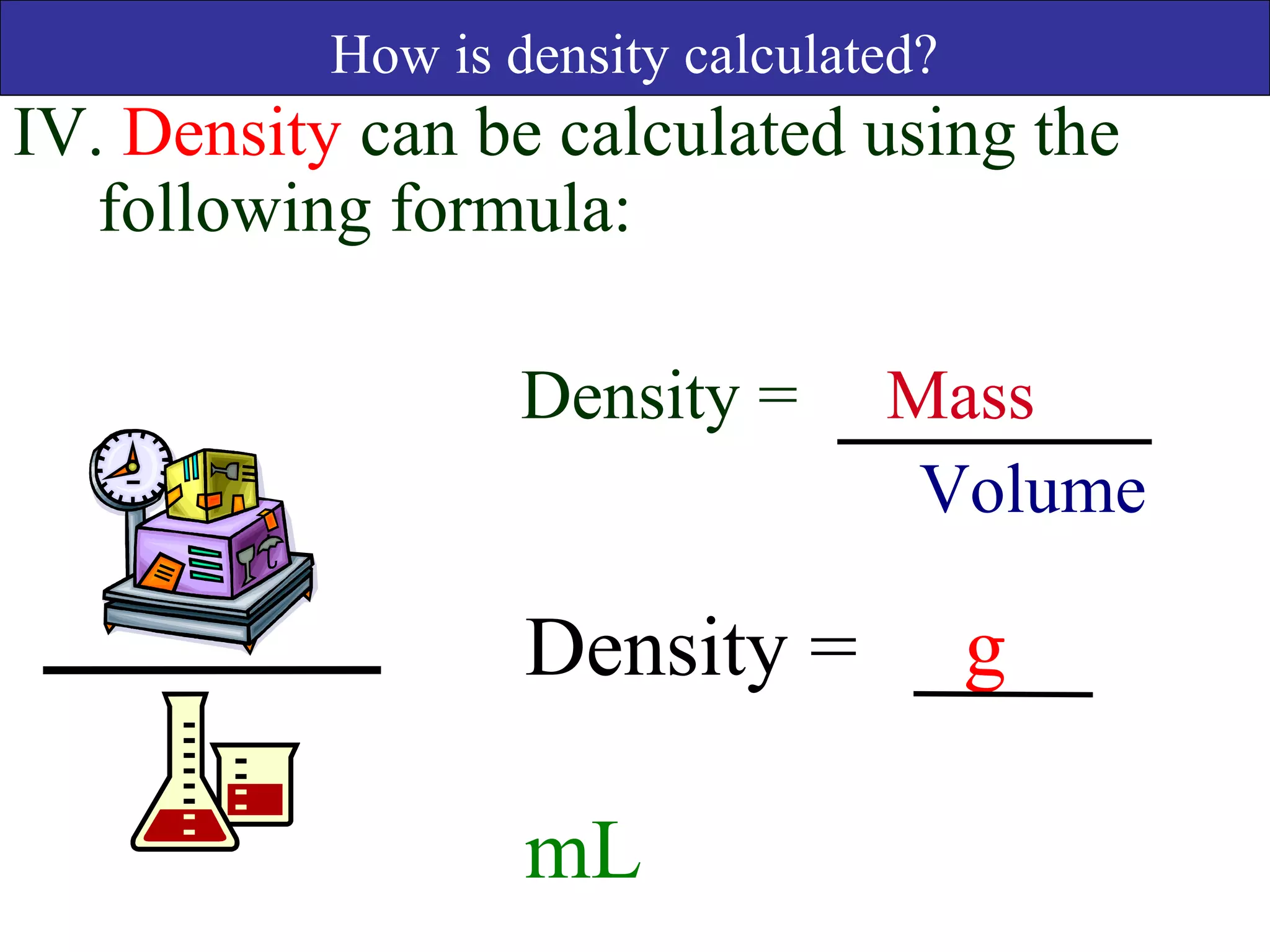
How is density calculated?
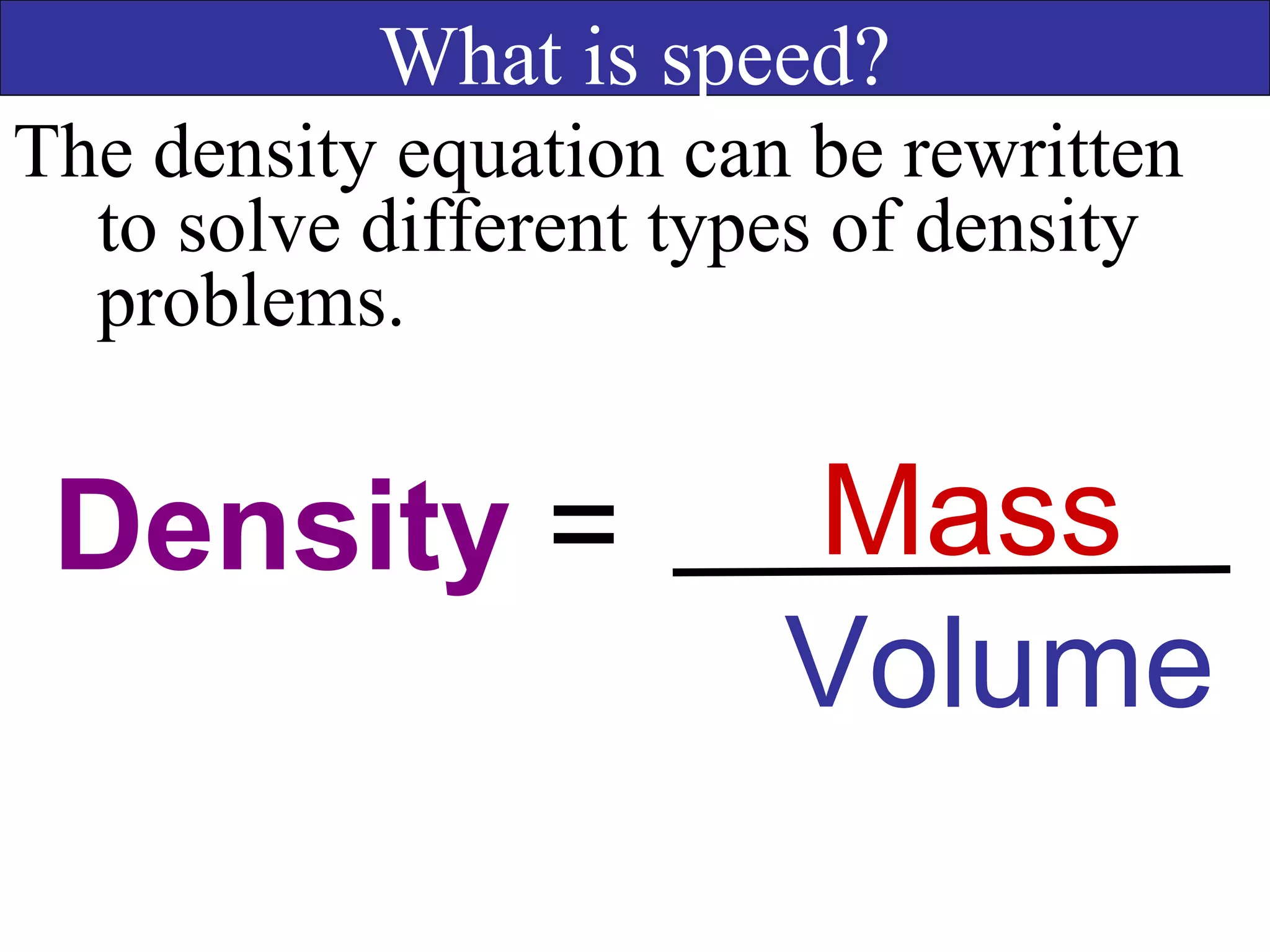
IV. Density can be calculated using the
following formula:
Density = Mass
Volume
Density = g
mL
Mass
Volume
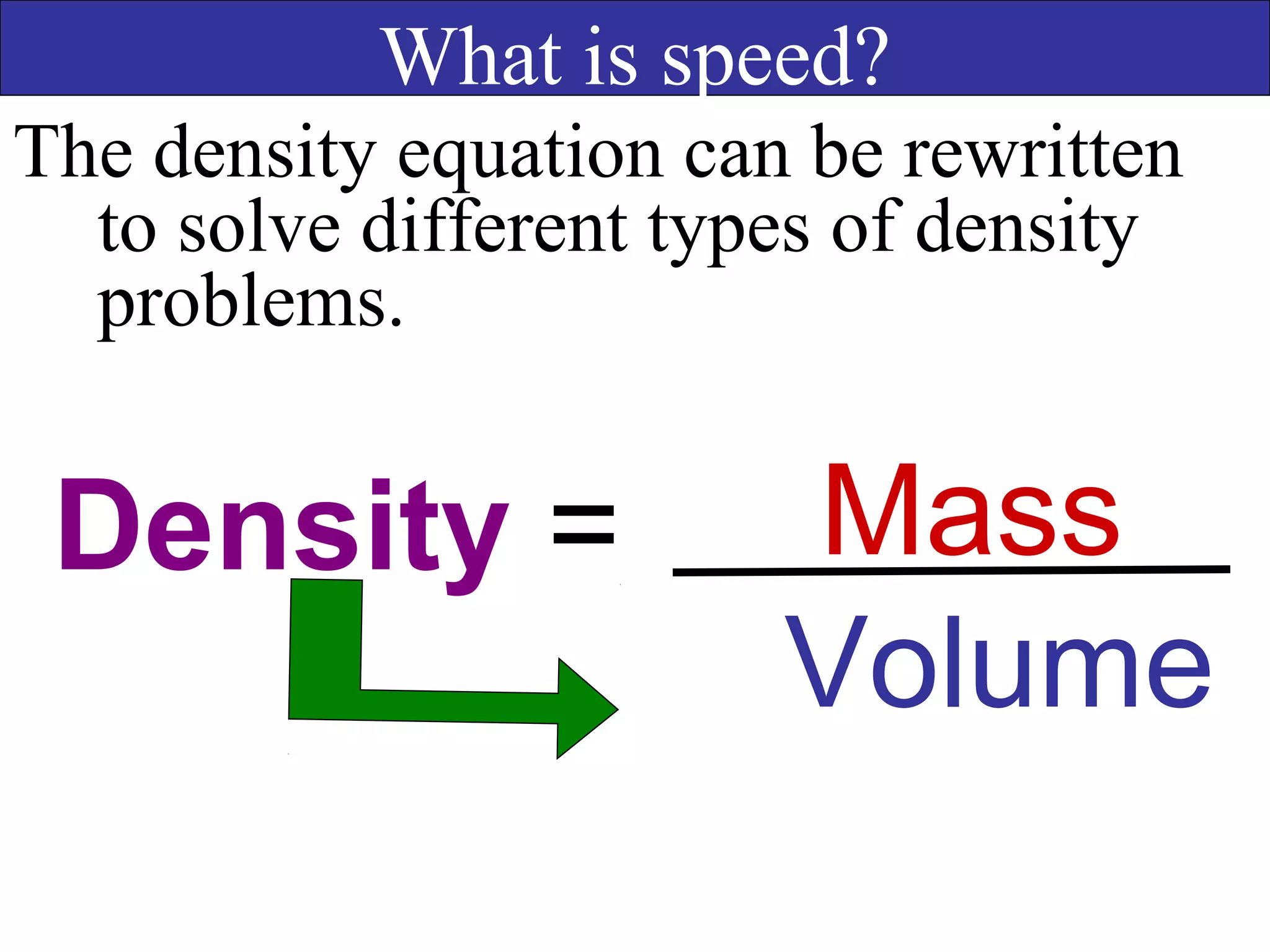
What is speed?
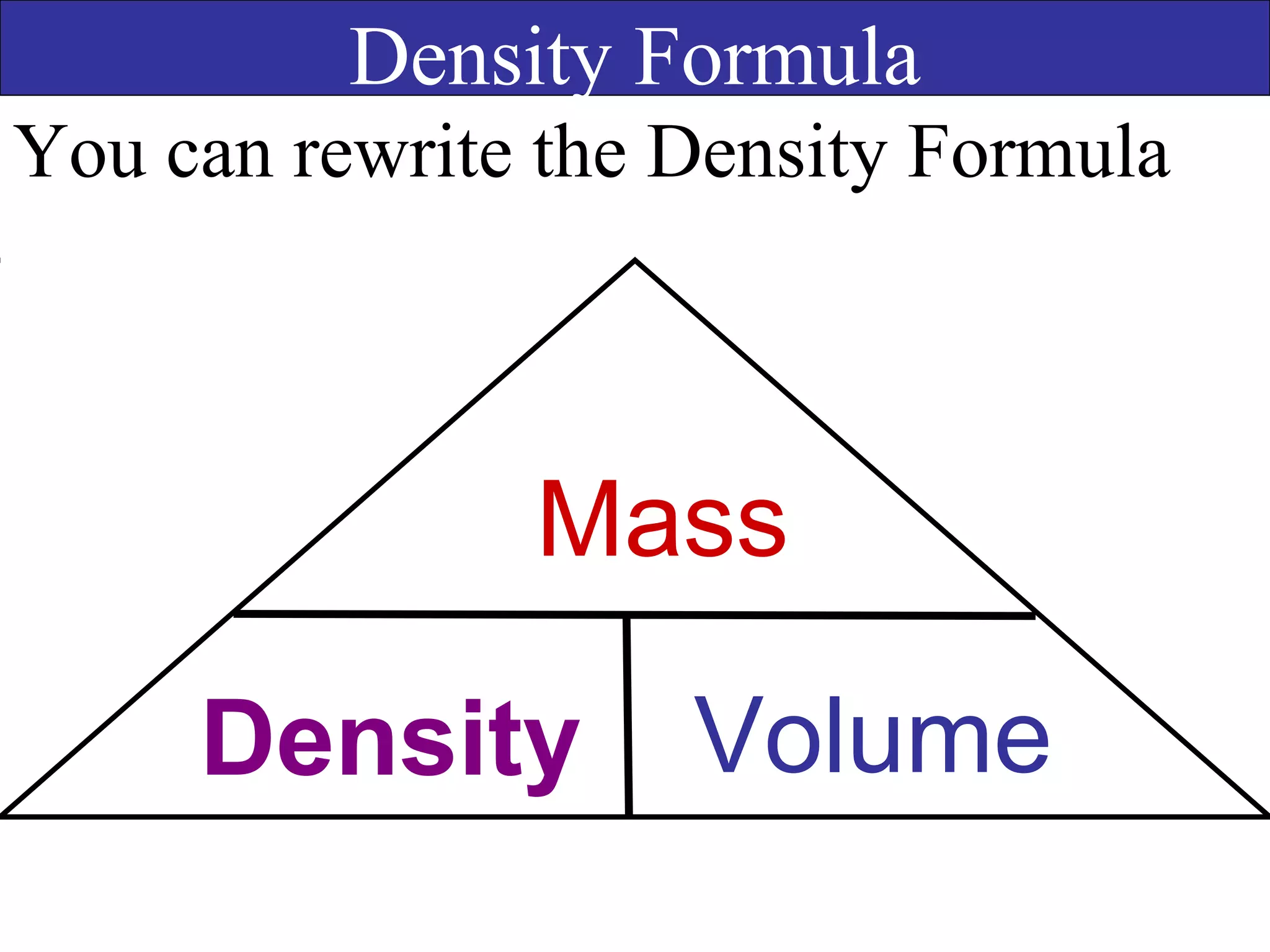
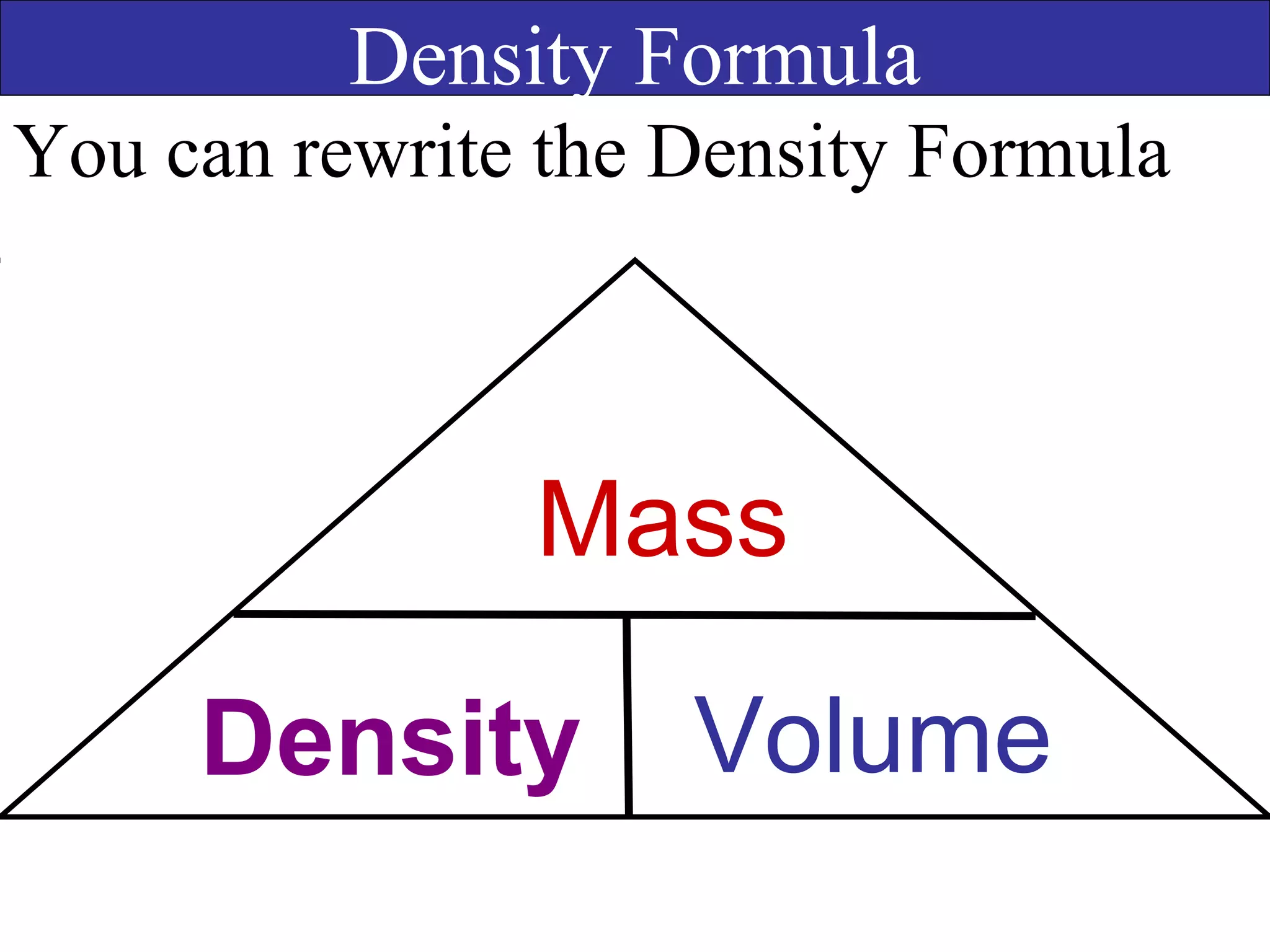
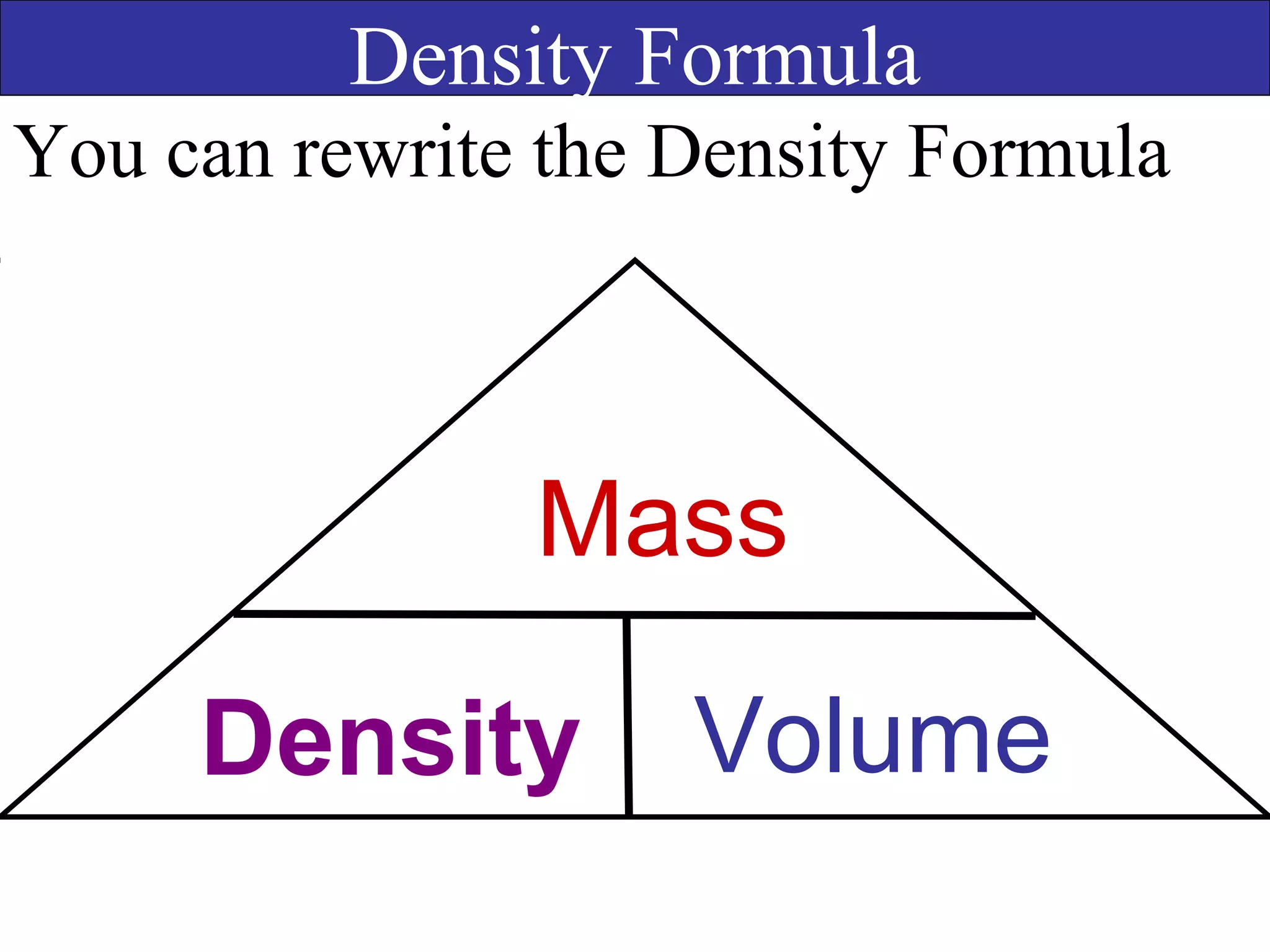
The density equation can be rewritten
to solve different types of density
problems.
Density =
Mass
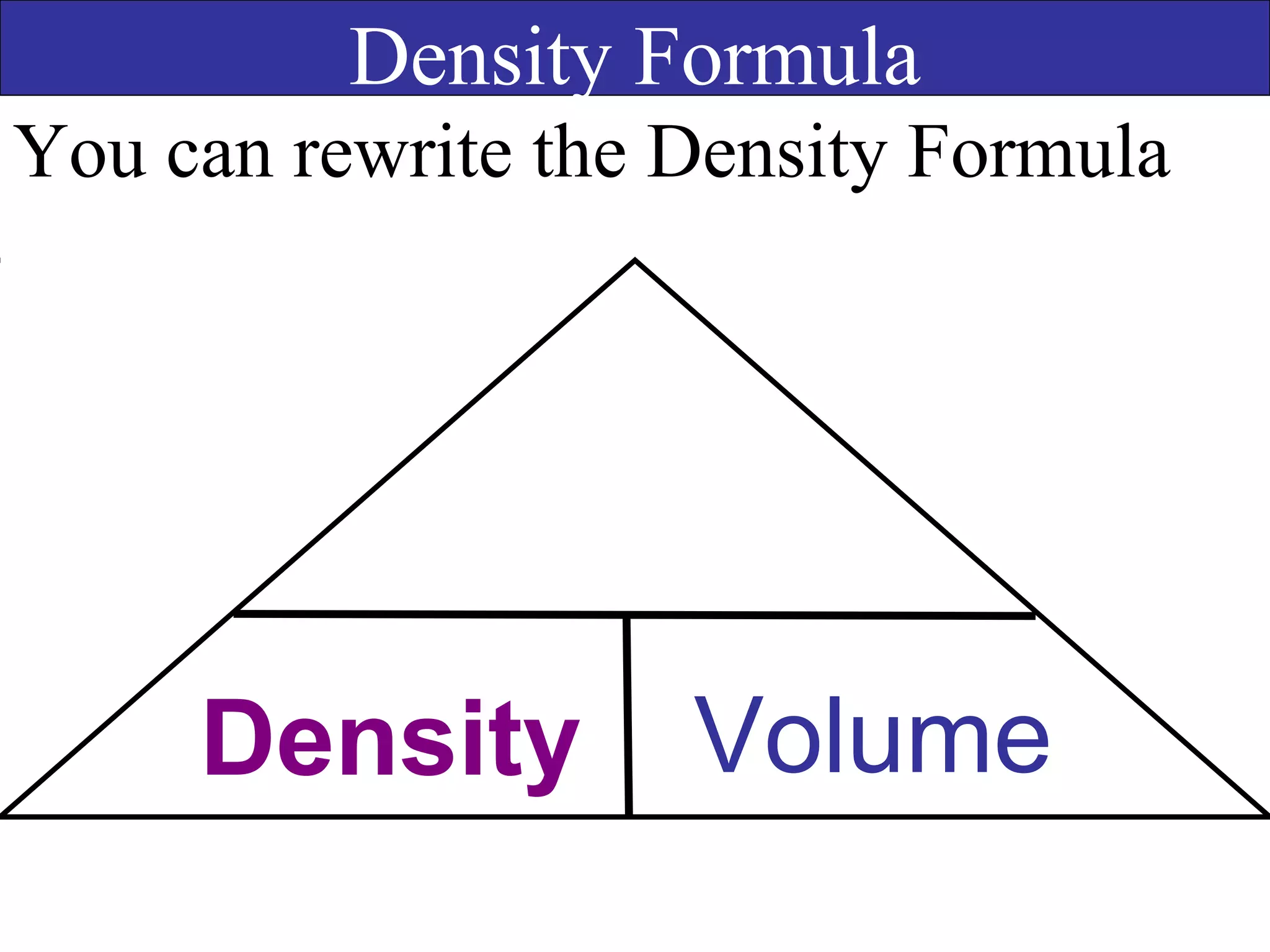
Density Formula
You can rewrite the Density Formula
Density Volume
CST Review Questions
Mass
Volume
What is speed?
The density equation can be rewritten
to solve different types of density
problems.
Density =
Mass
Density Formula
You can rewrite the Density Formula
Density Volume
5
CST Review Questions
5
CST Review Questions
Mass
Density Formula
You can rewrite the Density Formula
Density Volume
Mass
Density Formula
You can rewrite the Density Formula
Density Volume
5
CST Review Questions
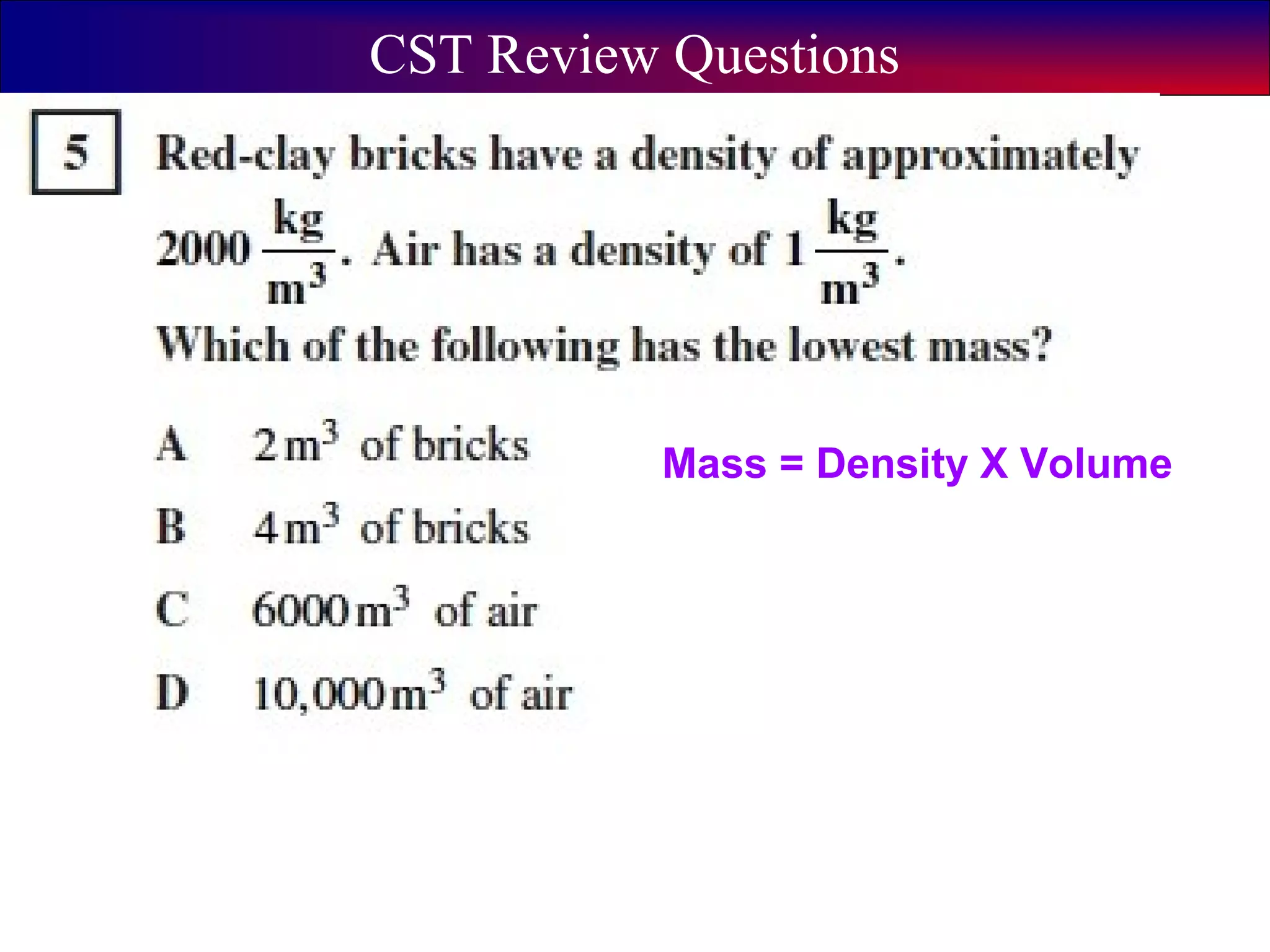
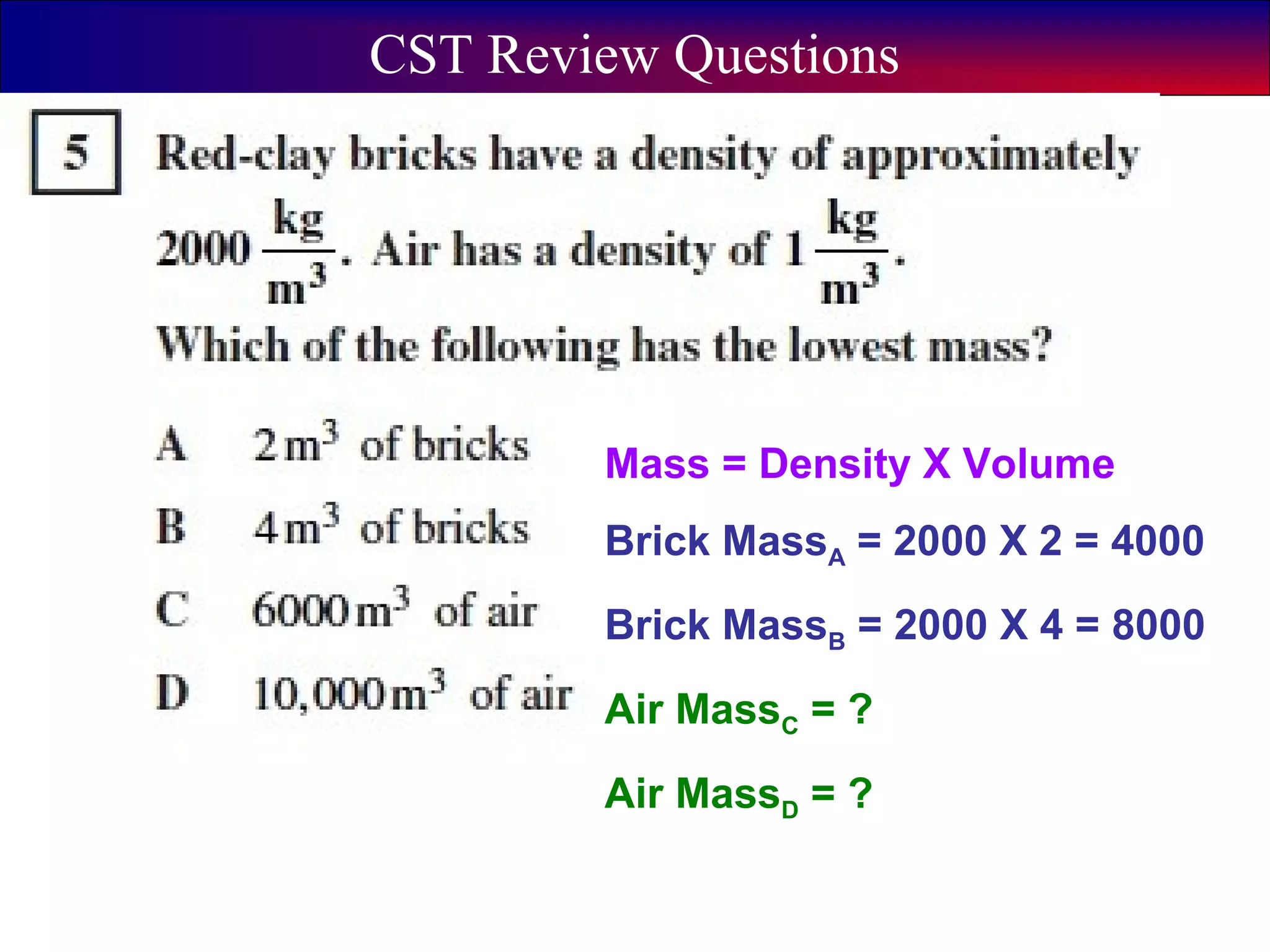
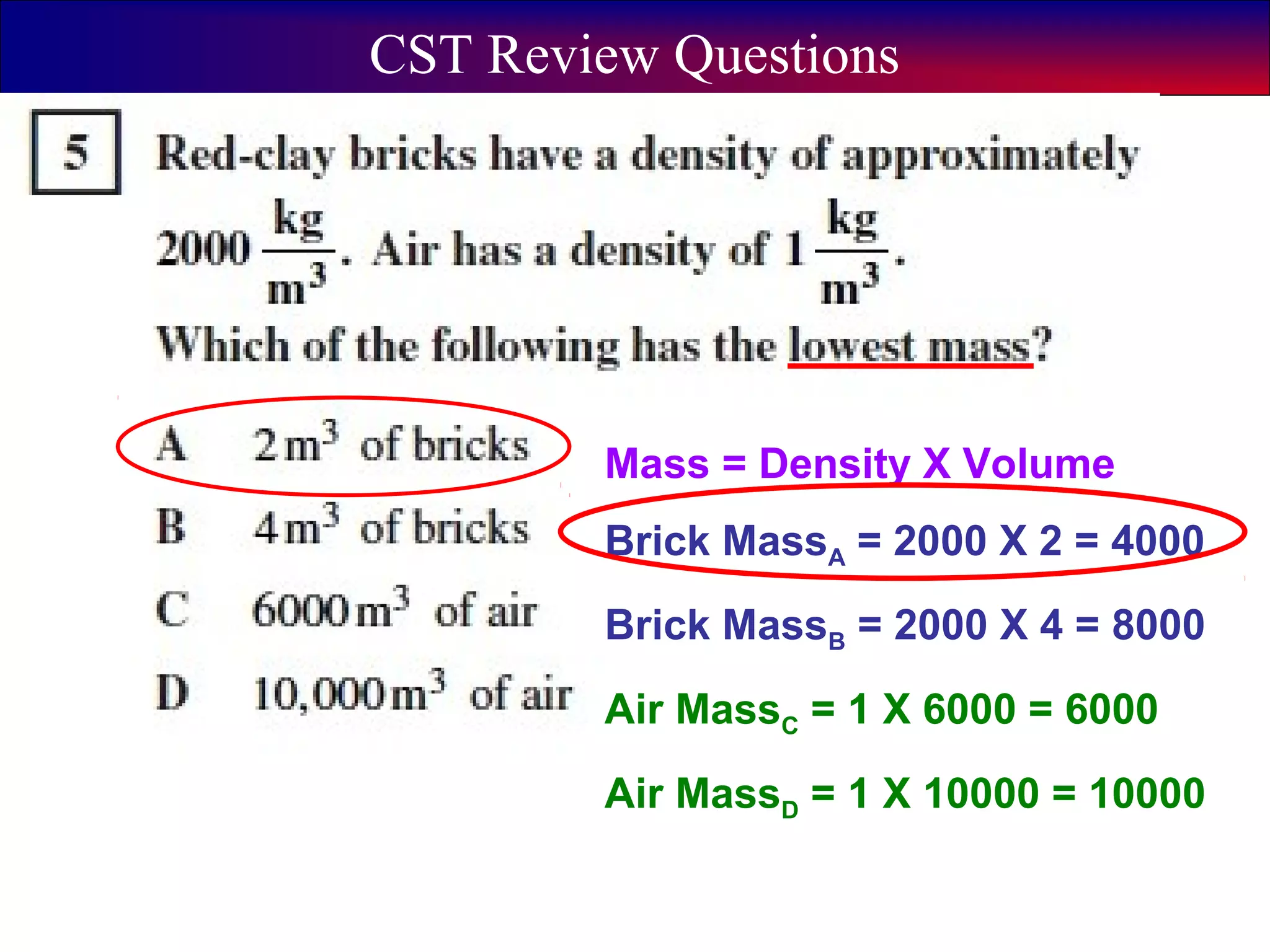
Mass = Density X Volume
5
CST Review Questions
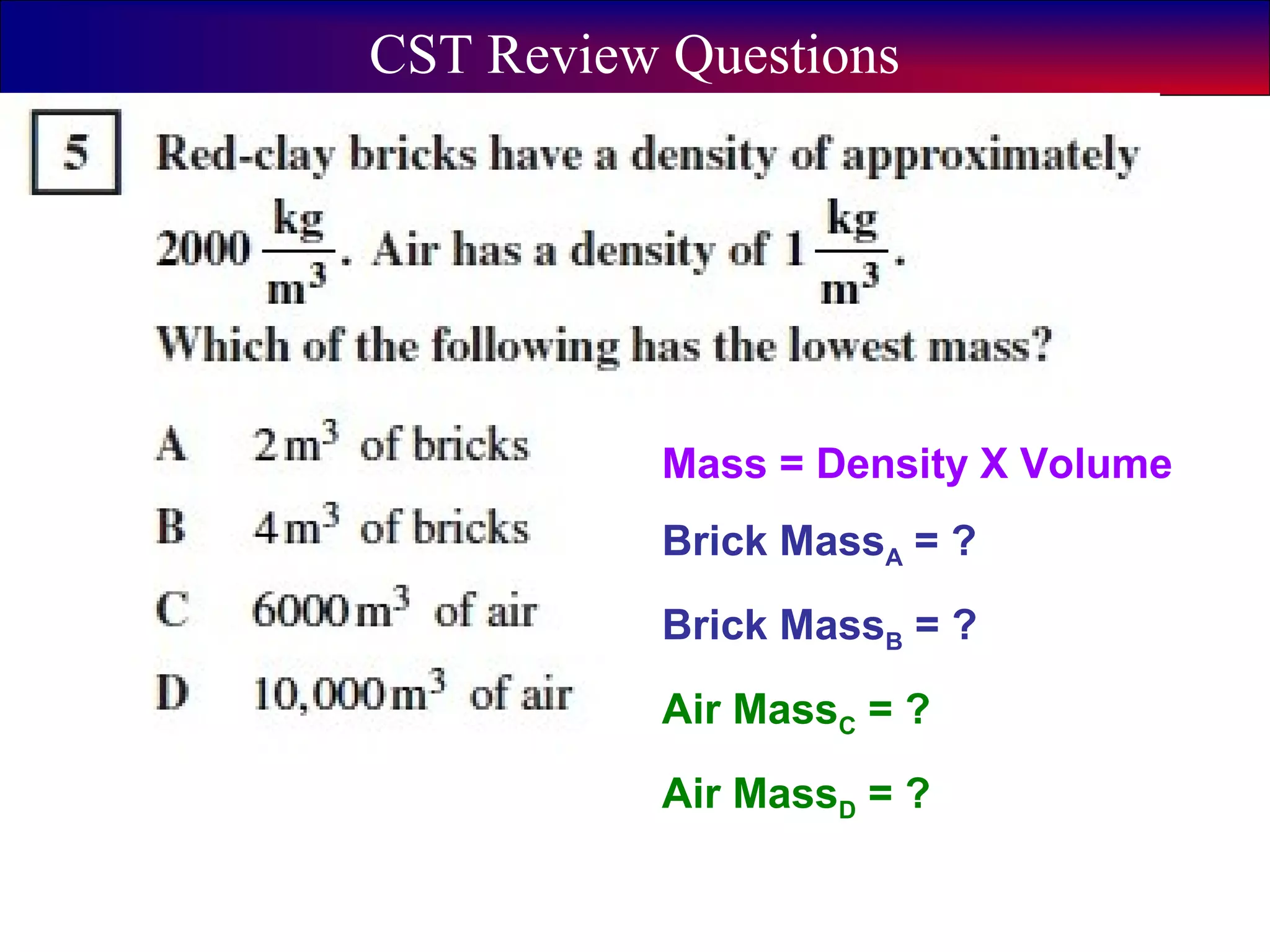
Mass = Density X Volume
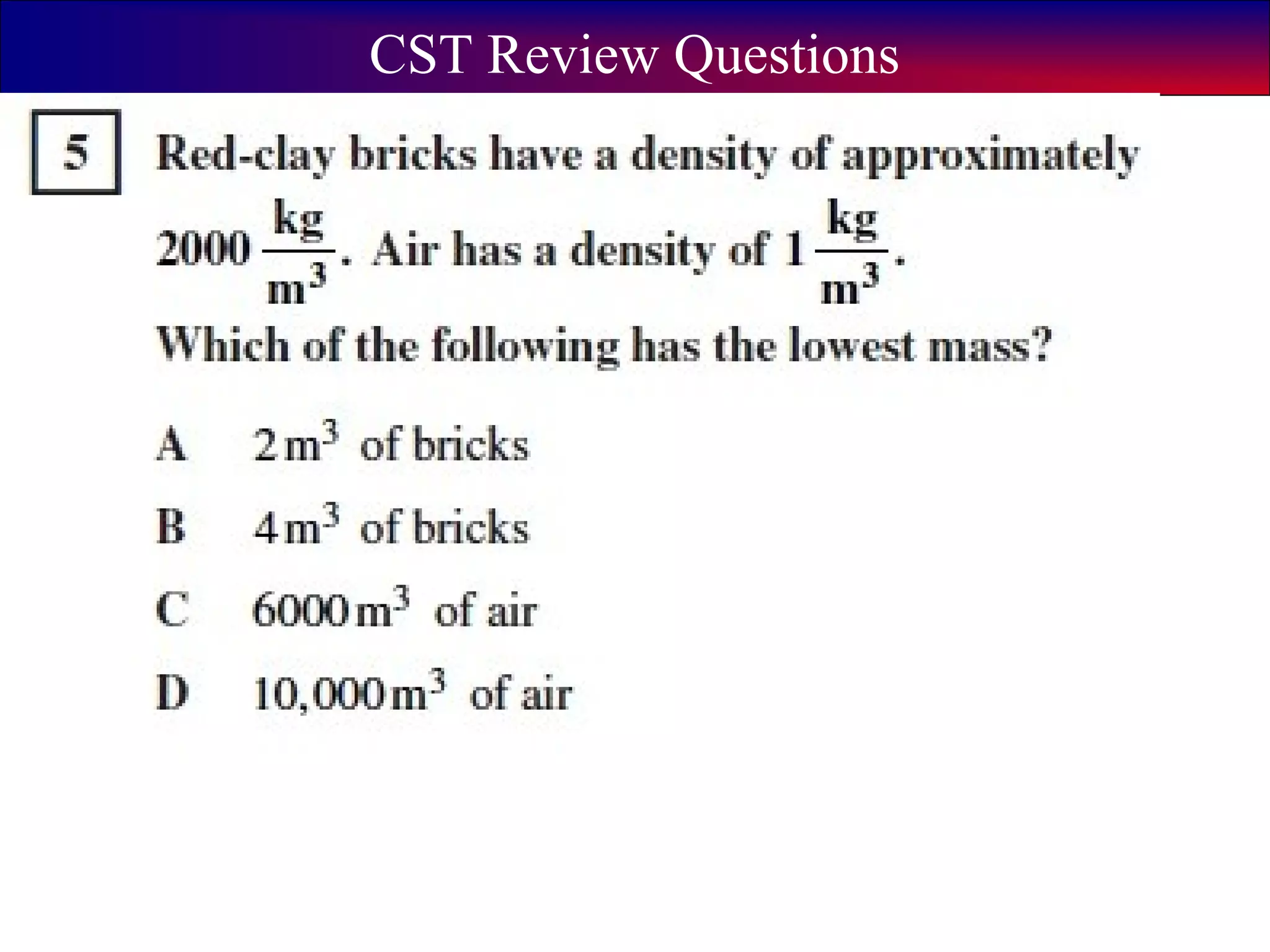
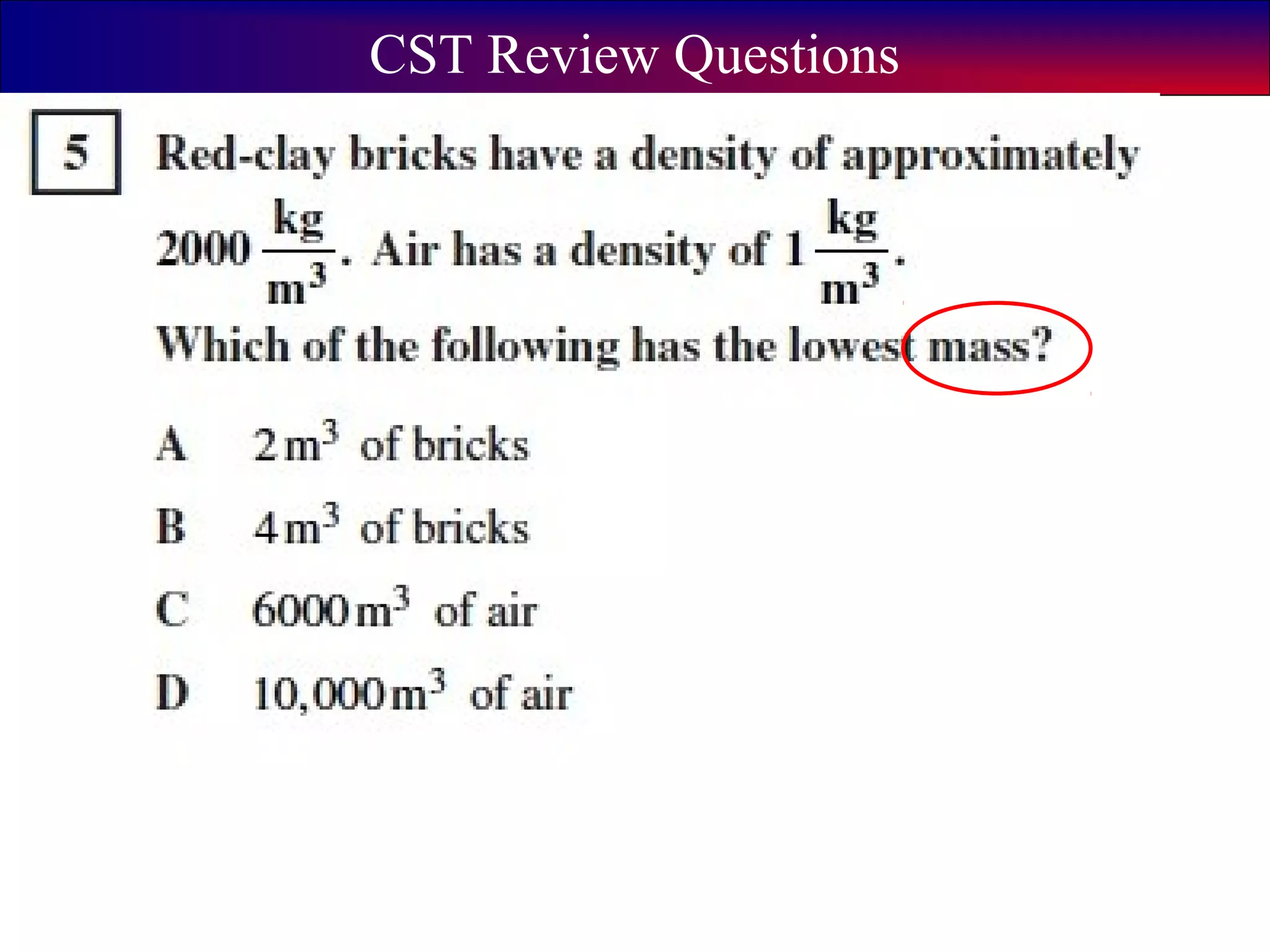
Brick MassA = ?
Brick MassB = ?
Air MassC = ?
Air MassD = ?
5
CST Review Questions
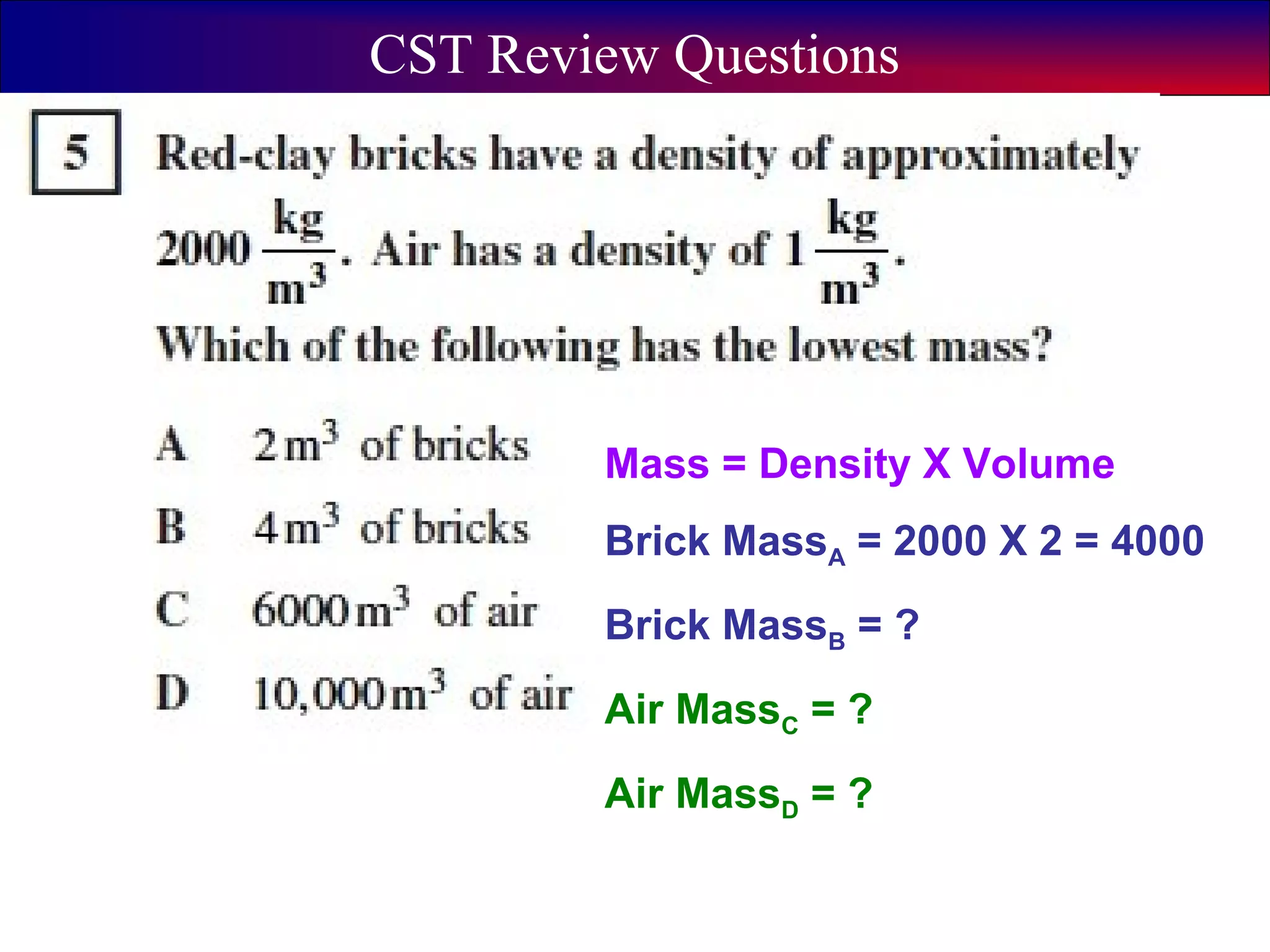
Mass = Density X Volume
Brick MassA = 2000 X 2 = 4000
Brick MassB = ?
Air MassC = ?
Air MassD = ?
5
CST Review Questions
Mass = Density X Volume
Brick MassA = 2000 X 2 = 4000
Brick MassB = 2000 X 4 = 8000
Air MassC = ?
Air MassD = ?
5
CST Review Questions
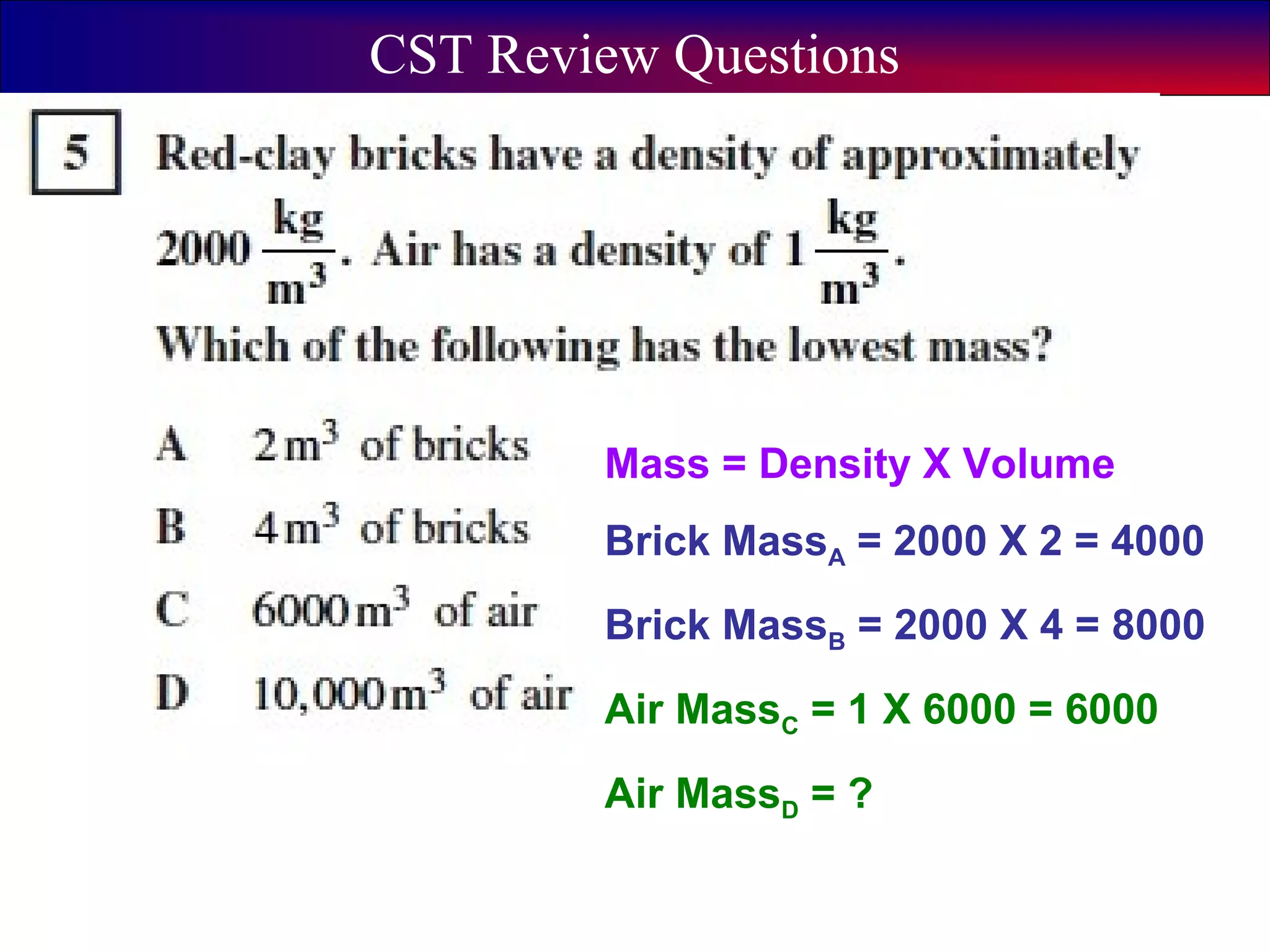
Mass = Density X Volume
Brick MassA = 2000 X 2 = 4000
Brick MassB = 2000 X 4 = 8000
Air MassC = 1 X 6000 = 6000
Air MassD = ?
5
CST Review Questions
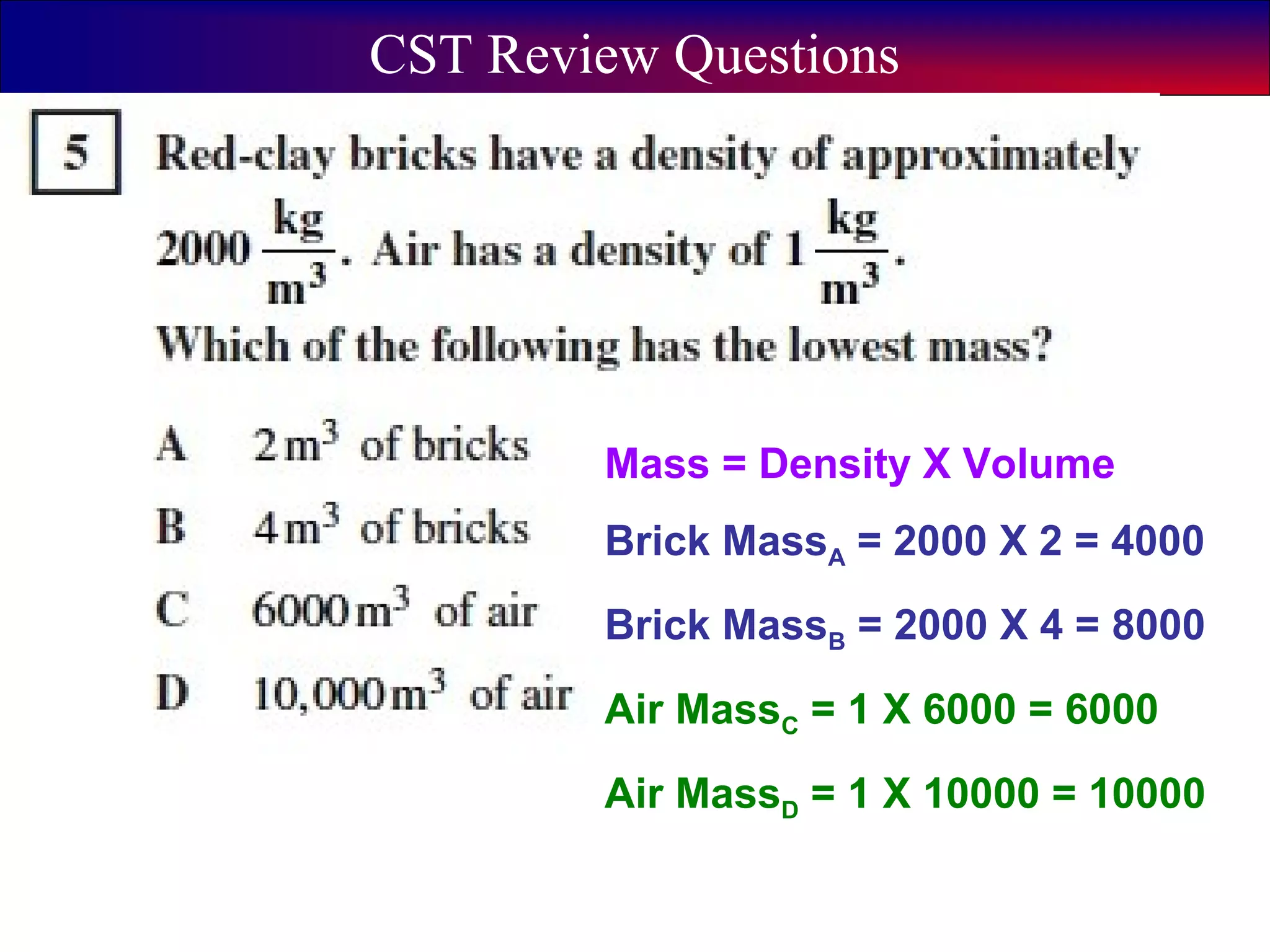
Mass = Density X Volume
Brick MassA = 2000 X 2 = 4000
Brick MassB = 2000 X 4 = 8000
Air MassC = 1 X 6000 = 6000
Air MassD = 1 X 10000 = 10000
5
CST Review Questions
Mass = Density X Volume
Brick MassA = 2000 X 2 = 4000
Brick MassB = 2000 X 4 = 8000
Air MassC = 1 X 6000 = 6000
Air MassD = 1 X 10000 = 10000
5
CST Review Questions
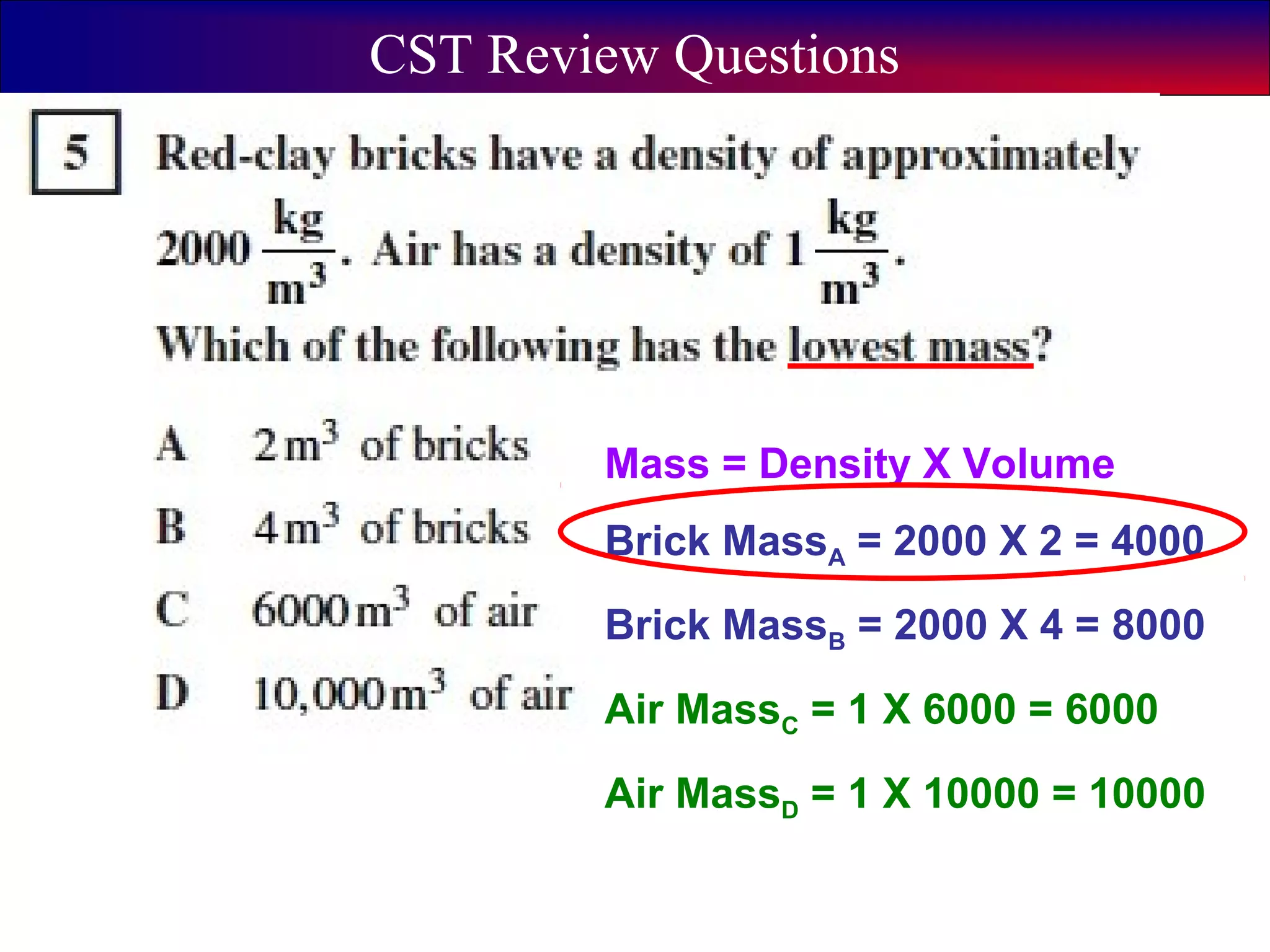
Mass = Density X Volume
Brick MassA = 2000 X 2 = 4000
Brick MassB = 2000 X 4 = 8000
Air MassC = 1 X 6000 = 6000
Air MassD = 1 X 10000 = 10000
CST Review Questions
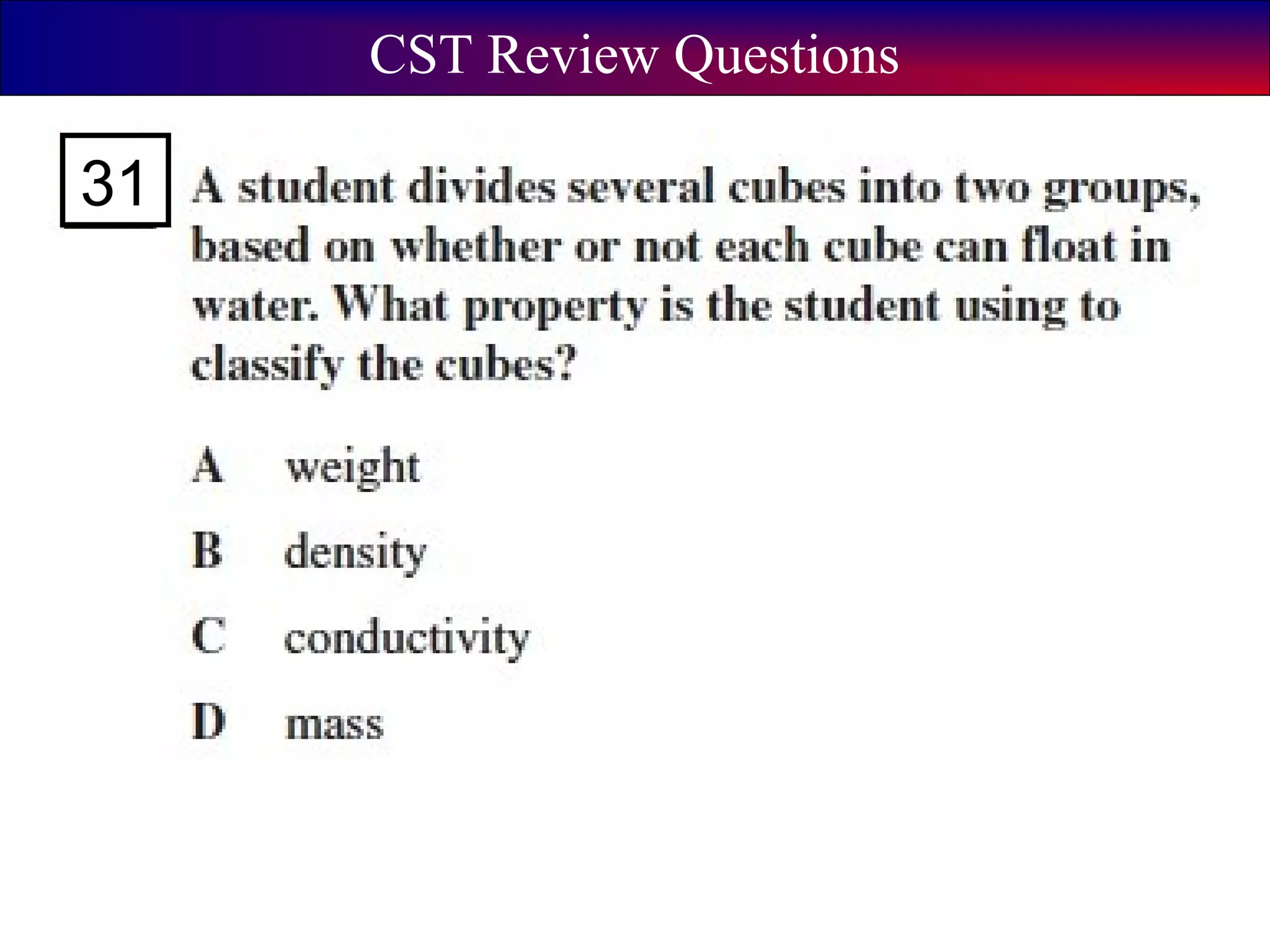
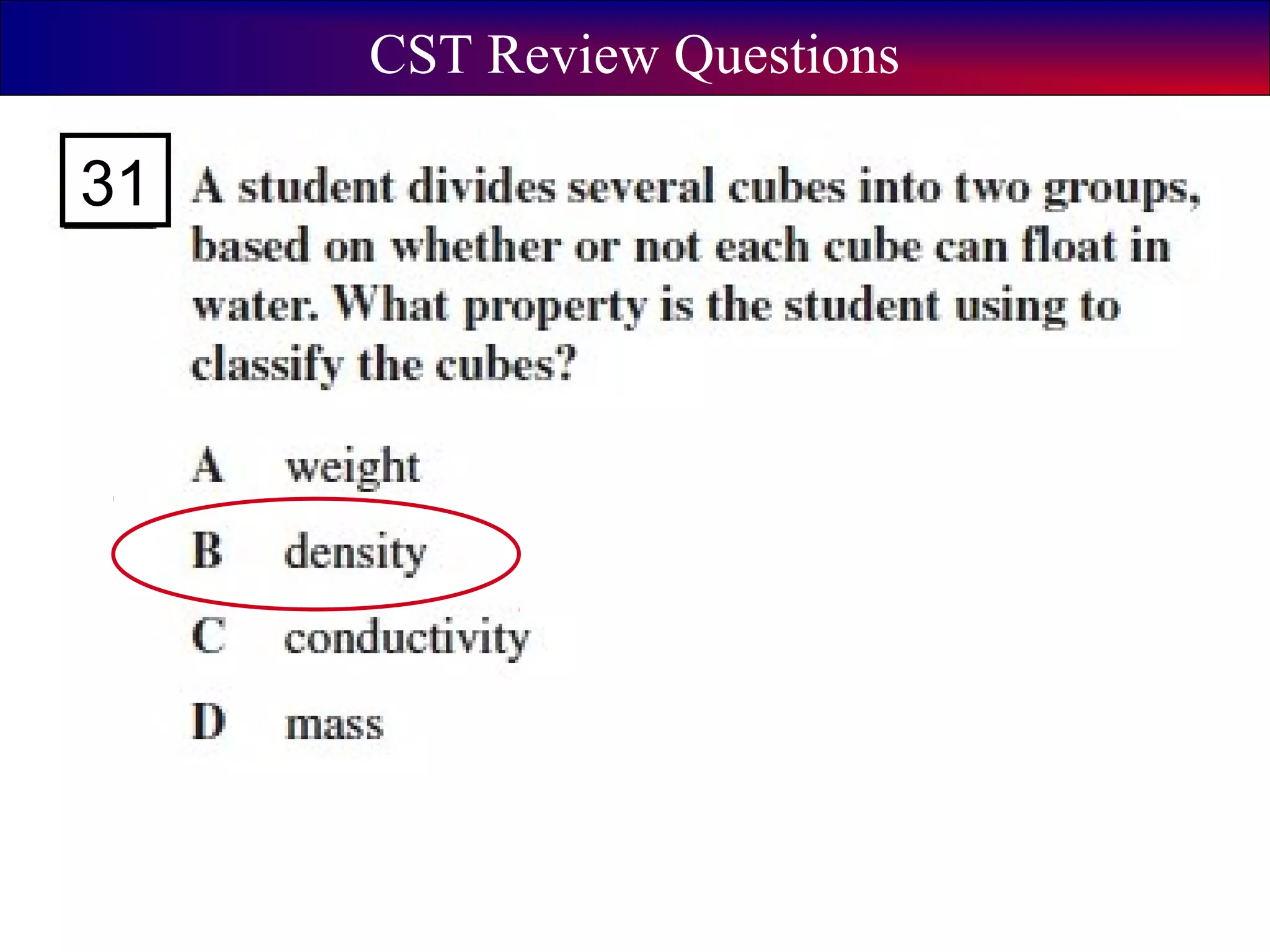
31
Why is density important?
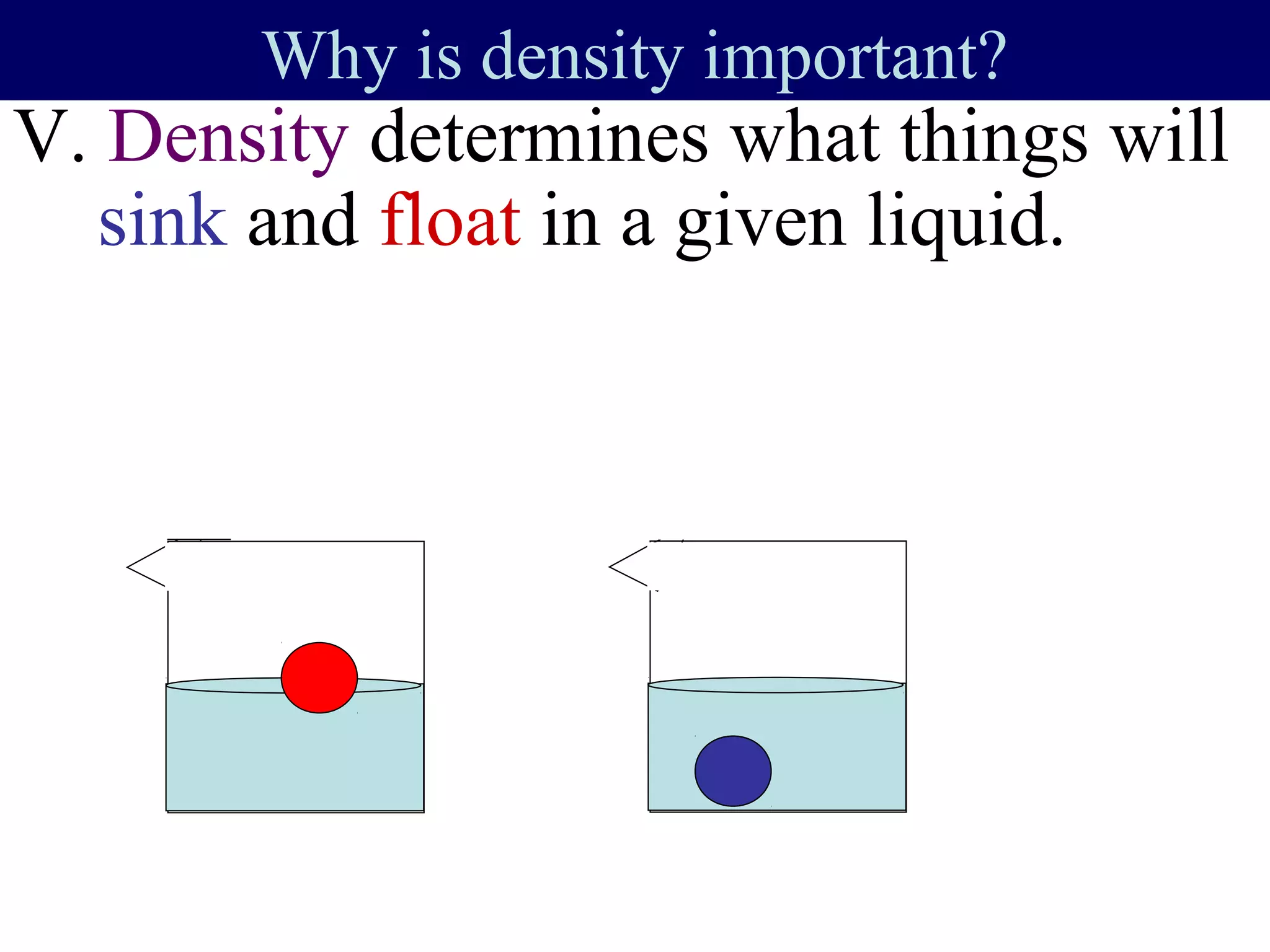
V. Density determines what things will
sink and float in a given liquid.
CST Review Questions
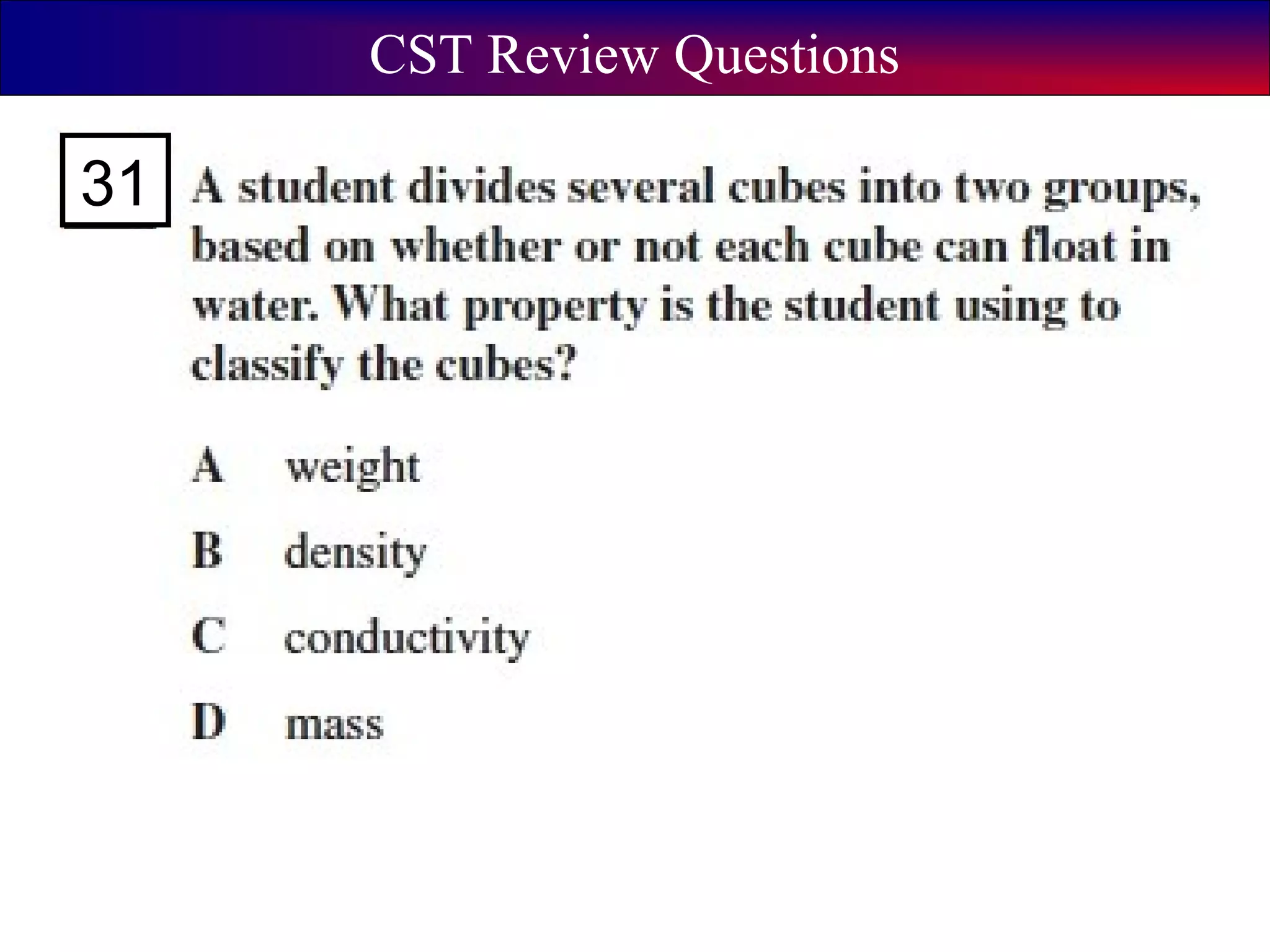
31
CST Review Questions
31
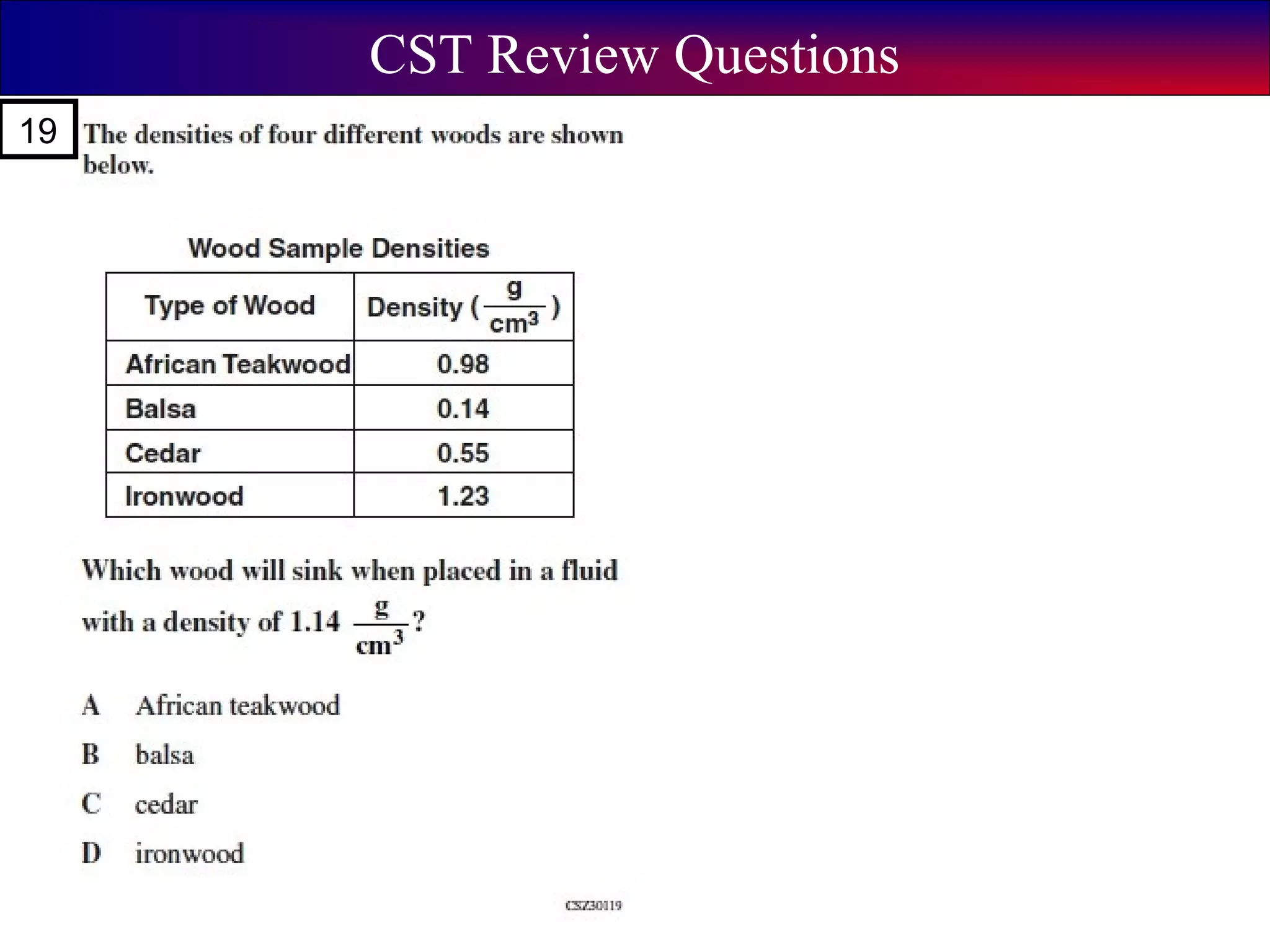
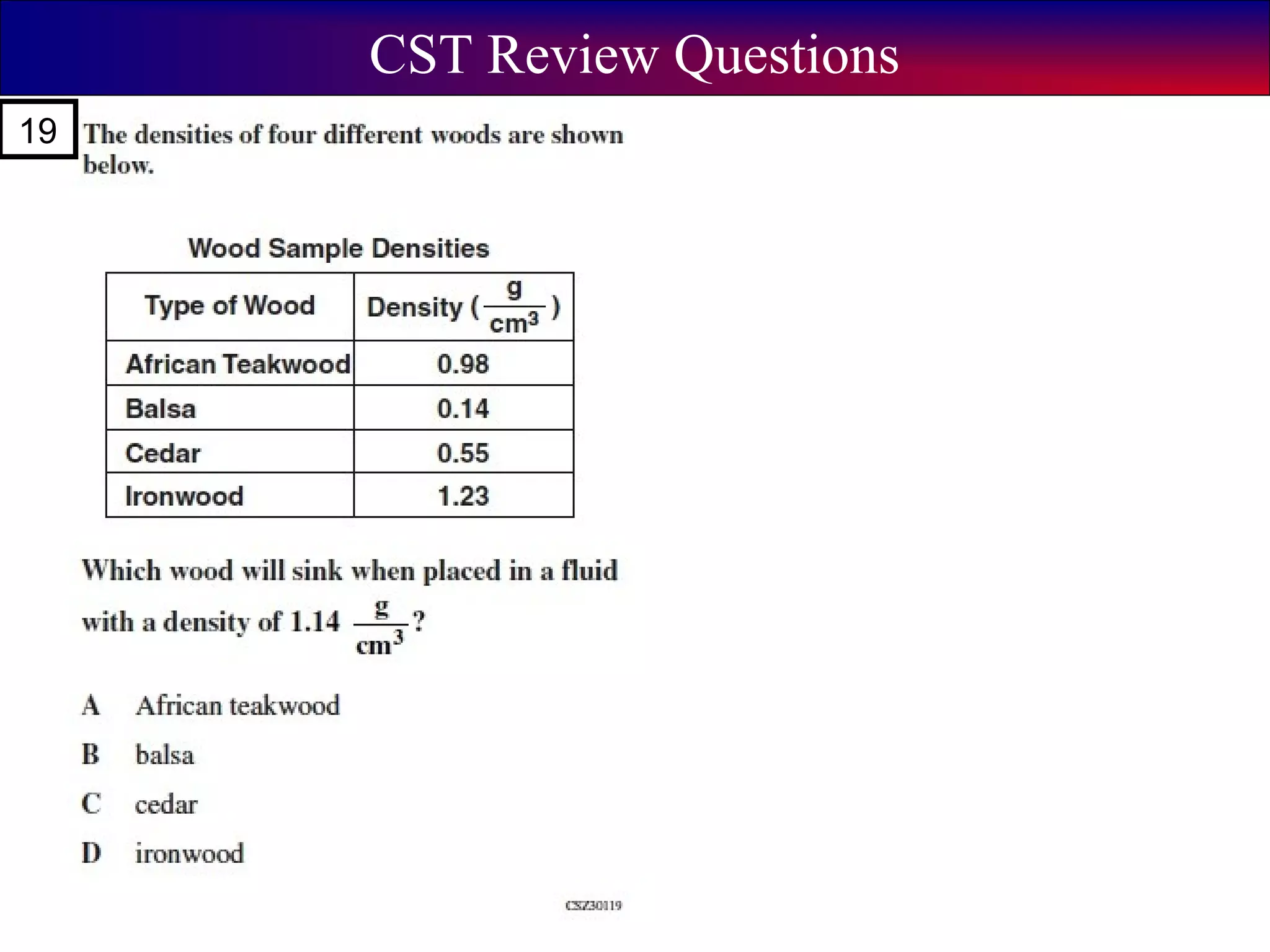
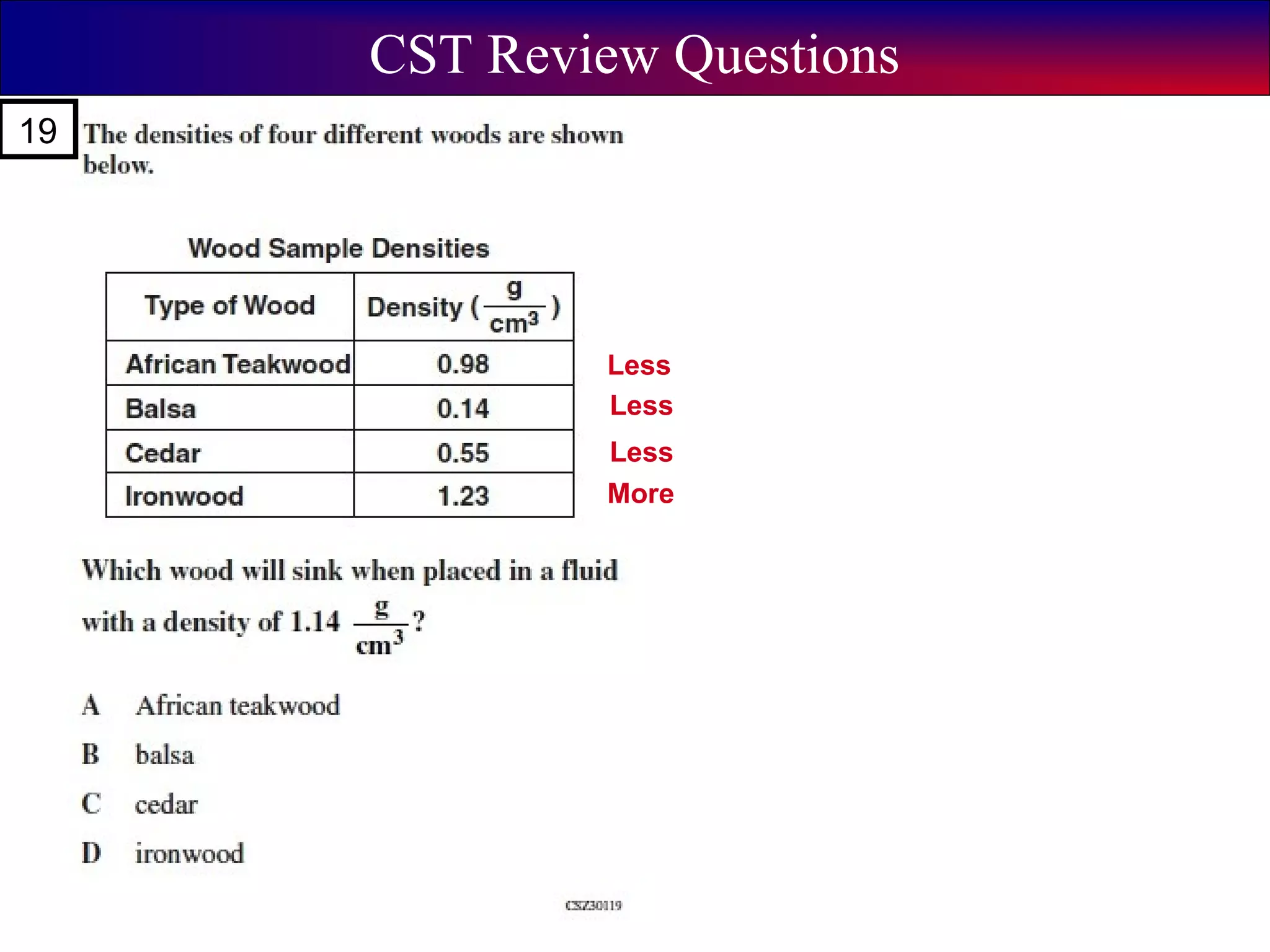
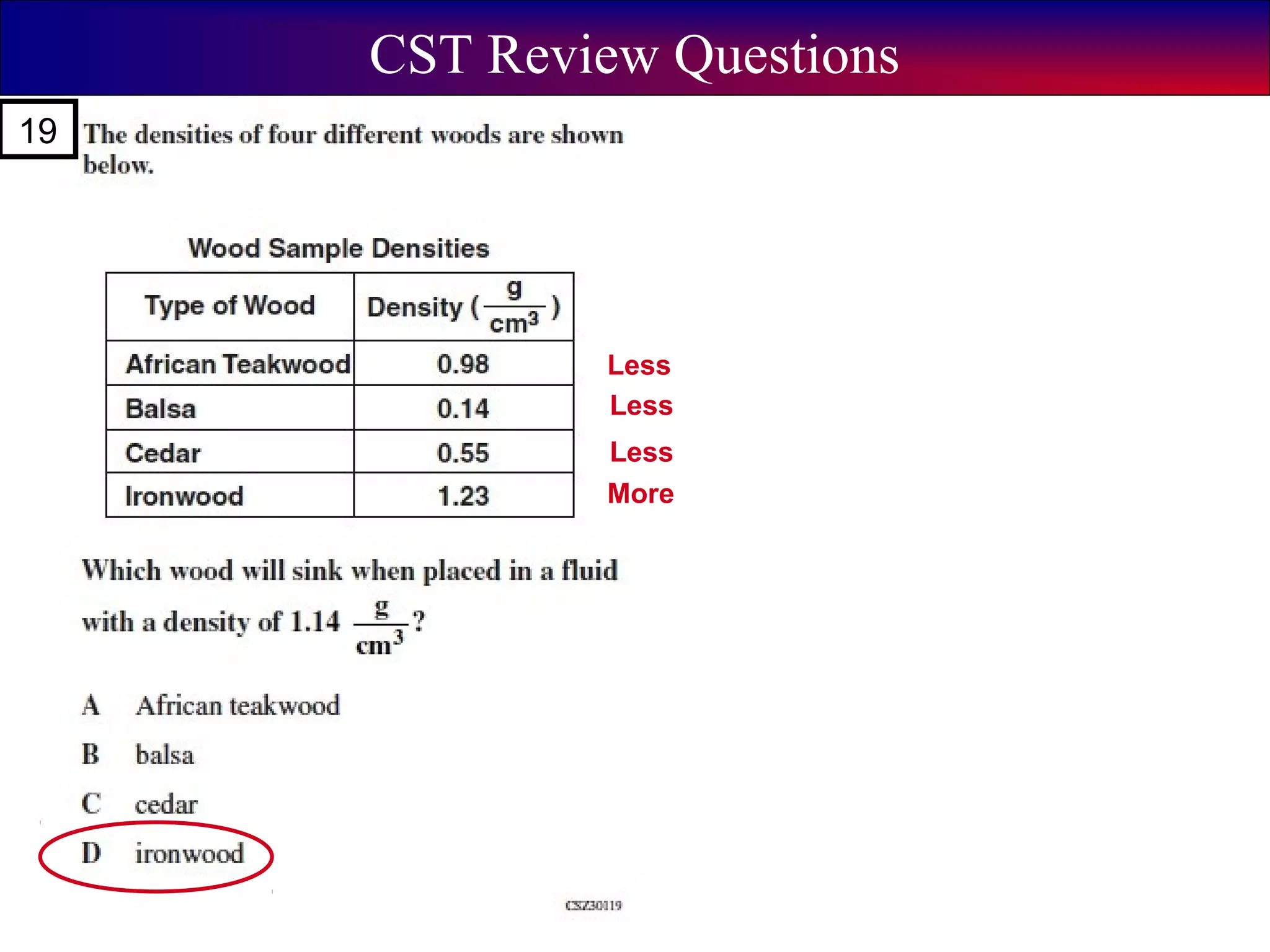
19
CST Review Questions
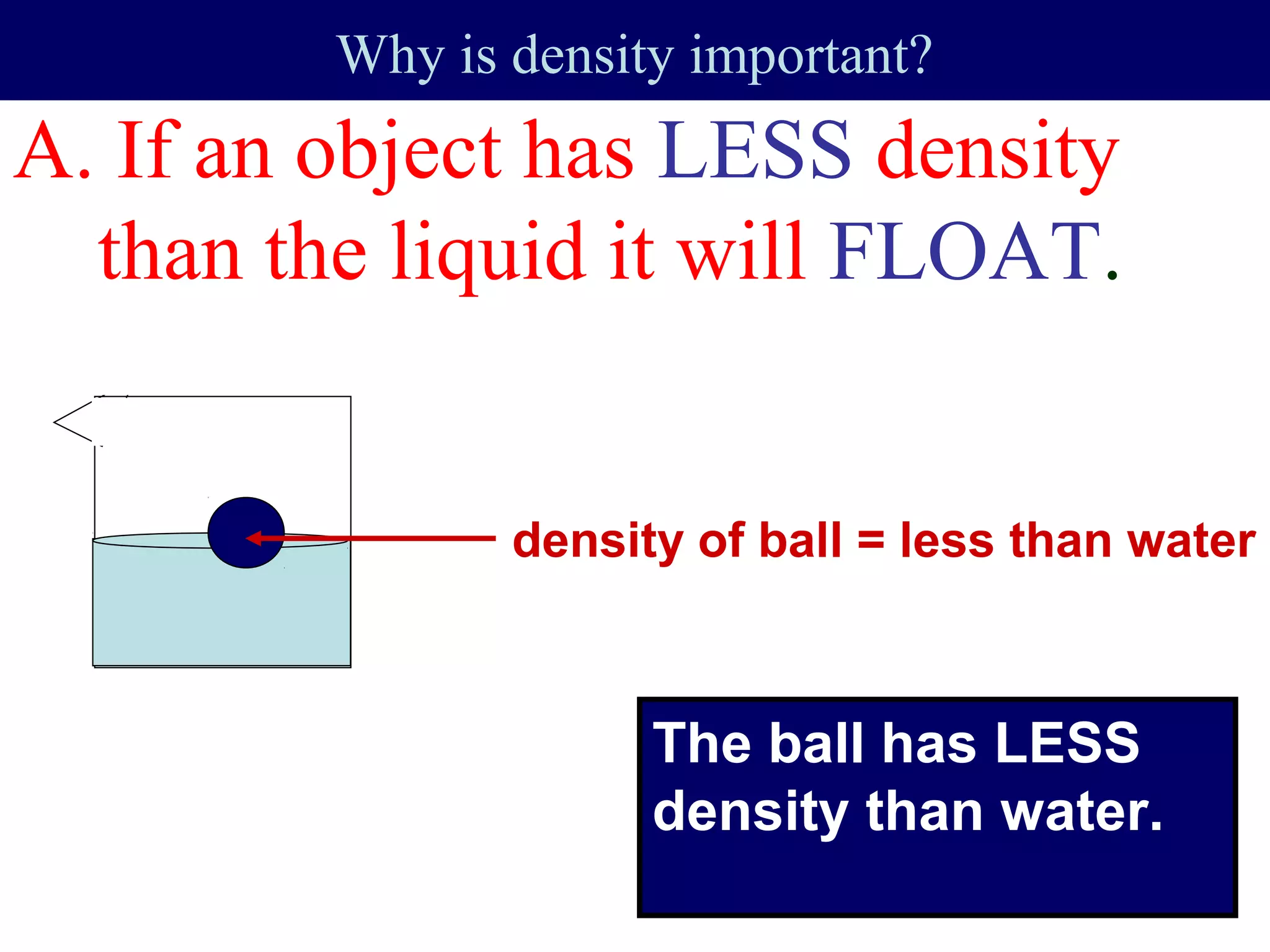
Why is density important?
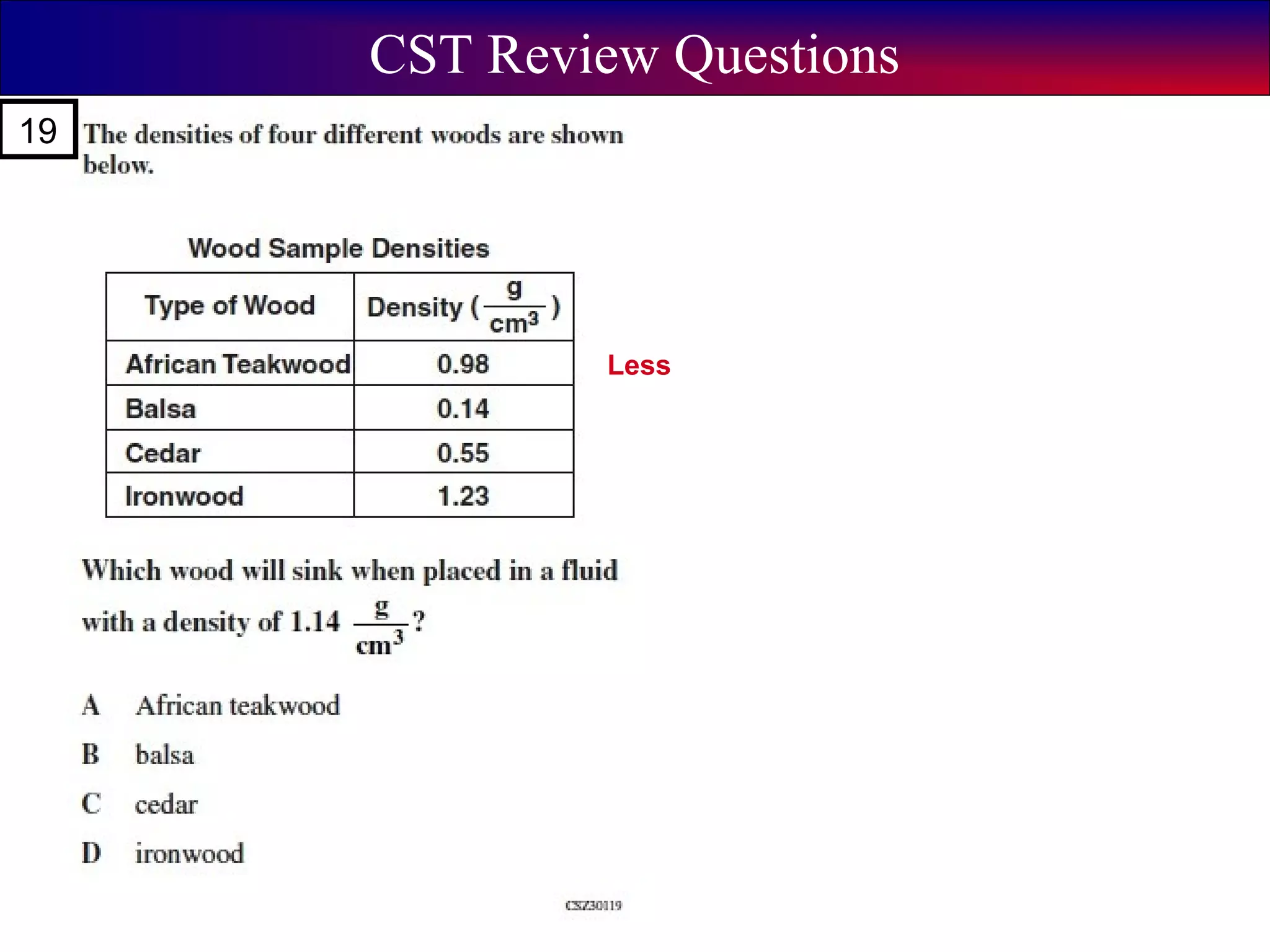
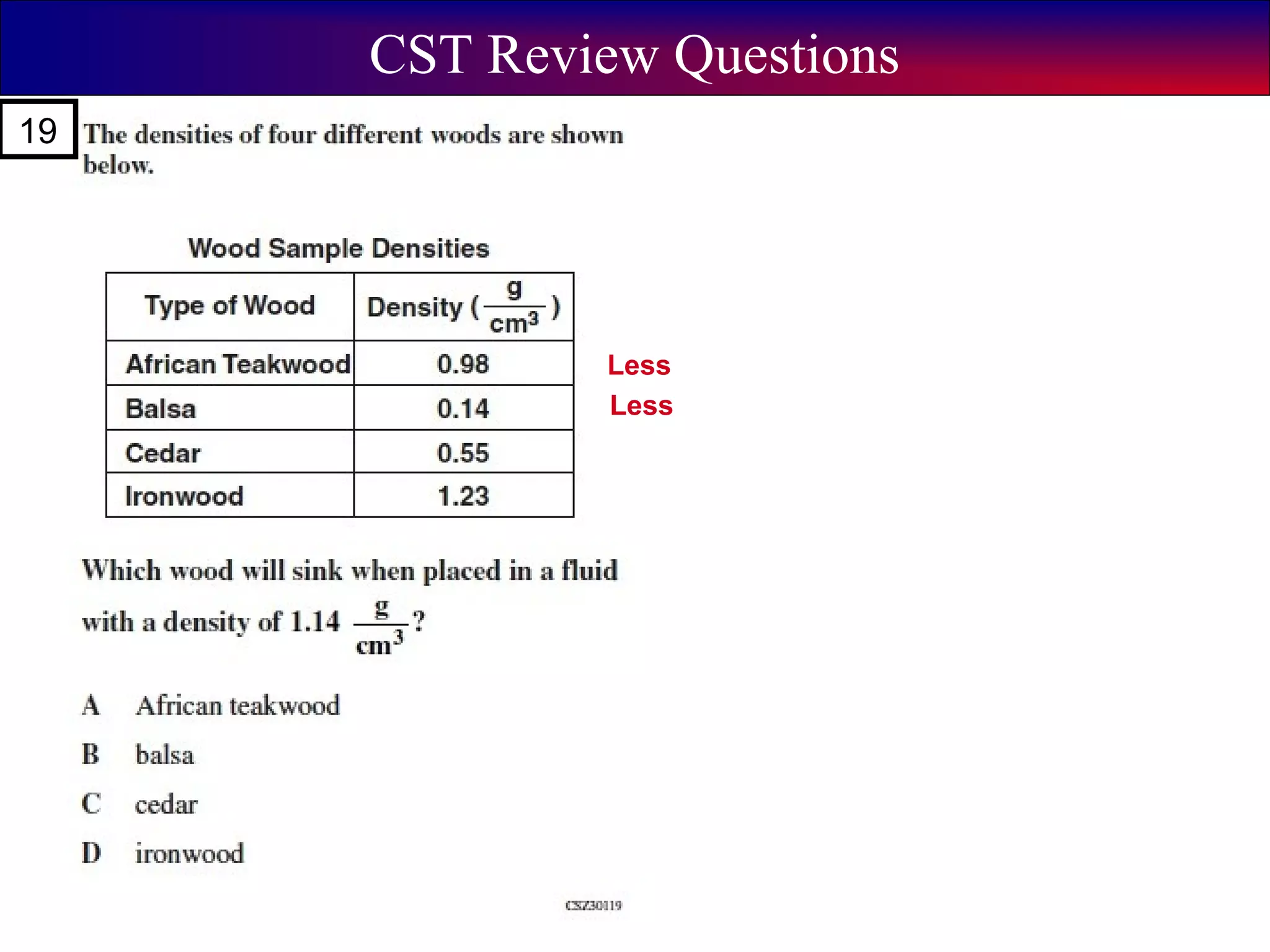
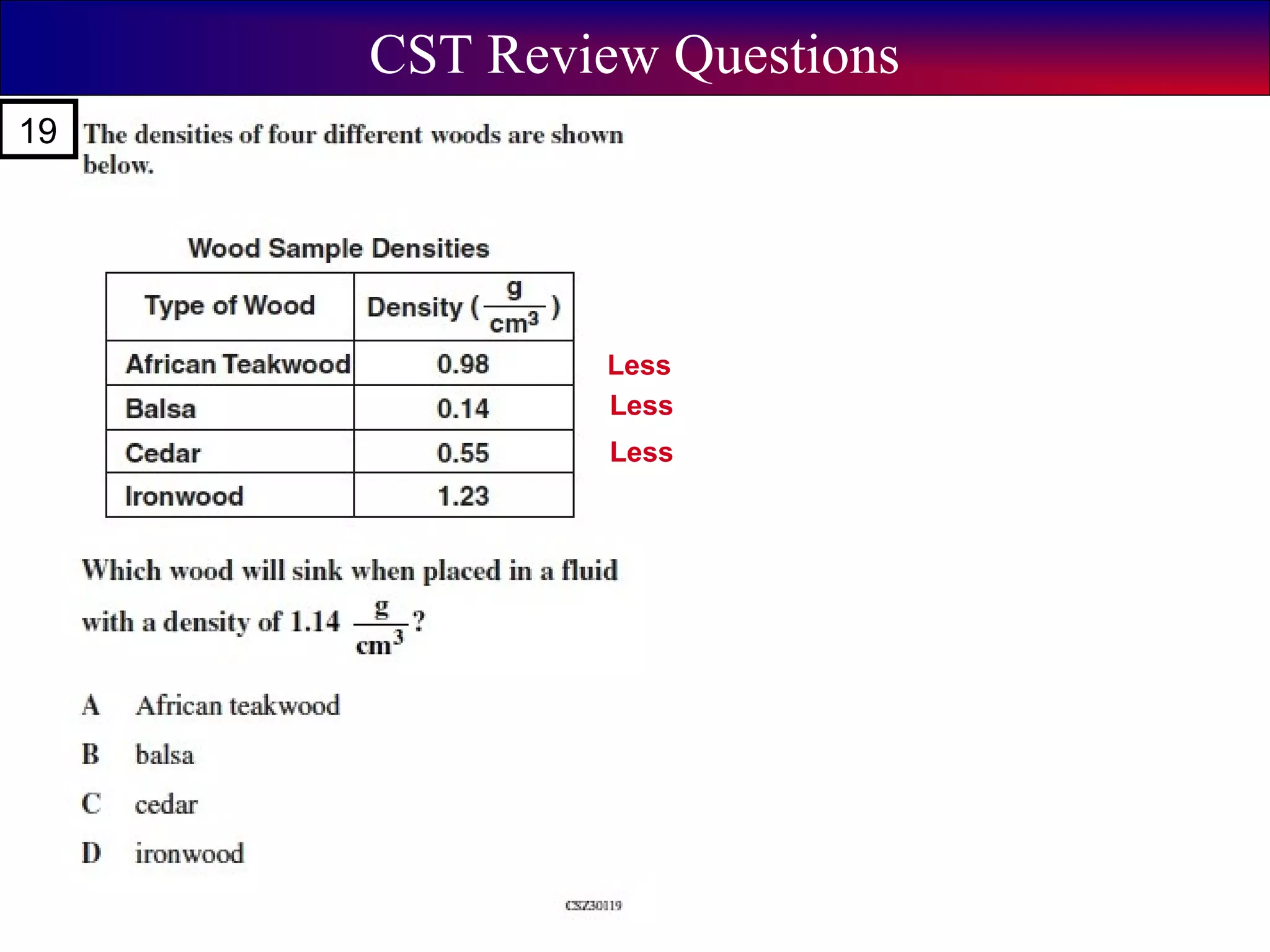
A. If an object has LESS density
than the liquid it will FLOAT.
The ball has LESS
density than water.
density of ball = less than water
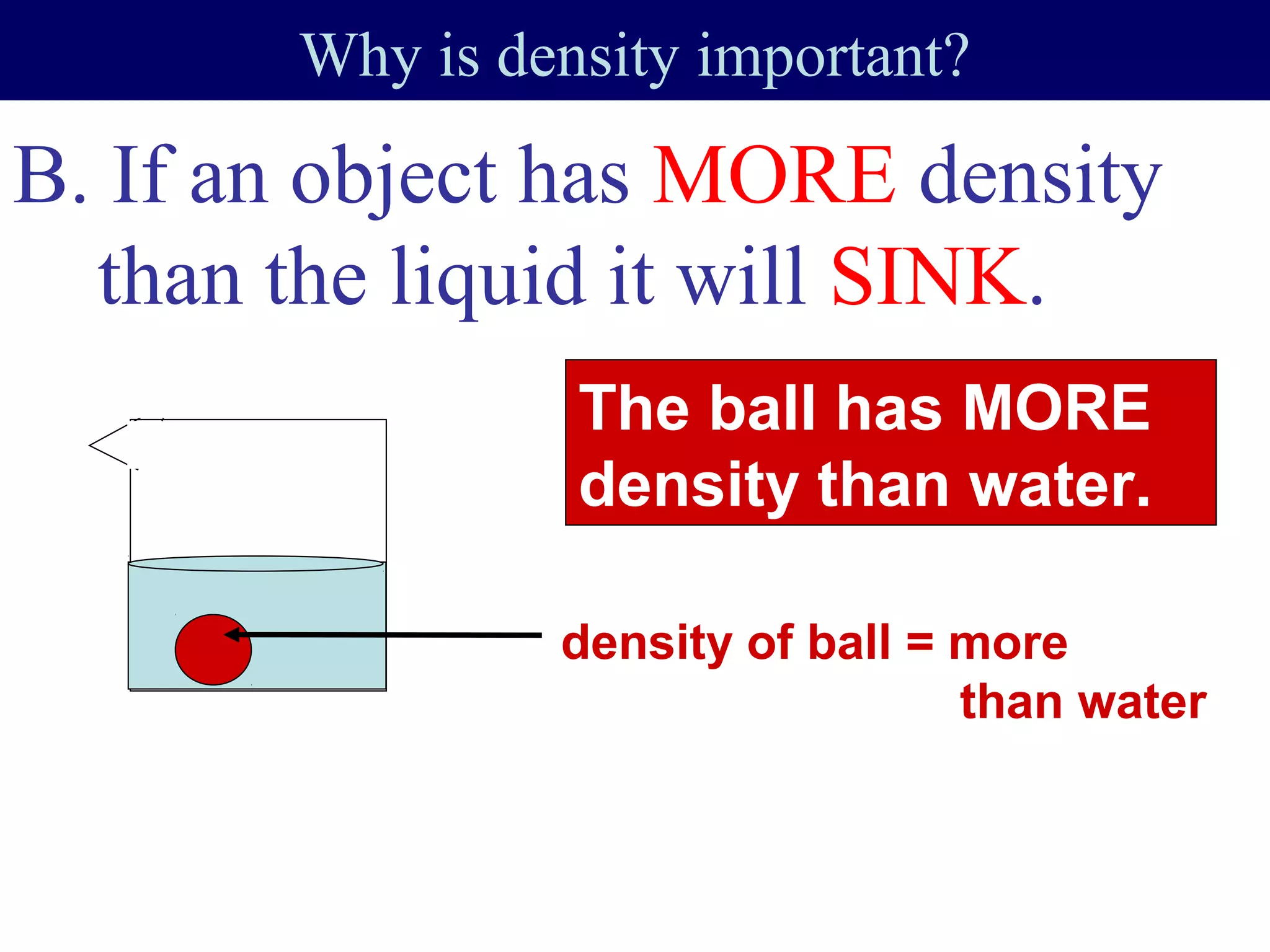
Why is density important?
B. If an object has MORE density
than the liquid it will SINK.
The ball has MORE
density than water.
density of ball = more
than water
CST Review Questions
19
CST Review Questions
Less
19
CST Review Questions
Less
Less
19
CST Review Questions
Less
Less
Less
19
CST Review Questions
Less
Less
Less
More
19
CST Review Questions
Less
Less
Less
More
19
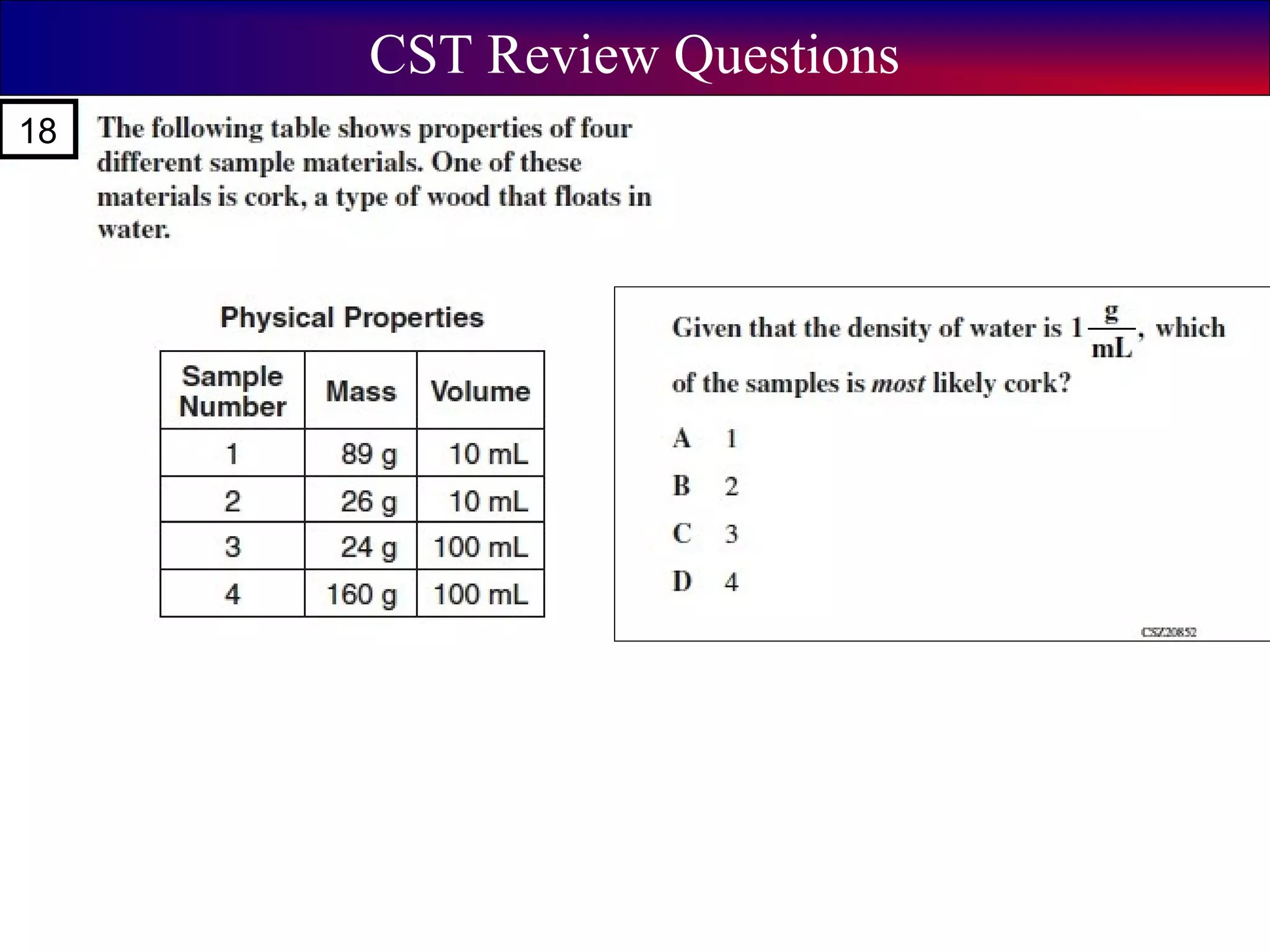
18
CST Review Questions
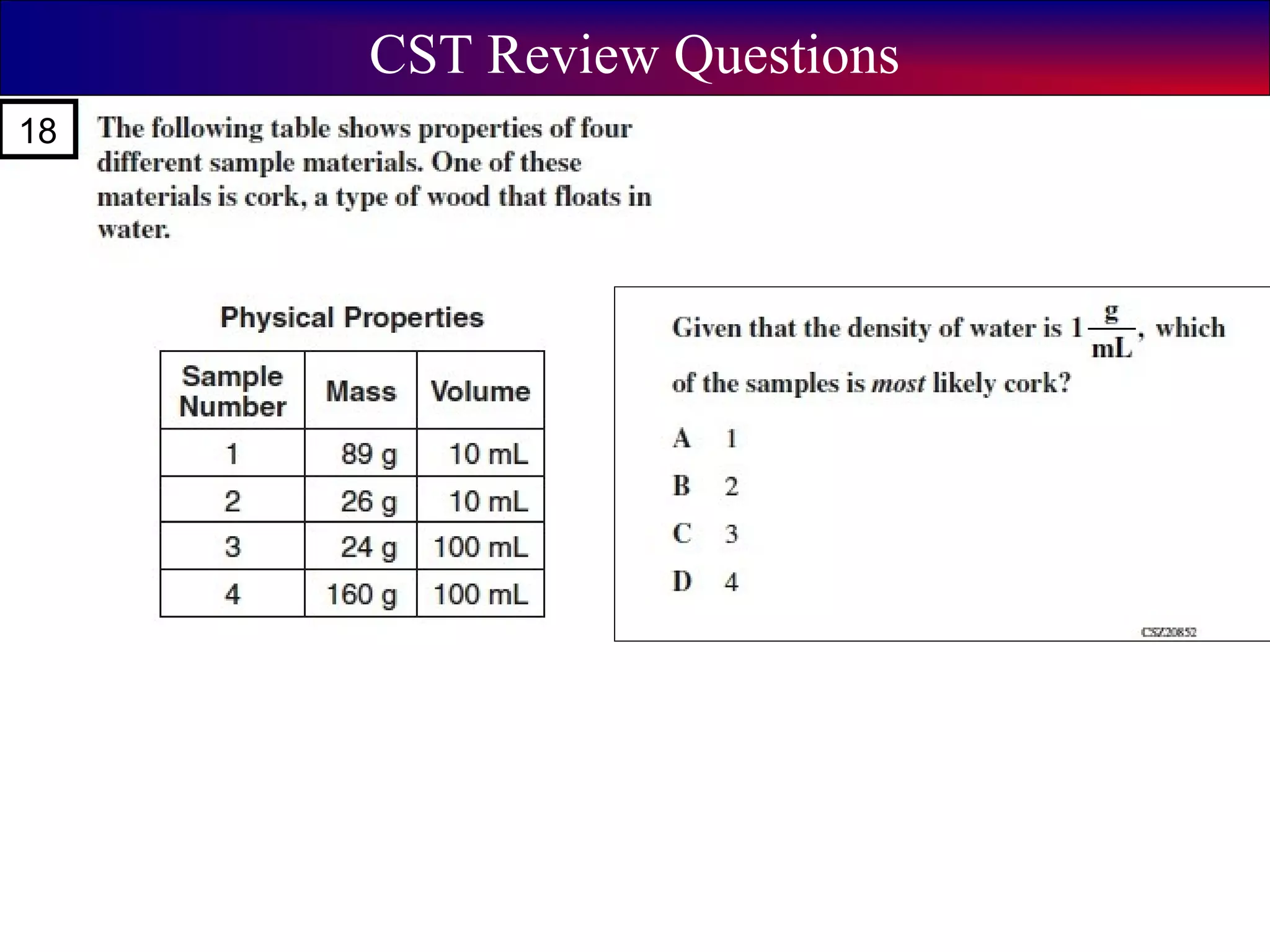
18
CST Review Questions
18
CST Review
Carbon and
Life Molecules
BrainPop
Body Chemicals
Brain Pop
Copyright Richards 2009
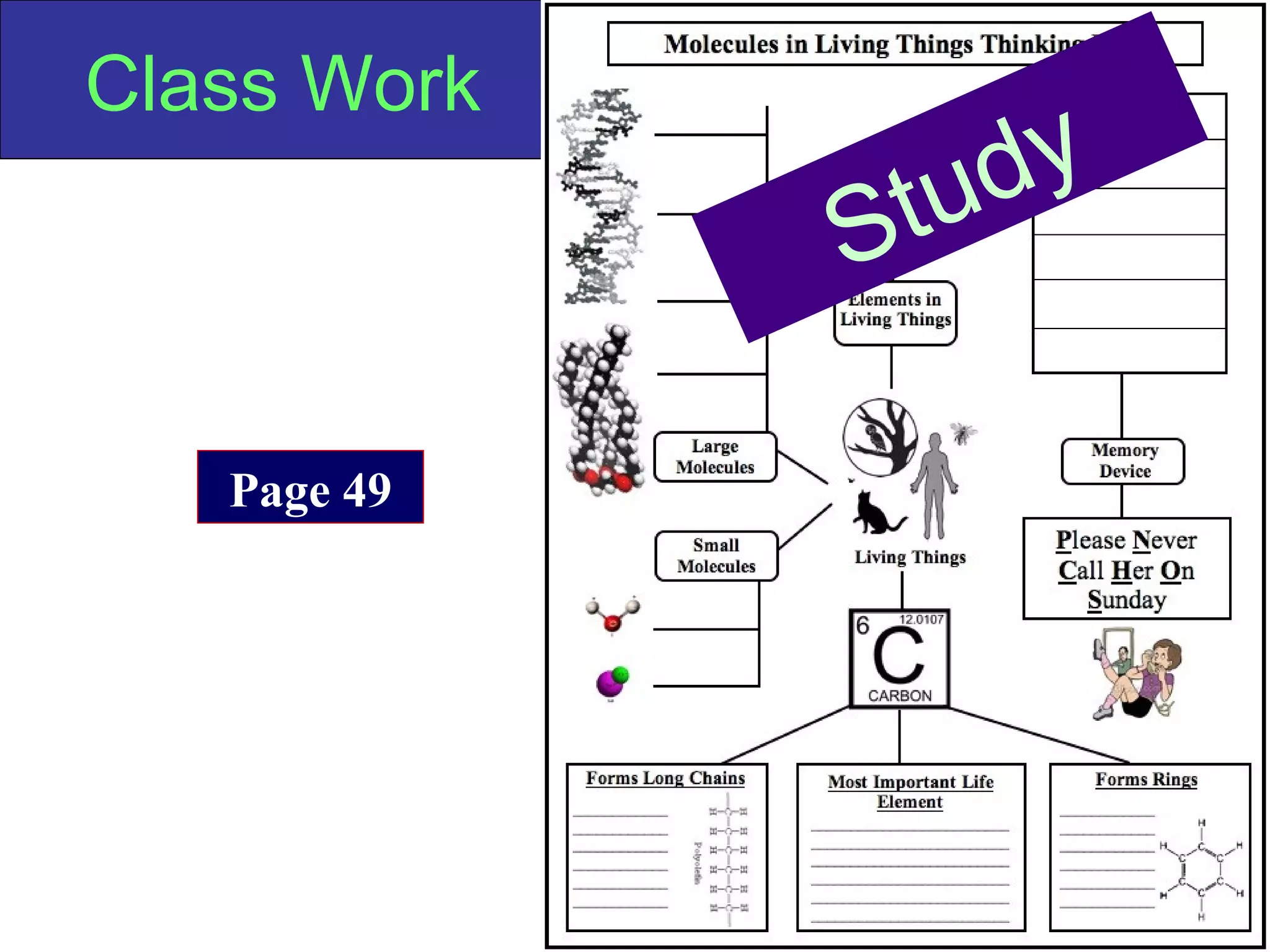
Class Work
Page 49
Study
CST Review
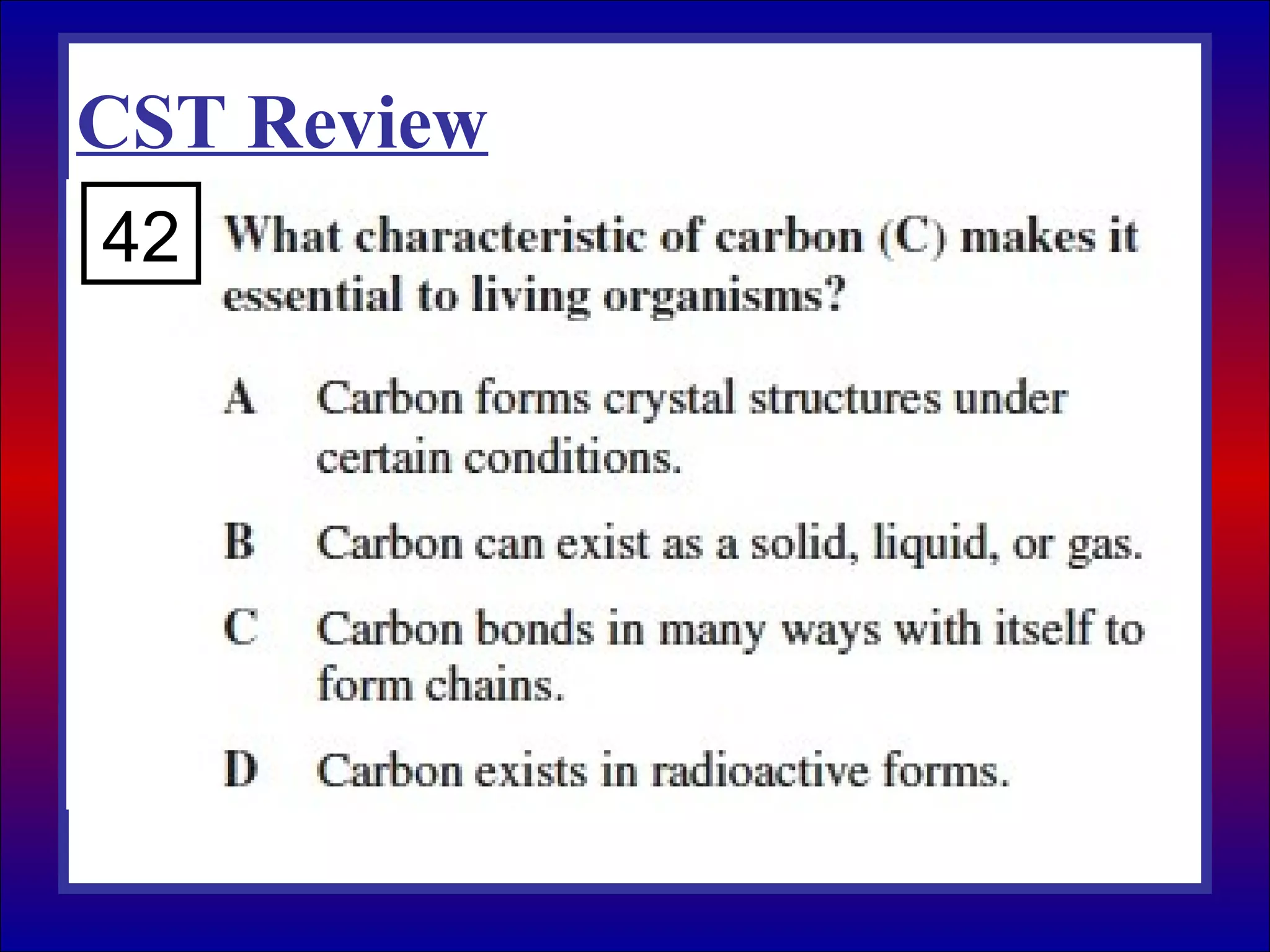
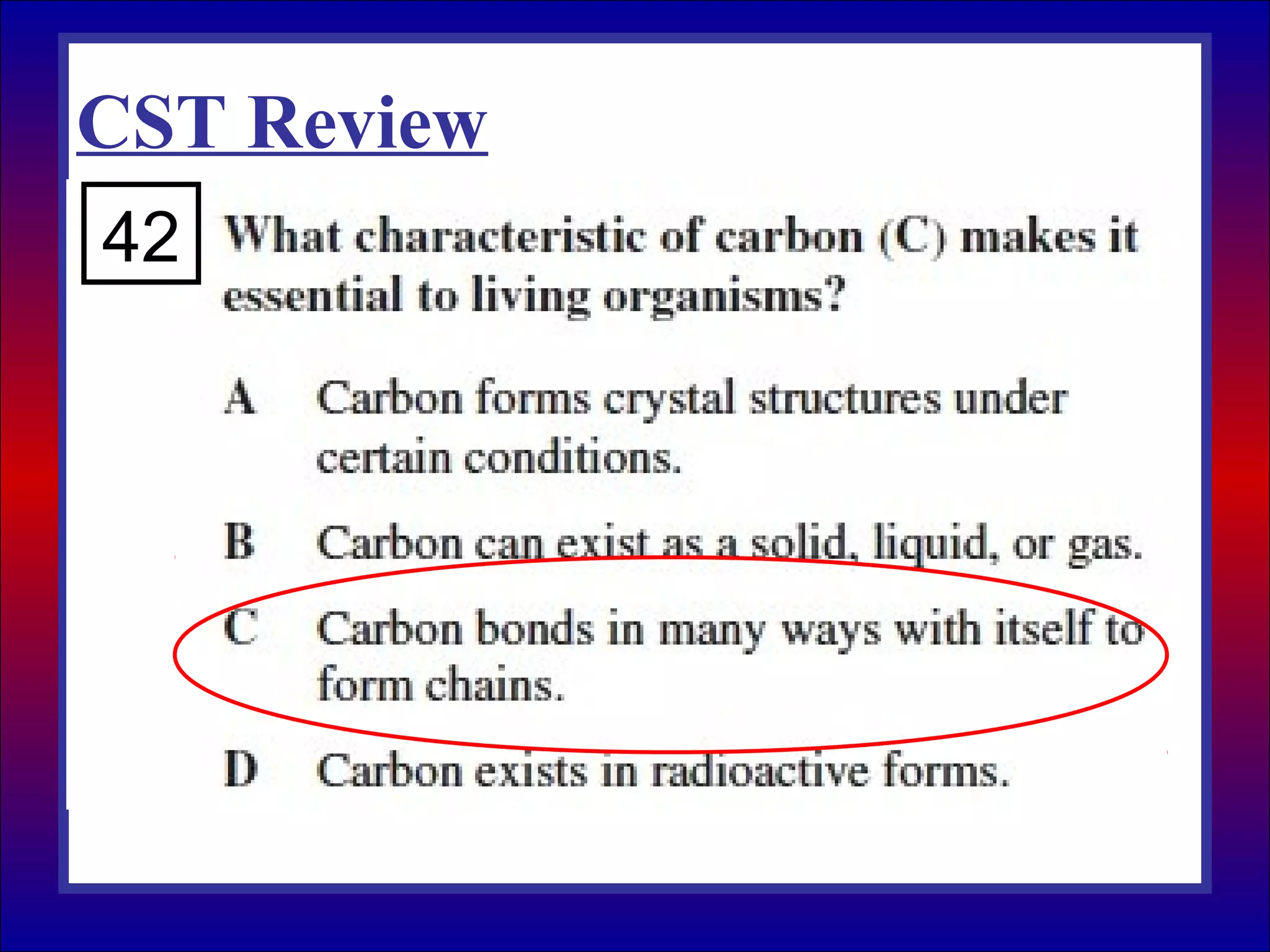
42
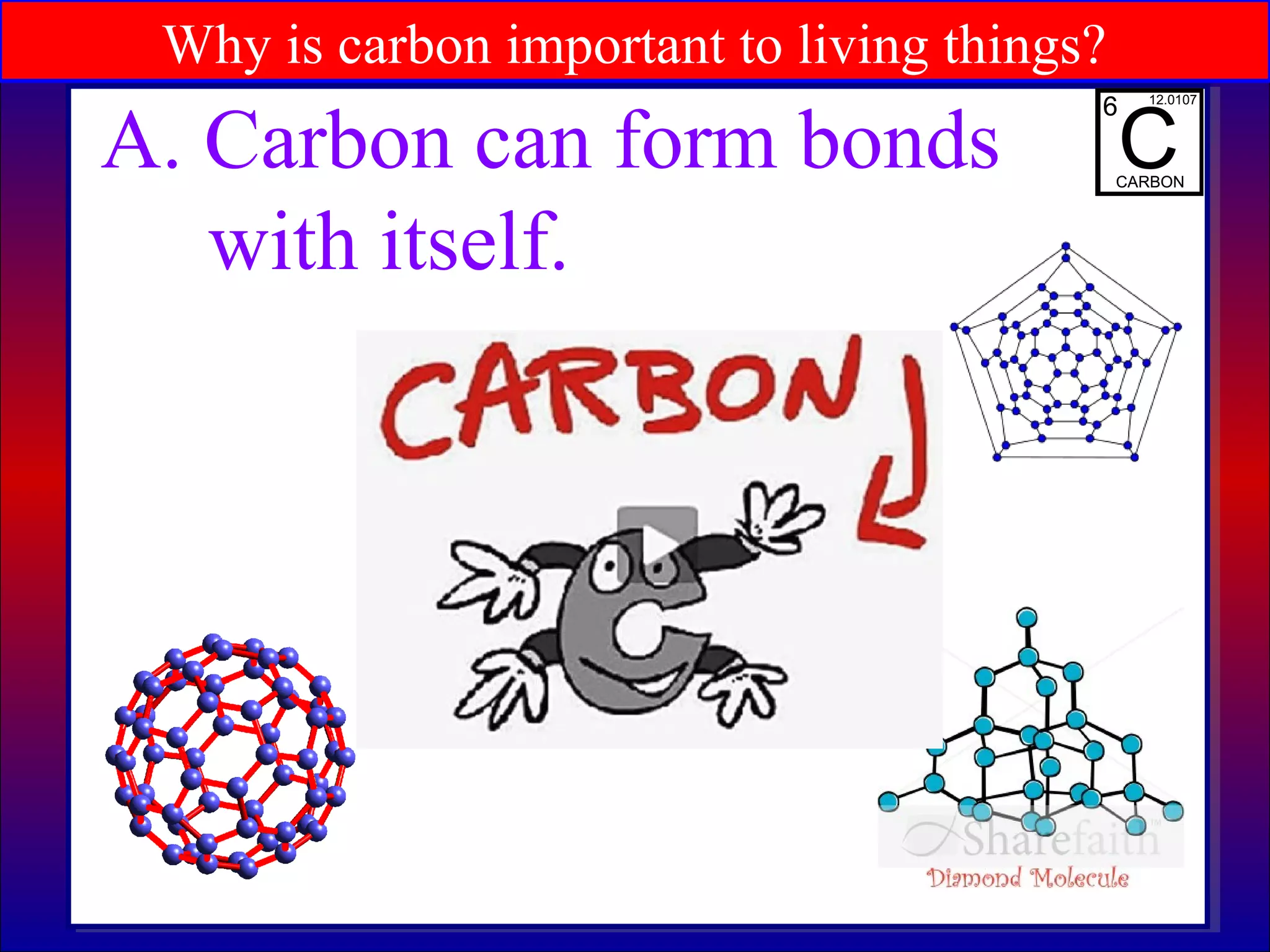
Why is carbon important to living things?
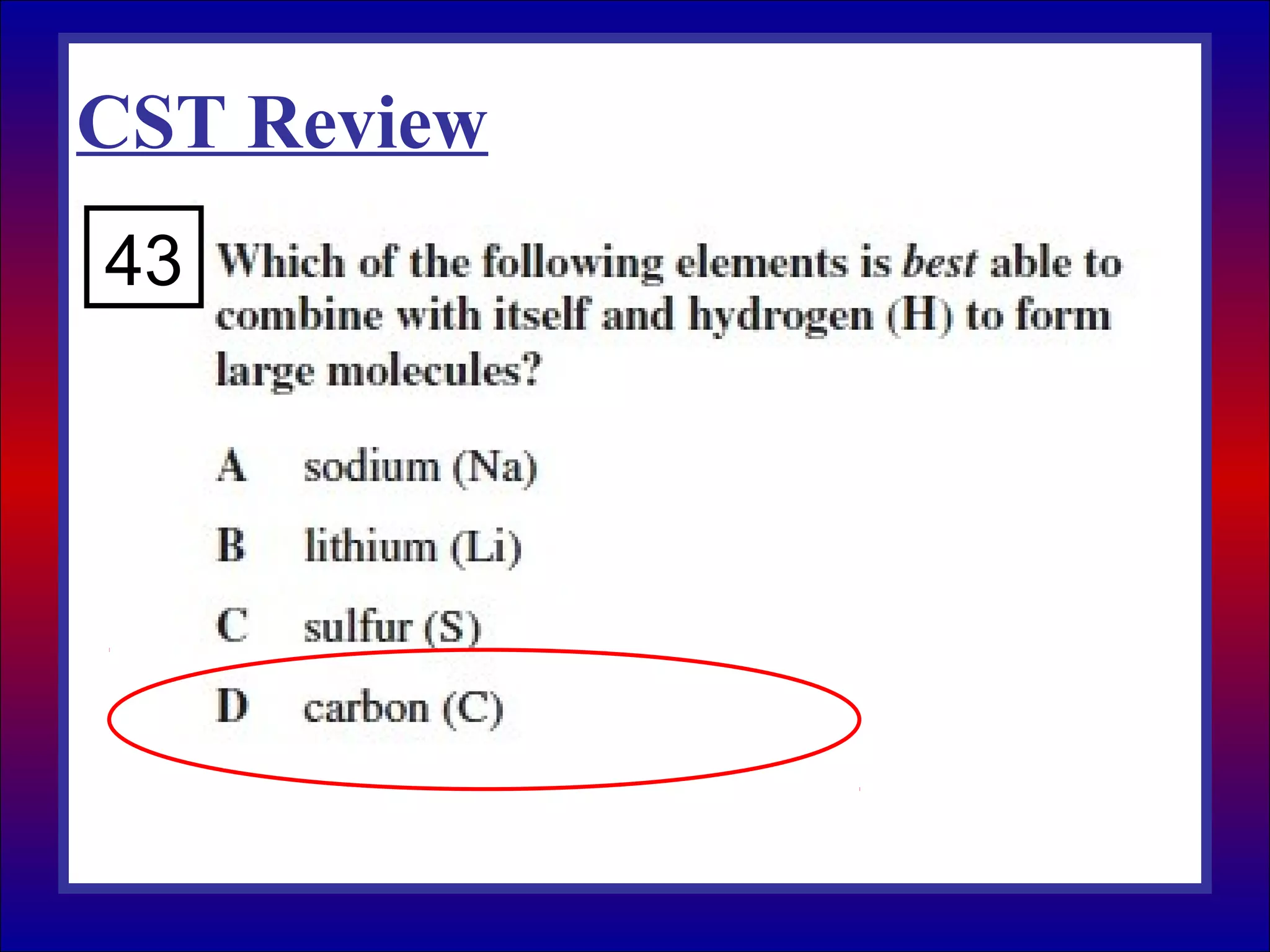
A. Carbon can form bonds
with itself.
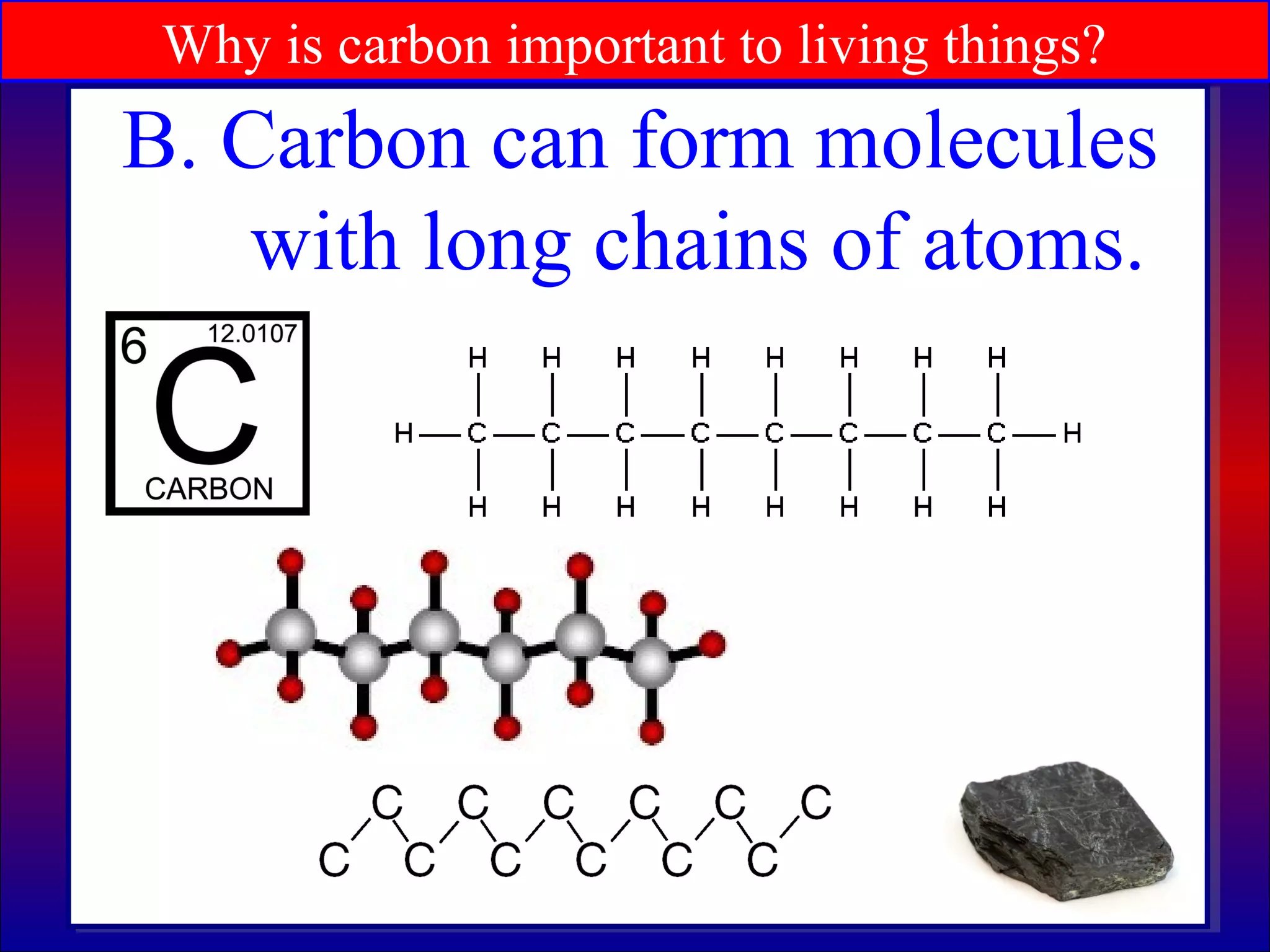
Why is carbon important to living things?
B. Carbon can form molecules
with long chains of atoms.
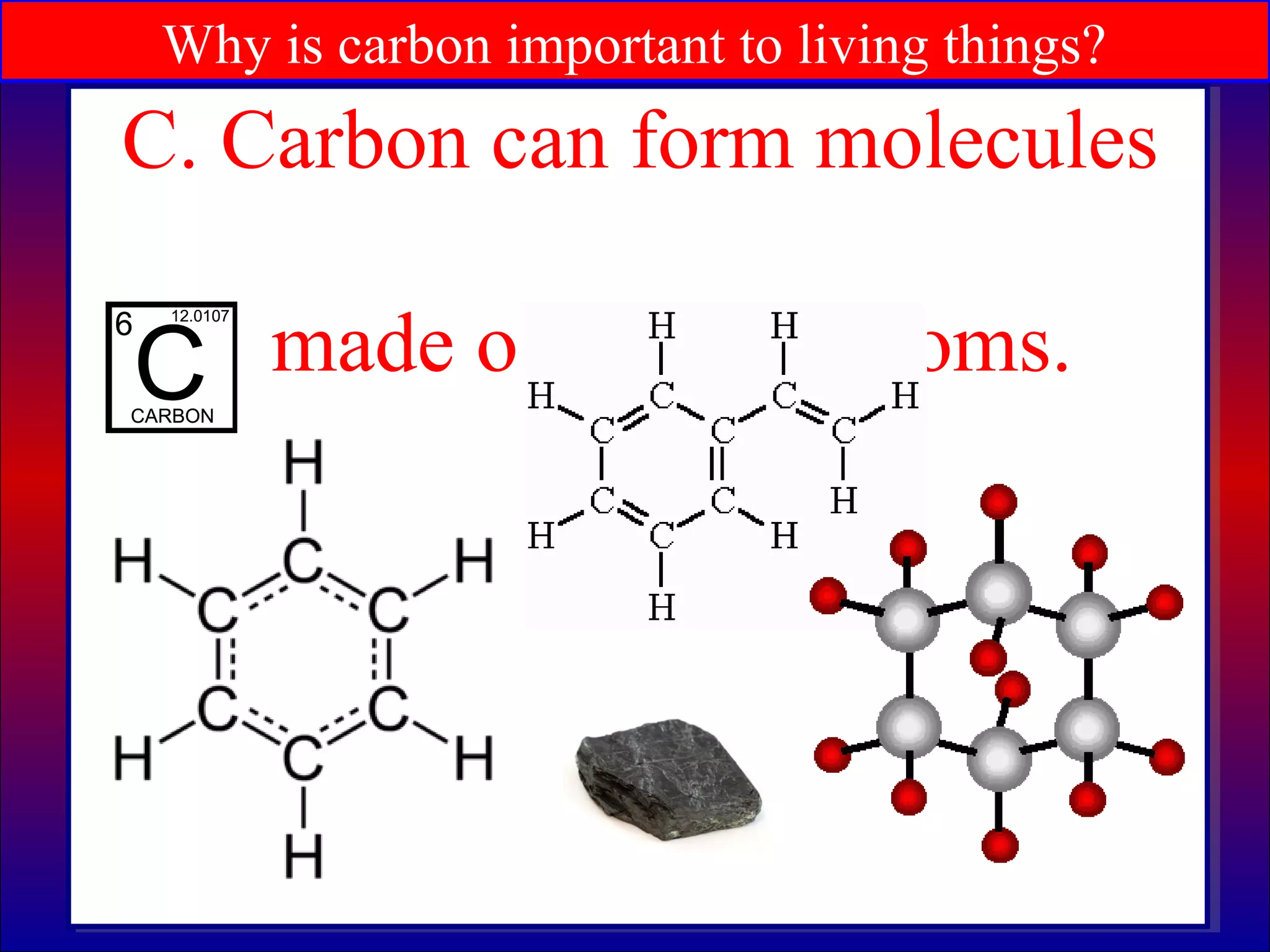
Why is carbon important to living things?
C. Carbon can form molecules
made of rings of atoms.
CST Review
42
CST Review
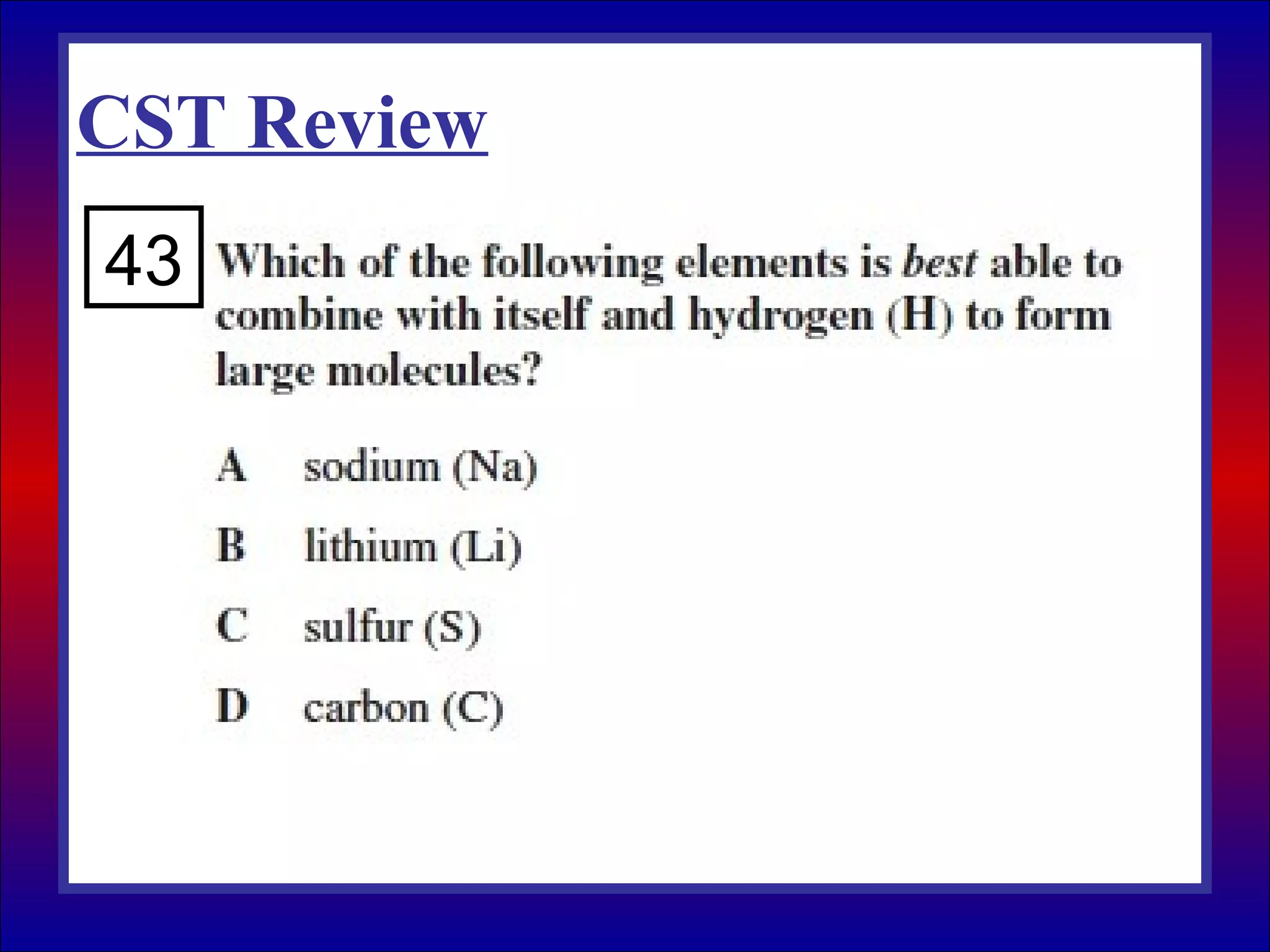
43
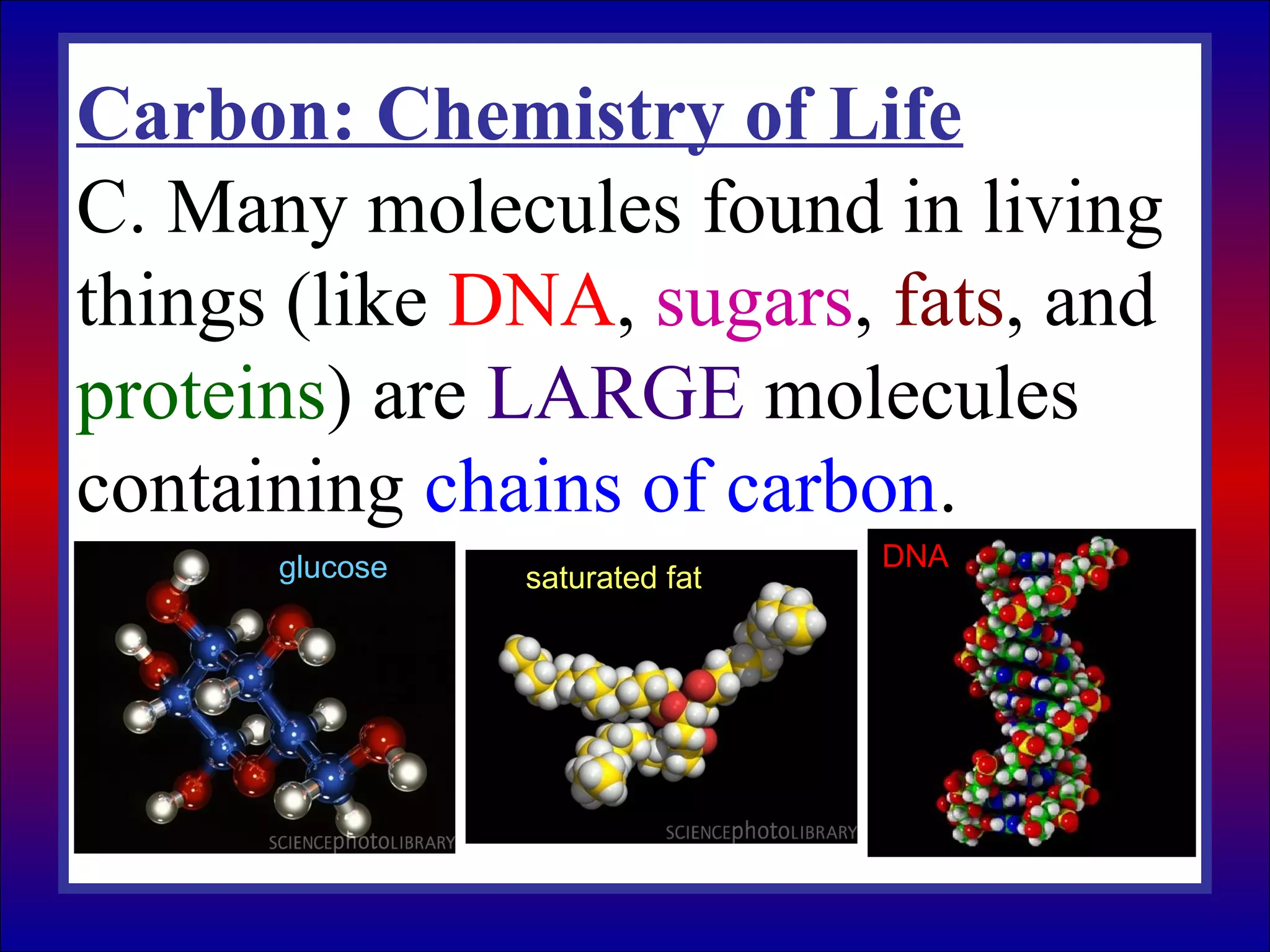
Carbon: Chemistry of Life
C. Many molecules found in living
things (like DNA, sugars, fats, and
proteins) are LARGE molecules
containing chains of carbon.
glucose saturated fat
DNA
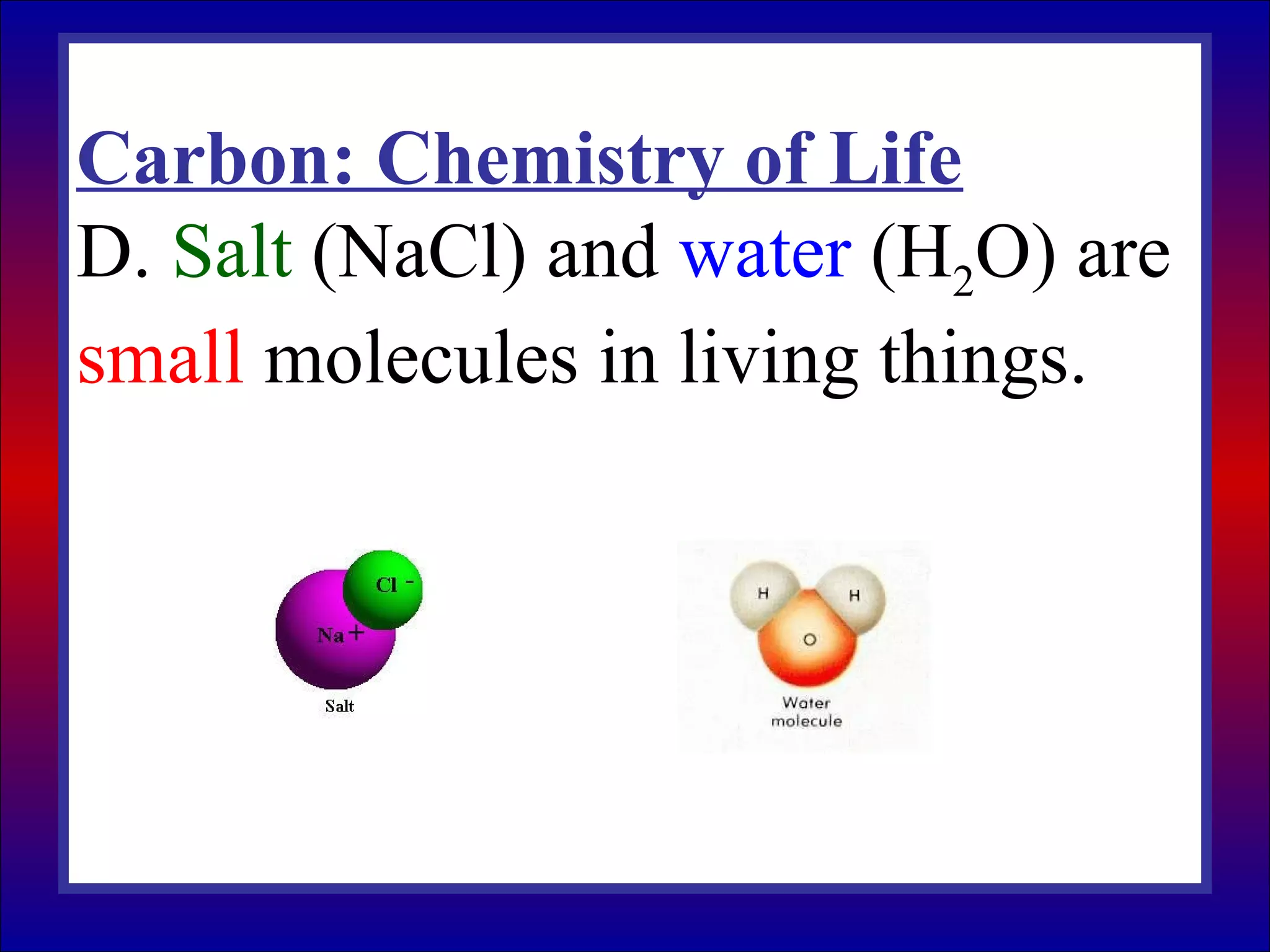
Carbon: Chemistry of Life
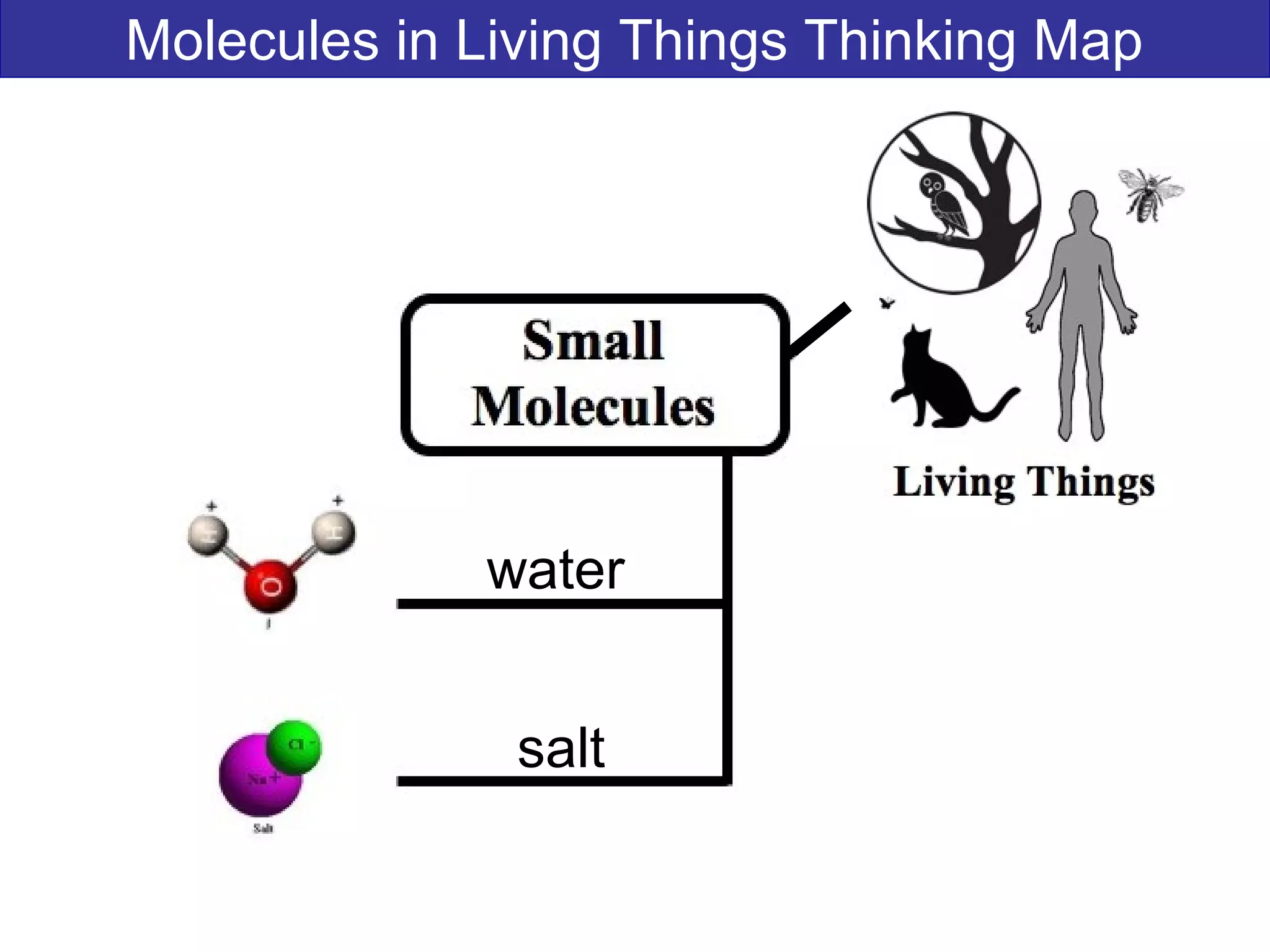
D. Salt (NaCl) and water (H2O) are
small molecules in living things.
Molecules in Living Things Thinking Map
water
salt
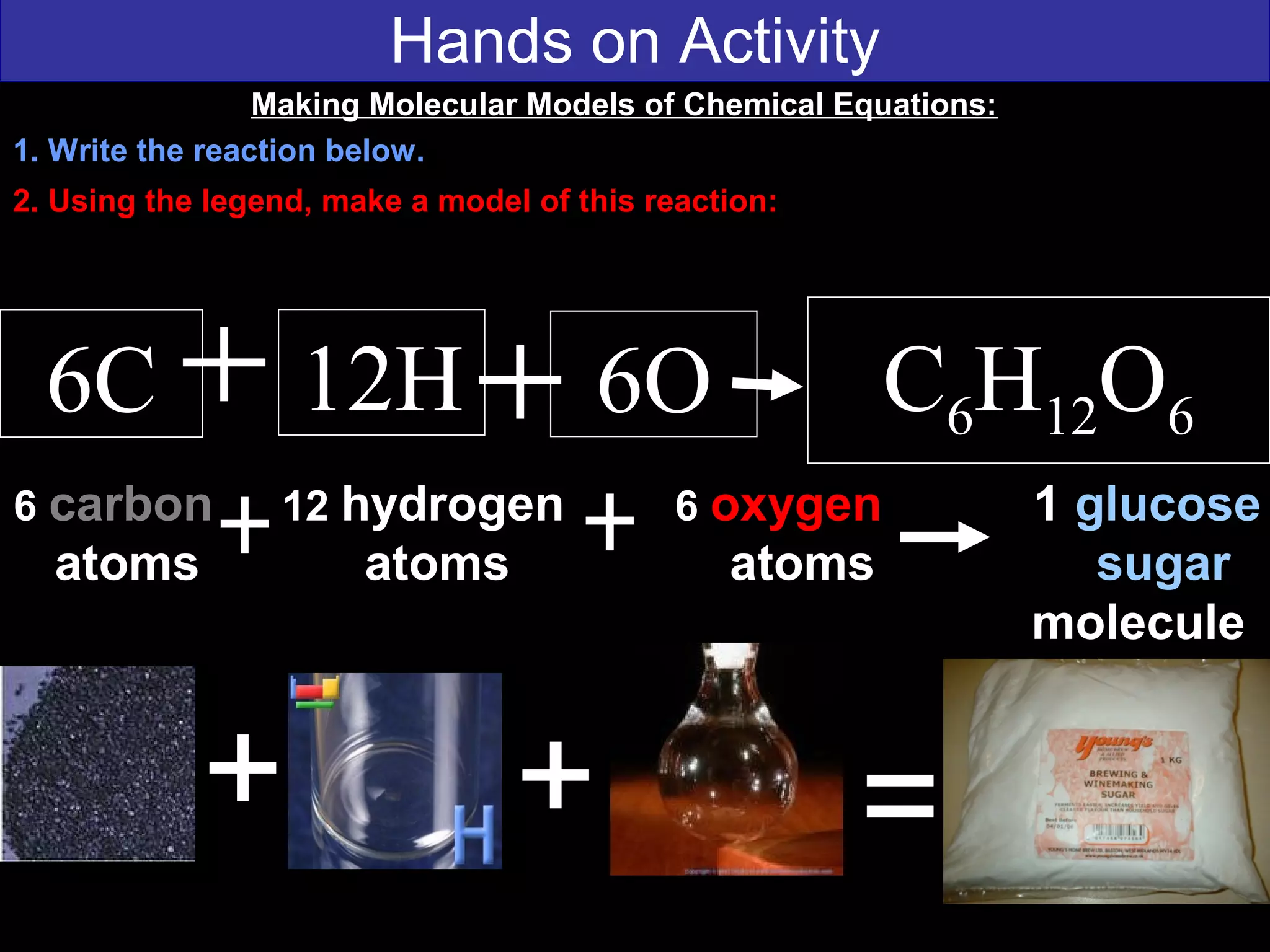
Hands on Activity
6C 12H C6H12O6
6 carbon 12 hydrogen 6 oxygen 1 glucose
atoms atoms atoms sugar
molecule
=+
Making Molecular Models of Chemical Equations:
1. Write the reaction below.
2. Using the legend, make a model of this reaction:
6O
+
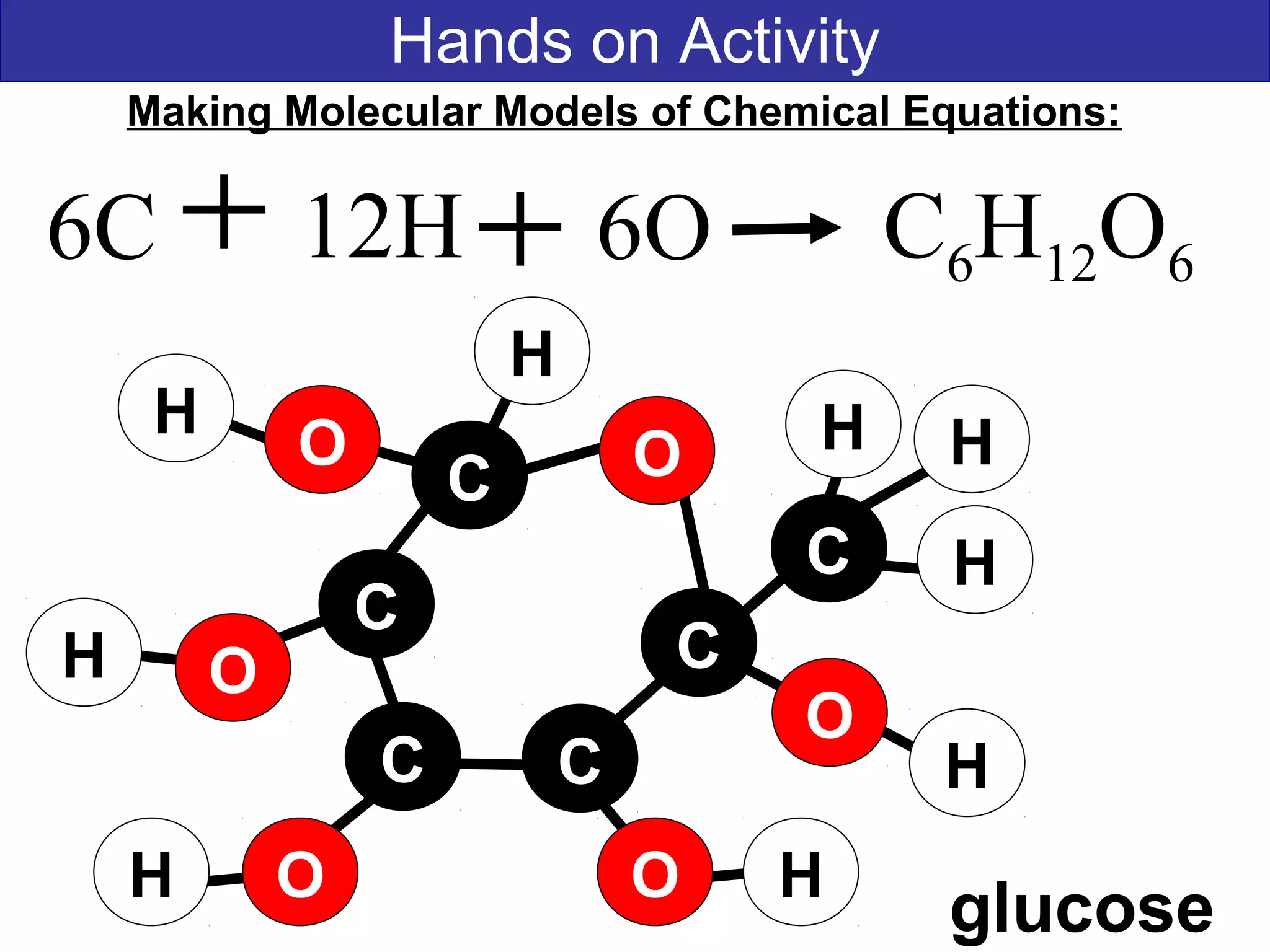
glucose
Hands on Activity
6C 12H C6H12O6
Making Molecular Models of Chemical Equations:
6O
O
O
O
O
H
O
O
C
C
C C
C
C
H
H
H
H H
H
H
H
CST Review
43
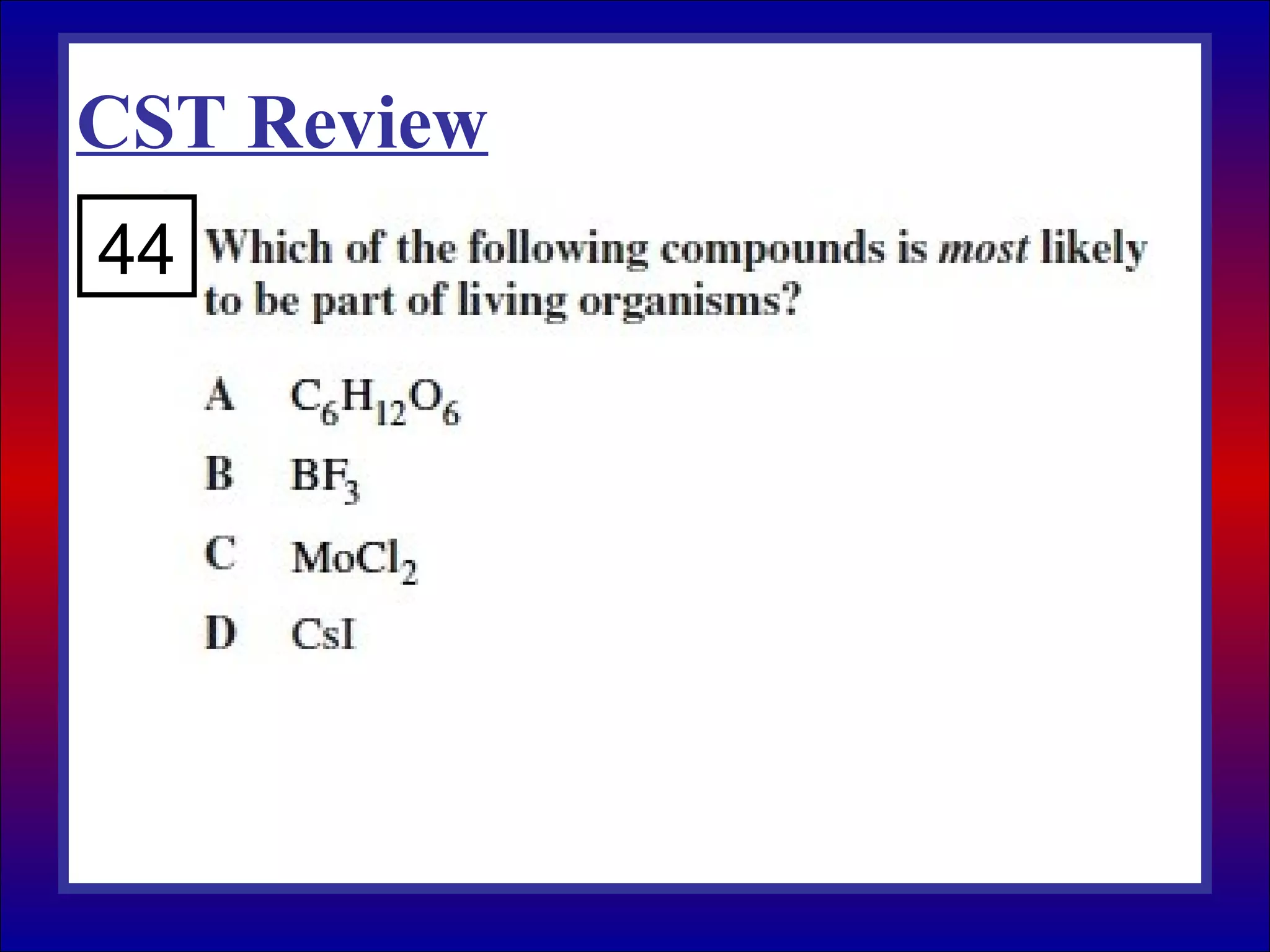
CST Review
44
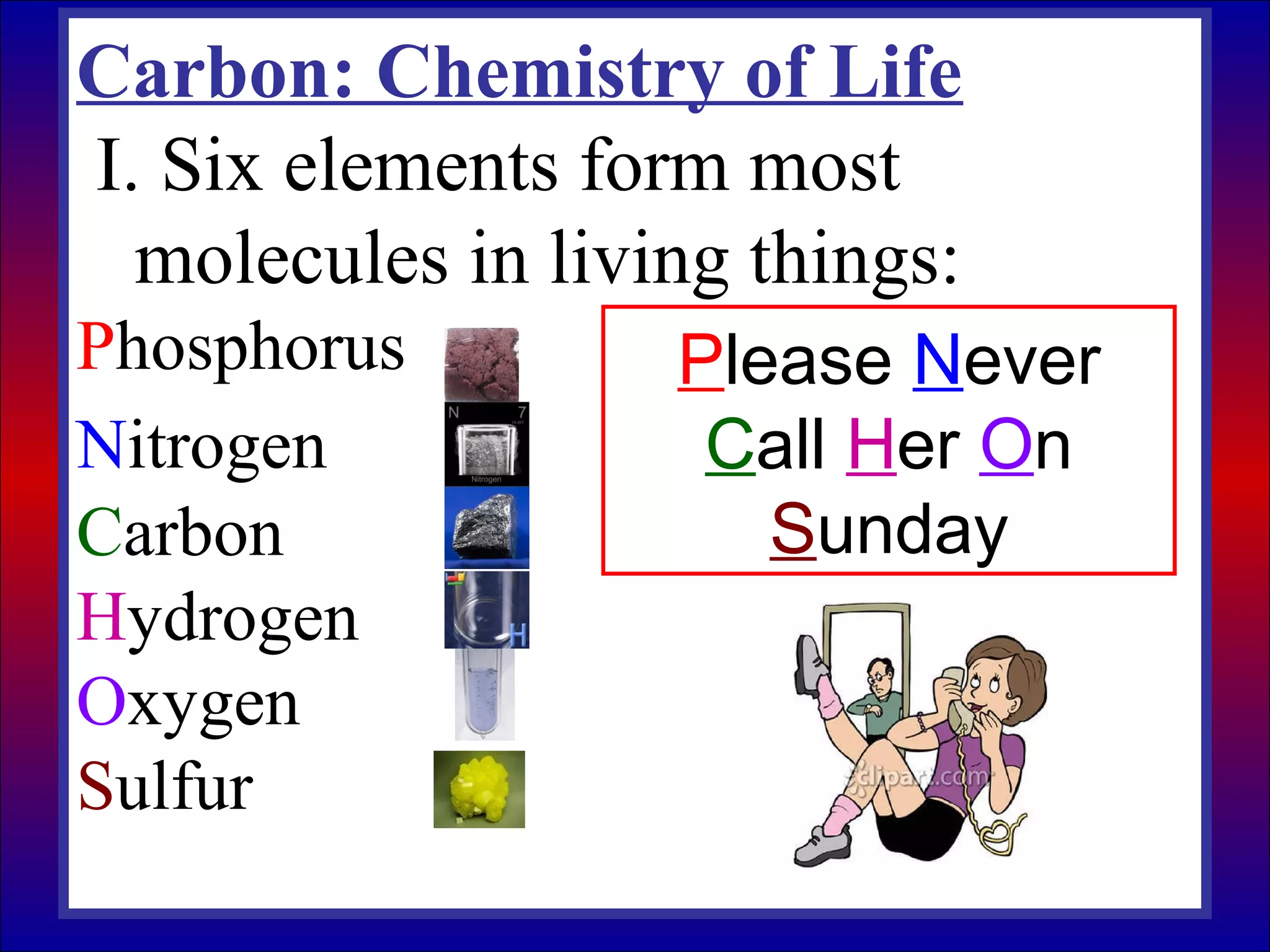
Carbon: Chemistry of Life
I. Six elements form most
molecules in living things:
Phosphorus
Nitrogen
Carbon
Hydrogen
Oxygen
Sulfur
Please Never
Call Her On
Sunday
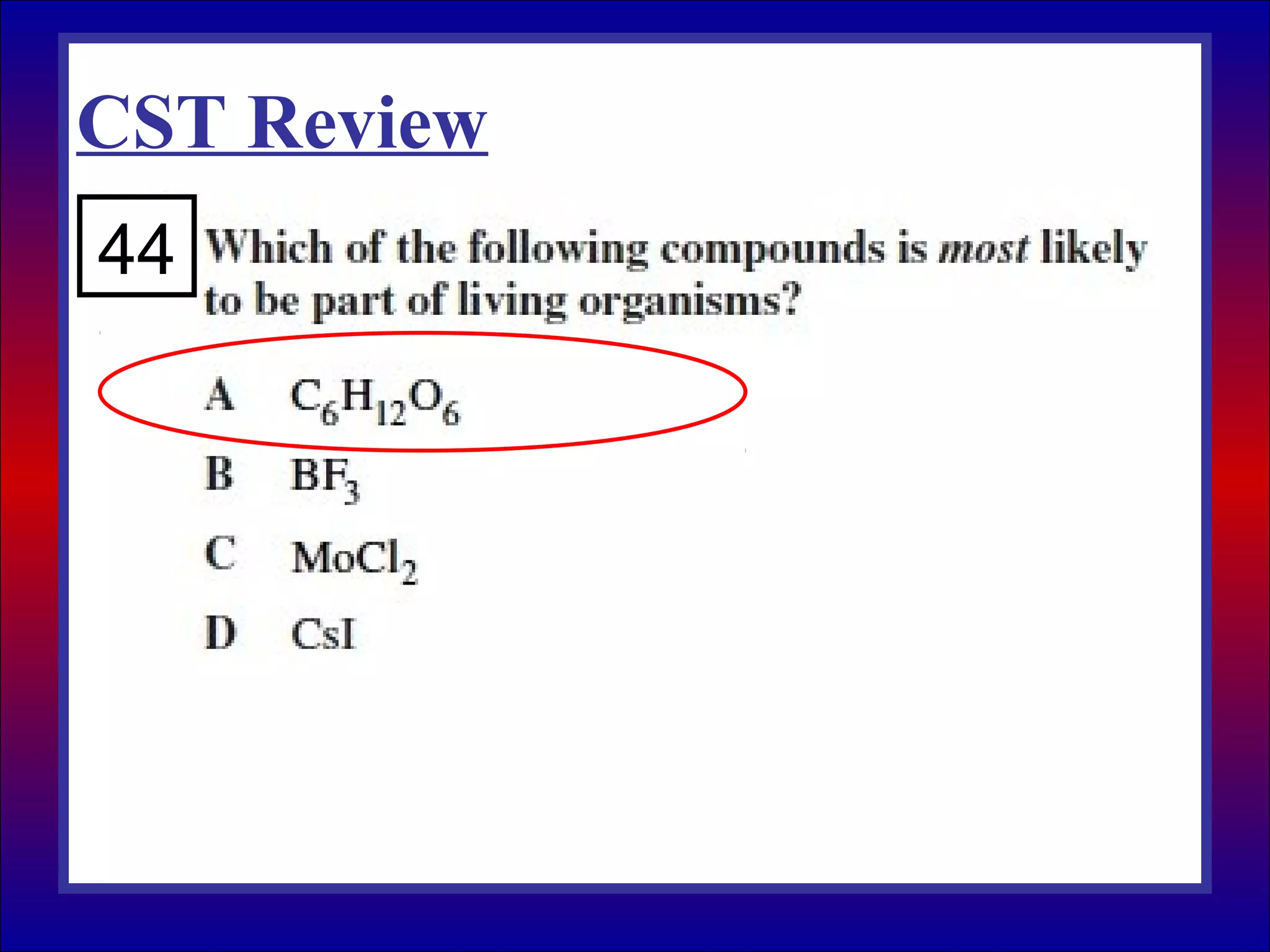
CST Review
44
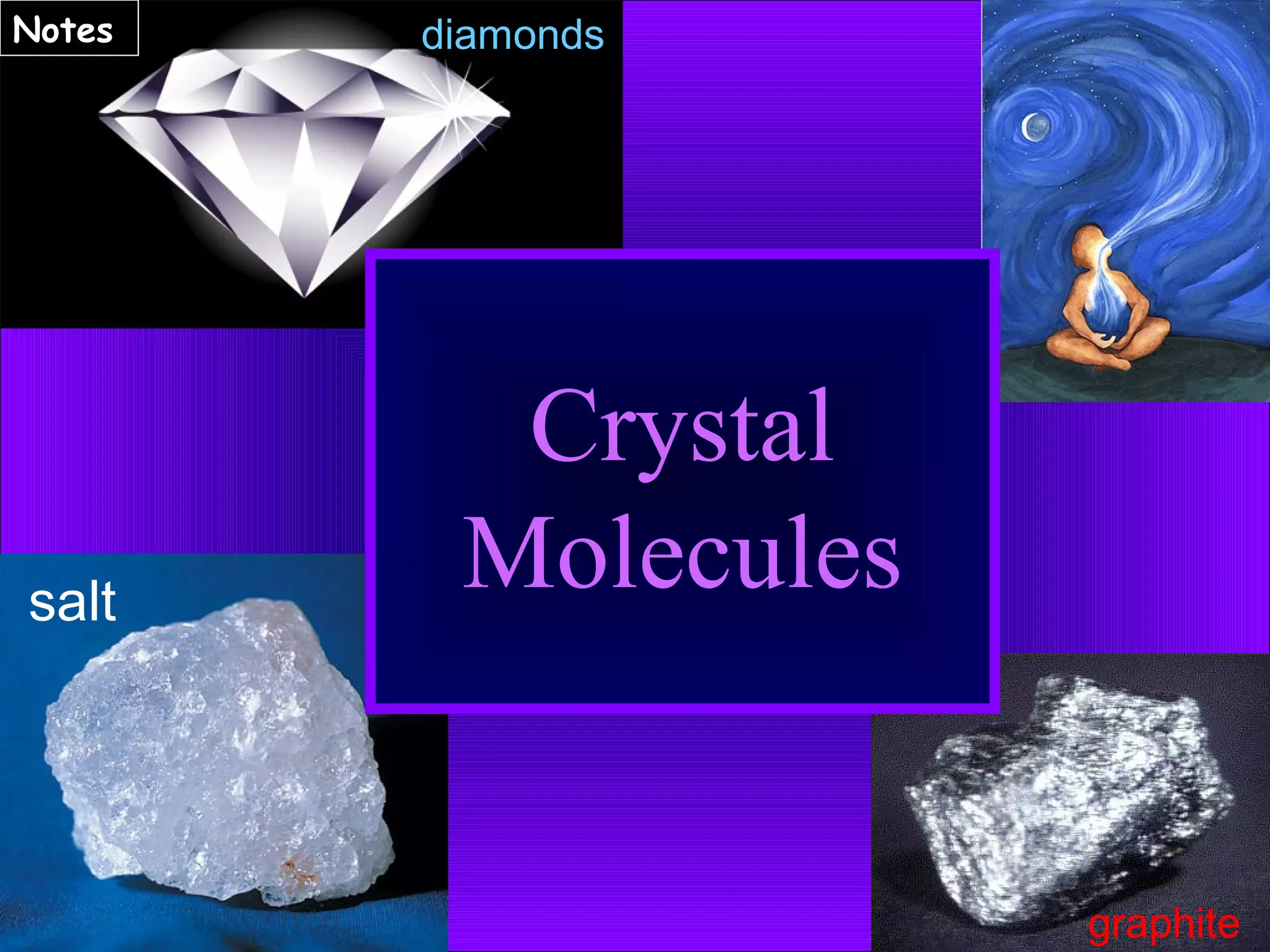
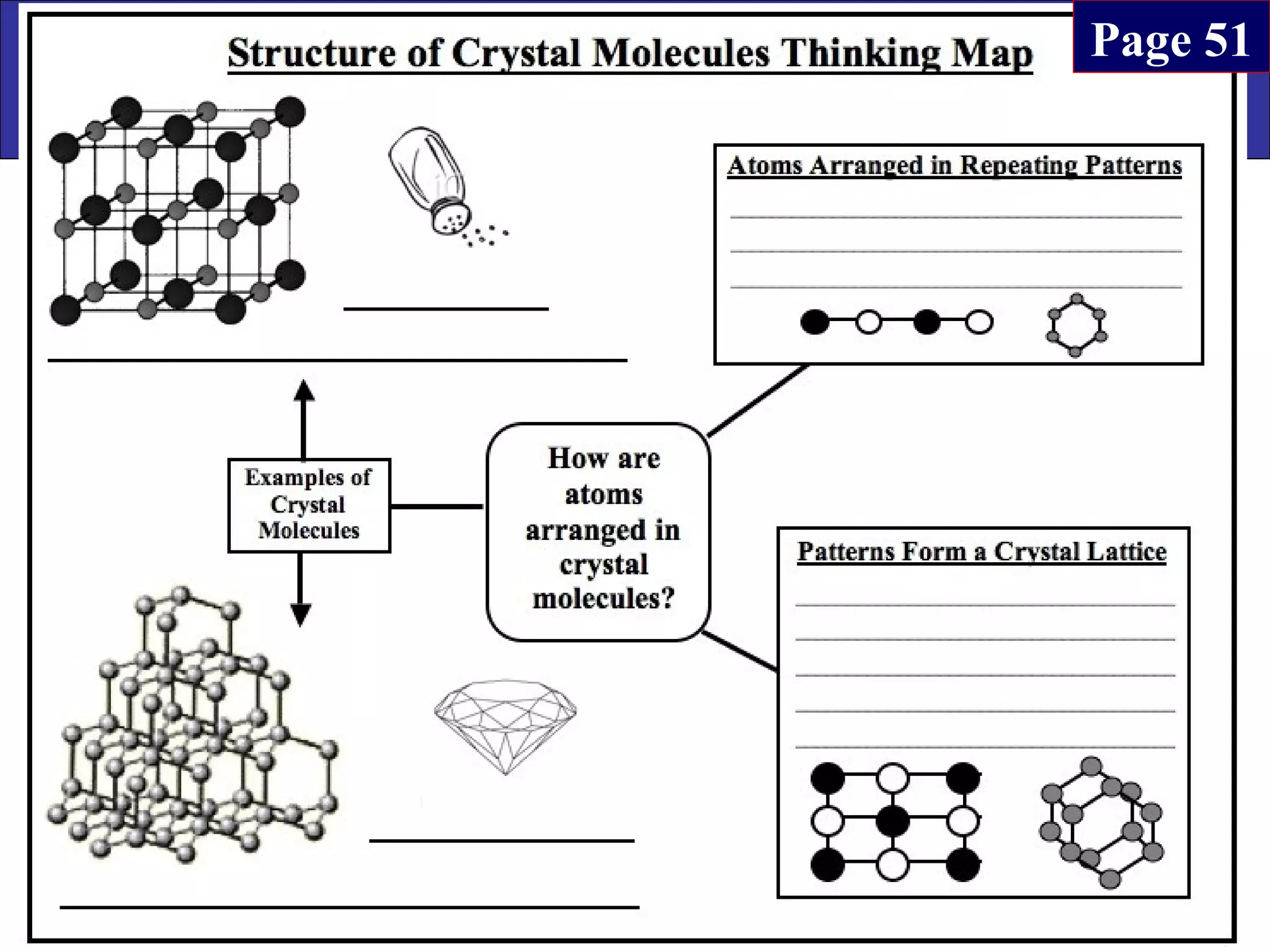
diamonds
salt
graphite
Crystal
Molecules
Notes
BrainPop
Crystals
Brain Pop
BrainPop
Salt
Brain Pop
Copyright Richards 2009
Class Work
Page 51
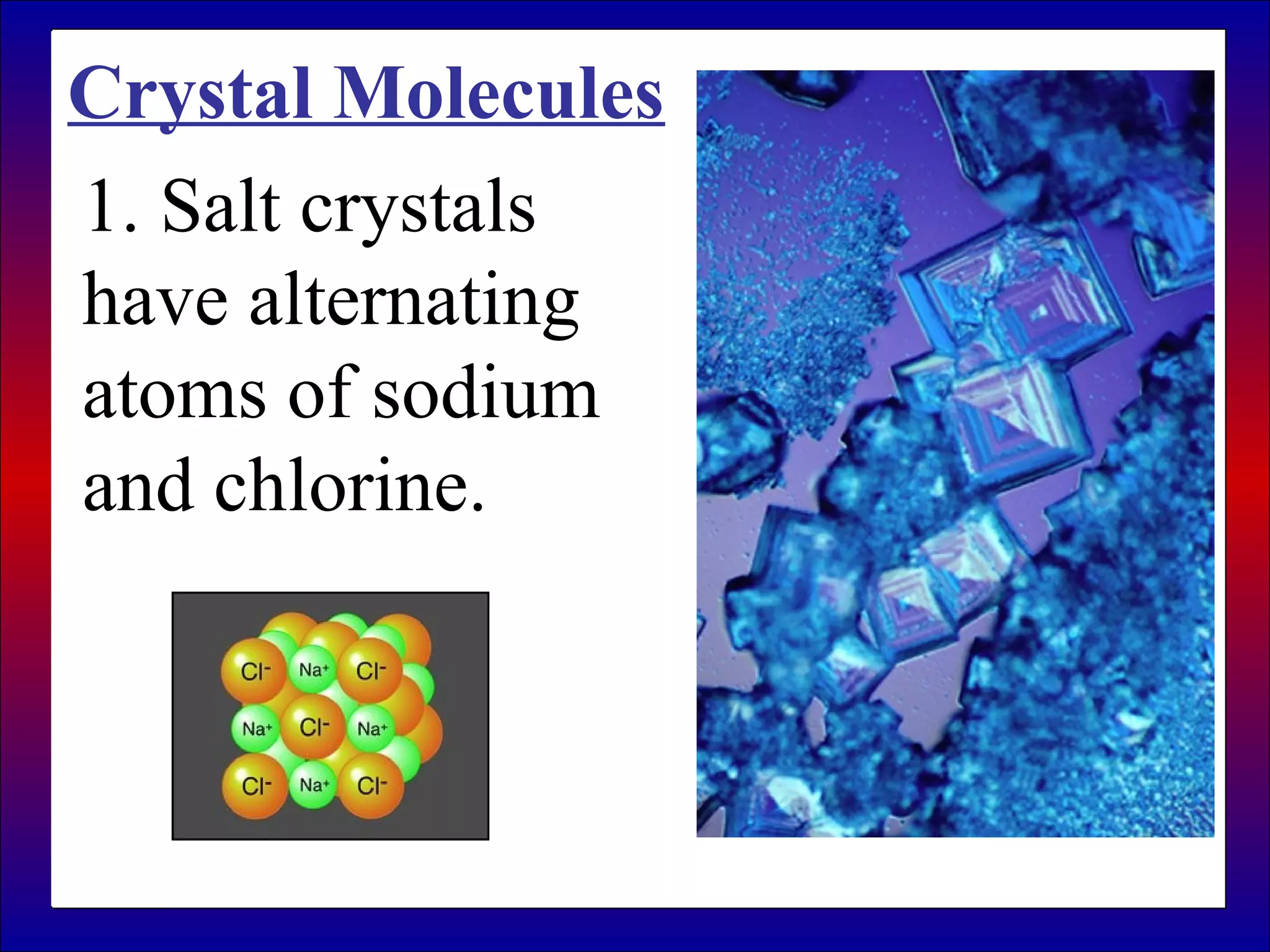
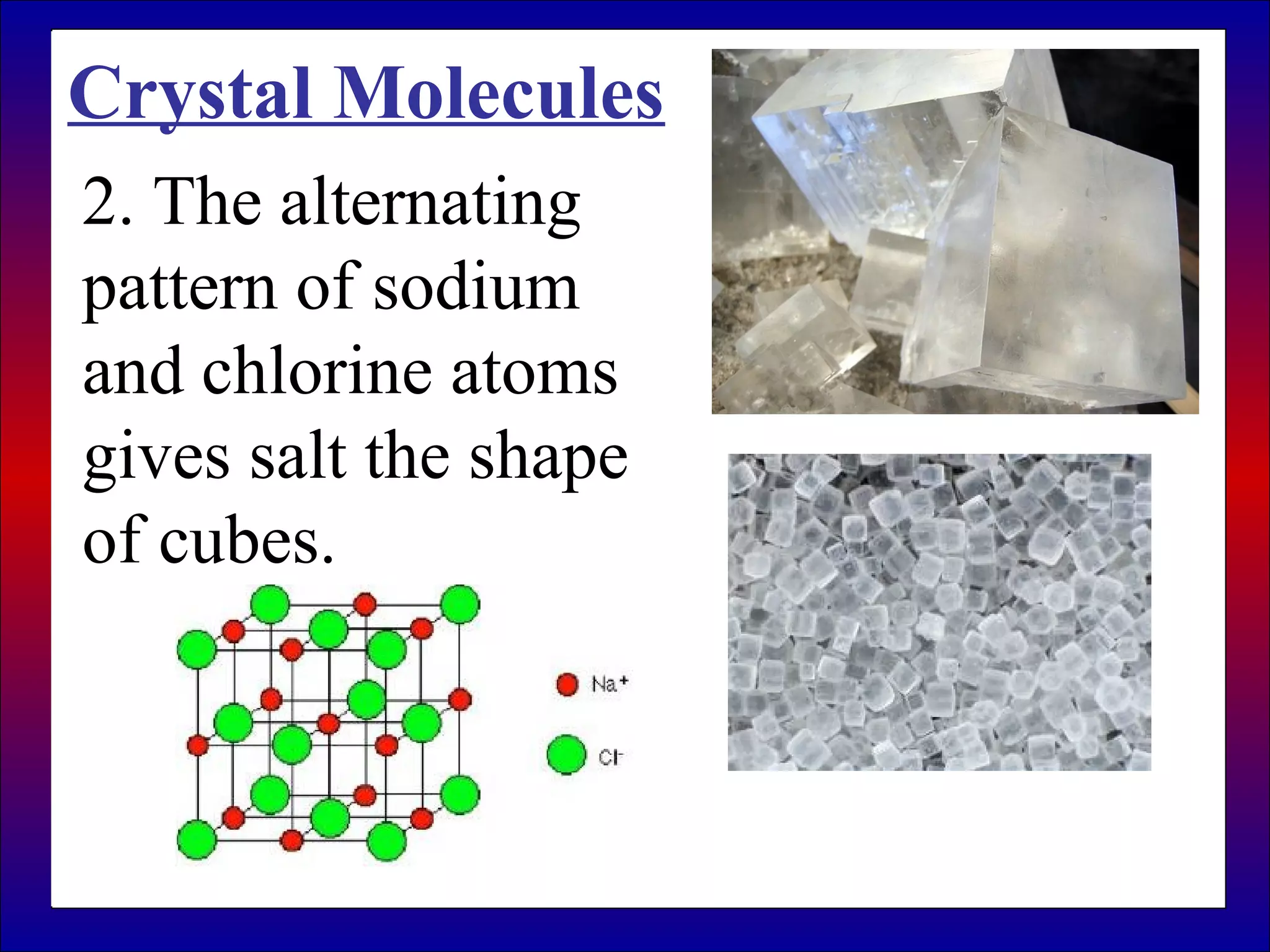
1. Salt crystals
have alternating
atoms of sodium
and chlorine.
Crystal Molecules
Crystal Molecules
2. The alternating
pattern of sodium
and chlorine atoms
gives salt the shape
of cubes.

CST Review Part 2