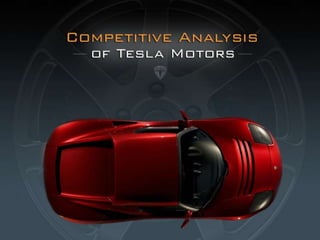
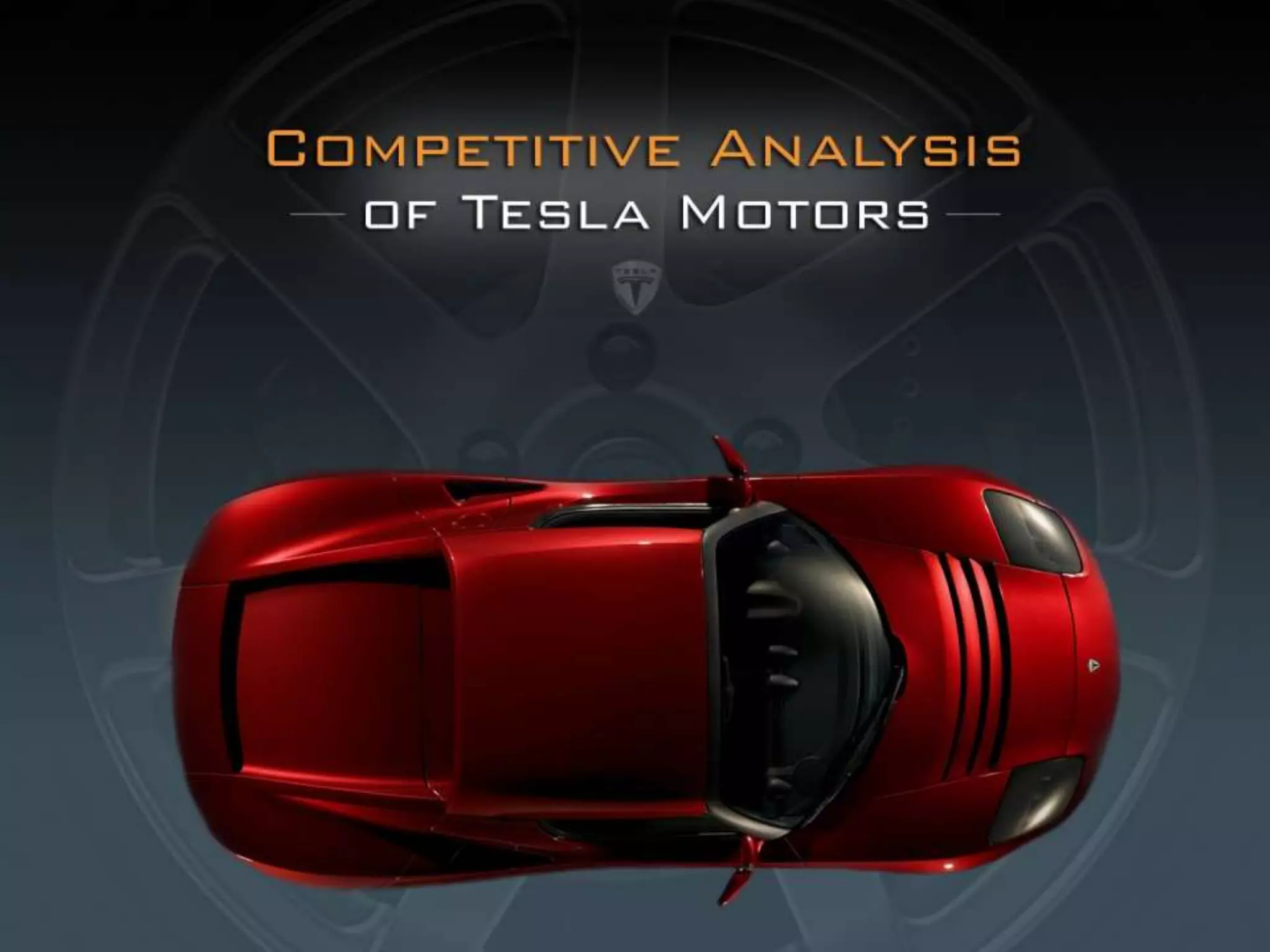
Competitive Analysis of Tesla 
Motors
Outline 
Outline 
1. Introduction 
2. Case for the Electric Car 
3. Internal Rivalry 
4. Barriers to entry 
5. Substitutes and complements 
6. Supplier Power 
7. Buyer Power 
8. Strategy
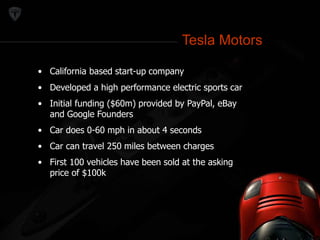
Tesla Motors 
Tesla Motors 
• California based start-up company 
• Developed a high performance electric sports car 
• Initial funding ($60m) provided by PayPal, eBay 
and Google Founders 
• Car does 0-60 mph in about 4 seconds 
• Car can travel 250 miles between charges 
• First 100 vehicles have been sold at the asking 
price of $100k
Industry FactsIndustry Facts 
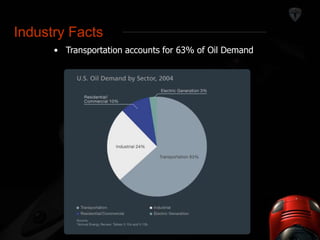
• Transportation accounts for 63% of Oil Demand
Industry Facts 
Industry Facts
Industry Facts Industry Facts 
• US Automobile Industry represents 5% of Private 
sector GDP 
• 76% of the market is made up of Ford, GM and 
Chrysler 
• 18% of sales are from Japanese car makers 
• 6.6m Americans are directly or indirectly 
employed in the automotive industry. 
• Hybrid sales represented 1.2% of the market in 
2005, 1.6% in 2006 (est). 
• Forecasts estimate 5% of car sales will be hybrids 
by 2013
Market Definition 
Case for the Electric Car 
• Environmental friendliness and low 
emissions 
• High performance 
• Improved battery technologies and driving 
range 
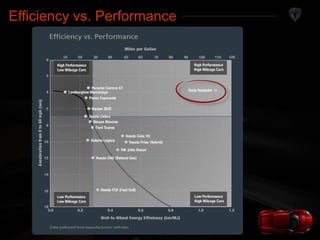
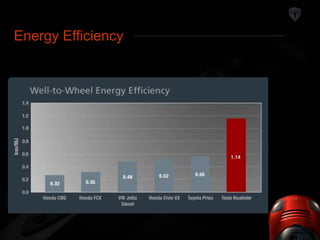
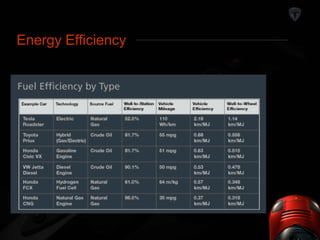
• Electric cars are more energy efficient than 
gasoline cars.
Efficiency vs. Performance 
Tesla Motors
Internal Rivalry 
Internal Rivalry 
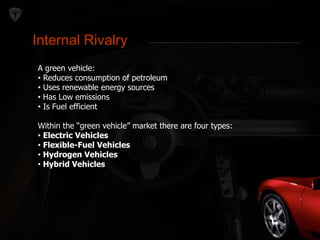
A green vehicle: 
• Reduces consumption of petroleum 
• Uses renewable energy sources 
• Has Low emissions 
• Is Fuel efficient 
Within the “green vehicle” market there are four types: 
• Electric Vehicles 
• Flexible-Fuel Vehicles 
• Hydrogen Vehicles 
• Hybrid Vehicles
Internal Rivalry 
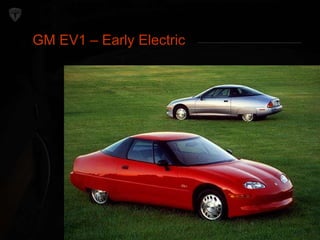
GM EV1 – Early Electric
Internal Rivalry 
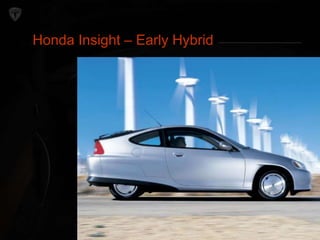
Honda Insight – Early Hybrid
Internal Rivalry 
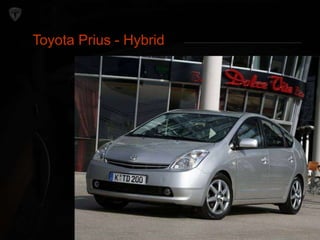
Toyota Prius - Hybrid
Internal Rivalry 
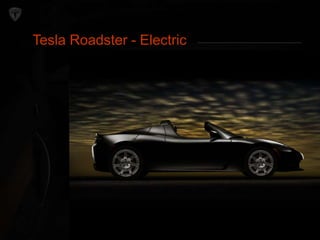
Tesla Roadster - Electric
Internal Rivalry 
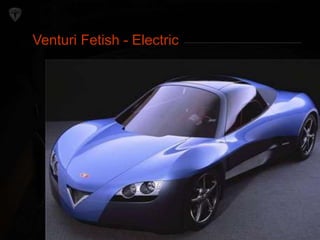
Venturi Fetish - Electric
Entry 
Barriers to Entry 
• Economies of Scale 
• Regulation Issues 
• Technological Innovations 
• Brand Loyalty 
• Infrastructure
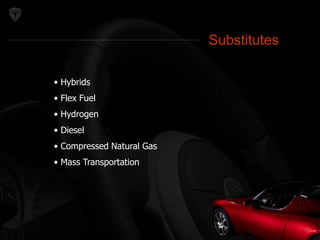
Substitutes 
• Hybrids 
• Flex Fuel 
• Hydrogen 
• Diesel 
• Compressed Natural Gas 
• Mass Transportation 
Substitutes
Energy EfficEiennecyrgy Efficiency
Energy Efficiency 
Energy Efficiency
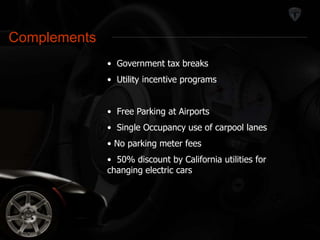
Complements 
Complements 
• Government tax breaks 
• Utility incentive programs 
• Free Parking at Airports 
• Single Occupancy use of carpool lanes 
• No parking meter fees 
• 50% discount by California utilities for 
changing electric cars
Supplier Power 
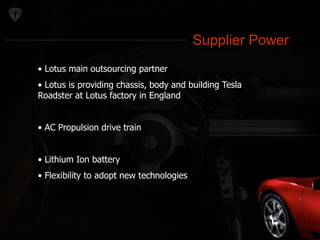
• Lotus main outsourcing partner 
• Lotus is providing chassis, body and building Tesla 
Roadster at Lotus factory in England 
• AC Propulsion drive train 
• Lithium Ion battery 
• Flexibility to adopt new technologies 
Supplier Power
Buyer Power 
Buyer Power 
• Ability of buyer to extract profits from seller 
• Green market is emerging 
• Buyer power is limited due to lack of 
competition
Buyer Power 
Buyer Power 
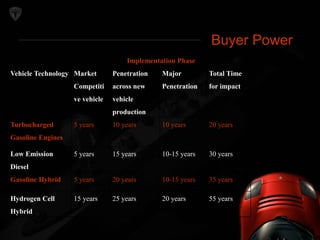
Implementation Phase 
Vehicle Technology Market 
Competiti 
ve vehicle 
Penetration 
across new 
vehicle 
production 
Major 
Penetration 
Total Time 
for impact 
Turbocharged 
Gasoline Engines 
5 years 10 years 10 years 20 years 
Low Emission 
Diesel 
5 years 15 years 10-15 years 30 years 
Gasoline Hybrid 5 years 20 years 10-15 years 35 years 
Hydrogen Cell 
Hybrid 
15 years 25 years 20 years 55 years
Conclusion 
Conclusion 
• Short to medium term strategy 
• Sell 100 Roadsters 
• Create recognizable product 
• Self funding of future expansion plans 
• Change opinion of electric vehicles
Conclusion 
Conclusion 
• Long term strategy 
• Focus on brand recognition 
• Cost optimization 
• Compete in mass market 
• Build infrastructure
Conclusion 
Martin Eberhard, CEO 
“There have been tons and tons of companies, for the 
last 40 years that have tried to make little commuter 
electric cars. The trouble is that, for the most part, it 
requires the buyer of such a car to change his or 
her nature. You’re buying a car that is not as good 
as an equivalent gas car at all—slower, uglier, with 
not as much range—and they’re trying to compete 
essentially on price, where they can’t win. None of 
those cars were built for people who really like to 
drive. I get the feeling they’re for people who don’t 
really think you should be driving, but think if you do 
have to drive, it should be an electric car. I think if 
you build a car for people as they are, not requiring 
them to change their nature, it’s much more likely 
for you to succeed. And I think our investors agree.”

Cs telsa-web

  • 1.
  • 2.
    Outline Outline 1.Introduction 2. Case for the Electric Car 3. Internal Rivalry 4. Barriers to entry 5. Substitutes and complements 6. Supplier Power 7. Buyer Power 8. Strategy
  • 3.
    Tesla Motors TeslaMotors • California based start-up company • Developed a high performance electric sports car • Initial funding ($60m) provided by PayPal, eBay and Google Founders • Car does 0-60 mph in about 4 seconds • Car can travel 250 miles between charges • First 100 vehicles have been sold at the asking price of $100k
  • 4.
    Industry FactsIndustry Facts • Transportation accounts for 63% of Oil Demand
  • 5.
  • 6.
    Industry Facts IndustryFacts • US Automobile Industry represents 5% of Private sector GDP • 76% of the market is made up of Ford, GM and Chrysler • 18% of sales are from Japanese car makers • 6.6m Americans are directly or indirectly employed in the automotive industry. • Hybrid sales represented 1.2% of the market in 2005, 1.6% in 2006 (est). • Forecasts estimate 5% of car sales will be hybrids by 2013
  • 7.
    Market Definition Casefor the Electric Car • Environmental friendliness and low emissions • High performance • Improved battery technologies and driving range • Electric cars are more energy efficient than gasoline cars.
  • 8.
  • 9.
    Internal Rivalry InternalRivalry A green vehicle: • Reduces consumption of petroleum • Uses renewable energy sources • Has Low emissions • Is Fuel efficient Within the “green vehicle” market there are four types: • Electric Vehicles • Flexible-Fuel Vehicles • Hydrogen Vehicles • Hybrid Vehicles
  • 10.
    Internal Rivalry GMEV1 – Early Electric
  • 11.
    Internal Rivalry HondaInsight – Early Hybrid
  • 12.
  • 13.
    Internal Rivalry TeslaRoadster - Electric
  • 14.
    Internal Rivalry VenturiFetish - Electric
  • 15.
    Entry Barriers toEntry • Economies of Scale • Regulation Issues • Technological Innovations • Brand Loyalty • Infrastructure
  • 16.
    Substitutes • Hybrids • Flex Fuel • Hydrogen • Diesel • Compressed Natural Gas • Mass Transportation Substitutes
  • 17.
  • 18.
  • 19.
    Complements Complements •Government tax breaks • Utility incentive programs • Free Parking at Airports • Single Occupancy use of carpool lanes • No parking meter fees • 50% discount by California utilities for changing electric cars
  • 20.
    Supplier Power •Lotus main outsourcing partner • Lotus is providing chassis, body and building Tesla Roadster at Lotus factory in England • AC Propulsion drive train • Lithium Ion battery • Flexibility to adopt new technologies Supplier Power
  • 21.
    Buyer Power BuyerPower • Ability of buyer to extract profits from seller • Green market is emerging • Buyer power is limited due to lack of competition
  • 22.
    Buyer Power BuyerPower Implementation Phase Vehicle Technology Market Competiti ve vehicle Penetration across new vehicle production Major Penetration Total Time for impact Turbocharged Gasoline Engines 5 years 10 years 10 years 20 years Low Emission Diesel 5 years 15 years 10-15 years 30 years Gasoline Hybrid 5 years 20 years 10-15 years 35 years Hydrogen Cell Hybrid 15 years 25 years 20 years 55 years
  • 23.
    Conclusion Conclusion •Short to medium term strategy • Sell 100 Roadsters • Create recognizable product • Self funding of future expansion plans • Change opinion of electric vehicles
  • 24.
    Conclusion Conclusion •Long term strategy • Focus on brand recognition • Cost optimization • Compete in mass market • Build infrastructure
  • 25.
    Conclusion Martin Eberhard,CEO “There have been tons and tons of companies, for the last 40 years that have tried to make little commuter electric cars. The trouble is that, for the most part, it requires the buyer of such a car to change his or her nature. You’re buying a car that is not as good as an equivalent gas car at all—slower, uglier, with not as much range—and they’re trying to compete essentially on price, where they can’t win. None of those cars were built for people who really like to drive. I get the feeling they’re for people who don’t really think you should be driving, but think if you do have to drive, it should be an electric car. I think if you build a car for people as they are, not requiring them to change their nature, it’s much more likely for you to succeed. And I think our investors agree.”