CRRT NATIONAL GUIDELINE
IN ICU
Mansoor Masjedi MD , FCCM
Shiraz University of Medical sciences
3rd international congress of critical care medicine
Teh., Iran ; 20-22th Jan. 2016
Guideline – driven decision making in management of IFI in ICU
Outline:
• Introduction
• Necessity of guideline approach
• Prophylactic, Preemptive or Empiric Use of Anti-fungals
• Suggested treatment algorithms
• Disease specific treatment
• Summary
Guideline – driven decision making in management of IFI in ICU
Introduction:
IFI in the ICU → ↑ morbidity & mortality
Invasive candidiasis (IC) in ICU ˃10-fold medical or surgical wards
Delays in Rx → negative pt outcomes
Difficult to diagnose and treat
Imposes a substantial financial burden because of:
longer requirements for ICU care
expensive antifungal pharmacotherapy
greater overall use of hospital resources
Guideline – driven decision making in management of IFI in ICU
Introduction:
Available antifungal pharmacotherapies are:
 complex
 costly
 drug-drug interactions
 Toxicity
New drugs →new therapies in ICU
Advances in diagnostics & susceptibility testing →
↑Identification of pts who require antifungal Rx
Aid in drug selection
Guideline – driven decision making in management of IFI in ICU
Introduction:
Optimal management of IFI
• pt risk factor identification
• diagnostic testing
• early effective pharmacotherapy
Many protocols and algorithms for
prevention and treatment of these infections
Invasive Mycosis
Candidiasis Aspergillosis
Decreasing immunity
SOT or BMTMICU or SICU
Loss of
Barrier /
immunity
Loss of barrier
plus
cellular immunity
Oncology
Guideline – driven decision making in management of IFI in ICU
Algorhitm Developement
Can we wait for the blood culture results in
candidemia?
• Retrospective cohort analysis 1/2001-12/2004: N=157
patients with candidemia
• Delay in empiric Rx of candidemia till after blood cultures
turn positive resulted in higher mortality
• Start of anti-fungal Rx >12 hrs of drawing a blood culture
that turns positive had AOR= 2.09 for mortality, p=0.018
Morrel M et al. 2005. Antimicrob Agents Chemother. 49(9):3640-5
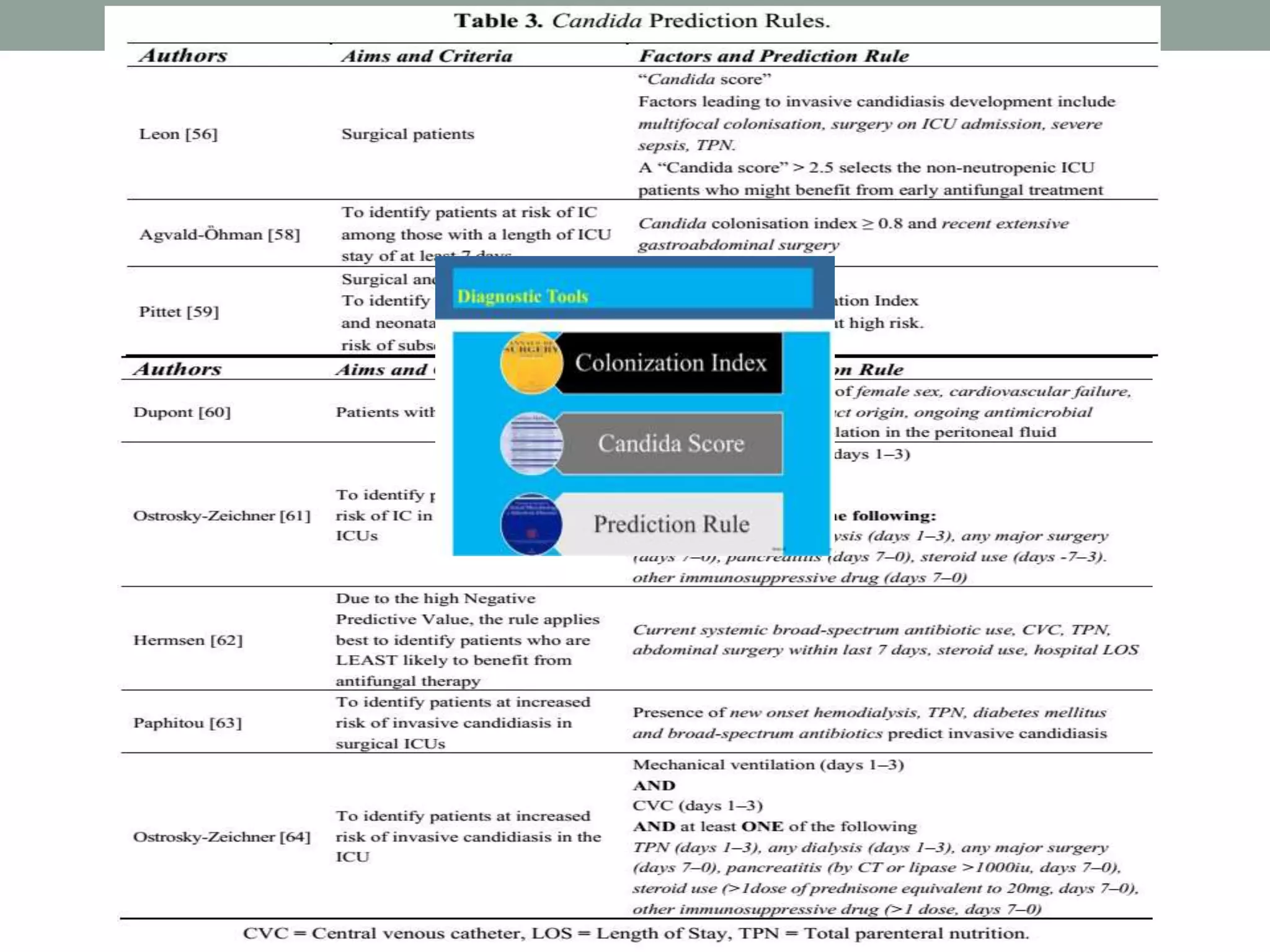
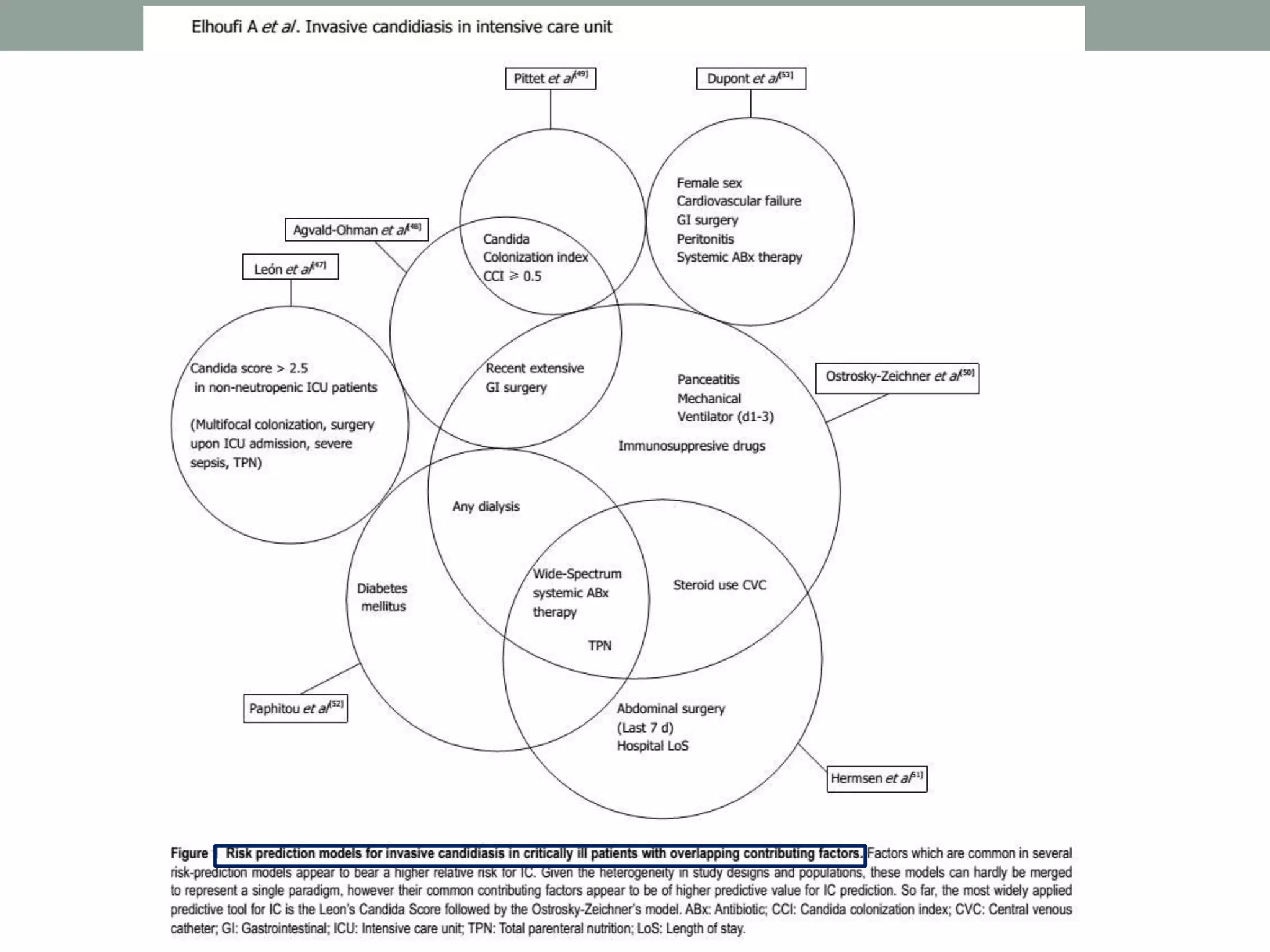
Major Risk Factors
• Prior antibiotic use
• CVL
• TPN
• Major Sx. within a week
• Steroids
• Dialysis
• Immunosuppression
• ICU length of stay - infections rising rapidly after 7-10 d
Dimopoulos G, et al. Candidemia in immunocompromised and immunocompetent critically ill
patients: a prospective comparative study. Eur J Clin Microbiol Infect Dis. 2007
Guideline – driven decision making in management of IFI in ICU
Algorhitm Development – Diagnostic approach:
Guideline – driven decision making in management of IFI in ICU
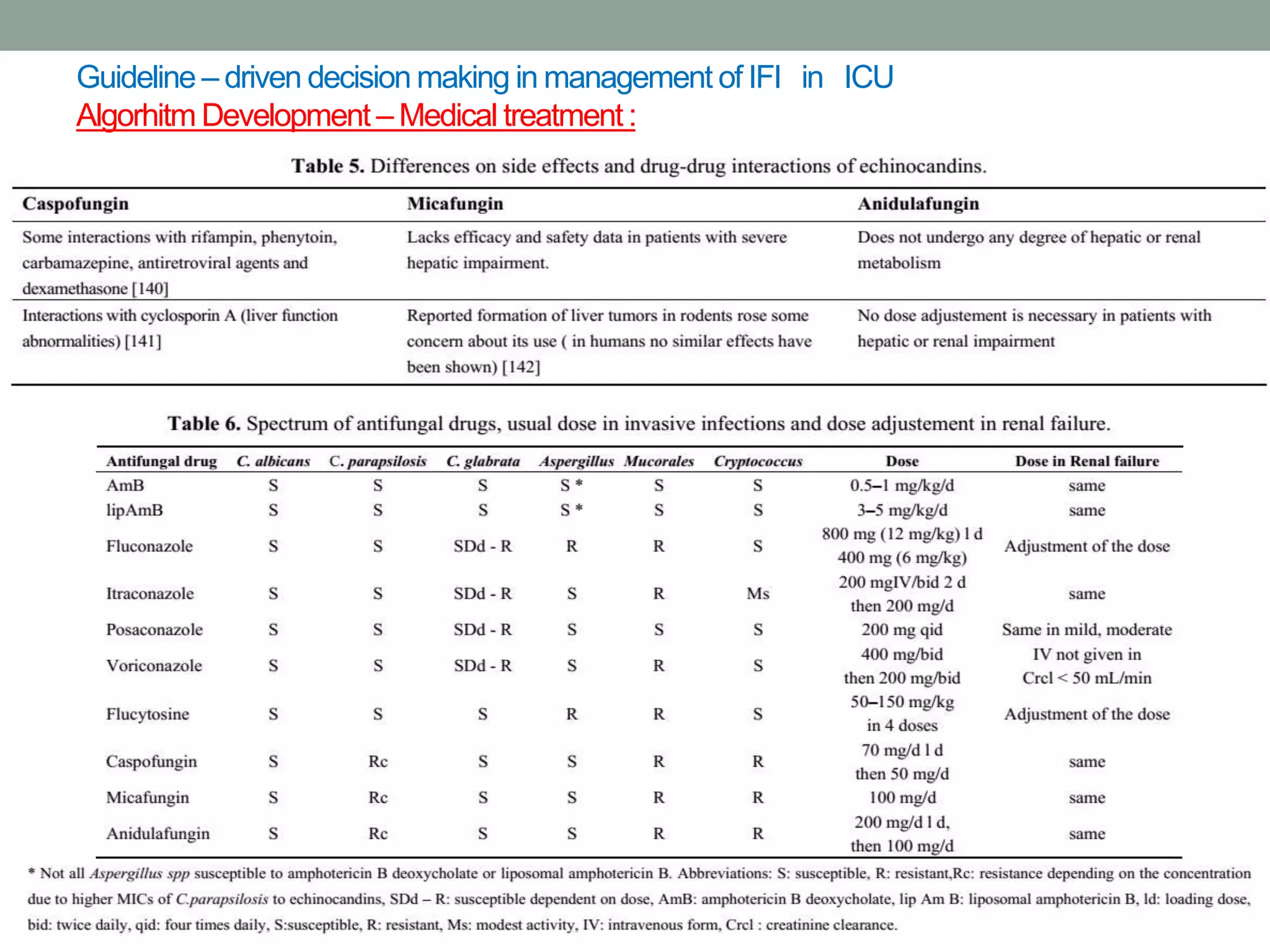
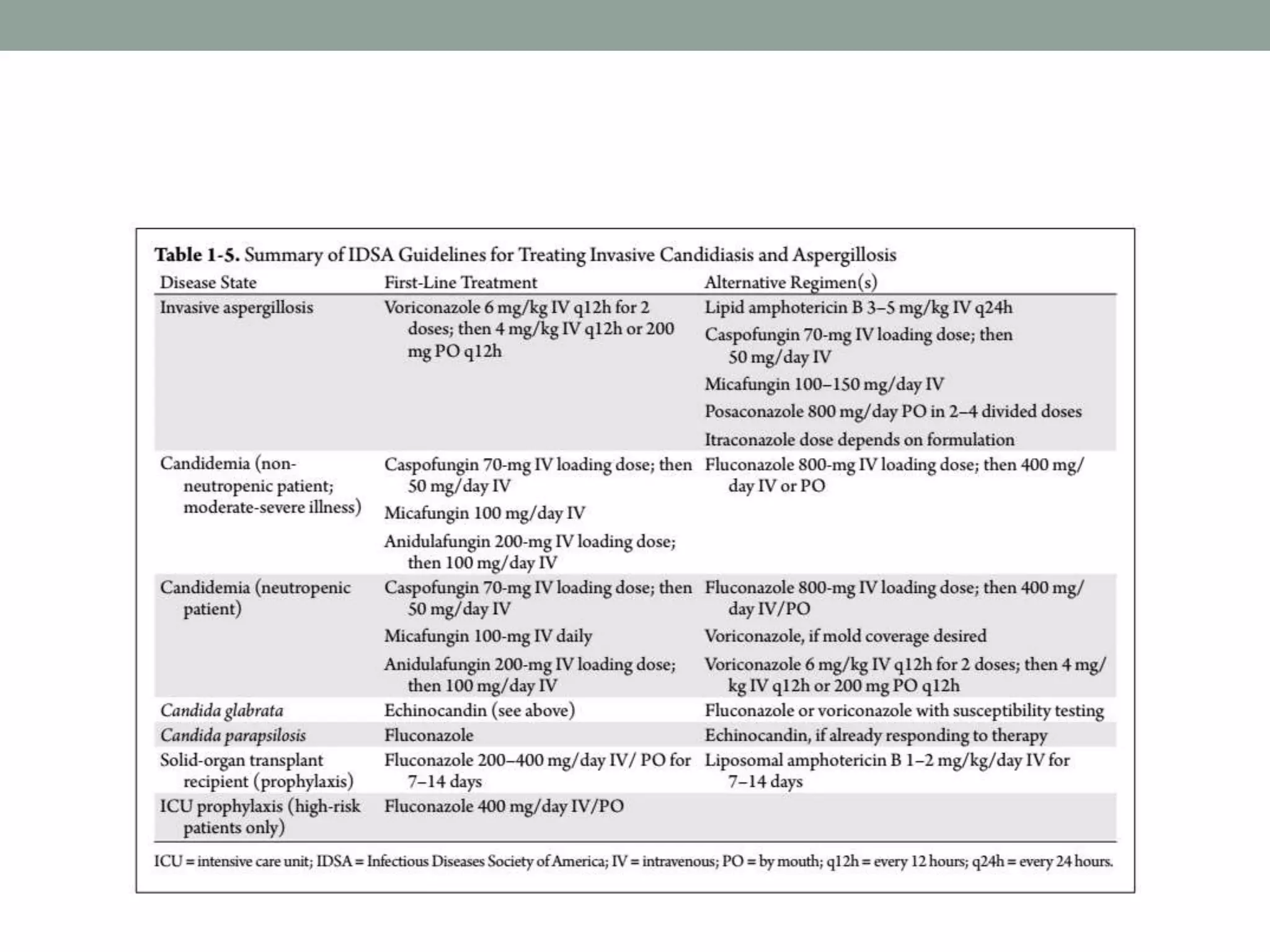
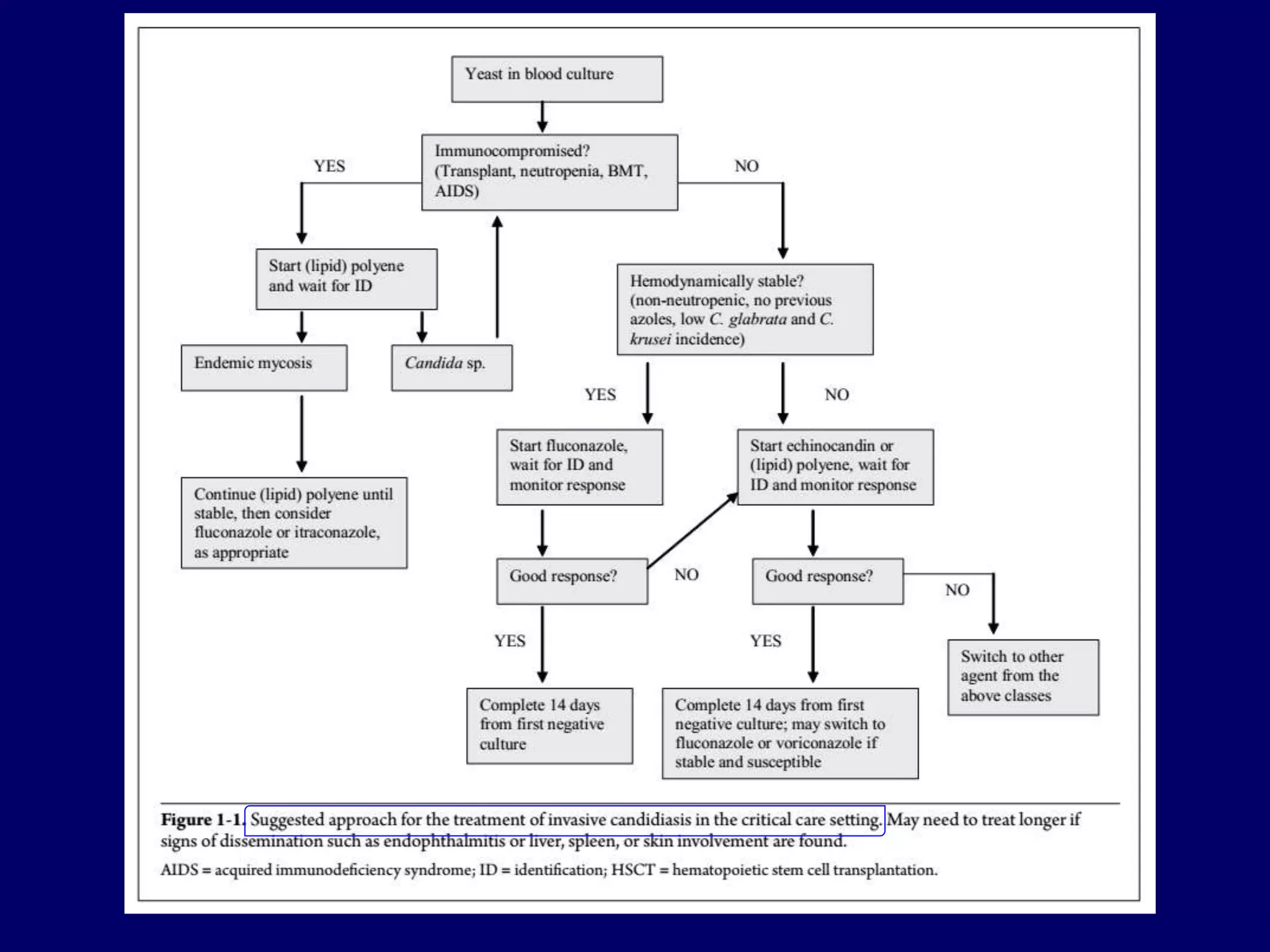
Algorhitm Development – Medical treatment:
Guideline – driven decision making in management of IFI in ICU
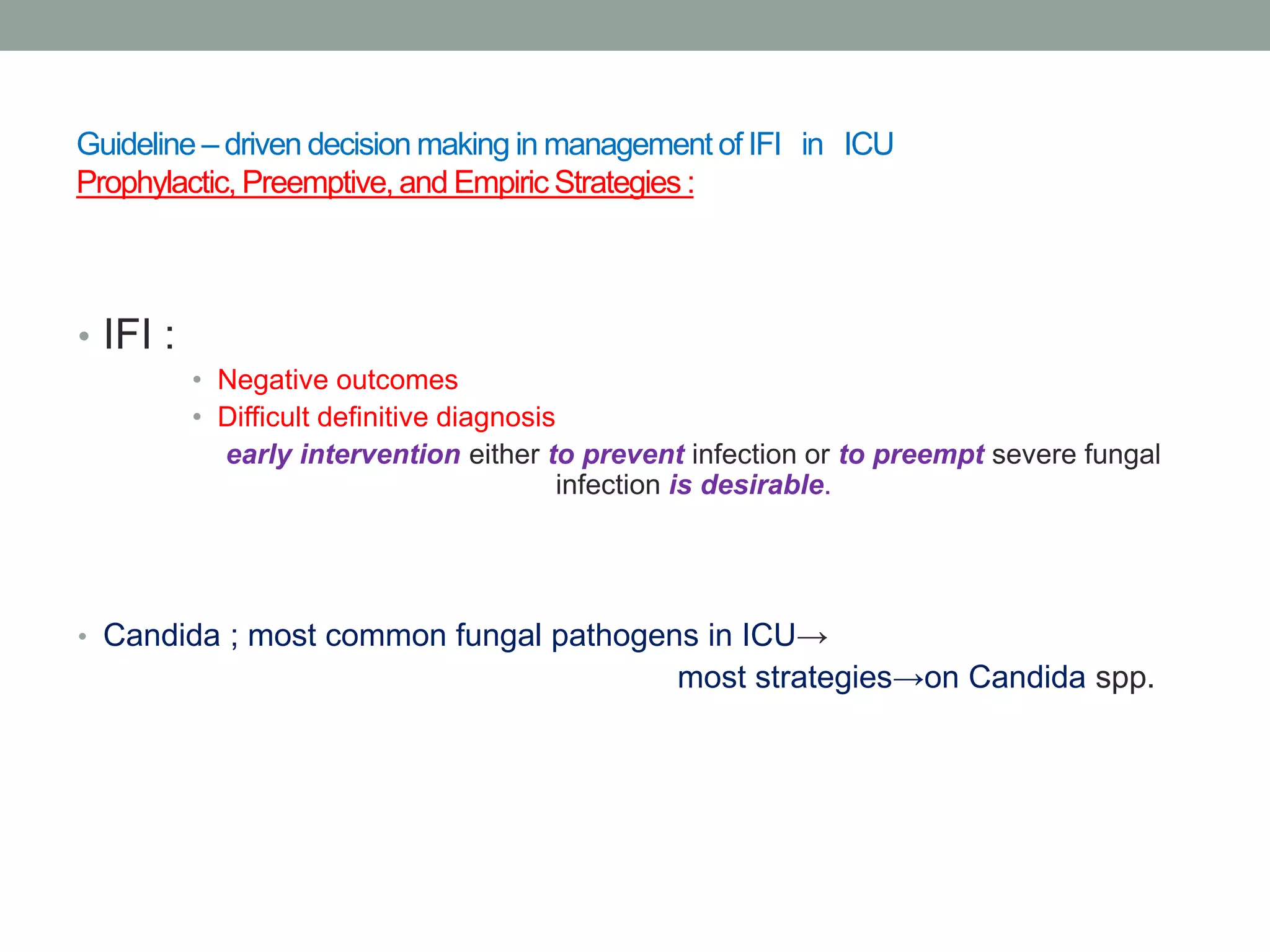
Prophylactic, Preemptive, and Empiric Strategies :
• IFI :
• Negative outcomes
• Difficult definitive diagnosis
early intervention either to prevent infection or to preempt severe fungal
infection is desirable.
• Candida ; most common fungal pathogens in ICU→
most strategies→on Candida spp.
Guideline – driven decision making in management of IFI in ICU
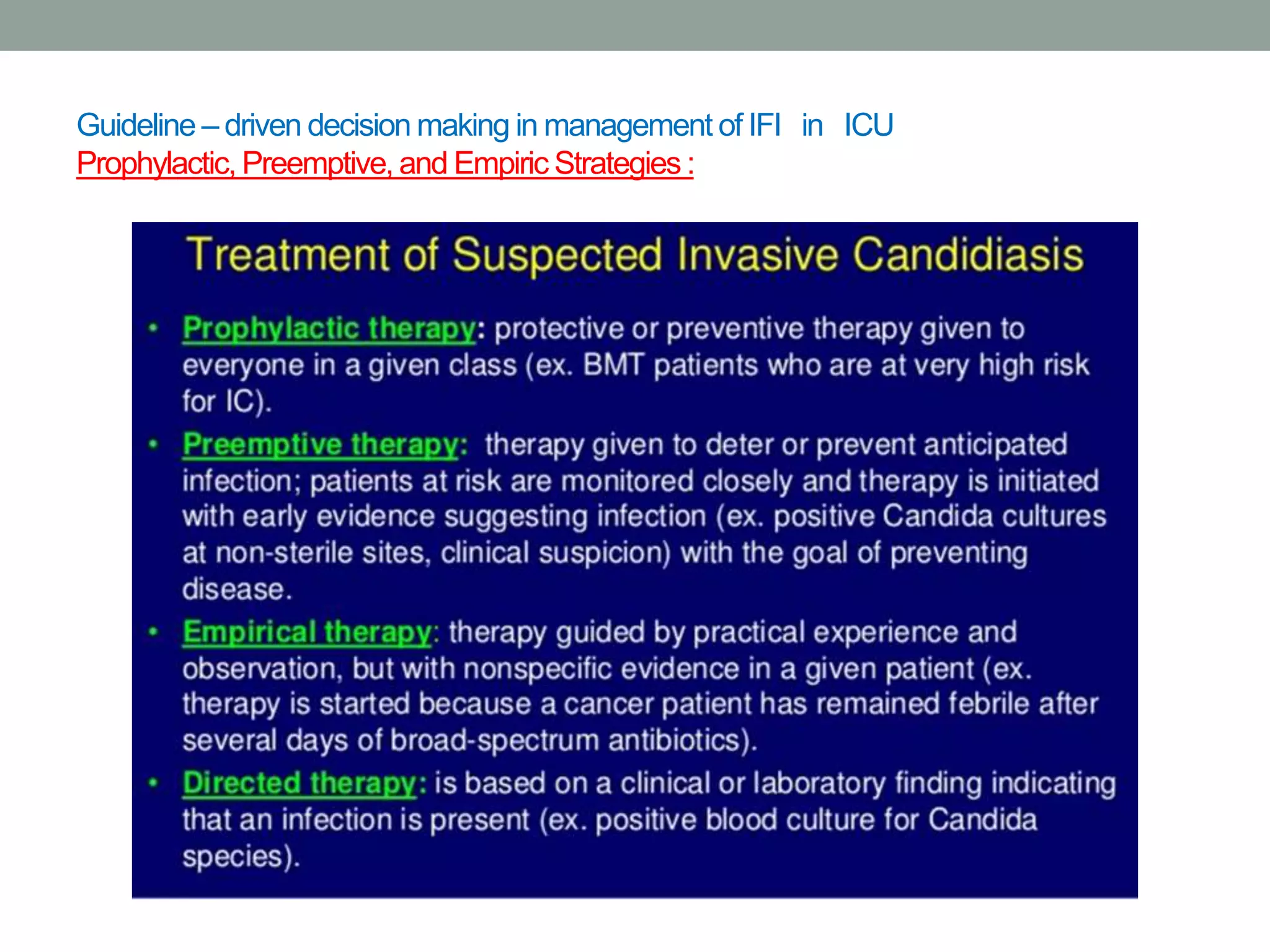
Prophylactic, Preemptive, and Empiric Strategies :
Prophylactic, Preemptive or Empiric
Use of Anti-fungals
• PROS
– High Mortality
– Difficulty in Diagnosis
– Undetected Infection
– Reduced systemic mycoses
and improved mortality with
prophylaxis
• CONS
– Toxicity
– Expense
– Diagnosis not certain
• Too much treatment
without infection
• Too little treatment with
infection
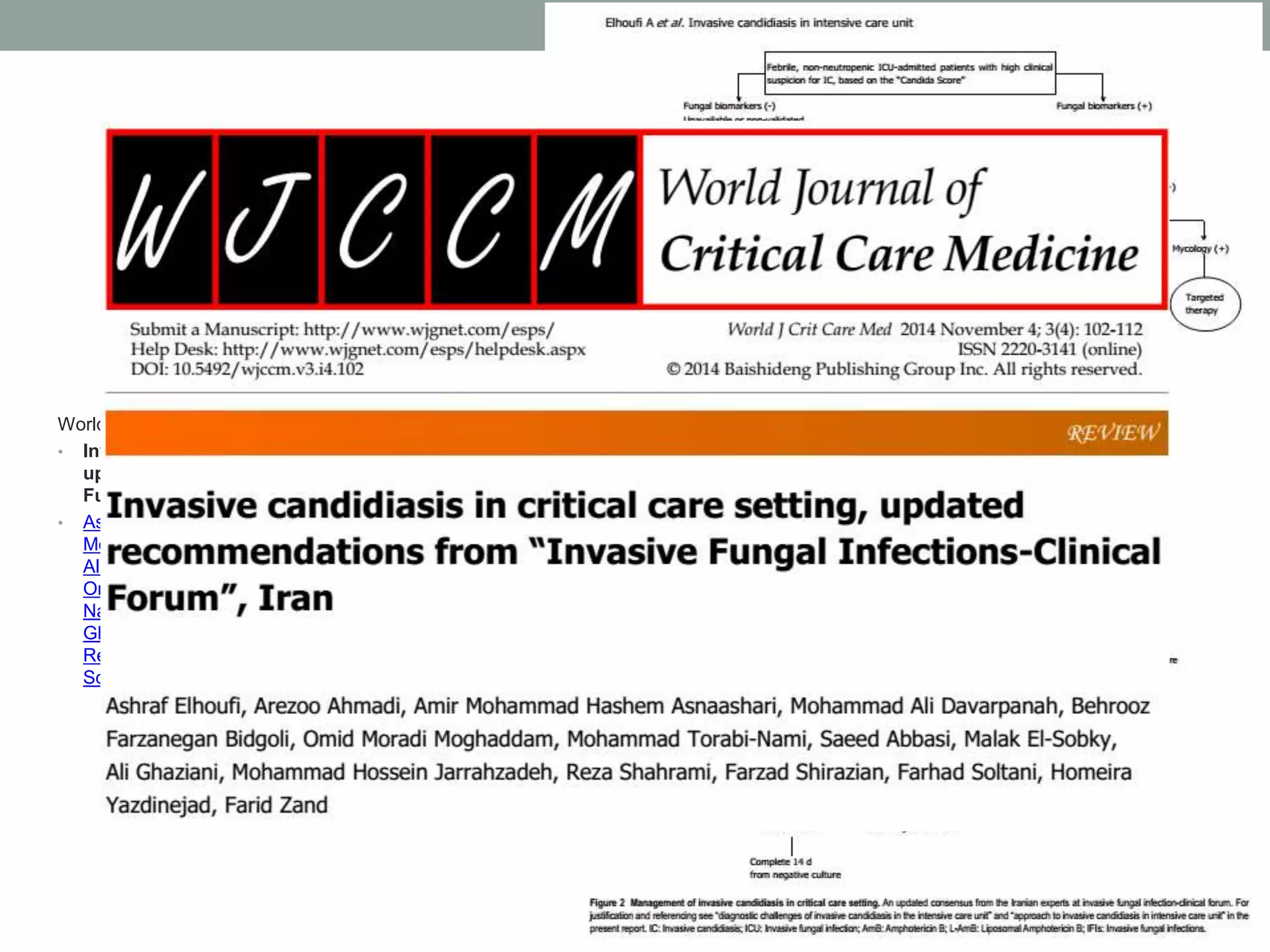
World J Crit Care Med. 2014 Nov 4; 3(4): 102–112.
• Invasive candidiasis in critical care setting,
updated recommendations from “Invasive
Fungal Infections-Clinical Forum”, Iran
• Ashraf Elhoufi, Arezoo Ahmadi, Amir
Mohammad Hashem Asnaashari, Mohammad
Ali Davarpanah, Behrooz Farzanegan Bidgoli,
Omid Moradi Moghaddam, Mohammad Torabi-
Nami, Saeed Abbasi, Malak El-Sobky, Ali
Ghaziani, Mohammad Hossein Jarrahzadeh,
Reza Shahrami, Farzad Shirazian, Farhad
Soltani, Homeira Yazdinejad, and Farid Zand
Guideline – driven decision making in management of IFI in ICU
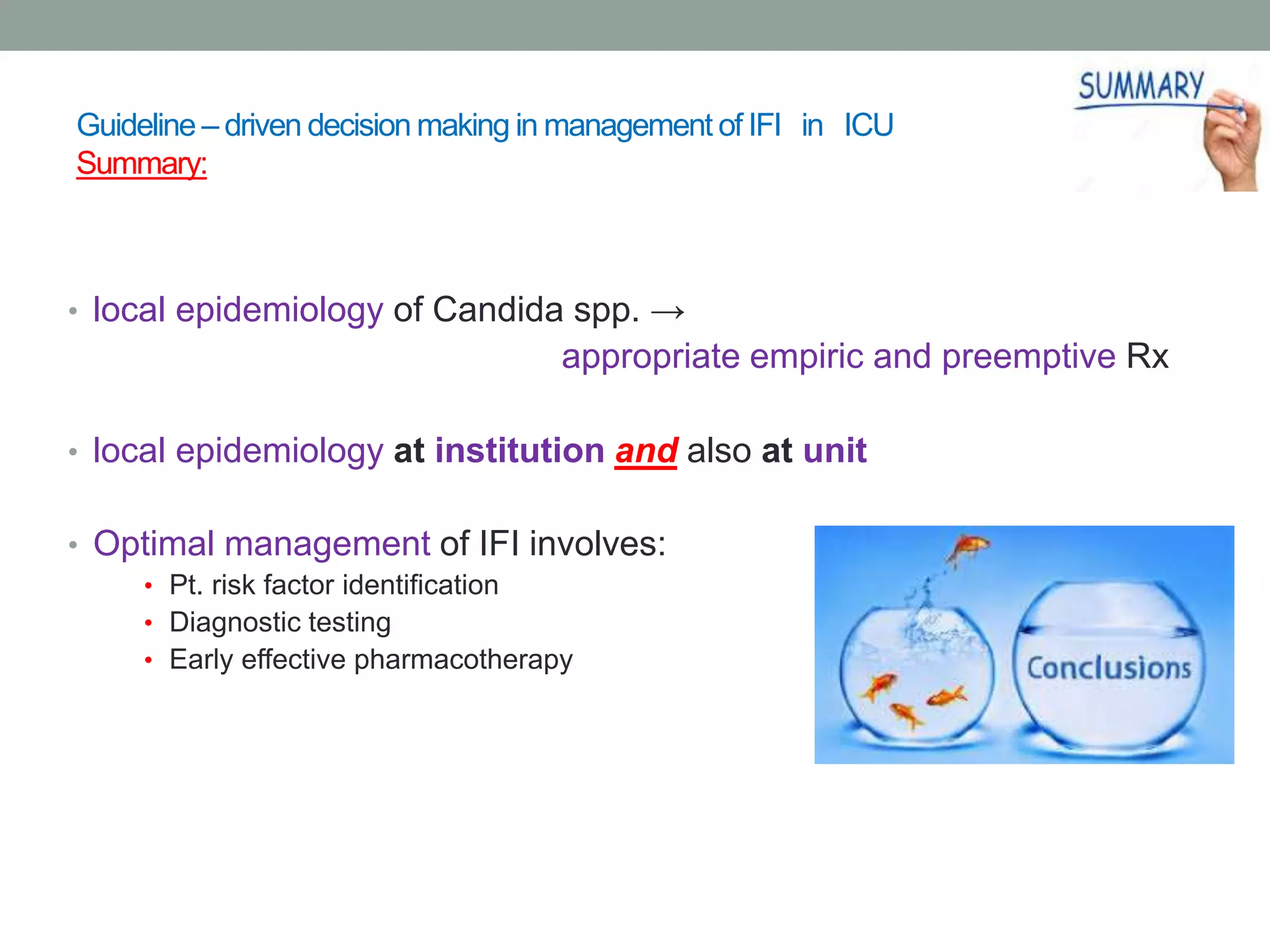
Summary:
• local epidemiology of Candida spp. →
appropriate empiric and preemptive Rx
• local epidemiology at institution and also at unit
• Optimal management of IFI involves:
• Pt. risk factor identification
• Diagnostic testing
• Early effective pharmacotherapy
Guideline – driven decision making in management of IFI in ICU
Summary:
• Appropriate empiric regimen depends on:
• Local patterns of infection and
• Severity of illness
Delays in antifungal therapy → ↑mortality
To avoid delays and guide appropriate therapy,
many institutions approach the management of
fungal bloodstream infection in the ICU with an algorithm
Suggested treatment algorithm for the ICU patient with invasive candidiasis
(NAS: non-albicansspecies,CVC: centralvenouscatheter,AmB: amphotericinB,
LipAmB:liposomal amphotericinB)
Any ?

CRRT National guideline

  • 1.
    CRRT NATIONAL GUIDELINE INICU Mansoor Masjedi MD , FCCM Shiraz University of Medical sciences 3rd international congress of critical care medicine Teh., Iran ; 20-22th Jan. 2016
  • 2.
    Guideline – drivendecision making in management of IFI in ICU Outline: • Introduction • Necessity of guideline approach • Prophylactic, Preemptive or Empiric Use of Anti-fungals • Suggested treatment algorithms • Disease specific treatment • Summary
  • 3.
    Guideline – drivendecision making in management of IFI in ICU Introduction: IFI in the ICU → ↑ morbidity & mortality Invasive candidiasis (IC) in ICU ˃10-fold medical or surgical wards Delays in Rx → negative pt outcomes Difficult to diagnose and treat Imposes a substantial financial burden because of: longer requirements for ICU care expensive antifungal pharmacotherapy greater overall use of hospital resources
  • 4.
    Guideline – drivendecision making in management of IFI in ICU Introduction: Available antifungal pharmacotherapies are:  complex  costly  drug-drug interactions  Toxicity New drugs →new therapies in ICU Advances in diagnostics & susceptibility testing → ↑Identification of pts who require antifungal Rx Aid in drug selection
  • 5.
    Guideline – drivendecision making in management of IFI in ICU Introduction: Optimal management of IFI • pt risk factor identification • diagnostic testing • early effective pharmacotherapy Many protocols and algorithms for prevention and treatment of these infections
  • 6.
    Invasive Mycosis Candidiasis Aspergillosis Decreasingimmunity SOT or BMTMICU or SICU Loss of Barrier / immunity Loss of barrier plus cellular immunity Oncology
  • 9.
    Guideline – drivendecision making in management of IFI in ICU Algorhitm Developement
  • 10.
    Can we waitfor the blood culture results in candidemia? • Retrospective cohort analysis 1/2001-12/2004: N=157 patients with candidemia • Delay in empiric Rx of candidemia till after blood cultures turn positive resulted in higher mortality • Start of anti-fungal Rx >12 hrs of drawing a blood culture that turns positive had AOR= 2.09 for mortality, p=0.018 Morrel M et al. 2005. Antimicrob Agents Chemother. 49(9):3640-5
  • 11.
    Major Risk Factors •Prior antibiotic use • CVL • TPN • Major Sx. within a week • Steroids • Dialysis • Immunosuppression • ICU length of stay - infections rising rapidly after 7-10 d Dimopoulos G, et al. Candidemia in immunocompromised and immunocompetent critically ill patients: a prospective comparative study. Eur J Clin Microbiol Infect Dis. 2007
  • 13.
    Guideline – drivendecision making in management of IFI in ICU Algorhitm Development – Diagnostic approach:
  • 15.
    Guideline – drivendecision making in management of IFI in ICU Algorhitm Development – Medical treatment:
  • 16.
    Guideline – drivendecision making in management of IFI in ICU Prophylactic, Preemptive, and Empiric Strategies : • IFI : • Negative outcomes • Difficult definitive diagnosis early intervention either to prevent infection or to preempt severe fungal infection is desirable. • Candida ; most common fungal pathogens in ICU→ most strategies→on Candida spp.
  • 18.
    Guideline – drivendecision making in management of IFI in ICU Prophylactic, Preemptive, and Empiric Strategies :
  • 19.
    Prophylactic, Preemptive orEmpiric Use of Anti-fungals • PROS – High Mortality – Difficulty in Diagnosis – Undetected Infection – Reduced systemic mycoses and improved mortality with prophylaxis • CONS – Toxicity – Expense – Diagnosis not certain • Too much treatment without infection • Too little treatment with infection
  • 24.
    World J CritCare Med. 2014 Nov 4; 3(4): 102–112. • Invasive candidiasis in critical care setting, updated recommendations from “Invasive Fungal Infections-Clinical Forum”, Iran • Ashraf Elhoufi, Arezoo Ahmadi, Amir Mohammad Hashem Asnaashari, Mohammad Ali Davarpanah, Behrooz Farzanegan Bidgoli, Omid Moradi Moghaddam, Mohammad Torabi- Nami, Saeed Abbasi, Malak El-Sobky, Ali Ghaziani, Mohammad Hossein Jarrahzadeh, Reza Shahrami, Farzad Shirazian, Farhad Soltani, Homeira Yazdinejad, and Farid Zand
  • 26.
    Guideline – drivendecision making in management of IFI in ICU Summary: • local epidemiology of Candida spp. → appropriate empiric and preemptive Rx • local epidemiology at institution and also at unit • Optimal management of IFI involves: • Pt. risk factor identification • Diagnostic testing • Early effective pharmacotherapy
  • 27.
    Guideline – drivendecision making in management of IFI in ICU Summary: • Appropriate empiric regimen depends on: • Local patterns of infection and • Severity of illness Delays in antifungal therapy → ↑mortality To avoid delays and guide appropriate therapy, many institutions approach the management of fungal bloodstream infection in the ICU with an algorithm
  • 29.
    Suggested treatment algorithmfor the ICU patient with invasive candidiasis (NAS: non-albicansspecies,CVC: centralvenouscatheter,AmB: amphotericinB, LipAmB:liposomal amphotericinB)
  • 31.