CRITICAL ILLNESS
RELATED
CORTICOSTEROID
INSUFFICIENCY
Dr. Ashish Ranjan
Objectives
 To review normal physiology of adrenal gland
and glucocorticoids
 Normal adrenal response to stress
 Adrenal insufficiency in critical illness:
pathophysiology and incidence
 Recommendation for diagnosis and
management in adult patients
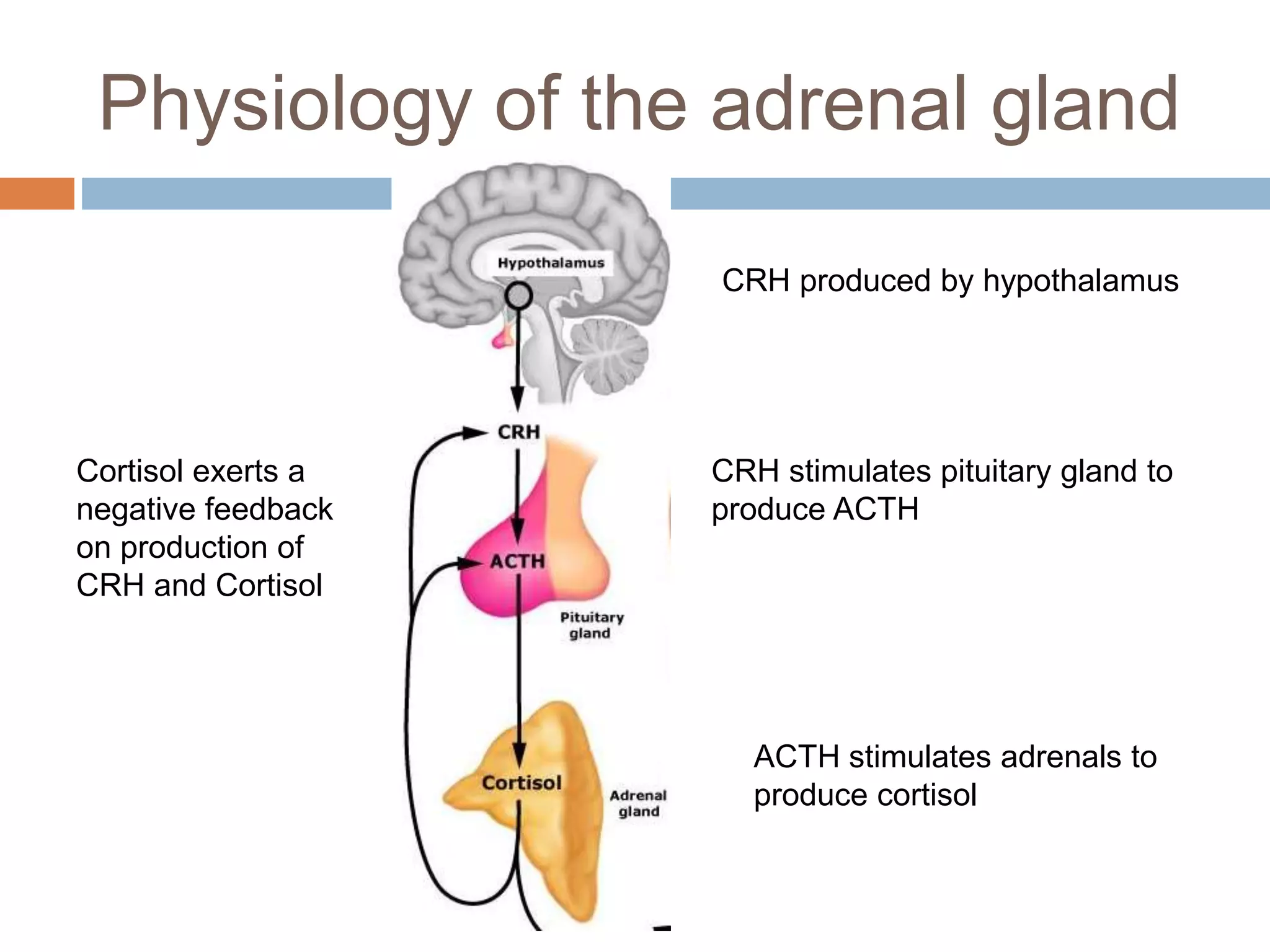
Physiology of the adrenal gland
CRH produced by hypothalamus
CRH stimulates pituitary gland to
produce ACTH
ACTH stimulates adrenals to
produce cortisol
Cortisol exerts a
negative feedback
on production of
CRH and Cortisol
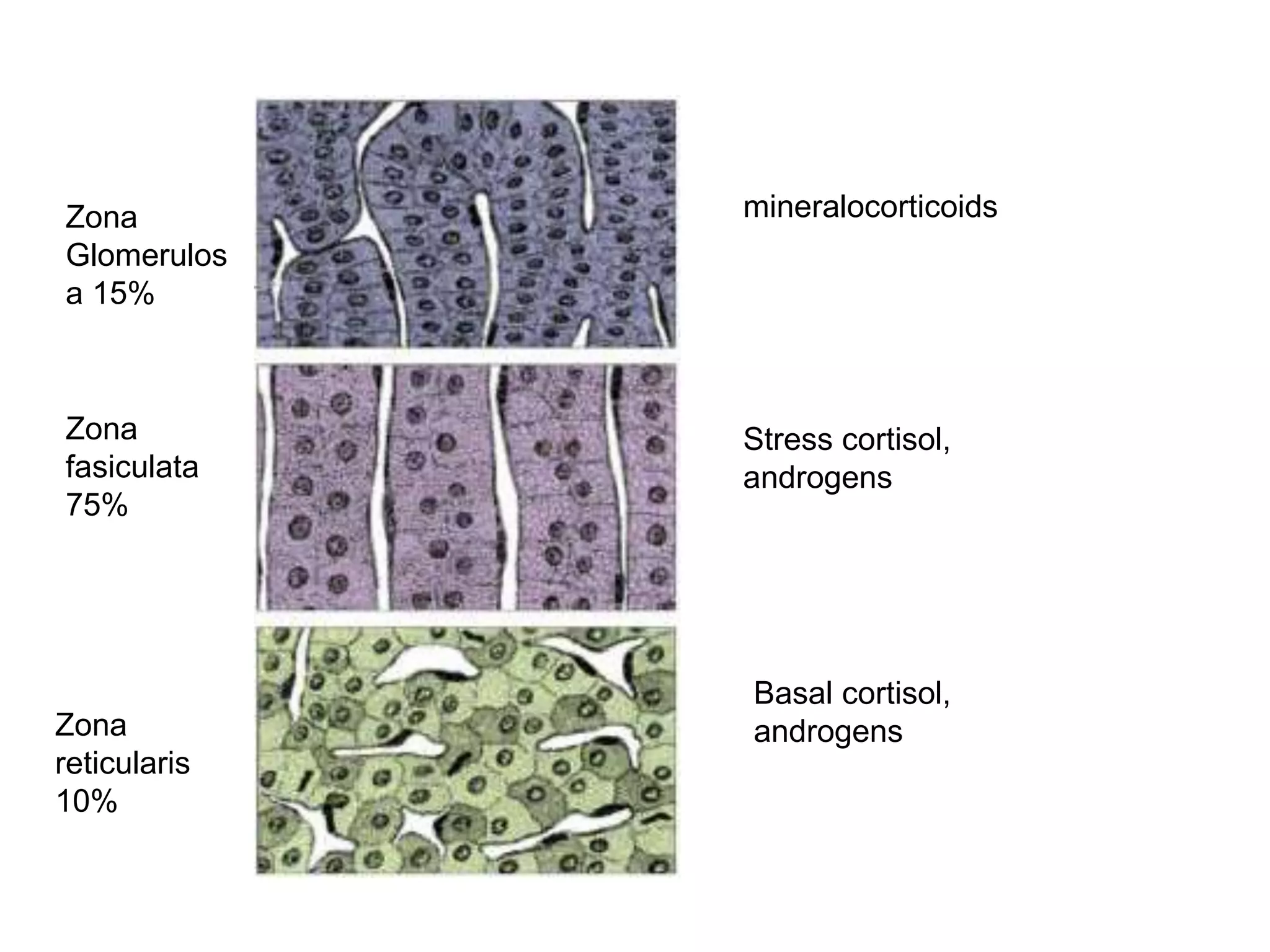
Zona
fasiculata
75%
Zona
Glomerulos
a 15%
Zona
reticularis
10%
mineralocorticoids
Stress cortisol,
androgens
Basal cortisol,
androgens
Production of steroid hormones
Physiology of glucocorticoids
 90% bound to corticosteroid binding globulin
and albumin to a lesser extent
 10% free cortisol is physiologically active, half
life is 70 -120 mins
 Cortisol is not stored in adrenal gland
 Glucocorticoids bind to intracelullar receptors
then moves into the nucleus affecting
transcription of various genes
Physiology of glucocorticoids
Metabolic:
 Stimulates gluconeogenesis, decrease glucose
utilization
 Decreases protein synthesis and increases
catabolism
 Increases lypolysis and oxidation of fatty acids
Cardiovascular:
 Increases blood pressure
 Increases sensitivity of vasculature to
catecholamines & angiotensin II
Physiology of glucocorticoids
Anti-inflammatory effects:
 Reduces circulating T, B lymphocytes,
esinophils, monocytes and neutrophils at sites
of inflammation
 Decreases production of cytokines &
chemokines
 Increased production of microphage migration
inhibitory factor
Increases red cell production
Adrenal
insufficiency
Adrenal insufficiency
 Primary adrenal insufficiency
 Secondary adrenal insufficiency
 Critical illness related corticosteroid
insufficiency
Primary adrenal insufficiency
Congenital:
 CAH
 Adrenal hypoplasia
congenita
 Familial
glucocorticoid
deficiency
 Adrenoleukodystrop
hy
 Aldosterone
Acquired:
 Autoimmune
 Infectious diseases
 Infiltrative processes
 Drugs
Secondary adrenal insufficiency
Congenital ACTH,
CRH deficiency:
 Isolated
 Panhypopituitarism
 Associated with
structural defects
e.g. supra optic
dyplasia
Acquired:
 Lymphocytic
hypophysitis
 Neoplasms
 Exogenous steroids
Critical illness related GC
insufficiency
 CIRCI is characterized by
dysregulated systemic inflammation
 Resulting from inadequate
intracellular glucocorticoid-mediated
anti-inflammatory activity for the
severity of the patient’s critical illness.
Normal HPA response to stress
 Multiple changes occur to maintain homeostasis
during stress
 Activation of sympathoadrenal system leading to
secretion of epinephrine and norepinephrine
 Activation of HPA axis lead to release of CRH,
ACTH and eventually cortisol
Normal HPA response to stress
 Corticosteroid binding protein levels fall as
low as 50% leading to increase in free
cortisol
 Increased translocation of GR complexes
into the nucleus
 Results in alteration of systemic
inflammatory response and cardiovascular
function
Adrenal insufficiency -
pathophysiology
 Is inadequate cellular corticosteroid activity for
the severity of patients illness
 Dynamic process, patient may not have it on
admission but develop it later
 Poorly understood
 Structural damage to adrenal gland due to
hemorrhage or infarction may lead to long term
AI
AI – pathophysiology
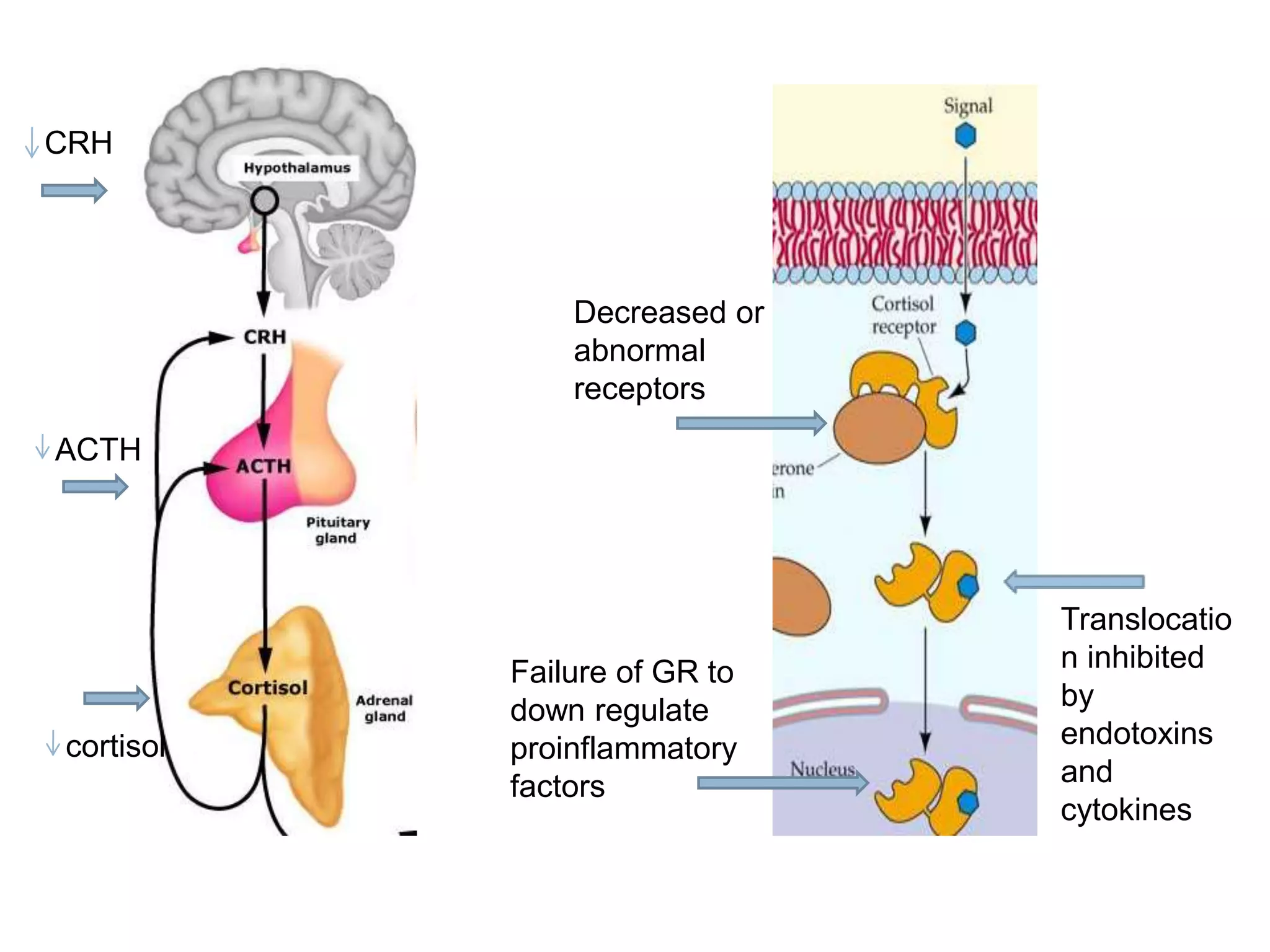
 Most critically ill develop reversible HPA axis
dysfunction
 Decreased production of CRH, ACTH or cortisol
 Decrease and alterations of glucocorticoid
receptors
 Decrease nuclear translocation of glucocorticoid-
receptor complexes due to endotoxins and
proinflammatory cytokines
 Failure of activated GRs to down regulate
production of inflammatory mediators (systemic
inflammation-associated GC resistance)
Translocatio
n inhibited
by
endotoxins
and
cytokines
Decreased or
abnormal
receptors
Failure of GR to
down regulate
proinflammatory
factors
CRH
ACTH
cortisol
AI – pathophysiology
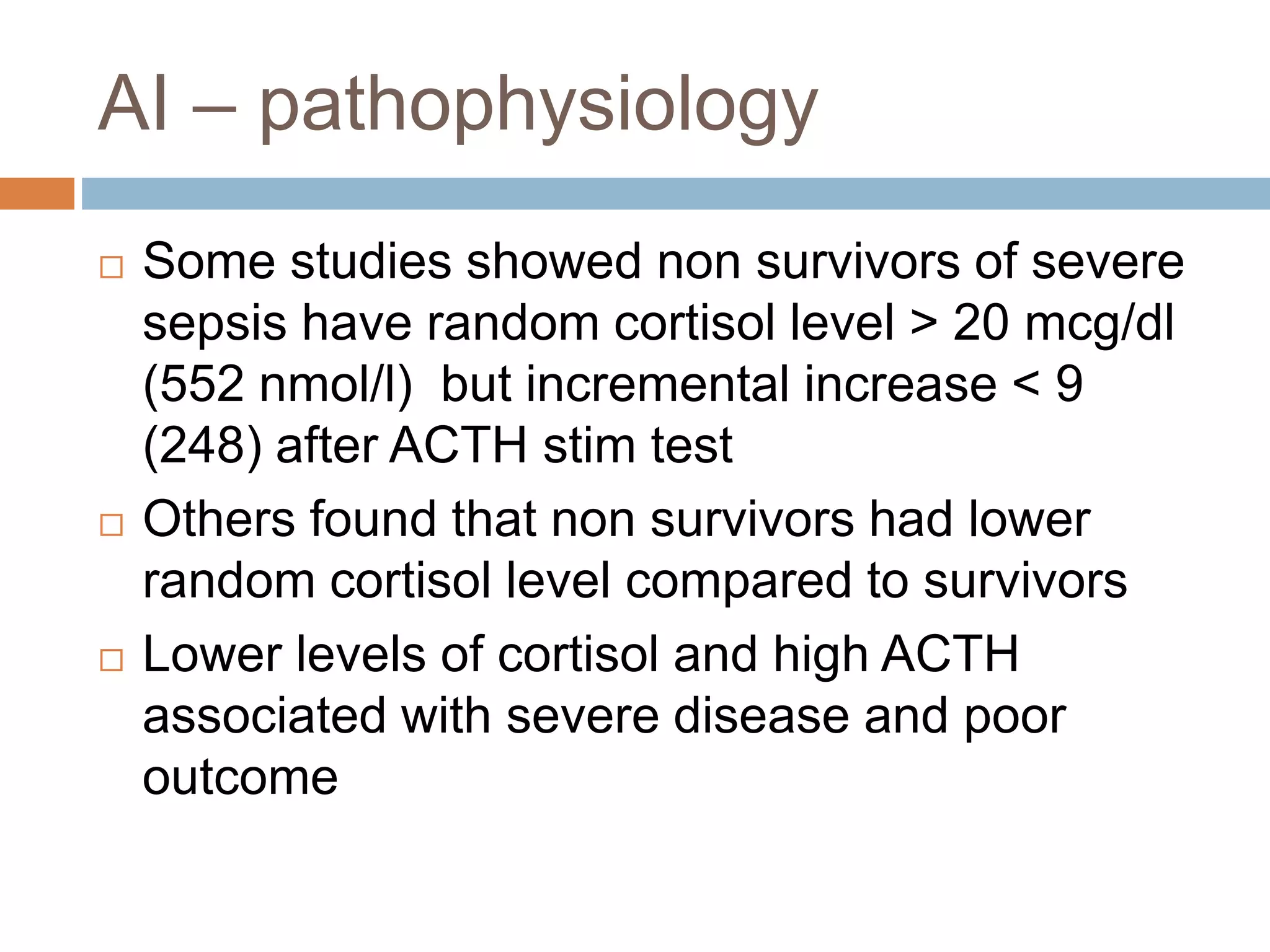
 Some studies showed non survivors of severe
sepsis have random cortisol level > 20 mcg/dl
(552 nmol/l) but incremental increase < 9
(248) after ACTH stim test
 Others found that non survivors had lower
random cortisol level compared to survivors
 Lower levels of cortisol and high ACTH
associated with severe disease and poor
outcome
When to suspect AI in critically ill
pts
 Shock poorly responding to fluids and
vasopressors especially septic shock
 Catecholamine-dependant shock
 Prolonged mechanical ventilation
 Sudden deterioration of seriously ill patients
with DIC, traumatic shock, severe burns or
sepsis may be due to adrenal hemorrhage or
infarction
 Incidence variable b/w 15 to 60 % in various
studies
GUIDELINE
DEVELOPMENT
 A multispeciality task force of international experts in critical care
medicine, endocrinology, and guideline methods was convened
from the membership of the SCCM and the ESICM. The multiple
meetings and teleconferences were done.
 The task force members developed a list of questions structured in
the Population, Intervention, Comparison, and Outcome (PICO)
format regarding the diagnosis and treatment of CIRCI in various
clinical conditions
 The methods chair (BR) assisted in developing the PICO questions,
i.e., framing the clinical questions in a searchable format.
 This required careful specification of the patient group (P), the
intervention (I), the comparator (C), and the outcomes (O) for
intervention questions and the patient group, index tests, reference
standard, and target condition for questions of diagnostic test
accuracy. For each question the task force agreed upon explicit
review question criteria including study design features
 Assessment of Relative Importance of
Outcomes
 For each intervention question a list of outcomes
was compiled, reflecting both benefits and harms
of alternative management strategies. Outcomes
(from the perspective of a patient) were ranked
from “low” to “critical” importance and agreed by
consensus of the task force members
 Ranking outcomes by their relative clinical
importance helps to focus on those that are most
relevant to patients and may lead to improved
clarification during potential disagreements in
decision making.
SEARCHING FOR THE
EVIDENCE
 Sources
 The information technologists searched The
Cochrane Database of Systematic Reviews,
DARE, CENTRAL, and Medline for all PICO
questions on diagnosis and treatment
 Selection of Studies for Inclusion
 The information technologists screened all titles
and abstracts to discard the clearly irrelevant
articles. Task force members completed a second
screening. References were allocated to pairs of
reviewers for evaluation of eligibility. All abstracts
that did not meet the inclusion criteria were
discarded.
 Data Extraction and Critical Appraisal of Individual
Studies
 For each included study, they collected relevant information
on design, conduct, risk of bias, and relevant results. For
each question, the methodologist extracted all individual
study data and produced (when pooling was judged to be
appropriate) forest plots by outcome.
 All analysis was done using Review Manager (RevMan)
software version 5.3
 The risk of bias of the included studies was evaluated using
various validated checklists, as recommended by the
Cochrane Collaboration. These were AMSTAR for systematic
reviews , the Cochrane Risk of Bias tool for randomized
controlled trials ,and the Newcastle-Ottawa scale for cohort
and case-control studies.
 Evidence summaries for each question were
prepared by the methodologist following the
GRADE approach using the GRADEpro Guideline
Development Tool online software
(www.gradepro.org).
 The evidence profiles include the summary—
pooled or narrative—outcome data, an absolute
measure of intervention effect when appropriate,
the importance of the outcome, and the summary
of quality of evidence for each outcome.
 Evidence profiles were constructed by the
methodologist and reviewed and confirmed with
the rest of the task force members.
 Rating the Quality of the Evidence for Each Outcome across
Studies
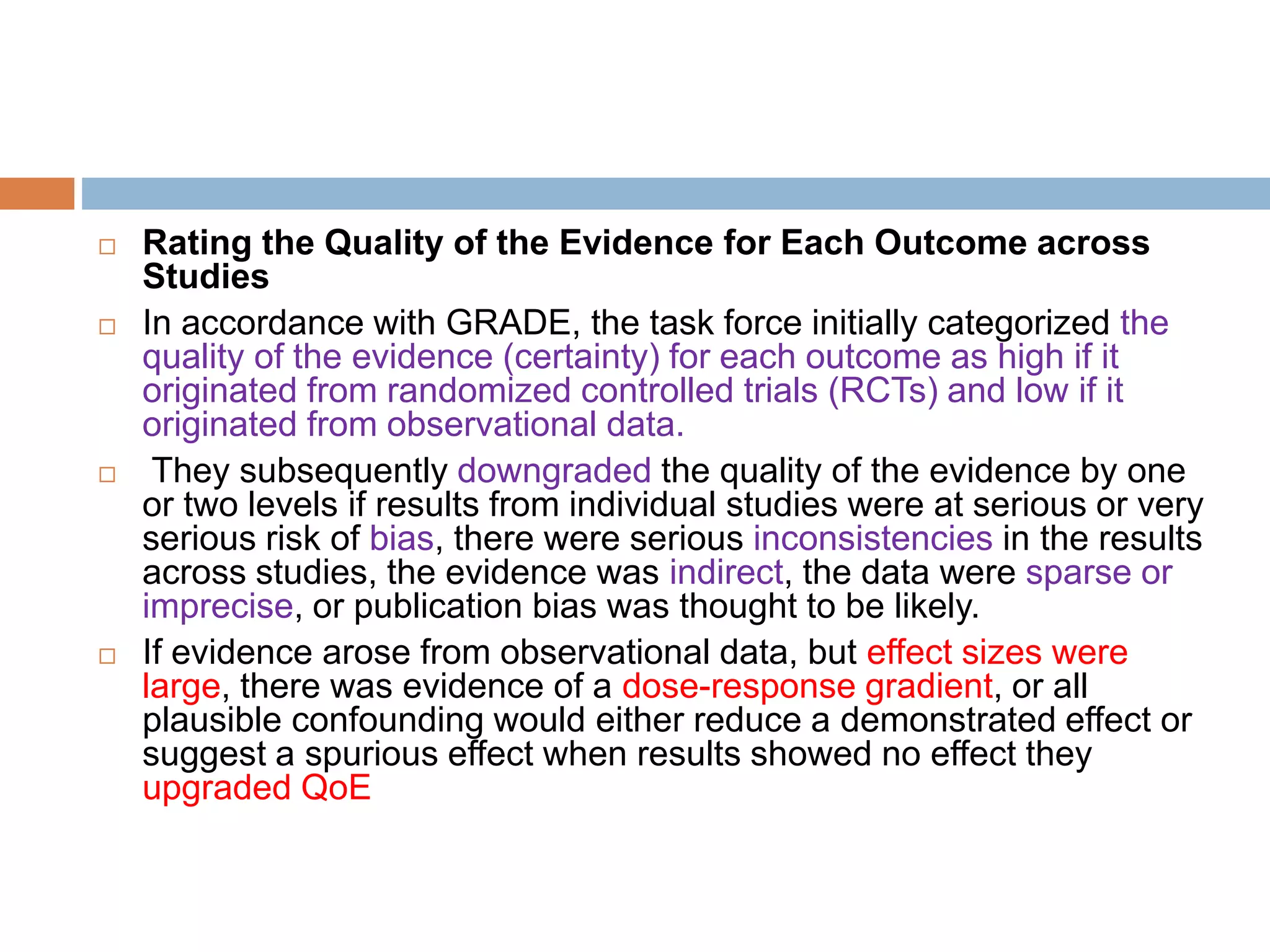
 In accordance with GRADE, the task force initially categorized the
quality of the evidence (certainty) for each outcome as high if it
originated from randomized controlled trials (RCTs) and low if it
originated from observational data.
 They subsequently downgraded the quality of the evidence by one
or two levels if results from individual studies were at serious or very
serious risk of bias, there were serious inconsistencies in the results
across studies, the evidence was indirect, the data were sparse or
imprecise, or publication bias was thought to be likely.
 If evidence arose from observational data, but effect sizes were
large, there was evidence of a dose-response gradient, or all
plausible confounding would either reduce a demonstrated effect or
suggest a spurious effect when results showed no effect they
upgraded QoE
 Formulating Statements and Grading
Recommendations
 Actionable recommendations. All Recommendations
were developed based on the GRADE evidence
profiles for each recommendation.
 Each recommendation was designated either “strong”
or conditional” according to the GRADE approach . As
outlined by GRADE, they used the phrasing “we
recommend” for strong recommendations and “we
suggest” for conditional (synonymous with the older
term ‘weak’) recommendations (Table 2)
 The implications of the strength of the
recommendations for patients, clinicians, and policy
makers are shown (Table 3)
Diagnosis of AI
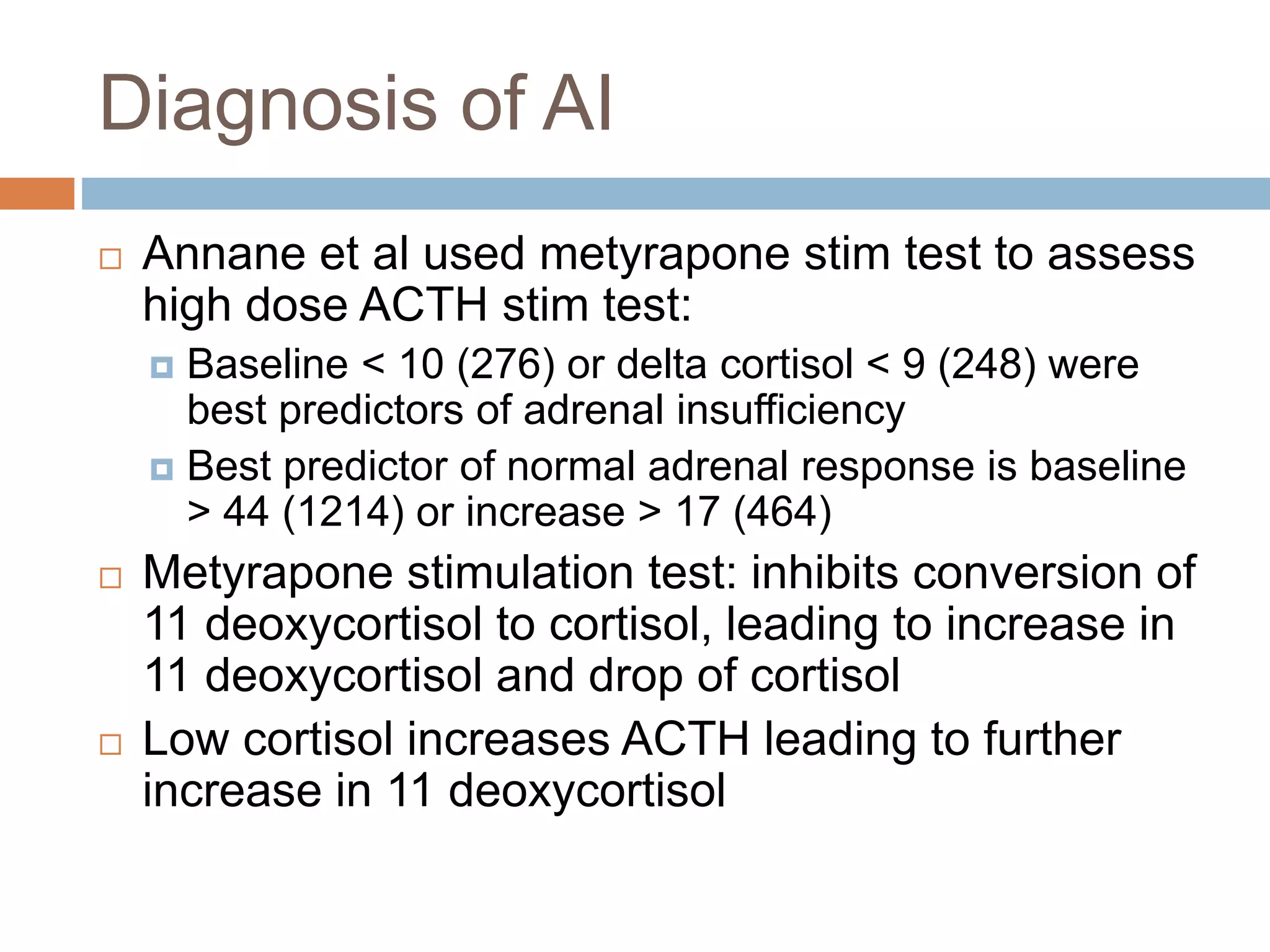
 Annane et al used metyrapone stim test to assess
high dose ACTH stim test:
 Baseline < 10 (276) or delta cortisol < 9 (248) were
best predictors of adrenal insufficiency
 Best predictor of normal adrenal response is baseline
> 44 (1214) or increase > 17 (464)
 Metyrapone stimulation test: inhibits conversion of
11 deoxycortisol to cortisol, leading to increase in
11 deoxycortisol and drop of cortisol
 Low cortisol increases ACTH leading to further
increase in 11 deoxycortisol
Diagnosis
 1. Is total cortisol response to synthetic adrenocorticotropic
hormone (ACTH; cosyntropin) superior to random plasma or
serum total cortisol for the diagnosis of CIRCI?
 Recommendation: The task force makes no recommendation
regarding whether to use delta cortisol (change in baseline cortisol
at 60 min of < 9 μg/dL) after cosyntropin (250 μg) administration or
a random plasma cortisol of < 10 μg/dL for the diagnosis of CIRCI.
 Rationale: The 2008 guidelines suggested that the diagnosis of
CIRCI is best made by a delta total serum cortisol of < 9 μg/ dL after
IV cosyntropin (250 μg) administration or a random total cortisol of <
10 μg/dL (1).
 To date, however, clinicians have not adopted these diagnostic
criteria in their routine practice.
 Moreover, the latest Surviving Sepsis Campaign guidelines suggest
not using the ACTH stimulation test to select patients with septic
shock that may be treated with hydrocortisone
 They found one single-center randomized trial that compared
low-dose ACTH (1 μg) stimulation test with total random
cortisol for diagnosis of adrenal insufficiency in 59 adults with
septic shock .
 Compared with total random cortisol, the low-dose ACTH test
was better able to predict a longer duration of vasopressor
requirement and hemodynamic response to corticosteroids.
 Similarly, prospective cohort studies in adults with or without
sepsis and in patients with multiple trauma found that
patients with CIRCI, i.e., total cortisol levels < 10 μg/dL or
delta cortisol < 9 μg/dL, had poorer outcomes than patients
without CIRCI.
 Likewise, a large multicenter prospective cohort study found
that critically ill children with a delta cortisol < 9 μg/dL after
the low-dose ACTH stimulation test required higher-dose and
prolonged treatment with catecholamines, a higher amount of
fluid, and had a higher mortality rate
 Owing to the potential for risk of bias in study design,
with only one single-center unblinded randomized trial
and a small number of prospective cohort studies, and
due to imprecision related to low numbers of patients
included, they downgraded the quality of evidence to
low. After two rounds of voting the task force members
could not reach a consensus (> 80% agreement) on
whether the ACTH stimulation test is superior to
random cortisol for the routine diagnosis of CIRCI.
 Due to the broad spectrum of abnormalities that may
cause CIRCI, the task force thought it is unlikely that a
single test can reliably diagnose CIRCI independent of
its mechanisms, i.e., altered cortisol synthesis or
metabolism, or tissue resistance to cortisol.
 2. Is plasma or serum free cortisol level superior to
plasma total cortisol level for the diagnosis of
CIRCI?
 Recommendation: We suggest against using plasma
free cortisol level rather than plasma total cortisol for the
diagnosis of CIRCI (conditional recommendation, very
low quality of evidence).
 Rationale: Free cortisol is the bioactive form of cortisol.
Critically ill patients often present with low serum
concentrations of cortisol-binding globulin (CBG) and
hypoalbuminemia.
 In patients with low serum concentrations of cortisol
binding proteins, serum total cortisol levels may not
predict serum free cortisol levels, with a correlation
between serum levels of free and total cortisol of only
50% to 60%
 They found no randomized trial that compared serum total versus
free cortisol levels to diagnose CIRCI.
 A prospective study of 112 critically ill adults with treatment-
insensitive hypotension, published after the 2008 recommendations,
found a good correlation between serum concentrations of free and
total cortisol before and after 250 μg ACTH stimulation testing.
 Another prospective cohort study of 69 critically ill patients to
assess the time course of serum cortisol levels found that levels of
both free and total cortisol predicted clinical outcomes .
 Measurement of serum free cortisol levels involves cumbersome
techniques.
 So the task force recommended against it.
3. Is salivary free cortisol level superior to plasma
total cortisol level for the diagnosis of CIRCI?
 Recommendation: We suggest against using salivary
rather than serum cortisol for diagnosing CIRCI (conditional
recommendation, very low quality of evidence).
 Rationale: In saliva, cortisol is found unbound. Thus,
measuring salivary cortisol levels may inform on free cortisol
levels and adrenal function.
 However, salivary cortisol levels may be impacted by a
number of confounding factors such as gender, age, time and
site of sampling, and saliva volume
 In a study of 57 patients with septic shock, there was no
significant difference between free serum cortisol and salivary
cortisol levels (p = 0.28)
 In addition, the correlation between salivary cortisol and total
serum cortisol levels was very good (80%)
4. Is the 1-μg ACTH stimulation test superior to the 250-
μg ACTH test for the diagnosis of CIRCI?
 Recommendation: We suggest that the high-dose (250-μg)
rather than the low-dose (1-μg) ACTH stimulation test be used for
the diagnosis of CIRCI (conditional recommendation, low quality of
evidence).
 Rationale: The high-dose (250-μg) ACTH stimulation test remains
the most popular diagnostic test for adrenal insufficiency. However,
this supraphysiologic dose of ACTH may result in significant
stimulation of the adrenocortical cells in patients with proven
adrenal insufficiency. Therefore, to increase the sensitivity of this
diagnostic test, low-dose (1-μg) ACTH was suggested.
 The high-dose ACTH test is easy to perform and safe. The low-
dose ACTH test requires some preparation at the bedside as the
commercial ampoules contain 250 μg of ACTH.
 Owing to easier practical modalities and the comparable accuracy
of the low- and high-dose ACTH tests in a Meta-analysis and a
prospective cohort study, the task force suggested using the high-
dose rather than the low-dose ACTH test for the diagnosis of CIRCI.
5. Is hemodynamic response to hydrocortisone
(50–300 mg) superior to the 250-μg ACTH stimulation
test for the diagnosis of CIRCI?
 Recommendation: We suggest the use of the 250-
μg ACTH stimulation test rather than the
hemodynamic response to hydrocortisone (50–300
mg) for the diagnosis of CIRCI (conditional
recommendation, very low quality of evidence).
 Rationale: Early reports on low-dose corticosteroids
in human septic shock hypothesized that
hemodynamic improvement unmasks adrenocortical
insufficiency
 Hydrocortisone was found to improve the vasopressor
response to norepinephrine in septic patients, this
effect being more marked in patients with CIRCI
 Arterial hypotension may serve as a useful marker of
inadequate corticosteroid activity, although not all
patients with septic shock may have CIRCI
 No studies are presently available that directly address this specific
question
 The CORTICUS trial found a similar hemodynamic response to
corticosteroids in patients with or without CIRCI.
 Hydrocortisone for Prevention of Septic Shock (HYPRESS) trial
also did not find a difference in the development of septic shock in
the presence or absence of CIRCI . However, in the HYPRESS trial
only a limited number of patients were screened for CIRCI, affecting
the reliability of these data.
 Earlier shock resolution has been shown to lead to lower mortality.
However, no studies compared the prognostic value of
hemodynamic response to hydrocortisone versus the 250-μg ACTH
test for the diagnosis of CIRCI.
 Meta-analyses examined only differences in mortality rates with
corticosteroid treatment between those with and without
documented CIRCI
6. Is corticotropin level superior to the 250-μg ACTH
stimulation test for the diagnosis of CIRCI?
 Recommendation: We suggest against using corticotropin
levels for the routine diagnosis of CIRCI (conditional
recommendation, low quality of evidence).
 Rationale: The plasma corticotropin level is determined by
corticotropin release from the anterior pituitary gland into the
systemic circulation. Normally, plasma concentrations of
corticotropin and cortisol change in opposite directions.
 In primary adrenal insufficiency, plasma cortisol level is low and
plasma corticotropin level is high. In hypopituitarism, plasma cortisol
level is low and plasma corticotropin level is low or normal. During
critical illness, plasma corticotropin levels have been variably found
to be low, normal, or high and likely follow a dynamic pattern with
transiently elevated levels and subsequent decline over a period of
weeks after the initial insult.
 They did not find any study that compared the diagnostic accuracy
of corticotropin level with that of the ACTH stimulation test.
 RECOMMENDATIONS FOR
CORTICOSTEROID USE IN
CRITICAL CARE CONDITIONS
SEPSIS
 A. Should corticosteroids be administered among hospitalized
adult patients with sepsis without shock?
 Recommendation: We suggest against corticosteroid
administration in adult patients with sepsis without shock
(conditional recommendation, moderate quality of evidence).
 Rationale: In Sepsis and septic shock pro-inflammatory cytokines
have been demonstrated to either suppress cortisol response to
ACTH or compete with intracellular glucocorticoid function, which
can result in CIRCI in septic patients.
 Sepsis-related CIRCI may in turn precipitate organ failure and result
in lack of response to vasopressor therapy in these patients
 Analysis of 27 RCTs (n = 3176) of patients with sepsis with and
without shock revealed a 28-day mortality rate of 29.3% in patients
receiving corticosteroids compared with 31.8% in those who
received placebo. The quality of evidence was considered low
owing to inconsistency in the results and imprecision.
 A separate analysis of six RCTs (n = 826) of patients with sepsis
without shock revealed a 28-day mortality rate of 33.8% in patients
receiving corticosteroids compared with 30.6% in those who
received placebo . The quality of evidence was considered
moderate due to imprecision, given the wide confidence intervals.
 In HYPRESS trial sepsis without shock pts received either a
continuous infusion of 200 mg of hydrocortisone for 5 days, followed
by dose tapering until day 11 (n = 190), or placebo (n = 190) The
primary outcome was development of septic shock within 14 days.
Patients who received hydrocortisone showed no difference in rates
of progression to septic shock within 14 days from those given
placebo
 In addition, there were no significant differences between the
hydrocortisone and placebo groups for the use of mechanical
ventilation (53.2% vs 59.9%), mortality at 28 days (8.8% vs 8.2%) or
up to 180 days (26.8% vs 22.2%), ICU length of stay.
 B. Should corticosteroids be administered among hospitalized adult
patients with septic shock?
 Recommendation: We suggest using corticosteroids in patients with
septic shock that is not responsive to fluid and moderate- to high-dose
vasopressor therapy (conditional recommendation, low quality of evidence).
 C. What is the recommended dose and duration of treatment among
hospitalized adult patients with septic shock treated with
corticosteroids?
 Recommendation: long course and low dose (e.g., IV hydrocortisone <
400 mg/day for at ≥ 3 days at full dose) rather than high dose and short
course in adult patients with septic shock (conditional recommendation, low
quality of evidence).
 Rationale: The latest Cochrane systematic review of the use of low-dose
hydrocortisone for treating septic shock, including 33 RCTs with a total of
4,268 patients, showed that corticosteroids significantly reduced the risk of
death at 28 days compared with placebo..
 Survival benefits were dependent on the dose of corticosteroids,
with lower doses (< 400 mg of hydrocortisone or equivalent per day)
for a longer duration of treatment (3 or more days at the full dose)
found to be better, and on the severity of the sepsis.
 Furthermore, corticosteroids did not cause harm except for an
increased incidence of hyperglycemia and hypernatremia; there
was no increased risk of superinfection or gastrointestinal bleeding
 A network meta-analysis of 22 trials suggested no clear evidence for the
superiority of one type of corticosteroids over another in adult patients with
septic shock . However, hydrocortisone boluses and infusions were more
likely than methylprednisolone boluses and placebo to reverse shock.
 Given the consistent effect of corticosteroids on shock reversal and the low
risk for superinfection with low-dose corticosteroids, the task force suggests
the use of low-dose IV hydrocortisone < 400 mg/day for at least 3 days at
full dose, or longer in adult patients with septic shock that is not responsive
to fluid and moderate to high-dose (> 0.1 μg/kg/min of norepinephrine or
equivalent) vasopressor therapy.
ENCOURAGING RESULTS
 The Activated Protein C and Corticosteroids for Human Septic Shock
(APROCCHSS) trial enrolled 1,241 adult patients with refractory septic
shock from 35 centers in France. This trial commenced in 2008 and initially
included the recombinant form of human activated protein C (APC),
drotrecogin alfa-activated. The study featured a 2 × 2 factorial design .
 Patients assigned to placebo of hydrocortisone + placebo of
fludrocortisones + placebo of APC; hydrocortisone + fludrocortisone +
placebo of APC; placebo of hydrocortisone + placebo of fludrocortisone +
APC; or hydrocortisone + fludrocortisone + APC. Hydrocortisone was
administered as a 50-mg IV bolus every 6 h and fludrocortisone as a 50-μg
tablet via a nasogastric tube once daily.
 In 2011, APC was withdrawn from the market after failing to demonstrate
adequate efficacy in other clinical trials. But, study continued ,, one arm
then comprised placebo corticosteroids (n = 627) and the other arm
comprised hydrocortisone and fludrocortisone combined (n = 614).
 Another large RCT (the ADRENAL study) conducted in Australia and New
Zealand enrolled 3,800 patients either to hydrocortisone or to a placebo.
Although enrolment is completed, results are not yet available .
ARDS
 Should corticosteroids be administered among hospitalized adult
patients with acute respiratory distress syndrome?
 Recommendation: We suggest use of corticosteroids in patients with
early moderate to severe acute respiratory distress syndrome (PaO2/FiO2
of < 200 and within 14 days of onset) (conditional recommendation,
moderate quality of evidence).
 Rationale: Nine trials have investigated prolonged glucocorticoid treatment
in ARDS . These trials consistently found that glucocorticoid treatment was
associated with a significant reduction in markers of systemic inflammation
(inflammatory cytokines and/or C-reactive protein levels), reduction in the
duration of mechanical ventilation by approximately 7 days, and probable
reduction in hospital mortality by approximately 7% and 11% in patients
with mild and severe ARDS, respectively (moderate certainty).
 Two trials investigated treatment initiated in early ARDS. Compared with
late (≥ 7 days initiation, early (< 72 h) initiation of methylprednisolone
treatment shows response to a lower daily methylprednisolone dose (1 mg/
kg/day vs 2 mg/kg/day) and is associated with faster disease resolution
e.g., shorter time to unassisted breathing, shorter time to ICU discharge)
 )
 With the exception of hyperglycemia (mostly within the 36 h
following an initial bolus), prolonged glucocorticoid treatment was
not associated with increased risk for neuromuscular weakness,
gastrointestinal bleeding, or nosocomial infection .Hyperglycemia
was not associated with increased morbidity.
 In summary, the task force suggested that methylprednisolone be
considered in patients with early (up to day 7 of onset; PaO2/FiO2
of < 200) in a dose of 1 mg/kg/day and late (after day 6 of onset)
persistent ARDS in a dose of 2 mg/kg/day followed by slow tapering
over 13 days
 Methylprednisolone is suggested because of its greater penetration
into lung tissue and longer residence time .
 Furthermore, methylprednisolone should be weaned slowly (6−14
days) and not stopped rapidly (2−4 days) or abruptly as
deterioration may occur from the development of a reconstituted
inflammatory response.
 Finally, glucocorticoid treatment blunts the febrile response;
therefore, infection surveillance is recommended to ensure prompt
identification and treatment of hospital-acquired infections.
CAP
 Should corticosteroids be administered to hospitalized adults with
community-acquired pneumonia (CAP)?
 Recommendation: We suggest the use of corticosteroids for 5–
7 days at a daily dose < 400 mg i.v. hydrocortisone or
equivalent in hospitalized patients with CAP (conditional
recommendation, moderate quality of evidence)
 Rationale- Lower respiratory infections, the most deadly
communicable disease , may be characterized by persistent
systemic inflammation.
 Thirteen trials (n = 2005) have investigated varying daily doses
(80–400 mg of hydrocortisone-equivalent; i.v. or orally), agents
(prednisone, methylprednisolone, dexamethasone, hydrocortisone),
and length of treatment (4–10 days, with and without tapering) with
corticosteroids in hospitalized patients with CAP . Five additional
studies are ongoing.
 Twelve trials suggested a mortality reduction with
corticosteroids, most pronounced in patients with severe
rather than mild pneumonia, with some imprecision in the
results (relative risk (RR) 0.67, 95% CI 0.45–1.01).
 Compared with placebo, corticosteroids, notably, shortened
hospital stay (risk difference − 2.96, 95% CI − 5.18 to 0.75),
reduced the need for mechanical ventilation [RR 0.45, 95%
CI 0.26–0.79], prevented ARDS (RR 0.24, 95% CI 0.10–
0.56), and increased the risk for hyperglycemia (RR 1.49,
95% CI 1.01–2.19), without other complications.
 The quality of evidence across outcomes was moderate.
Given the consistent signal for benefits across critical
outcomes, we agreed that the beneficial effects of treatment
with corticosteroids outweighed the risks.
INFLUENZA
 Should corticosteroids be administered to hospitalized adults with
influenza?
 Recommendation: We suggest against the use of
corticosteroids in adults with influenza (conditional
recommendation, very low quality of evidence)
 Rationale - Analyses from 13 observational studies (n = 1917
patients) found an odds ratio (OR) of dying of 3.06 (95% CI 1.58–
5.92) against corticosteroids
 Analysis of the four trials with low risk of bias revealed consistent
findings (OR 2.82, 95% CI 1.61–4.92), and increased risk of
superinfection.
 The quality of evidence was downgraded to very low because of the
absence of a randomized trial and the inconsistent results across
studies with regard to indication, type, dose, duration, and timing of
corticosteroids.
 Given the uncertainty in results, and acknowledging that
corticosteroids may be unsafe, we made a conditional
recommendation against the use of corticosteroids for influenza.
CARDIAC ARREST
 Should corticosteroids be administered to adults who suffer a
cardiac arrest?
 Recommendation: We suggest use of corticosteroids in the
setting of cardiac arrest (conditional recommendation, very
low quality of evidence)
 Rationale-Studies found that CIRCI may be present in about half of
patients admitted to the ICU following cardiac arrest, and may
contribute to poor outcomes.
 Analyses from three trials showed RR of shock reversal of 1.42
(95% CI 0.39–5.24), of survival to hospital discharge of 1.96 (95%
CI 0.68–5.64), and of good neurological recovery at hospital
discharge of 1.45 (95% CI 0.41–5.13) in favor of corticosteroids.
 Owing to the benefits in term of shock reversal, survival to hospital
discharge, and good neurological outcome and to the absence of
evidence for complications, we made a suggestion for
corticosteroids in cardiac arrest. The quality of evidence was
downgraded to very low owing to imprecision and indirectness,
given that corticosteroids were one component of a cardiac arrest
cocktail in two trials.
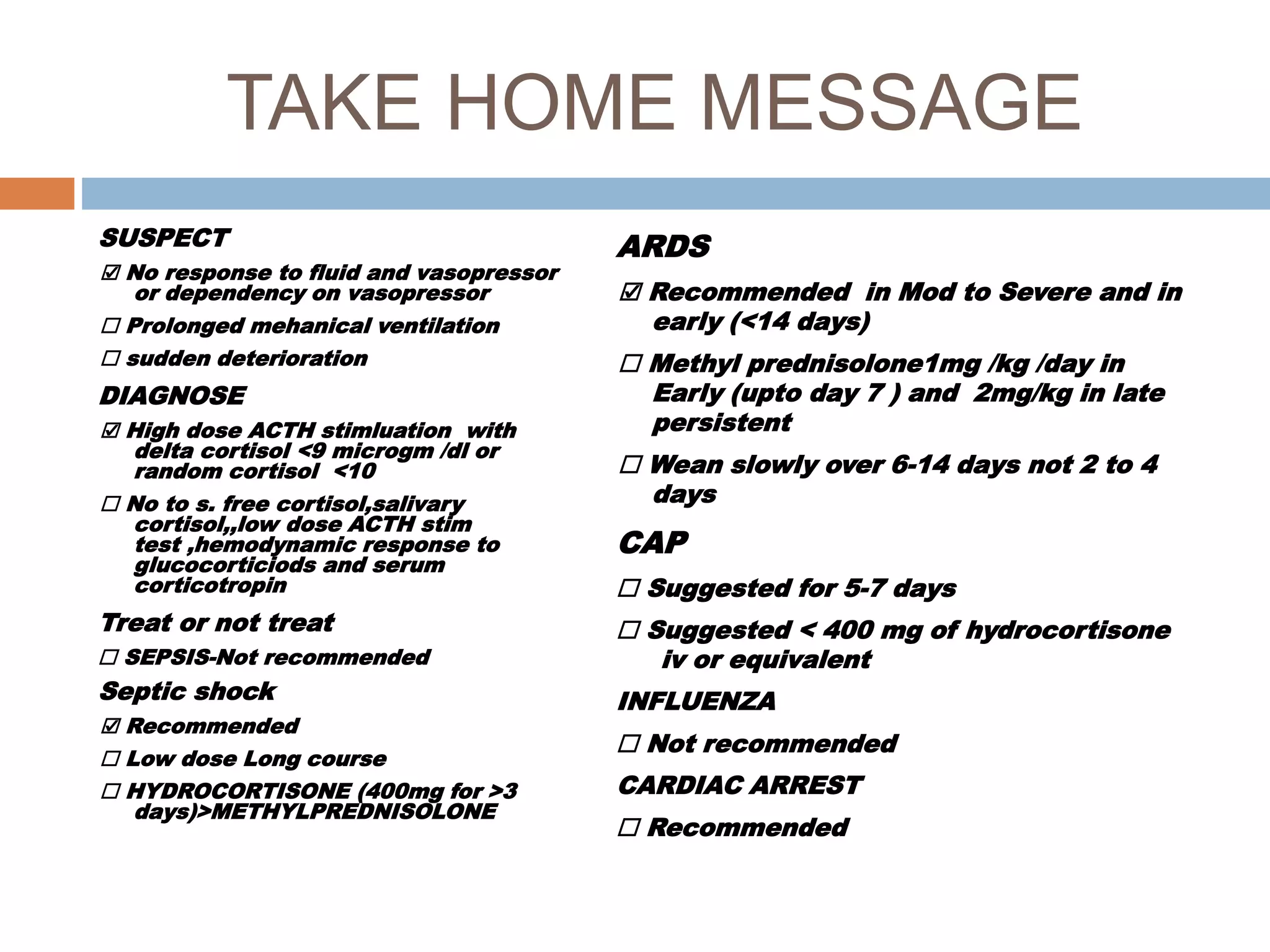
TAKE HOME MESSAGE
SUSPECT
☑ No response to fluid and vasopressor
or dependency on vasopressor
☐ Prolonged mehanical ventilation
☐ sudden deterioration
DIAGNOSE
☑ High dose ACTH stimluation with
delta cortisol <9 microgm /dl or
random cortisol <10
☐ No to s. free cortisol,salivary
cortisol,,low dose ACTH stim
test ,hemodynamic response to
glucocorticiods and serum
corticotropin
Treat or not treat
☐ SEPSIS-Not recommended
Septic shock
☑ Recommended
☐ Low dose Long course
☐ HYDROCORTISONE (400mg for >3
days)>METHYLPREDNISOLONE
ARDS
☑ Recommended in Mod to Severe and in
early (<14 days)
☐ Methyl prednisolone1mg /kg /day in
Early (upto day 7 ) and 2mg/kg in late
persistent
☐ Wean slowly over 6-14 days not 2 to 4
days
CAP
☐ Suggested for 5-7 days
☐ Suggested < 400 mg of hydrocortisone
iv or equivalent
INFLUENZA
☐ Not recommended
CARDIAC ARREST
☐ Recommended
THANK YOU FOR
ATTENTION

Circi .ppt

  • 1.
  • 2.
    Objectives  To reviewnormal physiology of adrenal gland and glucocorticoids  Normal adrenal response to stress  Adrenal insufficiency in critical illness: pathophysiology and incidence  Recommendation for diagnosis and management in adult patients
  • 3.
    Physiology of theadrenal gland CRH produced by hypothalamus CRH stimulates pituitary gland to produce ACTH ACTH stimulates adrenals to produce cortisol Cortisol exerts a negative feedback on production of CRH and Cortisol
  • 4.
  • 5.
  • 6.
    Physiology of glucocorticoids 90% bound to corticosteroid binding globulin and albumin to a lesser extent  10% free cortisol is physiologically active, half life is 70 -120 mins  Cortisol is not stored in adrenal gland  Glucocorticoids bind to intracelullar receptors then moves into the nucleus affecting transcription of various genes
  • 7.
    Physiology of glucocorticoids Metabolic: Stimulates gluconeogenesis, decrease glucose utilization  Decreases protein synthesis and increases catabolism  Increases lypolysis and oxidation of fatty acids Cardiovascular:  Increases blood pressure  Increases sensitivity of vasculature to catecholamines & angiotensin II
  • 8.
    Physiology of glucocorticoids Anti-inflammatoryeffects:  Reduces circulating T, B lymphocytes, esinophils, monocytes and neutrophils at sites of inflammation  Decreases production of cytokines & chemokines  Increased production of microphage migration inhibitory factor Increases red cell production
  • 9.
  • 10.
    Adrenal insufficiency  Primaryadrenal insufficiency  Secondary adrenal insufficiency  Critical illness related corticosteroid insufficiency
  • 11.
    Primary adrenal insufficiency Congenital: CAH  Adrenal hypoplasia congenita  Familial glucocorticoid deficiency  Adrenoleukodystrop hy  Aldosterone Acquired:  Autoimmune  Infectious diseases  Infiltrative processes  Drugs
  • 12.
    Secondary adrenal insufficiency CongenitalACTH, CRH deficiency:  Isolated  Panhypopituitarism  Associated with structural defects e.g. supra optic dyplasia Acquired:  Lymphocytic hypophysitis  Neoplasms  Exogenous steroids
  • 13.
    Critical illness relatedGC insufficiency  CIRCI is characterized by dysregulated systemic inflammation  Resulting from inadequate intracellular glucocorticoid-mediated anti-inflammatory activity for the severity of the patient’s critical illness.
  • 14.
    Normal HPA responseto stress  Multiple changes occur to maintain homeostasis during stress  Activation of sympathoadrenal system leading to secretion of epinephrine and norepinephrine  Activation of HPA axis lead to release of CRH, ACTH and eventually cortisol
  • 15.
    Normal HPA responseto stress  Corticosteroid binding protein levels fall as low as 50% leading to increase in free cortisol  Increased translocation of GR complexes into the nucleus  Results in alteration of systemic inflammatory response and cardiovascular function
  • 16.
    Adrenal insufficiency - pathophysiology Is inadequate cellular corticosteroid activity for the severity of patients illness  Dynamic process, patient may not have it on admission but develop it later  Poorly understood  Structural damage to adrenal gland due to hemorrhage or infarction may lead to long term AI
  • 17.
    AI – pathophysiology Most critically ill develop reversible HPA axis dysfunction  Decreased production of CRH, ACTH or cortisol  Decrease and alterations of glucocorticoid receptors  Decrease nuclear translocation of glucocorticoid- receptor complexes due to endotoxins and proinflammatory cytokines  Failure of activated GRs to down regulate production of inflammatory mediators (systemic inflammation-associated GC resistance)
  • 18.
    Translocatio n inhibited by endotoxins and cytokines Decreased or abnormal receptors Failureof GR to down regulate proinflammatory factors CRH ACTH cortisol
  • 19.
    AI – pathophysiology Some studies showed non survivors of severe sepsis have random cortisol level > 20 mcg/dl (552 nmol/l) but incremental increase < 9 (248) after ACTH stim test  Others found that non survivors had lower random cortisol level compared to survivors  Lower levels of cortisol and high ACTH associated with severe disease and poor outcome
  • 21.
    When to suspectAI in critically ill pts  Shock poorly responding to fluids and vasopressors especially septic shock  Catecholamine-dependant shock  Prolonged mechanical ventilation  Sudden deterioration of seriously ill patients with DIC, traumatic shock, severe burns or sepsis may be due to adrenal hemorrhage or infarction  Incidence variable b/w 15 to 60 % in various studies
  • 23.
    GUIDELINE DEVELOPMENT  A multispecialitytask force of international experts in critical care medicine, endocrinology, and guideline methods was convened from the membership of the SCCM and the ESICM. The multiple meetings and teleconferences were done.  The task force members developed a list of questions structured in the Population, Intervention, Comparison, and Outcome (PICO) format regarding the diagnosis and treatment of CIRCI in various clinical conditions  The methods chair (BR) assisted in developing the PICO questions, i.e., framing the clinical questions in a searchable format.  This required careful specification of the patient group (P), the intervention (I), the comparator (C), and the outcomes (O) for intervention questions and the patient group, index tests, reference standard, and target condition for questions of diagnostic test accuracy. For each question the task force agreed upon explicit review question criteria including study design features
  • 24.
     Assessment ofRelative Importance of Outcomes  For each intervention question a list of outcomes was compiled, reflecting both benefits and harms of alternative management strategies. Outcomes (from the perspective of a patient) were ranked from “low” to “critical” importance and agreed by consensus of the task force members  Ranking outcomes by their relative clinical importance helps to focus on those that are most relevant to patients and may lead to improved clarification during potential disagreements in decision making.
  • 25.
    SEARCHING FOR THE EVIDENCE Sources  The information technologists searched The Cochrane Database of Systematic Reviews, DARE, CENTRAL, and Medline for all PICO questions on diagnosis and treatment  Selection of Studies for Inclusion  The information technologists screened all titles and abstracts to discard the clearly irrelevant articles. Task force members completed a second screening. References were allocated to pairs of reviewers for evaluation of eligibility. All abstracts that did not meet the inclusion criteria were discarded.
  • 26.
     Data Extractionand Critical Appraisal of Individual Studies  For each included study, they collected relevant information on design, conduct, risk of bias, and relevant results. For each question, the methodologist extracted all individual study data and produced (when pooling was judged to be appropriate) forest plots by outcome.  All analysis was done using Review Manager (RevMan) software version 5.3  The risk of bias of the included studies was evaluated using various validated checklists, as recommended by the Cochrane Collaboration. These were AMSTAR for systematic reviews , the Cochrane Risk of Bias tool for randomized controlled trials ,and the Newcastle-Ottawa scale for cohort and case-control studies.
  • 27.
     Evidence summariesfor each question were prepared by the methodologist following the GRADE approach using the GRADEpro Guideline Development Tool online software (www.gradepro.org).  The evidence profiles include the summary— pooled or narrative—outcome data, an absolute measure of intervention effect when appropriate, the importance of the outcome, and the summary of quality of evidence for each outcome.  Evidence profiles were constructed by the methodologist and reviewed and confirmed with the rest of the task force members.
  • 28.
     Rating theQuality of the Evidence for Each Outcome across Studies  In accordance with GRADE, the task force initially categorized the quality of the evidence (certainty) for each outcome as high if it originated from randomized controlled trials (RCTs) and low if it originated from observational data.  They subsequently downgraded the quality of the evidence by one or two levels if results from individual studies were at serious or very serious risk of bias, there were serious inconsistencies in the results across studies, the evidence was indirect, the data were sparse or imprecise, or publication bias was thought to be likely.  If evidence arose from observational data, but effect sizes were large, there was evidence of a dose-response gradient, or all plausible confounding would either reduce a demonstrated effect or suggest a spurious effect when results showed no effect they upgraded QoE
  • 29.
     Formulating Statementsand Grading Recommendations  Actionable recommendations. All Recommendations were developed based on the GRADE evidence profiles for each recommendation.  Each recommendation was designated either “strong” or conditional” according to the GRADE approach . As outlined by GRADE, they used the phrasing “we recommend” for strong recommendations and “we suggest” for conditional (synonymous with the older term ‘weak’) recommendations (Table 2)  The implications of the strength of the recommendations for patients, clinicians, and policy makers are shown (Table 3)
  • 32.
    Diagnosis of AI Annane et al used metyrapone stim test to assess high dose ACTH stim test:  Baseline < 10 (276) or delta cortisol < 9 (248) were best predictors of adrenal insufficiency  Best predictor of normal adrenal response is baseline > 44 (1214) or increase > 17 (464)  Metyrapone stimulation test: inhibits conversion of 11 deoxycortisol to cortisol, leading to increase in 11 deoxycortisol and drop of cortisol  Low cortisol increases ACTH leading to further increase in 11 deoxycortisol
  • 33.
    Diagnosis  1. Istotal cortisol response to synthetic adrenocorticotropic hormone (ACTH; cosyntropin) superior to random plasma or serum total cortisol for the diagnosis of CIRCI?  Recommendation: The task force makes no recommendation regarding whether to use delta cortisol (change in baseline cortisol at 60 min of < 9 μg/dL) after cosyntropin (250 μg) administration or a random plasma cortisol of < 10 μg/dL for the diagnosis of CIRCI.  Rationale: The 2008 guidelines suggested that the diagnosis of CIRCI is best made by a delta total serum cortisol of < 9 μg/ dL after IV cosyntropin (250 μg) administration or a random total cortisol of < 10 μg/dL (1).  To date, however, clinicians have not adopted these diagnostic criteria in their routine practice.  Moreover, the latest Surviving Sepsis Campaign guidelines suggest not using the ACTH stimulation test to select patients with septic shock that may be treated with hydrocortisone
  • 34.
     They foundone single-center randomized trial that compared low-dose ACTH (1 μg) stimulation test with total random cortisol for diagnosis of adrenal insufficiency in 59 adults with septic shock .  Compared with total random cortisol, the low-dose ACTH test was better able to predict a longer duration of vasopressor requirement and hemodynamic response to corticosteroids.  Similarly, prospective cohort studies in adults with or without sepsis and in patients with multiple trauma found that patients with CIRCI, i.e., total cortisol levels < 10 μg/dL or delta cortisol < 9 μg/dL, had poorer outcomes than patients without CIRCI.  Likewise, a large multicenter prospective cohort study found that critically ill children with a delta cortisol < 9 μg/dL after the low-dose ACTH stimulation test required higher-dose and prolonged treatment with catecholamines, a higher amount of fluid, and had a higher mortality rate
  • 35.
     Owing tothe potential for risk of bias in study design, with only one single-center unblinded randomized trial and a small number of prospective cohort studies, and due to imprecision related to low numbers of patients included, they downgraded the quality of evidence to low. After two rounds of voting the task force members could not reach a consensus (> 80% agreement) on whether the ACTH stimulation test is superior to random cortisol for the routine diagnosis of CIRCI.  Due to the broad spectrum of abnormalities that may cause CIRCI, the task force thought it is unlikely that a single test can reliably diagnose CIRCI independent of its mechanisms, i.e., altered cortisol synthesis or metabolism, or tissue resistance to cortisol.
  • 36.
     2. Isplasma or serum free cortisol level superior to plasma total cortisol level for the diagnosis of CIRCI?  Recommendation: We suggest against using plasma free cortisol level rather than plasma total cortisol for the diagnosis of CIRCI (conditional recommendation, very low quality of evidence).  Rationale: Free cortisol is the bioactive form of cortisol. Critically ill patients often present with low serum concentrations of cortisol-binding globulin (CBG) and hypoalbuminemia.  In patients with low serum concentrations of cortisol binding proteins, serum total cortisol levels may not predict serum free cortisol levels, with a correlation between serum levels of free and total cortisol of only 50% to 60%
  • 37.
     They foundno randomized trial that compared serum total versus free cortisol levels to diagnose CIRCI.  A prospective study of 112 critically ill adults with treatment- insensitive hypotension, published after the 2008 recommendations, found a good correlation between serum concentrations of free and total cortisol before and after 250 μg ACTH stimulation testing.  Another prospective cohort study of 69 critically ill patients to assess the time course of serum cortisol levels found that levels of both free and total cortisol predicted clinical outcomes .  Measurement of serum free cortisol levels involves cumbersome techniques.  So the task force recommended against it.
  • 38.
    3. Is salivaryfree cortisol level superior to plasma total cortisol level for the diagnosis of CIRCI?  Recommendation: We suggest against using salivary rather than serum cortisol for diagnosing CIRCI (conditional recommendation, very low quality of evidence).  Rationale: In saliva, cortisol is found unbound. Thus, measuring salivary cortisol levels may inform on free cortisol levels and adrenal function.  However, salivary cortisol levels may be impacted by a number of confounding factors such as gender, age, time and site of sampling, and saliva volume  In a study of 57 patients with septic shock, there was no significant difference between free serum cortisol and salivary cortisol levels (p = 0.28)  In addition, the correlation between salivary cortisol and total serum cortisol levels was very good (80%)
  • 39.
    4. Is the1-μg ACTH stimulation test superior to the 250- μg ACTH test for the diagnosis of CIRCI?  Recommendation: We suggest that the high-dose (250-μg) rather than the low-dose (1-μg) ACTH stimulation test be used for the diagnosis of CIRCI (conditional recommendation, low quality of evidence).  Rationale: The high-dose (250-μg) ACTH stimulation test remains the most popular diagnostic test for adrenal insufficiency. However, this supraphysiologic dose of ACTH may result in significant stimulation of the adrenocortical cells in patients with proven adrenal insufficiency. Therefore, to increase the sensitivity of this diagnostic test, low-dose (1-μg) ACTH was suggested.  The high-dose ACTH test is easy to perform and safe. The low- dose ACTH test requires some preparation at the bedside as the commercial ampoules contain 250 μg of ACTH.  Owing to easier practical modalities and the comparable accuracy of the low- and high-dose ACTH tests in a Meta-analysis and a prospective cohort study, the task force suggested using the high- dose rather than the low-dose ACTH test for the diagnosis of CIRCI.
  • 40.
    5. Is hemodynamicresponse to hydrocortisone (50–300 mg) superior to the 250-μg ACTH stimulation test for the diagnosis of CIRCI?  Recommendation: We suggest the use of the 250- μg ACTH stimulation test rather than the hemodynamic response to hydrocortisone (50–300 mg) for the diagnosis of CIRCI (conditional recommendation, very low quality of evidence).  Rationale: Early reports on low-dose corticosteroids in human septic shock hypothesized that hemodynamic improvement unmasks adrenocortical insufficiency  Hydrocortisone was found to improve the vasopressor response to norepinephrine in septic patients, this effect being more marked in patients with CIRCI  Arterial hypotension may serve as a useful marker of inadequate corticosteroid activity, although not all patients with septic shock may have CIRCI
  • 41.
     No studiesare presently available that directly address this specific question  The CORTICUS trial found a similar hemodynamic response to corticosteroids in patients with or without CIRCI.  Hydrocortisone for Prevention of Septic Shock (HYPRESS) trial also did not find a difference in the development of septic shock in the presence or absence of CIRCI . However, in the HYPRESS trial only a limited number of patients were screened for CIRCI, affecting the reliability of these data.  Earlier shock resolution has been shown to lead to lower mortality. However, no studies compared the prognostic value of hemodynamic response to hydrocortisone versus the 250-μg ACTH test for the diagnosis of CIRCI.  Meta-analyses examined only differences in mortality rates with corticosteroid treatment between those with and without documented CIRCI
  • 42.
    6. Is corticotropinlevel superior to the 250-μg ACTH stimulation test for the diagnosis of CIRCI?  Recommendation: We suggest against using corticotropin levels for the routine diagnosis of CIRCI (conditional recommendation, low quality of evidence).  Rationale: The plasma corticotropin level is determined by corticotropin release from the anterior pituitary gland into the systemic circulation. Normally, plasma concentrations of corticotropin and cortisol change in opposite directions.  In primary adrenal insufficiency, plasma cortisol level is low and plasma corticotropin level is high. In hypopituitarism, plasma cortisol level is low and plasma corticotropin level is low or normal. During critical illness, plasma corticotropin levels have been variably found to be low, normal, or high and likely follow a dynamic pattern with transiently elevated levels and subsequent decline over a period of weeks after the initial insult.  They did not find any study that compared the diagnostic accuracy of corticotropin level with that of the ACTH stimulation test.
  • 43.
     RECOMMENDATIONS FOR CORTICOSTEROIDUSE IN CRITICAL CARE CONDITIONS
  • 44.
    SEPSIS  A. Shouldcorticosteroids be administered among hospitalized adult patients with sepsis without shock?  Recommendation: We suggest against corticosteroid administration in adult patients with sepsis without shock (conditional recommendation, moderate quality of evidence).  Rationale: In Sepsis and septic shock pro-inflammatory cytokines have been demonstrated to either suppress cortisol response to ACTH or compete with intracellular glucocorticoid function, which can result in CIRCI in septic patients.  Sepsis-related CIRCI may in turn precipitate organ failure and result in lack of response to vasopressor therapy in these patients  Analysis of 27 RCTs (n = 3176) of patients with sepsis with and without shock revealed a 28-day mortality rate of 29.3% in patients receiving corticosteroids compared with 31.8% in those who received placebo. The quality of evidence was considered low owing to inconsistency in the results and imprecision.
  • 45.
     A separateanalysis of six RCTs (n = 826) of patients with sepsis without shock revealed a 28-day mortality rate of 33.8% in patients receiving corticosteroids compared with 30.6% in those who received placebo . The quality of evidence was considered moderate due to imprecision, given the wide confidence intervals.  In HYPRESS trial sepsis without shock pts received either a continuous infusion of 200 mg of hydrocortisone for 5 days, followed by dose tapering until day 11 (n = 190), or placebo (n = 190) The primary outcome was development of septic shock within 14 days. Patients who received hydrocortisone showed no difference in rates of progression to septic shock within 14 days from those given placebo  In addition, there were no significant differences between the hydrocortisone and placebo groups for the use of mechanical ventilation (53.2% vs 59.9%), mortality at 28 days (8.8% vs 8.2%) or up to 180 days (26.8% vs 22.2%), ICU length of stay.
  • 46.
     B. Shouldcorticosteroids be administered among hospitalized adult patients with septic shock?  Recommendation: We suggest using corticosteroids in patients with septic shock that is not responsive to fluid and moderate- to high-dose vasopressor therapy (conditional recommendation, low quality of evidence).  C. What is the recommended dose and duration of treatment among hospitalized adult patients with septic shock treated with corticosteroids?  Recommendation: long course and low dose (e.g., IV hydrocortisone < 400 mg/day for at ≥ 3 days at full dose) rather than high dose and short course in adult patients with septic shock (conditional recommendation, low quality of evidence).  Rationale: The latest Cochrane systematic review of the use of low-dose hydrocortisone for treating septic shock, including 33 RCTs with a total of 4,268 patients, showed that corticosteroids significantly reduced the risk of death at 28 days compared with placebo..
  • 47.
     Survival benefitswere dependent on the dose of corticosteroids, with lower doses (< 400 mg of hydrocortisone or equivalent per day) for a longer duration of treatment (3 or more days at the full dose) found to be better, and on the severity of the sepsis.  Furthermore, corticosteroids did not cause harm except for an increased incidence of hyperglycemia and hypernatremia; there was no increased risk of superinfection or gastrointestinal bleeding  A network meta-analysis of 22 trials suggested no clear evidence for the superiority of one type of corticosteroids over another in adult patients with septic shock . However, hydrocortisone boluses and infusions were more likely than methylprednisolone boluses and placebo to reverse shock.  Given the consistent effect of corticosteroids on shock reversal and the low risk for superinfection with low-dose corticosteroids, the task force suggests the use of low-dose IV hydrocortisone < 400 mg/day for at least 3 days at full dose, or longer in adult patients with septic shock that is not responsive to fluid and moderate to high-dose (> 0.1 μg/kg/min of norepinephrine or equivalent) vasopressor therapy.
  • 48.
    ENCOURAGING RESULTS  TheActivated Protein C and Corticosteroids for Human Septic Shock (APROCCHSS) trial enrolled 1,241 adult patients with refractory septic shock from 35 centers in France. This trial commenced in 2008 and initially included the recombinant form of human activated protein C (APC), drotrecogin alfa-activated. The study featured a 2 × 2 factorial design .  Patients assigned to placebo of hydrocortisone + placebo of fludrocortisones + placebo of APC; hydrocortisone + fludrocortisone + placebo of APC; placebo of hydrocortisone + placebo of fludrocortisone + APC; or hydrocortisone + fludrocortisone + APC. Hydrocortisone was administered as a 50-mg IV bolus every 6 h and fludrocortisone as a 50-μg tablet via a nasogastric tube once daily.  In 2011, APC was withdrawn from the market after failing to demonstrate adequate efficacy in other clinical trials. But, study continued ,, one arm then comprised placebo corticosteroids (n = 627) and the other arm comprised hydrocortisone and fludrocortisone combined (n = 614).  Another large RCT (the ADRENAL study) conducted in Australia and New Zealand enrolled 3,800 patients either to hydrocortisone or to a placebo. Although enrolment is completed, results are not yet available .
  • 49.
    ARDS  Should corticosteroidsbe administered among hospitalized adult patients with acute respiratory distress syndrome?  Recommendation: We suggest use of corticosteroids in patients with early moderate to severe acute respiratory distress syndrome (PaO2/FiO2 of < 200 and within 14 days of onset) (conditional recommendation, moderate quality of evidence).  Rationale: Nine trials have investigated prolonged glucocorticoid treatment in ARDS . These trials consistently found that glucocorticoid treatment was associated with a significant reduction in markers of systemic inflammation (inflammatory cytokines and/or C-reactive protein levels), reduction in the duration of mechanical ventilation by approximately 7 days, and probable reduction in hospital mortality by approximately 7% and 11% in patients with mild and severe ARDS, respectively (moderate certainty).  Two trials investigated treatment initiated in early ARDS. Compared with late (≥ 7 days initiation, early (< 72 h) initiation of methylprednisolone treatment shows response to a lower daily methylprednisolone dose (1 mg/ kg/day vs 2 mg/kg/day) and is associated with faster disease resolution e.g., shorter time to unassisted breathing, shorter time to ICU discharge)
  • 50.
     )  Withthe exception of hyperglycemia (mostly within the 36 h following an initial bolus), prolonged glucocorticoid treatment was not associated with increased risk for neuromuscular weakness, gastrointestinal bleeding, or nosocomial infection .Hyperglycemia was not associated with increased morbidity.  In summary, the task force suggested that methylprednisolone be considered in patients with early (up to day 7 of onset; PaO2/FiO2 of < 200) in a dose of 1 mg/kg/day and late (after day 6 of onset) persistent ARDS in a dose of 2 mg/kg/day followed by slow tapering over 13 days  Methylprednisolone is suggested because of its greater penetration into lung tissue and longer residence time .  Furthermore, methylprednisolone should be weaned slowly (6−14 days) and not stopped rapidly (2−4 days) or abruptly as deterioration may occur from the development of a reconstituted inflammatory response.  Finally, glucocorticoid treatment blunts the febrile response; therefore, infection surveillance is recommended to ensure prompt identification and treatment of hospital-acquired infections.
  • 51.
    CAP  Should corticosteroidsbe administered to hospitalized adults with community-acquired pneumonia (CAP)?  Recommendation: We suggest the use of corticosteroids for 5– 7 days at a daily dose < 400 mg i.v. hydrocortisone or equivalent in hospitalized patients with CAP (conditional recommendation, moderate quality of evidence)  Rationale- Lower respiratory infections, the most deadly communicable disease , may be characterized by persistent systemic inflammation.  Thirteen trials (n = 2005) have investigated varying daily doses (80–400 mg of hydrocortisone-equivalent; i.v. or orally), agents (prednisone, methylprednisolone, dexamethasone, hydrocortisone), and length of treatment (4–10 days, with and without tapering) with corticosteroids in hospitalized patients with CAP . Five additional studies are ongoing.
  • 52.
     Twelve trialssuggested a mortality reduction with corticosteroids, most pronounced in patients with severe rather than mild pneumonia, with some imprecision in the results (relative risk (RR) 0.67, 95% CI 0.45–1.01).  Compared with placebo, corticosteroids, notably, shortened hospital stay (risk difference − 2.96, 95% CI − 5.18 to 0.75), reduced the need for mechanical ventilation [RR 0.45, 95% CI 0.26–0.79], prevented ARDS (RR 0.24, 95% CI 0.10– 0.56), and increased the risk for hyperglycemia (RR 1.49, 95% CI 1.01–2.19), without other complications.  The quality of evidence across outcomes was moderate. Given the consistent signal for benefits across critical outcomes, we agreed that the beneficial effects of treatment with corticosteroids outweighed the risks.
  • 53.
    INFLUENZA  Should corticosteroidsbe administered to hospitalized adults with influenza?  Recommendation: We suggest against the use of corticosteroids in adults with influenza (conditional recommendation, very low quality of evidence)  Rationale - Analyses from 13 observational studies (n = 1917 patients) found an odds ratio (OR) of dying of 3.06 (95% CI 1.58– 5.92) against corticosteroids  Analysis of the four trials with low risk of bias revealed consistent findings (OR 2.82, 95% CI 1.61–4.92), and increased risk of superinfection.  The quality of evidence was downgraded to very low because of the absence of a randomized trial and the inconsistent results across studies with regard to indication, type, dose, duration, and timing of corticosteroids.  Given the uncertainty in results, and acknowledging that corticosteroids may be unsafe, we made a conditional recommendation against the use of corticosteroids for influenza.
  • 54.
    CARDIAC ARREST  Shouldcorticosteroids be administered to adults who suffer a cardiac arrest?  Recommendation: We suggest use of corticosteroids in the setting of cardiac arrest (conditional recommendation, very low quality of evidence)  Rationale-Studies found that CIRCI may be present in about half of patients admitted to the ICU following cardiac arrest, and may contribute to poor outcomes.  Analyses from three trials showed RR of shock reversal of 1.42 (95% CI 0.39–5.24), of survival to hospital discharge of 1.96 (95% CI 0.68–5.64), and of good neurological recovery at hospital discharge of 1.45 (95% CI 0.41–5.13) in favor of corticosteroids.  Owing to the benefits in term of shock reversal, survival to hospital discharge, and good neurological outcome and to the absence of evidence for complications, we made a suggestion for corticosteroids in cardiac arrest. The quality of evidence was downgraded to very low owing to imprecision and indirectness, given that corticosteroids were one component of a cardiac arrest cocktail in two trials.
  • 55.
    TAKE HOME MESSAGE SUSPECT ☑No response to fluid and vasopressor or dependency on vasopressor ☐ Prolonged mehanical ventilation ☐ sudden deterioration DIAGNOSE ☑ High dose ACTH stimluation with delta cortisol <9 microgm /dl or random cortisol <10 ☐ No to s. free cortisol,salivary cortisol,,low dose ACTH stim test ,hemodynamic response to glucocorticiods and serum corticotropin Treat or not treat ☐ SEPSIS-Not recommended Septic shock ☑ Recommended ☐ Low dose Long course ☐ HYDROCORTISONE (400mg for >3 days)>METHYLPREDNISOLONE ARDS ☑ Recommended in Mod to Severe and in early (<14 days) ☐ Methyl prednisolone1mg /kg /day in Early (upto day 7 ) and 2mg/kg in late persistent ☐ Wean slowly over 6-14 days not 2 to 4 days CAP ☐ Suggested for 5-7 days ☐ Suggested < 400 mg of hydrocortisone iv or equivalent INFLUENZA ☐ Not recommended CARDIAC ARREST ☐ Recommended
  • 56.