Rituximab in Renal Disease and
Transplantation
Salwa Ibrahim, MD FRCP (Edin)
Cairo University
The 17th Annual Conference of the Internal Medicine Department
30-31 March 2016
Rituximab
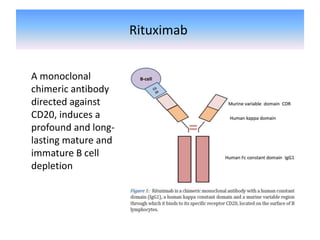
A monoclonal
chimeric antibody
directed against
CD20, induces a
profound and long-
lasting mature and
immature B cell
depletion
It has been used in immune diseases that are thought to be B
cell mediated
• It has been used in lupus nephritis, membranous
nephropathy, steroid dependent and resistant nephrotic
syndrome, cryoglobulinemic vascuilitis, ANCA associated
vascuilitis
• Rituximab has been used to treat antibody mediated
rejection, and to block antibody production prior to ABO
incompatible transplantation
Lupus Nephritis
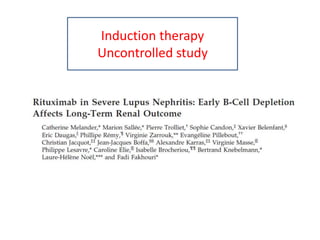
Induction therapy
Uncontrolled study
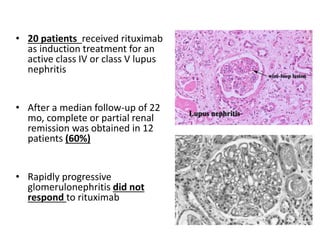
• 20 patients received rituximab
as induction treatment for an
active class IV or class V lupus
nephritis
• After a median follow-up of 22
mo, complete or partial renal
remission was obtained in 12
patients (60%)
• Rapidly progressive
glomerulonephritis did not
respond to rituximab
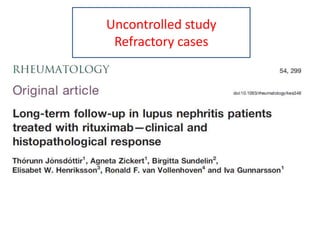
Uncontrolled study
Refractory cases
The study design
• 25 patients with refractory LN were treated with RTX in
combination with i.v. CYC and glucocorticoids
• RTX 375 mg/m2 was given once weekly for 4 weeks
• CYC 0.5 g i.v. was given in combination with the first and
fourth RTX infusion
The study results
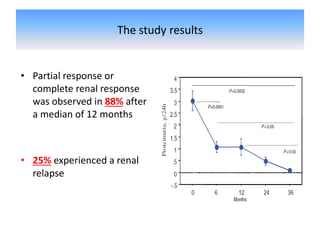
• Partial response or
complete renal response
was observed in 88% after
a median of 12 months
• 25% experienced a renal
relapse
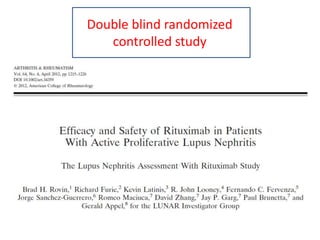
Double blind randomized
controlled study
The LUNAR study design
• The study investigated whether the addition of rituximab to a
background of MMF plus corticosteroid in patients with
proliferative LN could improve renal outcome at 52 weeks
• Patients with class III or class IV lupus nephritis were randomized to
receive rituximab (1,000 mg) or placebo on days 1, 15, 168, and
182
• The primary end point was renal response status at week 52
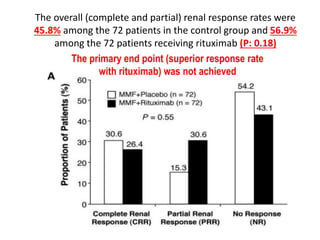
The overall (complete and partial) renal response rates were
45.8% among the 72 patients in the control group and 56.9%
among the 72 patients receiving rituximab (P: 0.18)
The primary end point (superior response rate
with rituximab) was not achieved
Rituximab in LN
Conclusions
• Rituximab is not currently indicated or
approved by the FDA or the KDIGO for
induction of Remission in Lupus
Nephritis
• Observational studies of Rituximab
therapy shows “beneficial” effects in
“Refractory” or “Relapsing” LN but
relapses common
• No benefit in RPGN with crescents
ANCA Vascuilitis
A prospective open-label pilot trial
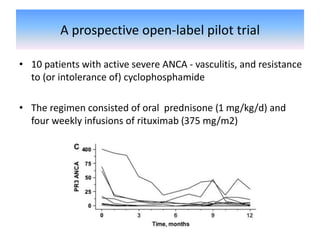
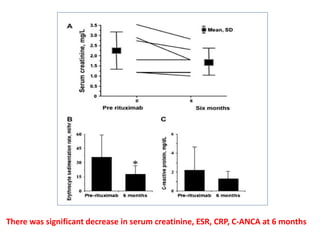
• 10 patients with active severe ANCA - vasculitis, and resistance
to (or intolerance of) cyclophosphamide
• The regimen consisted of oral prednisone (1 mg/kg/d) and
four weekly infusions of rituximab (375 mg/m2)
There was significant decrease in serum creatinine, ESR, CRP, C-ANCA at 6 months
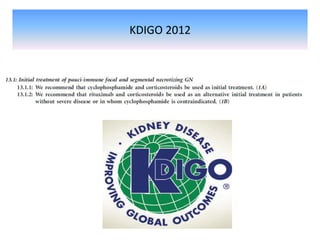
KDIGO 2012
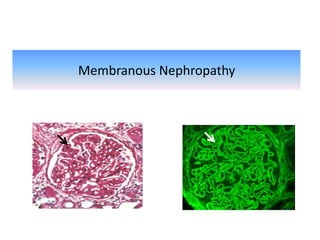
Membranous Nephropathy
• Current treatment options recommended by KDIGO include
corticosteroids, alkylating agents, cyclosporin A,
mycophenolate mofetil, and tacrolimus
• Their use may be associated with significant adverse effects
and is not effective in all patients
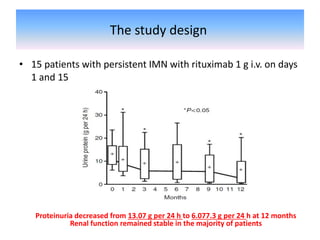
The study design
• 15 patients with persistent IMN with rituximab 1 g i.v. on days
1 and 15
Proteinuria decreased from 13.07 g per 24 h to 6.077.3 g per 24 h at 12 months
Renal function remained stable in the majority of patients
The Study Design
• A Prospective, observational study evaluated the 1-yr
outcome of 8 IMN patients with persistent urinary protein
excretion 3.5 g/24 h and mild to moderate renal insufficiency
• 4 weekly infusions of rituximab (375 mg/m2)
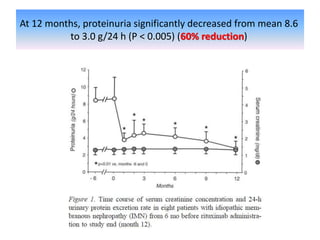
At 12 months, proteinuria significantly decreased from mean 8.6
to 3.0 g/24 h (P < 0.005) (60% reduction)
Conclusions of RTX in IMN
• There is no current evidence to support its use as a primary
agent in IMN
• Rituximab can be used in severe or refractory cases with mild
to moderate renal insufficiency
Mixed cryoglobulinemia
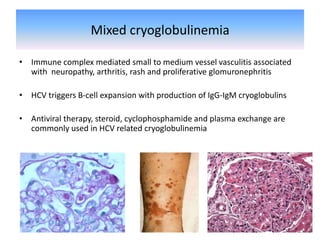
• Immune complex mediated small to medium vessel vasculitis associated
with neuropathy, arthritis, rash and proliferative glomuronephritis
• HCV triggers B-cell expansion with production of IgG-IgM cryoglobulins
• Antiviral therapy, steroid, cyclophosphamide and plasma exchange are
commonly used in HCV related cryoglobulinemia
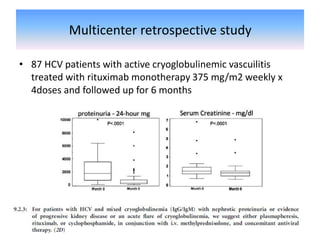
Multicenter retrospective study
• 87 HCV patients with active cryoglobulinemic vascuilitis
treated with rituximab monotherapy 375 mg/m2 weekly x
4doses and followed up for 6 months
24-hour proteinuria and serum creatinine significantly
improved after rituximab treatment
Rituximab in Renal Transplantation
ABO incompatible renal transplantation
• In the early days of ABOi, splenectomy was considered
mandatory
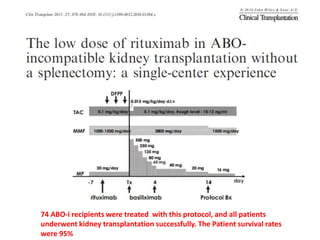
• Rituximab has replaced splenectomy to reduce ABO antibody
titers together with IA
• Single dose of 375 mg/m2 is used widely in Japan and across
Europe
74 ABO-i recipients were treated with this protocol, and all patients
underwent kidney transplantation successfully. The Patient survival rates
were 95%
RTX has been used for desensitization therapy in highly sensitized
recipients undergoing renal transplantation
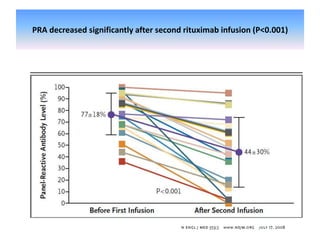
• 20 patients were highly HLA-sensitized and had donor-specific
antibodies on the waiting list for a kidney transplant
• IVIG given twice (2 g/kg) on day 0 and day 30
• Rituximab given twice (1 g) on day 7 and day 22
PRA decreased significantly after second rituximab infusion (P<0.001)
• Five renal transplant candidates with PRA 50-100%
• IVIG 2g/kg on day 0 and 30
• Rituximab 1 gm IV on day 7 and 21
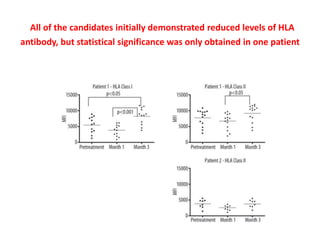
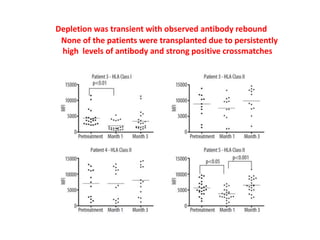
All of the candidates initially demonstrated reduced levels of HLA
antibody, but statistical significance was only obtained in one patient
Depletion was transient with observed antibody rebound
None of the patients were transplanted due to persistently
high levels of antibody and strong positive crossmatches
Conclusions of the previous studies
• Evidence of limited quality was identified to support the use
of rituximab desensitization in highly sensitized recipients
• Further randomized controlled trials are required to better
define the efficacy, long-term safety, and optimal dosing
regimen of rituximab in this setting
Acute antibody mediated rejection
• 27 renal allograft patients diagnosed with steroid-resistant
antibody-mediated rejection
• 22 of the 27 patients were also treated with plasmapheresis
and antithymocyte globulin (ATG)
• These individuals were treated with a single dose of rituximab
• 3 Patients experienced graft loss during the follow-up period
• In the 24 successfully treated patients, the serum creatinine
at the time of initiating rituximab therapy was 5.6 ± 1.0 mg/dL
and decreased to 0.95 ± 0.7 mg/dL at discharge
• The addition of rituximab may improve outcomes in severe
steroid-resistant antibody-mediated rejection episodes after
kidney transplantation
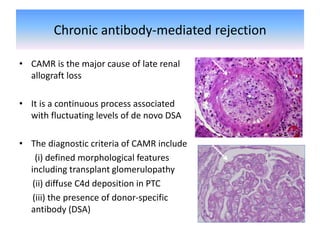
Chronic antibody-mediated rejection
• CAMR is the major cause of late renal
allograft loss
• It is a continuous process associated
with fluctuating levels of de novo DSA
• The diagnostic criteria of CAMR include
(i) defined morphological features
including transplant glomerulopathy
(ii) diffuse C4d deposition in PTC
(iii) the presence of donor-specific
antibody (DSA)
The treatment regimen
• Four weekly doses of IVIG (1 g/kg body weight per dose),
followed by a single dose of rituximab (375 mg/m2) 1 week
after the last IVIG infusion
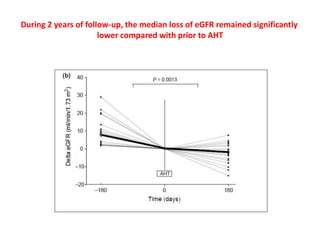
• Loss of eGFR decreased significantly from 7.6 ml/min/1.73
m2 during 6 months prior to treatment to 2.1 ml/min/1.73
m2 (P = 0.0013) during 6 months after treatment
During 2 years of follow-up, the median loss of eGFR remained significantly
lower compared with prior to AHT
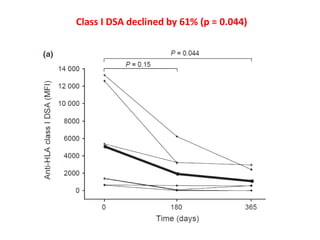
Class I DSA declined by 61% (p = 0.044)
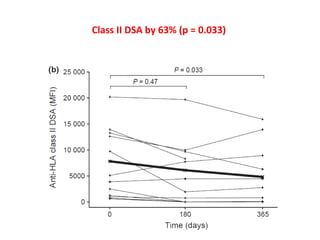
Class II DSA by 63% (p = 0.033)
Adverse risks
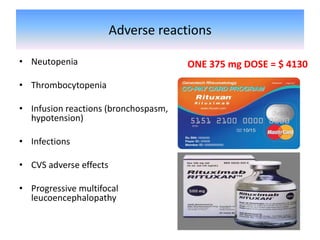
Adverse reactions
• Neutopenia
• Thrombocytopenia
• Infusion reactions (bronchospasm,
hypotension)
• Infections
• CVS adverse effects
• Progressive multifocal
leucoencephalopathy
ONE 375 mg DOSE = $ 4130
Conclusions
• Rituximab is an anti-CD 20 monoclonal antibody that leads to long
lasting B cell depletion
• It has been licensed for treatment of non-Hodgkin lymphoma and
rheumatoid arthritis
• It is widely used in ABO incompatible renal transplantation, and is
used as alternative therapy in treatment of membranous
nephropathy, refractory lupus nephritis, cryoglobulinemia and
steroid dependent nephrotic syndrome with mixed results
• Further RCTs with large study population are still needed to confirm
its efficacy in the field of renal transplantation
Thank You

Rituximab in nephrology

  • 1.
    Rituximab in RenalDisease and Transplantation Salwa Ibrahim, MD FRCP (Edin) Cairo University The 17th Annual Conference of the Internal Medicine Department 30-31 March 2016
  • 2.
    Rituximab A monoclonal chimeric antibody directedagainst CD20, induces a profound and long- lasting mature and immature B cell depletion
  • 3.
    It has beenused in immune diseases that are thought to be B cell mediated • It has been used in lupus nephritis, membranous nephropathy, steroid dependent and resistant nephrotic syndrome, cryoglobulinemic vascuilitis, ANCA associated vascuilitis • Rituximab has been used to treat antibody mediated rejection, and to block antibody production prior to ABO incompatible transplantation
  • 4.
  • 5.
  • 6.
    • 20 patientsreceived rituximab as induction treatment for an active class IV or class V lupus nephritis • After a median follow-up of 22 mo, complete or partial renal remission was obtained in 12 patients (60%) • Rapidly progressive glomerulonephritis did not respond to rituximab
  • 7.
  • 8.
    The study design •25 patients with refractory LN were treated with RTX in combination with i.v. CYC and glucocorticoids • RTX 375 mg/m2 was given once weekly for 4 weeks • CYC 0.5 g i.v. was given in combination with the first and fourth RTX infusion
  • 9.
    The study results •Partial response or complete renal response was observed in 88% after a median of 12 months • 25% experienced a renal relapse
  • 10.
  • 11.
    The LUNAR studydesign • The study investigated whether the addition of rituximab to a background of MMF plus corticosteroid in patients with proliferative LN could improve renal outcome at 52 weeks • Patients with class III or class IV lupus nephritis were randomized to receive rituximab (1,000 mg) or placebo on days 1, 15, 168, and 182 • The primary end point was renal response status at week 52
  • 12.
    The overall (completeand partial) renal response rates were 45.8% among the 72 patients in the control group and 56.9% among the 72 patients receiving rituximab (P: 0.18) The primary end point (superior response rate with rituximab) was not achieved
  • 13.
    Rituximab in LN Conclusions •Rituximab is not currently indicated or approved by the FDA or the KDIGO for induction of Remission in Lupus Nephritis • Observational studies of Rituximab therapy shows “beneficial” effects in “Refractory” or “Relapsing” LN but relapses common • No benefit in RPGN with crescents
  • 14.
  • 16.
    A prospective open-labelpilot trial • 10 patients with active severe ANCA - vasculitis, and resistance to (or intolerance of) cyclophosphamide • The regimen consisted of oral prednisone (1 mg/kg/d) and four weekly infusions of rituximab (375 mg/m2)
  • 17.
    There was significantdecrease in serum creatinine, ESR, CRP, C-ANCA at 6 months
  • 18.
  • 19.
  • 20.
    • Current treatmentoptions recommended by KDIGO include corticosteroids, alkylating agents, cyclosporin A, mycophenolate mofetil, and tacrolimus • Their use may be associated with significant adverse effects and is not effective in all patients
  • 22.
    The study design •15 patients with persistent IMN with rituximab 1 g i.v. on days 1 and 15 Proteinuria decreased from 13.07 g per 24 h to 6.077.3 g per 24 h at 12 months Renal function remained stable in the majority of patients
  • 24.
    The Study Design •A Prospective, observational study evaluated the 1-yr outcome of 8 IMN patients with persistent urinary protein excretion 3.5 g/24 h and mild to moderate renal insufficiency • 4 weekly infusions of rituximab (375 mg/m2)
  • 25.
    At 12 months,proteinuria significantly decreased from mean 8.6 to 3.0 g/24 h (P < 0.005) (60% reduction)
  • 26.
    Conclusions of RTXin IMN • There is no current evidence to support its use as a primary agent in IMN • Rituximab can be used in severe or refractory cases with mild to moderate renal insufficiency
  • 27.
  • 28.
    Mixed cryoglobulinemia • Immunecomplex mediated small to medium vessel vasculitis associated with neuropathy, arthritis, rash and proliferative glomuronephritis • HCV triggers B-cell expansion with production of IgG-IgM cryoglobulins • Antiviral therapy, steroid, cyclophosphamide and plasma exchange are commonly used in HCV related cryoglobulinemia
  • 30.
    Multicenter retrospective study •87 HCV patients with active cryoglobulinemic vascuilitis treated with rituximab monotherapy 375 mg/m2 weekly x 4doses and followed up for 6 months 24-hour proteinuria and serum creatinine significantly improved after rituximab treatment
  • 31.
    Rituximab in RenalTransplantation
  • 32.
    ABO incompatible renaltransplantation • In the early days of ABOi, splenectomy was considered mandatory • Rituximab has replaced splenectomy to reduce ABO antibody titers together with IA • Single dose of 375 mg/m2 is used widely in Japan and across Europe
  • 33.
    74 ABO-i recipientswere treated with this protocol, and all patients underwent kidney transplantation successfully. The Patient survival rates were 95%
  • 34.
    RTX has beenused for desensitization therapy in highly sensitized recipients undergoing renal transplantation
  • 35.
    • 20 patientswere highly HLA-sensitized and had donor-specific antibodies on the waiting list for a kidney transplant • IVIG given twice (2 g/kg) on day 0 and day 30 • Rituximab given twice (1 g) on day 7 and day 22
  • 36.
    PRA decreased significantlyafter second rituximab infusion (P<0.001)
  • 38.
    • Five renaltransplant candidates with PRA 50-100% • IVIG 2g/kg on day 0 and 30 • Rituximab 1 gm IV on day 7 and 21
  • 39.
    All of thecandidates initially demonstrated reduced levels of HLA antibody, but statistical significance was only obtained in one patient
  • 40.
    Depletion was transientwith observed antibody rebound None of the patients were transplanted due to persistently high levels of antibody and strong positive crossmatches
  • 41.
    Conclusions of theprevious studies • Evidence of limited quality was identified to support the use of rituximab desensitization in highly sensitized recipients • Further randomized controlled trials are required to better define the efficacy, long-term safety, and optimal dosing regimen of rituximab in this setting
  • 42.
  • 44.
    • 27 renalallograft patients diagnosed with steroid-resistant antibody-mediated rejection • 22 of the 27 patients were also treated with plasmapheresis and antithymocyte globulin (ATG) • These individuals were treated with a single dose of rituximab
  • 45.
    • 3 Patientsexperienced graft loss during the follow-up period • In the 24 successfully treated patients, the serum creatinine at the time of initiating rituximab therapy was 5.6 ± 1.0 mg/dL and decreased to 0.95 ± 0.7 mg/dL at discharge • The addition of rituximab may improve outcomes in severe steroid-resistant antibody-mediated rejection episodes after kidney transplantation
  • 46.
    Chronic antibody-mediated rejection •CAMR is the major cause of late renal allograft loss • It is a continuous process associated with fluctuating levels of de novo DSA • The diagnostic criteria of CAMR include (i) defined morphological features including transplant glomerulopathy (ii) diffuse C4d deposition in PTC (iii) the presence of donor-specific antibody (DSA)
  • 48.
    The treatment regimen •Four weekly doses of IVIG (1 g/kg body weight per dose), followed by a single dose of rituximab (375 mg/m2) 1 week after the last IVIG infusion • Loss of eGFR decreased significantly from 7.6 ml/min/1.73 m2 during 6 months prior to treatment to 2.1 ml/min/1.73 m2 (P = 0.0013) during 6 months after treatment
  • 49.
    During 2 yearsof follow-up, the median loss of eGFR remained significantly lower compared with prior to AHT
  • 50.
    Class I DSAdeclined by 61% (p = 0.044)
  • 51.
    Class II DSAby 63% (p = 0.033)
  • 52.
  • 53.
    Adverse reactions • Neutopenia •Thrombocytopenia • Infusion reactions (bronchospasm, hypotension) • Infections • CVS adverse effects • Progressive multifocal leucoencephalopathy ONE 375 mg DOSE = $ 4130
  • 54.
    Conclusions • Rituximab isan anti-CD 20 monoclonal antibody that leads to long lasting B cell depletion • It has been licensed for treatment of non-Hodgkin lymphoma and rheumatoid arthritis • It is widely used in ABO incompatible renal transplantation, and is used as alternative therapy in treatment of membranous nephropathy, refractory lupus nephritis, cryoglobulinemia and steroid dependent nephrotic syndrome with mixed results • Further RCTs with large study population are still needed to confirm its efficacy in the field of renal transplantation
  • 55.

Editor's Notes

  • #3 It has been approved for treatment of non hodjkin lymphoma CLL RA
  • #4 It has been used in immune mediated diseases that are thought to be B cell Mediated
  • #20 IMN is an immune mediated disease characterized by subepithelial deposition of IgG in the GBM CD 20 cells were identified in renal biopsies from patients with membranous nephropathy
  • #26 60% reduction in proteinuria
  • #34 all patients received induction therapy with anti-CD25 monoclonal antibody (basiliximab). Three to five sessions of doublefiltration plasmapheresis (DFPP) were performed prior to the operation until their IgG/IgM anti-A/ B antibody titers decreased to a level below 1:32. A single dose of rituximab was administered 5–7 d before the operation. The dose of rituximab was decided on the results of our preliminary study that assessed the effect of a low-dose rituximab of less than 375 mg/m2 on the B cells in the spleen and peripheral blood (2). Initially, we decided to use rituximab at a single dose of 300 mg/m2 and unified the dose to 500 mg/body that was based on Japanese median body surface area (1.73 m2). This dose was applied between January 2005 and December 2006
  • #47 arterial intimal fibrosis -duplication of glomerular basement membrane-multilaminated PTC basement membrane-interstitial fibrosis with tubular atrophy