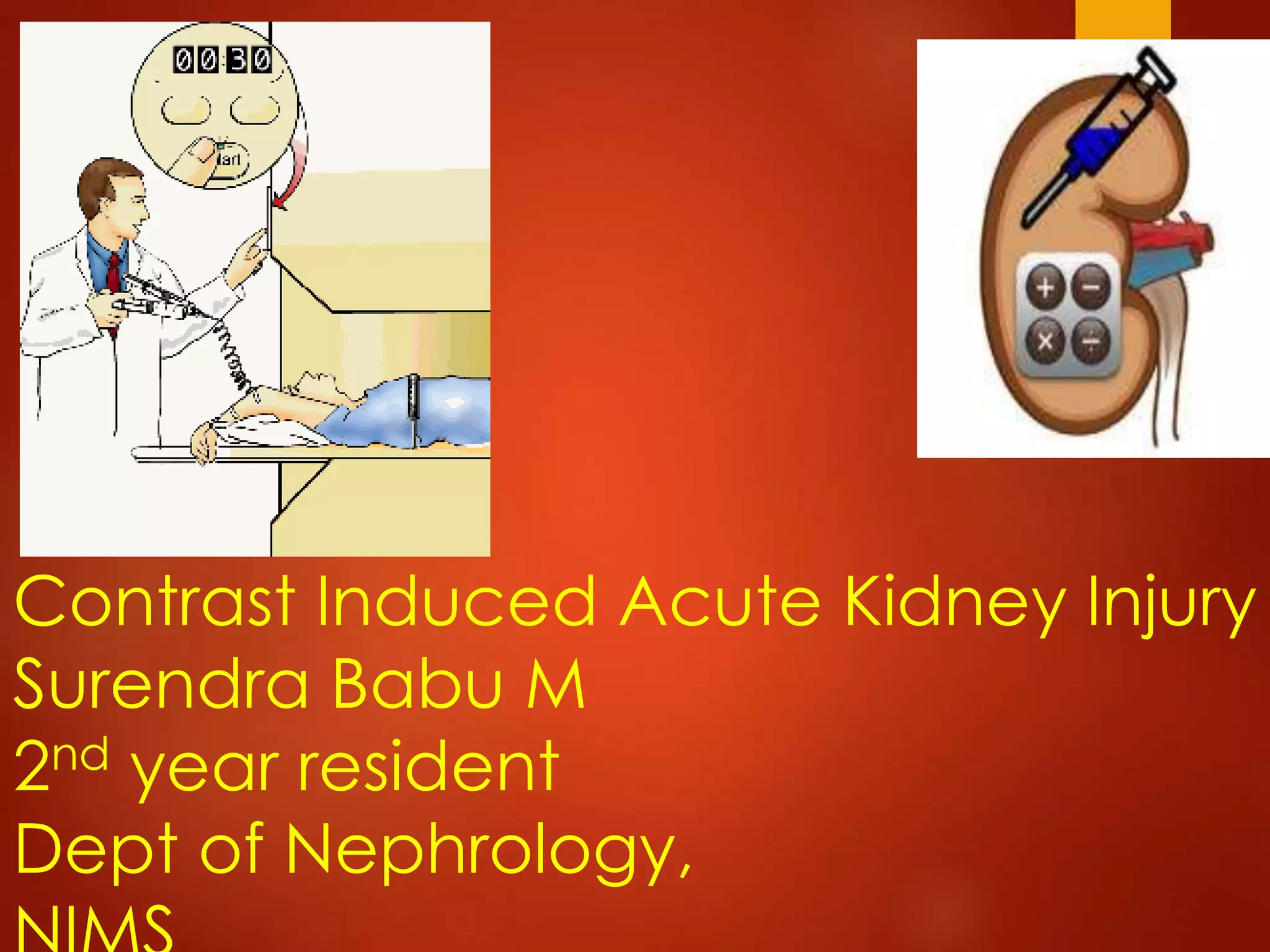
Contrast Induced Acute Kidney Injury
Surendra Babu M
2nd year resident
Dept of Nephrology,
INTRODUCTION
 CIN (CI -AKI ) third leading cause of acute kidney
injury in hospitalized patients.
 Most frequent renal complication of endovascular
interventional procedures.
 Unrecognized as it is asymptomatic..
 Increases short and long term morbidity and
mortality.
 Treatment is limited to supportive measures while
awaiting the resolution of renal impairement.
 Prevention is the one to be emphasised in case of CI
–AKI.
History
 In 1906,Von Lichtenberg and Voelcker used 2% colloidal silver solution,for
retrograde pyelography olleagues,10%studies.(toxic to kidneys,death). In
1920, Osborne and c “NaI” for Rx of syphilis, fortuiously found it to be
radiopaque ,excreted by kidneys.--first pyelogram.
 Selectan - Moses Swick
 Uroselectan ,1927 – increased solubility and less toxicity.
 In 1993, Hippuran was introduced.
 Binz and Rath – Neo ipax(Iodoxyl) and diodrast (Diodone)
 1927 – Werner Frossmann – self catheterization,using urinary catheter(
antecubital vein),(NaI)
 1923,Berbrich and hirsch –femoral angiogram
 1924,Brooks – first angiogram (under GA).
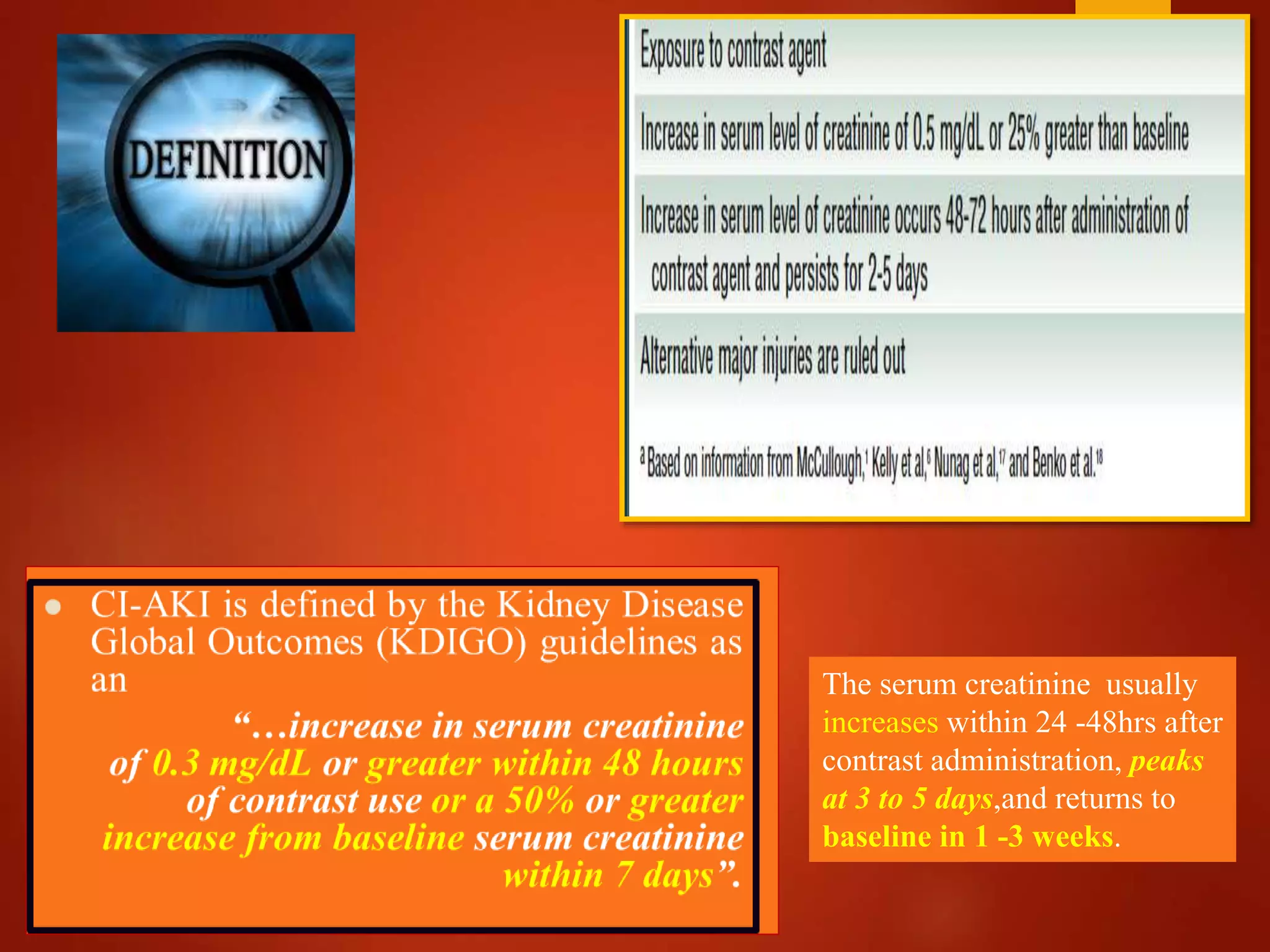
The serum creatinine usually
increases within 24 -48hrs after
contrast administration, peaks
at 3 to 5 days,and returns to
baseline in 1 -3 weeks.
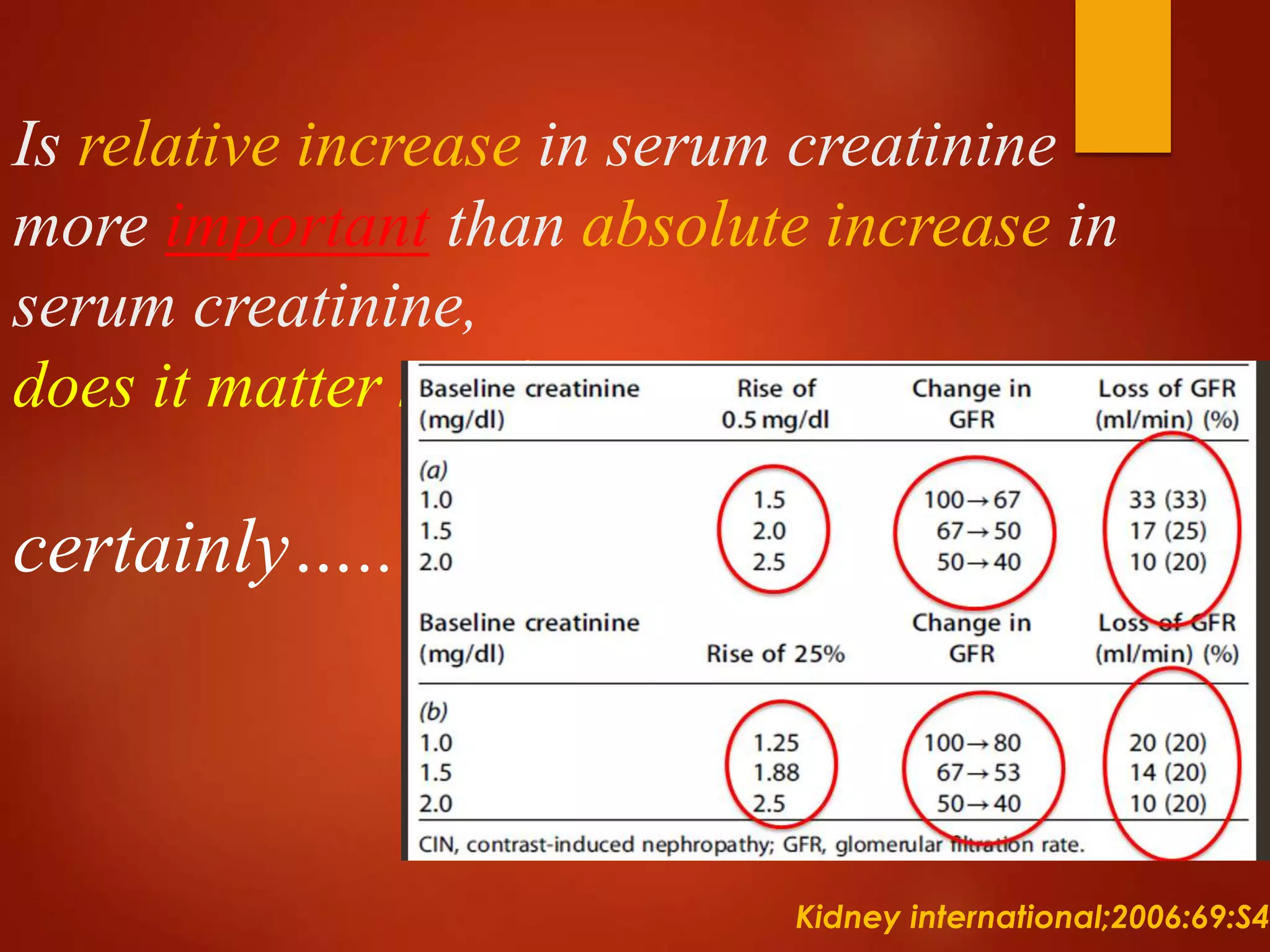
Is relative increase in serum creatinine
more important than absolute increase in
serum creatinine,
does it matter much?????
certainly…..
Kidney international;2006:69:S46
Uniqueness of Contrast
induced AKI
 Universally iatrogenic
 Risk factors well characterised
 Time of insult largely predictable
 Make it amenable to prevention
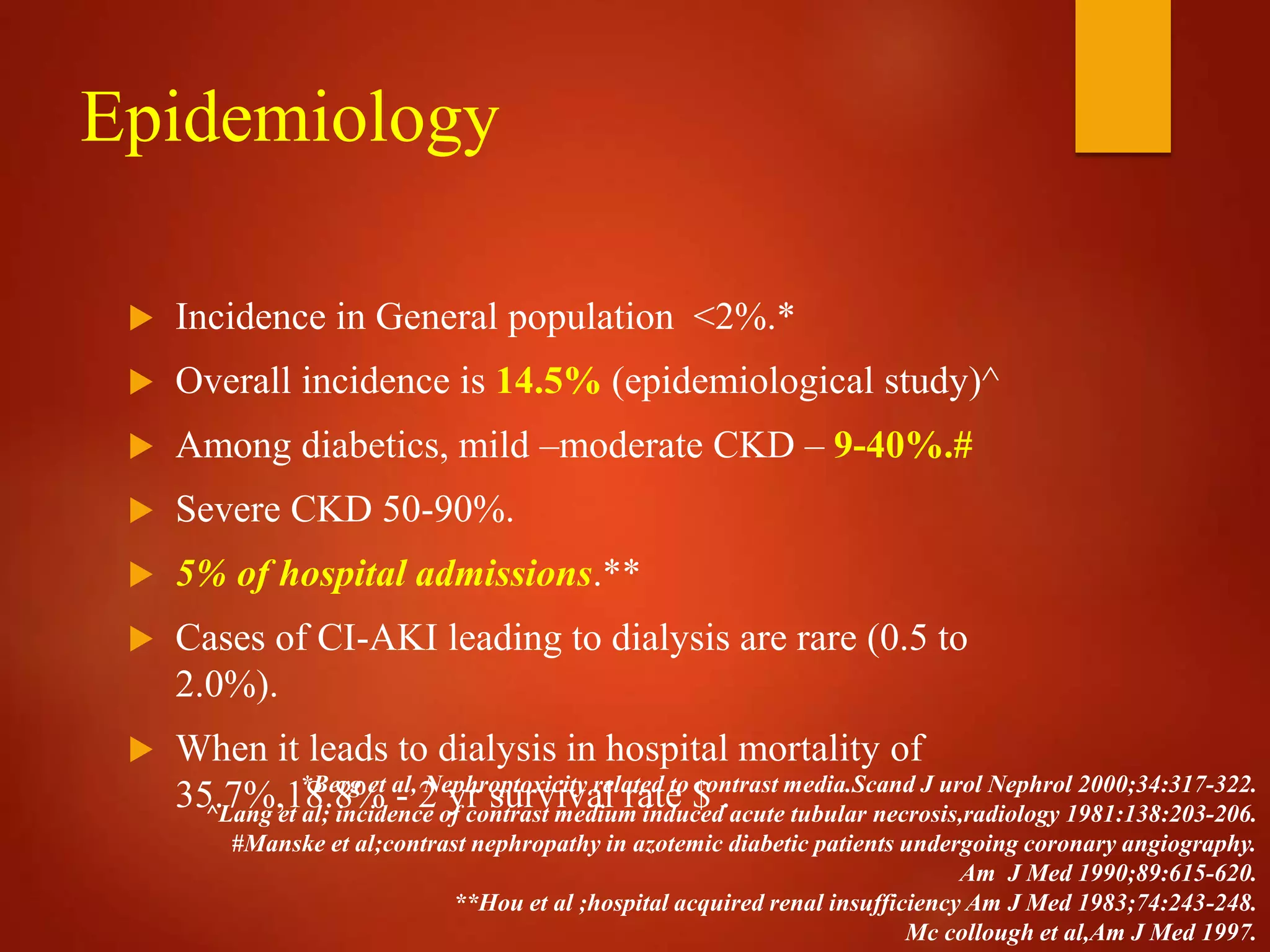
Epidemiology
 Incidence in General population <2%.*
 Overall incidence is 14.5% (epidemiological study)^
 Among diabetics, mild –moderate CKD – 9-40%.#
 Severe CKD 50-90%.
 5% of hospital admissions.**
 Cases of CI-AKI leading to dialysis are rare (0.5 to
2.0%).
 When it leads to dialysis in hospital mortality of
35.7%,18.8% - 2 yr survival rate $ .*Berg et al, Nephroptoxicity related to contrast media.Scand J urol Nephrol 2000;34:317-322.
^Lang et al; incidence of contrast medium induced acute tubular necrosis,radiology 1981:138:203-206.
#Manske et al;contrast nephropathy in azotemic diabetic patients undergoing coronary angiography.
Am J Med 1990;89:615-620.
**Hou et al ;hospital acquired renal insufficiency Am J Med 1983;74:243-248.
Mc collough et al,Am J Med 1997.
Course and Prognosis
 1% may need dialysis & in those with severe involvement,
30% may have residual renal impairment..
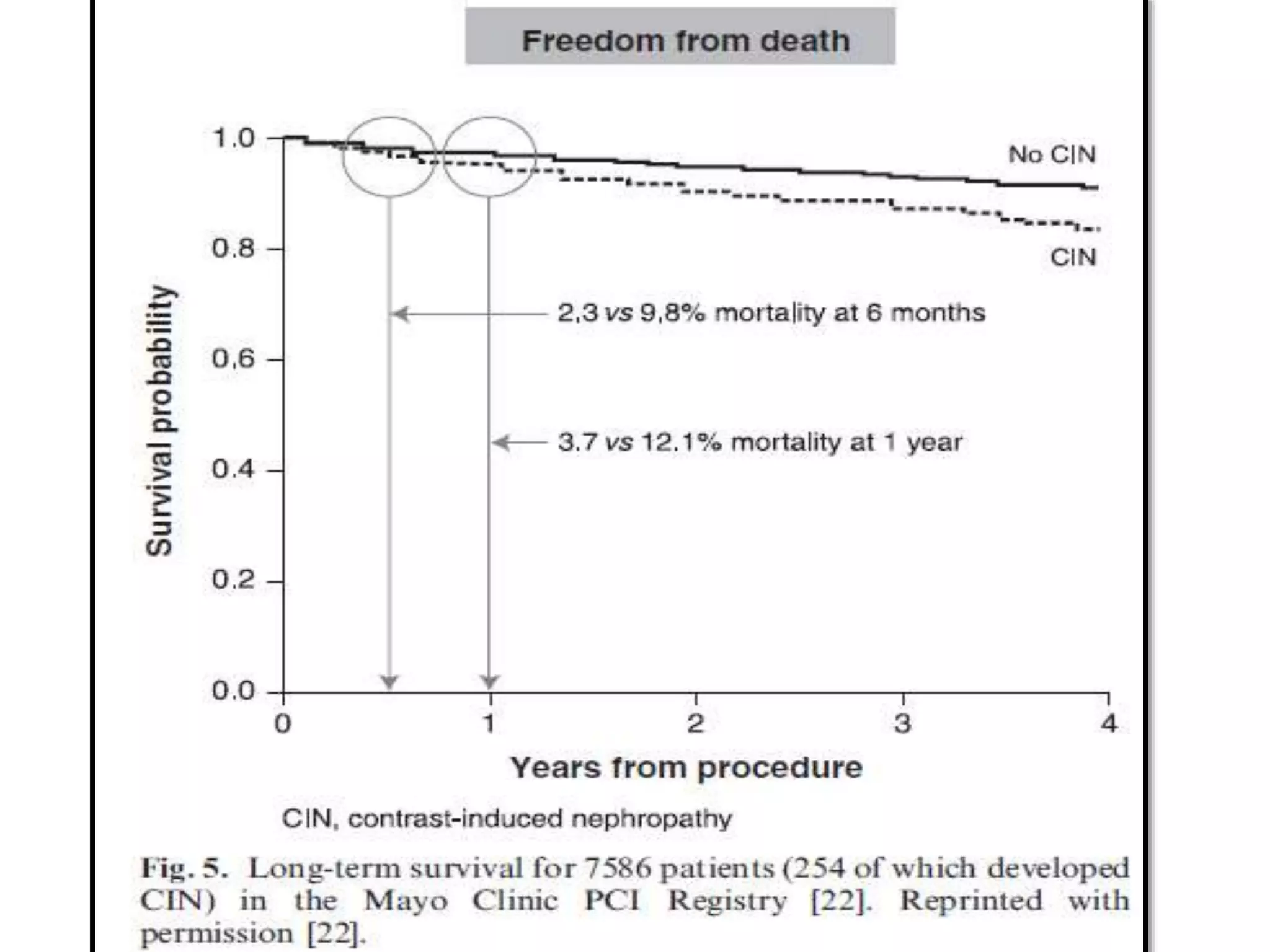
 At 1 year after PCI, the mortality rate in patients
undergoing dialysis had increased to 45.2%, compared
with 35.4% in patients with CIN not requiring dialysis and
Creat rise Creat peak Return to
baseline
Non-oliguric
CIAKI
48hours 3-5 days 10-14days
Oliguric
CIAKI
48 hours 5-10 days 14-21 days
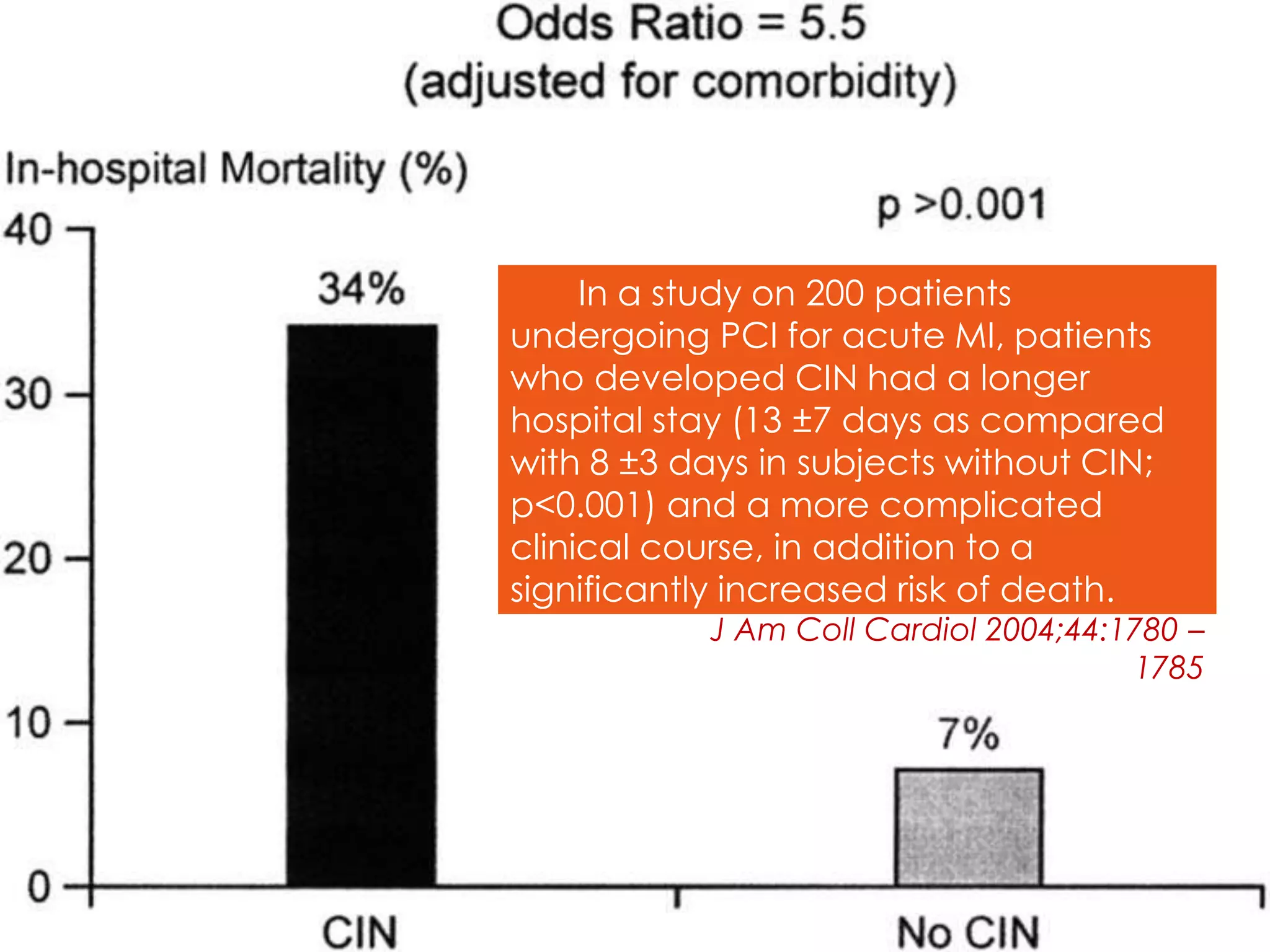
In a study on 200 patients
undergoing PCI for acute MI, patients
who developed CIN had a longer
hospital stay (13 ±7 days as compared
with 8 ±3 days in subjects without CIN;
p<0.001) and a more complicated
clinical course, in addition to a
significantly increased risk of death.
J Am Coll Cardiol 2004;44:1780 –
1785
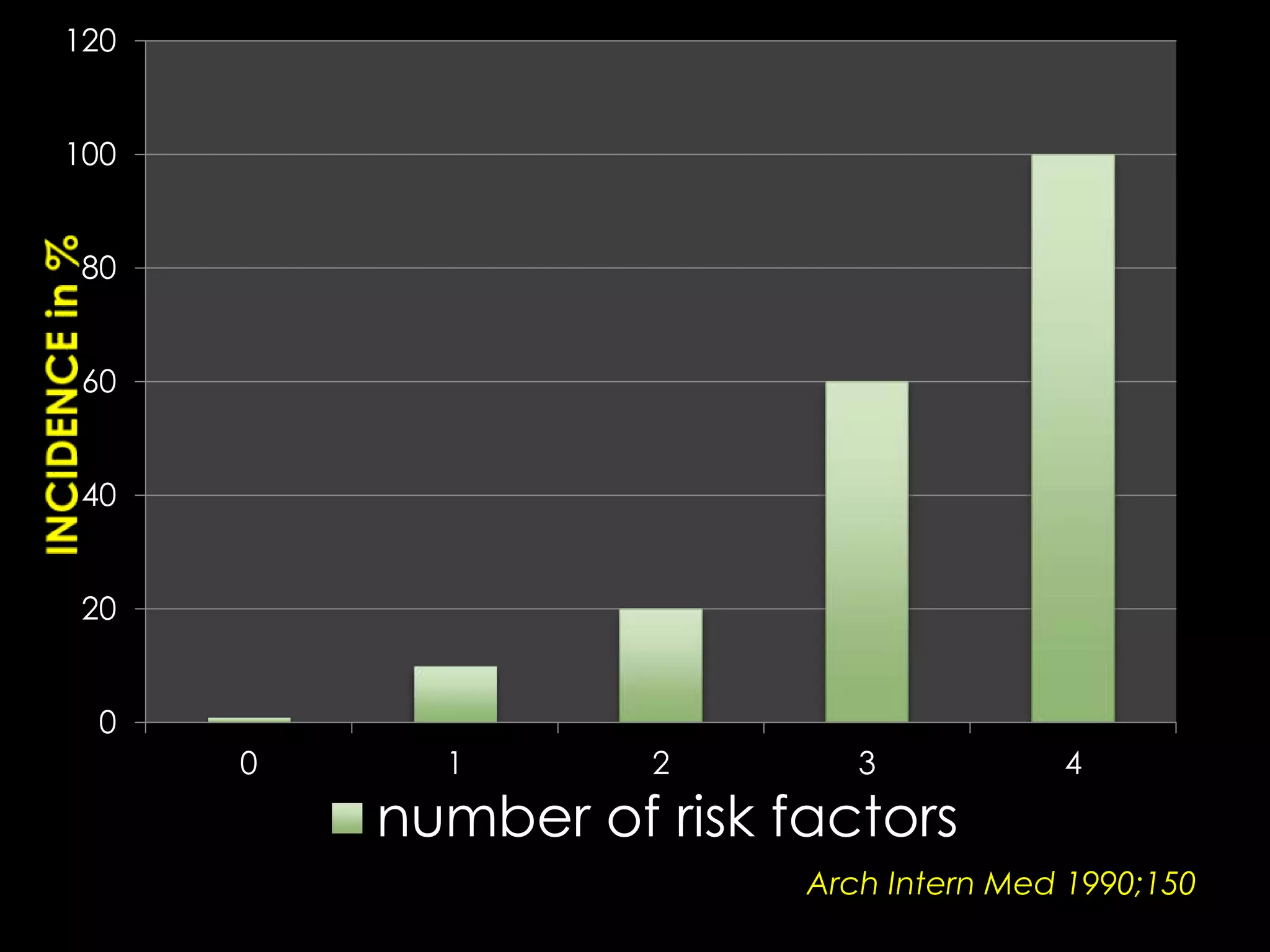
0
20
40
60
80
100
120
0 1 2 3 4
number of risk factors
Arch Intern Med 1990;150
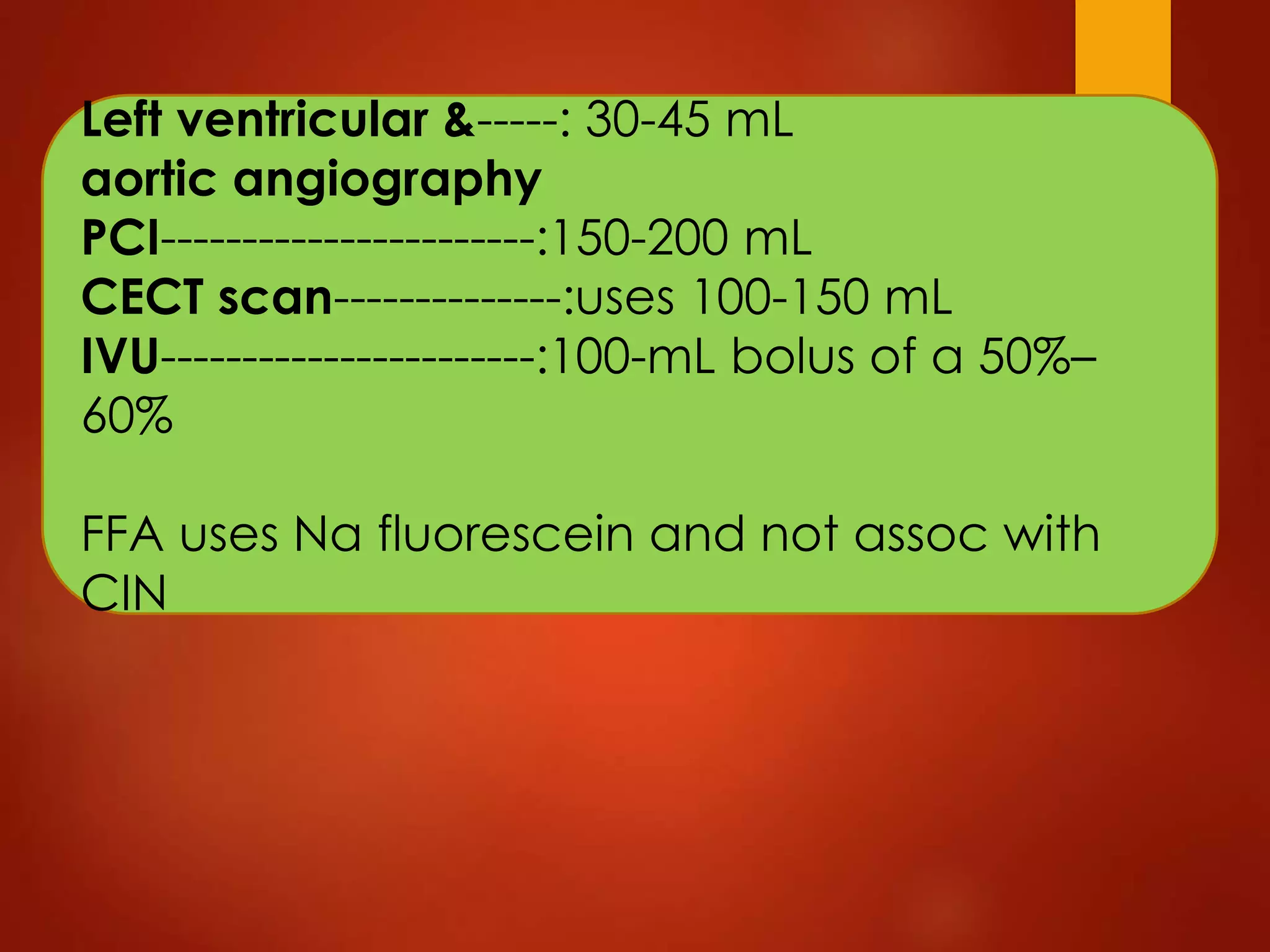
Left ventricular &-----: 30-45 mL
aortic angiography
PCI-----------------------:150-200 mL
CECT scan--------------:uses 100-150 mL
IVU-----------------------:100-mL bolus of a 50%–
60%
FFA uses Na fluorescein and not assoc with
CIN
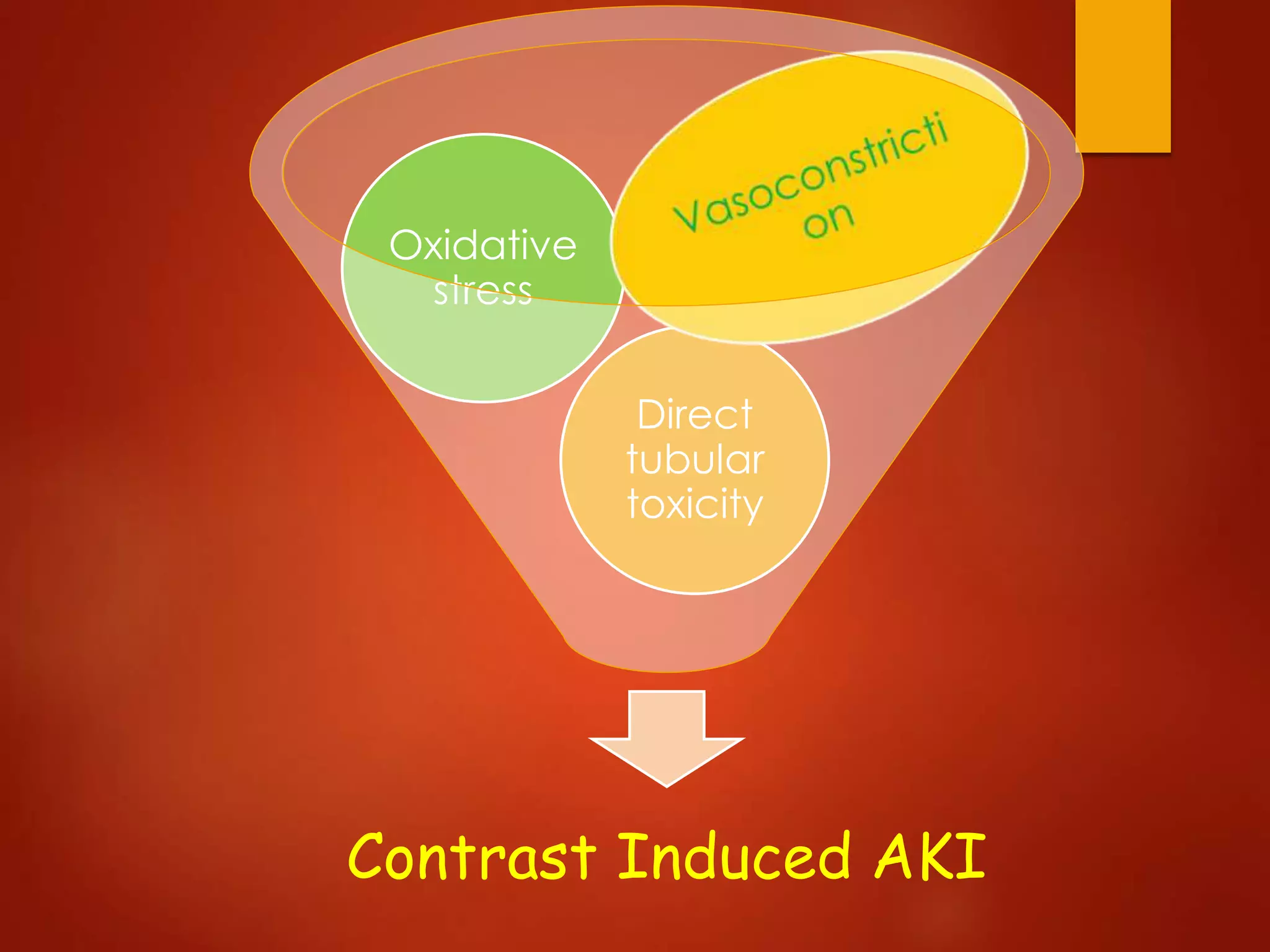
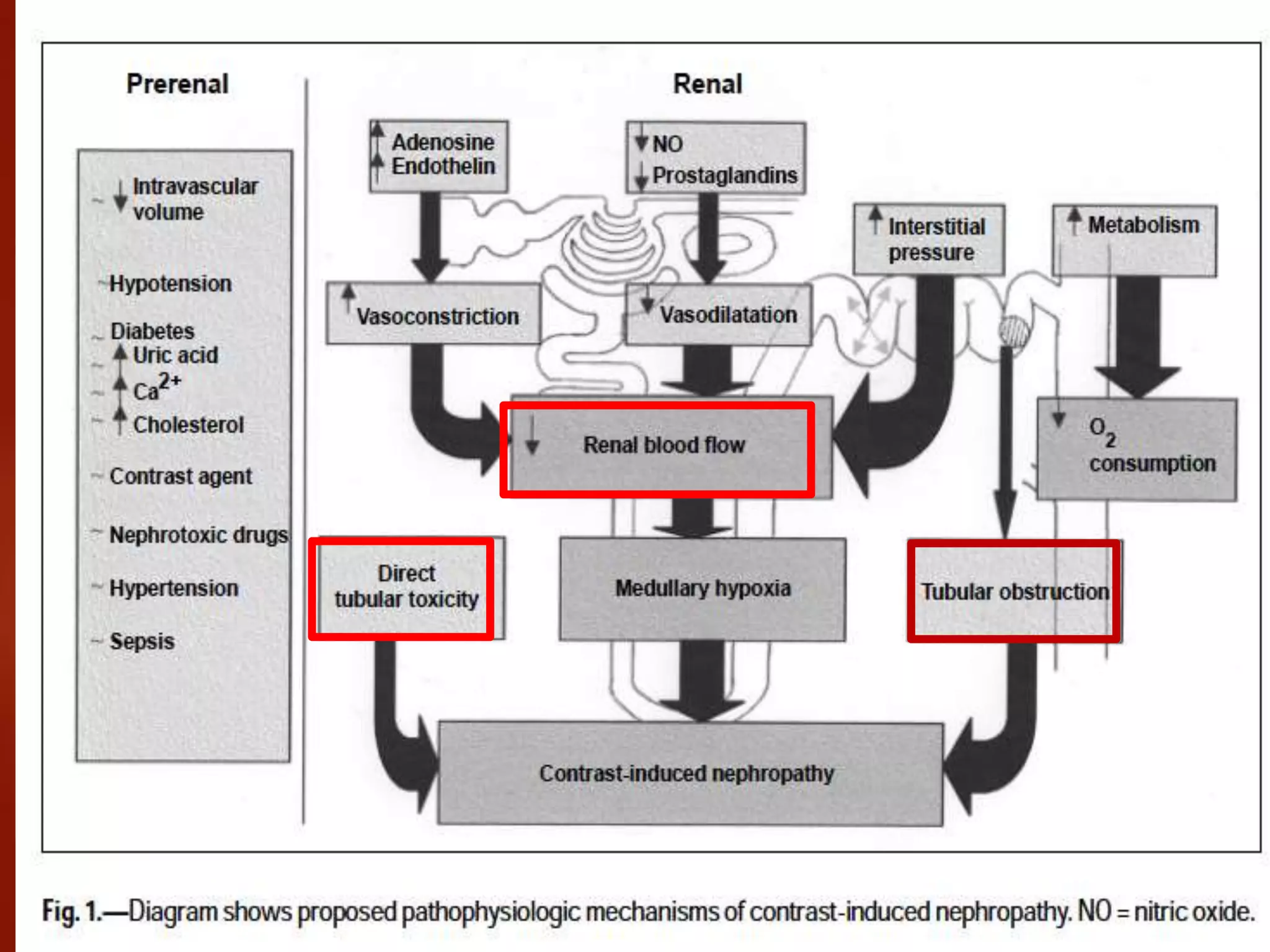
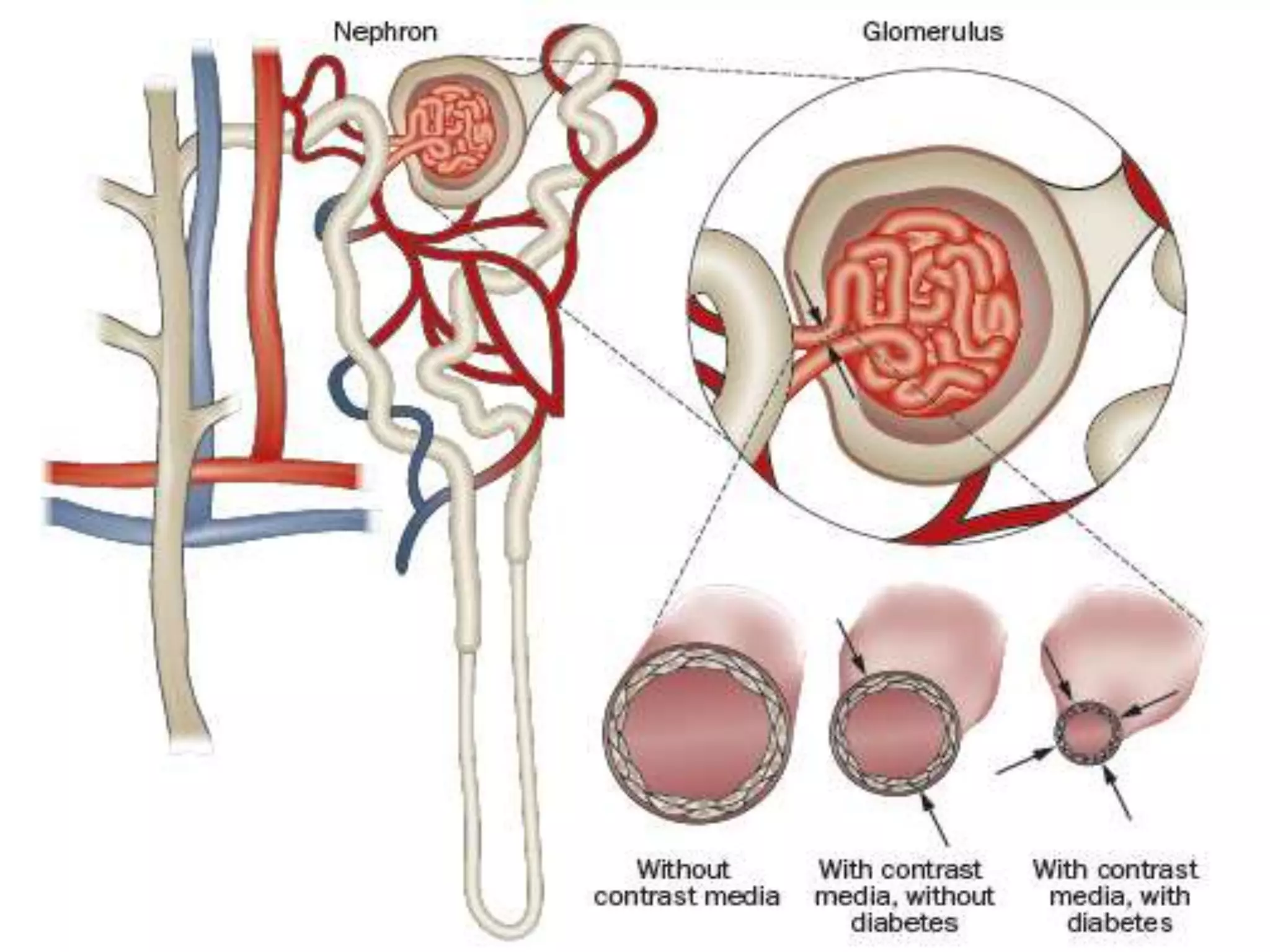
Contrast Induced AKI
Direct
tubular
toxicity
Oxidative
stress
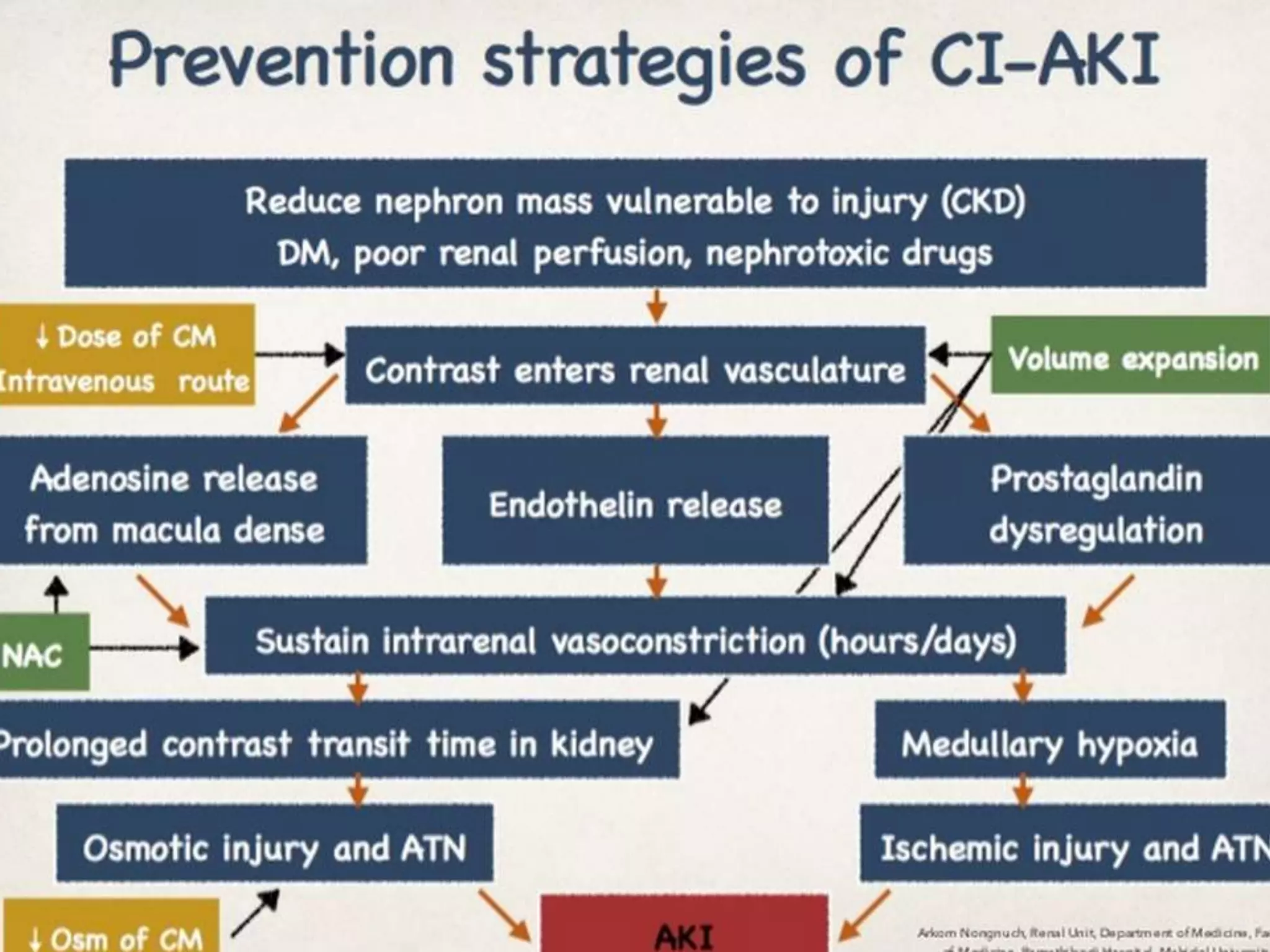
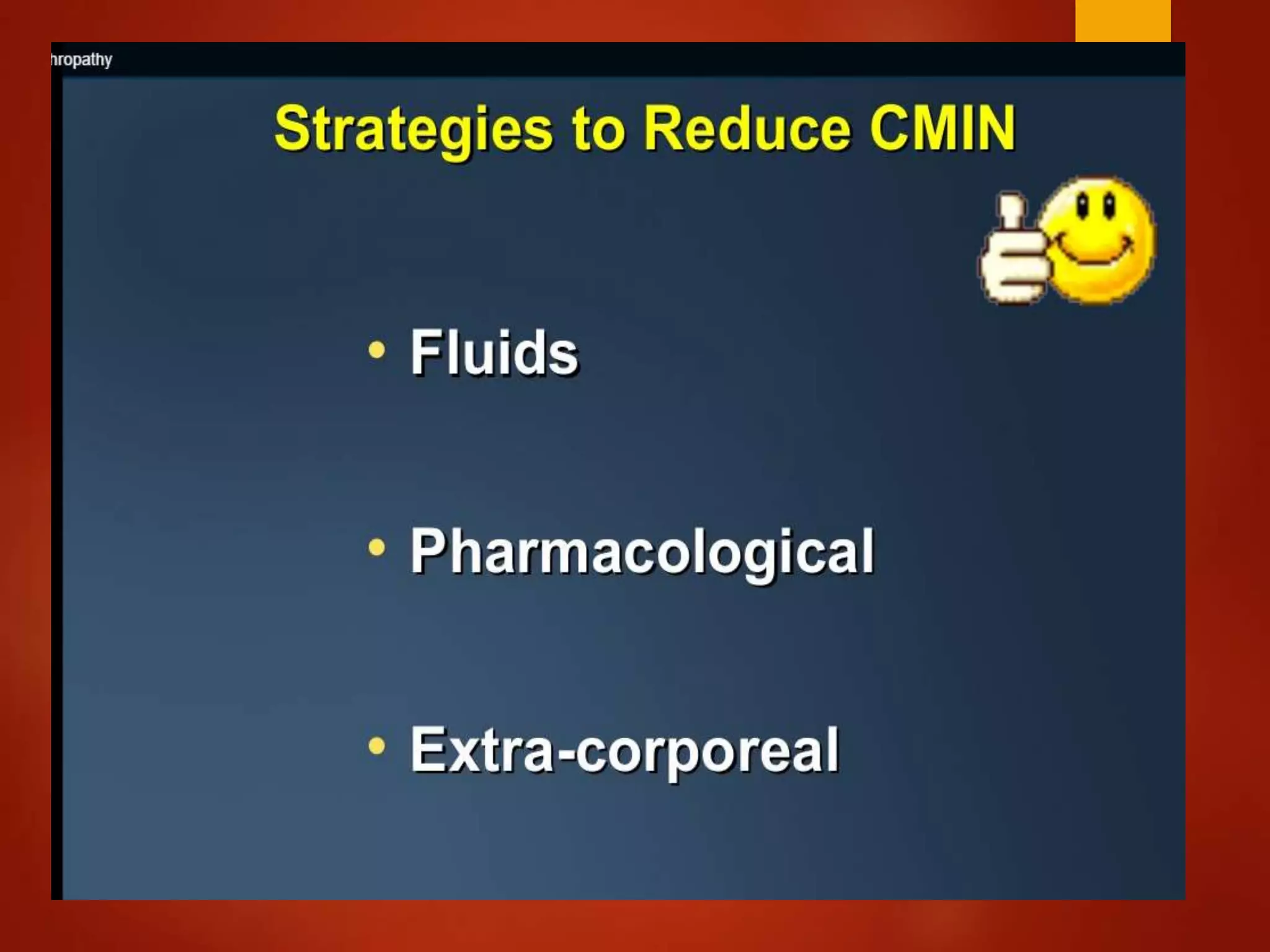
Preventive strategies
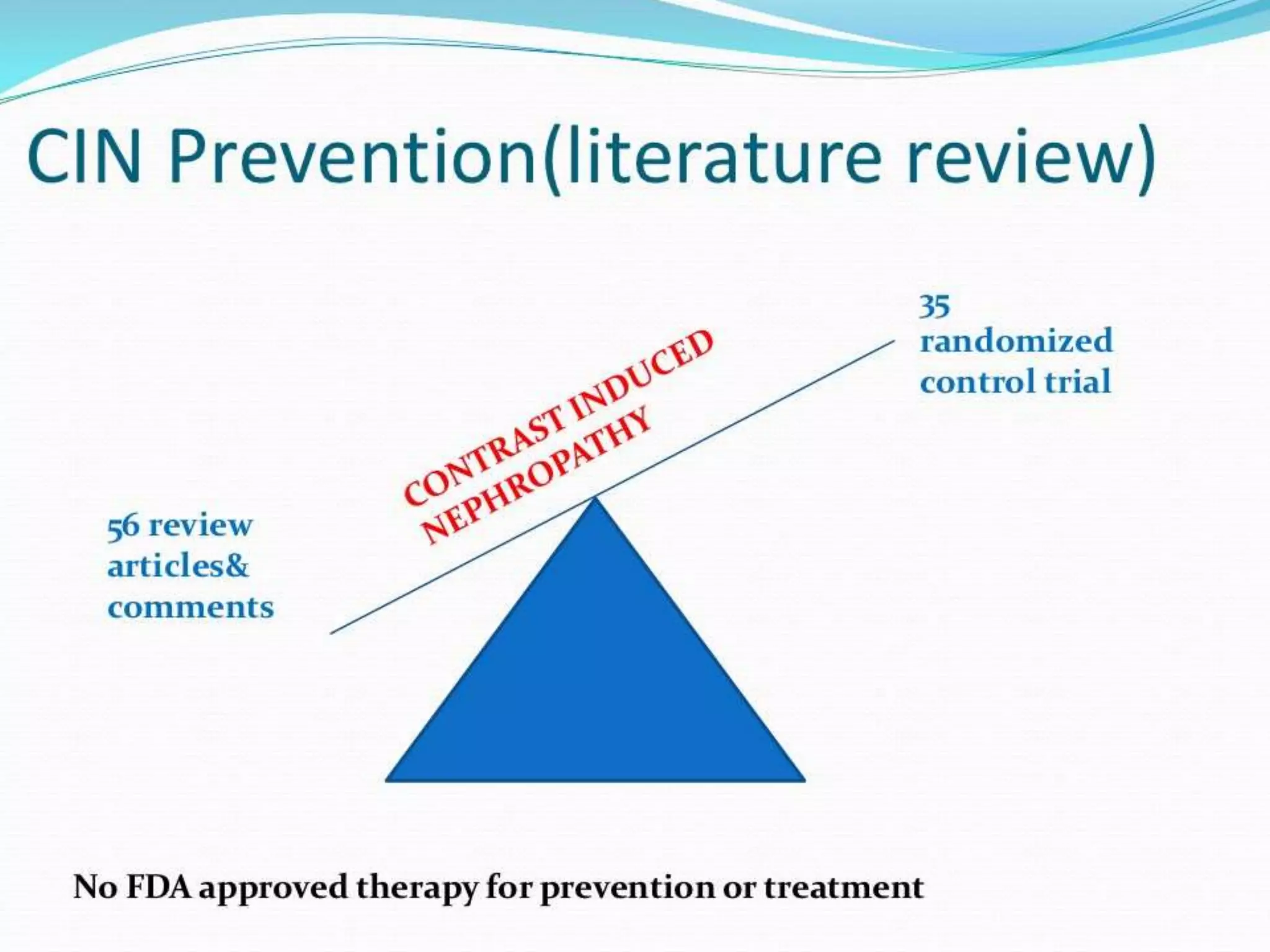
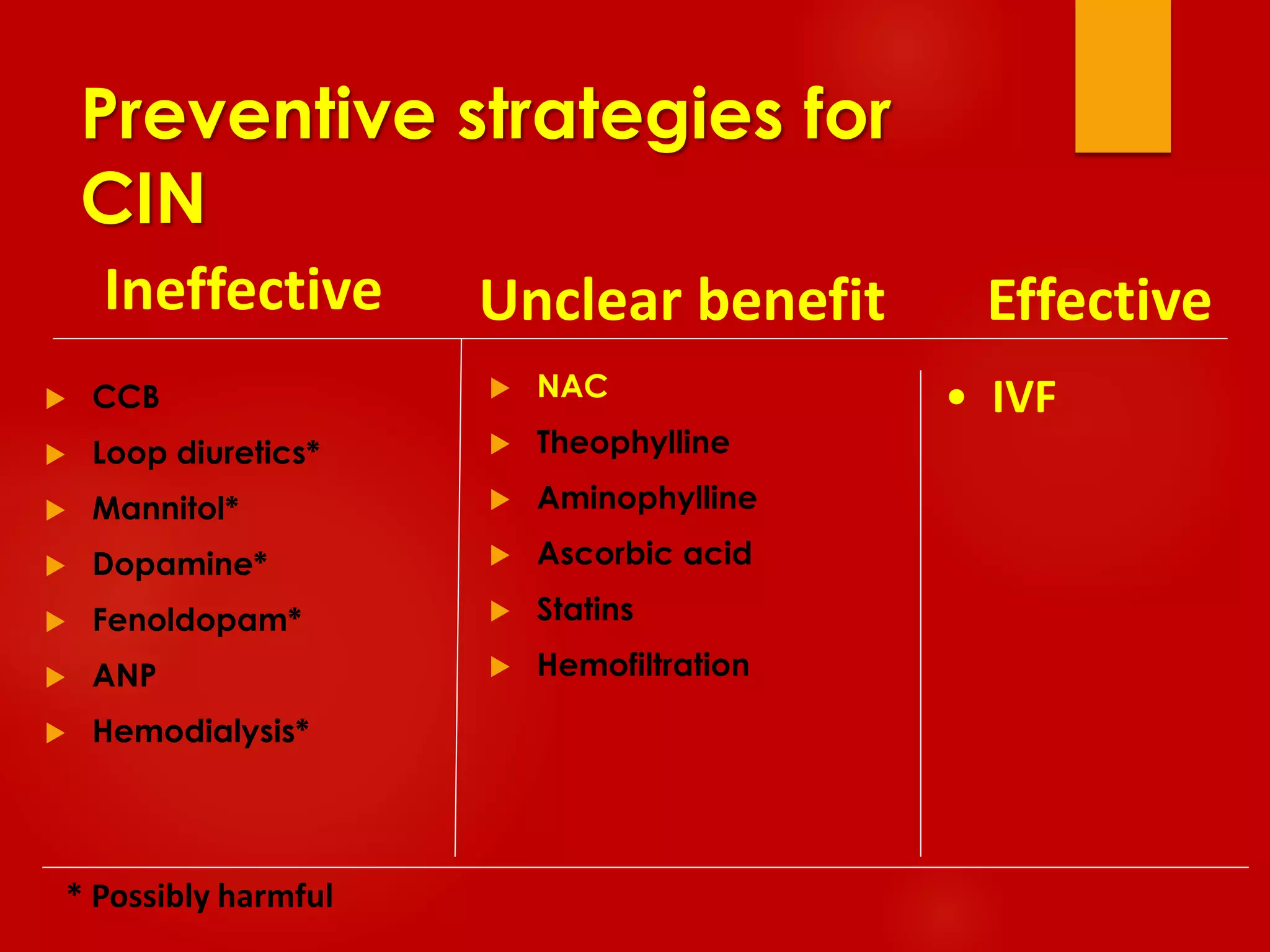
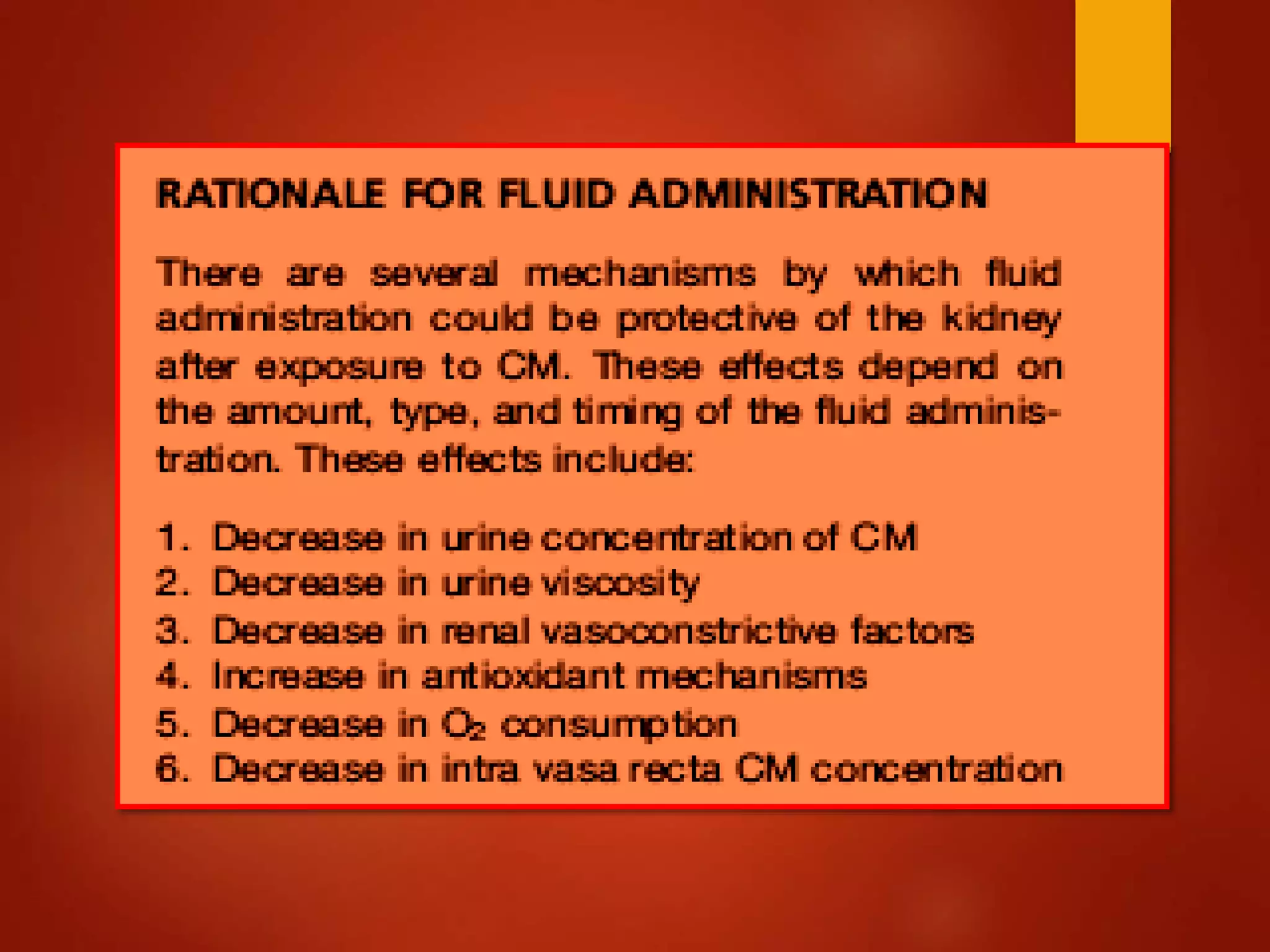
Preventive strategies for
CIN
 CCB
 Loop diuretics*
 Mannitol*
 Dopamine*
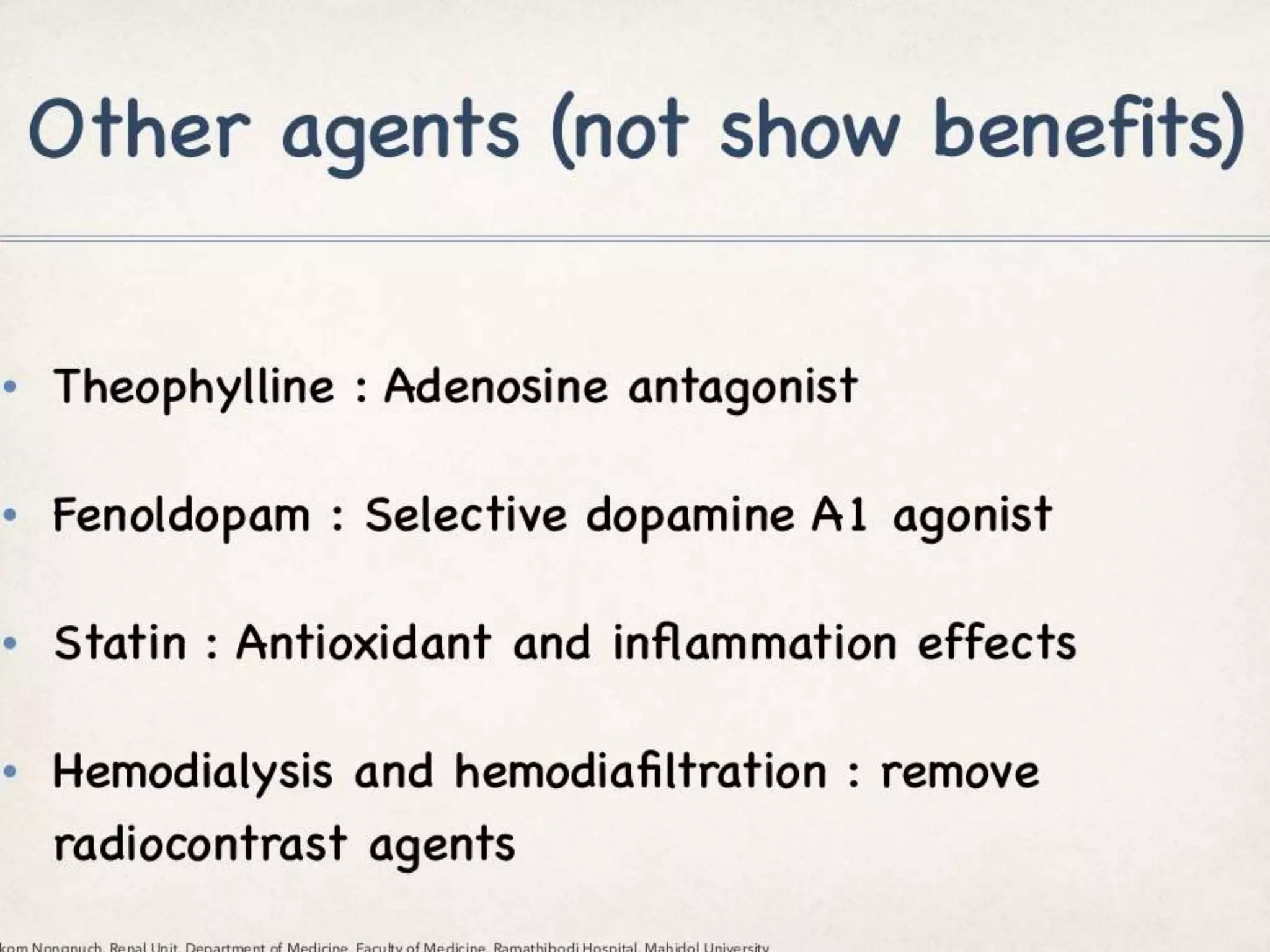
 Fenoldopam*
 ANP
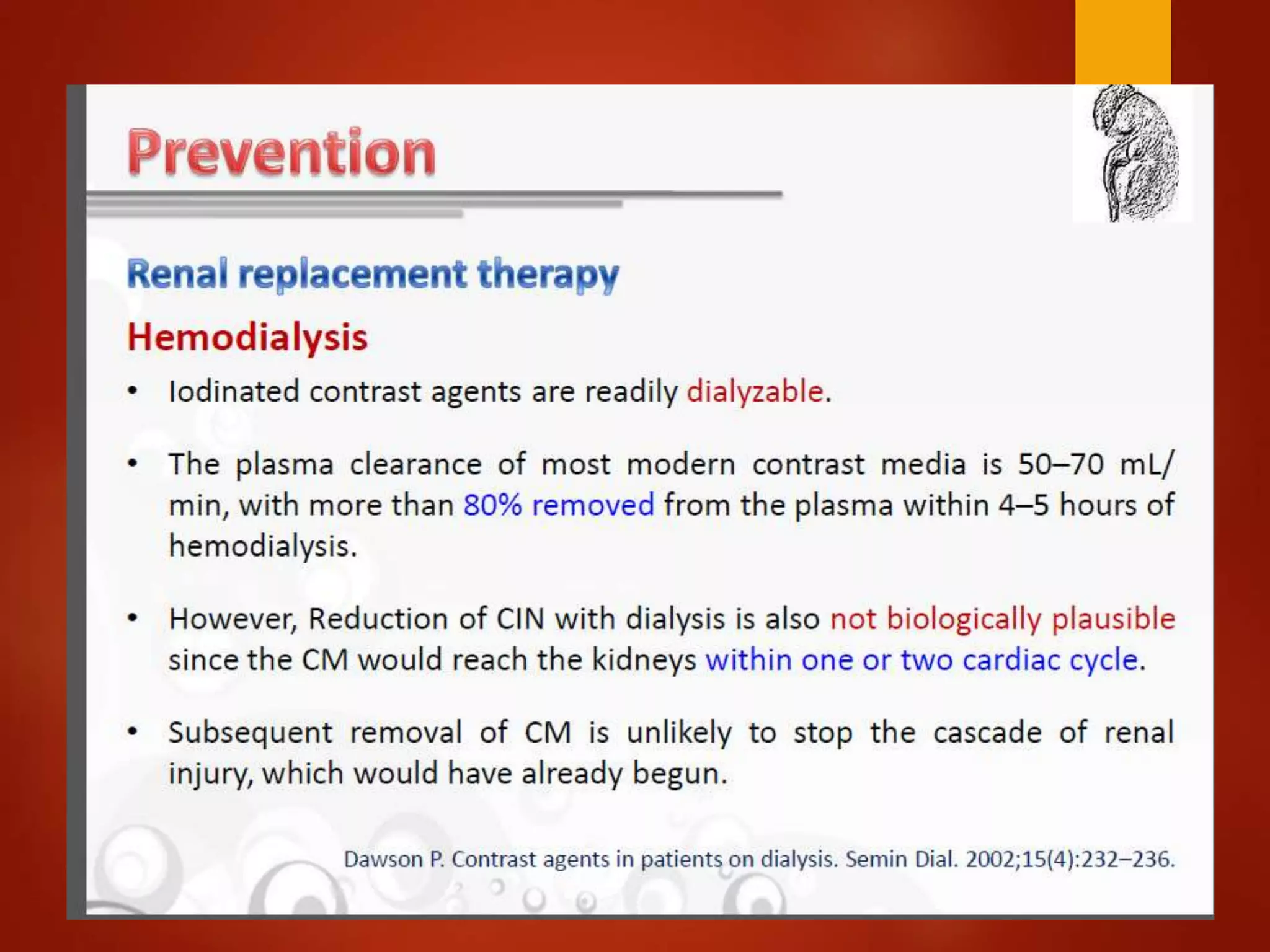
 Hemodialysis*
 NAC
 Theophylline
 Aminophylline
 Ascorbic acid
 Statins
 Hemofiltration
• IVF
Ineffective EffectiveUnclear benefit
* Possibly harmful
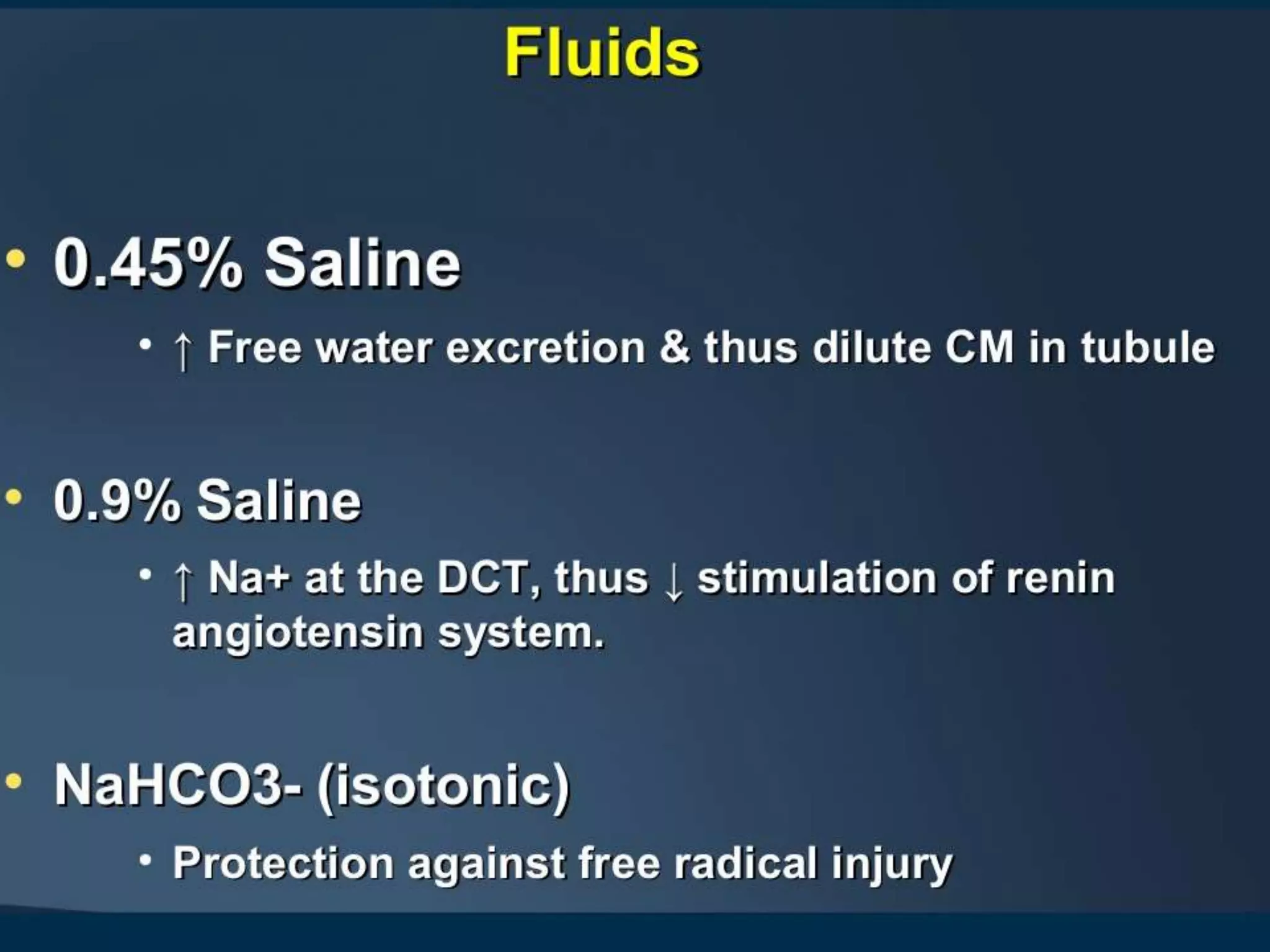
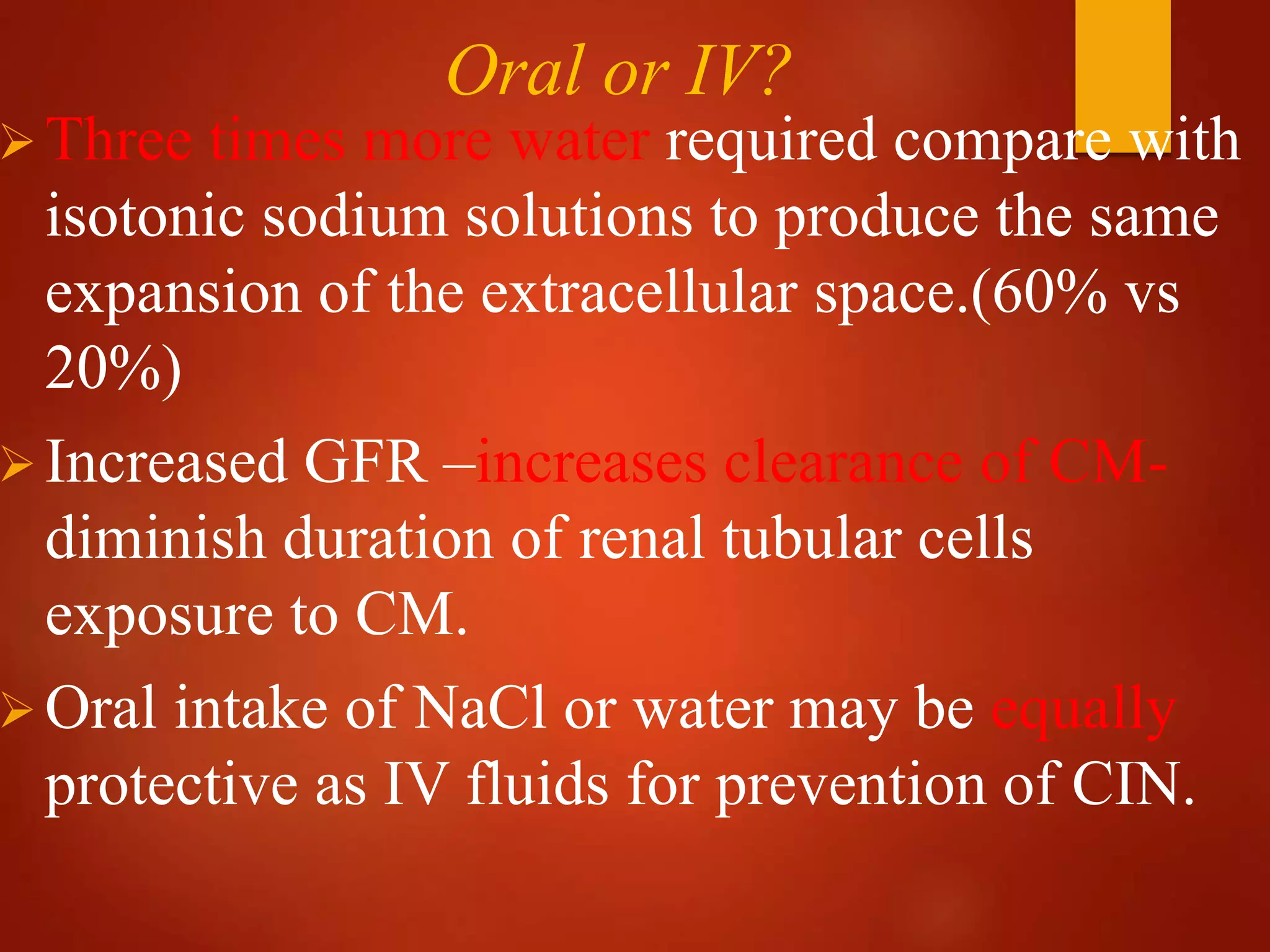
Oral or IV?
Three times more water required compare with
isotonic sodium solutions to produce the same
expansion of the extracellular space.(60% vs
20%)
Increased GFR –increases clearance of CM-
diminish duration of renal tubular cells
exposure to CM.
Oral intake of NaCl or water may be equally
protective as IV fluids for prevention of CIN.
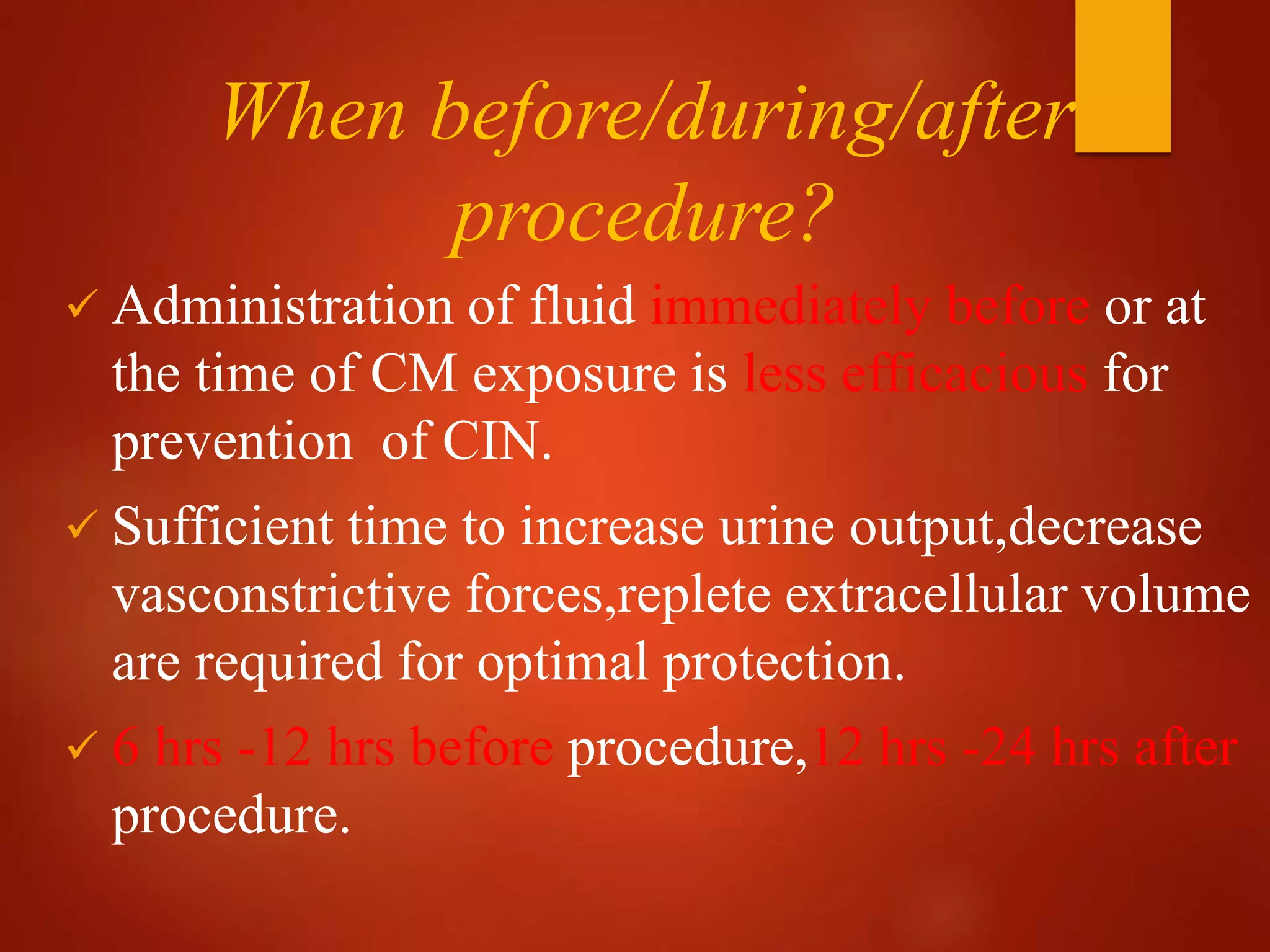
When before/during/after
procedure?
 Administration of fluid immediately before or at
the time of CM exposure is less efficacious for
prevention of CIN.
 Sufficient time to increase urine output,decrease
vasconstrictive forces,replete extracellular volume
are required for optimal protection.
 6 hrs -12 hrs before procedure,12 hrs -24 hrs after
procedure.
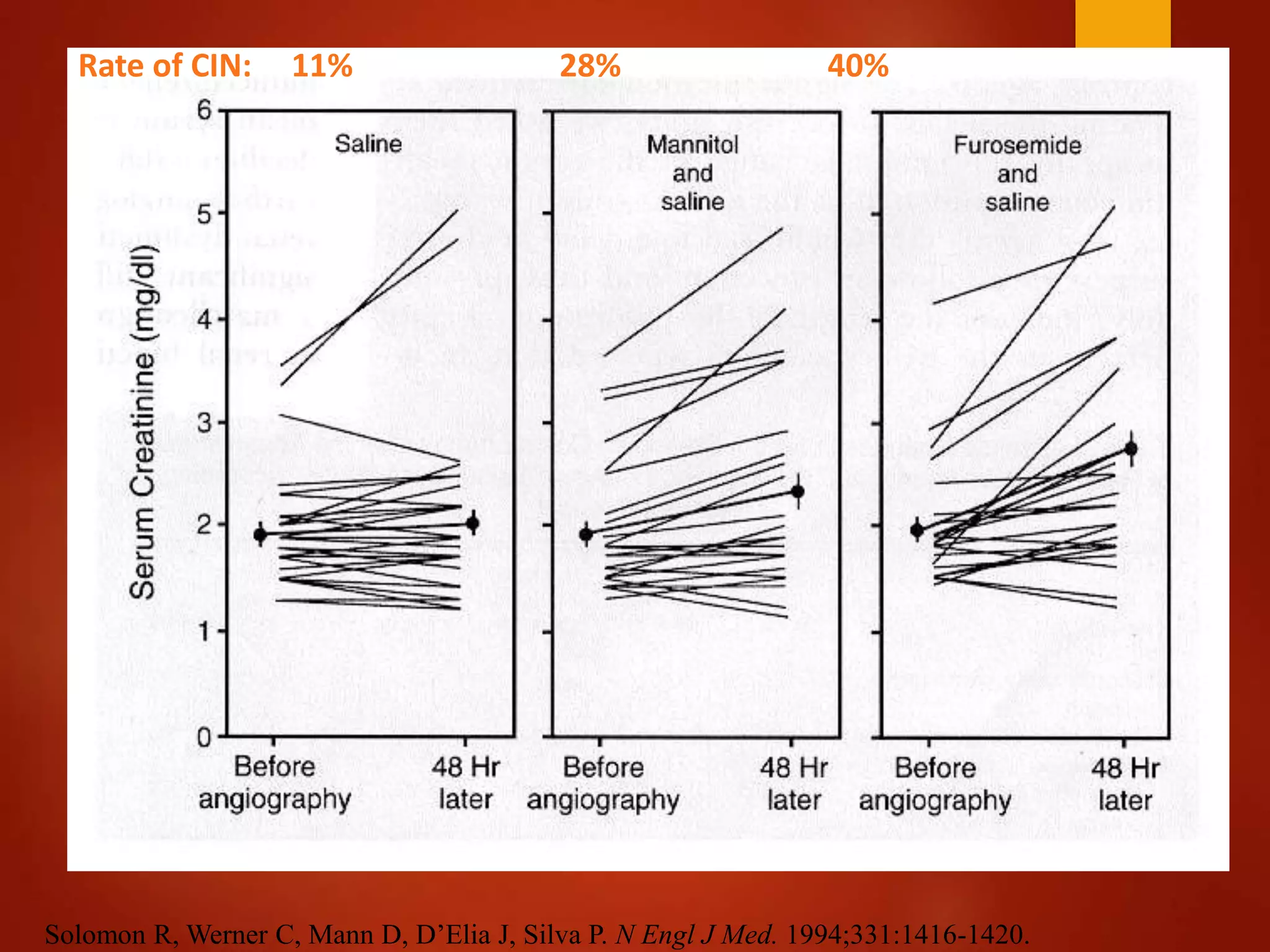
Rate of CIN: 11% 28% 40%
Solomon R, Werner C, Mann D, D’Elia J, Silva P. N Engl J Med. 1994;331:1416-1420.
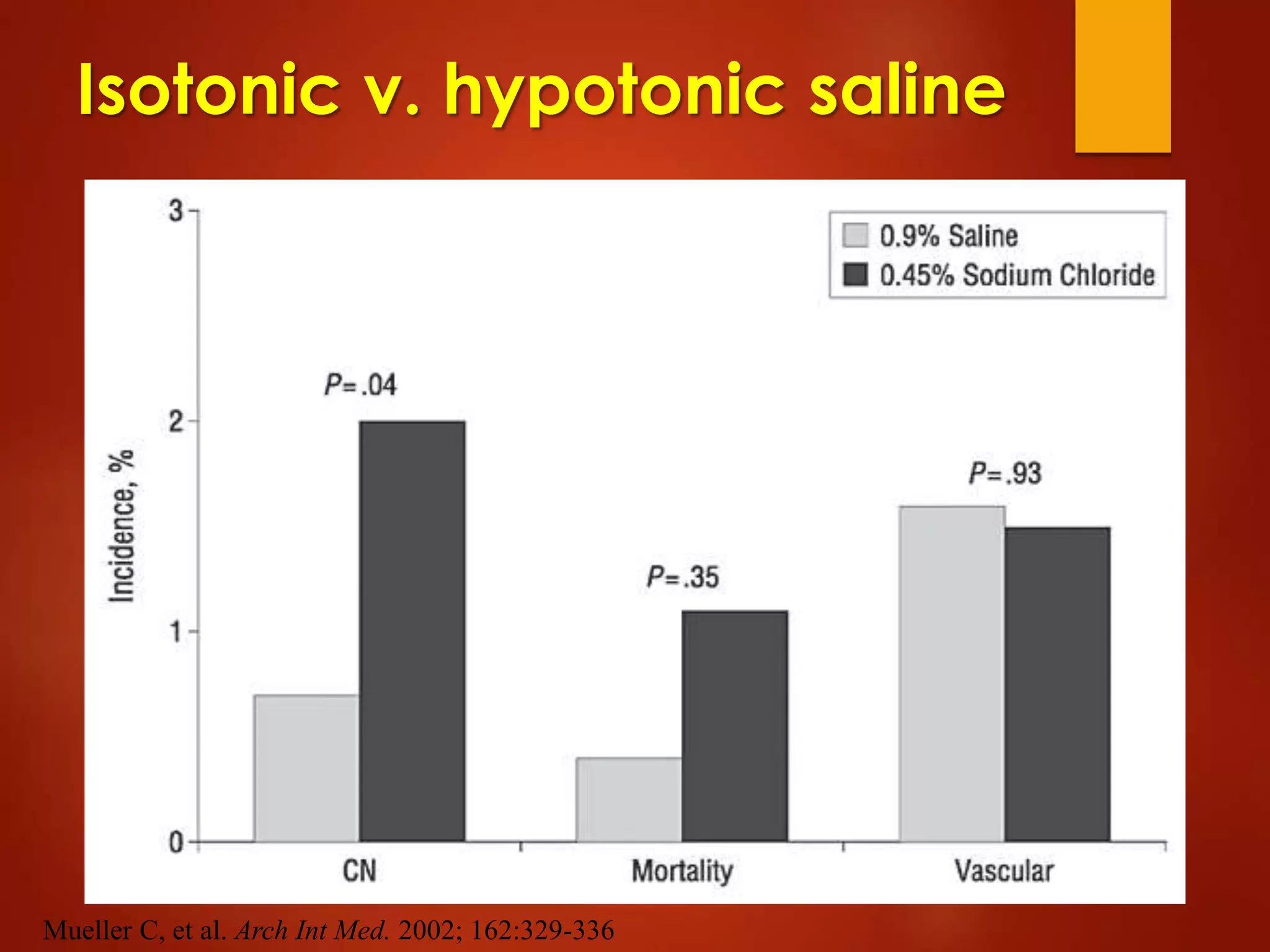
Isotonic v. hypotonic saline
Mueller C, et al. Arch Int Med. 2002; 162:329-336
P=0.04
P=0.35
P=0.93
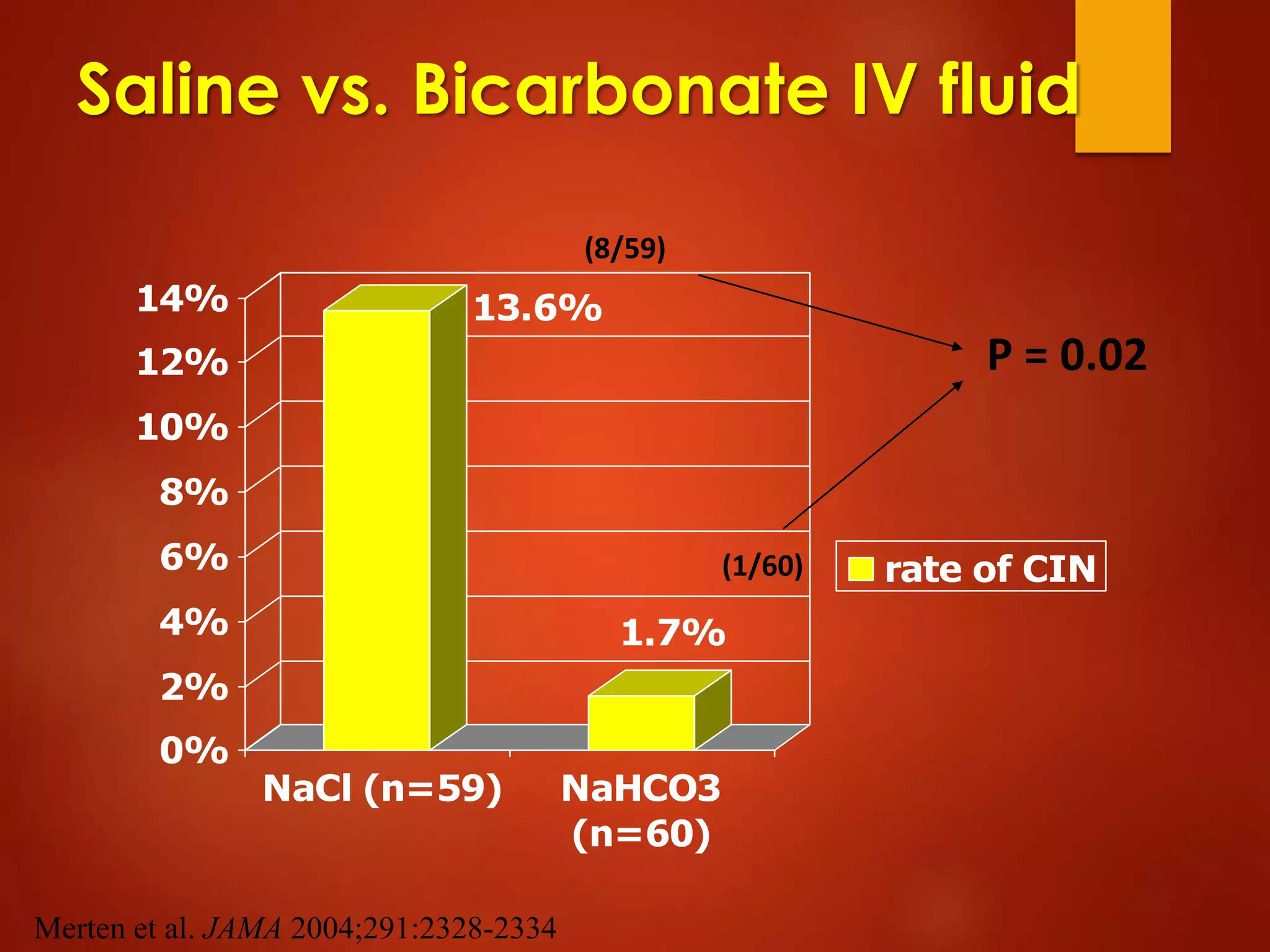
Saline vs. Bicarbonate IV fluid
13.6%
1.7%
0%
2%
4%
6%
8%
10%
12%
14%
NaCl (n=59) NaHCO3
(n=60)
rate of CIN
(8/59)
(1/60)
Merten et al. JAMA 2004;291:2328-2334
P = 0.02
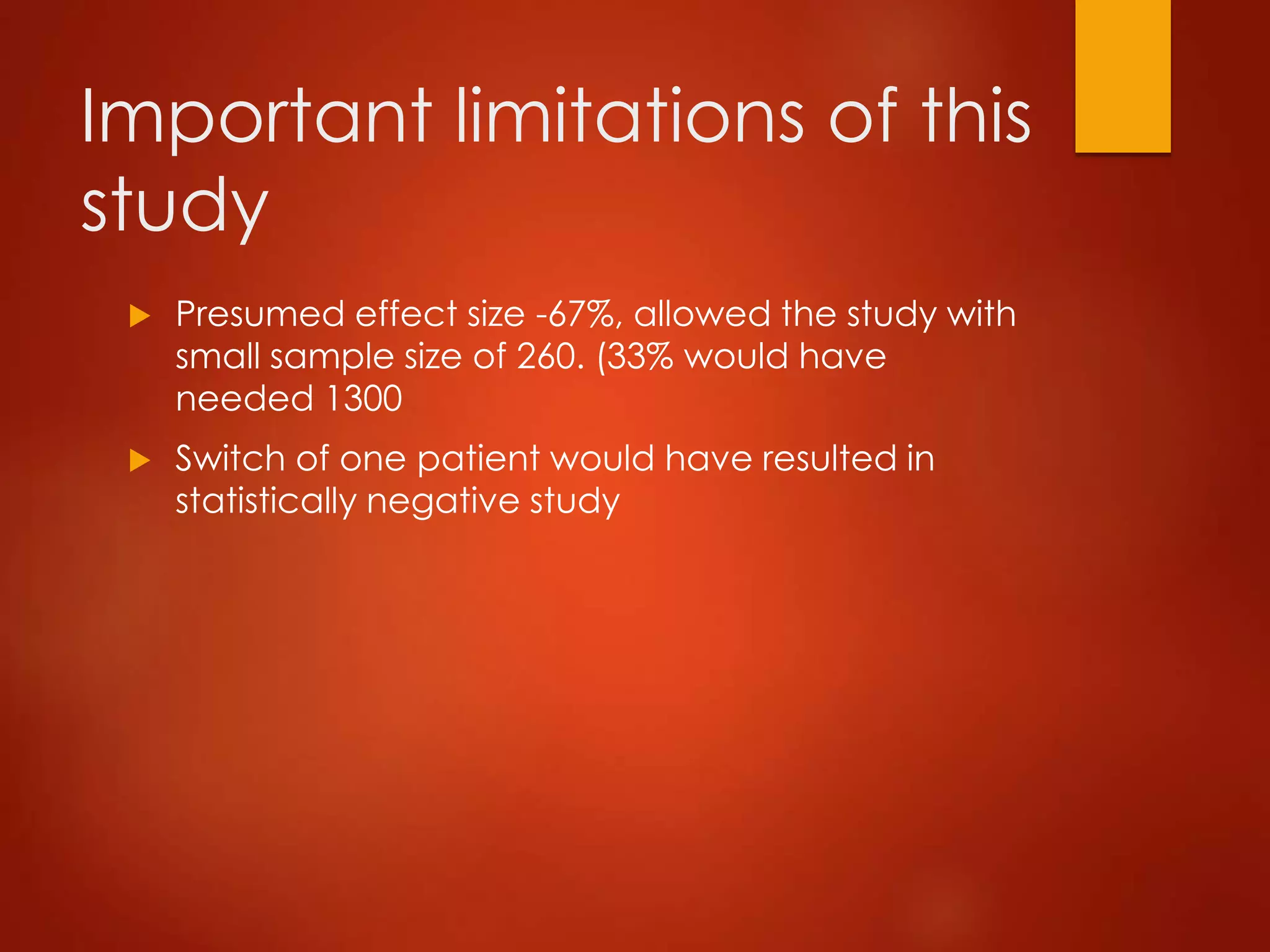
Important limitations of this
study
 Presumed effect size -67%, allowed the study with
small sample size of 260. (33% would have
needed 1300
 Switch of one patient would have resulted in
statistically negative study
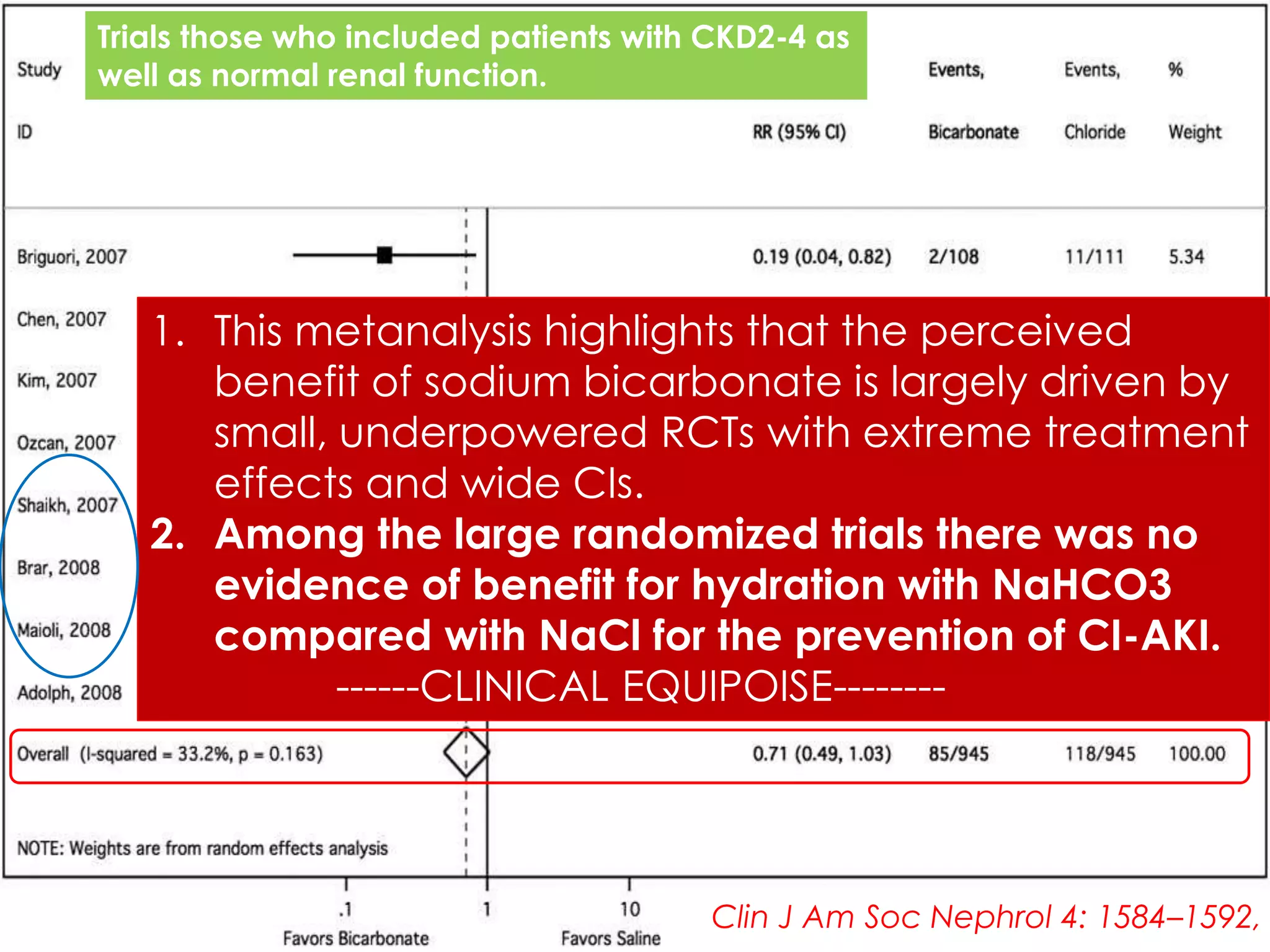
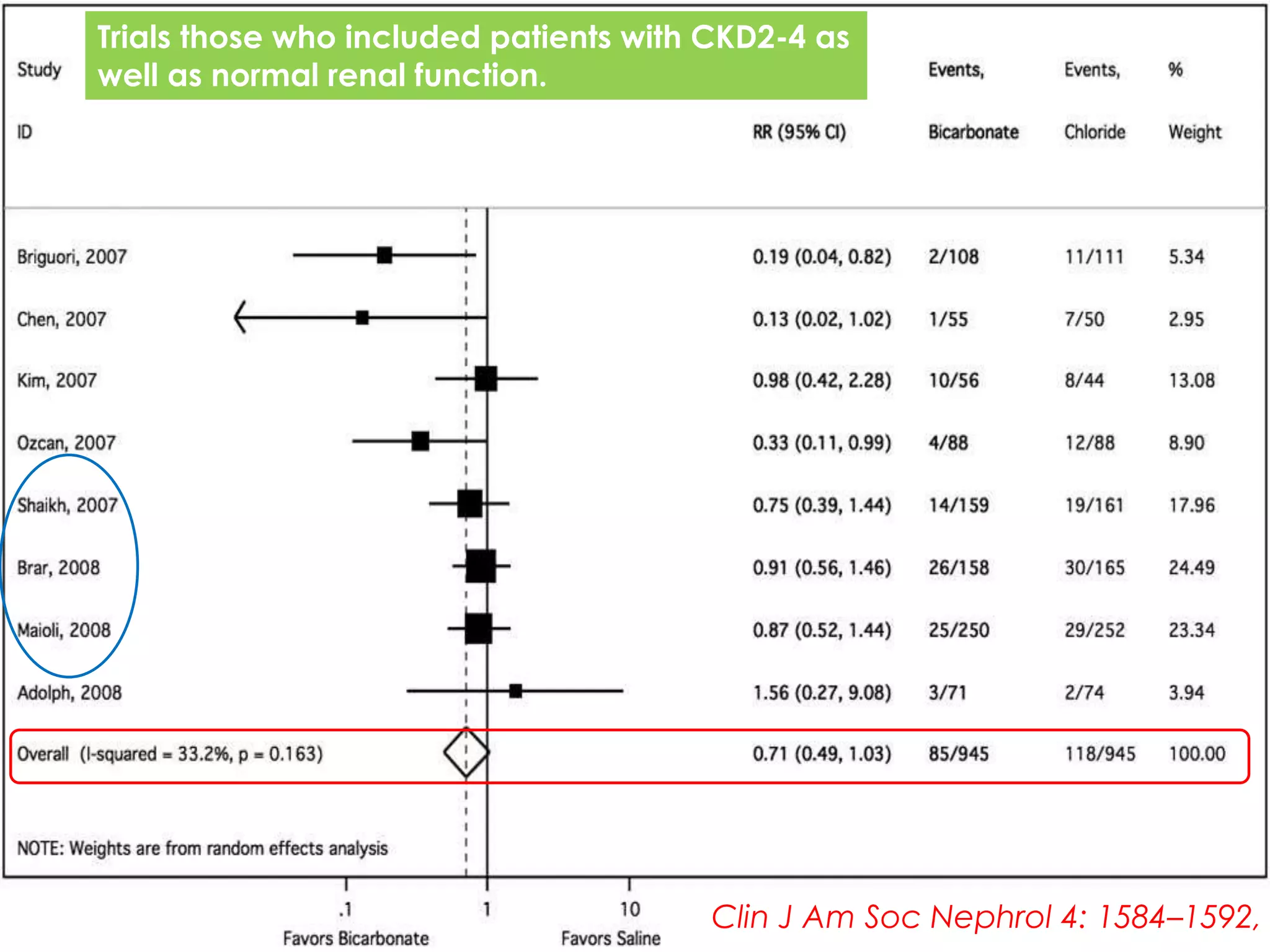
Clin J Am Soc Nephrol 4: 1584–1592,
Trials those who included patients with CKD2-4 as
well as normal renal function.
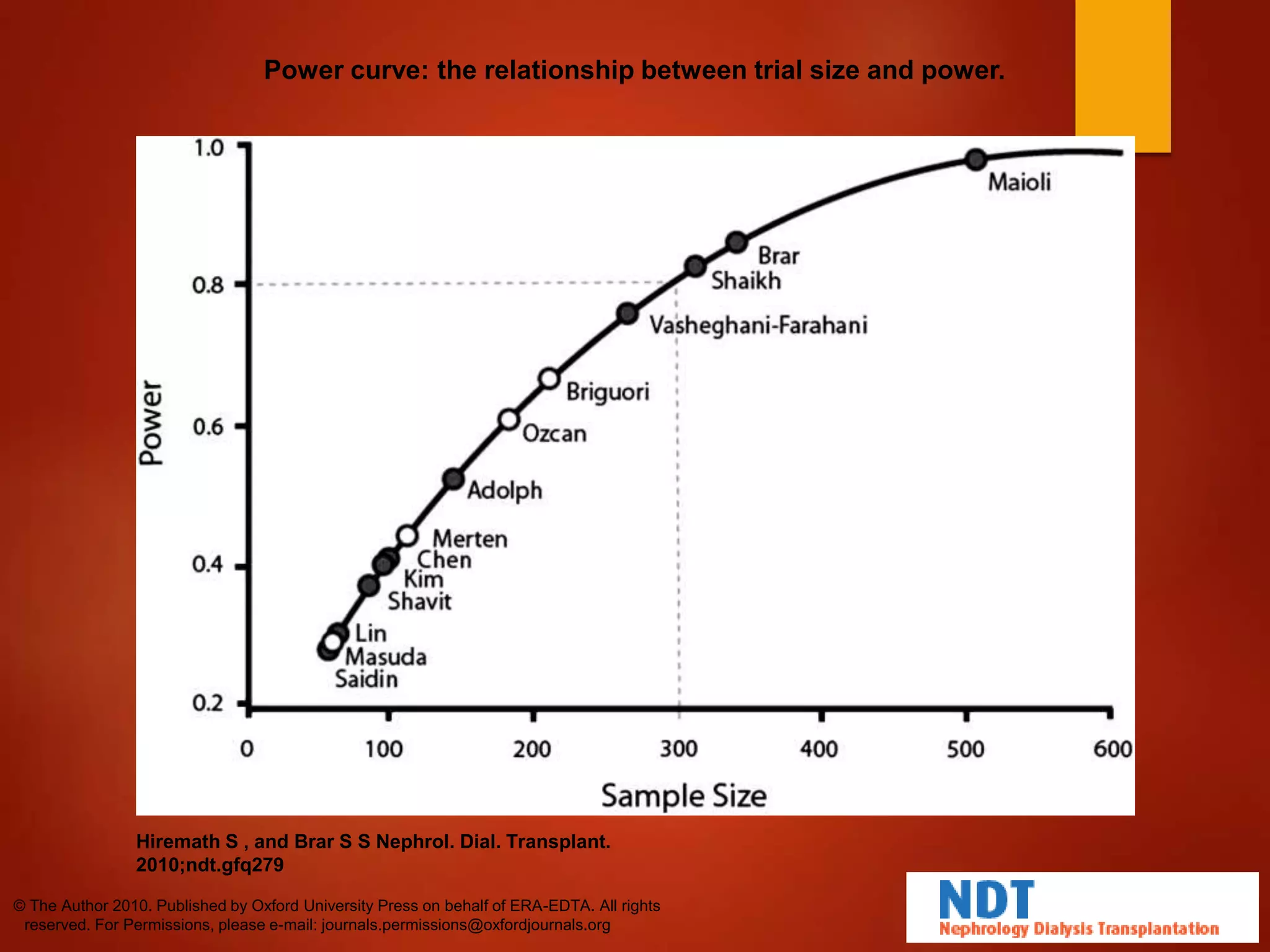
Power curve: the relationship between trial size and power.
Hiremath S , and Brar S S Nephrol. Dial. Transplant.
2010;ndt.gfq279
© The Author 2010. Published by Oxford University Press on behalf of ERA-EDTA. All rights
reserved. For Permissions, please e-mail: journals.permissions@oxfordjournals.org
1. This metanalysis highlights that the perceived
benefit of sodium bicarbonate is largely driven by
small, underpowered RCTs with extreme treatment
effects and wide CIs.
2. Among the large randomized trials there was no
evidence of benefit for hydration with NaHCO3
compared with NaCl for the prevention of CI-AKI.
------CLINICAL EQUIPOISE--------
Clin J Am Soc Nephrol 4: 1584–1592,
Trials those who included patients with CKD2-4 as
well as normal renal function.
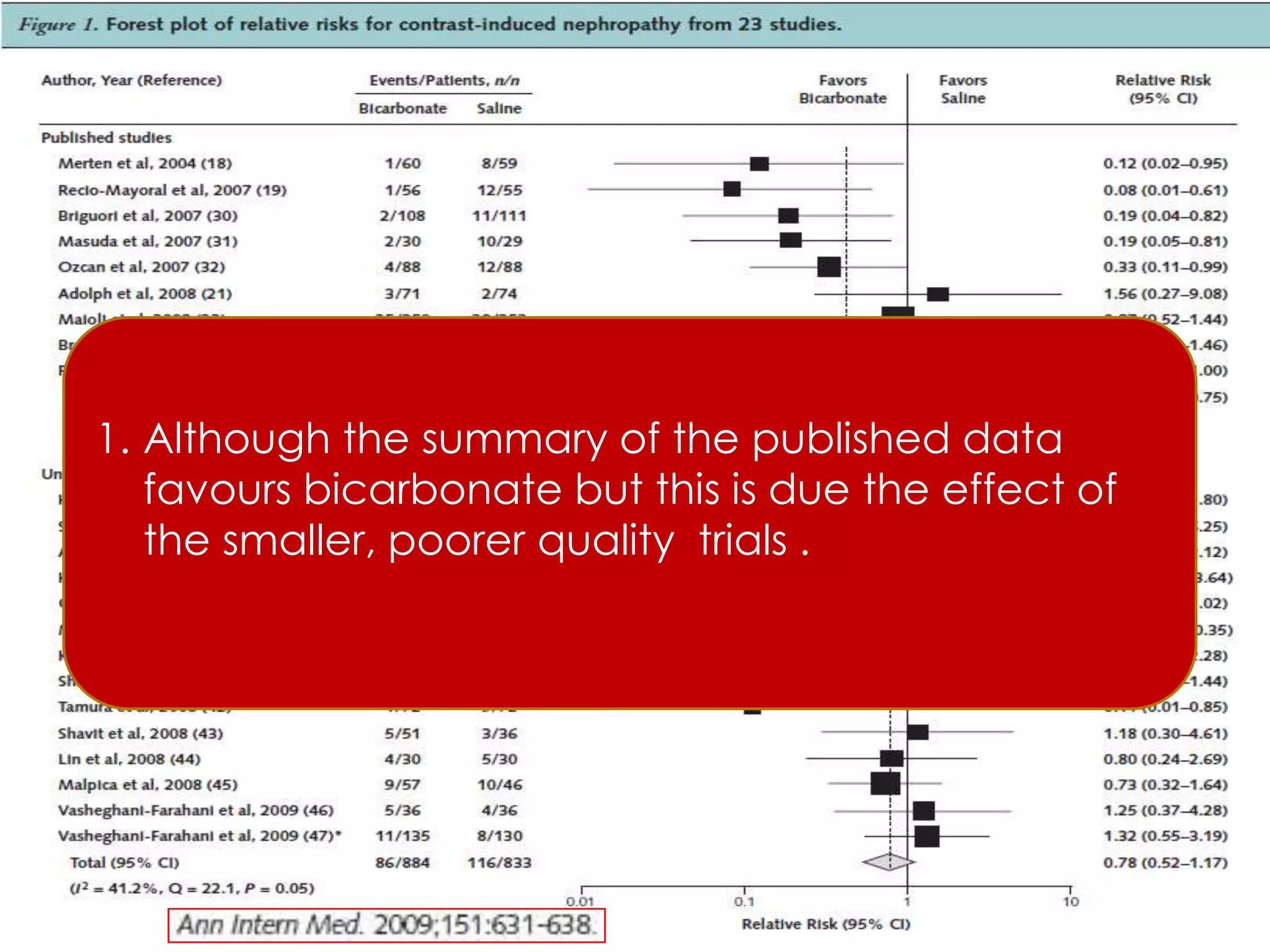
1. Although the summary of the published data
favours bicarbonate but this is due the effect of
the smaller, poorer quality trials .
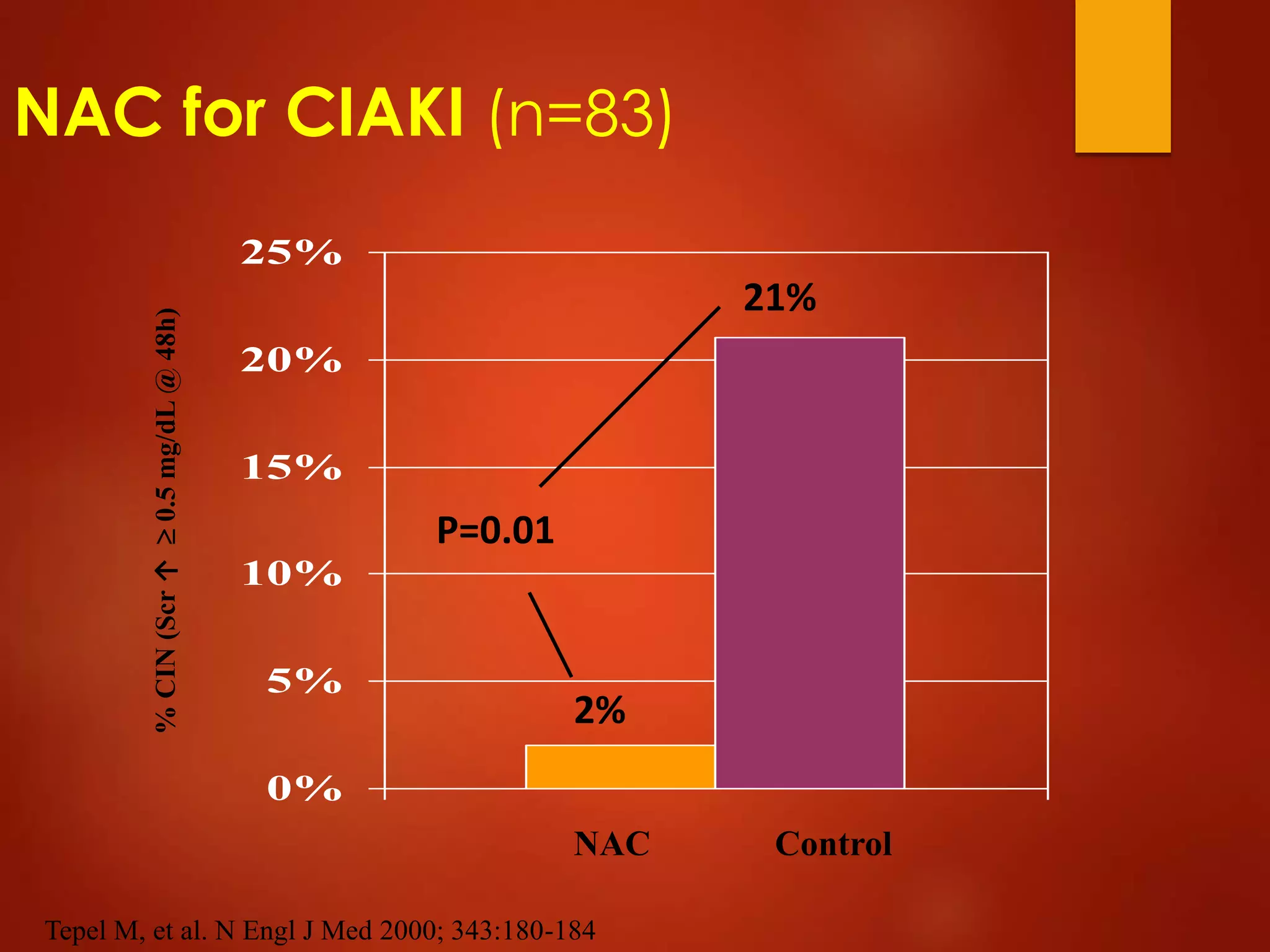
NAC for CIAKI (n=83)
0%
5%
10%
15%
20%
25%
Tepel M, et al. N Engl J Med 2000; 343:180-184
%CIN(Scr↑0.5mg/dL@48h)
Control
2%
21%
P=0.01
NAC
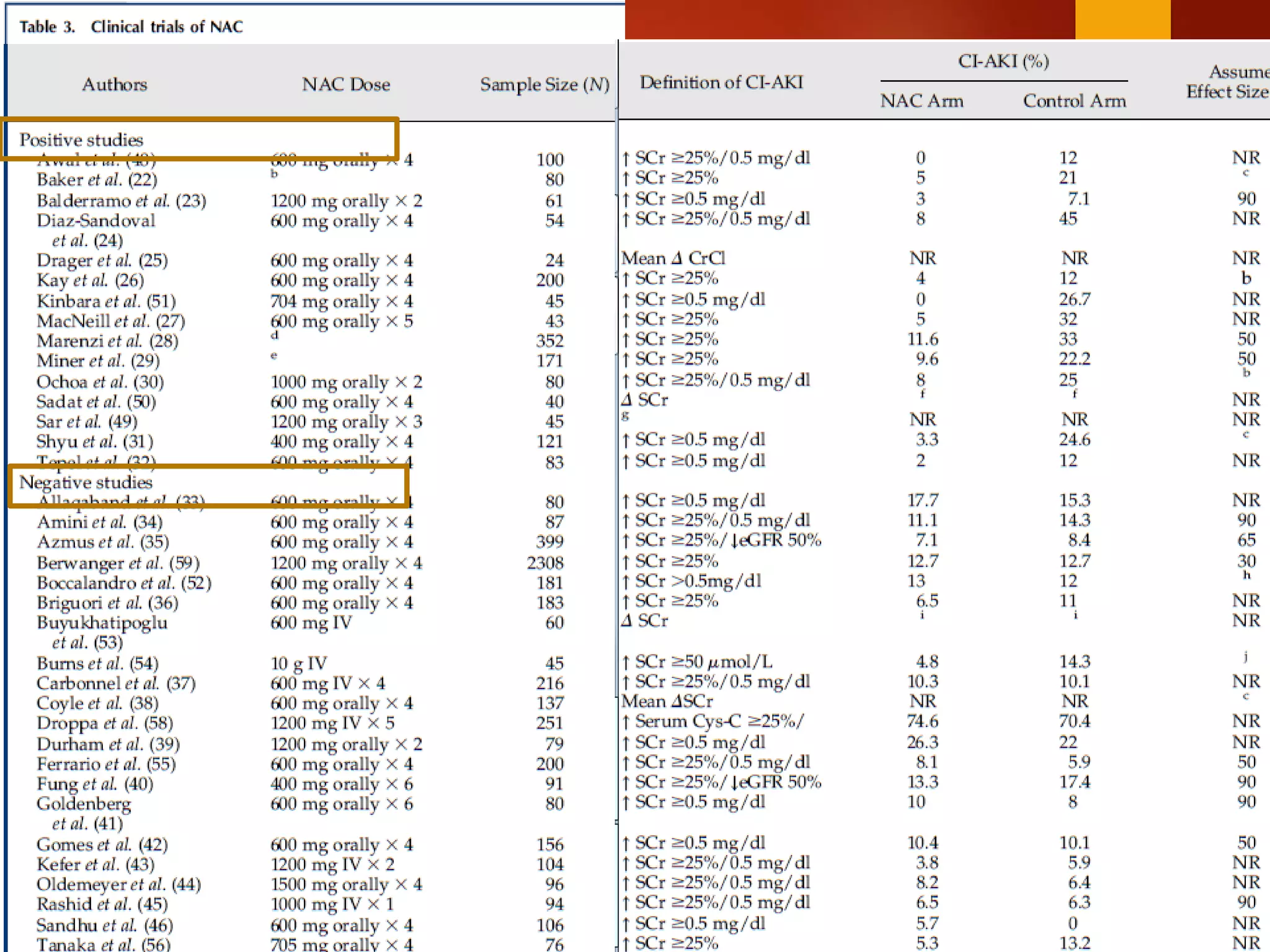
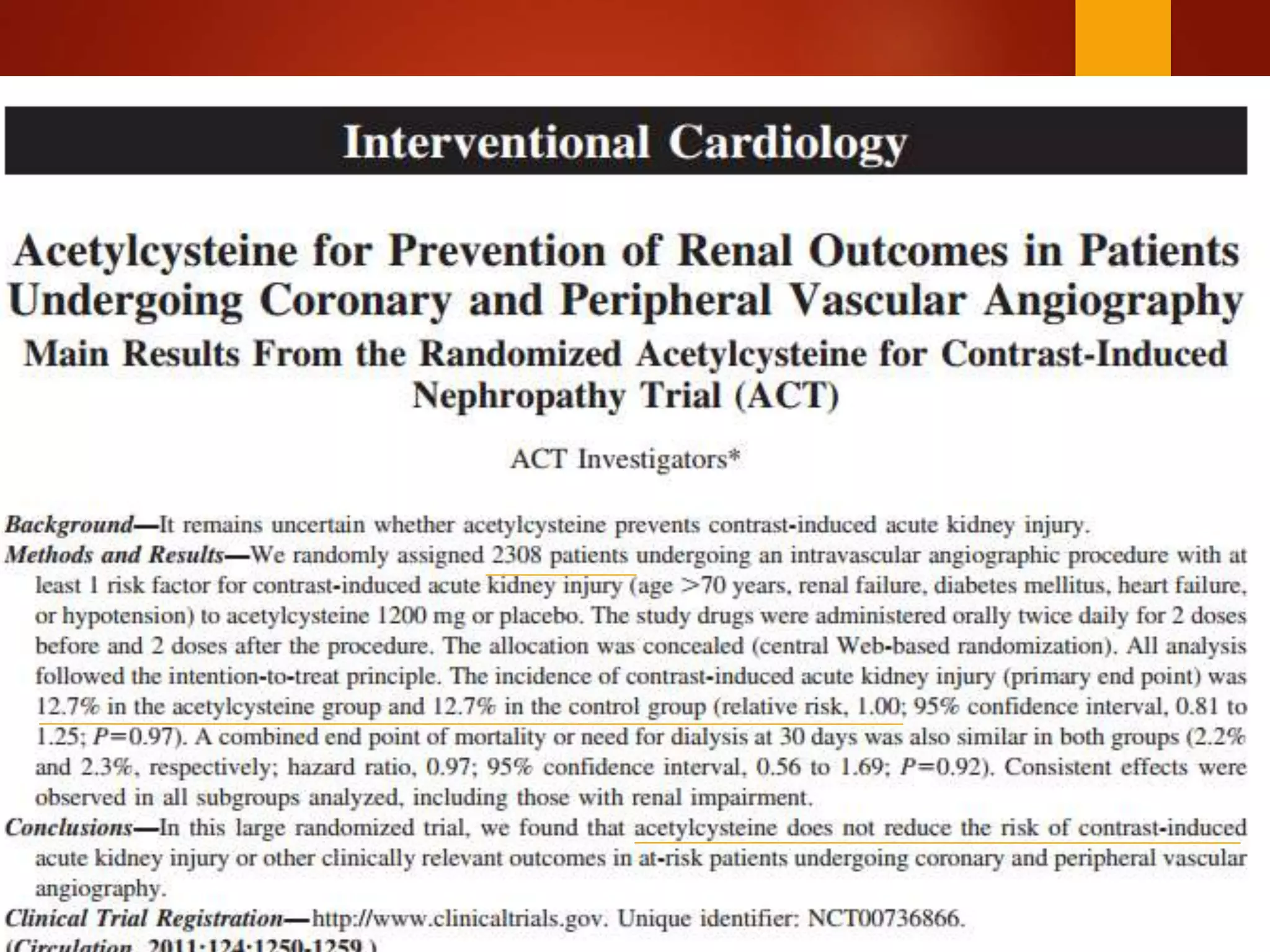
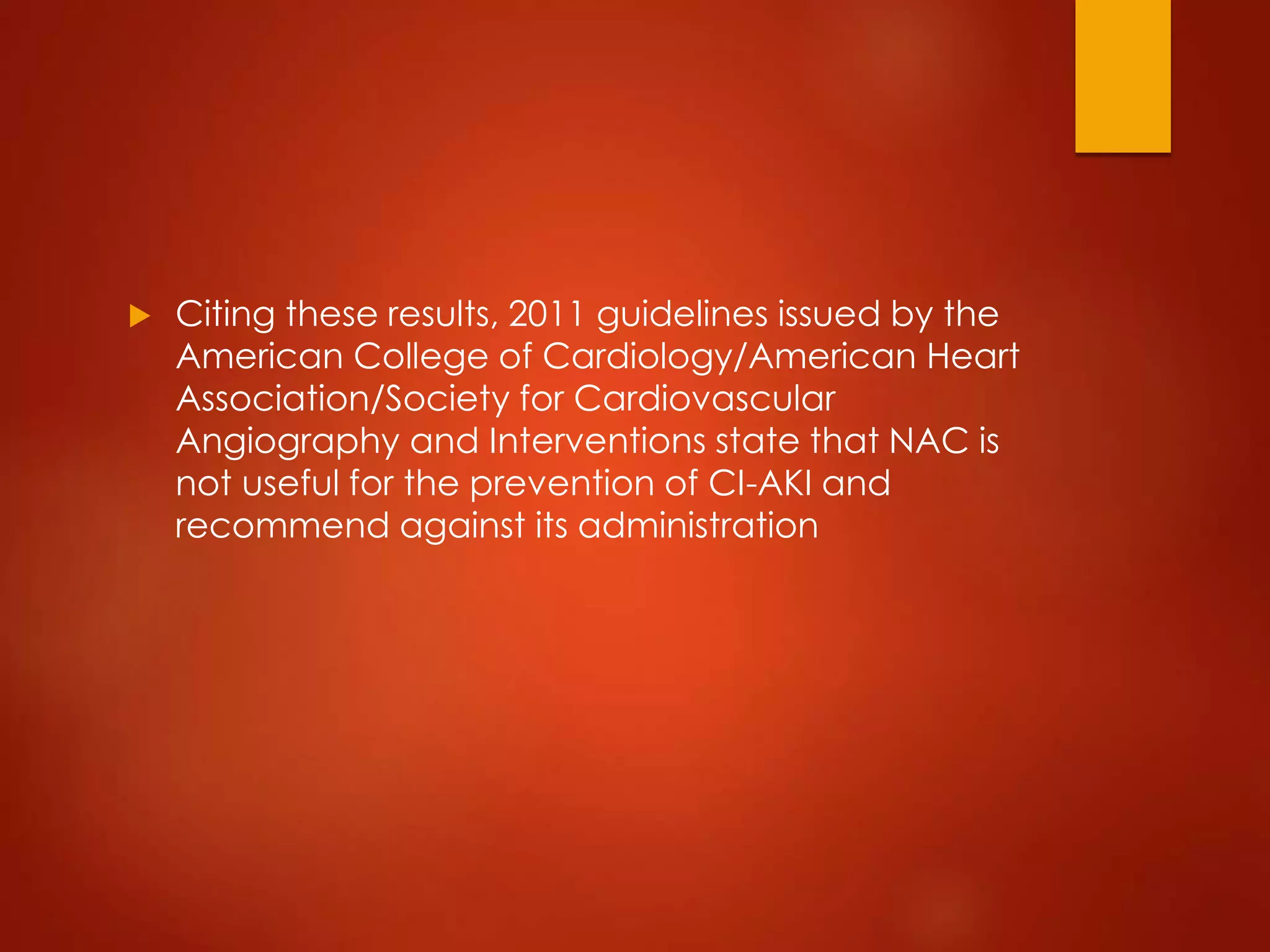
 Citing these results, 2011 guidelines issued by the
American College of Cardiology/American Heart
Association/Society for Cardiovascular
Angiography and Interventions state that NAC is
not useful for the prevention of CI-AKI and
recommend against its administration
poseidon
 Poseidon is one of the
twelve Olympian deities of
the pantheon in Greek
mythology.
 His main domain is
the ocean, and he is called
the "God of the Sea".
 Additionally, he is referred to
as "Earth-Shaker“ due to his
role in causing earthquakes,
and has been called the
"tamer of horses
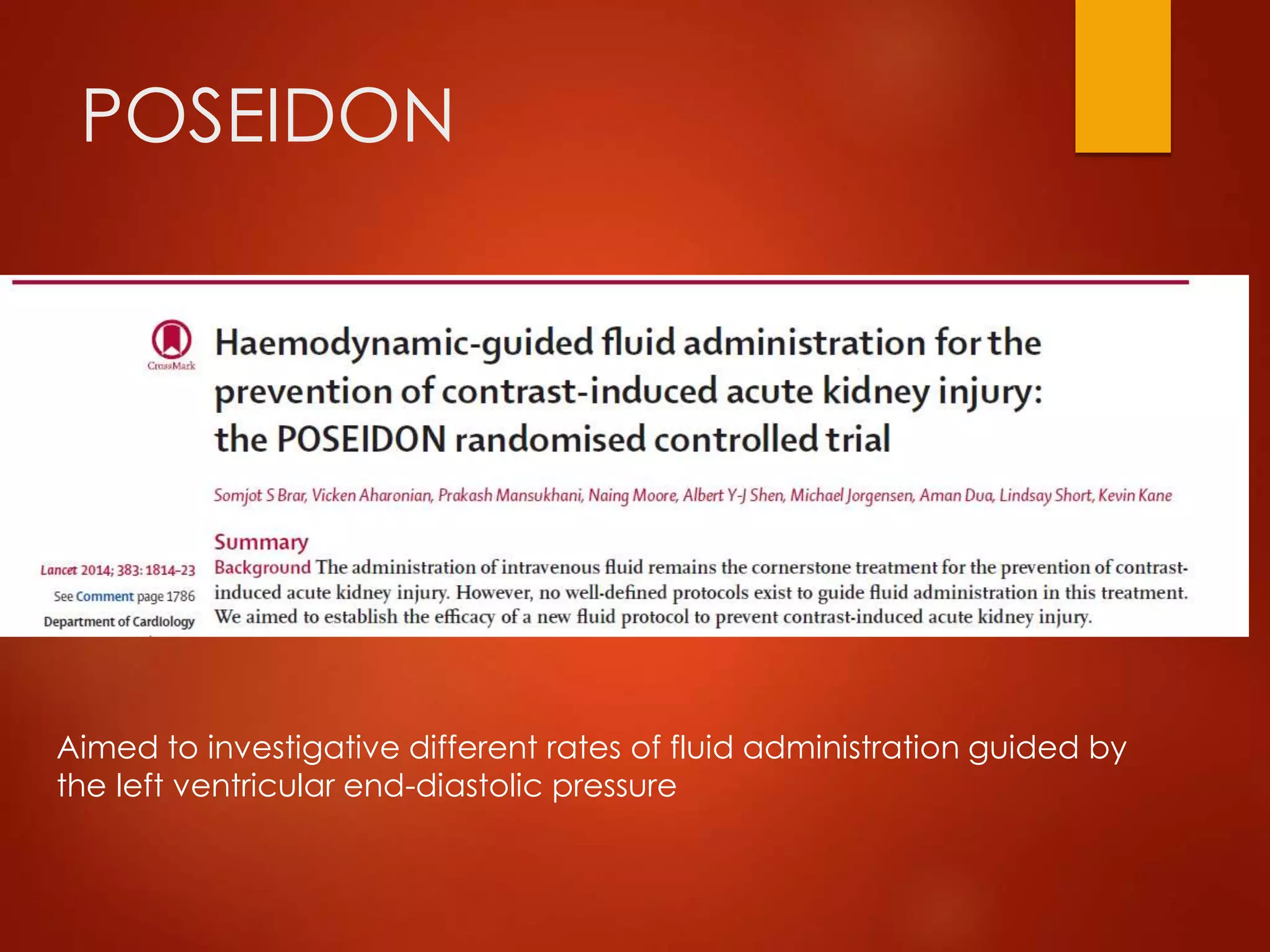
POSEIDON
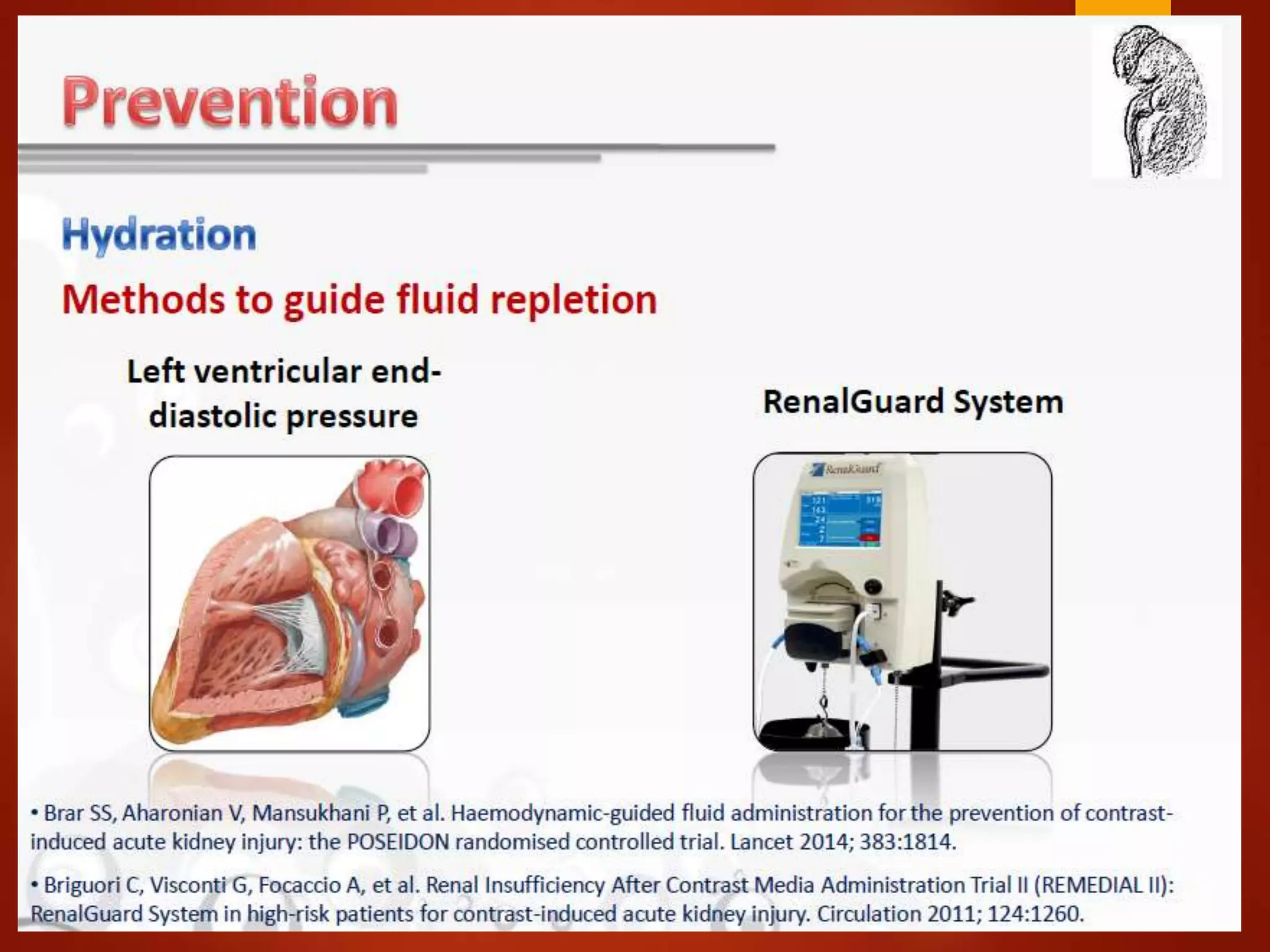
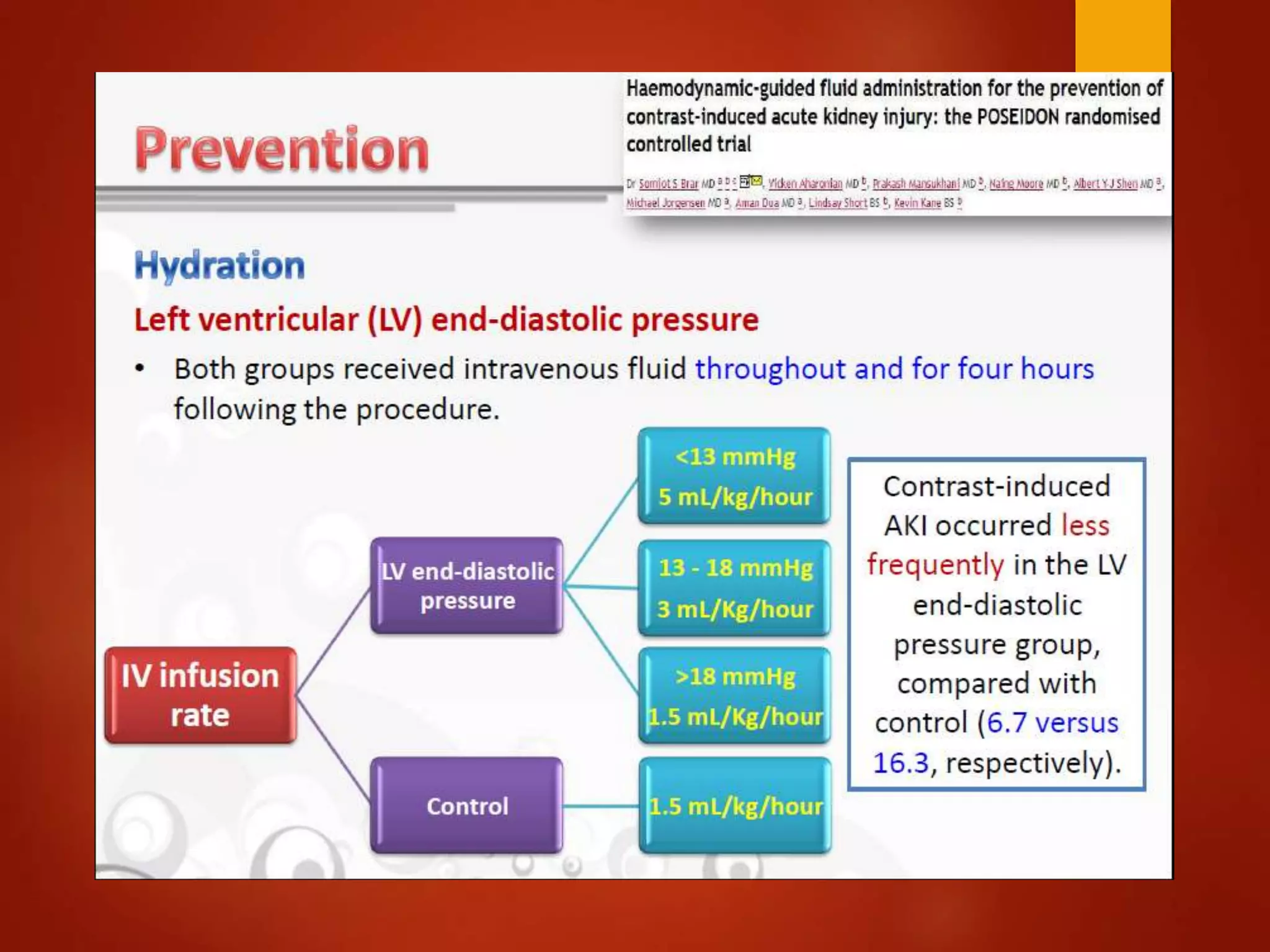
Aimed to investigative different rates of fluid administration guided by
the left ventricular end-diastolic pressure
outcomes
Primary outcome
 Primary endpoint was
increase in the serum
creatinine of greater
than 25% or 0.5 mg/dL
from baseline
Secondary endpoints
 components of the
primary endpoint
 occurrence of major
adverse events at 30
days and 6 months :-
 composite of all-cause
mortality
 myocardial infarction
 or renal replacement
therapy
Results
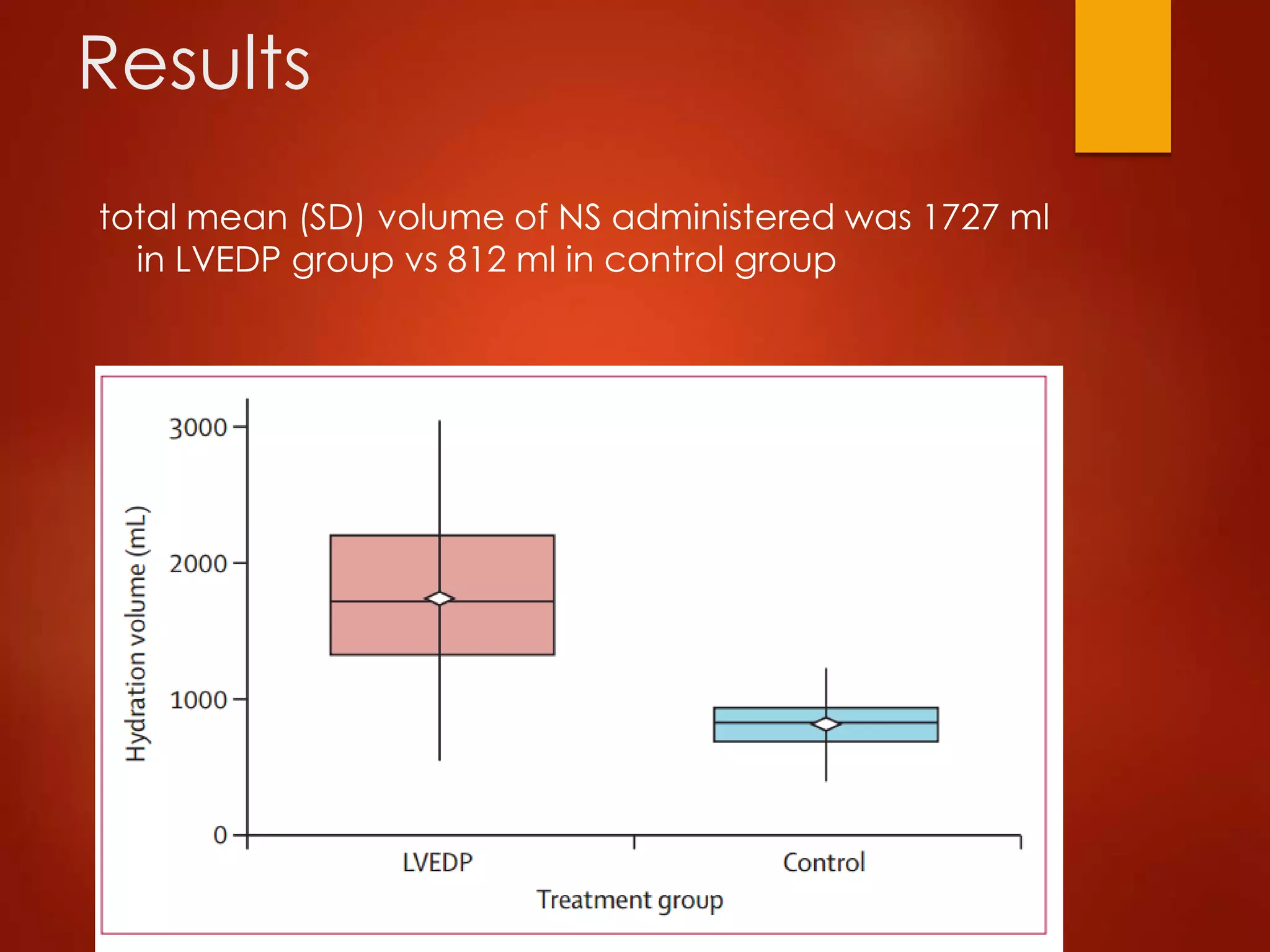
total mean (SD) volume of NS administered was 1727 ml
in LVEDP group vs 812 ml in control group
results
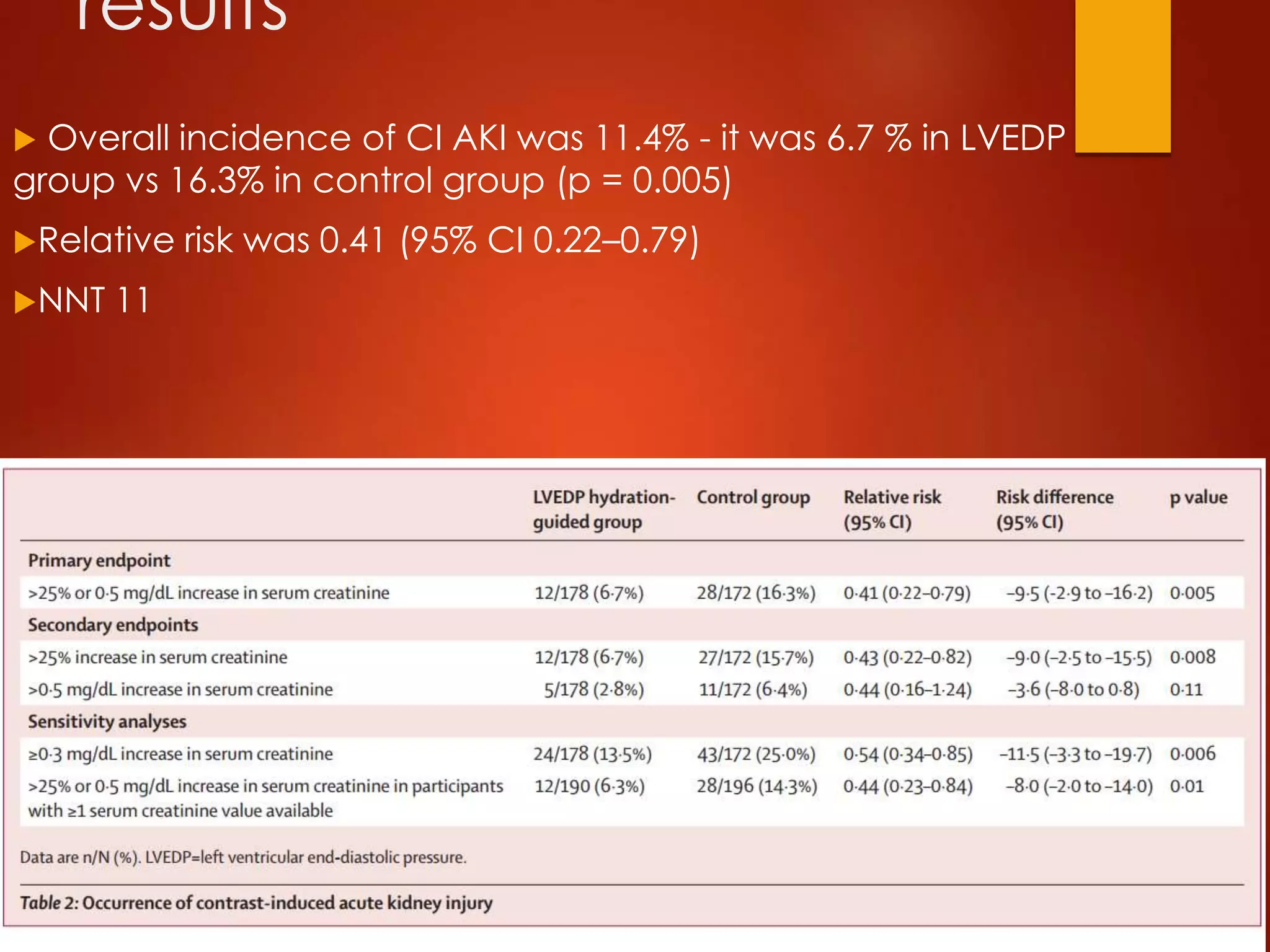
 Overall incidence of CI AKI was 11.4% - it was 6.7 % in LVEDP
group vs 16.3% in control group (p = 0.005)
Relative risk was 0.41 (95% CI 0.22–0.79)
NNT 11
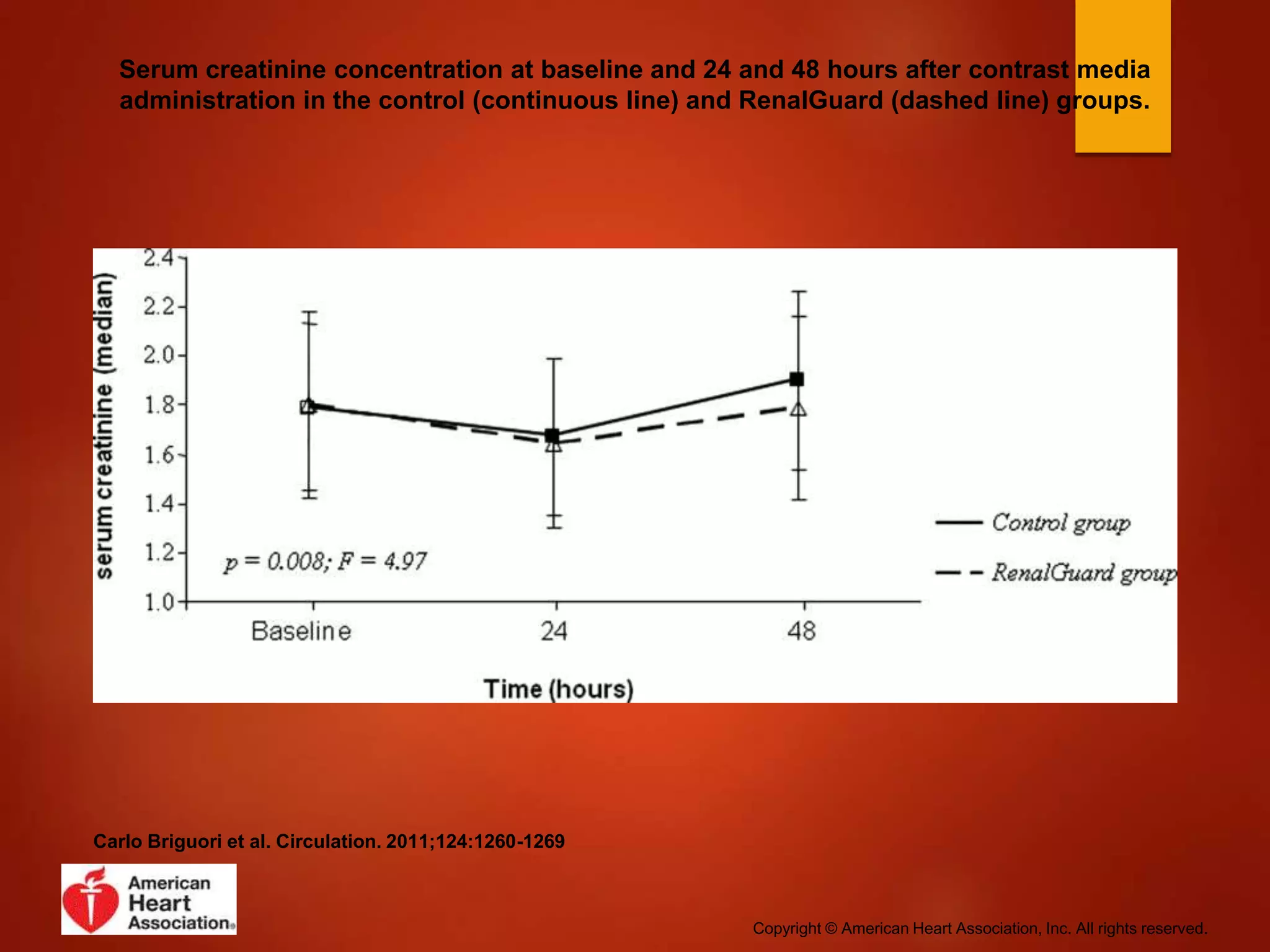
Serum creatinine concentration at baseline and 24 and 48 hours after contrast media
administration in the control (continuous line) and RenalGuard (dashed line) groups.
Carlo Briguori et al. Circulation. 2011;124:1260-1269
Copyright © American Heart Association, Inc. All rights reserved.
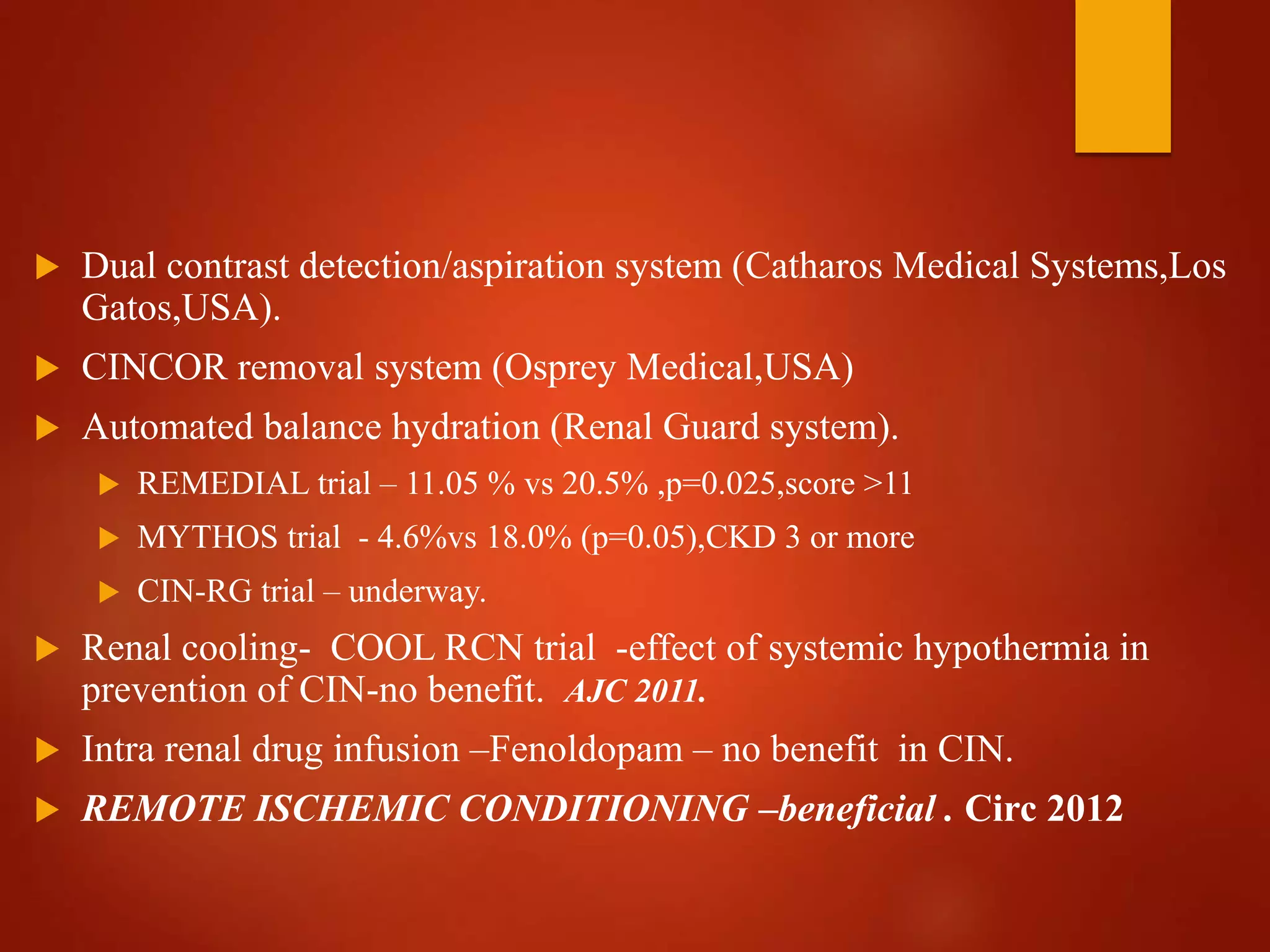
 Dual contrast detection/aspiration system (Catharos Medical Systems,Los
Gatos,USA).
 CINCOR removal system (Osprey Medical,USA)
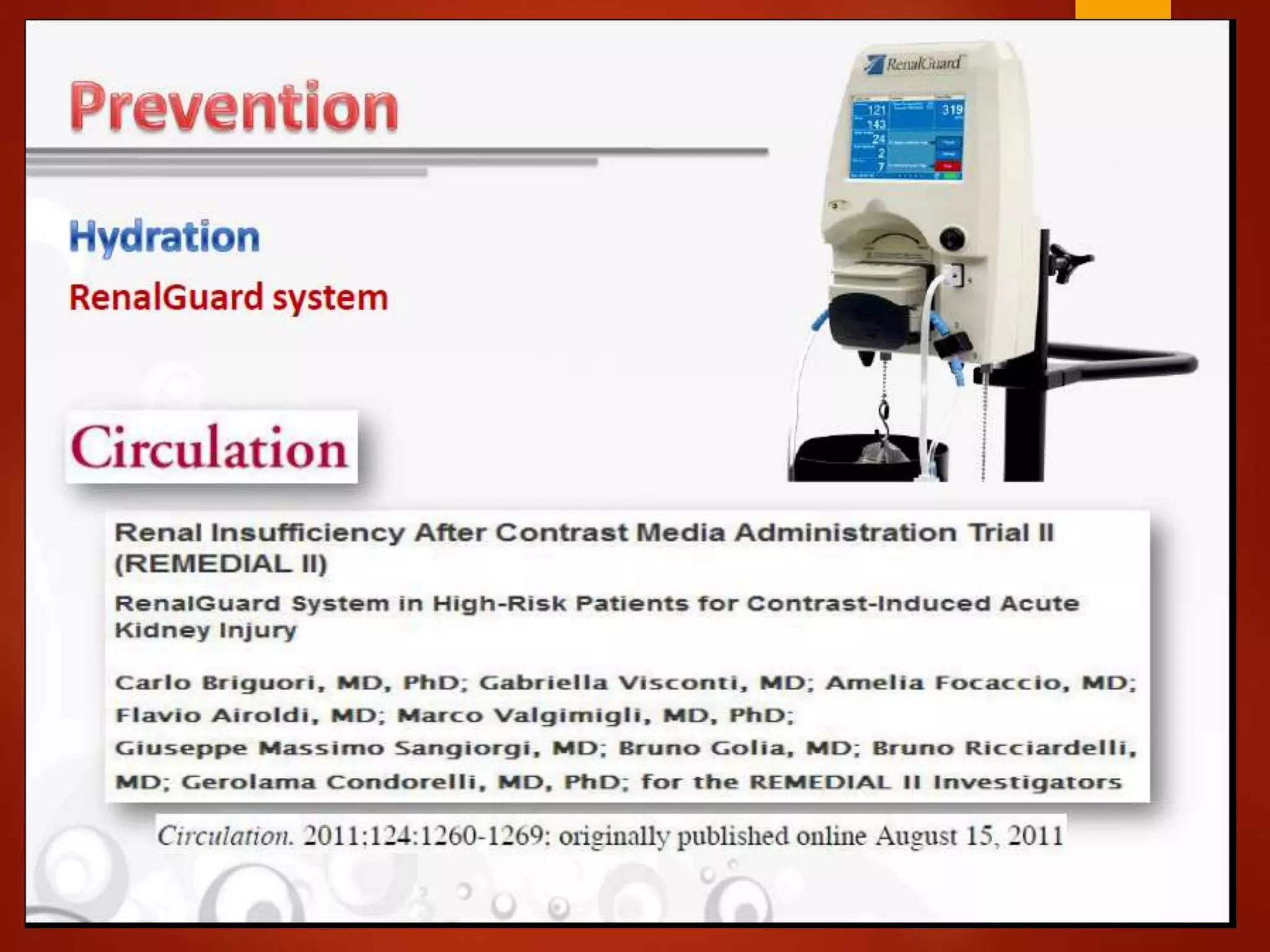
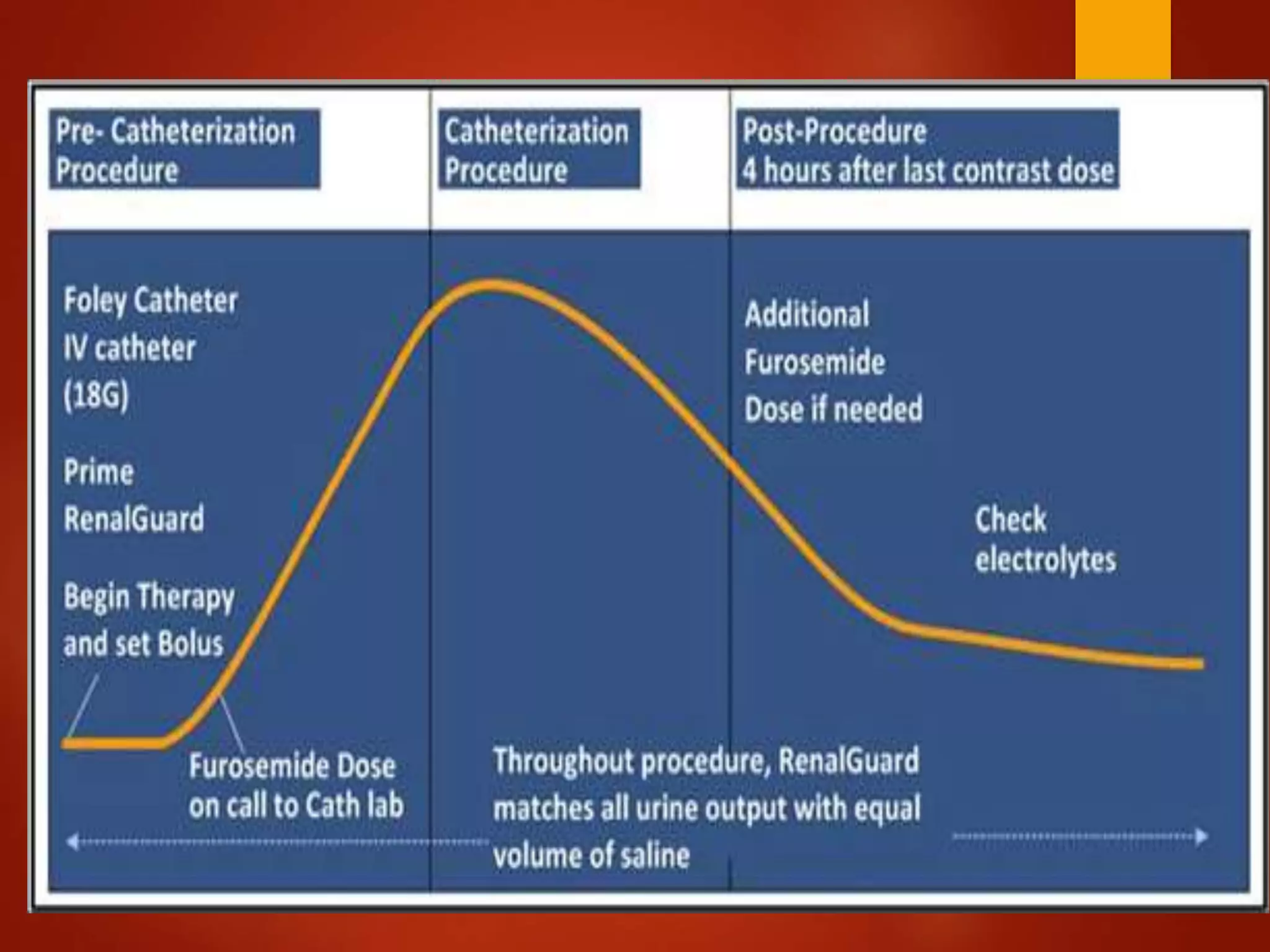
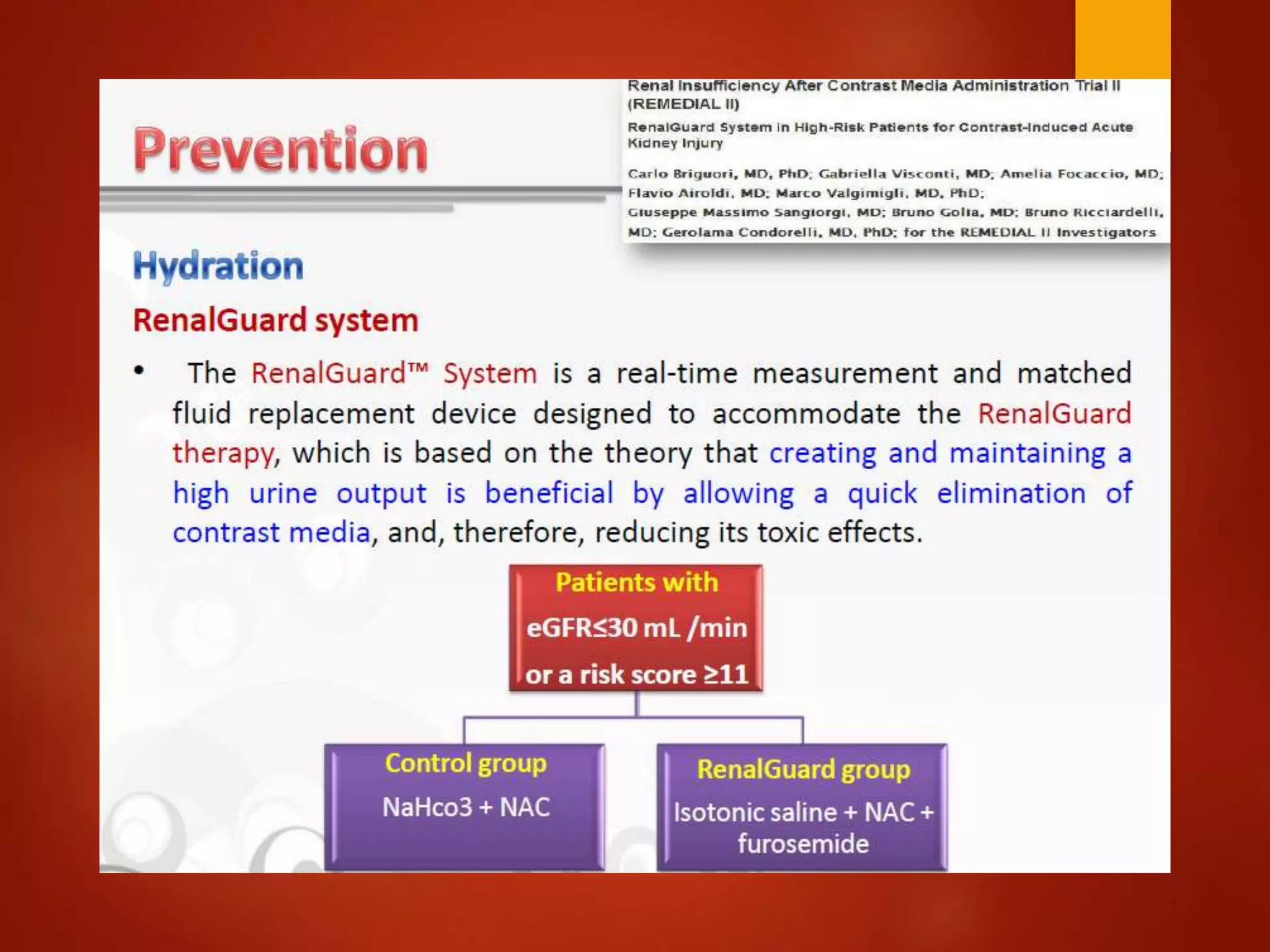
 Automated balance hydration (Renal Guard system).
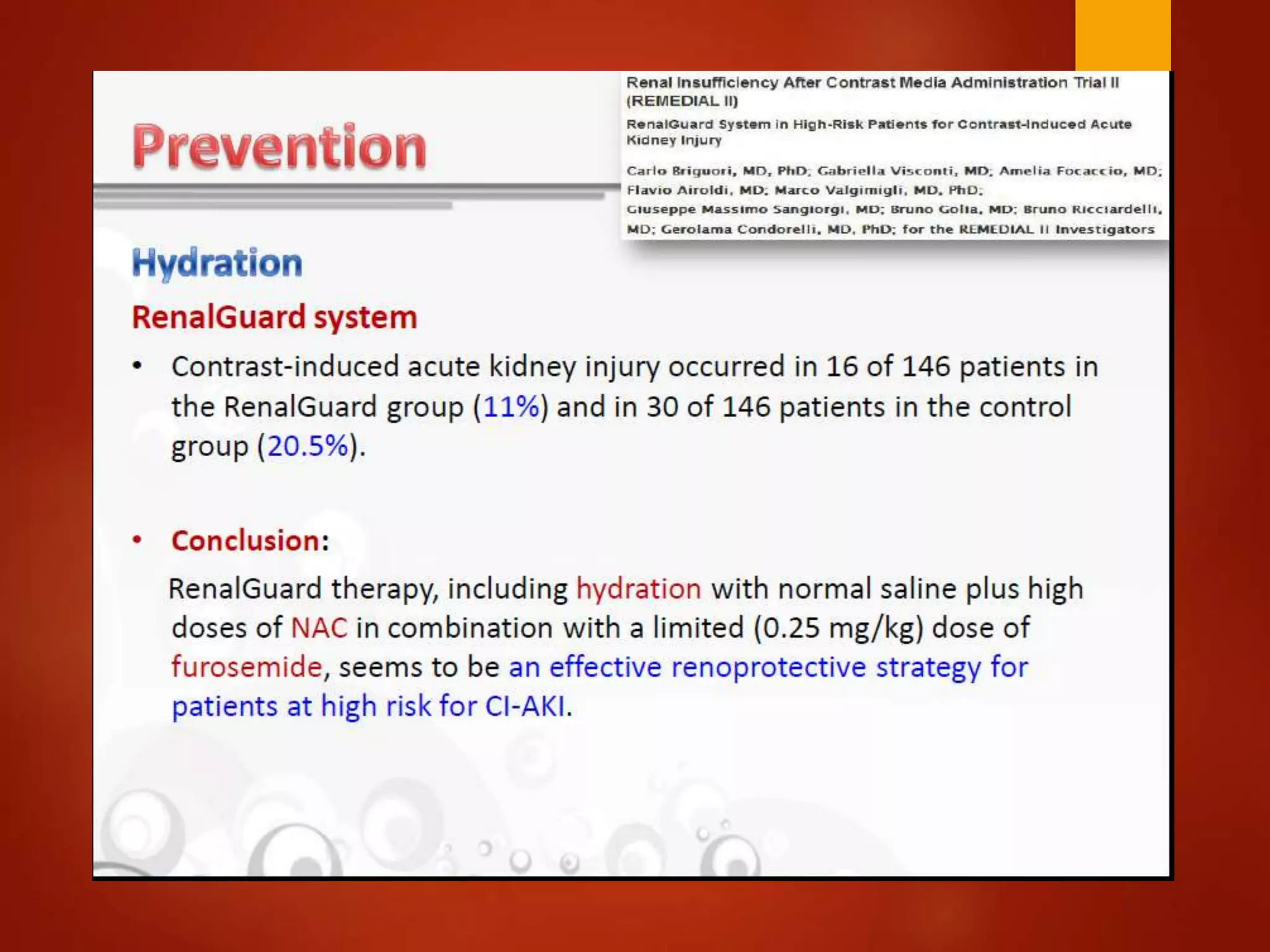
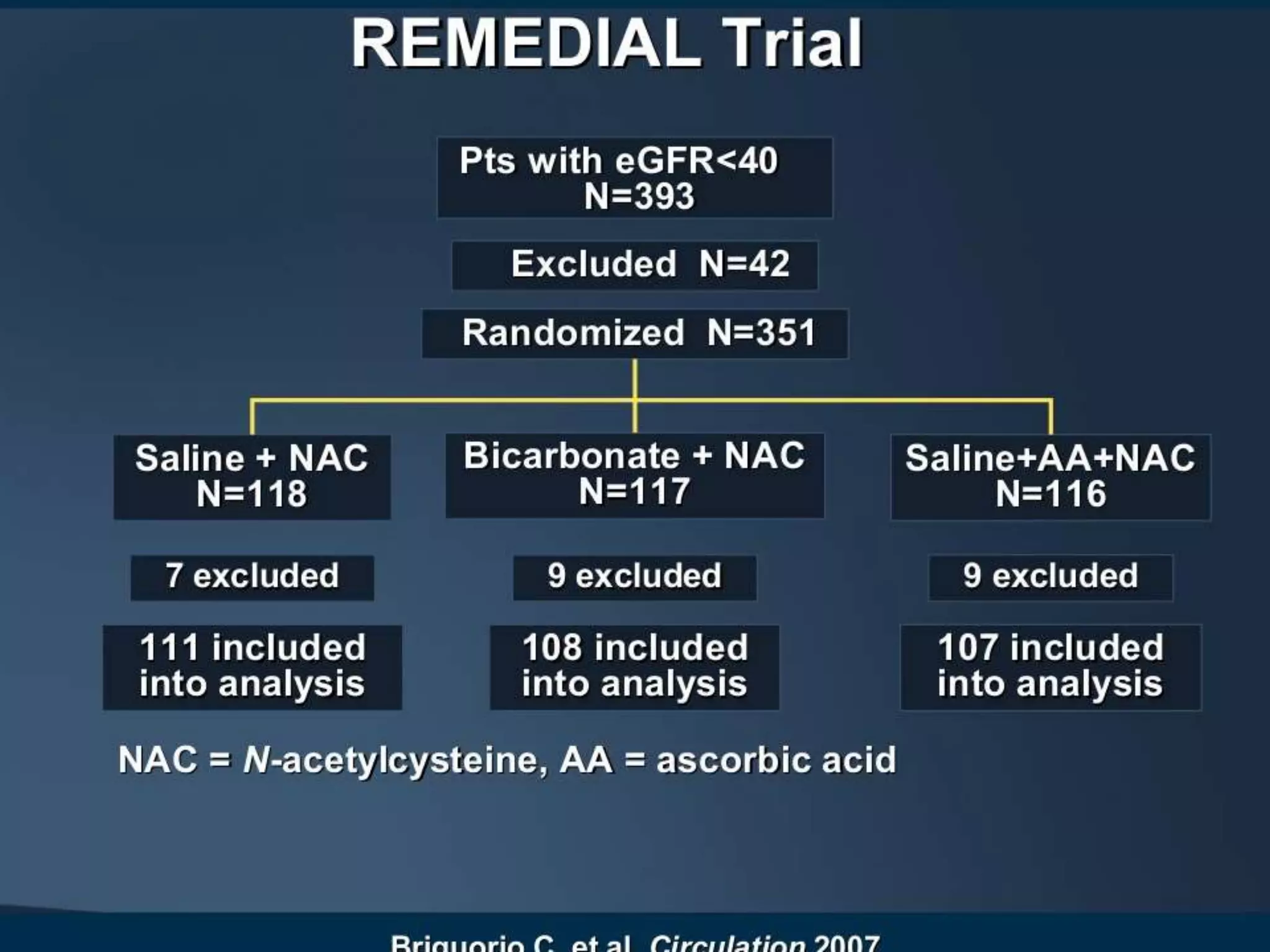
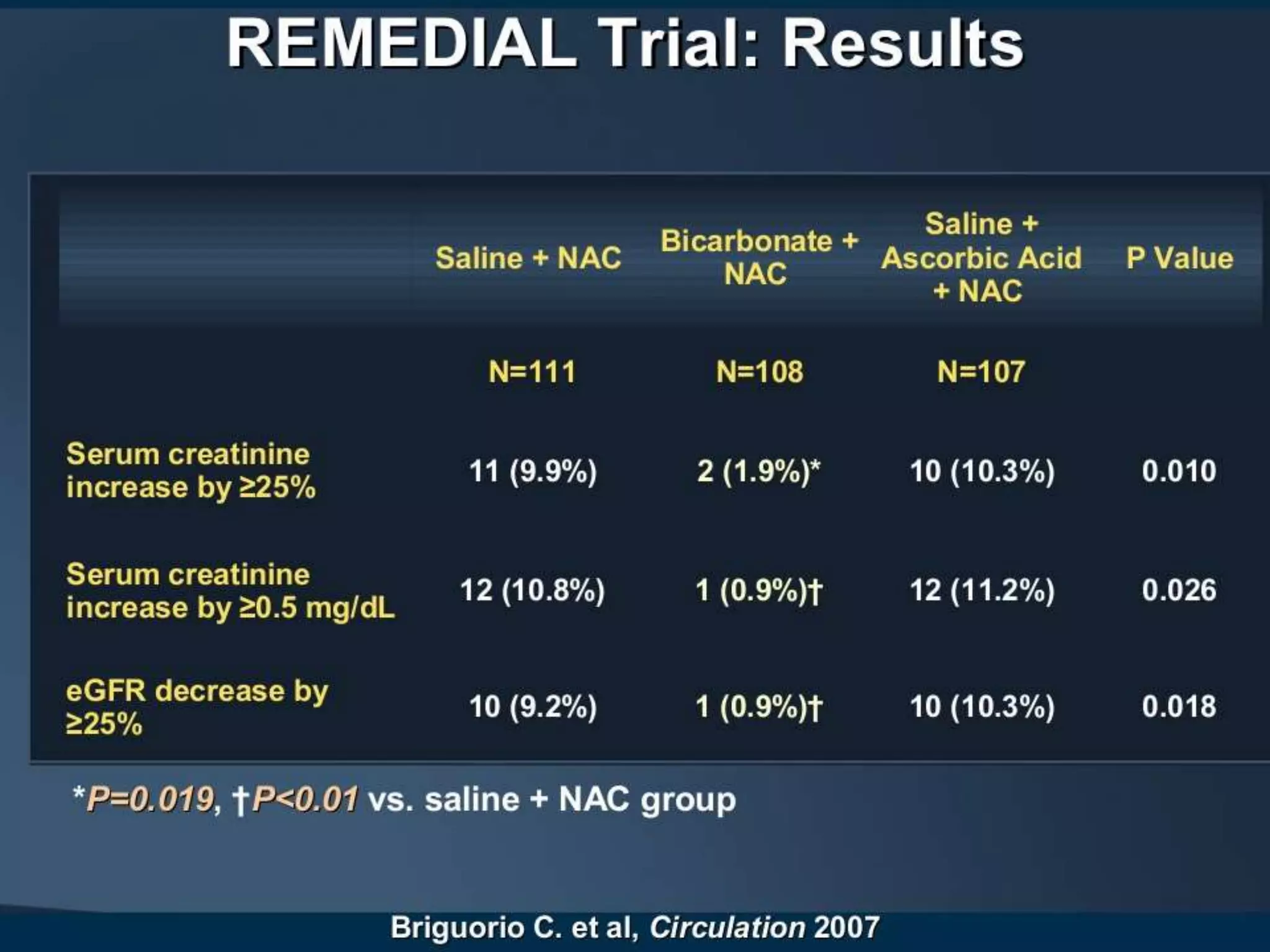
 REMEDIAL trial – 11.05 % vs 20.5% ,p=0.025,score >11
 MYTHOS trial - 4.6%vs 18.0% (p=0.05),CKD 3 or more
 CIN-RG trial – underway.
 Renal cooling- COOL RCN trial -effect of systemic hypothermia in
prevention of CIN-no benefit. AJC 2011.
 Intra renal drug infusion –Fenoldopam – no benefit in CIN.
 REMOTE ISCHEMIC CONDITIONING –beneficial . Circ 2012
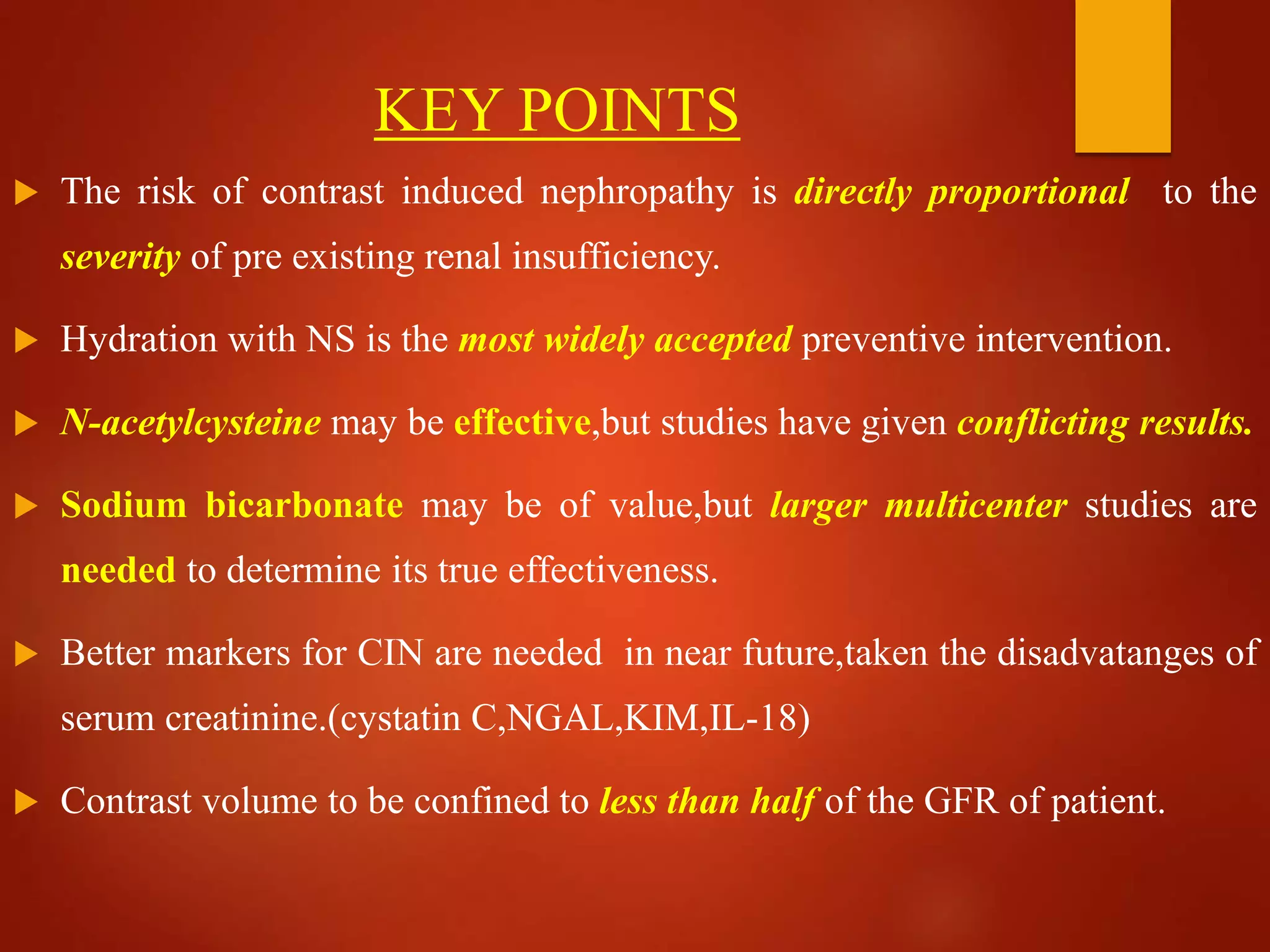
KEY POINTS
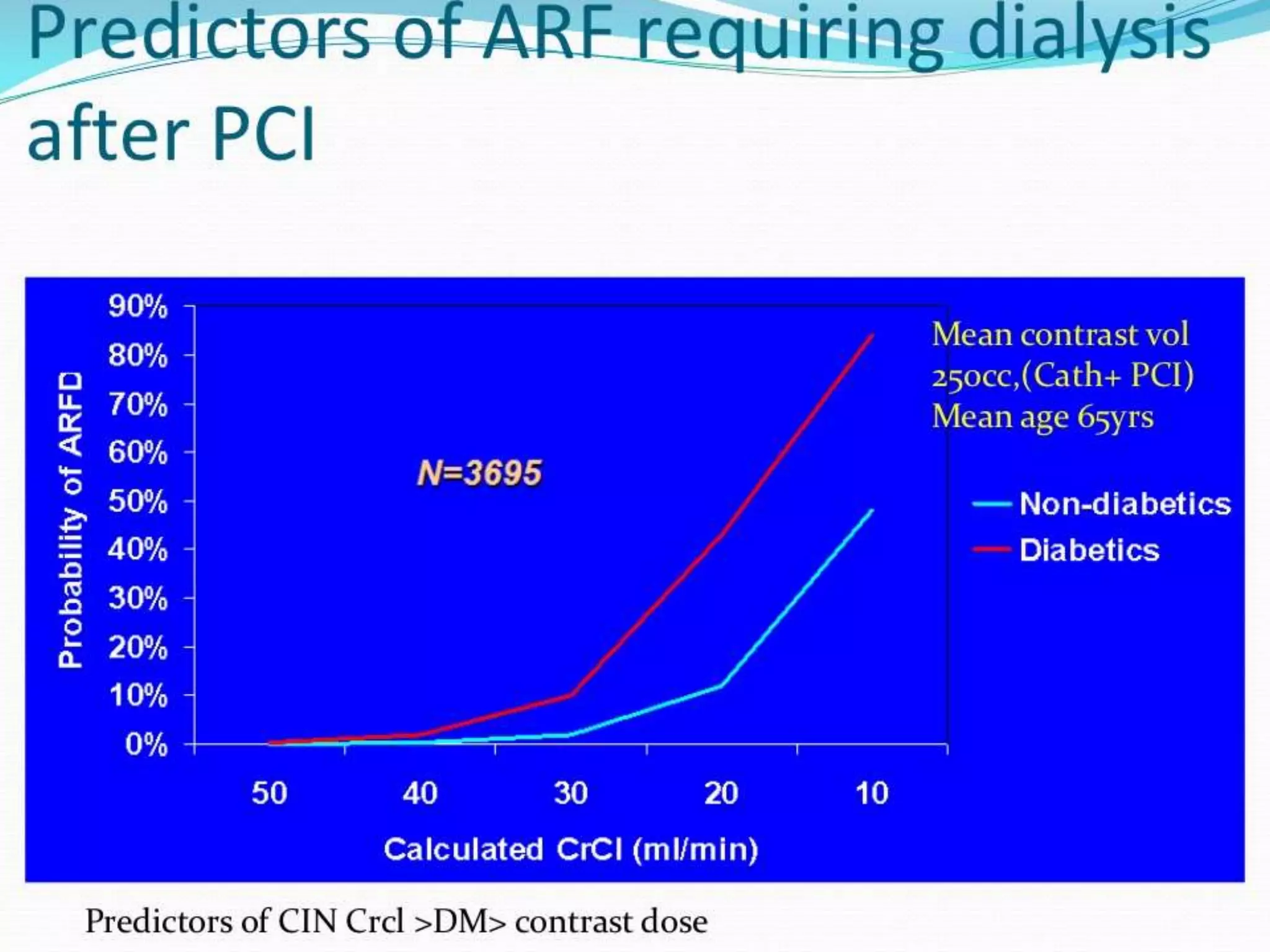
 The risk of contrast induced nephropathy is directly proportional to the
severity of pre existing renal insufficiency.
 Hydration with NS is the most widely accepted preventive intervention.
 N-acetylcysteine may be effective,but studies have given conflicting results.
 Sodium bicarbonate may be of value,but larger multicenter studies are
needed to determine its true effectiveness.
 Better markers for CIN are needed in near future,taken the disadvatanges of
serum creatinine.(cystatin C,NGAL,KIM,IL-18)
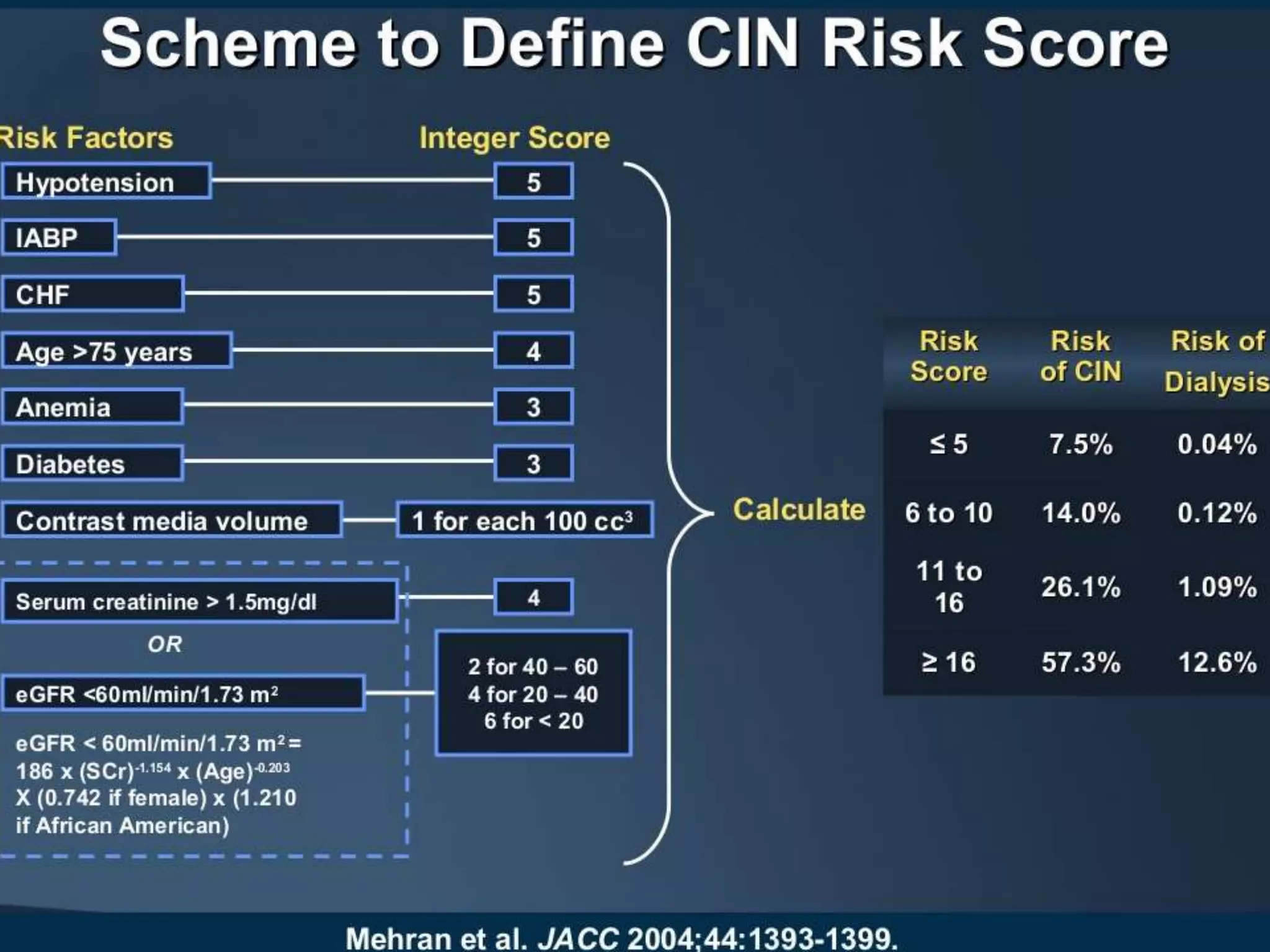
 Contrast volume to be confined to less than half of the GFR of patient.
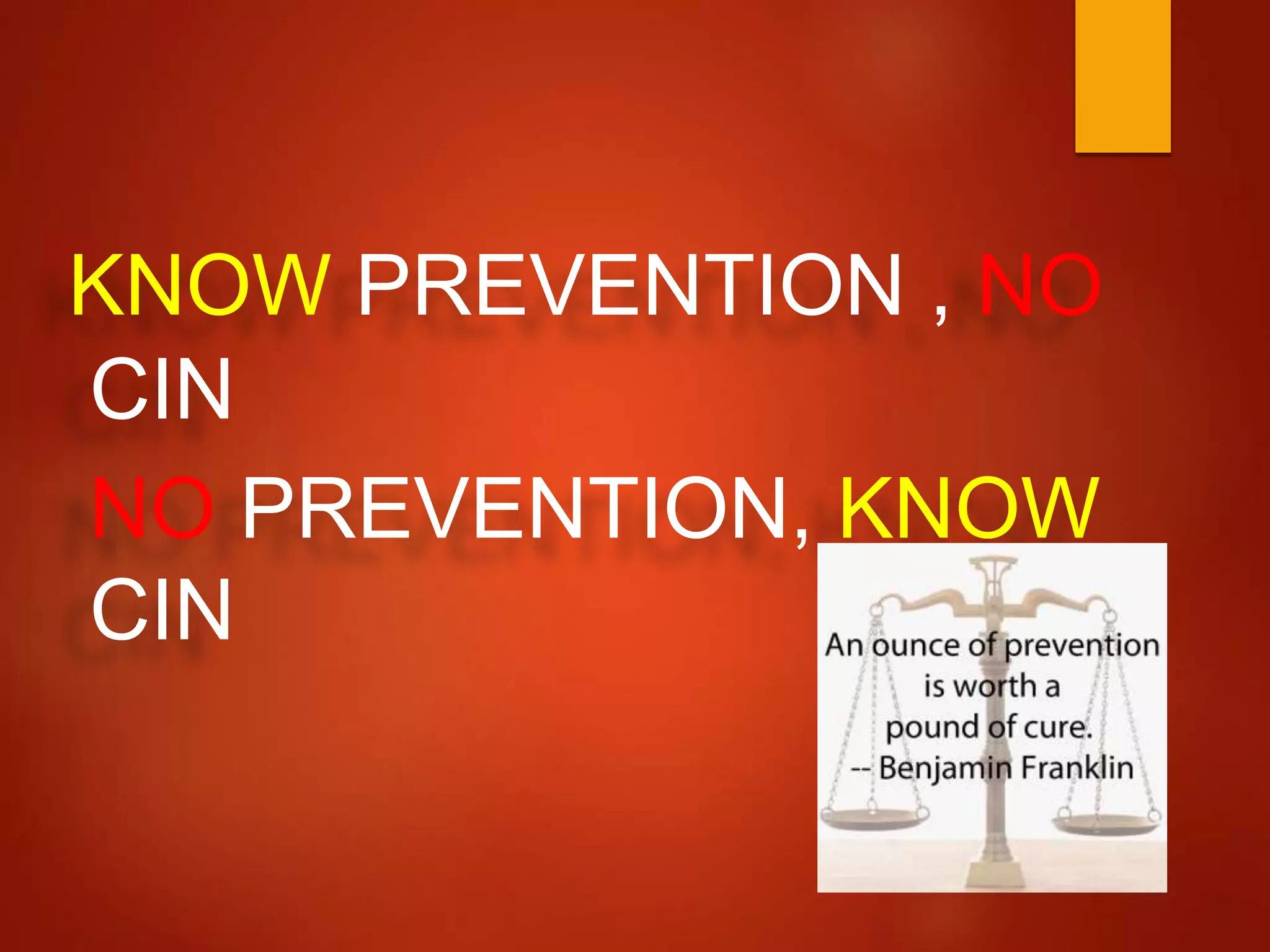
KNOW PREVENTION , NO
CIN
NO PREVENTION, KNOW
CIN
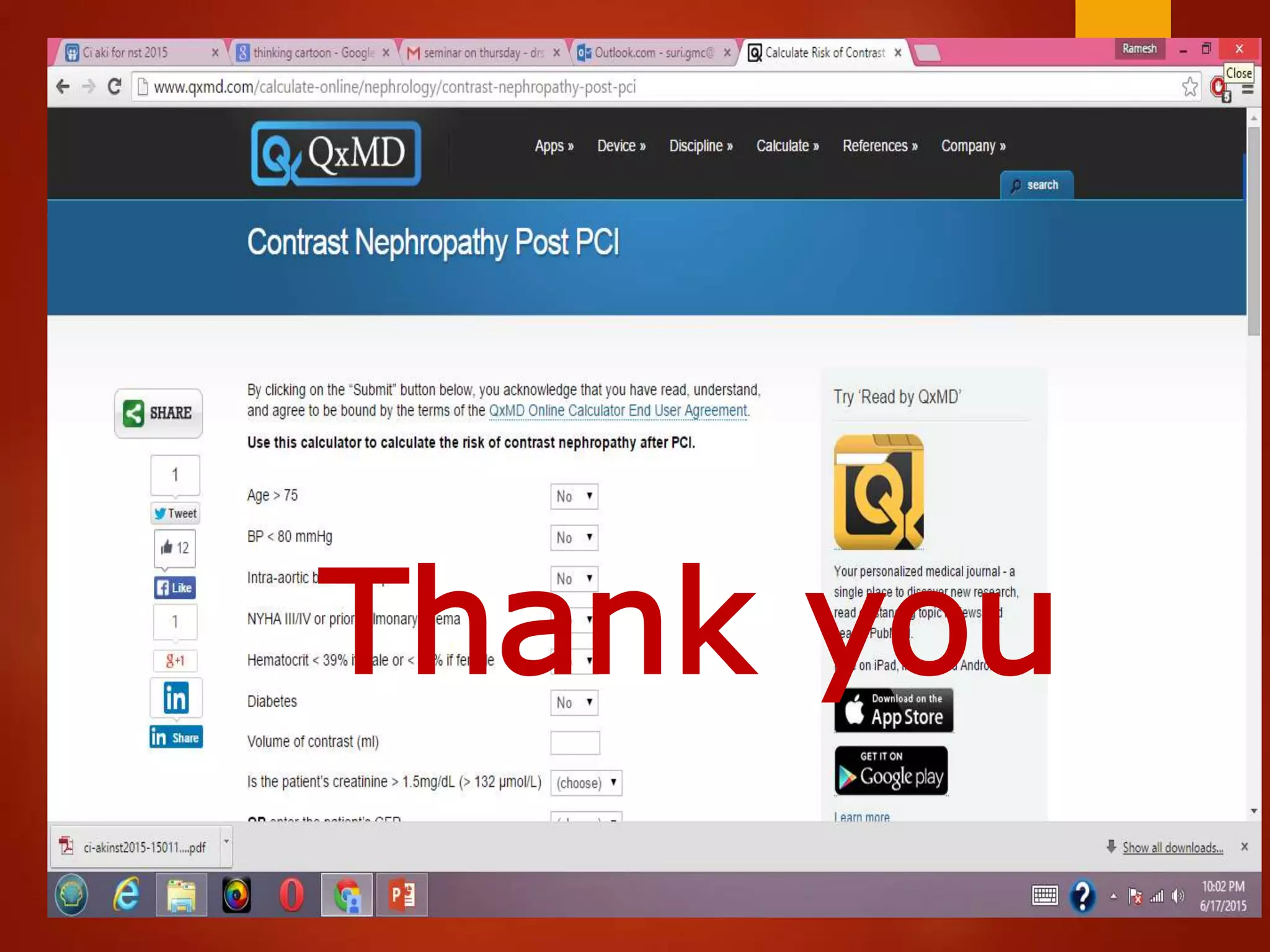
Thank you

contrast nephropathy

  • 1.
    Contrast Induced AcuteKidney Injury Surendra Babu M 2nd year resident Dept of Nephrology,
  • 2.
    INTRODUCTION  CIN (CI-AKI ) third leading cause of acute kidney injury in hospitalized patients.  Most frequent renal complication of endovascular interventional procedures.  Unrecognized as it is asymptomatic..  Increases short and long term morbidity and mortality.  Treatment is limited to supportive measures while awaiting the resolution of renal impairement.  Prevention is the one to be emphasised in case of CI –AKI.
  • 3.
    History  In 1906,VonLichtenberg and Voelcker used 2% colloidal silver solution,for retrograde pyelography olleagues,10%studies.(toxic to kidneys,death). In 1920, Osborne and c “NaI” for Rx of syphilis, fortuiously found it to be radiopaque ,excreted by kidneys.--first pyelogram.  Selectan - Moses Swick  Uroselectan ,1927 – increased solubility and less toxicity.  In 1993, Hippuran was introduced.  Binz and Rath – Neo ipax(Iodoxyl) and diodrast (Diodone)  1927 – Werner Frossmann – self catheterization,using urinary catheter( antecubital vein),(NaI)  1923,Berbrich and hirsch –femoral angiogram  1924,Brooks – first angiogram (under GA).
  • 4.
    The serum creatinineusually increases within 24 -48hrs after contrast administration, peaks at 3 to 5 days,and returns to baseline in 1 -3 weeks.
  • 5.
    Is relative increasein serum creatinine more important than absolute increase in serum creatinine, does it matter much????? certainly….. Kidney international;2006:69:S46
  • 6.
    Uniqueness of Contrast inducedAKI  Universally iatrogenic  Risk factors well characterised  Time of insult largely predictable  Make it amenable to prevention
  • 7.
    Epidemiology  Incidence inGeneral population <2%.*  Overall incidence is 14.5% (epidemiological study)^  Among diabetics, mild –moderate CKD – 9-40%.#  Severe CKD 50-90%.  5% of hospital admissions.**  Cases of CI-AKI leading to dialysis are rare (0.5 to 2.0%).  When it leads to dialysis in hospital mortality of 35.7%,18.8% - 2 yr survival rate $ .*Berg et al, Nephroptoxicity related to contrast media.Scand J urol Nephrol 2000;34:317-322. ^Lang et al; incidence of contrast medium induced acute tubular necrosis,radiology 1981:138:203-206. #Manske et al;contrast nephropathy in azotemic diabetic patients undergoing coronary angiography. Am J Med 1990;89:615-620. **Hou et al ;hospital acquired renal insufficiency Am J Med 1983;74:243-248. Mc collough et al,Am J Med 1997.
  • 8.
    Course and Prognosis 1% may need dialysis & in those with severe involvement, 30% may have residual renal impairment..  At 1 year after PCI, the mortality rate in patients undergoing dialysis had increased to 45.2%, compared with 35.4% in patients with CIN not requiring dialysis and Creat rise Creat peak Return to baseline Non-oliguric CIAKI 48hours 3-5 days 10-14days Oliguric CIAKI 48 hours 5-10 days 14-21 days In a study on 200 patients undergoing PCI for acute MI, patients who developed CIN had a longer hospital stay (13 ±7 days as compared with 8 ±3 days in subjects without CIN; p<0.001) and a more complicated clinical course, in addition to a significantly increased risk of death. J Am Coll Cardiol 2004;44:1780 – 1785
  • 12.
    0 20 40 60 80 100 120 0 1 23 4 number of risk factors Arch Intern Med 1990;150
  • 17.
    Left ventricular &-----:30-45 mL aortic angiography PCI-----------------------:150-200 mL CECT scan--------------:uses 100-150 mL IVU-----------------------:100-mL bolus of a 50%– 60% FFA uses Na fluorescein and not assoc with CIN
  • 20.
  • 23.
  • 27.
    Preventive strategies for CIN CCB  Loop diuretics*  Mannitol*  Dopamine*  Fenoldopam*  ANP  Hemodialysis*  NAC  Theophylline  Aminophylline  Ascorbic acid  Statins  Hemofiltration • IVF Ineffective EffectiveUnclear benefit * Possibly harmful
  • 30.
    Oral or IV? Threetimes more water required compare with isotonic sodium solutions to produce the same expansion of the extracellular space.(60% vs 20%) Increased GFR –increases clearance of CM- diminish duration of renal tubular cells exposure to CM. Oral intake of NaCl or water may be equally protective as IV fluids for prevention of CIN.
  • 31.
    When before/during/after procedure?  Administrationof fluid immediately before or at the time of CM exposure is less efficacious for prevention of CIN.  Sufficient time to increase urine output,decrease vasconstrictive forces,replete extracellular volume are required for optimal protection.  6 hrs -12 hrs before procedure,12 hrs -24 hrs after procedure.
  • 32.
    Rate of CIN:11% 28% 40% Solomon R, Werner C, Mann D, D’Elia J, Silva P. N Engl J Med. 1994;331:1416-1420.
  • 34.
    Isotonic v. hypotonicsaline Mueller C, et al. Arch Int Med. 2002; 162:329-336 P=0.04 P=0.35 P=0.93
  • 35.
    Saline vs. BicarbonateIV fluid 13.6% 1.7% 0% 2% 4% 6% 8% 10% 12% 14% NaCl (n=59) NaHCO3 (n=60) rate of CIN (8/59) (1/60) Merten et al. JAMA 2004;291:2328-2334 P = 0.02
  • 36.
    Important limitations ofthis study  Presumed effect size -67%, allowed the study with small sample size of 260. (33% would have needed 1300  Switch of one patient would have resulted in statistically negative study
  • 39.
    Clin J AmSoc Nephrol 4: 1584–1592, Trials those who included patients with CKD2-4 as well as normal renal function.
  • 40.
    Power curve: therelationship between trial size and power. Hiremath S , and Brar S S Nephrol. Dial. Transplant. 2010;ndt.gfq279 © The Author 2010. Published by Oxford University Press on behalf of ERA-EDTA. All rights reserved. For Permissions, please e-mail: journals.permissions@oxfordjournals.org
  • 41.
    1. This metanalysishighlights that the perceived benefit of sodium bicarbonate is largely driven by small, underpowered RCTs with extreme treatment effects and wide CIs. 2. Among the large randomized trials there was no evidence of benefit for hydration with NaHCO3 compared with NaCl for the prevention of CI-AKI. ------CLINICAL EQUIPOISE-------- Clin J Am Soc Nephrol 4: 1584–1592, Trials those who included patients with CKD2-4 as well as normal renal function.
  • 42.
    1. Although thesummary of the published data favours bicarbonate but this is due the effect of the smaller, poorer quality trials .
  • 43.
    NAC for CIAKI(n=83) 0% 5% 10% 15% 20% 25% Tepel M, et al. N Engl J Med 2000; 343:180-184 %CIN(Scr↑0.5mg/dL@48h) Control 2% 21% P=0.01 NAC
  • 46.
     Citing theseresults, 2011 guidelines issued by the American College of Cardiology/American Heart Association/Society for Cardiovascular Angiography and Interventions state that NAC is not useful for the prevention of CI-AKI and recommend against its administration
  • 51.
    poseidon  Poseidon isone of the twelve Olympian deities of the pantheon in Greek mythology.  His main domain is the ocean, and he is called the "God of the Sea".  Additionally, he is referred to as "Earth-Shaker“ due to his role in causing earthquakes, and has been called the "tamer of horses
  • 52.
    POSEIDON Aimed to investigativedifferent rates of fluid administration guided by the left ventricular end-diastolic pressure
  • 54.
    outcomes Primary outcome  Primaryendpoint was increase in the serum creatinine of greater than 25% or 0.5 mg/dL from baseline Secondary endpoints  components of the primary endpoint  occurrence of major adverse events at 30 days and 6 months :-  composite of all-cause mortality  myocardial infarction  or renal replacement therapy
  • 55.
    Results total mean (SD)volume of NS administered was 1727 ml in LVEDP group vs 812 ml in control group
  • 56.
    results  Overall incidenceof CI AKI was 11.4% - it was 6.7 % in LVEDP group vs 16.3% in control group (p = 0.005) Relative risk was 0.41 (95% CI 0.22–0.79) NNT 11
  • 61.
    Serum creatinine concentrationat baseline and 24 and 48 hours after contrast media administration in the control (continuous line) and RenalGuard (dashed line) groups. Carlo Briguori et al. Circulation. 2011;124:1260-1269 Copyright © American Heart Association, Inc. All rights reserved.
  • 62.
     Dual contrastdetection/aspiration system (Catharos Medical Systems,Los Gatos,USA).  CINCOR removal system (Osprey Medical,USA)  Automated balance hydration (Renal Guard system).  REMEDIAL trial – 11.05 % vs 20.5% ,p=0.025,score >11  MYTHOS trial - 4.6%vs 18.0% (p=0.05),CKD 3 or more  CIN-RG trial – underway.  Renal cooling- COOL RCN trial -effect of systemic hypothermia in prevention of CIN-no benefit. AJC 2011.  Intra renal drug infusion –Fenoldopam – no benefit in CIN.  REMOTE ISCHEMIC CONDITIONING –beneficial . Circ 2012
  • 65.
    KEY POINTS  Therisk of contrast induced nephropathy is directly proportional to the severity of pre existing renal insufficiency.  Hydration with NS is the most widely accepted preventive intervention.  N-acetylcysteine may be effective,but studies have given conflicting results.  Sodium bicarbonate may be of value,but larger multicenter studies are needed to determine its true effectiveness.  Better markers for CIN are needed in near future,taken the disadvatanges of serum creatinine.(cystatin C,NGAL,KIM,IL-18)  Contrast volume to be confined to less than half of the GFR of patient.
  • 69.
    KNOW PREVENTION ,NO CIN NO PREVENTION, KNOW CIN
  • 70.