CRITICAL REVIEW IN PHARMACEUTICAL SCIENCES
ISSN 2319-1082
Volume 1 Issue 1 2012 www.earthjournals.org 83
Review Article
RECENT ADVANCES IN MUCOADHESIVE BUCCAL DRUG
DELIVERY SYSTEMS AND ITS MARKETED SCOPE AND OPPORTUNITIES
K.P.Sampath Kumar 1
,DebjitBhowmik2
* AmitsankarDutta 3
,ShravanPaswan3
,
Lokesh Deb4
1. Department of Pharmaceutical sciences, Coimbatore medical
college,Coimbatore,India
2. Karpagam University, Coimbatore,India
3. R.K.Pharmacycollege,Azamgarh,India
4. Medicinal Plants and Horticutural Resources Division, Institute of Bioresources
and Sustainable Development.(IBSD), Department of Biotechnology,
Government of India. Takyalpat, Imphal. Manipur.,India
ABSTRACT
Extensive efforts have been focused on targeting a drug or drug delivery system in a
particular region of the body for extended period of time, not only for local targeting of
drug but also for better compliance of systemic drug delivery. Mucoadhesive
characteristics are a factor of both the bioadhesive polymer and the medium in which the
polymer will reside. Buccal dosage forms can be of Matrix or Reservoir types. However,
this route could become a significant means for the delivery of a range of active agents in
the coming years, if the barriers to buccal drug delivery are overcome. Mucoadhesive
drug delivery system prolong the residence time of the dosage form at the site of
application or absorption and facilitate an intimate contact of the dosage form with the
underline absorption surface and thus contribute to improved and better therapeutic
performance of the drug. To overcome the relatively short gastrointestinal (GI) time and
improve localization for oral controlled or sustained release drug delivery systems,
bioadhesive polymers that adhere to the mucin/epithelial surface are effective and lead to
significant improvement in oral drug delivery. Improvements are also expected for other
mucus-covered sites of drug administration. Bioadhesive polymers find application in the
eye, nose, and vaginal cavity as well as in the GI tract, including the buccal cavity and
rectum.
KEYWORDS : Mucosa, mucoadhesion, mucoadhesive polymers, mucoadhesive drug
delivery system
INTRODUCTION
Conventional dosage forms for delivery
of drugs via the oral mucosa include
solutions, erodible or chewable, buccal
or sublingual tablets and capsules.
Unfortunately, a major portion of the
drug in these systems may be
unavailable due to involuntary
swallowing and a very short residence
time, because of mastication, speech etc
CRITICAL REVIEW IN PHARMACEUTICAL SCIENCES
ISSN 2319-1082
Volume 1 Issue 1 2012 www.earthjournals.org 84
and hence sustained release is usually
not within the scope of such
formulations1
. In recent years,
significant interest has been shown in the
development of novel bioadhesive
dosage forms for mucosal delivery of
drugs that attempt to overcome these
limitations1
Drug absorption into the oral
mucosa is mainly via passive diffusion
into the lipoidal membrane. Compounds
with partition coefficient in the range 40-
2000 and pKa 2-10 are considered
optimal to be absorbed through buccal
mucosa. Compounds administered by
buccal route include steroids,
barbiturates, papain, and trypsin etc1
.
Drugs can be absorbed from the oral
cavity through the oral mucosa either by
sublingual or buccal route1
. Absorption
of therapeutic agents from these routes
overcomes premature drug degradation
within the gastrointestinal tract as well
as active drug loss due to first-pass
hepatic metabolism that may be
associated with oral route of
administration3
. In general, rapid
absorption from these routes is observed
because of the thin mucus membrane
and rich blood supply. After absorption,
drug is transported through the deep
lingual vein or facial vein which then
drains into the general circulation via the
jugular vein, bypassing the liver and
thereby sparing the drug from first-pass
metabolism1, 2
. Since sublingual
administration of drugs interferes with
eating, drinking and talking, this route is
generally considered unsuitable for
prolonged administration. On the other
hand, the duration of buccal drug
administration can be prolonged with
saliva activated adhesive polymers
without the problems of sublingual
administration1, 2
. In recent years,
significant interest has been shown in the
development of novel bioadhesive
dosage forms for mucosal delivery of
drugs that attempt to overcome these
limitations [1]
. A bioadhesive dosage
form necessitates the use of
mucoadhesive polymers to adhere to
mucosa and withstand salivation, tongue
movement and swallowing for
significant period of time [2]
. High
molecular weight polymers are generally
used for bioadhesion. Hydrogen bonding
due to hydrophilic groups such as -
COOH or -OH plays an important role in
bioadhesion [3]
The focus of
pharmaceutical research is being steadily
shifted from the development of new
chemical entities to the development of
novel drug delivery system (NDDS) of
existing drug molecule to maximize their
effect in terms of therapeutic action and
patient protection. Mucoadhesive
systems are known to provide intimate
contact between dosage form and the
absorptive mucosa, resulting thereby in a
high drug flux through the absorbing
tissue. In addition, mucoadhesive
dosage forms have been used to target
local disorders at the mucosal surface to
reduce the overall dosage required and to
minimize the side effects that may be
caused by the systemic administration of
the drugs.
ADVANTAGES OF
MUCOADHESIVE BUCCAL DRUG
DELIVERY SYSTEMS1, 4, 5, 6, 13
:
Drugs administration via oral mucosa
offers several advantages
1. Ease of administration.
2. Termination of therapy is easy.
3. Permits localization of drug to
the oral cavity for a prolonged
period of time.
CRITICAL REVIEW IN PHARMACEUTICAL SCIENCES
ISSN 2319-1082
Volume 1 Issue 1 2012 www.earthjournals.org 85
4. Can be administered to
unconscious patients.
5. Offers an excellent route, for the
systemic delivery of drugs with
high first pass metabolism,
thereby offering a greater
bioavailability.
6. A significant reduction in dose
can be achieved thereby reducing
dose related side effects.
7. Drugs which are unstable in the
acidic environment are destroyed
by enzymatic or alkaline
environment of intestine can be
administered by this route.
8. Drugs which show poor
bioavailability via the oral route
can be administered
conveniently.
9. It offers a passive system of drug
absorption and does not require
any activation.
10. The presence of saliva ensures
relatively large amount of water
for drug dissolution unlike in
case of rectal and transdermal
routes.
11. Systemic absorption is rapid.
12. This route provides an alternative
for the administration of various
hormones, narcotic analgesic,
steroids, enzymes, cardiovascular
agents etc.
13. The buccal mucosa is highly
perfused with blood vessels and
offers a greater permeability than
the skin.
LIMITATION OF BUCCAL DRUG
ADMINISTRATION1, 4, 5, 6, 13
:
Drug administration via buccal mucosa
has certain limitations.
1. Drugs, which irritate the oral
mucosa, have a bitter or
unpleasant taste, odour; can not
be administered by this route.
2. Drugs, which are unstable at
buccal pH can not be
administered by this route.
3. Only drugs with small dose
requirements can be
administered.
4. Drugs may swallow with saliva
and loses the advantages of
buccal route.
5. Only those drugs, which are
absorbed by passive diffusion,
can be administered by this route.
6. Eating and drinking may become
restricted.
7. Swallowing of the formulation
by the patient may be possible.
8. Over hydration may lead to the
formation of slippery surface and
structural integrity of the
formulation may get disrupted by
the swelling and hydration of the
bioadhesive polymers.
MARKETED SCOPE AND
OPPORTUNITIES
Novel drug delivery systems are
becoming one of the most important
fields in the
modern pharmaceutical formulation
technology. Several techniques
areemployed to design the sustained or
controlled drug delivery systems.
Studieson mucoadhesive systems have
focused on a broad array of aspects. It is
a growth areawhose goal is the
development of new devices and more
“intelligent” polymers,as well as the
creation of new methodologies that can
better elucidate themucoadhesion
phenomenon. With the great influx of
new molecules stemmingfrom drug
CRITICAL REVIEW IN PHARMACEUTICAL SCIENCES
ISSN 2319-1082
Volume 1 Issue 1 2012 www.earthjournals.org 86
research, mucoadhesive systems may
play an increasing role in
thedevelopment of new pharmaceuticals.
The advantages are tremendous which
make further study in this field
extremely important. The formulation of
these drug delivery systems depends on
the developments of suitable polymers
with excellent mucosal adhesive
properties, stability and
biocompatibility. The buccal cavity
provides a highly vascular mucous
membrane site for the dministration of
drugs. The epithelial lining of the oral
cavity differs both in type (keratinized
and non-keratinized) and thickness in
different areas, and the differences give
rise to regional variations in
permeability to drugs. So far, the oral
mucosa has been utilized for the delivery
of small drug molecules, since their
adsorption occurs more reproducibly and
rapidly. The main advantages of the
buccal route of administration over the
traditional per oral route are that drug
degradation in the stomach is avoided,
first-pass metabolism is avoided, and
therapeutic drug levels of drug can be
achieved rapidly. Clearly these
advantages are presently clinically
relevant for only a limited number of
drugs. However, with the recent
developments of new formulation types,
such as mucoadhesive preparations and
the use of peptides as drugs, this number
may increase in the future. .
Mucoadhesive drug delivery systems
available in the market include aftach
tablet (Triamcinolone acetonide),
suradrin tablet (Nitroglycerin),
Buccostem tablet (prochlormperazine
maleate). Salcoat powder sprays
(Beclomethazone dipropionate.
Rhinocort powder spray
(Beclomethazone Dipropionate) and
sucralfate (Aluminum hydroxide).
Though there are only a few
mucoadhesive formulations available
currently, it can be concluded that drug
delivery using mucoadhesive
formulations offers a great potential both
for systemic and local use in the near
future. Mucoadhesive drug delivery
systems, are gaining popularity day by
day in the global pharma industry and a
burning area of further research and
development. Extensive research efforts
throughout the world have resulted in
significant advancesin understanding the
various aspects of mucoadhesion. The
research on mucoadhesives, however, is
still in its early stage, and further
advances need to be made for the
successful translation of the concept into
practical application in controlled drug
deliverysystem (CDDS). There is no
doubt that mucoadhesion has moved into
a new area with these new specific
targeting compounds (lectins, thiomers,
etc.) with researchers and drug
companies looking further into potential
involvement of more smallercomplex
molecules, proteins and peptides, and
DNA for future technological
advancement in the ever-evolving drug
delivery arena.
FACTORS INFLUENCING DRUG
ABSORPTION FROM THE ORAL
CAVITY4,6
:
As the oral mucosa is a
highly vascular tissue, the main
factors that influence drug
absorption from the mouth are:
a) The permeability of the
oral mucosa to the drug.
CRITICAL REVIEW IN PHARMACEUTICAL SCIENCES
ISSN 2319-1082
Volume 1 Issue 1 2012 www.earthjournals.org 87
b) Physicochemical
characteristics of the drug
and
c) Miscellaneous factors
a) Permeability of the oral mucosa to
drugs 1, 4, 6
Permeability of the buccal
mucosa is 4-4000 times greater than that
of the skin. As indicated by a wide range
in this reported values, there are
considerable differences in permeability
between different regions of the oral
cavity. In general, permeability of the
oral mucosa decreases in the order of
sublingual greater than buccal and
buccal greater than palatal. This is based
on the relative thickness and degree of
keratinization of these tissues.
The keratin layer is an effective
barrier to penetration of human skin by
water soluble substances. The
permeability barriers of the oral mucosa
are supposed to reside within the
superficial layers of the epithelium. It
has been shown that for some
compounds the barrier to penetration is
not the upper one third of the epithelium.
Alfano and his coworkers studied the
penetration of endotoxins through non-
keratinized oral mucosa. The results
indicated that the basement membrane is
a rate limiting barrier to permeation1
.
Some workers have suggested
that the permeability barrier in the oral
mucosa is a result of intercellular
material derived from the so-called
“Membrane Coating Granules” (MCGs).
The barriers exist in the intermediate cell
layers of many stratified epithelia and
are of 100-300 nm in diameter.
Other factors which may affect
the permeability of molecules include
exogenous substances placed in the
mouth for their local effects, such as
mouthwashes and toothpastes, which
contain surfactants and nutritional
deficiencies.
b) Physicochemical characteristics of
the drug6
:
The various physicochemical
characters that play an important role in
absorption of drug from the oral cavity
are considered below:
i) Molecular weight:
Molecules penetrate the oral
mucosa more rapidly than ions and
smaller molecules more rapidly than
larger molecules. In case of hydrophilic
substances, the rate of absorption
appears to be rapid for small molecules
(molecular weight less than 75-100 Da),
but permeability falls off rapidly as the
molecular size increases.
ii) Degree of ionization:
The average pH of saliva is 6.4.
Because the un-ionized form of a drug is
the lipid-soluble-diffusible form, the pKa
of the drug plays an important role in its
absorption. Adequate absorption through
the oral mucosa occurs if the pKa is
greater than 2 for an acid or less than 10
for a base.
iii) Lipid solubility:
A common way of assessing the
lipid solubility of a drug is to measure its
oil-water partition coefficient. Partition
coefficient between 40-2000 is necessary
for optimal drug absorption. If the
partition co-efficient exceeds 2000,
solubility in the saliva is insufficient to
provide the concentration gradient
necessary for drug absorption. That is in
addition to high lipid solubility, the drug
should be soluble in aqueous buccal
fluids for absorption.
iv) pH of the saliva :
The saliva pH ranges from 5.5 to
7 depending on the flow rate. At high
CRITICAL REVIEW IN PHARMACEUTICAL SCIENCES
ISSN 2319-1082
Volume 1 Issue 1 2012 www.earthjournals.org 88
flow rates, the sodium and bicarbonate
concentration increases leading to and
increase in the pH6
. Absorption is
maximum at the un-ionized form of drug
in pH of saliva.
c) Miscellaneous:
i) Binding to oral mucosa:
Systemic availability of drugs
that bind to oral mucosa is poor.
ii) Storage Compartment:
A
storage compartment in the buccal
mucosa appears to exist which is
responsible for the slow absorption of
drugs. iii) Thickness of oral epithelium:
Sublingual absorption is faster
than buccal since the epithelium of
former region is thinner and immersed in
a larger volume of saliva.
MECHANISM OF BUCCAL ABSORPTION6, 7
:
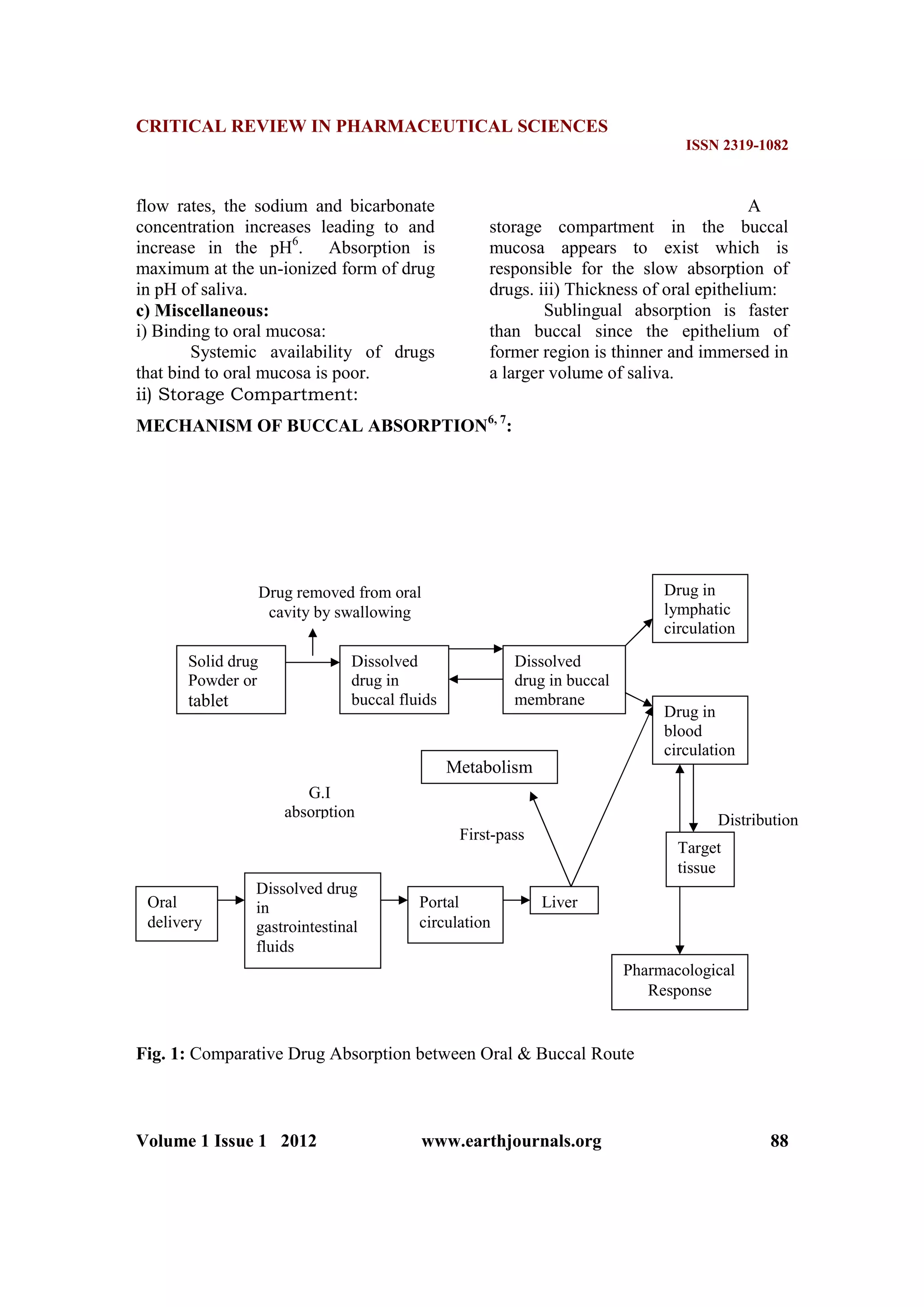
Fig. 1: Comparative Drug Absorption between Oral & Buccal Route
Solid drug
Powder or
tablet
Dissolved
drug in
buccal fluids
Dissolved
drug in buccal
membrane
Drug in
lymphatic
circulation
Drug in
blood
circulation
Target
tissue
Pharmacological
Response
Oral
delivery
Dissolved drug
in
gastrointestinal
fluids
Portal
circulation
Liver
First-pass
G.I
absorption Distribution
Drug removed from oral
cavity by swallowing
Metabolism
CRITICAL REVIEW IN PHARMACEUTICAL SCIENCES
ISSN 2319-1082
Volume 1 Issue 1 2012 www.earthjournals.org 89
As shown in fig.1 buccal route provides
the potential pathway to bypass first-
pass effect following oral administration.
The mechanisms by which drugs cross
biologic lipid membranes are passive
diffusion, facilitated diffusion, active
transport and pinocytosis. Among these,
majority of drugs move across oral
mucosa by passive mechanism which is
governed by the laws of diffusion.
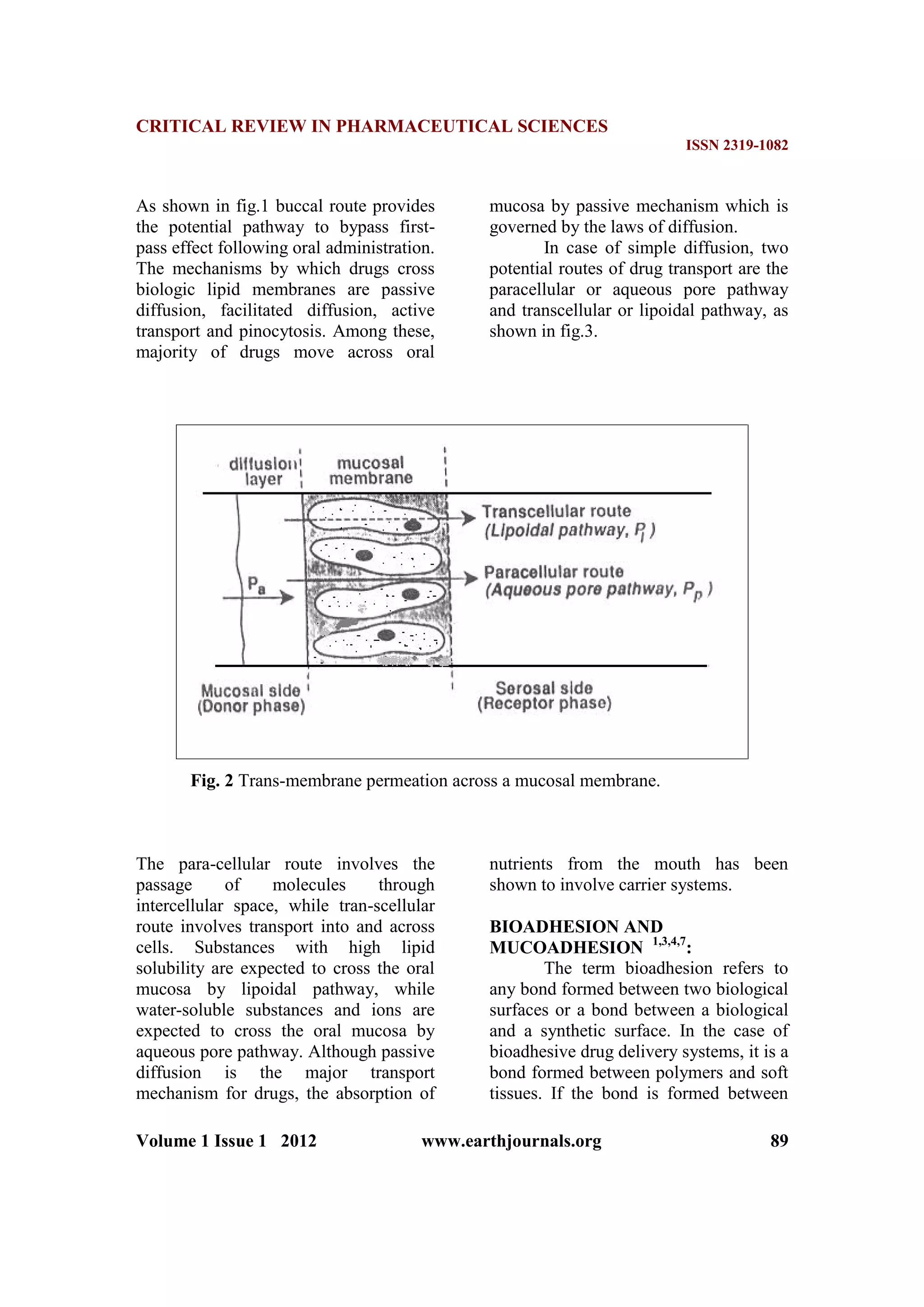
In case of simple diffusion, two
potential routes of drug transport are the
paracellular or aqueous pore pathway
and transcellular or lipoidal pathway, as
shown in fig.3.
Fig. 2 Trans-membrane permeation across a mucosal membrane.
The para-cellular route involves the
passage of molecules through
intercellular space, while tran-scellular
route involves transport into and across
cells. Substances with high lipid
solubility are expected to cross the oral
mucosa by lipoidal pathway, while
water-soluble substances and ions are
expected to cross the oral mucosa by
aqueous pore pathway. Although passive
diffusion is the major transport
mechanism for drugs, the absorption of
nutrients from the mouth has been
shown to involve carrier systems.
BIOADHESION AND
MUCOADHESION 1,3,4,7
:
The term bioadhesion refers to
any bond formed between two biological
surfaces or a bond between a biological
and a synthetic surface. In the case of
bioadhesive drug delivery systems, it is a
bond formed between polymers and soft
tissues. If the bond is formed between
CRITICAL REVIEW IN PHARMACEUTICAL SCIENCES
ISSN 2319-1082
Volume 1 Issue 1 2012 www.earthjournals.org 90
mucus and polymer, it is described as
mucoadhesion.
Although the target of many bioadhesive
delivery systems may be a soft tissue
cell layer (i.e. epithelial cells), the actual
adhesive bond may form with either the
cell layer, a mucous layer or a
combination of the two. In instances in
which bonds form between mucus and
polymer, the term mucoadhesion is used
synonymously with bioadhesion. In
general, bioadhesion is an all-inclusive
term used to describe adhesive
interactions with any biological or
biologically derived substance, and
mucoadhesion is used only when
describing a bond involving mucus or a
mucosal surface.
a) Mechanism of Bioadhesion3, 4
:
The mechanisms responsible for
the formation of bioadhesive bonds are
not completely clear. Most research has
been focused on analyzing bioadhesive
interactions between polymer hydrogels
and soft tissues.
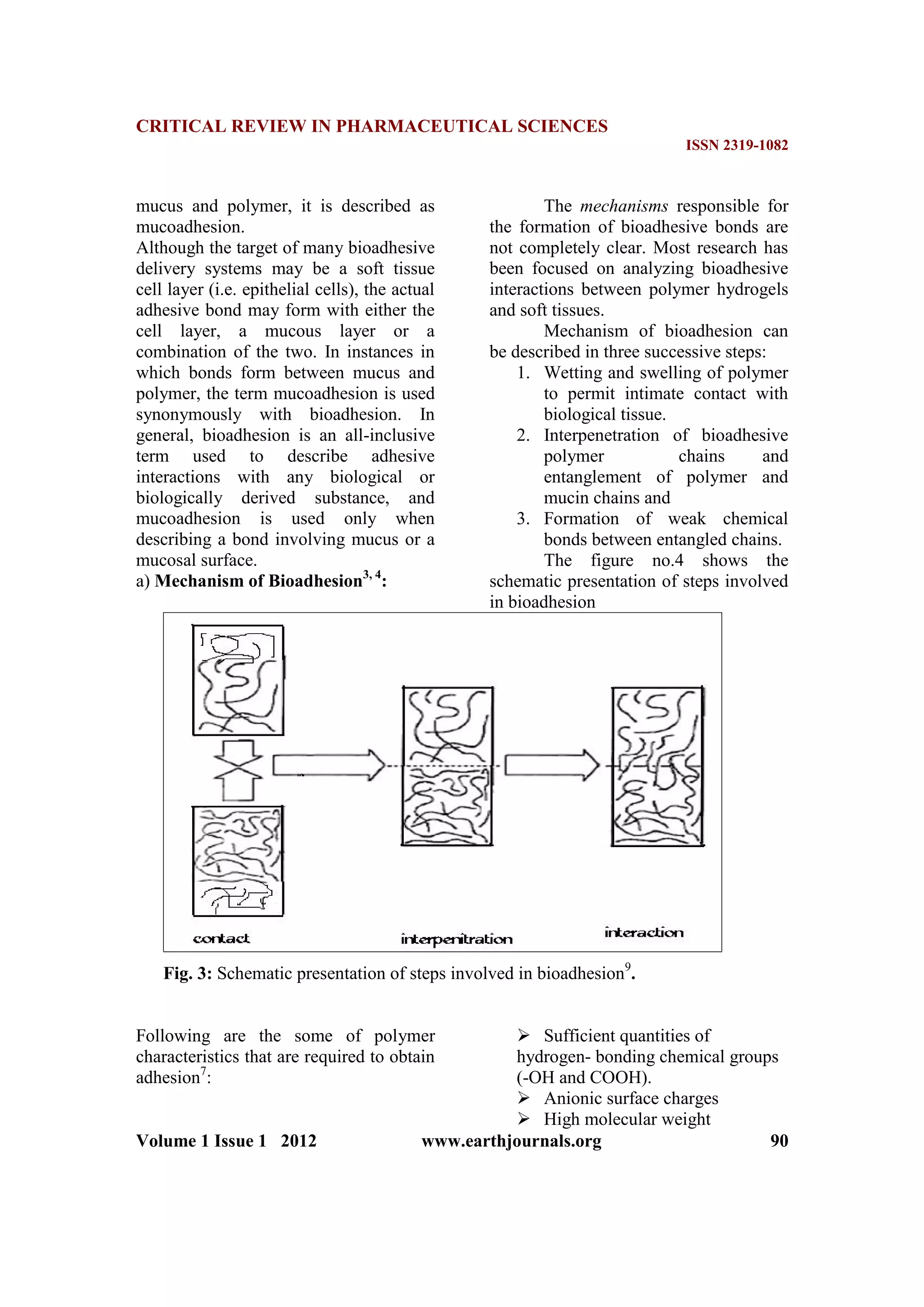
Mechanism of bioadhesion can
be described in three successive steps:
1. Wetting and swelling of polymer
to permit intimate contact with
biological tissue.
2. Interpenetration of bioadhesive
polymer chains and
entanglement of polymer and
mucin chains and
3. Formation of weak chemical
bonds between entangled chains.
The figure no.4 shows the
schematic presentation of steps involved
in bioadhesion
Fig. 3: Schematic presentation of steps involved in bioadhesion9
.
Following are the some of polymer
characteristics that are required to obtain
adhesion7
:
 Sufficient quantities of
hydrogen- bonding chemical groups
(-OH and COOH).
 Anionic surface charges
 High molecular weight
CRITICAL REVIEW IN PHARMACEUTICAL SCIENCES
ISSN 2319-1082
Volume 1 Issue 1 2012 www.earthjournals.org 91
of mucin strands with flexible
polymer chains and/or interpenetration
of mucin strands into a porous polymer
substrate.
b) Theories of Bioadhesion1,4, 8:
High chain flexibility and
Surface tension that will induce
spreading into the mucus layer.
Each of these characteristics
favors the formation of bonds that are
either chemical or mechanical in origin1,
4, 8
.
Chemical bonds include strong
primary bonds (i.e. covalent bonds), as
well as weaker secondary forces such as
ionic bonds, vander-Waals interactions
and hydrogen bonds. Both types of
interactions have been exploited in
developing bioadhesive drug delivery
systems
Mechanical bonds can be thought of as
physical connections between surfaces,
similar to interlocking puzzle pieces.
Macroscopically, they involve the
inclusion of one substance in the cracks
or crevices of another. On a microscopic
scale, they can involve physical
entanglement
Following are the theories that
have been adopted to study bioadhesion.
i) The Electronic Theory:
According to this theory, electron
transfer occurs upon contact of an
adhesive polymer with a mucus
glycoprotein network because of
differences in their electronic structures.
This results in the formation of an
electrical double layer at the interface.
Adhesion occurs due to attractive forces
across the double layer.
ii) The Adsorption Theory:
According to this theory, after an
initial contact between two surfaces, the
material adheres because of surface
forces acting between the atoms in the
two surfaces. Two types of chemical
bonds resulting from these forces are:
 Primary chemical bonds of
covalent nature.
 Secondary chemical bonds
having many different forces of
attraction including electrostatic
forces, Vander Waals forces, and
hydrogen and hydrophobic
bonds.
iii) The Wetting Theory:
This theory describes the ability
of mucus to spread and develop intimate
contact with its corresponding substrate
which is one important factor in bond
formation. The wetting theory uses
interfacial tensions to predict spreading
and in turn adhesion.
Diffusion Theory:
According to this theory the
polymer chains and the mucus mix to a
sufficient depth to create a semi
permanent adhesive bond. The exact
depth to which the polymer chains
penetrate the mucus iv) The depends on
the diffusion coefficient and the time of
contact. This diffusion coefficient, in
turn, depends on the value of molecular
weight between cross-links and
decreases significantly as the linking
density increases.
v) The Fracture Theory:
This theory analyzes the forces
required to separate two surfaces after
adhesion. The maximum tensile stress
produced during detachment can be
determined by dividing the maximum
force of detachment by the total surface
area involved in the adhesive interaction.
CRITICAL REVIEW IN PHARMACEUTICAL SCIENCES
ISSN 2319-1082
Volume 1 Issue 1 2012 www.earthjournals.org 92
It does not require measuring
entanglement, diffusion or
interpenetration of polymer chains.
FACTORS AFFECTING
MUCOADHESION1, 4, 8
:
The mucoadhesive power of a
polymer is affected by the nature of
polymer and also by the nature of
surrounding medium.
a) Polymer Related Factors:
i) Molecular weight:
For the successful mucoadhesion,
the molecular weight of polymer should
be at least 100000. For example,
polyethylene glycol (PEG), with a
molecular weight of 20000 has a little
adhesive character, where as PEG-
200000 has improved and a PEG-
400000 has superior adhesive properties.
Thus mucoadhesiveness improves with
increasing molecular weight for linear
polymers.
ii) Concentration:
There is an optimum
concentration of a mucoadhesive
polymer to produce maximum
mucoadhesion. In highly concentrated
systems, the adhesive strength drops
significantly, because the coiled
molecules become separated from the
medium so that the chains available for
interpenetration become limited.
iii) Chain flexibility:
This factor is important in case of
interpenetration and entanglement. As
water soluble polymers become cross
linked, mobility of individual polymer
chains
decrease and thus the effective length of
the chain that can penetrate into the
mucus layer decreases, which reduces
mucoadhesive strength.
b) Environment – Related Factors:
i) pH:
pH can influence the charge on
the surface of mucus as well as of certain
ionisable mucoadhesive polymers. Some
studies have shown that the pH of the
medium is important for the degree of
hydration of crosslinked polyacrylic
acid, showing consistently increased
hydration from pH 4 through pH 7 and
then a decrease as alkalinity and ionic
strength increases.
ii) Contact Time:
Contact time between the
mucoadhesive and mucus layer
determines the extent of swelling and
interpenetration of the mucoadhesive
polymer chains. Moreover,
mucoadhesive strength increases as the
initial contact time increases.
iii) Swelling:
Swelling depends on the polymer
concentration, ionic strength, as well as
presence of water. During the dynamic
process of mucoadhesion, maximum
mucoadhesion occurs with optimum
water content. Over-hydration results in
the formation of a wet slippery mucilage
without adhesion.
iv) Physiological variables like, mucin
properties, turnover and disease
states:
The extent of interaction between
the polymer and the mucus depends on
mucus viscosity, degree of entanglement
and water content. How long the
mucoadhesive remains at the site
depends on whether polymer is soluble
or insoluble in water and the associated
turnover rate of mucin. Estimates of
mucin turnover vary widely, depending
on location and method of measurement.
CRITICAL REVIEW IN PHARMACEUTICAL SCIENCES
ISSN 2319-1082
Volume 1 Issue 1 2012 www.earthjournals.org 93
MUCOADHESIVE POLYMERS 1,
5,6,7,8
:
Mucoadhesive polymers are
water soluble and water insoluble
polymers which are swellable networks
jointed by cross linking agents. The
polymers should possess optional
polarity to make sure it is sufficiently
wetted by the mucus and optimal fluidity
that permits the mutual adsorption and
interpenetration of polymer and mucus
to take place. An ideal polymer for a
mucoadhesive drug delivery system
should have the following
characteristics.
1. The polymer and its degradation
products should be nontoxic and
nonabsorbable in the
gastrointestinal tract.
2. It should be nonirritant to the
mucus membrane.
3. It should preferably form a
strong noncovalent bond with the
mucin epithelial cell surfaces.
4. It should adhere quickly to moist
tissue and should possess some
site specificity.
5. It should allow easy
incorporation of the drug and
offer non hindrance to its release.
6. The polymer must not
decompose on storage or during
shelf-life of the dosage form.
7. The cost of polymer should not
be high.
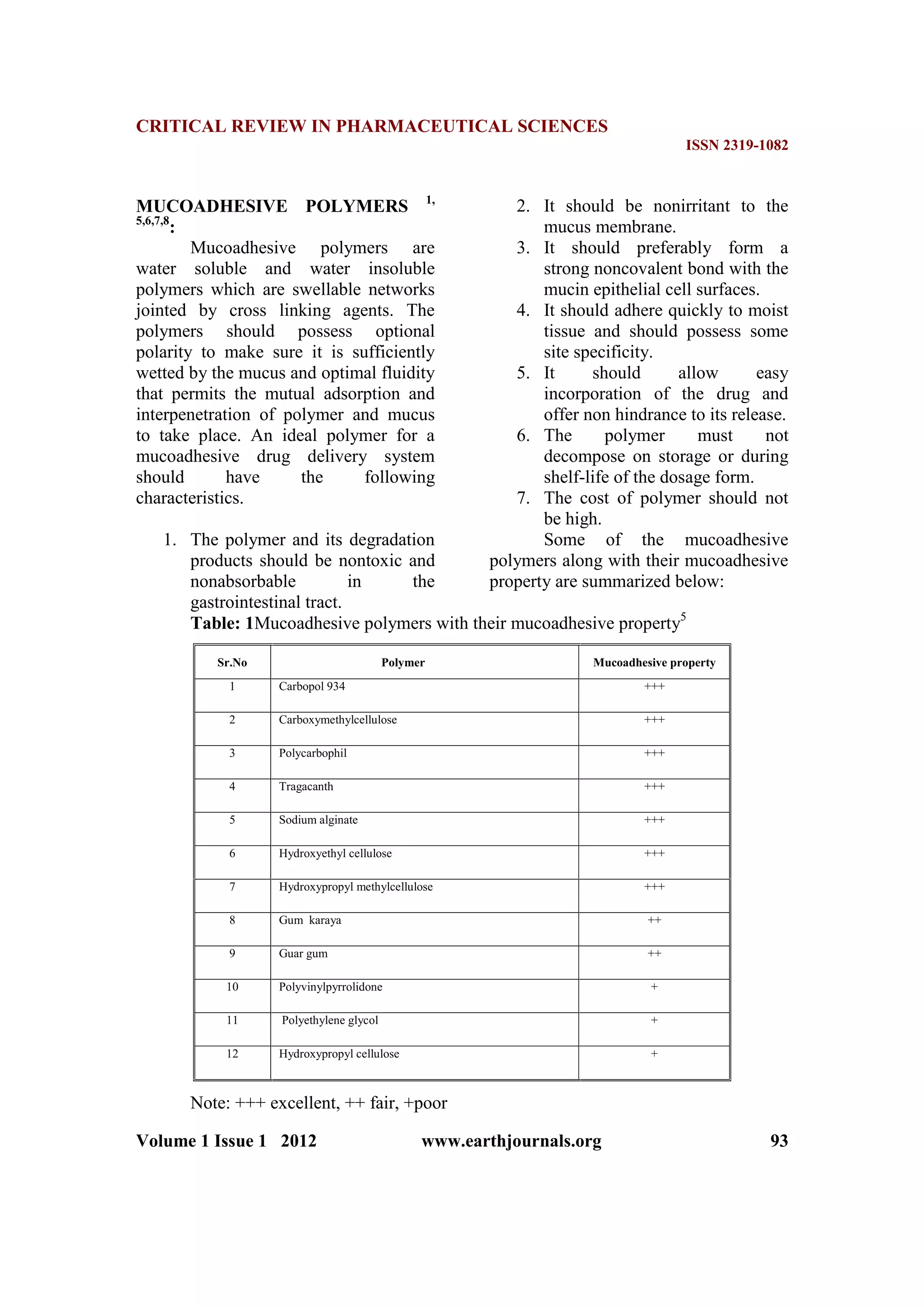
Some of the mucoadhesive
polymers along with their mucoadhesive
property are summarized below:
Table: 1Mucoadhesive polymers with their mucoadhesive property5
Sr.No Polymer Mucoadhesive property
1 Carbopol 934 +++
2 Carboxymethylcellulose +++
3 Polycarbophil +++
4 Tragacanth +++
5 Sodium alginate +++
6 Hydroxyethyl cellulose +++
7 Hydroxypropyl methylcellulose +++
8 Gum karaya ++
9 Guar gum ++
10 Polyvinylpyrrolidone +
11 Polyethylene glycol +
12 Hydroxypropyl cellulose +
Note: +++ excellent, ++ fair, +poor
CRITICAL REVIEW IN PHARMACEUTICAL SCIENCES
ISSN 2319-1082
Volume 1 Issue 1 2012 www.earthjournals.org 94
BIOADHESIVE DOSAGE FORMS1,
4, 7, 8
:
Bioadhesive dosage forms can be
developed as sublingual, buccal or
gingival systems for systemic drug
delivery or local drug delivery at any
particular site. Within the oral cavity,
the buccal region has been extensively
explored and appears promising for
certain drugs.
I) Buccal Dosage Forms:
a) Adhesive tablets 1, 10, 12
:
Adhesive tablets are held
between the gum and cheek. These are
generally flat, elliptical or capsule-
shaped. The parotid duct empties into
the mouth at a point opposite the crown
of the second upper molar, near the spot
where buccal tablets are usually placed.
This location provides the medium to
dissolve the tablets and to provide for
release of the medication. Buccal tablets
are prepared either by the procedures
used for granulation or by direct
compression. Formulation contains no
disintegrants, so the tablet will dissolve
slowly. Flavouring agents and
sweeteners are sometimes added to make
the tablets more palatable, but this may
result in increased flow rate of saliva,
which is not desirable. It is also
important to minimize the swallowing of
saliva during the time that the buccal
tablet is held in place. Since buccal
tablets are to be held in the mouth for
relatively long periods of time, particular
care should be taken to see that all the
ingredients are finely divided so that the
tablets are not gritty or irritating.
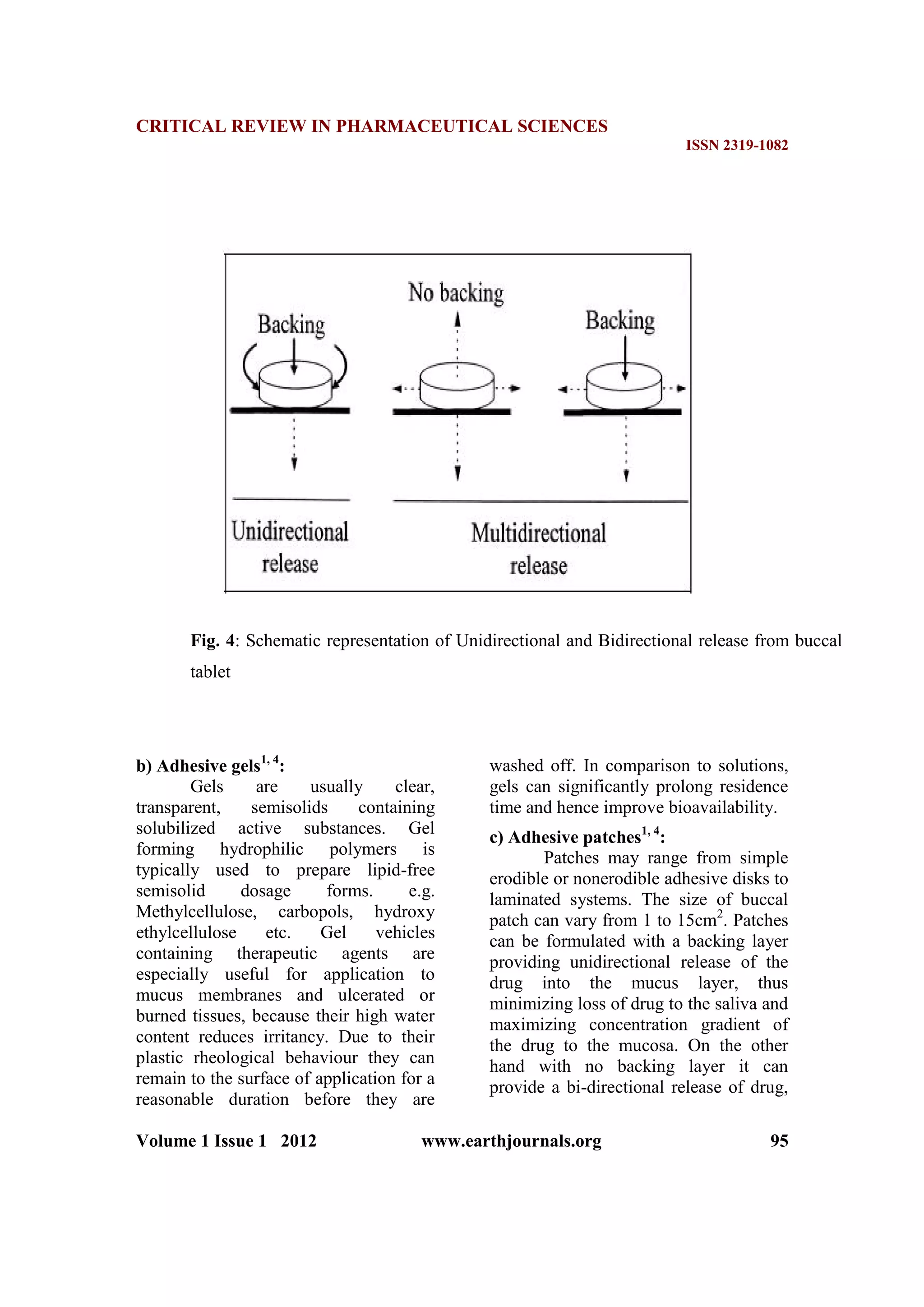
Buccoadhesive tablet may be
monolithic or bilaminated system. The
main disadvantages of the monolayer
tablet is the multidirectional release of
the drug, hence some of the fraction of
drug may swallowed. In order to avoid
multidirectional release of the drug a
bilaminated system was used. The
Bilayered tablet made up of two layers,
drug containing core layer and backing
layer. The backing layer may be of water
insoluble material like Ethyl cellulose or
hydrogenated caster oil or may be
polymeric coating layer which
functioning as a adhesive and backing
layer. A mucoadhesive delivery system
with a backing layer on one side can be
used for local as well as systemic
transmucosal drug delivery. Such a
backing layer avoids sticking of the
tablet to the finger during application in
the oral cavity.
The figure no. 5 shows the
monolayer, Bilayered and compressed
coated tablet and schematic release of
the drug.
CRITICAL REVIEW IN PHARMACEUTICAL SCIENCES
ISSN 2319-1082
Volume 1 Issue 1 2012 www.earthjournals.org 95
Fig. 4: Schematic representation of Unidirectional and Bidirectional release from buccal
tablet
b) Adhesive gels1, 4
:
Gels are usually clear,
transparent, semisolids containing
solubilized active substances. Gel
forming hydrophilic polymers is
typically used to prepare lipid-free
semisolid dosage forms. e.g.
Methylcellulose, carbopols, hydroxy
ethylcellulose etc. Gel vehicles
containing therapeutic agents are
especially useful for application to
mucus membranes and ulcerated or
burned tissues, because their high water
content reduces irritancy. Due to their
plastic rheological behaviour they can
remain to the surface of application for a
reasonable duration before they are
washed off. In comparison to solutions,
gels can significantly prolong residence
time and hence improve bioavailability.
c) Adhesive patches1, 4
:
Patches may range from simple
erodible or nonerodible adhesive disks to
laminated systems. The size of buccal
patch can vary from 1 to 15cm2
. Patches
can be formulated with a backing layer
providing unidirectional release of the
drug into the mucus layer, thus
minimizing loss of drug to the saliva and
maximizing concentration gradient of
the drug to the mucosa. On the other
hand with no backing layer it can
provide a bi-directional release of drug,
CRITICAL REVIEW IN PHARMACEUTICAL SCIENCES
ISSN 2319-1082
Volume 1 Issue 1 2012 www.earthjournals.org 96
resulting in significant loss during
swallowing of saliva.
d) Adhesive ointments1, 4
:
Three bases white petrolatum,
hydrophilic petrolatum and
lauromacrogol along with carbopol are
used in preparing adhesive ointments.
Bioadhesive ointments have been
investigated as extensively as tablets and
patches.
II) Sublingual1, 4
:
Sublingual tablets are held
beneath the tongue. These tablets can be
either molded or compressed and are
prepared from soluble ingredients, so
that the tablets are completely and
rapidly soluble. The requirements for
sublingual tablets are rapid drug release
and a correspondingly rapid physiologic
response, which are normally best
achieved with a rapid soluble molded
tablet. However, compressed sublingual
tablets normally have lesser weight
variation and better content uniformity.
Compressed tablets disintegrate quickly
and allow the active ingredient to
dissolve rapidly in the saliva.
III) Dental or gingival1, 4
:
Denture adhesives are devices
that are prescribed as an aid to retain
dentures or reduce discomfort after the
insertion of dentures. Both natural and
synthetic hydrocolloids have been used
for denture adhesives. The excipients of
denture adhesives include swellable
polymers, gels, antibacterial agents, and
preservatives, fillers, wetting and
flavoring agents. The disadvantages of
using denture adhesives are the short and
variable duration of action, nausea,
damage to the prosthesis and the danger
of prolonging the service life of an ill-
fitting denture.
CONCLUSION
Mucoadhesive drug delivery system
utilize the property of bioadhesion of
certain water soluble polymer which
become adhesive on hydration and hence
can be used for targeting a drug to a
particular region of the body for an
extended period of time. Development of
novel mucoadhesive delivery systems
are being undertaken so as to understand
the various mechanism of mucoadhesion
and improved permeation of active
agents. Many potential mucoadhesive
systems are being investigated which
may find their way into the market in
near future. The idea of bioadhesive
began with the clear need to localize a
drug at a certain site in the GI tract.
Therefore a primary objective of using
bioadhesive systems orally would be
achieved by obtaining a substantial
increase in residence time of the drug for
local drug effect and to permit once
daily dosing.
REFERENCE
1) R. Khanna, S. P. Agrawal and
Alka Ahuja. “Mucoadhesive
Buccal drug delivery A potential
alternative to conventional
thereapy.” Indian Journal of
pharmaceutical scienes, 1998,
Vol 60(1), 1-11.
2) Hans E. Janginger, Janet A.
Hoogstraate and J. Coos
Verhoef., “Recent advances in
Buccal drug delivery and
absorption invitro and invivo
studies” Journal of controlled
release, 1999, Vol. 62, 149–59.
CRITICAL REVIEW IN PHARMACEUTICAL SCIENCES
ISSN 2319-1082
Volume 1 Issue 1 2012 www.earthjournals.org 97
3) Dr. Bhaskar Jasti, Xiaoling Li
and Gary Cleary, “recent
advances in Mucoadhesive drug
delivery systems” Pharmatech,
2003, 194-196.
4) Marcos Luciano Bruschi,
Osvaldo de Freitals “oral
bioadhesive drug delivery
systems”, Drug Development and
Industrial Pharmacy, Vol – 31,
2005 P 293-310.
5) Juan M. Irache, Maria Huici,
Monica Konecny, Socorro
Espuelas, Miguel Angel
Campancero, Pay Arbos.
Bioadhesive properties of
Gantrez nanoparticles,
Molecules, 2005, 10, 126-145.
6) 27. Sam AP, Van Dan Heuij JT,
Tukker J. Mucoadhesion of both
film-forming and non- film
forming polymeric materials as
evaluated with the Wilhelmy
plate method. Int J Pharm.
1989;53:97-105.
7) 28. Gupta A, Garg S, Khar RK.
Measurement of bioadhesive
strenghs of mucoadhesive buccal
tablets: Design of in-vitro
assembly. Indian
Drugs.1992;30(4):152-155.
8) 29. Smart JD. An in vitro
assessment of some mucosa-
adhesive dosage forms. Int J
Pharm. 1991;73:69-74.
9) 30. Smart JD, Kellaway IW.
Pharmaceutical factors
influencing the rate of
gastrointestinal transit in an
animal model. Int J Pharm.
1989;53:79-86.
10) Mortazavi SA, Carpenter BG,
Smart JD. Factors influencing gel
strengthening at the
mucoadhesive-mucous
interface. J Pharm Pharmacol.
1994;46:86-91.
11) Ho NF, Day JS, Barsuhn CL,
Burton PS, Raub TJ. Biophysical
model approaches to mechanistic
transepithelial studies of the
peptides. J Control Release.
1990;11:3-10.
12) Rao KVR, Buri P. Novel in situ
method to test polymers and
coated microparticles for
bioadhesion. Int J Pharm. 1989;
52:265-270.
13) Hassan EE, Gallo JM. Simple
rheological method for the in
vitro assessment of mucin-
polymer bioadhesive bond
strength. Pharm Res.
1990;7:491-498.
14) Park K. A new approach to
study mucoadhesion: colloidal
gold staining. Int J Pharm.
1989;53:209-217.
15) DavisSS, Hardy JG, Taylor MJ,
Stockwell A, Whalley DR,
Wilson CG. The in vivo
evaluation of an osmotic device
(osmet) Using gamma
scintography. J Pharm
Pharmacol.1984;36:740-742.
16) Krishnaiah YSR, Kondala Rao
B, Rama Prasad YV,
Satyanarayana S. Gamma
scintigraphy : an imaging
technique for non-invasive in
vivo evaluation of oral dosage
forms. Indian Drugs. 1998;
35(7):387-398.
CRITICAL REVIEW IN PHARMACEUTICAL SCIENCES
ISSN 2319-1082
Volume 1 Issue 1 2012 www.earthjournals.org 98
17) Singh AK, Bhardwaj N,
Bhatnagar A.
Pharmacoscintigraphy: An
unexplored modality in
India. Ind J Pharm Sci.
2004;66(1):18-25.
18) Petelin M, Pavlica Z, Bizimoska
S, Sentjure M. In vivo study of
different ointments for drug
delivery in to oral mucosa EPR
oximetry. Int J Pharm.2004;
270:83-91.
19) R. Bala Ramesha Chary, G.
Vani, Y. Madhusudan Rao, In
Vitro and In Vivo Adhesion
Testing of Mucoadhesive Drug
Delivery Systems. Drug Dev Ind
Pharm.,1999, 25(5), 685-690.

Crps 4

  • 1.
    CRITICAL REVIEW INPHARMACEUTICAL SCIENCES ISSN 2319-1082 Volume 1 Issue 1 2012 www.earthjournals.org 83 Review Article RECENT ADVANCES IN MUCOADHESIVE BUCCAL DRUG DELIVERY SYSTEMS AND ITS MARKETED SCOPE AND OPPORTUNITIES K.P.Sampath Kumar 1 ,DebjitBhowmik2 * AmitsankarDutta 3 ,ShravanPaswan3 , Lokesh Deb4 1. Department of Pharmaceutical sciences, Coimbatore medical college,Coimbatore,India 2. Karpagam University, Coimbatore,India 3. R.K.Pharmacycollege,Azamgarh,India 4. Medicinal Plants and Horticutural Resources Division, Institute of Bioresources and Sustainable Development.(IBSD), Department of Biotechnology, Government of India. Takyalpat, Imphal. Manipur.,India ABSTRACT Extensive efforts have been focused on targeting a drug or drug delivery system in a particular region of the body for extended period of time, not only for local targeting of drug but also for better compliance of systemic drug delivery. Mucoadhesive characteristics are a factor of both the bioadhesive polymer and the medium in which the polymer will reside. Buccal dosage forms can be of Matrix or Reservoir types. However, this route could become a significant means for the delivery of a range of active agents in the coming years, if the barriers to buccal drug delivery are overcome. Mucoadhesive drug delivery system prolong the residence time of the dosage form at the site of application or absorption and facilitate an intimate contact of the dosage form with the underline absorption surface and thus contribute to improved and better therapeutic performance of the drug. To overcome the relatively short gastrointestinal (GI) time and improve localization for oral controlled or sustained release drug delivery systems, bioadhesive polymers that adhere to the mucin/epithelial surface are effective and lead to significant improvement in oral drug delivery. Improvements are also expected for other mucus-covered sites of drug administration. Bioadhesive polymers find application in the eye, nose, and vaginal cavity as well as in the GI tract, including the buccal cavity and rectum. KEYWORDS : Mucosa, mucoadhesion, mucoadhesive polymers, mucoadhesive drug delivery system INTRODUCTION Conventional dosage forms for delivery of drugs via the oral mucosa include solutions, erodible or chewable, buccal or sublingual tablets and capsules. Unfortunately, a major portion of the drug in these systems may be unavailable due to involuntary swallowing and a very short residence time, because of mastication, speech etc
  • 2.
    CRITICAL REVIEW INPHARMACEUTICAL SCIENCES ISSN 2319-1082 Volume 1 Issue 1 2012 www.earthjournals.org 84 and hence sustained release is usually not within the scope of such formulations1 . In recent years, significant interest has been shown in the development of novel bioadhesive dosage forms for mucosal delivery of drugs that attempt to overcome these limitations1 Drug absorption into the oral mucosa is mainly via passive diffusion into the lipoidal membrane. Compounds with partition coefficient in the range 40- 2000 and pKa 2-10 are considered optimal to be absorbed through buccal mucosa. Compounds administered by buccal route include steroids, barbiturates, papain, and trypsin etc1 . Drugs can be absorbed from the oral cavity through the oral mucosa either by sublingual or buccal route1 . Absorption of therapeutic agents from these routes overcomes premature drug degradation within the gastrointestinal tract as well as active drug loss due to first-pass hepatic metabolism that may be associated with oral route of administration3 . In general, rapid absorption from these routes is observed because of the thin mucus membrane and rich blood supply. After absorption, drug is transported through the deep lingual vein or facial vein which then drains into the general circulation via the jugular vein, bypassing the liver and thereby sparing the drug from first-pass metabolism1, 2 . Since sublingual administration of drugs interferes with eating, drinking and talking, this route is generally considered unsuitable for prolonged administration. On the other hand, the duration of buccal drug administration can be prolonged with saliva activated adhesive polymers without the problems of sublingual administration1, 2 . In recent years, significant interest has been shown in the development of novel bioadhesive dosage forms for mucosal delivery of drugs that attempt to overcome these limitations [1] . A bioadhesive dosage form necessitates the use of mucoadhesive polymers to adhere to mucosa and withstand salivation, tongue movement and swallowing for significant period of time [2] . High molecular weight polymers are generally used for bioadhesion. Hydrogen bonding due to hydrophilic groups such as - COOH or -OH plays an important role in bioadhesion [3] The focus of pharmaceutical research is being steadily shifted from the development of new chemical entities to the development of novel drug delivery system (NDDS) of existing drug molecule to maximize their effect in terms of therapeutic action and patient protection. Mucoadhesive systems are known to provide intimate contact between dosage form and the absorptive mucosa, resulting thereby in a high drug flux through the absorbing tissue. In addition, mucoadhesive dosage forms have been used to target local disorders at the mucosal surface to reduce the overall dosage required and to minimize the side effects that may be caused by the systemic administration of the drugs. ADVANTAGES OF MUCOADHESIVE BUCCAL DRUG DELIVERY SYSTEMS1, 4, 5, 6, 13 : Drugs administration via oral mucosa offers several advantages 1. Ease of administration. 2. Termination of therapy is easy. 3. Permits localization of drug to the oral cavity for a prolonged period of time.
  • 3.
    CRITICAL REVIEW INPHARMACEUTICAL SCIENCES ISSN 2319-1082 Volume 1 Issue 1 2012 www.earthjournals.org 85 4. Can be administered to unconscious patients. 5. Offers an excellent route, for the systemic delivery of drugs with high first pass metabolism, thereby offering a greater bioavailability. 6. A significant reduction in dose can be achieved thereby reducing dose related side effects. 7. Drugs which are unstable in the acidic environment are destroyed by enzymatic or alkaline environment of intestine can be administered by this route. 8. Drugs which show poor bioavailability via the oral route can be administered conveniently. 9. It offers a passive system of drug absorption and does not require any activation. 10. The presence of saliva ensures relatively large amount of water for drug dissolution unlike in case of rectal and transdermal routes. 11. Systemic absorption is rapid. 12. This route provides an alternative for the administration of various hormones, narcotic analgesic, steroids, enzymes, cardiovascular agents etc. 13. The buccal mucosa is highly perfused with blood vessels and offers a greater permeability than the skin. LIMITATION OF BUCCAL DRUG ADMINISTRATION1, 4, 5, 6, 13 : Drug administration via buccal mucosa has certain limitations. 1. Drugs, which irritate the oral mucosa, have a bitter or unpleasant taste, odour; can not be administered by this route. 2. Drugs, which are unstable at buccal pH can not be administered by this route. 3. Only drugs with small dose requirements can be administered. 4. Drugs may swallow with saliva and loses the advantages of buccal route. 5. Only those drugs, which are absorbed by passive diffusion, can be administered by this route. 6. Eating and drinking may become restricted. 7. Swallowing of the formulation by the patient may be possible. 8. Over hydration may lead to the formation of slippery surface and structural integrity of the formulation may get disrupted by the swelling and hydration of the bioadhesive polymers. MARKETED SCOPE AND OPPORTUNITIES Novel drug delivery systems are becoming one of the most important fields in the modern pharmaceutical formulation technology. Several techniques areemployed to design the sustained or controlled drug delivery systems. Studieson mucoadhesive systems have focused on a broad array of aspects. It is a growth areawhose goal is the development of new devices and more “intelligent” polymers,as well as the creation of new methodologies that can better elucidate themucoadhesion phenomenon. With the great influx of new molecules stemmingfrom drug
  • 4.
    CRITICAL REVIEW INPHARMACEUTICAL SCIENCES ISSN 2319-1082 Volume 1 Issue 1 2012 www.earthjournals.org 86 research, mucoadhesive systems may play an increasing role in thedevelopment of new pharmaceuticals. The advantages are tremendous which make further study in this field extremely important. The formulation of these drug delivery systems depends on the developments of suitable polymers with excellent mucosal adhesive properties, stability and biocompatibility. The buccal cavity provides a highly vascular mucous membrane site for the dministration of drugs. The epithelial lining of the oral cavity differs both in type (keratinized and non-keratinized) and thickness in different areas, and the differences give rise to regional variations in permeability to drugs. So far, the oral mucosa has been utilized for the delivery of small drug molecules, since their adsorption occurs more reproducibly and rapidly. The main advantages of the buccal route of administration over the traditional per oral route are that drug degradation in the stomach is avoided, first-pass metabolism is avoided, and therapeutic drug levels of drug can be achieved rapidly. Clearly these advantages are presently clinically relevant for only a limited number of drugs. However, with the recent developments of new formulation types, such as mucoadhesive preparations and the use of peptides as drugs, this number may increase in the future. . Mucoadhesive drug delivery systems available in the market include aftach tablet (Triamcinolone acetonide), suradrin tablet (Nitroglycerin), Buccostem tablet (prochlormperazine maleate). Salcoat powder sprays (Beclomethazone dipropionate. Rhinocort powder spray (Beclomethazone Dipropionate) and sucralfate (Aluminum hydroxide). Though there are only a few mucoadhesive formulations available currently, it can be concluded that drug delivery using mucoadhesive formulations offers a great potential both for systemic and local use in the near future. Mucoadhesive drug delivery systems, are gaining popularity day by day in the global pharma industry and a burning area of further research and development. Extensive research efforts throughout the world have resulted in significant advancesin understanding the various aspects of mucoadhesion. The research on mucoadhesives, however, is still in its early stage, and further advances need to be made for the successful translation of the concept into practical application in controlled drug deliverysystem (CDDS). There is no doubt that mucoadhesion has moved into a new area with these new specific targeting compounds (lectins, thiomers, etc.) with researchers and drug companies looking further into potential involvement of more smallercomplex molecules, proteins and peptides, and DNA for future technological advancement in the ever-evolving drug delivery arena. FACTORS INFLUENCING DRUG ABSORPTION FROM THE ORAL CAVITY4,6 : As the oral mucosa is a highly vascular tissue, the main factors that influence drug absorption from the mouth are: a) The permeability of the oral mucosa to the drug.
  • 5.
    CRITICAL REVIEW INPHARMACEUTICAL SCIENCES ISSN 2319-1082 Volume 1 Issue 1 2012 www.earthjournals.org 87 b) Physicochemical characteristics of the drug and c) Miscellaneous factors a) Permeability of the oral mucosa to drugs 1, 4, 6 Permeability of the buccal mucosa is 4-4000 times greater than that of the skin. As indicated by a wide range in this reported values, there are considerable differences in permeability between different regions of the oral cavity. In general, permeability of the oral mucosa decreases in the order of sublingual greater than buccal and buccal greater than palatal. This is based on the relative thickness and degree of keratinization of these tissues. The keratin layer is an effective barrier to penetration of human skin by water soluble substances. The permeability barriers of the oral mucosa are supposed to reside within the superficial layers of the epithelium. It has been shown that for some compounds the barrier to penetration is not the upper one third of the epithelium. Alfano and his coworkers studied the penetration of endotoxins through non- keratinized oral mucosa. The results indicated that the basement membrane is a rate limiting barrier to permeation1 . Some workers have suggested that the permeability barrier in the oral mucosa is a result of intercellular material derived from the so-called “Membrane Coating Granules” (MCGs). The barriers exist in the intermediate cell layers of many stratified epithelia and are of 100-300 nm in diameter. Other factors which may affect the permeability of molecules include exogenous substances placed in the mouth for their local effects, such as mouthwashes and toothpastes, which contain surfactants and nutritional deficiencies. b) Physicochemical characteristics of the drug6 : The various physicochemical characters that play an important role in absorption of drug from the oral cavity are considered below: i) Molecular weight: Molecules penetrate the oral mucosa more rapidly than ions and smaller molecules more rapidly than larger molecules. In case of hydrophilic substances, the rate of absorption appears to be rapid for small molecules (molecular weight less than 75-100 Da), but permeability falls off rapidly as the molecular size increases. ii) Degree of ionization: The average pH of saliva is 6.4. Because the un-ionized form of a drug is the lipid-soluble-diffusible form, the pKa of the drug plays an important role in its absorption. Adequate absorption through the oral mucosa occurs if the pKa is greater than 2 for an acid or less than 10 for a base. iii) Lipid solubility: A common way of assessing the lipid solubility of a drug is to measure its oil-water partition coefficient. Partition coefficient between 40-2000 is necessary for optimal drug absorption. If the partition co-efficient exceeds 2000, solubility in the saliva is insufficient to provide the concentration gradient necessary for drug absorption. That is in addition to high lipid solubility, the drug should be soluble in aqueous buccal fluids for absorption. iv) pH of the saliva : The saliva pH ranges from 5.5 to 7 depending on the flow rate. At high
  • 6.
    CRITICAL REVIEW INPHARMACEUTICAL SCIENCES ISSN 2319-1082 Volume 1 Issue 1 2012 www.earthjournals.org 88 flow rates, the sodium and bicarbonate concentration increases leading to and increase in the pH6 . Absorption is maximum at the un-ionized form of drug in pH of saliva. c) Miscellaneous: i) Binding to oral mucosa: Systemic availability of drugs that bind to oral mucosa is poor. ii) Storage Compartment: A storage compartment in the buccal mucosa appears to exist which is responsible for the slow absorption of drugs. iii) Thickness of oral epithelium: Sublingual absorption is faster than buccal since the epithelium of former region is thinner and immersed in a larger volume of saliva. MECHANISM OF BUCCAL ABSORPTION6, 7 : Fig. 1: Comparative Drug Absorption between Oral & Buccal Route Solid drug Powder or tablet Dissolved drug in buccal fluids Dissolved drug in buccal membrane Drug in lymphatic circulation Drug in blood circulation Target tissue Pharmacological Response Oral delivery Dissolved drug in gastrointestinal fluids Portal circulation Liver First-pass G.I absorption Distribution Drug removed from oral cavity by swallowing Metabolism
  • 7.
    CRITICAL REVIEW INPHARMACEUTICAL SCIENCES ISSN 2319-1082 Volume 1 Issue 1 2012 www.earthjournals.org 89 As shown in fig.1 buccal route provides the potential pathway to bypass first- pass effect following oral administration. The mechanisms by which drugs cross biologic lipid membranes are passive diffusion, facilitated diffusion, active transport and pinocytosis. Among these, majority of drugs move across oral mucosa by passive mechanism which is governed by the laws of diffusion. In case of simple diffusion, two potential routes of drug transport are the paracellular or aqueous pore pathway and transcellular or lipoidal pathway, as shown in fig.3. Fig. 2 Trans-membrane permeation across a mucosal membrane. The para-cellular route involves the passage of molecules through intercellular space, while tran-scellular route involves transport into and across cells. Substances with high lipid solubility are expected to cross the oral mucosa by lipoidal pathway, while water-soluble substances and ions are expected to cross the oral mucosa by aqueous pore pathway. Although passive diffusion is the major transport mechanism for drugs, the absorption of nutrients from the mouth has been shown to involve carrier systems. BIOADHESION AND MUCOADHESION 1,3,4,7 : The term bioadhesion refers to any bond formed between two biological surfaces or a bond between a biological and a synthetic surface. In the case of bioadhesive drug delivery systems, it is a bond formed between polymers and soft tissues. If the bond is formed between
  • 8.
    CRITICAL REVIEW INPHARMACEUTICAL SCIENCES ISSN 2319-1082 Volume 1 Issue 1 2012 www.earthjournals.org 90 mucus and polymer, it is described as mucoadhesion. Although the target of many bioadhesive delivery systems may be a soft tissue cell layer (i.e. epithelial cells), the actual adhesive bond may form with either the cell layer, a mucous layer or a combination of the two. In instances in which bonds form between mucus and polymer, the term mucoadhesion is used synonymously with bioadhesion. In general, bioadhesion is an all-inclusive term used to describe adhesive interactions with any biological or biologically derived substance, and mucoadhesion is used only when describing a bond involving mucus or a mucosal surface. a) Mechanism of Bioadhesion3, 4 : The mechanisms responsible for the formation of bioadhesive bonds are not completely clear. Most research has been focused on analyzing bioadhesive interactions between polymer hydrogels and soft tissues. Mechanism of bioadhesion can be described in three successive steps: 1. Wetting and swelling of polymer to permit intimate contact with biological tissue. 2. Interpenetration of bioadhesive polymer chains and entanglement of polymer and mucin chains and 3. Formation of weak chemical bonds between entangled chains. The figure no.4 shows the schematic presentation of steps involved in bioadhesion Fig. 3: Schematic presentation of steps involved in bioadhesion9 . Following are the some of polymer characteristics that are required to obtain adhesion7 :  Sufficient quantities of hydrogen- bonding chemical groups (-OH and COOH).  Anionic surface charges  High molecular weight
  • 9.
    CRITICAL REVIEW INPHARMACEUTICAL SCIENCES ISSN 2319-1082 Volume 1 Issue 1 2012 www.earthjournals.org 91 of mucin strands with flexible polymer chains and/or interpenetration of mucin strands into a porous polymer substrate. b) Theories of Bioadhesion1,4, 8: High chain flexibility and Surface tension that will induce spreading into the mucus layer. Each of these characteristics favors the formation of bonds that are either chemical or mechanical in origin1, 4, 8 . Chemical bonds include strong primary bonds (i.e. covalent bonds), as well as weaker secondary forces such as ionic bonds, vander-Waals interactions and hydrogen bonds. Both types of interactions have been exploited in developing bioadhesive drug delivery systems Mechanical bonds can be thought of as physical connections between surfaces, similar to interlocking puzzle pieces. Macroscopically, they involve the inclusion of one substance in the cracks or crevices of another. On a microscopic scale, they can involve physical entanglement Following are the theories that have been adopted to study bioadhesion. i) The Electronic Theory: According to this theory, electron transfer occurs upon contact of an adhesive polymer with a mucus glycoprotein network because of differences in their electronic structures. This results in the formation of an electrical double layer at the interface. Adhesion occurs due to attractive forces across the double layer. ii) The Adsorption Theory: According to this theory, after an initial contact between two surfaces, the material adheres because of surface forces acting between the atoms in the two surfaces. Two types of chemical bonds resulting from these forces are:  Primary chemical bonds of covalent nature.  Secondary chemical bonds having many different forces of attraction including electrostatic forces, Vander Waals forces, and hydrogen and hydrophobic bonds. iii) The Wetting Theory: This theory describes the ability of mucus to spread and develop intimate contact with its corresponding substrate which is one important factor in bond formation. The wetting theory uses interfacial tensions to predict spreading and in turn adhesion. Diffusion Theory: According to this theory the polymer chains and the mucus mix to a sufficient depth to create a semi permanent adhesive bond. The exact depth to which the polymer chains penetrate the mucus iv) The depends on the diffusion coefficient and the time of contact. This diffusion coefficient, in turn, depends on the value of molecular weight between cross-links and decreases significantly as the linking density increases. v) The Fracture Theory: This theory analyzes the forces required to separate two surfaces after adhesion. The maximum tensile stress produced during detachment can be determined by dividing the maximum force of detachment by the total surface area involved in the adhesive interaction.
  • 10.
    CRITICAL REVIEW INPHARMACEUTICAL SCIENCES ISSN 2319-1082 Volume 1 Issue 1 2012 www.earthjournals.org 92 It does not require measuring entanglement, diffusion or interpenetration of polymer chains. FACTORS AFFECTING MUCOADHESION1, 4, 8 : The mucoadhesive power of a polymer is affected by the nature of polymer and also by the nature of surrounding medium. a) Polymer Related Factors: i) Molecular weight: For the successful mucoadhesion, the molecular weight of polymer should be at least 100000. For example, polyethylene glycol (PEG), with a molecular weight of 20000 has a little adhesive character, where as PEG- 200000 has improved and a PEG- 400000 has superior adhesive properties. Thus mucoadhesiveness improves with increasing molecular weight for linear polymers. ii) Concentration: There is an optimum concentration of a mucoadhesive polymer to produce maximum mucoadhesion. In highly concentrated systems, the adhesive strength drops significantly, because the coiled molecules become separated from the medium so that the chains available for interpenetration become limited. iii) Chain flexibility: This factor is important in case of interpenetration and entanglement. As water soluble polymers become cross linked, mobility of individual polymer chains decrease and thus the effective length of the chain that can penetrate into the mucus layer decreases, which reduces mucoadhesive strength. b) Environment – Related Factors: i) pH: pH can influence the charge on the surface of mucus as well as of certain ionisable mucoadhesive polymers. Some studies have shown that the pH of the medium is important for the degree of hydration of crosslinked polyacrylic acid, showing consistently increased hydration from pH 4 through pH 7 and then a decrease as alkalinity and ionic strength increases. ii) Contact Time: Contact time between the mucoadhesive and mucus layer determines the extent of swelling and interpenetration of the mucoadhesive polymer chains. Moreover, mucoadhesive strength increases as the initial contact time increases. iii) Swelling: Swelling depends on the polymer concentration, ionic strength, as well as presence of water. During the dynamic process of mucoadhesion, maximum mucoadhesion occurs with optimum water content. Over-hydration results in the formation of a wet slippery mucilage without adhesion. iv) Physiological variables like, mucin properties, turnover and disease states: The extent of interaction between the polymer and the mucus depends on mucus viscosity, degree of entanglement and water content. How long the mucoadhesive remains at the site depends on whether polymer is soluble or insoluble in water and the associated turnover rate of mucin. Estimates of mucin turnover vary widely, depending on location and method of measurement.
  • 11.
    CRITICAL REVIEW INPHARMACEUTICAL SCIENCES ISSN 2319-1082 Volume 1 Issue 1 2012 www.earthjournals.org 93 MUCOADHESIVE POLYMERS 1, 5,6,7,8 : Mucoadhesive polymers are water soluble and water insoluble polymers which are swellable networks jointed by cross linking agents. The polymers should possess optional polarity to make sure it is sufficiently wetted by the mucus and optimal fluidity that permits the mutual adsorption and interpenetration of polymer and mucus to take place. An ideal polymer for a mucoadhesive drug delivery system should have the following characteristics. 1. The polymer and its degradation products should be nontoxic and nonabsorbable in the gastrointestinal tract. 2. It should be nonirritant to the mucus membrane. 3. It should preferably form a strong noncovalent bond with the mucin epithelial cell surfaces. 4. It should adhere quickly to moist tissue and should possess some site specificity. 5. It should allow easy incorporation of the drug and offer non hindrance to its release. 6. The polymer must not decompose on storage or during shelf-life of the dosage form. 7. The cost of polymer should not be high. Some of the mucoadhesive polymers along with their mucoadhesive property are summarized below: Table: 1Mucoadhesive polymers with their mucoadhesive property5 Sr.No Polymer Mucoadhesive property 1 Carbopol 934 +++ 2 Carboxymethylcellulose +++ 3 Polycarbophil +++ 4 Tragacanth +++ 5 Sodium alginate +++ 6 Hydroxyethyl cellulose +++ 7 Hydroxypropyl methylcellulose +++ 8 Gum karaya ++ 9 Guar gum ++ 10 Polyvinylpyrrolidone + 11 Polyethylene glycol + 12 Hydroxypropyl cellulose + Note: +++ excellent, ++ fair, +poor
  • 12.
    CRITICAL REVIEW INPHARMACEUTICAL SCIENCES ISSN 2319-1082 Volume 1 Issue 1 2012 www.earthjournals.org 94 BIOADHESIVE DOSAGE FORMS1, 4, 7, 8 : Bioadhesive dosage forms can be developed as sublingual, buccal or gingival systems for systemic drug delivery or local drug delivery at any particular site. Within the oral cavity, the buccal region has been extensively explored and appears promising for certain drugs. I) Buccal Dosage Forms: a) Adhesive tablets 1, 10, 12 : Adhesive tablets are held between the gum and cheek. These are generally flat, elliptical or capsule- shaped. The parotid duct empties into the mouth at a point opposite the crown of the second upper molar, near the spot where buccal tablets are usually placed. This location provides the medium to dissolve the tablets and to provide for release of the medication. Buccal tablets are prepared either by the procedures used for granulation or by direct compression. Formulation contains no disintegrants, so the tablet will dissolve slowly. Flavouring agents and sweeteners are sometimes added to make the tablets more palatable, but this may result in increased flow rate of saliva, which is not desirable. It is also important to minimize the swallowing of saliva during the time that the buccal tablet is held in place. Since buccal tablets are to be held in the mouth for relatively long periods of time, particular care should be taken to see that all the ingredients are finely divided so that the tablets are not gritty or irritating. Buccoadhesive tablet may be monolithic or bilaminated system. The main disadvantages of the monolayer tablet is the multidirectional release of the drug, hence some of the fraction of drug may swallowed. In order to avoid multidirectional release of the drug a bilaminated system was used. The Bilayered tablet made up of two layers, drug containing core layer and backing layer. The backing layer may be of water insoluble material like Ethyl cellulose or hydrogenated caster oil or may be polymeric coating layer which functioning as a adhesive and backing layer. A mucoadhesive delivery system with a backing layer on one side can be used for local as well as systemic transmucosal drug delivery. Such a backing layer avoids sticking of the tablet to the finger during application in the oral cavity. The figure no. 5 shows the monolayer, Bilayered and compressed coated tablet and schematic release of the drug.
  • 13.
    CRITICAL REVIEW INPHARMACEUTICAL SCIENCES ISSN 2319-1082 Volume 1 Issue 1 2012 www.earthjournals.org 95 Fig. 4: Schematic representation of Unidirectional and Bidirectional release from buccal tablet b) Adhesive gels1, 4 : Gels are usually clear, transparent, semisolids containing solubilized active substances. Gel forming hydrophilic polymers is typically used to prepare lipid-free semisolid dosage forms. e.g. Methylcellulose, carbopols, hydroxy ethylcellulose etc. Gel vehicles containing therapeutic agents are especially useful for application to mucus membranes and ulcerated or burned tissues, because their high water content reduces irritancy. Due to their plastic rheological behaviour they can remain to the surface of application for a reasonable duration before they are washed off. In comparison to solutions, gels can significantly prolong residence time and hence improve bioavailability. c) Adhesive patches1, 4 : Patches may range from simple erodible or nonerodible adhesive disks to laminated systems. The size of buccal patch can vary from 1 to 15cm2 . Patches can be formulated with a backing layer providing unidirectional release of the drug into the mucus layer, thus minimizing loss of drug to the saliva and maximizing concentration gradient of the drug to the mucosa. On the other hand with no backing layer it can provide a bi-directional release of drug,
  • 14.
    CRITICAL REVIEW INPHARMACEUTICAL SCIENCES ISSN 2319-1082 Volume 1 Issue 1 2012 www.earthjournals.org 96 resulting in significant loss during swallowing of saliva. d) Adhesive ointments1, 4 : Three bases white petrolatum, hydrophilic petrolatum and lauromacrogol along with carbopol are used in preparing adhesive ointments. Bioadhesive ointments have been investigated as extensively as tablets and patches. II) Sublingual1, 4 : Sublingual tablets are held beneath the tongue. These tablets can be either molded or compressed and are prepared from soluble ingredients, so that the tablets are completely and rapidly soluble. The requirements for sublingual tablets are rapid drug release and a correspondingly rapid physiologic response, which are normally best achieved with a rapid soluble molded tablet. However, compressed sublingual tablets normally have lesser weight variation and better content uniformity. Compressed tablets disintegrate quickly and allow the active ingredient to dissolve rapidly in the saliva. III) Dental or gingival1, 4 : Denture adhesives are devices that are prescribed as an aid to retain dentures or reduce discomfort after the insertion of dentures. Both natural and synthetic hydrocolloids have been used for denture adhesives. The excipients of denture adhesives include swellable polymers, gels, antibacterial agents, and preservatives, fillers, wetting and flavoring agents. The disadvantages of using denture adhesives are the short and variable duration of action, nausea, damage to the prosthesis and the danger of prolonging the service life of an ill- fitting denture. CONCLUSION Mucoadhesive drug delivery system utilize the property of bioadhesion of certain water soluble polymer which become adhesive on hydration and hence can be used for targeting a drug to a particular region of the body for an extended period of time. Development of novel mucoadhesive delivery systems are being undertaken so as to understand the various mechanism of mucoadhesion and improved permeation of active agents. Many potential mucoadhesive systems are being investigated which may find their way into the market in near future. The idea of bioadhesive began with the clear need to localize a drug at a certain site in the GI tract. Therefore a primary objective of using bioadhesive systems orally would be achieved by obtaining a substantial increase in residence time of the drug for local drug effect and to permit once daily dosing. REFERENCE 1) R. Khanna, S. P. Agrawal and Alka Ahuja. “Mucoadhesive Buccal drug delivery A potential alternative to conventional thereapy.” Indian Journal of pharmaceutical scienes, 1998, Vol 60(1), 1-11. 2) Hans E. Janginger, Janet A. Hoogstraate and J. Coos Verhoef., “Recent advances in Buccal drug delivery and absorption invitro and invivo studies” Journal of controlled release, 1999, Vol. 62, 149–59.
  • 15.
    CRITICAL REVIEW INPHARMACEUTICAL SCIENCES ISSN 2319-1082 Volume 1 Issue 1 2012 www.earthjournals.org 97 3) Dr. Bhaskar Jasti, Xiaoling Li and Gary Cleary, “recent advances in Mucoadhesive drug delivery systems” Pharmatech, 2003, 194-196. 4) Marcos Luciano Bruschi, Osvaldo de Freitals “oral bioadhesive drug delivery systems”, Drug Development and Industrial Pharmacy, Vol – 31, 2005 P 293-310. 5) Juan M. Irache, Maria Huici, Monica Konecny, Socorro Espuelas, Miguel Angel Campancero, Pay Arbos. Bioadhesive properties of Gantrez nanoparticles, Molecules, 2005, 10, 126-145. 6) 27. Sam AP, Van Dan Heuij JT, Tukker J. Mucoadhesion of both film-forming and non- film forming polymeric materials as evaluated with the Wilhelmy plate method. Int J Pharm. 1989;53:97-105. 7) 28. Gupta A, Garg S, Khar RK. Measurement of bioadhesive strenghs of mucoadhesive buccal tablets: Design of in-vitro assembly. Indian Drugs.1992;30(4):152-155. 8) 29. Smart JD. An in vitro assessment of some mucosa- adhesive dosage forms. Int J Pharm. 1991;73:69-74. 9) 30. Smart JD, Kellaway IW. Pharmaceutical factors influencing the rate of gastrointestinal transit in an animal model. Int J Pharm. 1989;53:79-86. 10) Mortazavi SA, Carpenter BG, Smart JD. Factors influencing gel strengthening at the mucoadhesive-mucous interface. J Pharm Pharmacol. 1994;46:86-91. 11) Ho NF, Day JS, Barsuhn CL, Burton PS, Raub TJ. Biophysical model approaches to mechanistic transepithelial studies of the peptides. J Control Release. 1990;11:3-10. 12) Rao KVR, Buri P. Novel in situ method to test polymers and coated microparticles for bioadhesion. Int J Pharm. 1989; 52:265-270. 13) Hassan EE, Gallo JM. Simple rheological method for the in vitro assessment of mucin- polymer bioadhesive bond strength. Pharm Res. 1990;7:491-498. 14) Park K. A new approach to study mucoadhesion: colloidal gold staining. Int J Pharm. 1989;53:209-217. 15) DavisSS, Hardy JG, Taylor MJ, Stockwell A, Whalley DR, Wilson CG. The in vivo evaluation of an osmotic device (osmet) Using gamma scintography. J Pharm Pharmacol.1984;36:740-742. 16) Krishnaiah YSR, Kondala Rao B, Rama Prasad YV, Satyanarayana S. Gamma scintigraphy : an imaging technique for non-invasive in vivo evaluation of oral dosage forms. Indian Drugs. 1998; 35(7):387-398.
  • 16.
    CRITICAL REVIEW INPHARMACEUTICAL SCIENCES ISSN 2319-1082 Volume 1 Issue 1 2012 www.earthjournals.org 98 17) Singh AK, Bhardwaj N, Bhatnagar A. Pharmacoscintigraphy: An unexplored modality in India. Ind J Pharm Sci. 2004;66(1):18-25. 18) Petelin M, Pavlica Z, Bizimoska S, Sentjure M. In vivo study of different ointments for drug delivery in to oral mucosa EPR oximetry. Int J Pharm.2004; 270:83-91. 19) R. Bala Ramesha Chary, G. Vani, Y. Madhusudan Rao, In Vitro and In Vivo Adhesion Testing of Mucoadhesive Drug Delivery Systems. Drug Dev Ind Pharm.,1999, 25(5), 685-690.