CROSS-CULTURAL ADAPTATION
THEORY
INTRODUCTION OF
THEORY• DESCRIBES THE PROCESS OF CROSS-
CULTURAL ADAPTATION AS IT
UNFOLDS OVER TIME
• EXPLAINS THE STRUCTURE OF THIS
PROCESS
• IT IS BASED ON THREE
ASSUMPTIONS (“OPEN-SYSTEMS”)
1. HUMANS HAVE AN INHERENT
DRIVE TO ADAPT AND GROW
2. ADAPTATION TO ONE’S
SOCIAL ENVIRONMENT OCCURS
THROUGH COMMUNICATION
3. ADAPTATION IS A COMPLEX
AND DYNAMIC PROCESS
THE PROCESS OF CROSS-CULTURAL
ADAPTATION
CULTURE IS DEFINED AS:
an imprinted pattern of knowledge,
attitudes, values, perceptions and a set of
behaviors that permeate all life activities
Culture has a pervasive role in
shaping individual behavior
Enculturation: The process by which a
person is socialized into his or her
primary culture, receiving primary
cultural knowledge, awareness, and
values.
ACCULTURATION: the process of
learning and acquiring the elements of
the host culture
UNLEARNING/DECULTURATION:
losing or putting aside some of the old
cultural habits / new responses are
adopted in situations that previously
would have evoked old ones
COMMUNCATE1
To become competent in the
host communication system,
in turn, requires
- active participation in the
interpersonal and mass
communication processes of
the local community.
- Just as we cannot learn to
swim without actually
plunging into the water, we
cannot truly learn to
communicate without
actually communicating. .
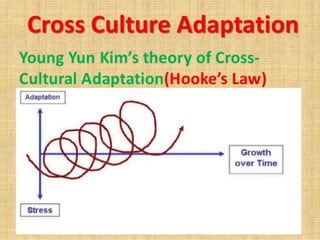
THE STRESS-ADAPTATION-GROWTH DYNAMIC
Adaptation: stress is temporary; it leads to adaptation
because students strive to meet and manage the challenge
by acting on and responding to the host environment
Growth: the stress-adaptation experiences bring about
change and growth
internal transformation
 creative responses to new circumstances
 a crisis once managed by the students presents an
opportunity for a strengthening of their coping abilities
THE STRESS-ADAPTATION-GROWTH DYNAMIC
 Students find themselves in a state of dynamic stress-
adaptation, which is change from time to time.
 Dialectic relationship between push and pull, or
engagement and disengagement in the psychological
movements of students
 Even those who interact with the natives with the intention
of confining themselves to only superficial relationships
are likely to become – given sufficient time – at least
adapted to the host culture “in spite of themselves”
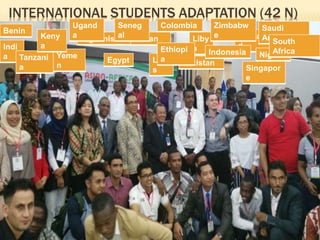
INTERNATIONAL STUDENTS ADAPTATION (42 N)
Afghanistan Sudan
Indi
a
Liby
a
Thailan
d
Singapor
e
Yeme
n
Egypt Lao
s
Pakistan
Tanzani
a
Benin
Indonesia
Keny
a
Zimbabw
e
Saudi
Arabia
Ugand
a
ColombiaSeneg
al
Nigeria
South
AfricaEthiopi
a
ADAPTATION STAGES
1. The first stage of cultural adaptation is called
the honeymoon stage.
2- The second stage tends to start three to four
months after arrival. It is characterized by the
feeling of culture shock,
3-Adjustment phase. This is where they learn to accept the
culture and to change their negative attitude to a positive
one
4-Acceptance and Adaptation phase. This is where they will feel
at home and become involved in activities and may enjoy some
of that countries customs.
THE STRUCTURE OF CROSS-CULTURAL
ADAPTATION
•PERSONAL COMMUNICATION
• HOST COMMUNICATION
COMPETENCE
• SOCIAL COMMUNICATION
1. HOST INTERPERSONAL
COMMUNICATION
2. HOST MASS
COMMUNICATION
3. ETHNIC INTERPERSONAL
AND
MASS COMMUNICATION
SYSTEMS
Intercultural
TransformationOUTCOMES OF THE ADAPTATION PROCESS
1. INCREASED FUNCTIONAL FITNESS: synchrony
between students’ internal responses and the external
demands in the host environment
2. PSYCHOLOGICAL HEALTH: ability to communicate and
the accompanying functional fitness in the host society /
psychological well-being
3. INTERCULTURAL IDENTITY: Become more flexible in
accepting some of values and traditions that exist in the
new culture even if it is conflict with his original culture
CONCLUSION
This theory portrays cross-cultural adaptation as a
collaborative effort in which a students and a receiving
environment are engaged in a joint venture
Cross-cultural adaptation is ultimately the gift of the
individuals
Cross-cultural adaptation is not an extraordinary
phenomenon that only exceptional individuals can
achieve. Rather, it is simply an incident of the normal
human mutability manifesting itself to the work of
ordinary people “stretching” themselves out of the old
and familiar
cross-Culture adaptation theory

cross-Culture adaptation theory

  • 1.
  • 3.
    INTRODUCTION OF THEORY• DESCRIBESTHE PROCESS OF CROSS- CULTURAL ADAPTATION AS IT UNFOLDS OVER TIME • EXPLAINS THE STRUCTURE OF THIS PROCESS • IT IS BASED ON THREE ASSUMPTIONS (“OPEN-SYSTEMS”) 1. HUMANS HAVE AN INHERENT DRIVE TO ADAPT AND GROW 2. ADAPTATION TO ONE’S SOCIAL ENVIRONMENT OCCURS THROUGH COMMUNICATION 3. ADAPTATION IS A COMPLEX AND DYNAMIC PROCESS
  • 5.
    THE PROCESS OFCROSS-CULTURAL ADAPTATION CULTURE IS DEFINED AS: an imprinted pattern of knowledge, attitudes, values, perceptions and a set of behaviors that permeate all life activities Culture has a pervasive role in shaping individual behavior Enculturation: The process by which a person is socialized into his or her primary culture, receiving primary cultural knowledge, awareness, and values. ACCULTURATION: the process of learning and acquiring the elements of the host culture UNLEARNING/DECULTURATION: losing or putting aside some of the old cultural habits / new responses are adopted in situations that previously would have evoked old ones
  • 6.
    COMMUNCATE1 To become competentin the host communication system, in turn, requires - active participation in the interpersonal and mass communication processes of the local community. - Just as we cannot learn to swim without actually plunging into the water, we cannot truly learn to communicate without actually communicating. .
  • 7.
    THE STRESS-ADAPTATION-GROWTH DYNAMIC Adaptation:stress is temporary; it leads to adaptation because students strive to meet and manage the challenge by acting on and responding to the host environment Growth: the stress-adaptation experiences bring about change and growth internal transformation  creative responses to new circumstances  a crisis once managed by the students presents an opportunity for a strengthening of their coping abilities
  • 8.
    THE STRESS-ADAPTATION-GROWTH DYNAMIC Students find themselves in a state of dynamic stress- adaptation, which is change from time to time.  Dialectic relationship between push and pull, or engagement and disengagement in the psychological movements of students  Even those who interact with the natives with the intention of confining themselves to only superficial relationships are likely to become – given sufficient time – at least adapted to the host culture “in spite of themselves”
  • 9.
    INTERNATIONAL STUDENTS ADAPTATION(42 N) Afghanistan Sudan Indi a Liby a Thailan d Singapor e Yeme n Egypt Lao s Pakistan Tanzani a Benin Indonesia Keny a Zimbabw e Saudi Arabia Ugand a ColombiaSeneg al Nigeria South AfricaEthiopi a
  • 10.
    ADAPTATION STAGES 1. Thefirst stage of cultural adaptation is called the honeymoon stage. 2- The second stage tends to start three to four months after arrival. It is characterized by the feeling of culture shock, 3-Adjustment phase. This is where they learn to accept the culture and to change their negative attitude to a positive one 4-Acceptance and Adaptation phase. This is where they will feel at home and become involved in activities and may enjoy some of that countries customs.
  • 11.
    THE STRUCTURE OFCROSS-CULTURAL ADAPTATION •PERSONAL COMMUNICATION • HOST COMMUNICATION COMPETENCE • SOCIAL COMMUNICATION 1. HOST INTERPERSONAL COMMUNICATION 2. HOST MASS COMMUNICATION 3. ETHNIC INTERPERSONAL AND MASS COMMUNICATION SYSTEMS
  • 12.
    Intercultural TransformationOUTCOMES OF THEADAPTATION PROCESS 1. INCREASED FUNCTIONAL FITNESS: synchrony between students’ internal responses and the external demands in the host environment 2. PSYCHOLOGICAL HEALTH: ability to communicate and the accompanying functional fitness in the host society / psychological well-being 3. INTERCULTURAL IDENTITY: Become more flexible in accepting some of values and traditions that exist in the new culture even if it is conflict with his original culture
  • 13.
    CONCLUSION This theory portrayscross-cultural adaptation as a collaborative effort in which a students and a receiving environment are engaged in a joint venture Cross-cultural adaptation is ultimately the gift of the individuals Cross-cultural adaptation is not an extraordinary phenomenon that only exceptional individuals can achieve. Rather, it is simply an incident of the normal human mutability manifesting itself to the work of ordinary people “stretching” themselves out of the old and familiar