Empowering students to adapt to new learning situations Áine MacNeill, Alan Masson, Vilinda Ross CETL(NI) Institutional E-Learning Services University of Ulster
Overview of session Overview of Hybrid Learning Model and its use Demonstration of its use Hands-on activity Learner evaluation  Discussion and questions
 
 
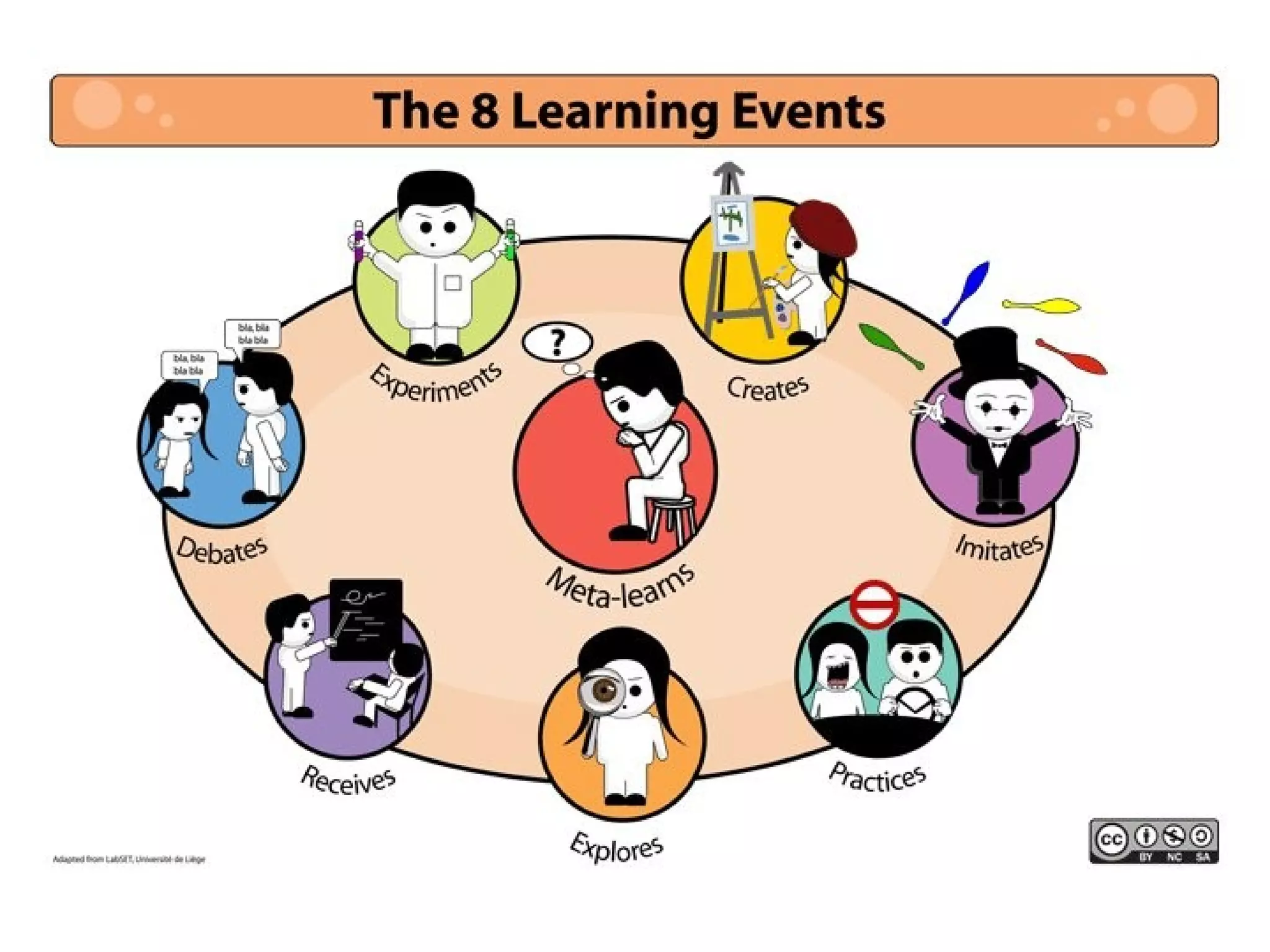
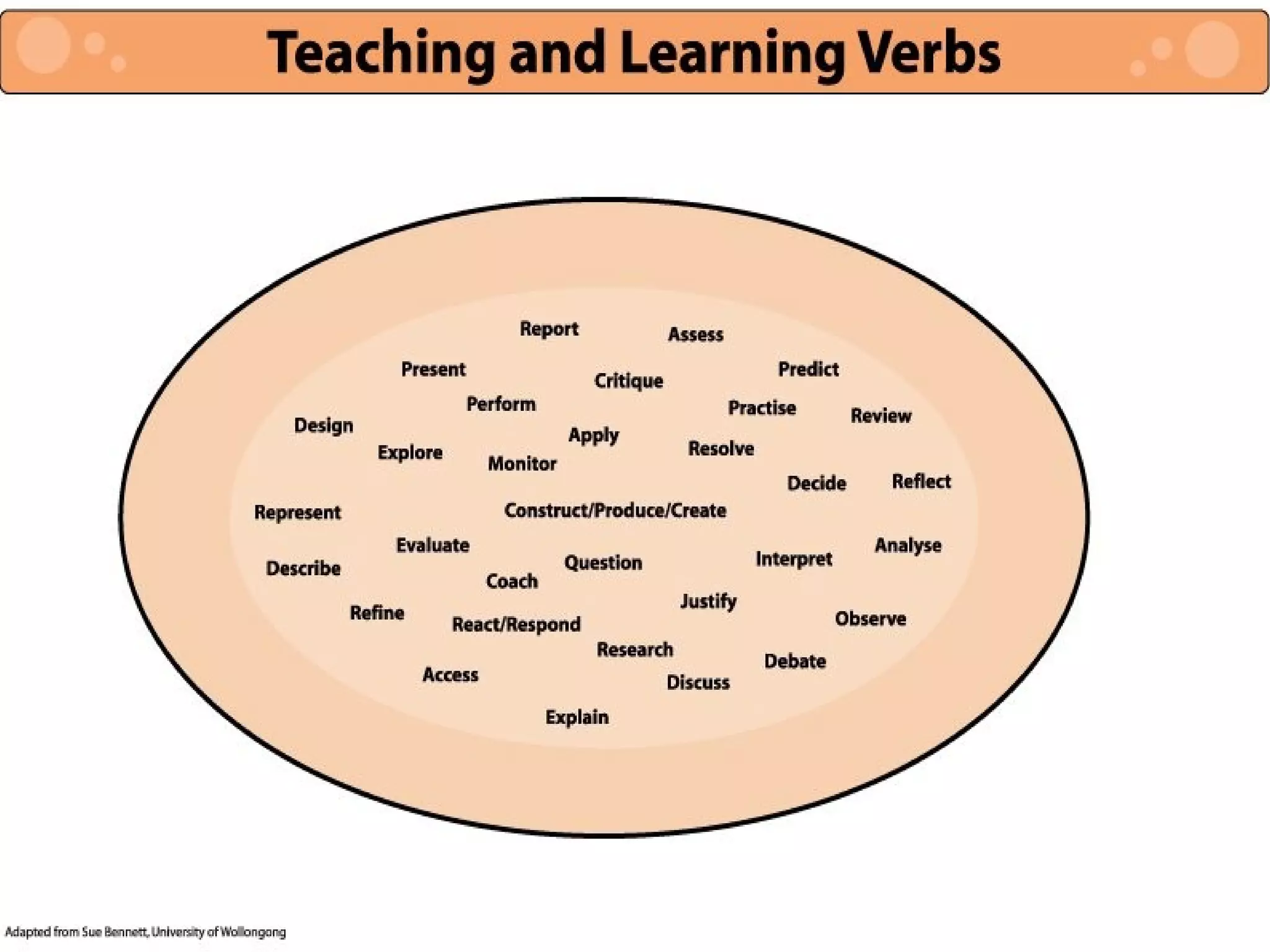
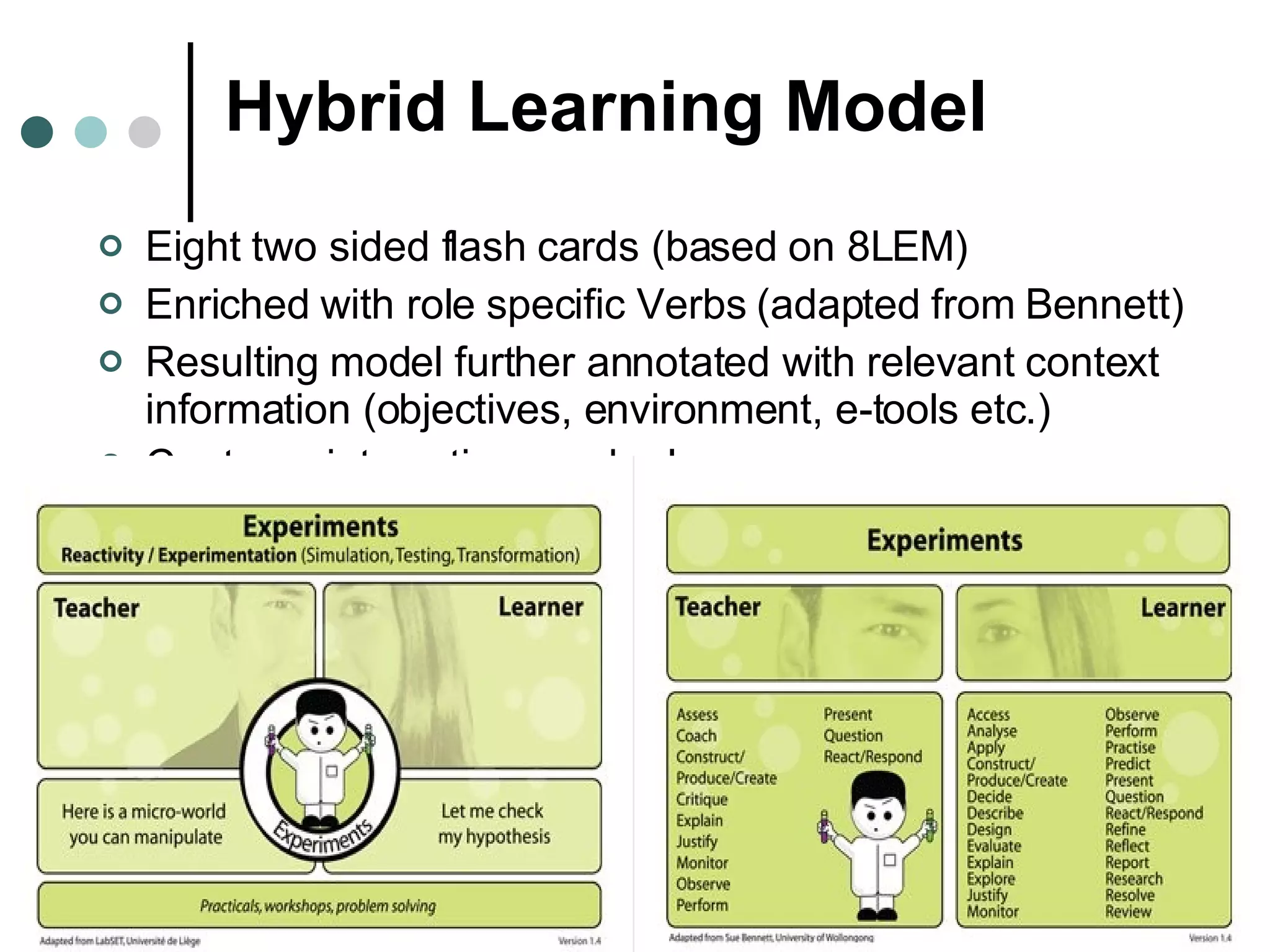
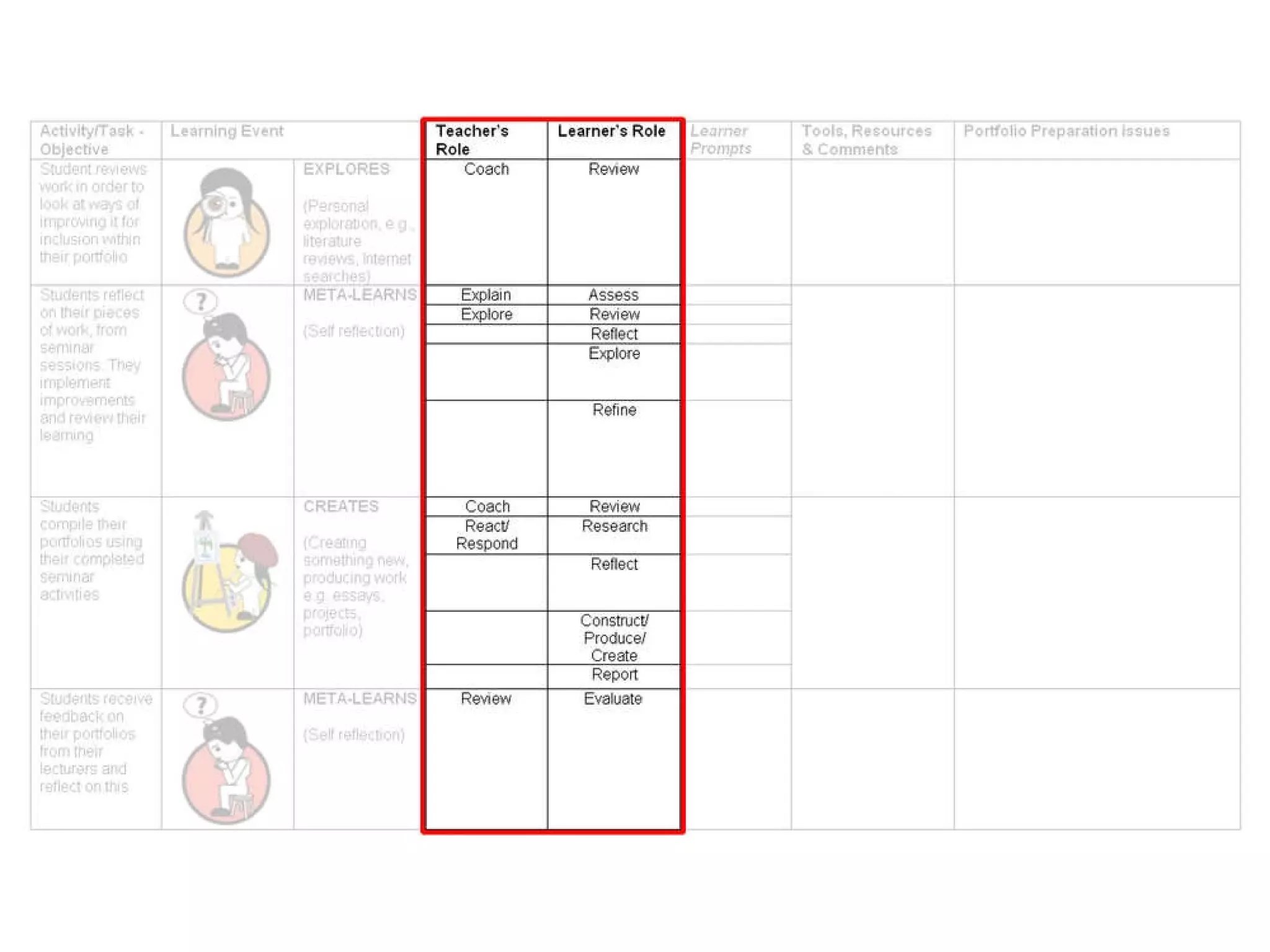
Hybrid Learning Model Eight two sided flash cards (based on 8LEM) Enriched with role specific Verbs (adapted from Bennett) Resulting model further annotated with relevant context information (objectives, environment, e-tools etc.)  Captures interactions and roles


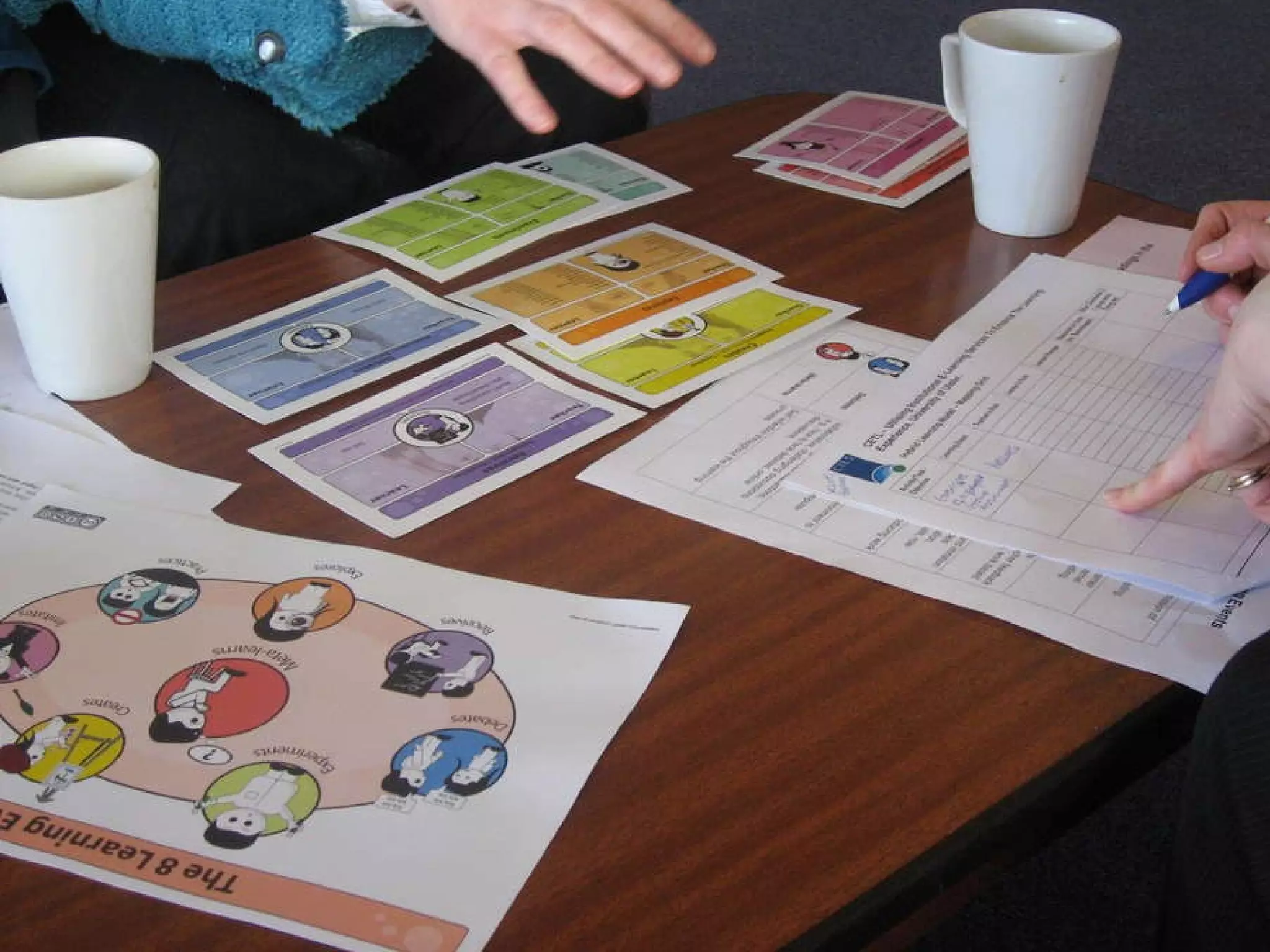
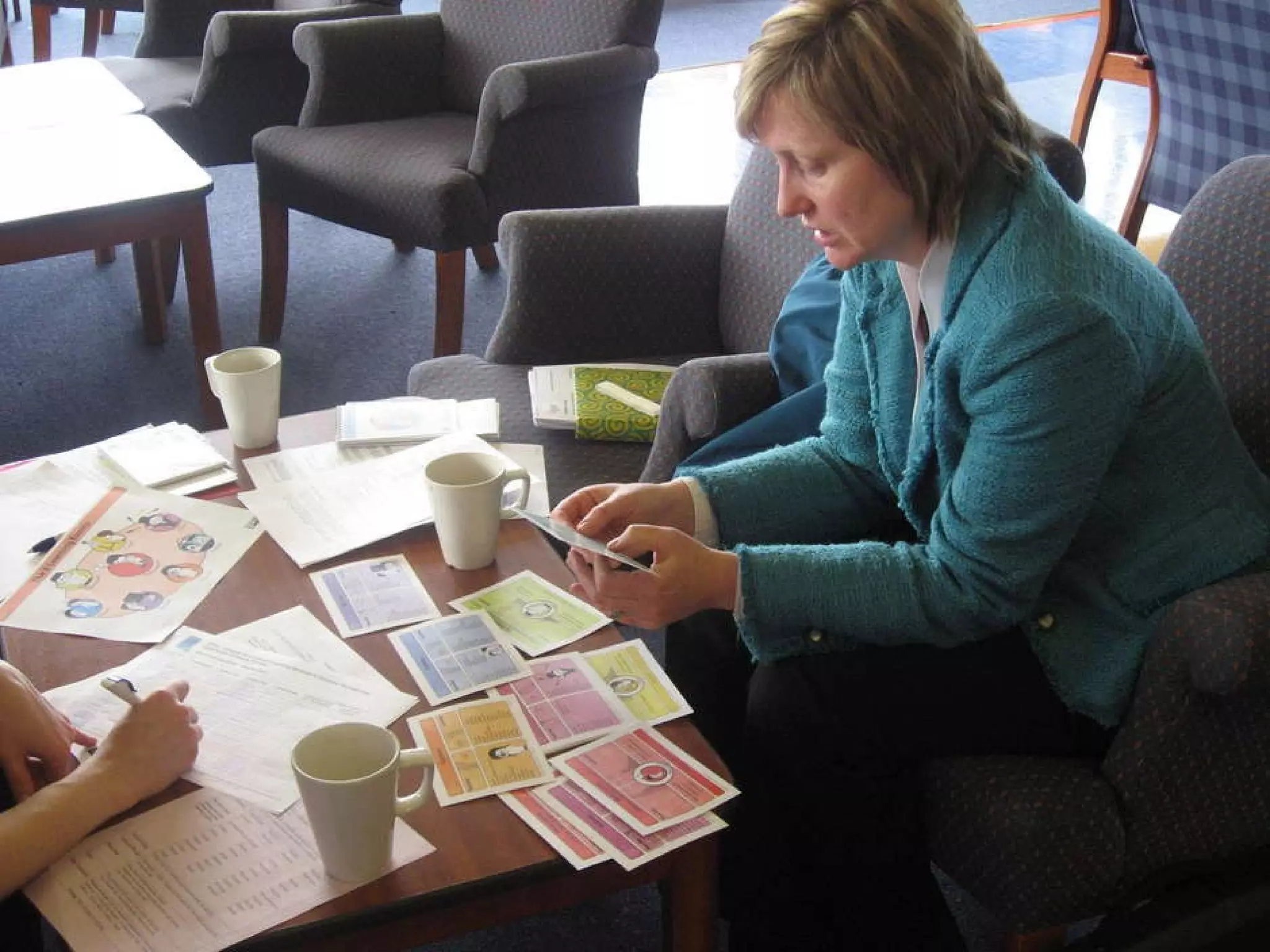
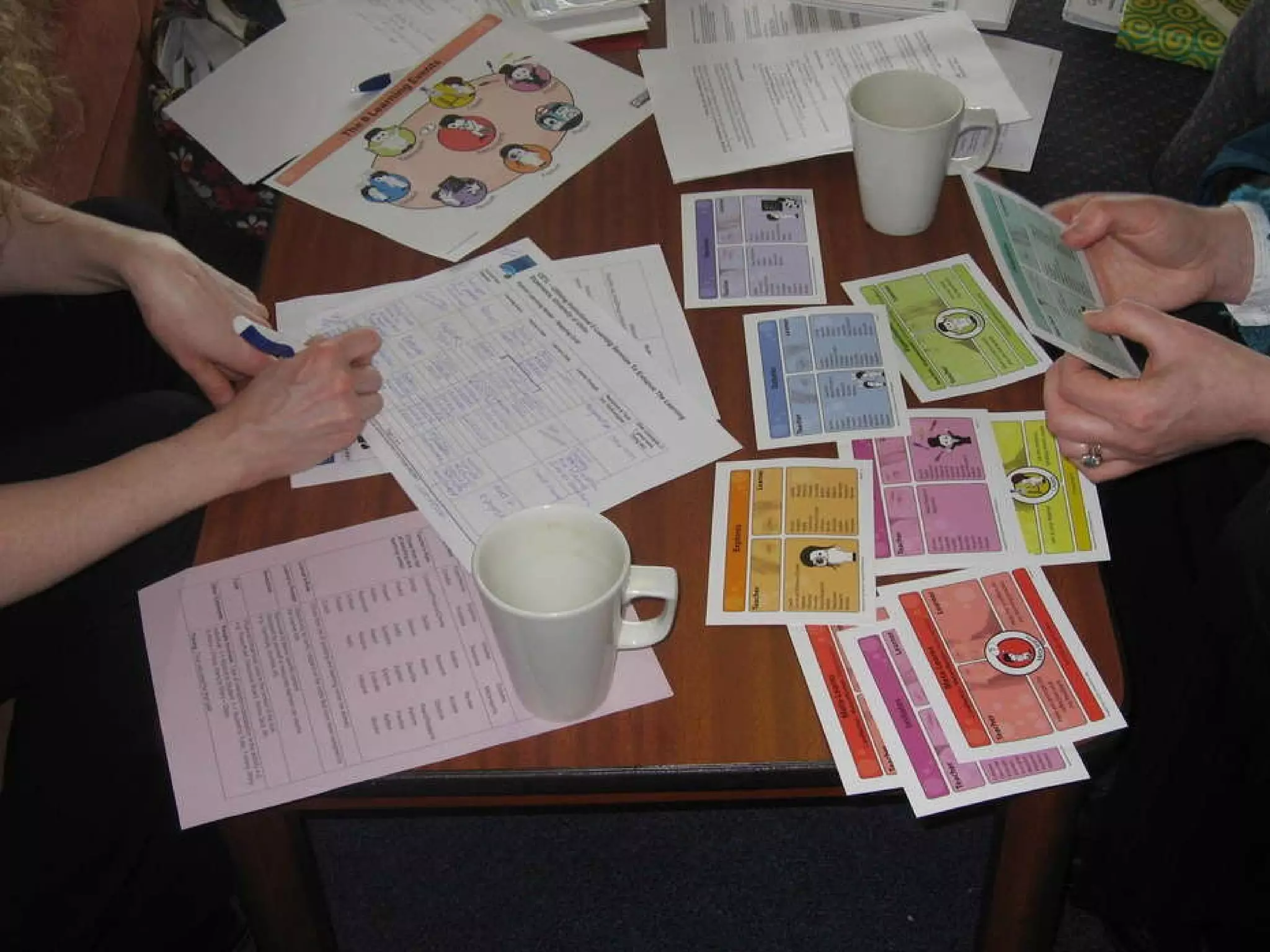
Activity  Think about a learning activity that you have been involved in, use the  prompt cards  to break it down and describe it in terms of learning events. Then examine each learning event, turn the cards over and assign verbs to both learner and teacher roles.  Use the  tools reference sheet  to examine possible e-tools for individual learning events
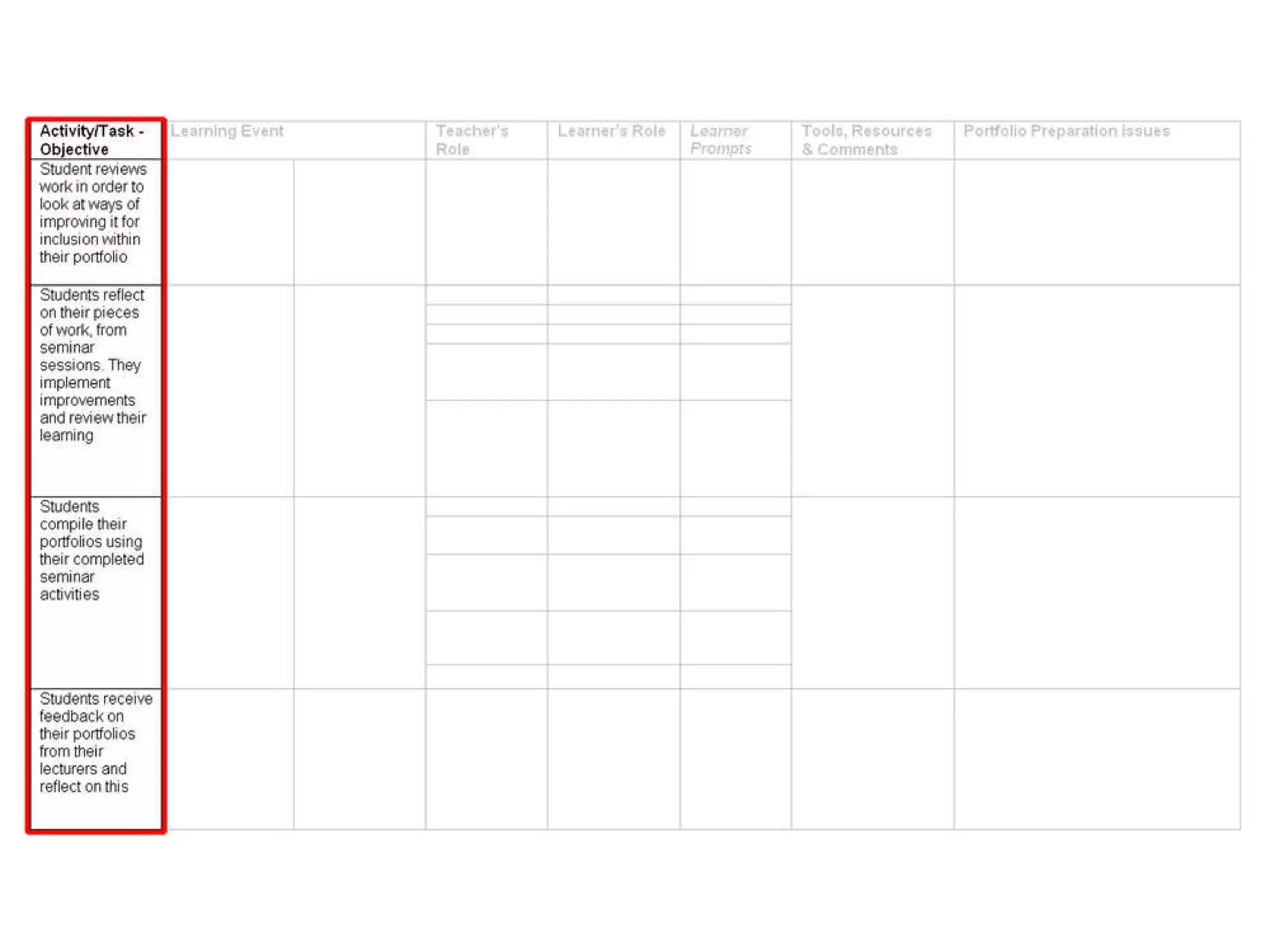
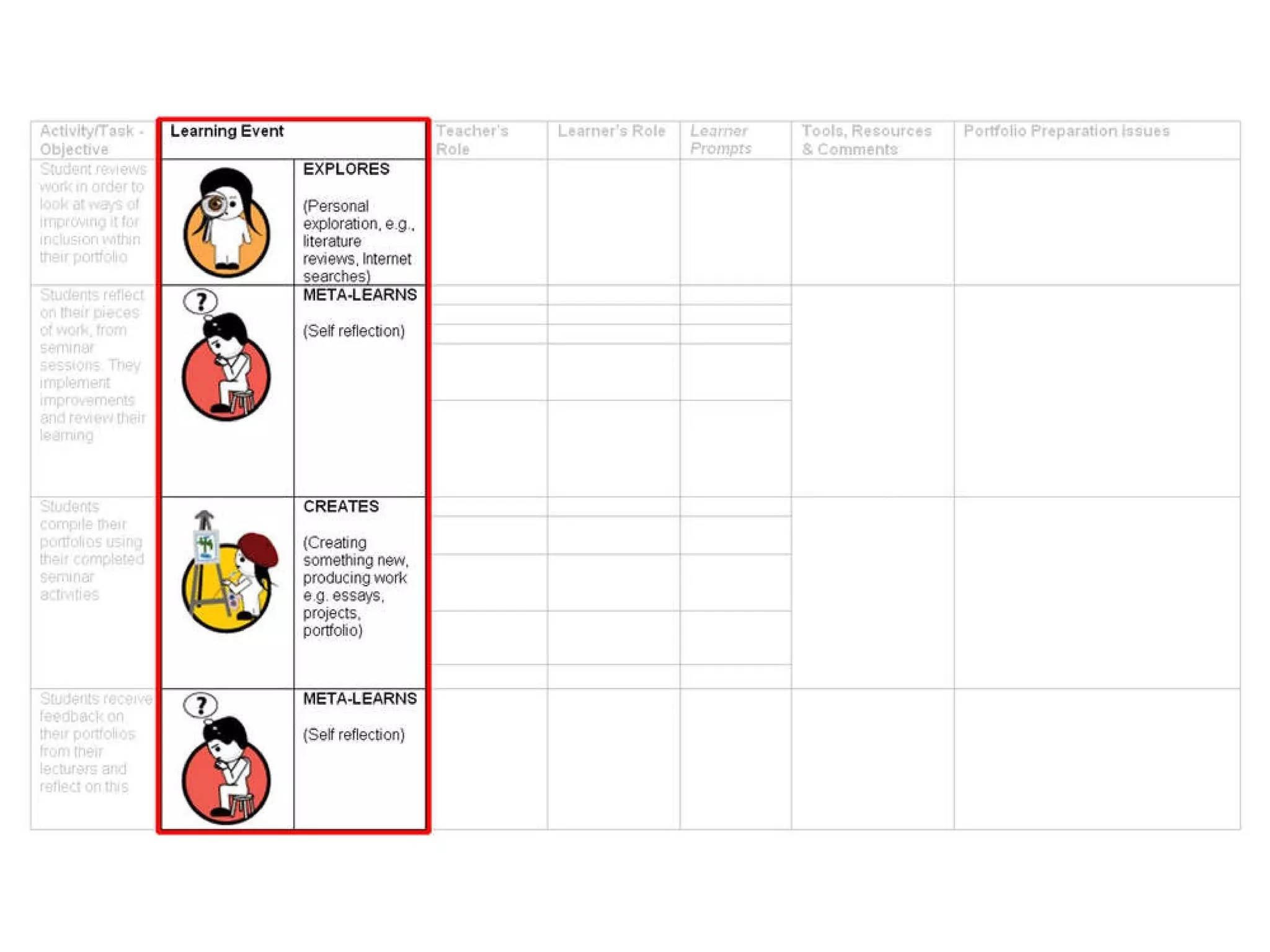
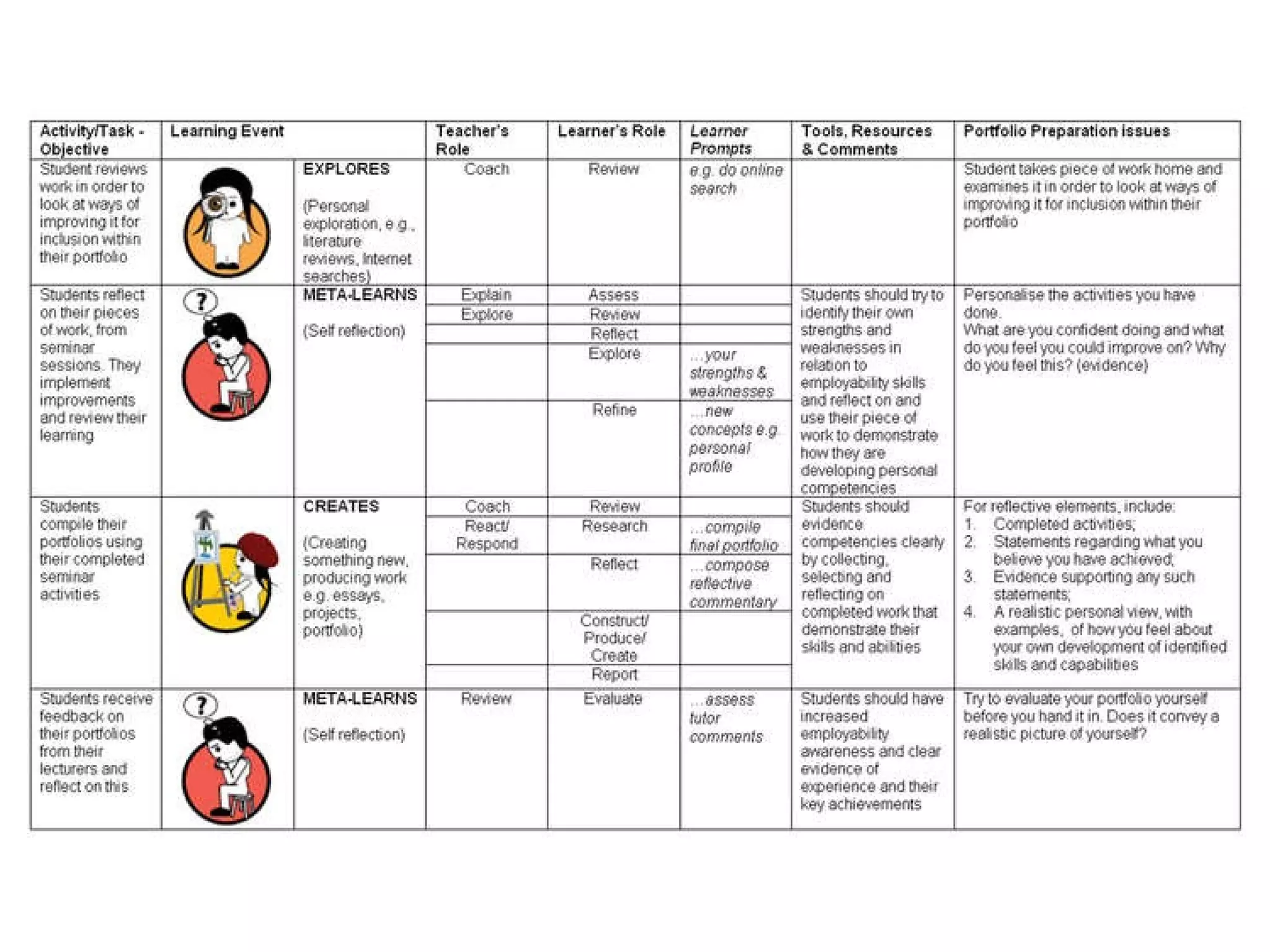
Learner evaluation of the Hybrid Learning Model   Scenario : Using prompts in the form of interactional styles (learning events) and verbs to help year 1 students to adapt to new learning situations  Model relayed to learners (animated walkthrough and printed grid)  Example: portfolio assessment (yr1 Marketing students) Evaluation :  immediate and end of semester
Student interaction Animated activity plan presented to the students in class (process walkthrough) Modelled activity: Portfolio compilation Grid provided as a reference document Resources also available online (VLE)
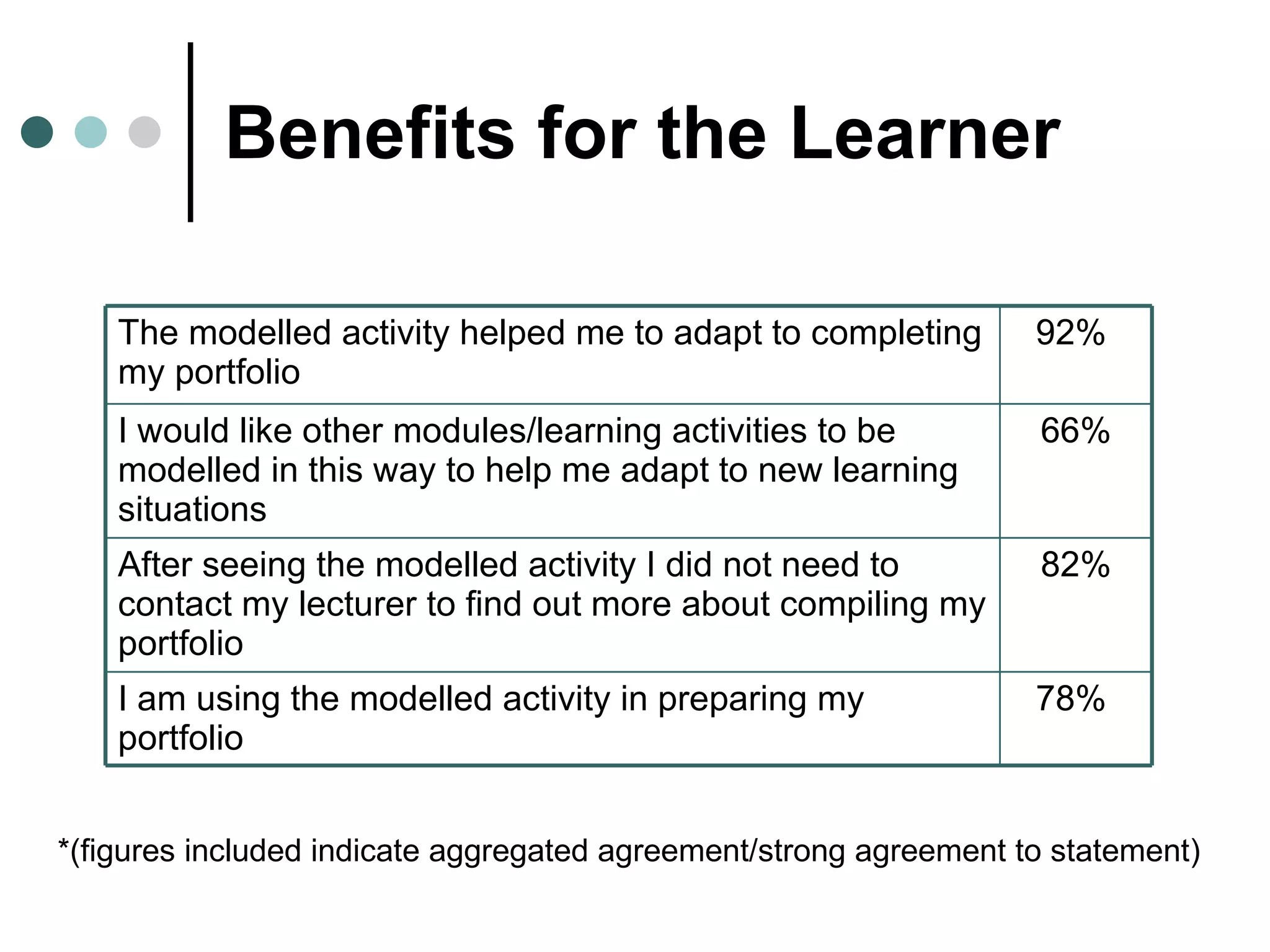
Benefits for the Learner *(figures included indicate aggregated agreement/strong agreement to statement) The modelled activity helped me to adapt to completing my portfolio 92%   I would like other modules/learning activities to be modelled in this way to help me adapt to new learning situations 66% After seeing the modelled activity I did not need to contact my lecturer to find out more about compiling my portfolio 82% I am using the modelled activity in preparing my portfolio 78%
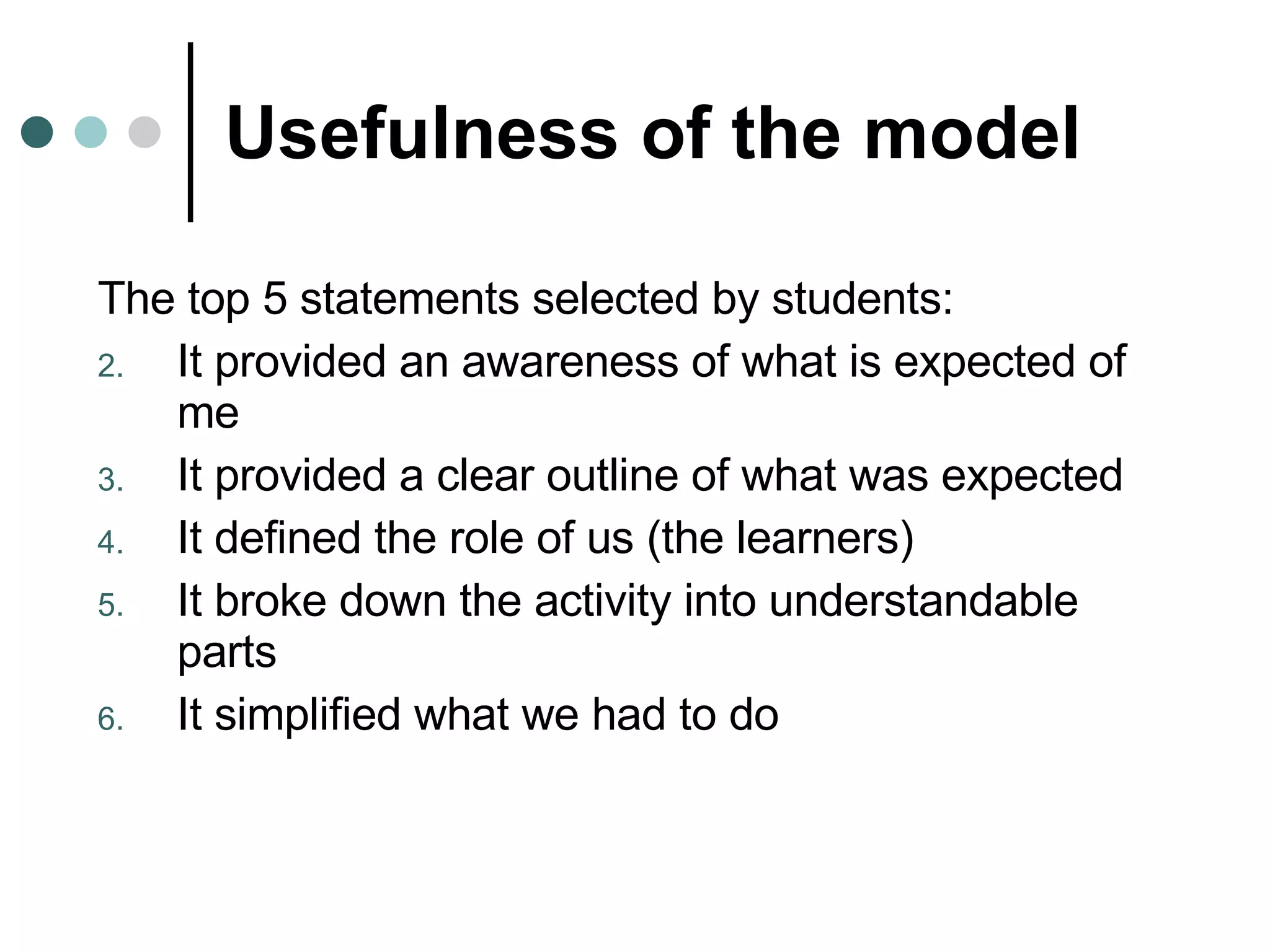
Usefulness of the model The top 5 statements selected by students: It provided an awareness of what is expected of me It provided a clear outline of what was expected It defined the role of us (the learners) It broke down the activity into understandable parts It simplified what we had to do
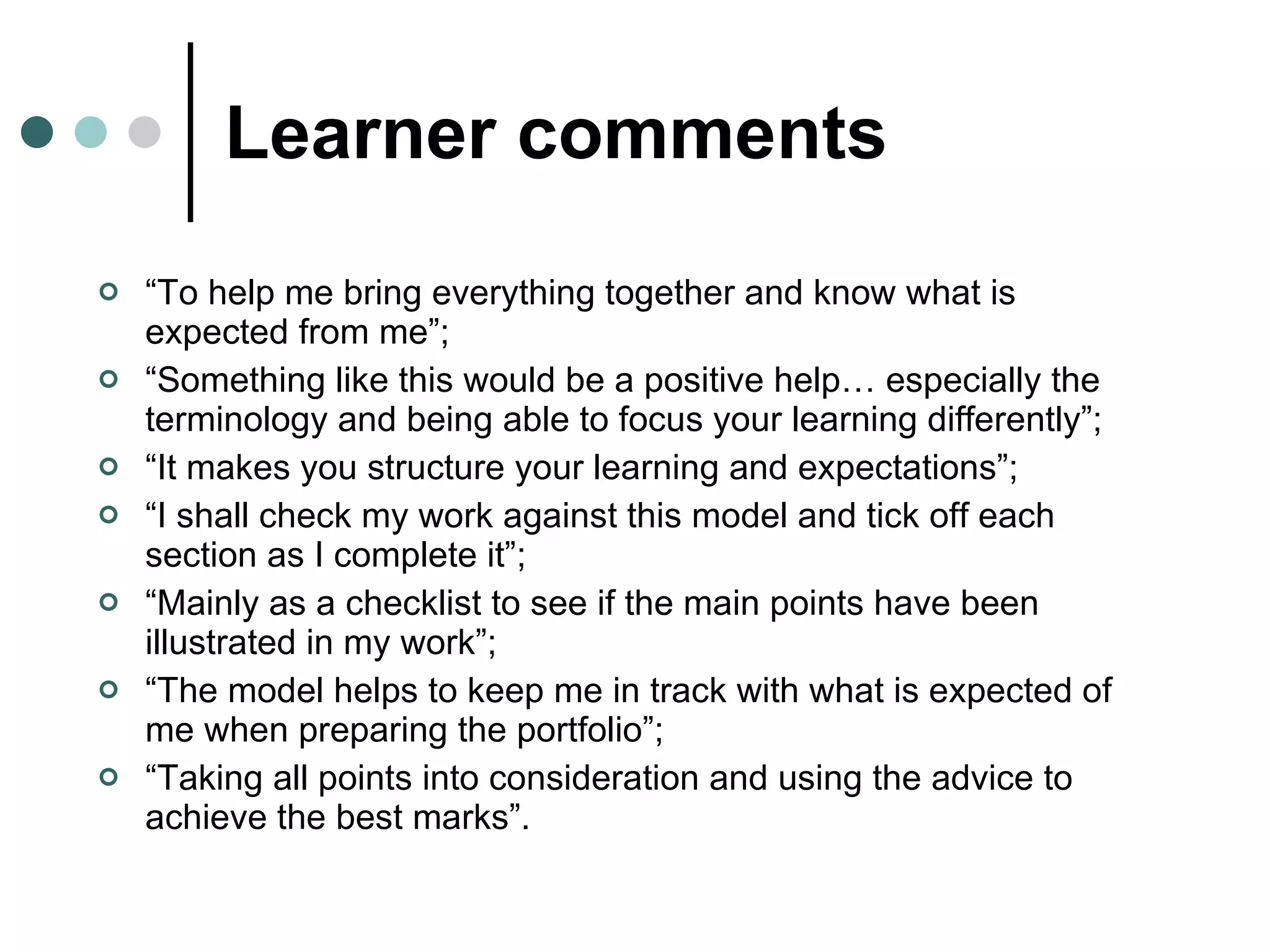
Learner comments “ To help me bring everything together and know what is expected from me”;  “ Something like this would be a positive help… especially the terminology and being able to focus your learning differently”; “ It makes you structure your learning and expectations”; “ I shall check my work against this model and tick off each section as I complete it”;  “ Mainly as a checklist to see if the main points have been illustrated in my work”;  “ The model helps to keep me in track with what is expected of me when preparing the portfolio”; “ Taking all points into consideration and using the advice to achieve the best marks”.
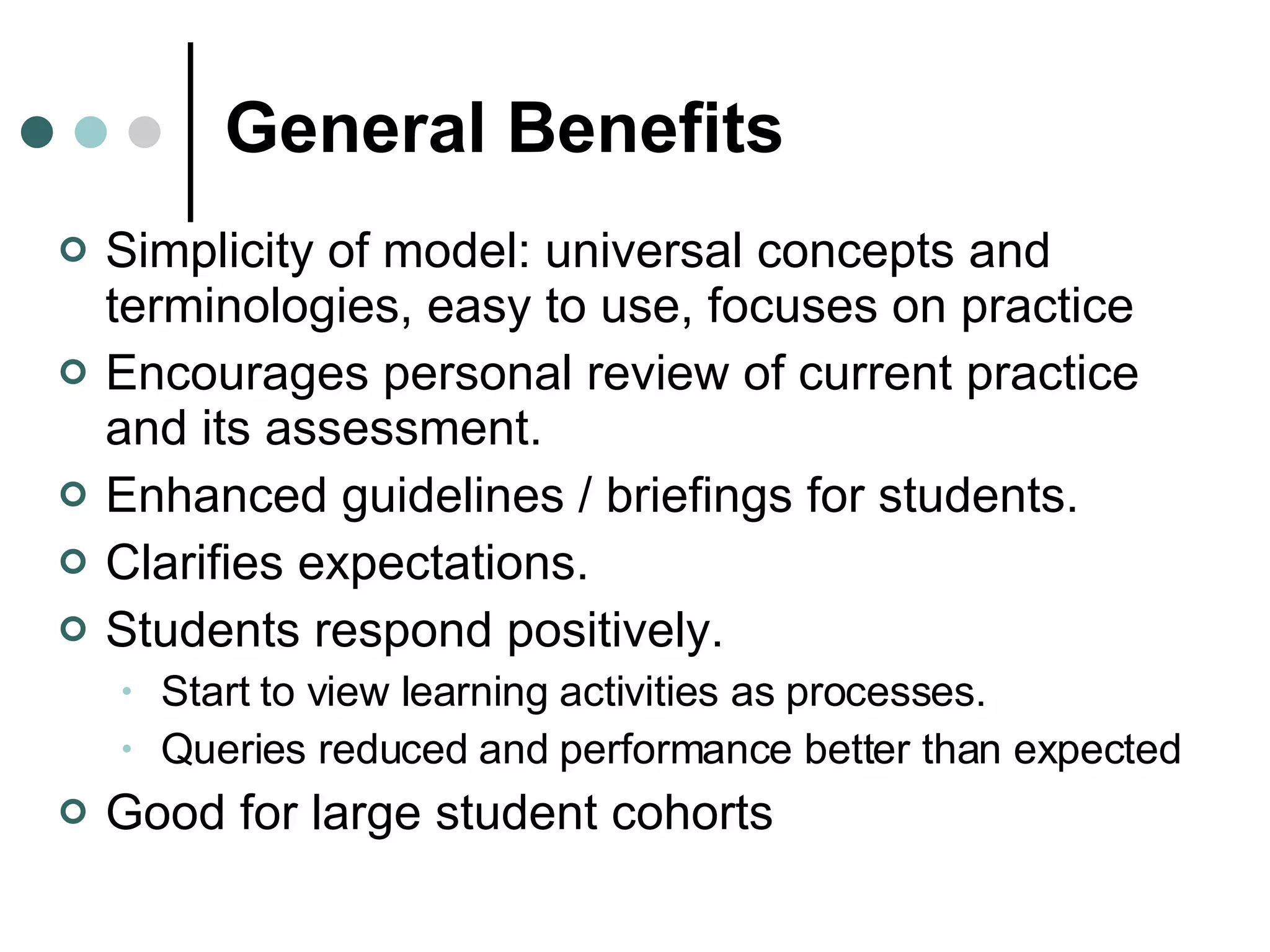
General Benefits Simplicity of model: universal concepts and terminologies, easy to use, focuses on practice Encourages personal review of current practice and its assessment.   Enhanced guidelines / briefings for students. Clarifies expectations. Students respond positively. Start to view learning activities as processes. Queries reduced and performance better than expected Good for large student cohorts
Discussion/  Questions More info @: http:// cetl.ulster.ac.uk/elearning / e-mail: ab.macneill@ulster.ac.uk

Empowering students to adapt to new learning situations

  • 1.
    Empowering students toadapt to new learning situations Áine MacNeill, Alan Masson, Vilinda Ross CETL(NI) Institutional E-Learning Services University of Ulster
  • 2.
    Overview of sessionOverview of Hybrid Learning Model and its use Demonstration of its use Hands-on activity Learner evaluation Discussion and questions
  • 3.
  • 4.
  • 5.
    Hybrid Learning ModelEight two sided flash cards (based on 8LEM) Enriched with role specific Verbs (adapted from Bennett) Resulting model further annotated with relevant context information (objectives, environment, e-tools etc.) Captures interactions and roles
  • 6.
  • 7.
  • 8.
  • 9.
  • 10.
  • 11.
  • 12.
  • 13.
    Activity Thinkabout a learning activity that you have been involved in, use the prompt cards to break it down and describe it in terms of learning events. Then examine each learning event, turn the cards over and assign verbs to both learner and teacher roles. Use the tools reference sheet to examine possible e-tools for individual learning events
  • 14.
    Learner evaluation ofthe Hybrid Learning Model Scenario : Using prompts in the form of interactional styles (learning events) and verbs to help year 1 students to adapt to new learning situations Model relayed to learners (animated walkthrough and printed grid) Example: portfolio assessment (yr1 Marketing students) Evaluation : immediate and end of semester
  • 15.
    Student interaction Animatedactivity plan presented to the students in class (process walkthrough) Modelled activity: Portfolio compilation Grid provided as a reference document Resources also available online (VLE)
  • 16.
    Benefits for theLearner *(figures included indicate aggregated agreement/strong agreement to statement) The modelled activity helped me to adapt to completing my portfolio 92% I would like other modules/learning activities to be modelled in this way to help me adapt to new learning situations 66% After seeing the modelled activity I did not need to contact my lecturer to find out more about compiling my portfolio 82% I am using the modelled activity in preparing my portfolio 78%
  • 17.
    Usefulness of themodel The top 5 statements selected by students: It provided an awareness of what is expected of me It provided a clear outline of what was expected It defined the role of us (the learners) It broke down the activity into understandable parts It simplified what we had to do
  • 18.
    Learner comments “To help me bring everything together and know what is expected from me”; “ Something like this would be a positive help… especially the terminology and being able to focus your learning differently”; “ It makes you structure your learning and expectations”; “ I shall check my work against this model and tick off each section as I complete it”; “ Mainly as a checklist to see if the main points have been illustrated in my work”; “ The model helps to keep me in track with what is expected of me when preparing the portfolio”; “ Taking all points into consideration and using the advice to achieve the best marks”.
  • 19.
    General Benefits Simplicityof model: universal concepts and terminologies, easy to use, focuses on practice Encourages personal review of current practice and its assessment. Enhanced guidelines / briefings for students. Clarifies expectations. Students respond positively. Start to view learning activities as processes. Queries reduced and performance better than expected Good for large student cohorts
  • 20.
    Discussion/ QuestionsMore info @: http:// cetl.ulster.ac.uk/elearning / e-mail: ab.macneill@ulster.ac.uk