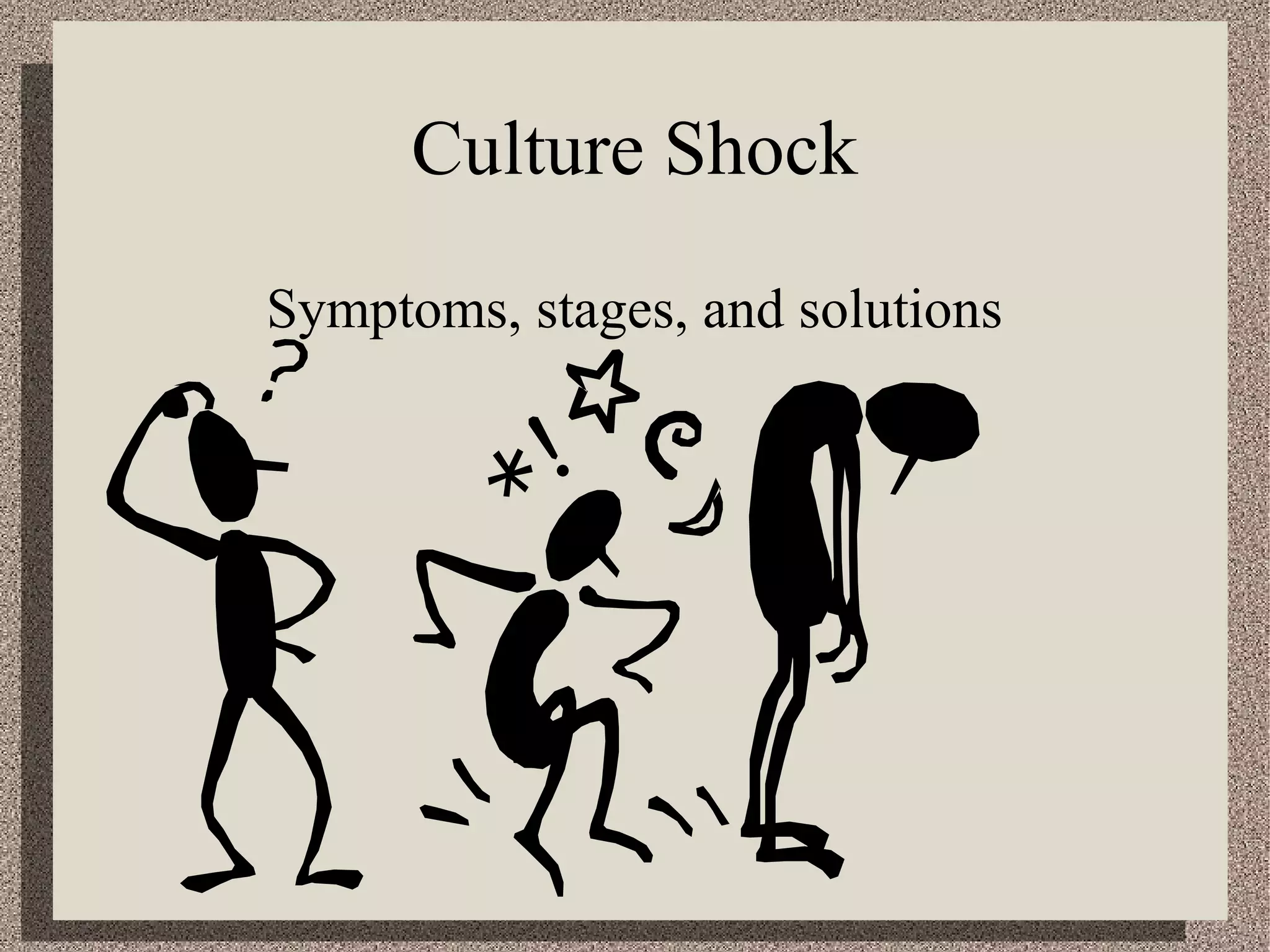
Culture Shock
Symptoms, stages, and solutions
Definition of Culture Shock
• “Culture shock is a kind of homesickness
that results from the stress of living in a
new culture when everything is different:
the language, food, and customs.”
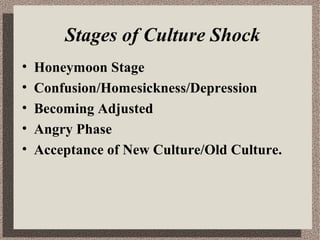
Stages of Culture Shock
•
•
•
•
•

Honeymoon Stage
Confusion/Homesickness/Depression
Becoming Adjusted
Angry Phase
Acceptance of New Culture/Old Culture.
Common Symptoms of
Culture Shock






Frustration
Mental fatigue
Disorientation
Boredom
Lack of motivation

 Physical problems
< Head aches
< Stomachaches
< Chest pains
< Frequent infection
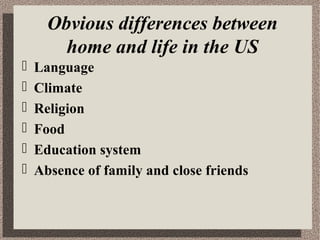
Obvious differences between
home and life in the US







Language
Climate
Religion
Food
Education system
Absence of family and close friends
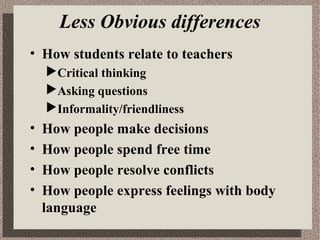
Less Obvious differences
• How students relate to teachers
Critical thinking
Asking questions
Informality/friendliness

•
•
•
•

How people make decisions
How people spend free time
How people resolve conflicts
How people express feelings with body
language
Less Obvious differences
• How students relate to teachers
Critical thinking
Asking questions
Informality/friendliness

•
•
•
•

How people make decisions
How people spend free time
How people resolve conflicts
How people express feelings with body
language

Culture shock

  • 1.
  • 2.
    Definition of CultureShock • “Culture shock is a kind of homesickness that results from the stress of living in a new culture when everything is different: the language, food, and customs.”
  • 3.
    Stages of CultureShock • • • • • Honeymoon Stage Confusion/Homesickness/Depression Becoming Adjusted Angry Phase Acceptance of New Culture/Old Culture.
  • 4.
    Common Symptoms of CultureShock      Frustration Mental fatigue Disorientation Boredom Lack of motivation  Physical problems < Head aches < Stomachaches < Chest pains < Frequent infection
  • 5.
    Obvious differences between homeand life in the US       Language Climate Religion Food Education system Absence of family and close friends
  • 6.
    Less Obvious differences •How students relate to teachers Critical thinking Asking questions Informality/friendliness • • • • How people make decisions How people spend free time How people resolve conflicts How people express feelings with body language
  • 7.
    Less Obvious differences •How students relate to teachers Critical thinking Asking questions Informality/friendliness • • • • How people make decisions How people spend free time How people resolve conflicts How people express feelings with body language

Editor's Notes

  • #4 There are five distinct phases.