Downloaded 662 times









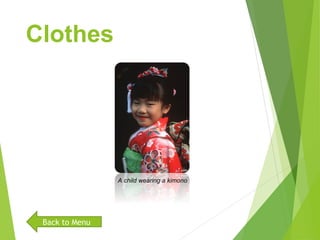






The document discusses culture shock, defining it as the physical or emotional discomfort one feels when moving to a new country or culture. It outlines the common symptoms of culture shock like loneliness, loss of identity, and homesickness. The stages of culture shock are also presented, including the initial "honeymoon" stage, a subsequent emptiness phase, a conformist phase as one gains understanding, and finally an assimilation phase where one fully accepts the new culture. Specific examples of culture shock in Japan are provided related to housing, food, clothing, schools, festivals, and making friends. The conclusion emphasizes that culture shock can be a serious problem but preparing to adjust one's behavior can help a person adapt more easily to a new culture


