MUSLIM YOUTH:
Identity, Integration, Adaptation
and Social Cohesion
Colleen Ward
with
Jaimee Stuart and Zeenah Adam
Centre for Applied Cross-Cultural Research
Victoria University of Wellington
Key Questions
• Identity: How do Muslim youth see themselves?
• Adaptation: How well do Muslim youth adapt socially
and psychologically? What factors facilitate
adaptation?
• Integration and Social Cohesion: To what extent do
Muslim youth experience prejudice and social
exclusion? What factors promote integration and
social cohesion?
Data Bases
• Survey of 180 Muslim youth (13-19 years)
– Identity, discrimination, acculturation, social
connectedness, psychological and social adaptation
• Young Muslim Leaders Workshop: Qaadah
Muslimoona Shabaab
– 36 Muslim young people (15-25 years)
– Identity and success; Resources and obstacles; Personal
and community goals
• Building Bridges Workshop: Jusoor Tawaasui
– 24 Muslim and non-Muslim girls (13-14 years)
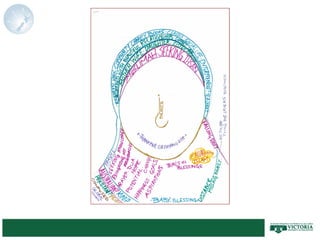
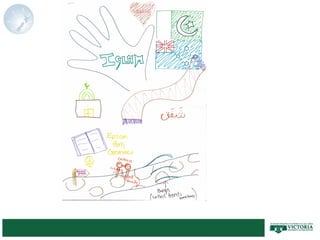
– Stereotyping, identity and social cohesion
Identity and Integration:
Achieving Balance
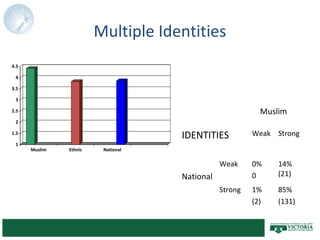
Multiple Identities
1
1.5
2
2.5
3
3.5
4
4.5
Muslim Ethnic National
Muslim
IDENTITIES Weak Strong
National
Weak 0%
0
14%
(21)
Strong 1%
(2)
85%
(131)
Identity and Adaptation:
The Road to Success
0
0.5
1
1.5
2
2.5
3
3.5
4
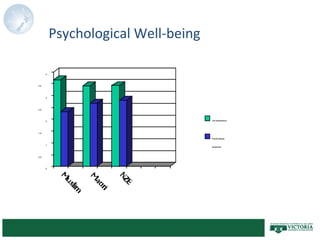
Muslim Maori NZE
Life Satisfaction
Psychological
Symptoms
Psychological Well-being
0
0.5
1
1.5
2
2.5
3
3.5
4
4.5
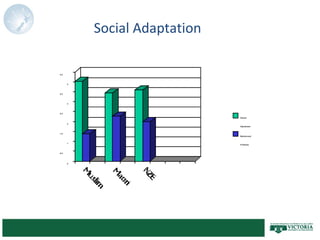
Muslim Maori NZE
School
Adjustment
Behavioural
Problems
Social Adaptation
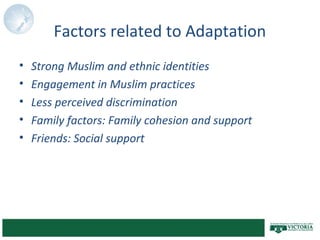
Factors related to Adaptation
• Strong Muslim and ethnic identities
• Engagement in Muslim practices
• Less perceived discrimination
• Family factors: Family cohesion and support
• Friends: Social support
Social Cohesion:
Building Bridges
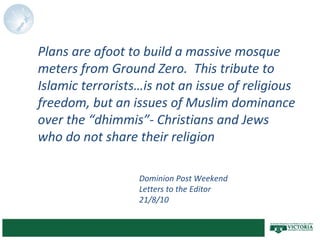
Plans are afoot to build a massive mosque
meters from Ground Zero. This tribute to
Islamic terrorists…is not an issue of religious
freedom, but an issues of Muslim dominance
over the “dhimmis”- Christians and Jews
who do not share their religion
Dominion Post Weekend
Letters to the Editor
21/8/10
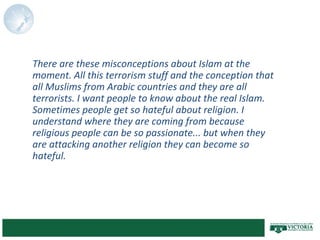
There are these misconceptions about Islam at the
moment. All this terrorism stuff and the conception that
all Muslims from Arabic countries and they are all
terrorists. I want people to know about the real Islam.
Sometimes people get so hateful about religion. I
understand where they are coming from because
religious people can be so passionate... but when they
are attacking another religion they can become so
hateful.
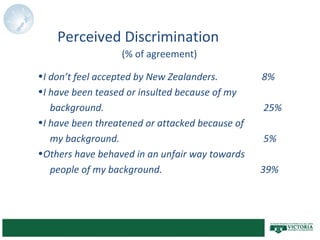
•I don’t feel accepted by New Zealanders. 8%
•I have been teased or insulted because of my
background. 25%
•I have been threatened or attacked because of
my background. 5%
•Others have behaved in an unfair way towards
people of my background. 39%
Perceived Discrimination
(% of agreement)
We may look different but we all have the
same problems and we are the same
inside….
Policy Implications:
Integration and Social Cohesion
Strategies
• Policies and programmes that nurture and support
Muslim identity, practices and community
• Policies and programmes that promote appreciation
of diversity
• Policies and programmes that Build Bridges: Increase
positive contact between Muslim and non-Muslims in
New Zealand
• Continued funding for research on Building an
Inclusive Society
For further information contact:
Colleen.Ward@vuw.ac.nz

2010 NZ Diversity Research Forum: Colleen Ward on Muslim Youth

  • 1.
    MUSLIM YOUTH: Identity, Integration,Adaptation and Social Cohesion Colleen Ward with Jaimee Stuart and Zeenah Adam Centre for Applied Cross-Cultural Research Victoria University of Wellington
  • 2.
    Key Questions • Identity:How do Muslim youth see themselves? • Adaptation: How well do Muslim youth adapt socially and psychologically? What factors facilitate adaptation? • Integration and Social Cohesion: To what extent do Muslim youth experience prejudice and social exclusion? What factors promote integration and social cohesion?
  • 3.
    Data Bases • Surveyof 180 Muslim youth (13-19 years) – Identity, discrimination, acculturation, social connectedness, psychological and social adaptation • Young Muslim Leaders Workshop: Qaadah Muslimoona Shabaab – 36 Muslim young people (15-25 years) – Identity and success; Resources and obstacles; Personal and community goals • Building Bridges Workshop: Jusoor Tawaasui – 24 Muslim and non-Muslim girls (13-14 years) – Stereotyping, identity and social cohesion
  • 4.
  • 7.
    Multiple Identities 1 1.5 2 2.5 3 3.5 4 4.5 Muslim EthnicNational Muslim IDENTITIES Weak Strong National Weak 0% 0 14% (21) Strong 1% (2) 85% (131)
  • 8.
  • 9.
    0 0.5 1 1.5 2 2.5 3 3.5 4 Muslim Maori NZE LifeSatisfaction Psychological Symptoms Psychological Well-being
  • 10.
  • 11.
    Factors related toAdaptation • Strong Muslim and ethnic identities • Engagement in Muslim practices • Less perceived discrimination • Family factors: Family cohesion and support • Friends: Social support
  • 12.
  • 13.
    Plans are afootto build a massive mosque meters from Ground Zero. This tribute to Islamic terrorists…is not an issue of religious freedom, but an issues of Muslim dominance over the “dhimmis”- Christians and Jews who do not share their religion Dominion Post Weekend Letters to the Editor 21/8/10
  • 14.
    There are thesemisconceptions about Islam at the moment. All this terrorism stuff and the conception that all Muslims from Arabic countries and they are all terrorists. I want people to know about the real Islam. Sometimes people get so hateful about religion. I understand where they are coming from because religious people can be so passionate... but when they are attacking another religion they can become so hateful.
  • 15.
    •I don’t feelaccepted by New Zealanders. 8% •I have been teased or insulted because of my background. 25% •I have been threatened or attacked because of my background. 5% •Others have behaved in an unfair way towards people of my background. 39% Perceived Discrimination (% of agreement)
  • 17.
    We may lookdifferent but we all have the same problems and we are the same inside….
  • 18.
  • 19.
    Strategies • Policies andprogrammes that nurture and support Muslim identity, practices and community • Policies and programmes that promote appreciation of diversity • Policies and programmes that Build Bridges: Increase positive contact between Muslim and non-Muslims in New Zealand • Continued funding for research on Building an Inclusive Society
  • 20.
    For further informationcontact: Colleen.Ward@vuw.ac.nz

Editor's Notes

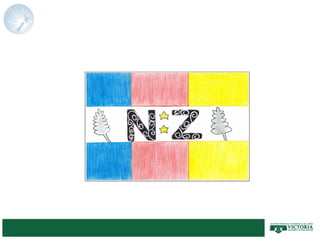
  • #17 This flag incorporated strong and clear symbolism and metaphoric use of colour. The letters N and Z filled are coloured black and white and detailed with Maori designs, this represents the bicultural nature of New Zealand society. The silver ferns signify the uniqueness of the environment and how we are connected to the earth and the two stars symbolise the North and South Islands. With regards to the colours in the background, blue represents New Zealand as an island nation, red represents blood and how underneath the skin everyone has the same colour, and yellow represents freedom and happiness. The white stripe through the flag symbolises peace and indicates that which holds us together as a country is the concept of peace and togetherness.