School of Medical and Allied Sciences
Course Code: BMLS1006 Course Name: Introduction to quality & patient safety
Faculty Name: A. Vamsi Kumar Program Name: B.Sc. MLT
UNIT -3
Topic
Controlling of Cross Infection
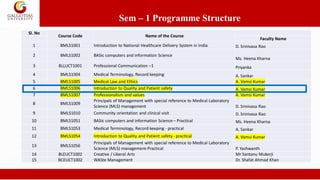
Sem – 1 Programme Structure
Sl. No
Course Code Name of the Course
Faculty Name
1 BMLS1001 Introduction to National Healthcare Delivery System in India D. Srinivasa Rao
2 BMLS1002 BASic computers and information Science
Ms. Heena Kharna
3 BLLUCT1001 Professional Communication –1 Priyanka
4 BMLS1004 Medical Terminology, Record keeping A. Sankar
5 BMLS1005 Medical Law and Ethics A. Vamsi Kumar
6 BMLS1006 Introduction to Quality and Patient safety A. Vamsi Kumar
7 BMLS1007 Professionalism and values A. Vamsi Kumar
8 BMLS1009
Principals of Management with special reference to Medical Laboratory
Science (MLS) management D. Srinivasa Rao
9 BMLS1010 Community orientation and clinical visit D. Srinivasa Rao
10 BMLS1051 BASic computers and information Science – Practical Ms. Heena Kharna
11 BMLS1053 Medical Terminology, Record keeping - practical A. Sankar
12 BMLS1054 Introduction to Quality and Patient safety - practical A. Vamsi Kumar
13 BMLS1056
Principals of Management with special reference to Medical Laboratory
Science (MLS) management-Practical P. Yashwanth
14 BLEUCT1002 Creative / Liberal Arts Mr Santanu Mukerji
15 BCEUCT1002 WASte Management Dr. Shafat Ahmad Khan
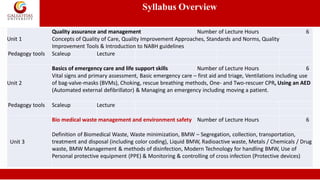
Syllabus Overview
Unit 1
Quality assurance and management Number of Lecture Hours 6
Concepts of Quality of Care, Quality Improvement Approaches, Standards and Norms, Quality
Improvement Tools & Introduction to NABH guidelines
Pedagogy tools Scaleup Lecture
Unit 2
Basics of emergency care and life support skills Number of Lecture Hours 6
Vital signs and primary assessment, Basic emergency care – first aid and triage, Ventilations including use
of bag-valve-masks (BVMs), Choking, rescue breathing methods, One- and Two-rescuer CPR, Using an AED
(Automated external defibrillator) & Managing an emergency including moving a patient.
Pedagogy tools Scaleup Lecture
Unit 3
Bio medical waste management and environment safety Number of Lecture Hours 6
Definition of Biomedical Waste, Waste minimization, BMW – Segregation, collection, transportation,
treatment and disposal (including color coding), Liquid BMW, Radioactive waste, Metals / Chemicals / Drug
waste, BMW Management & methods of disinfection, Modern Technology for handling BMW, Use of
Personal protective equipment (PPE) & Monitoring & controlling of cross infection (Protective devices)
Syllabus Overview
Unit 4
Infection prevention and control & Antibiotic Resistance Number of Lecture Hours 6
Evidence-based infection control principles and practices [such as Sterilization, Disinfection, Effective hand hygiene and
use of Personal Protective Equipment (PPE)], Prevention & control of common healthcare associated infections,
Components of an effective infection control program, and Guidelines (NABH and JCI) for Hospital Infection Control.
Antibiotic Resistance- History of antibiotics How resistance happens and spreads, Types of resistance- intrinsic, acquired,
passive, Trends in drug resistance & Actions to fight resistance, Bacterial persistence, Antibiotic sensitivity, Consequences
of antibiotic resistance & Antimicrobial Stewardship – Barriers and opportunities, tools and models in hospitals
Pedagogy tools Scaleup Lecture
Unit 5 Disaster preparedness and management Number of Lecture Hours 6
Fundamentals of emergency management, Psychological impact management, Resource management, Preparedness and
risk reduction & Key response functions (including public health, logistics and governance, recovery, rehabilitation and
reconstruction), information management, incident command and institutional mechanisms.
Pedagogy tools Scaleup Lecture
Unit 6 Basics of biosensors and their role in patient care
and safety
Number of Lecture Hours 6
Introduction to biosensors, concept of bio sensor system, Types of Bio receptors, Applications of Biosensors in patient
care and management.
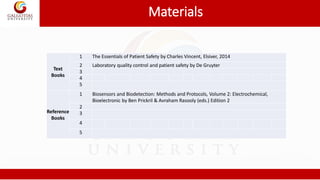
Materials
Text
Books
1 The Essentials of Patient Safety by Charles Vincent, Elsiver, 2014
2 Laboratory quality control and patient safety by De Gruyter
3
4
5
Reference
Books
1 Biosensors and Biodetection: Methods and Protocols, Volume 2: Electrochemical,
Bioelectronic by Ben Prickril & Avraham Rasooly (eds.) Edition 2
2
3
4
5
Course outcomes
• On completion of this course student will able to
perform & Conduct analysis of body fluids/ samples.
Learning outcomes
By the end of this lecture, the student can be able to understand;
• Types of biomedical waste
• Handling and segregation of bio medical waste
• Treating of bio medical waste
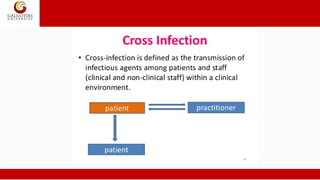
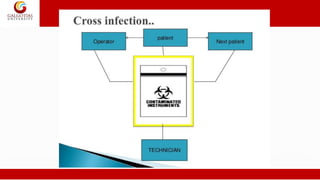
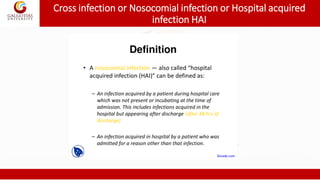
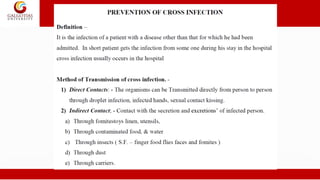
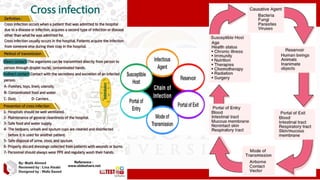
Cross infection or Nosocomial infection or Hospital acquired
infection HAI
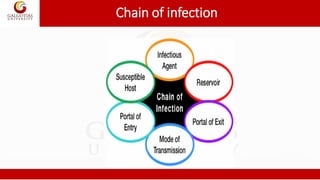
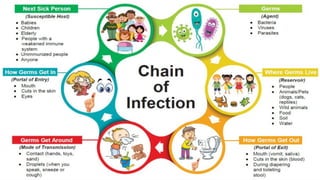
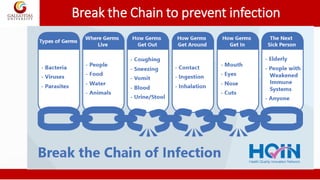
Chain of infection
Break the Chain to prevent infection
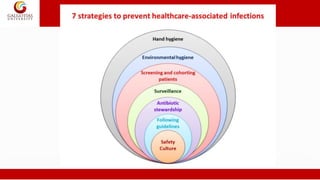
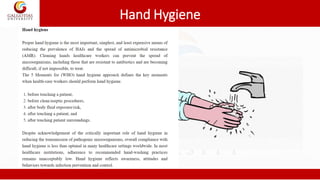
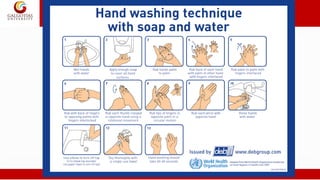
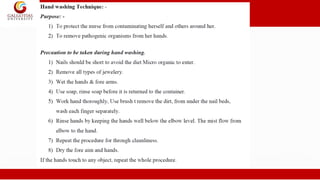
Hand Hygiene
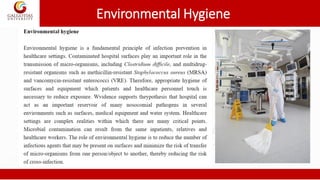
Environmental Hygiene
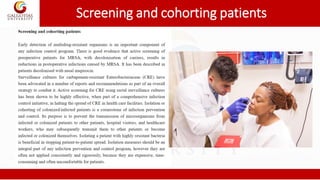
Screening and cohorting patients
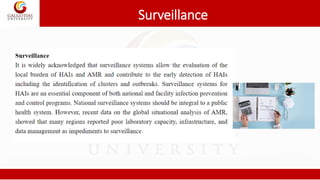
Surveillance
Following guidelines
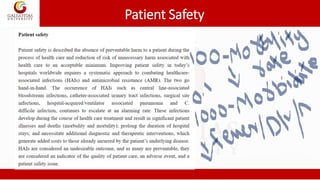
Patient Safety
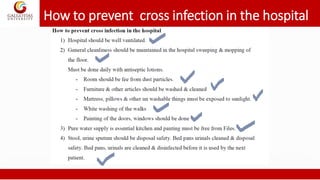
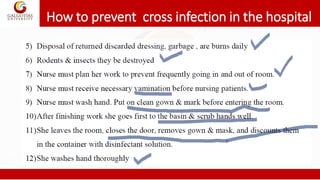
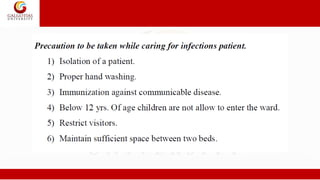
How to prevent cross infection in the hospital
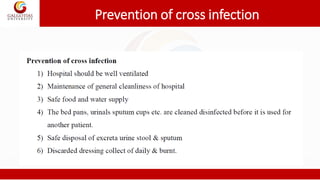
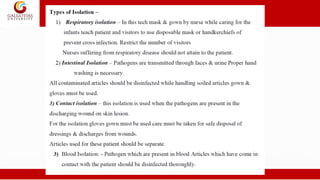
Prevention of cross infection
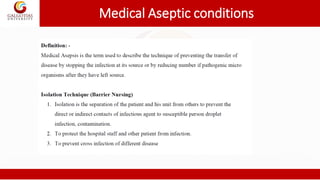
Medical Aseptic conditions
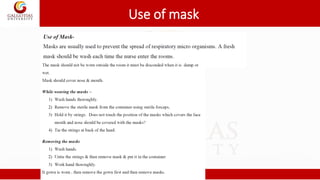
Use of mask
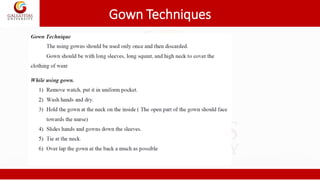
Gown Techniques
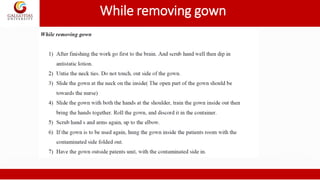
While removing gown
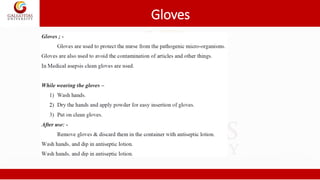
Gloves
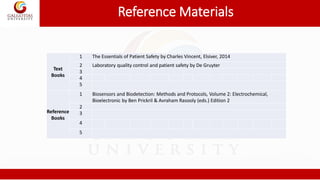
Reference Materials
Text
Books
1 The Essentials of Patient Safety by Charles Vincent, Elsiver, 2014
2 Laboratory quality control and patient safety by De Gruyter
3
4
5
Reference
Books
1 Biosensors and Biodetection: Methods and Protocols, Volume 2: Electrochemical,
Bioelectronic by Ben Prickril & Avraham Rasooly (eds.) Edition 2
2
3
4
5
References
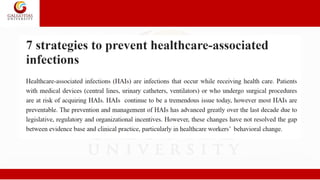
• https://infectionsinsurgery.org/7-strategies-to-prevent-healthcare-
associated-infections/
YouTube videos
1. https://www2.slideshare.net/manalihsolanki/cardiopulmonary-
resuscitation-ppt
Cross Infection Controll

Cross Infection Controll

  • 1.
    School of Medicaland Allied Sciences Course Code: BMLS1006 Course Name: Introduction to quality & patient safety Faculty Name: A. Vamsi Kumar Program Name: B.Sc. MLT UNIT -3 Topic Controlling of Cross Infection
  • 2.
    Sem – 1Programme Structure Sl. No Course Code Name of the Course Faculty Name 1 BMLS1001 Introduction to National Healthcare Delivery System in India D. Srinivasa Rao 2 BMLS1002 BASic computers and information Science Ms. Heena Kharna 3 BLLUCT1001 Professional Communication –1 Priyanka 4 BMLS1004 Medical Terminology, Record keeping A. Sankar 5 BMLS1005 Medical Law and Ethics A. Vamsi Kumar 6 BMLS1006 Introduction to Quality and Patient safety A. Vamsi Kumar 7 BMLS1007 Professionalism and values A. Vamsi Kumar 8 BMLS1009 Principals of Management with special reference to Medical Laboratory Science (MLS) management D. Srinivasa Rao 9 BMLS1010 Community orientation and clinical visit D. Srinivasa Rao 10 BMLS1051 BASic computers and information Science – Practical Ms. Heena Kharna 11 BMLS1053 Medical Terminology, Record keeping - practical A. Sankar 12 BMLS1054 Introduction to Quality and Patient safety - practical A. Vamsi Kumar 13 BMLS1056 Principals of Management with special reference to Medical Laboratory Science (MLS) management-Practical P. Yashwanth 14 BLEUCT1002 Creative / Liberal Arts Mr Santanu Mukerji 15 BCEUCT1002 WASte Management Dr. Shafat Ahmad Khan
  • 3.
    Syllabus Overview Unit 1 Qualityassurance and management Number of Lecture Hours 6 Concepts of Quality of Care, Quality Improvement Approaches, Standards and Norms, Quality Improvement Tools & Introduction to NABH guidelines Pedagogy tools Scaleup Lecture Unit 2 Basics of emergency care and life support skills Number of Lecture Hours 6 Vital signs and primary assessment, Basic emergency care – first aid and triage, Ventilations including use of bag-valve-masks (BVMs), Choking, rescue breathing methods, One- and Two-rescuer CPR, Using an AED (Automated external defibrillator) & Managing an emergency including moving a patient. Pedagogy tools Scaleup Lecture Unit 3 Bio medical waste management and environment safety Number of Lecture Hours 6 Definition of Biomedical Waste, Waste minimization, BMW – Segregation, collection, transportation, treatment and disposal (including color coding), Liquid BMW, Radioactive waste, Metals / Chemicals / Drug waste, BMW Management & methods of disinfection, Modern Technology for handling BMW, Use of Personal protective equipment (PPE) & Monitoring & controlling of cross infection (Protective devices)
  • 4.
    Syllabus Overview Unit 4 Infectionprevention and control & Antibiotic Resistance Number of Lecture Hours 6 Evidence-based infection control principles and practices [such as Sterilization, Disinfection, Effective hand hygiene and use of Personal Protective Equipment (PPE)], Prevention & control of common healthcare associated infections, Components of an effective infection control program, and Guidelines (NABH and JCI) for Hospital Infection Control. Antibiotic Resistance- History of antibiotics How resistance happens and spreads, Types of resistance- intrinsic, acquired, passive, Trends in drug resistance & Actions to fight resistance, Bacterial persistence, Antibiotic sensitivity, Consequences of antibiotic resistance & Antimicrobial Stewardship – Barriers and opportunities, tools and models in hospitals Pedagogy tools Scaleup Lecture Unit 5 Disaster preparedness and management Number of Lecture Hours 6 Fundamentals of emergency management, Psychological impact management, Resource management, Preparedness and risk reduction & Key response functions (including public health, logistics and governance, recovery, rehabilitation and reconstruction), information management, incident command and institutional mechanisms. Pedagogy tools Scaleup Lecture Unit 6 Basics of biosensors and their role in patient care and safety Number of Lecture Hours 6 Introduction to biosensors, concept of bio sensor system, Types of Bio receptors, Applications of Biosensors in patient care and management.
  • 5.
    Materials Text Books 1 The Essentialsof Patient Safety by Charles Vincent, Elsiver, 2014 2 Laboratory quality control and patient safety by De Gruyter 3 4 5 Reference Books 1 Biosensors and Biodetection: Methods and Protocols, Volume 2: Electrochemical, Bioelectronic by Ben Prickril & Avraham Rasooly (eds.) Edition 2 2 3 4 5
  • 6.
    Course outcomes • Oncompletion of this course student will able to perform & Conduct analysis of body fluids/ samples.
  • 7.
    Learning outcomes By theend of this lecture, the student can be able to understand; • Types of biomedical waste • Handling and segregation of bio medical waste • Treating of bio medical waste
  • 10.
    Cross infection orNosocomial infection or Hospital acquired infection HAI
  • 12.
  • 14.
    Break the Chainto prevent infection
  • 17.
  • 20.
  • 21.
  • 22.
  • 24.
  • 25.
  • 27.
    How to preventcross infection in the hospital
  • 28.
    How to preventcross infection in the hospital
  • 29.
  • 30.
  • 33.
  • 34.
  • 35.
  • 36.
  • 37.
    Reference Materials Text Books 1 TheEssentials of Patient Safety by Charles Vincent, Elsiver, 2014 2 Laboratory quality control and patient safety by De Gruyter 3 4 5 Reference Books 1 Biosensors and Biodetection: Methods and Protocols, Volume 2: Electrochemical, Bioelectronic by Ben Prickril & Avraham Rasooly (eds.) Edition 2 2 3 4 5
  • 38.
  • 39.