Crop production and
management
Class 8 science
Agricultural Practices:
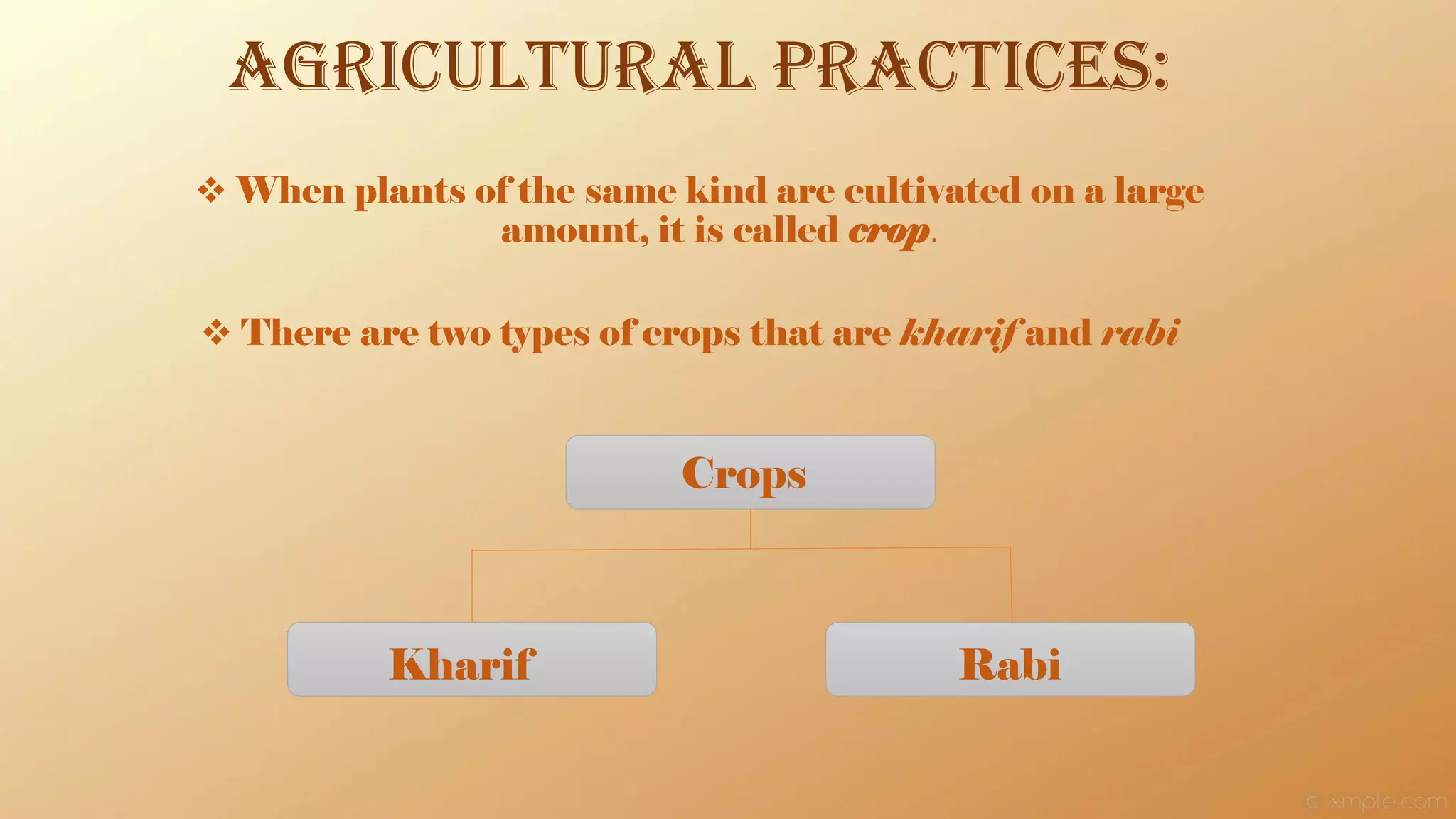
 When plants of the same kind are cultivated on a large
amount, it is called crop.
 There are two types of crops that are kharif and rabi
Crops
Rabi
Kharif
Kharif crops
 Kharif crops are grown with the
onset of monsoon in different parts
of the country.
 these crops are harvested in
September-October.
 Example: Paddy, maize, jawar,
bajra, tur, moong, urad, cotton, jute,
groundnut and soybean.
Rabi crops
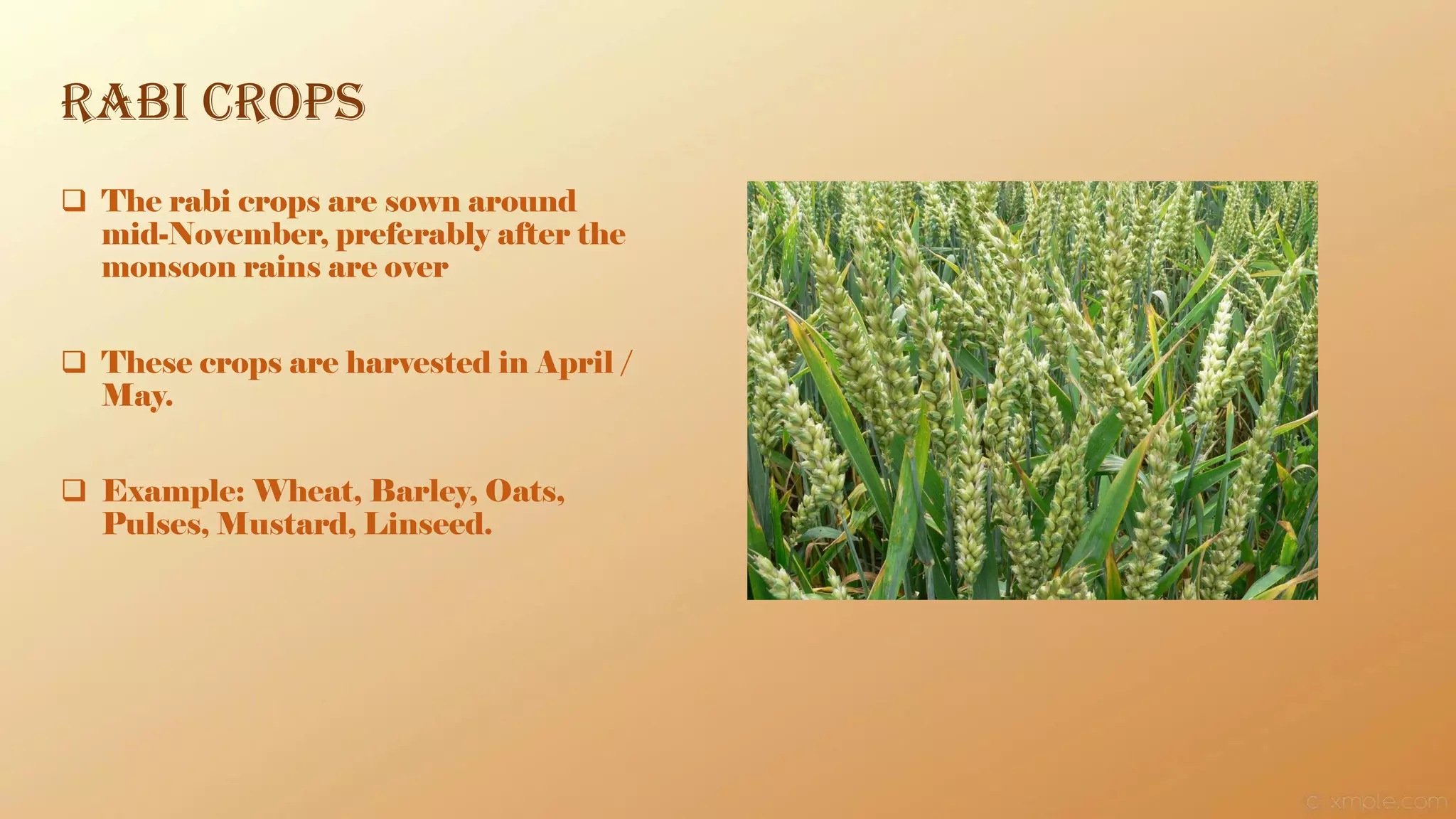
 The rabi crops are sown around
mid-November, preferably after the
monsoon rains are over
 These crops are harvested in April /
May.
 Example: Wheat, Barley, Oats,
Pulses, Mustard, Linseed.
 Preparation of soil is the first step in cultivating crop
for food production.
 The soil is prepared for sowing the seeds of the crop.
 This is carried out using various processes and tools.
Preparation of soil
Tilling or Ploughing:-
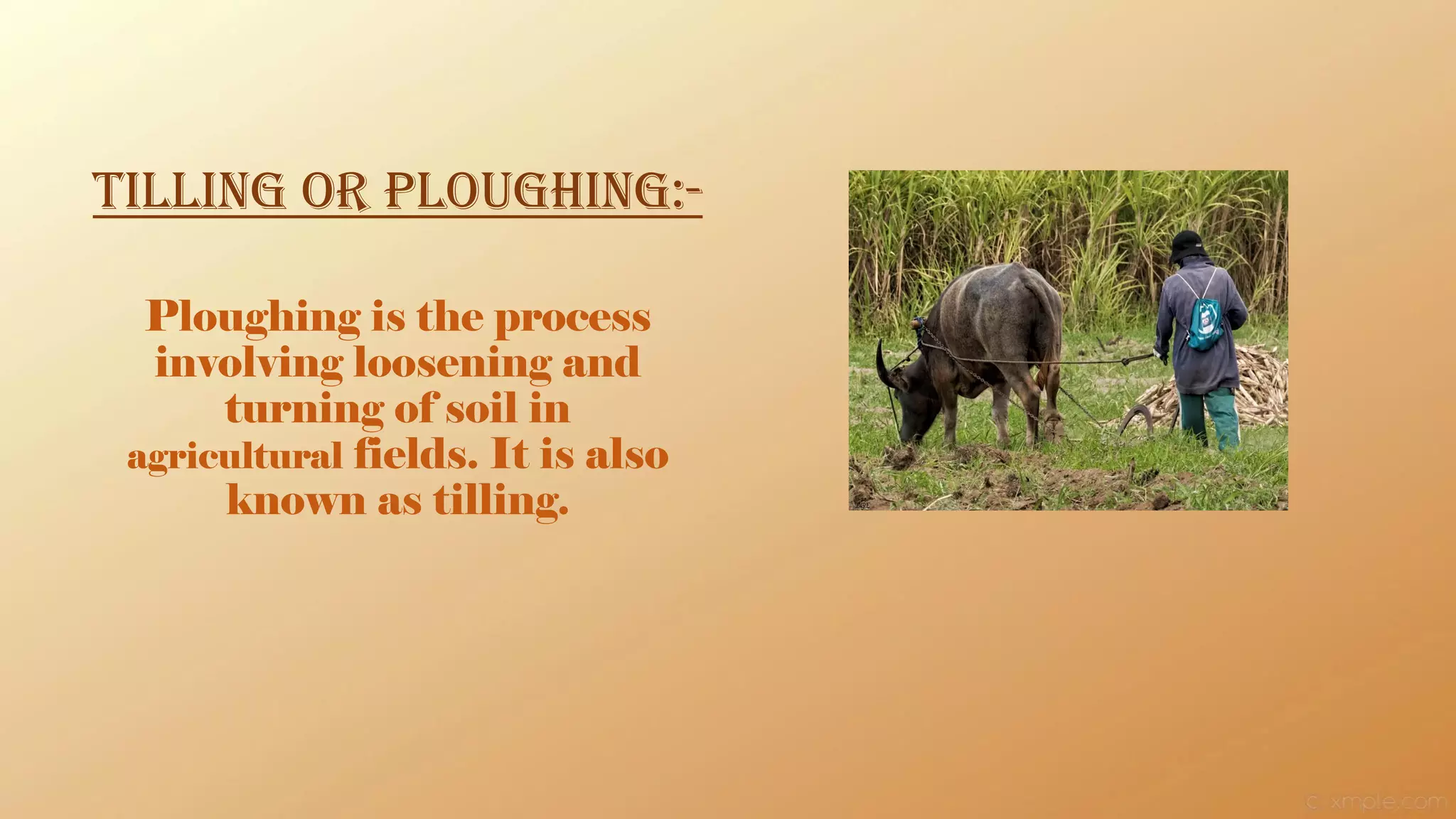
Ploughing is the process
involving loosening and
turning of soil in
agricultural fields. It is also
known as tilling.
agriculture implements:-
 Hoe :-
 Dig up the soil to remove weeds.
 Loosen up the soil before planting a sapling.
 Long rod of wood. Strong and bend plate of
iron.
 Cultivator :-
 Cultivators are used instead of ploughs since
they are faster.
Plough:-
 Plough :-
 A plough is a device that is used by farmers
for different purposes such as adding of
fertilizers, tilling and loosening of the soil.
 It is also used for adding fertilizers to the
soil, removing weeds, scraping of soil, etc.
 The ploughshare is the triangular iron strip
 A ploughshaft is the main part of the
plough, which is made using a log of wood.
 The other end of the shaft has a handle.
Sowing:-
 Sowing the process of planting the seeds in the soil.
 The seeds are sowed in the soil that is loosened by a
cultivator or plough.
Quality of the Seeds:-
Quality of the seed is an important
factor that determines the crop yield.
Selection of good seeds is done by
putting the seeds in water.
The dead and damaged seeds become
hollow and float on water whereas
the good seeds sink.
Traditional Tools:-
•Before the advent of modern agricultural
machinery, traditional tools were used by
farmers.
•These include ploughs, shovels, scythes and
pickaxes.
•The traditional tool used to sow the seeds was
like a funnel.
•Once seeds were put into this funnel, they
would go to 2-3 tubes having sharp ends.
•The ends will pierce into the soil and place the
seeds there.
Seed Drill
Seed Drill:-
•Seed drills are used for sowing with the
help of tractors.
•It ensures that seeds are sown uniformly,
at a particular depth and are covered by
soil after sowing.
Nursery:-
•A nursery is a place where young
plants and trees are grown for planting
elsewhere.
•Nursery acts as a repository of
saplings.
Germination of Seeds:-
•Germination of the seed happens when the
seed is sown in the land and watered.
•A plant starts to emerge from the seed and
starts to grow.
Adding Manure and Fertilizers:-
•Manures and fertilizers are the
substances that are added to the soil to
increase their fertility.
•While manures are made by
decomposition of organic substances,
fertilizer is made of inorganic
chemicals.
Disadvantages of Using Fertilizers:-
•Excessive use of fertilizer can cause pollution.
•It can also change pH of the soil in certain rare cases.
Leaving the Land Fallow:-
•When land is left fallow for a certain period of time,
the land replenishes its nutrients by itself.
•This land can be used for agriculture again.
Crop Rotation:-
•Crop rotation ensures that the same crop will not
grow continuously and lead to the erosion of the soil
fertility.
•By growing crops that require different sets of
nutrient, we can ensure the soil fertility is restored.
Protecting from Weeds:-
Weeds compete with the crops by absorbing all the
water, nutrients, space and light.
Weedicides:-
•Chemicals used to kill the weeds are known as
weedicides.
•They usually don’t damage the crop.
Manual Removal:-
Manual removal includes physical removal of weeds by
uprooting them from the soil or chopping them off to
ground level periodically.
Harvesting:-
Harvesting is the process of cutting the crop
after it is mature.
Methods of Harvesting:-
•Harvesting is done by 2 methods.
•First is the manual method where a sickle is
used.
•Second is the mechanical method where a
huge machine called harvester is used.
Threshing:-
Threshing is the process of loosening the grains from the
chaff.
While it can be done manually, these days a machine is
used that separates all the grain seeds.
Winnowing:-
•Winnowing is the process of separation of grain
seeds from the chaff using the help of the wind.
•Due to the wind, the lighter chaff flies away and
the heavier grains fall down.
Storage
Storage of the grains is an important step in agriculture.
After harvesting steps, the ready grains are stored in
granaries or silos.
The grains have to be stored in a dry place that does not
have a rodent or fungal infestation.
Fumigation of storage places is carried out to make it
free from microbes.
Granaries:-
Granaries are the place where the freshly obtained food
grains are stored.
Animal Husbandry:-
•Animal husbandry is the management and care of farm
animals for milk, egg or meat.

Crop Production And Management | Class- 8 | PPT

  • 1.
  • 2.
    Agricultural Practices:  Whenplants of the same kind are cultivated on a large amount, it is called crop.  There are two types of crops that are kharif and rabi Crops Rabi Kharif
  • 3.
    Kharif crops  Kharifcrops are grown with the onset of monsoon in different parts of the country.  these crops are harvested in September-October.  Example: Paddy, maize, jawar, bajra, tur, moong, urad, cotton, jute, groundnut and soybean.
  • 4.
    Rabi crops  Therabi crops are sown around mid-November, preferably after the monsoon rains are over  These crops are harvested in April / May.  Example: Wheat, Barley, Oats, Pulses, Mustard, Linseed.
  • 5.
     Preparation ofsoil is the first step in cultivating crop for food production.  The soil is prepared for sowing the seeds of the crop.  This is carried out using various processes and tools. Preparation of soil
  • 6.
    Tilling or Ploughing:- Ploughingis the process involving loosening and turning of soil in agricultural fields. It is also known as tilling.
  • 7.
    agriculture implements:-  Hoe:-  Dig up the soil to remove weeds.  Loosen up the soil before planting a sapling.  Long rod of wood. Strong and bend plate of iron.  Cultivator :-  Cultivators are used instead of ploughs since they are faster.
  • 8.
    Plough:-  Plough :- A plough is a device that is used by farmers for different purposes such as adding of fertilizers, tilling and loosening of the soil.  It is also used for adding fertilizers to the soil, removing weeds, scraping of soil, etc.  The ploughshare is the triangular iron strip  A ploughshaft is the main part of the plough, which is made using a log of wood.  The other end of the shaft has a handle.
  • 9.
    Sowing:-  Sowing theprocess of planting the seeds in the soil.  The seeds are sowed in the soil that is loosened by a cultivator or plough. Quality of the Seeds:- Quality of the seed is an important factor that determines the crop yield. Selection of good seeds is done by putting the seeds in water. The dead and damaged seeds become hollow and float on water whereas the good seeds sink.
  • 10.
    Traditional Tools:- •Before theadvent of modern agricultural machinery, traditional tools were used by farmers. •These include ploughs, shovels, scythes and pickaxes. •The traditional tool used to sow the seeds was like a funnel. •Once seeds were put into this funnel, they would go to 2-3 tubes having sharp ends. •The ends will pierce into the soil and place the seeds there. Seed Drill
  • 11.
    Seed Drill:- •Seed drillsare used for sowing with the help of tractors. •It ensures that seeds are sown uniformly, at a particular depth and are covered by soil after sowing. Nursery:- •A nursery is a place where young plants and trees are grown for planting elsewhere. •Nursery acts as a repository of saplings.
  • 12.
    Germination of Seeds:- •Germinationof the seed happens when the seed is sown in the land and watered. •A plant starts to emerge from the seed and starts to grow. Adding Manure and Fertilizers:- •Manures and fertilizers are the substances that are added to the soil to increase their fertility. •While manures are made by decomposition of organic substances, fertilizer is made of inorganic chemicals.
  • 13.
    Disadvantages of UsingFertilizers:- •Excessive use of fertilizer can cause pollution. •It can also change pH of the soil in certain rare cases. Leaving the Land Fallow:- •When land is left fallow for a certain period of time, the land replenishes its nutrients by itself. •This land can be used for agriculture again.
  • 14.
    Crop Rotation:- •Crop rotationensures that the same crop will not grow continuously and lead to the erosion of the soil fertility. •By growing crops that require different sets of nutrient, we can ensure the soil fertility is restored. Protecting from Weeds:- Weeds compete with the crops by absorbing all the water, nutrients, space and light.
  • 15.
    Weedicides:- •Chemicals used tokill the weeds are known as weedicides. •They usually don’t damage the crop. Manual Removal:- Manual removal includes physical removal of weeds by uprooting them from the soil or chopping them off to ground level periodically.
  • 16.
    Harvesting:- Harvesting is theprocess of cutting the crop after it is mature. Methods of Harvesting:- •Harvesting is done by 2 methods. •First is the manual method where a sickle is used. •Second is the mechanical method where a huge machine called harvester is used.
  • 17.
    Threshing:- Threshing is theprocess of loosening the grains from the chaff. While it can be done manually, these days a machine is used that separates all the grain seeds. Winnowing:- •Winnowing is the process of separation of grain seeds from the chaff using the help of the wind. •Due to the wind, the lighter chaff flies away and the heavier grains fall down.
  • 18.
    Storage Storage of thegrains is an important step in agriculture. After harvesting steps, the ready grains are stored in granaries or silos. The grains have to be stored in a dry place that does not have a rodent or fungal infestation. Fumigation of storage places is carried out to make it free from microbes.
  • 19.
    Granaries:- Granaries are theplace where the freshly obtained food grains are stored. Animal Husbandry:- •Animal husbandry is the management and care of farm animals for milk, egg or meat.