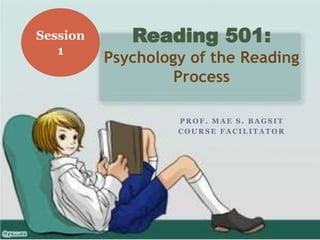
P R O F . M A E S . B A G S I T
C O U R S E F A C I L I T A T O R
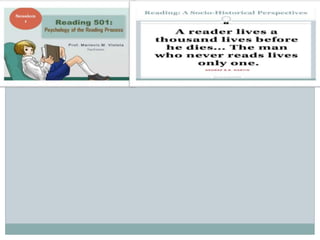
Reading 501:
Psychology of the Reading
Process
Session
1
Clarification
 Brightspace Classroom site is the
official classroom in GS
 You have your email ad connected to
this
 CHAT is for interaction for assignment
announcement
 Examination will be online
 Online class schedule will be provided
Clarification
Brightspace Classroom is our new
LMS platform
It uses your WVSU email and
student ID as password
It allows us virtual face to face
engagement and reporting
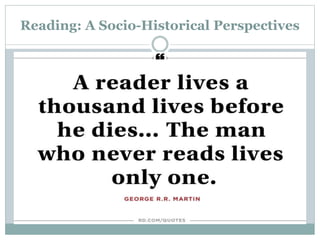
Reading: A Socio-Historical Perspectives
Objectives
 Enumerate and describe the stages of the
development of oral language and writing system
 Explain a diagram showing reading in terms of the
three-way relationship of experience, oral language
and written symbol as it applies to a reader
 Draw implications from the socio-historical view for
reading instruction
Introductory Activity
 Introduce yourself in 2 minutes. Include in the
introduction
 Your work and goal for taking up MAEd LT/Reading
 Your interests? If you are into reading what genre are
you interested in and who is you favorite author?
 What do you think will you learn from this course?
https://prezi.com/u_kf2w3u6qot/reading-a-socio-historical-
perspective/
Activating Prior Knowledge
 Reading begins even before we are born.
 Reading begins even before we learn to speak
 Reading begins when we learn our ABC.
 Reading begins when the eyes focus on the first
word on a page.
 Reading is older than writing, printing or language
itself.
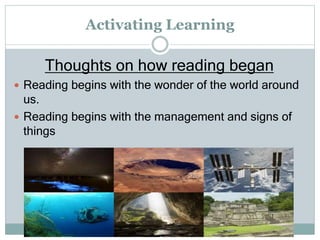
Activating Learning
Thoughts on how reading began
 Reading begins with the wonder of the world around
us.
 Reading begins with the management and signs of
things
Activating Learning
The signs of things
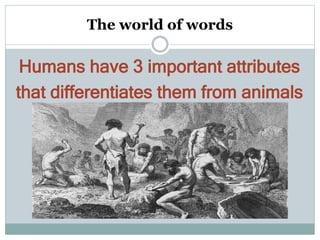
The world of words
Humans have 3 important attributes
that differentiates them from animals
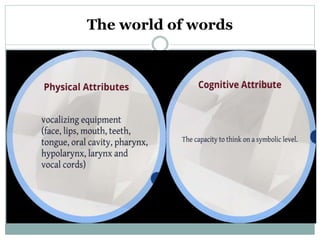
The world of words
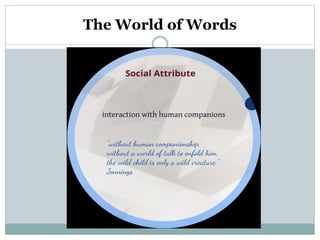
The World of Words
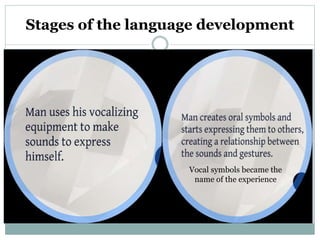
Stages of the language development
Vocal symbols became the
name of the experience
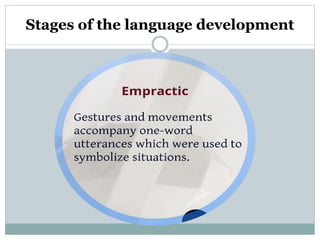
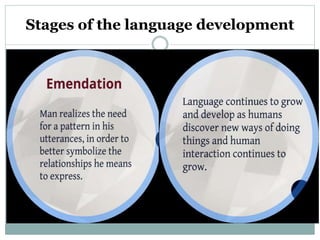
Stages of the language development
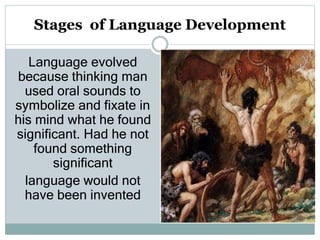
Stages of Language Development
Language evolved
because thinking man
used oral sounds to
symbolize and fixate in
his mind what he found
significant. Had he not
found something
significant
language would not
have been invented
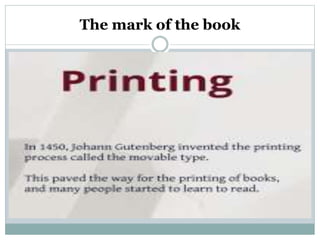
The mark of the book
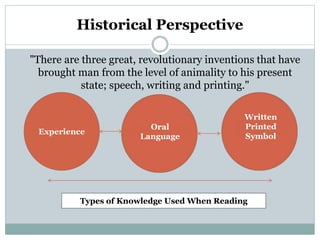
Historical Perspective
Experience
Oral
Language
Written
Printed
Symbol
Types of Knowledge Used When Reading
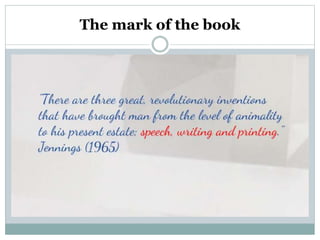
"There are three great, revolutionary inventions that have
brought man from the level of animality to his present
state; speech, writing and printing."
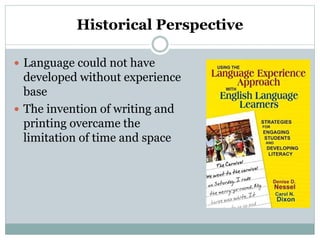
Historical Perspective
 Language could not have
developed without experience
base
 The invention of writing and
printing overcame the
limitation of time and space
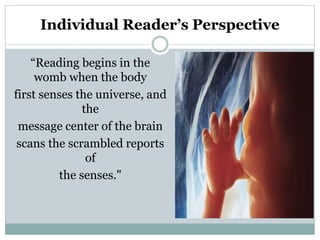
Individual Reader’s Perspective
“Reading begins in the
womb when the body
first senses the universe, and
the
message center of the brain
scans the scrambled reports
of
the senses."
Implication for Reading Instruction
 Reading is a linguistic process. Children being taught
to read must understand the relationship between
reading and their language.
 In second language situation, oral language
development in the oral language must be an integral
part of reading instruction.
Implication for Reading Instruction
 The ultimate goal of instruction is to produce
efficient readers who love to read and who will use it
for a variety of purpose all their lives
 The home has a very important role for developing
language experience
Assessment
1. Enumerate and define the three distinctly human
attributes that foster the development and
growth of language.
2. Describe the five stages of language development
3. Describe the stages through which writing
develops
4. What can the home do to help the child build an
experience and language base that will make it
easier for him to learn to read. Give at least 2.
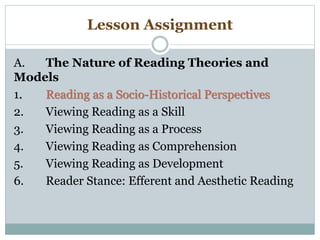
Lesson Assignment
A. The Nature of Reading Theories and
Models
1. Reading as a Socio-Historical Perspectives
2. Viewing Reading as a Skill
3. Viewing Reading as a Process
4. Viewing Reading as Comprehension
5. Viewing Reading as Development
6. Reader Stance: Efferent and Aesthetic Reading
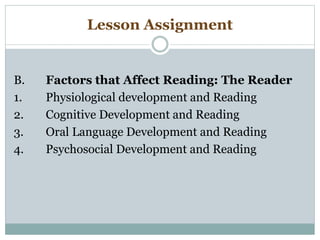
Lesson Assignment
B. Factors that Affect Reading: The Reader
1. Physiological development and Reading
2. Cognitive Development and Reading
3. Oral Language Development and Reading
4. Psychosocial Development and Reading
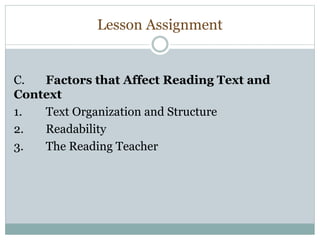
Lesson Assignment
C. Factors that Affect Reading Text and
Context
1. Text Organization and Structure
2. Readability
3. The Reading Teacher
Socio-Historical-Perspectives-of-Reading.pptx

Socio-Historical-Perspectives-of-Reading.pptx

  • 1.
    P R OF . M A E S . B A G S I T C O U R S E F A C I L I T A T O R Reading 501: Psychology of the Reading Process Session 1
  • 2.
    Clarification  Brightspace Classroomsite is the official classroom in GS  You have your email ad connected to this  CHAT is for interaction for assignment announcement  Examination will be online  Online class schedule will be provided
  • 3.
    Clarification Brightspace Classroom isour new LMS platform It uses your WVSU email and student ID as password It allows us virtual face to face engagement and reporting
  • 4.
  • 6.
    Objectives  Enumerate anddescribe the stages of the development of oral language and writing system  Explain a diagram showing reading in terms of the three-way relationship of experience, oral language and written symbol as it applies to a reader  Draw implications from the socio-historical view for reading instruction
  • 7.
    Introductory Activity  Introduceyourself in 2 minutes. Include in the introduction  Your work and goal for taking up MAEd LT/Reading  Your interests? If you are into reading what genre are you interested in and who is you favorite author?  What do you think will you learn from this course? https://prezi.com/u_kf2w3u6qot/reading-a-socio-historical- perspective/
  • 8.
    Activating Prior Knowledge Reading begins even before we are born.  Reading begins even before we learn to speak  Reading begins when we learn our ABC.  Reading begins when the eyes focus on the first word on a page.  Reading is older than writing, printing or language itself.
  • 9.
    Activating Learning Thoughts onhow reading began  Reading begins with the wonder of the world around us.  Reading begins with the management and signs of things
  • 10.
  • 11.
    The world ofwords Humans have 3 important attributes that differentiates them from animals
  • 12.
  • 13.
  • 14.
    Stages of thelanguage development Vocal symbols became the name of the experience
  • 15.
    Stages of thelanguage development
  • 16.
    Stages of thelanguage development
  • 17.
    Stages of LanguageDevelopment Language evolved because thinking man used oral sounds to symbolize and fixate in his mind what he found significant. Had he not found something significant language would not have been invented
  • 18.
    The mark ofthe book
  • 19.
    The mark ofthe book
  • 20.
    The mark ofthe book
  • 21.
    The mark ofthe book
  • 22.
    The mark ofthe book
  • 24.
    Historical Perspective Experience Oral Language Written Printed Symbol Types ofKnowledge Used When Reading "There are three great, revolutionary inventions that have brought man from the level of animality to his present state; speech, writing and printing."
  • 25.
    Historical Perspective  Languagecould not have developed without experience base  The invention of writing and printing overcame the limitation of time and space
  • 26.
    Individual Reader’s Perspective “Readingbegins in the womb when the body first senses the universe, and the message center of the brain scans the scrambled reports of the senses."
  • 27.
    Implication for ReadingInstruction  Reading is a linguistic process. Children being taught to read must understand the relationship between reading and their language.  In second language situation, oral language development in the oral language must be an integral part of reading instruction.
  • 28.
    Implication for ReadingInstruction  The ultimate goal of instruction is to produce efficient readers who love to read and who will use it for a variety of purpose all their lives  The home has a very important role for developing language experience
  • 29.
    Assessment 1. Enumerate anddefine the three distinctly human attributes that foster the development and growth of language. 2. Describe the five stages of language development 3. Describe the stages through which writing develops 4. What can the home do to help the child build an experience and language base that will make it easier for him to learn to read. Give at least 2.
  • 30.
    Lesson Assignment A. TheNature of Reading Theories and Models 1. Reading as a Socio-Historical Perspectives 2. Viewing Reading as a Skill 3. Viewing Reading as a Process 4. Viewing Reading as Comprehension 5. Viewing Reading as Development 6. Reader Stance: Efferent and Aesthetic Reading
  • 31.
    Lesson Assignment B. Factorsthat Affect Reading: The Reader 1. Physiological development and Reading 2. Cognitive Development and Reading 3. Oral Language Development and Reading 4. Psychosocial Development and Reading
  • 32.
    Lesson Assignment C. Factorsthat Affect Reading Text and Context 1. Text Organization and Structure 2. Readability 3. The Reading Teacher