Downloaded 57 times
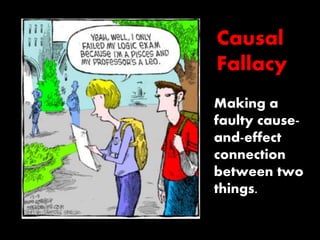
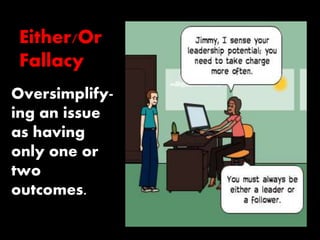
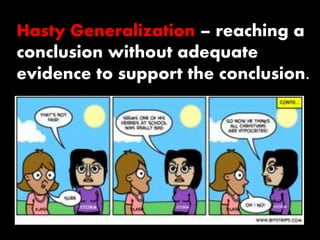

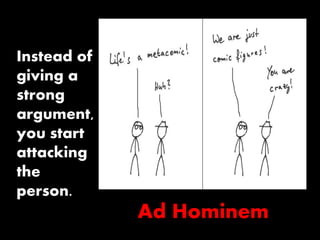
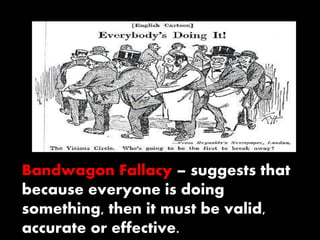
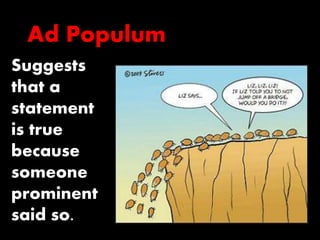

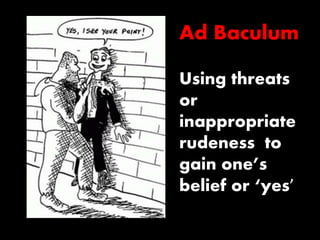
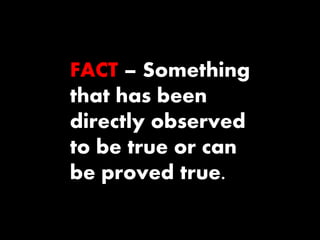
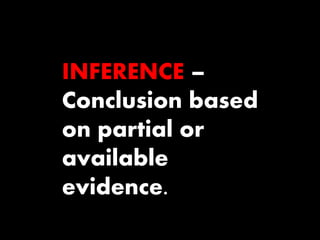


This document discusses critical listening and faulty logic. Critical listening aims to evaluate information for quality and value. Logic uses evidence to reach valid conclusions, while fallacies attempt to persuade without evidence through irrelevant or inappropriate arguments. Several types of fallacies are described, including causal, either/or, hasty generalization, ad misericordiam, ad hominem, bandwagon, ad populum, poisoning the well, ad baculum, and non sequitur. The document also distinguishes between facts, which can be directly observed or proven, and inferences, which are conclusions based on partial evidence. Finally, it provides tips for improving responding skills such as providing well-timed, meaningful responses while avoiding unnecessary details.


