CRITERIA TO EVALUATE
ICT TOOLS
Juan D. Cortés R.
Universidad Pedagógica Nacional
Based on: 'Tools for learning: technology and
teaching strategies', Learning to Teach in the
Primary School. By Eady, M. J. & Lockyer, L.
2013, Ch. 5.
CRITERIA TO EVALUATE
ICT TOOLS
• Age level
• Curriculum links
• Instructional contents
• Engagement and interactivity
• Assessment
• Flexibility
• Media
• Usability
• Technical considerations
• Support materials
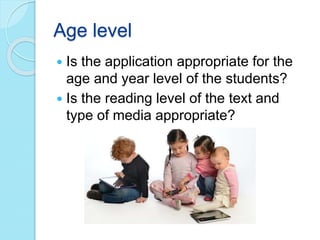
Age level
 Is the application appropriate for the
age and year level of the students?
 Is the reading level of the text and
type of media appropriate?
Curriculum links
Links between
the
content/functions
of the tool and the
expectations of
the curriculum?
content and
examples relevant
to the curriculum?
new or different
ways to help teach
curriculum?
Instructional content
 Accurate information, complete and
current.
 Reliable sources
 encourage higher-order thinking
 culturally appropriate content and
present multiple perspectives
Engagement and interactivity
 Will the learner(s) be actively involved
in using the tool?
 Is feedback provided? Is the feedback
appropriate and meaningful?
Assessment
 Are assessment tasks included, or can
the teacher develop relevant
assessment tasks that link to the use
of the tool?
Flexibility
 Can all aspects of the tool be
integrated easily into classroom
activities?
 Can the tool be used for multiple
curriculum units?
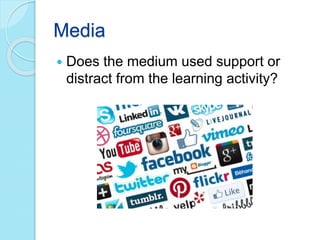
Media
 Does the medium used support or
distract from the learning activity?
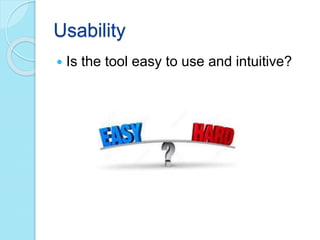
Usability
 Is the tool easy to use and intuitive?
Technical considerations:
 Does the tool work consistently?
 Are there special technical
requirements for using the tool? Does
the school have access to those
requirements?
Support materials
 Multiple forms of help (manuals,
context-sensitive help, and tutorials)?
 Are teaching support materials or
online resources available to help a
teacher embed the tool into lessons?
Webgraphy
 Eady, M. J. & Lockyer, L. 2013, 'Tools
for learning: technology and teaching
strategies', Learning to Teach in the
Primary School, Queensland
University of Technology, Australia.
 Available online :
http://ro.uow.edu.au/cgi/viewcontent.cgi?article=1413&context
=asdpapers

Criteria to evaluate ICT tools

  • 1.
    CRITERIA TO EVALUATE ICTTOOLS Juan D. Cortés R. Universidad Pedagógica Nacional Based on: 'Tools for learning: technology and teaching strategies', Learning to Teach in the Primary School. By Eady, M. J. & Lockyer, L. 2013, Ch. 5.
  • 2.
    CRITERIA TO EVALUATE ICTTOOLS • Age level • Curriculum links • Instructional contents • Engagement and interactivity • Assessment • Flexibility • Media • Usability • Technical considerations • Support materials
  • 3.
    Age level  Isthe application appropriate for the age and year level of the students?  Is the reading level of the text and type of media appropriate?
  • 4.
    Curriculum links Links between the content/functions ofthe tool and the expectations of the curriculum? content and examples relevant to the curriculum? new or different ways to help teach curriculum?
  • 5.
    Instructional content  Accurateinformation, complete and current.  Reliable sources  encourage higher-order thinking  culturally appropriate content and present multiple perspectives
  • 6.
    Engagement and interactivity Will the learner(s) be actively involved in using the tool?  Is feedback provided? Is the feedback appropriate and meaningful?
  • 7.
    Assessment  Are assessmenttasks included, or can the teacher develop relevant assessment tasks that link to the use of the tool?
  • 8.
    Flexibility  Can allaspects of the tool be integrated easily into classroom activities?  Can the tool be used for multiple curriculum units?
  • 9.
    Media  Does themedium used support or distract from the learning activity?
  • 10.
    Usability  Is thetool easy to use and intuitive?
  • 11.
    Technical considerations:  Doesthe tool work consistently?  Are there special technical requirements for using the tool? Does the school have access to those requirements?
  • 12.
    Support materials  Multipleforms of help (manuals, context-sensitive help, and tutorials)?  Are teaching support materials or online resources available to help a teacher embed the tool into lessons?
  • 13.
    Webgraphy  Eady, M.J. & Lockyer, L. 2013, 'Tools for learning: technology and teaching strategies', Learning to Teach in the Primary School, Queensland University of Technology, Australia.  Available online : http://ro.uow.edu.au/cgi/viewcontent.cgi?article=1413&context =asdpapers