


Managing Crisis

  Alberto Alemanno
     HEC Paris
What is a crisis?

Any situation that is threatening or could
threaten to harm people or property,
seriously interrupt business, damage
reputation or negatively impact share
value.
Crisis


(a) a threat to the organization

(b) the element of surprise, and

(c) a short decision time
Examples
• Natural disaster (Tsunami)
• Technological crises (Tchernobyl, Exon
  Valdez)
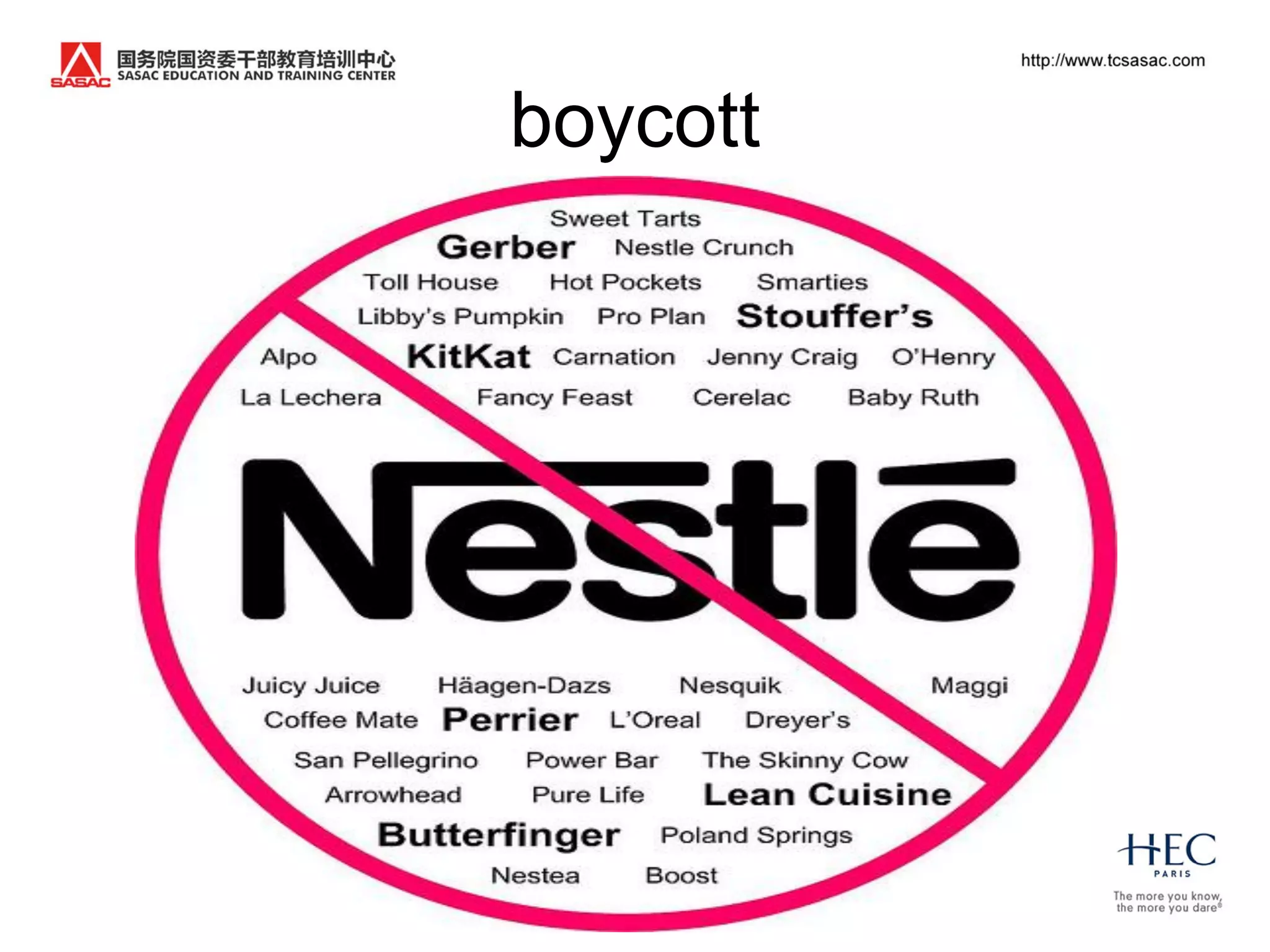
• Confrontation (boycott)
• Malevolence (tampering, kidnapping,
  malicious rumors, terrorism, and espionage)
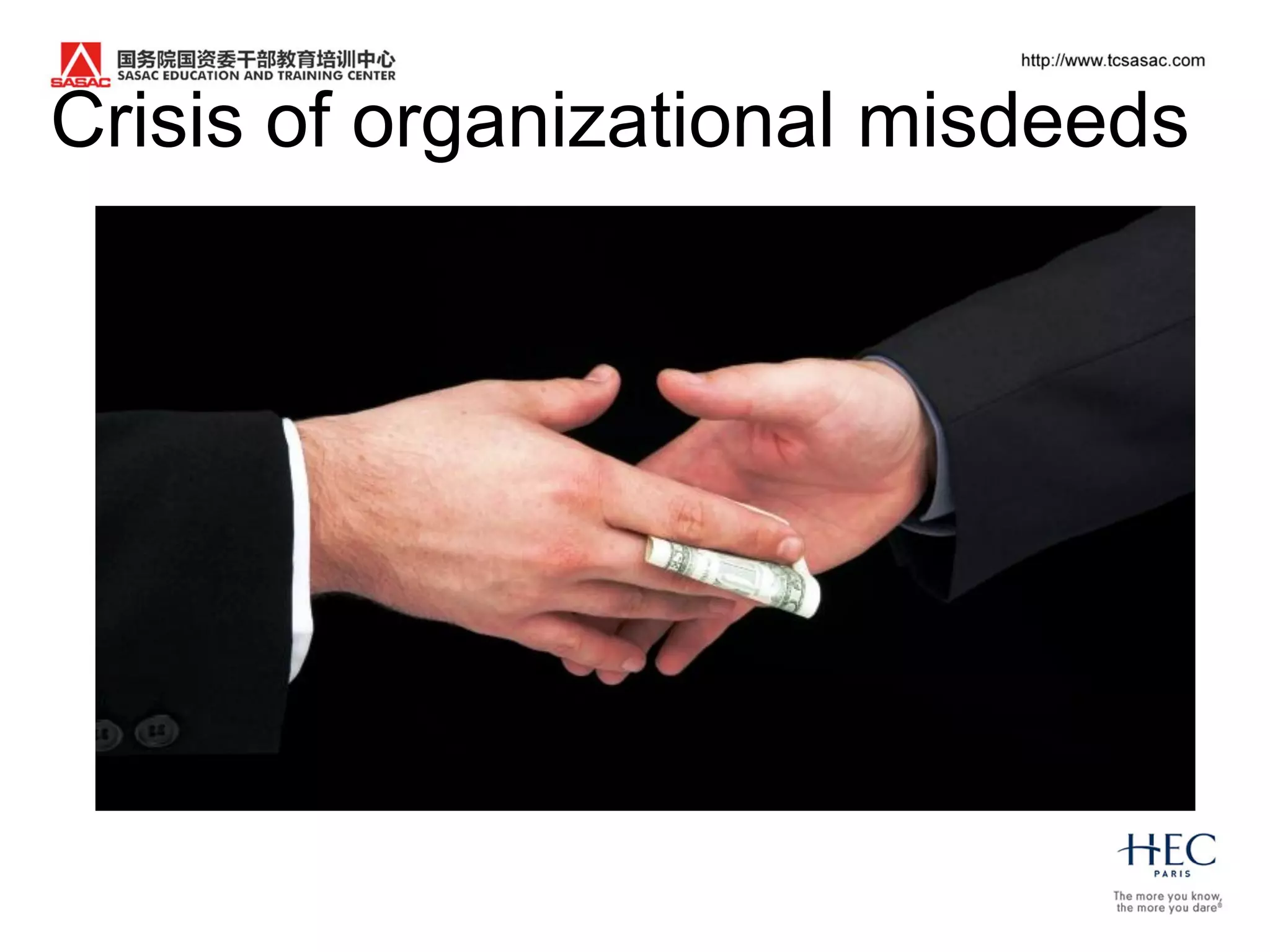
• Organizational Misdeeds (hiding info)
• Workplace Violence
• Rumours (false info)
• Terrorist attacks/man-made disasters
natural disasters
Natural disasters

Tornadoes
Earthquakes
Hurricanes
Landslides
Tsunamis
Flood
Drought
technological disasters
boycott
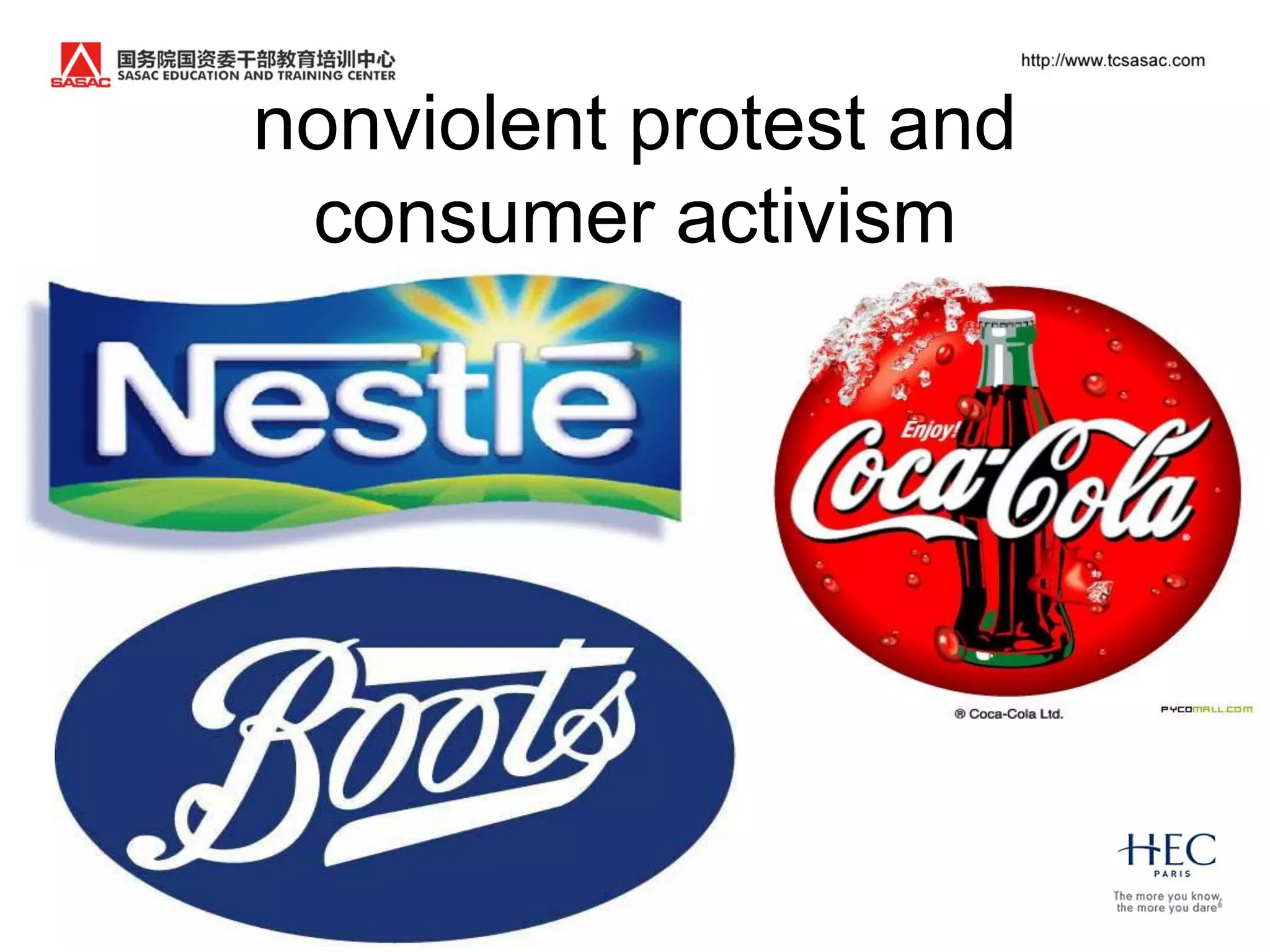
nonviolent protest and
 consumer activism
malevolence
Crisis of organizational misdeeds
workplace violence
breach confidentiality
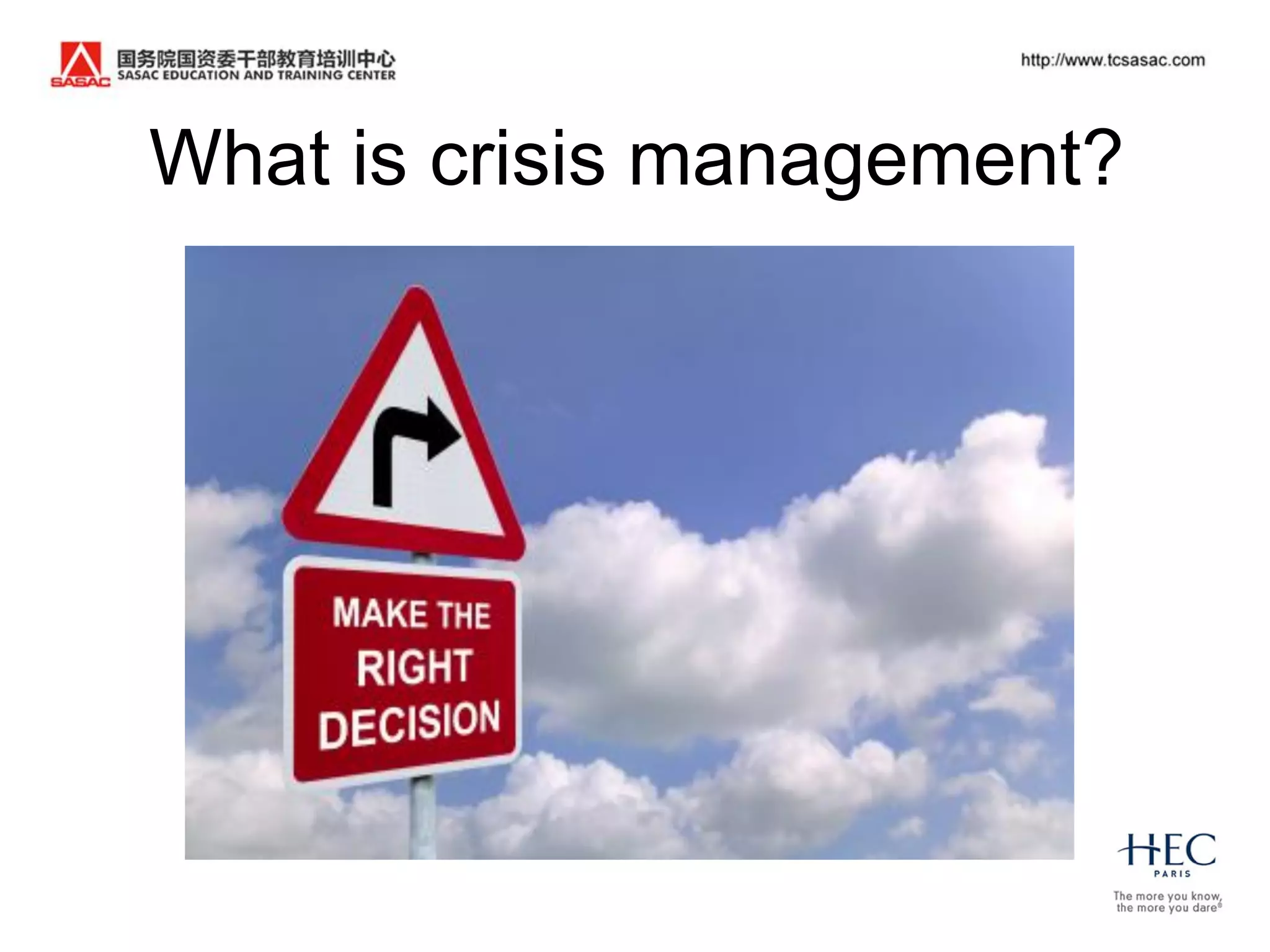
What is crisis management?


the art of making decisions to mitigate the
 effects of such an event, often while the
           event itself is unfolding
making decisions about your institution‟s
future while you are under stress and while
     you lack key pieces of information
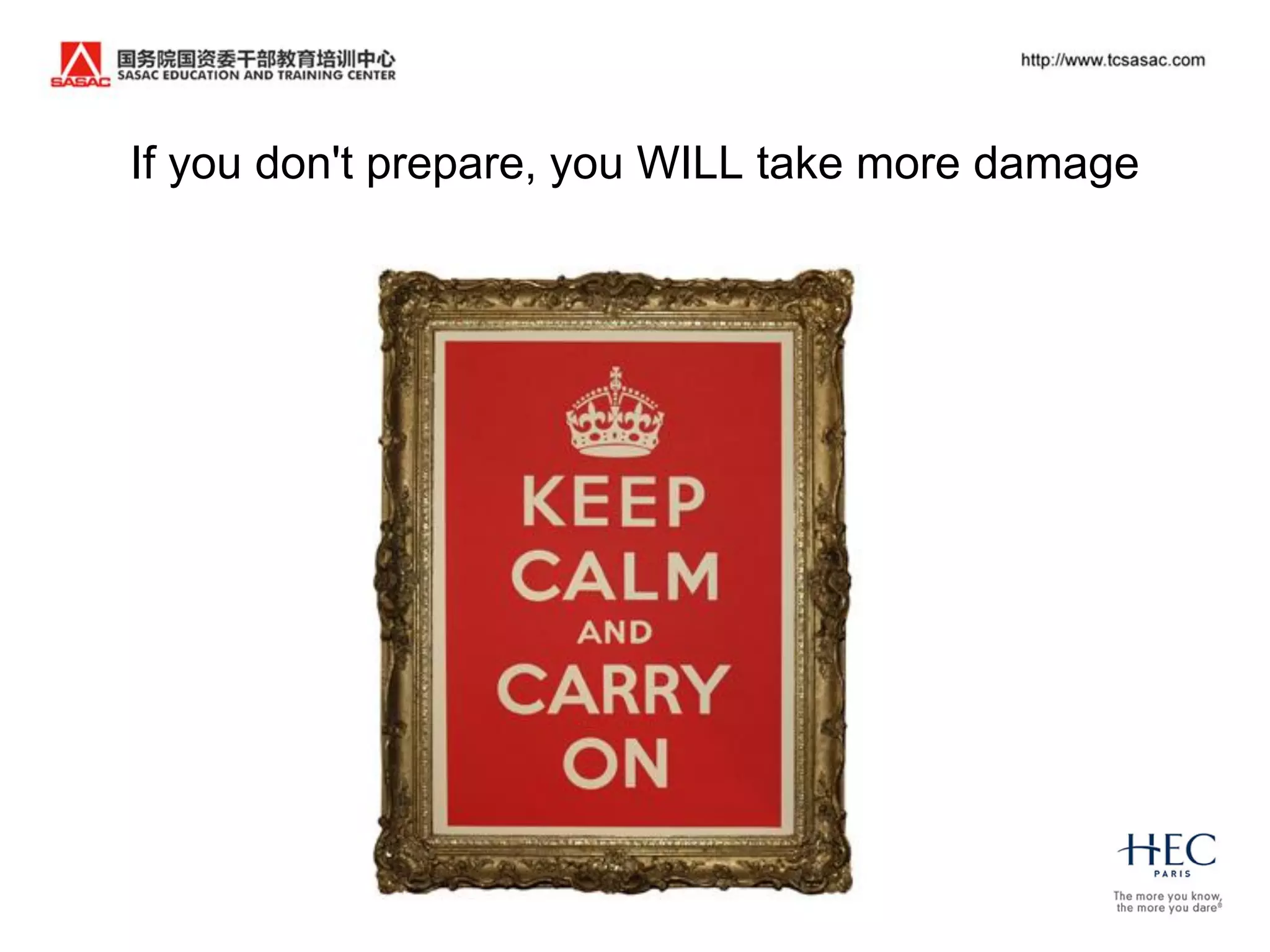
If you don't prepare, you WILL take more damage
Genesis
large scale industrial and environmental
disasters in the 1980s
Bophal

1984

Gas leak at Union Carbide‟ pesticide

World‟s worst industrial disaster

560.000 injured

Dow Chemicals
Crisis management consists of:
• Methods used to respond to both the reality
  and perception of crises (crisis management
  plan)
• Establishing metrics to define what
  scenarios constitute a crisis and should
  consequently trigger the necessary
  response mechanisms.
• Communication that occurs within the
  response phase of emergency management
  scenarios.
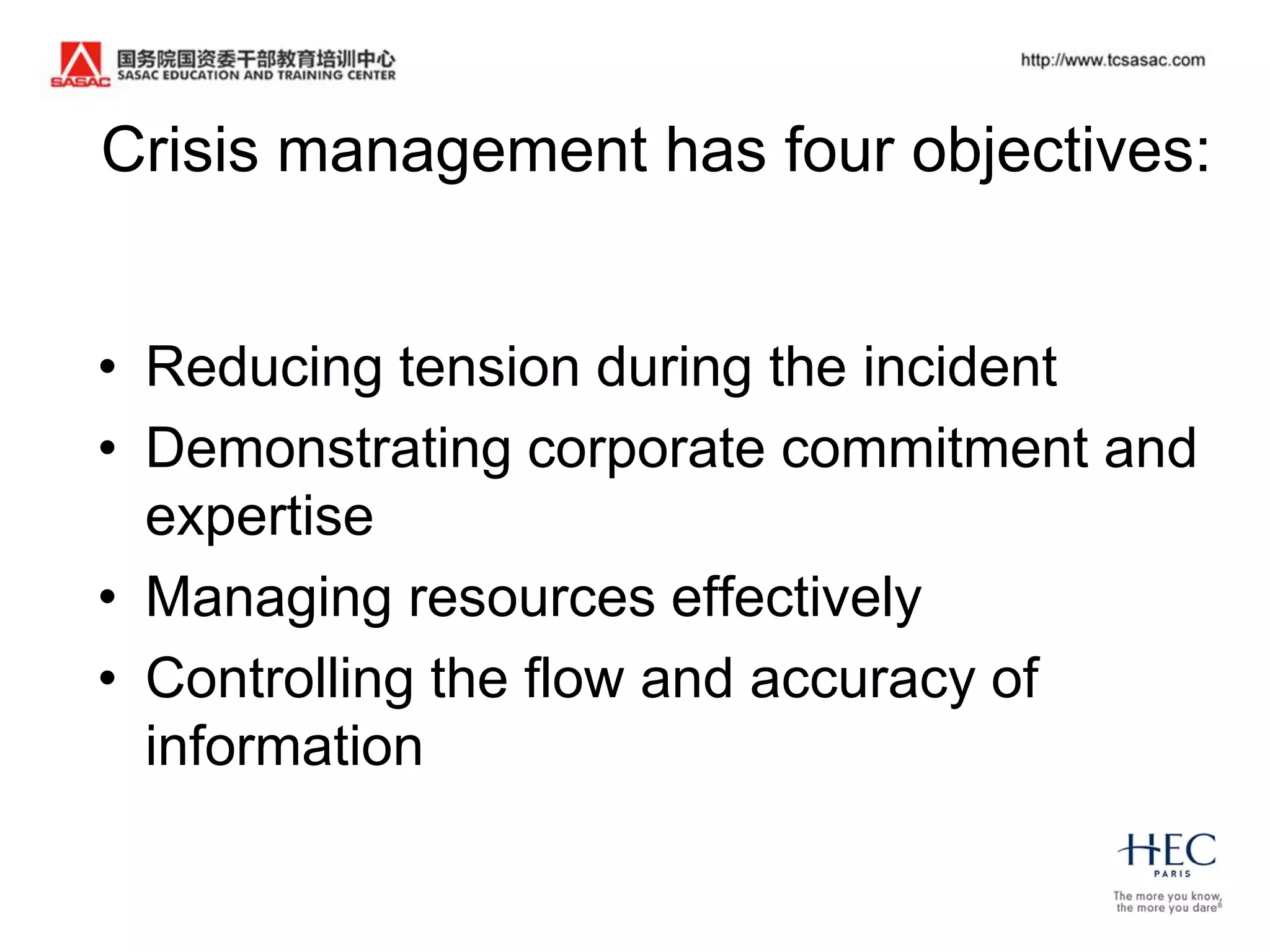
Crisis management has four objectives:


• Reducing tension during the incident
• Demonstrating corporate commitment and
  expertise
• Managing resources effectively
• Controlling the flow and accuracy of
  information
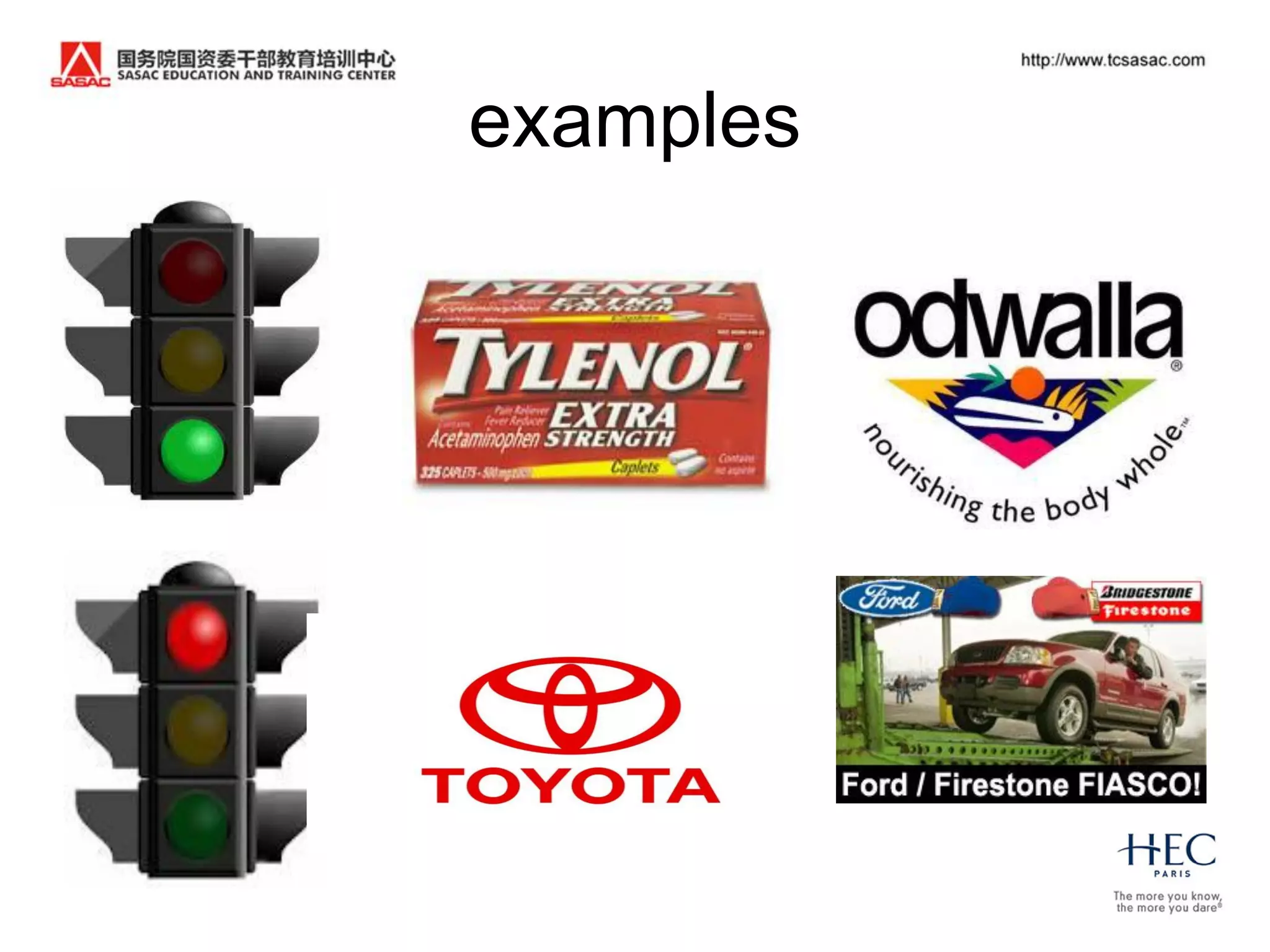
examples
The Crisis Life Cycle
• Stage one: The Storm Breaks

• Stage two: The Storm Rages

• Stage three: The Storm Passes
1- The Breaking Crisis
• Control seems to be slipping out of the
  company.

• Lack of solid detail about the crisis. Hard-to-
  provide information demanded by the media,
  analysts and others.

• Temptation to resort to a short-term focus, to
  panic and to speculate.

• For a period of time, everyone loses perspective.
2- Spread and Intensification of Crisis
 • Speculation and rumours develop in the
   absence of hard facts.

 • Third parties- regulators, scientists and other
   experts – add weight to the climate of opinion.

 • Corporate management comes under intense
   scrutiny from internal and external groups.
3- Rebuilding Needs
• To manage reputation. There are opportunities
  in a crisis to build positive perceptions of the
  company or product that last beyond the crisis
  period.

• Company communication/ culture. The
  company embarks on a long-term programme to
  tackle management issues and communication
  problems that exacerbated the crisis.
Challenges in Crisis Decision-Making
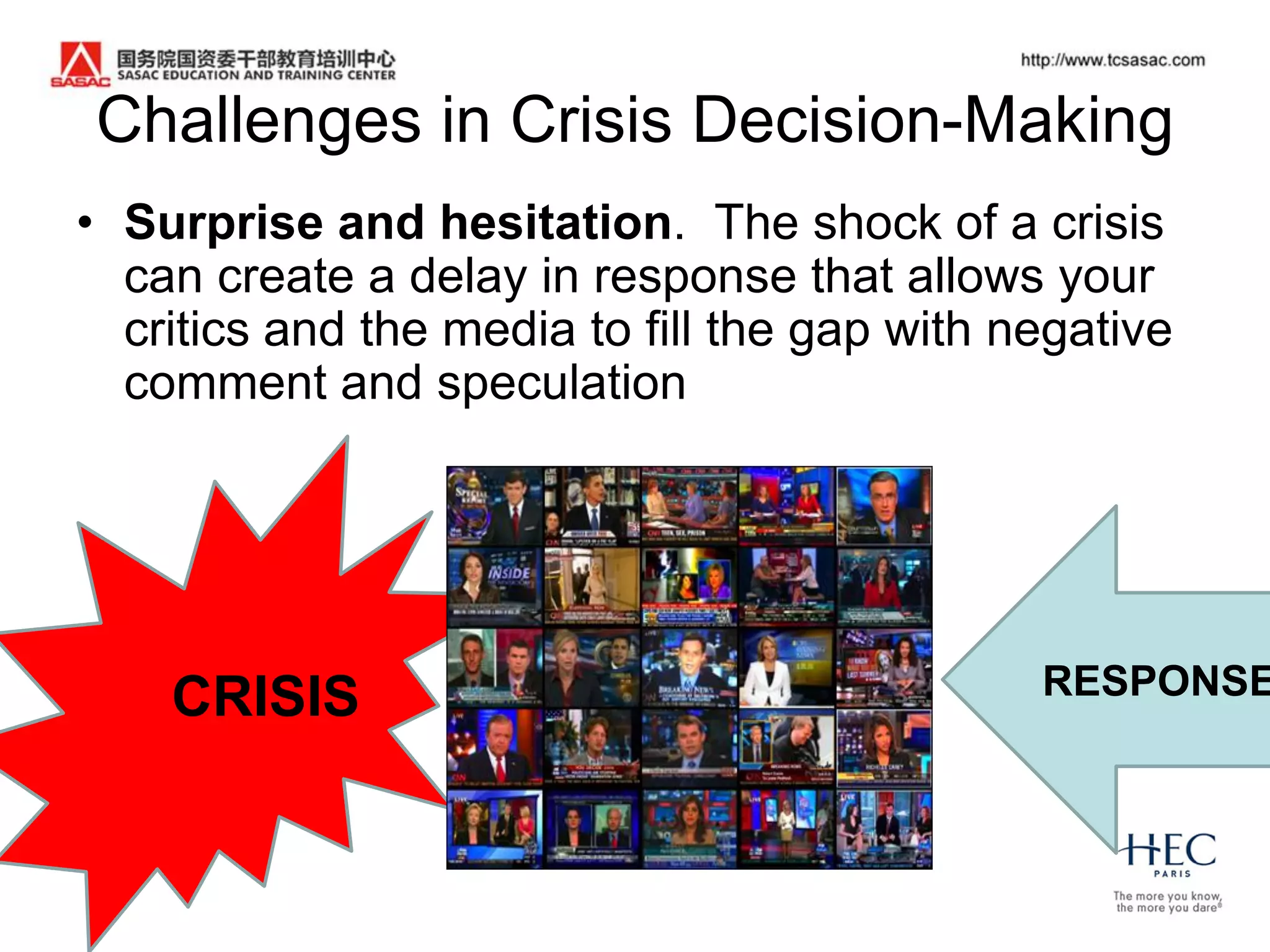
• Surprise and hesitation. The shock of a crisis
  can create a delay in response that allows your
  critics and the media to fill the gap with negative
  comment and speculation


    CRISIS                                    RESPONSE
Challenges in Crisis Decision-Making

• Pressure and stress must be channelled by the
  discipline of a crisis strategy.
Challenges in Crisis Decision-Making

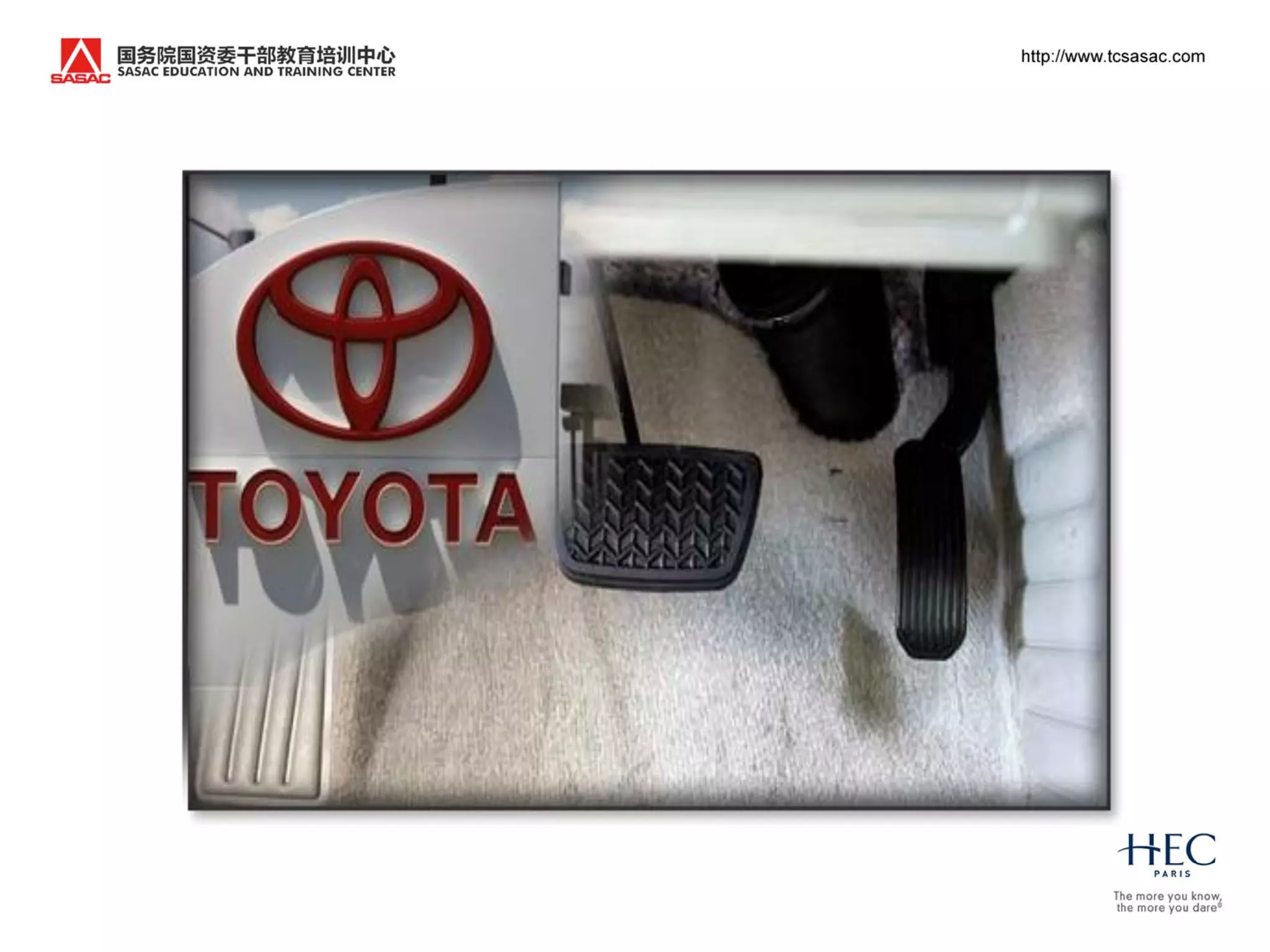
Mistaking information distribution for communication


          the risk of floor mat entrapment
Challenges in Crisis Decision-Making
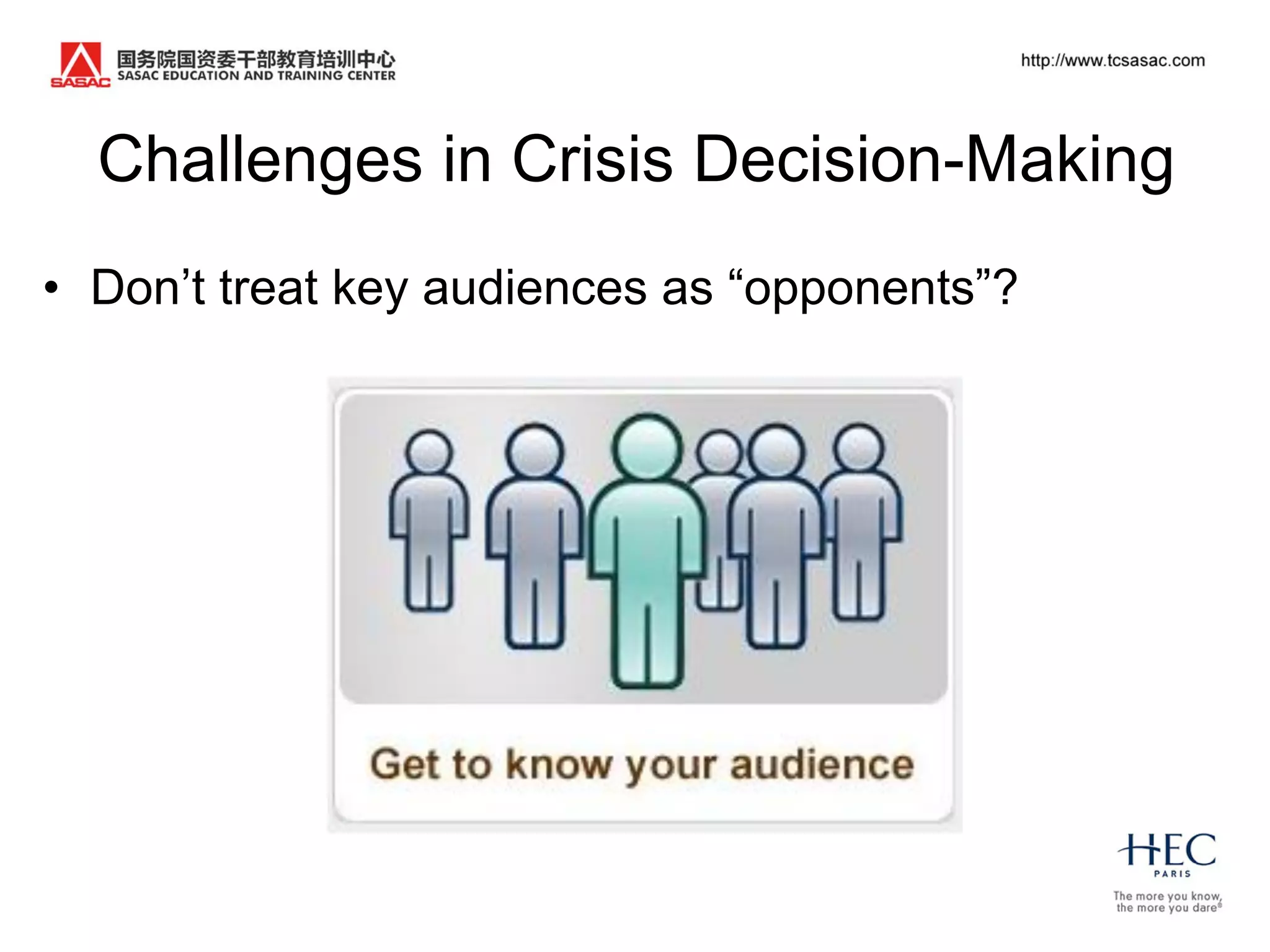
• Don‟t treat key audiences as “opponents”?
Tips
Good communication

• is the heart of any crisis management plan
• should reduce tension
• demonstrate a corporate commitment to
  correct the problem and take control of the
  information flow
• involves communicating with the media,
  employees, neighbours, investors,
  regulators and lawmakers
case study
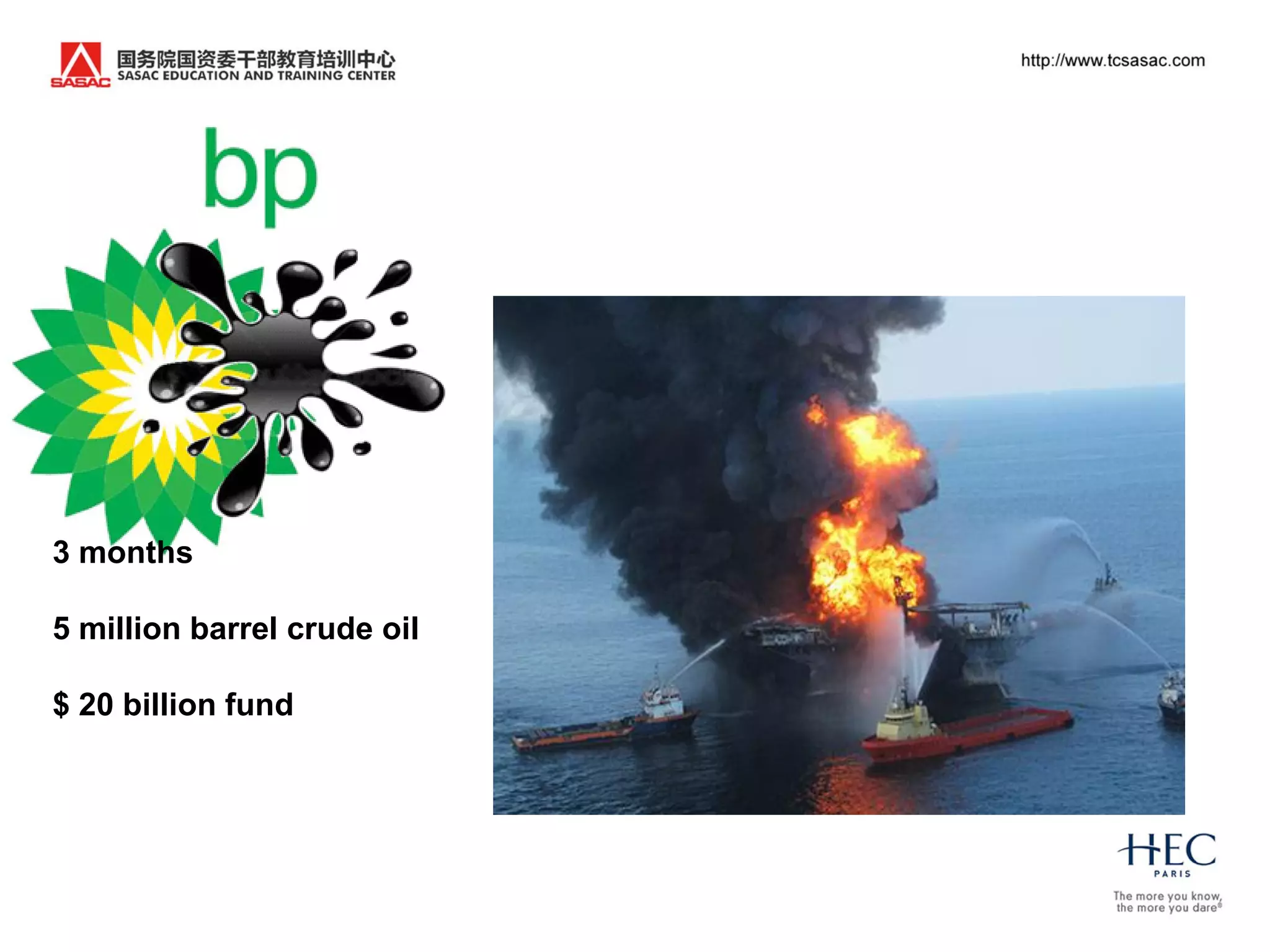
3 months

5 million barrel crude oil

$ 20 billion fund
You are the CEO of BP
   1. What do you say to the public?

2. What do you say to the shareholders?


 Please write down 2 short statements.
Talk to media
Twitter
                   BPOfficialAccount
                   18,596Followers
Youtube
6,472Subscribers   BPGlobalPR
                   190,561Followers
The spill is
   tiny


        ‘I would like
        my life back’
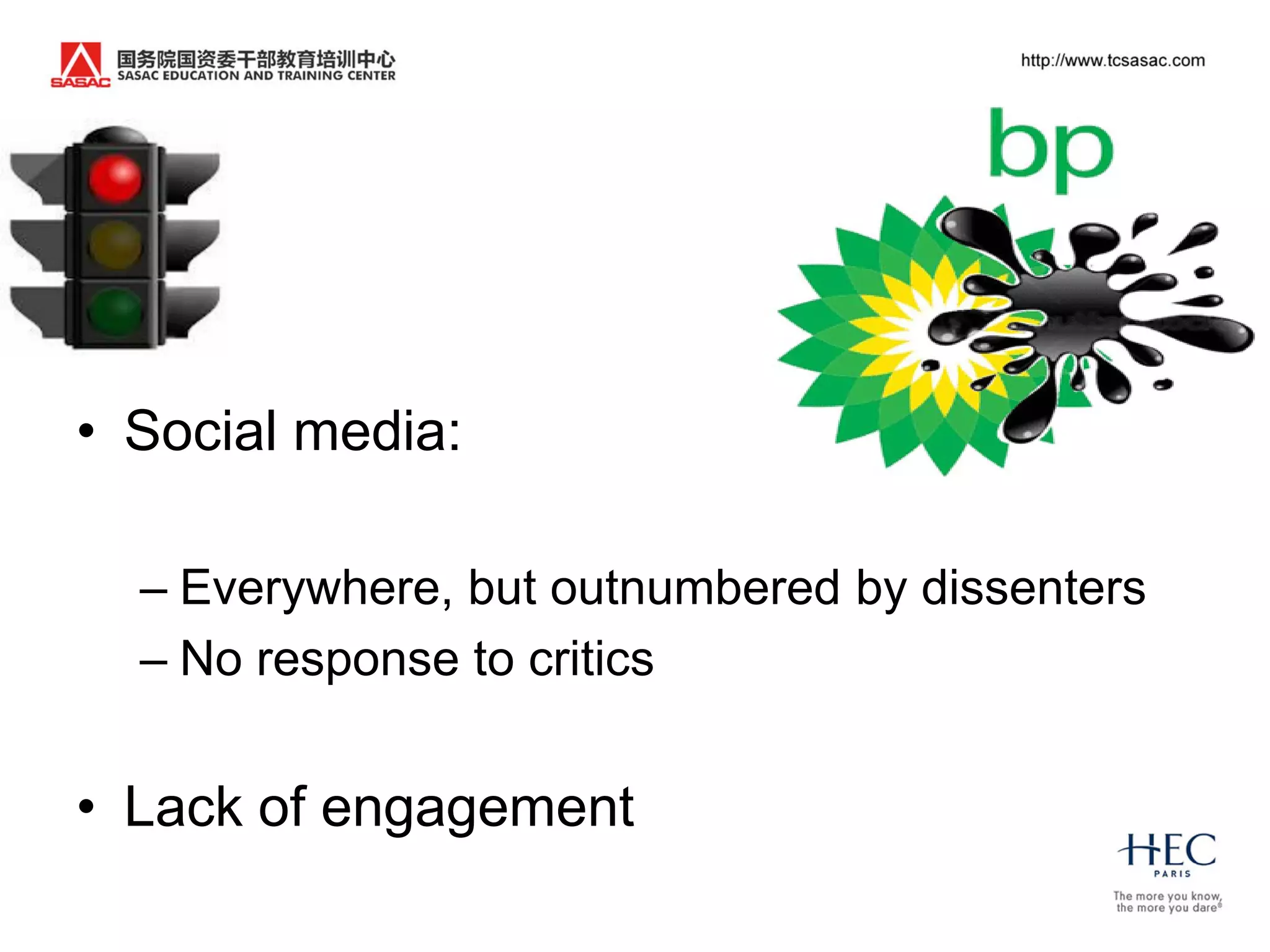
• Social media:

  – Everywhere, but outnumbered by dissenters
  – No response to critics


• Lack of engagement
sentiment trends
• A crisis threatening your company is likely
  to be discovered by the media today

• and may potentially escalate into a media
  crisis
especially true


social media crisis
lesson learned
depending on how you handle the
   communication of the crisis
a crisis
• may affect you, by damaging your brand
  reputation, bring legal actions, internal
  turmoil, loose shareholders‟ confidence
  and slash market value

                     or

• may benefit you, by providing you visibility
• Most organizations have risk management
  plans, foreseeing fires, storms, floods and
  other risk and crisis scenarios

• Very few organizations have:
  – communication strategies
  – media crisis plans
The most common reasons for management
 to ignore the warning signs are:

 - denial that a crisis can happen
 - belief in the current procedures and
 - concerns for the effect disclosure may
 have on the reputation of the organization.
Be aware
• The public does not care what turmoil the
  organisation is in – they want assurances
  that something is being done and that they
  are being protected.

• Media should not be regarded as the
  enemy, but as a significant stakeholder
  that can shape the perceptions of an
  organisation's performance during a crisis.
How to get it right
• Bring the news media inside your crisis:
  – Be proactive, to remain in control
  – Don‟t talk off the record
  – Press releases
  – Collateral materials


• Let them watch at close range how you
  handle the crisis
Be smart
• Being inside gives them special
  knowledge and prestige

• The „Stockholm Syndrome‟ takes over

• Your organisation must take the time to
  meet the needs of each media outlet
Tips

• Develop a loyal following before a crisis
  strikes
• Leverage the powerful help of your still-
  loyal customers
• Communicate right
• CEO shows up
Crisis management and Social Media Crisis Management

Crisis management and Social Media Crisis Management

  • 1.
    Managing Crisis Alberto Alemanno HEC Paris
  • 3.
    What is acrisis? Any situation that is threatening or could threaten to harm people or property, seriously interrupt business, damage reputation or negatively impact share value.
  • 4.
    Crisis (a) a threatto the organization (b) the element of surprise, and (c) a short decision time
  • 5.
    Examples • Natural disaster(Tsunami) • Technological crises (Tchernobyl, Exon Valdez) • Confrontation (boycott) • Malevolence (tampering, kidnapping, malicious rumors, terrorism, and espionage) • Organizational Misdeeds (hiding info) • Workplace Violence • Rumours (false info) • Terrorist attacks/man-made disasters
  • 6.
  • 7.
  • 8.
  • 9.
  • 10.
    nonviolent protest and consumer activism
  • 11.
  • 12.
  • 13.
  • 14.
  • 15.
    What is crisismanagement?
  • 16.
    What is crisismanagement? the art of making decisions to mitigate the effects of such an event, often while the event itself is unfolding
  • 17.
    making decisions aboutyour institution‟s future while you are under stress and while you lack key pieces of information
  • 18.
    If you don'tprepare, you WILL take more damage
  • 19.
    Genesis large scale industrialand environmental disasters in the 1980s
  • 20.
    Bophal 1984 Gas leak atUnion Carbide‟ pesticide World‟s worst industrial disaster 560.000 injured Dow Chemicals
  • 21.
    Crisis management consistsof: • Methods used to respond to both the reality and perception of crises (crisis management plan) • Establishing metrics to define what scenarios constitute a crisis and should consequently trigger the necessary response mechanisms. • Communication that occurs within the response phase of emergency management scenarios.
  • 22.
    Crisis management hasfour objectives: • Reducing tension during the incident • Demonstrating corporate commitment and expertise • Managing resources effectively • Controlling the flow and accuracy of information
  • 23.
  • 25.
    The Crisis LifeCycle • Stage one: The Storm Breaks • Stage two: The Storm Rages • Stage three: The Storm Passes
  • 26.
    1- The BreakingCrisis • Control seems to be slipping out of the company. • Lack of solid detail about the crisis. Hard-to- provide information demanded by the media, analysts and others. • Temptation to resort to a short-term focus, to panic and to speculate. • For a period of time, everyone loses perspective.
  • 27.
    2- Spread andIntensification of Crisis • Speculation and rumours develop in the absence of hard facts. • Third parties- regulators, scientists and other experts – add weight to the climate of opinion. • Corporate management comes under intense scrutiny from internal and external groups.
  • 28.
    3- Rebuilding Needs •To manage reputation. There are opportunities in a crisis to build positive perceptions of the company or product that last beyond the crisis period. • Company communication/ culture. The company embarks on a long-term programme to tackle management issues and communication problems that exacerbated the crisis.
  • 29.
    Challenges in CrisisDecision-Making • Surprise and hesitation. The shock of a crisis can create a delay in response that allows your critics and the media to fill the gap with negative comment and speculation CRISIS RESPONSE
  • 30.
    Challenges in CrisisDecision-Making • Pressure and stress must be channelled by the discipline of a crisis strategy.
  • 31.
    Challenges in CrisisDecision-Making Mistaking information distribution for communication the risk of floor mat entrapment
  • 32.
    Challenges in CrisisDecision-Making • Don‟t treat key audiences as “opponents”?
  • 33.
    Tips Good communication • isthe heart of any crisis management plan • should reduce tension • demonstrate a corporate commitment to correct the problem and take control of the information flow • involves communicating with the media, employees, neighbours, investors, regulators and lawmakers
  • 36.
  • 37.
    3 months 5 millionbarrel crude oil $ 20 billion fund
  • 38.
    You are theCEO of BP 1. What do you say to the public? 2. What do you say to the shareholders? Please write down 2 short statements.
  • 39.
  • 40.
    Twitter BPOfficialAccount 18,596Followers Youtube 6,472Subscribers BPGlobalPR 190,561Followers
  • 41.
    The spill is tiny ‘I would like my life back’
  • 42.
    • Social media: – Everywhere, but outnumbered by dissenters – No response to critics • Lack of engagement
  • 43.
  • 44.
    • A crisisthreatening your company is likely to be discovered by the media today • and may potentially escalate into a media crisis
  • 45.
  • 48.
  • 49.
    depending on howyou handle the communication of the crisis
  • 50.
    a crisis • mayaffect you, by damaging your brand reputation, bring legal actions, internal turmoil, loose shareholders‟ confidence and slash market value or • may benefit you, by providing you visibility
  • 51.
    • Most organizationshave risk management plans, foreseeing fires, storms, floods and other risk and crisis scenarios • Very few organizations have: – communication strategies – media crisis plans
  • 52.
    The most commonreasons for management to ignore the warning signs are: - denial that a crisis can happen - belief in the current procedures and - concerns for the effect disclosure may have on the reputation of the organization.
  • 54.
    Be aware • Thepublic does not care what turmoil the organisation is in – they want assurances that something is being done and that they are being protected. • Media should not be regarded as the enemy, but as a significant stakeholder that can shape the perceptions of an organisation's performance during a crisis.
  • 55.
    How to getit right • Bring the news media inside your crisis: – Be proactive, to remain in control – Don‟t talk off the record – Press releases – Collateral materials • Let them watch at close range how you handle the crisis
  • 56.
    Be smart • Beinginside gives them special knowledge and prestige • The „Stockholm Syndrome‟ takes over • Your organisation must take the time to meet the needs of each media outlet
  • 57.
    Tips • Develop aloyal following before a crisis strikes • Leverage the powerful help of your still- loyal customers • Communicate right • CEO shows up