Crisis
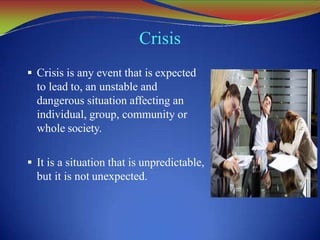
 Crisis is any event that is expected
to lead to, an unstable and
dangerous situation affecting an
individual, group, community or
whole society.
 It is a situation that is unpredictable,
but it is not unexpected.
Common features of Crisis
 The situation materialises unexpectedly.
 Decisions are required urgently.
 Time is short.
 Urgent demands for information are received.
 There is sense of loss of control.
 Pressures build over time.
 Routine business become increasingly difficult.
 Reputation suffers.
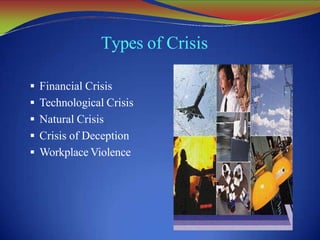
Types of Crisis
 Financial Crisis
 Technological Crisis
 Natural Crisis
 Crisis of Deception
 Workplace Violence
Financial Crisis
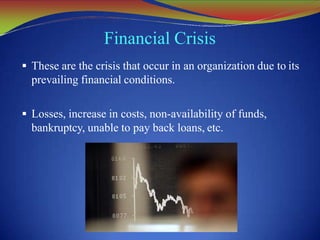
 These are the crisis that occur in an organization due to its
prevailing financial conditions.
 Losses, increase in costs, non-availability of funds,
bankruptcy, unable to pay back loans, etc.
Examples of Financial Crisis
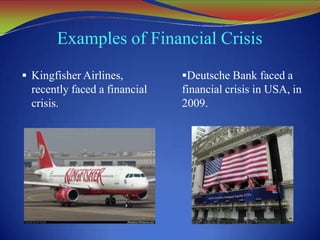
 Kingfisher Airlines,
recently faced a financial
crisis.
Deutsche Bank faced a
financial crisis in USA, in
2009.
Technological Crisis
 Technological crisis are caused by human application of
science and technology. This occurs when technology
becomes complex and the system breaks down.
 Software failures, Industrial accidents etc.
Examples of Technological Crisis
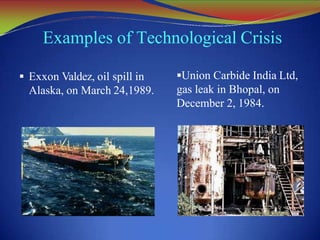
 Exxon Valdez, oil spill in
Alaska, on March 24,1989.
Union Carbide India Ltd,
gas leak in Bhopal, on
December 2, 1984.
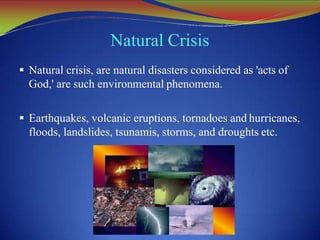
Natural Crisis
 Natural crisis, are natural disasters considered as 'acts of
God,' are such environmental phenomena.
 Earthquakes, volcanic eruptions, tornadoes and hurricanes,
floods, landslides, tsunamis, storms, and droughts etc.
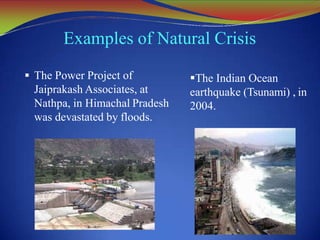
Examples of Natural Crisis
 The Power Project of
Jaiprakash Associates, at
Nathpa, in Himachal Pradesh
was devastated by floods.
The Indian Ocean
earthquake (Tsunami) , in
2004.
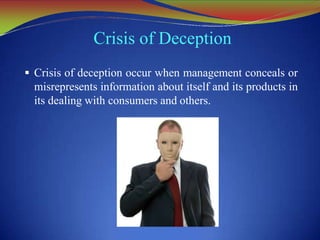
Crisis of Deception
 Crisis of deception occur when management conceals or
misrepresents information about itself and its products in
its dealing with consumers and others.
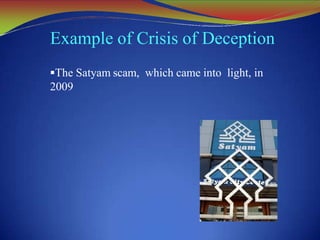
Example of Crisis of Deception
The Satyam scam, which came into light, in
2009
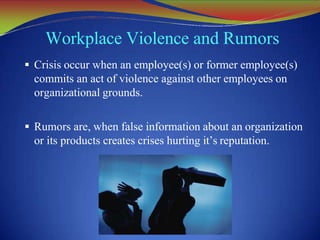
Workplace Violence and Rumors
 Crisis occur when an employee(s) or former employee(s)
commits an act of violence against other employees on
organizational grounds.
 Rumors are, when false information about an organization
or its products creates crises hurting it’s reputation.
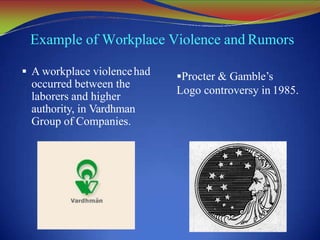
Example of Workplace Violence and Rumors
 A workplace violencehad
occurred between the
laborers and higher
authority, in Vardhman
Group of Companies.
Procter & Gamble’s
Logo controversy in 1985.
Crisis Management
 Crisis management is the process by which an
organization deals with a major event that threatens to
harm the organization, its stakeholders, or the general
public.
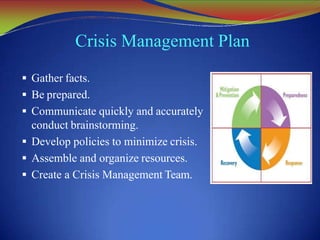
Crisis Management Plan
 Gather facts.
 Be prepared.
 Communicate quickly and accurately
conduct brainstorming.
 Develop policies to minimize crisis.
 Assemble and organize resources.
 Create a Crisis Management Team.
Example of Unsuccessful Crisis Management
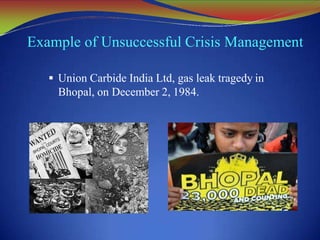
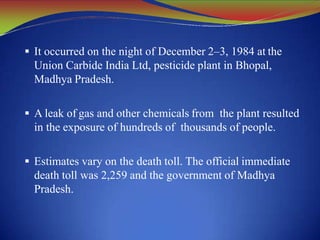
 Union Carbide India Ltd, gas leak tragedy in
Bhopal, on December 2, 1984.
 It occurred on the night of December 2–3, 1984 at the
Union Carbide India Ltd, pesticide plant in Bhopal,
Madhya Pradesh.
 A leak of gas and other chemicals from the plant resulted
in the exposure of hundreds of thousands of people.
 Estimates vary on the death toll. The official immediate
death toll was 2,259 and the government of Madhya
Pradesh.
Example of Successful Crisis Management
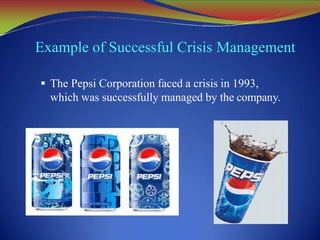
 The Pepsi Corporation faced a crisis in 1993,
which was successfully managed by the company.
 In 1993, claims of needles being found in cans of diet
Pepsi were made.
 Company urged stores not to remove the product from
shelves while it had the cans and the situation
investigated.
 Pepsi released videos and made public, showing the
production process to demonstrate that such tampering
was impossible within their factories.
 Crisis was managed through effective communication.

Crisis Management.pptx

  • 2.
    Crisis  Crisis isany event that is expected to lead to, an unstable and dangerous situation affecting an individual, group, community or whole society.  It is a situation that is unpredictable, but it is not unexpected.
  • 3.
    Common features ofCrisis  The situation materialises unexpectedly.  Decisions are required urgently.  Time is short.  Urgent demands for information are received.  There is sense of loss of control.  Pressures build over time.  Routine business become increasingly difficult.  Reputation suffers.
  • 4.
    Types of Crisis Financial Crisis  Technological Crisis  Natural Crisis  Crisis of Deception  Workplace Violence
  • 5.
    Financial Crisis  Theseare the crisis that occur in an organization due to its prevailing financial conditions.  Losses, increase in costs, non-availability of funds, bankruptcy, unable to pay back loans, etc.
  • 6.
    Examples of FinancialCrisis  Kingfisher Airlines, recently faced a financial crisis. Deutsche Bank faced a financial crisis in USA, in 2009.
  • 7.
    Technological Crisis  Technologicalcrisis are caused by human application of science and technology. This occurs when technology becomes complex and the system breaks down.  Software failures, Industrial accidents etc.
  • 8.
    Examples of TechnologicalCrisis  Exxon Valdez, oil spill in Alaska, on March 24,1989. Union Carbide India Ltd, gas leak in Bhopal, on December 2, 1984.
  • 9.
    Natural Crisis  Naturalcrisis, are natural disasters considered as 'acts of God,' are such environmental phenomena.  Earthquakes, volcanic eruptions, tornadoes and hurricanes, floods, landslides, tsunamis, storms, and droughts etc.
  • 10.
    Examples of NaturalCrisis  The Power Project of Jaiprakash Associates, at Nathpa, in Himachal Pradesh was devastated by floods. The Indian Ocean earthquake (Tsunami) , in 2004.
  • 11.
    Crisis of Deception Crisis of deception occur when management conceals or misrepresents information about itself and its products in its dealing with consumers and others.
  • 12.
    Example of Crisisof Deception The Satyam scam, which came into light, in 2009
  • 13.
    Workplace Violence andRumors  Crisis occur when an employee(s) or former employee(s) commits an act of violence against other employees on organizational grounds.  Rumors are, when false information about an organization or its products creates crises hurting it’s reputation.
  • 14.
    Example of WorkplaceViolence and Rumors  A workplace violencehad occurred between the laborers and higher authority, in Vardhman Group of Companies. Procter & Gamble’s Logo controversy in 1985.
  • 15.
    Crisis Management  Crisismanagement is the process by which an organization deals with a major event that threatens to harm the organization, its stakeholders, or the general public.
  • 16.
    Crisis Management Plan Gather facts.  Be prepared.  Communicate quickly and accurately conduct brainstorming.  Develop policies to minimize crisis.  Assemble and organize resources.  Create a Crisis Management Team.
  • 17.
    Example of UnsuccessfulCrisis Management  Union Carbide India Ltd, gas leak tragedy in Bhopal, on December 2, 1984.
  • 18.
     It occurredon the night of December 2–3, 1984 at the Union Carbide India Ltd, pesticide plant in Bhopal, Madhya Pradesh.  A leak of gas and other chemicals from the plant resulted in the exposure of hundreds of thousands of people.  Estimates vary on the death toll. The official immediate death toll was 2,259 and the government of Madhya Pradesh.
  • 19.
    Example of SuccessfulCrisis Management  The Pepsi Corporation faced a crisis in 1993, which was successfully managed by the company.
  • 20.
     In 1993,claims of needles being found in cans of diet Pepsi were made.  Company urged stores not to remove the product from shelves while it had the cans and the situation investigated.  Pepsi released videos and made public, showing the production process to demonstrate that such tampering was impossible within their factories.  Crisis was managed through effective communication.