INTRODUCTION
Risk is the potential that a chosen
action or activity will lead to an
undesirable outcome.
SO SHOULD WE TAKE A RISK???

A Ship is Safe in harbor, however that is not
what ship are for
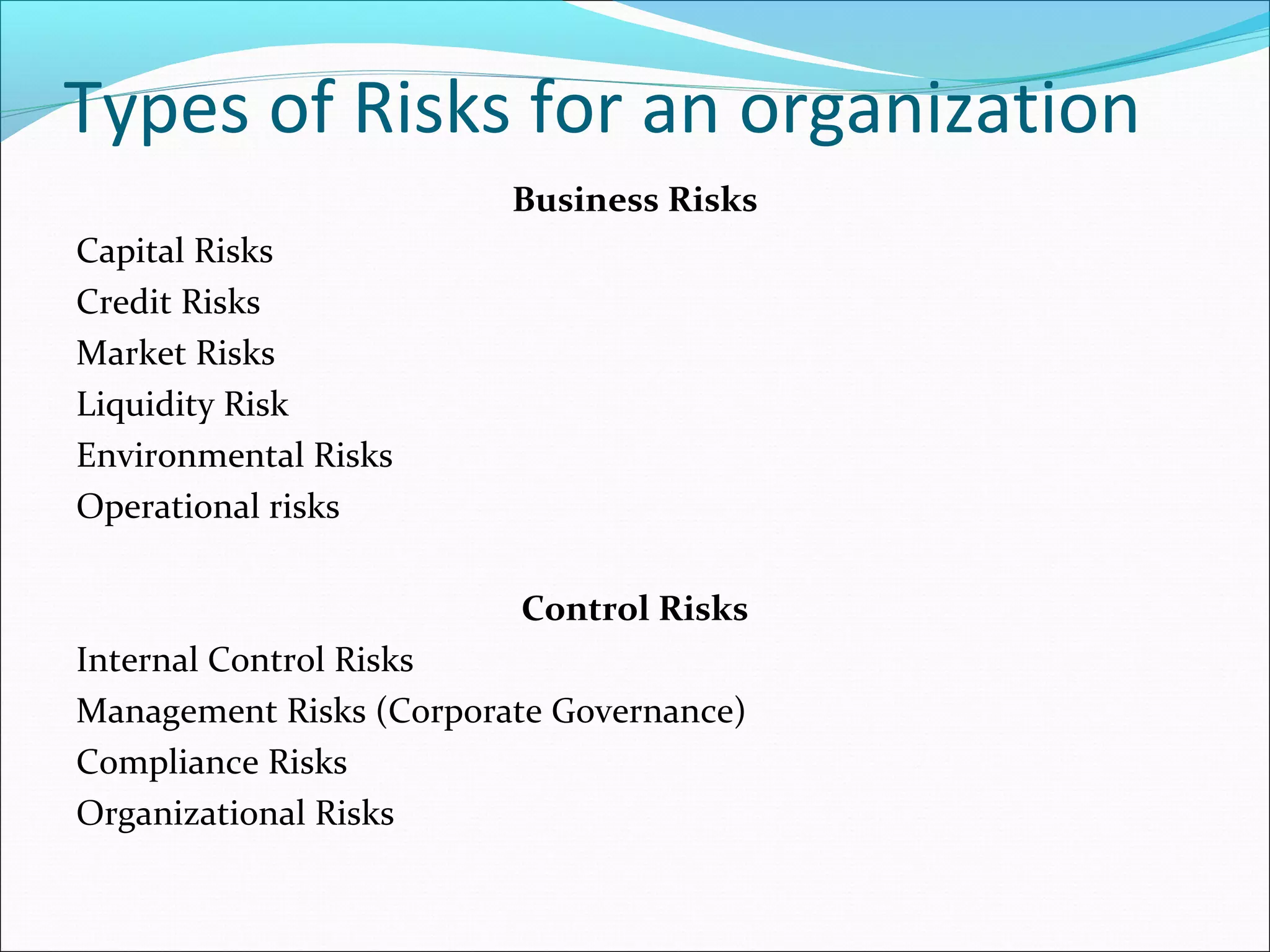
Types of Risks for an organization
Business Risks
Capital Risks
Credit Risks
Market Risks
Liquidity Risk
Environmental Risks
Operational risks
Control Risks
Internal Control Risks
Management Risks (Corporate Governance)
Compliance Risks
Organizational Risks
RISKS & TIME LINE
RISK MATRIX
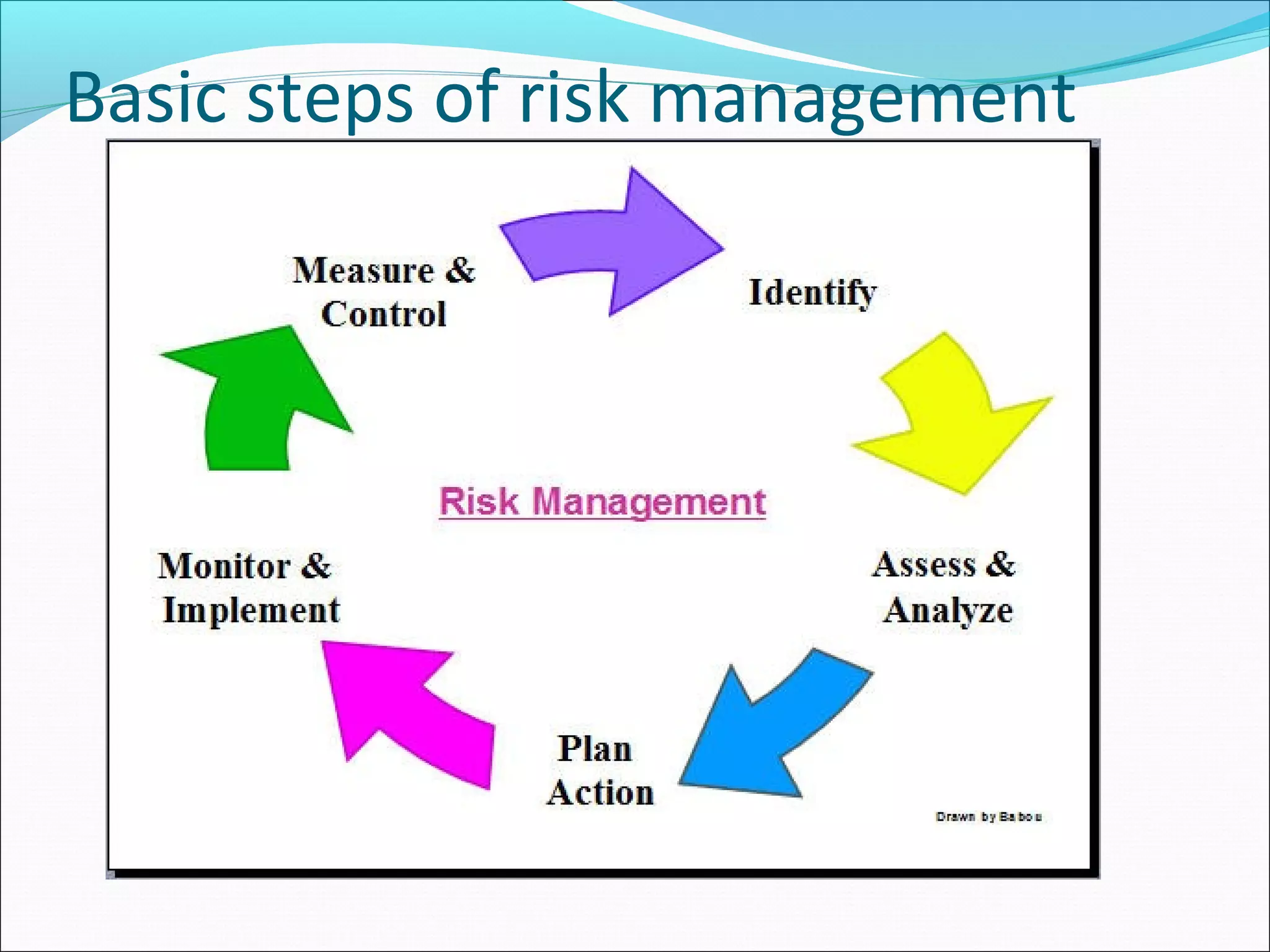
Basic steps of risk management
Principles in risk management
Close involvement of top management
Risks varies depending upon the nature of

organization
Probability and Magnitude of identified risks need to
be documented
Proper segregation of duties
Accountability
Internal risk audit
Integration
Risk Tolerance limits
In risk management, the organizational setup must
have following elements;
Clarity in the job roles
Inter departmental relationship
Flexibility in terms of inter-connectivity
Control linkages and control rationale
Organizational setup of Risk Management
 Board of directors
 Risk Management Committee
 Sub committees

- Credit risk management committee (CRMC)
- Market risk management Committee (MRMC)
- Operational risk management Committee (ORMC)

 Each Committee has following cell

- Identification cell
- Measurement Cell
- Monitoring Cell
- Control Cell
WHAT IS CREDIT
Credit is the trust which allows one party to
provide resources to another party where that
second party does not reimburse the first
party immediately, but instead arrange either
to repay or return those resources at a later
date
What is Credit Risk
The potential that a borrower or counterparty
will fail to meet its obligations in accordance
with agreed term
Difference between Credit
Management and Credit risk
Management
 Focus (3 Ps in CM and Risks philosophy in CRM)
 Approach (Backward in CM and Forward in CRM)
 Concern (Repayment in CM and Default in CRM)
 Exit Feature (CM does not have Exit plan and CRM

always have Exit plan)

 Tools (FS, ratios etc in CM and CVaR, Simulation etc

in CRM)

Credit risk management

  • 1.
  • 2.
    Risk is thepotential that a chosen action or activity will lead to an undesirable outcome.
  • 3.
    SO SHOULD WETAKE A RISK??? A Ship is Safe in harbor, however that is not what ship are for
  • 4.
    Types of Risksfor an organization Business Risks Capital Risks Credit Risks Market Risks Liquidity Risk Environmental Risks Operational risks Control Risks Internal Control Risks Management Risks (Corporate Governance) Compliance Risks Organizational Risks
  • 5.
  • 6.
  • 7.
    Basic steps ofrisk management
  • 8.
    Principles in riskmanagement Close involvement of top management Risks varies depending upon the nature of organization Probability and Magnitude of identified risks need to be documented Proper segregation of duties Accountability Internal risk audit Integration Risk Tolerance limits
  • 9.
    In risk management,the organizational setup must have following elements; Clarity in the job roles Inter departmental relationship Flexibility in terms of inter-connectivity Control linkages and control rationale
  • 10.
    Organizational setup ofRisk Management  Board of directors  Risk Management Committee  Sub committees - Credit risk management committee (CRMC) - Market risk management Committee (MRMC) - Operational risk management Committee (ORMC)  Each Committee has following cell - Identification cell - Measurement Cell - Monitoring Cell - Control Cell
  • 11.
    WHAT IS CREDIT Creditis the trust which allows one party to provide resources to another party where that second party does not reimburse the first party immediately, but instead arrange either to repay or return those resources at a later date
  • 12.
    What is CreditRisk The potential that a borrower or counterparty will fail to meet its obligations in accordance with agreed term
  • 13.
    Difference between Credit Managementand Credit risk Management  Focus (3 Ps in CM and Risks philosophy in CRM)  Approach (Backward in CM and Forward in CRM)  Concern (Repayment in CM and Default in CRM)  Exit Feature (CM does not have Exit plan and CRM always have Exit plan)  Tools (FS, ratios etc in CM and CVaR, Simulation etc in CRM)