CRANIAL MANIPULATION BASICS
OSSEOUS & SOFT TISSUE APPROACHES
Dr. KANNABIRAN BHOJAN .PhD, P.T
CERTIFIED IN BASIC & ADVANCED OSTEOPATHY TECHNIQUES -OHWI-ONTARIO ,CANADA
DIPLOMA IN FASCIAL MANIPULATION FM1-LUIGI STECCO METHOD ,ITALY
CERTIFIED VISCERAL MANIPULATION VM1 –BARRAL INSTITUTE ,USA
TRIGGER POINT DRY NEEDLING DN1 –MYOPAIN SEMINARS,USA
PROFFESSOR RVS COLLEGE OF PHYSIOTHERAPY
CONSULTANT ORTHOPEDIC MANIPULATIVE SPORTS PHYSIOTHERAPIST
FAST GROWING AREA OF MANUAL THERAPY PRACTICE
HISTORY
• With its modern roots in cranial osteopathy, as
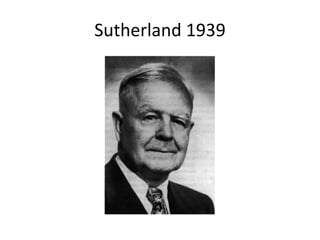
developed by Sutherland (Sutherland 1939) in
the early years of the 20th century,
• Craniosacral manipulation was first introduced
into the osteopathic profession in the 1930s.
Instruction in the field began in the 1940s. The
pioneering work of William Garner Sutherland
(described in Upledger & Vredevoogd 1983)
Sutherland 1939
The Cranio Sacral skeleton
• The Cranio Sacral skeleton is the axial
skeleton. It consists of the skull, vertebral
column, sacrum, and coccyx.
The Skull
• face and the calvarium.
• There are 28 moveable bones in the
craniofacial skull, including the six ossicles of
the inner ears within the temporal bones.
Additionally, and also within the temporal
bones, are the osseous labyrinths. The hyoid
bone is considered by some to be cranial.
There are eight cranial bones:
• 1. occiput
• 2. sphenoid
• 3. ethmoid
• 4. frontal
• 5. two temporals
• 6. two parietals
There are fourteen facial
bones:
• 1. mandible
• 2. vomer
• 3. two maxillae
• 4. two zygomatic
• 5. two palatines
• 6. two nasals
• 7. two lacrimals
• 8. two inferior conchae
Skull & clavarium
cranial mechanisms and number of
overlapping processes
About Mechanical bony restrictions
or ligamentous or fascial structural
and functional anomalies.
cranial mechanisms and number of
overlapping processes
• Dysfunctional situations
where interference with
normal pulsatile activities
or soft tissue properties
seems to have occurred
and which have no easy,
'gross', structural or
orthopedic consequence.
cranial mechanisms and number of
overlapping processes
• Bio-electromagnetic energy
factors permeate all
mechanical, functional and
dysfunctional processes and
that in some instances there
seems to be no way of
making sense of cranio sacral
treatment without
hypothesizing energetic
involvement.
cranial mechanisms and number of
overlapping processes
• The unconvinced perspective-placebo effect
cranial mechanisms and number of
overlapping processes
• Gross
mechanical,
subtle pulsatile
or energy
imbalances
FIVE KEY ELEMENTS PROPOSED BY
SUTHERLAND
• INHERENT MOTILITY OF BRAIN AND SPINAL CORD
• FLUCTUATING CSF
• MOTILITY OF INTRACRANIAL AND SPINAL
MEMBRANES
• MOBILITY OF BONES OF SKULL
• INVOLUNTARY SACRAL MOTION BETWEEN THE ILLIA
INHERENT MOTILITY OF BRAIN AND
SPINAL CORD
CSF circulation
FLUCTUATING CSF
MOTILITY OF INTRACRANIAL AND
SPINAL MEMBRANES
A Modification in
length
of spinal canal in
cervical region during
flexion and extension.
B Modification in
length of spinal canal
in lumbar region
during
flexion and extension
MOBILITY OF BONES OF SKULL
posterior & superior view
MOBILITY OF BONES OF SKULL
Cranioscaral movement
INVOLUNTARY SACRAL MOTION
BETWEEN THE ILLIA
• through this mechanism it is
believed that the sacrum
will be pulled up and the
base will rotate forward
during inhalation and then
will lower slightly and the
base will rotate backward
during exhalation. It is the
dural attachments that link
the head to the sacrum and
allows them to move in a
coordinated rhythm.
Concepts validity
• Is there palpable mobility at the cranial sutures and
articulations and if so, what is the significance of such
mobility in health terms?
• What are the reciprocal tension membranes and is
there a linking mechanism between cranial and sacral
motion?
• Does a cranial rhythmic impulse (CRI) exist and if so,
what is it and, especially, what is its relationship with
cerebrospinal fluid fluctuations and flow?
• What are the forces moving cranial structures and so
producing the CRI? Most importantly, are these forces
primary or is movement the result of a combination of
normal physiological functions such as respiration and
cardiovascular rhythms?
Cranial structures and their mobility
• Sutherland (described in Upledger & Vredevoogd
1983) observed mobile articulation between the
cranial bones almost 100 years ago and
researched the concept for the rest of his life.
• influence of the intracranial ligaments and fascia
on cranial motion, which he suggested acted to
balance motion within the skull.
• PRM 'primary respiratory mechanism' which was
the motive force for cranial motion PUMPING CSF.
RTM
Inhalation and exhalation phases of
primary respiratory mechanism
RTM
Tensegrity
Before fusion
Cranial structures
Flax Cerebri &Tentorium Cerebelli
Cranioscaral movement
What drives the cranial rhythm?
• The perpetual outpouring of impulses from
the brain to maintain postural equilibrium,
chemical homeostasis, and so on, conceivably
may multiply the activity of individual cells
into a rhythmic pattern of the whole brain,
small enough to be invisible to the naked eye,
but large enough to move the cerebrospinal
fluid which in turn moves the delicate
articulated cranial mechanism.(Frymann 1971)
WAS FRYMANN RIGHT ABOUT
CRANIAL RHYTHM
• RESEARCH SUPPORT IT
MODELS OF CRANIAL THERAPEUTICS
• CRANIAL OSTEOPATHY- WILLIAM GARNER SUTHERLAND 1939
• CST- JOHN UPLEDGER 1995
• SOMATIC CRANIAL WORK- SHEA 1997
• SACROOCCIPITAL TECHNIQUE & APPLIED
KINESIOLOGY –DEJARNETTE 1975-78
• ECLECTIC DENTAL AND CRANIOFASCIAL
APPROACHES –VERNON 2001
• POLY VAGAL CONCEPT- SAHAR 2001 & PORGES 2001
CONCLUSIONS
• THERE EXISTS A PURELY CRANIAL MODEL
• INCORPORATES KNOWINGLY OR
UNKNOWINGLY PRINCIPLES OF TENSEGRITY
• INVOLVES FLUID/ELECTRIC ASPECTS CAN
RANGE PARTLY MECHANISTIC TO ALMOST
TOTALLY ENERGETIC/SPRITUAL
What are the clinical implications of
cranial dysfunction?
• Assuming being a direct connection between
such Cranial motion and Sacral motion and,
further, that this motion has a rhythmicity
which is palpable.
McPartland gives some indications
Upledger & Vredevoogd (Upledger 1996) offer a
long list.
Some indications
• Acute sprains and strains using a variety of techniques.
• Chronic pain problems (using techniques such as CV-4 as well
as balancing tissue tension and dural membrane balancing).
• Visceral dysfunction (peptic ulcers, ulcerative bowels,
tachycardia, asthma, etc. treated by means of normalizing
restriction patterns in the craniosacral system).
• Autonomic nervous system problems such as Raynaud's
syndrome (treated by using CV-4 daily).
• Rheumatoid arthritis (CV-4, often applied by a family
member, daily).
• Emotional disorders - especially anxiety (using specialized
techniques).
• Scoliosis, which is often seen to be a direct result of
craniosacral distortions.
Hand placement for palpation of
cranial rhythmic impulse.
The forearms are supported by the table to prevent undue fatigue.
cranial rhythmic impulse
• As you begin to explore these cranial
palpation and assessment sensations, it is
suggested that you keep a journal of your
feelings and findings, as well as the answers to
the queries posed in the exercise descriptions.
What are the clinical implications of
cranial dysfunction?
• Let us assume, hypothetically speaking, that it
is possible to establish that mobility exists
between cranial bones in normal situations, as
well as there being a direct connection
between such motion and sacral motion and,
further, that this motion has a rhythmicity
which is palpable.
Non-cephalic medical presentations
benefiting from manipulation Most
orthopedic complaints routinely referred to
physical therapy
• Extensor tendonitis
• Tennis elbow
• Biceps tendonitis
• Frozen shoulder
• Lumbar strain
• Plantar fasciitis*
Non-cephalic medical presentations
benefiting from manipulation Most
orthopedic complaints routinely
referred to physical therapy
• Peripheral neuropathies
• Carpal tunnel syndrome
• Brachial plexus compression/thoracic outlet
syndrome*
• Sciatica
• Vertebral disk prolapse
Contraindications
• Structurally or medically unstable conditions
• Stroke in evolution
• Suspicion of subarachnoid hemorrhage
• Suspicion of acute fracture, cranial or cervical
• Suspicion of cancer not yet diagnosed or staged
• Potential for metastasis when cure is still sought
• Acute encephalopathy or meningitis
• Vertebral disk prolapse
• Dizziness, loss of consciousness, blurred vision
with cervical rotation/side bending
Hand placement for palpation of
cranial rhythmic impulse.
The forearms are supported by the table to prevent undue fatigue.
Vault hold for cranial palpation.
Relative head and hand size may prevent
precise replication of suggested sites for
finger placement.
Vault hold for cranial palpation
Fronto-occipital hold for cranial
palpation.
sacral palpation and treatment.

cranial manipulation

  • 1.
    CRANIAL MANIPULATION BASICS OSSEOUS& SOFT TISSUE APPROACHES Dr. KANNABIRAN BHOJAN .PhD, P.T CERTIFIED IN BASIC & ADVANCED OSTEOPATHY TECHNIQUES -OHWI-ONTARIO ,CANADA DIPLOMA IN FASCIAL MANIPULATION FM1-LUIGI STECCO METHOD ,ITALY CERTIFIED VISCERAL MANIPULATION VM1 –BARRAL INSTITUTE ,USA TRIGGER POINT DRY NEEDLING DN1 –MYOPAIN SEMINARS,USA PROFFESSOR RVS COLLEGE OF PHYSIOTHERAPY CONSULTANT ORTHOPEDIC MANIPULATIVE SPORTS PHYSIOTHERAPIST FAST GROWING AREA OF MANUAL THERAPY PRACTICE
  • 2.
    HISTORY • With itsmodern roots in cranial osteopathy, as developed by Sutherland (Sutherland 1939) in the early years of the 20th century, • Craniosacral manipulation was first introduced into the osteopathic profession in the 1930s. Instruction in the field began in the 1940s. The pioneering work of William Garner Sutherland (described in Upledger & Vredevoogd 1983)
  • 3.
  • 4.
    The Cranio Sacralskeleton • The Cranio Sacral skeleton is the axial skeleton. It consists of the skull, vertebral column, sacrum, and coccyx.
  • 5.
    The Skull • faceand the calvarium. • There are 28 moveable bones in the craniofacial skull, including the six ossicles of the inner ears within the temporal bones. Additionally, and also within the temporal bones, are the osseous labyrinths. The hyoid bone is considered by some to be cranial.
  • 6.
    There are eightcranial bones: • 1. occiput • 2. sphenoid • 3. ethmoid • 4. frontal • 5. two temporals • 6. two parietals
  • 7.
    There are fourteenfacial bones: • 1. mandible • 2. vomer • 3. two maxillae • 4. two zygomatic • 5. two palatines • 6. two nasals • 7. two lacrimals • 8. two inferior conchae
  • 8.
  • 9.
    cranial mechanisms andnumber of overlapping processes About Mechanical bony restrictions or ligamentous or fascial structural and functional anomalies.
  • 10.
    cranial mechanisms andnumber of overlapping processes • Dysfunctional situations where interference with normal pulsatile activities or soft tissue properties seems to have occurred and which have no easy, 'gross', structural or orthopedic consequence.
  • 11.
    cranial mechanisms andnumber of overlapping processes • Bio-electromagnetic energy factors permeate all mechanical, functional and dysfunctional processes and that in some instances there seems to be no way of making sense of cranio sacral treatment without hypothesizing energetic involvement.
  • 12.
    cranial mechanisms andnumber of overlapping processes • The unconvinced perspective-placebo effect
  • 13.
    cranial mechanisms andnumber of overlapping processes • Gross mechanical, subtle pulsatile or energy imbalances
  • 14.
    FIVE KEY ELEMENTSPROPOSED BY SUTHERLAND • INHERENT MOTILITY OF BRAIN AND SPINAL CORD • FLUCTUATING CSF • MOTILITY OF INTRACRANIAL AND SPINAL MEMBRANES • MOBILITY OF BONES OF SKULL • INVOLUNTARY SACRAL MOTION BETWEEN THE ILLIA
  • 15.
    INHERENT MOTILITY OFBRAIN AND SPINAL CORD
  • 16.
  • 17.
  • 18.
    MOTILITY OF INTRACRANIALAND SPINAL MEMBRANES A Modification in length of spinal canal in cervical region during flexion and extension. B Modification in length of spinal canal in lumbar region during flexion and extension
  • 19.
    MOBILITY OF BONESOF SKULL posterior & superior view
  • 20.
  • 21.
  • 22.
    INVOLUNTARY SACRAL MOTION BETWEENTHE ILLIA • through this mechanism it is believed that the sacrum will be pulled up and the base will rotate forward during inhalation and then will lower slightly and the base will rotate backward during exhalation. It is the dural attachments that link the head to the sacrum and allows them to move in a coordinated rhythm.
  • 23.
    Concepts validity • Isthere palpable mobility at the cranial sutures and articulations and if so, what is the significance of such mobility in health terms? • What are the reciprocal tension membranes and is there a linking mechanism between cranial and sacral motion? • Does a cranial rhythmic impulse (CRI) exist and if so, what is it and, especially, what is its relationship with cerebrospinal fluid fluctuations and flow? • What are the forces moving cranial structures and so producing the CRI? Most importantly, are these forces primary or is movement the result of a combination of normal physiological functions such as respiration and cardiovascular rhythms?
  • 24.
    Cranial structures andtheir mobility • Sutherland (described in Upledger & Vredevoogd 1983) observed mobile articulation between the cranial bones almost 100 years ago and researched the concept for the rest of his life. • influence of the intracranial ligaments and fascia on cranial motion, which he suggested acted to balance motion within the skull. • PRM 'primary respiratory mechanism' which was the motive force for cranial motion PUMPING CSF.
  • 25.
  • 26.
    Inhalation and exhalationphases of primary respiratory mechanism
  • 27.
  • 29.
  • 30.
  • 31.
  • 32.
  • 33.
  • 34.
    What drives thecranial rhythm? • The perpetual outpouring of impulses from the brain to maintain postural equilibrium, chemical homeostasis, and so on, conceivably may multiply the activity of individual cells into a rhythmic pattern of the whole brain, small enough to be invisible to the naked eye, but large enough to move the cerebrospinal fluid which in turn moves the delicate articulated cranial mechanism.(Frymann 1971)
  • 35.
    WAS FRYMANN RIGHTABOUT CRANIAL RHYTHM • RESEARCH SUPPORT IT
  • 36.
    MODELS OF CRANIALTHERAPEUTICS • CRANIAL OSTEOPATHY- WILLIAM GARNER SUTHERLAND 1939 • CST- JOHN UPLEDGER 1995 • SOMATIC CRANIAL WORK- SHEA 1997 • SACROOCCIPITAL TECHNIQUE & APPLIED KINESIOLOGY –DEJARNETTE 1975-78 • ECLECTIC DENTAL AND CRANIOFASCIAL APPROACHES –VERNON 2001 • POLY VAGAL CONCEPT- SAHAR 2001 & PORGES 2001
  • 37.
    CONCLUSIONS • THERE EXISTSA PURELY CRANIAL MODEL • INCORPORATES KNOWINGLY OR UNKNOWINGLY PRINCIPLES OF TENSEGRITY • INVOLVES FLUID/ELECTRIC ASPECTS CAN RANGE PARTLY MECHANISTIC TO ALMOST TOTALLY ENERGETIC/SPRITUAL
  • 38.
    What are theclinical implications of cranial dysfunction? • Assuming being a direct connection between such Cranial motion and Sacral motion and, further, that this motion has a rhythmicity which is palpable. McPartland gives some indications Upledger & Vredevoogd (Upledger 1996) offer a long list.
  • 39.
    Some indications • Acutesprains and strains using a variety of techniques. • Chronic pain problems (using techniques such as CV-4 as well as balancing tissue tension and dural membrane balancing). • Visceral dysfunction (peptic ulcers, ulcerative bowels, tachycardia, asthma, etc. treated by means of normalizing restriction patterns in the craniosacral system). • Autonomic nervous system problems such as Raynaud's syndrome (treated by using CV-4 daily). • Rheumatoid arthritis (CV-4, often applied by a family member, daily). • Emotional disorders - especially anxiety (using specialized techniques). • Scoliosis, which is often seen to be a direct result of craniosacral distortions.
  • 44.
    Hand placement forpalpation of cranial rhythmic impulse. The forearms are supported by the table to prevent undue fatigue.
  • 45.
    cranial rhythmic impulse •As you begin to explore these cranial palpation and assessment sensations, it is suggested that you keep a journal of your feelings and findings, as well as the answers to the queries posed in the exercise descriptions.
  • 46.
    What are theclinical implications of cranial dysfunction? • Let us assume, hypothetically speaking, that it is possible to establish that mobility exists between cranial bones in normal situations, as well as there being a direct connection between such motion and sacral motion and, further, that this motion has a rhythmicity which is palpable.
  • 47.
    Non-cephalic medical presentations benefitingfrom manipulation Most orthopedic complaints routinely referred to physical therapy • Extensor tendonitis • Tennis elbow • Biceps tendonitis • Frozen shoulder • Lumbar strain • Plantar fasciitis*
  • 48.
    Non-cephalic medical presentations benefitingfrom manipulation Most orthopedic complaints routinely referred to physical therapy • Peripheral neuropathies • Carpal tunnel syndrome • Brachial plexus compression/thoracic outlet syndrome* • Sciatica • Vertebral disk prolapse
  • 49.
    Contraindications • Structurally ormedically unstable conditions • Stroke in evolution • Suspicion of subarachnoid hemorrhage • Suspicion of acute fracture, cranial or cervical • Suspicion of cancer not yet diagnosed or staged • Potential for metastasis when cure is still sought • Acute encephalopathy or meningitis • Vertebral disk prolapse • Dizziness, loss of consciousness, blurred vision with cervical rotation/side bending
  • 50.
    Hand placement forpalpation of cranial rhythmic impulse. The forearms are supported by the table to prevent undue fatigue.
  • 51.
    Vault hold forcranial palpation. Relative head and hand size may prevent precise replication of suggested sites for finger placement.
  • 52.
    Vault hold forcranial palpation
  • 53.
    Fronto-occipital hold forcranial palpation.
  • 54.