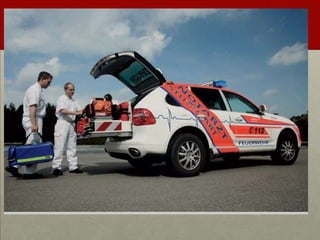
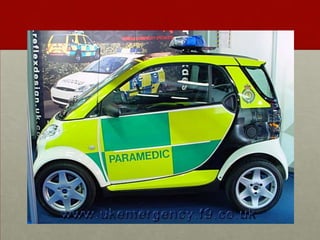
We Can All Breathe a Little Easier with CPAPBrian D. King, AS, NREMT-PChristopher A. Johnson, BS, NREMT-P
What is CPAP?Continuous Positive Airway Pressure
Why CPAPBetter for the patient Reduction in morbidity and mortalityLess invasive then intubationLess complications than intubationReduction in pre-hospital intubationReduction in length of stays and ICU admissions It’s cost effective
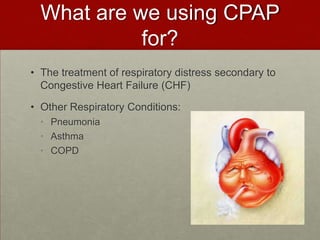
What are we using CPAP for?The treatment of respiratory distress secondary to Congestive Heart Failure (CHF) Other Respiratory Conditions: Pneumonia Asthma  COPD
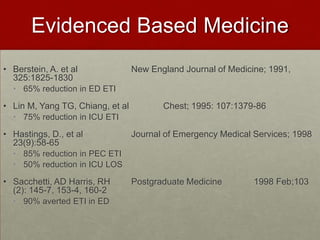
Evidenced Based MedicineBerstein, A. et al		New England Journal of Medicine; 1991, 325:1825-183065% reduction in ED ETILin M, Yang TG, Chiang, et al		Chest; 1995: 107:1379-8675% reduction in ICU ETIHastings, D., et al 		Journal of Emergency Medical Services; 1998 23(9):58-6585% reduction in PEC ETI50% reduction in ICU LOS Sacchetti, AD Harris, RH	Postgraduate Medicine             1998 Feb;103 (2): 145-7, 153-4, 160-290% averted ETI in ED
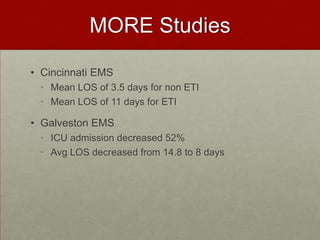
MORE Studies Cincinnati EMS Mean LOS of 3.5 days for non ETI Mean LOS of 11 days for ETIGalveston EMSICU admission decreased 52%Avg LOS decreased from 14.8 to 8 days
Case Study #123:00 hours on a cool October eveningDifficulty breathing (6D1) BLS is 6 minutes & ALS is 11 minutes from the scene84 YOFCC: “Shortness of Breath”Increasing noctournaldyspnea for 3 days Tonight started to “choke on phlegm” and developed trouble breathing
Case STUDY #1Hx:CHF, HTNMeds:Lasix, Lisinopril, Coreg, Propoxyphene“Found in chair with moderate difficulty breathing on nasal O2 at 5lpm.”Initial Vital Sings: Pulse: 120Resp: 36BP: 158/PSpO2: 90%GCS: 15Lung Sounds: Bilateral RalesCPAP?
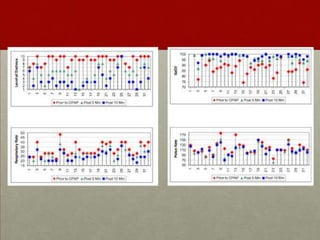
CASE STUDY #1BLS applies NRB @ 15 lpmThree minutes latter places patient on CPAP with 10 of PEEPALS arrives on scene and continues CPAPVital Signs 12 minutes post CPAP:Pulse: 104Resp: 32BP: 148/72SpO2: 97%GCS: 15Dx: Pulmonary Edema due to heart failure
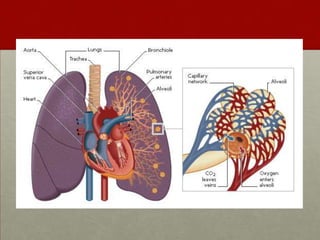
Anatomy & Physiology Review
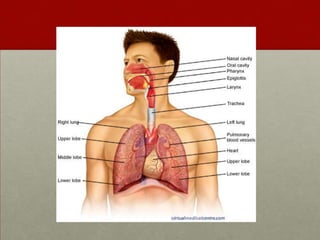
Respiratory Cycle Two Phases Inspiration Expiraton
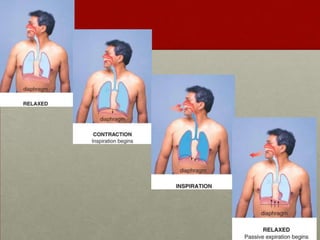
InspirationActive process requiring muscles to have energy and function Diaphragm and intercostal muscles contractDiaphragm  moves downwardRibs move upward and outwardIncreased chest size allows air to flow into the lungs (less pressure inside)
ExhalationPassive process allowing muscles to relaxDiaphragm rises Ribs moves downward and inward decreasing chest cavity sizeSmaller chest size allows air to flow out of the lungs (less pressure outside)
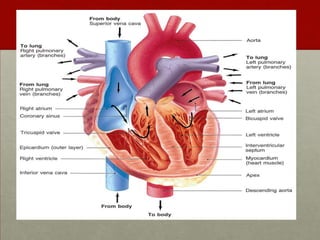
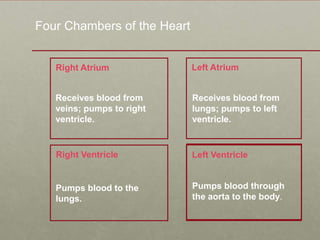
Four Chambers of the HeartLeft AtriumRight AtriumReceives blood from veins; pumps to right ventricle.Receives blood from lungs; pumps to left ventricle.Right VentricleLeft VentriclePumps blood through the aorta to the body.Pumps blood to the lungs.
ASSESSMENT & PHYSICAL EXAM
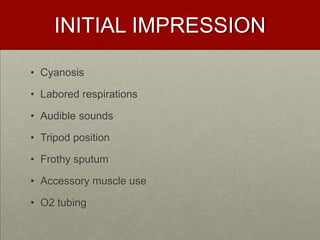
INITIAL IMPRESSIONCyanosis Labored respirations Audible sounds Tripod position Frothy sputum Accessory muscle use O2 tubing
The ABC’S
VITALS SIGNSInterpreting Vital Signs Respirations SpO2PulseBlood Pressure SkinPhysical Exam Lung Sounds
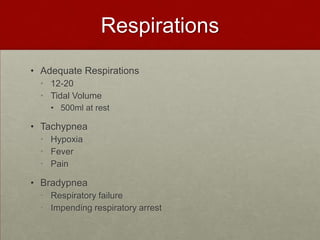
RespirationsAdequate Respirations12-20Tidal Volume500ml at rest TachypneaHypoxia FeverPainBradypneaRespiratory failure Impending respiratory arrest
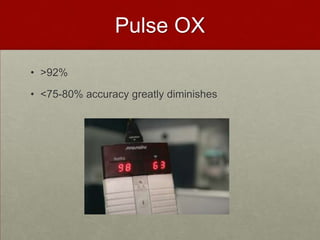
Pulse OX>92%<75-80% accuracy greatly diminishes
Pulse Normal 60-100Slow< 60 Rapid> 100Irregular Regularly, IrregularAtrial Fibrillation
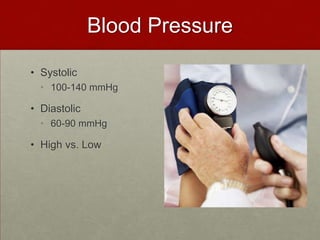
Blood PressureSystolic100-140 mmHgDiastolic60-90 mmHgHigh vs. Low
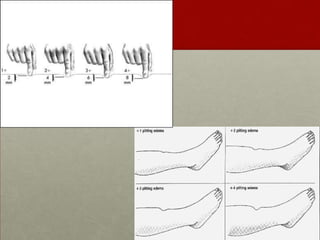
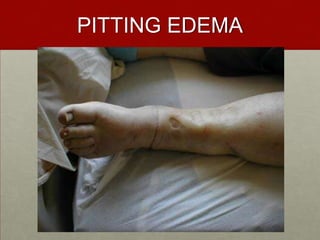
SkinColorNormal Pale Others  TemperatureHotWarm CoolCold  Condition DryMoist WetEdema
PITTING EDEMA
Lung SoundsNormalRales / CrackelsRhonchiWheezing Diminished
History
Clinical History Dyspnea at restDyspnea upon exertionOrthopneaParoxysmal Nocturnal DyspneaCough EdemaChest PainAbdominal DistentionDiaphoresis Anxiety Smothering sensation
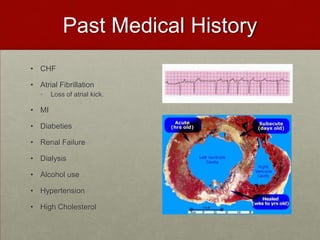
Past Medical History CHF Atrial FibrillationLoss of atrial kick.MI DiabetiesRenal Failure Dialysis Alcohol use HypertensionHigh Cholesterol
Medications DirueticsLasixBumexACE InhibitorsCaptoprilEnalaprilLisinoprilCardiac GlycosidesDigoxinBeta Blockers The “olol” drugs Beware of masked tachycardia
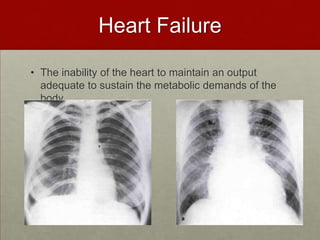
Heart FailureThe inability of the heart to maintain an output adequate to sustain the metabolic demands of the body
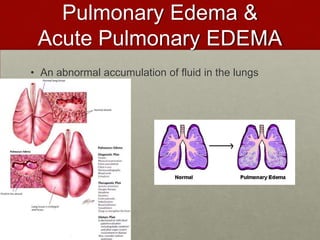
Pulmonary Edema & Acute Pulmonary EDEMAAn abnormal accumulation of fluid in the lungs
Conditions that mimic CHF
COPDTriad of distinct diseases that often coexist: Chronic Bronchitis EmphysemaAsthma
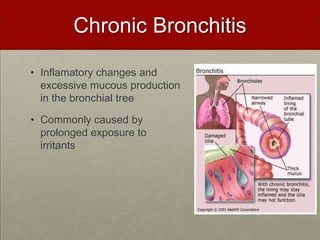
Chronic BronchitisInflamatory changes and excessive mucous production in the bronchial treeCommonly caused by prolonged exposure to irritants
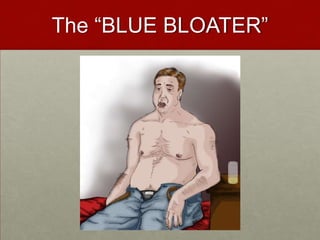
The “BLUE BLOATER”
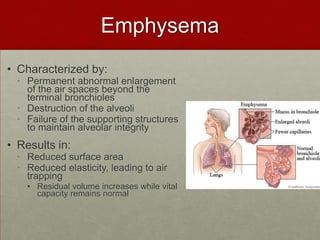
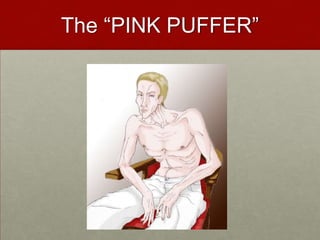
EmphysemaCharacterized by: Permanent abnormal enlargement of the air spaces beyond the terminal bronchiolesDestruction of the alveoli Failure of the supporting structures to maintain alveolar integrityResults in:Reduced surface area Reduced elasticity, leading to air trapping Residual volume increases while vital capacity remains normal
The “PINK PUFFER”
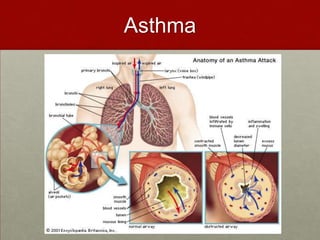
AsthmaCommon chronic disorder of the airways that is complex and characterized by variable and recurring symptomsAsthma Triad: Increased mucous productionIncreased bronchial edemaBronchospasm
Asthma
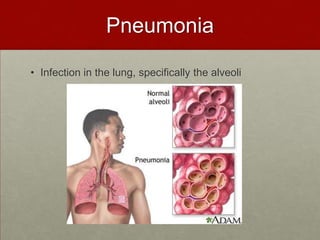
PneumoniaInfection in the lung, specifically the alveoli
CPAP
What EXACTLY IS CPAP?
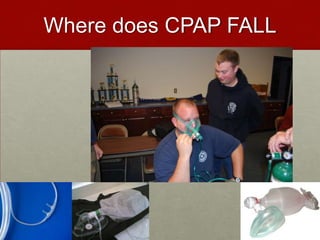
Where does CPAP FALL
PEEPPositive End Expiratory Pressurethe amount of pressure above atmospheric pressure present in the airway at the end of the respiratory cycleGoal of PEEP: Improve oxygenation Amount of PEEP: 5-10 cm H2OToo much PEEP:>15 cm H2O may force air past the epiglottis >20-30 cm H2O can cause a decrease in venous return or LV preload causing hypotnesion.
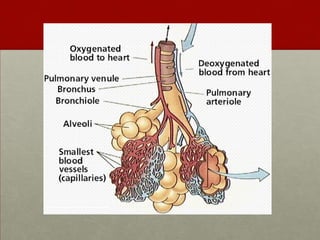
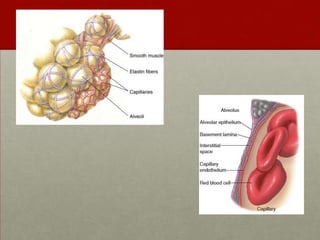
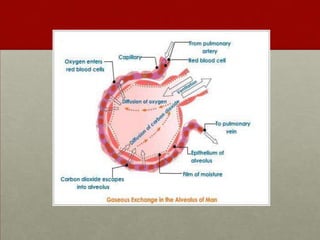
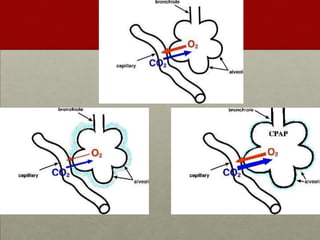
What we are doingIn pulmonary edema, fluid accumulates in the alveoli impairing gas exchange. CPAP increases the size of the airway and allows gas exchange to occur due to the increased surface area. CPAP changes the partial pressure of O2 in the blood Deoxygenated blood has a lower partial pressure of O2 in comparison to the air within the alveoli Oxygen diffuses from the alveolar air into the blood
What we want to do!Put more oxygen into the blood Improving gas exchangeMaintain a positive pressure in the lungsMove some of the fluid out of the lungStops fluid from moving into the lungsOpen the alveoli to preventing collapseIncreasing the surface area in the alveoli will improve the gas exchange Increases intrathoracic pressureImproves cardiac output to a degreeToo Much PEEP decreases cardiac output
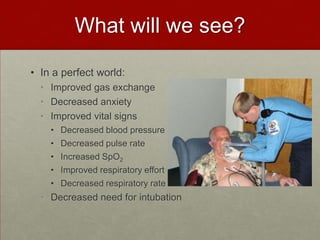
What will we see?In a perfect world: Improved gas exchangeDecreased anxiety Improved vital signsDecreased blood pressure Decreased pulse rateIncreased SpO2Improved respiratory effort Decreased respiratory rateDecreased need for intubation
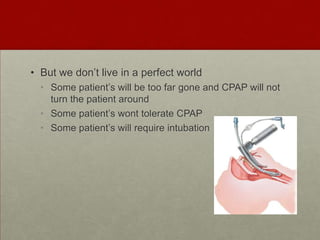
But we don’t live in a perfect world Some patient’s will be too far gone and CPAP will not turn the patient around Some patient’s wont tolerate CPAPSome patient’s will require intubation
BUT WHAT HAPPENES TO THE FLUID?
The fluid is not being removed from the body by CPAPCPAP does not fix the entire problem
Things we may seeGastric distention Corneal drying Hypotension PneumothoraxAnxiety
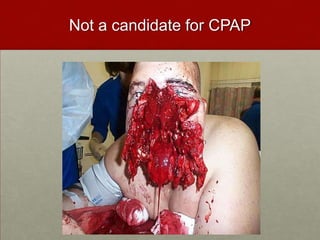
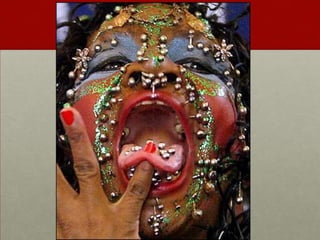
CPAP ConTraindicationsUnconscious Inability to protect airwayRespiratory Arrest Need for BVM or IntubationVomiting Facial traumaIncreased ICP (>20mmHg) – Unknown for us
Not a candidate for CPAP
Case Study #20028 hours “Interfacillity-Difficulty Breathing” 33C2BLS is 4 minutes & ALS is 10 minutes from the scene90 YOF CC: “shortness of breath” per the staffPer staff “sudden onset of shortness of breath Staff relates that the patient began to “choke” on something.
Case Study #2Hx:CHF, HTN, CVA, Atrial FibrillationMeds: Furosemide, Norvasc, Nitro, Coumadin, Digoxin“Found laying in bed with a simple mask and gurgling respirations”Initial Vital Signs:Pulse: 130Resp: 40 and shallowBP: 200/100GCS: 9Lung Sounds: Rale bilaterally BLS suctions the patient’s airwayWhen sitting the patient up, patient has snoring respirations. CPAP?
Case Study #2REMEMBER: Patient’s must have a self-maintained airway for CPAP applications. Airway managementNasal Oral PositioningIntubationManual positive pressure ventilations may be preferred with a BVM
CPAP DEVICES
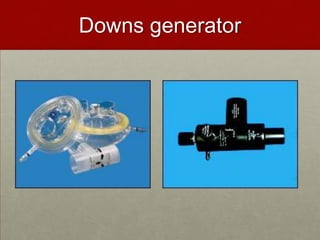
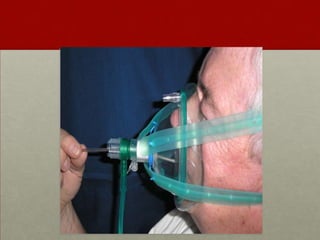
Downs generator
Downs generatorRequires a high pressure oxygen source Requires a complete CPAP systemClosed systemEasily adjustable PEEP
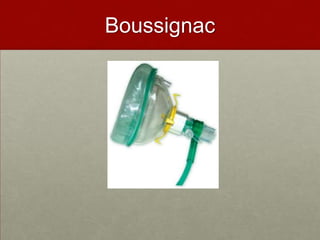
Boussignac
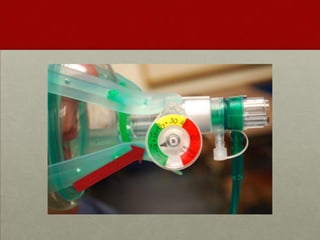
BoussignacCurrently used for the NCC BLS Pilot Study.Low investment No additional equipmentCompletely Disposable As simple as applying a non-rebreatherSmall Size Open system Eliminates rebreathingAble to suction using a French catheter without losing pressureAllows use of a nebulizer
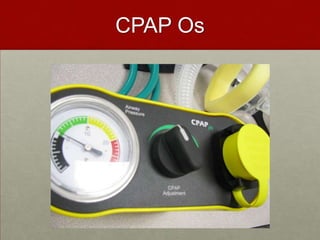
CPAP Os
CPAP OSHigh Cost for the system Requires a high pressure oxygen source Requires a complete CPAP systemClosed systemEasily adjustable PEEP with large guage
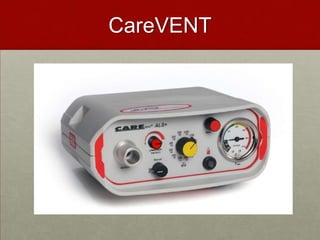
CareVENT
CareventHigh costOffers the best of both worlds Transport ventilator for intubated patientsCPAPRequires a high pressure oxygen source though consumes less oxygen in comparison to other modelsRequires a complete CPAP systemClosed system
QUESTIONS? Contact us: Brian: Brian11884@aol.comChris: EMTCJ64@aol.com

CPAP and EMS

  • 1.
    We Can AllBreathe a Little Easier with CPAPBrian D. King, AS, NREMT-PChristopher A. Johnson, BS, NREMT-P
  • 6.
    What is CPAP?ContinuousPositive Airway Pressure
  • 7.
    Why CPAPBetter forthe patient Reduction in morbidity and mortalityLess invasive then intubationLess complications than intubationReduction in pre-hospital intubationReduction in length of stays and ICU admissions It’s cost effective
  • 8.
    What are weusing CPAP for?The treatment of respiratory distress secondary to Congestive Heart Failure (CHF) Other Respiratory Conditions: Pneumonia Asthma COPD
  • 9.
    Evidenced Based MedicineBerstein,A. et al New England Journal of Medicine; 1991, 325:1825-183065% reduction in ED ETILin M, Yang TG, Chiang, et al Chest; 1995: 107:1379-8675% reduction in ICU ETIHastings, D., et al Journal of Emergency Medical Services; 1998 23(9):58-6585% reduction in PEC ETI50% reduction in ICU LOS Sacchetti, AD Harris, RH Postgraduate Medicine 1998 Feb;103 (2): 145-7, 153-4, 160-290% averted ETI in ED
  • 10.
    MORE Studies CincinnatiEMS Mean LOS of 3.5 days for non ETI Mean LOS of 11 days for ETIGalveston EMSICU admission decreased 52%Avg LOS decreased from 14.8 to 8 days
  • 12.
    Case Study #123:00hours on a cool October eveningDifficulty breathing (6D1) BLS is 6 minutes & ALS is 11 minutes from the scene84 YOFCC: “Shortness of Breath”Increasing noctournaldyspnea for 3 days Tonight started to “choke on phlegm” and developed trouble breathing
  • 13.
    Case STUDY #1Hx:CHF,HTNMeds:Lasix, Lisinopril, Coreg, Propoxyphene“Found in chair with moderate difficulty breathing on nasal O2 at 5lpm.”Initial Vital Sings: Pulse: 120Resp: 36BP: 158/PSpO2: 90%GCS: 15Lung Sounds: Bilateral RalesCPAP?
  • 14.
    CASE STUDY #1BLSapplies NRB @ 15 lpmThree minutes latter places patient on CPAP with 10 of PEEPALS arrives on scene and continues CPAPVital Signs 12 minutes post CPAP:Pulse: 104Resp: 32BP: 148/72SpO2: 97%GCS: 15Dx: Pulmonary Edema due to heart failure
  • 15.
  • 17.
    Respiratory Cycle TwoPhases Inspiration Expiraton
  • 18.
    InspirationActive process requiringmuscles to have energy and function Diaphragm and intercostal muscles contractDiaphragm moves downwardRibs move upward and outwardIncreased chest size allows air to flow into the lungs (less pressure inside)
  • 19.
    ExhalationPassive process allowingmuscles to relaxDiaphragm rises Ribs moves downward and inward decreasing chest cavity sizeSmaller chest size allows air to flow out of the lungs (less pressure outside)
  • 26.
    Four Chambers ofthe HeartLeft AtriumRight AtriumReceives blood from veins; pumps to right ventricle.Receives blood from lungs; pumps to left ventricle.Right VentricleLeft VentriclePumps blood through the aorta to the body.Pumps blood to the lungs.
  • 27.
  • 28.
    INITIAL IMPRESSIONCyanosis Laboredrespirations Audible sounds Tripod position Frothy sputum Accessory muscle use O2 tubing
  • 29.
  • 30.
    VITALS SIGNSInterpreting VitalSigns Respirations SpO2PulseBlood Pressure SkinPhysical Exam Lung Sounds
  • 31.
    RespirationsAdequate Respirations12-20Tidal Volume500mlat rest TachypneaHypoxia FeverPainBradypneaRespiratory failure Impending respiratory arrest
  • 32.
    Pulse OX>92%<75-80% accuracygreatly diminishes
  • 33.
    Pulse Normal 60-100Slow<60 Rapid> 100Irregular Regularly, IrregularAtrial Fibrillation
  • 34.
  • 35.
    SkinColorNormal Pale Others TemperatureHotWarm CoolCold Condition DryMoist WetEdema
  • 37.
  • 38.
    Lung SoundsNormalRales /CrackelsRhonchiWheezing Diminished
  • 39.
  • 40.
    Clinical History Dyspneaat restDyspnea upon exertionOrthopneaParoxysmal Nocturnal DyspneaCough EdemaChest PainAbdominal DistentionDiaphoresis Anxiety Smothering sensation
  • 41.
    Past Medical HistoryCHF Atrial FibrillationLoss of atrial kick.MI DiabetiesRenal Failure Dialysis Alcohol use HypertensionHigh Cholesterol
  • 42.
    Medications DirueticsLasixBumexACE InhibitorsCaptoprilEnalaprilLisinoprilCardiacGlycosidesDigoxinBeta Blockers The “olol” drugs Beware of masked tachycardia
  • 43.
    Heart FailureThe inabilityof the heart to maintain an output adequate to sustain the metabolic demands of the body
  • 44.
    Pulmonary Edema &Acute Pulmonary EDEMAAn abnormal accumulation of fluid in the lungs
  • 45.
  • 46.
    COPDTriad of distinctdiseases that often coexist: Chronic Bronchitis EmphysemaAsthma
  • 47.
    Chronic BronchitisInflamatory changesand excessive mucous production in the bronchial treeCommonly caused by prolonged exposure to irritants
  • 48.
  • 49.
    EmphysemaCharacterized by: Permanentabnormal enlargement of the air spaces beyond the terminal bronchiolesDestruction of the alveoli Failure of the supporting structures to maintain alveolar integrityResults in:Reduced surface area Reduced elasticity, leading to air trapping Residual volume increases while vital capacity remains normal
  • 50.
  • 51.
    AsthmaCommon chronic disorderof the airways that is complex and characterized by variable and recurring symptomsAsthma Triad: Increased mucous productionIncreased bronchial edemaBronchospasm
  • 52.
  • 53.
    PneumoniaInfection in thelung, specifically the alveoli
  • 54.
  • 55.
  • 56.
  • 57.
    PEEPPositive End ExpiratoryPressurethe amount of pressure above atmospheric pressure present in the airway at the end of the respiratory cycleGoal of PEEP: Improve oxygenation Amount of PEEP: 5-10 cm H2OToo much PEEP:>15 cm H2O may force air past the epiglottis >20-30 cm H2O can cause a decrease in venous return or LV preload causing hypotnesion.
  • 59.
    What we aredoingIn pulmonary edema, fluid accumulates in the alveoli impairing gas exchange. CPAP increases the size of the airway and allows gas exchange to occur due to the increased surface area. CPAP changes the partial pressure of O2 in the blood Deoxygenated blood has a lower partial pressure of O2 in comparison to the air within the alveoli Oxygen diffuses from the alveolar air into the blood
  • 61.
    What we wantto do!Put more oxygen into the blood Improving gas exchangeMaintain a positive pressure in the lungsMove some of the fluid out of the lungStops fluid from moving into the lungsOpen the alveoli to preventing collapseIncreasing the surface area in the alveoli will improve the gas exchange Increases intrathoracic pressureImproves cardiac output to a degreeToo Much PEEP decreases cardiac output
  • 62.
    What will wesee?In a perfect world: Improved gas exchangeDecreased anxiety Improved vital signsDecreased blood pressure Decreased pulse rateIncreased SpO2Improved respiratory effort Decreased respiratory rateDecreased need for intubation
  • 63.
    But we don’tlive in a perfect world Some patient’s will be too far gone and CPAP will not turn the patient around Some patient’s wont tolerate CPAPSome patient’s will require intubation
  • 64.
    BUT WHAT HAPPENESTO THE FLUID?
  • 65.
    The fluid isnot being removed from the body by CPAPCPAP does not fix the entire problem
  • 66.
    Things we mayseeGastric distention Corneal drying Hypotension PneumothoraxAnxiety
  • 67.
    CPAP ConTraindicationsUnconscious Inabilityto protect airwayRespiratory Arrest Need for BVM or IntubationVomiting Facial traumaIncreased ICP (>20mmHg) – Unknown for us
  • 68.
  • 71.
    Case Study #20028hours “Interfacillity-Difficulty Breathing” 33C2BLS is 4 minutes & ALS is 10 minutes from the scene90 YOF CC: “shortness of breath” per the staffPer staff “sudden onset of shortness of breath Staff relates that the patient began to “choke” on something.
  • 72.
    Case Study #2Hx:CHF,HTN, CVA, Atrial FibrillationMeds: Furosemide, Norvasc, Nitro, Coumadin, Digoxin“Found laying in bed with a simple mask and gurgling respirations”Initial Vital Signs:Pulse: 130Resp: 40 and shallowBP: 200/100GCS: 9Lung Sounds: Rale bilaterally BLS suctions the patient’s airwayWhen sitting the patient up, patient has snoring respirations. CPAP?
  • 73.
    Case Study #2REMEMBER:Patient’s must have a self-maintained airway for CPAP applications. Airway managementNasal Oral PositioningIntubationManual positive pressure ventilations may be preferred with a BVM
  • 74.
  • 76.
  • 77.
    Downs generatorRequires ahigh pressure oxygen source Requires a complete CPAP systemClosed systemEasily adjustable PEEP
  • 78.
  • 79.
    BoussignacCurrently used forthe NCC BLS Pilot Study.Low investment No additional equipmentCompletely Disposable As simple as applying a non-rebreatherSmall Size Open system Eliminates rebreathingAble to suction using a French catheter without losing pressureAllows use of a nebulizer
  • 81.
  • 82.
    CPAP OSHigh Costfor the system Requires a high pressure oxygen source Requires a complete CPAP systemClosed systemEasily adjustable PEEP with large guage
  • 83.
  • 84.
    CareventHigh costOffers thebest of both worlds Transport ventilator for intubated patientsCPAPRequires a high pressure oxygen source though consumes less oxygen in comparison to other modelsRequires a complete CPAP systemClosed system
  • 85.
    QUESTIONS? Contact us:Brian: Brian11884@aol.comChris: EMTCJ64@aol.com