Downloaded 75 times

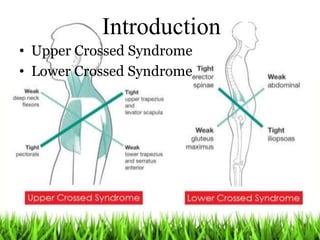
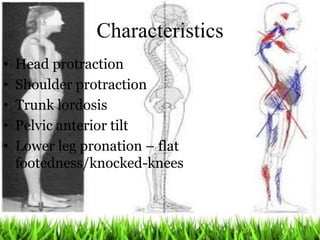
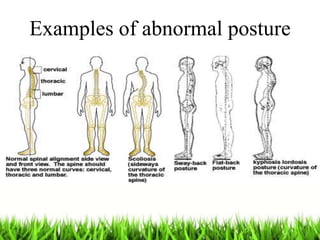

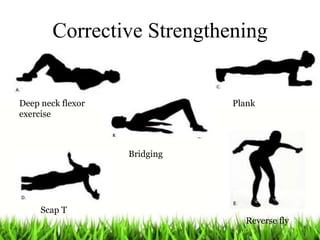
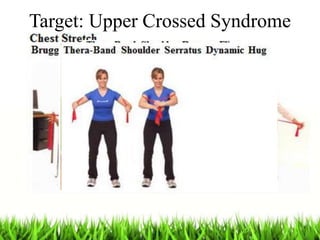
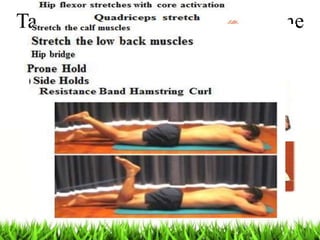
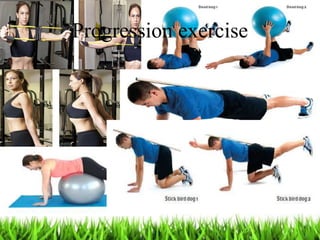
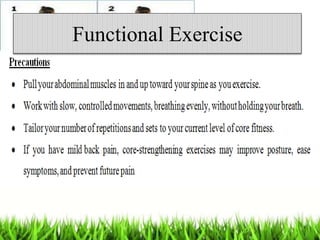
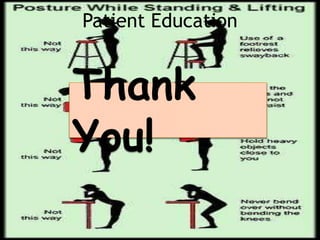

This document discusses posture and techniques for correcting abnormal posture. It describes upper and lower crossed syndromes which are postural issues characterized by problems like shoulder protraction and pelvic tilt. Poor posture can lead to issues like trigger points, breathing problems, and weak immunity. The document provides examples of corrective stretches and strengthening exercises that target specific muscles like the deep neck flexors and scapula. Functional exercises are also recommended along with posture education to help patients maintain proper alignment and avoid prolonged bad postures.


