Magnus Lobo, MS, ATC, CES, CPT
 Posture is a position of greatest efficiency, around your center of
gravity, with muscles on all sides exerting pull equally.
 Correct posture
 “Position in which minimum stress is placed on each joint.” (Magee)
 Maintains the natural curves of the body
 Proper circulation
 Flow of energy and nutrients
 Faulty posture
 Any position that increases stress on joints
 Creates muscle imbalances, ligamentous tension, circulatory occlusion
 Growth Spurts
 Muscle imbalances
 Habits
 During activity
 Structural factors
 Congenital anomalies
 Development problems
 Trauma
 Disease
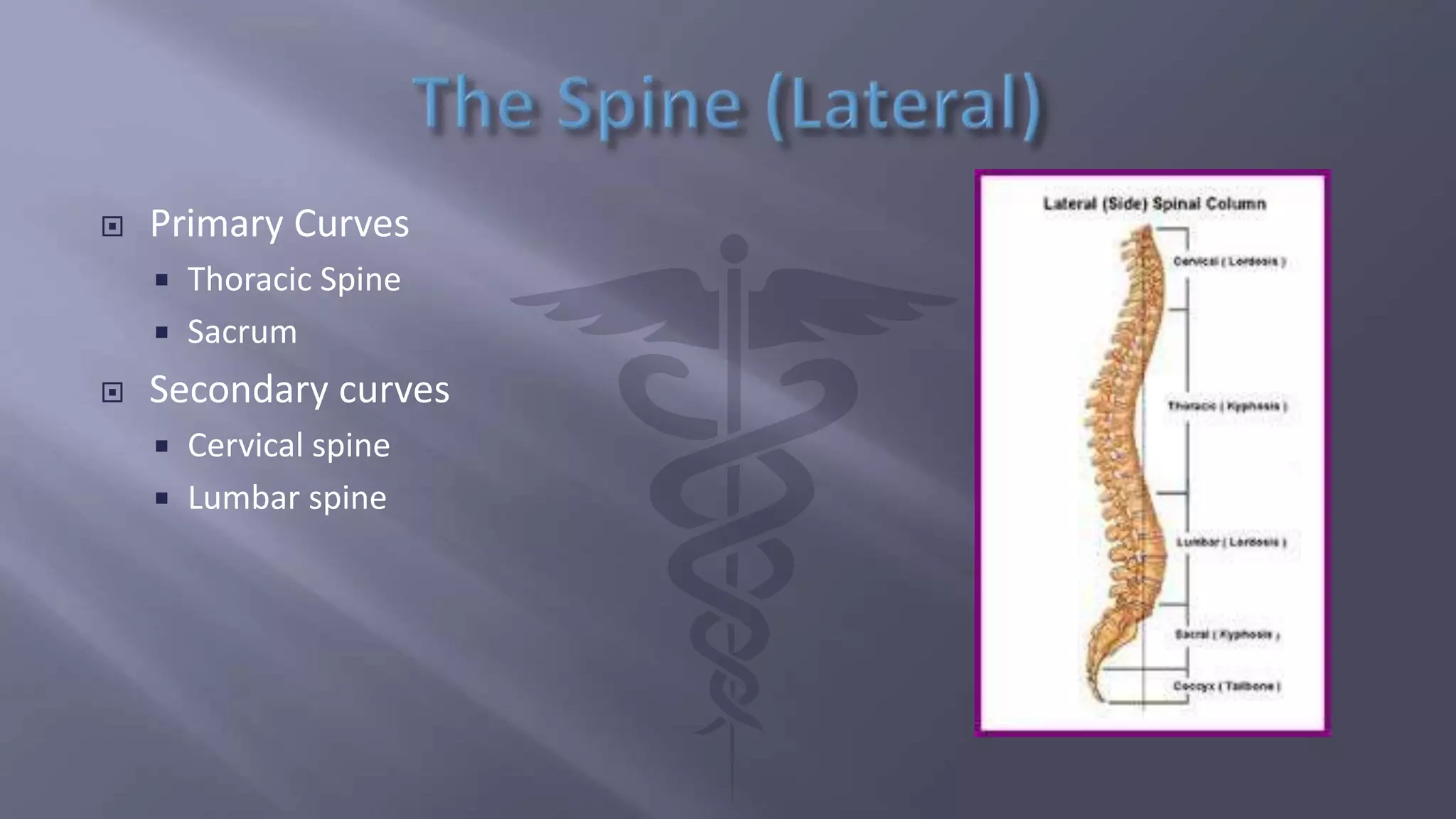
 Primary Curves
 Thoracic Spine
 Sacrum
 Secondary curves
 Cervical spine
 Lumbar spine
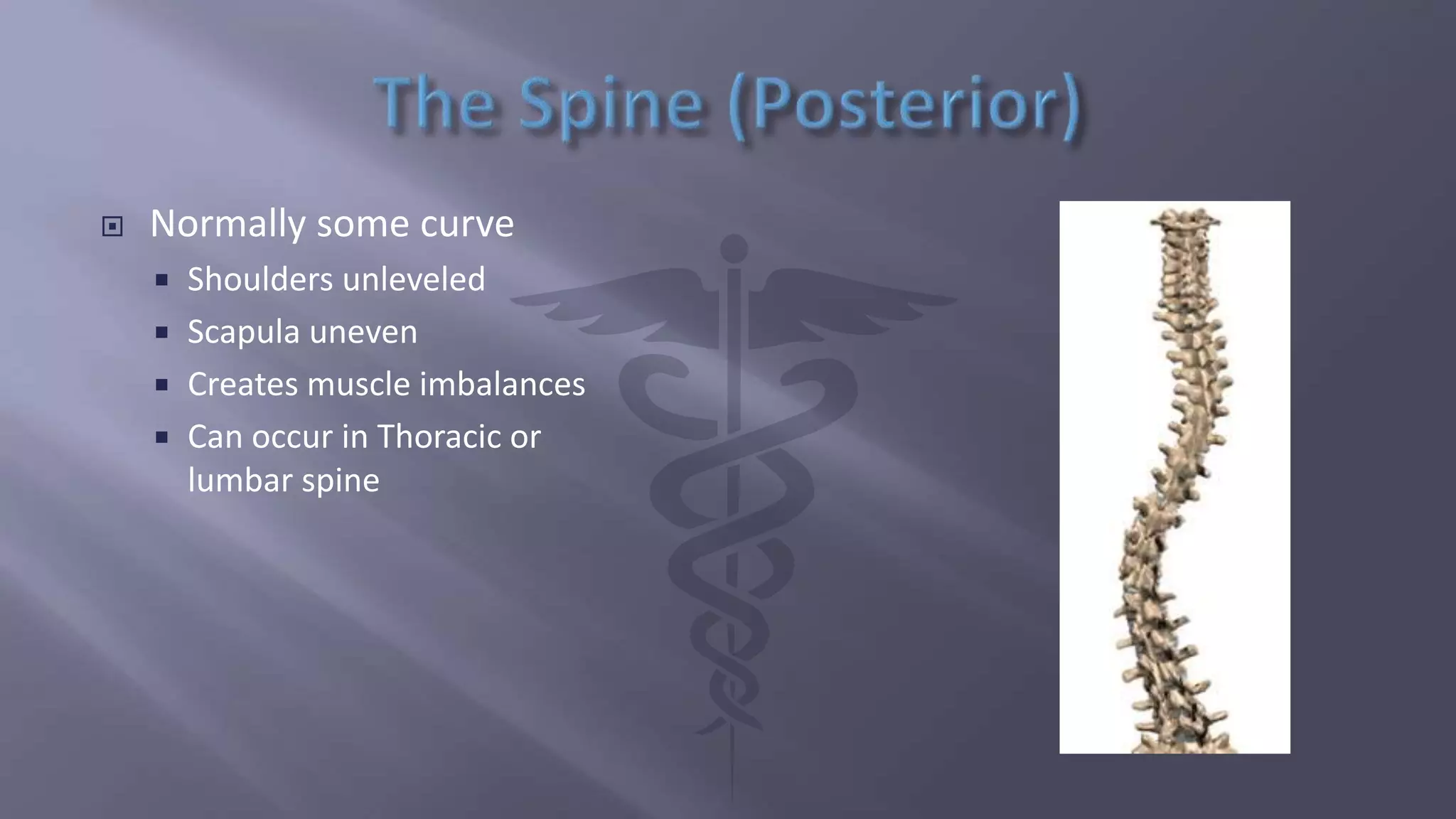
 Normally some curve
 Shoulders unleveled
 Scapula uneven
 Creates muscle imbalances
 Can occur in Thoracic or
lumbar spine
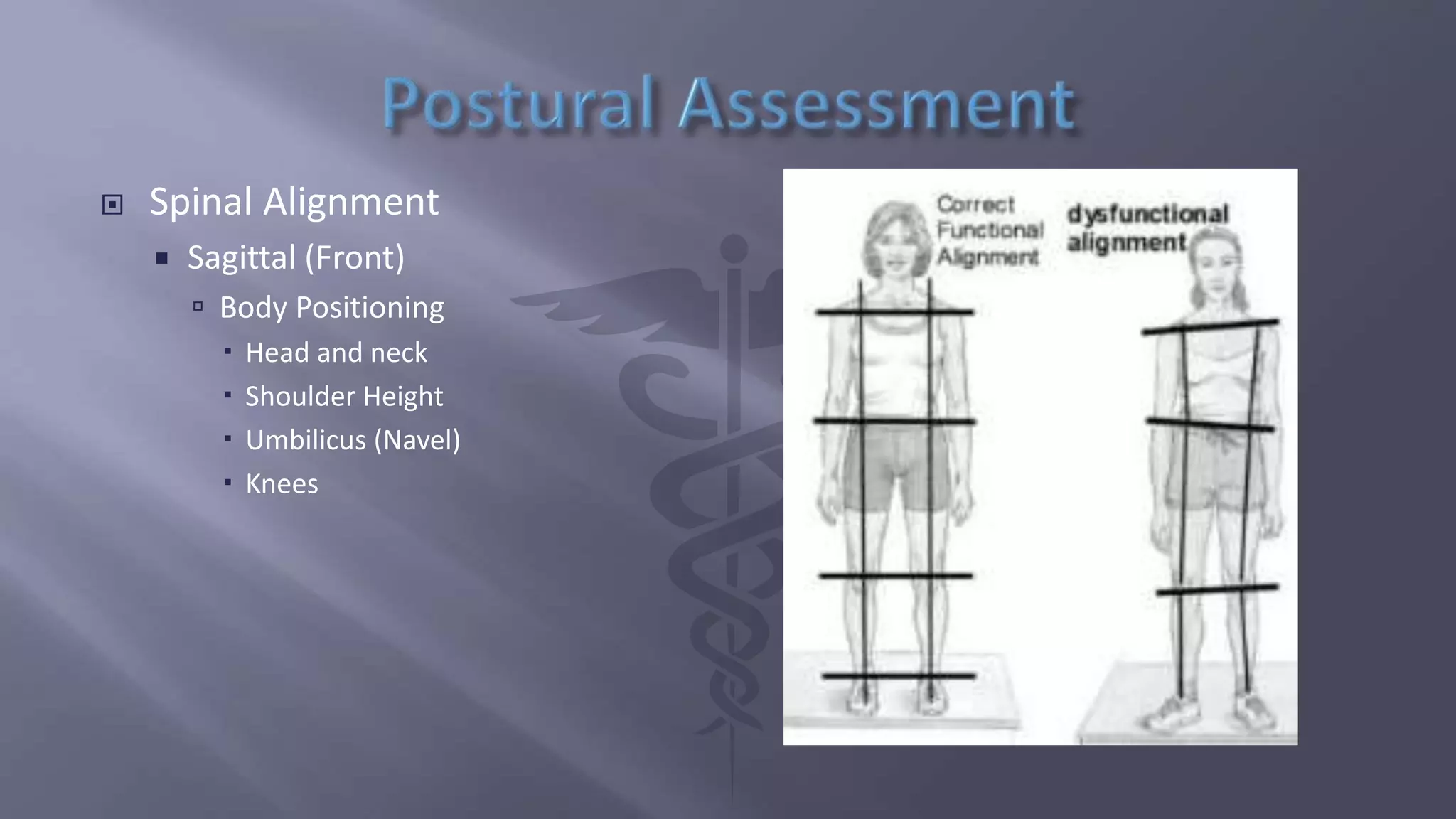
 Spinal Alignment
 Sagittal (Front)
 Body Positioning
 Head and neck
 Shoulder Height
 Umbilicus (Navel)
 Knees
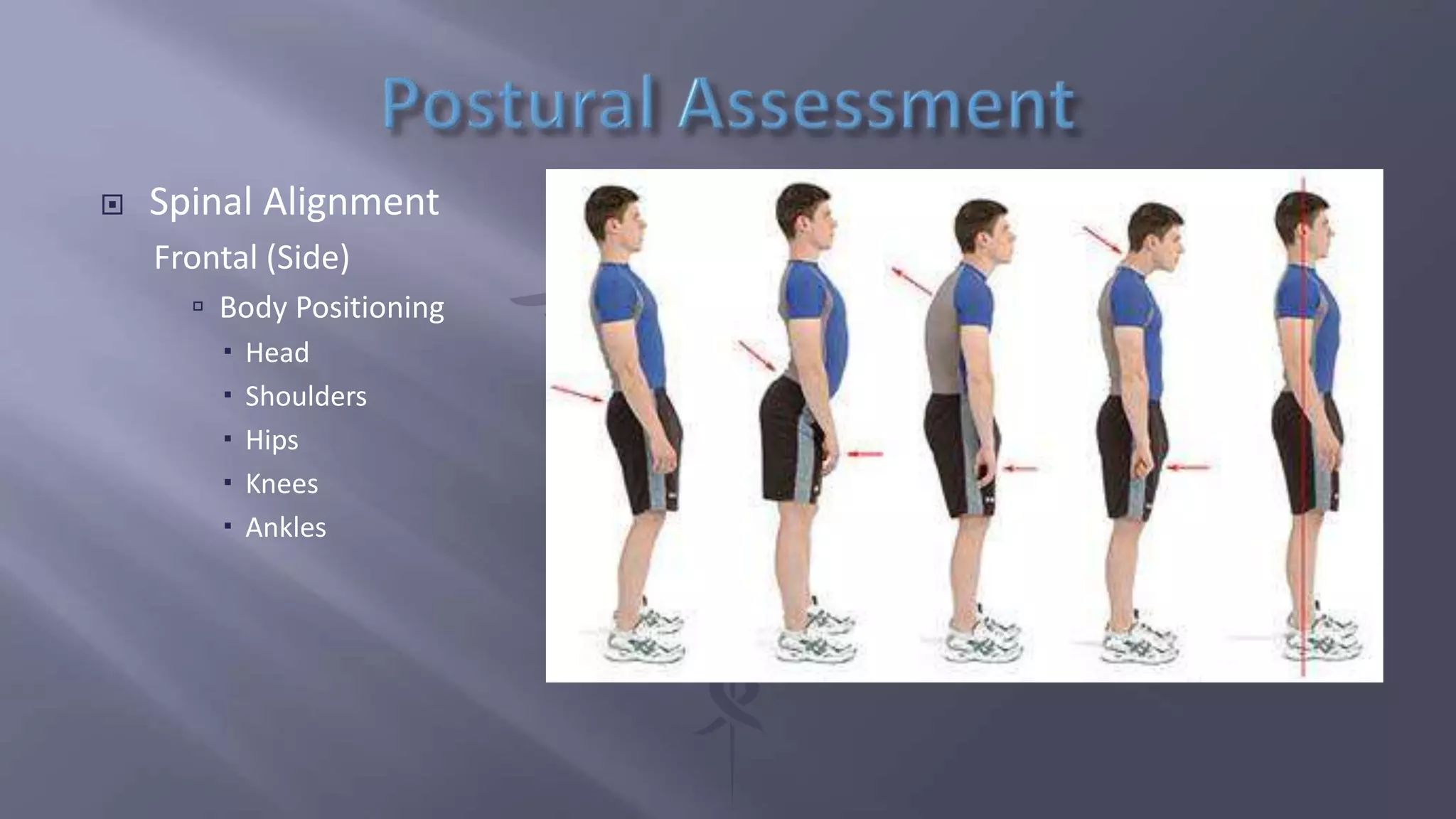
 Spinal Alignment
Frontal (Side)
 Body Positioning
 Head
 Shoulders
 Hips
 Knees
 Ankles
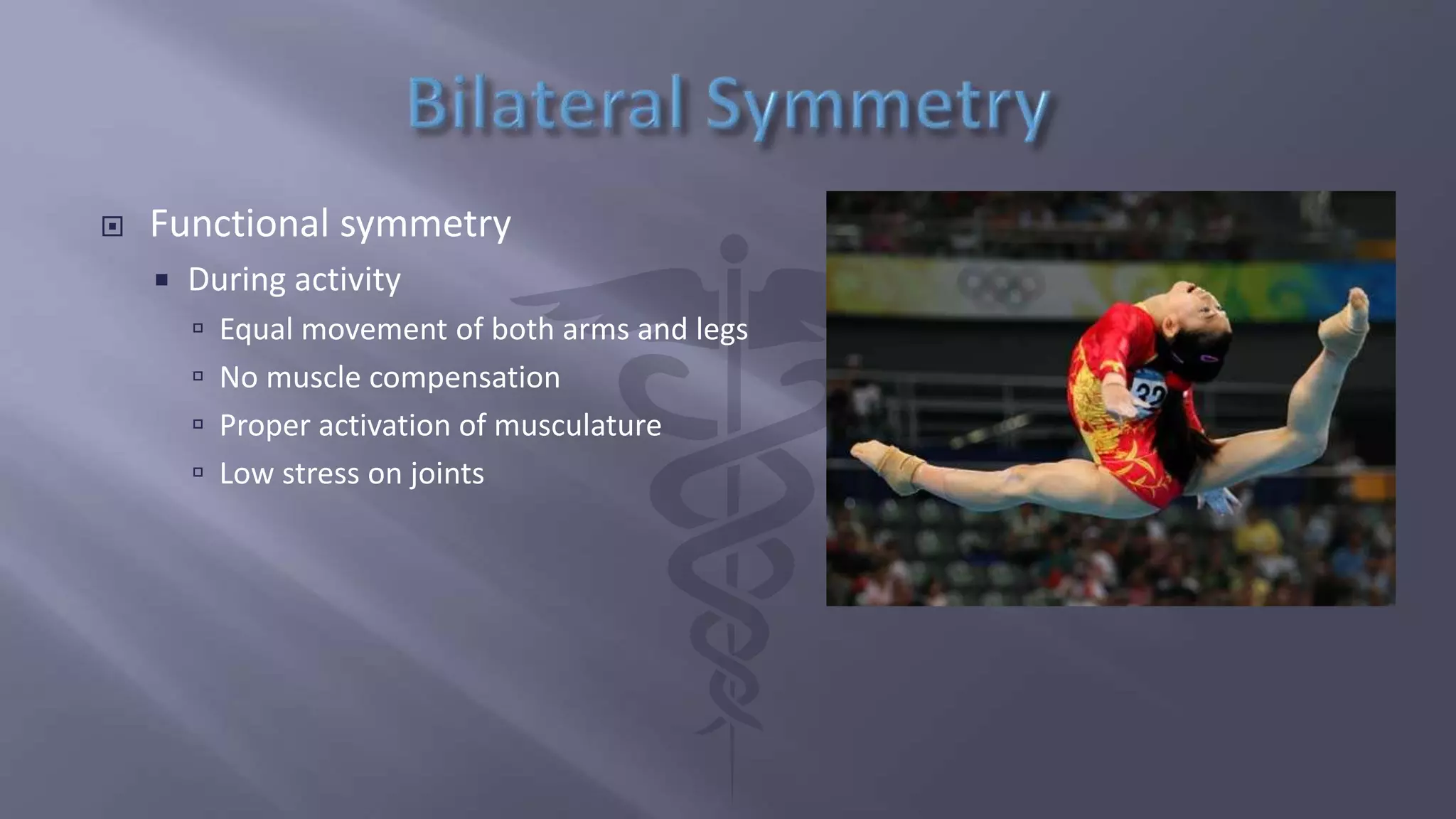
 Functional symmetry
 During activity
 Equal movement of both arms and legs
 No muscle compensation
 Proper activation of musculature
 Low stress on joints
 Find the problem
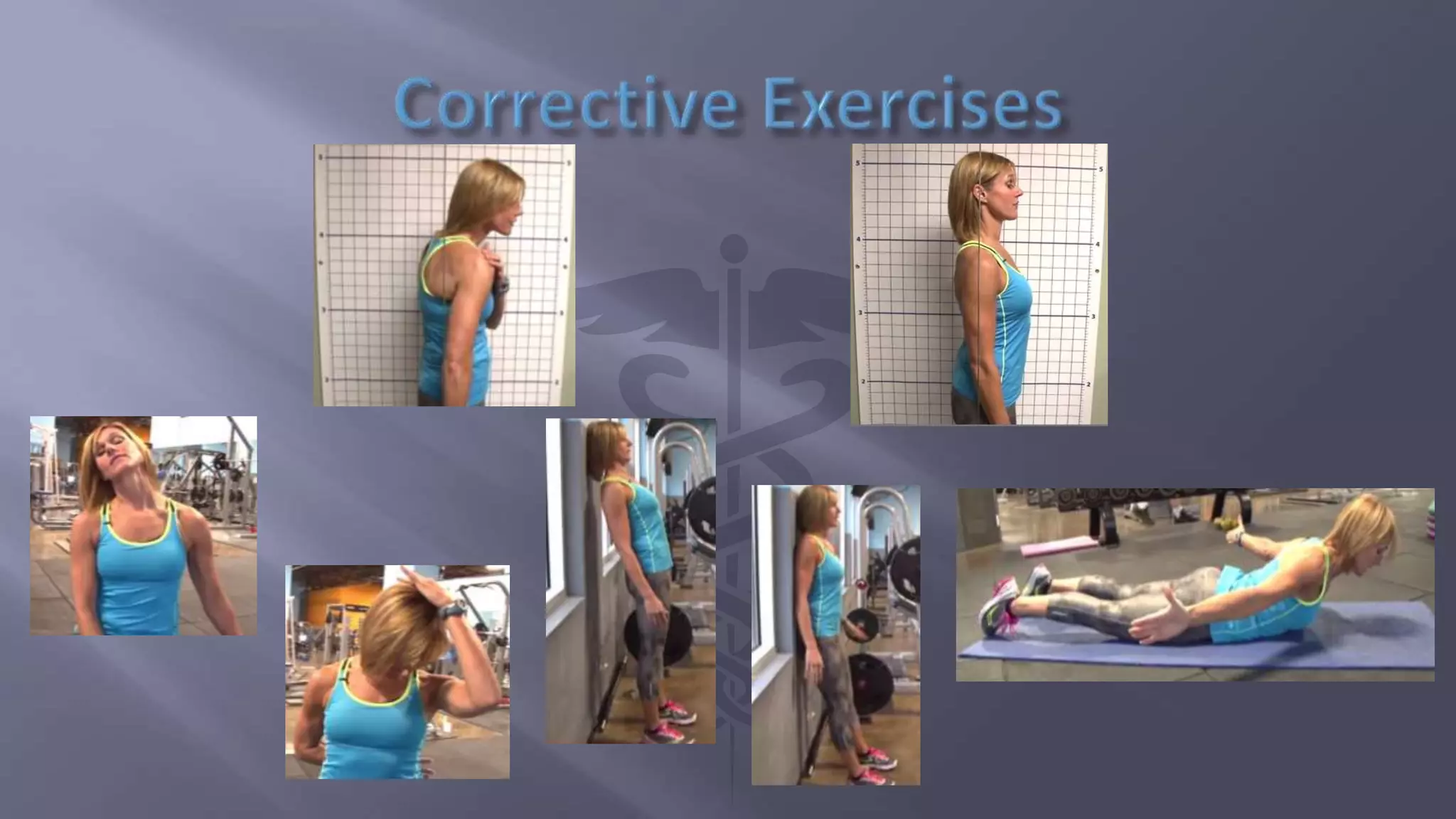
 Corrective Exercises
 Increase activity
 Strengthen muscles
 Get a health screen
 Strengthen the muscles in the back
 Stretch the muscles in the front
 Proper sleeping postures
 Establish a routine for exercises
 2-3 times per day
Postural Analysis

Postural Analysis

  • 1.
    Magnus Lobo, MS,ATC, CES, CPT
  • 2.
     Posture isa position of greatest efficiency, around your center of gravity, with muscles on all sides exerting pull equally.
  • 3.
     Correct posture “Position in which minimum stress is placed on each joint.” (Magee)  Maintains the natural curves of the body  Proper circulation  Flow of energy and nutrients  Faulty posture  Any position that increases stress on joints  Creates muscle imbalances, ligamentous tension, circulatory occlusion
  • 4.
     Growth Spurts Muscle imbalances  Habits  During activity  Structural factors  Congenital anomalies  Development problems  Trauma  Disease
  • 5.
     Primary Curves Thoracic Spine  Sacrum  Secondary curves  Cervical spine  Lumbar spine
  • 6.
     Normally somecurve  Shoulders unleveled  Scapula uneven  Creates muscle imbalances  Can occur in Thoracic or lumbar spine
  • 7.
     Spinal Alignment Sagittal (Front)  Body Positioning  Head and neck  Shoulder Height  Umbilicus (Navel)  Knees
  • 8.
     Spinal Alignment Frontal(Side)  Body Positioning  Head  Shoulders  Hips  Knees  Ankles
  • 9.
     Functional symmetry During activity  Equal movement of both arms and legs  No muscle compensation  Proper activation of musculature  Low stress on joints
  • 10.
     Find theproblem  Corrective Exercises  Increase activity  Strengthen muscles  Get a health screen
  • 12.
     Strengthen themuscles in the back  Stretch the muscles in the front  Proper sleeping postures  Establish a routine for exercises  2-3 times per day