Commonwealth Educational
Media Centre for Asia
Copyright and Open
Licensing
Sanjaya Mishra
Director, Commonwealth Educational Media Centre for Asia
Meaning of Terms
 Author/Creator: is the originator of any
written work
 Copyright: exclusive right given by law to the
author/creator of a work
 What can be copyrighted? – Any work which is
not an exact copy of someone else’s work
 Can ideas be copyrighted? No… only
expression of ideas are copyrighted...
 Can copyright be transferred? Yes, an author
can assign copyright to another person, as in
the case of property
Copyright
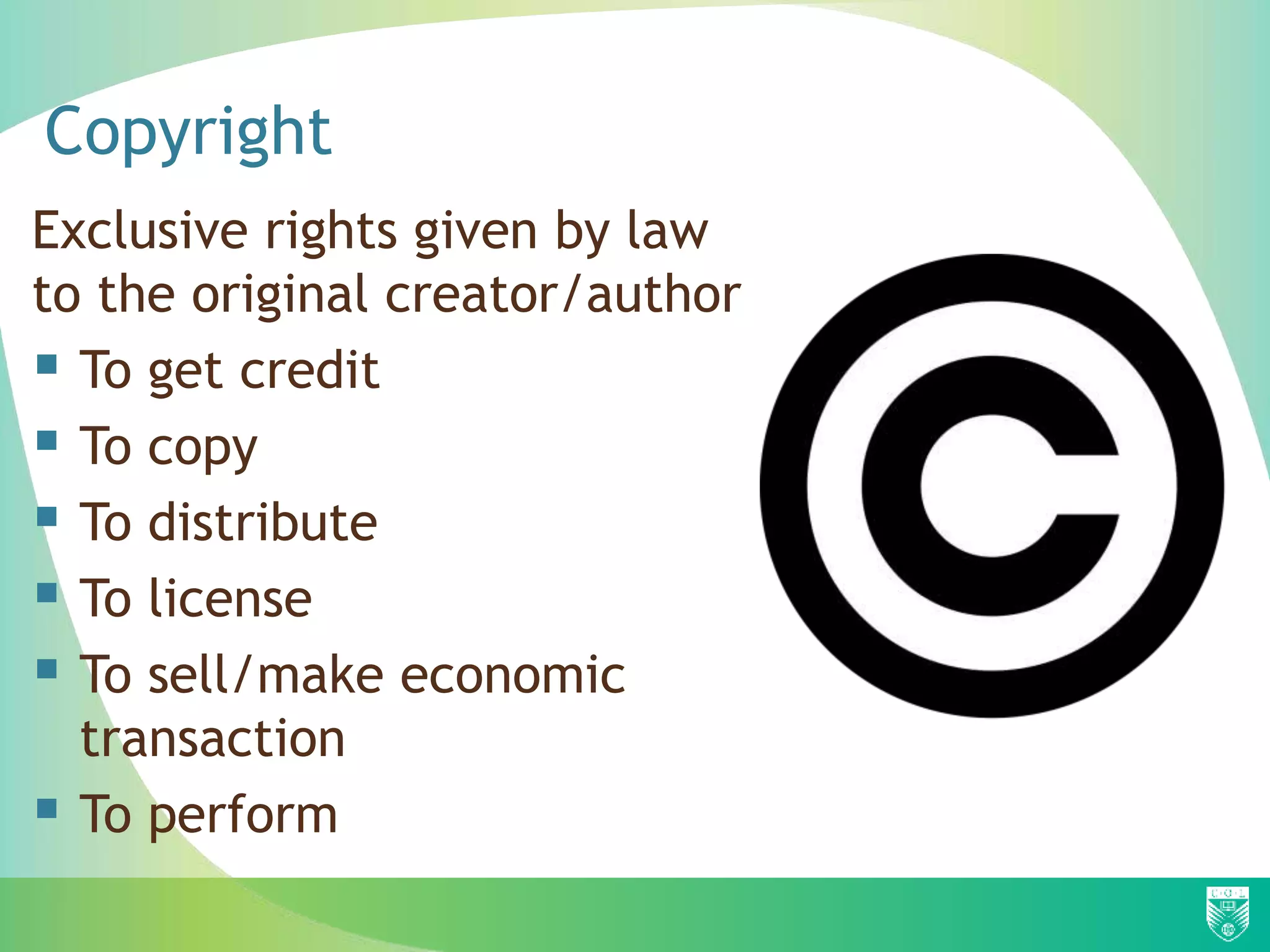
Exclusive rights given by law
to the original creator/author
 To get credit
 To copy
 To distribute
 To license
 To sell/make economic
transaction
 To perform
Further Copyright…
 Prohibits unauthorized use,
distribution, performance,
adaptation, sell, etc.
 Requires permission of the
Copyright holder for creating any
derivative works
 Fair use or fair dealing is though
permitted
 Fair use covers Examples of fair
use include commentary, search
engines, criticism, news reporting,
research, teaching, library
archiving and scholarship.
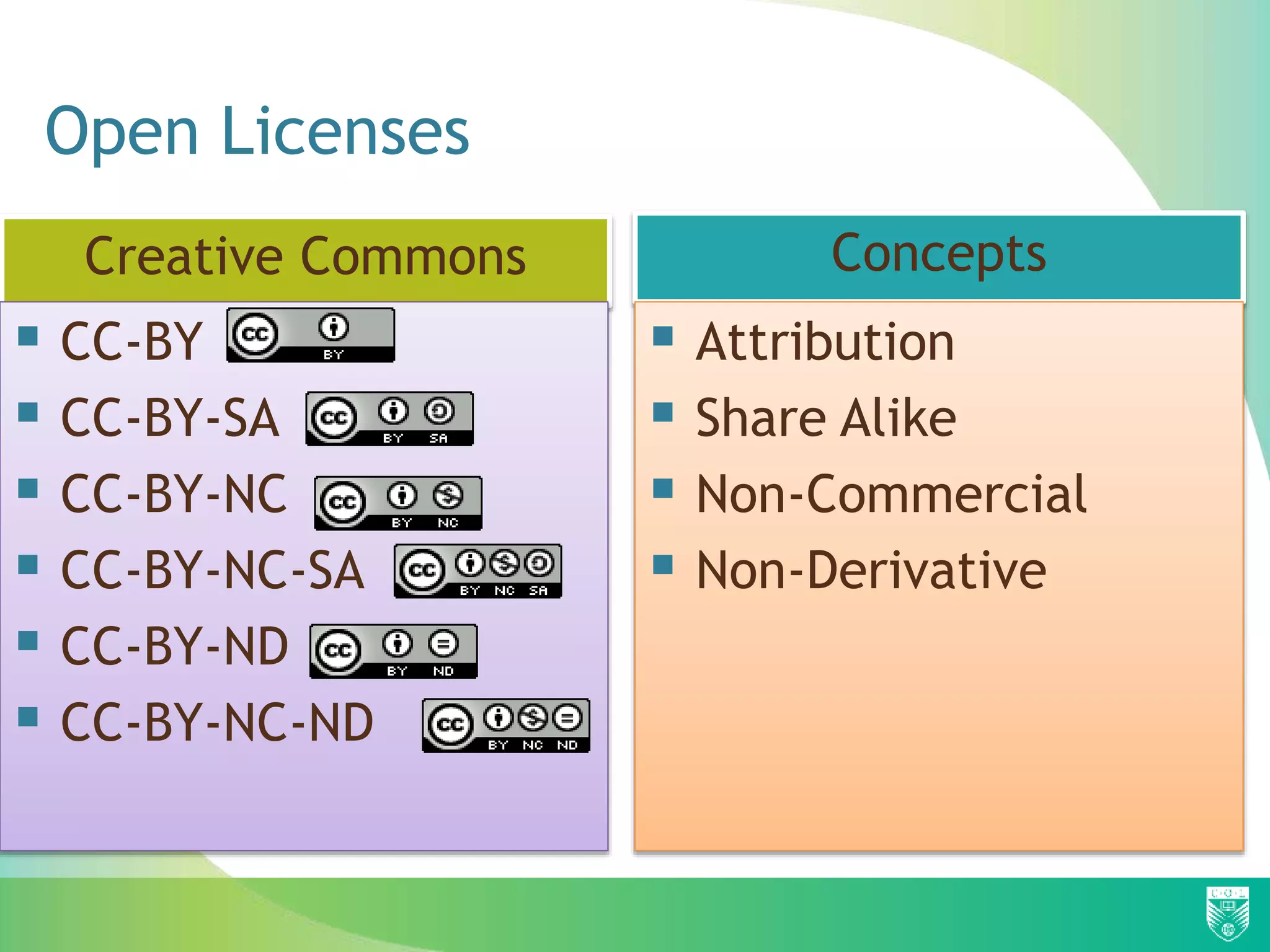
Open Licenses
Creative Commons
 CC-BY
 CC-BY-SA
 CC-BY-NC
 CC-BY-NC-SA
 CC-BY-ND
 CC-BY-NC-ND
Concepts
 Attribution
 Share Alike
 Non-Commercial
 Non-Derivative
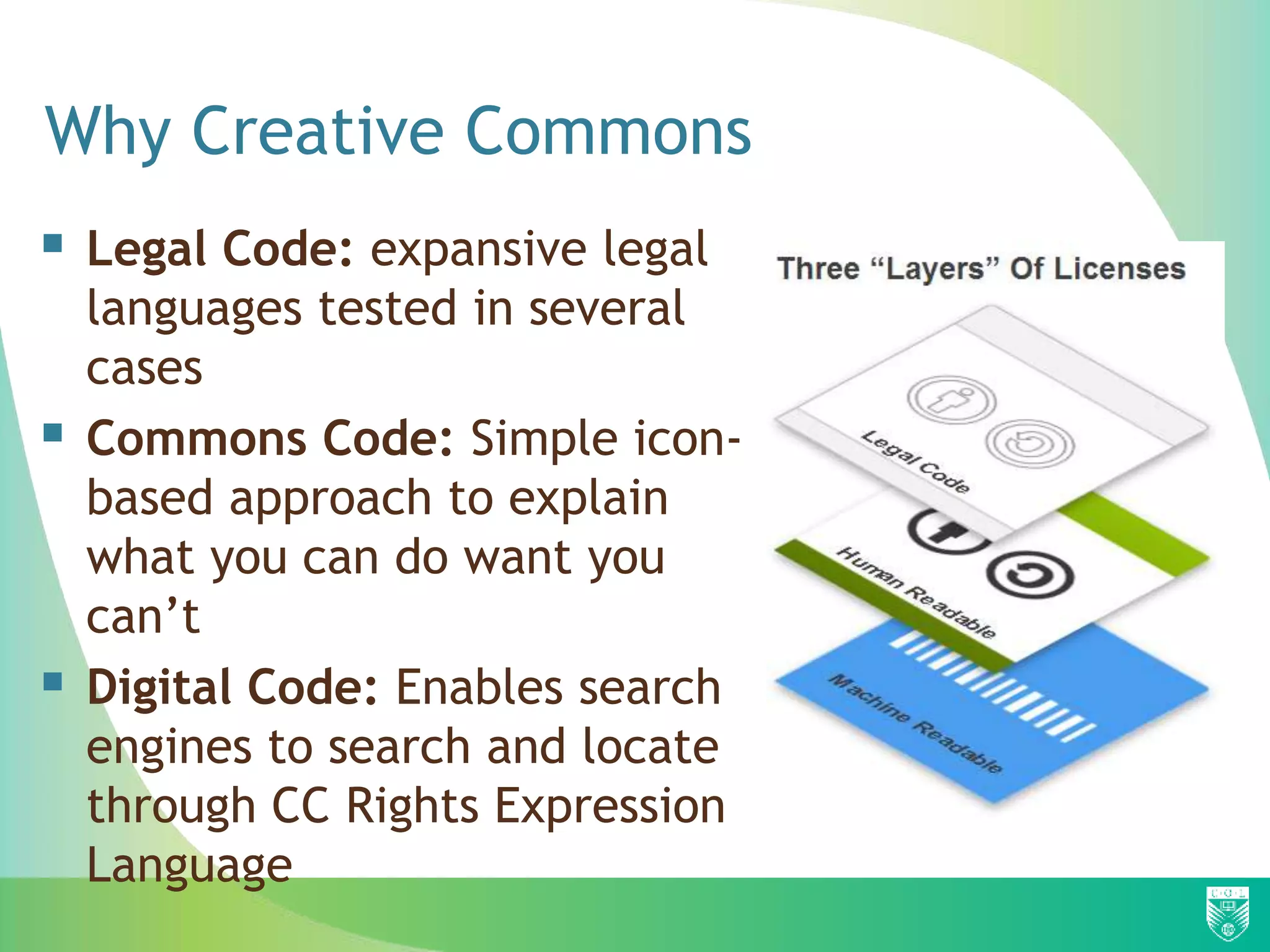
Why Creative Commons
 Legal Code: expansive legal
languages tested in several
cases
 Commons Code: Simple icon-
based approach to explain
what you can do want you
can’t
 Digital Code: Enables search
engines to search and locate
through CC Rights Expression
Language
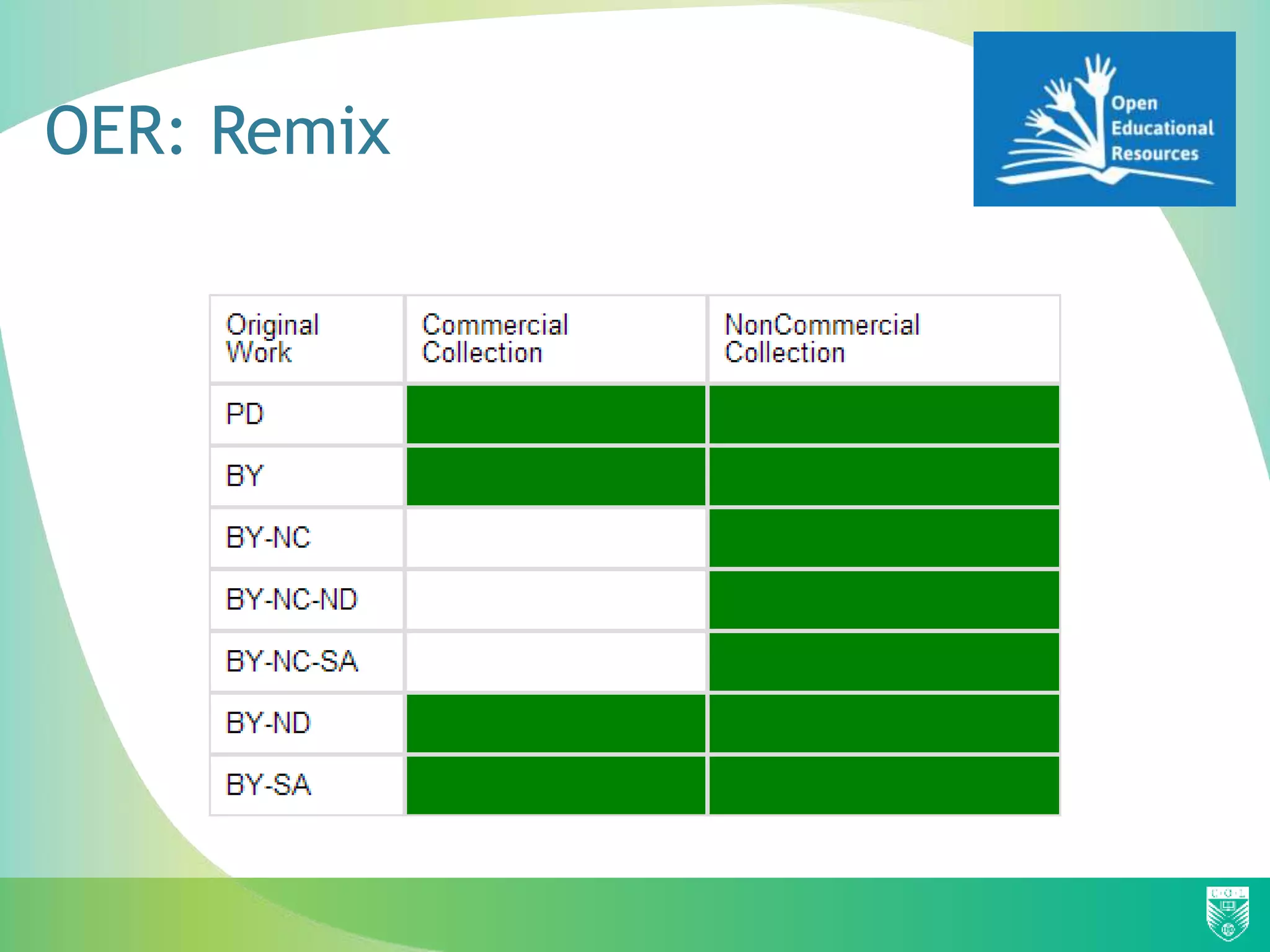
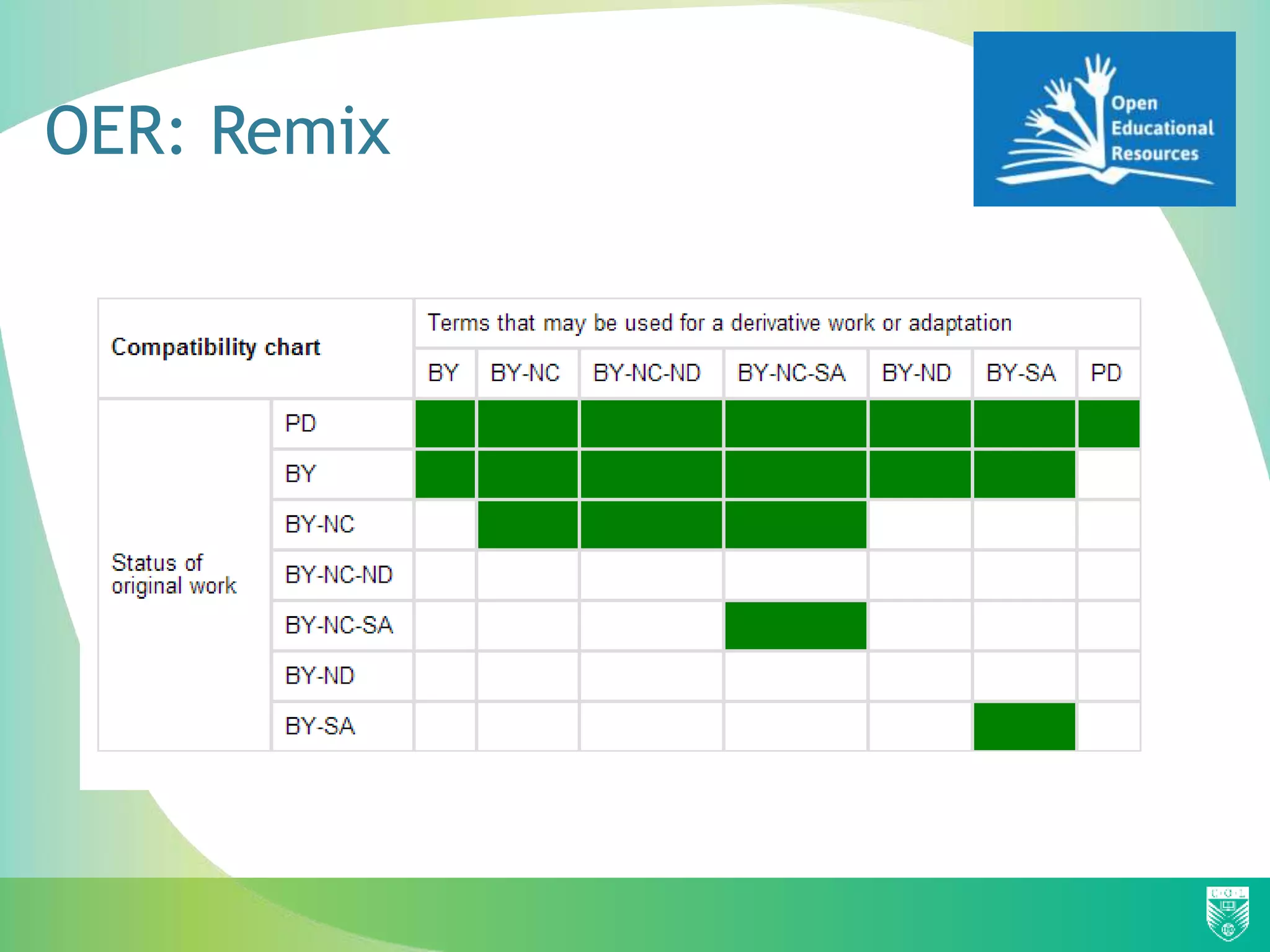
OER: Remix
OER: Remix
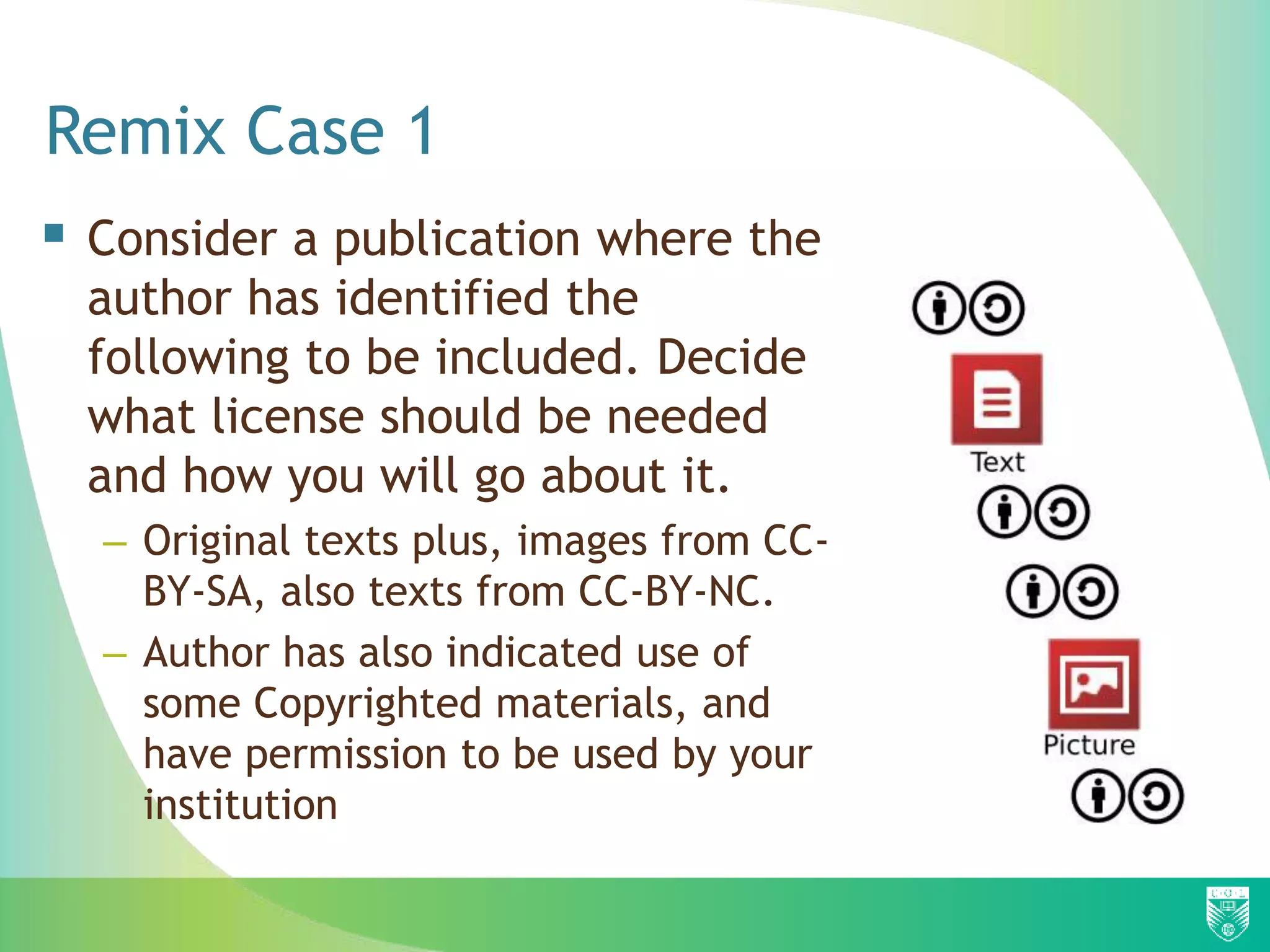
Remix Case 1
 Consider a publication where the
author has identified the
following to be included. Decide
what license should be needed
and how you will go about it.
– Original texts plus, images from CC-
BY-SA, also texts from CC-BY-NC.
– Author has also indicated use of
some Copyrighted materials, and
have permission to be used by your
institution
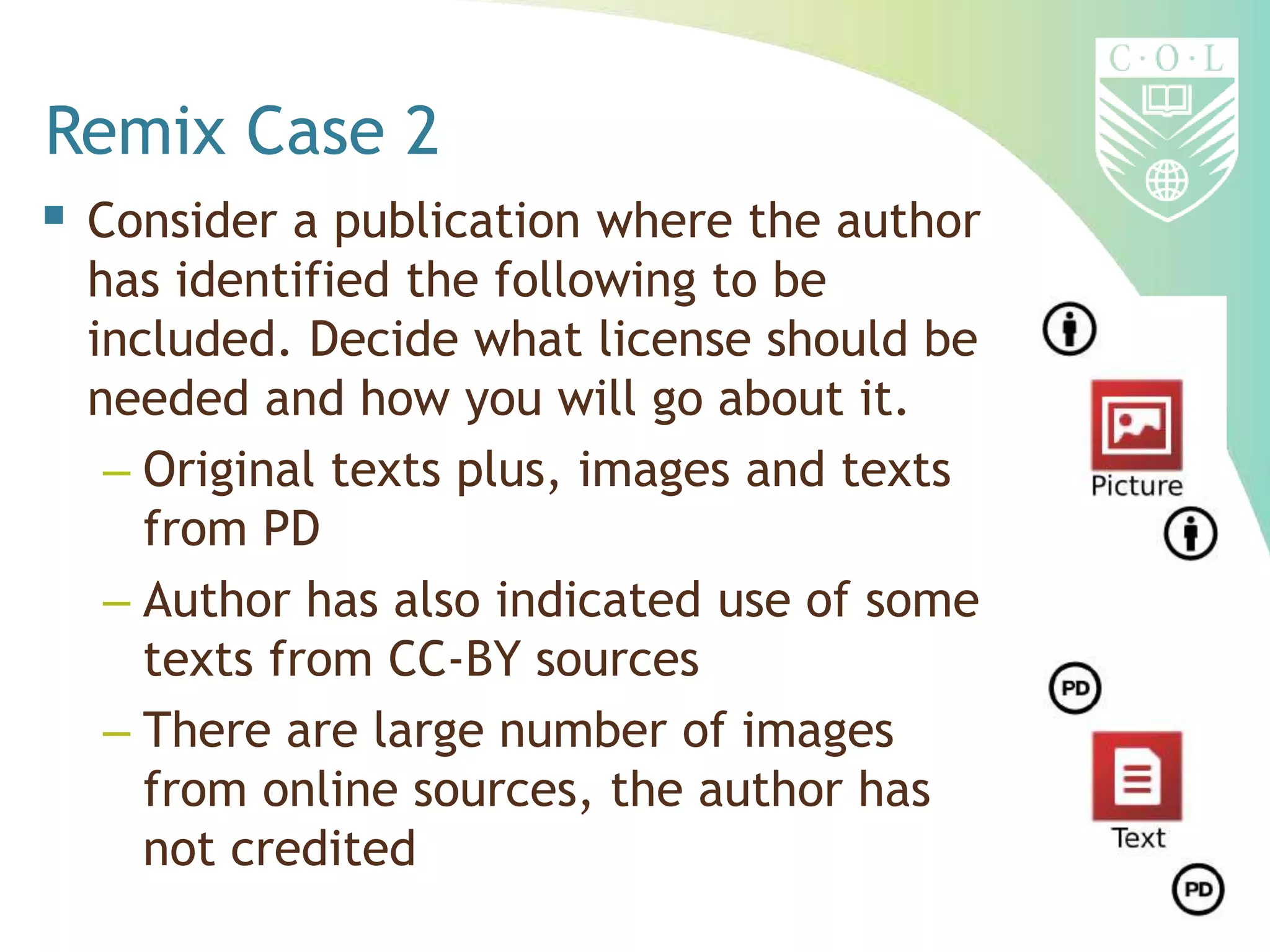
Remix Case 2
 Consider a publication where the author
has identified the following to be
included. Decide what license should be
needed and how you will go about it.
– Original texts plus, images and texts
from PD
– Author has also indicated use of some
texts from CC-BY sources
– There are large number of images
from online sources, the author has
not credited
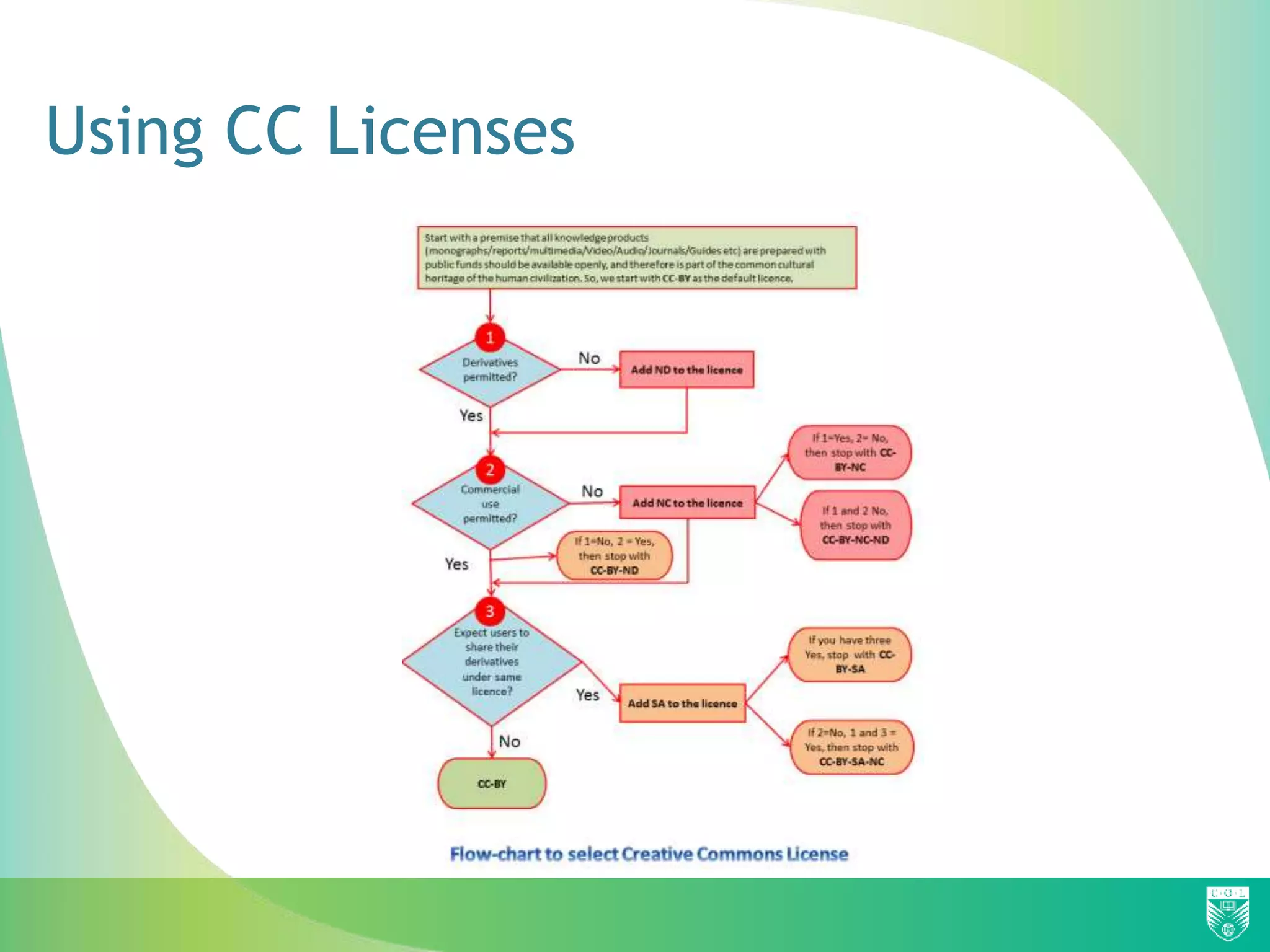
Using CC Licenses
THANK YOU

Copyright and Open Licensing

  • 1.
    Commonwealth Educational Media Centrefor Asia Copyright and Open Licensing Sanjaya Mishra Director, Commonwealth Educational Media Centre for Asia
  • 3.
    Meaning of Terms Author/Creator: is the originator of any written work  Copyright: exclusive right given by law to the author/creator of a work  What can be copyrighted? – Any work which is not an exact copy of someone else’s work  Can ideas be copyrighted? No… only expression of ideas are copyrighted...  Can copyright be transferred? Yes, an author can assign copyright to another person, as in the case of property
  • 4.
    Copyright Exclusive rights givenby law to the original creator/author  To get credit  To copy  To distribute  To license  To sell/make economic transaction  To perform
  • 5.
    Further Copyright…  Prohibitsunauthorized use, distribution, performance, adaptation, sell, etc.  Requires permission of the Copyright holder for creating any derivative works  Fair use or fair dealing is though permitted  Fair use covers Examples of fair use include commentary, search engines, criticism, news reporting, research, teaching, library archiving and scholarship.
  • 6.
    Open Licenses Creative Commons CC-BY  CC-BY-SA  CC-BY-NC  CC-BY-NC-SA  CC-BY-ND  CC-BY-NC-ND Concepts  Attribution  Share Alike  Non-Commercial  Non-Derivative
  • 7.
    Why Creative Commons Legal Code: expansive legal languages tested in several cases  Commons Code: Simple icon- based approach to explain what you can do want you can’t  Digital Code: Enables search engines to search and locate through CC Rights Expression Language
  • 8.
  • 9.
  • 10.
    Remix Case 1 Consider a publication where the author has identified the following to be included. Decide what license should be needed and how you will go about it. – Original texts plus, images from CC- BY-SA, also texts from CC-BY-NC. – Author has also indicated use of some Copyrighted materials, and have permission to be used by your institution
  • 11.
    Remix Case 2 Consider a publication where the author has identified the following to be included. Decide what license should be needed and how you will go about it. – Original texts plus, images and texts from PD – Author has also indicated use of some texts from CC-BY sources – There are large number of images from online sources, the author has not credited
  • 12.
  • 13.