COOPERATIVE
ADMINISTRATION AND
SUPERVISION
PRINCIPLES AND PRACTICES
SchoolAdministration andSupervision
10:30 am-12:00 pm; M-F
Dr.Lina C.Alcantara, Ed.D.
Principles v.Practices
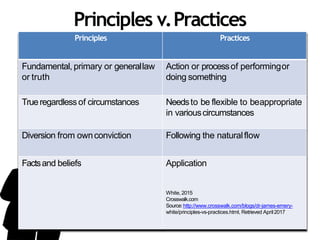
Principles Practices
Fundamental, primary or generallaw
or truth
Action or processof performingor
doing something
Trueregardlessof circumstances Needsto be flexible to beappropriate
in variouscircumstances
Diversion from ownconviction Following the naturalflow
Factsand beliefs Application
White, 2015
Crosswalk.com
Source:http://www.crosswalk.com/blogs/dr-james-emery-
white/principles-vs-practices.html, Retrieved April2017
DemocracyDefined.
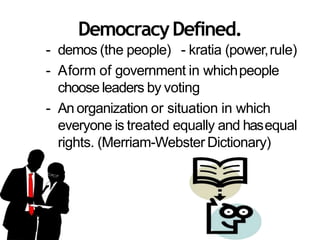
- demos (the people) - kratia (power,rule)
- Aform of government in whichpeople
choose leaders by voting
- An organization or situation in which
everyone is treated equally and hasequal
rights. (Merriam-Webster Dictionary)
…Democracy
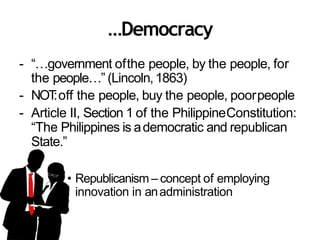
- “…government ofthe people, by the people, for
the people…” (Lincoln,1863)
- NOT:off the people, buy the people, poorpeople
- Article II, Section 1 of the PhilippineConstitution:
“The Philippines is ademocratic and republican
State.”
• Republicanism – concept of employing
innovation in anadministration
Democratic
and
Cooperative
Administration
and
Supervision
Distinguished
• CooperativeAdministration and
Supervision and Democratic
Administration and Supervisionare
not synonymous.
• CooperativeAdministration and
Supervision is derived from
Democratic Administration and
Supervision. Its fundamental
principles and aims are closely
related to democratic principles of
administration and supervision;
however, it is more inclined on the
aspect and importance of
cooperative effort inadministrating
and supervising aschool efficiently
and effectively.
• Barr and Burton:
a. Recognition of contribution of
instruction
b. Clear definition of
responsibilities
c. Realization of classroom
problems
d. General encouragement and
conservation of contributions
e. Organization, evaluation and
coordination of efforts
BASIC PRINCIPLES
OF COOPERATIVE
ADMINISTRATION
AND SUPERVISION
• Kashyap:
a. Voluntary and Open Participation – participation of
anyone regardless of gender, social, racial, political
or religion
b. Democratic Member Control – Equalvoting and
planning rights on making decisions andtransactions
c. Education, Training and Information –
Providing education and training toparticipants
d. Cooperation among CooperativeAdministrations -
Movement by working together through local,
national, regional and internationalstructures
…COOPERATIVE ADMINISTRATIONAND
SUPERVISION
1. Cooperation of people withdiverse
talents for commonends
2. Stimulation of initiative,self-reliance
and individual responsibility on all
participants
3. Leadership originating from group
planning, group execution andgroup
evaluation
4. Encouragement for massgrowth and
development
5. Mutual understanding between
teachers, administrators or supervisors
6. Observation of professional codeof
ethics
-RA6713
- Codeof Ethicsfor ProfessionalTeachers
COMMON
PRACTICESOF
COOPERATIVE
ADMINISTRATION
ANDSUPERVISION
ReferencesBooks
Gregorio, H.(1961). School Administration and Supervision. Quezon
City. Garotech Publishing.
Kashyap,D.(2011). Principles of School Administration and
Supervision. New Delhi. Early Childhood Education Program.
Nolledo, J.(2008). Student’s Manual on the NewConstitution.
Manila. RexBookStore.
Internet Sources
White, J.Principles vs.Practices.
http://www.crosswalk.com/blogs/dr-james-
emerywhite/principles-vs-practices.html. Retrieved April 2017.
N.A. Principle and practice.
http://livelifewithyourkids.com/2015/02/principle-and-practice/.
Retrieved April 2017.
THANK YOUFOR
LISTENING!
Reputo. Incipio.Fio.
Begin. Believe.Become.

Cooperative supervision and administrative practice and principles

  • 1.
    COOPERATIVE ADMINISTRATION AND SUPERVISION PRINCIPLES ANDPRACTICES SchoolAdministration andSupervision 10:30 am-12:00 pm; M-F Dr.Lina C.Alcantara, Ed.D.
  • 2.
    Principles v.Practices Principles Practices Fundamental,primary or generallaw or truth Action or processof performingor doing something Trueregardlessof circumstances Needsto be flexible to beappropriate in variouscircumstances Diversion from ownconviction Following the naturalflow Factsand beliefs Application White, 2015 Crosswalk.com Source:http://www.crosswalk.com/blogs/dr-james-emery- white/principles-vs-practices.html, Retrieved April2017
  • 3.
    DemocracyDefined. - demos (thepeople) - kratia (power,rule) - Aform of government in whichpeople choose leaders by voting - An organization or situation in which everyone is treated equally and hasequal rights. (Merriam-Webster Dictionary)
  • 4.
    …Democracy - “…government ofthepeople, by the people, for the people…” (Lincoln,1863) - NOT:off the people, buy the people, poorpeople - Article II, Section 1 of the PhilippineConstitution: “The Philippines is ademocratic and republican State.” • Republicanism – concept of employing innovation in anadministration
  • 5.
    Democratic and Cooperative Administration and Supervision Distinguished • CooperativeAdministration and Supervisionand Democratic Administration and Supervisionare not synonymous. • CooperativeAdministration and Supervision is derived from Democratic Administration and Supervision. Its fundamental principles and aims are closely related to democratic principles of administration and supervision; however, it is more inclined on the aspect and importance of cooperative effort inadministrating and supervising aschool efficiently and effectively.
  • 6.
    • Barr andBurton: a. Recognition of contribution of instruction b. Clear definition of responsibilities c. Realization of classroom problems d. General encouragement and conservation of contributions e. Organization, evaluation and coordination of efforts BASIC PRINCIPLES OF COOPERATIVE ADMINISTRATION AND SUPERVISION
  • 7.
    • Kashyap: a. Voluntaryand Open Participation – participation of anyone regardless of gender, social, racial, political or religion b. Democratic Member Control – Equalvoting and planning rights on making decisions andtransactions c. Education, Training and Information – Providing education and training toparticipants d. Cooperation among CooperativeAdministrations - Movement by working together through local, national, regional and internationalstructures …COOPERATIVE ADMINISTRATIONAND SUPERVISION
  • 8.
    1. Cooperation ofpeople withdiverse talents for commonends 2. Stimulation of initiative,self-reliance and individual responsibility on all participants 3. Leadership originating from group planning, group execution andgroup evaluation 4. Encouragement for massgrowth and development 5. Mutual understanding between teachers, administrators or supervisors 6. Observation of professional codeof ethics -RA6713 - Codeof Ethicsfor ProfessionalTeachers COMMON PRACTICESOF COOPERATIVE ADMINISTRATION ANDSUPERVISION
  • 9.
    ReferencesBooks Gregorio, H.(1961). SchoolAdministration and Supervision. Quezon City. Garotech Publishing. Kashyap,D.(2011). Principles of School Administration and Supervision. New Delhi. Early Childhood Education Program. Nolledo, J.(2008). Student’s Manual on the NewConstitution. Manila. RexBookStore. Internet Sources White, J.Principles vs.Practices. http://www.crosswalk.com/blogs/dr-james- emerywhite/principles-vs-practices.html. Retrieved April 2017. N.A. Principle and practice. http://livelifewithyourkids.com/2015/02/principle-and-practice/. Retrieved April 2017.
  • 10.