ELEMENTS OF CASE ANALYSIS
Case Analysis is primarily applied
to cases studied and, principally,
this will mean cases decided by the
Supreme Court. You may wish to
use the conclusion of that case to a
current case. Before you can do
so, the case must be analyzed.
Case Analysis is different from a
simple case digest, where only the
facts, issue(s) and ruling of the
Supreme Court is elicited.
Case Analysis goes deeper and
delves into the reasons given by
the Court in arriving at their
decision.
The following constitute facets of
case analysis:
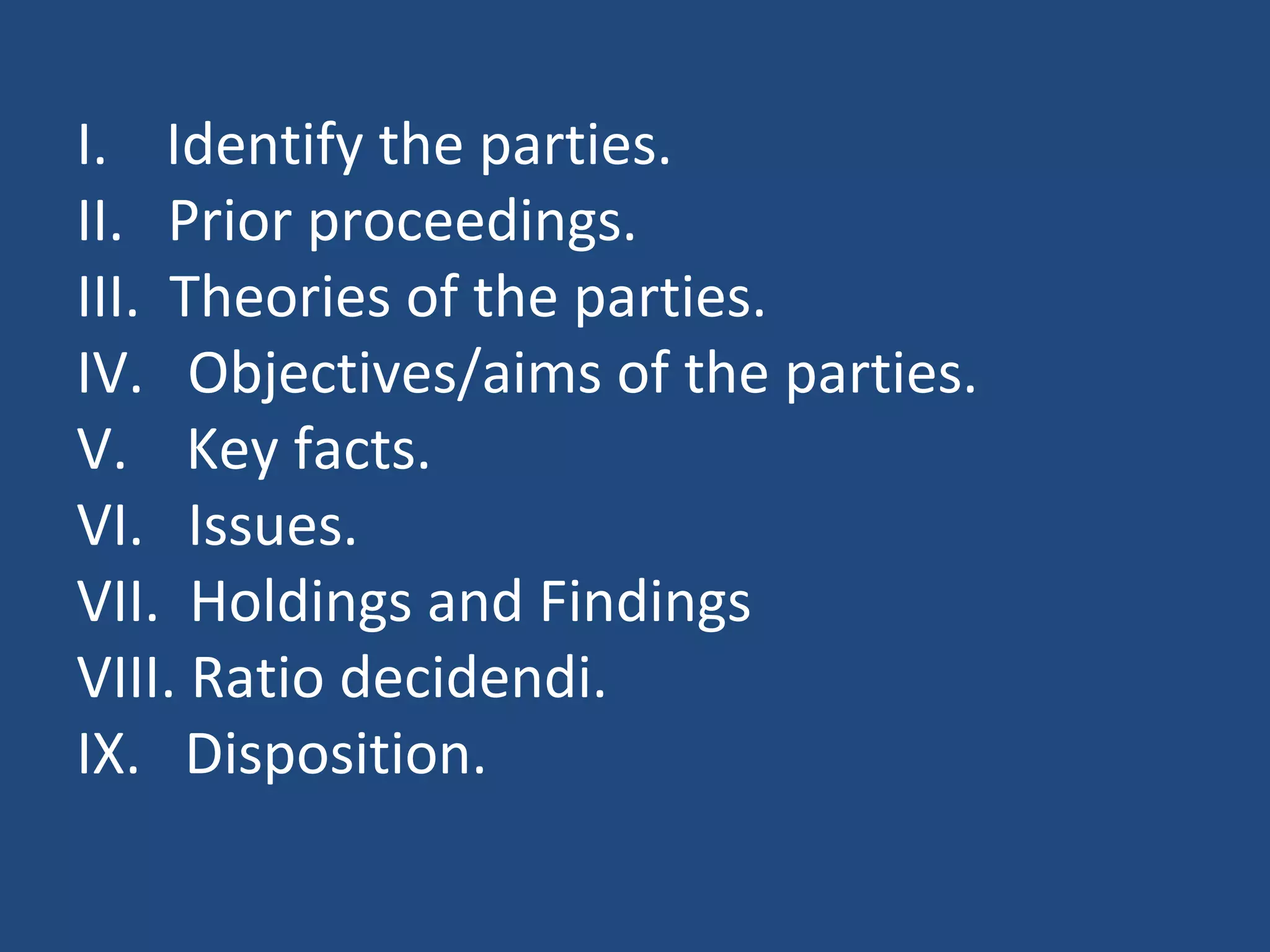
I. Identify the parties.
II. Prior proceedings.
III. Theories of the parties.
IV. Objectives/aims of the parties.
V. Key facts.
VI. Issues.
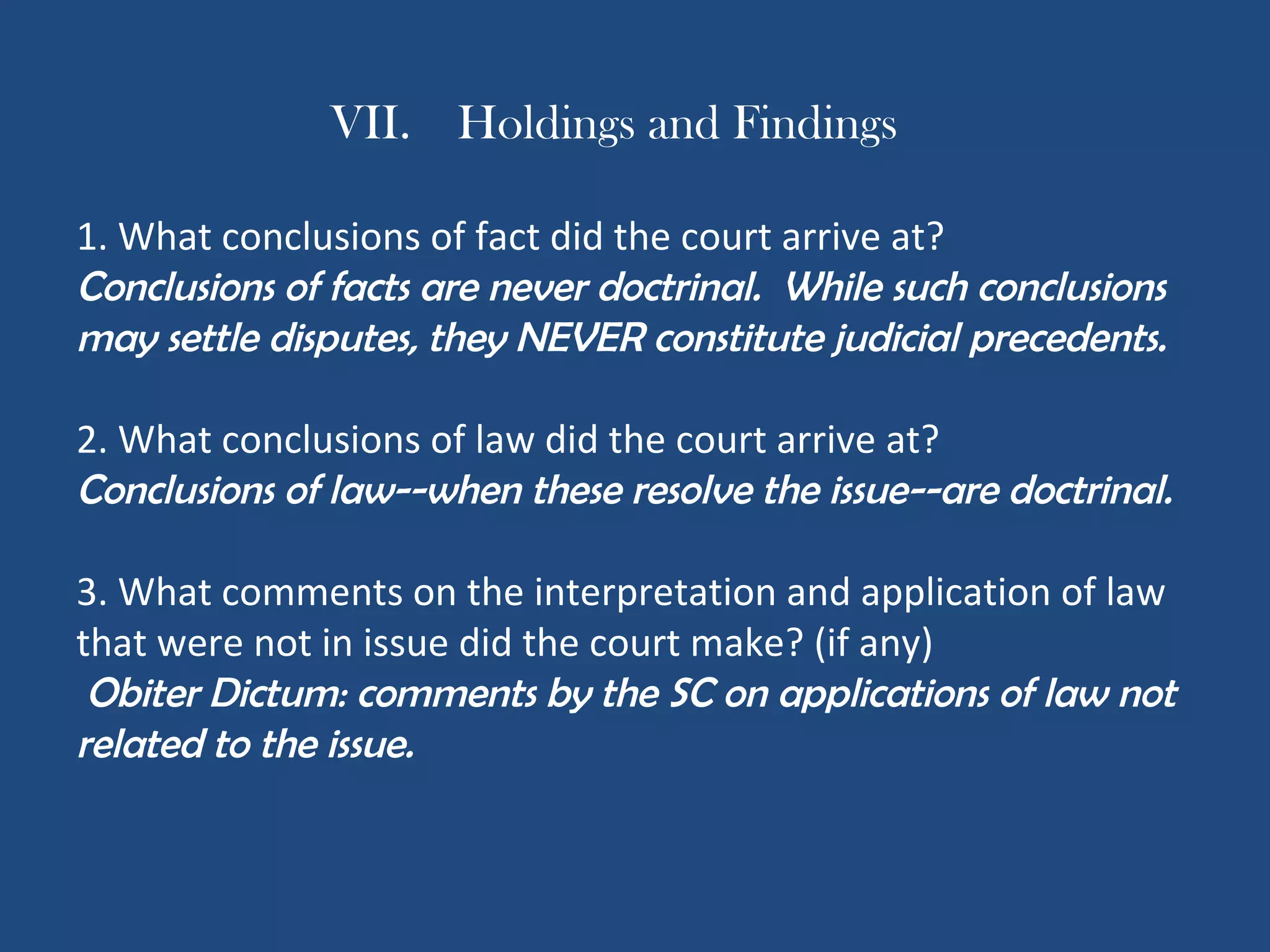
VII. Holdings and Findings
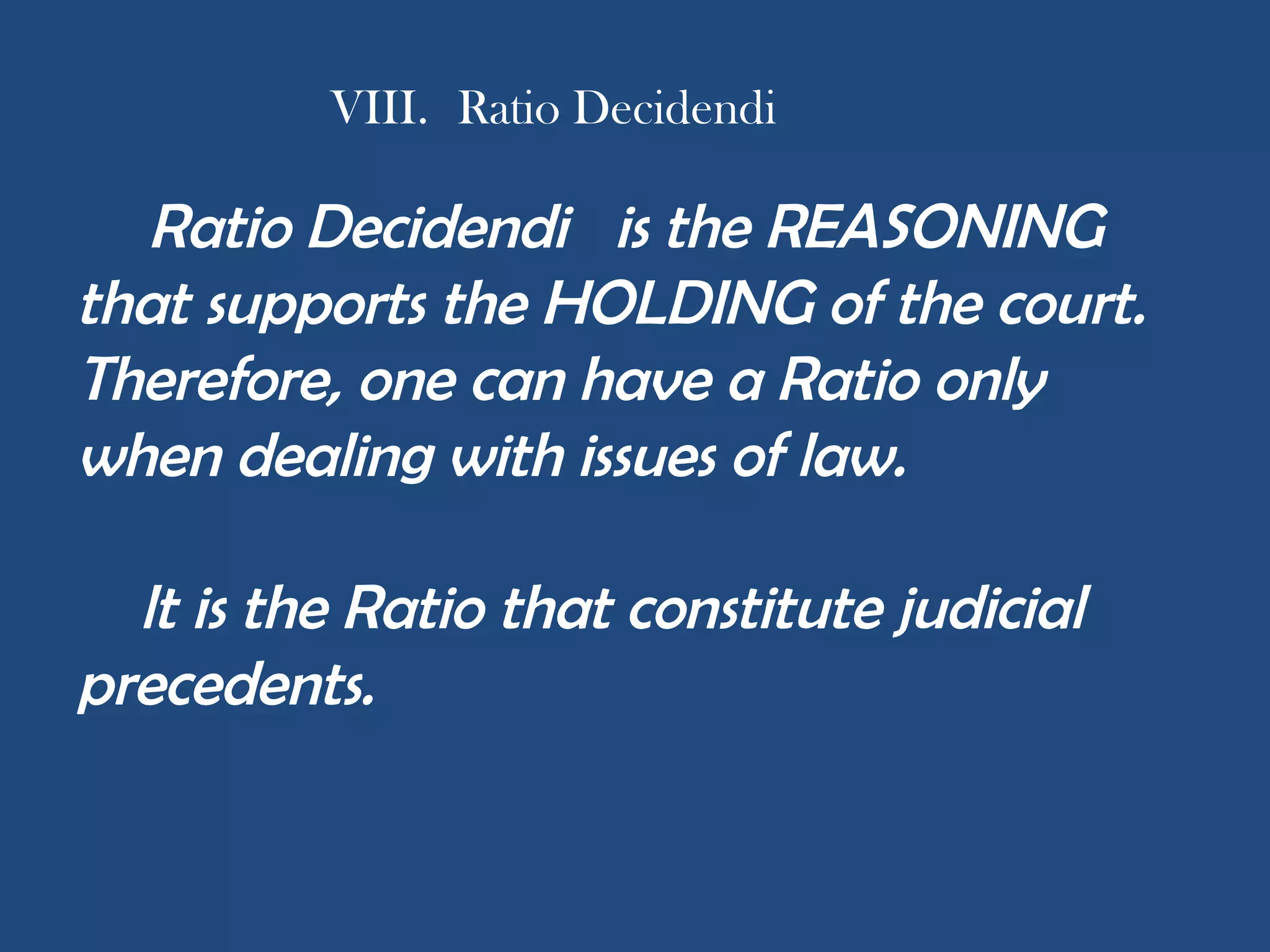
VIII. Ratio decidendi.
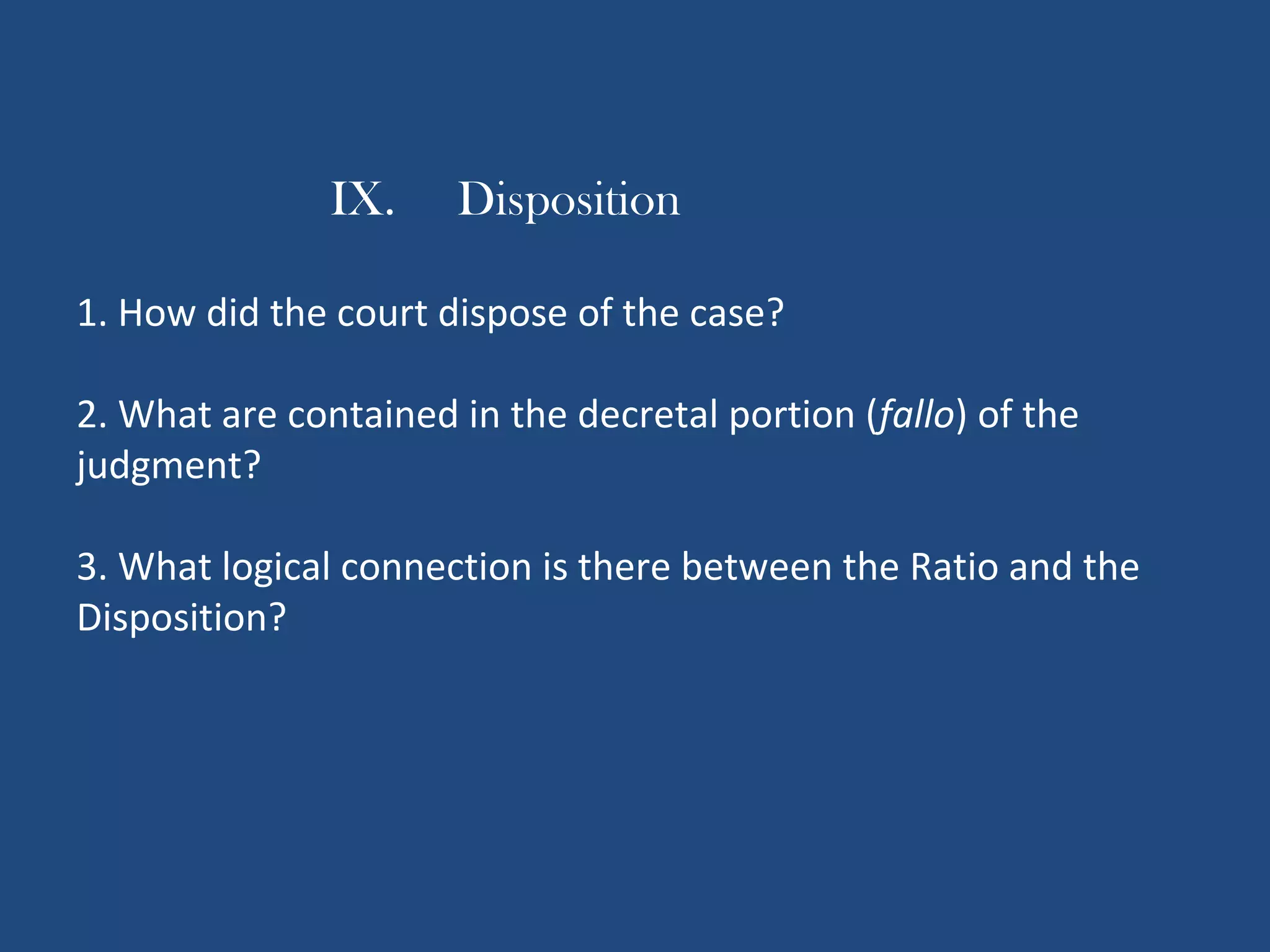
IX. Disposition.
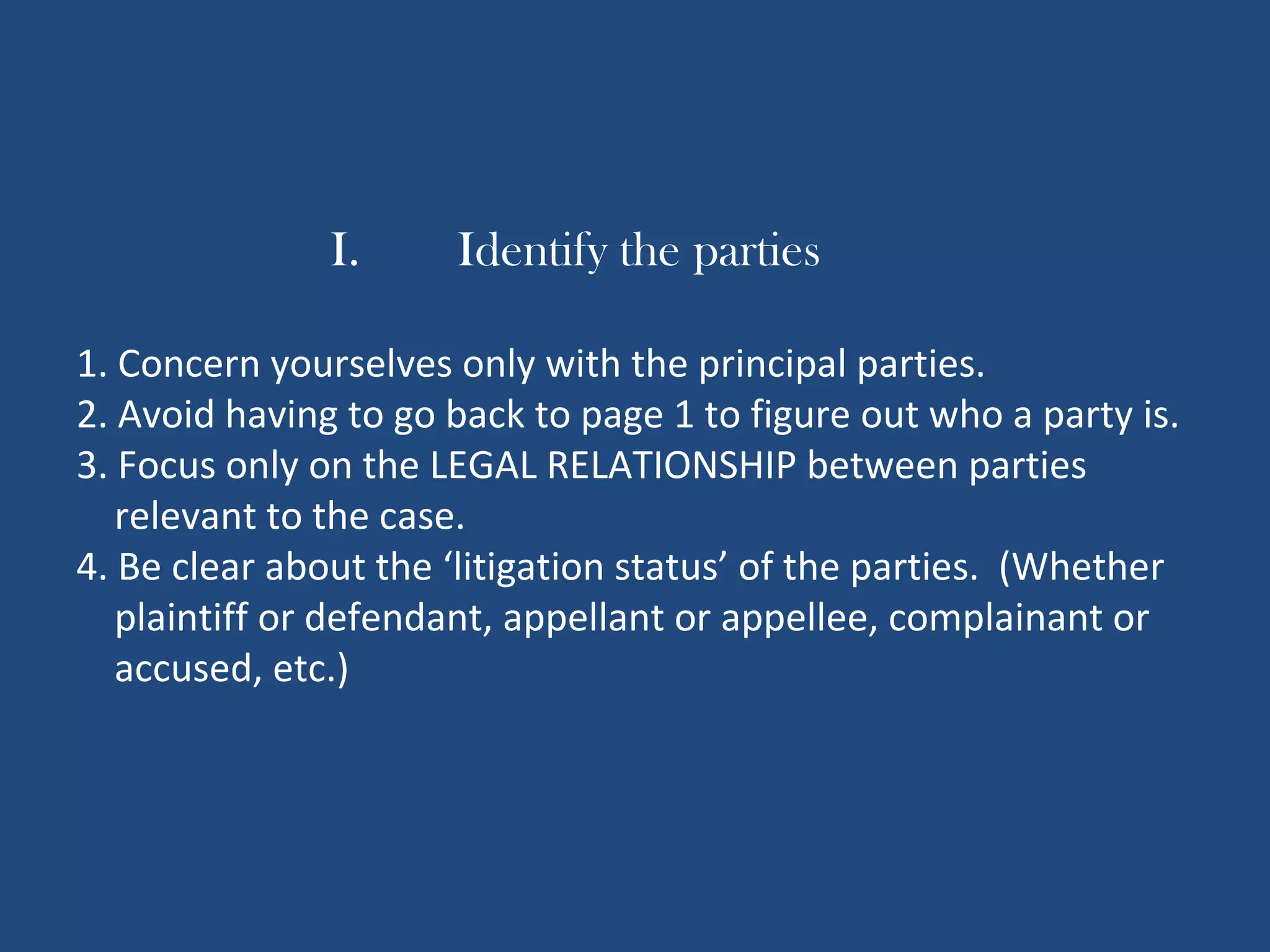
I. Identify the parties
1. Concern yourselves only with the principal parties.
2. Avoid having to go back to page 1 to figure out who a party is.
3. Focus only on the LEGAL RELATIONSHIP between parties
relevant to the case.
4. Be clear about the ‘litigation status’ of the parties. (Whether
plaintiff or defendant, appellant or appellee, complainant or
accused, etc.)
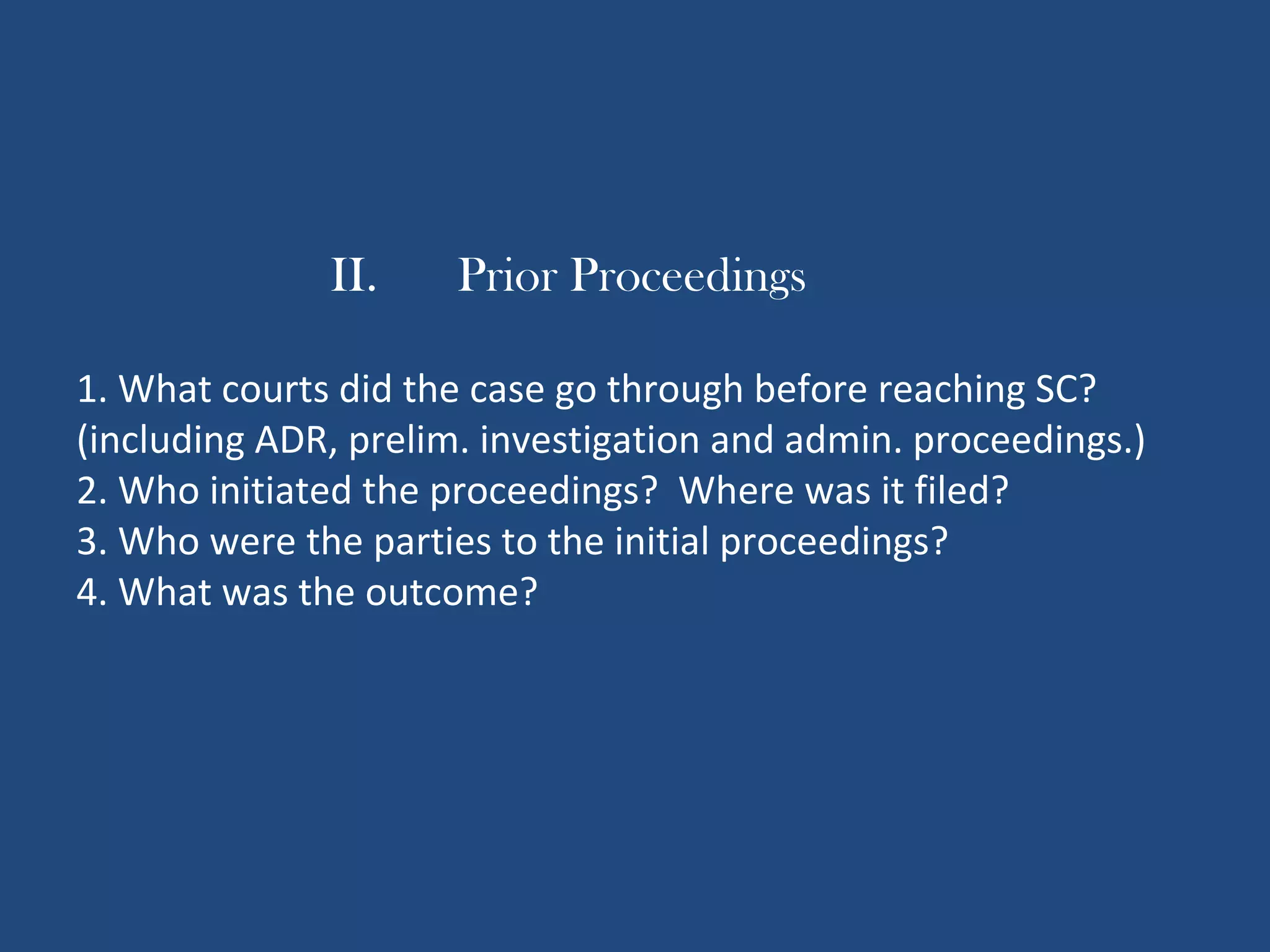
II. Prior Proceedings
1. What courts did the case go through before reaching SC?
(including ADR, prelim. investigation and admin. proceedings.)
2. Who initiated the proceedings? Where was it filed?
3. Who were the parties to the initial proceedings?
4. What was the outcome?
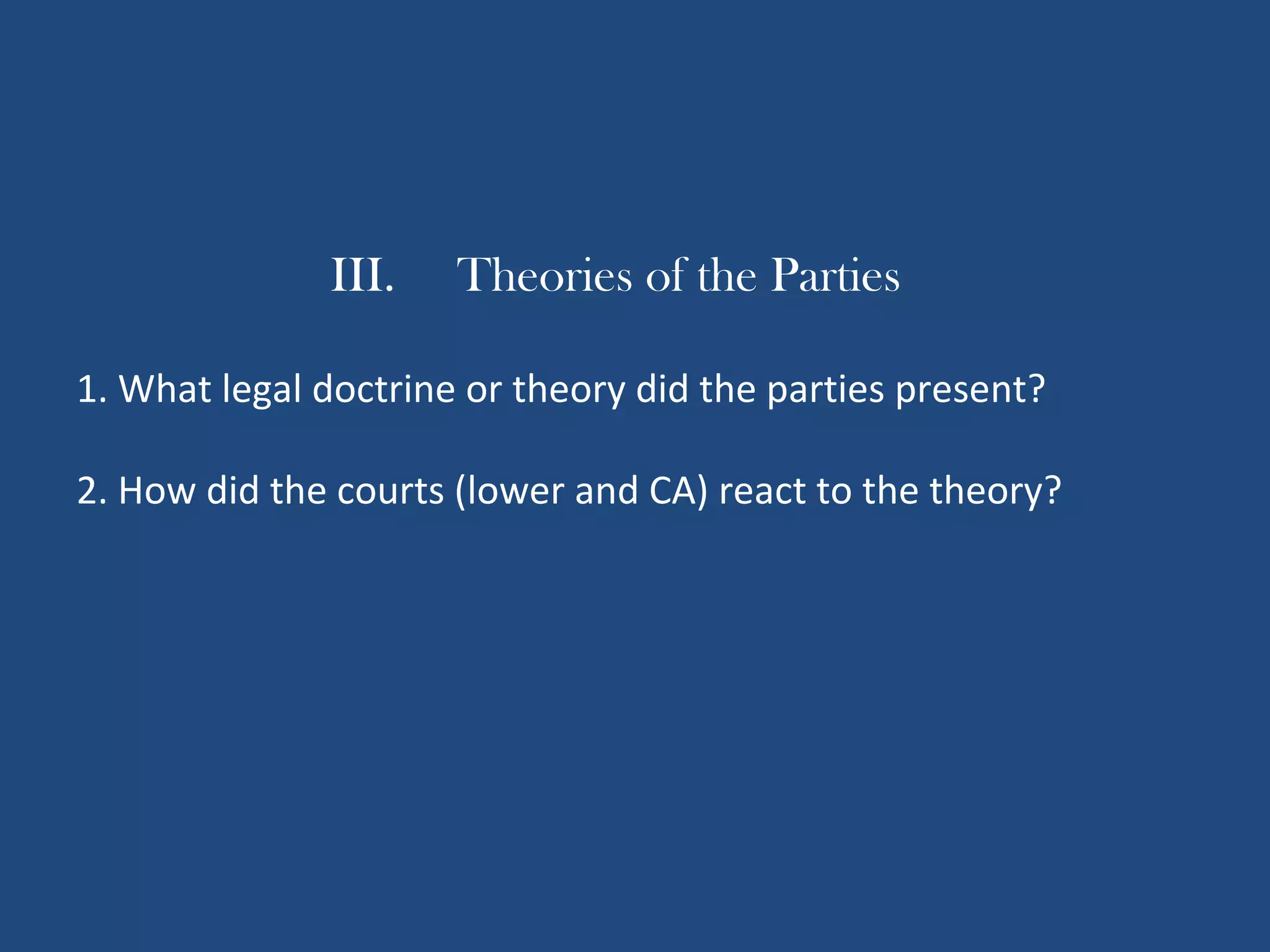
III. Theories of the Parties
1. What legal doctrine or theory did the parties present?
2. How did the courts (lower and CA) react to the theory?
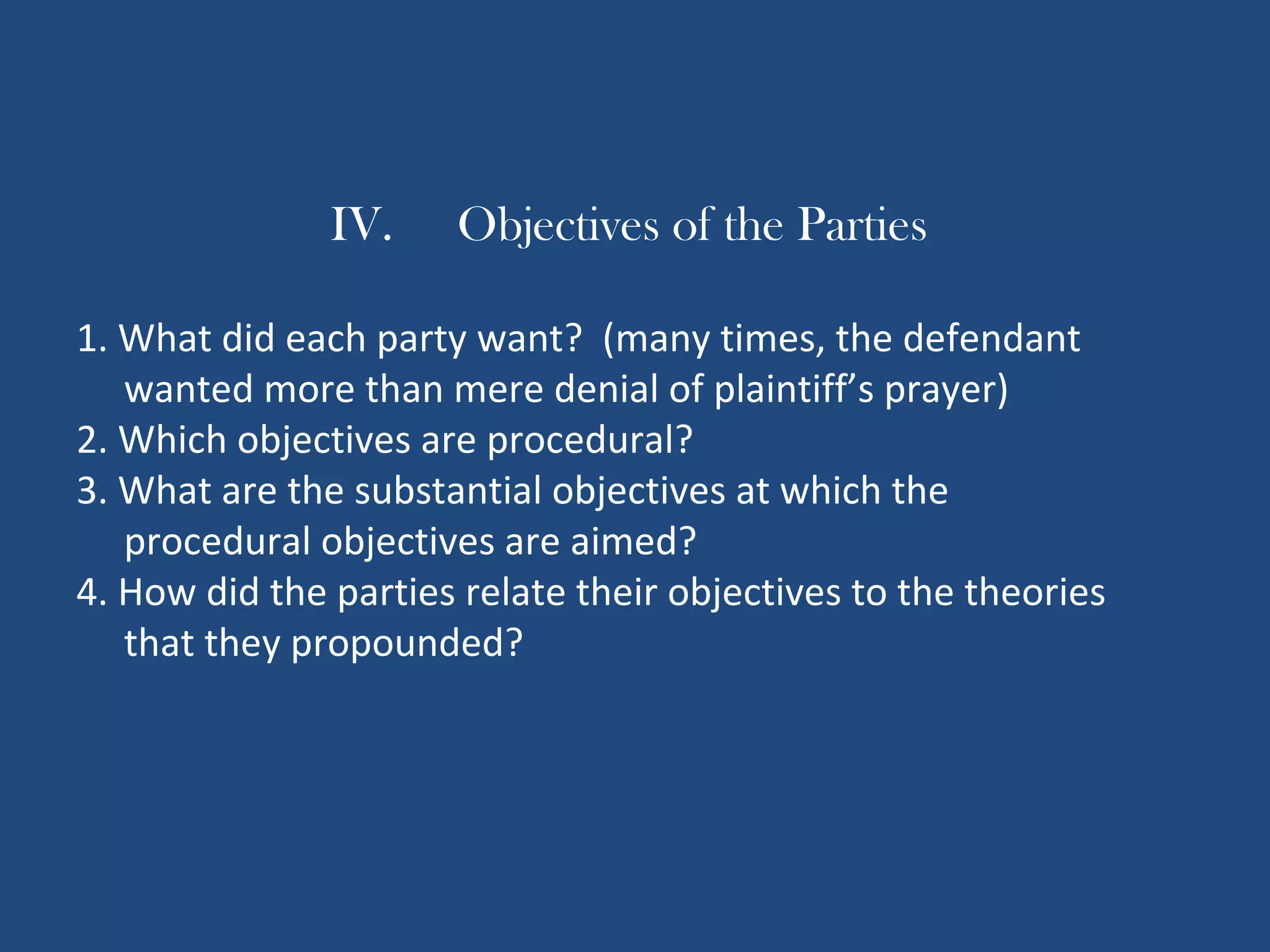
IV. Objectives of the Parties
1. What did each party want? (many times, the defendant
wanted more than mere denial of plaintiff’s prayer)
2. Which objectives are procedural?
3. What are the substantial objectives at which the
procedural objectives are aimed?
4. How did the parties relate their objectives to the theories
that they propounded?
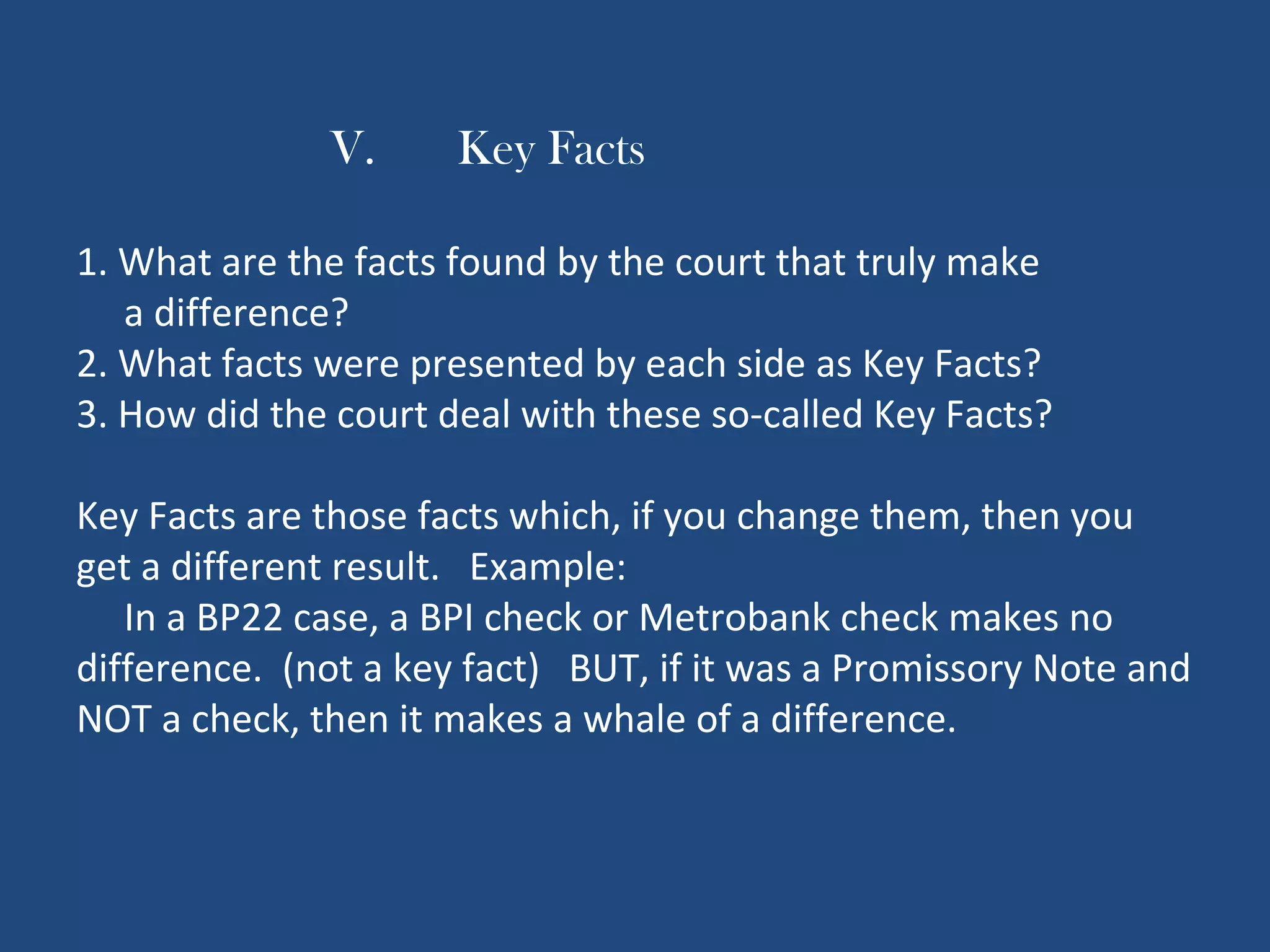
V. Key Facts
1. What are the facts found by the court that truly make
a difference?
2. What facts were presented by each side as Key Facts?
3. How did the court deal with these so-called Key Facts?
Key Facts are those facts which, if you change them, then you
get a different result. Example:
In a BP22 case, a BPI check or Metrobank check makes no
difference. (not a key fact) BUT, if it was a Promissory Note and
NOT a check, then it makes a whale of a difference.
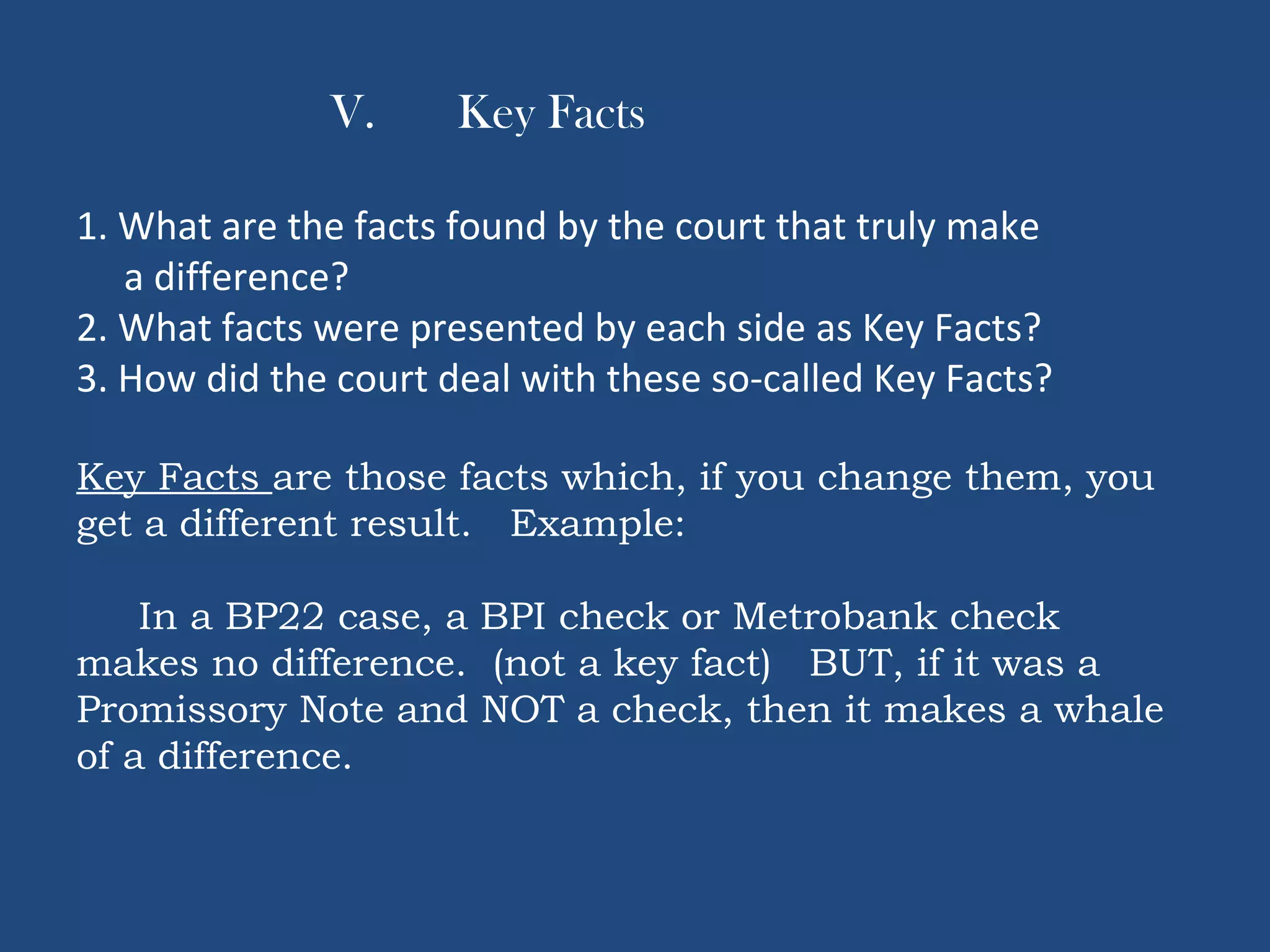
V. Key Facts
1. What are the facts found by the court that truly make
a difference?
2. What facts were presented by each side as Key Facts?
3. How did the court deal with these so-called Key Facts?
Key Facts are those facts which, if you change them, you
get a different result. Example:
In a BP22 case, a BPI check or Metrobank check
makes no difference. (not a key fact) BUT, if it was a
Promissory Note and NOT a check, then it makes a whale
of a difference.
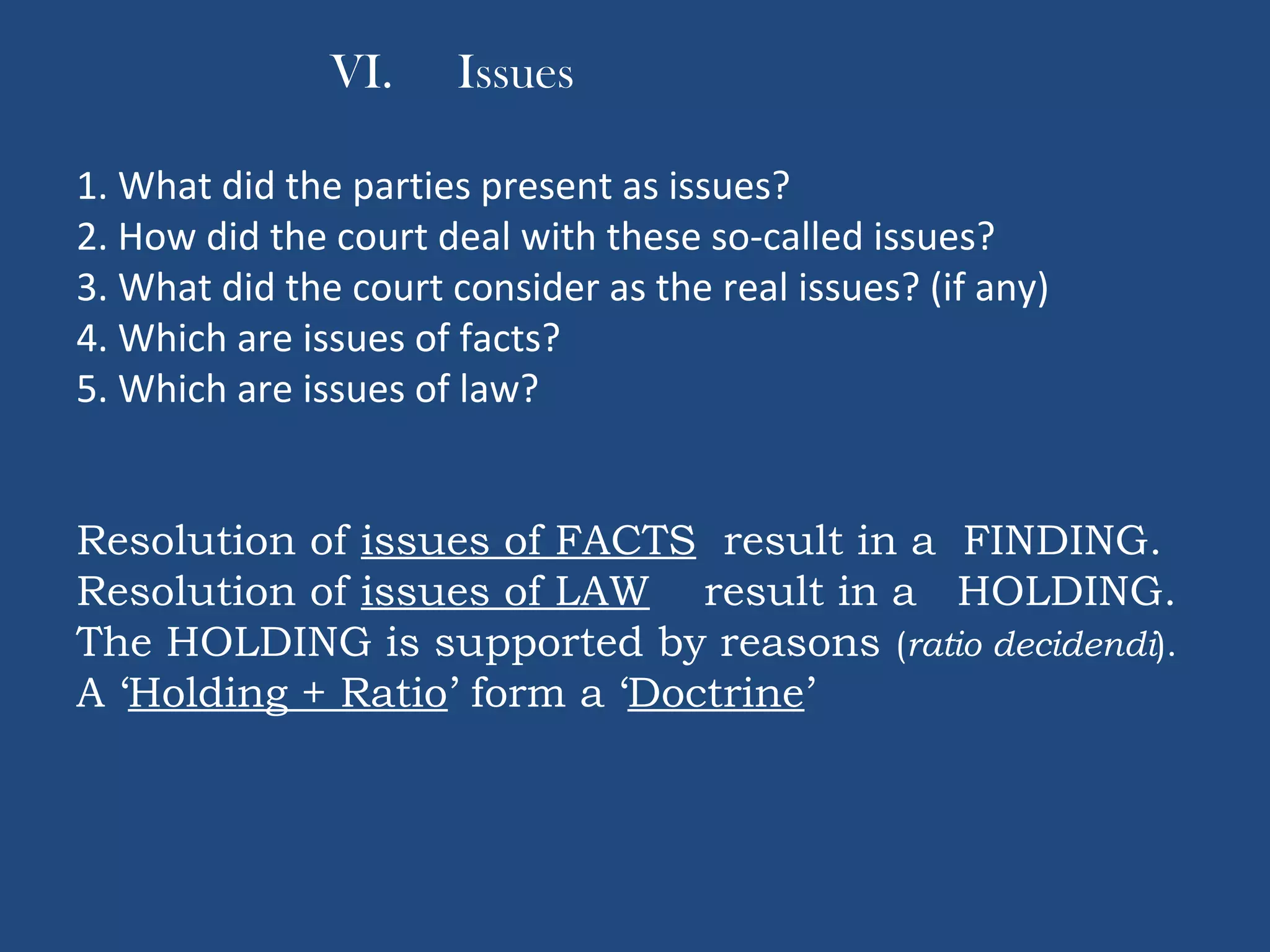
VI. Issues
1. What did the parties present as issues?
2. How did the court deal with these so-called issues?
3. What did the court consider as the real issues? (if any)
4. Which are issues of facts?
5. Which are issues of law?
Resolution of issues of FACTS result in a FINDING.
Resolution of issues of LAW result in a HOLDING.
The HOLDING is supported by reasons (ratio decidendi).
A ‘Holding + Ratio’ form a ‘Doctrine’
VII. Holdings and Findings
1. What conclusions of fact did the court arrive at?
Conclusions of facts are never doctrinal. While such conclusions
may settle disputes, they NEVER constitute judicial precedents.
2. What conclusions of law did the court arrive at?
Conclusions of law--when these resolve the issue--are doctrinal.
3. What comments on the interpretation and application of law
that were not in issue did the court make? (if any)
Obiter Dictum: comments by the SC on applications of law not
related to the issue.
VIII. Ratio Decidendi
Ratio Decidendi is the REASONING
that supports the HOLDING of the court.
Therefore, one can have a Ratio only
when dealing with issues of law.
lt is the Ratio that constitute judicial
precedents.
IX. Disposition
1. How did the court dispose of the case?
2. What are contained in the decretal portion (fallo) of the
judgment?
3. What logical connection is there between the Ratio and the
Disposition?
This material was prepared by:
Fr. Ranhilio Callangan Aquino
Dean, Graduate School of Law
San Beda College

Elements of case analysis

  • 1.
  • 2.
    Case Analysis isprimarily applied to cases studied and, principally, this will mean cases decided by the Supreme Court. You may wish to use the conclusion of that case to a current case. Before you can do so, the case must be analyzed.
  • 3.
    Case Analysis isdifferent from a simple case digest, where only the facts, issue(s) and ruling of the Supreme Court is elicited.
  • 4.
    Case Analysis goesdeeper and delves into the reasons given by the Court in arriving at their decision. The following constitute facets of case analysis:
  • 5.
    I. Identify theparties. II. Prior proceedings. III. Theories of the parties. IV. Objectives/aims of the parties. V. Key facts. VI. Issues. VII. Holdings and Findings VIII. Ratio decidendi. IX. Disposition.
  • 6.
    I. Identify theparties 1. Concern yourselves only with the principal parties. 2. Avoid having to go back to page 1 to figure out who a party is. 3. Focus only on the LEGAL RELATIONSHIP between parties relevant to the case. 4. Be clear about the ‘litigation status’ of the parties. (Whether plaintiff or defendant, appellant or appellee, complainant or accused, etc.)
  • 7.
    II. Prior Proceedings 1.What courts did the case go through before reaching SC? (including ADR, prelim. investigation and admin. proceedings.) 2. Who initiated the proceedings? Where was it filed? 3. Who were the parties to the initial proceedings? 4. What was the outcome?
  • 8.
    III. Theories ofthe Parties 1. What legal doctrine or theory did the parties present? 2. How did the courts (lower and CA) react to the theory?
  • 9.
    IV. Objectives ofthe Parties 1. What did each party want? (many times, the defendant wanted more than mere denial of plaintiff’s prayer) 2. Which objectives are procedural? 3. What are the substantial objectives at which the procedural objectives are aimed? 4. How did the parties relate their objectives to the theories that they propounded?
  • 10.
    V. Key Facts 1.What are the facts found by the court that truly make a difference? 2. What facts were presented by each side as Key Facts? 3. How did the court deal with these so-called Key Facts? Key Facts are those facts which, if you change them, then you get a different result. Example: In a BP22 case, a BPI check or Metrobank check makes no difference. (not a key fact) BUT, if it was a Promissory Note and NOT a check, then it makes a whale of a difference.
  • 11.
    V. Key Facts 1.What are the facts found by the court that truly make a difference? 2. What facts were presented by each side as Key Facts? 3. How did the court deal with these so-called Key Facts? Key Facts are those facts which, if you change them, you get a different result. Example: In a BP22 case, a BPI check or Metrobank check makes no difference. (not a key fact) BUT, if it was a Promissory Note and NOT a check, then it makes a whale of a difference.
  • 12.
    VI. Issues 1. Whatdid the parties present as issues? 2. How did the court deal with these so-called issues? 3. What did the court consider as the real issues? (if any) 4. Which are issues of facts? 5. Which are issues of law? Resolution of issues of FACTS result in a FINDING. Resolution of issues of LAW result in a HOLDING. The HOLDING is supported by reasons (ratio decidendi). A ‘Holding + Ratio’ form a ‘Doctrine’
  • 13.
    VII. Holdings andFindings 1. What conclusions of fact did the court arrive at? Conclusions of facts are never doctrinal. While such conclusions may settle disputes, they NEVER constitute judicial precedents. 2. What conclusions of law did the court arrive at? Conclusions of law--when these resolve the issue--are doctrinal. 3. What comments on the interpretation and application of law that were not in issue did the court make? (if any) Obiter Dictum: comments by the SC on applications of law not related to the issue.
  • 14.
    VIII. Ratio Decidendi RatioDecidendi is the REASONING that supports the HOLDING of the court. Therefore, one can have a Ratio only when dealing with issues of law. lt is the Ratio that constitute judicial precedents.
  • 15.
    IX. Disposition 1. Howdid the court dispose of the case? 2. What are contained in the decretal portion (fallo) of the judgment? 3. What logical connection is there between the Ratio and the Disposition?
  • 16.
    This material wasprepared by: Fr. Ranhilio Callangan Aquino Dean, Graduate School of Law San Beda College