COOLING SYSTEM IN
AUTOMOTIVE
Presented By:-
MANOJIT BISWAS
ANUBHAV HALDAR
MD. ARQUAM
SANDEEP DAS
SHIVAJI BASU
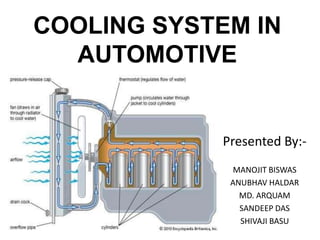
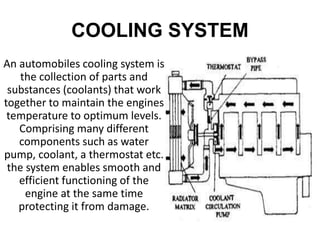
COOLING SYSTEM
An automobiles cooling system is
the collection of parts and
substances (coolants) that work
together to maintain the engines
temperature to optimum levels.
Comprising many different
components such as water
pump, coolant, a thermostat etc.
the system enables smooth and
efficient functioning of the
engine at the same time
protecting it from damage.
MAJOR COMPONENT LIST
• Water Pump
• Radiator
• Water Jacket
• Thermostat
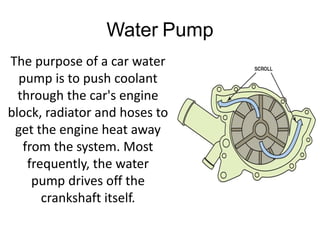
Water Pump
The purpose of a car water
pump is to push coolant
through the car's engine
block, radiator and hoses to
get the engine heat away
from the system. Most
frequently, the water
pump drives off the
crankshaft itself.
Radiator
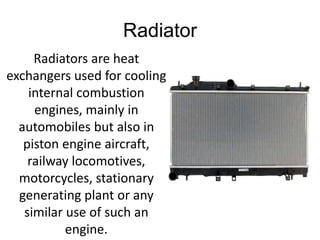
Radiators are heat
exchangers used for cooling
internal combustion
engines, mainly in
automobiles but also in
piston engine aircraft,
railway locomotives,
motorcycles, stationary
generating plant or any
similar use of such an
engine.
Water Jacket
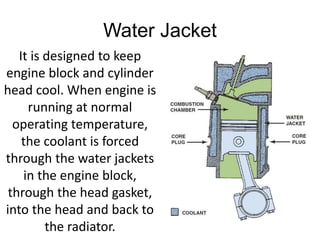
It is designed to keep
engine block and cylinder
head cool. When engine is
running at normal
operating temperature,
the coolant is forced
through the water jackets
in the engine block,
through the head gasket,
into the head and back to
the radiator.
Thermostat
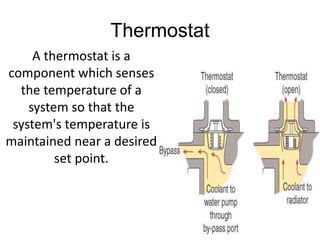
A thermostat is a
component which senses
the temperature of a
system so that the
system's temperature is
maintained near a desired
set point.
WORKING
A cooling system works by sending a
liquid coolant through passages in
the engine block and heads. As
the coolant flows through these passages, it
picks up heat from the engine. The heated
fluid then makes its way through a rubber
hose to the radiator in the front of the car.
ADVANTAGES OF LIQUID
COOLING
• Uniform cooling of cylinder, cylinder head and
valves.
• Specific fuel consumption of engine improves
by using water cooling system.
• Engine is less noisy as compared with air
cooled engines, as it has water for damping
noise.
DISADVANTAGES OF LIQUID
COOLING
• It depends upon the supply of water.
• The water pump which circulates water
absorbs considerable power.
• The water cooling system is costlier as it has
more number of parts. Also it requires more
maintenance and care for its part.
Cooling system in automotive

Cooling system in automotive

  • 1.
    COOLING SYSTEM IN AUTOMOTIVE PresentedBy:- MANOJIT BISWAS ANUBHAV HALDAR MD. ARQUAM SANDEEP DAS SHIVAJI BASU
  • 2.
    COOLING SYSTEM An automobilescooling system is the collection of parts and substances (coolants) that work together to maintain the engines temperature to optimum levels. Comprising many different components such as water pump, coolant, a thermostat etc. the system enables smooth and efficient functioning of the engine at the same time protecting it from damage.
  • 3.
    MAJOR COMPONENT LIST •Water Pump • Radiator • Water Jacket • Thermostat
  • 4.
    Water Pump The purposeof a car water pump is to push coolant through the car's engine block, radiator and hoses to get the engine heat away from the system. Most frequently, the water pump drives off the crankshaft itself.
  • 5.
    Radiator Radiators are heat exchangersused for cooling internal combustion engines, mainly in automobiles but also in piston engine aircraft, railway locomotives, motorcycles, stationary generating plant or any similar use of such an engine.
  • 6.
    Water Jacket It isdesigned to keep engine block and cylinder head cool. When engine is running at normal operating temperature, the coolant is forced through the water jackets in the engine block, through the head gasket, into the head and back to the radiator.
  • 7.
    Thermostat A thermostat isa component which senses the temperature of a system so that the system's temperature is maintained near a desired set point.
  • 8.
    WORKING A cooling systemworks by sending a liquid coolant through passages in the engine block and heads. As the coolant flows through these passages, it picks up heat from the engine. The heated fluid then makes its way through a rubber hose to the radiator in the front of the car.
  • 9.
    ADVANTAGES OF LIQUID COOLING •Uniform cooling of cylinder, cylinder head and valves. • Specific fuel consumption of engine improves by using water cooling system. • Engine is less noisy as compared with air cooled engines, as it has water for damping noise.
  • 10.
    DISADVANTAGES OF LIQUID COOLING •It depends upon the supply of water. • The water pump which circulates water absorbs considerable power. • The water cooling system is costlier as it has more number of parts. Also it requires more maintenance and care for its part.