Continual Service Improvement
Methods and Techniques
• Write a short note on Assessment.
• Write a short note on Benchmarking.
• List and explain CSI methods and techniques.
Mustufa Sir
Preview
• Assessment
– When to assess?
– What to assess?
• Benchmarking
1. Benchmarking procedure
2. Benchmarking costs
3. Value of benchmarking
4. Benefits
Mustufa Sir
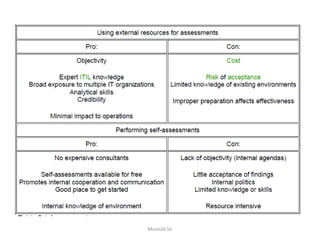
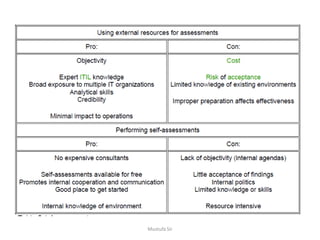
Assessments
• Assessments are the formal
mechanisms for comparing the
operational process environment to
the performance standards.
• The purpose of assessments
improved process capability and/or
to identify potential shortcomings
that could be addressed.
• The advantage of assessments is
they provide an approach to sample
particular elements of a process or
the process organization which
impact the efficiency and the
effectiveness of the process.
Mustufa Sir
Mustufa Sir
Mustufa Sir
When to assess?
• Plan (project initiation) – Assess the targeted
processes at the inception of process
introduction to form the basis for a process
improvement project.
• Plan (project midstream) – A check during
process implementation or improvement
activities.
• Do/Check (process in place) – Upon the
conclusion of a process project, it is important to
validate the maturation of process and the
process organization through the efforts of the
project team.
Mustufa Sir
What to assess?
• Process only
• People, process and technology.
• Full assessment.
Mustufa Sir
Benchmarking
• Benchmarking is a process used in management,
particularly strategic management, in which organizations
evaluate various aspects of their processes in relation to
best practice, usually within their own sector.
• This then allows organizations to develop plans on how to
adopt such best practice, usually with the aim of increasing
some aspect of performance.
• Benchmarking may be a onetime occurrence event, but is
often treated as a continuous process in which
organizations continually seek to challenge their practices.
• Benchmarking is actually a logical sequence of stages that
an organization goes through to achieve continual
improvement in its key processes.
Mustufa Sir
1. Benchmarking procedure
• Benchmarking can be applied to any business
process or function, a range of research
techniques may be required.
• They include:
– Informal conversations with customers, employees, or
suppliers
– In-depth marketing research
– Surveys
– Questionnaires
– Re-engineering analysis
Mustufa Sir
2. Benchmarking costs
• Visit costs – This includes travel- and
accommodation-related expenses for team
members who need to travel to the site.
• Time costs – Members of the benchmarking
team will be investing time in researching
problems, finding exceptional companies to
study.
Mustufa Sir
3. Value of benchmarking
• Organizations have a growing need to get a clear
view on their own qualities and performances
with regard to their competitors and in the eye of
their customers.
• It isn’t sufficient any more to have self-
assessment reports on the status of the IT
performance; it is important to test and compare
it with the view the market has on the
performance of the organization.
Mustufa Sir
4. Benefits
• Achieving economy in the form of lower prices
and higher productivity on the part of the
service provider
• Achieving efficiency by comparing the costs of
providing IT services and the contribution
these services make to the business with what
is achieved in other organizations.
Mustufa Sir
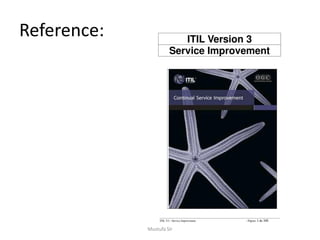
Reference:
Mustufa Sir
Thank you…
All the best
Mustufa Sir

Continual service improvement methods and techniques

  • 1.
    Continual Service Improvement Methodsand Techniques • Write a short note on Assessment. • Write a short note on Benchmarking. • List and explain CSI methods and techniques. Mustufa Sir
  • 2.
    Preview • Assessment – Whento assess? – What to assess? • Benchmarking 1. Benchmarking procedure 2. Benchmarking costs 3. Value of benchmarking 4. Benefits Mustufa Sir
  • 3.
    Assessments • Assessments arethe formal mechanisms for comparing the operational process environment to the performance standards. • The purpose of assessments improved process capability and/or to identify potential shortcomings that could be addressed. • The advantage of assessments is they provide an approach to sample particular elements of a process or the process organization which impact the efficiency and the effectiveness of the process. Mustufa Sir
  • 4.
  • 5.
  • 6.
    When to assess? •Plan (project initiation) – Assess the targeted processes at the inception of process introduction to form the basis for a process improvement project. • Plan (project midstream) – A check during process implementation or improvement activities. • Do/Check (process in place) – Upon the conclusion of a process project, it is important to validate the maturation of process and the process organization through the efforts of the project team. Mustufa Sir
  • 7.
    What to assess? •Process only • People, process and technology. • Full assessment. Mustufa Sir
  • 8.
    Benchmarking • Benchmarking isa process used in management, particularly strategic management, in which organizations evaluate various aspects of their processes in relation to best practice, usually within their own sector. • This then allows organizations to develop plans on how to adopt such best practice, usually with the aim of increasing some aspect of performance. • Benchmarking may be a onetime occurrence event, but is often treated as a continuous process in which organizations continually seek to challenge their practices. • Benchmarking is actually a logical sequence of stages that an organization goes through to achieve continual improvement in its key processes. Mustufa Sir
  • 9.
    1. Benchmarking procedure •Benchmarking can be applied to any business process or function, a range of research techniques may be required. • They include: – Informal conversations with customers, employees, or suppliers – In-depth marketing research – Surveys – Questionnaires – Re-engineering analysis Mustufa Sir
  • 10.
    2. Benchmarking costs •Visit costs – This includes travel- and accommodation-related expenses for team members who need to travel to the site. • Time costs – Members of the benchmarking team will be investing time in researching problems, finding exceptional companies to study. Mustufa Sir
  • 11.
    3. Value ofbenchmarking • Organizations have a growing need to get a clear view on their own qualities and performances with regard to their competitors and in the eye of their customers. • It isn’t sufficient any more to have self- assessment reports on the status of the IT performance; it is important to test and compare it with the view the market has on the performance of the organization. Mustufa Sir
  • 12.
    4. Benefits • Achievingeconomy in the form of lower prices and higher productivity on the part of the service provider • Achieving efficiency by comparing the costs of providing IT services and the contribution these services make to the business with what is achieved in other organizations. Mustufa Sir
  • 13.
  • 14.
    Thank you… All thebest Mustufa Sir