An introduction to the Internet
Internet
• Internet is a global communication system that
links together thousands of individual networks.
• It allows exchange of information between two or
more computers on a network.
• Thus internet helps in transfer of messages
through mail, chat, video & audio conference, etc.
• It has become mandatory for day-to-day activities:
bills payment, online shopping and surfing,
tutoring, working, communicating with peers, etc.
In simple terms
• The Internet is a global network of billions
of computers and other electronic devices.
• With the Internet, it's possible to access
almost any information, communicate with
anyone else in the world, and do much
more.
Some facts
• No one owns it
• It has no formal management organization.
• As it was originally developed by the Department
of defense, this lack of centralization made it less
vulnerable to wartime or terrorist attacks.
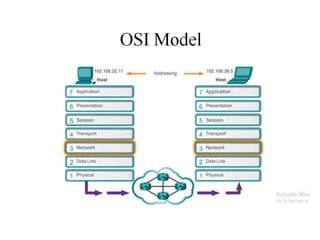
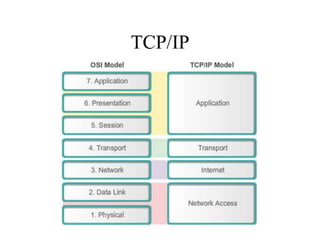
• To access the Internet, an existing network need to
pay a small registration fee and agree to certain
standards based on the TCP/IP (Transmission
Control Protocol/Internet Protocol) .
TCP/IP
What is the Web?
• The World Wide Web—usually called the
Web for short—is a collection of different
websites you can access through the
Internet.
• A website is made up of related text,
images, and other resources. Websites can
resemble other forms of media—like
newspaper articles or television programs—
or they can be interactive in a way that's
unique to computers.
Using a web browser
• A web browser is a type of software that
allows you to find and view websites on the
Internet.
• Even if you didn't know it, you're using a
web browser right now to read this page!
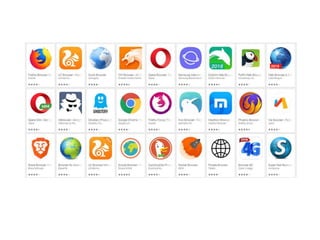
There are many different web browsers, but
some of the most common ones include
Google Chrome, Internet Explorer, Safari,
Microsoft Edge, and Mozilla Firefox.
URLs and the address bar
• Each website has a unique address, called a
URL (short for Uniform Resource Locator).
It's like a street address that tells your
browser where to go on the Internet.
• When you type a URL into the browser's
address bar and press Enter on your
keyboard, the browser will load the page
associated with that URL.
How does the Internet work?
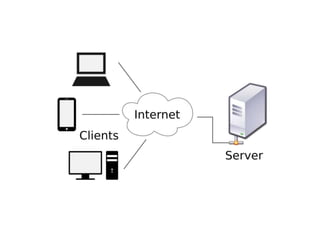
• When you visit a website, your computer
sends a request over these wires to a server.
A server is where websites are stored, and it
works a lot like your computer's hard drive.
• Once the request arrives, the server retrieves
the website and sends the correct data back
to your computer. What's amazing is that
this all happens in just a few seconds!
Other things you can do on the Internet
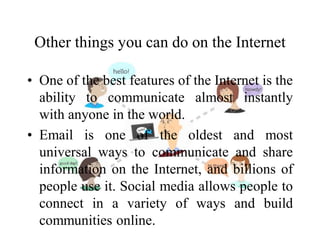
• One of the best features of the Internet is the
ability to communicate almost instantly
with anyone in the world.
• Email is one of the oldest and most
universal ways to communicate and share
information on the Internet, and billions of
people use it. Social media allows people to
connect in a variety of ways and build
communities online.
Types of Internet service
• Dial-up: This is generally the slowest type of Internet
connection, and you should probably avoid it unless it is
the only service available in your area. Dial-up Internet
uses your phone line, so unless you have multiple phone
lines you will not be able to use your landline and the
Internet at the same time.
• DSL: DSL service uses a broadband connection, which
makes it much faster than dial-up. DSL connects to the
Internet via a phone line but does not require you to have a
landline at home. And unlike dial-up, you'll be able to use
the Internet and your phone line at the same time.
• Cable: Cable service connects to the Internet via cable TV,
although you do not necessarily need to have cable TV in
order to get it. It uses a broadband connection and can be
faster than both dial-up and DSL service; however, it is
only available where cable TV is available.
• Satellite: A satellite connection uses broadband but does
not require cable or phone lines; it connects to the Internet
through satellites orbiting the Earth. As a result, it can be
used almost anywhere in the world, but the connection
may be affected by weather patterns. Satellite connections
are also usually slower than DSL or cable.
• 3G and 4G: 3G and 4G service is most commonly used
with mobile phones, and it connects wirelessly through
your ISP's network. However, these types of connections
aren't always as fast as DSL or cable. They will also limit
the amount of data you can use each month, which isn't the
case with most broadband plans.
Hardware needed
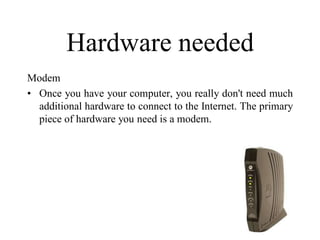
Modem
• Once you have your computer, you really don't need much
additional hardware to connect to the Internet. The primary
piece of hardware you need is a modem.
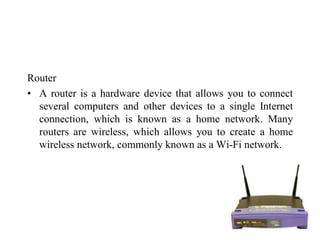
Router
• A router is a hardware device that allows you to connect
several computers and other devices to a single Internet
connection, which is known as a home network. Many
routers are wireless, which allows you to create a home
wireless network, commonly known as a Wi-Fi network.
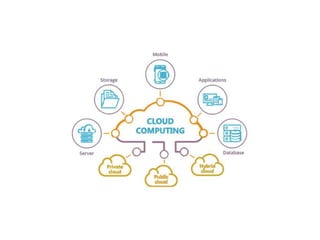
What is the cloud?
• Simply put, the cloud is the Internet—more
specifically, it's all of the things you can
access remotely over the Internet.
• When something is in the cloud, it means
it's stored on Internet servers instead of your
computer's hard drive.
Most common reasons to use the cloud.
• File storage: You can store all types of information in the cloud,
including files and email. This means you can access these things from
any computer or mobile device with an Internet connection, not just
your home computer. Dropbox and Google Drive are some of the most
popular cloud-based storage services.
• File sharing: The cloud makes it easy to share files with several
people at the same time. For example, you could upload several photos
to a cloud-based photo service like Flickr or iCloud Photos, then
quickly share them with friends and family.
• Backing up data: You can also use the cloud to protect your files.
Apps like Mozy and Carbonite automatically back up your data to the
cloud. This way, if your computer ever is lost, stolen, or damaged,
you'll still be able to recover these files from the cloud.
Thankyou

An introduction to the Internet

  • 1.
    An introduction tothe Internet
  • 2.
    Internet • Internet isa global communication system that links together thousands of individual networks. • It allows exchange of information between two or more computers on a network. • Thus internet helps in transfer of messages through mail, chat, video & audio conference, etc. • It has become mandatory for day-to-day activities: bills payment, online shopping and surfing, tutoring, working, communicating with peers, etc.
  • 3.
    In simple terms •The Internet is a global network of billions of computers and other electronic devices. • With the Internet, it's possible to access almost any information, communicate with anyone else in the world, and do much more.
  • 4.
    Some facts • Noone owns it • It has no formal management organization. • As it was originally developed by the Department of defense, this lack of centralization made it less vulnerable to wartime or terrorist attacks. • To access the Internet, an existing network need to pay a small registration fee and agree to certain standards based on the TCP/IP (Transmission Control Protocol/Internet Protocol) .
  • 7.
  • 8.
    What is theWeb? • The World Wide Web—usually called the Web for short—is a collection of different websites you can access through the Internet. • A website is made up of related text, images, and other resources. Websites can resemble other forms of media—like newspaper articles or television programs— or they can be interactive in a way that's unique to computers.
  • 9.
    Using a webbrowser • A web browser is a type of software that allows you to find and view websites on the Internet. • Even if you didn't know it, you're using a web browser right now to read this page! There are many different web browsers, but some of the most common ones include Google Chrome, Internet Explorer, Safari, Microsoft Edge, and Mozilla Firefox.
  • 11.
    URLs and theaddress bar • Each website has a unique address, called a URL (short for Uniform Resource Locator). It's like a street address that tells your browser where to go on the Internet. • When you type a URL into the browser's address bar and press Enter on your keyboard, the browser will load the page associated with that URL.
  • 12.
    How does theInternet work? • When you visit a website, your computer sends a request over these wires to a server. A server is where websites are stored, and it works a lot like your computer's hard drive. • Once the request arrives, the server retrieves the website and sends the correct data back to your computer. What's amazing is that this all happens in just a few seconds!
  • 14.
    Other things youcan do on the Internet • One of the best features of the Internet is the ability to communicate almost instantly with anyone in the world. • Email is one of the oldest and most universal ways to communicate and share information on the Internet, and billions of people use it. Social media allows people to connect in a variety of ways and build communities online.
  • 15.
    Types of Internetservice • Dial-up: This is generally the slowest type of Internet connection, and you should probably avoid it unless it is the only service available in your area. Dial-up Internet uses your phone line, so unless you have multiple phone lines you will not be able to use your landline and the Internet at the same time. • DSL: DSL service uses a broadband connection, which makes it much faster than dial-up. DSL connects to the Internet via a phone line but does not require you to have a landline at home. And unlike dial-up, you'll be able to use the Internet and your phone line at the same time.
  • 16.
    • Cable: Cableservice connects to the Internet via cable TV, although you do not necessarily need to have cable TV in order to get it. It uses a broadband connection and can be faster than both dial-up and DSL service; however, it is only available where cable TV is available. • Satellite: A satellite connection uses broadband but does not require cable or phone lines; it connects to the Internet through satellites orbiting the Earth. As a result, it can be used almost anywhere in the world, but the connection may be affected by weather patterns. Satellite connections are also usually slower than DSL or cable. • 3G and 4G: 3G and 4G service is most commonly used with mobile phones, and it connects wirelessly through your ISP's network. However, these types of connections aren't always as fast as DSL or cable. They will also limit the amount of data you can use each month, which isn't the case with most broadband plans.
  • 17.
    Hardware needed Modem • Onceyou have your computer, you really don't need much additional hardware to connect to the Internet. The primary piece of hardware you need is a modem.
  • 18.
    Router • A routeris a hardware device that allows you to connect several computers and other devices to a single Internet connection, which is known as a home network. Many routers are wireless, which allows you to create a home wireless network, commonly known as a Wi-Fi network.
  • 20.
    What is thecloud? • Simply put, the cloud is the Internet—more specifically, it's all of the things you can access remotely over the Internet. • When something is in the cloud, it means it's stored on Internet servers instead of your computer's hard drive.
  • 21.
    Most common reasonsto use the cloud. • File storage: You can store all types of information in the cloud, including files and email. This means you can access these things from any computer or mobile device with an Internet connection, not just your home computer. Dropbox and Google Drive are some of the most popular cloud-based storage services. • File sharing: The cloud makes it easy to share files with several people at the same time. For example, you could upload several photos to a cloud-based photo service like Flickr or iCloud Photos, then quickly share them with friends and family. • Backing up data: You can also use the cloud to protect your files. Apps like Mozy and Carbonite automatically back up your data to the cloud. This way, if your computer ever is lost, stolen, or damaged, you'll still be able to recover these files from the cloud.
  • 22.