
BENCHMARKING
Presented By
Muhammed Aslam
S4 MIB
Roll No: 16
SMS,CUSAT
Benchmarking
¥ Benchmarking is the process of identifying
"best practice" in relation to both products
and the processes by which those products
are created and delivered.
¥ Benchmarking is the process of comparing the
business processes and performance metrics
including cost, cycle time, productivity, or
quality to another that is widely considered
to be an industry standard benchmark or best
practice.
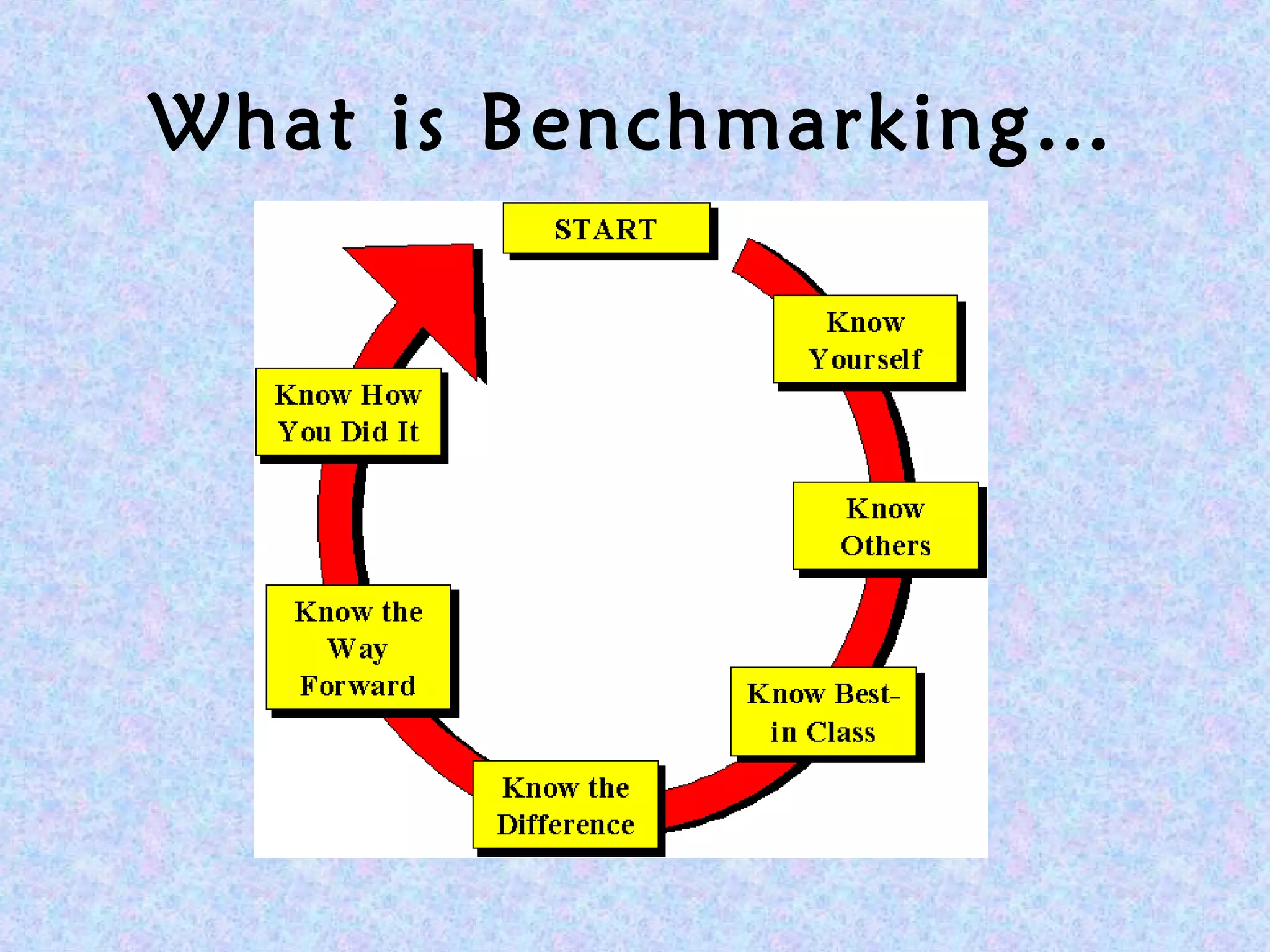
What is Benchmarking…
Distinction between
benchmarking and competitive
analysis
• competitive analysis involves comparing
your product with your competitors.
• On the other hand, benchmarking goes
into more detailed comparison that
includes how the product is engineered,
manufactured, distributed and supported.
The benefits of conducting a
benchmarking exercise can include:
• Creating a better understanding of the
current position
• Increasing awareness of changing customer
needs
• Encouraging innovation
• Developing realistic, stretching goals
• Establishing realistic action plans
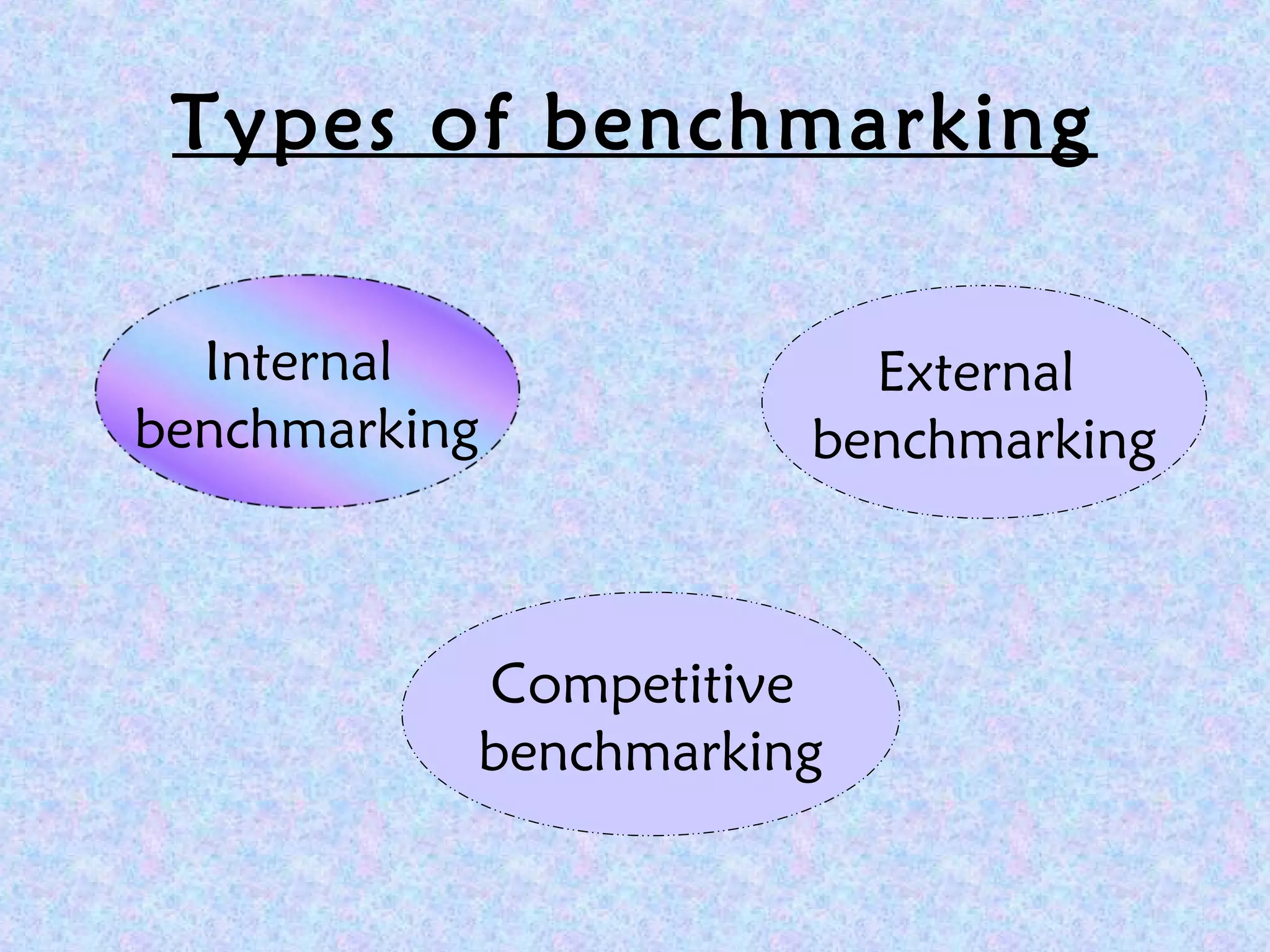
Types of benchmarking
Competitive
benchmarking
Internal
benchmarking
External
benchmarking
Internal benchmarking
¥ Compares and contrasts a number of
facilities that operate the same supply chain
processes within the organization.
¥ Example:
¤A company operates five distribution
centers in the US and Canada.
¤Examine a number of operations that
take place at each of the distribution
centers.
¤Compare performance and make
improvements.
Competitive benchmarking
¥ Organizations use performance measures
to compare themselves against similar
organizations.
¥ Example:
¤FMCG’s comparing with each other for
Market share, Retention rates, profits,
costs etc.
External benchmarking
¥ Takes a company outside of its own
industry and exposes them to different
methods and procedures.
¥ Example:
¤ A manufacturer and distributor of electrical
components have internally benchmarked their
warehouses for a number of years and have
exhausted ideas on improving efficiencies.
¤ They approached a very successful retail
company to visit their central warehouse and
benchmark the processes that occur there to
compare to their own warehouse processes.
Components of
benchmarking
¥ FINANCIAL: Financial analysis
comparison with other targets to
assess overall competitiveness
and productivity.
¥ PRODUCT: Process of
designing new products or
upgrades to current ones,
including reverse engineering of
competitive products.
…contd
¥ STRATEGIC: Process of
observing common or uncommon
groups’ competitive advantages
or disadvantages.
¥ PROCESS: Identifies and
observes specific business
processes with a goal of
identifying best practices
¥ FUNCTIONAL:Focuses on a
single function in order to
improve the operation of that
particular function.
¥ PERFORMANCE: Helps
companies assess their
competitive position by
comparing specific
performance dimensions.
¥ METRICS: Used to
develop yardstick
comparisons, allowing
outsiders to evaluate the
performance of operators in
an industry.
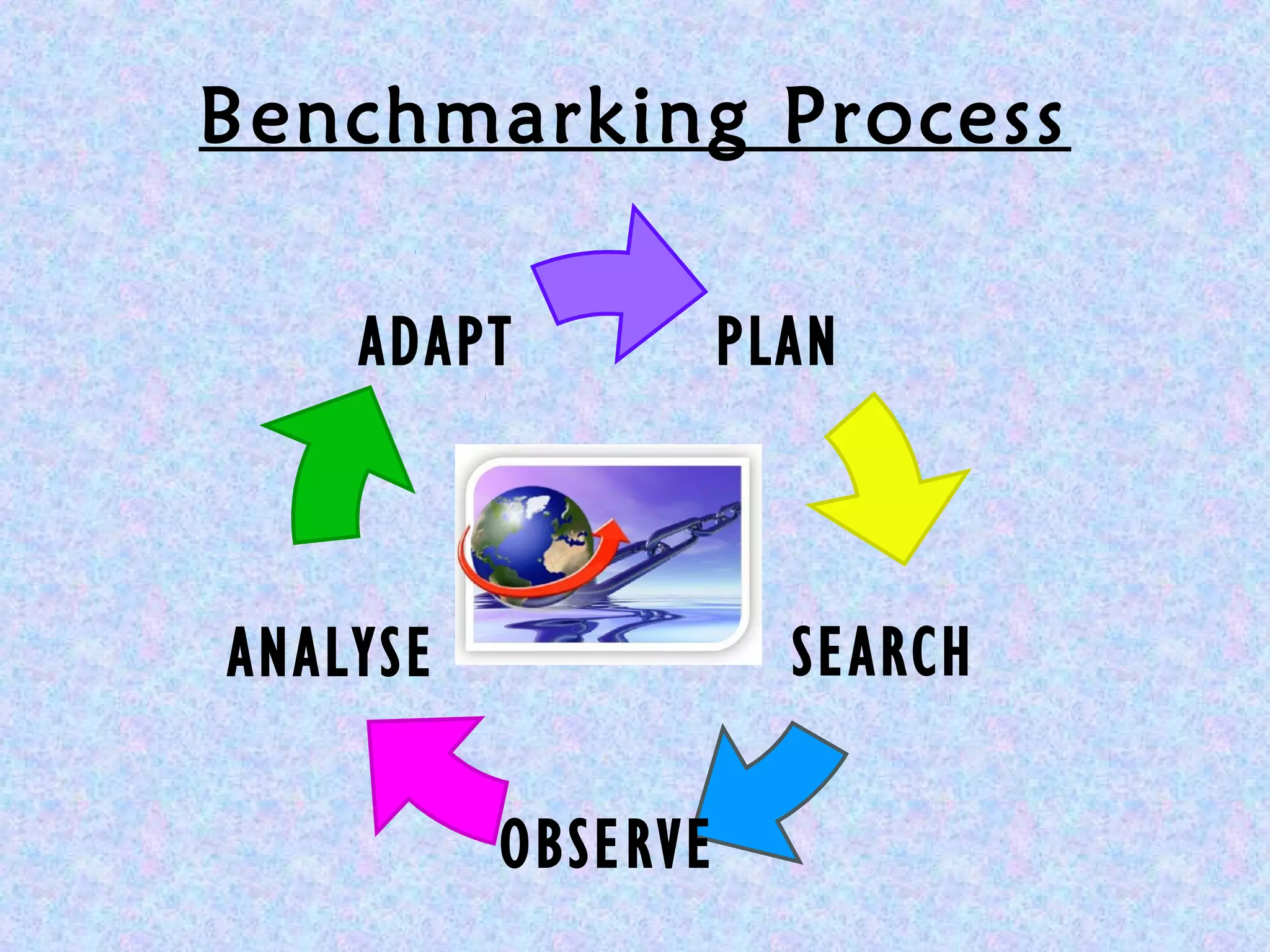
Benchmarking Process
PLAN
SEARCH
OBSERVE
ANALYSE
ADAPT
Plan :
• Select the key areas to be benchmarked for
study.
• Then form a team.
• Understand the vital points and then carry
out the documentation process.
• Consequently, establish performance
measures.
Search:
• First of all list the criteria for selecting a
partner.
• Then conduct a general or a secondary
research.
• Decide the level to benchmark.
• Then identify potential partners and
contact.
• Observe:
During, this stage necessary information
is collected using a questionnaire sent to
partner, telephone contact and direct
observation or site visit.
Analyze:
• The data and information obtained in the
previous stage is sorted.
• Quality control information and data are
also taken.
• Normalize data if necessary.
• Identify gaps in performance level and the
causes for gaps.
Adapt:
• The last stage involves identification of
opportunities for improvement.
• Then a target is set for improvement .
• An implementation plan is developed and
the progress monitored.
• The final report is documented.
Advantages
¥ Best practices from any industry can be
incorporated.
¥ Stimulates and motivates professionals to
perform & implement benchmark findings.
¥ Helps to identify technological
breakthrough.
¥ It opens organizations to new methods,
ideas and tools to improve their
effectiveness
Disadvantages
¥ Maintaining benchmarking efforts is costly.
¥ Reluctance to share information.
¥ Today's realistic applications may not be
tomorrows applications.
¥ What is best for someone else may not suit
you.
¥ Poorly defined benchmarks may lead to
wasted effort and meaningless results.
THANK
YOU

Benchmarking (titto sunny)

  • 1.
  • 2.
    Benchmarking ¥ Benchmarking isthe process of identifying "best practice" in relation to both products and the processes by which those products are created and delivered. ¥ Benchmarking is the process of comparing the business processes and performance metrics including cost, cycle time, productivity, or quality to another that is widely considered to be an industry standard benchmark or best practice.
  • 3.
  • 4.
    Distinction between benchmarking andcompetitive analysis • competitive analysis involves comparing your product with your competitors. • On the other hand, benchmarking goes into more detailed comparison that includes how the product is engineered, manufactured, distributed and supported.
  • 5.
    The benefits ofconducting a benchmarking exercise can include: • Creating a better understanding of the current position • Increasing awareness of changing customer needs • Encouraging innovation • Developing realistic, stretching goals • Establishing realistic action plans
  • 6.
  • 7.
    Internal benchmarking ¥ Comparesand contrasts a number of facilities that operate the same supply chain processes within the organization. ¥ Example: ¤A company operates five distribution centers in the US and Canada. ¤Examine a number of operations that take place at each of the distribution centers. ¤Compare performance and make improvements.
  • 8.
    Competitive benchmarking ¥ Organizationsuse performance measures to compare themselves against similar organizations. ¥ Example: ¤FMCG’s comparing with each other for Market share, Retention rates, profits, costs etc.
  • 9.
    External benchmarking ¥ Takesa company outside of its own industry and exposes them to different methods and procedures. ¥ Example: ¤ A manufacturer and distributor of electrical components have internally benchmarked their warehouses for a number of years and have exhausted ideas on improving efficiencies. ¤ They approached a very successful retail company to visit their central warehouse and benchmark the processes that occur there to compare to their own warehouse processes.
  • 10.
    Components of benchmarking ¥ FINANCIAL:Financial analysis comparison with other targets to assess overall competitiveness and productivity. ¥ PRODUCT: Process of designing new products or upgrades to current ones, including reverse engineering of competitive products.
  • 11.
    …contd ¥ STRATEGIC: Processof observing common or uncommon groups’ competitive advantages or disadvantages. ¥ PROCESS: Identifies and observes specific business processes with a goal of identifying best practices ¥ FUNCTIONAL:Focuses on a single function in order to improve the operation of that particular function.
  • 12.
    ¥ PERFORMANCE: Helps companiesassess their competitive position by comparing specific performance dimensions. ¥ METRICS: Used to develop yardstick comparisons, allowing outsiders to evaluate the performance of operators in an industry.
  • 13.
  • 14.
    Plan : • Selectthe key areas to be benchmarked for study. • Then form a team. • Understand the vital points and then carry out the documentation process. • Consequently, establish performance measures.
  • 15.
    Search: • First ofall list the criteria for selecting a partner. • Then conduct a general or a secondary research. • Decide the level to benchmark. • Then identify potential partners and contact.
  • 16.
    • Observe: During, thisstage necessary information is collected using a questionnaire sent to partner, telephone contact and direct observation or site visit.
  • 17.
    Analyze: • The dataand information obtained in the previous stage is sorted. • Quality control information and data are also taken. • Normalize data if necessary. • Identify gaps in performance level and the causes for gaps.
  • 18.
    Adapt: • The laststage involves identification of opportunities for improvement. • Then a target is set for improvement . • An implementation plan is developed and the progress monitored. • The final report is documented.
  • 19.
    Advantages ¥ Best practicesfrom any industry can be incorporated. ¥ Stimulates and motivates professionals to perform & implement benchmark findings. ¥ Helps to identify technological breakthrough. ¥ It opens organizations to new methods, ideas and tools to improve their effectiveness
  • 20.
    Disadvantages ¥ Maintaining benchmarkingefforts is costly. ¥ Reluctance to share information. ¥ Today's realistic applications may not be tomorrows applications. ¥ What is best for someone else may not suit you. ¥ Poorly defined benchmarks may lead to wasted effort and meaningless results.
  • 21.