

Contextual Marketing
Beyond the Buzzword
April 2, 2015
#BeyondtheBuzzword
@StrongView
@AltimeterGroup
Fireside Chat
Speakers
Brian
Solis
@briansolis
brian@altimetergroup.com
Principal Analyst
Dave
Frankland
@dfrankland
dfrankland@strongview.com
Chief Strategy Officer
Jessica
Groopman
@JessGroopman
jessica@altimetergroup.com
Senior Researcher
Market Forces
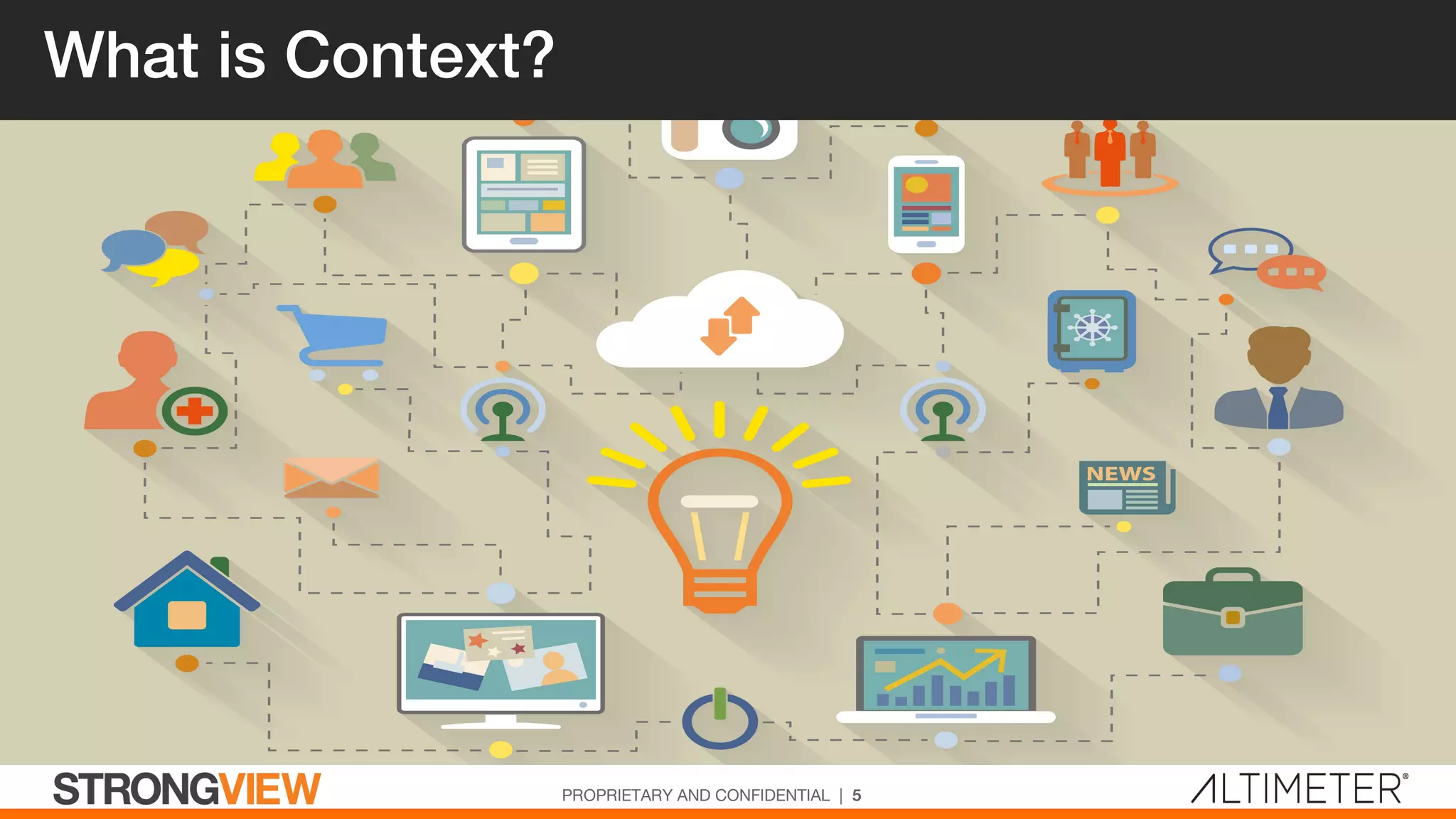
What is Context?
PROPRIETARY AND CONFIDENTIAL | 5
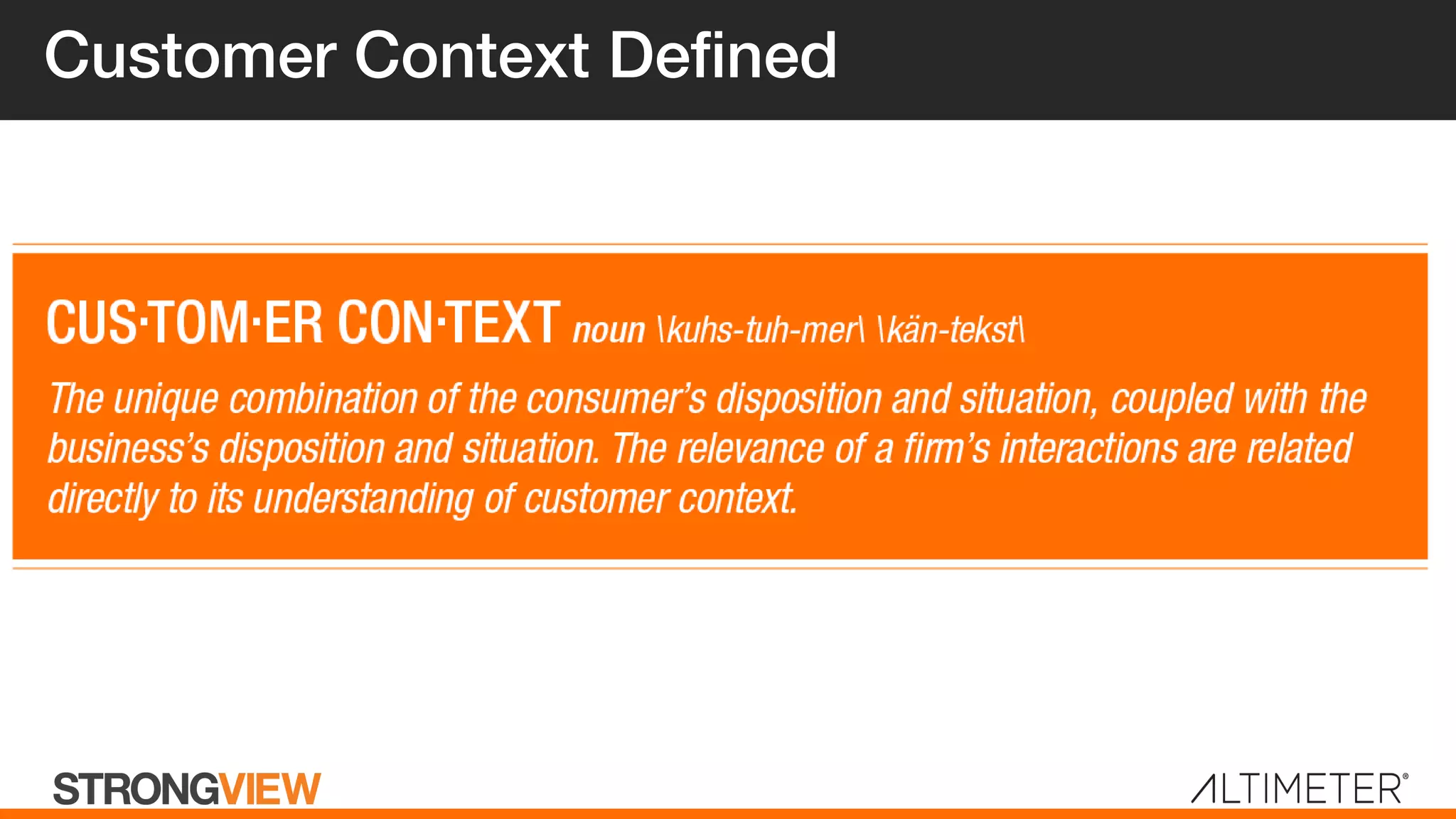
Customer Context Defined
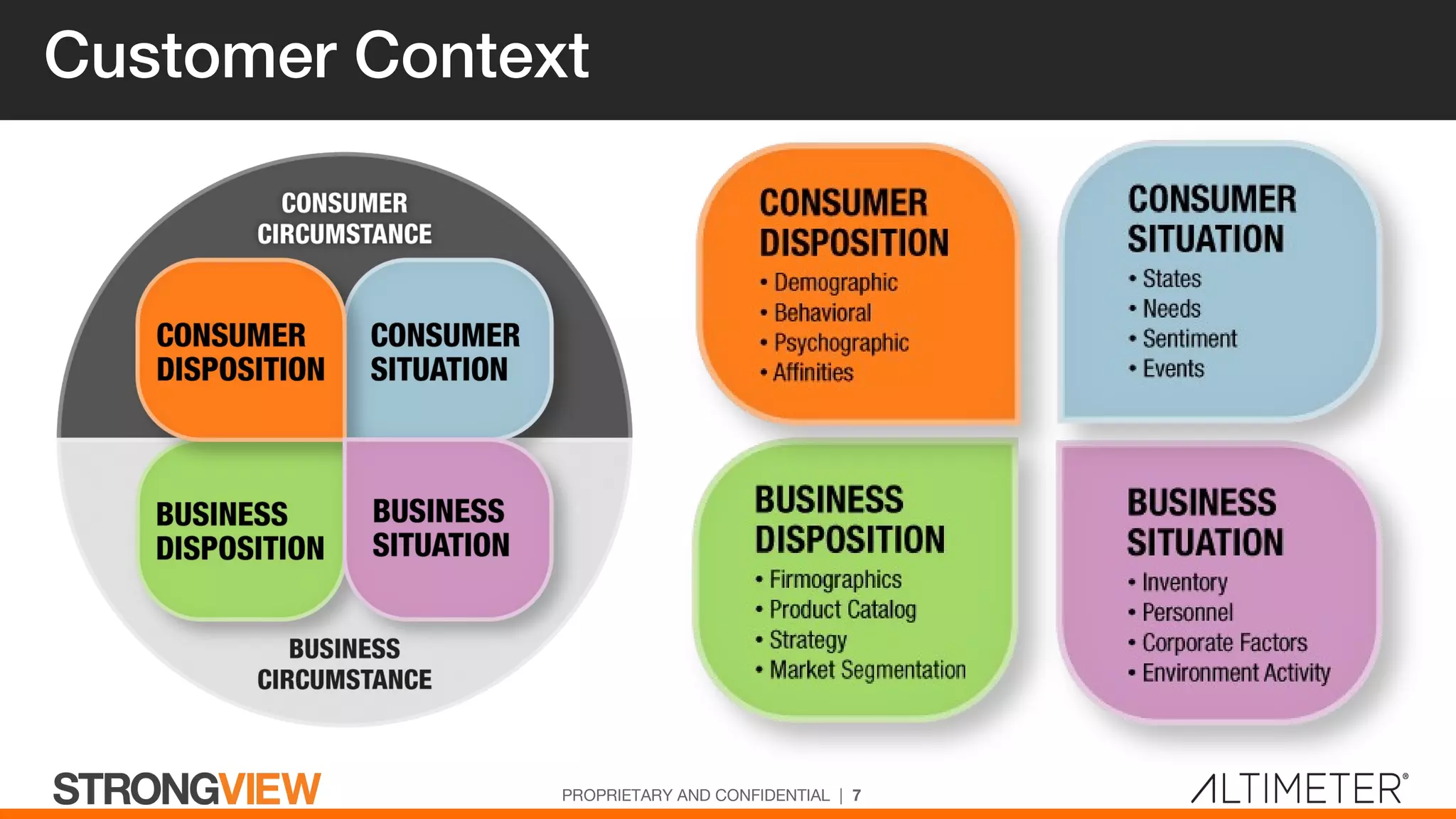
Customer Context
PROPRIETARY AND CONFIDENTIAL | 7
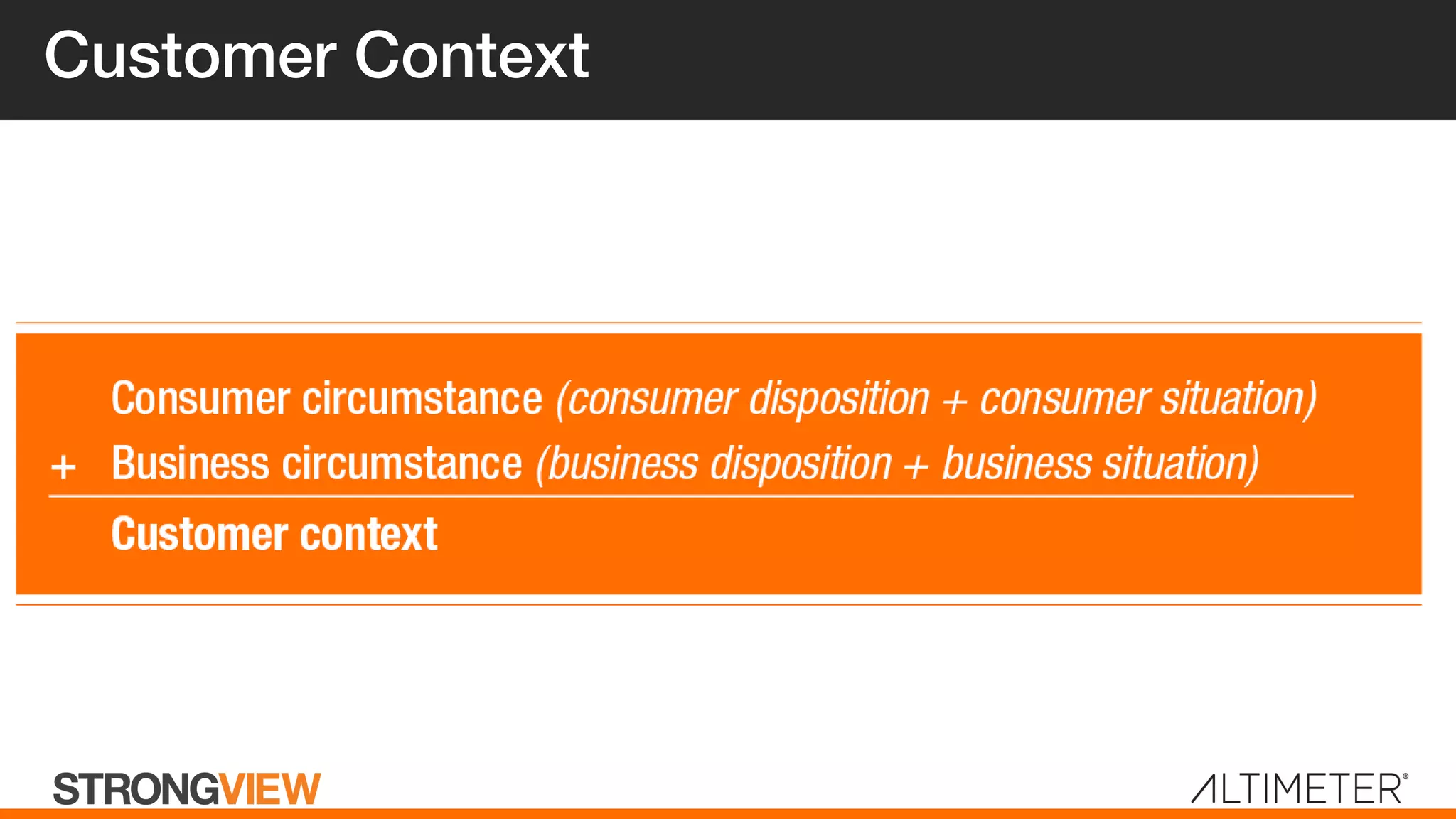
Customer Context
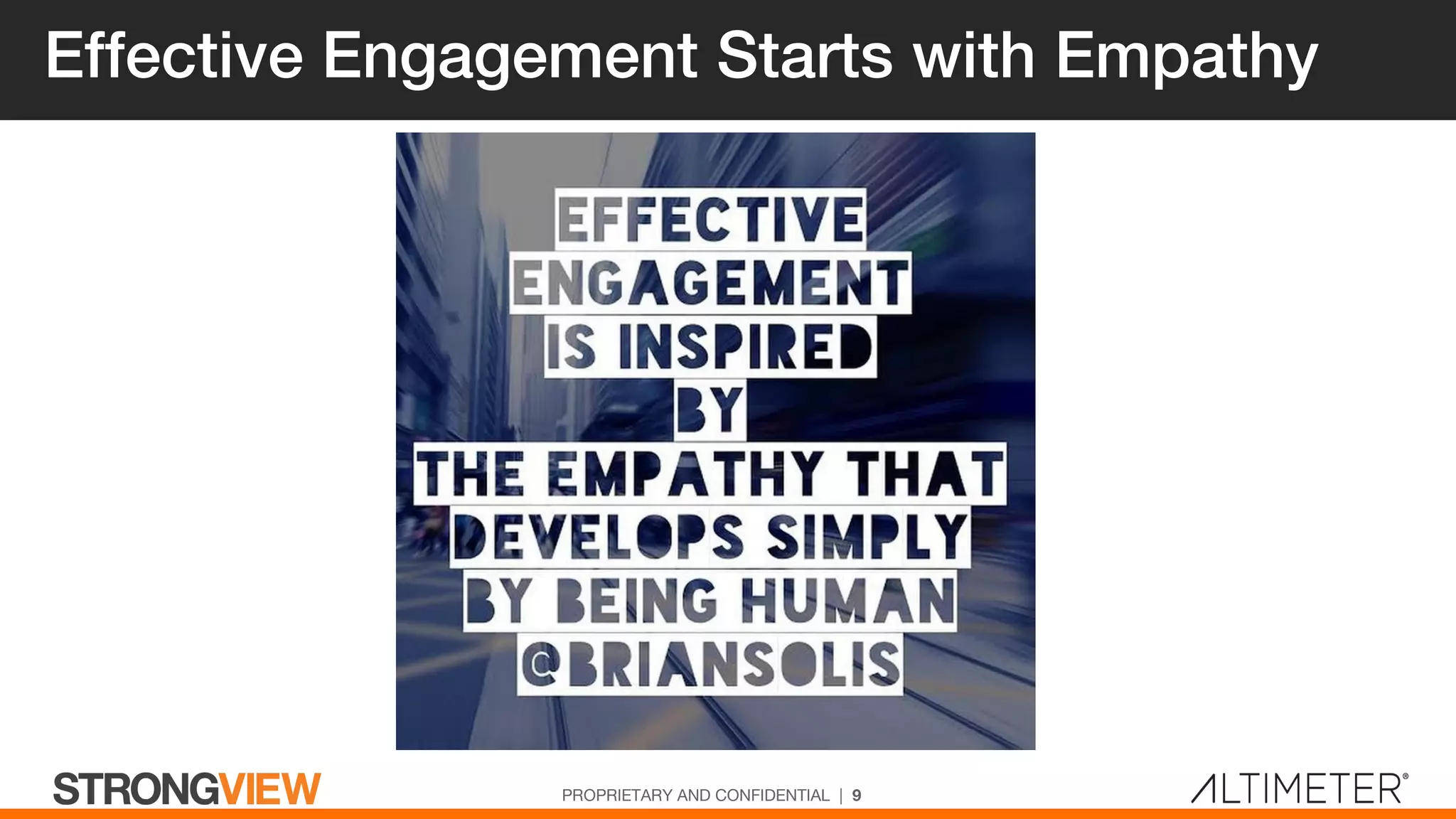
Effective Engagement Starts with Empathy
PROPRIETARY AND CONFIDENTIAL | 9
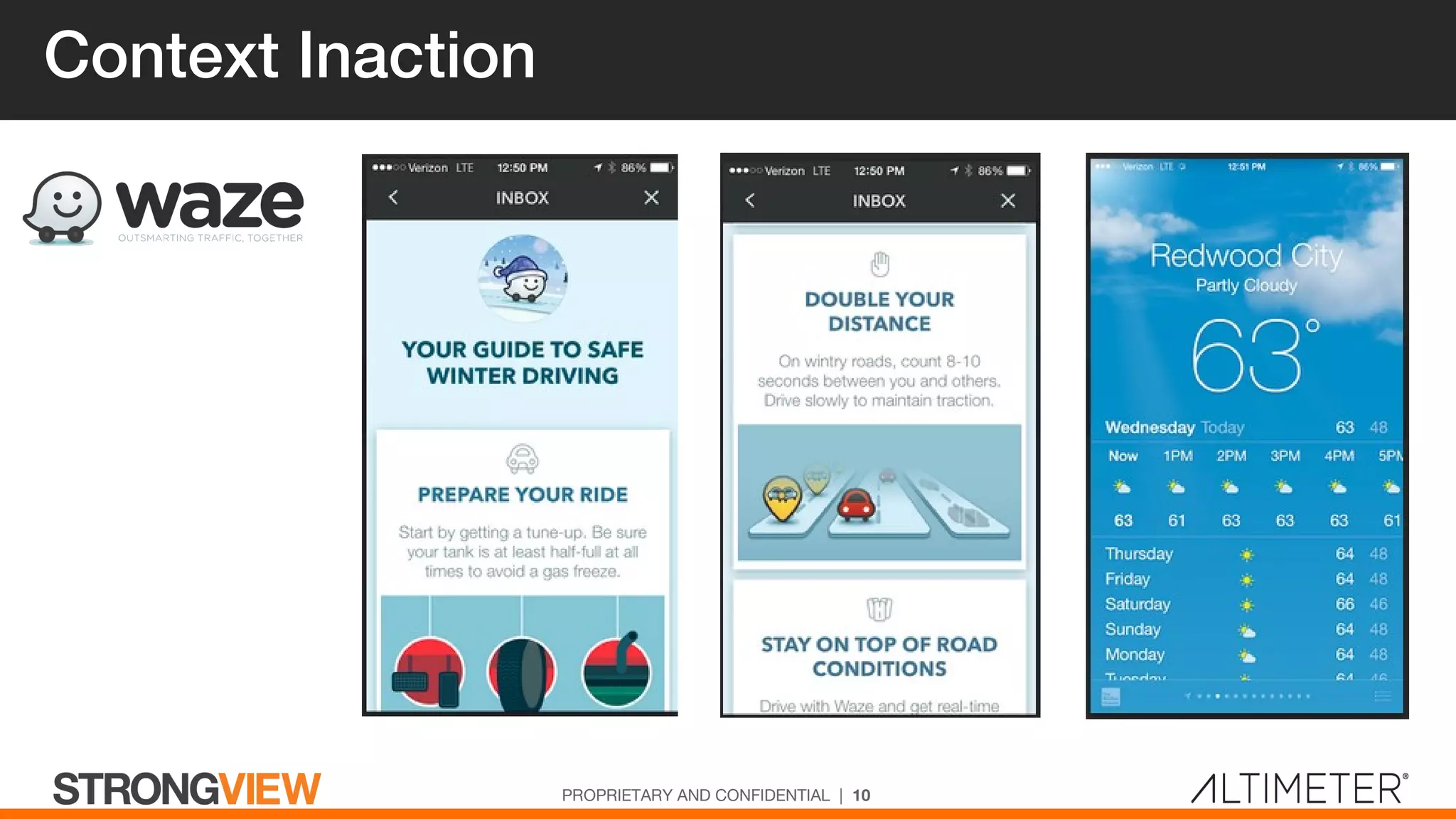
Context Inaction
PROPRIETARY AND CONFIDENTIAL | 10
Context in Action
PROPRIETARY AND CONFIDENTIAL | 11
Context in Action
PROPRIETARY AND CONFIDENTIAL | 12
Internet of Things
PROPRIETARY AND CONFIDENTIAL | 13
Context in Action
PROPRIETARY AND CONFIDENTIAL | 14
Context in Action
PROPRIETARY AND CONFIDENTIAL | 15
Context in Action
PROPRIETARY AND CONFIDENTIAL | 16
Getting Started
PROPRIETARY AND CONFIDENTIAL | 17
Bringing It All Into Context
PROPRIETARY AND CONFIDENTIAL | 18
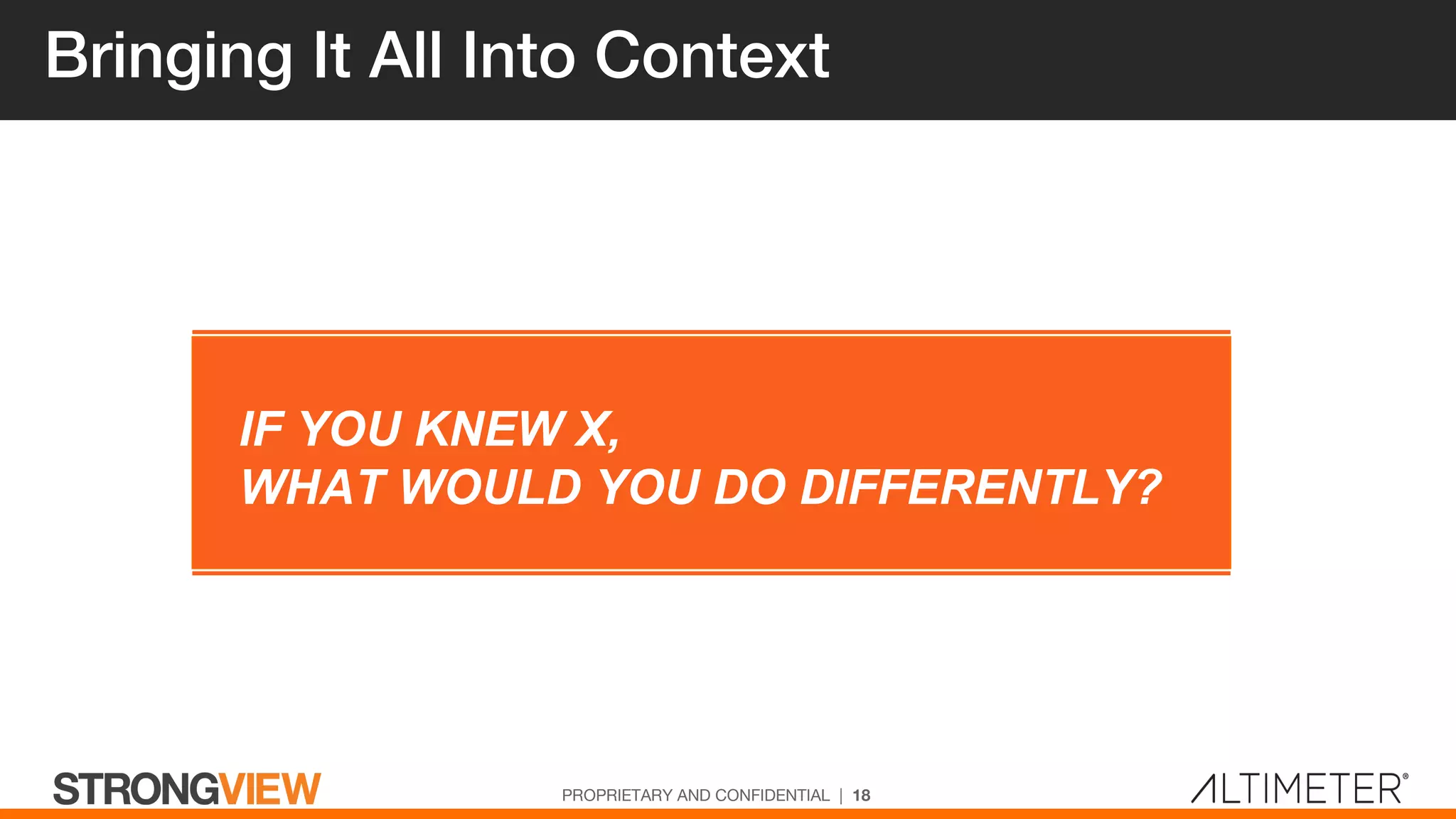
IF YOU KNEW X,
WHAT WOULD YOU DO DIFFERENTLY?
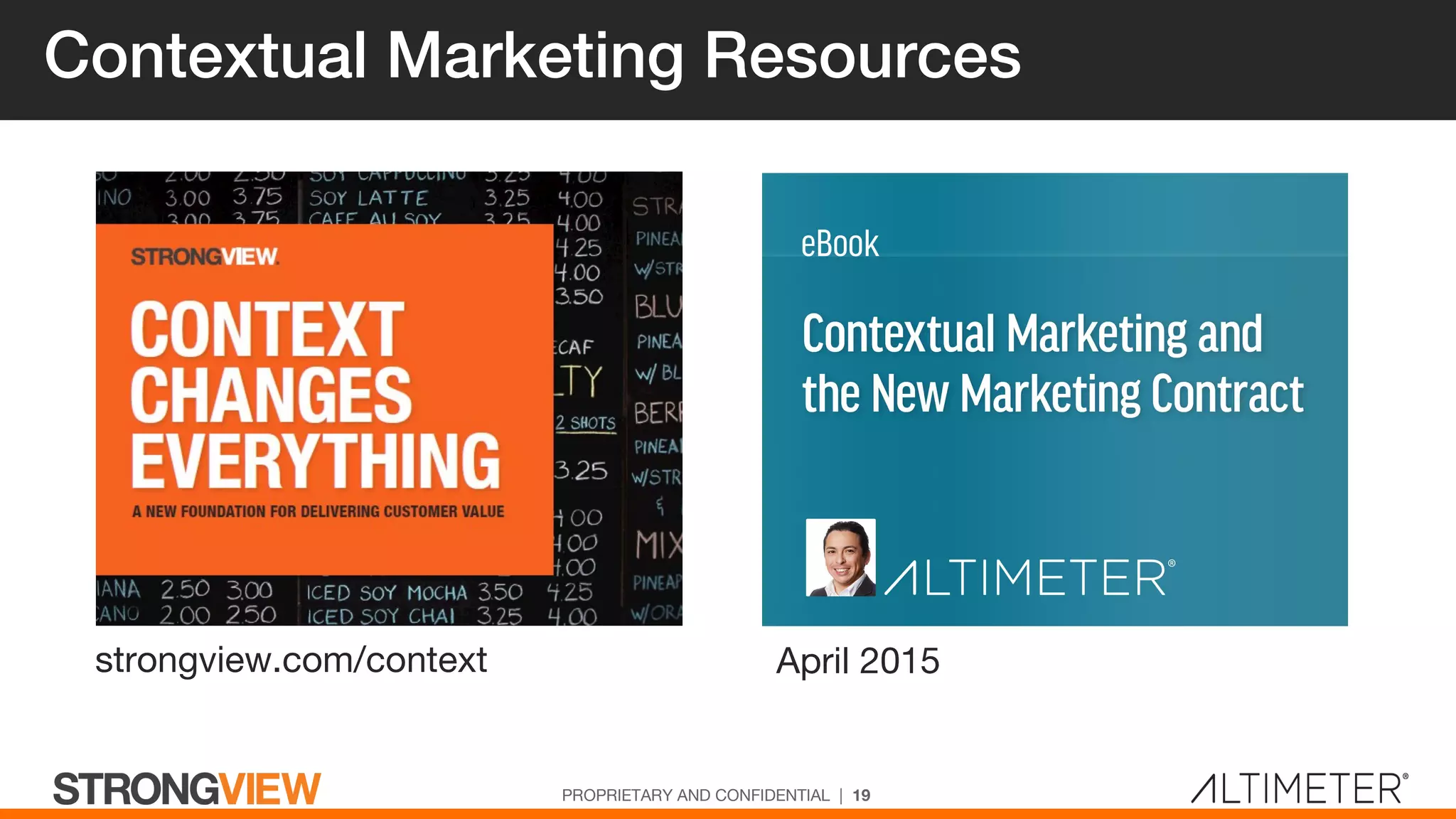
Contextual Marketing Resources
PROPRIETARY AND CONFIDENTIAL | 19
strongview.com/context April 2015
Questions?
Brian Solis
Principal Analyst
Altimeter
@briansolis
brian@altimetergroup.com
Dave Frankland
Chief Strategy Officer
StrongView
@dfrankland
dfrankland@strongview.com
Jessica Groopman
Senior Researcher
Altimeter
@JessGroopman
jessica@altimetergroup.com
#BeyondtheBuzzword
@StrongView
@AltimeterGroup

Contextual Messaging: Beyond the Buzzword - A StrongView and Altimeter Group Webinar

Editor's Notes

  • #2 TIME: 3 Minutes (Slides 0 – 2)
  • #4 Brian Solis – Principal Analyst at Altimeter Brian is a digital analyst, business strategist, and futurist who creates new media strategies and frameworks that build bridges between companies and customers, and with employees and key stakeholders. Dave Frankland – Chief Strategy Officer at StrongView Dave leads corporate strategy for StrongView, developing and evangelizing its vision, and aligning internal resources for success. Previously, Dave was VP and research director at Forrester , where he co-launched its Customer Intelligence practice. Jessica Groopman – Senior Researcher at Altimeter Jessica specializes in digital strategy, Internet of Things, social data integration, content marketing, and customer experience, with a focus on how data is shifting business models and behaviors.
  • #5 Time: 10 Minutes BS – What is "Generation C?" How  do you define Gen C and what, if anything makes them different in terms of their expectations for context? DF – Is contextual marketing a response to efforts from brands to be more customer centric? When didn’t context matter?? Why the frenzy around contextual marketing now? Is this just a new term to bundle a bunch of new platforms? (e.g. social, mobile, email, search, etc.) DF – How does big data contribute to context? (Data exhaust) Transition: All of this begs the question, “what does the term “context” mean for marketers?”
  • #6 TIME: 8 Minutes (Slides 4 – 7) BS – What definitions have been put forth so far?  ( Shel Israel's "Age of Context," Solis' "Context Matters") DF - How does the industry think about context today? How can we advance this conversation and understanding of context, given so many new signals (e.g. data streams)   Risks?  BS - There are clear contextual signals from some customer data (e.g. voluntary, hand-raising, registration, etc.), and then there is everything else (location, check-ins, social, relational, search, etc.). But that doesn’t mean that the rest of that data doesn’t offer marketers clues. How can marketers think about making sense of what customers aren’t telling them? BS - What, in your experience, makes for a WOW vs an EW-CREEPY? DF - How much does ‘reading between the lines’ increase the risk of creep? How can marketers mitigate this risk? Transition: They are clearly multiple inputs that make up a customer’s context. But how do they come together to in a succinct defition that marketers can use?
  • #7 DF – How does StrongView define customer context? Transition: Let’s delve into what we mean by disposition and situation.
  • #8 Context Defined DF – How should businesses determine a customer's context? (butterfly graphic) Customer disposition & situation Business disposition & situation Transition: Now that you understand the four factors making up customer context, we can create a simple equation.
  • #9 DF – Here’s how we view customer context. Transition: While multiple data points can inform context, marketers still need to balance that info with empathy. I’ll let Brian explain.
  • #10 TIME – 2 Minutes BS – You’ve written a lot about empathy and customer engagement. Why is it so important? Transition: Now let’s get into some examples from major brands, starting with how trying to use context can sometimes backfire.
  • #11 TIME: 12 Minutes (Slides 9 – 14 / all case studies) DF – This example from Waze shows how lack of context can go wrong. Transition: Next up, we’ll talk about how three brands leveraged the harsh weather more effectively.
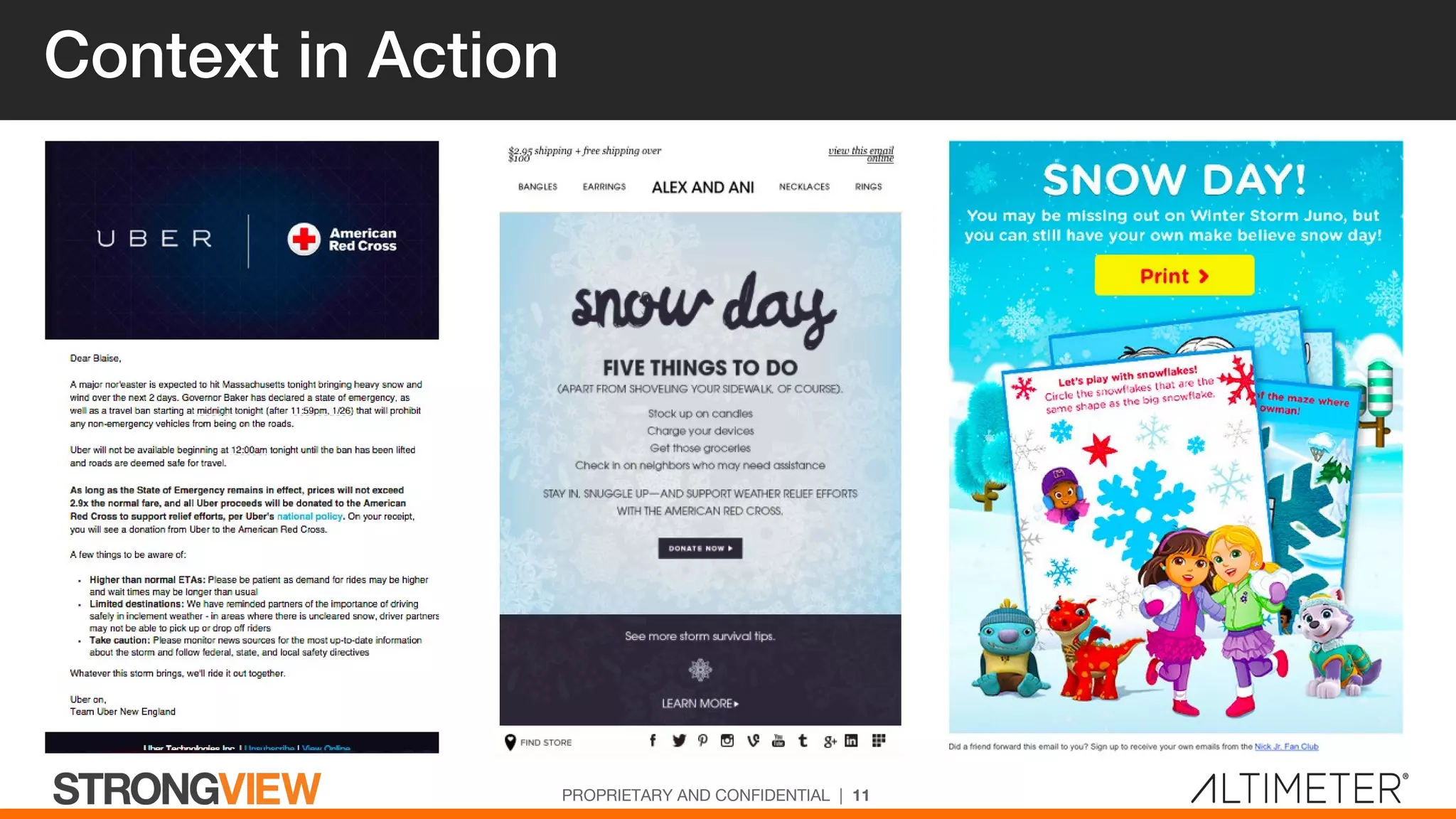
  • #12 Uber – Alex and Ani – Nickelodeon Transition: Disney is another brand that gets it right.
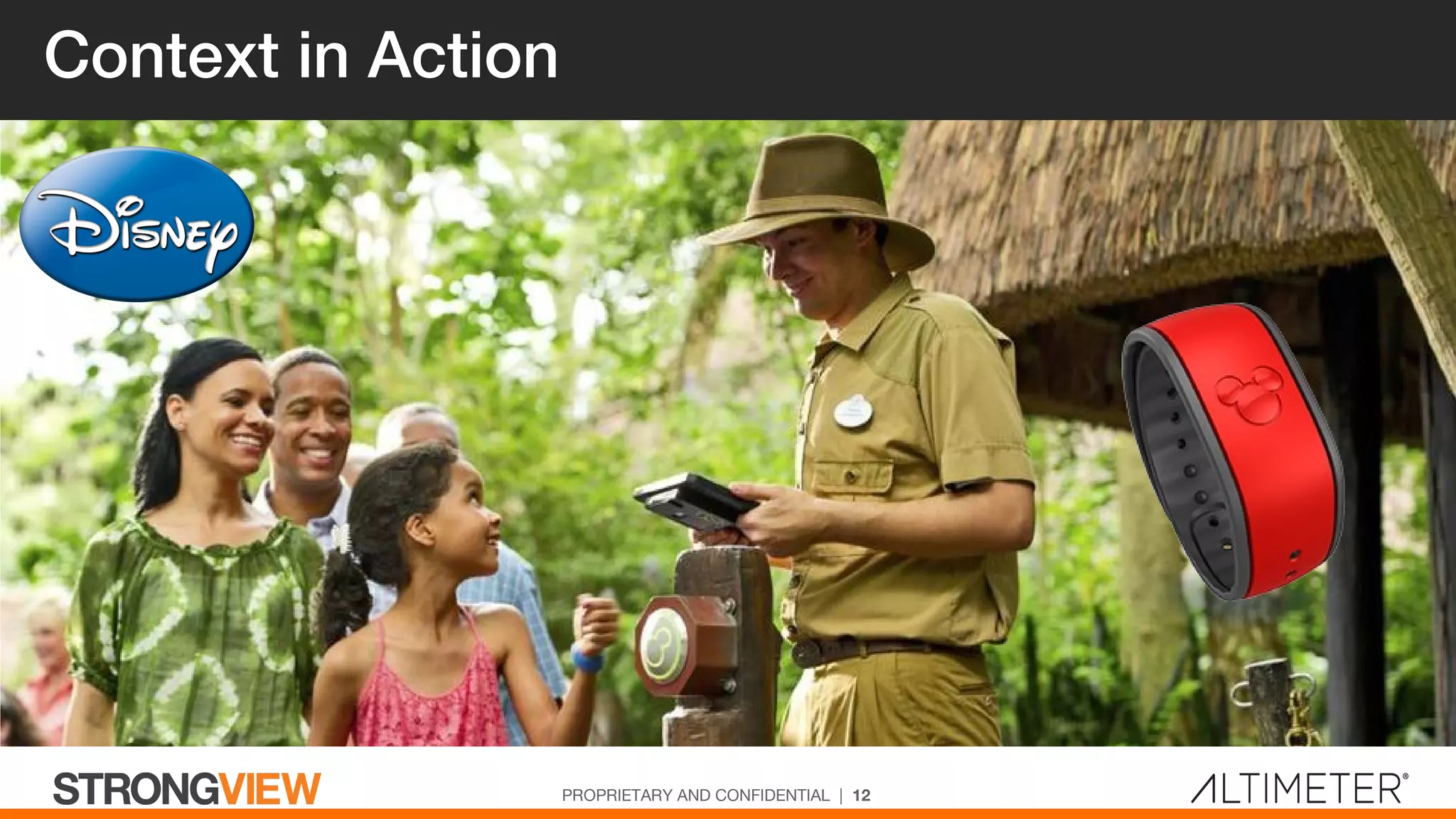
  • #13 Disney MagicBands (Slide) Transition: The IoT is transforming how marketers can understand consumers. I’ll hand it over to Jessica to talk about how Altimeter views the impact of IoT on the customer experience.
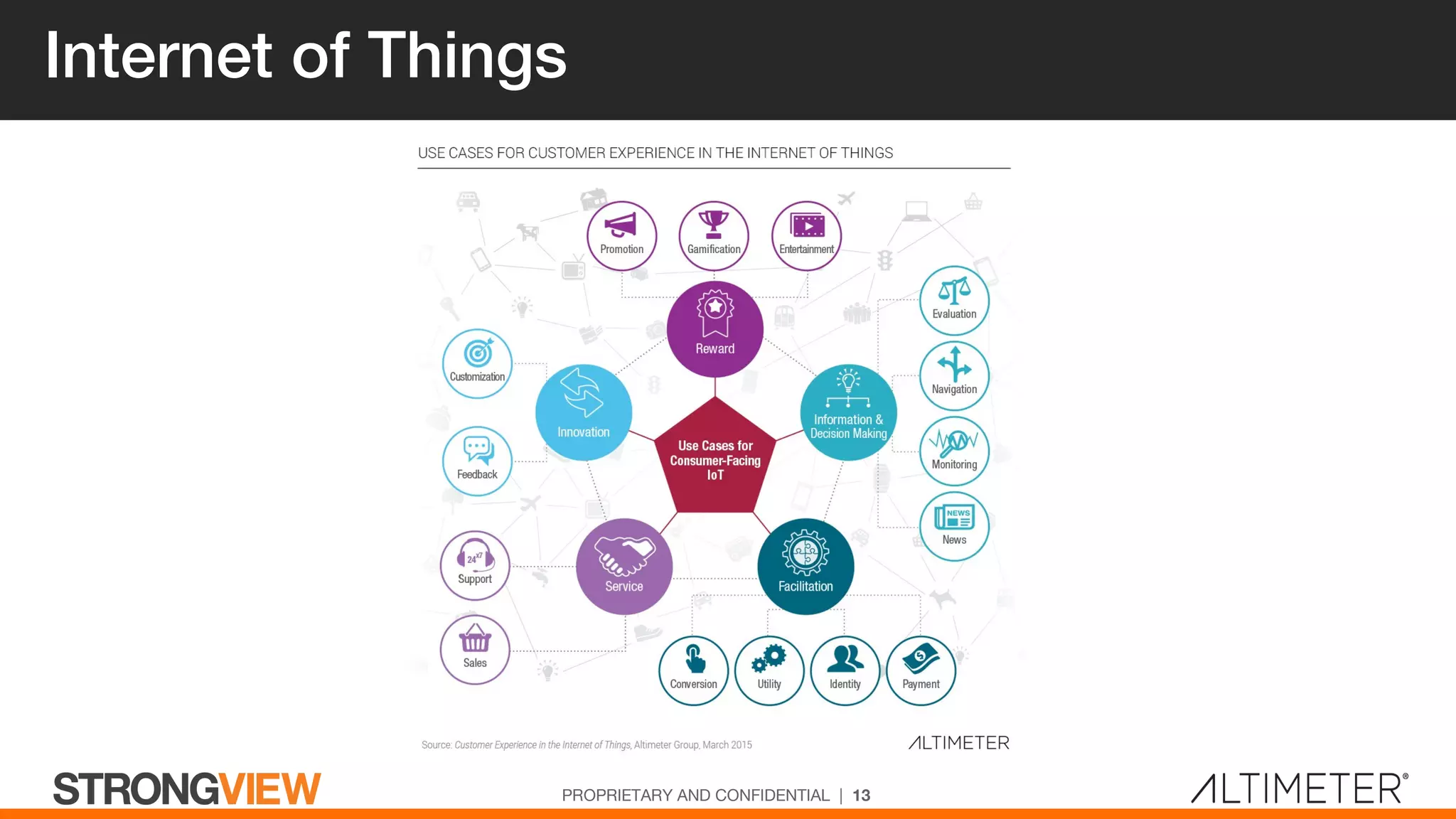
  • #14 JG – Introduce this graphic and point people to Altimeter for more info. BS – How does the Internet of Things relate to context? JG – JG to talk briefly about role of sensors in context Transition: Home Depot does a good job enhancing the customer experience by merging online with in-store interactions.
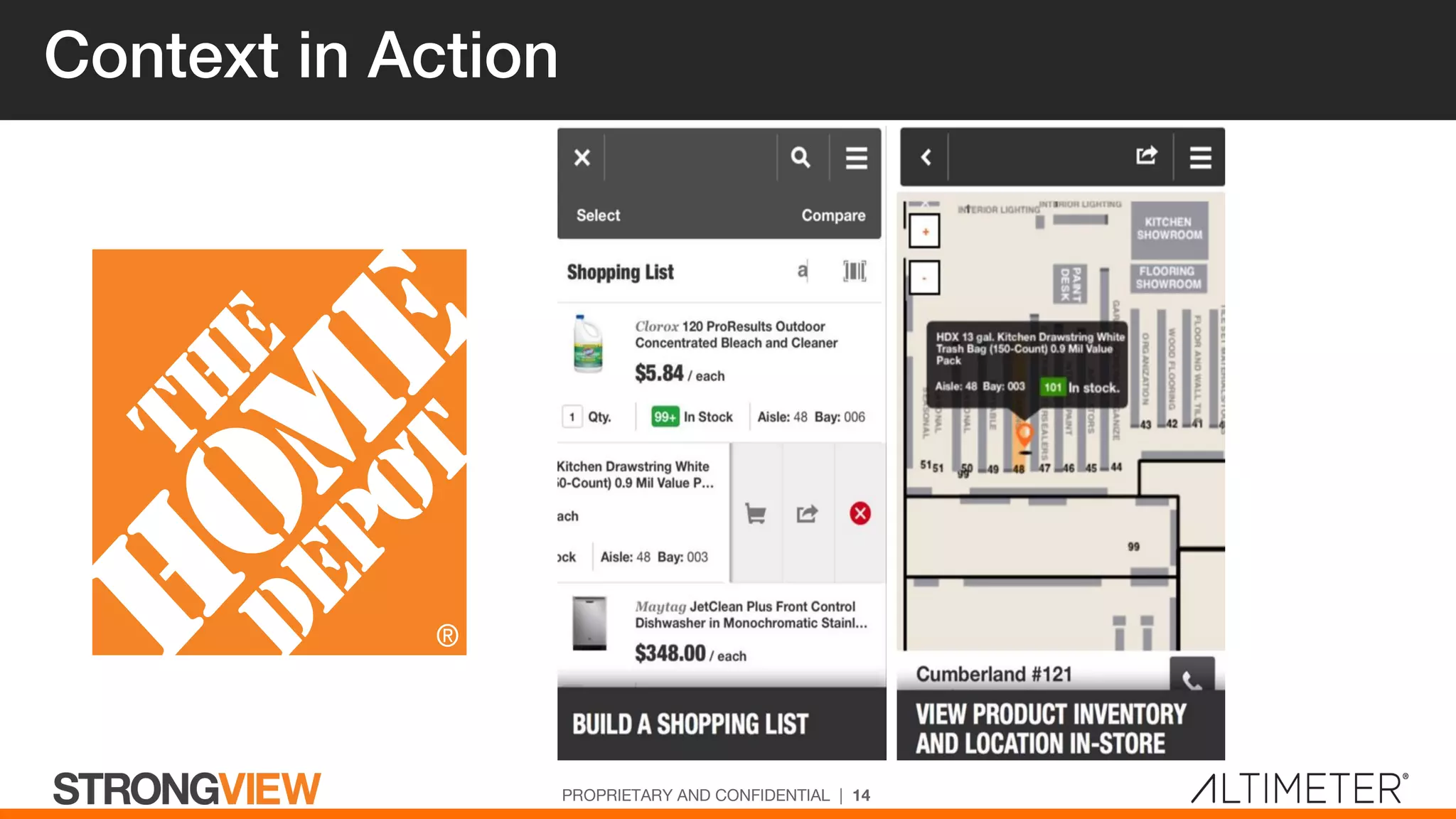
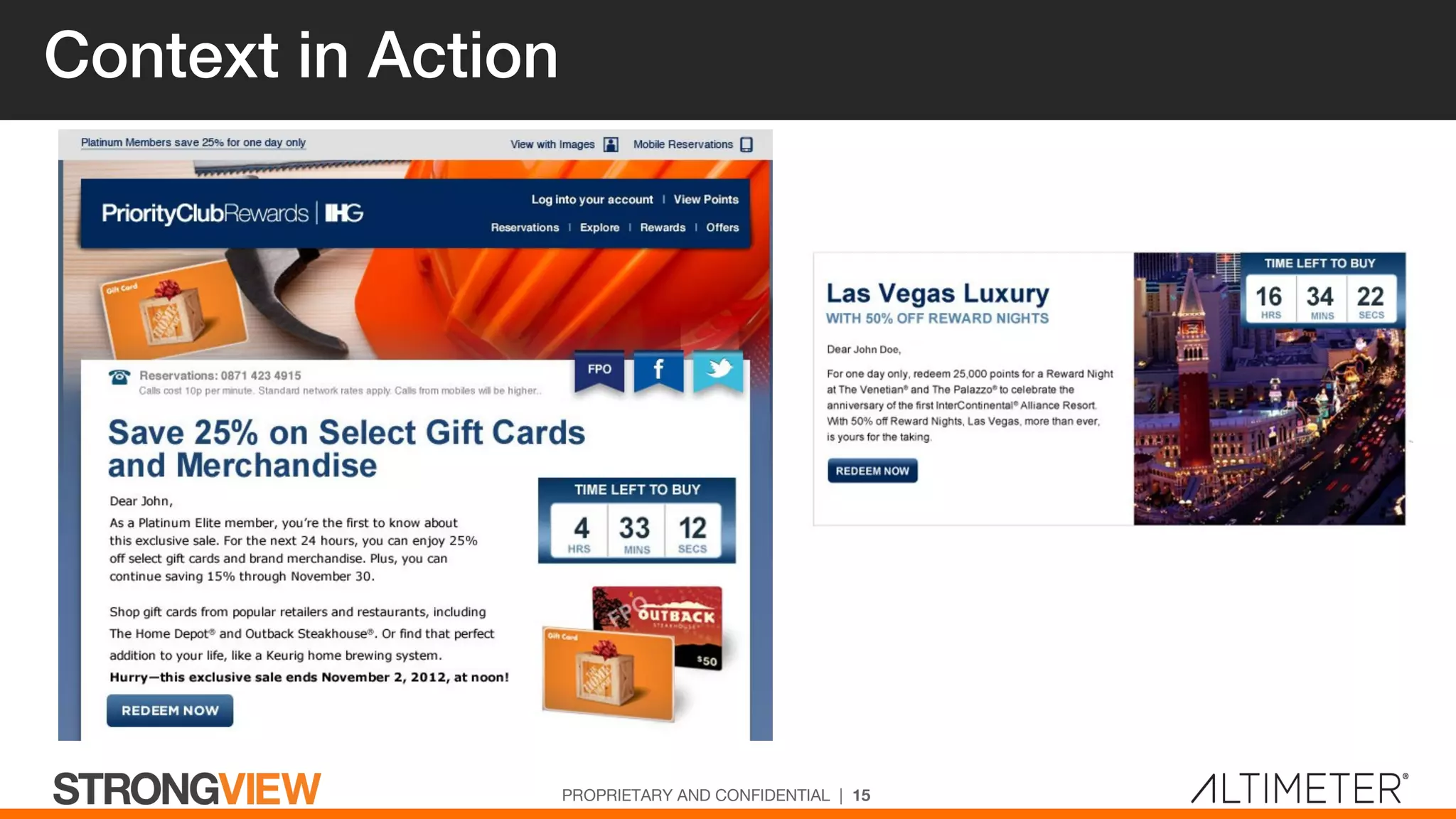
  • #15 JG to Speak to: Home Depot is currently piloting intelligent integrations between customers’ online shopping carts and wish lists and the retailer’s in-store mobile app experience for loyalty members. Upon entering the store, customers that are part of Home Depot’s Pro Rewards program will receive a notification showing them the most efficient route through the store based on the items customers shopped for online. Aware of the vast landscape that is a home supplies warehouse, the retailer also helps shoppers check the inventory by location. Utility and integration with loyalty/rewards helps HD drive sales Transition: For it’s part, IHG uses knowledge of when a customer is interacting with its messages to create a sense of urgency.
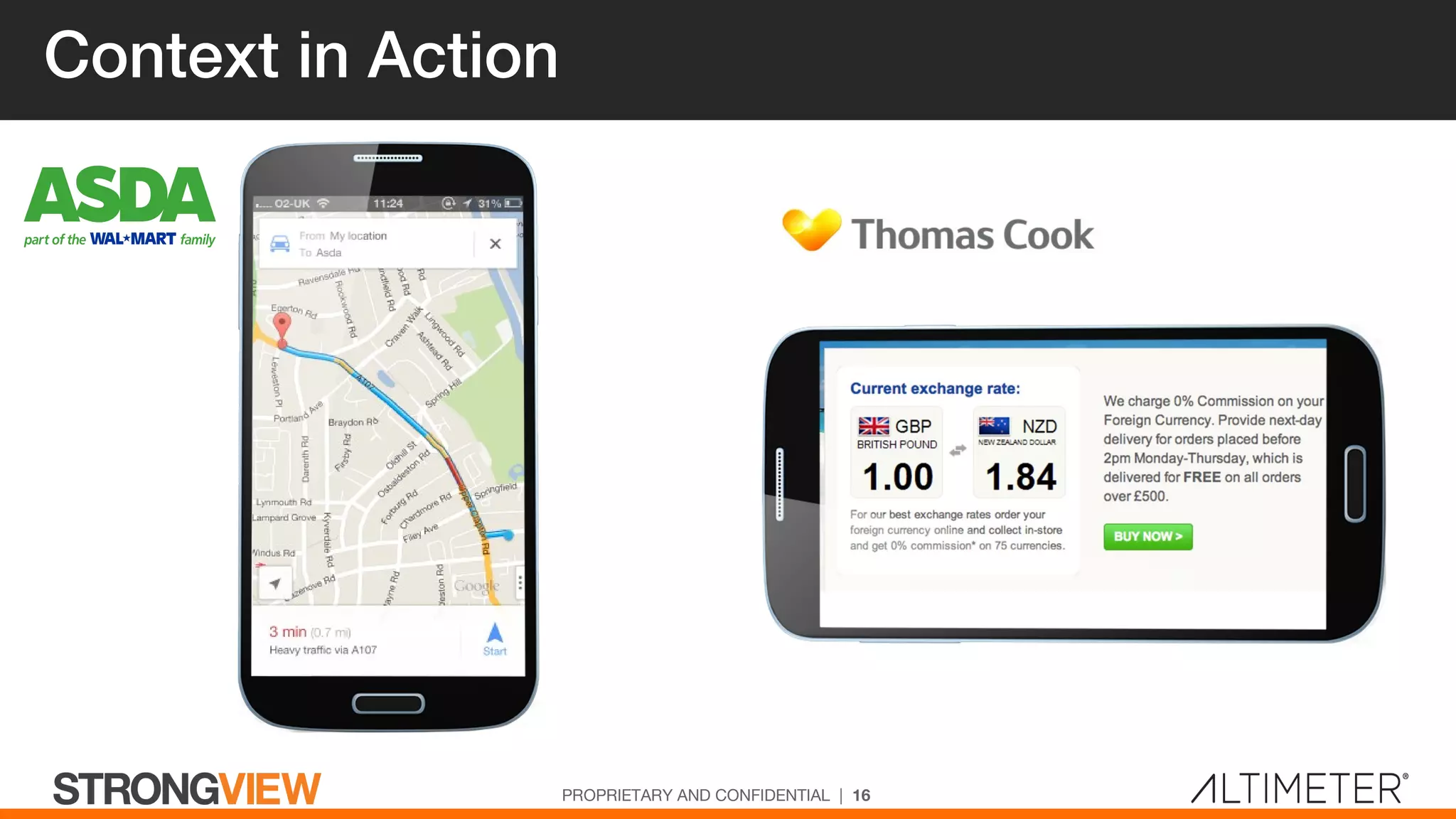
  • #16 IHG – Countdown clocks, weather (Slide) Transition: Building on this theme of open-time personalization, let’s look at how Thomas Cook and Wal-Mart’s ASDA brand alter messages based on where and when people interact with them.
  • #17 ASDA (Walmart in the UK) -If the recipient is within 20 kilometers of a store that isn’t their “home store,” a map pops up showing where the store is. Thomas Cook - Live currency rate updated at open Transition: now that you better understand how brands are using context today, it begs the question “How do you get started?”
  • #18 TIME: 5 Minutes BS – How can marketers use these four types of data to create context? DF – What is needed from a technology perspective? BS- the role of empathy Transition: If you’re not sure how to integrate context into your marketing, there’s one question you can ask yourself.
  • #19 TIME – 8 Minutes BS – What should be a marketer's biggest priority when it comes to context? DF – What are some of the pitfalls  that marketers should watch out for when tackling context? BS – How quickly will marketers migrate to context and what are the opportunities for first-movers? DF – How can marketers leverage existing technologies and vendor relationships to jumpstart their contextual marketing efforts? BS or DF - Context starts with a mind shift. Thinking about customers differently. If we can leave listeners with one key takeaway for how to make this mindshift, what would you recommend? Transition: We’re presented a lot of information, but we do have some resources to help remind you of the core principles discussed here.
  • #20 TIME – 1 Minute Transition: And now it’s time for Q&A
  • #21 TIME – 10 Minutes Add Seed Questions: 1) What’s more important for achieving context? Technology or an internal mindshift in how brands view customers? 2) Context seems important for retail and travel, but what about other industries? 3) Is there a risk in being too contextual with messages to consumers? 4) If you could recommend one thing that brands could do today to be more contextual, what would it be?