Prepared by:
Nor Izzuddin Bin Norrahman
Lecturer of Management, Banking and Islamic Finance
Astin College
 Marketers must be EXTREMELY careful in
analyzing consumer behavior.
 In this chapter, we look at how consumers make
buying decisions.
 We will focus on:
 Consumer buying roles & types of decisions
 Main steps in the buyer decision process
 Process which consumers learn about and buy new
products
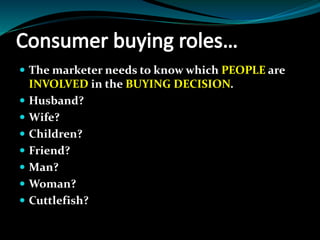
 The marketer needs to know which PEOPLE are
INVOLVED in the BUYING DECISION.
 Husband?
 Wife?
 Children?
 Friend?
 Man?
 Woman?
 Cuttlefish?
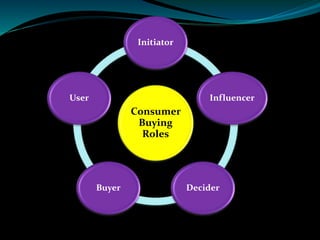
Consumer
Buying
Roles
Initiator
Influencer
DeciderBuyer
User
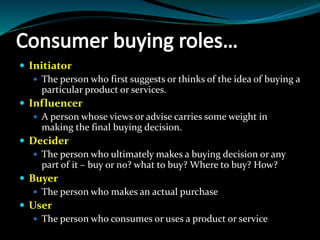
 Initiator
 The person who first suggests or thinks of the idea of buying a
particular product or services.
 Influencer
 A person whose views or advise carries some weight in
making the final buying decision.
 Decider
 The person who ultimately makes a buying decision or any
part of it – buy or no? what to buy? Where to buy? How?
 Buyer
 The person who makes an actual purchase
 User
 The person who consumes or uses a product or service
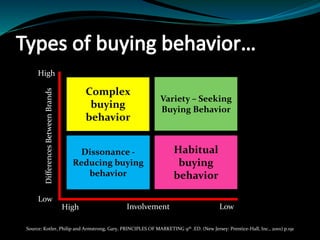
Source: Kotler, Philip and Armstrong, Gary, PRINCIPLES OF MARKETING 9th .ED. (New Jersey: Prentice-Hall, Inc., 2001) p.191
Complex
buying
behavior
Dissonance -
Reducing buying
behavior
Variety – Seeking
Buying Behavior
Habitual
buying
behavior
High
Low
High Low
DifferencesBetweenBrands
Involvement
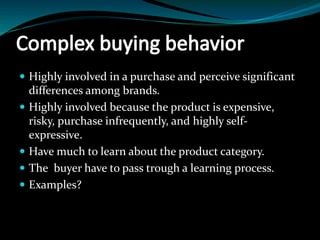
 Highly involved in a purchase and perceive significant
differences among brands.
 Highly involved because the product is expensive,
risky, purchase infrequently, and highly self-
expressive.
 Have much to learn about the product category.
 The buyer have to pass trough a learning process.
 Examples?
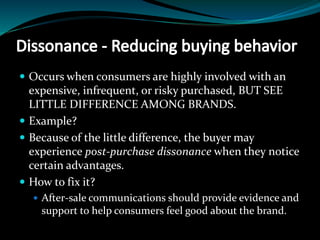
 Occurs when consumers are highly involved with an
expensive, infrequent, or risky purchased, BUT SEE
LITTLE DIFFERENCE AMONG BRANDS.
 Example?
 Because of the little difference, the buyer may
experience post-purchase dissonance when they notice
certain advantages.
 How to fix it?
 After-sale communications should provide evidence and
support to help consumers feel good about the brand.
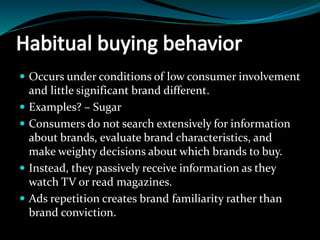
 Occurs under conditions of low consumer involvement
and little significant brand different.
 Examples? – Sugar
 Consumers do not search extensively for information
about brands, evaluate brand characteristics, and
make weighty decisions about which brands to buy.
 Instead, they passively receive information as they
watch TV or read magazines.
 Ads repetition creates brand familiarity rather than
brand conviction.
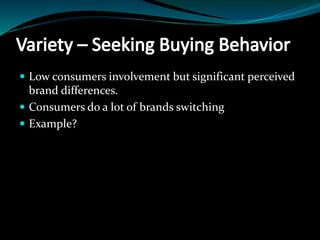
 Low consumers involvement but significant perceived
brand differences.
 Consumers do a lot of brands switching
 Example?
Buyer Decision Process
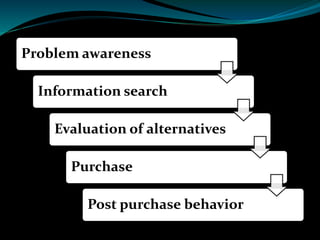
Problem awareness
Information search
Evaluation of alternatives
Purchase
Post purchase behavior
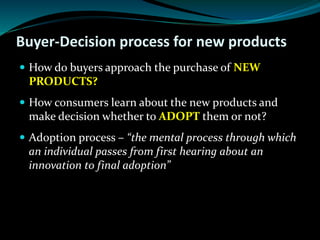
Buyer-Decision process for new products
 How do buyers approach the purchase of NEW
PRODUCTS?
 How consumers learn about the new products and
make decision whether to ADOPT them or not?
 Adoption process – “the mental process through which
an individual passes from first hearing about an
innovation to final adoption”
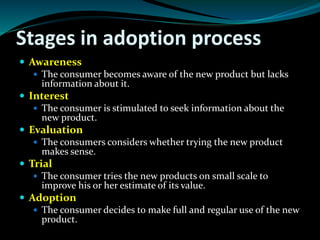
Stages in adoption process
 Awareness
 The consumer becomes aware of the new product but lacks
information about it.
 Interest
 The consumer is stimulated to seek information about the
new product.
 Evaluation
 The consumers considers whether trying the new product
makes sense.
 Trial
 The consumer tries the new products on small scale to
improve his or her estimate of its value.
 Adoption
 The consumer decides to make full and regular use of the new
product.
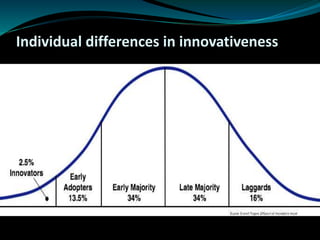
Individual differences in innovativeness
Tutorial
 Please specify who is involve (the buying role) in your
purchase over smartphone.
 What level are you in the differences of
innovativeness?
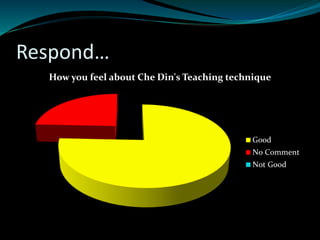
Respond…
How you feel about Che Din's Teaching technique
Good
No Comment
Not Good
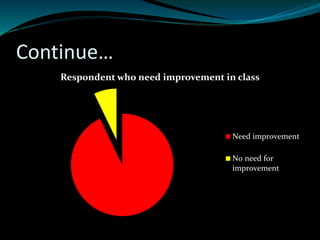
Continue…
Respondent who need improvement in class
Need improvement
No need for
improvement
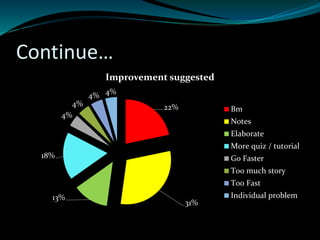
Continue…
22%
31%
13%
18%
4%
4%
4% 4%
Improvement suggested
Bm
Notes
Elaborate
More quiz / tutorial
Go Faster
Too much story
Too Fast
Individual problem

Consumers markets (buyer decision processes) - chapter 3

  • 1.
    Prepared by: Nor IzzuddinBin Norrahman Lecturer of Management, Banking and Islamic Finance Astin College
  • 2.
     Marketers mustbe EXTREMELY careful in analyzing consumer behavior.  In this chapter, we look at how consumers make buying decisions.  We will focus on:  Consumer buying roles & types of decisions  Main steps in the buyer decision process  Process which consumers learn about and buy new products
  • 3.
     The marketerneeds to know which PEOPLE are INVOLVED in the BUYING DECISION.  Husband?  Wife?  Children?  Friend?  Man?  Woman?  Cuttlefish?
  • 4.
  • 5.
     Initiator  Theperson who first suggests or thinks of the idea of buying a particular product or services.  Influencer  A person whose views or advise carries some weight in making the final buying decision.  Decider  The person who ultimately makes a buying decision or any part of it – buy or no? what to buy? Where to buy? How?  Buyer  The person who makes an actual purchase  User  The person who consumes or uses a product or service
  • 6.
    Source: Kotler, Philipand Armstrong, Gary, PRINCIPLES OF MARKETING 9th .ED. (New Jersey: Prentice-Hall, Inc., 2001) p.191 Complex buying behavior Dissonance - Reducing buying behavior Variety – Seeking Buying Behavior Habitual buying behavior High Low High Low DifferencesBetweenBrands Involvement
  • 7.
     Highly involvedin a purchase and perceive significant differences among brands.  Highly involved because the product is expensive, risky, purchase infrequently, and highly self- expressive.  Have much to learn about the product category.  The buyer have to pass trough a learning process.  Examples?
  • 8.
     Occurs whenconsumers are highly involved with an expensive, infrequent, or risky purchased, BUT SEE LITTLE DIFFERENCE AMONG BRANDS.  Example?  Because of the little difference, the buyer may experience post-purchase dissonance when they notice certain advantages.  How to fix it?  After-sale communications should provide evidence and support to help consumers feel good about the brand.
  • 9.
     Occurs underconditions of low consumer involvement and little significant brand different.  Examples? – Sugar  Consumers do not search extensively for information about brands, evaluate brand characteristics, and make weighty decisions about which brands to buy.  Instead, they passively receive information as they watch TV or read magazines.  Ads repetition creates brand familiarity rather than brand conviction.
  • 10.
     Low consumersinvolvement but significant perceived brand differences.  Consumers do a lot of brands switching  Example?
  • 11.
  • 12.
    Problem awareness Information search Evaluationof alternatives Purchase Post purchase behavior
  • 13.
    Buyer-Decision process fornew products  How do buyers approach the purchase of NEW PRODUCTS?  How consumers learn about the new products and make decision whether to ADOPT them or not?  Adoption process – “the mental process through which an individual passes from first hearing about an innovation to final adoption”
  • 14.
    Stages in adoptionprocess  Awareness  The consumer becomes aware of the new product but lacks information about it.  Interest  The consumer is stimulated to seek information about the new product.  Evaluation  The consumers considers whether trying the new product makes sense.  Trial  The consumer tries the new products on small scale to improve his or her estimate of its value.  Adoption  The consumer decides to make full and regular use of the new product.
  • 15.
  • 16.
    Tutorial  Please specifywho is involve (the buying role) in your purchase over smartphone.  What level are you in the differences of innovativeness?
  • 17.
    Respond… How you feelabout Che Din's Teaching technique Good No Comment Not Good
  • 18.
    Continue… Respondent who needimprovement in class Need improvement No need for improvement
  • 19.
    Continue… 22% 31% 13% 18% 4% 4% 4% 4% Improvement suggested Bm Notes Elaborate Morequiz / tutorial Go Faster Too much story Too Fast Individual problem