
Consumer Behaviour
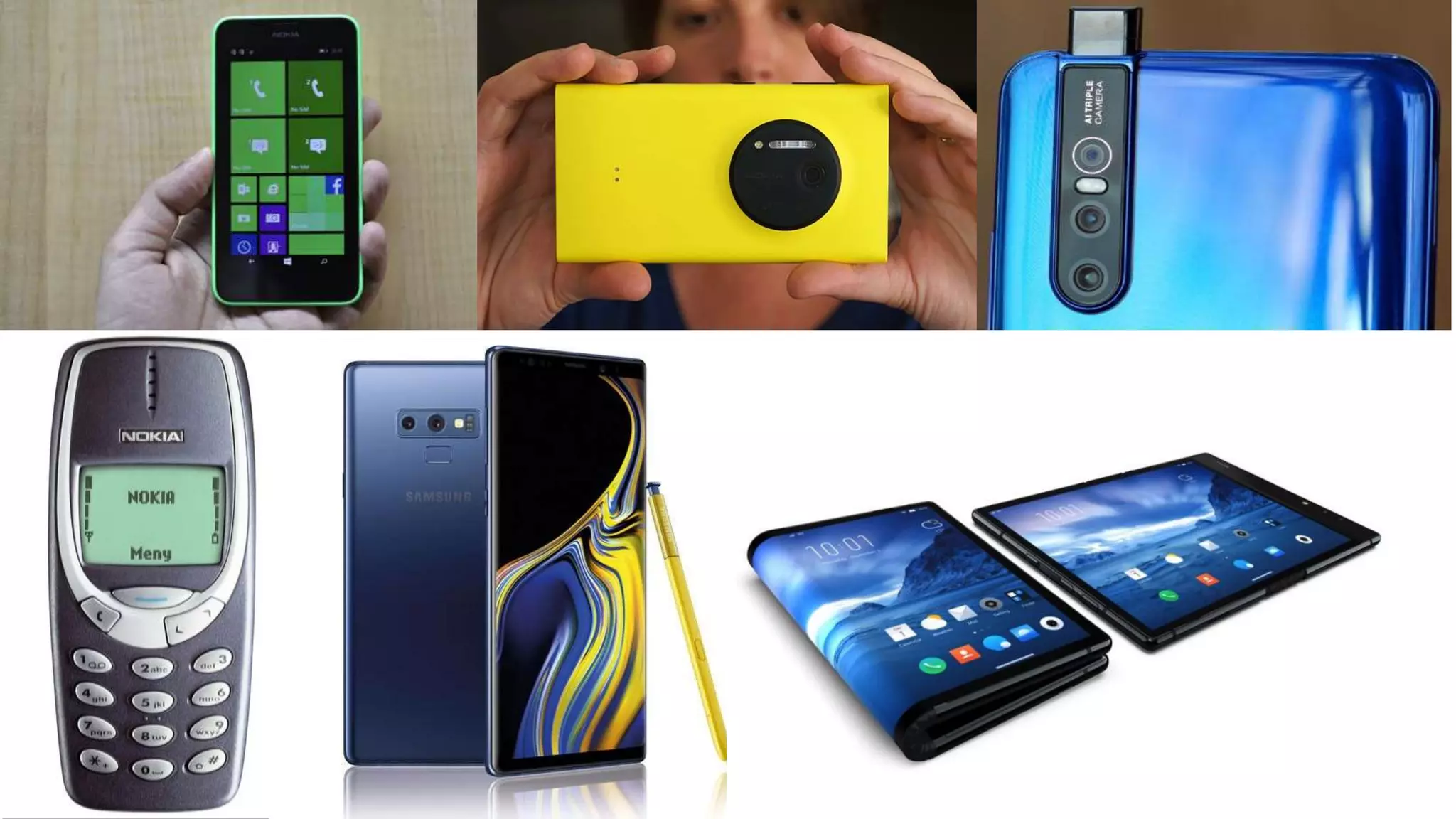
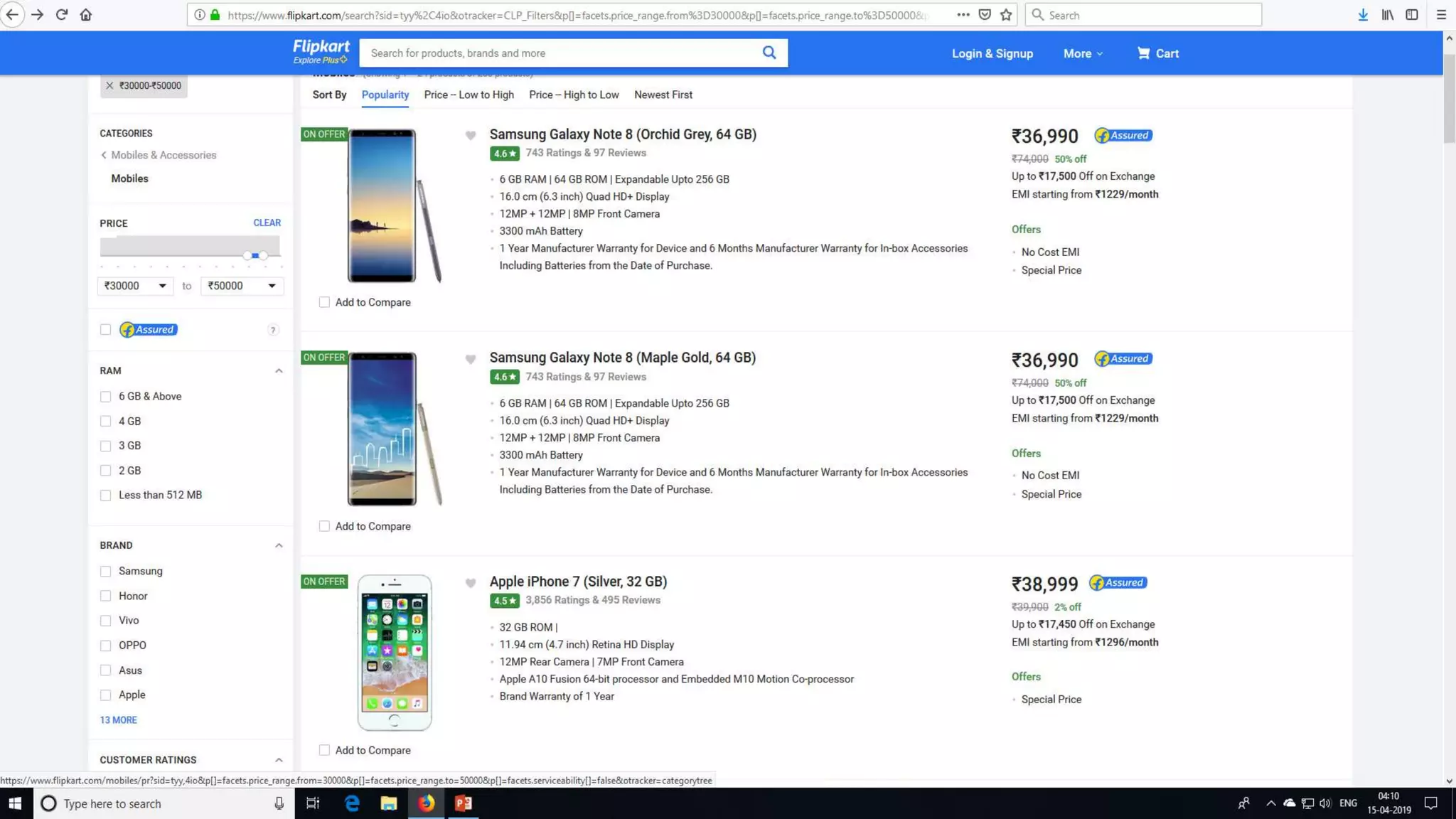
Mobiles
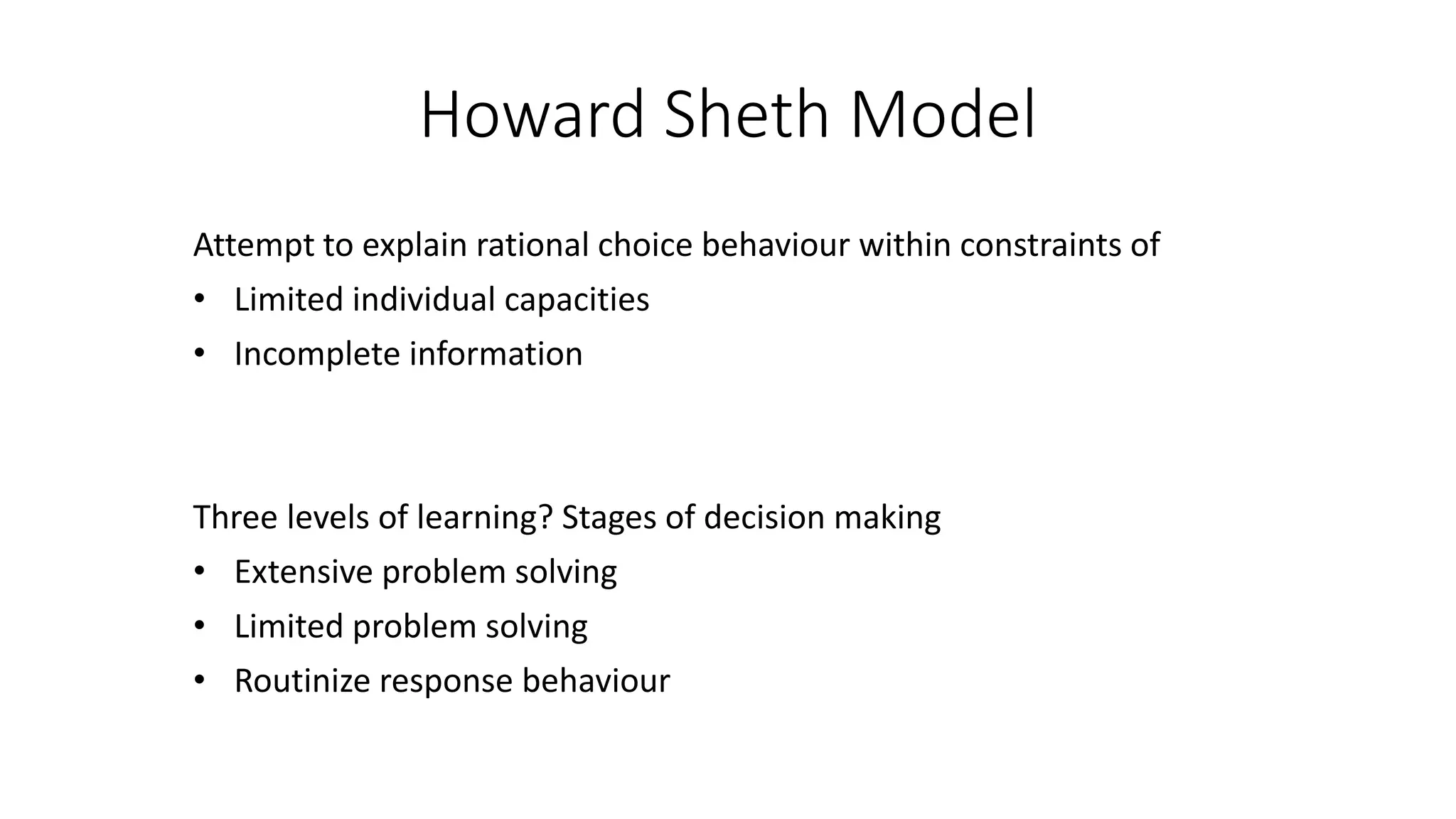
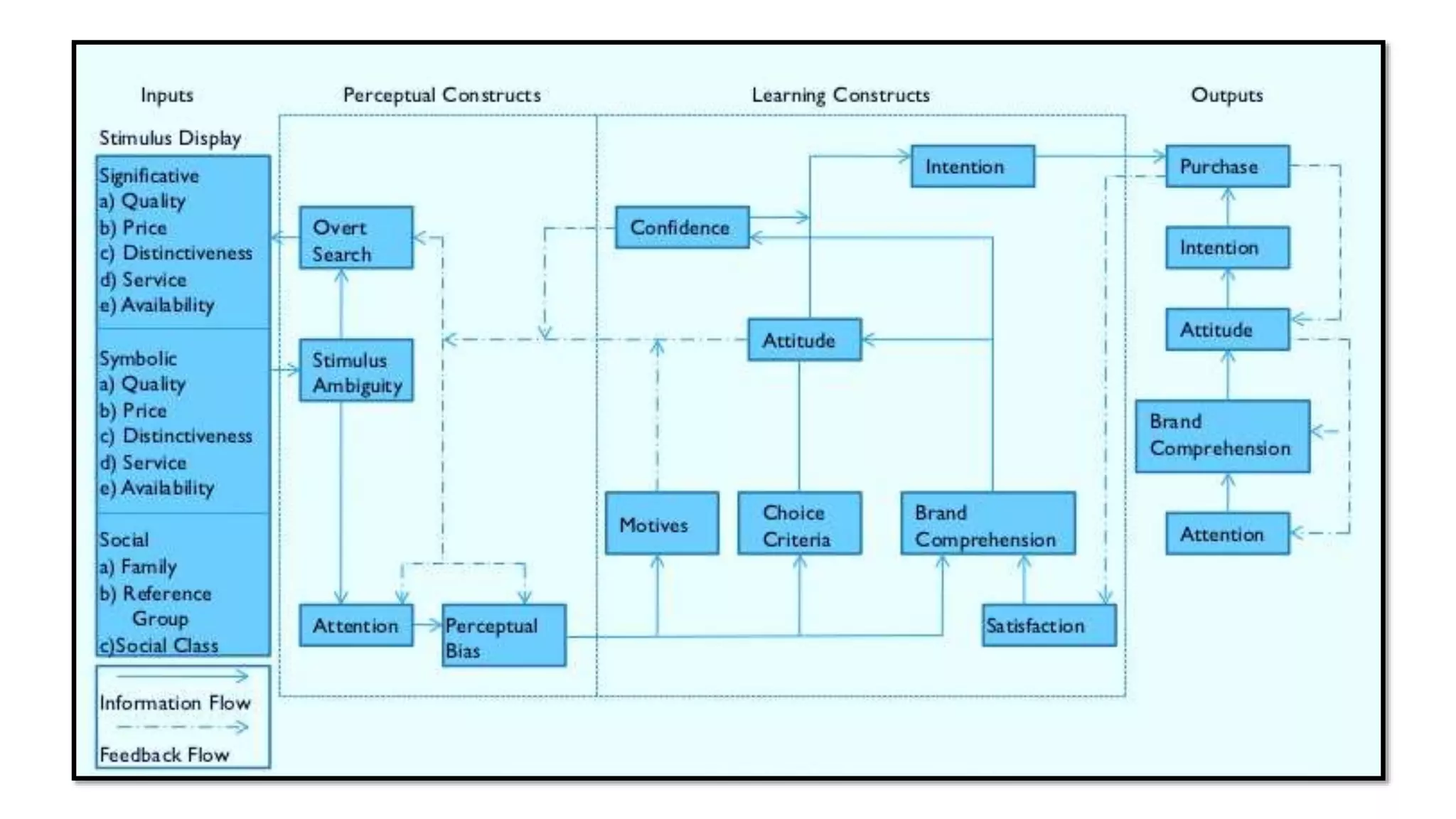
Howard Sheth Model
Attempt to explain rational choice behaviour within constraints of
• Limited individual capacities
• Incomplete information
Three levels of learning? Stages of decision making
• Extensive problem solving
• Limited problem solving
• Routinize response behaviour
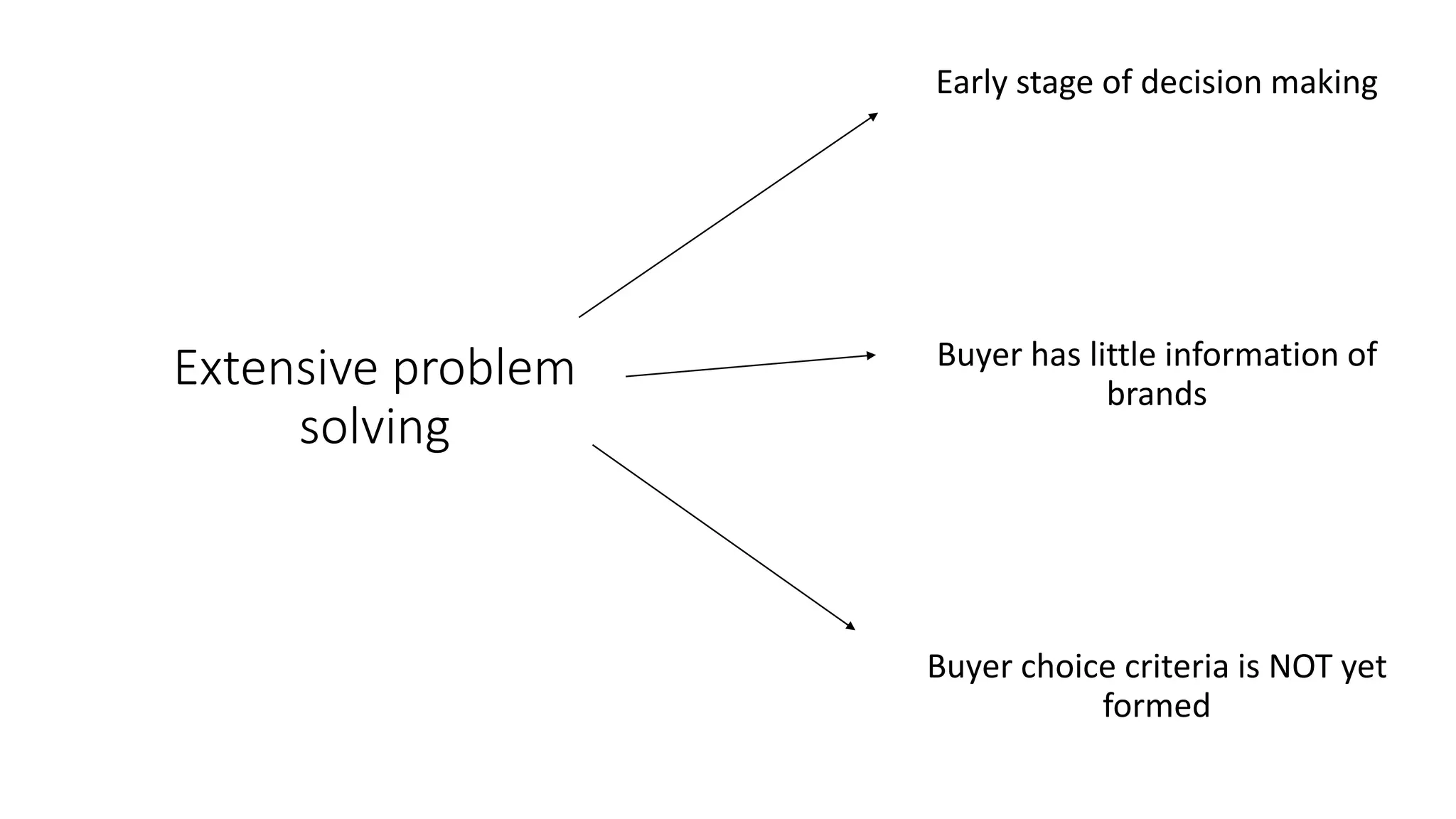
Extensive problem
solving
Early stage of decision making
Buyer has little information of
brands
Buyer choice criteria is NOT yet
formed
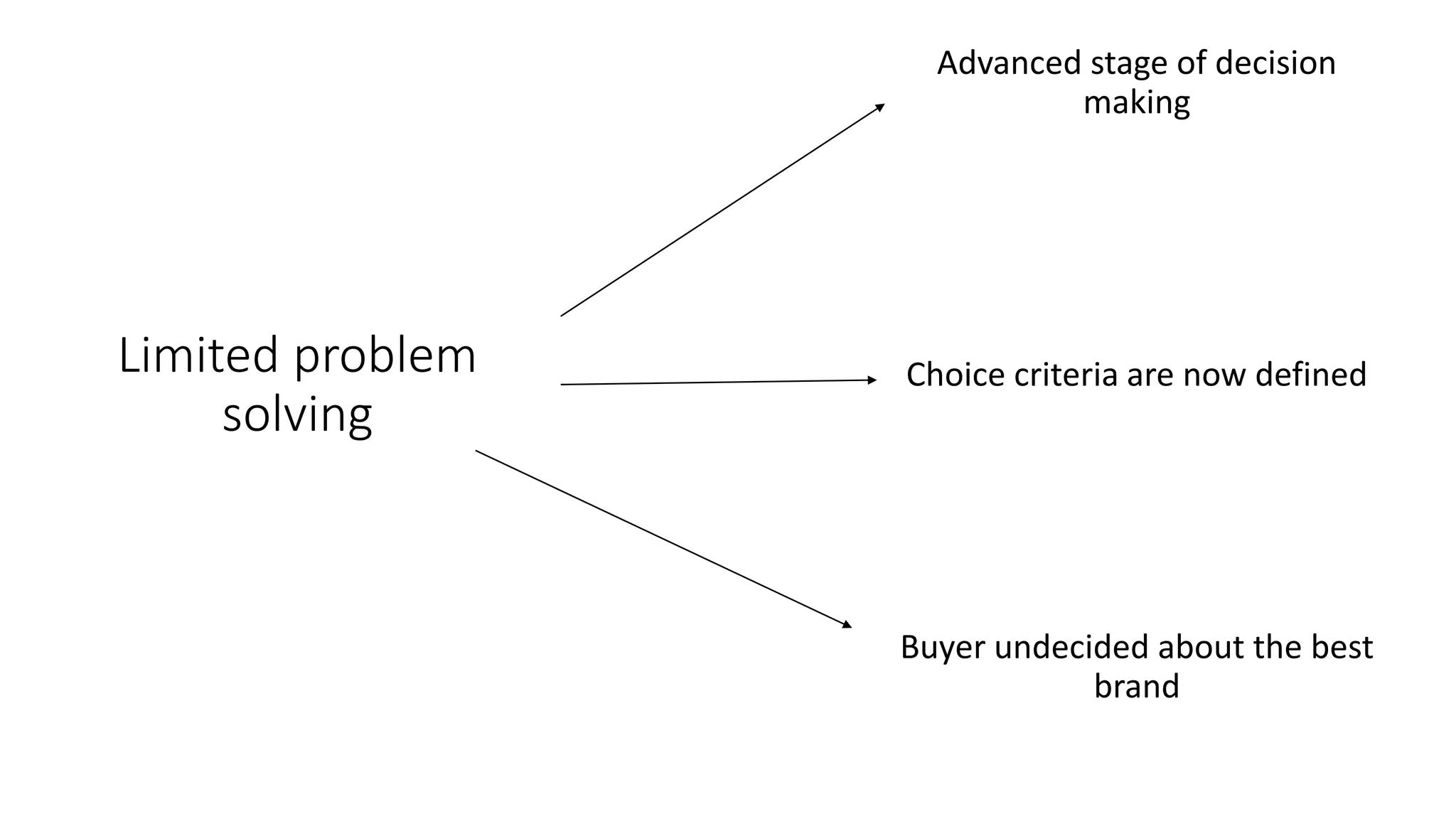
Limited problem
solving
Advanced stage of decision
making
Choice criteria are now defined
Buyer undecided about the best
brand
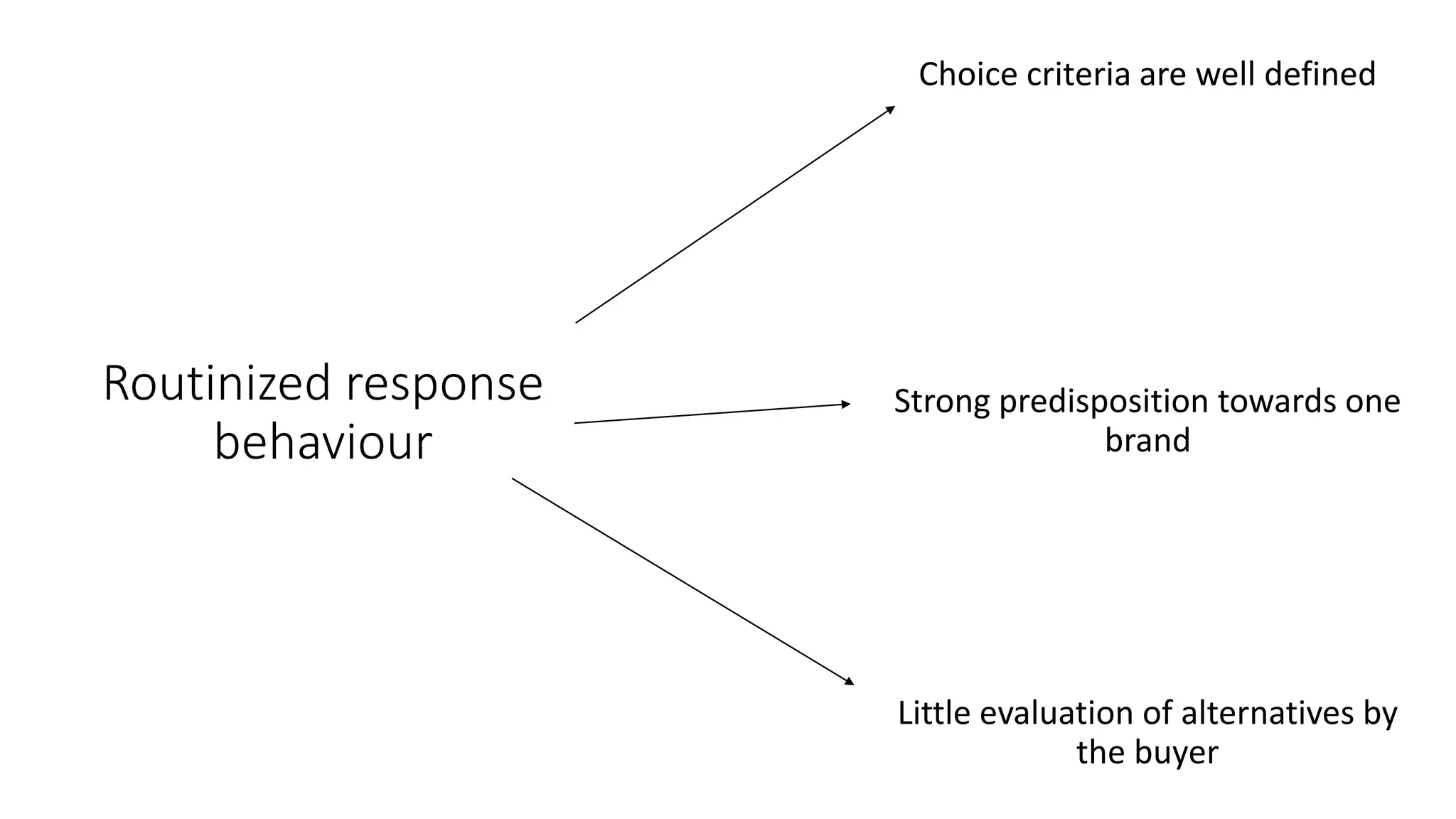
Routinized response
behaviour
Choice criteria are well defined
Strong predisposition towards one
brand
Little evaluation of alternatives by
the buyer
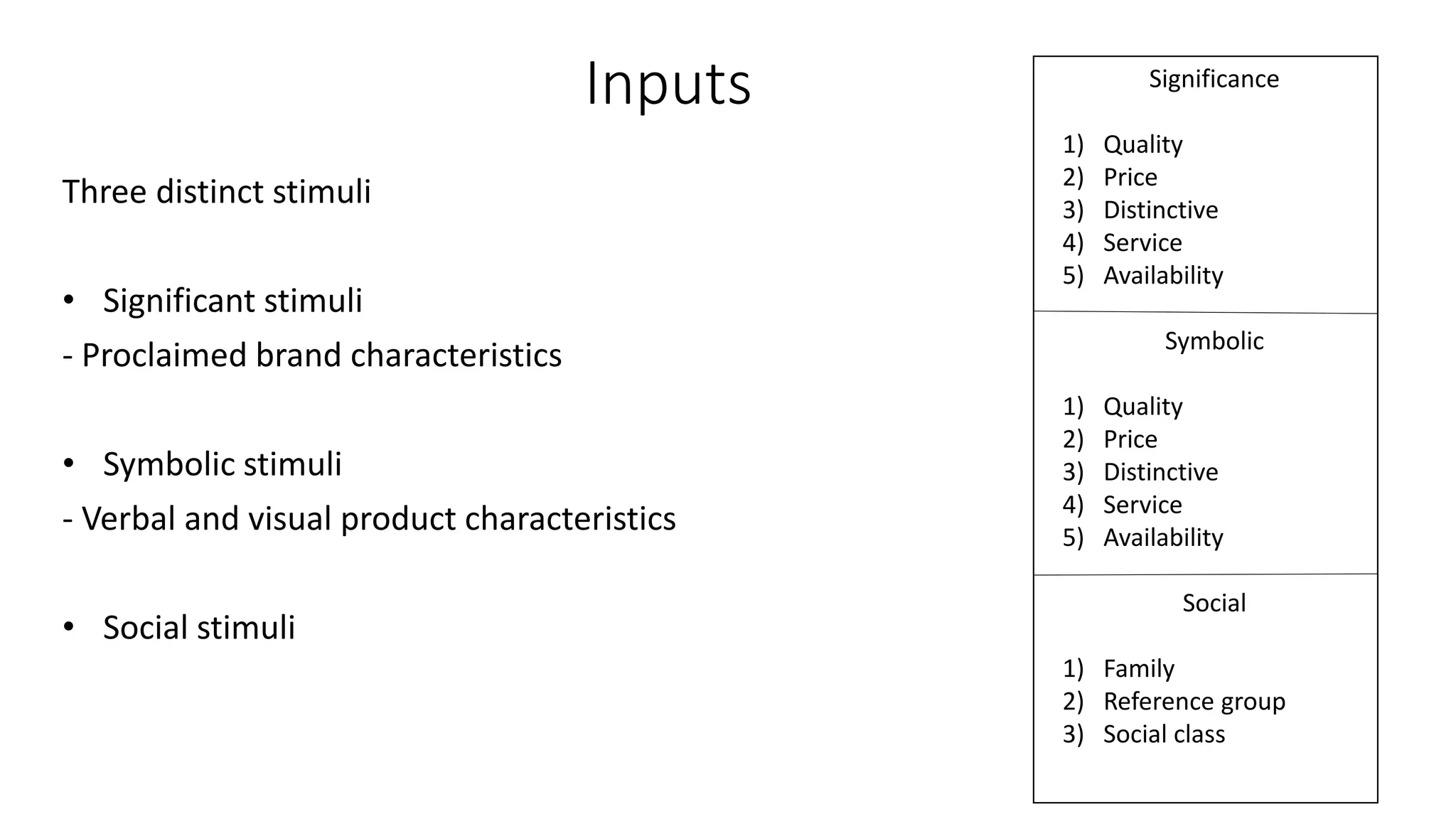
Inputs
Three distinct stimuli
• Significant stimuli
- Proclaimed brand characteristics
• Symbolic stimuli
- Verbal and visual product characteristics
• Social stimuli
Significance
1) Quality
2) Price
3) Distinctive
4) Service
5) Availability
Symbolic
1) Quality
2) Price
3) Distinctive
4) Service
5) Availability
Social
1) Family
2) Reference group
3) Social class
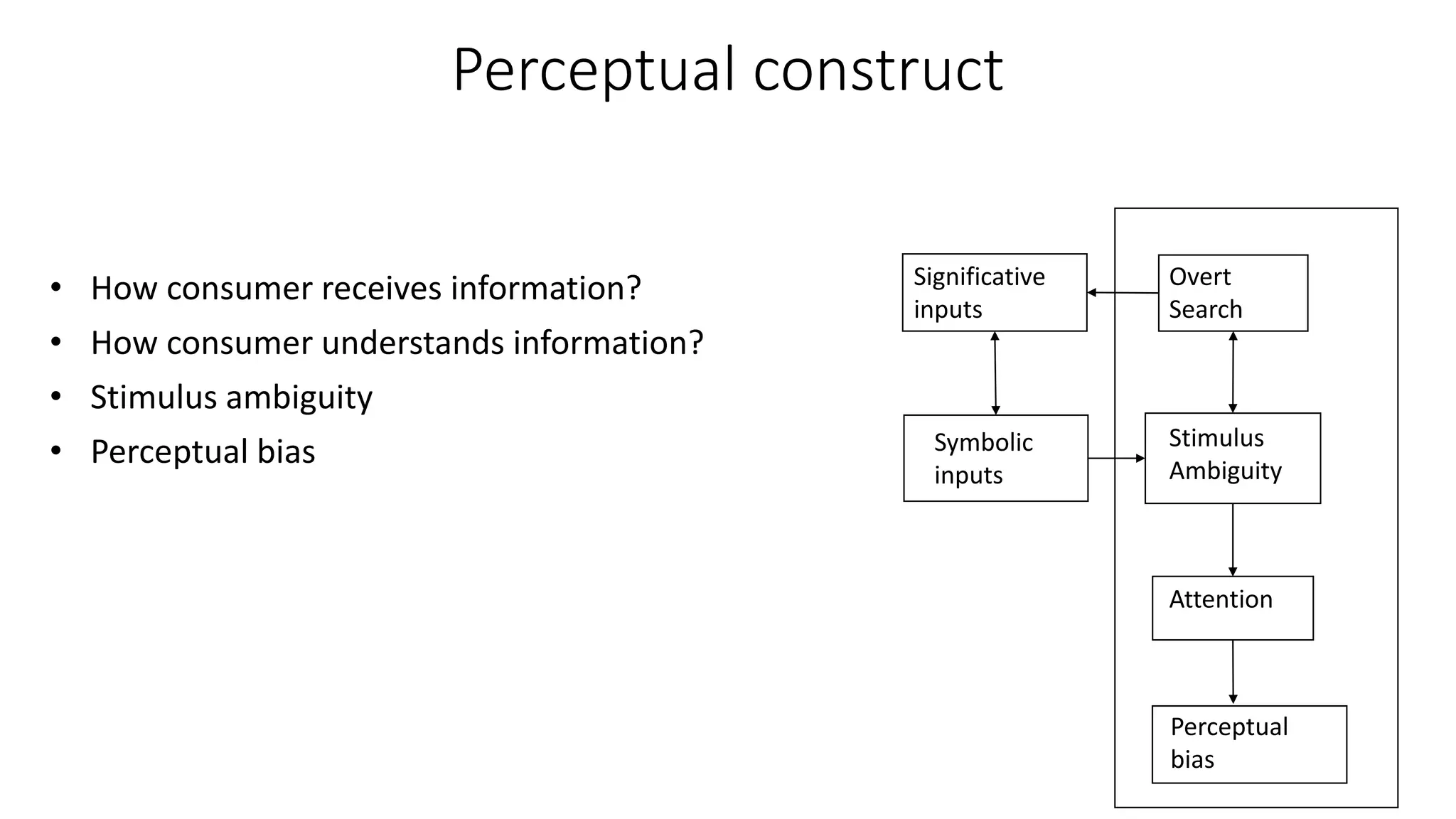
Perceptual construct
• How consumer receives information?
• How consumer understands information?
• Stimulus ambiguity
• Perceptual bias
Significative
inputs
Symbolic
inputs
Stimulus
Ambiguity
Overt
Search
Attention
Perceptual
bias
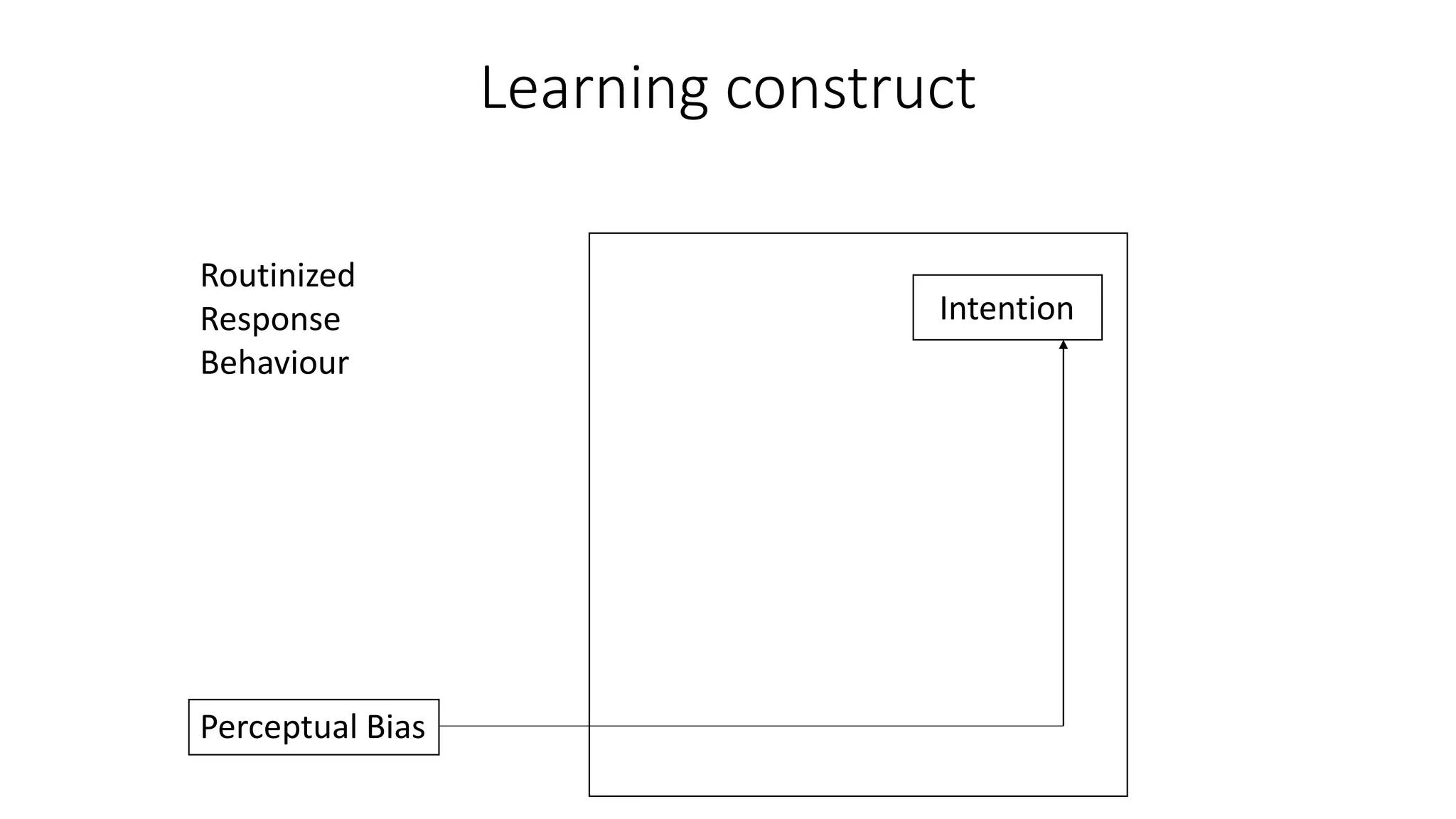
Learning construct
Routinized
Response
Behaviour
Intention
Perceptual Bias
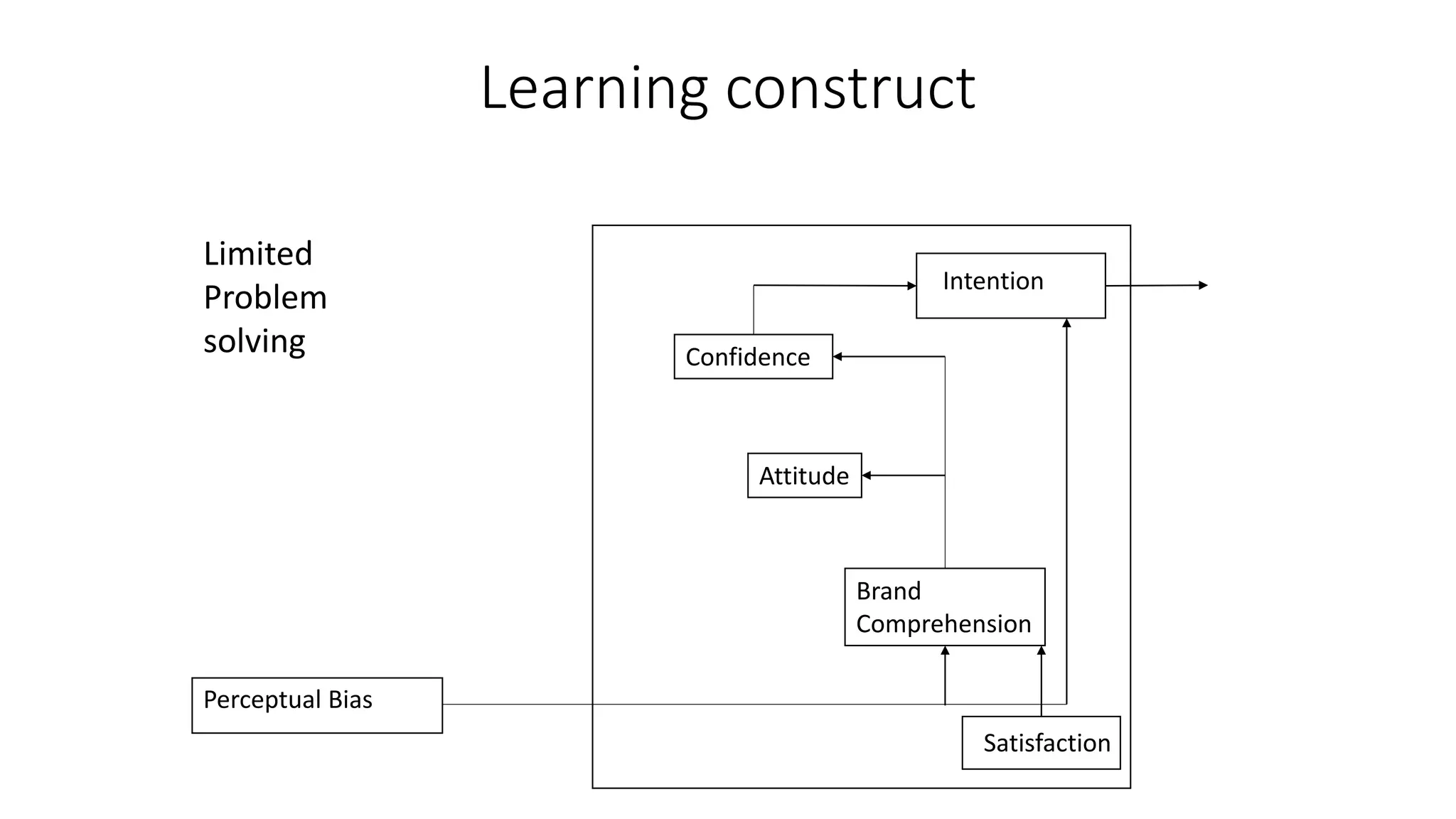
Learning construct
Limited
Problem
solving
Intention
Perceptual Bias
Confidence
Attitude
Brand
Comprehension
Satisfaction
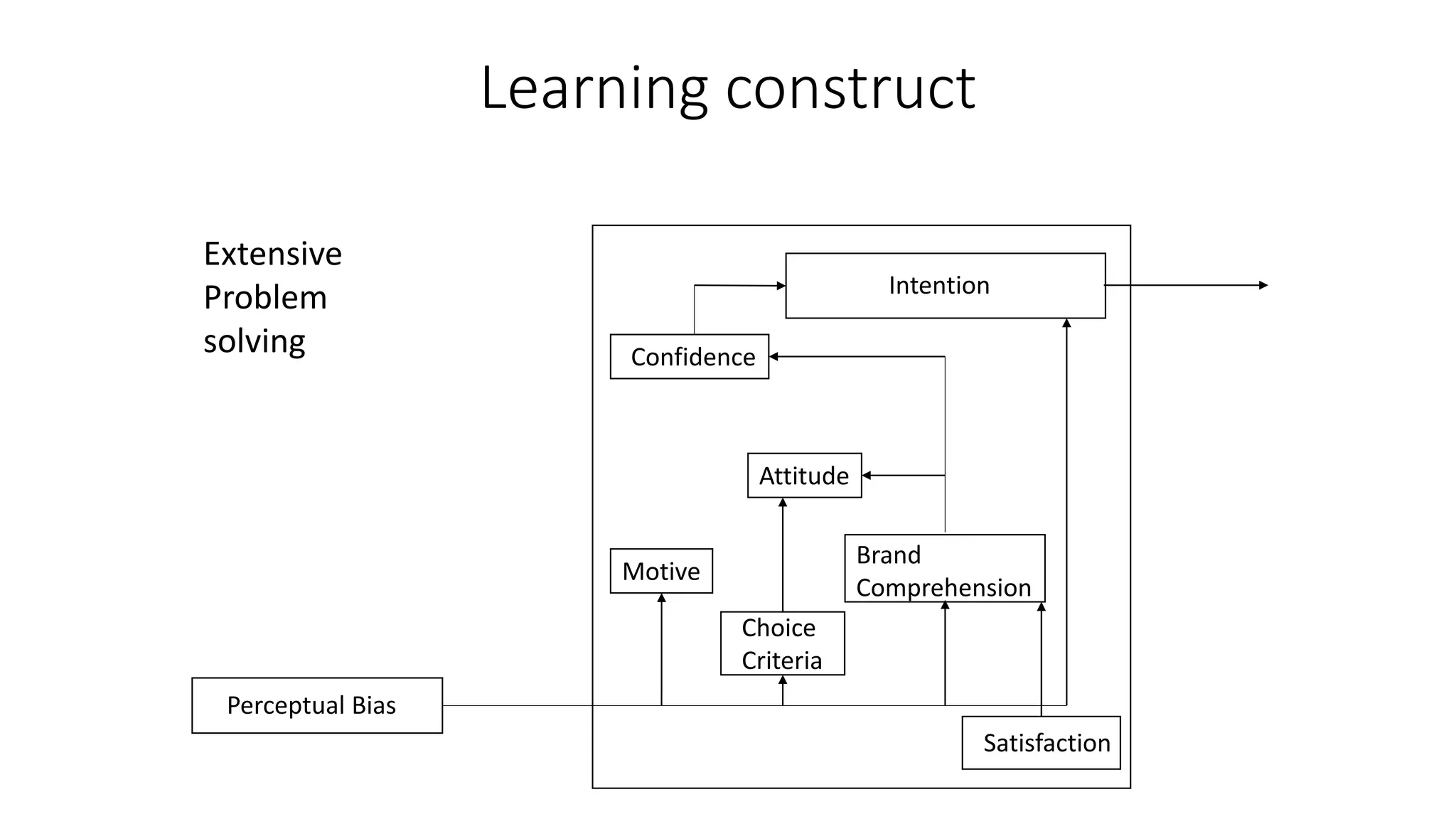
Learning construct
Extensive
Problem
solving
Intention
Perceptual Bias
Confidence
Attitude
Brand
Comprehension
Satisfaction
Motive
Choice
Criteria
Consumer Usual Buying Behaviour
Dispose
• Spare
• Personal
• Exchange offer
• Scrap
• Family
Thank you
Presented by Chandan Bhosale
M15003

Consumer Behavior - Howard Sheth Model