Consumer and Producer Surplus
EdExcel Economics 1.2.8
What is Consumer Surplus?
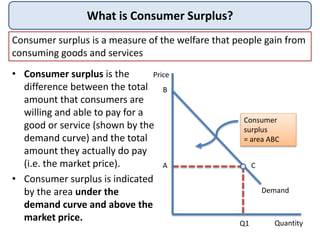
• Consumer surplus is the
difference between the total
amount that consumers are
willing and able to pay for a
good or service (shown by the
demand curve) and the total
amount they actually do pay
(i.e. the market price).
• Consumer surplus is indicated
by the area under the
demand curve and above the
market price.
Consumer surplus is a measure of the welfare that people gain from
consuming goods and services
Price
Quantity
A
Q1
Demand
Consumer
surplus
= area ABC
B
C
Consumer Surplus and Changes in Market Prices
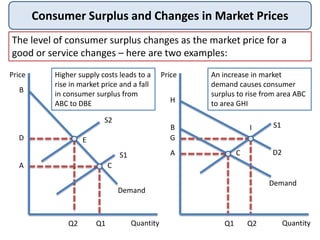
The level of consumer surplus changes as the market price for a
good or service changes – here are two examples:
Price
Quantity
A
Q1
Demand
Higher supply costs leads to a
rise in market price and a fall
in consumer surplus from
ABC to DBE
B
C
Price
Quantity
A
Q1
Demand
B
CS1
S2
Q2
D E
D2
S1
Q2
G
H
I
An increase in market
demand causes consumer
surplus to rise from area ABC
to area GHI
Consumer Surplus and Price Elasticity of Demand
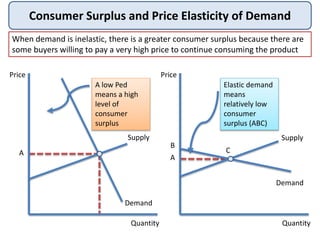
When demand is inelastic, there is a greater consumer surplus because there are
some buyers willing to pay a very high price to continue consuming the product
Price
Quantity Quantity
A
A
B
C
Demand
Supply Supply
Demand
Price
A low Ped
means a high
level of
consumer
surplus
Elastic demand
means
relatively low
consumer
surplus (ABC)
What is Producer Surplus?
• Producer surplus is the
difference between the price
producers are willing and able
to supply a good or service for
and the price they actually
receive.
• Producer surplus is shown by
area above the supply curve and
below the current market price.
• Higher prices provide an
incentive to supply more to the
market. This is due to the profit
motive.
Producer surplus is the difference between two price levels
Price
Quantity
A
Q1
Supply
B C
Producer
surplus = area
ABC
Producer Surplus and Changes in Market Prices
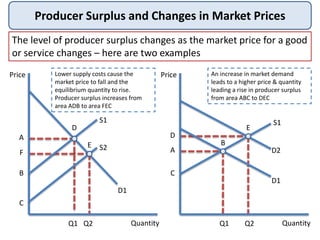
The level of producer surplus changes as the market price for a good
or service changes – here are two examples
Price
QuantityQ2
D1
Lower supply costs cause the
market price to fall and the
equilibrium quantity to rise.
Producer surplus increases from
area ADB to area FEC
B
Price
QuantityQ1
D1
Q1
S1
Q2
An increase in market demand
leads to a higher price & quantity
leading a rise in producer surplus
from area ABC to DEC
D2
S1
S2
A
C
D
E
F A
B
C
D
E
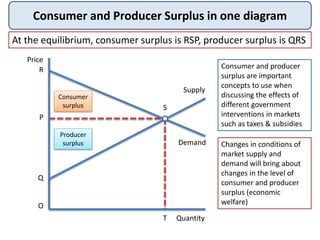
Consumer and Producer Surplus in one diagram
At the equilibrium, consumer surplus is RSP, producer surplus is QRS
Price
Quantity
Demand
Supply
P
Q
R
S
T
O
Producer
surplus
Consumer
surplus
Consumer and producer
surplus are important
concepts to use when
discussing the effects of
different government
interventions in markets
such as taxes & subsidies
Changes in conditions of
market supply and
demand will bring about
changes in the level of
consumer and producer
surplus (economic
welfare)
Consumer and Producer Surplus
EdExcel Economics 1.2.8

Consumer producer surplus

  • 1.
    Consumer and ProducerSurplus EdExcel Economics 1.2.8
  • 2.
    What is ConsumerSurplus? • Consumer surplus is the difference between the total amount that consumers are willing and able to pay for a good or service (shown by the demand curve) and the total amount they actually do pay (i.e. the market price). • Consumer surplus is indicated by the area under the demand curve and above the market price. Consumer surplus is a measure of the welfare that people gain from consuming goods and services Price Quantity A Q1 Demand Consumer surplus = area ABC B C
  • 3.
    Consumer Surplus andChanges in Market Prices The level of consumer surplus changes as the market price for a good or service changes – here are two examples: Price Quantity A Q1 Demand Higher supply costs leads to a rise in market price and a fall in consumer surplus from ABC to DBE B C Price Quantity A Q1 Demand B CS1 S2 Q2 D E D2 S1 Q2 G H I An increase in market demand causes consumer surplus to rise from area ABC to area GHI
  • 4.
    Consumer Surplus andPrice Elasticity of Demand When demand is inelastic, there is a greater consumer surplus because there are some buyers willing to pay a very high price to continue consuming the product Price Quantity Quantity A A B C Demand Supply Supply Demand Price A low Ped means a high level of consumer surplus Elastic demand means relatively low consumer surplus (ABC)
  • 5.
    What is ProducerSurplus? • Producer surplus is the difference between the price producers are willing and able to supply a good or service for and the price they actually receive. • Producer surplus is shown by area above the supply curve and below the current market price. • Higher prices provide an incentive to supply more to the market. This is due to the profit motive. Producer surplus is the difference between two price levels Price Quantity A Q1 Supply B C Producer surplus = area ABC
  • 6.
    Producer Surplus andChanges in Market Prices The level of producer surplus changes as the market price for a good or service changes – here are two examples Price QuantityQ2 D1 Lower supply costs cause the market price to fall and the equilibrium quantity to rise. Producer surplus increases from area ADB to area FEC B Price QuantityQ1 D1 Q1 S1 Q2 An increase in market demand leads to a higher price & quantity leading a rise in producer surplus from area ABC to DEC D2 S1 S2 A C D E F A B C D E
  • 7.
    Consumer and ProducerSurplus in one diagram At the equilibrium, consumer surplus is RSP, producer surplus is QRS Price Quantity Demand Supply P Q R S T O Producer surplus Consumer surplus Consumer and producer surplus are important concepts to use when discussing the effects of different government interventions in markets such as taxes & subsidies Changes in conditions of market supply and demand will bring about changes in the level of consumer and producer surplus (economic welfare)
  • 8.
    Consumer and ProducerSurplus EdExcel Economics 1.2.8