Consumer and
Producer Surplus
Efficiency and
Deadweight Loss
2
Consumer Surplus
 The difference between the maximum price consumers are willing to pay for
a product and the actual price.
 The surplus, measurable in dollar terms, reflects the extra utility gained from
paying a lower price than what is required to obtain the good.
 Consumer surplus can be measured by calculating the difference between
the maximum willingness to pay and the actual price for each
consumer, and then summing those differences.
 Or consumer surplus is shown graphically as the area under the demand
curve and above the equilibrium price.
 Consumer surplus and price are inversely related – all else equal, a higher
price reduces consumer surplus.
3
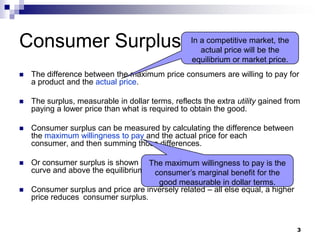
Consumer Surplus
 The difference between the maximum price consumers are willing to pay for
a product and the actual price.
 The surplus, measurable in dollar terms, reflects the extra utility gained from
paying a lower price than what is required to obtain the good.
 Consumer surplus can be measured by calculating the difference between
the maximum willingness to pay and the actual price for each
consumer, and then summing those differences.
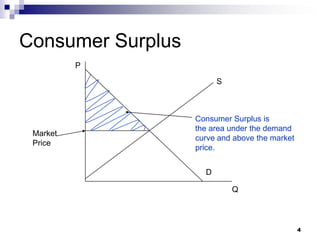
 Or consumer surplus is shown graphically as the area under the demand
curve and above the equilibrium price.
 Consumer surplus and price are inversely related – all else equal, a higher
price reduces consumer surplus.
In a competitive market, the
actual price will be the
equilibrium or market price.
The maximum willingness to pay is the
consumer’s marginal benefit for the
good measurable in dollar terms.
4
Consumer Surplus
P
Q
S
D
Market
Price
Consumer Surplus is
the area under the demand
curve and above the market
price.
5
Producer Surplus
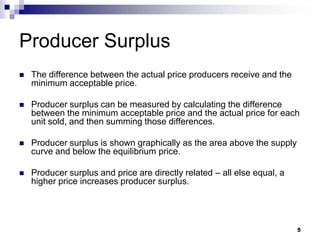
 The difference between the actual price producers receive and the
minimum acceptable price.
 Producer surplus can be measured by calculating the difference
between the minimum acceptable price and the actual price for each
unit sold, and then summing those differences.
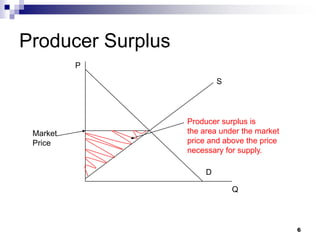
 Producer surplus is shown graphically as the area above the supply
curve and below the equilibrium price.
 Producer surplus and price are directly related – all else equal, a
higher price increases producer surplus.
6
Producer Surplus
P
Q
S
D
Market
Price
Producer surplus is
the area under the market
price and above the price
necessary for supply.
7
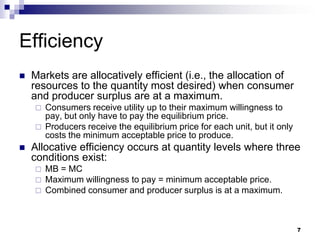
Efficiency
 Markets are allocatively efficient (i.e., the allocation of
resources to the quantity most desired) when consumer
and producer surplus are at a maximum.
 Consumers receive utility up to their maximum willingness to
pay, but only have to pay the equilibrium price.
 Producers receive the equilibrium price for each unit, but it only
costs the minimum acceptable price to produce.
 Allocative efficiency occurs at quantity levels where three
conditions exist:
 MB = MC
 Maximum willingness to pay = minimum acceptable price.
 Combined consumer and producer surplus is at a maximum.
8
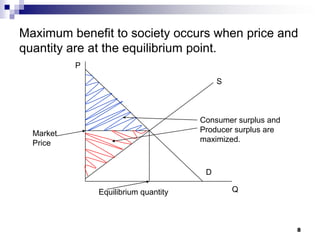
Maximum benefit to society occurs when price and
quantity are at the equilibrium point.
P
Q
S
D
Market
Price
Equilibrium quantity
Consumer surplus and
Producer surplus are
maximized.
9
Inefficiency or Deadweight Loss
 Underproduction reduces both consumer and producer surplus, and
efficiency is lost because both buyers and sellers would be willing to
exchange a higher quantity.
 Overproduction causes inefficiency because past the equilibrium
quantity, it costs society more to produce the good than it is worth to
the consumer in terms of willingness to pay.
 A deadweight loss occurs when the combined consumer and
producer surplus is not maximized. This occurs when something
such as a price control causes either over-production or under-
production of a good or service.
10
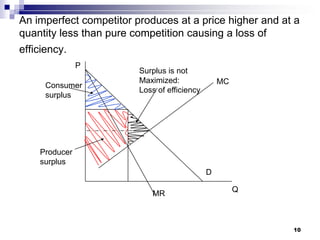
An imperfect competitor produces at a price higher and at a
quantity less than pure competition causing a loss of
efficiency.
P
Q
MC
D
MR
Producer
surplus
Consumer
surplus
Surplus is not
Maximized:
Loss of efficiency
11
Remember:
 Consumer surplus is the difference between the maximum price
consumers are willing to pay for a product and the actual price.
 Producer surplus is the difference between the actual price
producers receive and the minimum acceptable price.
 Markets are efficient when the consumer and producer surpluses
are at a maximum.
 A deadweight loss occurs whenever there is over-production or
under-production of a good or service.

Consumer-&-Producer-Surplusjejdjndndndjjdjdj

  • 1.
  • 2.
    2 Consumer Surplus  Thedifference between the maximum price consumers are willing to pay for a product and the actual price.  The surplus, measurable in dollar terms, reflects the extra utility gained from paying a lower price than what is required to obtain the good.  Consumer surplus can be measured by calculating the difference between the maximum willingness to pay and the actual price for each consumer, and then summing those differences.  Or consumer surplus is shown graphically as the area under the demand curve and above the equilibrium price.  Consumer surplus and price are inversely related – all else equal, a higher price reduces consumer surplus.
  • 3.
    3 Consumer Surplus  Thedifference between the maximum price consumers are willing to pay for a product and the actual price.  The surplus, measurable in dollar terms, reflects the extra utility gained from paying a lower price than what is required to obtain the good.  Consumer surplus can be measured by calculating the difference between the maximum willingness to pay and the actual price for each consumer, and then summing those differences.  Or consumer surplus is shown graphically as the area under the demand curve and above the equilibrium price.  Consumer surplus and price are inversely related – all else equal, a higher price reduces consumer surplus. In a competitive market, the actual price will be the equilibrium or market price. The maximum willingness to pay is the consumer’s marginal benefit for the good measurable in dollar terms.
  • 4.
    4 Consumer Surplus P Q S D Market Price Consumer Surplusis the area under the demand curve and above the market price.
  • 5.
    5 Producer Surplus  Thedifference between the actual price producers receive and the minimum acceptable price.  Producer surplus can be measured by calculating the difference between the minimum acceptable price and the actual price for each unit sold, and then summing those differences.  Producer surplus is shown graphically as the area above the supply curve and below the equilibrium price.  Producer surplus and price are directly related – all else equal, a higher price increases producer surplus.
  • 6.
    6 Producer Surplus P Q S D Market Price Producer surplusis the area under the market price and above the price necessary for supply.
  • 7.
    7 Efficiency  Markets areallocatively efficient (i.e., the allocation of resources to the quantity most desired) when consumer and producer surplus are at a maximum.  Consumers receive utility up to their maximum willingness to pay, but only have to pay the equilibrium price.  Producers receive the equilibrium price for each unit, but it only costs the minimum acceptable price to produce.  Allocative efficiency occurs at quantity levels where three conditions exist:  MB = MC  Maximum willingness to pay = minimum acceptable price.  Combined consumer and producer surplus is at a maximum.
  • 8.
    8 Maximum benefit tosociety occurs when price and quantity are at the equilibrium point. P Q S D Market Price Equilibrium quantity Consumer surplus and Producer surplus are maximized.
  • 9.
    9 Inefficiency or DeadweightLoss  Underproduction reduces both consumer and producer surplus, and efficiency is lost because both buyers and sellers would be willing to exchange a higher quantity.  Overproduction causes inefficiency because past the equilibrium quantity, it costs society more to produce the good than it is worth to the consumer in terms of willingness to pay.  A deadweight loss occurs when the combined consumer and producer surplus is not maximized. This occurs when something such as a price control causes either over-production or under- production of a good or service.
  • 10.
    10 An imperfect competitorproduces at a price higher and at a quantity less than pure competition causing a loss of efficiency. P Q MC D MR Producer surplus Consumer surplus Surplus is not Maximized: Loss of efficiency
  • 11.
    11 Remember:  Consumer surplusis the difference between the maximum price consumers are willing to pay for a product and the actual price.  Producer surplus is the difference between the actual price producers receive and the minimum acceptable price.  Markets are efficient when the consumer and producer surpluses are at a maximum.  A deadweight loss occurs whenever there is over-production or under-production of a good or service.