Political representation
and democracy
This session will develop your
understanding of:
• What is meant by democracy
• The role of manifestos,
mandates and referendums in a
democratic system
• The main levels of government
in the UK and their
responsibilities
What is democracy?
• Originated in ancient
Athens
• Athenian democracy
was direct democracy
ie all citizens could
participate directly in
decision making
Why might this type of
democracy be difficult
to achieve in a country
like the UK?
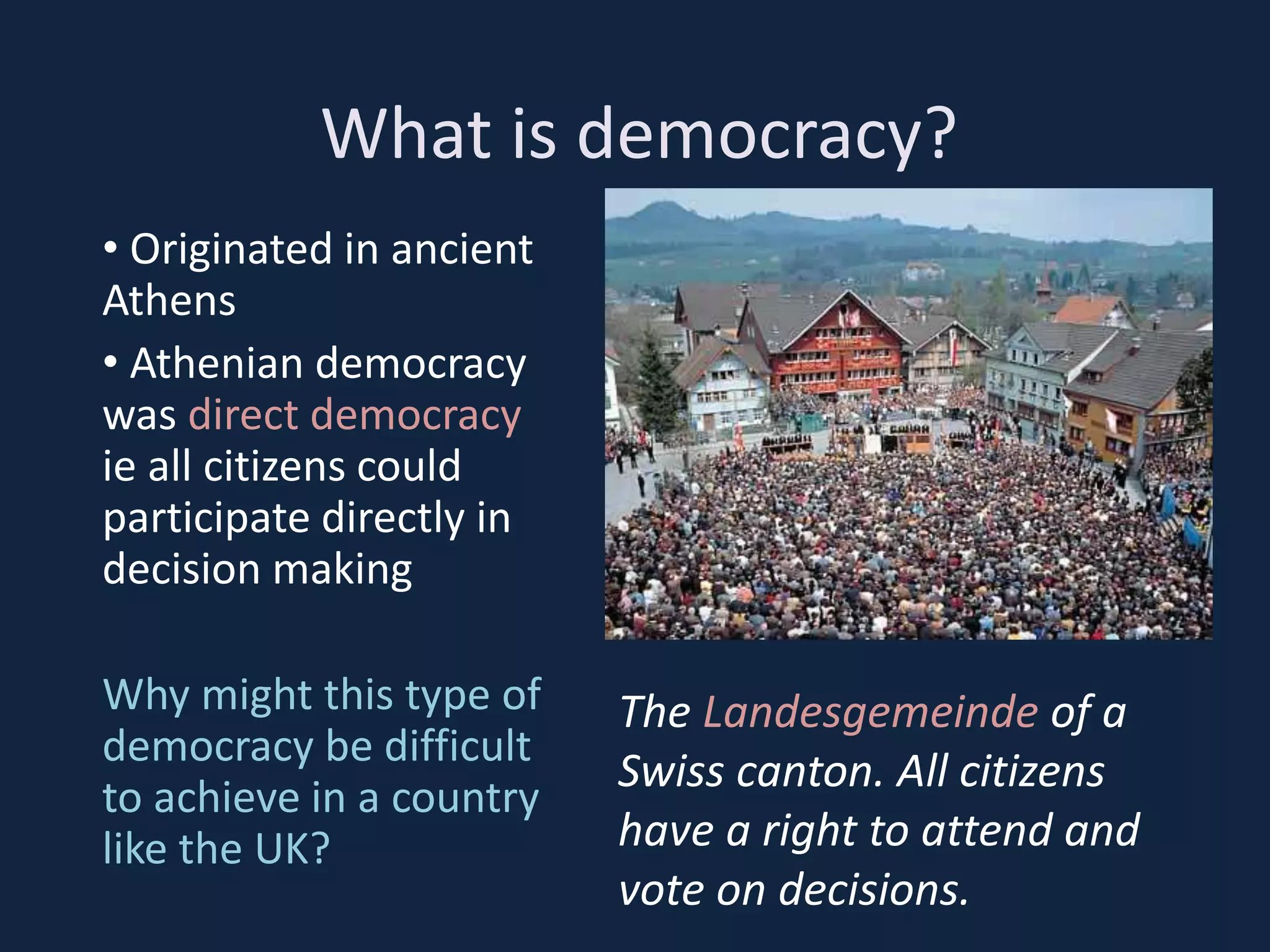
The Landesgemeinde of a
Swiss canton. All citizens
have a right to attend and
vote on decisions.
What is democracy?
• Modern style of
democracy gradually
developed in modern
Europe following French
Revolution
• Most modern
democracies are
representative
democracies
• Citizens elect
representatives in
elections to make
decisions on their behalf
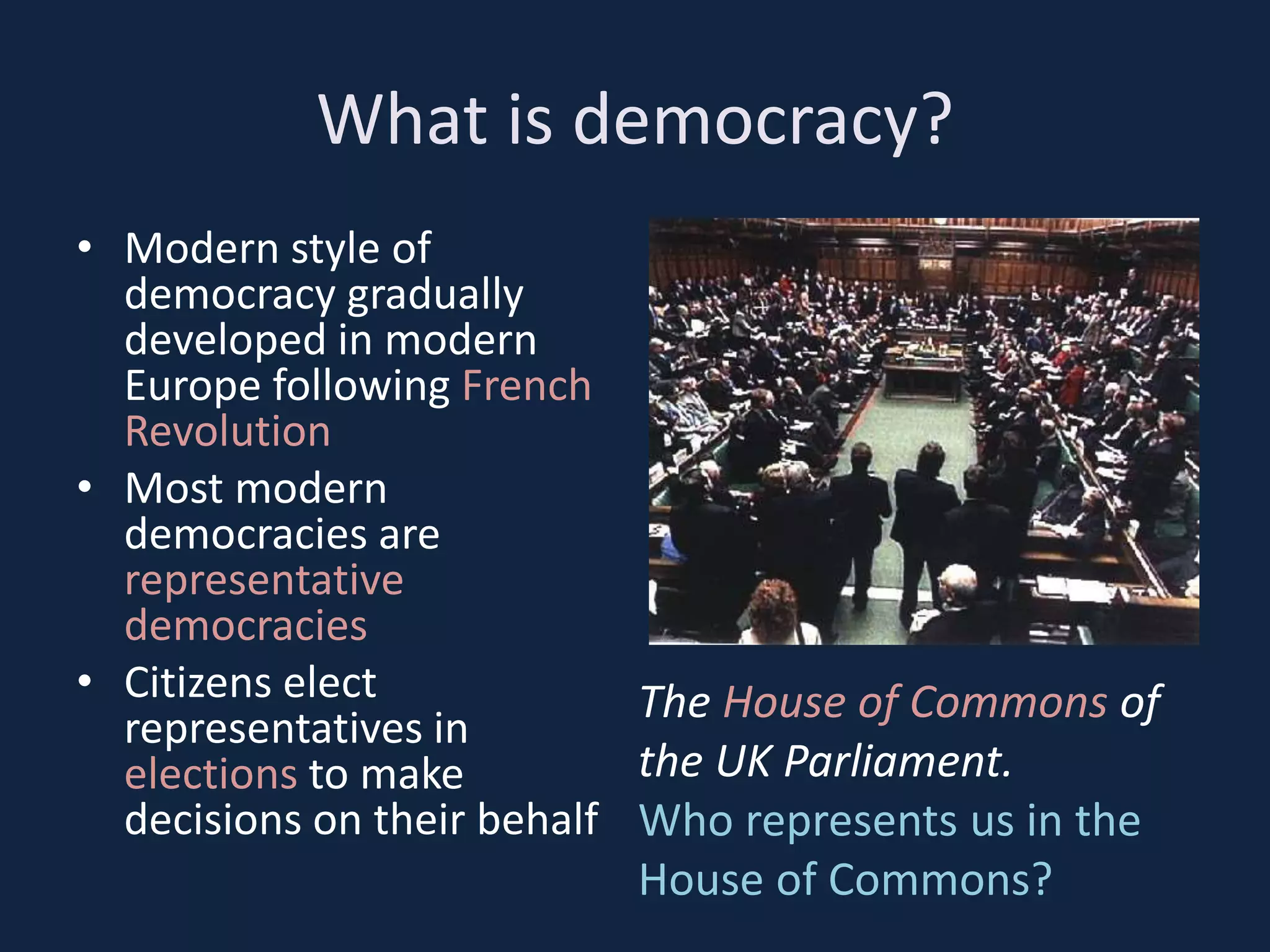
The House of Commons of
the UK Parliament.
Who represents us in the
House of Commons?
Manifestos and mandates
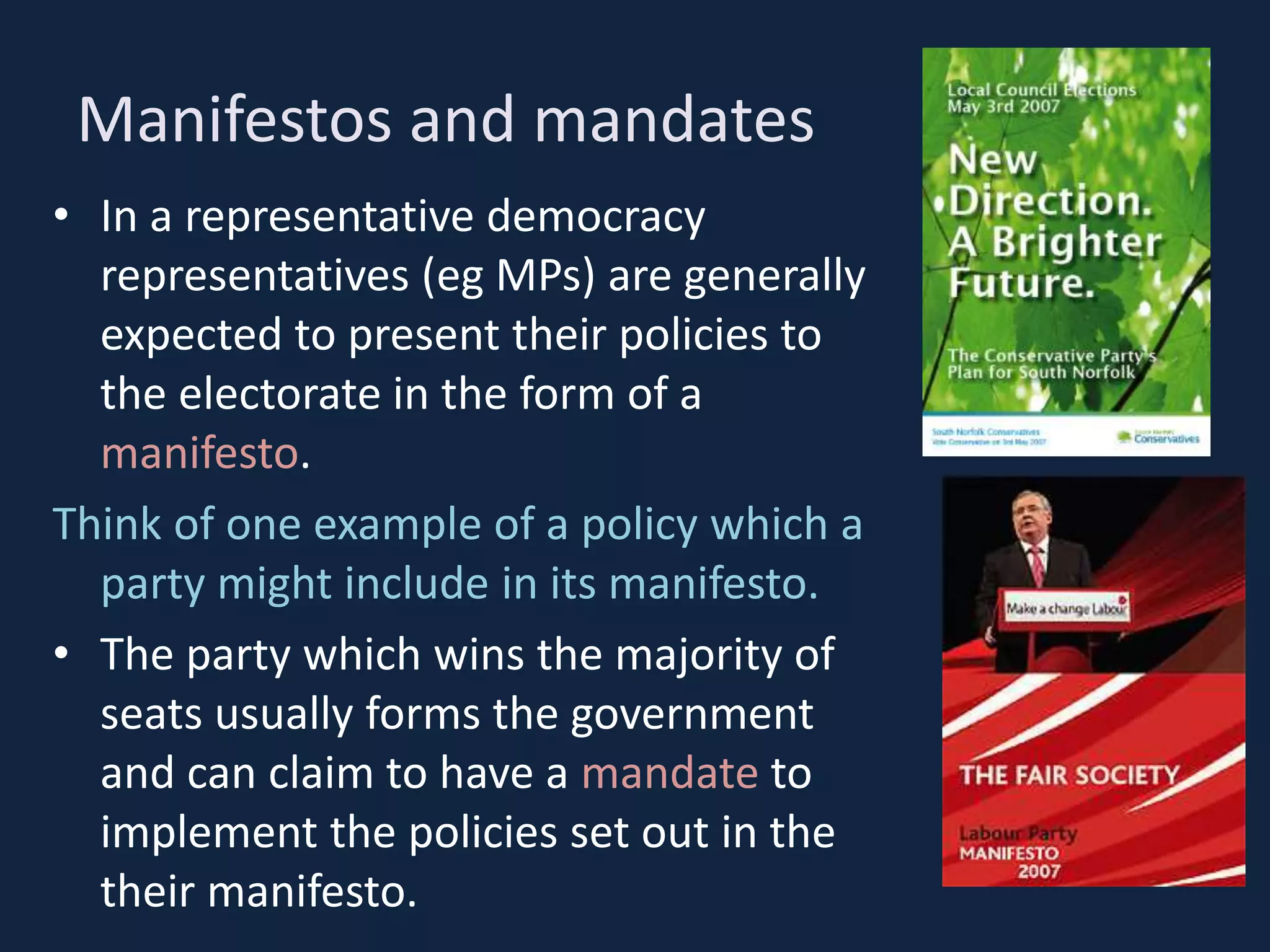
• In a representative democracy
representatives (eg MPs) are generally
expected to present their policies to
the electorate in the form of a
manifesto.
Think of one example of a policy which a
party might include in its manifesto.
• The party which wins the majority of
seats usually forms the government
and can claim to have a mandate to
implement the policies set out in the
their manifesto.
Referendums
• Examples include the decision to enter the European
Community in 1975 and the setting up of devolved
government in Scotland and Wales in 1997.
• Some people have argued that a referendum should be held
on the new European constitution.
Occasionally the
government consults
ordinary citizens over very
important decisions in a
referendum where all
voters are given a chance to
vote on an issue.
Referendums
• Working in a small group think of arguments
for and against making more use of
referendums to take political decisions in the
UK.
• List your points on a sheet of paper.
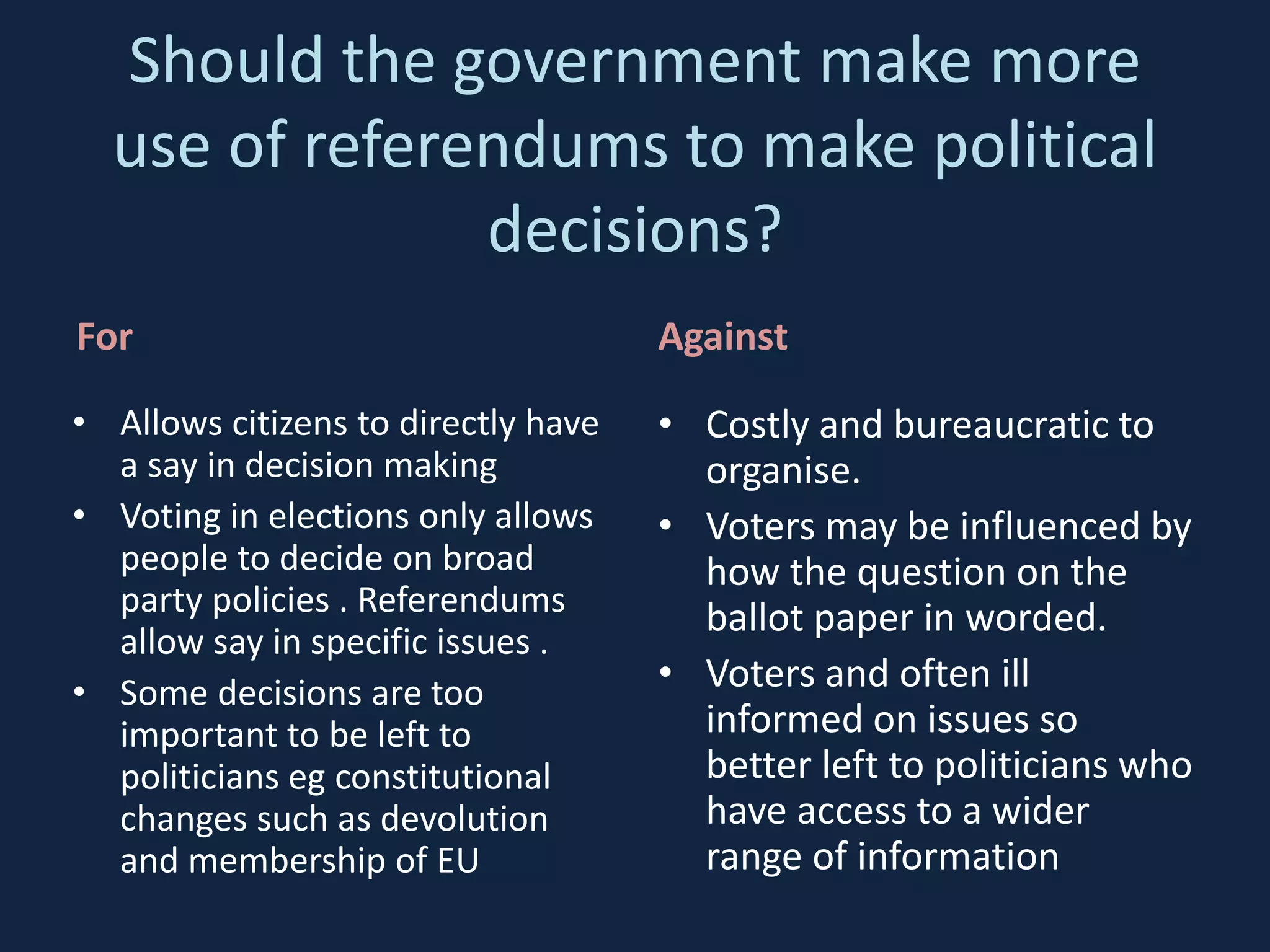
Should the government make more
use of referendums to make political
decisions?
For
• Allows citizens to directly have
a say in decision making
• Voting in elections only allows
people to decide on broad
party policies . Referendums
allow say in specific issues .
• Some decisions are too
important to be left to
politicians eg constitutional
changes such as devolution
and membership of EU
Against
• Costly and bureaucratic to
organise.
• Voters may be influenced by
how the question on the
ballot paper in worded.
• Voters and often ill
informed on issues so
better left to politicians who
have access to a wider
range of information
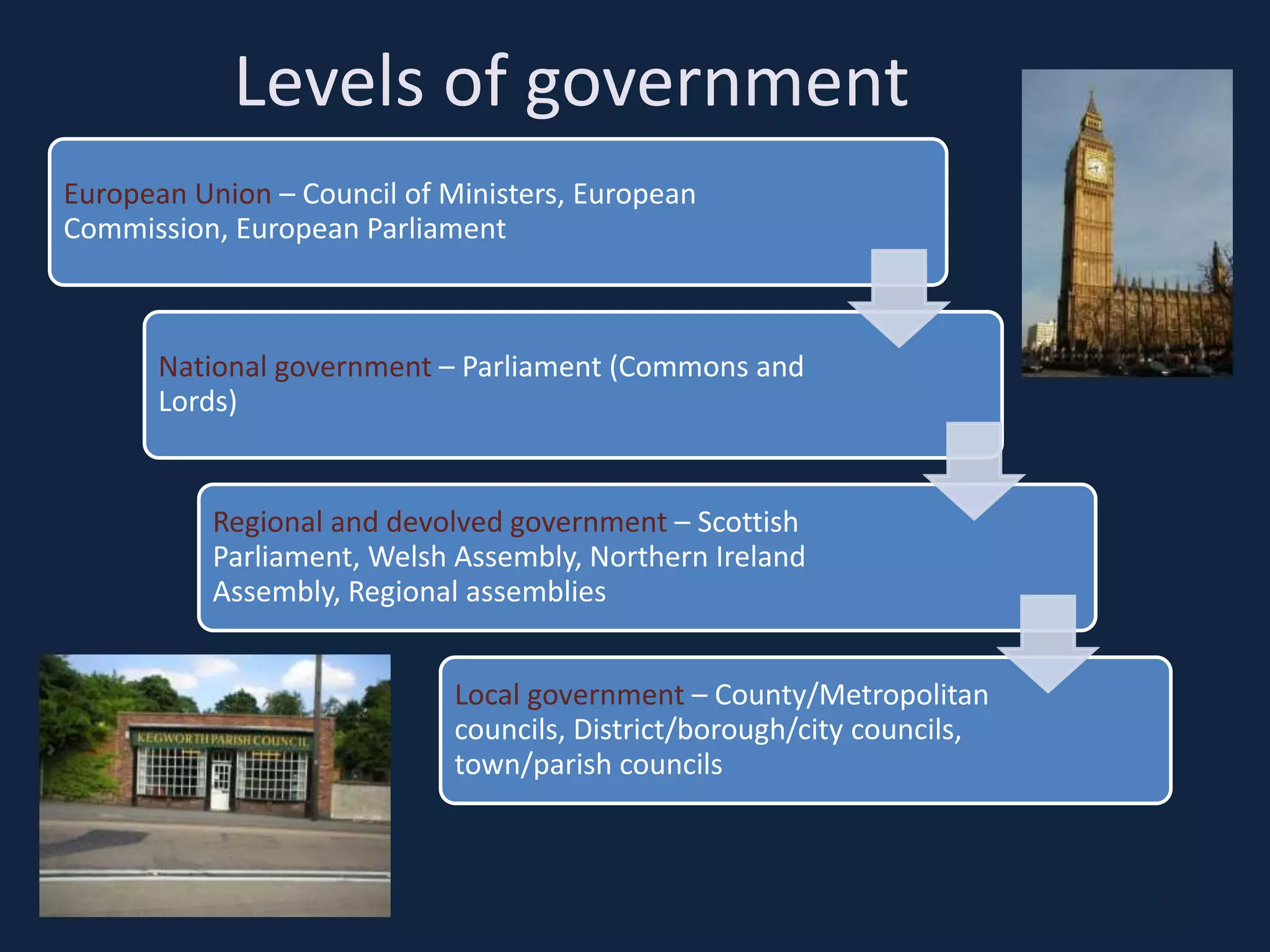
Levels of government
European Union – Council of Ministers, European
Commission, European Parliament
National government – Parliament (Commons and
Lords)
Regional and devolved government – Scottish
Parliament, Welsh Assembly, Northern Ireland
Assembly, Regional assemblies
Local government – County/Metropolitan
councils, District/borough/city councils,
town/parish councils
Levels of government
• Research what role each level of government
plays in governing the UK.
• How do representatives get elected or
appointed?
• What powers does each level of government
have?

Political representation and democracy

  • 1.
    Political representation and democracy Thissession will develop your understanding of: • What is meant by democracy • The role of manifestos, mandates and referendums in a democratic system • The main levels of government in the UK and their responsibilities
  • 2.
    What is democracy? •Originated in ancient Athens • Athenian democracy was direct democracy ie all citizens could participate directly in decision making Why might this type of democracy be difficult to achieve in a country like the UK? The Landesgemeinde of a Swiss canton. All citizens have a right to attend and vote on decisions.
  • 3.
    What is democracy? •Modern style of democracy gradually developed in modern Europe following French Revolution • Most modern democracies are representative democracies • Citizens elect representatives in elections to make decisions on their behalf The House of Commons of the UK Parliament. Who represents us in the House of Commons?
  • 4.
    Manifestos and mandates •In a representative democracy representatives (eg MPs) are generally expected to present their policies to the electorate in the form of a manifesto. Think of one example of a policy which a party might include in its manifesto. • The party which wins the majority of seats usually forms the government and can claim to have a mandate to implement the policies set out in the their manifesto.
  • 5.
    Referendums • Examples includethe decision to enter the European Community in 1975 and the setting up of devolved government in Scotland and Wales in 1997. • Some people have argued that a referendum should be held on the new European constitution. Occasionally the government consults ordinary citizens over very important decisions in a referendum where all voters are given a chance to vote on an issue.
  • 6.
    Referendums • Working ina small group think of arguments for and against making more use of referendums to take political decisions in the UK. • List your points on a sheet of paper.
  • 7.
    Should the governmentmake more use of referendums to make political decisions? For • Allows citizens to directly have a say in decision making • Voting in elections only allows people to decide on broad party policies . Referendums allow say in specific issues . • Some decisions are too important to be left to politicians eg constitutional changes such as devolution and membership of EU Against • Costly and bureaucratic to organise. • Voters may be influenced by how the question on the ballot paper in worded. • Voters and often ill informed on issues so better left to politicians who have access to a wider range of information
  • 8.
    Levels of government EuropeanUnion – Council of Ministers, European Commission, European Parliament National government – Parliament (Commons and Lords) Regional and devolved government – Scottish Parliament, Welsh Assembly, Northern Ireland Assembly, Regional assemblies Local government – County/Metropolitan councils, District/borough/city councils, town/parish councils
  • 9.
    Levels of government •Research what role each level of government plays in governing the UK. • How do representatives get elected or appointed? • What powers does each level of government have?