Chapter 1
Consumer Buying Behavior
Sharq Institute of higher
Education
Najeebhemat
Copyright © 2009 by The McGraw-Hill Companies, Inc. All rights reserved.McGraw-Hill/Irwin
The chapter objective
■ To understand the concept of consumer,
customer and consumer market.
■ To know what is consumer buying behavior and
the stage of consumer buying behavior.
■ To know the factors which influence the buying
behavior.
4-2
Introduction and definition
■ Consumer the person who consume the
product.
■ Customer is the person who purchase the
goods.
■ Consumer buyer behavior refers to the buying
behavior of final consumers—individuals and
households who buy goods and services for
personal consumption
■ Consumer market refers the market which
selling the product to the end user.
4-3
4-4
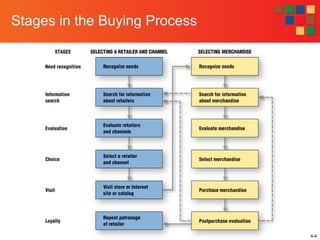
Stages in the Buying Process
4-5
Types of Needs
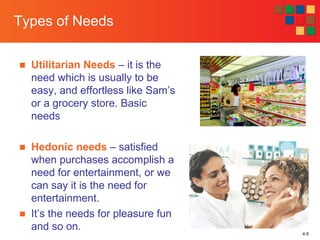
■ Utilitarian Needs – it is the
need which is usually to be
easy, and effortless like Sam’s
or a grocery store. Basic
needs
■ Hedonic needs – satisfied
when purchases accomplish a
need for entertainment, or we
can say it is the need for
entertainment.
■ It’s the needs for pleasure fun
and so on.
4-6
Information Search
■ The value of information depends on the source of
information
■ Factors Affecting Amount of Information Search

Product Characteristics
• Complexity
• Cost

Customer Characteristics
• Past experience
• Perceived risk

Market Characteristics
• Number of alternative brands
4-7
Sources of Information
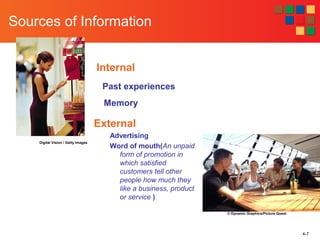
External
Advertising
Word of mouth(An unpaid
form of promotion in
which satisfied
customers tell other
people how much they
like a business, product
or service )
Internal
Past experiences
Memory
Digital Vision / Getty Images
© Dynamic Graphics/Picture Quest
4-8
Retailers encourage customers
to spend time
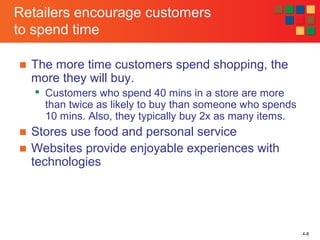
■ The more time customers spend shopping, the
more they will buy.

Customers who spend 40 mins in a store are more
than twice as likely to buy than someone who spends
10 mins. Also, they typically buy 2x as many items.
■ Stores use food and personal service
■ Websites provide enjoyable experiences with
technologies
4-9
Evaluation of Alternatives
■ Multiattribute attitude model:

Customers see a retailer, product, or service as a
collection of attributes or characteristics

Predict a customer’s evaluation of a retailer, product,
or service based on
• Its performance on relevant attributes
• the importance of those attributes to the customer
4-10
Postpurchase Evaluation
■ Satisfaction

A post-consumption evaluation of how well a store or
product meets or exceeds customer expectations
■ Becomes part of the customer’s internal
information that affects future store and product
decisions
■ Satisfaction builds:
■ Brand loyalty
■ Store loyalty
4-11
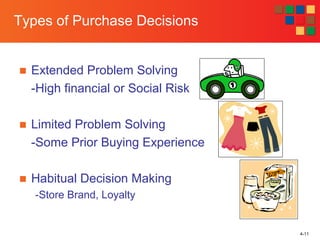
Types of Purchase Decisions
■ Extended Problem Solving
-High financial or Social Risk
■ Limited Problem Solving
-Some Prior Buying Experience
■ Habitual Decision Making
-Store Brand, Loyalty
4-12
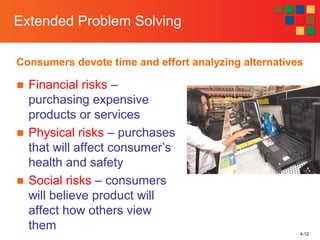
Extended Problem Solving
■ Financial risks –
purchasing expensive
products or services
■ Physical risks – purchases
that will affect consumer’s
health and safety
■ Social risks – consumers
will believe product will
affect how others view
them
Consumers devote time and effort analyzing alternatives
4-13
What Retailers Need to do for Customers Engaged in
Extended Problem Solving
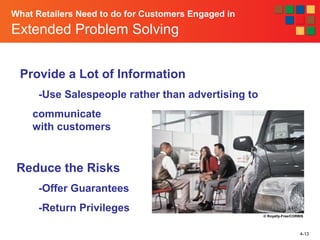
Provide a Lot of Information
-Use Salespeople rather than advertising to
communicate
with customers
Reduce the Risks
-Offer Guarantees
-Return Privileges
© Royalty-Free/CORBIS
4-14
Limited Problem Solving
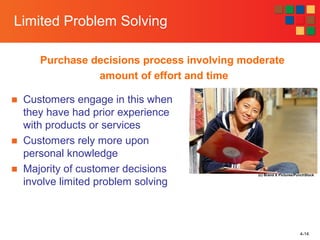
■ Customers engage in this when
they have had prior experience
with products or services
■ Customers rely more upon
personal knowledge
■ Majority of customer decisions
involve limited problem solving
(c) Brand X Pictures/PunchStock
Purchase decisions process involving moderate
amount of effort and time
4-15
Habitual Problem Solving
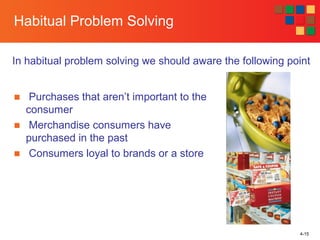
■ Purchases that aren’t important to the
consumer
■ Merchandise consumers have
purchased in the past
■ Consumers loyal to brands or a store
In habitual problem solving we should aware the following point
4-16
Customer Loyalty
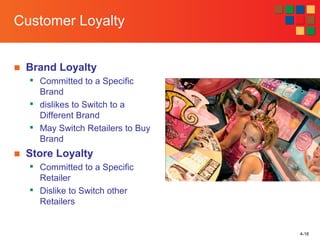
■ Brand Loyalty

Committed to a Specific
Brand

dislikes to Switch to a
Different Brand

May Switch Retailers to Buy
Brand
■ Store Loyalty

Committed to a Specific
Retailer

Dislike to Switch other
Retailers
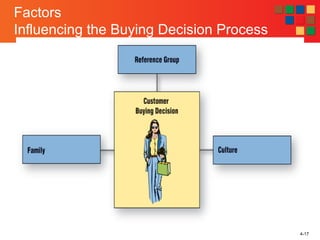
Factors
Influencing the Buying Decision Process
4-17
4-18
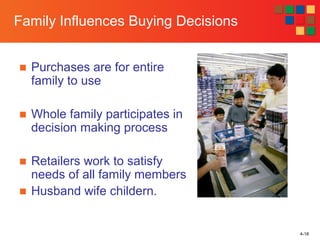
Family Influences Buying Decisions
■ Purchases are for entire
family to use
■ Whole family participates in
decision making process
■ Retailers work to satisfy
needs of all family members
■ Husband wife childern.
Reference Groups
■ A reference group is one or more people from whom we
can get advice and information to buys some product
and services. or we can say that reference group is the
group of people which directly effect our purchasing
decision. Friends, neighbors, collogues and so on.
■ Reference groups affect buying decisions by:

Offering information

Providing chances of rewards for specific purchasing
behaviors

Enhancing a consumer’s self-image
4-19
Culture

Western culture: individualism

Eastern culture: collectivism

Subcultures are the group of people who
having the same needs and demand with in
the culture.
■ Culture is the beliefs, morals and values shared
by most members of a society.
4-20
Social Class
People within a social class tend to have
similar buying behavior.
Or a class of people based on social power,
wealth or other criteria.
• Occupation
• Income
• Education
• Wealth
4-21
There are many personal factors which influence
buying behavior.
■ Age (at different ages people having different
demand and want for the product and service )
■ Personality ( deferent personality having
different attitude to buy the product)
4-22
Personal factors

Consumer buyingbehaviorchapt1

  • 1.
    Chapter 1 Consumer BuyingBehavior Sharq Institute of higher Education Najeebhemat Copyright © 2009 by The McGraw-Hill Companies, Inc. All rights reserved.McGraw-Hill/Irwin
  • 2.
    The chapter objective ■To understand the concept of consumer, customer and consumer market. ■ To know what is consumer buying behavior and the stage of consumer buying behavior. ■ To know the factors which influence the buying behavior. 4-2
  • 3.
    Introduction and definition ■Consumer the person who consume the product. ■ Customer is the person who purchase the goods. ■ Consumer buyer behavior refers to the buying behavior of final consumers—individuals and households who buy goods and services for personal consumption ■ Consumer market refers the market which selling the product to the end user. 4-3
  • 4.
    4-4 Stages in theBuying Process
  • 5.
    4-5 Types of Needs ■Utilitarian Needs – it is the need which is usually to be easy, and effortless like Sam’s or a grocery store. Basic needs ■ Hedonic needs – satisfied when purchases accomplish a need for entertainment, or we can say it is the need for entertainment. ■ It’s the needs for pleasure fun and so on.
  • 6.
    4-6 Information Search ■ Thevalue of information depends on the source of information ■ Factors Affecting Amount of Information Search  Product Characteristics • Complexity • Cost  Customer Characteristics • Past experience • Perceived risk  Market Characteristics • Number of alternative brands
  • 7.
    4-7 Sources of Information External Advertising Wordof mouth(An unpaid form of promotion in which satisfied customers tell other people how much they like a business, product or service ) Internal Past experiences Memory Digital Vision / Getty Images © Dynamic Graphics/Picture Quest
  • 8.
    4-8 Retailers encourage customers tospend time ■ The more time customers spend shopping, the more they will buy.  Customers who spend 40 mins in a store are more than twice as likely to buy than someone who spends 10 mins. Also, they typically buy 2x as many items. ■ Stores use food and personal service ■ Websites provide enjoyable experiences with technologies
  • 9.
    4-9 Evaluation of Alternatives ■Multiattribute attitude model:  Customers see a retailer, product, or service as a collection of attributes or characteristics  Predict a customer’s evaluation of a retailer, product, or service based on • Its performance on relevant attributes • the importance of those attributes to the customer
  • 10.
    4-10 Postpurchase Evaluation ■ Satisfaction  Apost-consumption evaluation of how well a store or product meets or exceeds customer expectations ■ Becomes part of the customer’s internal information that affects future store and product decisions ■ Satisfaction builds: ■ Brand loyalty ■ Store loyalty
  • 11.
    4-11 Types of PurchaseDecisions ■ Extended Problem Solving -High financial or Social Risk ■ Limited Problem Solving -Some Prior Buying Experience ■ Habitual Decision Making -Store Brand, Loyalty
  • 12.
    4-12 Extended Problem Solving ■Financial risks – purchasing expensive products or services ■ Physical risks – purchases that will affect consumer’s health and safety ■ Social risks – consumers will believe product will affect how others view them Consumers devote time and effort analyzing alternatives
  • 13.
    4-13 What Retailers Needto do for Customers Engaged in Extended Problem Solving Provide a Lot of Information -Use Salespeople rather than advertising to communicate with customers Reduce the Risks -Offer Guarantees -Return Privileges © Royalty-Free/CORBIS
  • 14.
    4-14 Limited Problem Solving ■Customers engage in this when they have had prior experience with products or services ■ Customers rely more upon personal knowledge ■ Majority of customer decisions involve limited problem solving (c) Brand X Pictures/PunchStock Purchase decisions process involving moderate amount of effort and time
  • 15.
    4-15 Habitual Problem Solving ■Purchases that aren’t important to the consumer ■ Merchandise consumers have purchased in the past ■ Consumers loyal to brands or a store In habitual problem solving we should aware the following point
  • 16.
    4-16 Customer Loyalty ■ BrandLoyalty  Committed to a Specific Brand  dislikes to Switch to a Different Brand  May Switch Retailers to Buy Brand ■ Store Loyalty  Committed to a Specific Retailer  Dislike to Switch other Retailers
  • 17.
    Factors Influencing the BuyingDecision Process 4-17
  • 18.
    4-18 Family Influences BuyingDecisions ■ Purchases are for entire family to use ■ Whole family participates in decision making process ■ Retailers work to satisfy needs of all family members ■ Husband wife childern.
  • 19.
    Reference Groups ■ Areference group is one or more people from whom we can get advice and information to buys some product and services. or we can say that reference group is the group of people which directly effect our purchasing decision. Friends, neighbors, collogues and so on. ■ Reference groups affect buying decisions by:  Offering information  Providing chances of rewards for specific purchasing behaviors  Enhancing a consumer’s self-image 4-19
  • 20.
    Culture  Western culture: individualism  Easternculture: collectivism  Subcultures are the group of people who having the same needs and demand with in the culture. ■ Culture is the beliefs, morals and values shared by most members of a society. 4-20
  • 21.
    Social Class People withina social class tend to have similar buying behavior. Or a class of people based on social power, wealth or other criteria. • Occupation • Income • Education • Wealth 4-21
  • 22.
    There are manypersonal factors which influence buying behavior. ■ Age (at different ages people having different demand and want for the product and service ) ■ Personality ( deferent personality having different attitude to buy the product) 4-22 Personal factors

Editor's Notes

  • #10 Multiattrabute attitude model Customer see the
  • #12 Habitual decision making store