CONSULTING TOOLKIT

     Consulting Skills:

     Modelling


© 2007-2012 IESIES Development Ltd. All Ltd. Reserved
       © 2007-2012 Development Rights All Rights Reserved
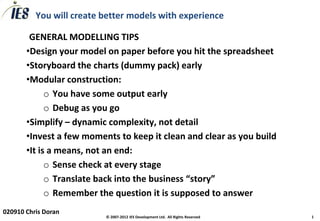
You will create better models with experience

       GENERAL MODELLING TIPS
       •Design your model on paper before you hit the spreadsheet
       •Storyboard the charts (dummy pack) early
       •Modular construction:
             o You have some output early
             o Debug as you go
       •Simplify – dynamic complexity, not detail
       •Invest a few moments to keep it clean and clear as you build
       •It is a means, not an end:
             o Sense check at every stage
             o Translate back into the business “story”
             o Remember the question it is supposed to answer
020910 Chris Doran
                           © 2007-2012 IES Development Ltd. All Rights Reserved   1
Build your valuation model in logical steps, debugging at every
       stage
STEPS IN BUILDING A VALUATION MODEL

1) Enter 3 years of historical cashflow, P&L and balance sheet
2) Calculate key drivers/ratios of historical results
3) Project flat “vanilla” assumptions for key ratios
4) Calculate projected cashflow, P&L and balance sheet
5) Debug your model – check you get sensible number
6) Develop a “story’ on the future of the industry/business
7) Turn your story into different financial assumptions on the key drivers
8) Sense check your FCF
9) Calculate Terminal values, enterprise value, equity value
10) Compare equity value to current market capitalisation
11) Run sensitivities


                            © 2007-2012 IES Development Ltd. All Rights Reserved
Build a FCF forecast in a logical sequence
STEPS 1-4: BUILDING A “VANILLA” VALUATION MODEL
CASHFLOW                         Historical    Historical   Estimate    Forecast

                                       2004        2005         2006        2007      2008        2009        2010      2011      2012      2013
 Revenue                              8,267      12,246       14,789     17,085     19,427      21,815      24,251    26,736    29,271    31,857
 Cost of Goods                       -7,684     -11,332      -13,760     -15,804    -17,970     -20,179     -22,433   -24,731   -27,076   -29,467
 Gross Profit                           583          914       1,029       1,281     1,457        1,636      1,819     2,005     2,195     2,389
 Other income                           300          760       1,169       1,281     1,457        1,636      1,819     2,005     2,195     2,389
 Distribution expense            1) -508 -1,097 -1,563
                                    HISTORICAL                            -1,794        4) PROJECTED FIGURES
                                                                                     -2,040 -2,291 -2,546 -2,807 -3,073                    -3,345
 Other operating expenses
                                 FIGURES
                                    -146   -273   -325                      -427
                                                                                        (Calculated output) -585
                                                                                       -466   -502   -534   -561                            -605
 Operating profit (EBIT)                229          304         310         342       408            480      558       642       732       828
 Cash taxes                              -39          -64         -37         -68       -82           -96     -112      -128      -146      -166
 NOPLAT                                 190          240         273         273       326            384      446       513       585       663
 Depreciation                             25           59        106         157       209            271      335       422       510       586
 Gross Cash Flow                        215          299         379         430       535            655      781       935     1,095     1,248


ASSUMPTIONS
ASSUMPTIONS
New stores                               67         101         100          100        100           100      100        100      100        100
        Cost (RMBm)/new store
        Revenue per new store
                                2) HISTORICAL 29
                                      3
                                     49
                                          3
                                         39
                                               4                              4.2
                                                                               20
                                                                                    3) 4.4  4.6
                                                                                       PROJECTED
                                                                                        20   20
                                                                                                 4.9
                                                                                                  20
                                                                                                      5.1
                                                                                                       20
                                                                                                          5.4
                                                                                                           20
                                                                                                                 5.6
                                                                                                                  20
Other capex spend               DRIVERS/ 78 121
                                     57  RATIOS                              140    DRIVERS/RATIOS (Input422
                                                                                      157  209  271  335   data)510
Like for like sales growth, %           2%           0%         -3%           2%         2%           2%       2%          2%       2%        2%


                                               © 2007-2012 IES Development Ltd. All Rights Reserved
The more you practice, the better you will get at modeling

GENERAL TIPS ON VALUATION MODEL BUILDING
 •Think through key value drivers, ratios and economics of the
  industry/company you are modeling – include as assumptions
 •One source principle: Set it up so that changing one cell impacts
  all related cells, don’t have to remember to enter twice
 •Don’t “hardwire” numbers; even if you think it won’t
  change, set it up as a separate assumption
 •Make it easy to edit – you are certain to want to change your model
 •Start simple. Get something that works, then incrementally
  make it more accurate/complicated, don’t build something
  complicated and never know where the bugs are
 •Best practice is to Project P&L, Balance sheet as well as Cash flow (can
  simplify, but MUST project Working Capital and fixed asset register)

                      © 2007-2012 IES Development Ltd. All Rights Reserved
Always remember the purpose of your model to avoid getting
    paralysed by detail

THE GOLDEN RULE OF MODELLING


                            80/20
•Focus your time and attention on what
 matters, don’t sweat every detail
•The purpose is to provide insight and
 understanding, not accounting perfection
                    © 2007-2012 IES Development Ltd. All Rights Reserved

Consulting toolkit modelling

  • 1.
    CONSULTING TOOLKIT Consulting Skills: Modelling © 2007-2012 IESIES Development Ltd. All Ltd. Reserved © 2007-2012 Development Rights All Rights Reserved
  • 2.
    You will createbetter models with experience GENERAL MODELLING TIPS •Design your model on paper before you hit the spreadsheet •Storyboard the charts (dummy pack) early •Modular construction: o You have some output early o Debug as you go •Simplify – dynamic complexity, not detail •Invest a few moments to keep it clean and clear as you build •It is a means, not an end: o Sense check at every stage o Translate back into the business “story” o Remember the question it is supposed to answer 020910 Chris Doran © 2007-2012 IES Development Ltd. All Rights Reserved 1
  • 3.
    Build your valuationmodel in logical steps, debugging at every stage STEPS IN BUILDING A VALUATION MODEL 1) Enter 3 years of historical cashflow, P&L and balance sheet 2) Calculate key drivers/ratios of historical results 3) Project flat “vanilla” assumptions for key ratios 4) Calculate projected cashflow, P&L and balance sheet 5) Debug your model – check you get sensible number 6) Develop a “story’ on the future of the industry/business 7) Turn your story into different financial assumptions on the key drivers 8) Sense check your FCF 9) Calculate Terminal values, enterprise value, equity value 10) Compare equity value to current market capitalisation 11) Run sensitivities © 2007-2012 IES Development Ltd. All Rights Reserved
  • 4.
    Build a FCFforecast in a logical sequence STEPS 1-4: BUILDING A “VANILLA” VALUATION MODEL CASHFLOW Historical Historical Estimate Forecast 2004 2005 2006 2007 2008 2009 2010 2011 2012 2013 Revenue 8,267 12,246 14,789 17,085 19,427 21,815 24,251 26,736 29,271 31,857 Cost of Goods -7,684 -11,332 -13,760 -15,804 -17,970 -20,179 -22,433 -24,731 -27,076 -29,467 Gross Profit 583 914 1,029 1,281 1,457 1,636 1,819 2,005 2,195 2,389 Other income 300 760 1,169 1,281 1,457 1,636 1,819 2,005 2,195 2,389 Distribution expense 1) -508 -1,097 -1,563 HISTORICAL -1,794 4) PROJECTED FIGURES -2,040 -2,291 -2,546 -2,807 -3,073 -3,345 Other operating expenses FIGURES -146 -273 -325 -427 (Calculated output) -585 -466 -502 -534 -561 -605 Operating profit (EBIT) 229 304 310 342 408 480 558 642 732 828 Cash taxes -39 -64 -37 -68 -82 -96 -112 -128 -146 -166 NOPLAT 190 240 273 273 326 384 446 513 585 663 Depreciation 25 59 106 157 209 271 335 422 510 586 Gross Cash Flow 215 299 379 430 535 655 781 935 1,095 1,248 ASSUMPTIONS ASSUMPTIONS New stores 67 101 100 100 100 100 100 100 100 100 Cost (RMBm)/new store Revenue per new store 2) HISTORICAL 29 3 49 3 39 4 4.2 20 3) 4.4 4.6 PROJECTED 20 20 4.9 20 5.1 20 5.4 20 5.6 20 Other capex spend DRIVERS/ 78 121 57 RATIOS 140 DRIVERS/RATIOS (Input422 157 209 271 335 data)510 Like for like sales growth, % 2% 0% -3% 2% 2% 2% 2% 2% 2% 2% © 2007-2012 IES Development Ltd. All Rights Reserved
  • 5.
    The more youpractice, the better you will get at modeling GENERAL TIPS ON VALUATION MODEL BUILDING •Think through key value drivers, ratios and economics of the industry/company you are modeling – include as assumptions •One source principle: Set it up so that changing one cell impacts all related cells, don’t have to remember to enter twice •Don’t “hardwire” numbers; even if you think it won’t change, set it up as a separate assumption •Make it easy to edit – you are certain to want to change your model •Start simple. Get something that works, then incrementally make it more accurate/complicated, don’t build something complicated and never know where the bugs are •Best practice is to Project P&L, Balance sheet as well as Cash flow (can simplify, but MUST project Working Capital and fixed asset register) © 2007-2012 IES Development Ltd. All Rights Reserved
  • 6.
    Always remember thepurpose of your model to avoid getting paralysed by detail THE GOLDEN RULE OF MODELLING 80/20 •Focus your time and attention on what matters, don’t sweat every detail •The purpose is to provide insight and understanding, not accounting perfection © 2007-2012 IES Development Ltd. All Rights Reserved