Downloaded 79 times


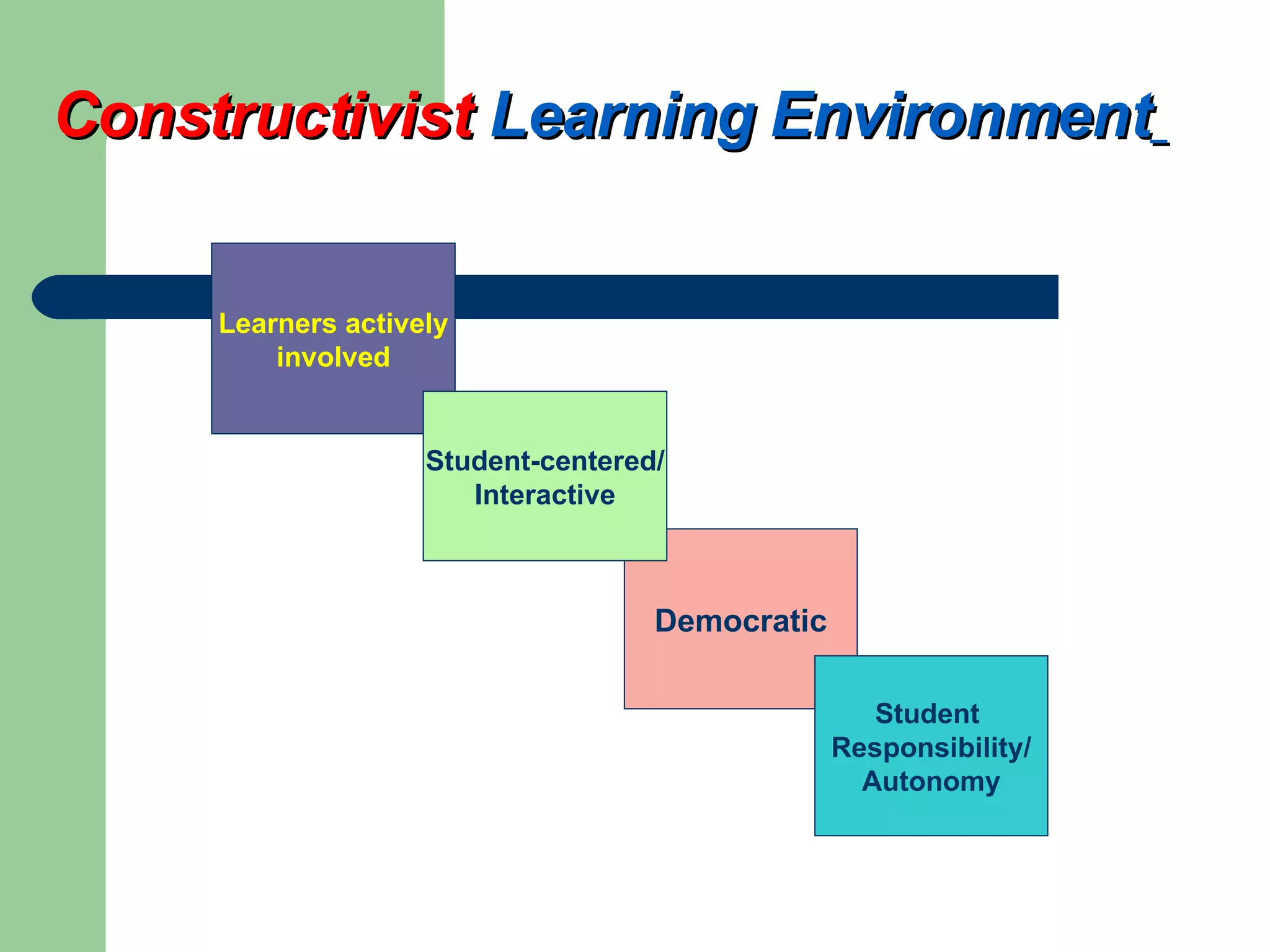
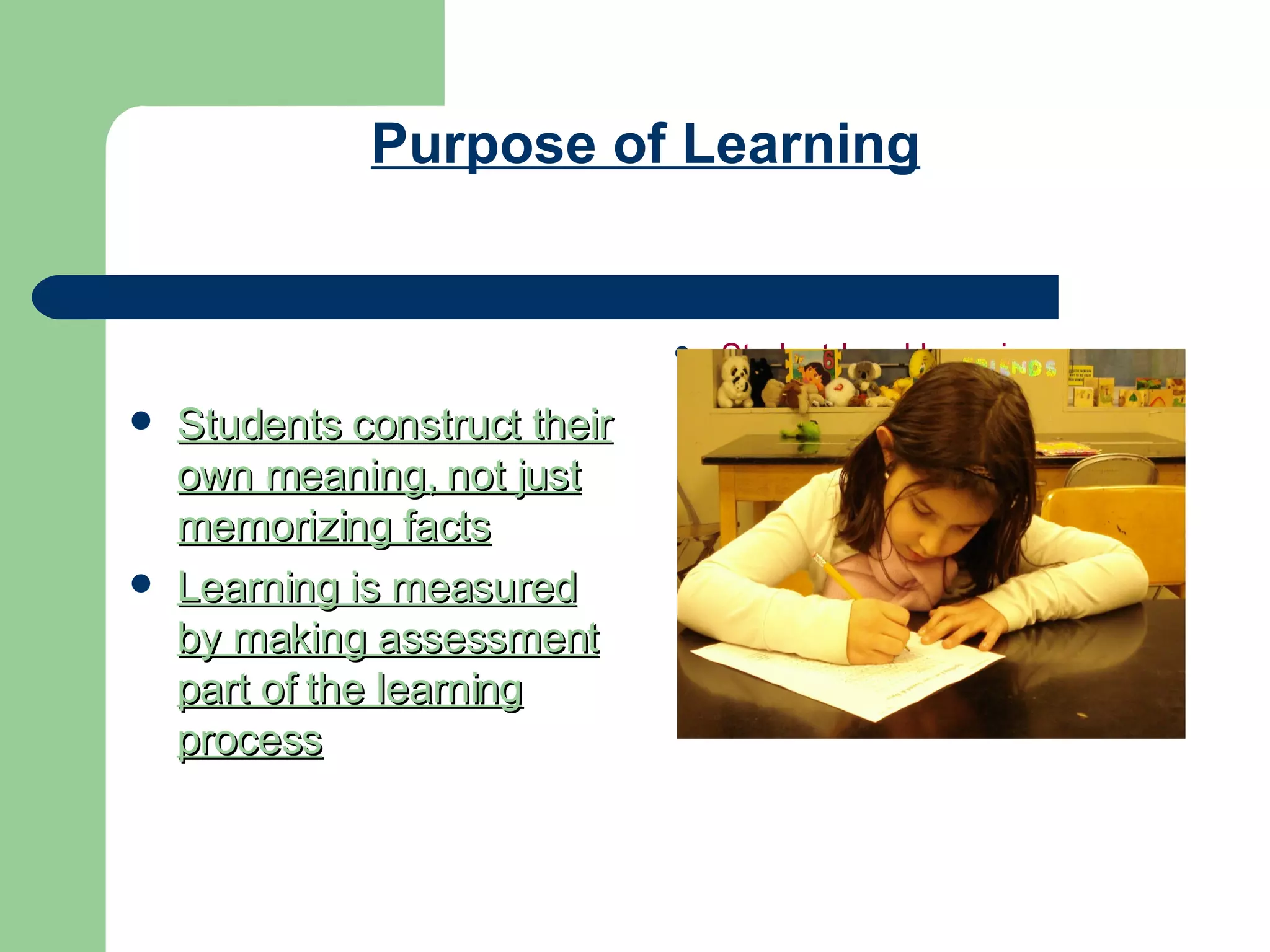

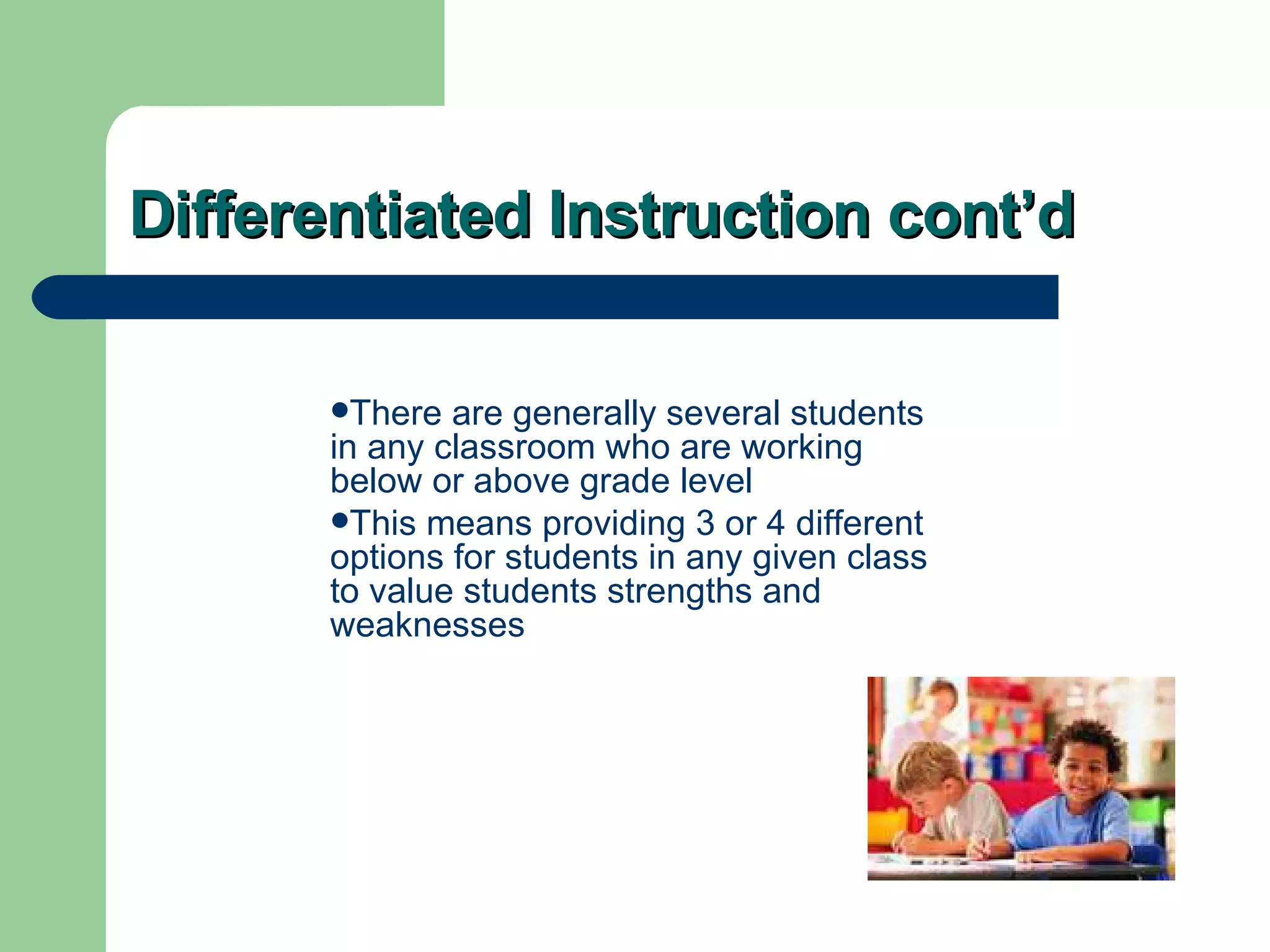





Teachers can act as agents of change by applying constructivism, differentiated instruction, and the theory of multiple intelligences in their classrooms. [1] Constructivism involves students actively constructing their own understanding by reflecting on experiences, while differentiated instruction recognizes that students learn differently and teaches in ways that value individual strengths and weaknesses. [2] The theory of multiple intelligences proposes that intelligence exists in several forms and teachers should utilize the nine identified intelligences like verbal-linguistic, logical-mathematical, and interpersonal to be effective. [3] Together, these frameworks can help create personalized, diverse learning experiences that align with how individual students understand and interpret the world.


