CONSTRUCTION MATERIAL
PLASTIC
By : AMAN KUMAR SINGH
INTRODUCTION
Plastic is a synthetic material
made from a wide range of
organic polymers such as
polyethylene, PVC, nylon, etc.,
that can be moulded into shape
while soft, and then set into a
rigid or slightly elastic form.
COMPOSITION OF PLASTIC
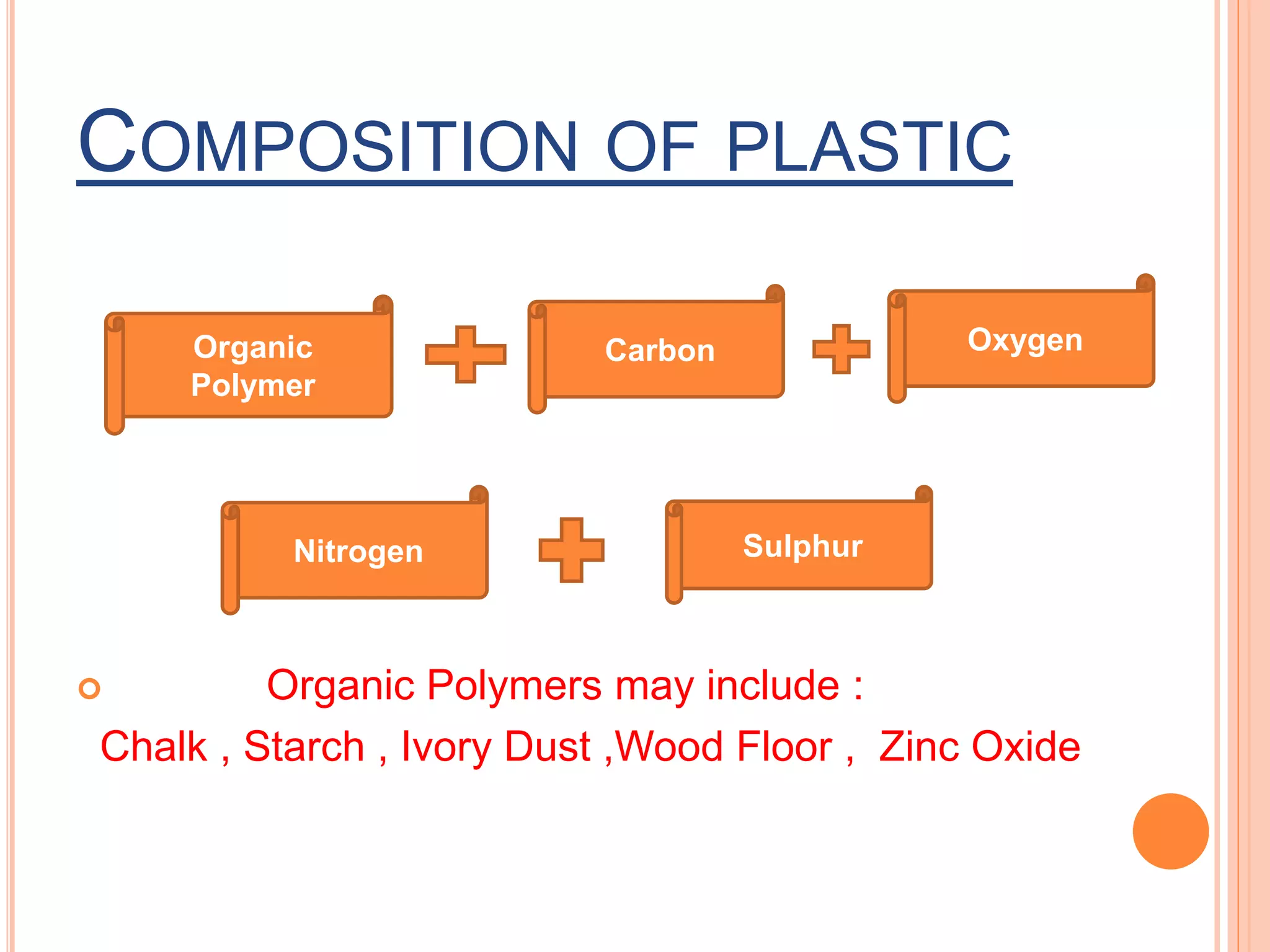
 Organic Polymers may include :
Chalk , Starch , Ivory Dust ,Wood Floor , Zinc Oxide
Organic
Polymer
Carbon Oxygen
Nitrogen Sulphur
METHODS OF MANUFACTURING
PLASTIC
 Injection Molding
 Extrusion Molding
 Blow Molding
 Rotational Molding
PRODUCTS
Some of the examples below are Products of Plastics in the
Construction industry:
 Pipes : Electrical Conduits, Rain Water & Sewage pipes,
Plumbing, Gas Distributions.
 Cables : PVC Insulation on cables, Insulation Tapes .
 Floorings : Flooring tiles & Rolls .
 Domes / sky lights : Opaque as well as transparent.
 Roofing : Coloured or Double skinned for insulation.
 Windows & doors : Extruded sections for Door and windows
and panels.
 Storage tanks : Storage tanks.
 Hardware accessories : Washers, Nut bolts, Sleeves,
Anchoring wires.
 Temporary structures: Guard cabins , tents.
 Insulation materials: PVC sheets, insulating membranes.
USE OF PLASTICS IN DIFFERENT ASPECTS OF
THE CONSTRUCTION INDUSTRY
Flooring
Roofing
Insulation
Wall
Pipes
Windows
Doors
FLOORING
 Plastic materials like
polyvinyl chloride (PVC)
and polyethylene are used
to make flooring less
prone to wear and tear. It
also decreases the sound
pollution level and can be
cleaned easily.
ROOFING
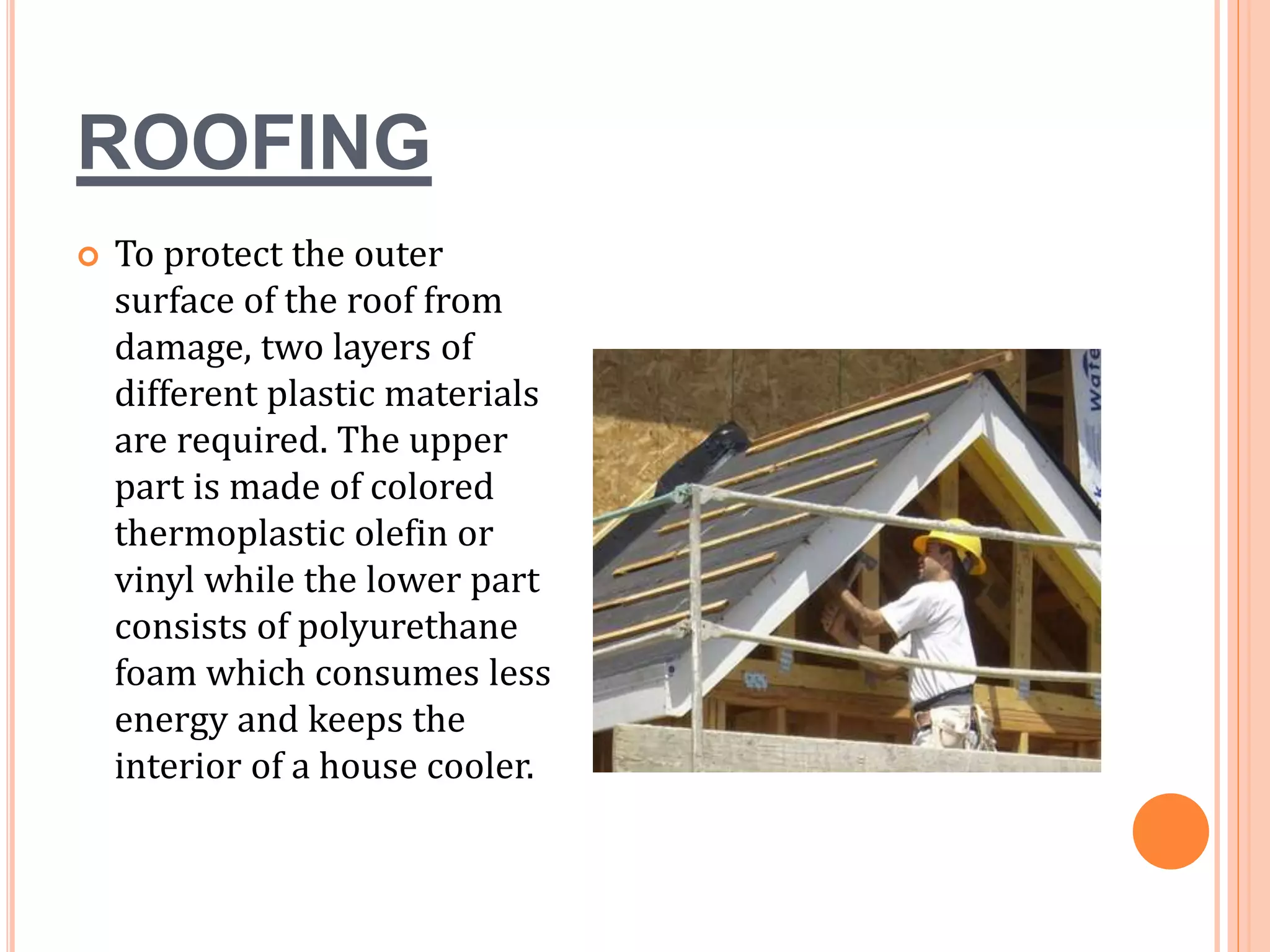
 To protect the outer
surface of the roof from
damage, two layers of
different plastic materials
are required. The upper
part is made of colored
thermoplastic olefin or
vinyl while the lower part
consists of polyurethane
foam which consumes less
energy and keeps the
interior of a house cooler.
INSULATION
 Polyurethane spray is frequently
used for insulation when
constructing green or low energy
buildings. Rigid polyurethane foam
is known for its high thermal
resistance which promotes
temperature
consistency. Polyurethane foam is
also popular because it is
lightweight, chemical resistant, and
flame retardant. Due to its closed
cell nature, polyurethane insulation
performs as an air barrier, resulting
in significant energy savings.
WALLS
 A structural insulated panel
(SIP) is a sandwich of
expanded polystyrene
amidst two slim layers of
oriented strand board. This
type of pre-fab, composite
wall board can be
transferred to the work
place easily for a particular
task and provide good
support to columns and
other associated essentials
during renovation.
PIPES
 Commonly made up of
polyvinyl chloride (PVC),
CPVC, acrylonitrile
butadiene styrene (ABS)
or polyethylene, plastic
pipes are flexible and very
light in weight, making
them easy to install. All of
these plastic materials are
also highly chemical and
water resistant, making
them suitable for many
extreme environments.
WINDOWS
 Polycarbonate is used to
manufacture building windows.
This plastic material is strong,
clear and very light in
weight. Polycarbonate
windows are considered more
burglar-proof than regular
glass windows. Two plastics
materials, vinyl and fiberglass,
are used commonly in the
production of window
frames. Fiberglass is extremely
strong while vinyl is quite
durable and also inexpensive.
DOORS
 Some construction
projects use doors made
from a stiff
polyurethane foam core
with a fiber reinforced
plastic (FRP) coating.
The sandwich structure
of these doors makes
them incredibly strong.
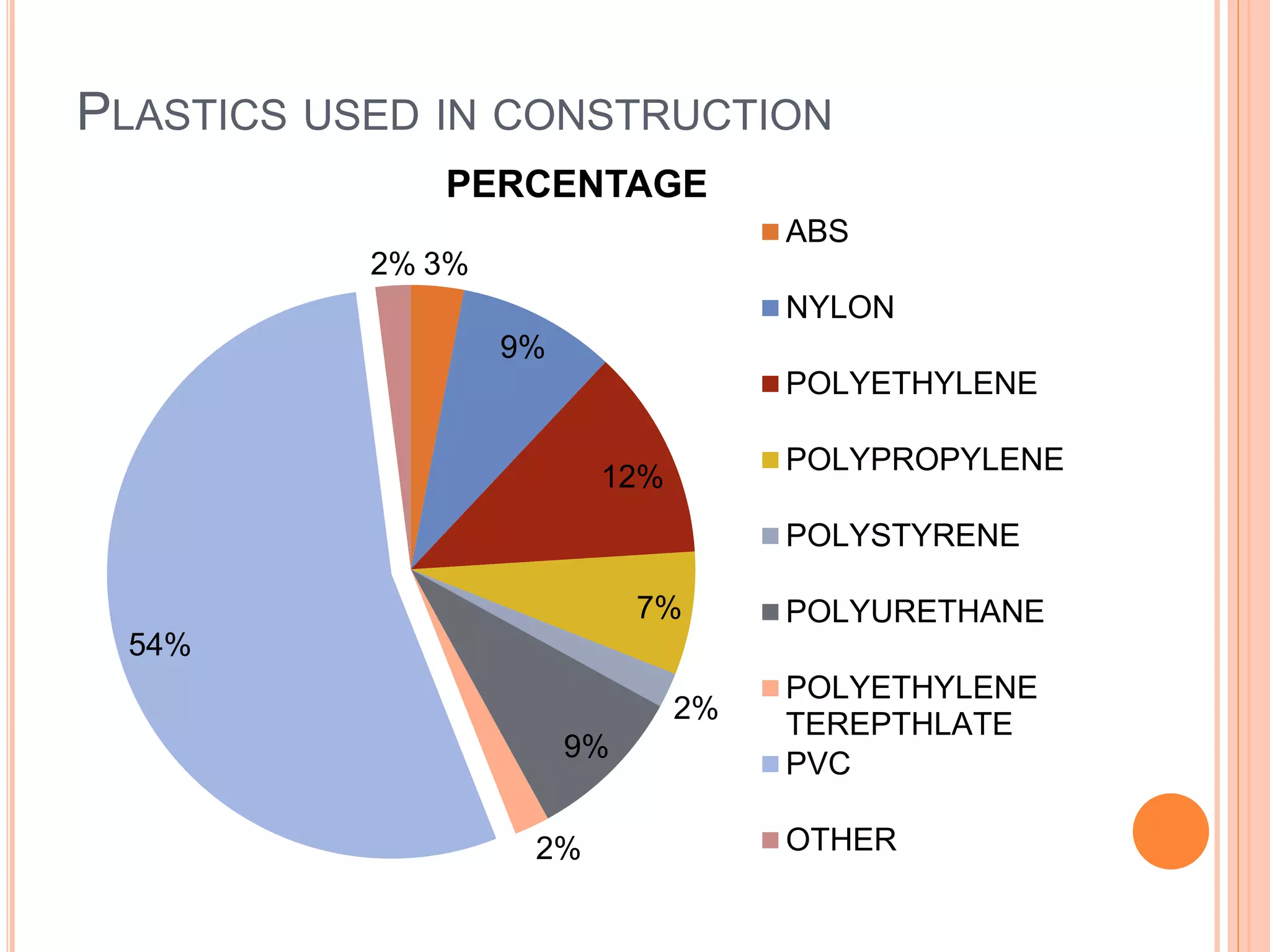
PLASTICS USED IN CONSTRUCTION
3%
9%
12%
7%
2%
9%
2%
54%
2%
PERCENTAGE
ABS
NYLON
POLYETHYLENE
POLYPROPYLENE
POLYSTYRENE
POLYURETHANE
POLYETHYLENE
TEREPTHLATE
PVC
OTHER
ADVANTAGES OF USING
PLASTIC
 Light in weight.
 Can be easily moulded and have excellent
finishing.
 Possess very good strength and toughness.
 Corrosion resistant and chemically inert.
 Low thermal expansion of co-efficient and possess
good thermal and electrical insulating property.
 Very good water resistant and possess good
adhesiveness.
 Strong , good and cheap to produce.
THANK YOU

Construction material Plastic and its use in different aspect of construction

  • 1.
  • 2.
    INTRODUCTION Plastic is asynthetic material made from a wide range of organic polymers such as polyethylene, PVC, nylon, etc., that can be moulded into shape while soft, and then set into a rigid or slightly elastic form.
  • 3.
    COMPOSITION OF PLASTIC Organic Polymers may include : Chalk , Starch , Ivory Dust ,Wood Floor , Zinc Oxide Organic Polymer Carbon Oxygen Nitrogen Sulphur
  • 4.
    METHODS OF MANUFACTURING PLASTIC Injection Molding  Extrusion Molding  Blow Molding  Rotational Molding
  • 5.
    PRODUCTS Some of theexamples below are Products of Plastics in the Construction industry:  Pipes : Electrical Conduits, Rain Water & Sewage pipes, Plumbing, Gas Distributions.  Cables : PVC Insulation on cables, Insulation Tapes .  Floorings : Flooring tiles & Rolls .  Domes / sky lights : Opaque as well as transparent.  Roofing : Coloured or Double skinned for insulation.  Windows & doors : Extruded sections for Door and windows and panels.  Storage tanks : Storage tanks.  Hardware accessories : Washers, Nut bolts, Sleeves, Anchoring wires.  Temporary structures: Guard cabins , tents.  Insulation materials: PVC sheets, insulating membranes.
  • 6.
    USE OF PLASTICSIN DIFFERENT ASPECTS OF THE CONSTRUCTION INDUSTRY Flooring Roofing Insulation Wall Pipes Windows Doors
  • 7.
    FLOORING  Plastic materialslike polyvinyl chloride (PVC) and polyethylene are used to make flooring less prone to wear and tear. It also decreases the sound pollution level and can be cleaned easily.
  • 8.
    ROOFING  To protectthe outer surface of the roof from damage, two layers of different plastic materials are required. The upper part is made of colored thermoplastic olefin or vinyl while the lower part consists of polyurethane foam which consumes less energy and keeps the interior of a house cooler.
  • 9.
    INSULATION  Polyurethane sprayis frequently used for insulation when constructing green or low energy buildings. Rigid polyurethane foam is known for its high thermal resistance which promotes temperature consistency. Polyurethane foam is also popular because it is lightweight, chemical resistant, and flame retardant. Due to its closed cell nature, polyurethane insulation performs as an air barrier, resulting in significant energy savings.
  • 10.
    WALLS  A structuralinsulated panel (SIP) is a sandwich of expanded polystyrene amidst two slim layers of oriented strand board. This type of pre-fab, composite wall board can be transferred to the work place easily for a particular task and provide good support to columns and other associated essentials during renovation.
  • 11.
    PIPES  Commonly madeup of polyvinyl chloride (PVC), CPVC, acrylonitrile butadiene styrene (ABS) or polyethylene, plastic pipes are flexible and very light in weight, making them easy to install. All of these plastic materials are also highly chemical and water resistant, making them suitable for many extreme environments.
  • 12.
    WINDOWS  Polycarbonate isused to manufacture building windows. This plastic material is strong, clear and very light in weight. Polycarbonate windows are considered more burglar-proof than regular glass windows. Two plastics materials, vinyl and fiberglass, are used commonly in the production of window frames. Fiberglass is extremely strong while vinyl is quite durable and also inexpensive.
  • 13.
    DOORS  Some construction projectsuse doors made from a stiff polyurethane foam core with a fiber reinforced plastic (FRP) coating. The sandwich structure of these doors makes them incredibly strong.
  • 14.
    PLASTICS USED INCONSTRUCTION 3% 9% 12% 7% 2% 9% 2% 54% 2% PERCENTAGE ABS NYLON POLYETHYLENE POLYPROPYLENE POLYSTYRENE POLYURETHANE POLYETHYLENE TEREPTHLATE PVC OTHER
  • 15.
    ADVANTAGES OF USING PLASTIC Light in weight.  Can be easily moulded and have excellent finishing.  Possess very good strength and toughness.  Corrosion resistant and chemically inert.  Low thermal expansion of co-efficient and possess good thermal and electrical insulating property.  Very good water resistant and possess good adhesiveness.  Strong , good and cheap to produce.
  • 16.