CASE 1
Internal Medicine
Natangwe Shimhanda
11 May 2018
PRESENTATION OUTLINE
 Case
 History
 Physical Examination
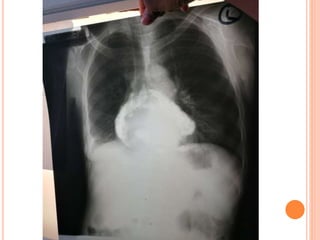
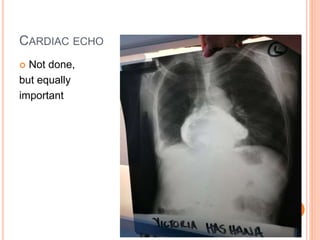
 Investigations
 Case Discussion
 References
HISTORY
 Ms. XX
 58 years old; female; RVD reactive on
TDF/FTC/EFV (suppressed virologically)
 Presented to IHO MOPD with a history of:
 Intermittent Bilateral feet swelling for 8 weeks
 Non radiating central chest pain for 4 weeks
 Heart palpitations for 4 weeks
 No cough; no shortness of breath; no orthopnea; no PND; has
easy fatigability; no night sweats; no significant loss of weight
 Seen about 9 weeks ago at Opuwo district hospital with acute
confusion; bilateral pedal oedema; ascites
 Assessed with heart failure and was discharged on lasix and
aldactone
Strong history of alcohol use; not known with any cardiac
conditions
 Past Medical History:
 RVD + on TDF/FTC/EFV; CTx/MVTs
(changed in 2016 from the old regimen AZT/3TC/NVP)
 No other comorbidities
 Completed INH therapy in 2015
 Treated for PTB in the 1980s
EXAMINATION
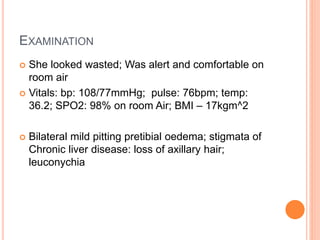
 She looked wasted; Was alert and comfortable on
room air
 Vitals: bp: 108/77mmHg; pulse: 76bpm; temp:
36.2; SPO2: 98% on room Air; BMI – 17kgm^2
 Bilateral mild pitting pretibial oedema; stigmata of
Chronic liver disease: loss of axillary hair;
leuconychia
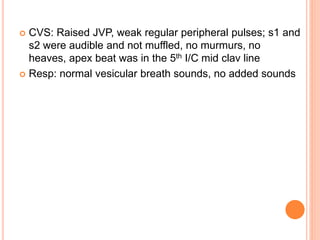
 CVS: Raised JVP, weak regular peripheral pulses; s1 and
s2 were audible and not muffled, no murmurs, no
heaves, apex beat was in the 5th I/C mid clav line
 Resp: normal vesicular breath sounds, no added sounds
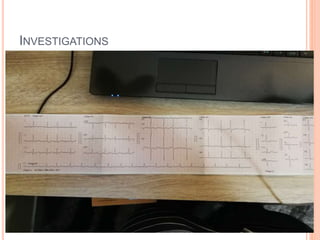
INVESTIGATIONS
BLOOD RESULTS
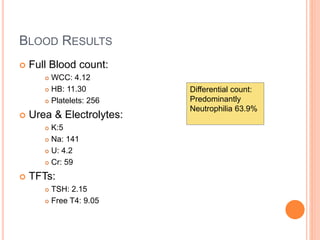
 Full Blood count:
 WCC: 4.12
 HB: 11.30
 Platelets: 256
 Urea & Electrolytes:
 K:5
 Na: 141
 U: 4.2
 Cr: 59
 TFTs:
 TSH: 2.15
 Free T4: 9.05
Differential count:
Predominantly
Neutrophilia 63.9%
CARDIAC ECHO
 Not done,
but equally
important
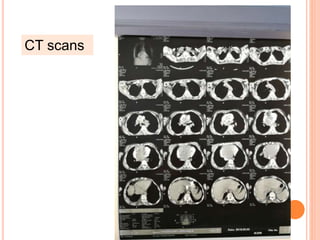
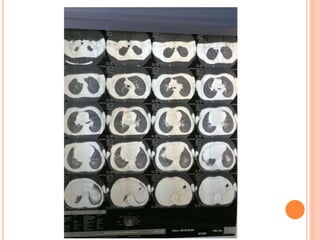
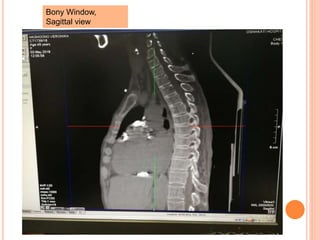
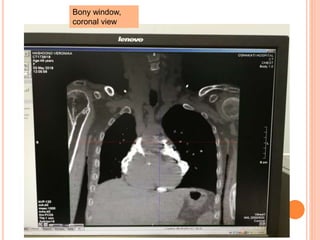
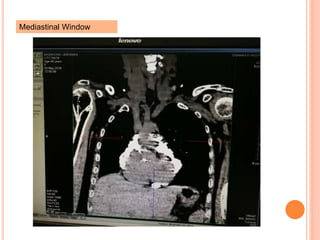
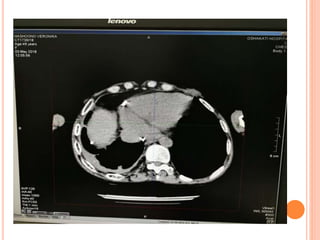
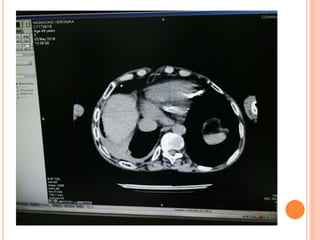
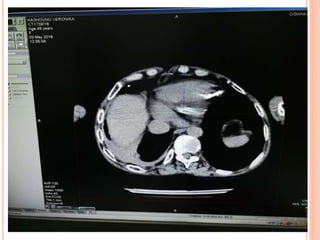
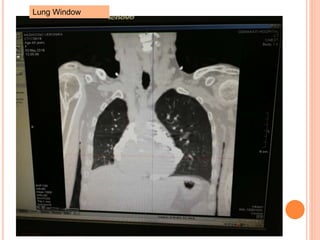
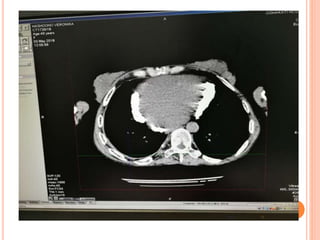
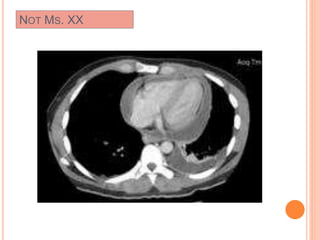
CT scans
Bony Window,
Sagittal view
Bony window,
coronal view
Mediastinal Window
Lung Window
NOT MS. XX
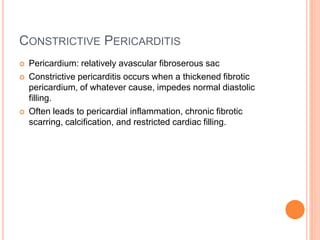
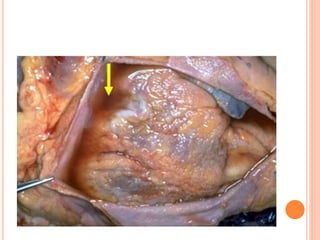
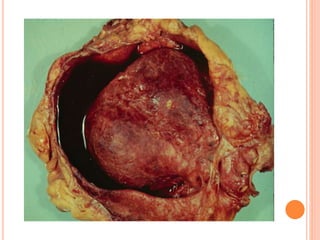
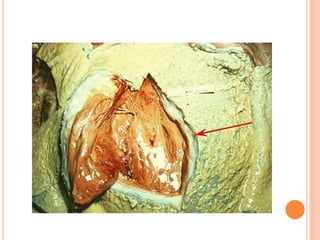
CONSTRICTIVE PERICARDITIS
 Pericardium: relatively avascular fibroserous sac
 Constrictive pericarditis occurs when a thickened fibrotic
pericardium, of whatever cause, impedes normal diastolic
filling.
 Often leads to pericardial inflammation, chronic fibrotic
scarring, calcification, and restricted cardiac filling.
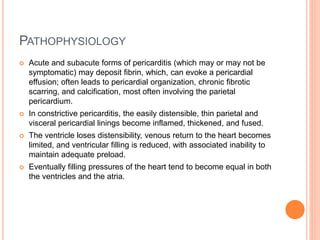
PATHOPHYSIOLOGY
 Acute and subacute forms of pericarditis (which may or may not be
symptomatic) may deposit fibrin, which, can evoke a pericardial
effusion; often leads to pericardial organization, chronic fibrotic
scarring, and calcification, most often involving the parietal
pericardium.
 In constrictive pericarditis, the easily distensible, thin parietal and
visceral pericardial linings become inflamed, thickened, and fused.
 The ventricle loses distensibility, venous return to the heart becomes
limited, and ventricular filling is reduced, with associated inability to
maintain adequate preload.
 Eventually filling pressures of the heart tend to become equal in both
the ventricles and the atria.
ETIOLOGY
 Common causes: TB
 (Purulent bacterial infections: Staph; Pseudomonas; Group A & B
strept; Klebsiella sp; E.coli spp)
 Viral: cocksackie; adenovirus; echovirus
 Idiopathic: Radiation
 Cardiac surgery
 Fungal: coccidioides; aspergillus; norcardia
 Neoplasms
 Uremia
 Connective tissue disorders: SLE
 DRUGS
 Trauma
 MI
CLINICAL FEATURES
 Retrosternal chest pain that radiates to the
 Easy fatigability
 Fever
 Tachycardia
 Palpitations
 Paroxysmal nocturnal dyspnea
 Diaphoresis
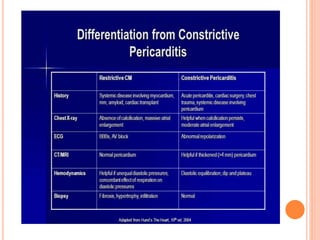
INVESTIGATIONS (SPECIFIC FINDINGS)
 Bloods : signs of infection
 Ecg: PR depression, reduced Q wave voltage
 Xrays
 Echo
 CT
MANAGEMENT
 Pericardiectomy is the predominant definitive treatment.
Hemodynamic and symptomatic improvements are rapid.
 Medical management, such as careful observation or
symptomatic treatment, has been suggested in less severe
cases;
 The underlying disease usually determines the prognosis.
Poorer prognoses are associated with malignancy and New
York Heart Association (NYHA) class III or IV heart failure
symptoms.
REFERENCES
 J. Alastair, 2016. Davidson’s Essentials of
Medicine, 2nd ed. Churchill Livingstone Elsevier
(pty)
 Radiopenia, 2006.
https://radiopaedia.org/cases/lung-cancer-with-
malignant-pericardial-effusion
 Jae K, at al, Mar 09, 15. Echocardiography
Diagnostic criteria for Constriction. American
College of Cardiology.

Constrictive pericarditis

  • 1.
    CASE 1 Internal Medicine NatangweShimhanda 11 May 2018
  • 2.
    PRESENTATION OUTLINE  Case History  Physical Examination  Investigations  Case Discussion  References
  • 3.
    HISTORY  Ms. XX 58 years old; female; RVD reactive on TDF/FTC/EFV (suppressed virologically)  Presented to IHO MOPD with a history of:  Intermittent Bilateral feet swelling for 8 weeks  Non radiating central chest pain for 4 weeks  Heart palpitations for 4 weeks
  • 4.
     No cough;no shortness of breath; no orthopnea; no PND; has easy fatigability; no night sweats; no significant loss of weight  Seen about 9 weeks ago at Opuwo district hospital with acute confusion; bilateral pedal oedema; ascites  Assessed with heart failure and was discharged on lasix and aldactone Strong history of alcohol use; not known with any cardiac conditions
  • 5.
     Past MedicalHistory:  RVD + on TDF/FTC/EFV; CTx/MVTs (changed in 2016 from the old regimen AZT/3TC/NVP)  No other comorbidities  Completed INH therapy in 2015  Treated for PTB in the 1980s
  • 6.
    EXAMINATION  She lookedwasted; Was alert and comfortable on room air  Vitals: bp: 108/77mmHg; pulse: 76bpm; temp: 36.2; SPO2: 98% on room Air; BMI – 17kgm^2  Bilateral mild pitting pretibial oedema; stigmata of Chronic liver disease: loss of axillary hair; leuconychia
  • 7.
     CVS: RaisedJVP, weak regular peripheral pulses; s1 and s2 were audible and not muffled, no murmurs, no heaves, apex beat was in the 5th I/C mid clav line  Resp: normal vesicular breath sounds, no added sounds
  • 8.
  • 9.
    BLOOD RESULTS  FullBlood count:  WCC: 4.12  HB: 11.30  Platelets: 256  Urea & Electrolytes:  K:5  Na: 141  U: 4.2  Cr: 59  TFTs:  TSH: 2.15  Free T4: 9.05 Differential count: Predominantly Neutrophilia 63.9%
  • 11.
    CARDIAC ECHO  Notdone, but equally important
  • 12.
  • 14.
  • 15.
  • 16.
  • 20.
  • 22.
  • 23.
    CONSTRICTIVE PERICARDITIS  Pericardium:relatively avascular fibroserous sac  Constrictive pericarditis occurs when a thickened fibrotic pericardium, of whatever cause, impedes normal diastolic filling.  Often leads to pericardial inflammation, chronic fibrotic scarring, calcification, and restricted cardiac filling.
  • 24.
    PATHOPHYSIOLOGY  Acute andsubacute forms of pericarditis (which may or may not be symptomatic) may deposit fibrin, which, can evoke a pericardial effusion; often leads to pericardial organization, chronic fibrotic scarring, and calcification, most often involving the parietal pericardium.  In constrictive pericarditis, the easily distensible, thin parietal and visceral pericardial linings become inflamed, thickened, and fused.  The ventricle loses distensibility, venous return to the heart becomes limited, and ventricular filling is reduced, with associated inability to maintain adequate preload.  Eventually filling pressures of the heart tend to become equal in both the ventricles and the atria.
  • 26.
    ETIOLOGY  Common causes:TB  (Purulent bacterial infections: Staph; Pseudomonas; Group A & B strept; Klebsiella sp; E.coli spp)  Viral: cocksackie; adenovirus; echovirus  Idiopathic: Radiation  Cardiac surgery  Fungal: coccidioides; aspergillus; norcardia  Neoplasms  Uremia  Connective tissue disorders: SLE  DRUGS  Trauma  MI
  • 27.
    CLINICAL FEATURES  Retrosternalchest pain that radiates to the  Easy fatigability  Fever  Tachycardia  Palpitations  Paroxysmal nocturnal dyspnea  Diaphoresis
  • 28.
    INVESTIGATIONS (SPECIFIC FINDINGS) Bloods : signs of infection  Ecg: PR depression, reduced Q wave voltage  Xrays  Echo  CT
  • 29.
    MANAGEMENT  Pericardiectomy isthe predominant definitive treatment. Hemodynamic and symptomatic improvements are rapid.  Medical management, such as careful observation or symptomatic treatment, has been suggested in less severe cases;  The underlying disease usually determines the prognosis. Poorer prognoses are associated with malignancy and New York Heart Association (NYHA) class III or IV heart failure symptoms.
  • 34.
    REFERENCES  J. Alastair,2016. Davidson’s Essentials of Medicine, 2nd ed. Churchill Livingstone Elsevier (pty)  Radiopenia, 2006. https://radiopaedia.org/cases/lung-cancer-with- malignant-pericardial-effusion  Jae K, at al, Mar 09, 15. Echocardiography Diagnostic criteria for Constriction. American College of Cardiology.