A Different Way of Looking at 
Doing the DBQ 
• Are you hungry? 
• If so, then you will like this PPT. 
• If not, you will still like this PPT…
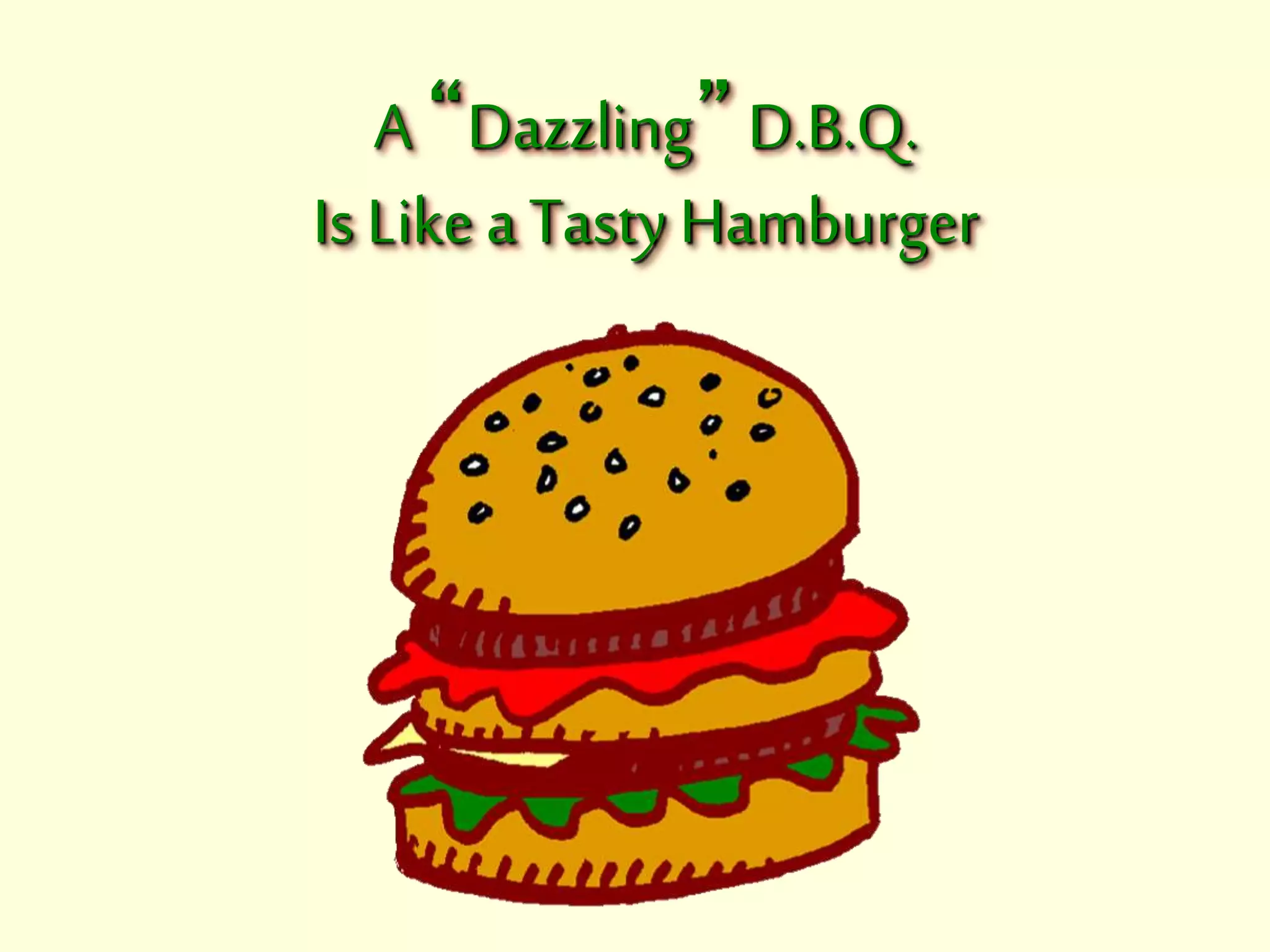
A “Dazzling” D.B.Q. 
Is Like a Tasty Hamburger
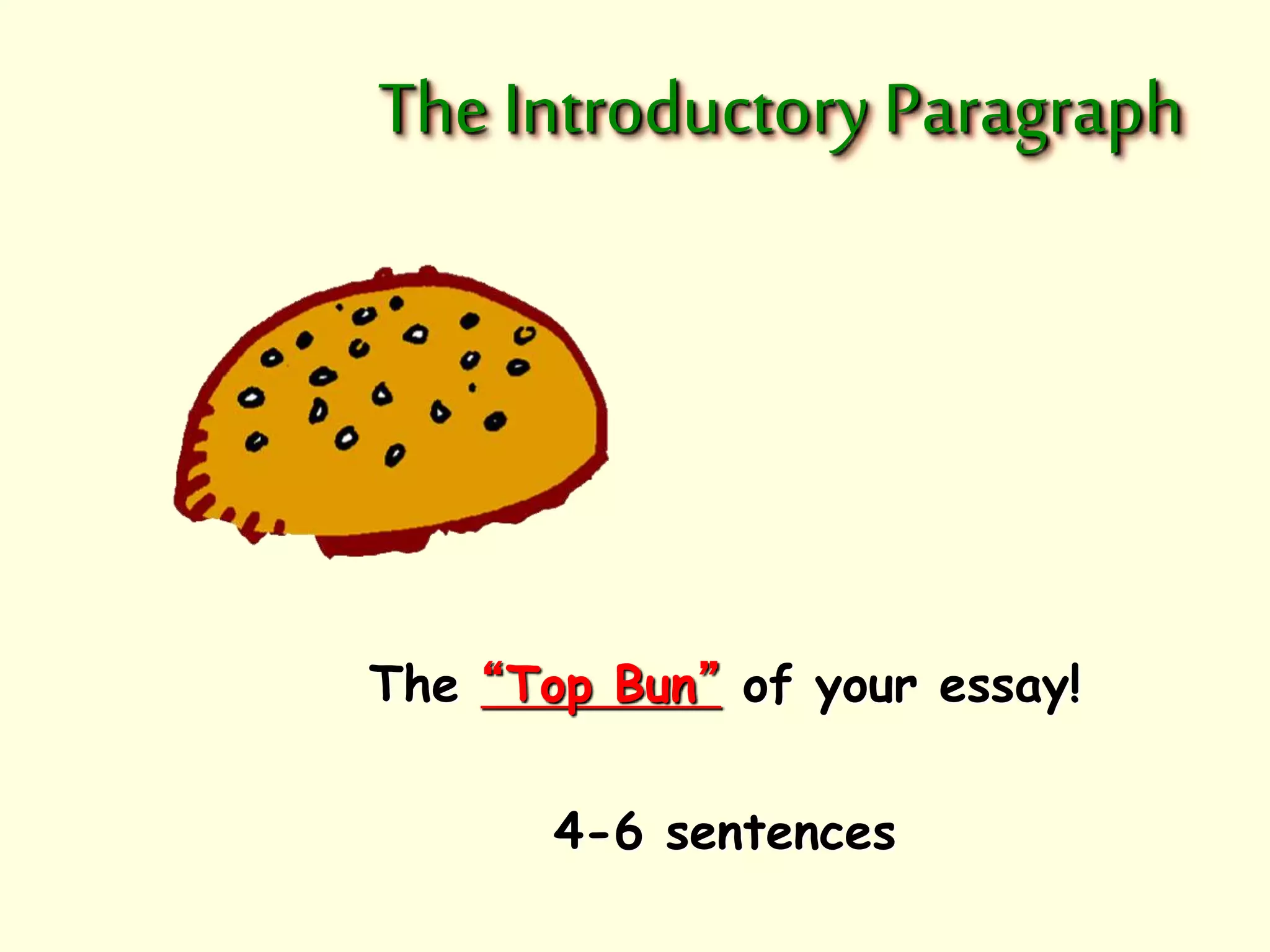
The Introductory Paragraph 
The “Top Bun” of your essay! 
4-6 sentences
The Introductory Paragraph 
1. Establish TIME & PLACE. 
2. Create a clear, THESIS STATEMENT. 
[underline or highlight it!] 
3. Allude to the SUB-TOPICS or 
categories you will discuss to support 
your thesis statement. 
4. Focus on the question at hand—do 
NOT begin with a “flowery” sentence! 
5. No “laundry list!”
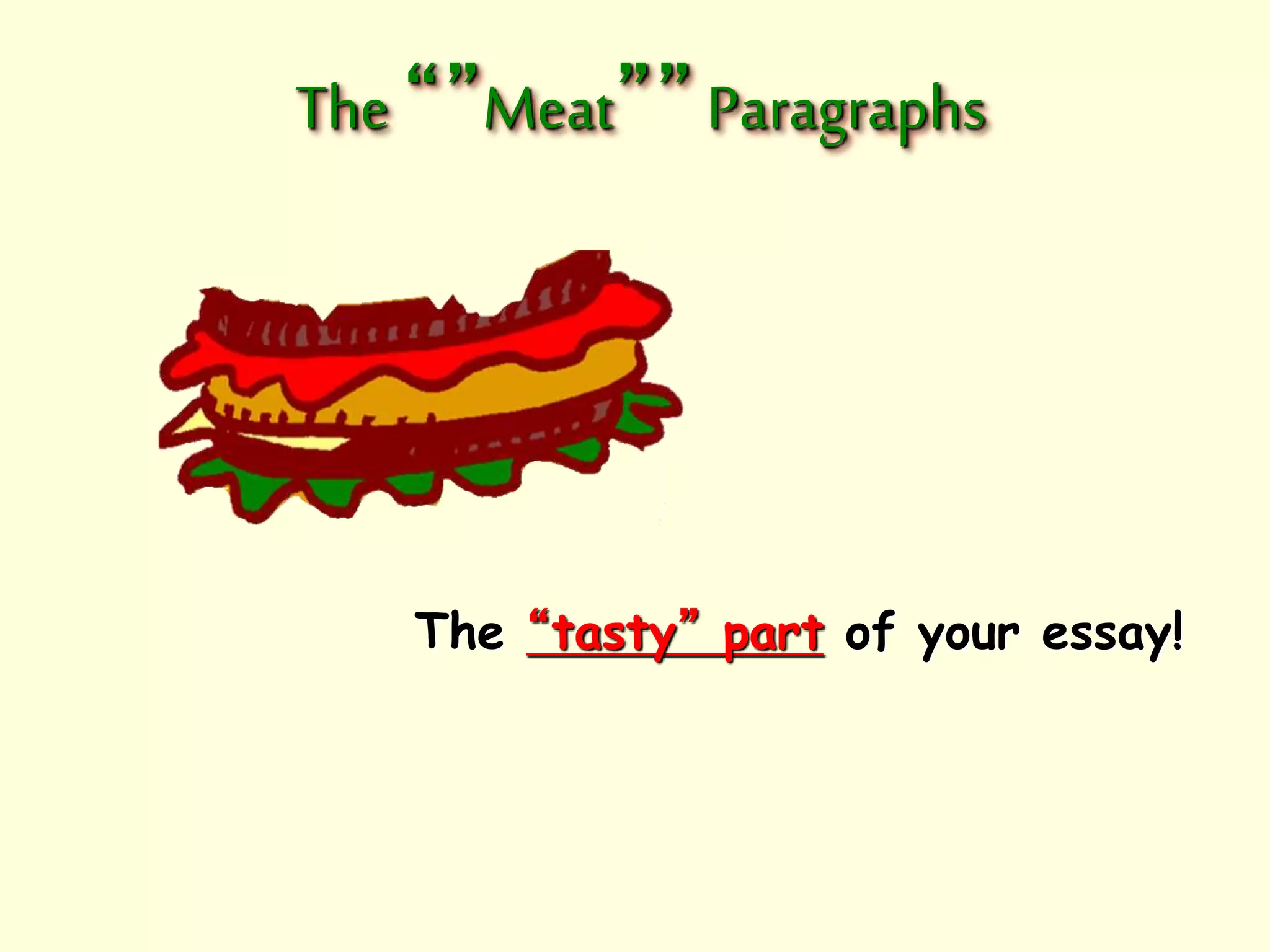
The “”Meat”” Paragraphs 
The “tasty” part of your essay!
The “”Meat”” Paragraphs 
1. Identify your sub-topic or category in 
the first sentence (topic sentence). 
2. Include the documents that are relevant 
to support the ideas in the paragraph. 
3. Use ALL or ALL BUT One of the 
documents given & analyze each 
4. Bring in supportive outside information. * 
ROI= “Relevant Outside Information” 
5. Why were these documents selected?
Questions to Ask Yourself About the Documents 
1. Attribution  Who is this person? 
2. Why might they be significant? 
3. What is the point of view (POV) of the author? 
4. How reliable and accurate is the source? 
5. What is the author’s purpose or intended 
audience of the document author? 
6. What other information does this document call 
to mind? Historical context? 
Remember, docs. can be used in a variety of ways!
How to Reference a Document in Your Essay 
1. Thomas Paine, in his pamphlet, Common 
Sense, said: “………………….” 
2. Joe Schmo, a mid-Western delegate to the 
Republic convention in 1912, agreed with….. 
3. The 19c historian, Frederick Jackson 
Turner, felt that …………………. (Doc. 5) 
NEVER begin with: In Document 3, …..
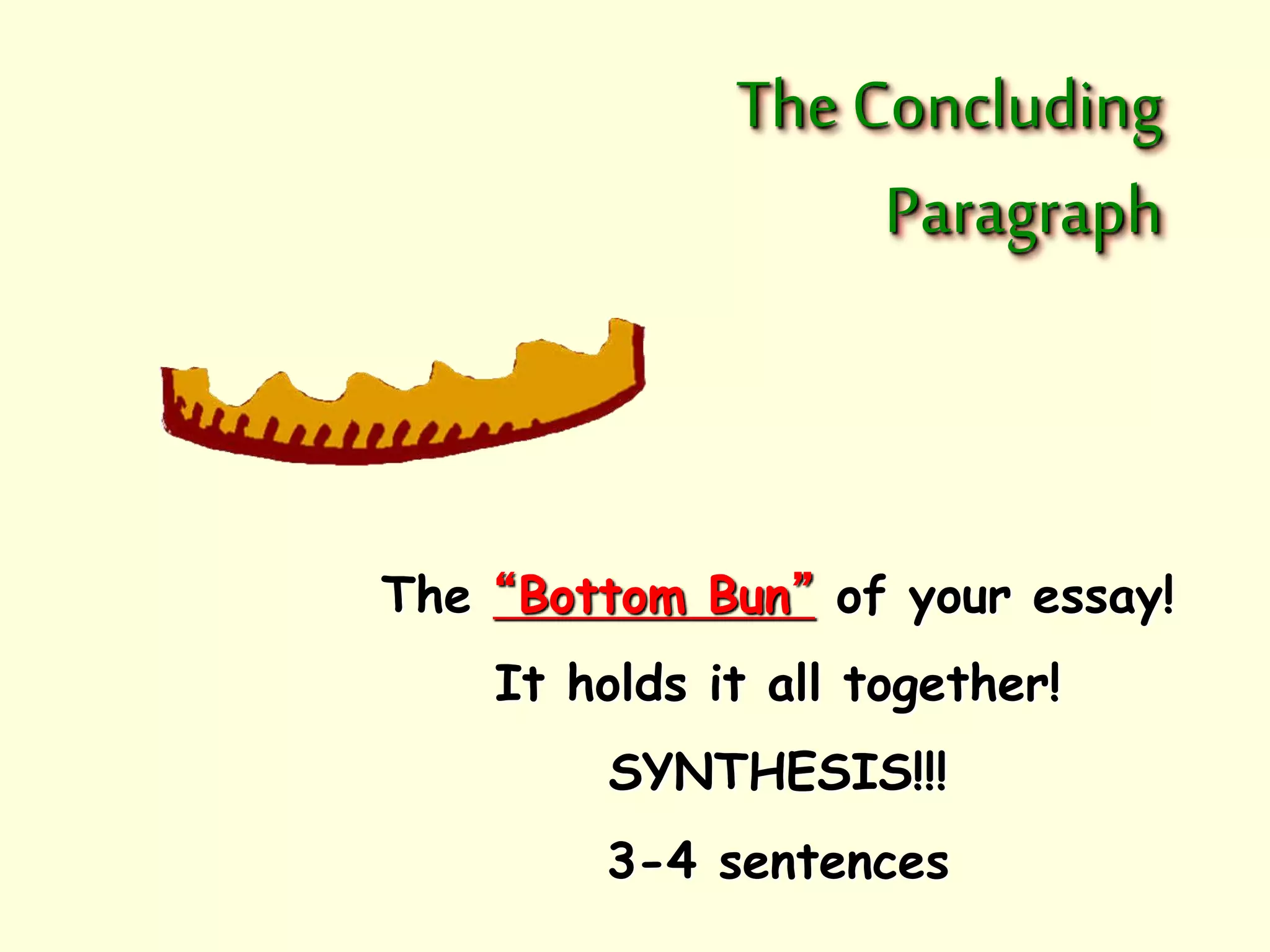
The Concluding 
Paragraph 
The “Bottom Bun” of your essay! 
It holds it all together! 
SYNTHESIS!!! 
3-4 sentences
The Concluding” Paragraph 
1. Extend or modify stated thesis 
2. Recognizes contradictory evidence from 
sources 
3. Connects topic to other historical periods 
4. Connects topic to other fields of inquiry 
PERSIA
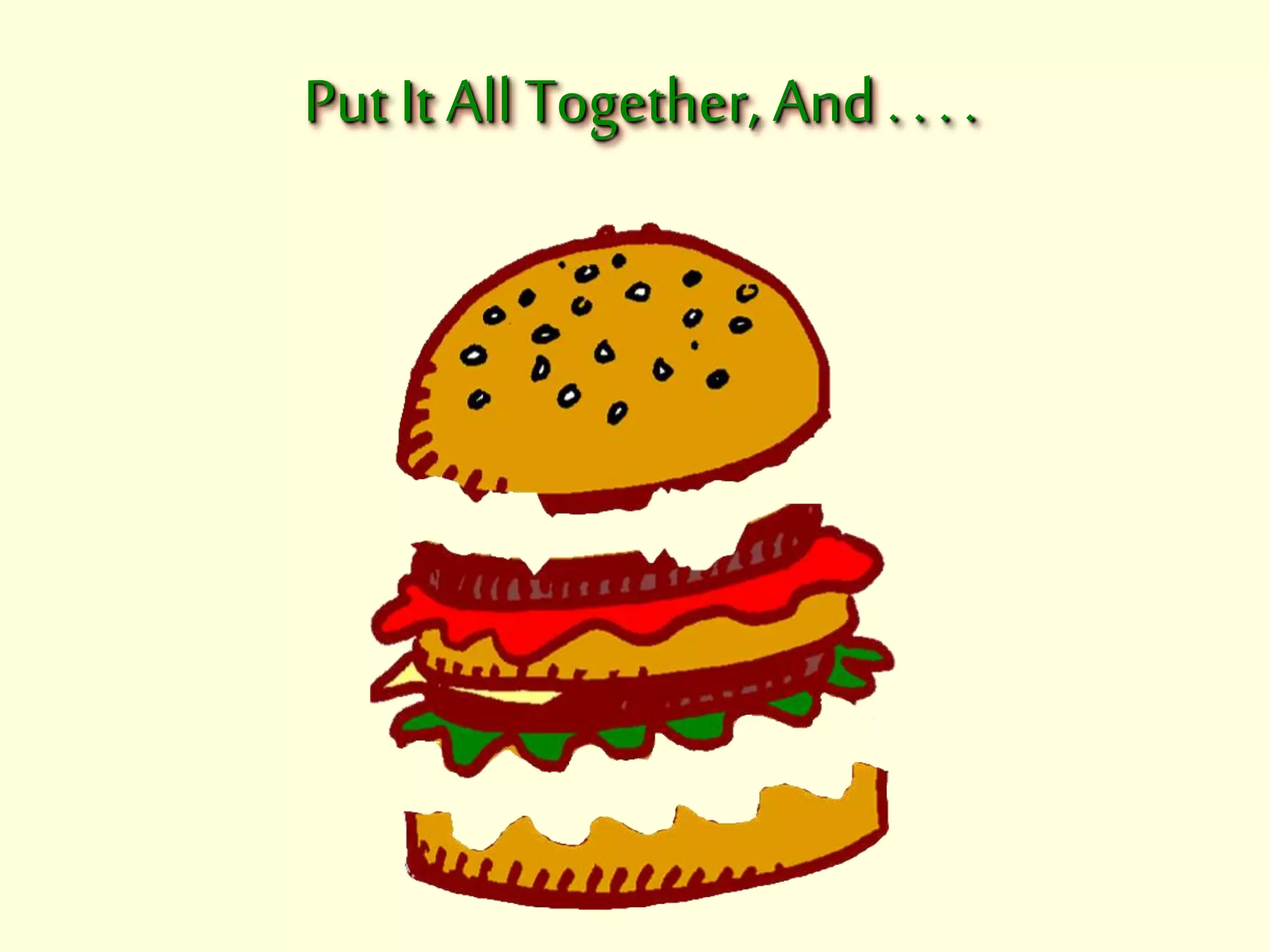
Put It All Together, And . . . .
Ummmmm, Burger! 
I Mean, A Perfect Essay!

Conquering the APUSH DBQ

  • 1.
    A Different Wayof Looking at Doing the DBQ • Are you hungry? • If so, then you will like this PPT. • If not, you will still like this PPT…
  • 2.
    A “Dazzling” D.B.Q. Is Like a Tasty Hamburger
  • 3.
    The Introductory Paragraph The “Top Bun” of your essay! 4-6 sentences
  • 4.
    The Introductory Paragraph 1. Establish TIME & PLACE. 2. Create a clear, THESIS STATEMENT. [underline or highlight it!] 3. Allude to the SUB-TOPICS or categories you will discuss to support your thesis statement. 4. Focus on the question at hand—do NOT begin with a “flowery” sentence! 5. No “laundry list!”
  • 5.
    The “”Meat”” Paragraphs The “tasty” part of your essay!
  • 6.
    The “”Meat”” Paragraphs 1. Identify your sub-topic or category in the first sentence (topic sentence). 2. Include the documents that are relevant to support the ideas in the paragraph. 3. Use ALL or ALL BUT One of the documents given & analyze each 4. Bring in supportive outside information. * ROI= “Relevant Outside Information” 5. Why were these documents selected?
  • 7.
    Questions to AskYourself About the Documents 1. Attribution  Who is this person? 2. Why might they be significant? 3. What is the point of view (POV) of the author? 4. How reliable and accurate is the source? 5. What is the author’s purpose or intended audience of the document author? 6. What other information does this document call to mind? Historical context? Remember, docs. can be used in a variety of ways!
  • 8.
    How to Referencea Document in Your Essay 1. Thomas Paine, in his pamphlet, Common Sense, said: “………………….” 2. Joe Schmo, a mid-Western delegate to the Republic convention in 1912, agreed with….. 3. The 19c historian, Frederick Jackson Turner, felt that …………………. (Doc. 5) NEVER begin with: In Document 3, …..
  • 9.
    The Concluding Paragraph The “Bottom Bun” of your essay! It holds it all together! SYNTHESIS!!! 3-4 sentences
  • 10.
    The Concluding” Paragraph 1. Extend or modify stated thesis 2. Recognizes contradictory evidence from sources 3. Connects topic to other historical periods 4. Connects topic to other fields of inquiry PERSIA
  • 11.
    Put It AllTogether, And . . . .
  • 12.
    Ummmmm, Burger! IMean, A Perfect Essay!