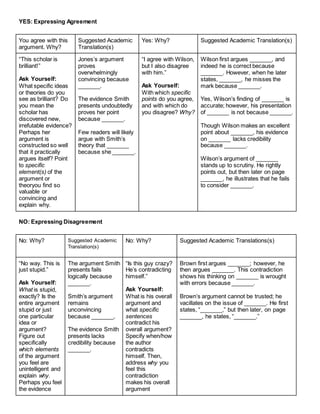
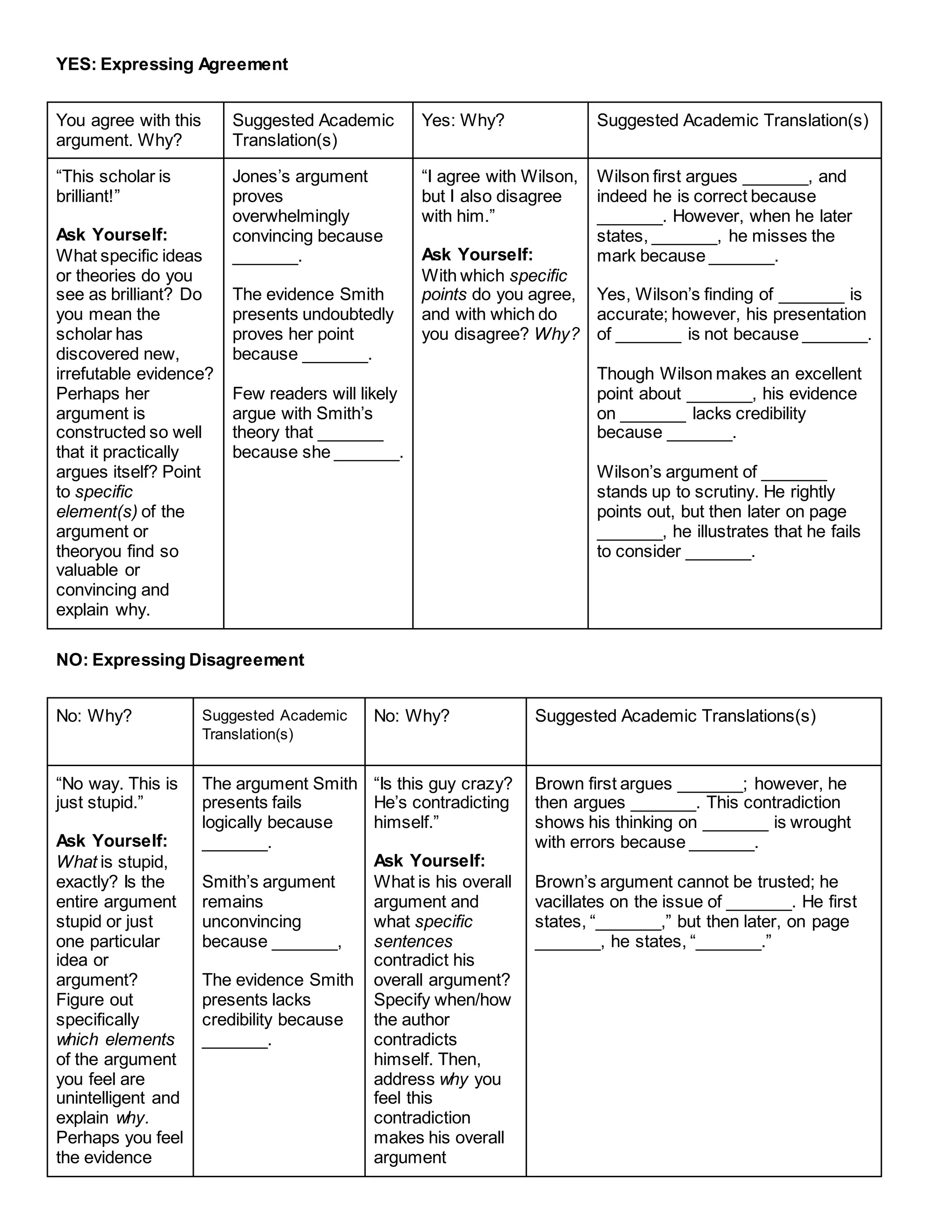
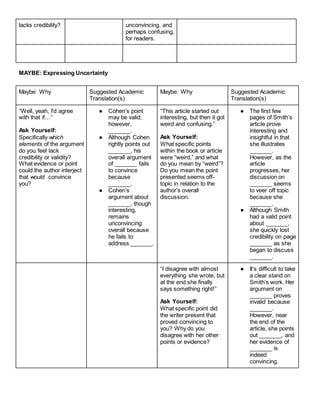
This document provides guidance on effectively agreeing, disagreeing, or expressing uncertainty about an academic argument. It suggests translating colloquial responses like "yes", "no", or "maybe" into more specific academic language. For agreement, it advises identifying the specific ideas or evidence that are convincing. For disagreement, it recommends pointing to logical flaws, lack of evidence, or contradictions. For uncertainty, it suggests acknowledging potential validity while also noting arguments or evidence that are unconvincing. The document aims to move readers beyond simple responses to more substantive engagement with arguments and evidence.