Connecting the Dots:
Opportunities for Regional
Transit Cooperation
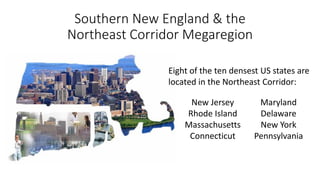
Southern New England & the
Northeast Corridor Megaregion
Eight of the ten densest US states are
located in the Northeast Corridor:
New Jersey
Rhode Island
Massachusetts
Connecticut
Maryland
Delaware
New York
Pennsylvania
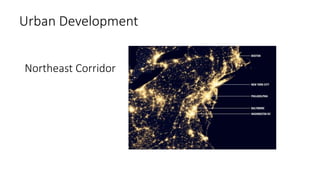
Northeast Corridor
Urban Development
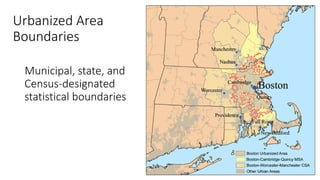
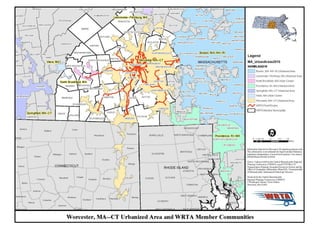
Urbanized Area
Boundaries
Municipal, state, and
Census-designated
statistical boundaries
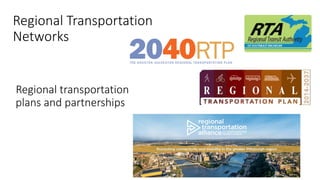
Regional Transportation
Networks
Regional transportation
plans and partnerships
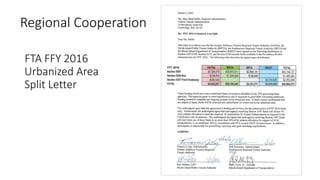
FTA FFY 2016
Urbanized Area
Split Letter
Regional Cooperation
A New Federal Perspective?
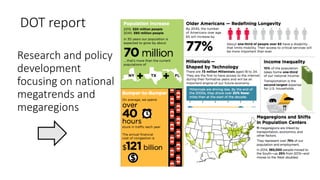
DOT report
Research and policy
development
focusing on national
megatrends and
megaregions
Beyond Borders
"Addressing issues like air pollution and traffic
congestion often requires coordinating across
jurisdictions… As metropolitan areas grow…
traditional jurisdictional boundaries are becoming
blurred. This increases the impetus for regional
cooperation across planning agencies to address
issues that do not stop at state or county lines.”
- Beyond Traffic
Performance Based
Planning
SNEAPA
10-20-16
2
PERFORMANCE BASED PLANNING
• Published on May 27, 2016
• Performance-based planning and programming
increases accountability and transparency and
offers a framework to support improved
investment decision-making by focusing on
performance outcomes for national
transportation goals.
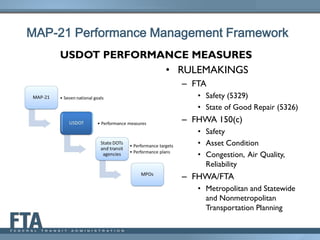
MAP-21 Performance Management Framework
USDOT PERFORMANCE MEASURES
• RULEMAKINGS
– FTA
• Safety (5329)
• State of Good Repair (5326)
– FHWA 150(c)
• Safety
• Asset Condition
• Congestion, Air Quality,
Reliability
– FHWA/FTA
• Metropolitan and Statewide
and Nonmetropolitan
Transportation Planning
MAP-21 Performance Management Framework
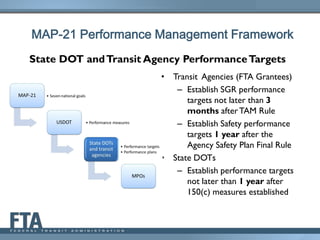
State DOT andTransit Agency PerformanceTargets
• Transit Agencies (FTA Grantees)
– Establish SGR performance
targets not later than 3
months afterTAM Rule
– Establish Safety performance
targets 1 year after the
Agency Safety Plan Final Rule
• State DOTs
– Establish performance targets
not later than 1 year after
150(c) measures established
MAP-21 Performance Management Framework
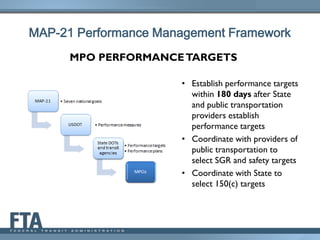
MPO PERFORMANCETARGETS
• Establish performance targets
within 180 days after State
and public transportation
providers establish
performance targets
• Coordinate with providers of
public transportation to
select SGR and safety targets
• Coordinate with State to
select 150(c) targets
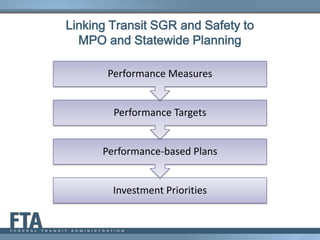
Linking Transit SGR and Safety to
MPO and Statewide Planning
Investment Priorities
Performance-based Plans
Performance Targets
Performance Measures
7
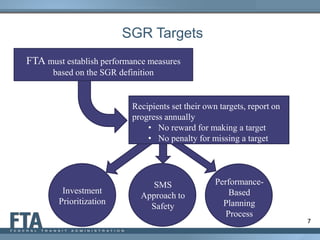
SGR Targets
FTA must establish performance measures
based on the SGR definition
Recipients set their own targets, report on
progress annually
• No reward for making a target
• No penalty for missing a target
Performance-
Based
Planning
Process
SMS
Approach to
Safety
Investment
Prioritization
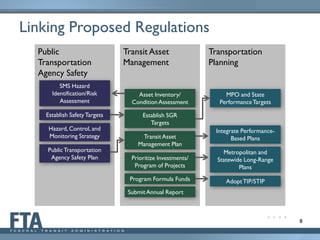
8
Public
Transportation
Agency Safety
Transit Asset
Management
SubmitAnnual Report
Transportation
Planning
SMS Hazard
Identification/Risk
Assessment
Establish SafetyTargets
Hazard, Control, and
Monitoring Strategy
PublicTransportation
Agency Safety Plan
Asset Inventory/
ConditionAssessment
Establish SGR
Targets
Transit Asset
Management Plan
Prioritize Investments/
Program of Projects
Program Formula Funds
MPO and State
PerformanceTargets
Integrate Performance-
Based Plans
Metropolitan and
Statewide Long-Range
Plans
AdoptTIP/STIP
Linking Proposed Regulations
8• • • •
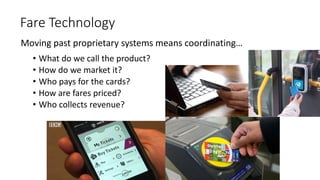
Moving past proprietary systems means coordinating…
• What do we call the product?
• How do we market it?
• Who pays for the cards?
• How are fares priced?
• Who collects revenue?
Fare Technology
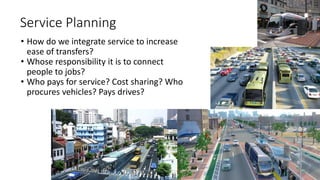
• How do we integrate service to increase
ease of transfers?
• Whose responsibility it is to connect
people to jobs?
• Who pays for service? Cost sharing? Who
procures vehicles? Pays drives?
Service Planning
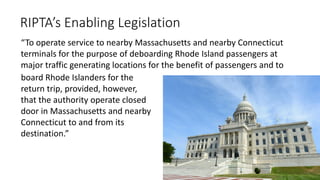
“To operate service to nearby Massachusetts and nearby Connecticut
terminals for the purpose of deboarding Rhode Island passengers at
major traffic generating locations for the benefit of passengers and to
RIPTA’s Enabling Legislation
board Rhode Islanders for the
return trip, provided, however,
that the authority operate closed
door in Massachusetts and nearby
Connecticut to and from its
destination.”
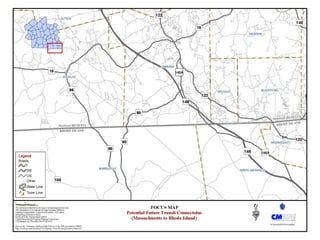
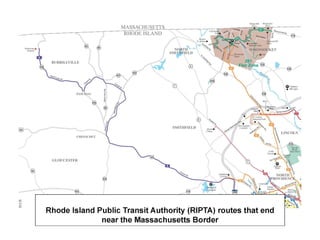
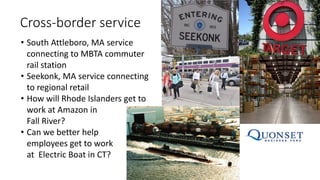
Cross-border service
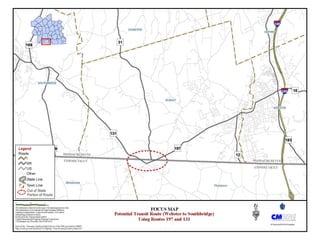
• South Attleboro, MA service
connecting to MBTA commuter
rail station
• Seekonk, MA service connecting
to regional retail
• How will Rhode Islanders get to
work at Amazon in
Fall River?
• Can we better help
employees get to work
at Electric Boat in CT?
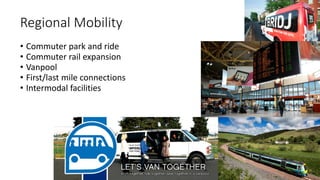
Regional Mobility
• Commuter park and ride
• Commuter rail expansion
• Vanpool
• First/last mile connections
• Intermodal facilities
Connecting the Dots:
Opportunities for Regional Transit Cooperation
– A North Central Connecticut Perspective
Lyle Wray, Executive Director
Capitol Region Council of Governments
SNEAPA 2016
October 20, 2016
DCU Center, Worcester MA
Regional Transit Cooperation: Three Scales
• Southern New England
• Knowledge Corridor
• Metro Hartford region
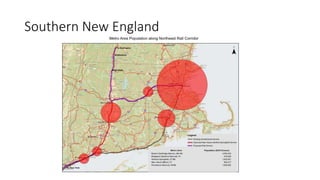
Southern New England
What We Have and What We Need
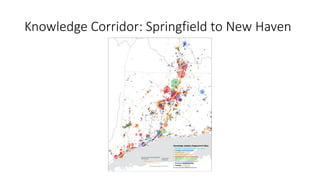
Knowledge Corridor: Springfield to New Haven
Knowledge Corridor:
What We Have and What We Need
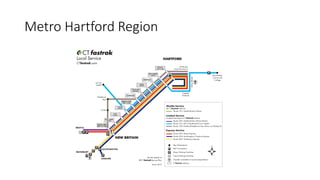
Metro Hartford Region
CTfastrak
• CTfastrak opened March 2015
• Has been meeting ridership projections for 2030
• Surpassed 1 million rides in less than six months
• Extension east of the river to be constructed in 2019
• Making it Happen report:
http://www.crcog.org/publications/CommDevDocs/Sustainable%20C
ommunities/Sustainable%20Knowledge%20Corridor/MakingItHappen
_ExecSum_V1R4_Web.pdf
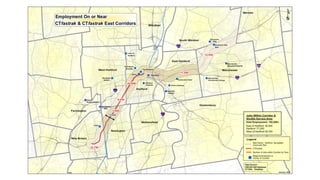
CTfastrak Employment Corridor
• 152,000 jobs in corridor from New Britain to Manchester (not
including University of Connecticut) on CTfastrak or circulators
• 38,700 jobs west of Hartford
• 77,200 jobs in Hartford
• 36,500 jobs east of Hartford
Metro Hartford Region:
What We Have and What We Need
Mobility Network Providers and Low, Medium
and High Density Urban Environments
• High density: Option instead of transit – moving goods, lack direct
route, convenience, complement to rapid transit for first and last mile
• Medium density: Uber, Lyft and Bridj type services have great
potential to drive users to transit with first and last mile or two
barrier issues, limited pedestrian access to rapid and regular route
transit, transit on demand complement or replacement
• Low density: Mobility network providers as possible replacement for
low volume routes, for transit on demand replacement
Mobility Network Providers and Transit
• IT Common interface: Transit app, Google maps, others – options of
walking, biking, rapid transit, fixed route transit, mobility network
provides (e.g. Uber, Lyft, Bridj) as a single or shared ride
• Number one destination of mobility network provider trips is a rapid
transit station
• Next: Trip and fare integration
Wrap Up
• The compelling case for good transit and rapid transit
• Technology to attract and retain non single car users: AVL and transit
apps for smartphone users
• Way finding signage and tools
• Harmonization of modes: bus, rapid transit and rail with mobility
network providers
• Vision: Build regional mobility networks
Thank You!
Contact information:
Lyle Wray, Executive Director
Capitol Region Council of Governments
lwray@crcog.org
www.crcog.org
Thank You!
Sarah Ingle, RIPTA
401.784.9500 x 284
ingle@ripta.com
Mary Beth Mello, FTA
617.494.1784
Mary.Mello@dot.gov
Jonathan Church, WRTA
508.453.3400
jchurch@therta.com
Greg Nordin, RIPTA
401.784.9500 x 237
gnordin@ripta.com
Lyle Wray, CRCOG
860.522.2217 x 232
lwray@crcog.org

Connecting the dots

  • 1.
    Connecting the Dots: Opportunitiesfor Regional Transit Cooperation
  • 2.
    Southern New England& the Northeast Corridor Megaregion Eight of the ten densest US states are located in the Northeast Corridor: New Jersey Rhode Island Massachusetts Connecticut Maryland Delaware New York Pennsylvania
  • 3.
  • 4.
    Urbanized Area Boundaries Municipal, state,and Census-designated statistical boundaries
  • 5.
  • 6.
    FTA FFY 2016 UrbanizedArea Split Letter Regional Cooperation
  • 7.
    A New FederalPerspective?
  • 8.
    DOT report Research andpolicy development focusing on national megatrends and megaregions
  • 9.
    Beyond Borders "Addressing issueslike air pollution and traffic congestion often requires coordinating across jurisdictions… As metropolitan areas grow… traditional jurisdictional boundaries are becoming blurred. This increases the impetus for regional cooperation across planning agencies to address issues that do not stop at state or county lines.” - Beyond Traffic
  • 10.
  • 11.
    2 PERFORMANCE BASED PLANNING •Published on May 27, 2016 • Performance-based planning and programming increases accountability and transparency and offers a framework to support improved investment decision-making by focusing on performance outcomes for national transportation goals.
  • 12.
    MAP-21 Performance ManagementFramework USDOT PERFORMANCE MEASURES • RULEMAKINGS – FTA • Safety (5329) • State of Good Repair (5326) – FHWA 150(c) • Safety • Asset Condition • Congestion, Air Quality, Reliability – FHWA/FTA • Metropolitan and Statewide and Nonmetropolitan Transportation Planning
  • 13.
    MAP-21 Performance ManagementFramework State DOT andTransit Agency PerformanceTargets • Transit Agencies (FTA Grantees) – Establish SGR performance targets not later than 3 months afterTAM Rule – Establish Safety performance targets 1 year after the Agency Safety Plan Final Rule • State DOTs – Establish performance targets not later than 1 year after 150(c) measures established
  • 14.
    MAP-21 Performance ManagementFramework MPO PERFORMANCETARGETS • Establish performance targets within 180 days after State and public transportation providers establish performance targets • Coordinate with providers of public transportation to select SGR and safety targets • Coordinate with State to select 150(c) targets
  • 15.
    Linking Transit SGRand Safety to MPO and Statewide Planning Investment Priorities Performance-based Plans Performance Targets Performance Measures
  • 16.
    7 SGR Targets FTA mustestablish performance measures based on the SGR definition Recipients set their own targets, report on progress annually • No reward for making a target • No penalty for missing a target Performance- Based Planning Process SMS Approach to Safety Investment Prioritization
  • 17.
    8 Public Transportation Agency Safety Transit Asset Management SubmitAnnualReport Transportation Planning SMS Hazard Identification/Risk Assessment Establish SafetyTargets Hazard, Control, and Monitoring Strategy PublicTransportation Agency Safety Plan Asset Inventory/ ConditionAssessment Establish SGR Targets Transit Asset Management Plan Prioritize Investments/ Program of Projects Program Formula Funds MPO and State PerformanceTargets Integrate Performance- Based Plans Metropolitan and Statewide Long-Range Plans AdoptTIP/STIP Linking Proposed Regulations 8• • • •
  • 23.
    Moving past proprietarysystems means coordinating… • What do we call the product? • How do we market it? • Who pays for the cards? • How are fares priced? • Who collects revenue? Fare Technology
  • 24.
    • How dowe integrate service to increase ease of transfers? • Whose responsibility it is to connect people to jobs? • Who pays for service? Cost sharing? Who procures vehicles? Pays drives? Service Planning
  • 25.
    “To operate serviceto nearby Massachusetts and nearby Connecticut terminals for the purpose of deboarding Rhode Island passengers at major traffic generating locations for the benefit of passengers and to RIPTA’s Enabling Legislation board Rhode Islanders for the return trip, provided, however, that the authority operate closed door in Massachusetts and nearby Connecticut to and from its destination.”
  • 26.
    Cross-border service • SouthAttleboro, MA service connecting to MBTA commuter rail station • Seekonk, MA service connecting to regional retail • How will Rhode Islanders get to work at Amazon in Fall River? • Can we better help employees get to work at Electric Boat in CT?
  • 27.
    Regional Mobility • Commuterpark and ride • Commuter rail expansion • Vanpool • First/last mile connections • Intermodal facilities
  • 28.
    Connecting the Dots: Opportunitiesfor Regional Transit Cooperation – A North Central Connecticut Perspective Lyle Wray, Executive Director Capitol Region Council of Governments SNEAPA 2016 October 20, 2016 DCU Center, Worcester MA
  • 29.
    Regional Transit Cooperation:Three Scales • Southern New England • Knowledge Corridor • Metro Hartford region
  • 30.
  • 31.
    Southern New England WhatWe Have and What We Need
  • 32.
  • 33.
    Knowledge Corridor: What WeHave and What We Need
  • 34.
  • 35.
    CTfastrak • CTfastrak openedMarch 2015 • Has been meeting ridership projections for 2030 • Surpassed 1 million rides in less than six months • Extension east of the river to be constructed in 2019 • Making it Happen report: http://www.crcog.org/publications/CommDevDocs/Sustainable%20C ommunities/Sustainable%20Knowledge%20Corridor/MakingItHappen _ExecSum_V1R4_Web.pdf
  • 37.
    CTfastrak Employment Corridor •152,000 jobs in corridor from New Britain to Manchester (not including University of Connecticut) on CTfastrak or circulators • 38,700 jobs west of Hartford • 77,200 jobs in Hartford • 36,500 jobs east of Hartford
  • 38.
    Metro Hartford Region: WhatWe Have and What We Need
  • 39.
    Mobility Network Providersand Low, Medium and High Density Urban Environments • High density: Option instead of transit – moving goods, lack direct route, convenience, complement to rapid transit for first and last mile • Medium density: Uber, Lyft and Bridj type services have great potential to drive users to transit with first and last mile or two barrier issues, limited pedestrian access to rapid and regular route transit, transit on demand complement or replacement • Low density: Mobility network providers as possible replacement for low volume routes, for transit on demand replacement
  • 40.
    Mobility Network Providersand Transit • IT Common interface: Transit app, Google maps, others – options of walking, biking, rapid transit, fixed route transit, mobility network provides (e.g. Uber, Lyft, Bridj) as a single or shared ride • Number one destination of mobility network provider trips is a rapid transit station • Next: Trip and fare integration
  • 41.
    Wrap Up • Thecompelling case for good transit and rapid transit • Technology to attract and retain non single car users: AVL and transit apps for smartphone users • Way finding signage and tools • Harmonization of modes: bus, rapid transit and rail with mobility network providers • Vision: Build regional mobility networks
  • 42.
    Thank You! Contact information: LyleWray, Executive Director Capitol Region Council of Governments lwray@crcog.org www.crcog.org
  • 43.
    Thank You! Sarah Ingle,RIPTA 401.784.9500 x 284 ingle@ripta.com Mary Beth Mello, FTA 617.494.1784 Mary.Mello@dot.gov Jonathan Church, WRTA 508.453.3400 jchurch@therta.com Greg Nordin, RIPTA 401.784.9500 x 237 gnordin@ripta.com Lyle Wray, CRCOG 860.522.2217 x 232 lwray@crcog.org