

1 / 71
System, Architecture & Examples
Connected
Things, IoT &
5G
Dr.-Ing. Eueung Mulyana
https://eueung.github.io/ET3010
ET-3010 | Attribution-ShareAlike CC BY-SA
Outline
Connected Things & IoT - Overview
Model & Architecture
5G Infrastructure
Applications & Use-Cases
2 / 71


Overview
Connected Things &
IoT
3 / 71
4 / 71
Connected Things
IoT
1. Trends & Hype
2. Terms & De nitions
3. Industrial IoT (IIoT)
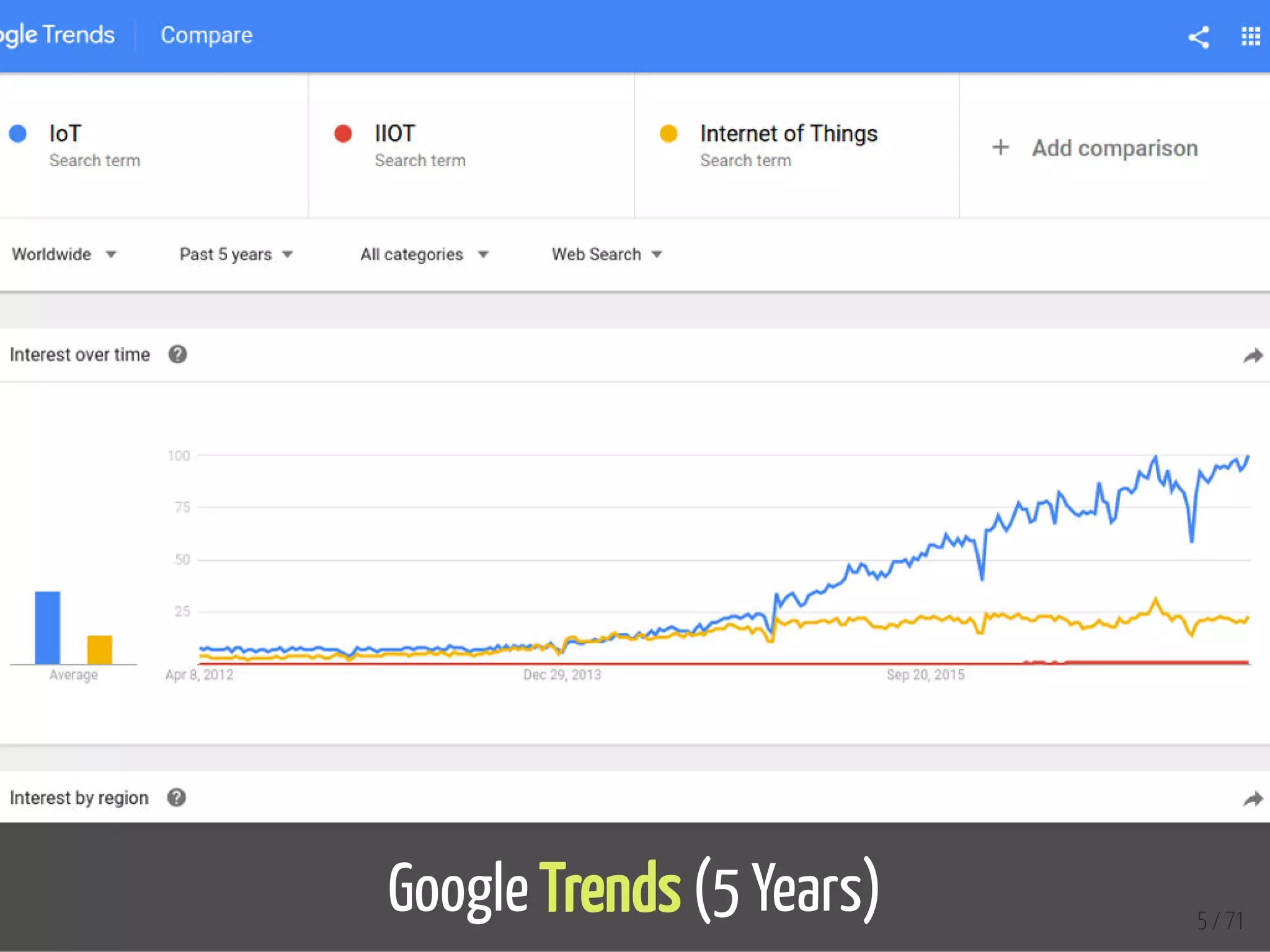
Google Trends (5 Years) 5 / 71
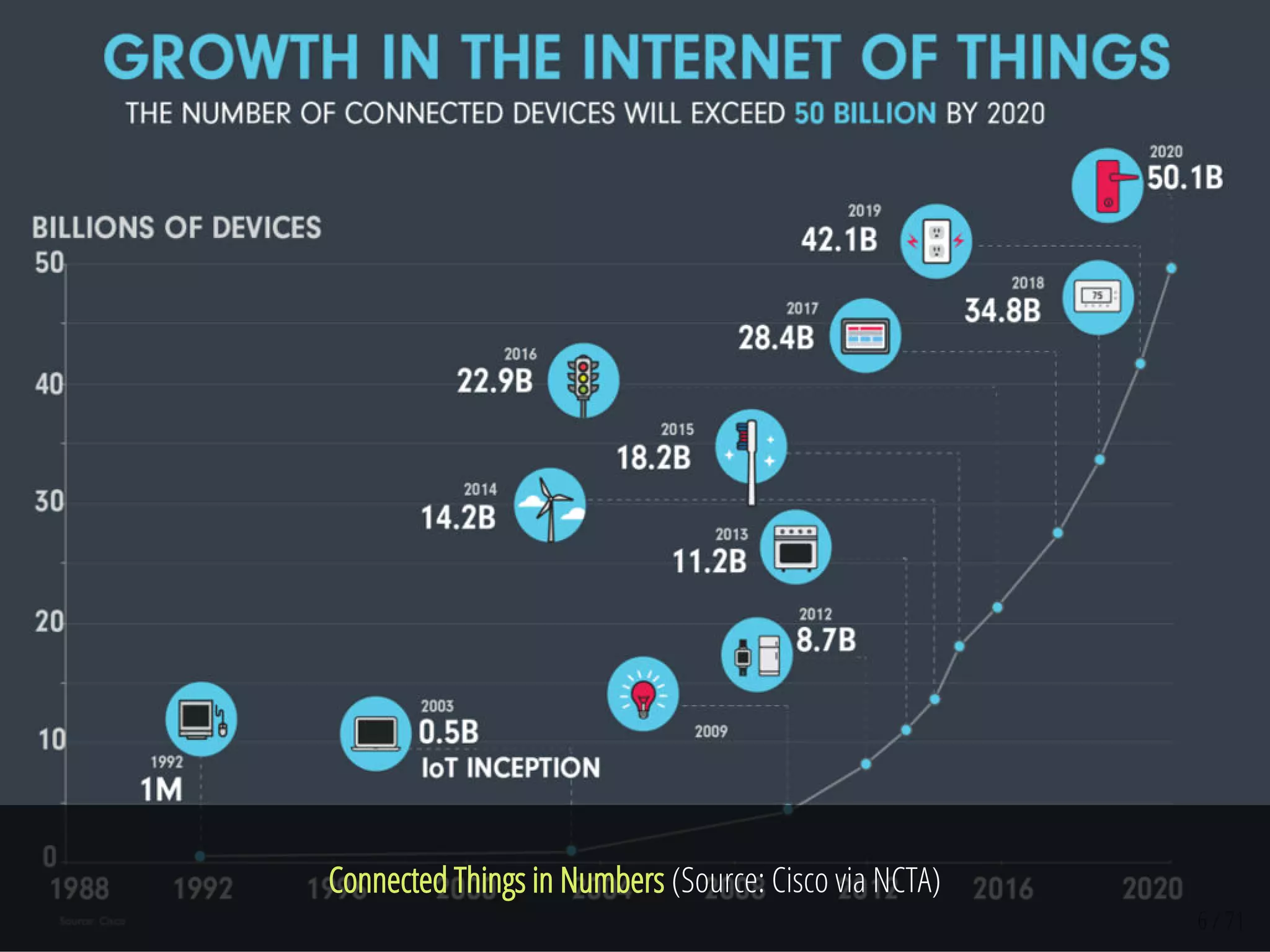
Connected Things in Numbers (Source: Cisco via NCTA)
6 / 71
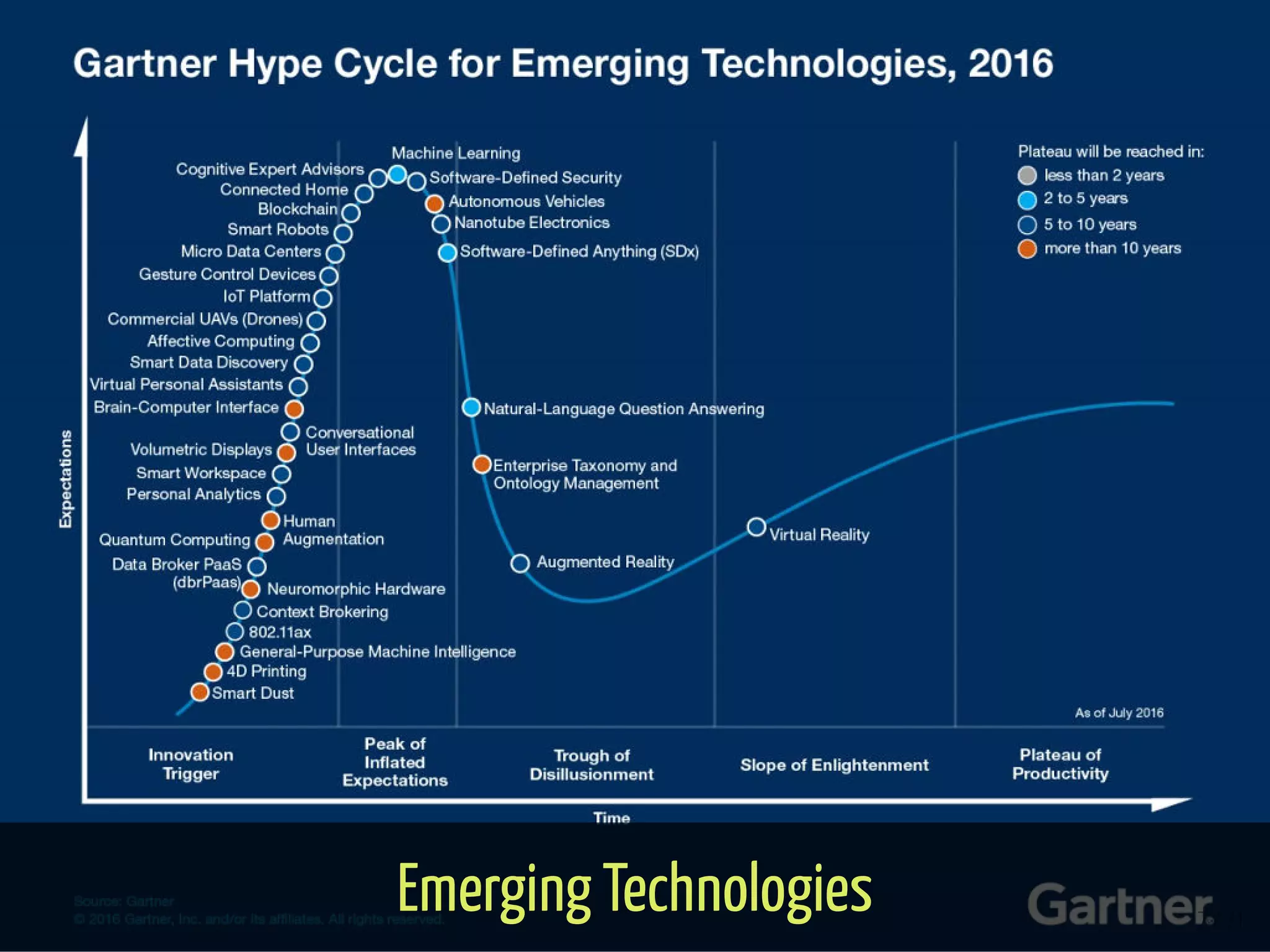
Emerging Technologies 7 / 71
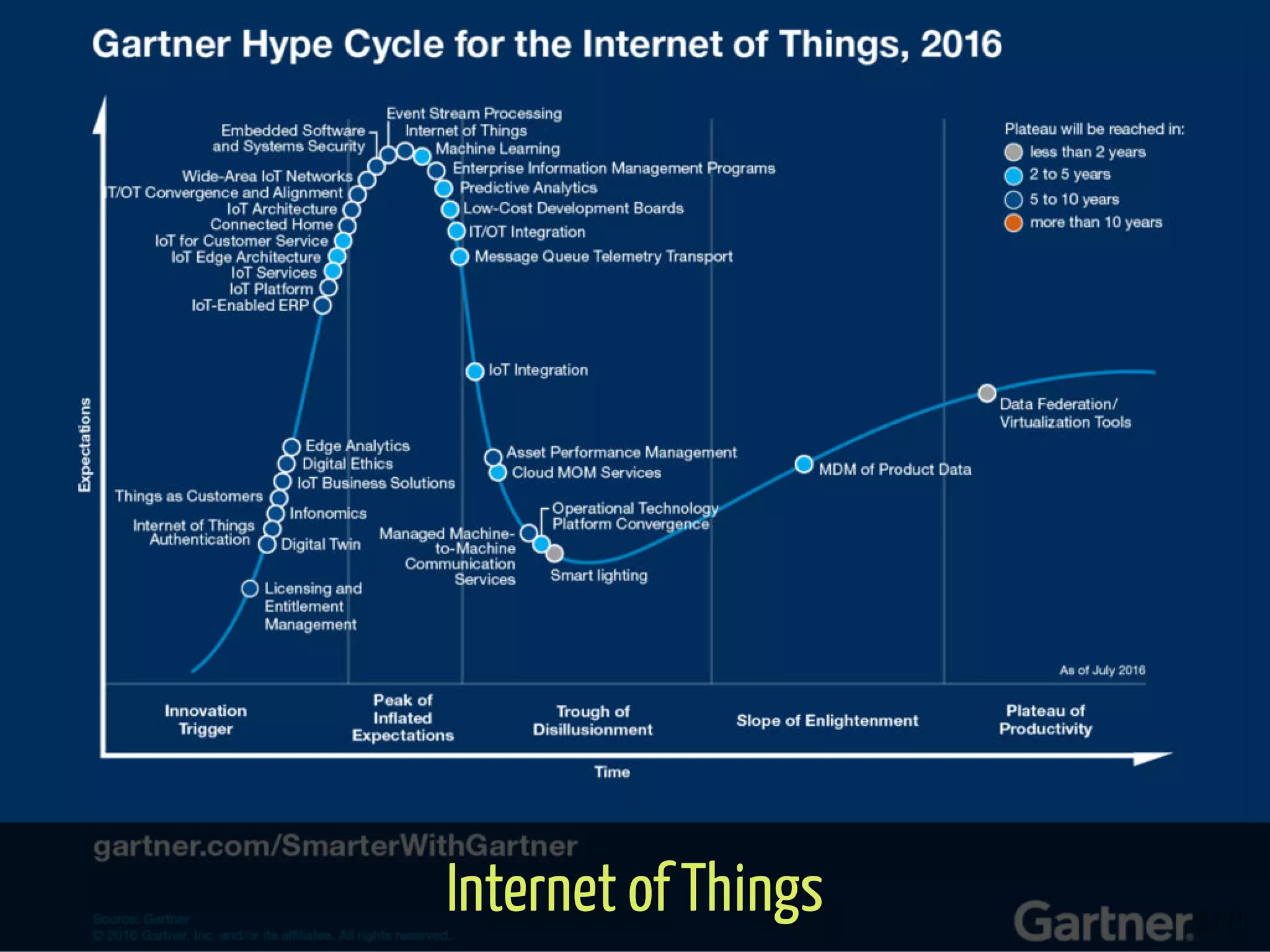
Internet of Things 8 / 71
9 / 71
The connection of everyday objects
and machines so that they work
seamlessly together across modern
networks (AT&T, 2015)
IoT is 'adding internet connectivity to
everyday objects' (Aruba, Survey 2017)
Connected Things
IoT
If the Internet of Things meant products like these (e.g. Smart-
Toaster) -- little more than home appliances with the word
'smart' added to their names -- the Internet of Things would
not be interesting.
The Internet of Things is something else entirely -- something
that will still be changing the world after every smart toaster has
rusted. (Kevin Asthon, 2017)
10 / 71
The Internet of Things (IoT) is a term
coined in 1999 by Kevin Ashton, a
British technology pioneer working on
radio-frequency identi cation (RFID)
who conceived a system of ubiquitous
sensors connecting the physical world
to the Internet.
Although things, Internet, and connectivity are the
three core components of IoT, the value is in closing
the gap between the physical and digital world in self-
reinforcing and self-improving systems.
Ref: AWS
Connected Things
IoT
What de nes the Internet of Things is data capture. The IoT
means sensors connected to the Internet and behaving in an
Internet-like way by making open, ad hoc connections, sharing
data freely and allowing unexpected applications, so computers
can understand the world around them and become
humanity's nervous system. (Kevin Asthon, 2017)
11 / 71
Connected Things
IoT
While Ashton's de nition provides a better and reasonable
meaning for IoT, due to the popularity of the term, we can not
prevent many sources used for this course material to refer to
di erent meanings.
Thus we adopt a rather loose condition and might use the
terms IoT and Connected Things interchangeably.
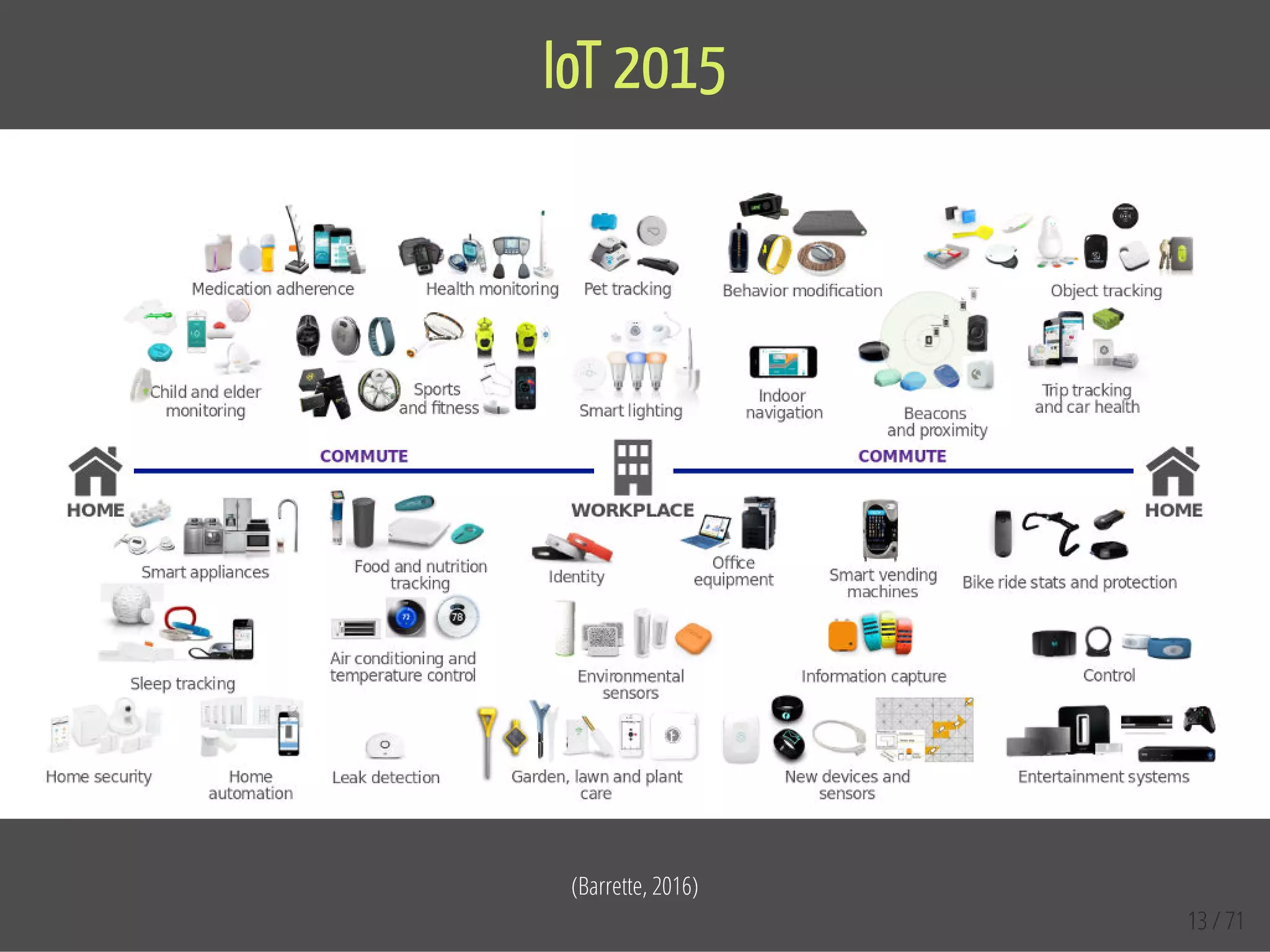
(Barrette, 2016)
IoT 2010
12 / 71
(Barrette, 2016)
IoT 2015
13 / 71
14 / 71
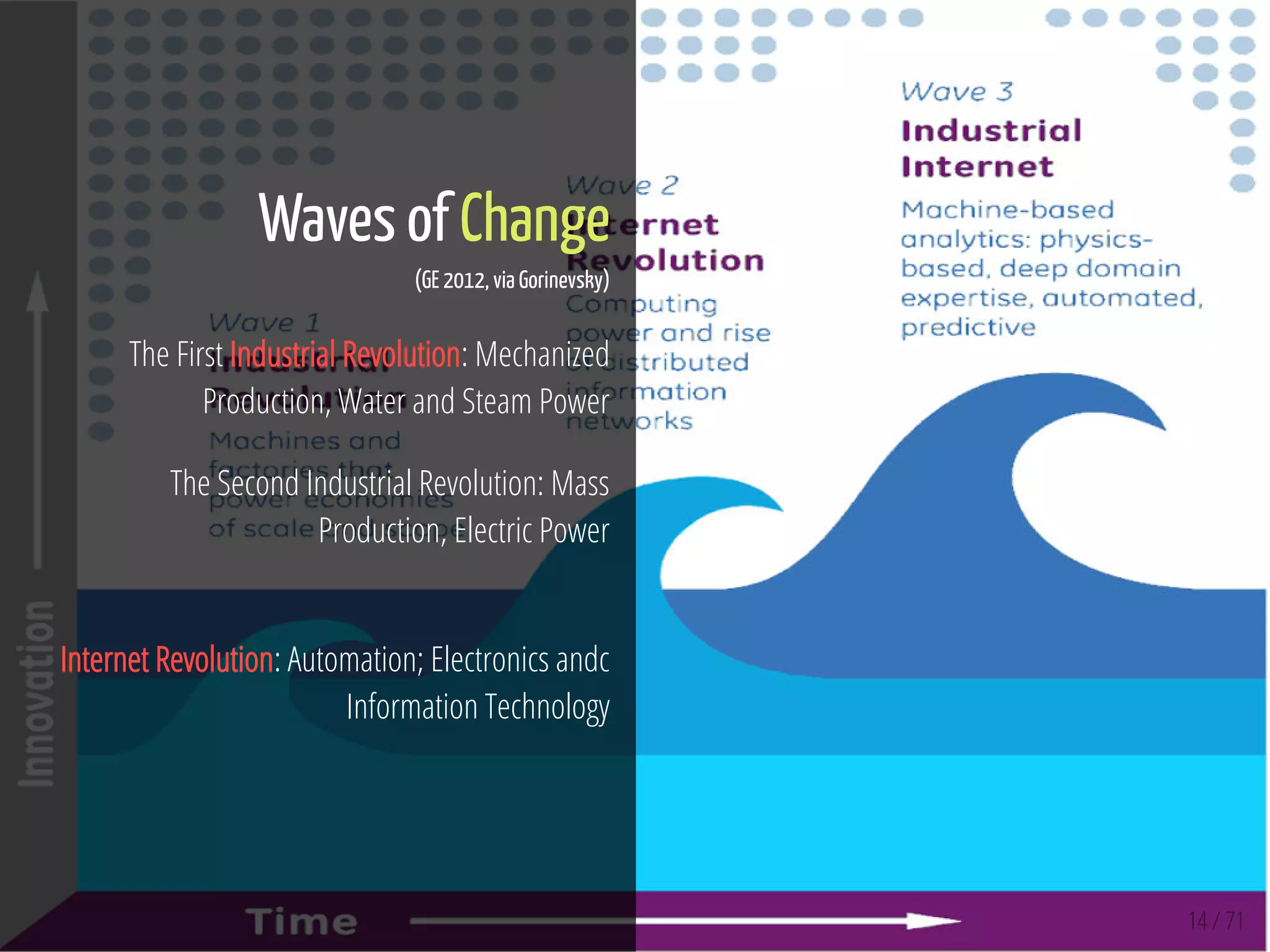
Waves of Change
(GE 2012, via Gorinevsky)
The First Industrial Revolution: Mechanized
Production, Water and Steam Power
The Second Industrial Revolution: Mass
Production, Electric Power
Internet Revolution: Automation; Electronics andc
Information Technology
15 / 71
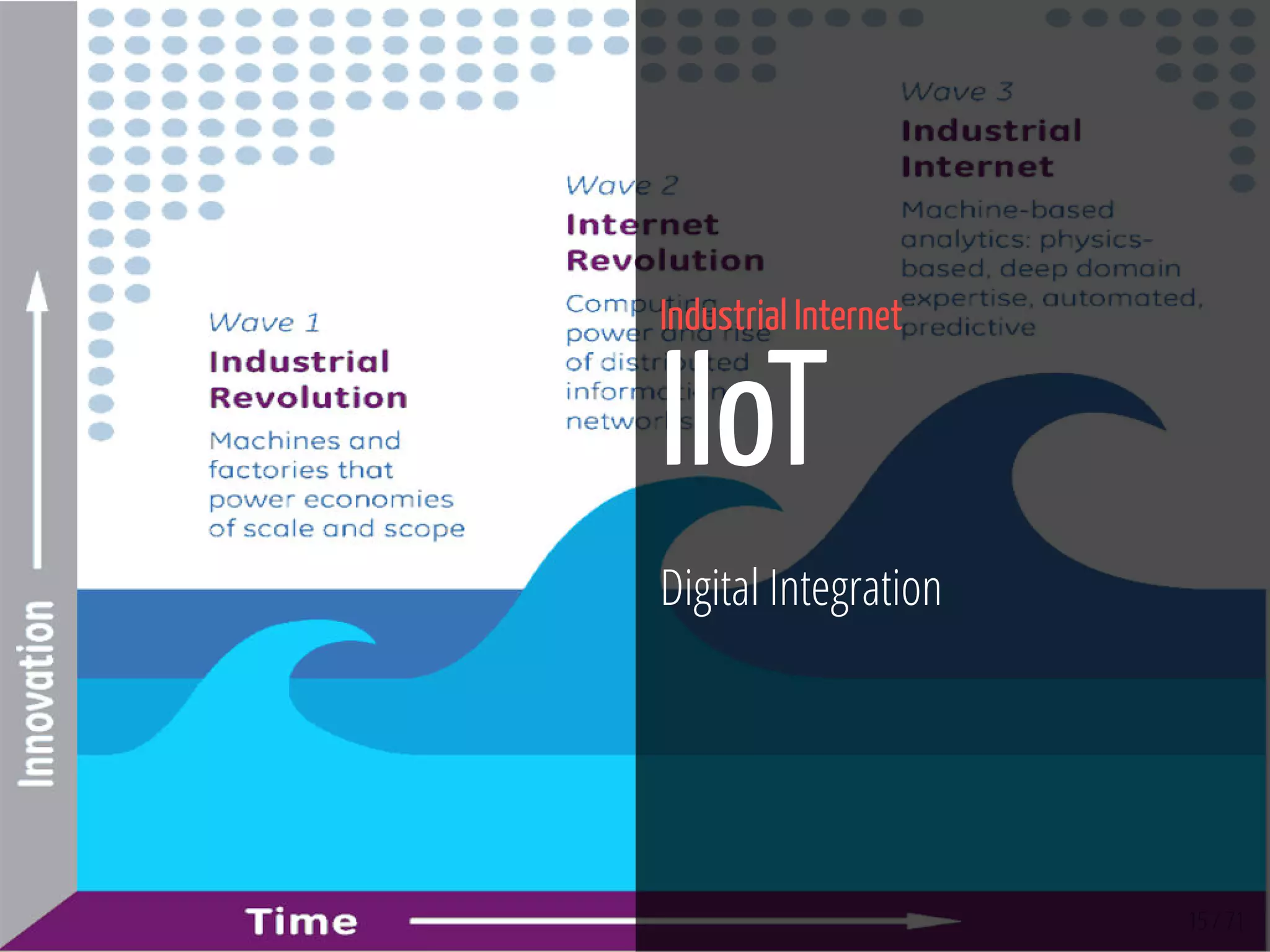
Industrial Internet
IIoT
Digital Integration
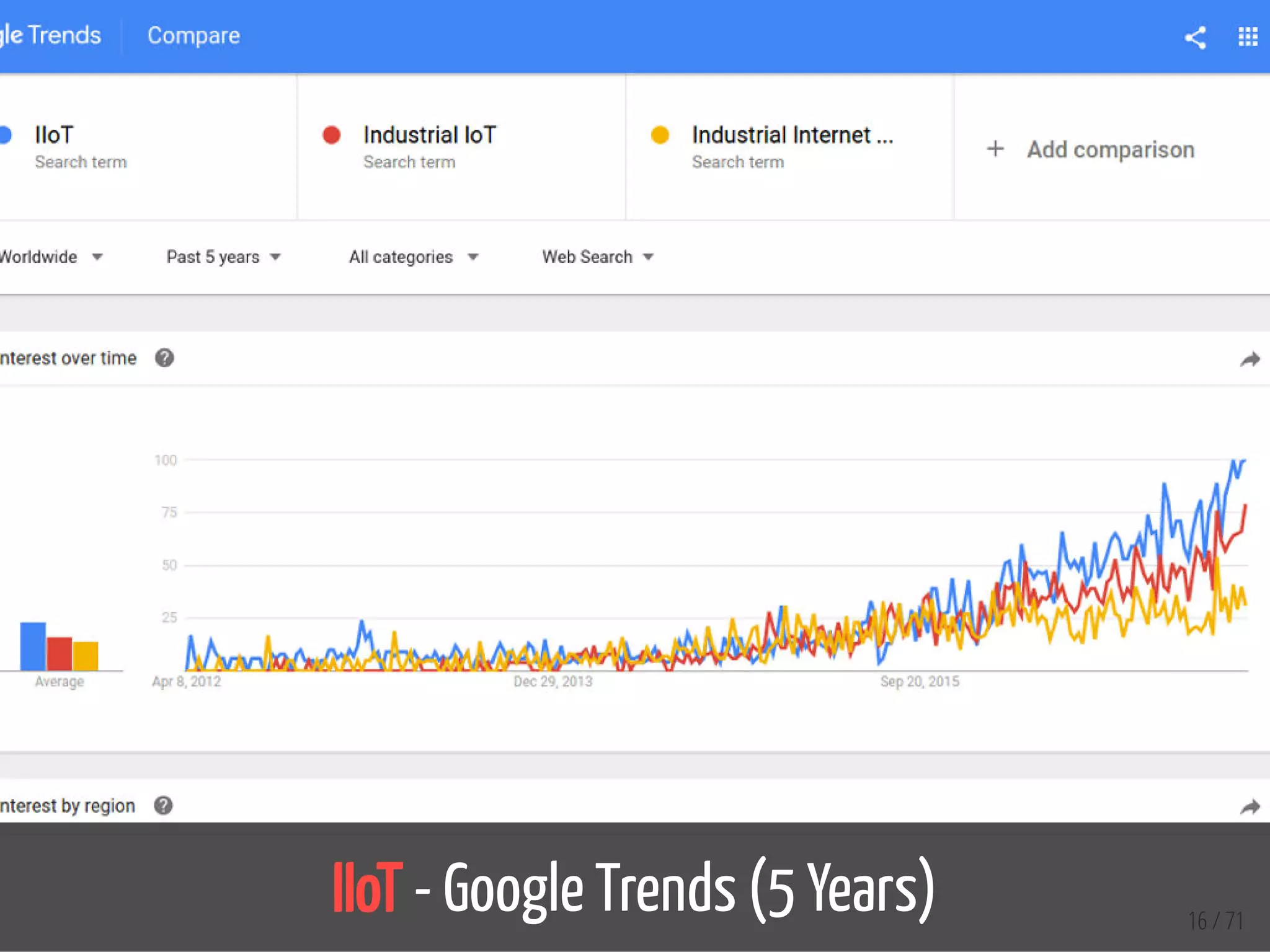
IIoT - Google Trends (5 Years) 16 / 71
17 / 71
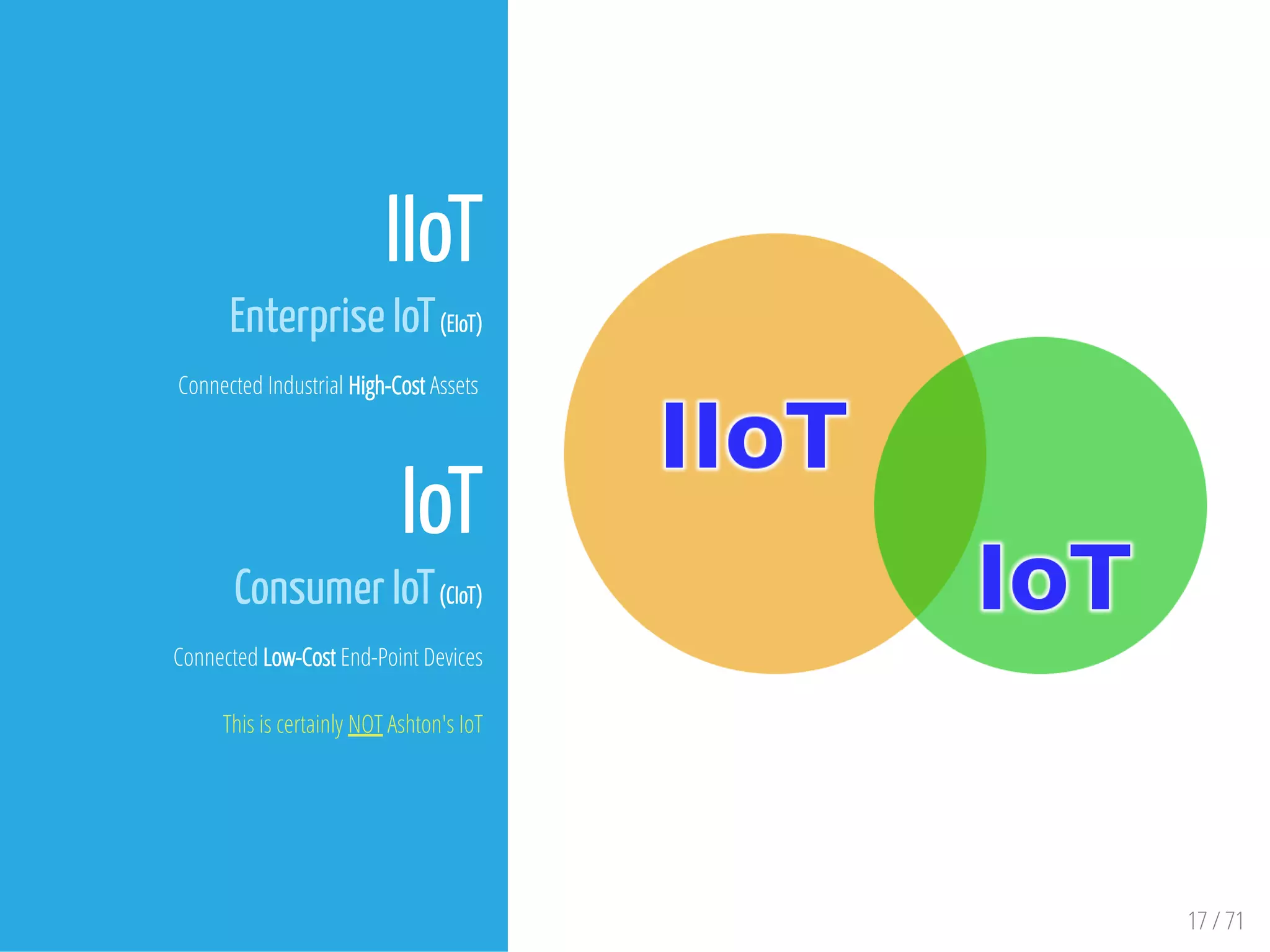
IIoT
Enterprise IoT(EIoT)
Connected Industrial High-Cost Assets
IoT
Consumer IoT(CIoT)
Connected Low-Cost End-Point Devices
This is certainly NOT Ashton's IoT
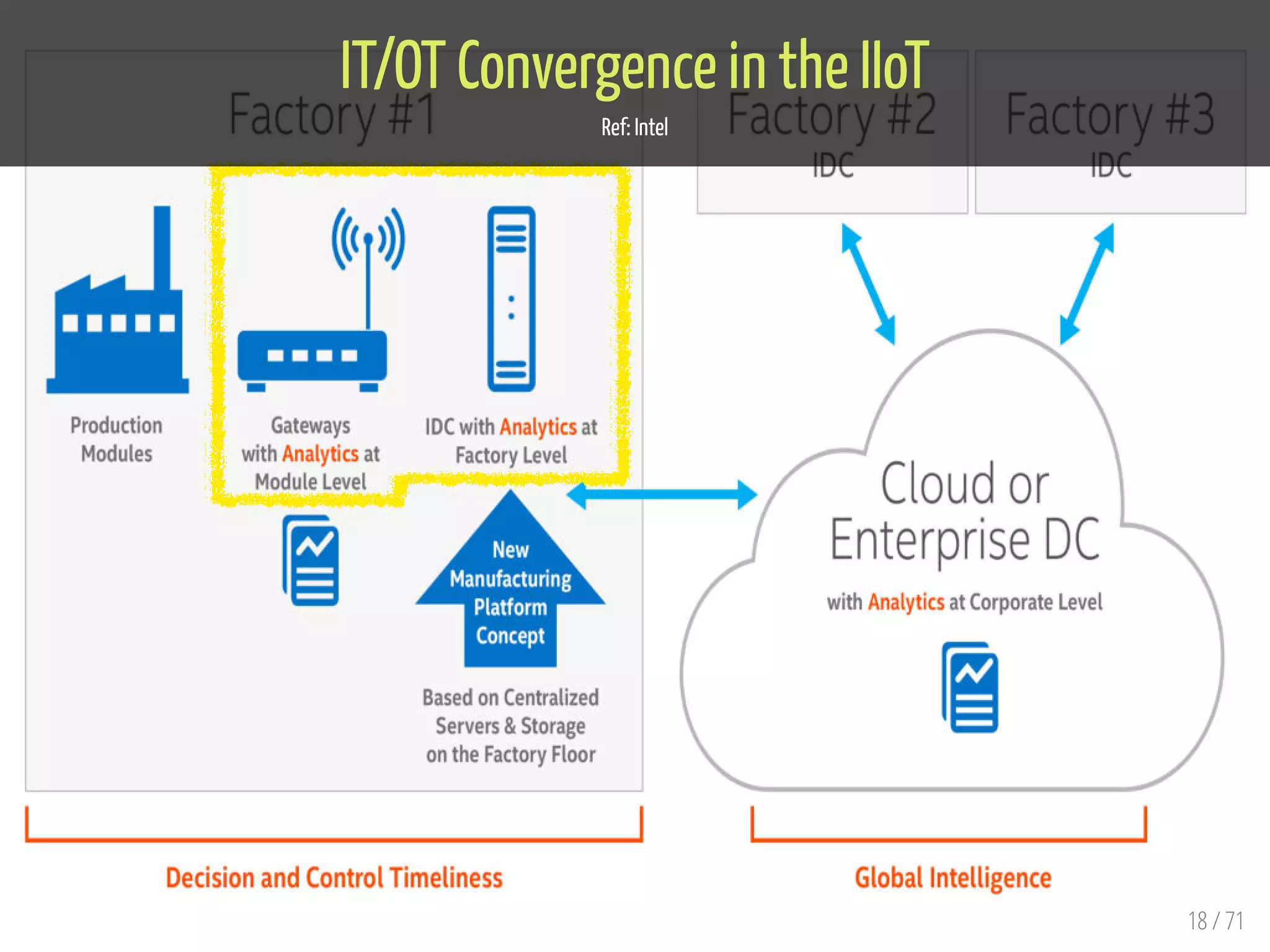
IT/OT Convergence in the IIoT
Ref: Intel
18 / 71
19 / 71
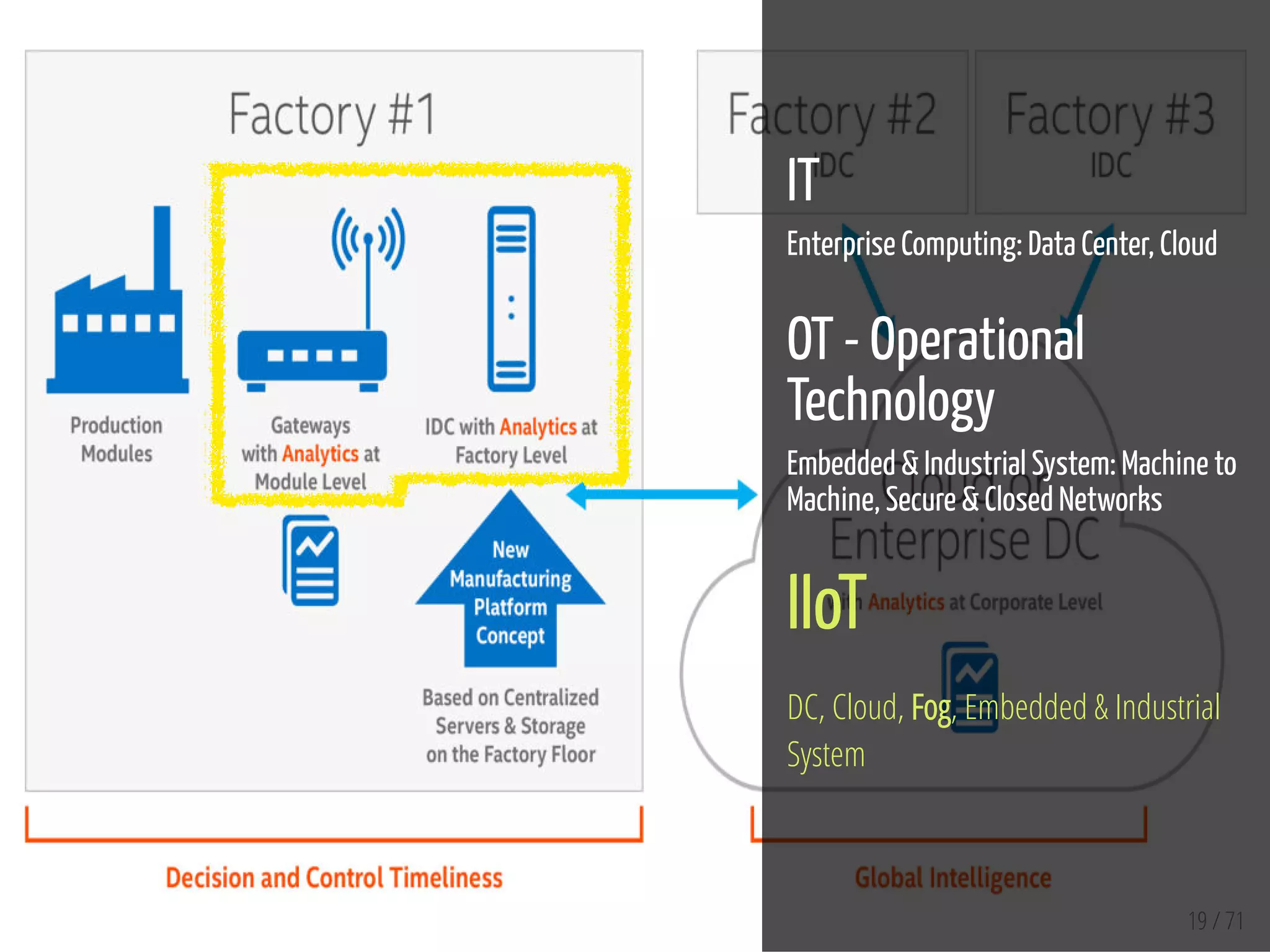
IT
Enterprise Computing: Data Center, Cloud
 
OT - Operational
Technology
Embedded & Industrial System: Machine to
Machine, Secure & Closed Networks
 
IIoT
DC, Cloud, Fog, Embedded & Industrial
System
20 / 71
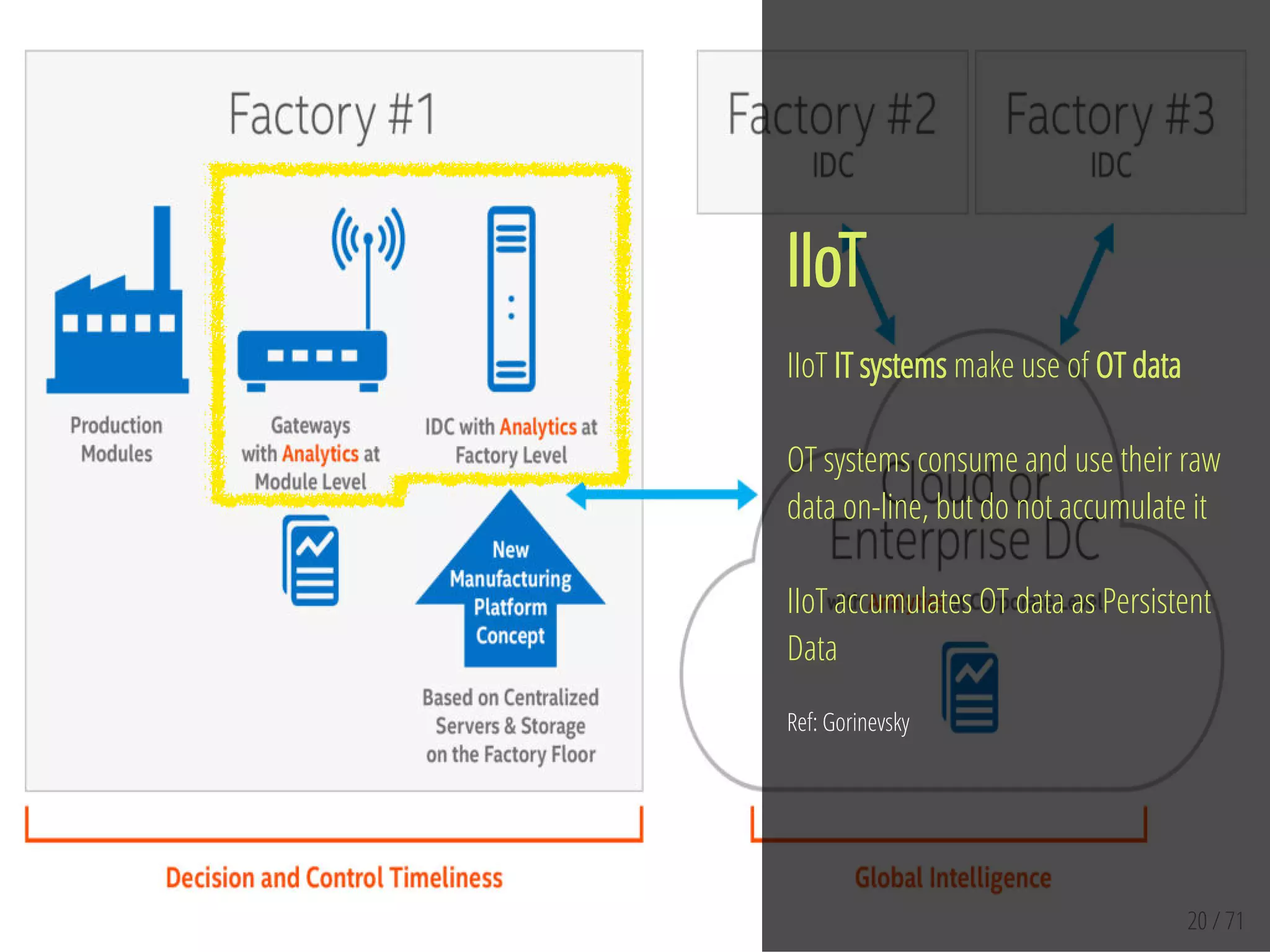
IIoT
IIoT IT systems make use of OT data
OT systems consume and use their raw
data on-line, but do not accumulate it
IIoT accumulates OT data as Persistent
Data
Ref: Gorinevsky
21 / 71
Other Terms
IoE & M2M
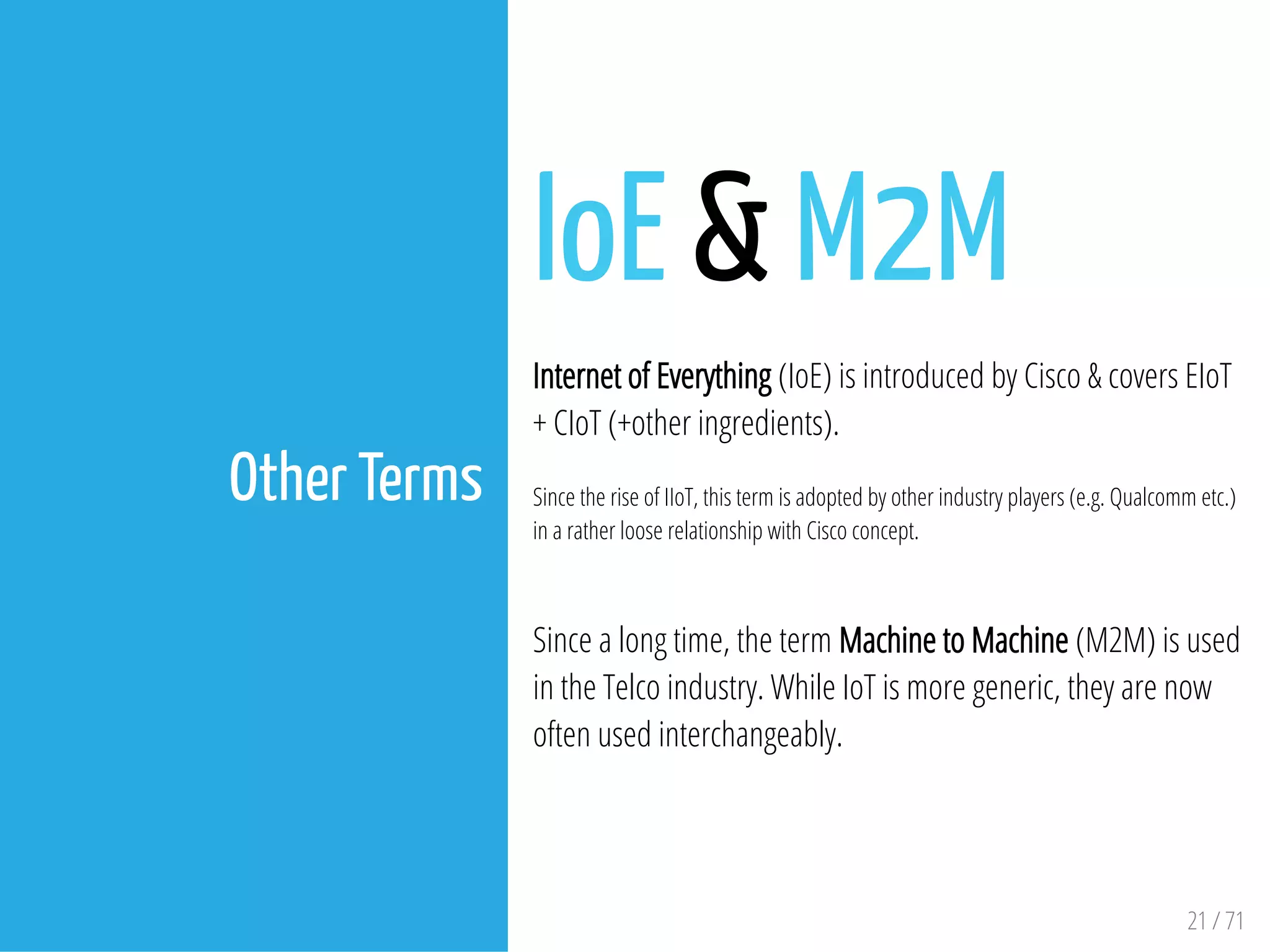
Internet of Everything (IoE) is introduced by Cisco & covers EIoT
+ CIoT (+other ingredients).
Since the rise of IIoT, this term is adopted by other industry players (e.g. Qualcomm etc.)
in a rather loose relationship with Cisco concept.
Since a long time, the term Machine to Machine (M2M) is used
in the Telco industry. While IoT is more generic, they are now
often used interchangeably.
22 / 71
IoT - Microsoft
Create The Internet of Your Things



Model & Architecture
23 / 71
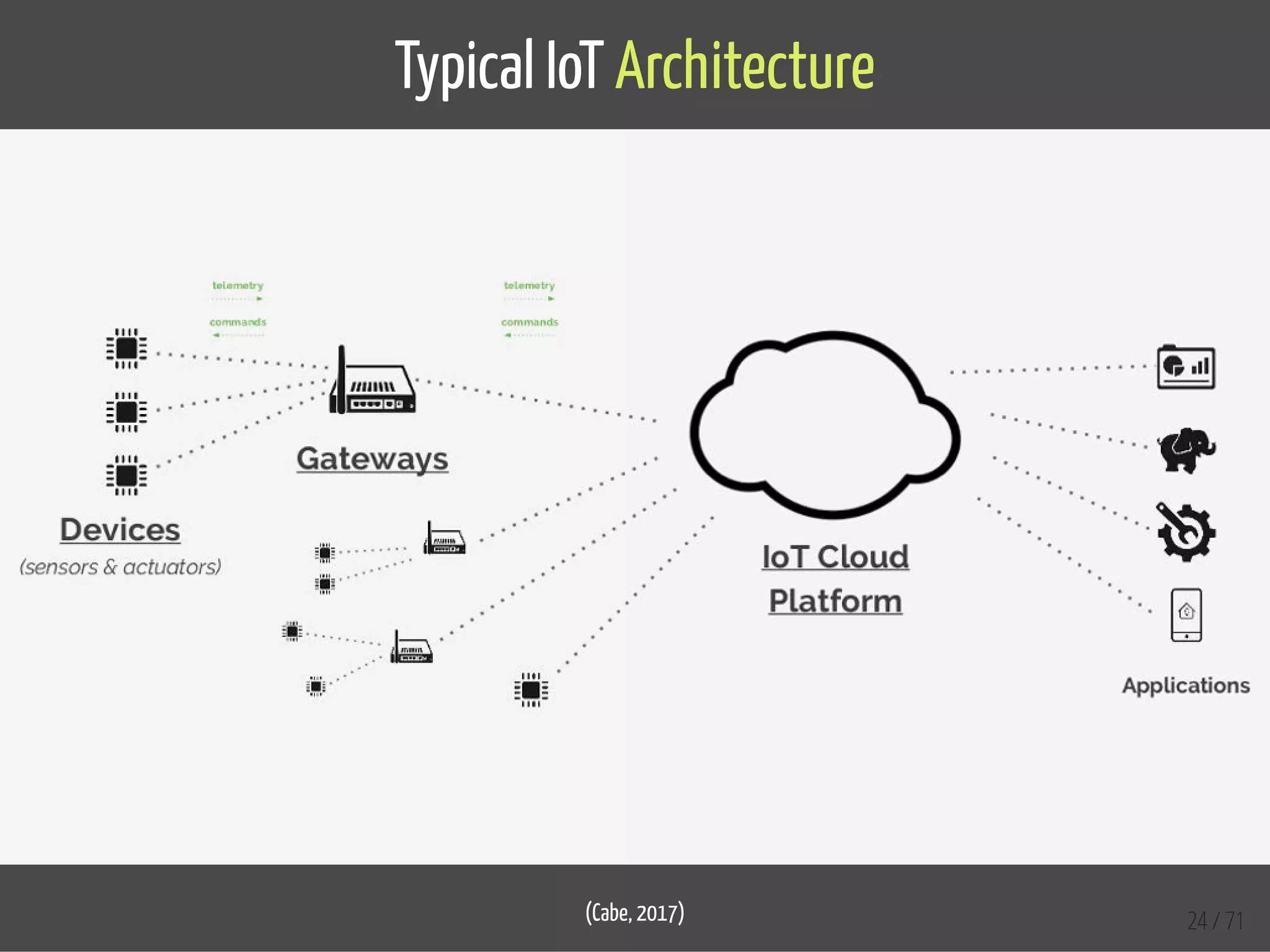
Typical IoT Architecture
(Cabe, 2017) 24 / 71
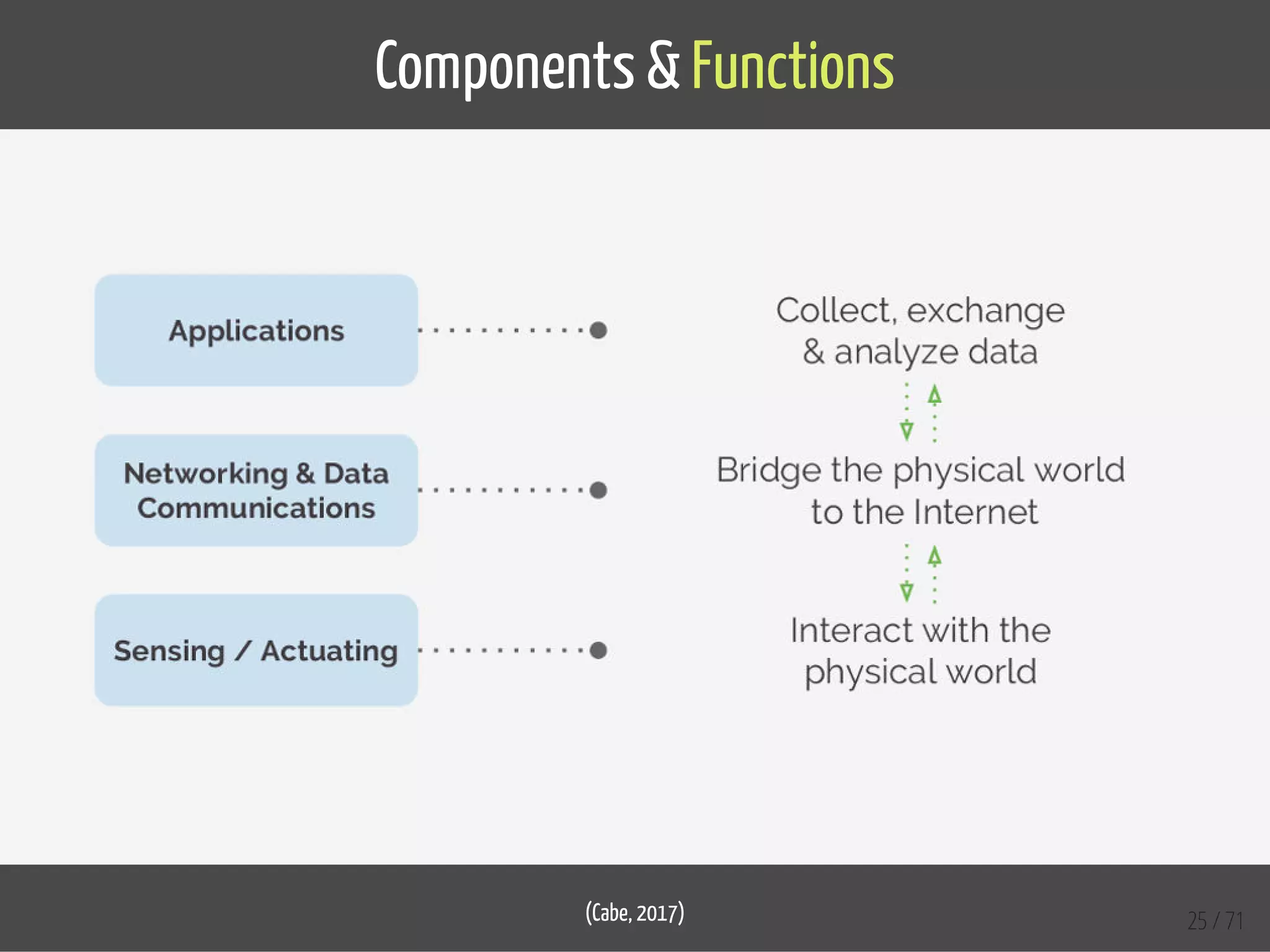
Components & Functions
(Cabe, 2017) 25 / 71
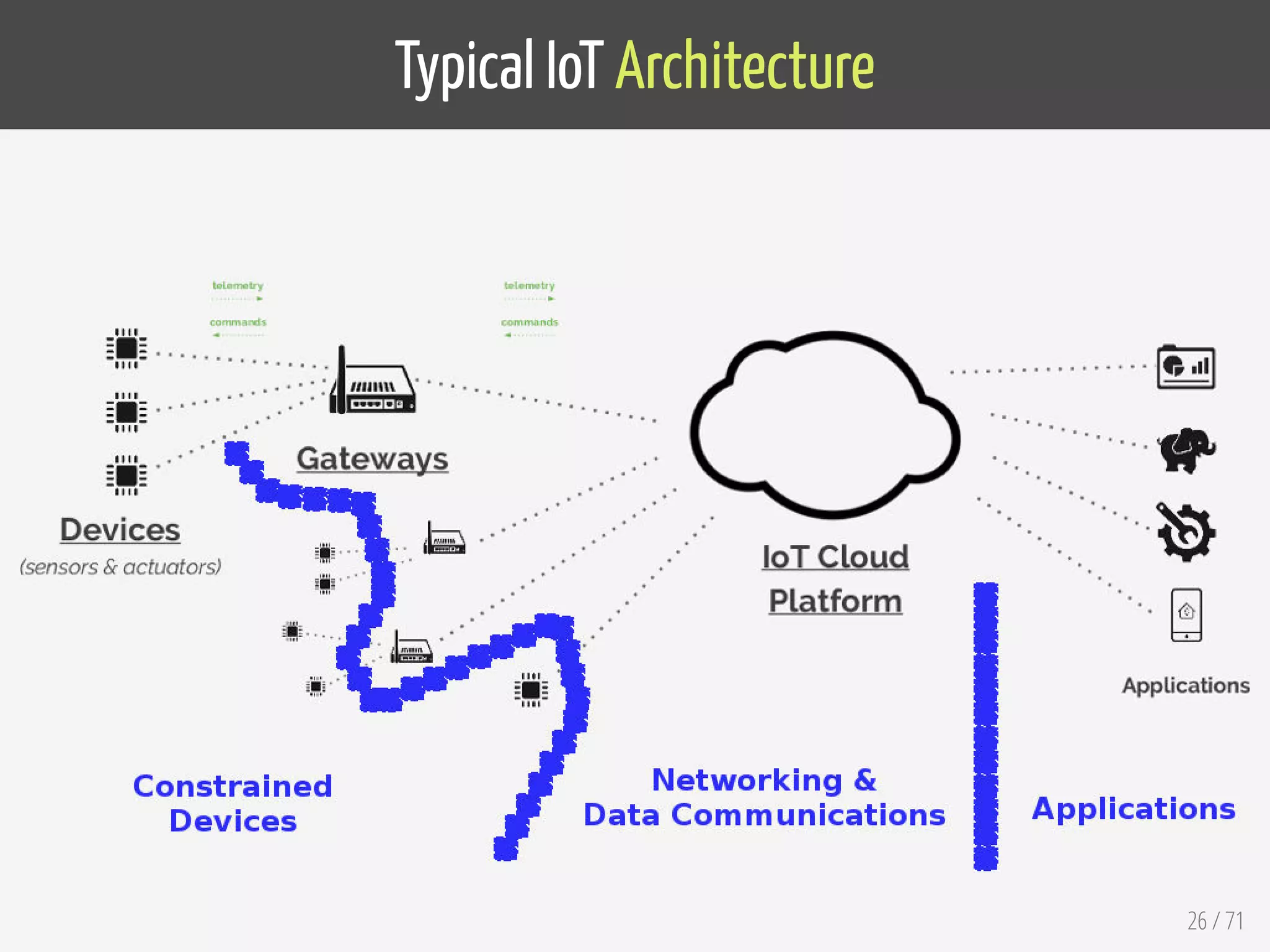
Typical IoT Architecture
26 / 71
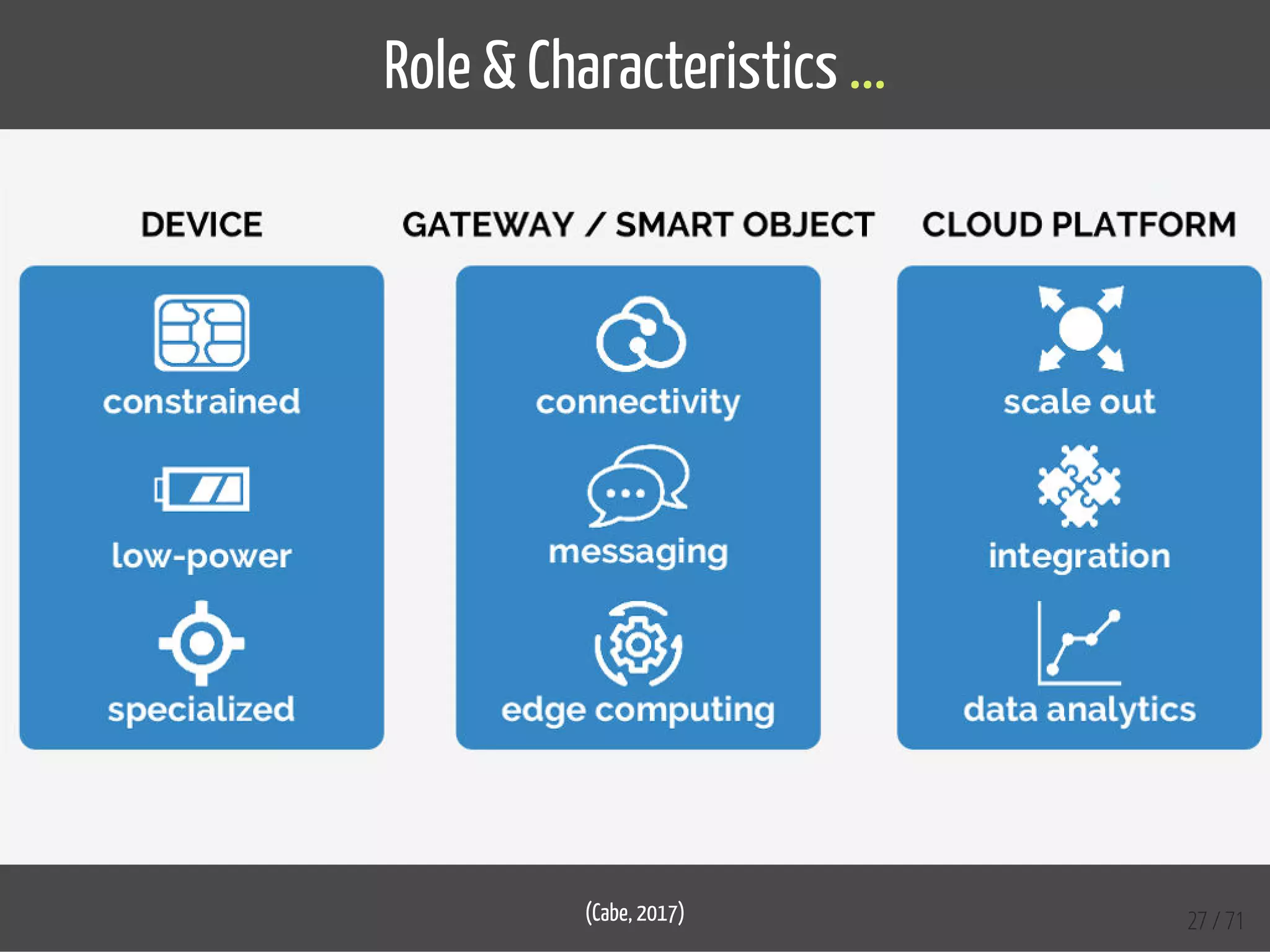
Role & Characteristics ...
(Cabe, 2017) 27 / 71
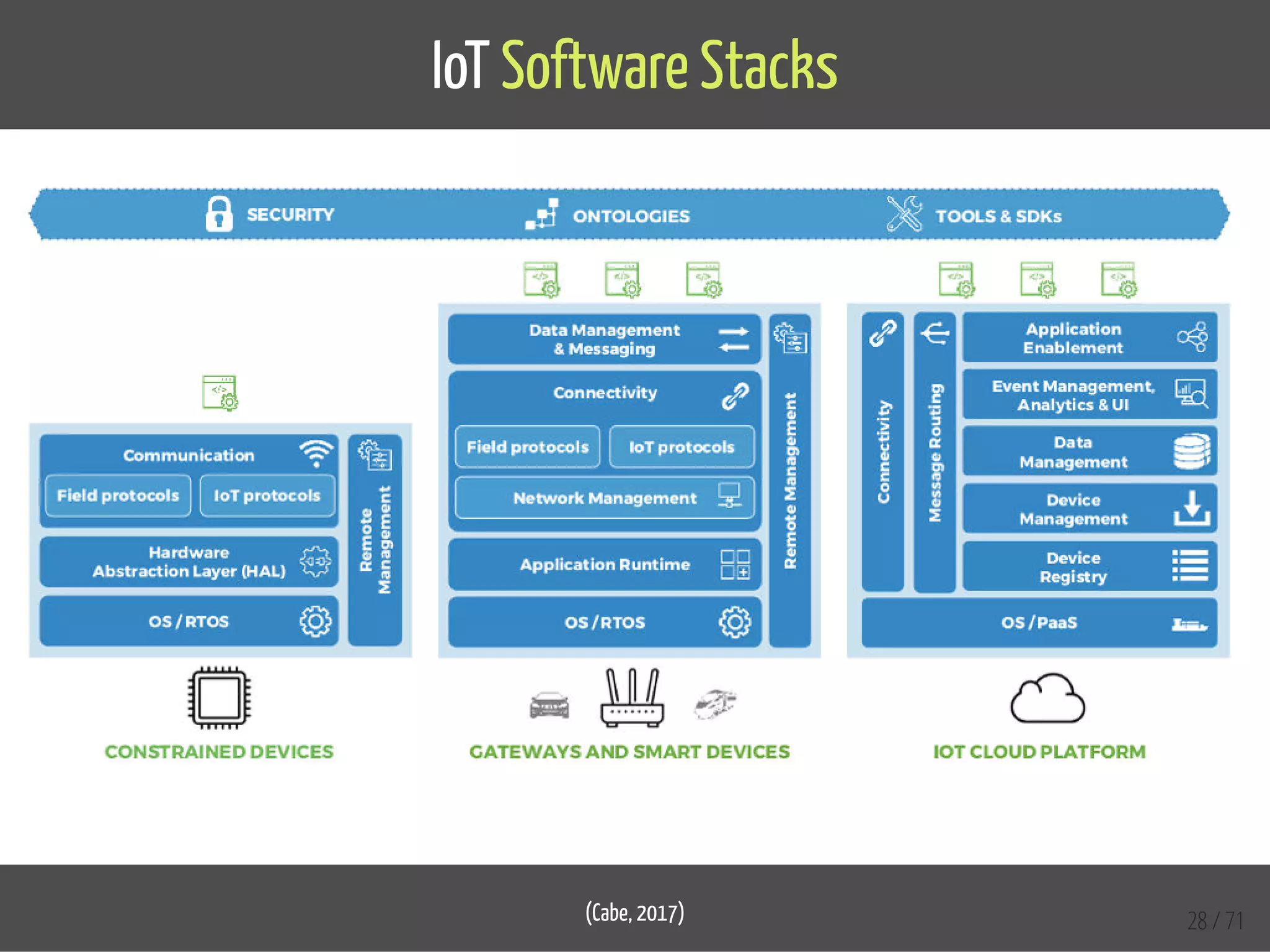
IoT Software Stacks
(Cabe, 2017) 28 / 71
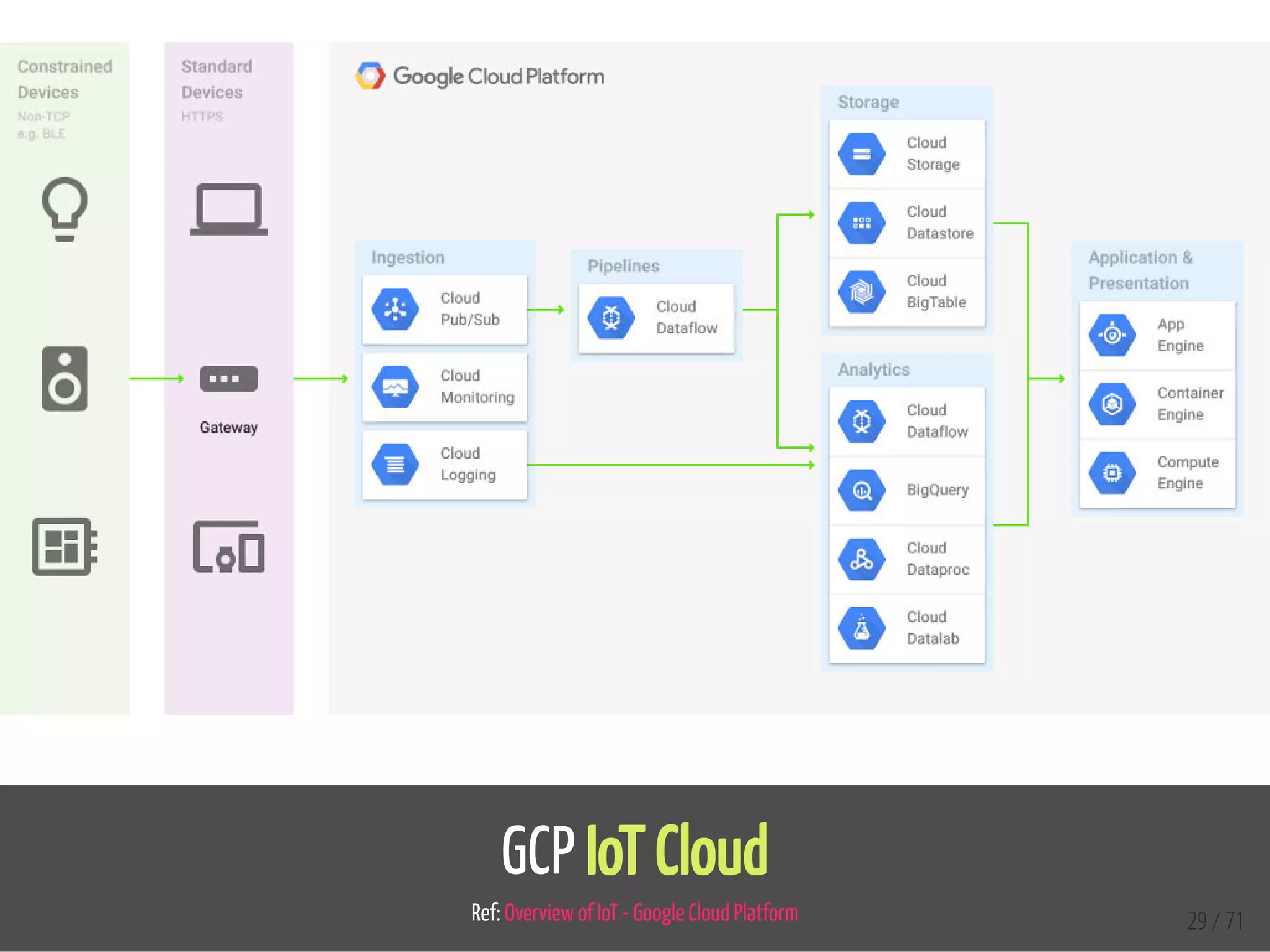
GCP IoT Cloud
Ref: Overview of IoT - Google Cloud Platform 29 / 71
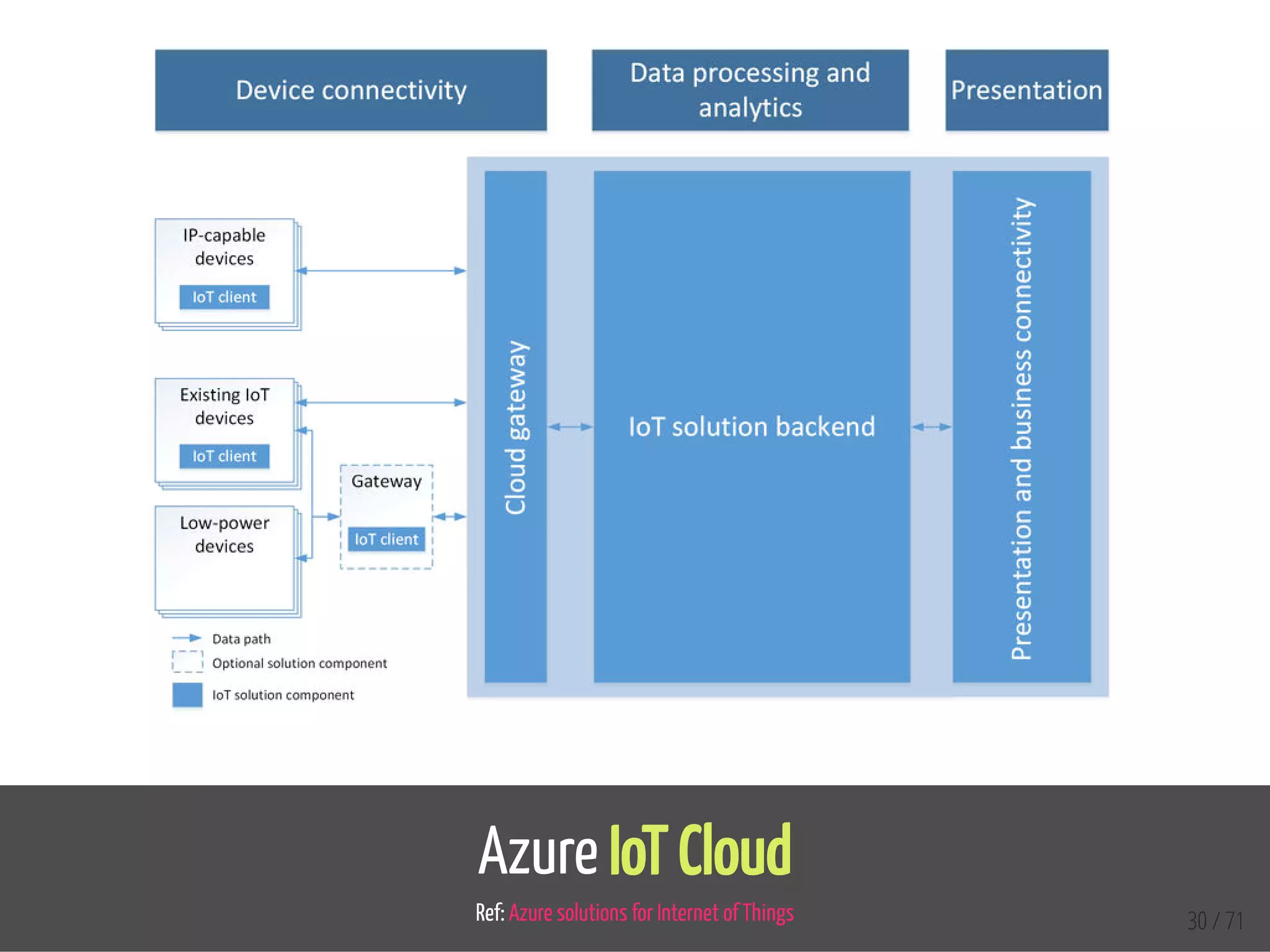
Azure IoT Cloud
Ref: Azure solutions for Internet of Things 30 / 71
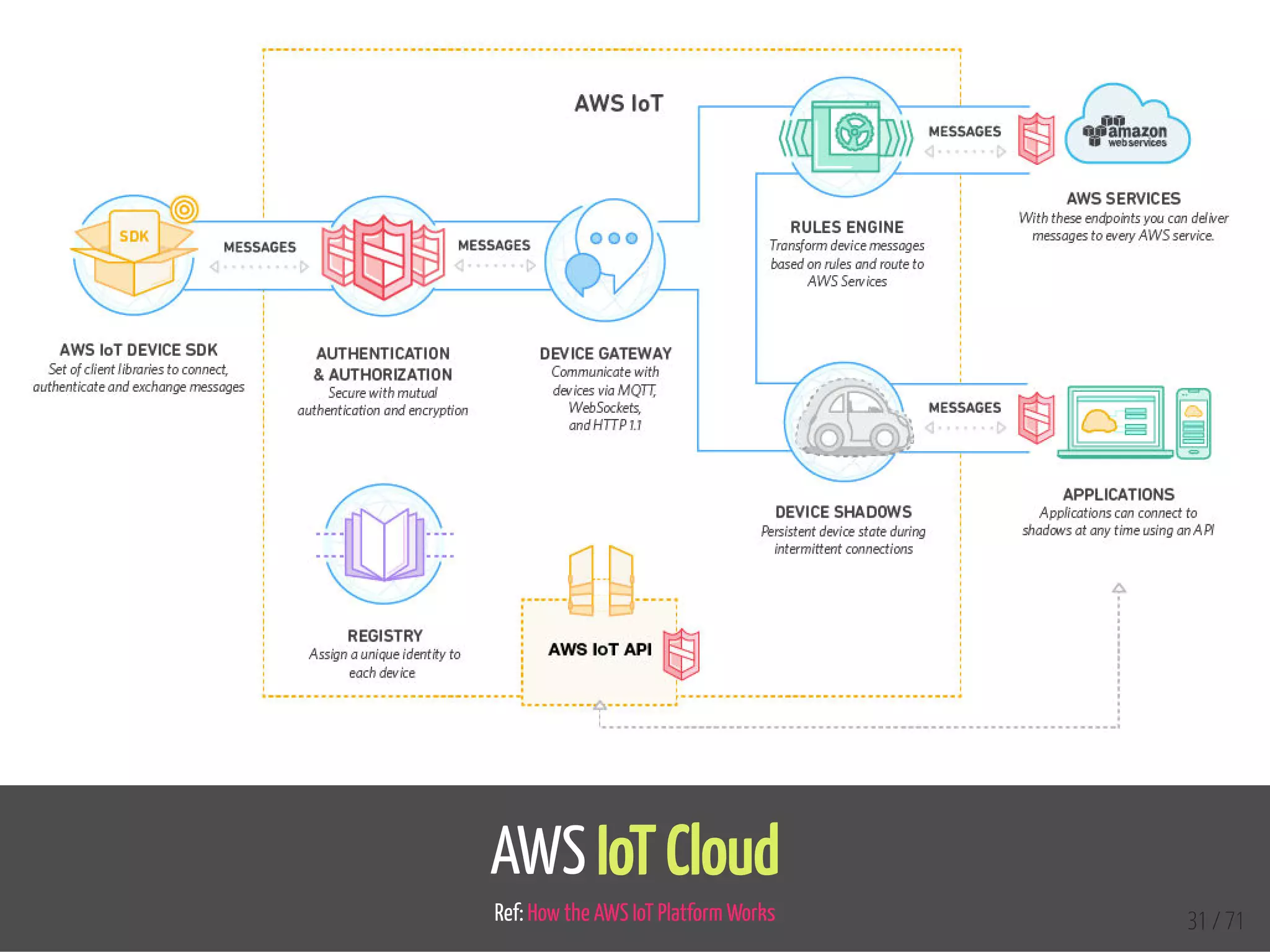
AWS IoT Cloud
Ref: How the AWS IoT Platform Works 31 / 71
32 / 71
Google Cloud
Internet of Things



Infrastructure
5G
33 / 71
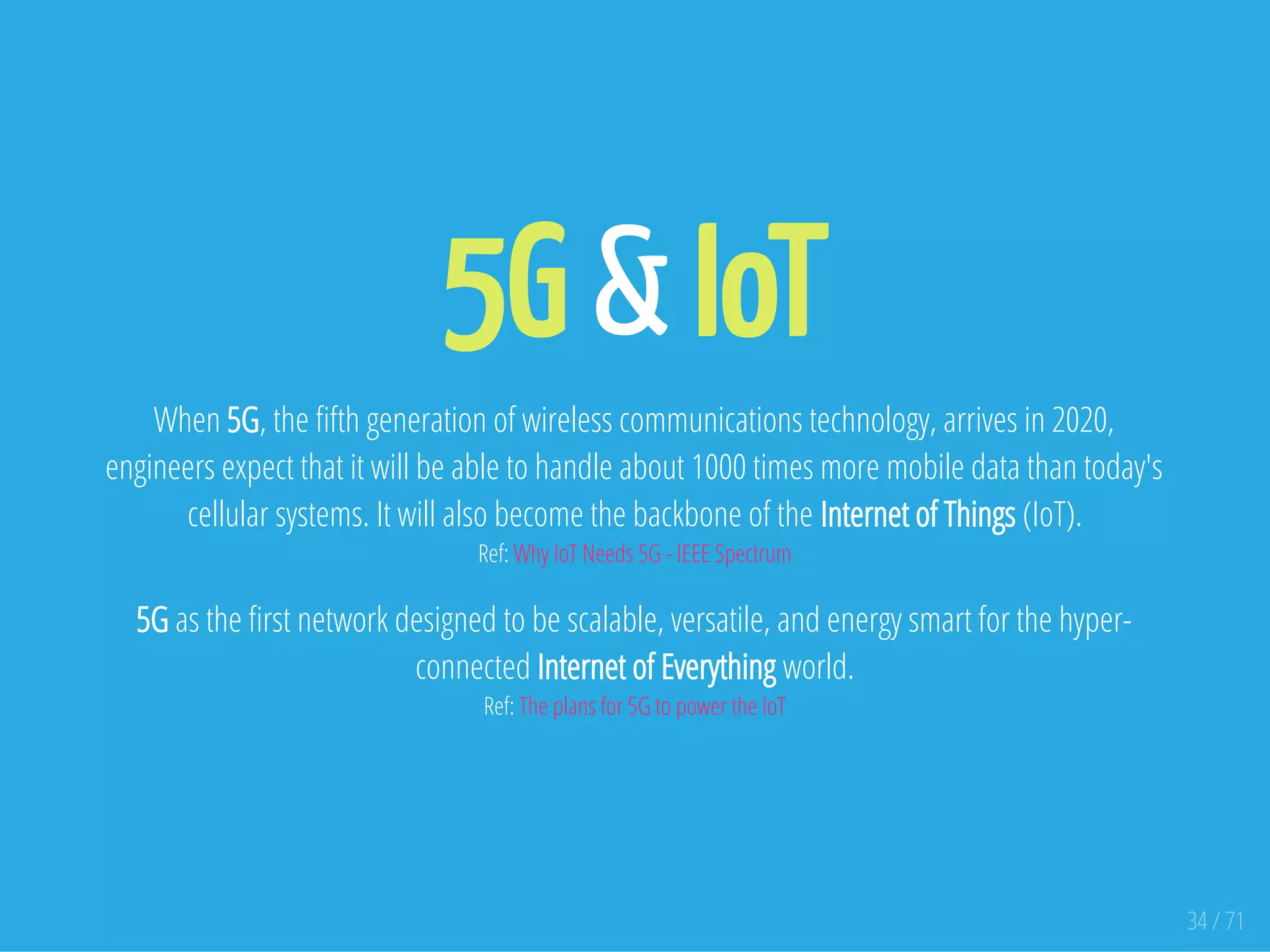
5G & IoT
When 5G, the fth generation of wireless communications technology, arrives in 2020,
engineers expect that it will be able to handle about 1000 times more mobile data than today's
cellular systems. It will also become the backbone of the Internet of Things (IoT).
Ref: Why IoT Needs 5G - IEEE Spectrum
5G as the rst network designed to be scalable, versatile, and energy smart for the hyper-
connected Internet of Everything world.
Ref: The plans for 5G to power the IoT
34 / 71
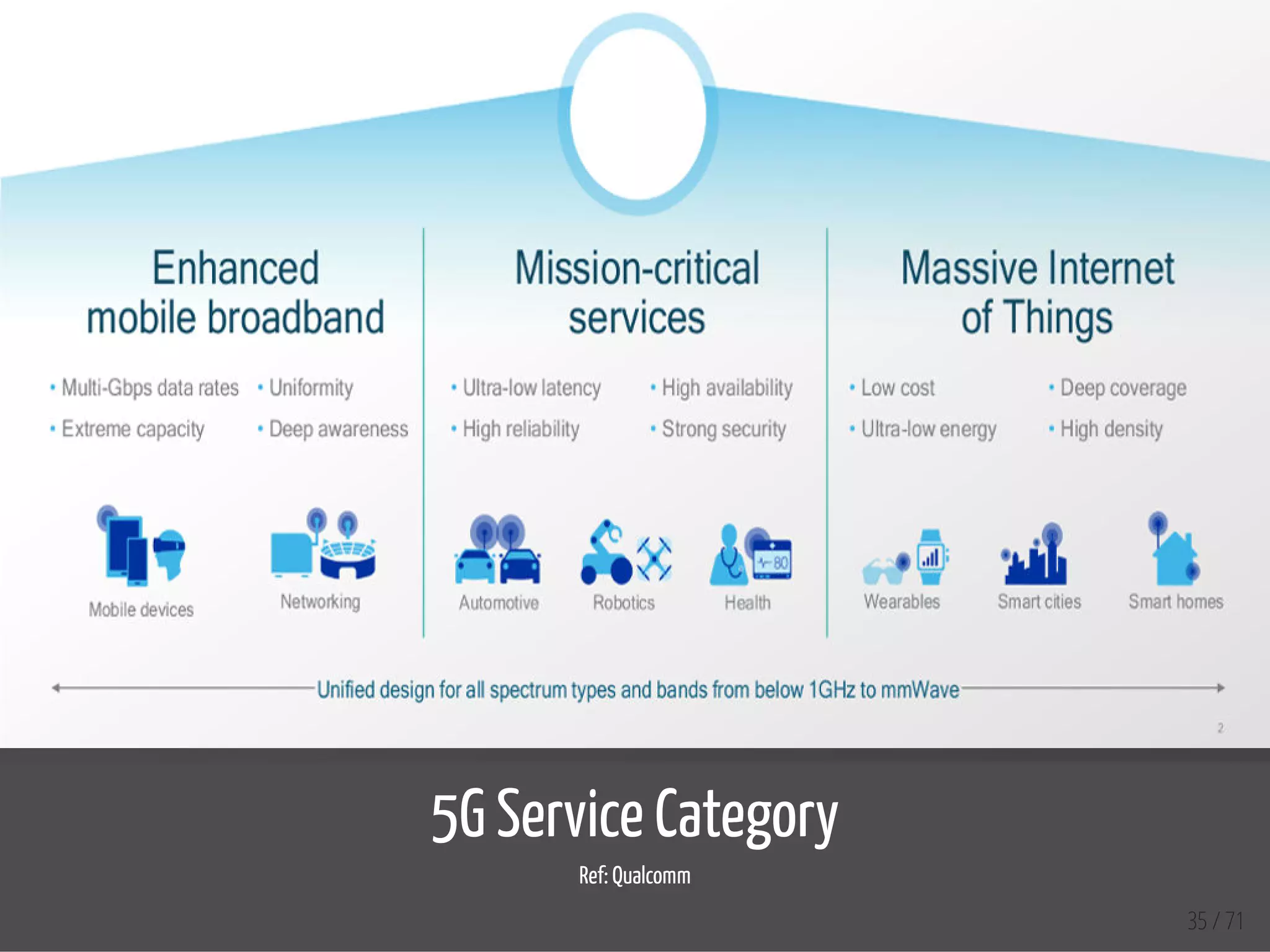
5G Service Category
Ref: Qualcomm
  35 / 71
 
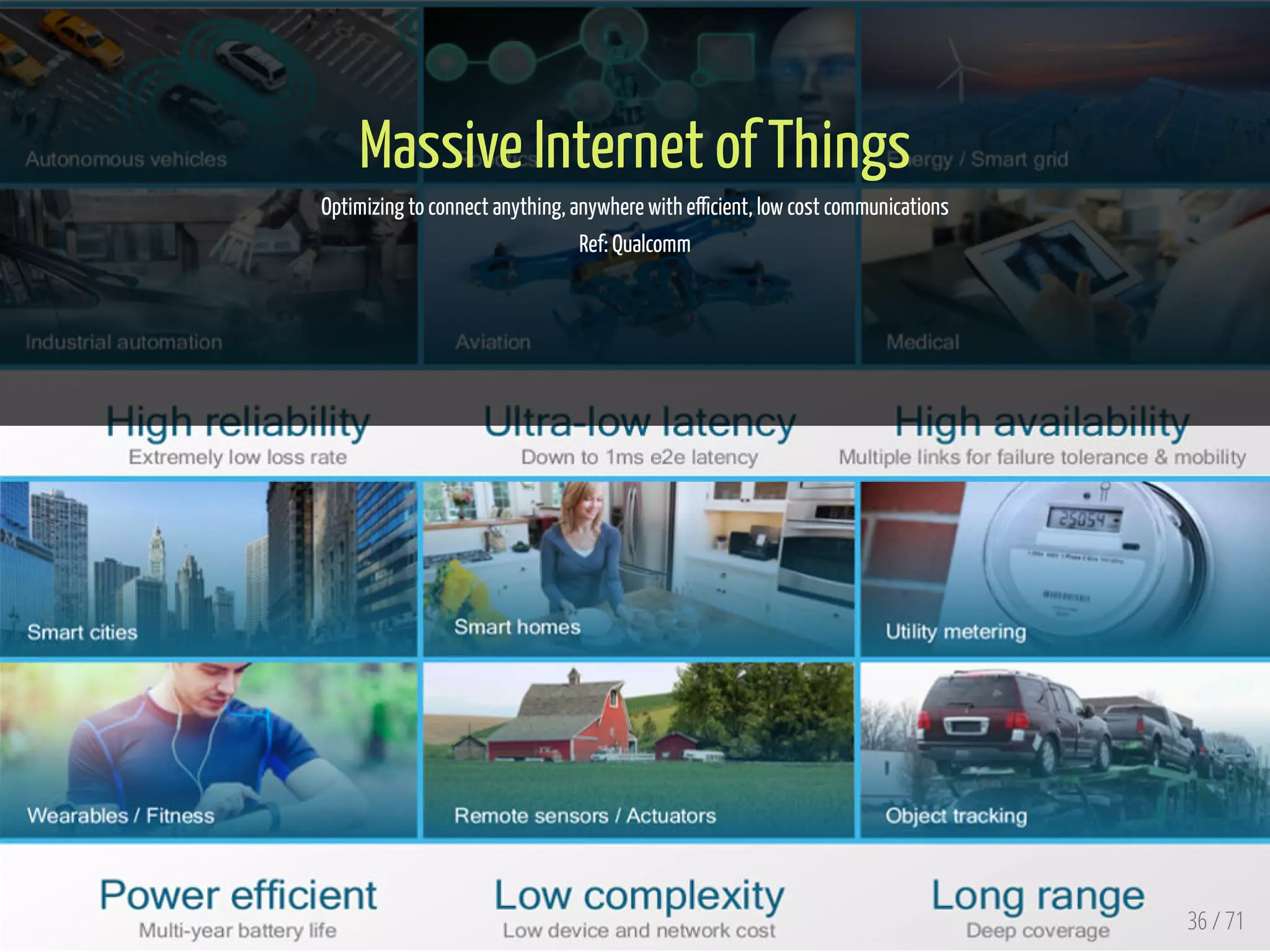
Massive Internet of Things
Optimizing to connect anything, anywhere with e cient, low cost communications
Ref: Qualcomm


36 / 71
 
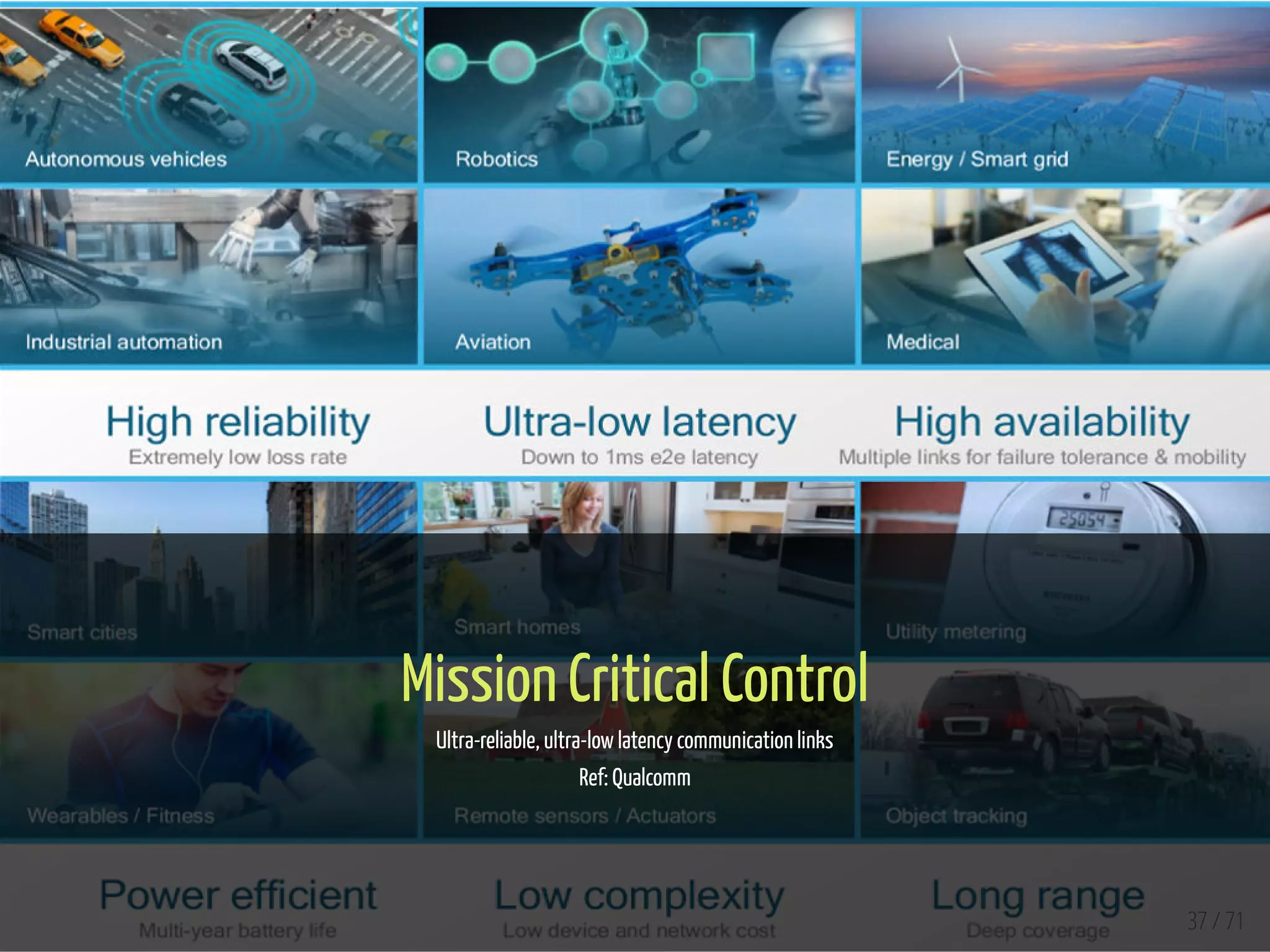
Mission Critical Control
Ultra-reliable, ultra-low latency communication links
Ref: Qualcomm
 
  37 / 71
 
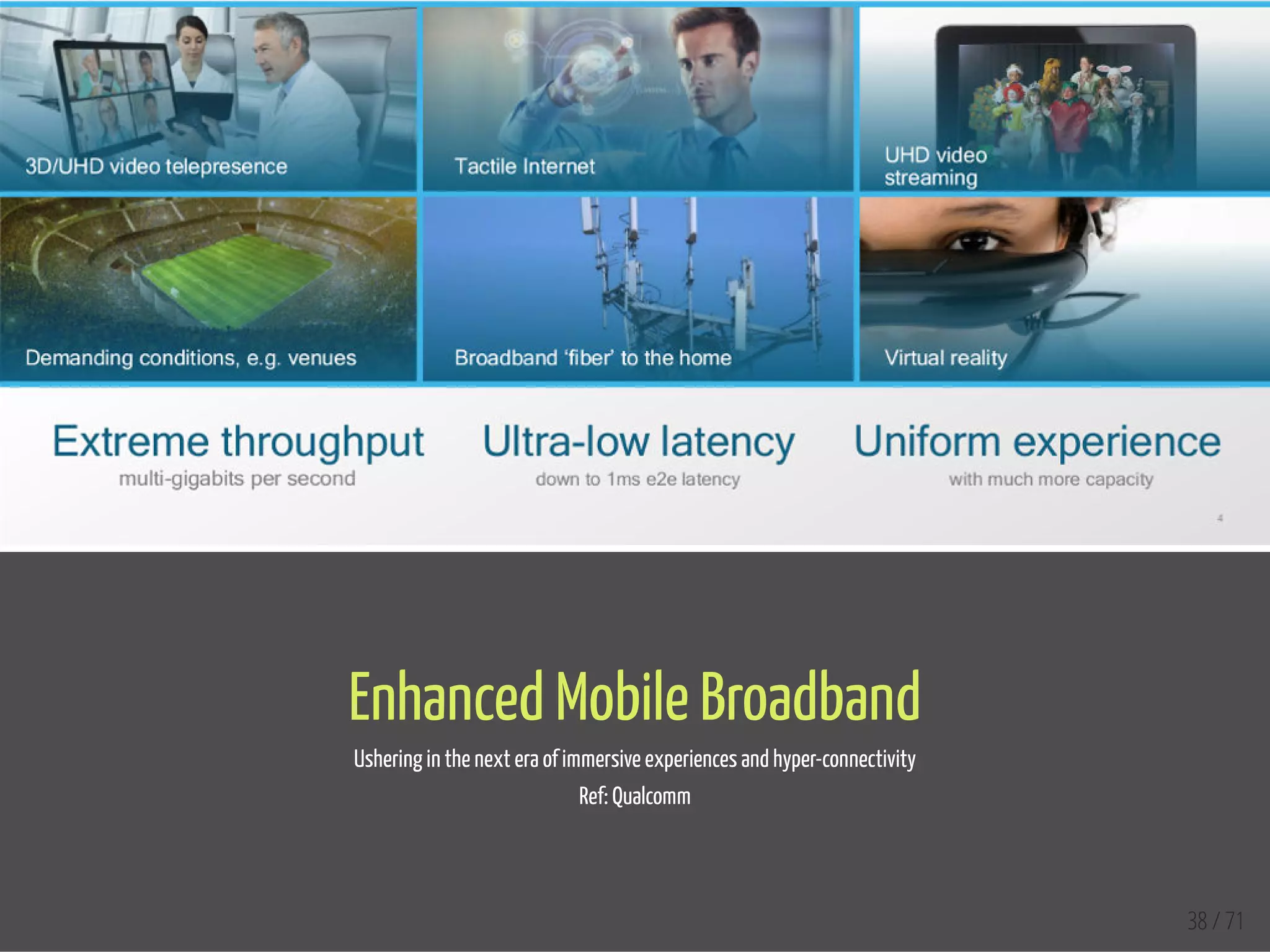
Enhanced Mobile Broadband
Ushering in the next era of immersive experiences and hyper-connectivity
Ref: Qualcomm
 
  38 / 71
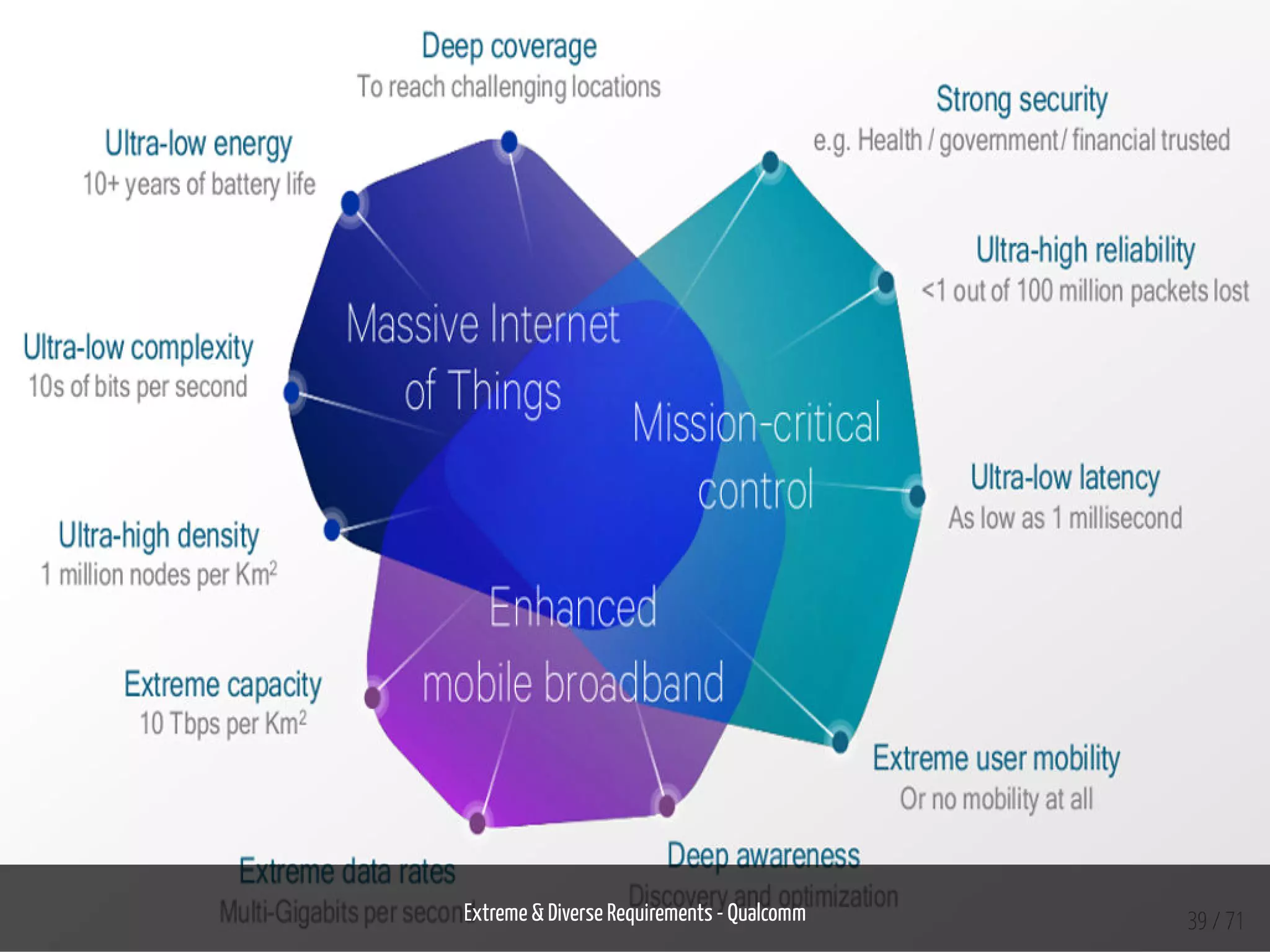
Extreme & Diverse Requirements - Qualcomm 39 / 71
 
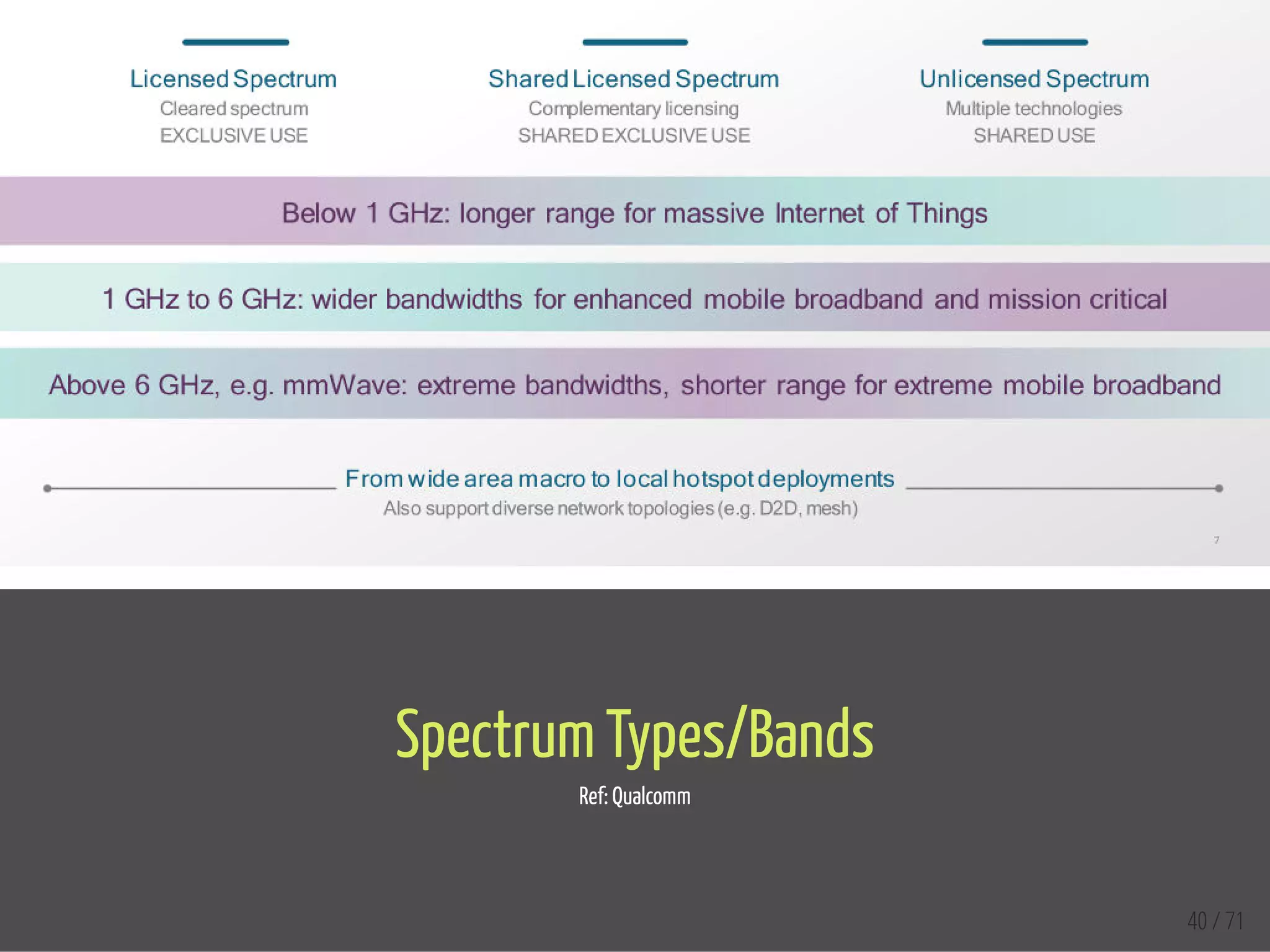
Spectrum Types/Bands
Ref: Qualcomm
 
  40 / 71
 
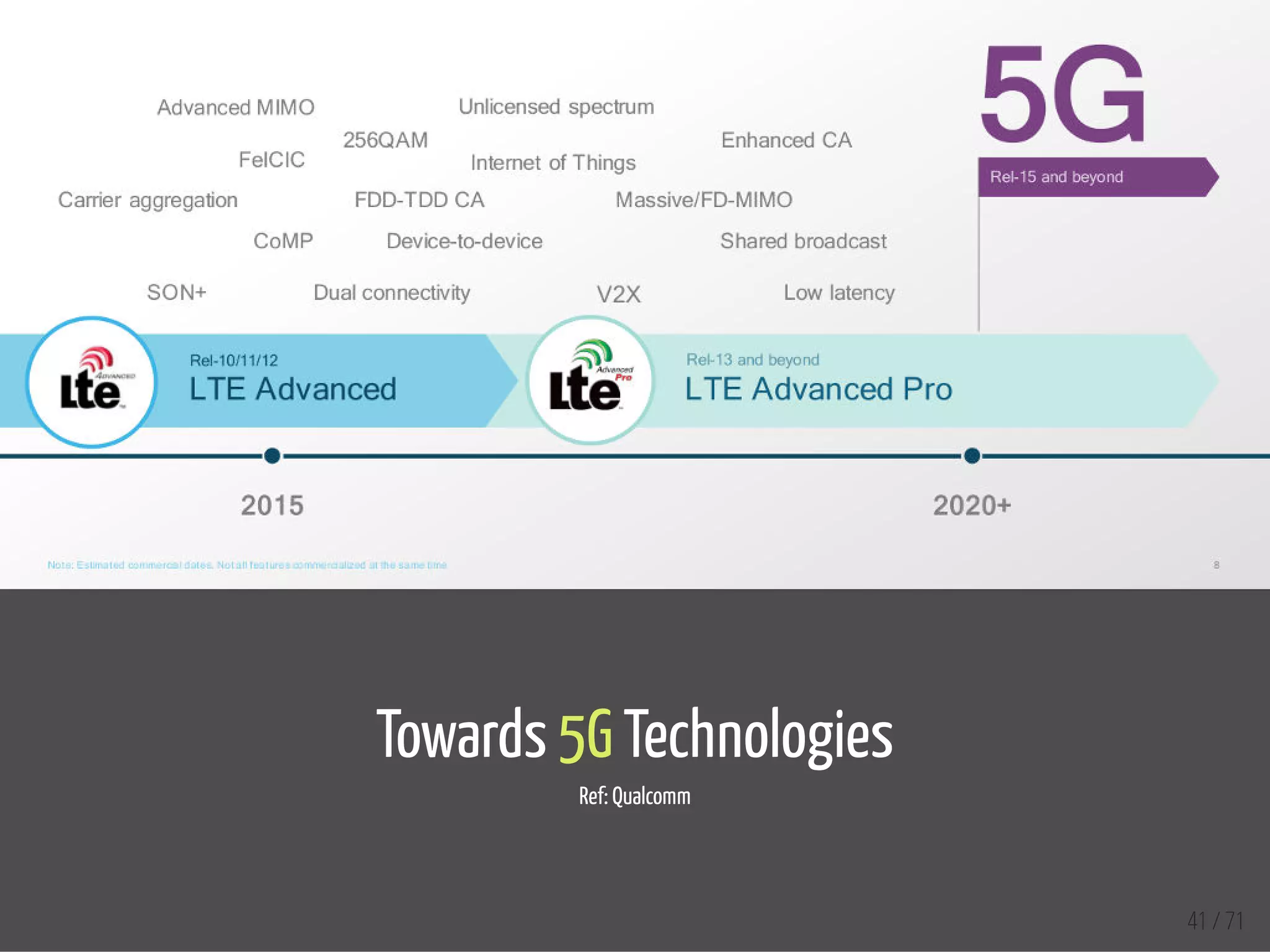
Towards 5G Technologies
Ref: Qualcomm
 
  41 / 71
 
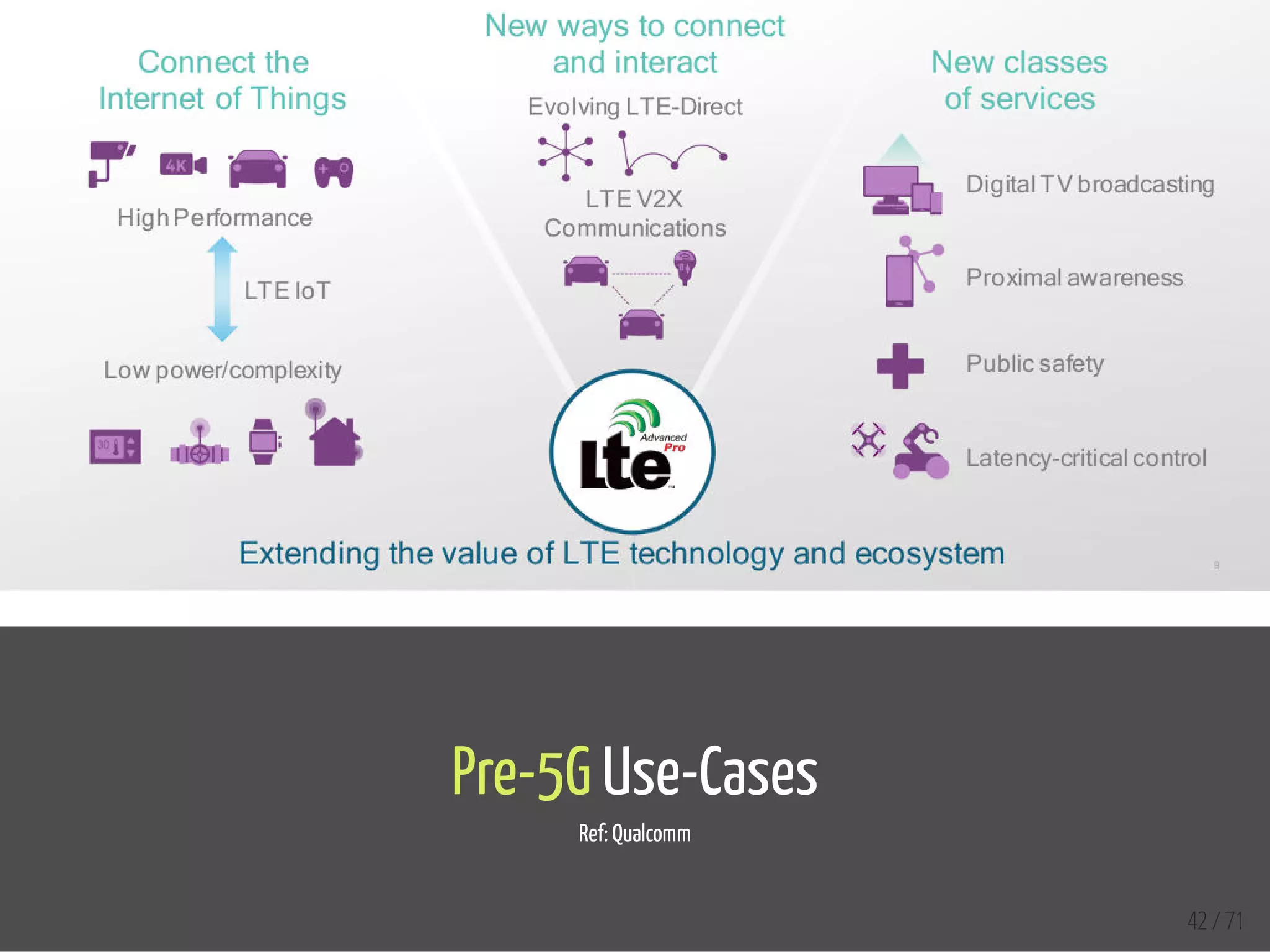
Pre-5G Use-Cases
Ref: Qualcomm
  42 / 71
 
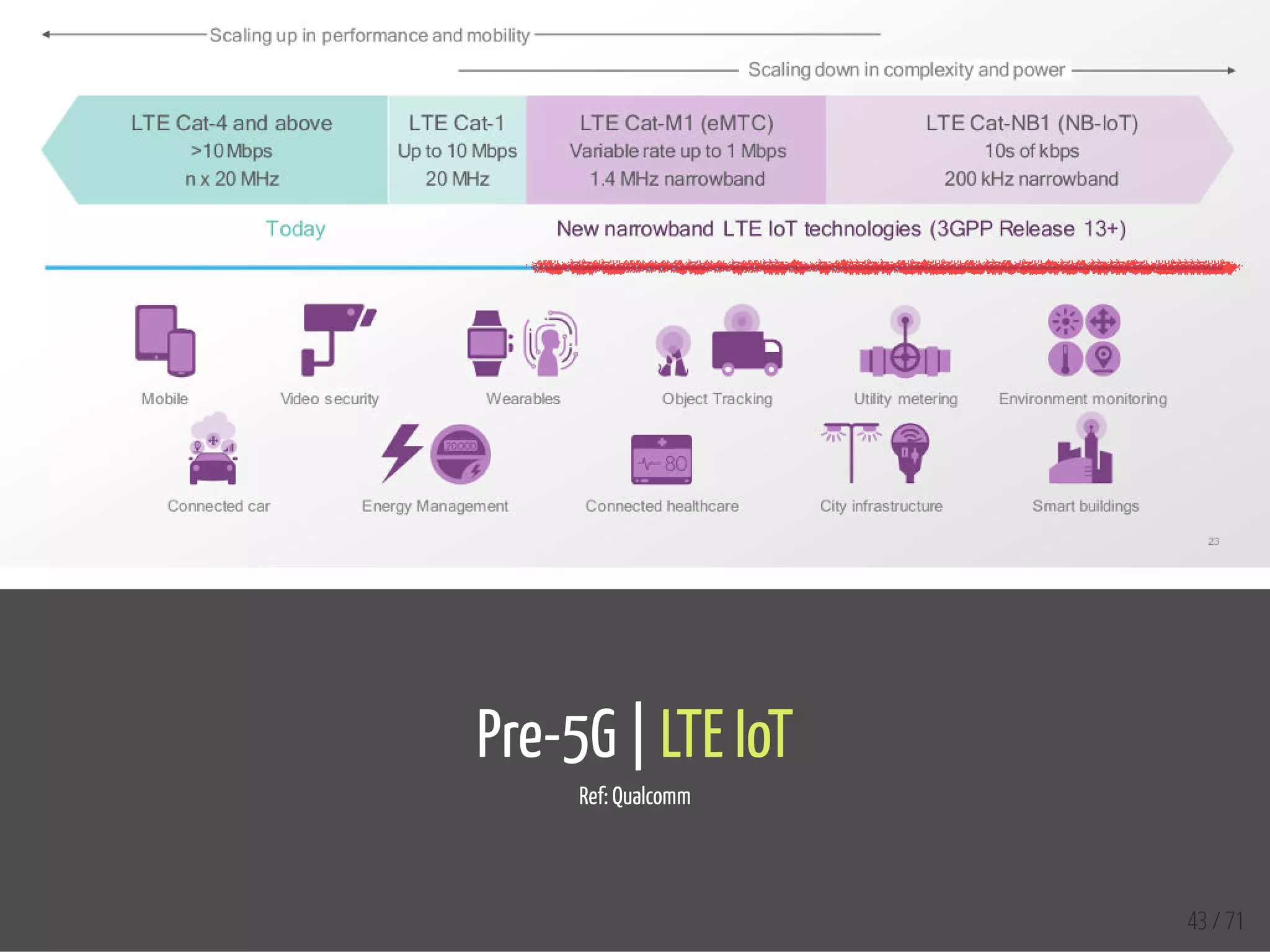
Pre-5G | LTE IoT
Ref: Qualcomm
 
  43 / 71
 
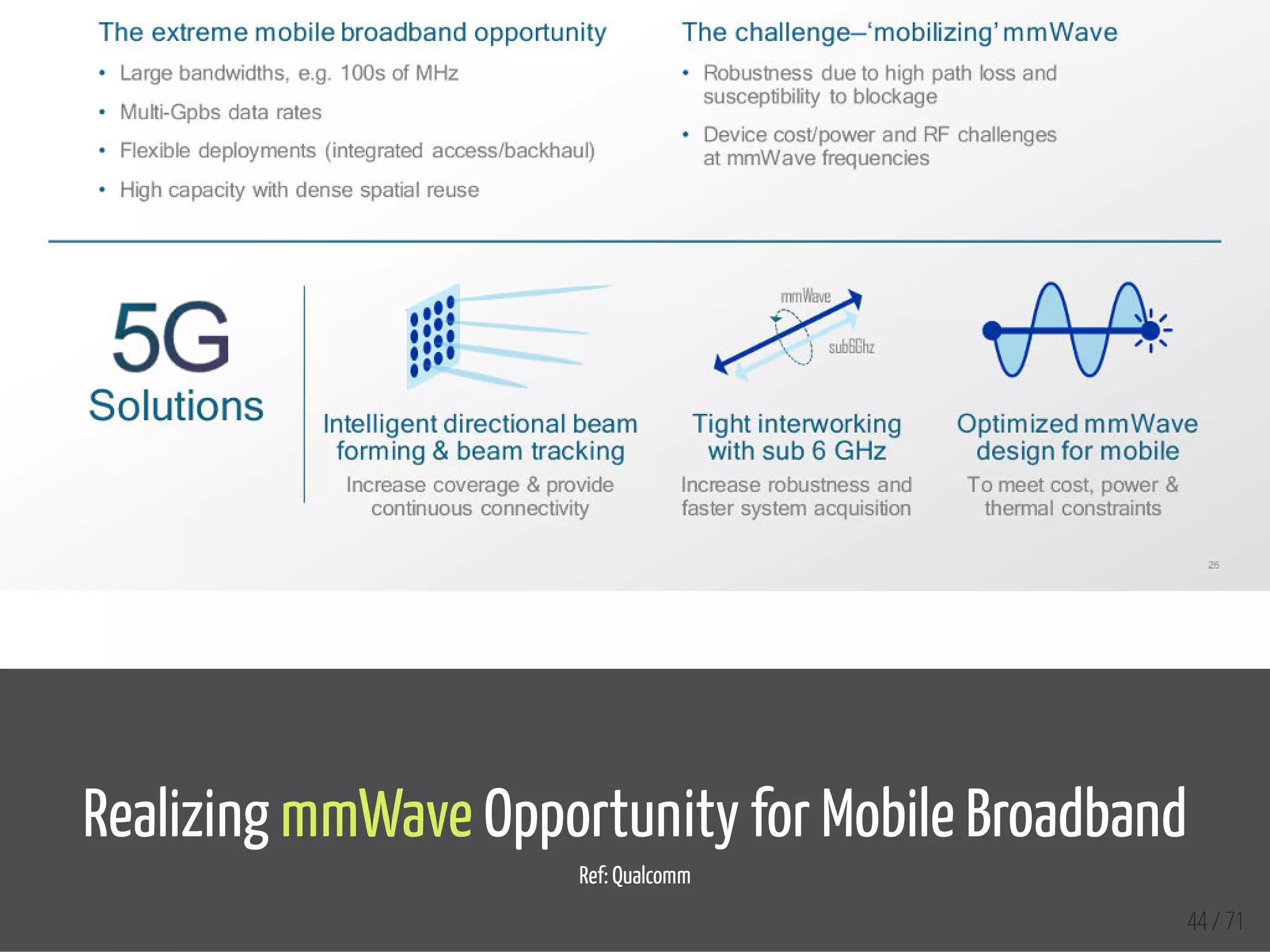
Realizing mmWave Opportunity for Mobile Broadband
Ref: Qualcomm
  44 / 71
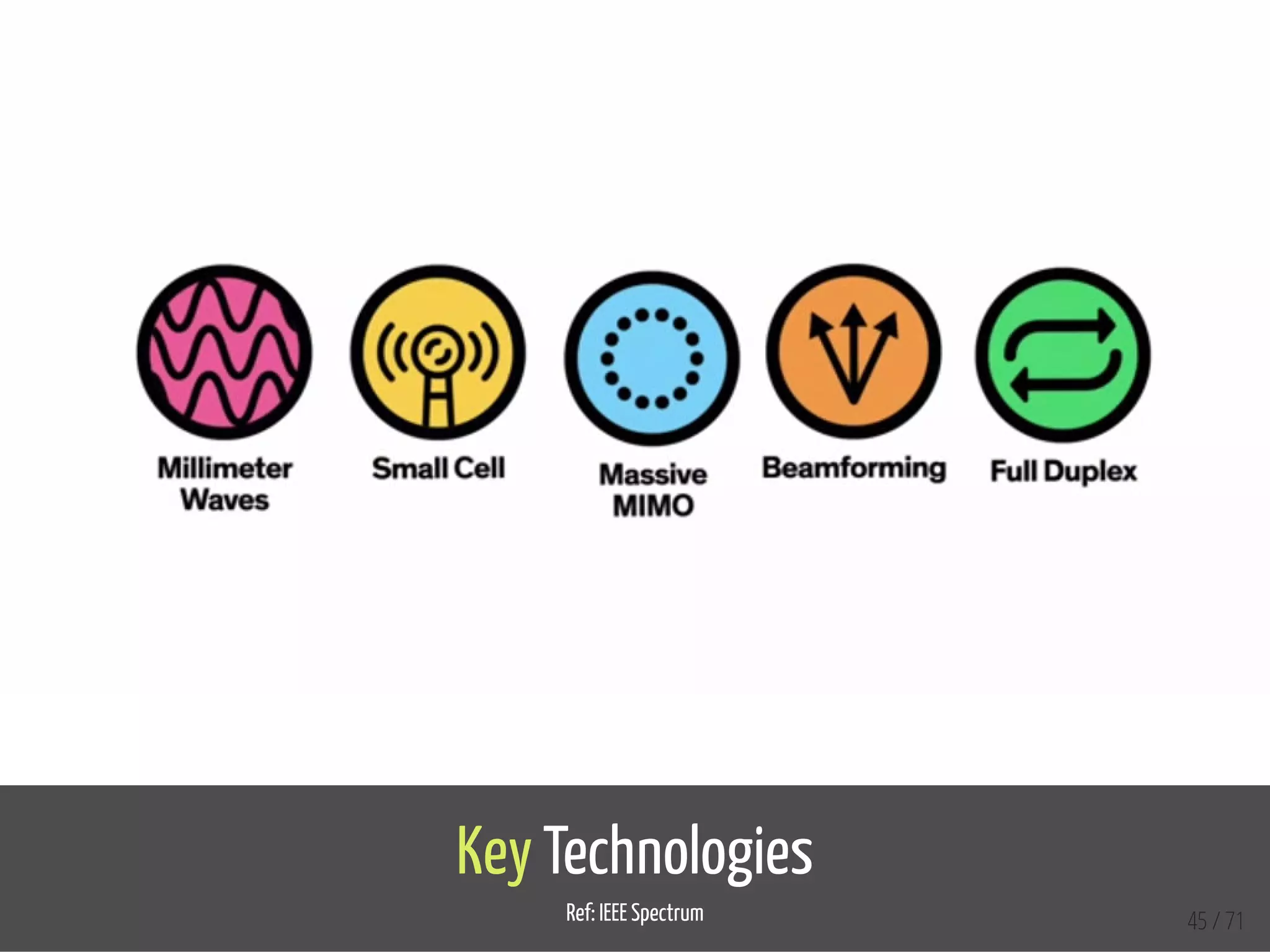
Key Technologies
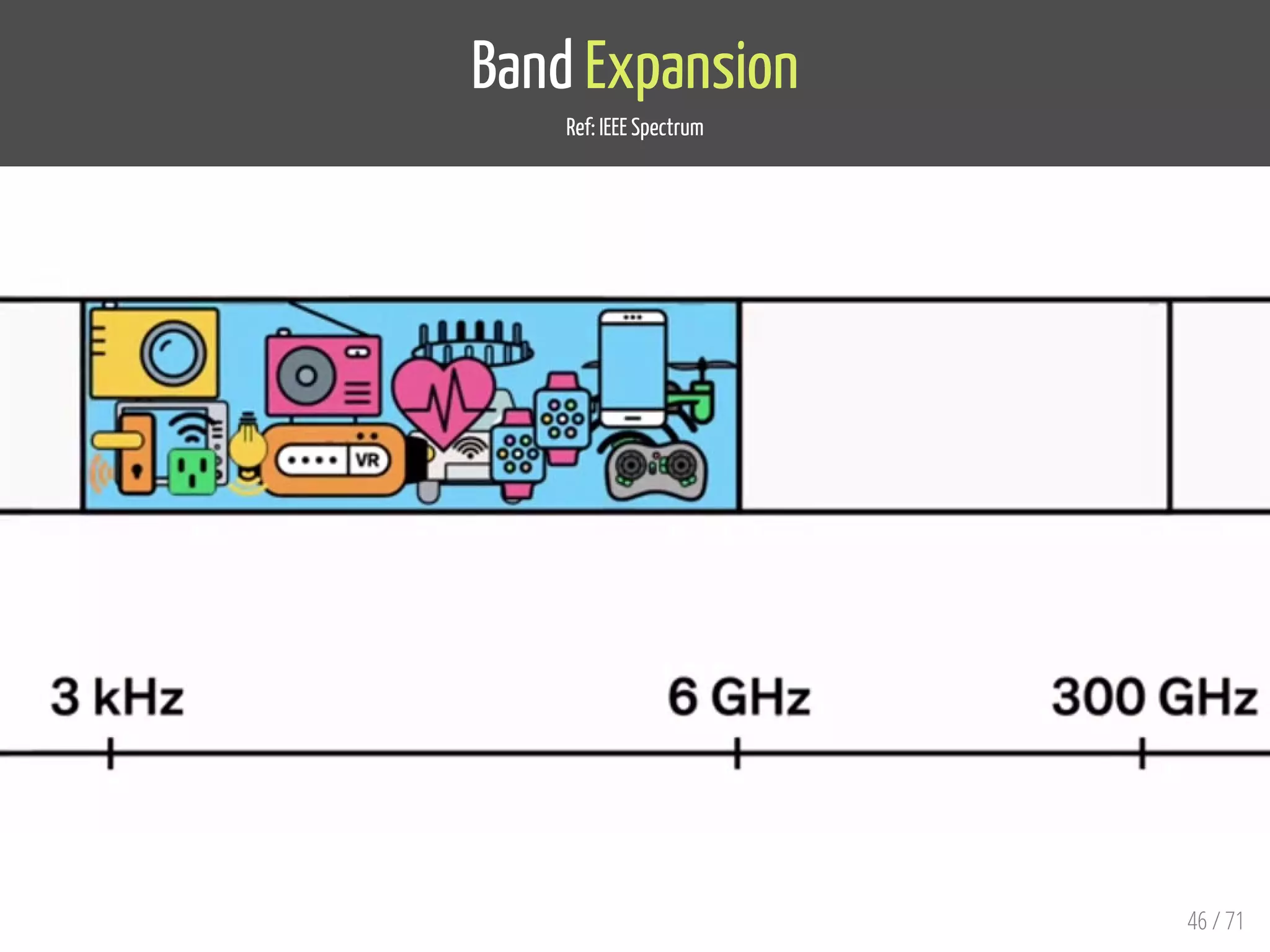
Ref: IEEE Spectrum 45 / 71
Band Expansion
Ref: IEEE Spectrum
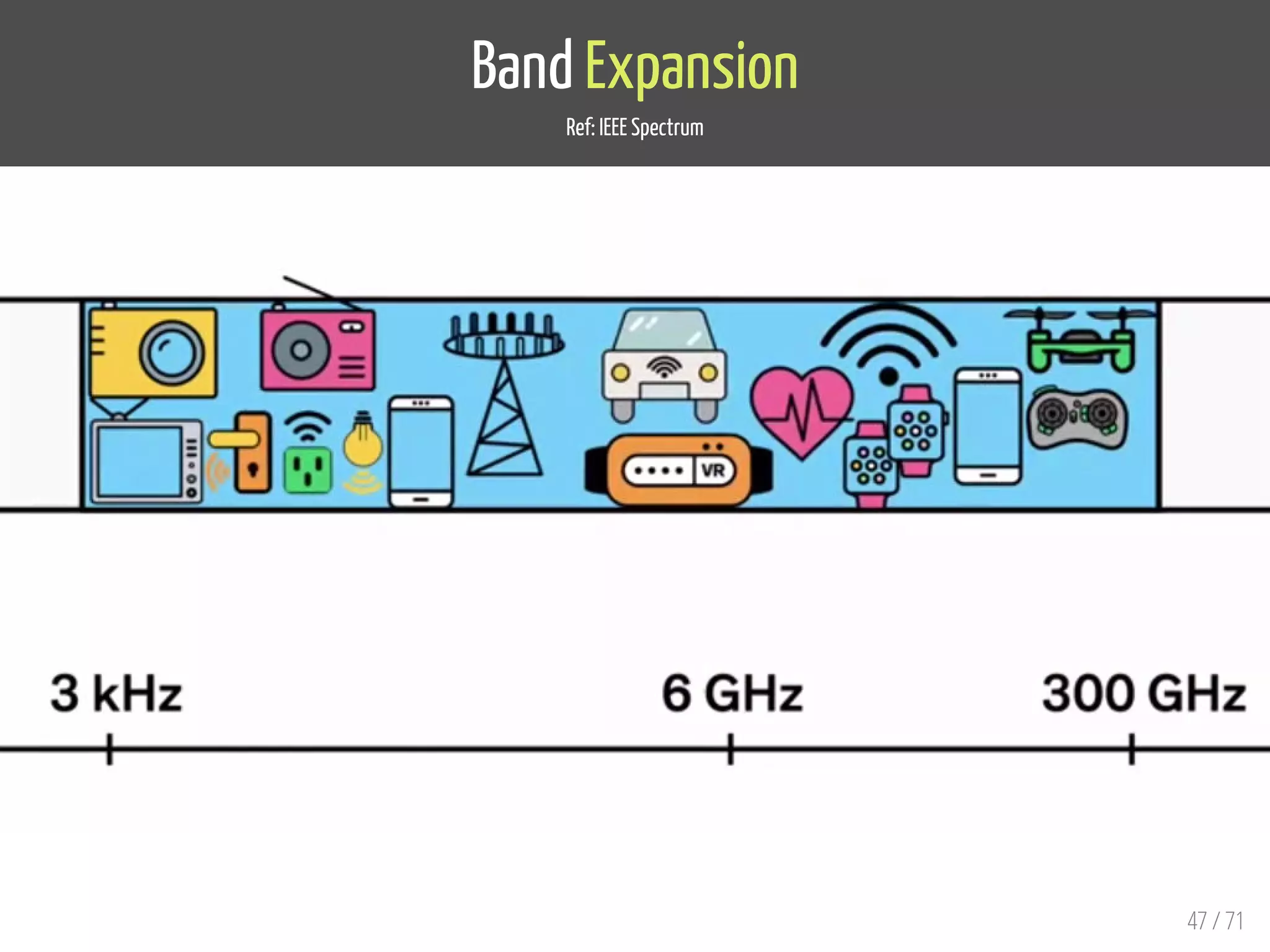
46 / 71
Band Expansion
Ref: IEEE Spectrum
47 / 71
48 / 71
IEEE Spectrum
Everything You Need to Know About 5G



Applications & Use-
Cases
49 / 71
50 / 71
Apps & Examples
Connected Things
IoT
1. Overview
2. Wearables
3. Smart-Home & Appliances
4. Connected Vehicle
5. Connected Factory
6. Smart-City
7. Robots & Drones
8. Virtual & Mixed-Reality
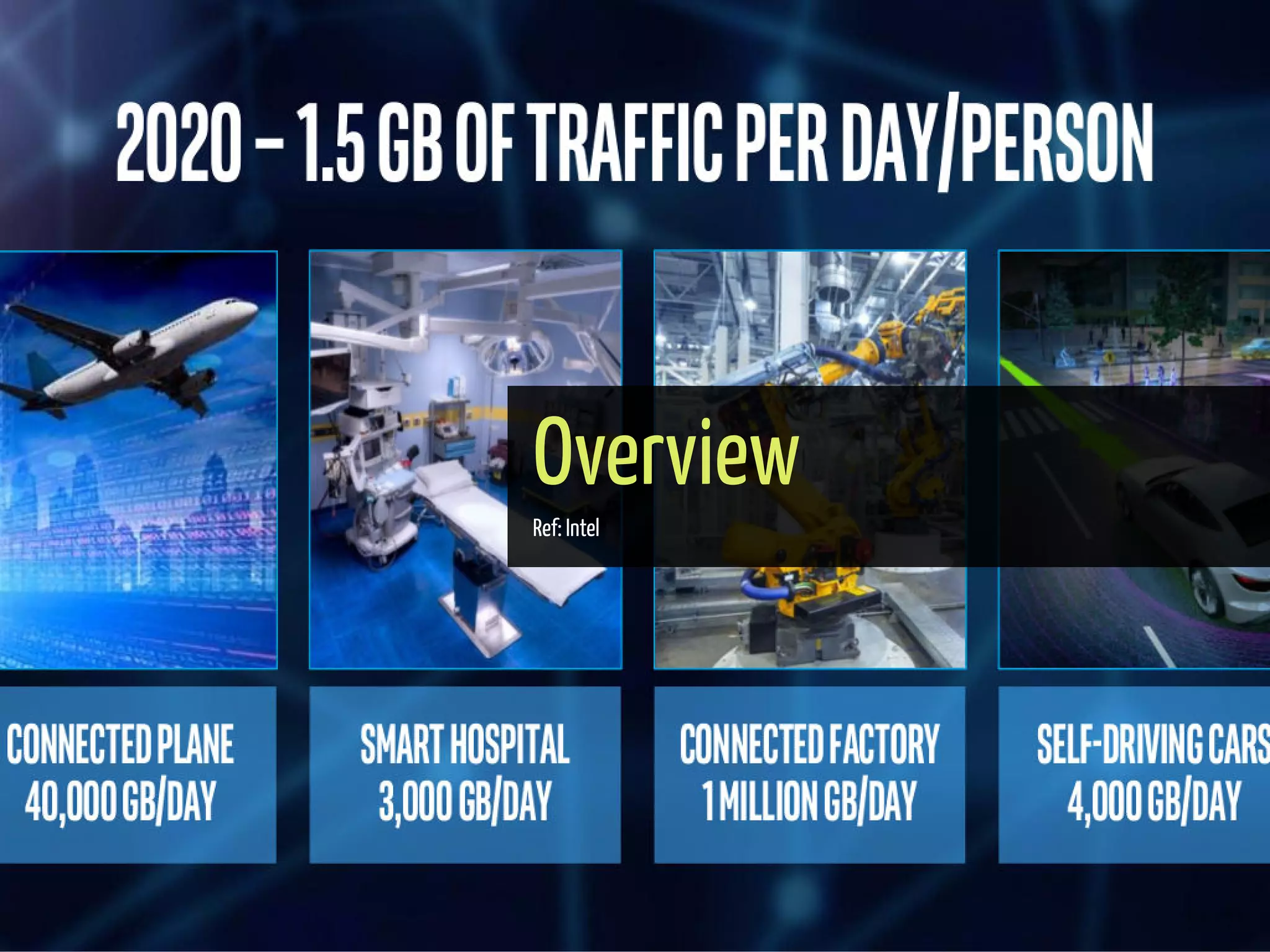
Overview
Ref: Intel
51 / 71
52 / 71
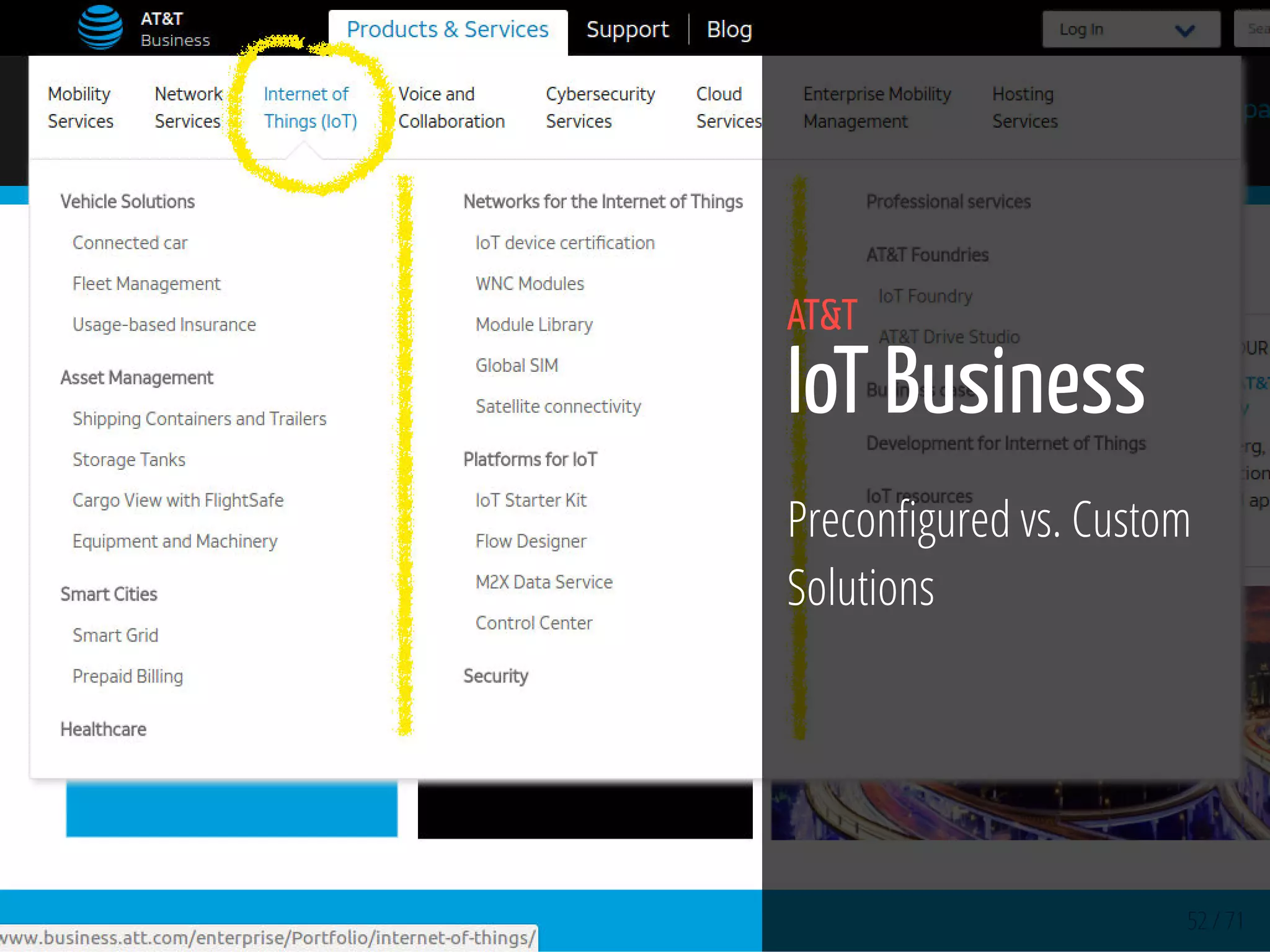
AT&T
IoT Business
Precon gured vs. Custom
Solutions
53 / 71
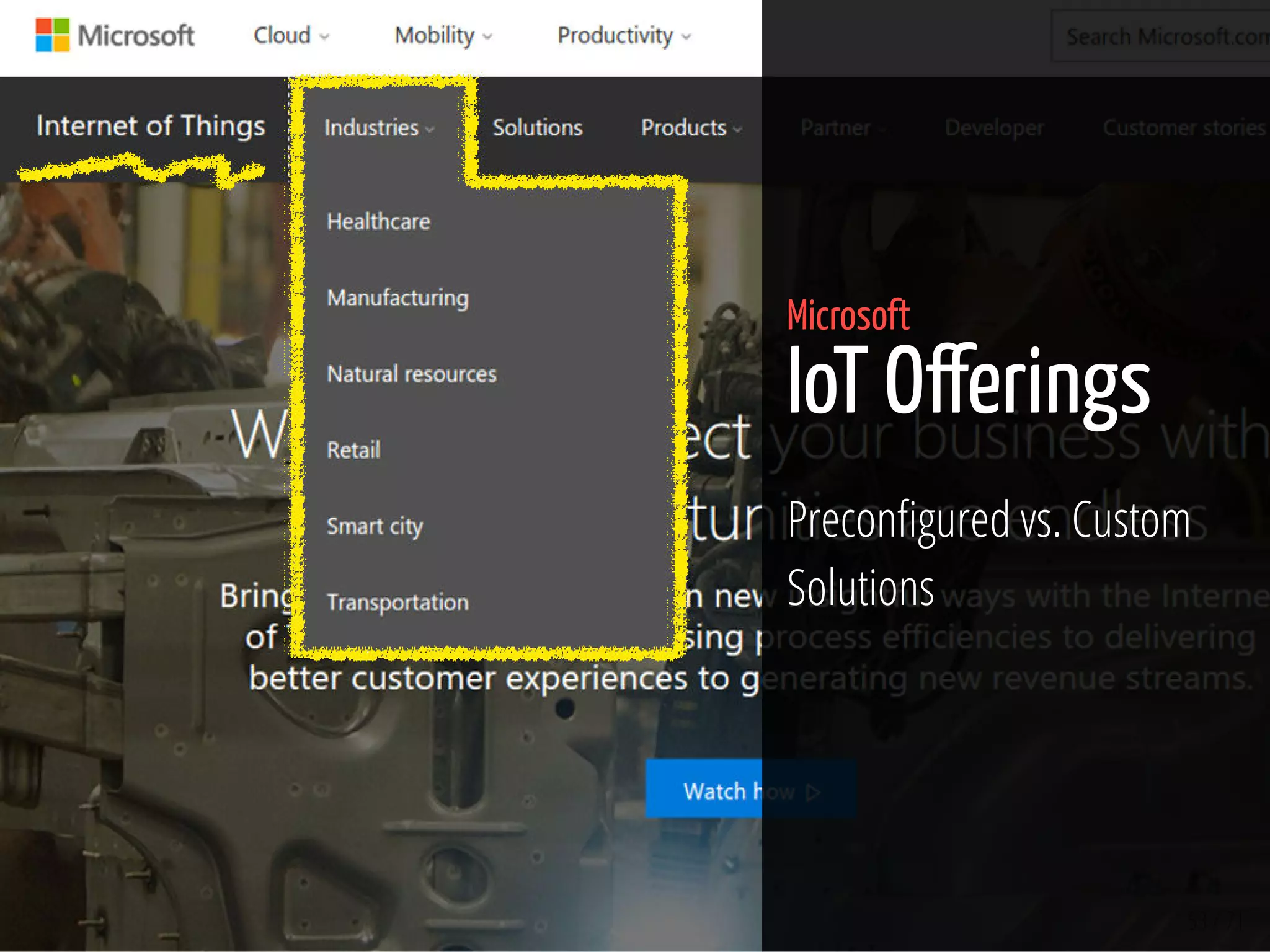
Microsoft
IoT O erings
Precon gured vs. Custom
Solutions
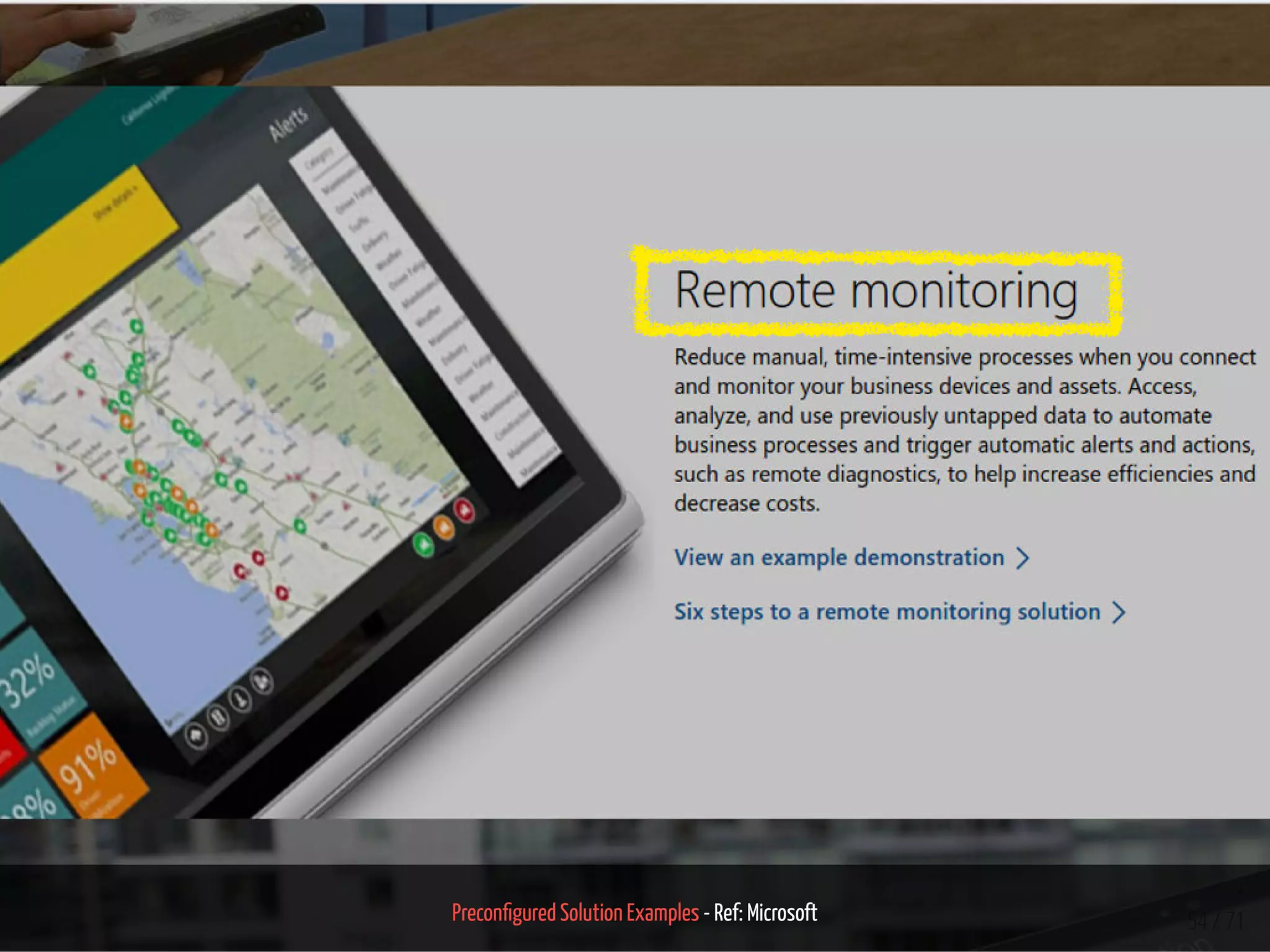
Precon gured Solution Examples - Ref: Microsoft 54 / 71
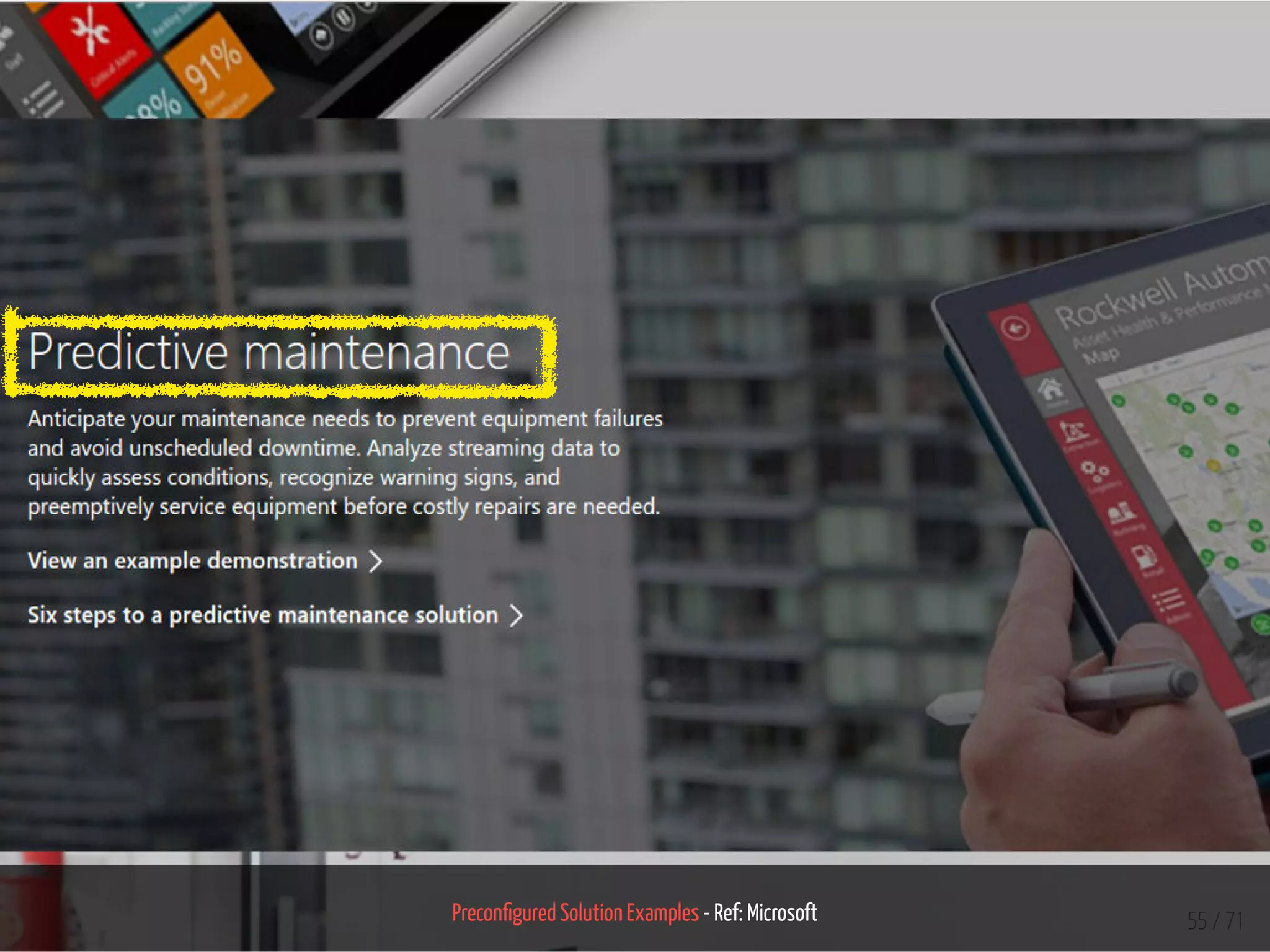
Precon gured Solution Examples - Ref: Microsoft 55 / 71
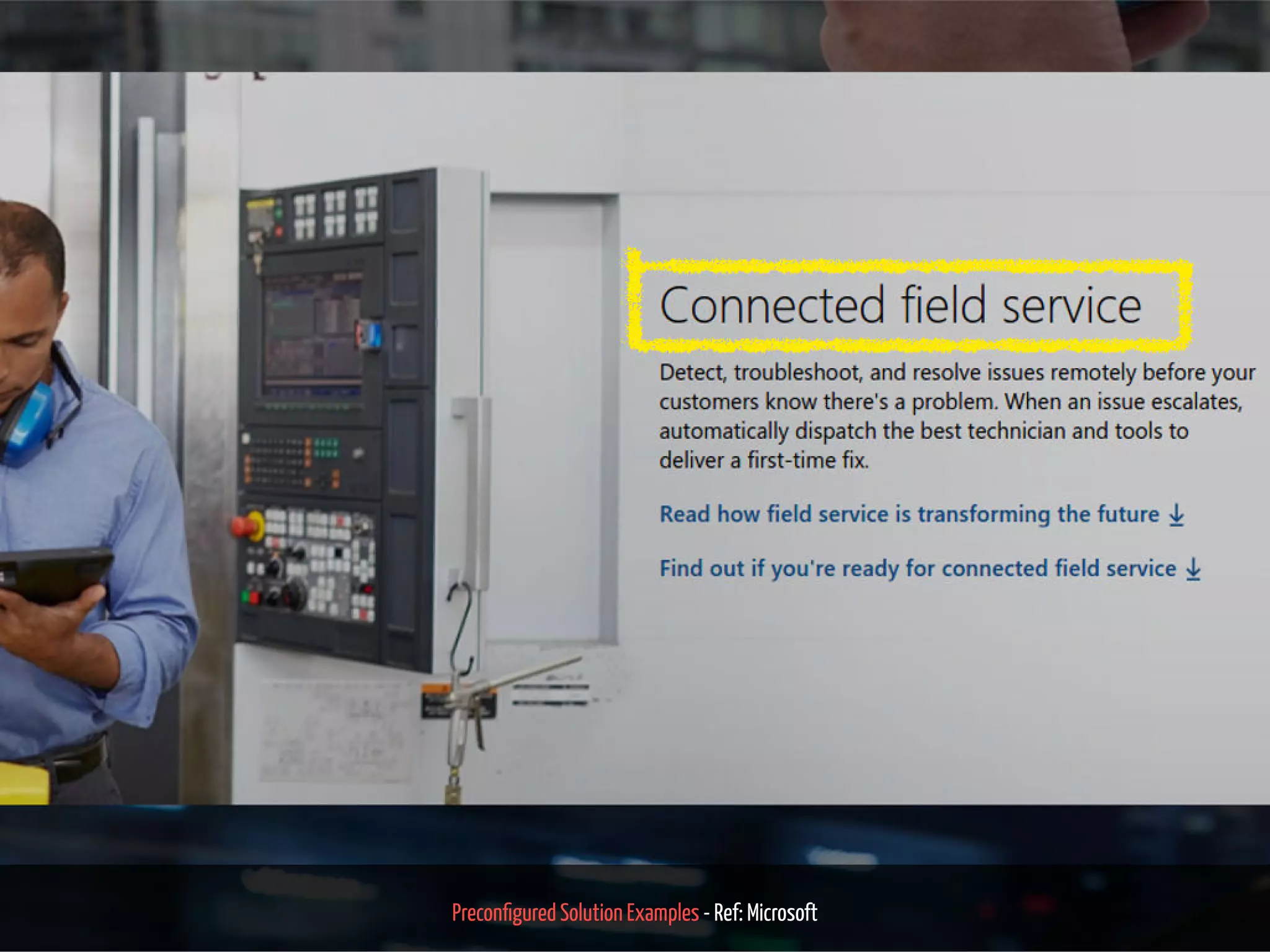
Precon gured Solution Examples - Ref: Microsoft 56 / 71
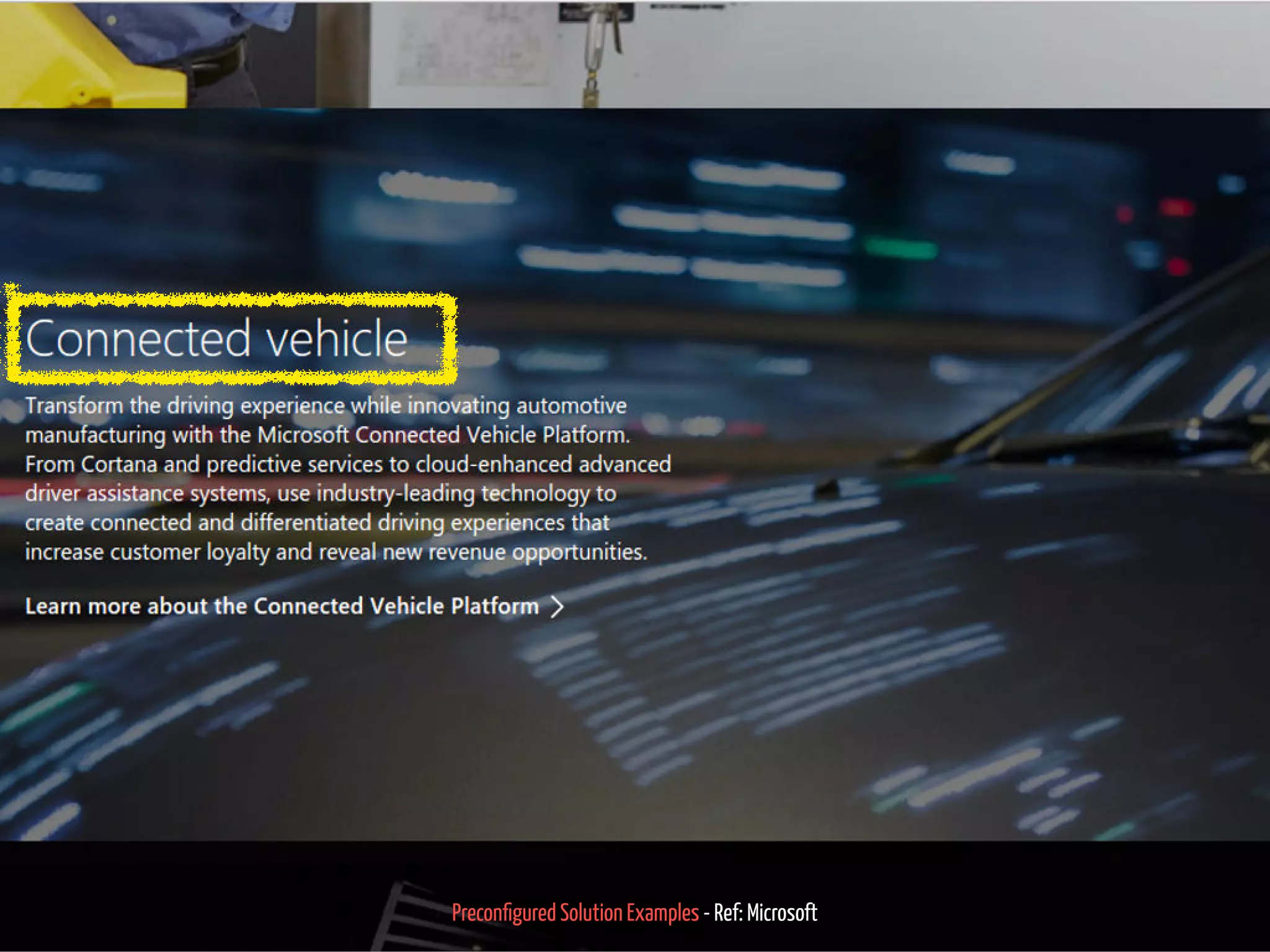
Precon gured Solution Examples - Ref: Microsoft 57 / 71
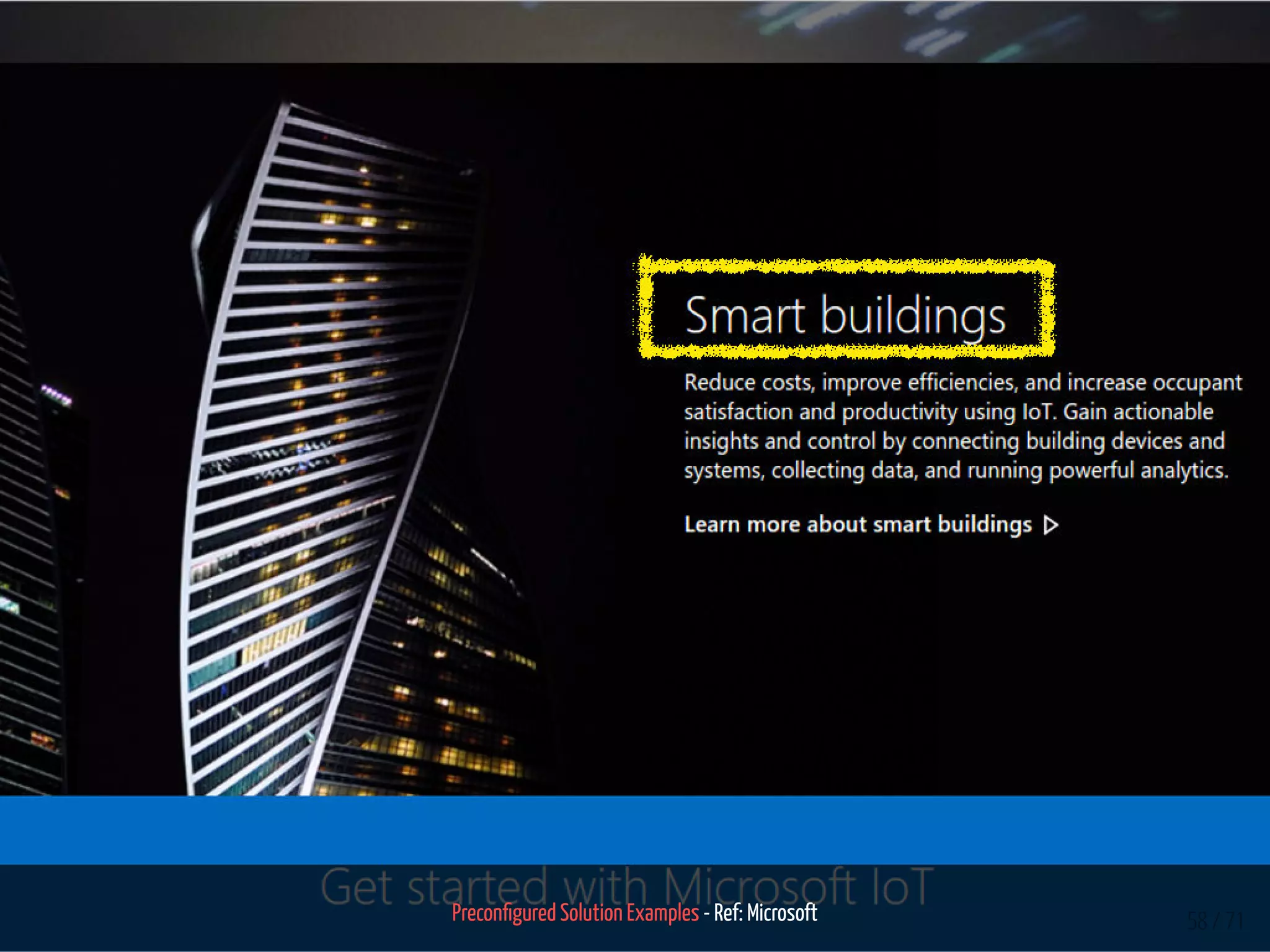
Precon gured Solution Examples - Ref: Microsoft 58 / 71
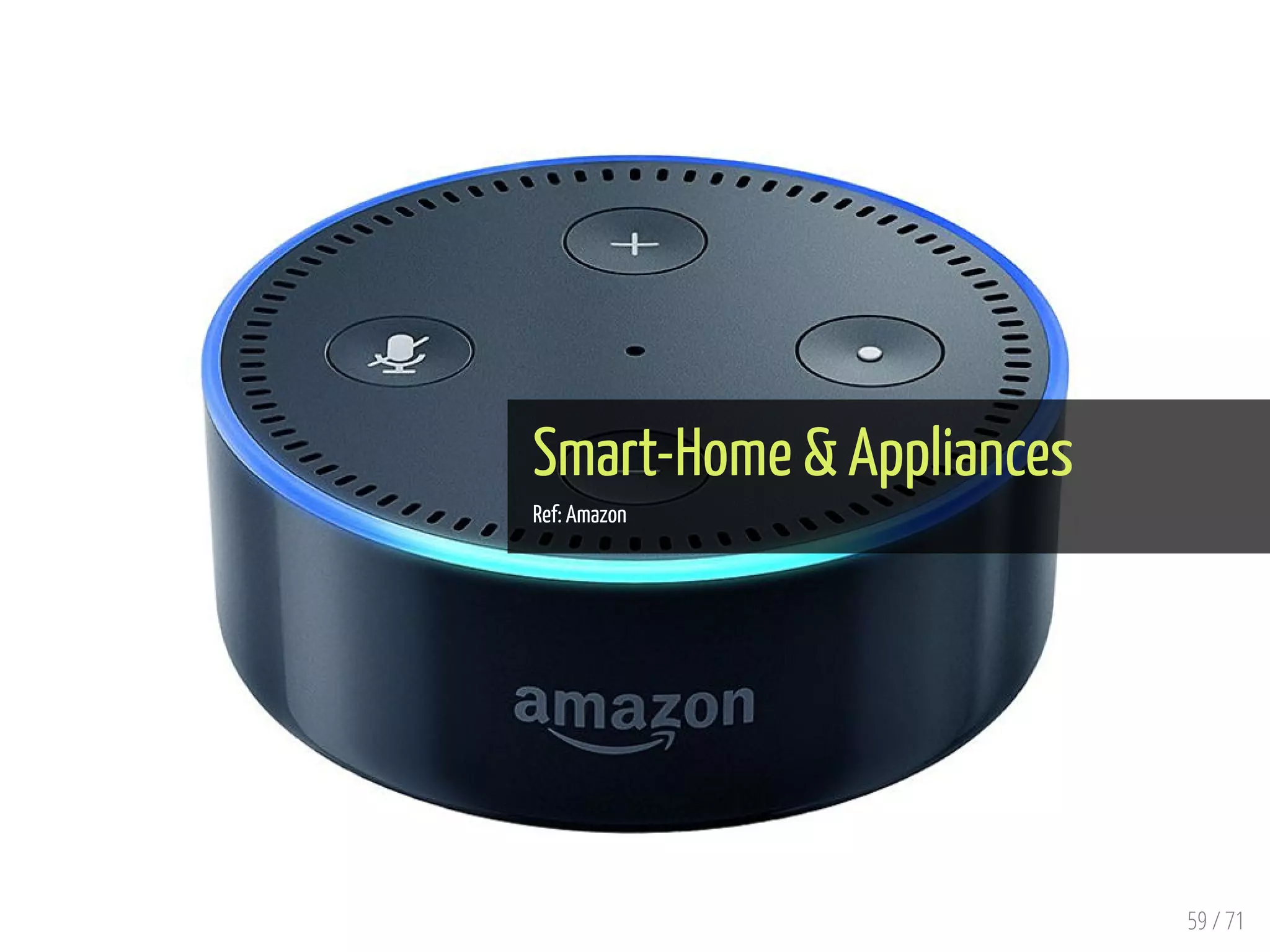
Smart-Home & Appliances
Ref: Amazon
59 / 71
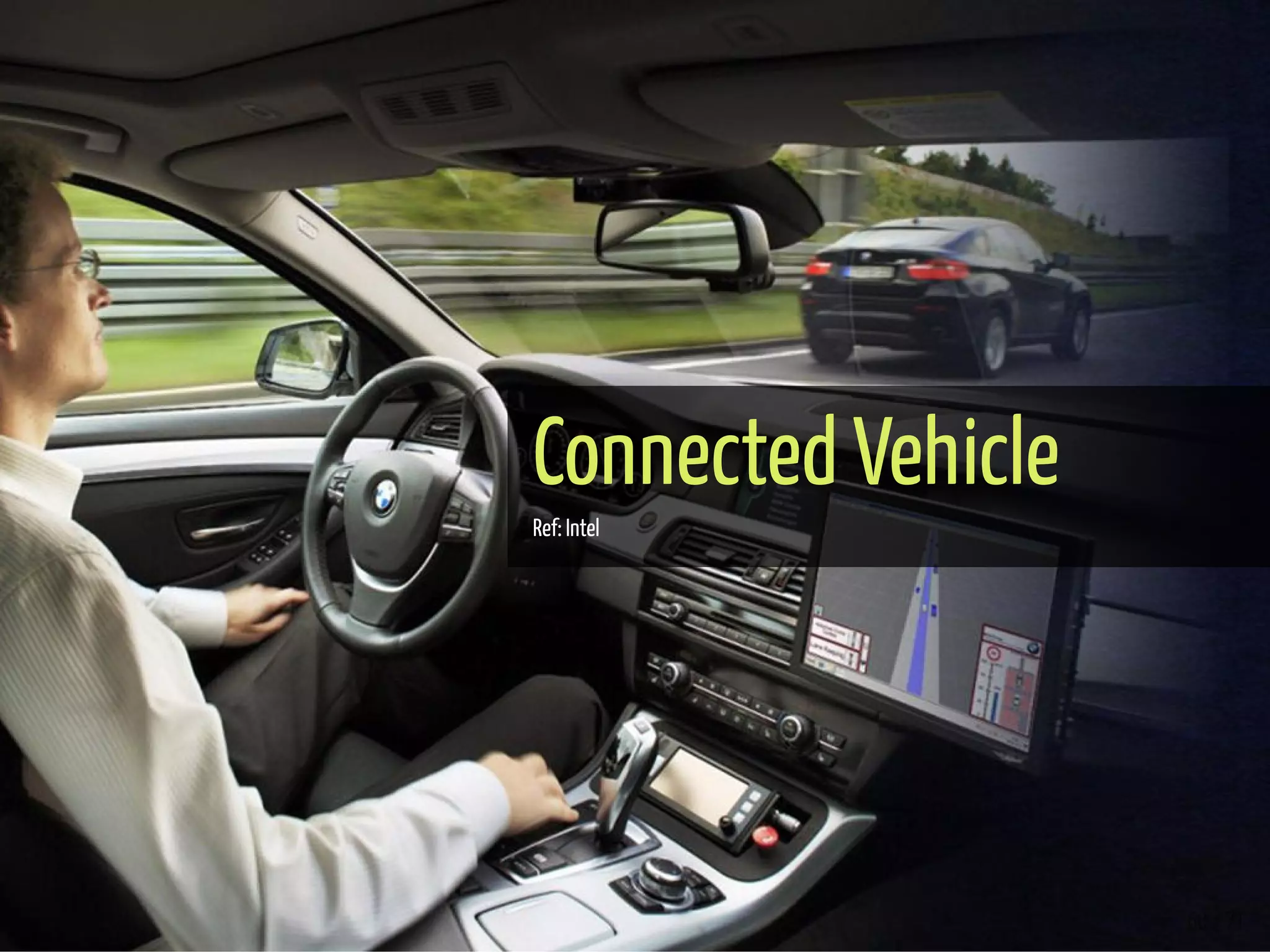
Connected Vehicle
Ref: Intel
60 / 71
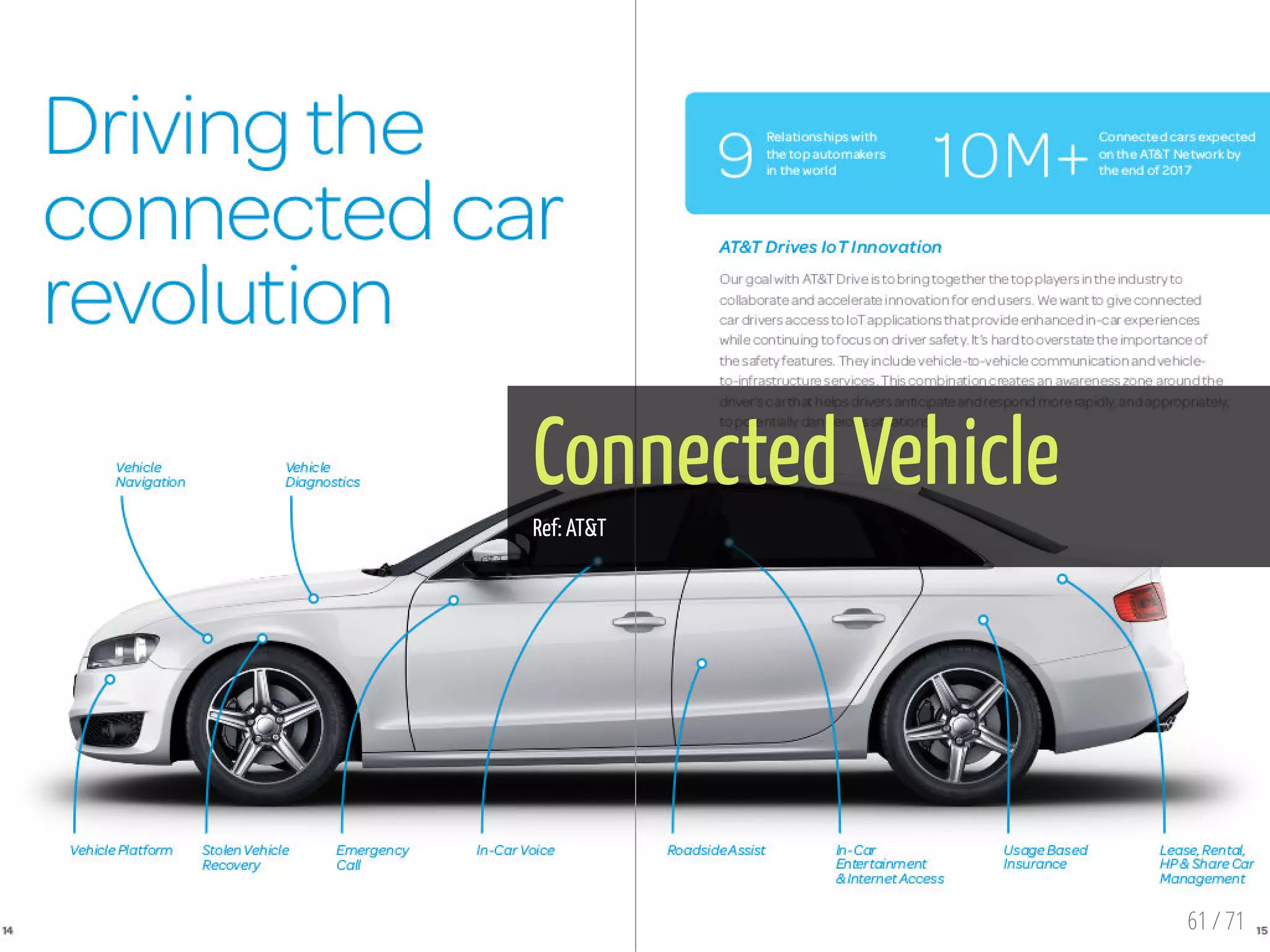
Connected Vehicle
Ref: AT&T
61 / 71
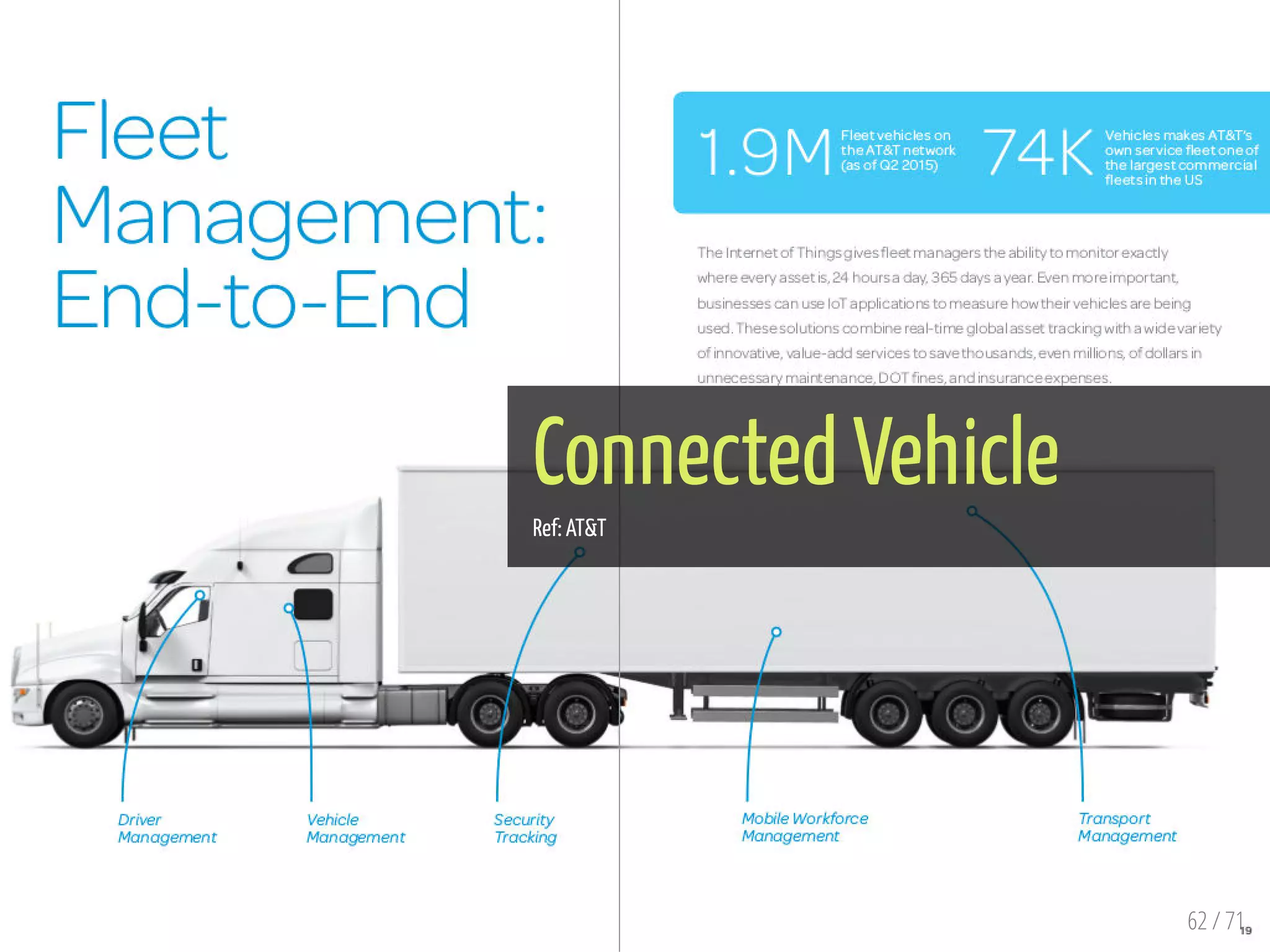
Connected Vehicle
Ref: AT&T
62 / 71
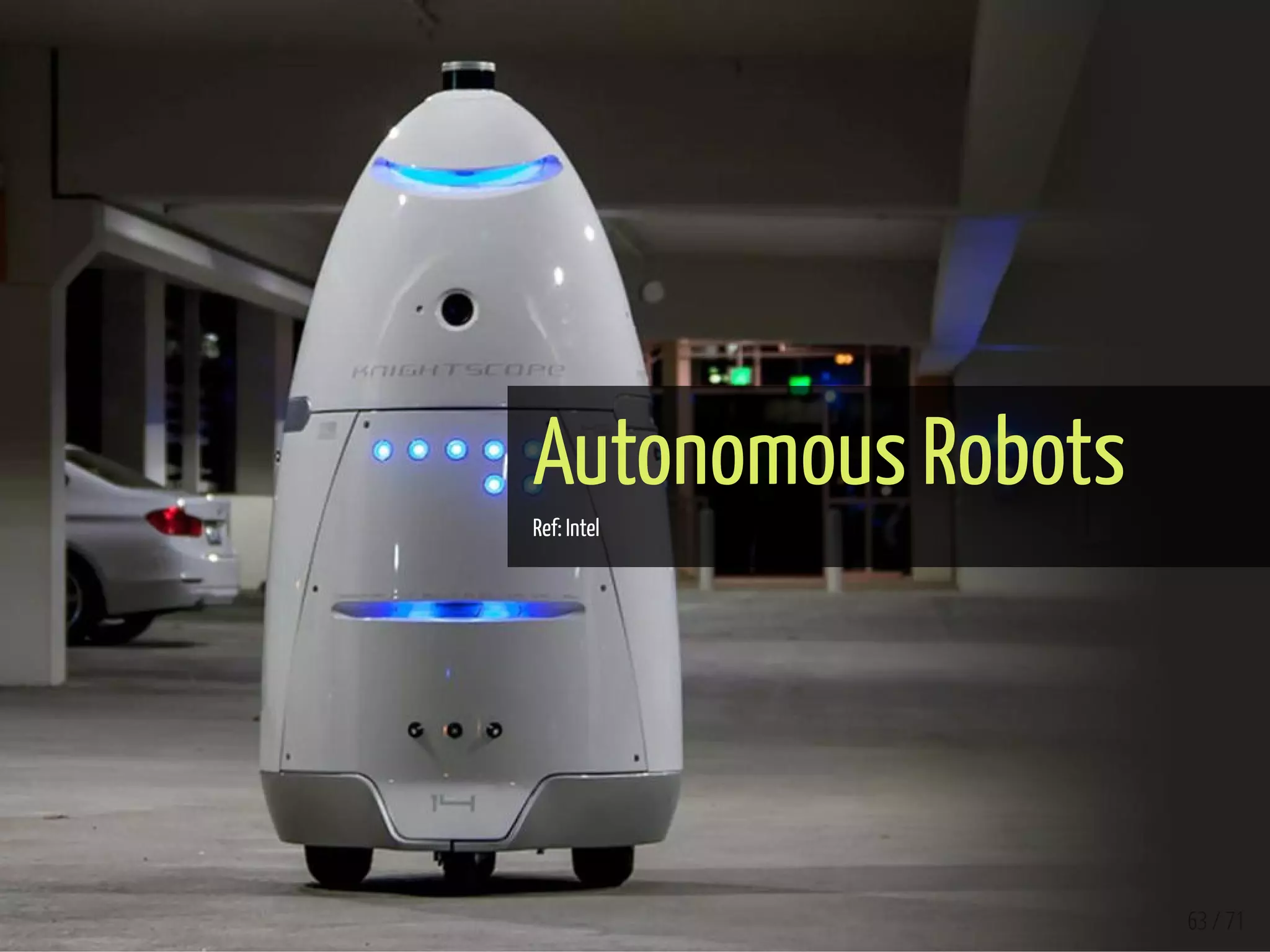
Autonomous Robots
Ref: Intel
63 / 71
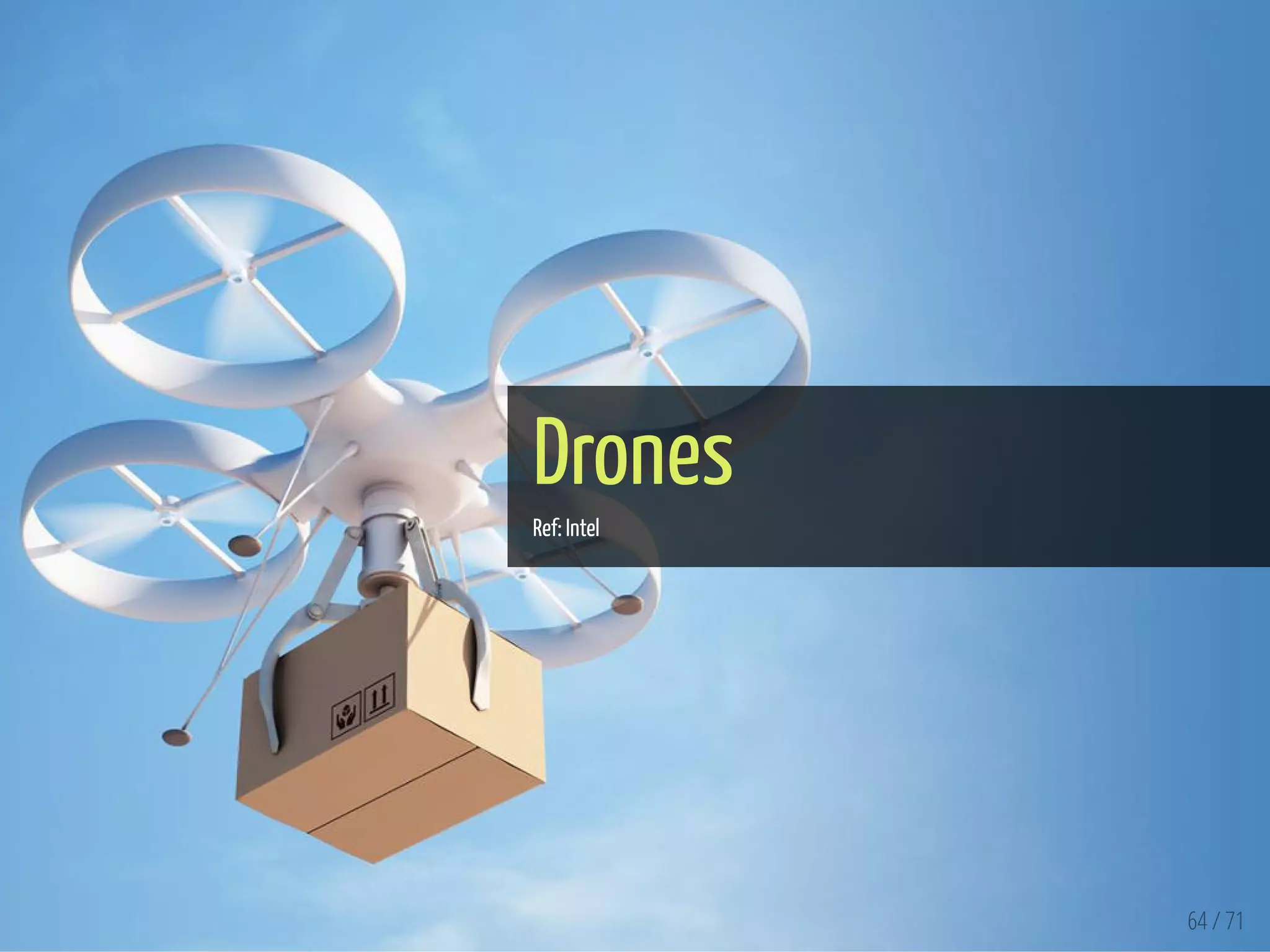
Drones
Ref: Intel
64 / 71
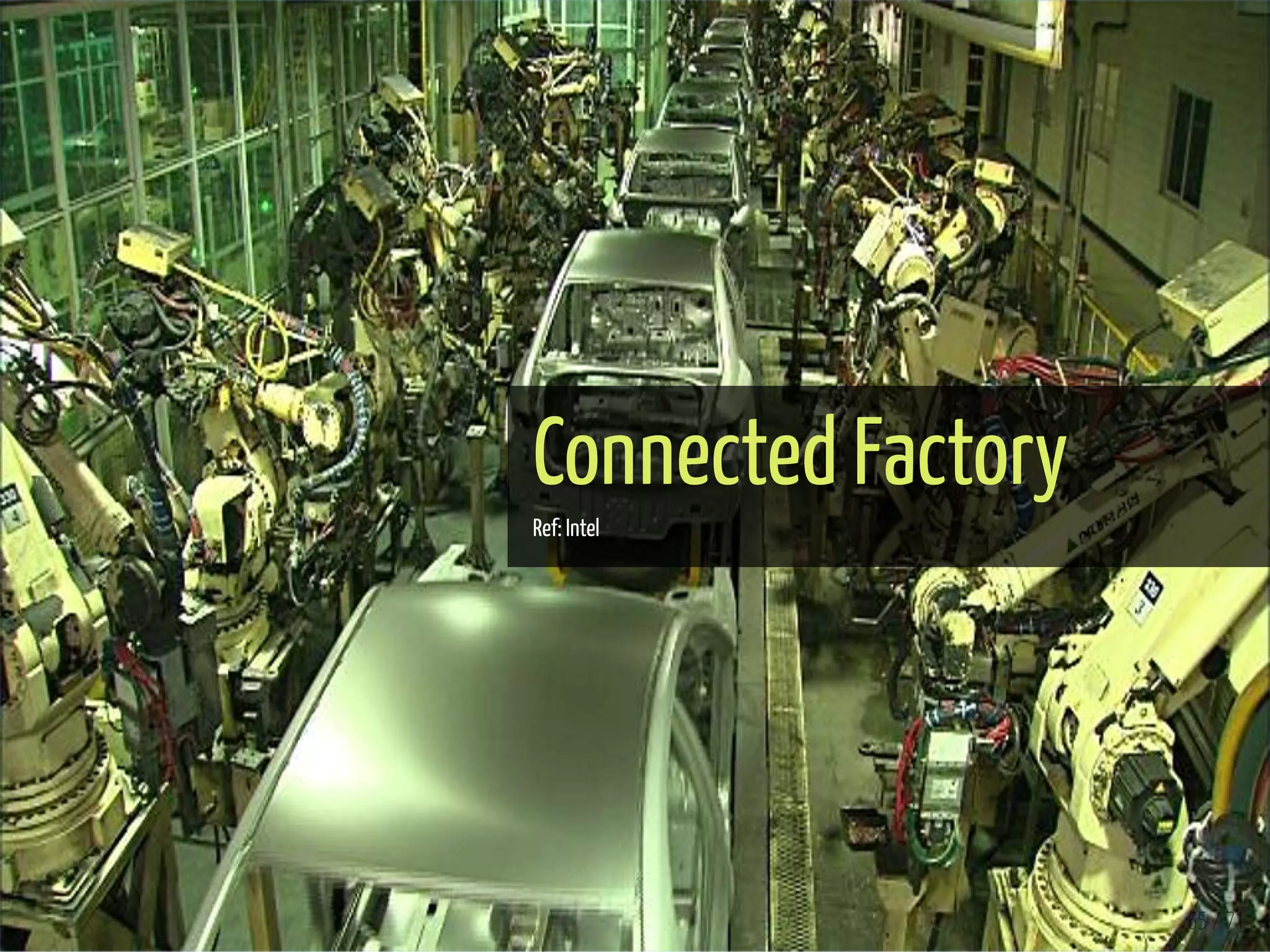
Connected Factory
Ref: Intel
65 / 71
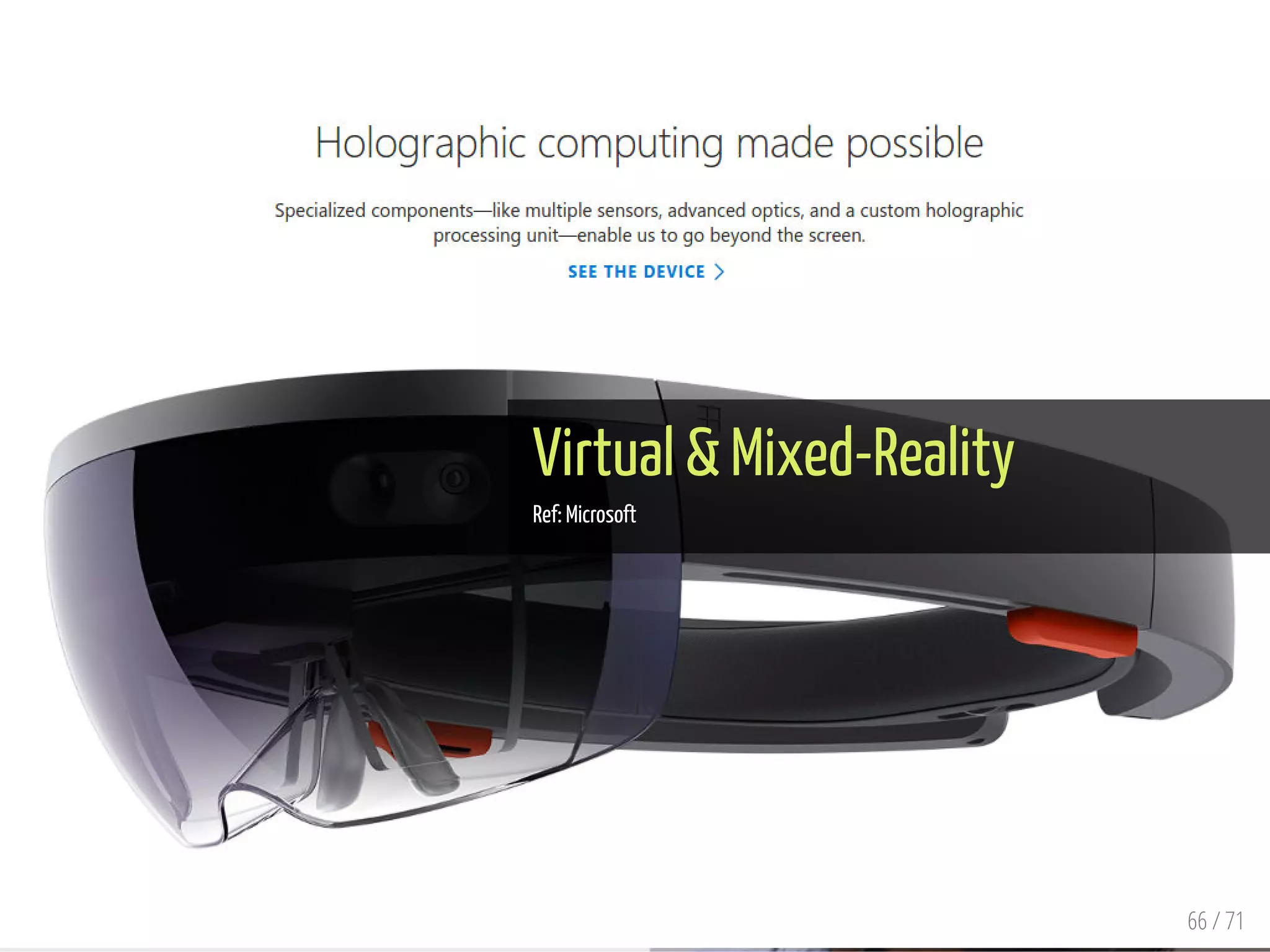
Virtual & Mixed-Reality
Ref: Microsoft
66 / 71
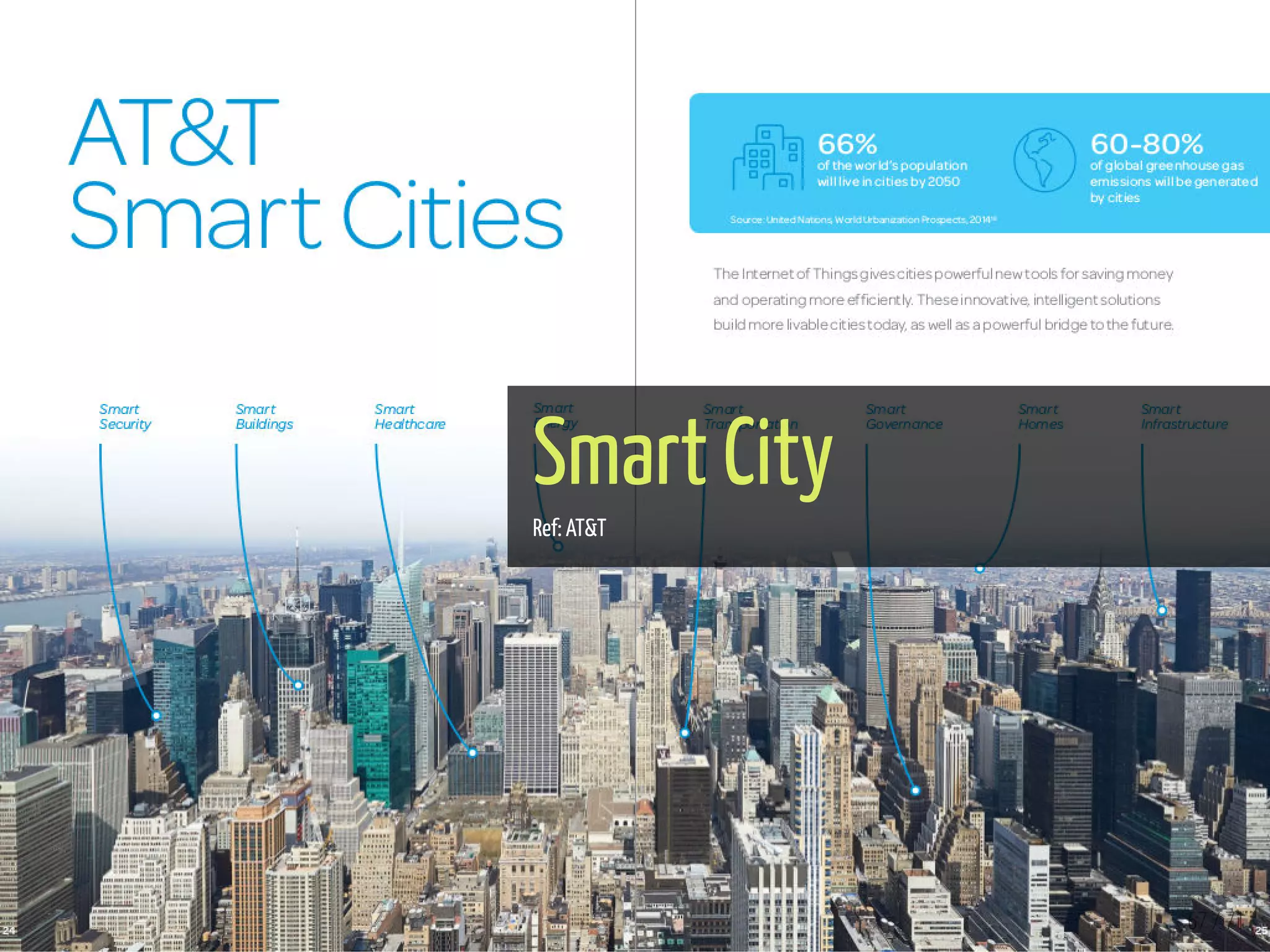
Smart City
Ref: AT&T
67 / 71
68 / 71
Smart City
AT&T



Refs
69 / 71
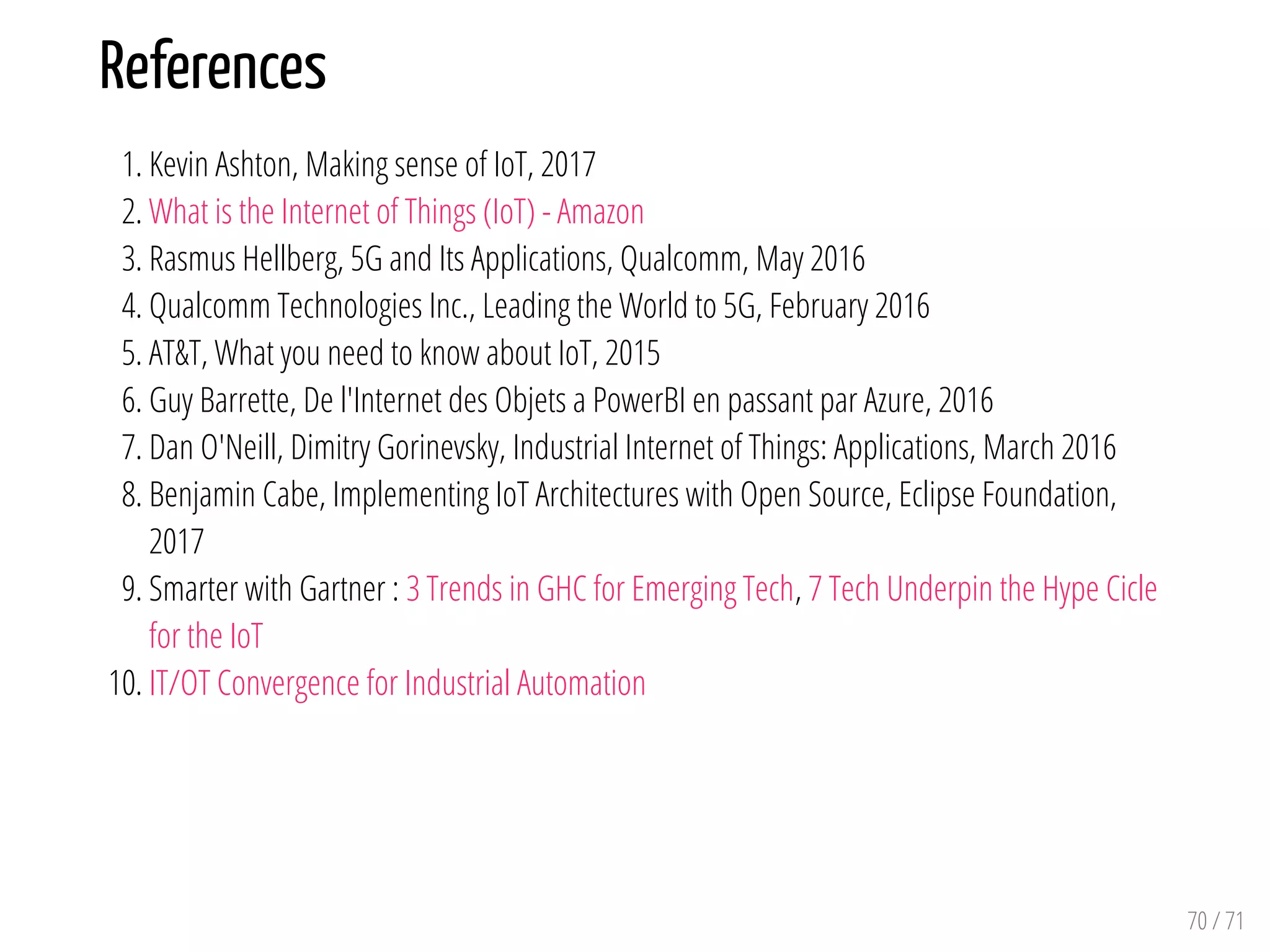
References
1. Kevin Ashton, Making sense of IoT, 2017
2. What is the Internet of Things (IoT) - Amazon
3. Rasmus Hellberg, 5G and Its Applications, Qualcomm, May 2016
4. Qualcomm Technologies Inc., Leading the World to 5G, February 2016
5. AT&T, What you need to know about IoT, 2015
6. Guy Barrette, De l'Internet des Objets a PowerBI en passant par Azure, 2016
7. Dan O'Neill, Dimitry Gorinevsky, Industrial Internet of Things: Applications, March 2016
8. Benjamin Cabe, Implementing IoT Architectures with Open Source, Eclipse Foundation,
2017
9. Smarter with Gartner : 3 Trends in GHC for Emerging Tech, 7 Tech Underpin the Hype Cicle
for the IoT
10. IT/OT Convergence for Industrial Automation
70 / 71


71 / 71
ENDDr.-Ing. Eueung Mulyana
https://eueung.github.io/ET3010
ET-3010 | Attribution-ShareAlike CC BY-SA

Connected Things, IoT and 5G